The right preparation can turn an interview into an opportunity to showcase your expertise. This guide to Wildlife Disease Identification and Management interview questions is your ultimate resource, providing key insights and tips to help you ace your responses and stand out as a top candidate.
Questions Asked in Wildlife Disease Identification and Management Interview
Q 1. Describe the diagnostic process for a suspected wildlife disease outbreak.
Diagnosing a suspected wildlife disease outbreak is a multi-step process requiring a systematic approach. It begins with careful observation and data collection, including mortality rates, signs of illness (e.g., lethargy, respiratory distress, unusual behavior), and geographic distribution of affected animals. This initial epidemiological investigation helps to define the scope of the problem.
Next, we collect samples from affected and potentially exposed animals. These samples can include blood, tissue, fecal material, and other relevant specimens. The choice of sample depends on the suspected disease and available resources.
Laboratory testing is crucial. This could involve virology, bacteriology, parasitology, serology, and histopathology, depending on the suspected agent and available facilities. For example, PCR (polymerase chain reaction) is a common molecular technique used to detect specific pathogens’ DNA or RNA. Serological tests, like ELISA (enzyme-linked immunosorbent assay), can detect antibodies indicating prior exposure to a pathogen.
Finally, we integrate the epidemiological and laboratory findings to reach a definitive diagnosis and understand the disease’s etiology, transmission dynamics, and potential impact on the population. This process often requires collaboration with veterinary pathologists, epidemiologists, and wildlife biologists. For instance, a sudden increase in deer deaths accompanied by laboratory confirmation of E. coli bacteria in multiple samples would point to an outbreak of bacterial disease.
Q 2. Explain the difference between endemic and epizootic diseases in wildlife.
In wildlife, ‘endemic’ and ‘epizootic’ describe the prevalence and spread of diseases. An endemic disease is constantly present in a population at a low, relatively stable level. Think of it like a background hum – it’s always there, but it doesn’t usually cause widespread devastation. For example, certain tick-borne diseases might be endemic in a deer population, with a low but consistent number of animals affected each year.
An epizootic disease, on the other hand, is an outbreak characterized by a rapid increase in the incidence of a disease within a population above the expected endemic level. It’s like a sudden, dramatic surge – a significant portion of the population gets sick, often quickly. The 2001 foot-and-mouth disease outbreak in the UK is a prime example of an epizootic event in livestock, but the same principle applies to wildlife.
Q 3. What are the key challenges in conducting epidemiological studies on wildlife populations?
Conducting epidemiological studies on wildlife presents unique challenges. One major hurdle is the difficulty in accurately estimating population sizes and densities. Wildlife is, by nature, elusive and difficult to track. Furthermore, obtaining representative samples can be extremely difficult given the challenges of capturing and handling animals without causing undue stress or harm.
The inherent variability in wildlife behavior and ecology also makes data interpretation complex. Animals move across landscapes, leading to difficulties in defining exposure groups and tracing transmission pathways. The lack of detailed historical data on disease prevalence in many wildlife populations also hinders long-term epidemiological analysis.
Finally, funding and resource limitations are significant barriers to conducting large-scale, in-depth studies. These studies are often logistically challenging, requiring specialized equipment, trained personnel, and access to remote areas. For example, studying a disease outbreak in a migratory bird population requires international collaboration and careful coordination.
Q 4. How do you assess the risk of zoonotic diseases transmission from wildlife to humans?
Assessing the risk of zoonotic disease transmission (diseases that can spread from animals to humans) from wildlife requires a multi-faceted approach. We consider factors such as the prevalence of the disease in the wildlife population, the potential for close contact between wildlife and humans (e.g., through hunting, wildlife tourism, or encroachment on wildlife habitats), and the pathogen’s ability to infect and cause disease in humans.
Risk assessment also involves studying the pathogen’s transmission route. For example, some zoonotic diseases spread through direct contact with infected animals, while others are transmitted via vectors (like ticks or mosquitoes). Understanding these factors enables us to implement appropriate risk mitigation strategies, such as public health campaigns, improved sanitation, and surveillance programs in areas with high human-wildlife interactions.
A good example is rabies: the risk of transmission is high if there is direct contact with an infected animal’s saliva, leading to measures like vaccination of pets and public education campaigns about avoiding contact with potentially rabid wildlife.
Q 5. Discuss various methods for collecting wildlife samples for disease diagnosis.
Collecting wildlife samples for disease diagnosis depends heavily on the species, the suspected disease, and available resources. Non-invasive methods are often preferred to minimize stress on the animal. These include collecting fecal samples (useful for detecting parasites or pathogens shed in feces), urine samples, hair or feathers, and even environmental samples (like soil or water) where the target pathogen might be present.
Invasive methods are sometimes necessary for a definitive diagnosis, but they require careful consideration of animal welfare. This could involve drawing blood samples, collecting tissue biopsies, or even necropsy (post-mortem examination) if the animal is already dead. These invasive procedures are only justified when the potential benefits outweigh the risks to the animal’s well-being and should always be carried out by trained personnel using appropriate anesthesia and techniques.
Proper sample collection, handling, and preservation are crucial to ensure sample integrity and prevent contamination. Samples must be transported and stored correctly to maintain their viability and prevent degradation.
Q 6. What are the ethical considerations involved in wildlife disease research and management?
Ethical considerations are paramount in wildlife disease research and management. The ‘3Rs’ – Replacement (using non-animal methods whenever possible), Reduction (minimizing the number of animals used), and Refinement (minimizing pain and distress) – are central to any ethical research design. We must weigh the potential scientific benefits against the potential harm to the animals involved. The use of invasive techniques should only be justified by the scientific necessity and must adhere to strict ethical guidelines and regulations.
Furthermore, we must consider the potential impacts of our actions on the wider ecosystem and the populations involved. Management interventions aimed at controlling a disease outbreak might inadvertently have unintended consequences for other species or habitats. Transparency and public engagement are crucial in building trust and ensuring that decisions are made in a responsible and ethically sound manner. Consideration of Indigenous knowledge and perspectives is also critical when working in areas with Indigenous communities.
Q 7. Explain your understanding of different wildlife disease surveillance systems.
Wildlife disease surveillance systems vary in their scope, intensity, and methodology. Passive surveillance relies on reports from veterinarians, hunters, wildlife rehabilitators, and the public. This approach is relatively inexpensive but can miss outbreaks, especially in remote areas or when the disease is not easily recognizable.
Active surveillance involves proactively seeking out evidence of disease. This can include targeted sampling of wildlife populations, regular health checks on captive animals, or environmental monitoring. Active surveillance is more costly and labor-intensive but provides a more comprehensive picture of disease prevalence and distribution. There are also early warning systems in some areas that are based on combining data from various sources (e.g. climate data, remote sensing, and wildlife health information) to identify emerging threats in real-time.
Effective surveillance systems require a robust data management system, sophisticated diagnostic tools, and effective communication networks to quickly identify and respond to disease outbreaks. For example, a sentinel surveillance system might involve monitoring a specific subset of the population to detect early signs of disease, providing early warning to allow timely interventions.
Q 8. How do you interpret serological tests for wildlife diseases?
Serological tests, such as ELISA (Enzyme-Linked Immunosorbent Assay) and immunofluorescence assays, detect antibodies in an animal’s blood serum. These antibodies are produced by the immune system in response to an infection. Interpreting these tests involves understanding the significance of antibody titers (the concentration of antibodies). A high titer generally indicates a current or recent infection, while a low titer could suggest past exposure or a weak immune response. It’s crucial to consider factors like the species, age, and health status of the animal, as well as the specificity and sensitivity of the test itself. For instance, a low titer in a young animal might not be alarming if it’s a species known for slower antibody production. Conversely, a high titer in a seemingly healthy animal might indicate prior exposure and immunity. False positives and negatives can also occur, so it’s important to consider other clinical and epidemiological data before drawing conclusions. We often use serological data alongside clinical signs and other diagnostic tests for a complete picture.
Q 9. Describe the role of environmental factors in wildlife disease outbreaks.
Environmental factors play a crucial role in wildlife disease outbreaks. Think of it like this: the environment is the stage, and the animals are the actors. Changes in the environment can drastically alter the dynamics of disease transmission. For example, drought can concentrate animals at remaining water sources, increasing the risk of disease spread. Climate change can expand the geographical range of vectors like ticks and mosquitoes, leading to the emergence of diseases in new areas. Habitat loss and fragmentation can stress wildlife populations, weakening their immune systems and making them more susceptible to disease. Pollution can also compromise immune function and increase the vulnerability to infection. In my region, we’ve seen increased instances of West Nile Virus in birds during periods of prolonged heat and drought, precisely because these conditions encourage mosquito breeding.
Q 10. What are some common vector-borne diseases affecting wildlife in your region?
In my region, several common vector-borne diseases affect wildlife. Lyme disease, transmitted by ticks, is prevalent among deer and other mammals. West Nile virus, spread by mosquitoes, affects a wide range of bird species and occasionally mammals. Anaplasmosis, also transmitted by ticks, impacts deer and other wildlife. These diseases are particularly concerning because the vectors and their ranges are highly influenced by environmental changes. For instance, warmer winters lead to higher tick survival rates, resulting in more disease transmission. Monitoring these vector populations is therefore crucial to predicting and mitigating outbreaks.
Q 11. How would you manage a disease outbreak in a captive wildlife population?
Managing a disease outbreak in a captive wildlife population requires a swift and coordinated response. The first step is to quickly identify the disease and its severity through clinical examinations, laboratory tests, and post-mortem analysis (if necessary). Isolation of affected animals is crucial to prevent further spread. Quarantine protocols should be implemented immediately. Then, depending on the disease, treatments like antibiotics or antivirals may be administered. Implementing rigorous biosecurity measures, such as disinfection protocols and controlled access to the facility, is essential to prevent re-introduction of the pathogen. In some cases, culling may be the most humane option if the disease is highly contagious and treatment ineffective. Veterinary expertise is paramount throughout the process, coupled with close monitoring of the population’s health status. Post-outbreak, rigorous cleaning and disinfection are crucial, followed by potential vaccination programs to prevent future outbreaks.
Q 12. Explain the importance of wildlife population monitoring in disease management.
Wildlife population monitoring is fundamental to effective disease management. Regular monitoring allows for early detection of disease outbreaks, allowing for timely intervention. By tracking population size, distribution, and health indicators, we can identify changes that might signal an emerging disease problem. Longitudinal data on population demographics helps determine disease prevalence and severity. Furthermore, monitoring helps assess the impact of implemented management strategies, enabling adaptive management approaches. For example, if we notice a decline in a specific deer population alongside an increase in Lyme disease cases, we can target intervention strategies to that affected area.
Q 13. What are the different methods of controlling wildlife disease outbreaks?
Controlling wildlife disease outbreaks involves a multifaceted approach. Vaccination is a powerful tool, particularly for highly susceptible species or those of significant conservation concern. Treatment of individual animals using medication (e.g., antibiotics, antivirals) is another strategy. However, this approach is limited by accessibility and the scale of an outbreak. Vector control measures, such as mosquito or tick control, are important for many vector-borne diseases. Biosecurity protocols in captive settings help prevent the introduction and spread of pathogens. In extreme cases, culling may be necessary to prevent further spread, though this is a last resort, ethically considered only when the disease poses a significant threat to the population and other control methods are ineffective.
Q 14. How do you assess the impact of a disease outbreak on wildlife populations?
Assessing the impact of a disease outbreak requires a combination of approaches. Changes in population size and demographics (e.g., age structure, sex ratio) can provide a clear indication of mortality. Measuring changes in reproductive rates (e.g., pregnancy rates, offspring survival) illustrates the long-term effects on population viability. Assessing behavioral changes, like reduced foraging or social interactions, can provide insights into the severity of the disease and its impact on individual fitness. Finally, analyzing genetic diversity of the population, both before and after the outbreak, can inform us about the impact on the population’s long-term resilience. Combining these measures gives a complete and detailed evaluation of the outbreak’s consequences.
Q 15. Discuss the role of vaccination in wildlife disease prevention.
Vaccination plays a crucial role in preventing and controlling wildlife diseases. Similar to how we vaccinate humans and domestic animals, wildlife vaccination aims to stimulate an immune response, protecting individuals and populations from specific pathogens. However, vaccinating wildlife presents unique challenges.
Challenges and Strategies: Reaching and vaccinating wild animals is inherently difficult. Methods include baiting (delivering vaccine in food), oral vaccination (using specially designed capsules), and even aerial delivery in some cases. The success rate depends on factors like vaccine stability, animal acceptance of the bait/delivery method, and the population density and behavior of the target species. For example, rabies vaccination programs often involve oral vaccines distributed via baiting, targeting high-risk areas and species like foxes.
Effectiveness and Considerations: The effectiveness of wildlife vaccination varies depending on the disease, vaccine type, and the implementation strategy. Factors like herd immunity (the proportion of vaccinated individuals needed to protect the population) and the prevalence of the disease also influence the overall outcome. Ethical considerations are paramount; the welfare of the animals must be carefully considered throughout the vaccination process.
Career Expert Tips:
- Ace those interviews! Prepare effectively by reviewing the Top 50 Most Common Interview Questions on ResumeGemini.
- Navigate your job search with confidence! Explore a wide range of Career Tips on ResumeGemini. Learn about common challenges and recommendations to overcome them.
- Craft the perfect resume! Master the Art of Resume Writing with ResumeGemini’s guide. Showcase your unique qualifications and achievements effectively.
- Don’t miss out on holiday savings! Build your dream resume with ResumeGemini’s ATS optimized templates.
Q 16. Explain the concept of disease spillover and spillback in wildlife.
Disease spillover refers to the transmission of a pathogen from one animal species (usually a wildlife reservoir) to another, often a domestic animal or human. Think of it like a spill from a container – the disease ‘spills over’ from its usual host to a new one. Disease spillback, conversely, is the reverse – the pathogen spreads back from a domestic animal or human to the original wildlife population. It’s a cyclical process that can have serious implications for both wildlife and human health.
Example: Avian influenza (bird flu) often serves as a clear example. Wild birds act as reservoirs for various strains of avian influenza. Spillover can occur when domestic poultry come into contact with infected wild birds, leading to outbreaks in poultry farms. If control measures fail and the virus mutates, spillback can occur, re-infecting wild bird populations potentially with a more virulent strain.
Implications: Understanding spillover and spillback is crucial for developing effective disease surveillance and control strategies. Managing the interface between wildlife, domestic animals, and humans is key to reducing the risk of zoonotic disease emergence (diseases that can transfer between animals and humans).
Q 17. What are some emerging infectious diseases affecting wildlife?
Several emerging infectious diseases pose significant threats to wildlife. These diseases are often novel or have recently expanded their range or host species. Some notable examples include:
- Chytridiomycosis: A fungal disease devastating amphibian populations globally.
- White-nose syndrome: A fungal infection decimating bat populations in North America.
- Chronic wasting disease (CWD): A prion disease affecting cervids (deer, elk, moose).
- Avian influenza (various strains): Continuously evolving, affecting various bird species and posing zoonotic risks.
- West Nile virus: A mosquito-borne virus infecting a broad range of birds and mammals, including humans.
Factors Contributing to Emergence: Emerging infectious diseases are often driven by factors such as habitat loss and fragmentation, climate change, wildlife trade, and increased human-wildlife interaction.
Q 18. How do you differentiate between infectious and non-infectious diseases in wildlife?
Differentiating between infectious and non-infectious diseases in wildlife requires careful observation and diagnostic testing. Infectious diseases are caused by pathogenic organisms (bacteria, viruses, fungi, parasites) that can spread from one animal to another. Non-infectious diseases arise from factors like genetics, nutritional deficiencies, toxins, or environmental stressors.
Distinguishing Features:
- Infectious: Typically characterized by contagiousness, rapid spread within populations, similar clinical signs in multiple individuals, and the presence of a pathogen.
- Non-infectious: Usually affect individuals sporadically, show varied clinical signs, and lack contagiousness; may be linked to specific environmental conditions or individual vulnerabilities.
Diagnostic Approaches: Laboratory testing plays a crucial role. For infectious diseases, this includes microbiological culture, PCR (polymerase chain reaction) for detecting pathogen DNA/RNA, and serological tests for detecting antibodies. For non-infectious diseases, diagnostics focus on clinical examinations, histopathology (microscopic examination of tissues), and nutritional analyses.
Q 19. Describe the use of molecular diagnostic techniques in wildlife disease identification.
Molecular diagnostic techniques have revolutionized wildlife disease identification, offering increased sensitivity, specificity, and speed compared to traditional methods. These techniques primarily rely on detecting the genetic material (DNA or RNA) of the pathogen.
Key Techniques:
- Polymerase Chain Reaction (PCR): Amplifies small amounts of pathogen DNA/RNA, allowing detection even from small samples or degraded material. Real-time PCR provides quantitative results.
- Next-Generation Sequencing (NGS): Provides a comprehensive view of the pathogen’s genome, enabling identification of novel strains and tracking disease outbreaks.
- Microarray technology: Allows simultaneous detection of multiple pathogens in a single sample.
Advantages: Molecular techniques are highly sensitive and specific, can be used on various sample types (blood, tissue, feces), and can detect pathogens even in asymptomatic animals. This allows for early detection and rapid response to disease outbreaks.
Q 20. What are the limitations of current wildlife disease diagnostic tools?
Despite advancements, current wildlife disease diagnostic tools face limitations:
- Sample collection challenges: Obtaining adequate samples from wild animals can be difficult and invasive, impacting animal welfare.
- Cost and infrastructure: Molecular diagnostic techniques often require specialized equipment and expertise, limiting access in many regions.
- Lack of comprehensive databases: For emerging pathogens, information on genetic characteristics and clinical presentation may be limited, hindering accurate identification.
- Pathogen diversity: The high genetic diversity of some pathogens can make detection challenging, requiring comprehensive testing approaches.
- False negatives/positives: Even the most advanced techniques can produce inaccurate results due to factors like sample quality, contamination, or technical issues.
Overcoming these limitations requires continued research, development of user-friendly diagnostic tools, training of personnel, and collaboration among researchers and field practitioners.
Q 21. Explain the importance of biosecurity measures in wildlife disease prevention.
Biosecurity measures are crucial for preventing the introduction, establishment, and spread of wildlife diseases. These measures focus on minimizing the risk of pathogen transmission through various pathways.
Key Biosecurity Principles:
- Hygiene: Maintaining cleanliness in handling equipment, vehicles, and facilities used in wildlife research, management, or rehabilitation.
- Quarantine: Isolating newly captured or introduced animals to prevent the introduction of pathogens into existing populations.
- Disinfection: Regularly disinfecting surfaces, equipment, and vehicles to eliminate pathogens.
- Traffic control: Limiting access to wildlife areas to authorized personnel and implementing measures to prevent the movement of infected animals.
- Waste management: Proper disposal of waste materials to prevent the spread of pathogens through contaminated environments.
- Surveillance: Active monitoring of wildlife populations for disease signs, to facilitate early detection and response.
Importance: Robust biosecurity is essential for conserving wildlife populations by preventing widespread disease outbreaks and minimizing economic losses associated with disease control efforts. It’s a critical component of sustainable wildlife management.
Q 22. Describe your experience with different wildlife handling techniques.
My experience with wildlife handling encompasses a wide range of techniques, always prioritizing the safety of both the animal and the handler. This involves choosing the appropriate method based on the species, its size, temperament, and the specific objective of the handling procedure.
- Chemical Immobilization: I’m proficient in administering various anesthetic drugs, carefully calculating dosages based on species-specific factors like weight and age. This allows for safe examination, treatment, and sample collection. For example, darting a tranquilizer into a large mammal like a deer requires precise aim and dosage calculation to avoid overdose or underdose.
- Physical Restraint: This requires specialized training and varies widely depending on the animal. Smaller animals might be gently held in appropriate devices, while larger animals might require the use of specialized nets or ropes. Safety is paramount; understanding the animal’s behavior and employing appropriate protective gear is crucial. I have experience working with everything from small rodents to large ungulates.
- Trapping and Handling: I have extensive experience with various trapping methods, selected based on the target species and habitat. Proper trap placement, monitoring, and safe retrieval are essential components of this process. After capturing an animal, it’s crucial to minimize stress by using appropriate handling techniques before releasing or transporting.
Throughout all procedures, I adhere strictly to established protocols to minimize stress and harm to the animals. Detailed record-keeping of handling events is also essential for future research and data analysis.
Q 23. How would you handle a situation where a potentially dangerous wildlife species is infected?
Handling a situation involving a potentially dangerous infected wildlife species demands a multi-faceted approach that prioritizes both animal welfare and human safety. My response would follow a structured protocol:
- Assessment and Risk Evaluation: First, I’d assess the immediate risk posed by the animal and the nature of the infection. This involves identifying the species, observing its behavior, and assessing any potential zoonotic (transmissible to humans) risks. For example, a rabid bat presents a higher immediate risk than an infected deer.
- Containment and Isolation: Safe containment is paramount. This might involve using specialized traps, nets, or other appropriate tools, depending on the species and situation. The infected animal needs to be isolated to prevent disease transmission to other animals or humans.
- Expert Consultation: I’d consult with wildlife veterinarians, public health officials, and other specialists to determine the best course of action. The severity of the infection and the species-specific considerations would dictate the treatment strategy.
- Treatment and Monitoring: The decision of whether to treat the animal in situ or transport it to a wildlife rehabilitation center will depend on the animal’s condition, the severity of the infection, and available resources. Post-treatment monitoring is crucial to evaluate the effectiveness of the intervention and to manage potential complications.
- Disease Surveillance and Prevention: After the immediate threat is addressed, a comprehensive investigation would be conducted to determine the source of the infection and implement preventative measures. This might involve population monitoring, vaccination programs, or environmental modifications.
Safety procedures would be strictly enforced throughout the process, employing personal protective equipment (PPE) appropriate for the specific pathogen and animal species. This could include gloves, masks, eye protection, and potentially even hazmat suits depending on the disease.
Q 24. Describe your experience with data analysis and interpretation in relation to wildlife health data.
Data analysis is fundamental to understanding wildlife health. My experience includes collecting, cleaning, analyzing, and interpreting various kinds of wildlife health data, ranging from basic population counts to complex epidemiological datasets.
- Data Collection Methods: I’m experienced in various data collection methods including field surveys, necropsy reports, lab results (serology, PCR, histopathology), GPS tracking data, and remote sensing data.
- Statistical Analysis: I use statistical software such as R and SAS to conduct various analyses including descriptive statistics, regression analysis, survival analysis, and spatial analysis. This helps identify patterns, trends, and relationships within the data.
- Data Visualization: I create clear and effective visualizations such as maps, graphs, and charts to communicate complex findings to both scientific and non-scientific audiences. This includes using Geographic Information Systems (GIS) to map disease outbreaks and identify potential risk factors.
- Epidemiological Modeling: I use epidemiological models to understand disease dynamics, predict future outbreaks, and evaluate the effectiveness of interventions. For instance, I might build a model to predict the spread of a disease based on factors like host density, contact rate, and environmental conditions.
For example, in a recent project, I analyzed mortality data from a population of deer to identify the underlying cause of a decline in numbers. Through statistical modeling and analysis of pathological findings, we determined a bacterial infection was the primary cause, leading to targeted interventions.
Q 25. How do you prioritize disease management efforts in a resource-constrained setting?
Prioritizing disease management efforts with limited resources demands a strategic approach. I use a framework that considers several key factors:
- Disease Risk Assessment: The first step is assessing the risk posed by each disease based on factors such as its prevalence, severity, potential for spread, and economic or ecological impact. A disease with high prevalence, severe mortality, and significant ecological impact would naturally rank higher.
- Vulnerability Assessment: Identifying the most vulnerable populations or species is crucial. Species with declining populations, already threatened by other factors, or those playing a key role in the ecosystem deserve higher priority.
- Cost-Effectiveness Analysis: Given limited resources, prioritizing interventions based on cost-effectiveness is necessary. This considers the potential impact of interventions relative to their costs, choosing the most efficient strategies.
- Stakeholder Engagement: Collaboration with stakeholders including local communities, landowners, and government agencies is essential. Understanding their priorities and concerns helps to tailor management strategies and ensure buy-in from affected parties.
- Adaptive Management: Regular monitoring and evaluation are needed to assess the effectiveness of implemented strategies. The approach must be adaptable, allowing for changes based on the results obtained and emerging information.
For example, in a resource-limited setting, vaccination might be prioritized for a highly vulnerable species threatened by a lethal disease, while control measures for a less severe disease might be deferred until additional resources become available.
Q 26. Discuss your knowledge of relevant wildlife disease legislation and regulations.
My knowledge of wildlife disease legislation and regulations is comprehensive, encompassing both national and international laws. This includes understanding the legal frameworks governing wildlife health surveillance, disease reporting, import/export regulations, and the handling of potentially dangerous pathogens.
I’m familiar with regulations related to endangered species, protected areas, and the permitting processes for research and management actions. I understand the legal responsibilities regarding the safe handling and disposal of biological materials and the importance of complying with biosecurity protocols. Furthermore, I am aware of the ethical considerations involved in wildlife disease management and strive to conduct my work in a manner that is both effective and responsible.
The specific regulations vary by jurisdiction, and staying up-to-date on changes and new legislation is a crucial aspect of my professional development. For example, I’m well-versed in the regulations surrounding the reporting of avian influenza outbreaks, ensuring swift and effective responses.
Q 27. How would you communicate complex wildlife health information to a non-scientific audience?
Communicating complex wildlife health information to a non-scientific audience requires a clear and concise approach. I use several strategies to ensure effective communication:
- Plain Language: Avoiding technical jargon is crucial. Replacing complex terms with simpler explanations or analogies helps enhance understanding. For example, instead of saying ‘seroprevalence,’ I might explain it as ‘the percentage of animals with antibodies against a particular disease in a population.’
- Visual Aids: Maps, charts, graphs, and images can simplify complex data and improve understanding. A picture can be worth a thousand words when explaining disease spread patterns.
- Storytelling: Using relatable examples or stories can make information more engaging and memorable. Sharing case studies or illustrating concepts through real-world examples helps create a connection with the audience.
- Interactive Methods: Involving the audience through questions, discussions, and hands-on activities helps foster engagement and reinforces learning.
- Targeted Messaging: Tailoring the message to the specific audience and their level of scientific literacy is essential. A presentation to a group of farmers will differ from a presentation to a group of school children.
For example, when explaining the importance of rabies vaccination in wildlife, I might use a simple analogy like comparing it to getting flu shots for humans to protect the community from disease.
Q 28. What are your career aspirations in the field of wildlife disease management?
My career aspirations in wildlife disease management involve contributing to a healthier planet through innovative research, effective management, and impactful communication. I aim to develop into a recognized leader in the field, combining scientific expertise with strong collaborative skills.
Specifically, I aspire to:
- Lead Research Projects: I want to lead research initiatives focused on understanding the emergence, spread, and control of wildlife diseases, particularly those with zoonotic potential.
- Develop and Implement Management Strategies: I aim to design and implement effective and sustainable disease management strategies that balance ecological concerns, economic considerations, and animal welfare.
- Mentor and Train Others: I would like to mentor and train future generations of wildlife disease professionals, ensuring the field continues to evolve and improve.
- Advocate for Policy Changes: I want to advocate for changes in policies and practices that promote proactive wildlife disease surveillance and management.
Ultimately, I envision a career dedicated to mitigating the impact of wildlife diseases on both animal populations and human health, contributing to a more sustainable future for all.
Key Topics to Learn for Wildlife Disease Identification and Management Interview
- Disease Surveillance and Epidemiology: Understanding disease prevalence, incidence, and distribution in wildlife populations; applying statistical methods for data analysis and interpretation.
- Pathogen Identification and Diagnostics: Mastering techniques like PCR, ELISA, and histopathology for identifying various pathogens (bacteria, viruses, parasites); experience with necropsy procedures and sample collection.
- Wildlife Immunology and Disease Resistance: Knowledge of the immune response in wildlife; understanding factors influencing disease susceptibility and resistance within populations.
- Disease Management Strategies: Developing and implementing effective control and prevention strategies, including vaccination, culling, habitat management, and biosecurity measures; ethical considerations in wildlife disease management.
- Risk Assessment and Modeling: Evaluating the risk of disease emergence and spread; utilizing predictive models to anticipate outbreaks and inform management decisions.
- Wildlife Health Policy and Regulations: Familiarity with relevant national and international regulations and guidelines concerning wildlife disease management and reporting.
- Case Studies and Problem-Solving: Analyzing real-world scenarios involving wildlife disease outbreaks; demonstrating the ability to critically assess situations, formulate hypotheses, and propose solutions.
- Communication and Collaboration: Effectively communicating complex scientific information to both technical and non-technical audiences; experience working collaboratively with diverse teams.
Next Steps
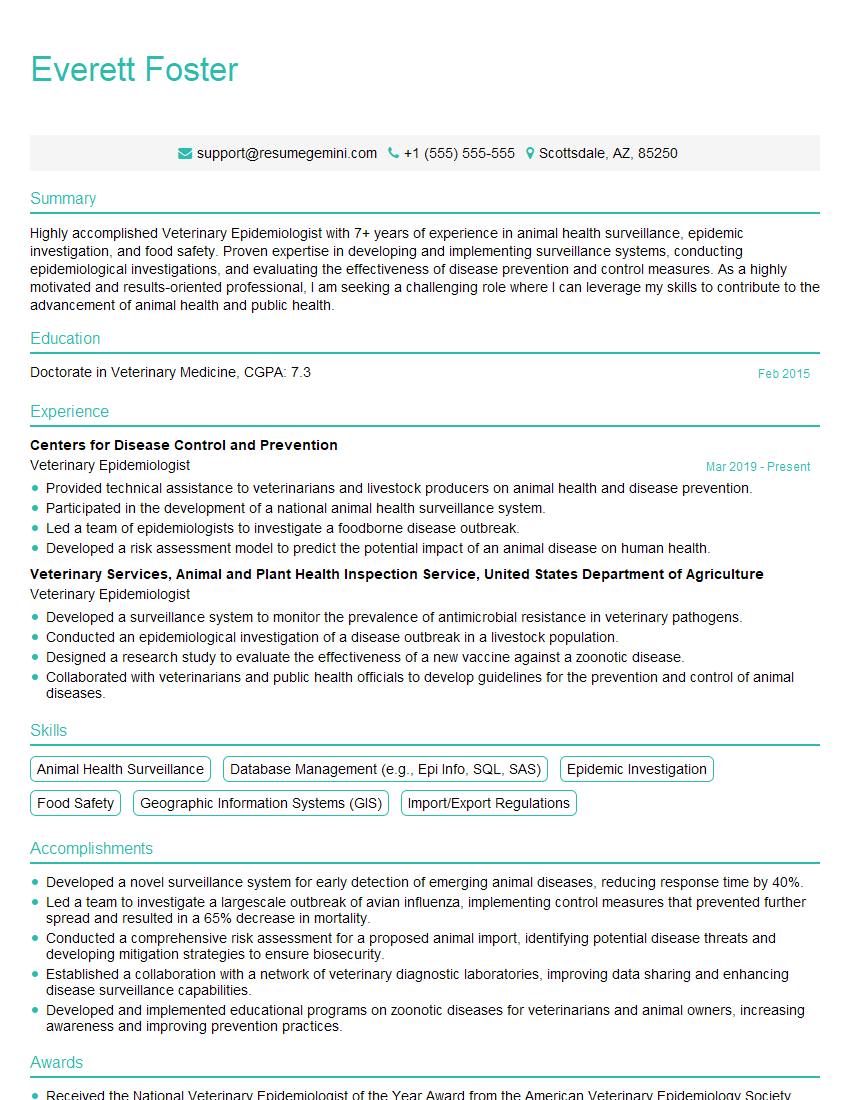
Mastering Wildlife Disease Identification and Management opens doors to impactful careers contributing to conservation efforts and public health. A strong resume is crucial for showcasing your skills and experience to potential employers. Building an ATS-friendly resume significantly increases your chances of getting your application noticed. ResumeGemini is a trusted resource that can help you create a professional and effective resume tailored to this field. Examples of resumes specifically designed for Wildlife Disease Identification and Management professionals are available to guide you. Invest the time to create a compelling resume – it’s your first impression and a key step towards your dream career.
Explore more articles
Users Rating of Our Blogs
Share Your Experience
We value your feedback! Please rate our content and share your thoughts (optional).
What Readers Say About Our Blog
Very informative content, great job.
good