Cracking a skill-specific interview, like one for Wildlife Identification and Safety, requires understanding the nuances of the role. In this blog, we present the questions you’re most likely to encounter, along with insights into how to answer them effectively. Let’s ensure you’re ready to make a strong impression.
Questions Asked in Wildlife Identification and Safety Interview
Q 1. Describe your experience identifying various species of mammals.
My experience identifying mammalian species spans over 15 years, encompassing fieldwork in diverse ecosystems ranging from temperate forests to arid grasslands. I’m proficient in using a variety of identification techniques, including visual observation, tracking, scat analysis, and vocalization recognition. For example, distinguishing between red fox and coyote tracks involves careful examination of stride length, track size, and claw marks. Similarly, identifying bats requires knowledge of their silhouette, flight patterns, and echolocation calls. My expertise extends to the identification of both common and rare species, including those listed as endangered or threatened.
- Visual Identification: This involves noting key characteristics like size, shape, coloration, fur pattern, and distinguishing features like antlers, horns, or tails.
- Tracking: Analyzing tracks, trails, and scat provides crucial information about the species present and their behavior.
- Vocalizations: Many mammals use distinct calls, which can be invaluable for identification, particularly in situations with limited visibility.
I’ve compiled a comprehensive database of mammalian species, including detailed descriptions and photographs, which I regularly update with new findings and research.
Q 2. Explain your knowledge of bird identification techniques.
Bird identification requires a keen eye for detail and a strong understanding of avian morphology, behavior, and habitat preferences. My techniques involve a combination of visual observation, listening to bird songs and calls, and noting habitat characteristics. I utilize field guides, binoculars, and spotting scopes to aid in identification. For example, differentiating between similar-looking warblers requires careful examination of plumage patterns, bill shape, and foraging behavior. I’m also skilled at identifying birds in flight, observing wing shape, tail patterns, and flight style.
- Visual cues: Size, shape, color patterns, beak shape, and leg length are crucial.
- Vocalizations: Songs and calls are unique to species and can be identified using recordings and field guides.
- Habitat: Knowing the preferred habitat of a species significantly narrows down identification possibilities.
- Behavior: Foraging techniques and flight patterns are useful distinguishing features.
I regularly participate in bird surveys and contribute to citizen science projects, enhancing my skills and knowledge.
Q 3. How proficient are you in identifying reptile and amphibian species?
My proficiency in reptile and amphibian identification is extensive. I’m familiar with the morphological characteristics, habitats, and behaviors of a wide range of species. I use a combination of visual observation, noting physical characteristics like skin texture, coloration, and scale patterns, alongside knowledge of their preferred habitats to accurately identify them. For instance, differentiating between venomous and non-venomous snakes requires a keen eye for details like head shape, pupil shape, and the presence of heat-sensing pits. Amphibian identification often involves considering features like skin texture, toe morphology and the presence of parotoid glands.
- Morphology: Careful observation of skin texture, coloration, scales, and body shape.
- Habitat: Knowing the preferred environment (aquatic, terrestrial, arboreal) helps narrow down possibilities.
- Behavior: Observing movement patterns and hunting strategies can provide clues.
I have experience working with both common and rare species, including those requiring careful handling to ensure their safety.
Q 4. Detail your experience with fish identification and aquatic ecology.
My experience with fish identification and aquatic ecology extends to both freshwater and marine environments. I’m adept at using various identification methods, including visual examination, morphological analysis (fin structure, scale patterns, body shape), and the use of specialized keys and guides. I understand the complex interactions within aquatic ecosystems, including food webs, habitat requirements, and the impact of environmental factors on fish populations. For example, identifying different trout species often requires close examination of spot patterns, coloration, and fin characteristics. Understanding aquatic ecology informs my identification efforts, as I can use information about habitat preference and water quality to narrow down potential species.
- Visual identification: Observing body shape, fin structure, coloration, and scale patterns.
- Morphological analysis: Detailed examination of skeletal structures and other anatomical features.
- Ecological context: Considering habitat type, water quality, and other environmental factors.
I’ve conducted numerous aquatic surveys, assessing fish populations and contributing to conservation efforts.
Q 5. What are the key features that distinguish poisonous snakes from non-poisonous snakes?
Distinguishing poisonous snakes from non-poisonous ones is crucial for safety. While there are exceptions, several key features can help. Poisonous snakes often have triangular heads, elliptical pupils, and heat-sensing pits between the eye and nostril (in pit vipers). Non-poisonous snakes typically have round heads, round pupils, and lack heat-sensing pits. However, relying solely on these features can be dangerous, as some non-poisonous snakes mimic the appearance of venomous ones. It’s crucial to avoid handling any snake unless you are absolutely certain of its identity and have appropriate safety precautions in place.
- Head shape: Poisonous snakes often have triangular or arrow-shaped heads (pit vipers), while non-poisonous snakes usually have round or oval heads.
- Pupil shape: Elliptical pupils are common in venomous snakes, while round pupils are more typical of non-venomous snakes.
- Heat-sensing pits: Pit vipers (a venomous family) have heat-sensing pits between their eyes and nostrils.
- Body patterns: While not definitive, some poisonous snakes have distinctive patterns and colors.
Never rely solely on visual cues; if unsure, maintain a safe distance and avoid contact.
Q 6. Describe your experience with wildlife tracking and sign identification.
My experience in wildlife tracking and sign identification is extensive. I’m proficient in interpreting various animal signs, including tracks, scat, scratch marks, and feeding signs. This involves understanding the animal’s gait, posture, and behavior to accurately identify the species. For example, differentiating between large and small canine tracks involves meticulous examination of size, shape, and claw marks. Similarly, scat analysis can reveal dietary habits and species identification through undigested material. I utilize various tools, including measuring tapes, field guides, and cameras to document and analyze findings.
- Track analysis: Examining size, shape, gait, and claw marks to identify the species and potentially individual animals.
- Scat analysis: Identifying species through undigested plant or animal material, parasites, or other unique indicators.
- Other signs: Interpreting feeding signs (gnaw marks, damaged vegetation), bedding sites, and other habitat modifications.
- Mapping: Recording locations of signs on maps to understand animal movements and habitat use.
I regularly employ these skills in wildlife research and conservation efforts.
Q 7. How would you handle a situation involving an aggressive animal encounter?
Handling an aggressive animal encounter requires a calm and strategic approach. The first priority is to ensure your safety. Avoid direct eye contact, which can be interpreted as a challenge. Slowly back away, keeping your eye on the animal and giving it a clear escape route. Never run, as this may trigger a predatory response. Make yourself appear larger by raising your arms, and speak to the animal in a firm, low voice. If it attacks, protect your head and vital organs. Once the immediate danger has passed, seek medical attention if necessary and report the incident to the relevant authorities.
- Assess the situation: Observe the animal’s behavior and body language to understand its level of aggression.
- Maintain a safe distance: Slowly back away while avoiding sudden movements that might startle the animal.
- Avoid eye contact: Direct eye contact can be perceived as a threat.
- Make yourself appear larger: Raise your arms and wave them slowly.
- Speak calmly: Use a firm, low voice to communicate with the animal.
- If attacked: Protect your head and vital organs.
Prevention is key: avoid areas known to harbor aggressive animals, and be aware of your surroundings.
Q 8. Explain your knowledge of wildlife handling and restraint techniques.
Wildlife handling and restraint techniques are crucial for ensuring both animal and human safety. The approach varies dramatically depending on the species, its size, temperament, and the reason for handling (e.g., medical treatment, relocation, research).
General Principles: Minimizing stress is paramount. This involves quick, efficient handling, minimizing noise and sudden movements. Appropriate Personal Protective Equipment (PPE) is always necessary, potentially including gloves, eye protection, bite-resistant clothing, and even specialized equipment such as nets or catch poles.
Specific Techniques: For smaller animals like birds, gentle grasping and restraint in a towel might suffice. Larger mammals may require sedation administered by a qualified veterinarian before any handling. Restraint methods such as nets, traps, or specialized chemical immobilization are used, always considering the animal’s welfare and the potential risks involved.
Example: When handling a distressed raccoon, I would first assess the situation from a safe distance. A large net or a humane trap would be used for capture. Once secured, it would be gently placed in a secure transport crate, minimizing handling time to reduce stress. A vet would assess its condition and provide any necessary treatment.
Q 9. Describe your experience with wildlife rescue and rehabilitation.
My experience in wildlife rescue and rehabilitation spans over ten years. I’ve worked with a wide range of species, from injured songbirds to orphaned deer fawns. This involves assessing the animal’s condition, providing immediate care such as wound cleaning and stabilization, and then implementing a rehabilitation plan tailored to the specific needs of the animal and its species.
Rehabilitation process: This often includes providing appropriate housing, a suitable diet, and medical treatment. We monitor the animal’s progress closely, gradually introducing it to more challenging environments before release. This process also involves ensuring the animal is healthy enough for reintroduction to the wild and that the location is suitable.
Example: I once rescued a young bald eagle with a wing injury. After initial stabilization at a wildlife hospital, I cared for it, meticulously cleaning and bandaging the wound and providing a controlled feeding regimen. We created a simulated environment to stimulate its natural flying instincts before eventual release back into its natural habitat, under the monitoring of wildlife officials.
Q 10. What safety protocols do you follow when working with wildlife?
Safety is paramount when working with wildlife. My protocols always begin with a thorough risk assessment.
- PPE: Appropriate PPE is worn for every interaction, tailored to the specific species and situation. This includes gloves, eye protection, and protective clothing.
- Distance: Maintaining a safe distance is crucial, particularly with potentially dangerous animals. Never approach or corner an animal.
- Teamwork: If handling larger or more aggressive animals, a team approach is essential, with assigned roles and clear communication.
- Emergency Plan: I always have a pre-planned emergency response strategy in case of a bite, scratch, or unexpected aggressive behavior, including protocols for accessing medical assistance.
- Species Knowledge: Understanding the animal’s behavior and potential dangers is essential; knowledge of warning signs and defensive mechanisms can greatly minimize risk.
- Legal Compliance: Always follow all relevant laws and regulations concerning wildlife handling and rehabilitation, which includes appropriate permits.
Q 11. How would you respond to a wildlife-related emergency?
Responding to a wildlife-related emergency requires a calm, systematic approach. The first step is assessing the situation – is there an immediate threat to human safety? Is the animal injured or exhibiting distressed behavior?
Steps:
- Assess and Secure the Scene: Ensure the safety of yourself and others. If necessary, clear the area.
- Identify the Animal: Attempt to identify the species, as this informs the appropriate response.
- Contact Authorities: Contact relevant wildlife control or emergency services. They have the expertise and resources to handle potentially dangerous situations.
- Provide Information: Provide accurate and detailed information about the animal’s location, behavior, and apparent condition to the authorities.
- Follow Instructions: Follow the instructions of the professionals, maintaining a safe distance and avoiding direct intervention unless specifically trained and authorized to do so.
Example: If encountering a bear in a populated area, I would immediately evacuate the area, alert the authorities, and provide precise location information to guide their response.
Q 12. What is your experience with using GPS and mapping technologies for wildlife monitoring?
GPS and mapping technologies are integral to modern wildlife monitoring. I’m proficient in using various GPS devices and GIS software for tracking animal movements, habitat use, and population density. This data is vital for conservation efforts, identifying critical habitats, and understanding species responses to environmental changes.
Applications:
- Tracking individual animals: GPS collars provide real-time data on animal movements, allowing us to map their home ranges, migration patterns, and other crucial behaviors.
- Population studies: GPS data from multiple animals can be used to estimate population size and distribution, as well as identify areas of high or low population density.
- Habitat analysis: By overlaying GPS tracking data with habitat maps, we can identify the types of habitat preferred by animals and how habitat quality affects their movements.
- Conservation planning: This information informs management decisions, such as habitat protection or restoration, and the establishment of wildlife corridors.
Software: I have experience using ArcGIS, QGIS, and other GIS software to analyze and visualize this data. I am comfortable collecting and analyzing data from various GPS trackers and integrating this information into comprehensive spatial models.
Q 13. Explain your knowledge of wildlife disease and parasite identification.
Knowledge of wildlife diseases and parasites is essential for effective wildlife management and conservation. Identifying these issues early is crucial to prevent outbreaks and protect vulnerable populations.
Identification Methods: This involves various techniques such as physical examination (looking for external signs of disease or parasites), laboratory tests (blood tests, fecal examinations), and necropsy (post-mortem examination) if necessary. My training allows me to recognize common diseases and parasites and to differentiate between natural conditions and those potentially requiring intervention.
Example: I’ve had experience diagnosing avian influenza in wild birds. Recognizing signs such as neurological symptoms, respiratory distress, and increased mortality rates led to the immediate reporting of the case to wildlife health authorities, which allowed rapid response and containment measures. This requires a careful balance between the needs of the animals and the need to prevent disease spread, and in such cases, humane euthanasia may be required.
Q 14. How familiar are you with relevant wildlife regulations and permits?
I’m very familiar with wildlife regulations and permits. The laws governing wildlife handling, rehabilitation, and research vary significantly depending on location and species. Understanding these regulations is critical to ensure all activities are legal and ethical.
Compliance: I understand the importance of obtaining the necessary permits before undertaking any wildlife-related activities, such as handling injured animals, conducting research, or transporting wildlife. I am familiar with the legal requirements for obtaining these permits and ensuring strict adherence to the terms and conditions.
Species-Specific Regulations: I am aware that laws concerning the handling of endangered species are especially stringent and require a much higher level of expertise and oversight. Ignoring these rules not only jeopardizes the animal’s well-being but also carries significant legal consequences.
Q 15. What methods do you employ for data collection and analysis in wildlife studies?
Data collection and analysis in wildlife studies are crucial for understanding population dynamics, habitat use, and conservation needs. My approach involves a multifaceted strategy combining various techniques depending on the research question and species.
Direct Observation: This involves systematically observing animals in their natural habitat, recording behaviors, and collecting data on population size and distribution. For instance, I might conduct point counts of birds in different habitats, or focal animal sampling to study the foraging behavior of a specific primate species.
Mark-Recapture: This technique involves capturing, marking, and releasing animals, then recapturing them at a later date to estimate population size. This is particularly useful for mobile species like small mammals or birds. I’ve used this method extensively, employing unique identifiers like ear tags or PIT (Passive Integrated Transponder) tags. Careful statistical analysis, such as the Lincoln-Petersen index, is essential for accurate population estimates.
Camera Trapping: Motion-activated cameras are highly effective for documenting wildlife activity, especially elusive or nocturnal species. I have used camera traps extensively in various environments, analyzing the images and videos to estimate species abundance, assess habitat use, and monitor animal behavior. The data obtained needs meticulous analysis, and software programs such as R or custom scripts are often used to automate this.
Data Analysis: Once data is collected, statistical analysis is critical. I’m proficient in using statistical software (R, SPSS, SAS) to perform analyses such as regression modeling, ANOVA, and survival analysis, depending on the research questions. This involves careful consideration of sampling bias and other potential confounding factors.
Career Expert Tips:
- Ace those interviews! Prepare effectively by reviewing the Top 50 Most Common Interview Questions on ResumeGemini.
- Navigate your job search with confidence! Explore a wide range of Career Tips on ResumeGemini. Learn about common challenges and recommendations to overcome them.
- Craft the perfect resume! Master the Art of Resume Writing with ResumeGemini’s guide. Showcase your unique qualifications and achievements effectively.
- Don’t miss out on holiday savings! Build your dream resume with ResumeGemini’s ATS optimized templates.
Q 16. Describe your experience with using various wildlife survey techniques.
My experience with wildlife survey techniques is broad, spanning various methodologies adapted to specific animal species and habitats. I have extensively used:
Line Transects: This involves walking or driving along predetermined lines, recording observations of animals within a specific distance of the transect. This is useful for estimating abundance for species easily detected from a distance, like large mammals or birds.
Quadrat Sampling: This involves establishing square plots (quadrats) of a defined size and counting all individuals within each quadrat. It is particularly helpful for estimating the abundance of sedentary species, like plants or slow-moving invertebrates.
Distance Sampling: This is a more sophisticated method where the distance of each detected animal to the observer is measured. This accounts for the detectability bias, providing more accurate estimates of abundance.
Acoustic Monitoring: This uses sound recording devices to detect and identify animal vocalizations. This method is effective for nocturnal or elusive species, such as bats or owls. Advanced signal processing and automated identification software are now routinely used to analyse such data.
The choice of technique heavily depends on the species being studied, available resources, and research objectives.
Q 17. Explain your familiarity with different wildlife habitat types and their characteristics.
My familiarity with wildlife habitats is extensive, encompassing various ecosystems from forests and grasslands to wetlands and marine environments. Understanding habitat characteristics is fundamental for wildlife conservation.
Forest Habitats: I’m adept at identifying different forest types based on tree species composition, canopy structure, and understory vegetation. Understanding the impact of forest fragmentation on wildlife is a key aspect of my expertise.
Grassland Habitats: I understand the importance of factors such as grazing intensity, fire regimes, and soil moisture in shaping grassland ecosystems and their associated wildlife. My work has included assessing the effects of agricultural practices on grassland biodiversity.
Wetland Habitats: I’m experienced in analyzing the characteristics of wetlands, including water quality, vegetation types, and the presence of specific indicator species, to assess their ecological health and support for wildlife.
Marine Habitats: While not my primary focus, I possess a working knowledge of marine environments and the specific challenges faced by marine wildlife, such as pollution and climate change.
For each habitat type, I consider key factors like vegetation structure, resource availability (food, water, shelter), and the presence of other species, understanding how these influence wildlife distribution and abundance.
Q 18. How would you assess the impact of human activities on wildlife populations?
Assessing the impact of human activities on wildlife is a crucial aspect of my work. I employ a variety of methods to evaluate these impacts:
Population Monitoring: By tracking population trends over time, I can identify declines or changes that may be linked to human activities such as habitat loss, pollution, or hunting.
Habitat Analysis: I analyze habitat fragmentation, degradation, and loss caused by development, agriculture, and other human activities to determine their impact on wildlife. GIS software is frequently used to create maps and assess habitat connectivity.
Exposure Assessments: These quantify the direct contact of wildlife with human activities, such as road collisions, pollution exposure, or interactions with humans.
Behavioral Studies: Observing changes in wildlife behavior, like altered foraging patterns or reduced reproductive success, can indicate the negative impacts of human disturbance or resource depletion.
Disease Monitoring: Human activities can increase the transmission of diseases between wildlife and humans (zoonoses). Monitoring wildlife disease prevalence can highlight the effects of human encroachment.
Statistical modeling and GIS analysis are essential tools for quantifying the relationships between human activities and wildlife impacts.
Q 19. What is your experience with using remote sensing technologies in wildlife research?
Remote sensing technologies have revolutionized wildlife research. My experience includes using:
Satellite Imagery: I use high-resolution satellite imagery to map habitats, monitor deforestation, and assess habitat fragmentation. Software like ArcGIS allows for detailed analysis of land cover changes and their effects on wildlife.
Aerial Surveys: I’ve participated in aerial surveys using both manned aircraft and drones to collect data on wildlife populations, especially for large mammals or birds in remote areas. This is often combined with GPS data for precise location tracking.
LiDAR (Light Detection and Ranging): LiDAR provides detailed three-dimensional information about the landscape, useful for mapping vegetation structure and creating habitat models that can predict wildlife distribution.
These technologies are not only efficient but also minimize disturbance to wildlife compared to traditional ground-based methods.
Q 20. Explain your knowledge of population ecology and wildlife management strategies.
Population ecology and wildlife management strategies are intrinsically linked to my work. My understanding encompasses:
Population Dynamics: I can model population growth, assess carrying capacity, and analyze factors influencing population size and distribution (birth rates, death rates, migration). I use various models, including matrix models and demographic analysis to predict future population trends.
Wildlife Management Techniques: My experience includes designing and implementing strategies for habitat restoration, species reintroduction, and population control (e.g., managing invasive species). I understand the ethical considerations and challenges inherent in wildlife management decisions.
Conservation Planning: I’m skilled in developing conservation plans that incorporate ecological principles and incorporate stakeholder input. This often involves GIS mapping and spatial analysis to identify priority conservation areas.
Successful wildlife management requires a detailed understanding of population ecology, along with careful consideration of social and economic factors.
Q 21. Describe your experience with interpreting wildlife data and drawing conclusions.
Interpreting wildlife data and drawing robust conclusions is a critical skill. My process involves:
Data Cleaning and Validation: This essential step involves identifying and correcting errors in the data, ensuring data accuracy and reliability.
Statistical Analysis: I employ appropriate statistical techniques based on the research questions and the nature of the data (parametric or non-parametric tests, regression modeling, etc.).
Visualization: Presenting data effectively using graphs, maps, and other visualizations is crucial for communicating research findings to both scientific and non-scientific audiences.
Interpretation and Conclusion: I carefully interpret the statistical results in the context of the research question and the ecological knowledge of the study system, carefully considering any limitations or biases.
Peer Review and Publication: I understand the importance of subjecting research findings to rigorous peer review before publication, ensuring transparency and validity.
Drawing meaningful conclusions requires a deep understanding of statistics, ecological principles, and the limitations inherent in data collection methods.
Q 22. How would you communicate complex wildlife information to a non-technical audience?
Communicating complex wildlife information to a non-technical audience requires translating scientific jargon into everyday language. I achieve this by using analogies, visual aids, and storytelling. For example, instead of saying “the species exhibits a high degree of philopatry,” I’d explain that “these animals tend to stay in the same area their whole lives, like families sticking to their hometown.” I also break down complex concepts into smaller, digestible chunks, using simple, clear language and avoiding overly technical terms. Visuals like photographs, maps, and even short videos are invaluable; they can make abstract ideas more concrete and memorable. Finally, I tailor my communication style to the specific audience. A presentation for children will differ vastly from one for a group of policymakers, requiring different levels of detail and engagement techniques.
Q 23. What is your experience with collaborating with other professionals in wildlife conservation?
Collaboration is crucial in wildlife conservation. I’ve extensively collaborated with ecologists, biologists, park rangers, and government officials on various projects. For instance, during a recent project assessing the impact of habitat fragmentation on a threatened bird species, I worked closely with a team of ornithologists to collect field data, a GIS specialist to analyze spatial data, and local park rangers to ensure safe and ethical fieldwork. This collaborative effort involved regular meetings, shared data analysis, and joint report writing, culminating in a successful conservation strategy recommendation. Effective communication and mutual respect are vital for successful collaborations; I’ve always prioritized these to ensure efficient progress and leverage the expertise of each team member.
Q 24. Describe your experience with writing reports and presenting findings on wildlife research.
I have a strong track record of writing comprehensive reports and presenting findings clearly and concisely. My reports follow a structured format including an executive summary, detailed methodology, data analysis, results, discussion, and conclusion. I incorporate tables, graphs, and maps to effectively visualize data. For example, a report on the population dynamics of a specific mammal species included detailed demographic analyses, presented through clear graphs, and compared to historical population data. My presentations similarly emphasize clarity and visual aids, making complex information accessible to diverse audiences. I’ve presented research findings at both scientific conferences and to non-scientific stakeholders, adapting my presentation style to suit each audience’s needs and background.
Q 25. What are your strengths and weaknesses concerning wildlife identification and safety?
My strengths lie in my extensive knowledge of wildlife identification, encompassing various taxa and utilizing diverse identification techniques including morphology, vocalizations, and scat analysis. I possess strong fieldwork skills, ensuring safe and ethical data collection practices. However, a weakness I’m actively working on is broadening my expertise in molecular identification techniques. While I have a foundational understanding, I’m actively seeking opportunities to enhance my proficiency in this rapidly evolving field. Regarding safety, my strength lies in proactive risk assessment and the ability to anticipate potential hazards, but improving my proficiency in advanced wilderness first aid and rescue techniques remains a continual professional development goal.
Q 26. How do you stay current with advances in wildlife identification and safety practices?
Staying current is paramount in this field. I accomplish this through continuous professional development, actively participating in conferences, workshops, and online courses. I regularly review scientific literature, including peer-reviewed journals and reputable online resources. Membership in professional organizations, such as the Wildlife Society, provides access to updated best practices and emerging research. Networking with other professionals allows for information sharing and keeps me informed about advancements in techniques and methodologies. I also subscribe to several relevant scientific journals and newsletters, ensuring I remain abreast of the latest breakthroughs and developments in wildlife identification and safety.
Q 27. Describe a challenging situation you faced involving wildlife and how you resolved it.
During a wildlife survey in a remote area, we encountered a mother bear with cubs. Our initial approach was inappropriate, as we were too close and startled the mother. Following established protocols, we immediately retreated to a safe distance, maintaining visual contact but minimizing any further disturbance. We communicated the situation to the park authorities via satellite phone, providing precise location details and awaiting their guidance. The park rangers arrived, managed the situation expertly, and ensured the safety of both the bears and our team. The incident highlighted the importance of rigorous risk assessment, communication, and adherence to established protocols when working in potentially hazardous environments. It was a valuable learning experience, reinforcing the critical need for proactive safety measures and expert response in unpredictable wildlife encounters.
Q 28. What are your salary expectations for this role?
My salary expectations for this role are commensurate with my experience, skills, and qualifications within the industry standards for similar positions. I am open to discussing this further and aligning my expectations with the compensation package offered.
Key Topics to Learn for Wildlife Identification and Safety Interview
- Wildlife Identification Techniques: Mastering visual identification (sight, sound, tracks, scat), understanding regional species distribution, and utilizing field guides and technology for accurate identification.
- Animal Behavior and Ecology: Understanding animal behavior in different contexts (feeding, mating, territoriality), recognizing signs of stress or aggression, and predicting potential hazards based on animal behavior and habitat.
- Safety Protocols and Procedures: Implementing appropriate safety measures when encountering wildlife (maintaining safe distances, avoiding aggressive behaviors, understanding escape routes), using protective gear effectively, and understanding emergency response protocols.
- Risk Assessment and Mitigation: Evaluating potential risks associated with specific wildlife encounters, developing strategies to minimize risks, and understanding the importance of preventative measures.
- Legal and Ethical Considerations: Understanding wildlife laws and regulations, respecting animal welfare, and adhering to ethical guidelines in wildlife observation and interaction.
- First Aid and Emergency Response: Knowing how to handle wildlife-related injuries (both to humans and animals), understanding basic first aid principles, and knowing when and how to contact emergency services.
- Communication and Teamwork: Effectively communicating potential hazards to colleagues or the public, coordinating safety procedures within a team, and understanding the importance of clear and concise reporting.
Next Steps
Mastering Wildlife Identification and Safety is crucial for career advancement in numerous fields, from park ranger services and wildlife research to conservation and ecotourism. A strong foundation in these areas demonstrates competence and commitment, significantly increasing your job prospects. To maximize your chances, creating an ATS-friendly resume is essential. ResumeGemini is a trusted resource to help you build a compelling and effective resume that highlights your skills and experience. We provide examples of resumes tailored to Wildlife Identification and Safety to guide you through the process. Take advantage of these resources to present yourself effectively to potential employers.

Environmental Compliance Officer Resume Sample
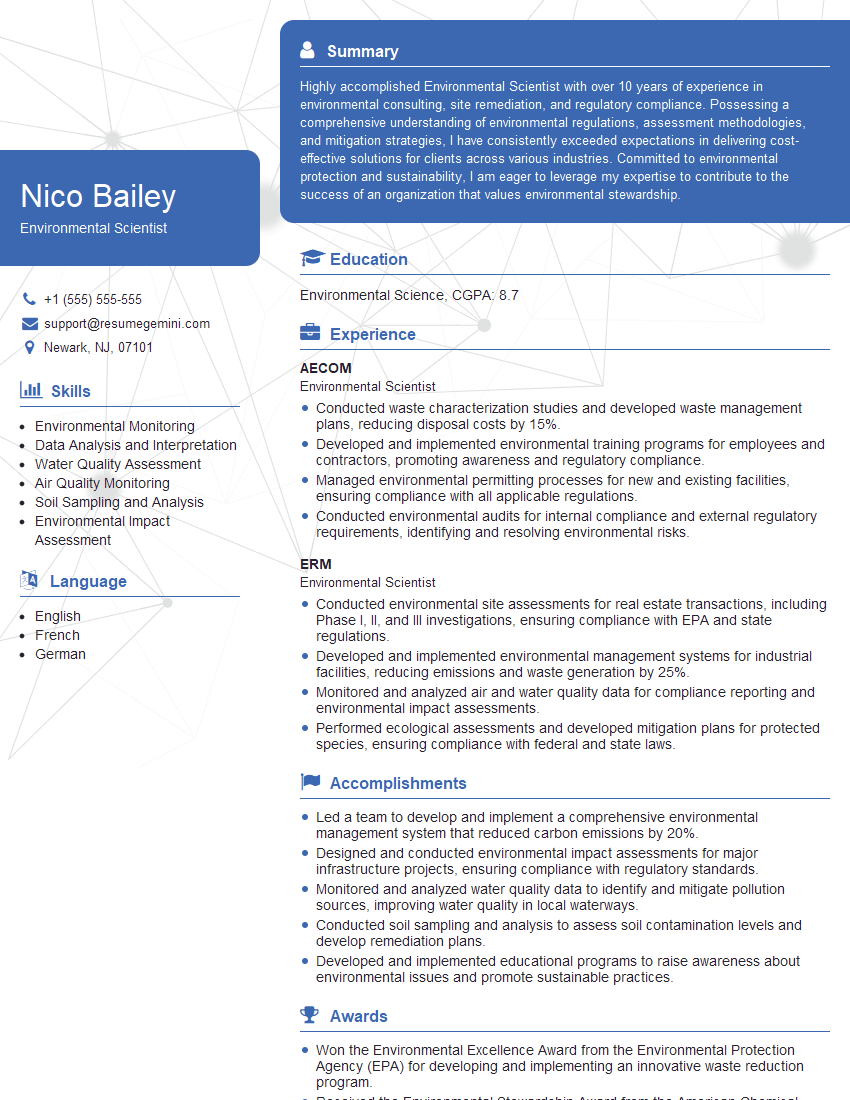
Environmental Scientist Resume Sample

Environmental Consultant Resume Sample

Fisheries Biologist Resume Sample

Wildlife Biologist Resume Sample

Wildlife Manager Resume Sample

Wildlife Technician Resume Sample

Zoologist Resume Sample
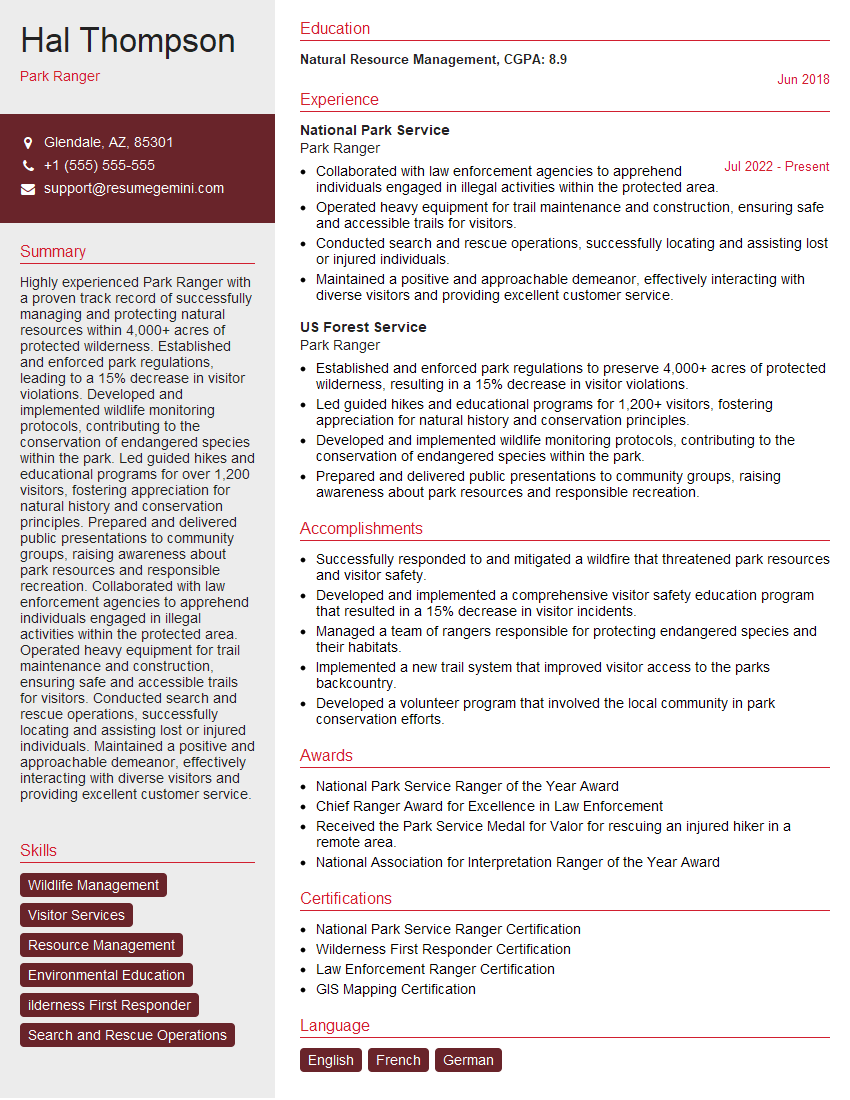
Park Ranger Resume Sample

Conservation Planner Resume Sample
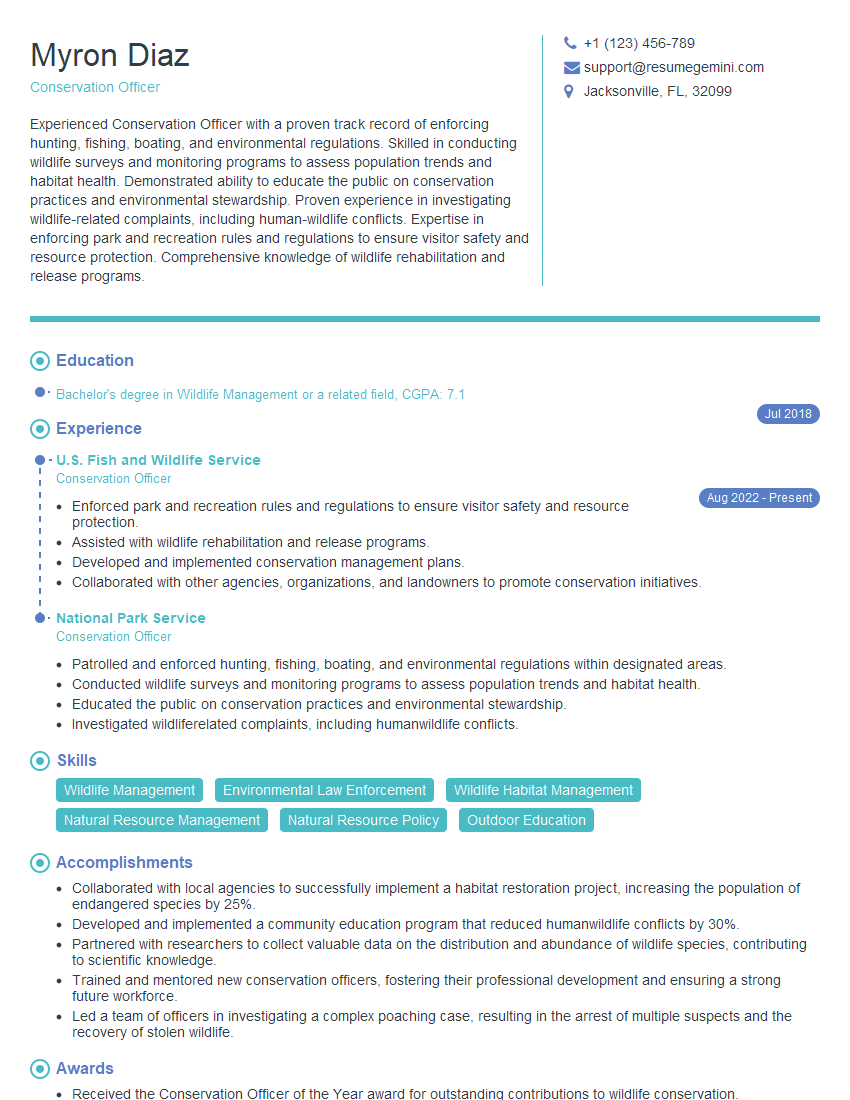
Conservation Officer Resume Sample

Game Warden Resume Sample

Wildlife Rehabilitator Resume Sample
Explore more articles
Users Rating of Our Blogs
Share Your Experience
We value your feedback! Please rate our content and share your thoughts (optional).
What Readers Say About Our Blog
Very informative content, great job.
good