Preparation is the key to success in any interview. In this post, we’ll explore crucial Wind Farm Planning and Development interview questions and equip you with strategies to craft impactful answers. Whether you’re a beginner or a pro, these tips will elevate your preparation.
Questions Asked in Wind Farm Planning and Development Interview
Q 1. Explain the process of wind resource assessment.
Wind resource assessment is crucial for determining the viability of a wind farm. It involves measuring and analyzing wind speed, direction, and turbulence at potential wind farm sites. The goal is to understand the wind resource’s quality and consistency over time, and how it translates to potential energy production.
The process typically involves several steps:
- Meteorological Data Collection: This is done using various methods, including on-site meteorological masts (towers equipped with anemometers and wind vanes) for long-term data collection, and remote sensing techniques like LIDAR (Light Detection and Ranging) for detailed wind profile mapping across larger areas.
- Data Analysis and Modeling: Collected data undergoes rigorous analysis to determine wind speed distributions (using Weibull or Rayleigh statistical models), wind shear (change in wind speed with height), and turbulence intensity. This data is then used to feed into sophisticated wind resource simulation models (e.g., WAsP, WindPRO) that predict long-term energy output.
- Site Suitability Assessment: Besides wind characteristics, the assessment also considers factors like land availability, terrain characteristics, proximity to transmission lines, and environmental constraints. This stage often involves GIS (Geographic Information Systems) analysis to map potential conflicts and identify optimal locations.
- Uncertainty Analysis: Given the inherent variability of wind, a thorough uncertainty analysis is vital. This accounts for errors in data collection, uncertainties in model predictions, and variations in wind conditions over time, ensuring realistic estimates of energy production and project financial viability.
For instance, a recent project I worked on involved using LIDAR to scan a mountainous region to identify areas with consistent high-speed winds, while simultaneously using GIS to rule out environmentally sensitive zones. This hybrid approach maximized energy yield while minimizing environmental impact.
Q 2. Describe different wind turbine technologies and their suitability for various sites.
Wind turbine technology is constantly evolving, leading to a range of designs optimized for different conditions. The most common types are:
- Gearbox Turbines: These are the traditional design, utilizing a gearbox to increase the rotational speed of the generator. They are robust and reliable but can be less efficient and require more maintenance.
- Gearless Turbines (Direct Drive): These eliminate the gearbox, reducing mechanical losses and maintenance requirements. However, they typically require larger and heavier generators.
- Horizontal Axis Wind Turbines (HAWT): The most prevalent type, with the rotor shaft parallel to the ground. They are suitable for a wide range of sites but can be affected by wake effects (turbulence from upstream turbines).
- Vertical Axis Wind Turbines (VAWT): These have a vertical rotor shaft, offering advantages such as less sensitivity to wind direction and lower start-up speeds. They are generally less efficient than HAWTs and better suited for urban settings or sites with limited space.
Site suitability depends on factors like wind speed, turbulence, and land availability. For example, high-wind, open sites are ideal for large HAWT turbines, while VAWTs might be suitable for urban areas with limited space or consistent but moderate winds. Choosing the right technology is critical for optimizing energy production and minimizing lifecycle costs.
Q 3. How do you determine the optimal turbine spacing in a wind farm?
Determining optimal turbine spacing is crucial for maximizing energy production while minimizing wake effects. Wake effects occur when the air downstream of a turbine becomes turbulent, reducing the performance of downwind turbines. The optimal spacing is a complex interplay between maximizing energy capture and minimizing wake losses.
Several factors influence optimal spacing:
- Turbine Size and Model: Larger turbines generally require greater spacing due to larger wake areas.
- Wind Shear and Turbulence: Higher wind shear and turbulence accelerate wake recovery, potentially allowing for closer spacing.
- Terrain and Topography: Complex terrain can affect wake propagation, requiring customized spacing strategies.
- Wind Directionality: Consistent wind direction allows for tighter spacing along the prevailing wind direction.
Advanced simulation tools and wake modeling techniques are used to determine optimal layouts. These models often employ Computational Fluid Dynamics (CFD) to simulate airflow patterns and estimate energy losses due to wakes. In practice, iterative simulations are often performed, adjusting spacing parameters to optimize energy output based on the specific site conditions. We frequently use software like FLORIS or WAsP to perform these analyses, ensuring efficient and economically viable designs.
Q 4. What are the key considerations for grid connection in wind farm development?
Grid connection is a critical aspect of wind farm development, requiring careful planning and coordination with the utility grid operator. Key considerations include:
- Grid Capacity and Stability: The grid must have sufficient capacity to accommodate the wind farm’s power output without compromising grid stability. This involves studying power flow, voltage levels, and frequency stability. Transmission upgrades may be necessary.
- Collection System Design: A robust collection system (internal cabling, substations) is needed to gather the power from individual turbines and deliver it to the grid connection point.
- Point of Connection (POC): Determining the optimal point of connection to the grid – usually a substation – is crucial for minimizing transmission losses and costs. This often involves negotiations with the utility company.
- Interconnection Agreement: A formal agreement with the utility outlines technical requirements, connection costs, and responsibilities during operation and maintenance.
- Regulatory Compliance: Meeting all applicable grid connection standards and regulations is paramount. This includes complying with interconnection procedures and adhering to safety protocols.
For example, in a recent project, we had to work closely with the utility to upgrade a nearby substation and secure the necessary interconnection agreement. This involved extensive simulations and technical studies to demonstrate the wind farm’s compatibility with the grid.
Q 5. Explain the role of environmental impact assessments in wind farm projects.
Environmental Impact Assessments (EIAs) are essential for mitigating the potential environmental effects of wind farm projects. They are legally mandated in many jurisdictions and provide a structured framework for evaluating potential impacts and developing mitigation strategies.
Key aspects of a wind farm EIA typically include:
- Visual Impact: Assessing the visual impact on landscapes, considering factors like turbine height, color, and proximity to scenic viewpoints. Mitigation strategies might involve using specific turbine designs or implementing screening measures.
- Noise Pollution: Evaluating noise levels generated by turbines and their potential impact on nearby communities and wildlife. Mitigation may include noise barrier construction or strategic turbine placement.
- Wildlife Impacts: Assessing potential risks to birds and bats through collision with turbines or habitat fragmentation. Mitigation strategies could involve using bird deterrent systems, adjusting turbine operation during critical periods, or protecting key habitats.
- Habitat Fragmentation: Evaluating the impact of construction and operation on natural habitats. Mitigation involves careful planning of access roads and infrastructure to minimize habitat disturbance.
- Cumulative Impacts: Considering the cumulative effects of the wind farm in combination with other existing and planned developments in the area.
A comprehensive EIA helps ensure that wind farm projects proceed in an environmentally responsible manner, balancing renewable energy generation with environmental protection. This often involves detailed ecological surveys, noise modelling, and consultation with stakeholders.
Q 6. Describe the permitting process for wind farm development in your region.
The permitting process for wind farm development varies significantly depending on the region. However, there are common stages involved. In my region (Assuming a generalized North American context), the process typically follows these steps:
- Initial Site Assessment and Pre-Application Meetings: This stage involves conducting initial feasibility studies, identifying potential environmental and regulatory hurdles, and engaging in preliminary discussions with relevant authorities.
- Application Submission: A comprehensive application is submitted to the relevant permitting agencies, typically including detailed engineering plans, environmental impact assessments, and grid connection studies.
- Environmental Review and Public Consultation: Agencies review the EIA and conduct public consultation processes to address community concerns and gather feedback.
- Technical Review: Agencies conduct a technical review of the project’s engineering, design, and safety aspects, ensuring compliance with standards and regulations.
- Permit Issuance (or Denial): After a thorough review, the permitting agency issues permits, or they might issue a denial, requiring modifications to the application.
- Construction and Commissioning: Following permit issuance, construction can begin, followed by rigorous testing and commissioning before the wind farm becomes operational.
It’s a lengthy process, often requiring multiple years and substantial coordination across multiple agencies. Each agency has specific requirements and timelines. Throughout the process, proactive communication and careful documentation are critical for success.
Q 7. What are the common challenges in wind farm construction and how can they be mitigated?
Wind farm construction presents several challenges, many stemming from the scale and complexity of the project and the reliance on unpredictable weather conditions.
- Foundation Installation: Installing large turbine foundations, particularly in challenging terrains like rocky areas or soft soils, can be complex and time-consuming. This requires specialized equipment and engineering expertise.
- Turbine Erection: Lifting and installing heavy turbine components requires specialized cranes and skilled personnel. Weather conditions can significantly impact the erection process.
- Grid Connection Delays: Coordination with utility companies and potential delays in grid infrastructure upgrades can delay project completion.
- Weather-Related Delays: Unforeseen weather events such as strong winds or storms can significantly delay construction activities.
Mitigation strategies include detailed planning, contingency planning for weather delays, using advanced construction techniques, selecting robust designs, and effective project management. For example, we often incorporate weather forecasts into the construction schedule, allowing for flexible adjustments to mitigate delays. We also work closely with the utility company from the early stages of the project to minimize the risk of grid connection delays.
Q 8. Discuss the importance of operations and maintenance in maximizing wind farm efficiency.
Operations and maintenance (O&M) are absolutely crucial for maximizing wind farm efficiency and profitability. Think of a wind farm like a complex machine; regular servicing keeps it running smoothly and prevents costly breakdowns. Neglecting O&M leads to reduced energy production, increased repair costs, and a shortened lifespan for the turbines.
Effective O&M encompasses several key areas:
- Predictive Maintenance: Using data analytics and sensor technology to anticipate potential failures before they occur. This allows for proactive repairs, minimizing downtime and maximizing uptime. For instance, monitoring vibration levels in a turbine’s gearbox can indicate potential wear and tear, allowing for timely intervention.
- Corrective Maintenance: Addressing issues as they arise. This includes repairing damaged components, replacing worn parts, and rectifying malfunctions. A swift response to a malfunctioning blade, for example, minimizes the impact on energy generation.
- Preventative Maintenance: Implementing a scheduled maintenance plan with regular inspections and servicing. This includes tasks like lubricating moving parts, cleaning components, and tightening bolts. Think of it like regularly changing your car’s oil – it prevents major problems down the line.
- Remote Monitoring: Utilizing sophisticated monitoring systems to track turbine performance in real-time. This allows for early detection of anomalies and quick responses to potential problems. An example is using SCADA (Supervisory Control and Data Acquisition) systems to monitor power output and identify underperforming turbines.
By implementing a robust O&M strategy, wind farm operators can significantly extend the operational life of their turbines, reduce repair costs, and ultimately increase their return on investment.
Q 9. How do you assess the financial viability of a wind farm project?
Assessing the financial viability of a wind farm project requires a thorough and multi-faceted approach. It’s not just about the initial investment; we need to project the long-term profitability over the entire lifespan of the project (typically 20-25 years).
Here’s a breakdown of the key financial considerations:
- Capital Costs: This includes the cost of land acquisition, turbine procurement, grid connection, construction, and other infrastructure development. This is often the largest initial hurdle.
- Operational Expenses (OPEX): These are ongoing costs, including O&M, insurance, and administrative expenses. Accurate OPEX forecasting is critical for long-term profitability.
- Revenue Projections: This involves estimating the energy output based on wind resource assessments and energy prices. This requires sophisticated modelling and considers factors like capacity factor and power purchase agreements (PPAs).
- Financing and Debt Service: Securing financing (loans, equity) and determining the debt servicing schedule is crucial. Interest rates and loan terms significantly impact the project’s financial viability.
- Tax Incentives and Subsidies: Government incentives and subsidies can dramatically affect the overall profitability. These should be carefully considered during the financial modelling stage.
- Risk Assessment: A detailed risk assessment is vital, considering factors like fluctuating energy prices, unexpected equipment failures, and potential regulatory changes.
We typically use discounted cash flow (DCF) analysis to evaluate the project’s net present value (NPV) and internal rate of return (IRR). A positive NPV and an IRR exceeding the cost of capital indicate a financially viable project. Sensitivity analysis is also crucial to understand how changes in key parameters (e.g., energy prices, capacity factor) might affect the project’s financials.
Q 10. What are the key performance indicators (KPIs) used to monitor wind farm performance?
Key Performance Indicators (KPIs) are essential for monitoring wind farm performance and identifying areas for improvement. They provide a quantitative measure of the farm’s efficiency and profitability.
Some of the most important KPIs include:
- Capacity Factor: The ratio of actual energy produced to the maximum possible energy output. A higher capacity factor indicates better efficiency (discussed in more detail later).
- Energy Production: Total energy generated over a specific period (e.g., monthly, annually). This is a direct measure of the farm’s output.
- Availability: The percentage of time the turbines are operational and producing energy. Downtime due to maintenance or faults reduces availability.
- Downtime: The amount of time turbines are not operating due to maintenance, repairs, or other reasons. Minimizing downtime is crucial.
- Turbine Performance: Individual turbine performance metrics, such as power output, gearbox temperature, blade pitch, and vibration levels, are analyzed to identify potential problems early on.
- O&M Costs: Tracking O&M costs per megawatt-hour (MWh) helps to assess the efficiency of the maintenance program.
- Return on Investment (ROI): A key measure of the overall financial success of the project.
Regular monitoring and analysis of these KPIs enable proactive adjustments to optimize wind farm operations and improve profitability.
Q 11. Describe your experience with different types of wind turbine maintenance.
My experience encompasses various types of wind turbine maintenance, ranging from routine inspections to major component replacements. Maintenance activities can be broadly categorized as follows:
- Routine Inspections: These are regular visual inspections of the turbine components, including blades, gearbox, nacelle, and tower. We check for any signs of damage, wear, or unusual noise. This is crucial for early problem detection.
- Gearbox Maintenance: Gearboxes are complex and critical components. Maintenance includes oil changes, filter replacements, and sometimes major overhauls or component replacements. This often involves specialized equipment and expertise.
- Blade Maintenance: Blade inspections focus on detecting cracks, erosion, or damage caused by lightning strikes or bird impacts. Repairs can range from minor repairs to blade replacements.
- Generator Maintenance: This includes testing and cleaning the generator, checking for wear, and addressing any electrical issues.
- Hydraulic System Maintenance: Ensuring the proper functioning of the hydraulic systems that control blade pitch and yaw. This might involve fluid changes and component inspections.
- Electrical System Maintenance: Testing and maintaining the electrical components of the turbine, including the transformers, cabling, and control systems. This often involves specialized electrical testing equipment.
I’ve worked with both preventative maintenance schedules (routine checks and servicing) and corrective maintenance (responding to faults and breakdowns). The key to efficient maintenance is a good combination of both, leveraging predictive maintenance techniques where possible, with data analytics to inform decision-making.
Q 12. Explain the concept of capacity factor and its significance.
The capacity factor is a crucial metric that indicates how efficiently a wind turbine or wind farm is generating power relative to its maximum potential. It’s expressed as a percentage.
Capacity Factor = (Actual Energy Produced / Maximum Possible Energy Output) * 100%
Maximum Possible Energy Output is calculated by multiplying the rated power of the turbine (or the total rated power of the farm) by the number of operating hours in a given period (e.g., a year).
Significance:
- Financial Planning: A higher capacity factor means more energy is produced, leading to higher revenues and a stronger return on investment.
- Performance Evaluation: It allows for a standardized comparison of wind farm performance across different locations and technologies.
- Resource Assessment: Capacity factor estimations are essential during the project planning phase to assess the economic viability of a wind farm in a particular location.
For example, a wind farm with a capacity factor of 35% means it produced 35% of its maximum possible output over the given period. Factors influencing capacity factor include wind resource availability, turbine technology, O&M practices, and grid connection issues. A higher capacity factor is generally the goal, signifying a more efficient and profitable wind farm.
Q 13. How do you handle community concerns related to wind farm development?
Addressing community concerns is an essential part of successful wind farm development. Ignoring or dismissing these concerns can lead to significant delays, increased costs, and even project failure. A proactive and transparent approach is crucial.
Here’s how I handle community concerns:
- Early and Open Communication: Engaging with the community early in the project planning phase through public forums, meetings, and surveys to gather input and address concerns. This shows respect and fosters trust.
- Transparency and Education: Providing clear and accurate information about the project, its benefits, and potential impacts. Addressing misconceptions and answering questions honestly is key.
- Environmental Impact Assessment: Conducting thorough environmental assessments to address concerns about noise, visual impact, and potential effects on wildlife and ecosystems. Mitigation strategies should be clearly articulated.
- Economic Benefits: Highlighting the economic benefits for the local community, such as job creation, tax revenue, and land lease payments. This can address concerns about economic displacement.
- Addressing Specific Concerns: Directly addressing specific concerns raised by community members, offering solutions, and negotiating compromises where necessary. This might involve adjusting project design or implementing noise mitigation measures.
- Ongoing Dialogue: Maintaining open communication throughout the project lifecycle to address any emerging concerns.
By engaging with the community proactively and addressing their concerns respectfully, we can build trust and support for the project, ensuring its smooth implementation and long-term success.
Q 14. What are the different types of wind farm layouts and their advantages?
Wind farm layouts significantly impact energy production and overall efficiency. The choice of layout depends on factors like wind resource characteristics, terrain, and land availability.
Here are some common types:
- Linear Layout: Turbines are arranged in straight lines or rows, often aligned with the prevailing wind direction. This is a relatively simple and efficient layout, especially in areas with consistent wind patterns. It minimizes wake effects between turbines.
- Staggered Layout: Turbines are arranged in offset rows, designed to reduce wake effects and improve overall energy capture. This is often preferred in more complex terrain or where wind patterns are less consistent.
- Circular Layout: Turbines are arranged in a circular pattern around a central point. This arrangement may be used in specific situations, such as when dealing with a concentrated area of high-wind speed.
- Hybrid Layouts: Combine elements of the above layouts, adapting to varying terrain and wind patterns for optimized energy production. This could involve a mix of linear and staggered sections, depending on wind resource mapping.
Advantages and Considerations:
The primary advantage of a well-designed layout is the maximization of energy production while minimizing wake effects (loss of energy due to turbulent air behind turbines). Detailed wind resource assessments, using tools like Computational Fluid Dynamics (CFD) modelling, are crucial for optimizing layout design. Factors like turbine spacing, row spacing, and turbine orientation significantly influence energy capture.
Q 15. What software and tools are you proficient in for wind farm planning and analysis?
My proficiency in wind farm planning and analysis spans a range of specialized software and tools. I’m highly experienced with wind resource assessment software like WindPRO and WAsP, which are crucial for analyzing wind speed, direction, and turbulence. These tools allow me to create detailed wind atlases and accurately predict energy yield. For energy yield calculations and project financial modeling, I utilize software such as Helioscope and WindFarmer. These platforms integrate various parameters—from turbine performance curves to grid connection constraints—to simulate farm performance over its lifetime and help make informed investment decisions. Finally, I’m also adept at using GIS software like ArcGIS for spatial analysis, site selection, and visualization of the wind farm’s location and surrounding infrastructure. This ensures we optimally position turbines to minimize environmental impact and maximize efficiency.
In addition to dedicated software, I utilize various other analytical tools such as statistical software (R, Python) for data analysis and visualization, and project management software (MS Project, Primavera P6) for planning and tracking project progress. This blend of specialized and general-purpose tools enables a comprehensive approach to wind farm planning and development.
Career Expert Tips:
- Ace those interviews! Prepare effectively by reviewing the Top 50 Most Common Interview Questions on ResumeGemini.
- Navigate your job search with confidence! Explore a wide range of Career Tips on ResumeGemini. Learn about common challenges and recommendations to overcome them.
- Craft the perfect resume! Master the Art of Resume Writing with ResumeGemini’s guide. Showcase your unique qualifications and achievements effectively.
- Don’t miss out on holiday savings! Build your dream resume with ResumeGemini’s ATS optimized templates.
Q 16. Discuss the role of energy storage in improving wind farm output.
Energy storage plays a pivotal role in mitigating the intermittency of wind power and significantly improving overall wind farm output. Wind resources are inherently variable; they fluctuate with weather patterns. Energy storage systems, such as battery storage or pumped hydro, can store excess energy generated during periods of high wind speeds and release it during low-wind periods or peak demand times. This capability ensures a more consistent and reliable energy supply to the grid, improving the overall capacity factor (the actual output relative to the maximum possible output) of the wind farm. Imagine a water reservoir—when rainfall (wind) is abundant, the reservoir fills (energy storage). When rainfall is scarce, stored water (energy) is released to maintain a steady flow.
Furthermore, the integration of energy storage increases the wind farm’s revenue potential by allowing participation in ancillary services markets. These markets compensate generators for providing frequency regulation or other grid support services, which are easily achievable with energy storage. Finally, effective energy storage can reduce curtailment (the intentional reduction in output due to grid limitations), further enhancing profitability.
Q 17. How do you address risks associated with wind resource variability?
Addressing the inherent variability of wind resources is crucial for successful wind farm development. My strategies focus on a multi-faceted approach:
- Detailed Wind Resource Assessment: Conducting thorough site assessments using high-quality meteorological data and advanced modeling techniques (like those mentioned previously) is fundamental. This helps to accurately characterize the variability of wind resources at the specific location. We identify the range of expected wind speeds and the potential for prolonged periods of low wind speed.
- Diversification of Wind Farm Locations: Strategically locating multiple wind farms in areas with different wind patterns can help to mitigate the risk associated with low wind speeds in one specific location. If one farm experiences low production, others may compensate.
- Predictive Modeling and Forecasting: Incorporating advanced weather forecasting tools allows us to anticipate periods of low wind output. This enables proactive adjustments to grid operations and potentially the use of alternative energy sources or stored energy to ensure continuous supply.
- Financial Risk Mitigation: Implementing appropriate financial instruments like insurance policies, power purchase agreements (PPAs) with price hedging, and diversified revenue streams can safeguard against revenue loss due to wind variability.
By combining these approaches, we create a robust risk management framework that minimizes the impact of wind resource variability on the project’s financial viability and overall performance.
Q 18. Describe your experience in managing wind farm projects within budget and schedule.
Throughout my career, I’ve consistently demonstrated the ability to manage wind farm projects efficiently, within budget, and on schedule. In one project, we faced unforeseen geological challenges during the foundation phase of a 100MW wind farm. Our initial budget did not adequately address the complexities of the site. My approach was to immediately convene a meeting of all stakeholders, including the geological consultants, contractors, and project sponsors. We jointly evaluated the scope changes and developed a revised budget, prioritizing solutions that balanced cost, schedule impact, and safety. We used Value Engineering techniques to find cost-effective alternatives while maintaining quality standards. Through careful planning, re-negotiation of contracts, and efficient allocation of resources, we completed the project successfully, staying within the revised budget and with minimal delay. Documentation of all changes and transparent communication were key to maintaining trust and ensuring stakeholder satisfaction.
Using project management tools like Primavera P6 allows for proactive risk management and the ability to monitor progress against the baseline schedule. Regular progress meetings, rigorous quality control measures, and close collaboration with the construction team have all contributed to successful project delivery.
Q 19. What are your strategies for optimizing the energy yield of a wind farm?
Optimizing the energy yield of a wind farm requires a holistic approach that considers several factors:
- Turbine Selection and Placement: Careful selection of turbines with optimal performance characteristics for the specific wind regime is critical. Precise turbine placement using advanced modeling and simulations considers factors like wake effects (the reduction in wind speed downstream of a turbine), terrain characteristics, and environmental constraints to maximize energy capture.
- Wake Management Techniques: Implementing strategies to reduce wake effects, such as yaw control (adjusting the orientation of the turbine blades) and optimized turbine spacing, significantly enhances overall farm efficiency.
- Condition Monitoring and Predictive Maintenance: Regular monitoring of turbine performance and predictive maintenance programs allow for proactive identification and resolution of issues before they impact energy output. This helps minimize downtime and maintains high operational efficiency.
- Grid Integration Strategies: Efficient grid integration minimizes energy curtailment and maximizes the amount of energy that can be fed into the grid. This often involves collaborating with grid operators and implementing advanced power management systems.
- Scour Protection and Foundation Design: In coastal or high-erosion sites, investing in robust scour protection and optimized foundation design minimizes the risk of turbine foundation damage, ensuring prolonged operational life and sustained energy generation.
By diligently addressing these aspects, the energy yield of a wind farm can be significantly optimized, leading to higher profitability and a greater contribution to renewable energy generation.
Q 20. Explain the process of decommissioning a wind farm.
Decommissioning a wind farm is a complex process requiring careful planning and adherence to environmental regulations. The process typically follows these steps:
- Site Assessment and Planning: A comprehensive assessment is conducted to identify potential environmental impacts and develop a detailed decommissioning plan that includes waste management strategies, safety protocols, and site restoration plans.
- Turbine Dismantling: The turbines are carefully dismantled, with components separated for recycling or disposal according to appropriate regulations. This process requires specialized equipment and trained personnel to ensure safe and efficient removal.
- Foundation Removal: Depending on the foundation type, this may involve excavation, demolition, or in-situ dismantling. Appropriate measures are taken to minimize ground disturbance and protect soil quality.
- Cable Removal and Grid Disconnection: Underground cables are carefully removed and the farm is safely disconnected from the electricity grid.
- Site Restoration: The site is restored to its pre-construction state or repurposed according to the agreed-upon plan. This may involve topsoil replacement, re-vegetation, or other land reclamation activities to mitigate environmental impact.
- Waste Management and Recycling: All waste materials are managed and disposed of or recycled according to best practices and environmental regulations. This minimizes waste sent to landfill and promotes responsible resource management.
Throughout the decommissioning process, strict adherence to safety regulations and environmental guidelines is paramount. Detailed documentation of all steps is crucial for compliance and auditing purposes.
Q 21. Describe your experience working with stakeholders in wind farm projects.
Effective stakeholder engagement is critical for successful wind farm projects. My experience includes collaboration with a wide range of stakeholders, including:
- Landowners: Building strong relationships based on trust and transparency is crucial. This involves clear communication about project plans, addressing concerns, and providing fair compensation.
- Local Communities: Engaging with local residents through public forums, information sessions, and proactive communication helps build support and address potential community concerns regarding noise, visual impact, or potential environmental effects. Addressing concerns early on helps ensure community acceptance.
- Government Agencies: Navigating regulatory processes requires close collaboration with various government agencies. This involves obtaining necessary permits, complying with environmental regulations, and demonstrating adherence to safety standards. Timely and accurate documentation is crucial in this process.
- Grid Operators: Coordinating with grid operators to ensure seamless grid connection and efficient power dispatch is essential. This involves planning grid upgrades and negotiating interconnection agreements.
- Investors and Financing Institutions: Maintaining strong communication with investors and financing institutions is key for securing funding and providing updates on project progress. Transparent reporting and adherence to project milestones is crucial for maintaining investor confidence.
I consistently employ proactive communication, active listening, and conflict resolution skills to foster positive relationships with all stakeholders and to overcome any challenges during the project lifecycle. Building consensus is essential for project success.
Q 22. What are some common causes of wind turbine failures and how can they be avoided?
Wind turbine failures can significantly impact a wind farm’s productivity and profitability. Common causes stem from mechanical issues, electrical problems, and environmental factors.
- Mechanical Failures: These often involve gearbox issues (e.g., bearing failure, gear tooth damage), blade damage (from lightning strikes, ice accumulation, or fatigue), and tower structural problems (corrosion, foundation issues). Regular, thorough inspections, including advanced non-destructive testing techniques like infrared thermography, are crucial for early detection and preventative maintenance. Robust design and material selection, considering the specific site conditions (e.g., high wind speeds, icing events), are also vital.
- Electrical Failures: These include generator malfunctions, cable failures, and issues with the power electronics system (converters, transformers). Regular testing, employing predictive maintenance strategies that utilize data from sensors monitoring vibration, temperature, and current, can identify potential problems before they cause a major outage. Redundant systems and robust protection schemes also enhance reliability. For example, having backup generators or employing sophisticated grid-connection strategies can minimize downtime in case of component failure.
- Environmental Factors: Lightning strikes can cause significant damage, necessitating effective lightning protection systems. Ice accumulation can lead to blade damage and imbalance, highlighting the need for ice detection and mitigation strategies – from heating systems to aerodynamic blade designs. Extreme weather events, while less preventable, require robust structural design to withstand the forces.
Avoiding these failures requires a multi-pronged approach involving proactive maintenance, robust design, advanced monitoring systems, and site-specific considerations. Thinking proactively, investing in advanced diagnostics, and prioritizing safety are paramount.
Q 23. How do you use GIS technology in wind farm planning and site selection?
GIS (Geographic Information System) technology is indispensable in wind farm planning and site selection. It allows us to integrate various spatial datasets to assess the suitability of a location.
- Wind Resource Assessment: GIS helps overlay wind speed and direction data from meteorological masts and remote sensing sources (lidar, satellites) onto maps. This enables visualization of wind resource potential across the area of interest. We can then identify areas with consistently high wind speeds and suitable capacity factors.
- Terrain Analysis: GIS helps analyze terrain characteristics, such as elevation, slope, and aspect. This is crucial for determining turbine placement to maximize energy capture and minimize shadowing effects. We can also assess the feasibility of access roads and infrastructure.
- Environmental Impact Assessment: GIS facilitates the overlay of environmental data such as protected areas, wildlife habitats, and flight paths. This enables identifying potential conflicts and planning mitigation strategies, contributing to a smoother permitting process. This might involve adjusting turbine placement, selecting different turbine models with smaller footprints, or implementing noise reduction measures.
- Infrastructure Analysis: GIS allows analysis of proximity to existing infrastructure (e.g., transmission lines, roads). It can determine the optimal location for substations and collection systems, minimizing transmission losses and costs. It allows for cost-effective planning and integration into the wider electricity grid.
In practice, we use GIS software (ArcGIS, QGIS) to create detailed maps, conduct spatial analyses, and produce reports for stakeholders. The integration of different data layers and tools allows for informed decision-making throughout the planning process, leading to more efficient and sustainable wind farm development.
Q 24. Discuss your understanding of power curve analysis for wind turbines.
A power curve shows the relationship between wind speed and the power output of a wind turbine. It’s a crucial tool for evaluating a turbine’s performance and predicting its energy production.
The curve typically shows a non-linear relationship: Initially, power output increases slowly with wind speed until it reaches a rated power. Beyond the rated wind speed, the output remains constant (at rated power) until the cut-out wind speed is reached. Beyond this speed, the turbine shuts down to prevent damage. The area under the power curve represents the total energy generated over a given period.
Power curve analysis is integral to wind farm planning for several reasons:
- Turbine Selection: Comparing power curves helps select turbines optimized for specific wind regimes at a proposed site.
- Energy Yield Estimation: Using wind data and the power curve, we can accurately predict the annual energy production of a wind farm, providing critical inputs for financial modelling and investment decisions.
- Performance Monitoring: Actual power curves measured during operation can be compared to the manufacturer’s data to assess turbine performance and identify potential issues.
For example, a site with consistently high wind speeds might benefit from a turbine with a high rated power and cut-out speed, while a site with lower average wind speeds might require a turbine optimized for lower wind speeds to maximize energy capture even at lower wind speeds.
Q 25. Explain your knowledge of different types of wind speed measurement techniques.
Accurate wind speed measurement is fundamental for wind farm development. Several techniques exist, each with advantages and disadvantages:
- Meteorological Masts (Anemometers): These are tall towers with anemometers (instruments measuring wind speed and direction) at multiple heights. They provide detailed, long-term wind data at specific locations. However, they are expensive and provide data only at the mast location. The data must be carefully extrapolated to estimate the wind resource across the broader area.
- Lidar (Light Detection and Ranging): Lidar uses laser beams to measure wind speed remotely, providing data over a larger area and at multiple heights. It’s quicker and less expensive than masts but can be susceptible to atmospheric conditions (e.g., fog, rain).
- SODAR (Sonic Detection and Ranging): Similar to lidar, SODAR uses sound waves to measure wind speed and direction. It’s less affected by atmospheric conditions than lidar but has lower accuracy at higher altitudes.
- Satellite Data: Satellite remote sensing provides large-scale wind resource maps, useful for preliminary site assessments. However, its accuracy is lower compared to mast or lidar measurements and is only suitable for large-scale analysis and early-stage decision making.
The choice of technique often depends on project scale, budget, and data requirements. A combination of methods is frequently used to obtain a comprehensive understanding of the wind resource at a potential wind farm site. For example, a lidar survey could be used for initial assessment of wind speed, followed by installation of meteorological masts at specific locations for detailed long-term data collection before final project approval.
Q 26. What are some of the latest advancements in wind energy technology?
The wind energy sector is constantly evolving, with several key advancements driving increased efficiency and reducing costs:
- Larger Turbine Sizes: Turbines are getting larger, with rotor diameters exceeding 200 meters. This leads to higher energy capture per unit and reduced cost per kWh.
- Advanced Blade Designs: Innovations in blade materials (e.g., lighter, stronger composites) and aerodynamics lead to improved efficiency and reduced noise.
- Floating Offshore Wind Turbines: These overcome limitations of shallow-water sites, expanding potential areas for wind energy development. Technological advancements in mooring systems and turbine design are making this increasingly viable.
- Smart Grid Integration: Advanced control systems enable better integration of wind farms into the power grid, improving stability and reliability. Machine learning and advanced data analytics are increasingly employed for predicting and mitigating grid instability.
- Hybrid Energy Systems: Integrating wind energy with other renewable sources (e.g., solar, energy storage) creates more resilient and reliable energy systems.
These advancements are contributing to the continuous improvement of wind energy technologies, making it a more cost-competitive and sustainable energy source.
Q 27. Describe your experience with regulatory compliance in wind energy projects.
Regulatory compliance is a critical aspect of wind energy projects. Experience with this involves navigating a complex web of local, regional, and national regulations.
My experience includes:
- Environmental Impact Assessments (EIA): Conducting or overseeing EIAs, preparing documentation, and addressing environmental concerns to obtain necessary permits. This often involves interaction with environmental agencies and conducting public consultations.
- Permitting and Approvals: Navigating the permitting processes with various agencies (e.g., planning authorities, grid operators, environmental agencies). This involves preparing and submitting detailed applications, responding to queries, and attending hearings.
- Grid Connection: Coordinating grid connection studies, ensuring compliance with grid codes and standards, and managing interactions with the grid operator. This includes technical specifications, ensuring compatibility with the grid’s electrical characteristics.
- Health and Safety Regulations: Ensuring compliance with health and safety standards during construction, operation, and maintenance, adhering to all relevant safety protocols and regulations.
- Community Engagement: Engaging with local communities to address concerns and obtain support for the project. This can involve public consultations, addressing noise, visual, and environmental impacts.
Successful regulatory compliance requires proactive planning, meticulous documentation, and ongoing communication with regulatory bodies. It is essential to anticipate potential challenges, engage early, and thoroughly understand the specific requirements for each stage of the project.
Key Topics to Learn for Wind Farm Planning and Development Interview
- Site Assessment and Resource Analysis: Understanding wind resource assessment methodologies, including LiDAR and meteorological data analysis, and their implications for project feasibility.
- Environmental Impact Assessment (EIA): Practical application of EIA principles, including identifying potential environmental impacts (avian mortality, noise pollution, visual impact), mitigation strategies, and regulatory compliance.
- Turbine Technology and Selection: Knowledge of various turbine technologies, their performance characteristics, and the process of selecting optimal turbines based on site conditions and project goals.
- Grid Connection and Infrastructure: Understanding the complexities of connecting a wind farm to the electricity grid, including transmission line planning, substation design, and power evacuation strategies.
- Project Financing and Economics: Analyzing project costs, revenue streams, and financial models to assess the economic viability of wind farm projects. Understanding different financing options and their implications.
- Project Management and Scheduling: Applying project management principles to ensure efficient and timely completion of wind farm development projects, including risk management and stakeholder communication.
- Regulatory Compliance and Permitting: Navigating the complex landscape of regulatory requirements and obtaining necessary permits for wind farm development. Understanding variations across different jurisdictions.
- Health and Safety: Implementing robust health and safety protocols throughout all phases of wind farm development and operation.
- Community Engagement and Stakeholder Management: Effectively engaging with local communities and other stakeholders to address concerns and build support for wind farm projects.
- Renewable Energy Policy and Market Trends: Keeping abreast of current renewable energy policies and market trends to ensure project feasibility and long-term success.
Next Steps
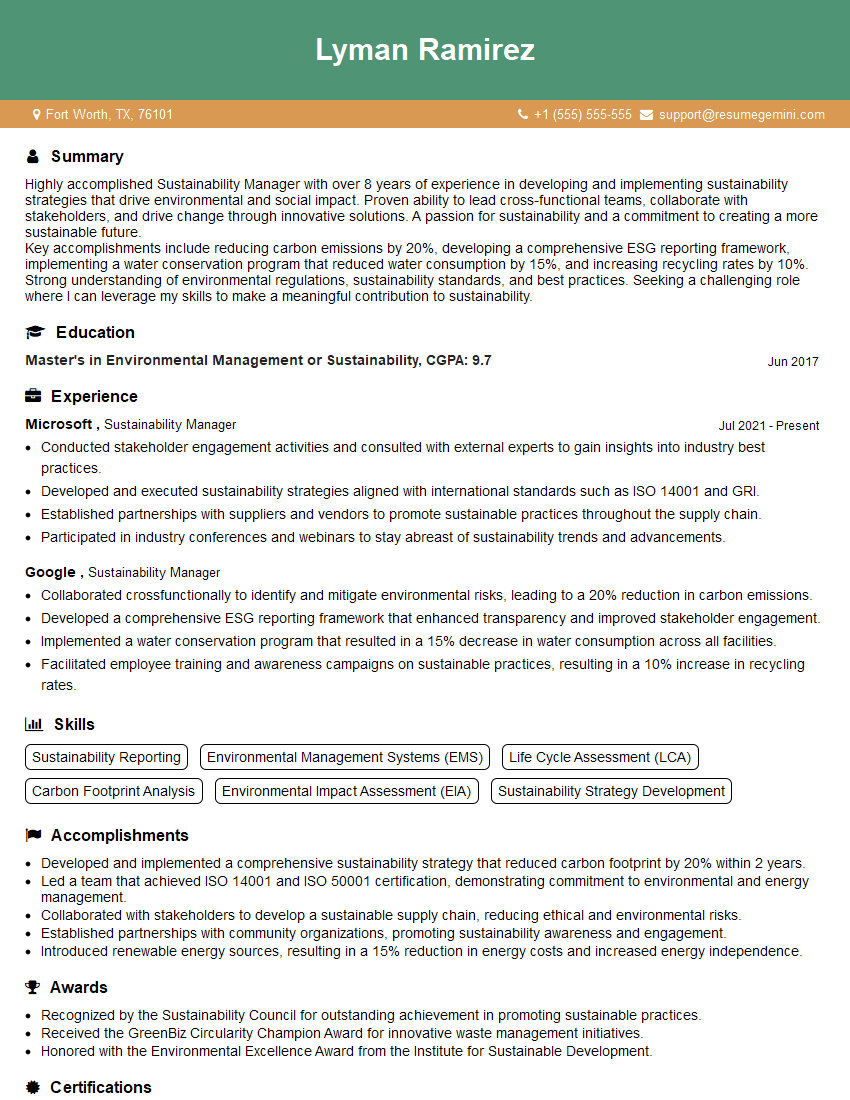
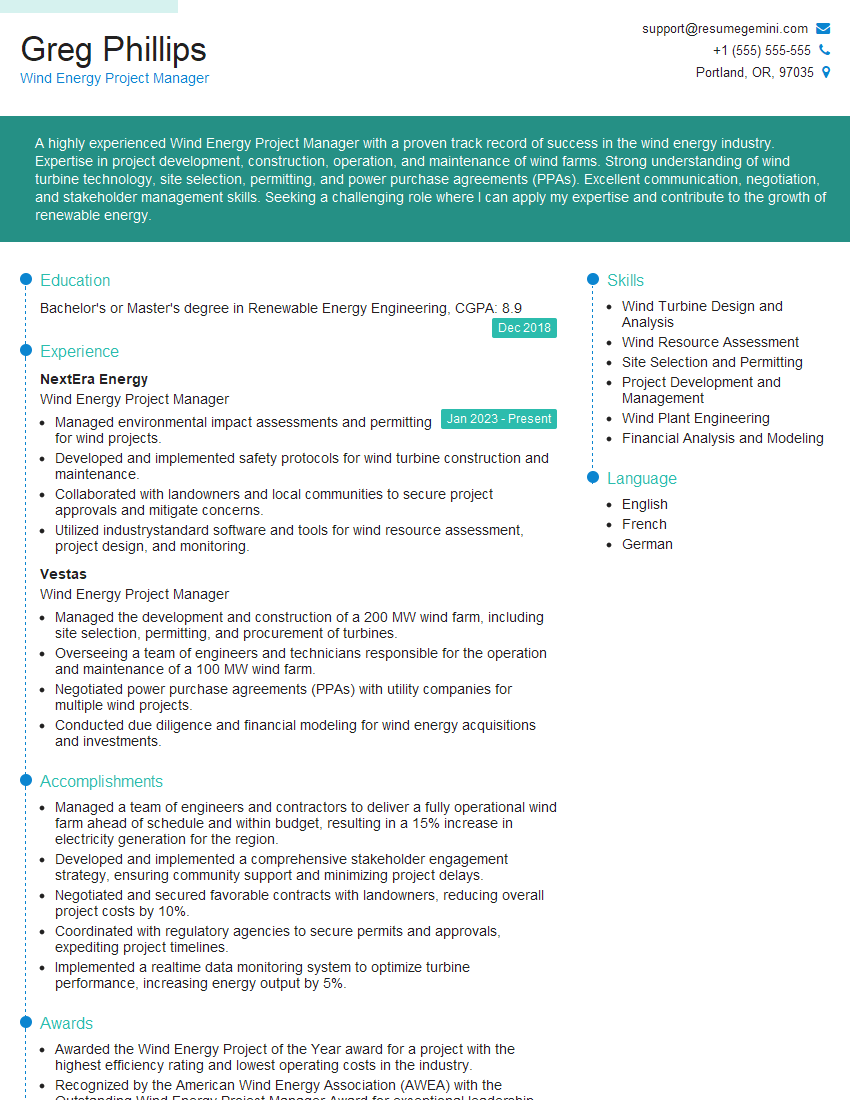
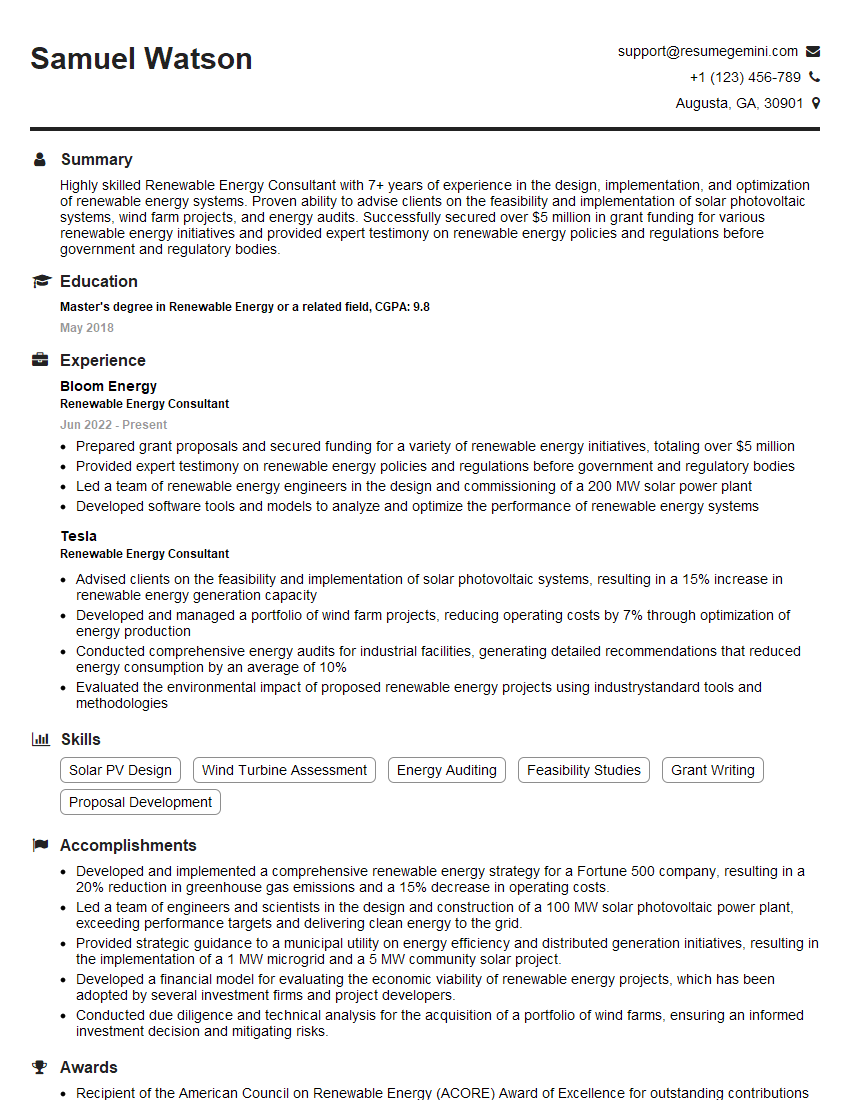
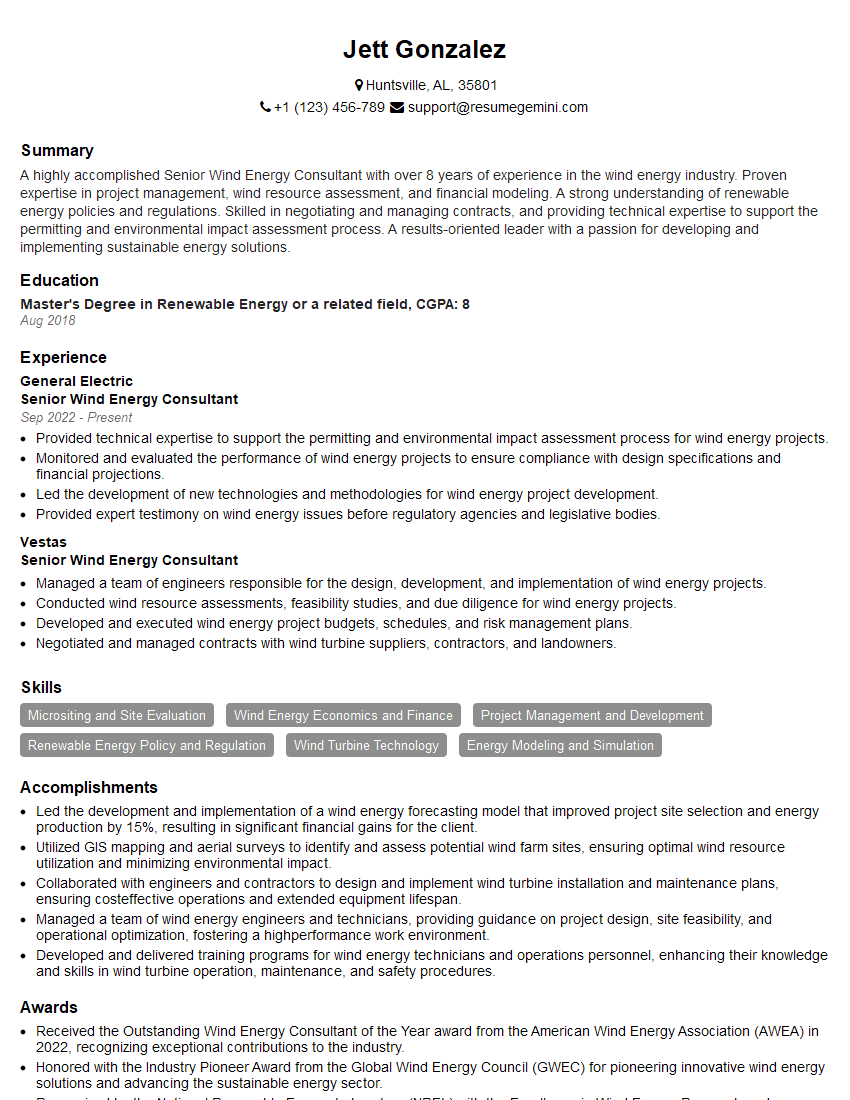
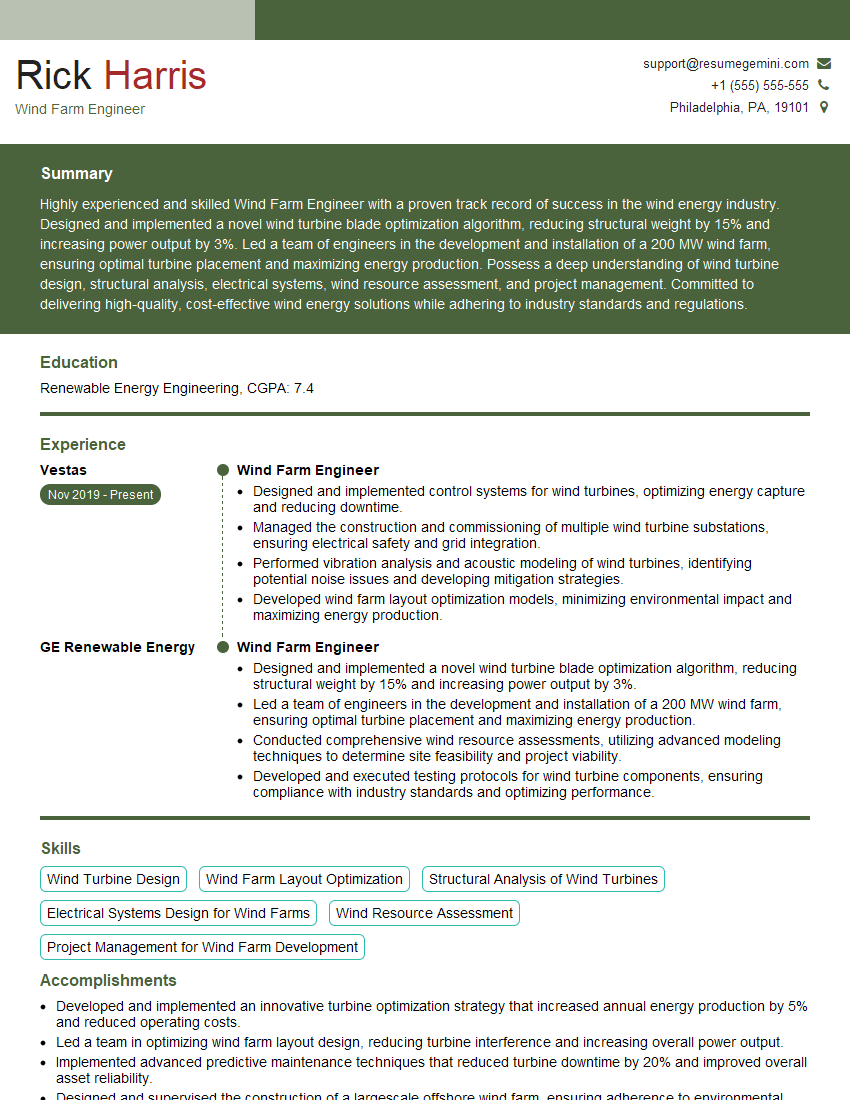
Mastering Wind Farm Planning and Development opens doors to a rewarding career in a rapidly growing sector. Demonstrating your expertise through a strong resume is crucial for securing your dream role. Creating an ATS-friendly resume significantly increases your chances of getting noticed by recruiters. We highly recommend using ResumeGemini to build a professional and impactful resume. ResumeGemini offers a user-friendly platform and provides examples of resumes tailored to Wind Farm Planning and Development to guide you. Take the next step towards your successful career today!
Explore more articles
Users Rating of Our Blogs
Share Your Experience
We value your feedback! Please rate our content and share your thoughts (optional).
What Readers Say About Our Blog
Very informative content, great job.
good