The right preparation can turn an interview into an opportunity to showcase your expertise. This guide to Wind Tunnel Model Design interview questions is your ultimate resource, providing key insights and tips to help you ace your responses and stand out as a top candidate.
Questions Asked in Wind Tunnel Model Design Interview
Q 1. Explain the process of designing a wind tunnel model for aerodynamic testing.
Designing a wind tunnel model is a meticulous process that requires a deep understanding of aerodynamics and model-making techniques. It starts with a clear definition of the testing objectives. What specific aerodynamic characteristics need to be evaluated? Is it lift, drag, pitching moment, or something else? Once this is established, the next step involves creating a CAD model of the full-scale object. This digital representation is then scaled down to a size appropriate for the wind tunnel. The scaling factor is crucial and must be carefully chosen to balance the need for detail with the constraints of the wind tunnel’s test section. Next, the scaled-down CAD model is used to generate manufacturing plans. This involves selecting suitable materials and manufacturing techniques (e.g., 3D printing, CNC machining). Finally, the physical model is constructed, often involving rigorous quality control checks to ensure accuracy and surface finish quality. Any necessary instrumentation, such as pressure taps or force balances, is installed before the model is ready for testing.
For example, when testing a new aircraft design, the design team would first define the aerodynamic parameters to test. Then they create a detailed CAD model of the aircraft, which is then scaled down to a suitable size. This model is then manufactured with great precision and equipped with sensors before being placed inside the wind tunnel.
Q 2. Describe different types of wind tunnel models and their applications.
Wind tunnel models come in various types, each suited to specific applications. Solid models are the most common, typically made from materials like wood, aluminum, or composites. They’re straightforward to manufacture but lack the ability to measure internal flows. Part models focus on specific components like wings or nacelles, allowing for detailed analysis of individual parts. Instrumented models are fitted with pressure taps, miniature accelerometers, or other sensors to collect detailed data on pressure distribution, vibrations, and other relevant parameters. Moving models have movable components like flaps or control surfaces, allowing for the simulation of flight maneuvers and control system interactions. Finally, scaled models are the most basic type, where the model’s geometry is a scaled-down version of the full-scale object. The choice depends heavily on the testing objectives and the available resources.
For instance, a solid model might be used for initial drag estimation, while an instrumented model would be needed to study pressure distribution around a wing. A moving model would be essential to analyze the effectiveness of control surfaces, like flaps and ailerons.
Q 3. How do you ensure geometric similarity between the model and the full-scale object?
Geometric similarity is paramount in wind tunnel testing. It ensures that the model accurately represents the shape and proportions of the full-scale object. This is achieved through precise scaling. The scaling factor is applied consistently to all dimensions of the model. Advanced CAD software plays a vital role, enabling the accurate scaling and verification of the model’s geometry. Dimensional checks, using techniques like 3D scanning and coordinate measuring machines (CMMs), provide further verification of geometric fidelity. Any deviations from the intended geometry can significantly affect the accuracy of the test results. Tolerance analysis is crucial, identifying potential sources of error during manufacturing.
Think of it like making a miniature replica of a building. Every detail, from the roof’s angle to the window sizes, must be scaled proportionally to maintain accuracy. Any slight deviation could lead to significant inaccuracies in the model’s aerodynamic properties.
Q 4. What are the key considerations for material selection in wind tunnel model construction?
Material selection is driven by several factors. The material should be strong enough to withstand the wind tunnel’s forces, have a smooth surface finish to minimize surface roughness effects, and be compatible with the chosen instrumentation. Common materials include wood (balsa, spruce), aluminum, plastics (e.g., polyurethane, ABS), and composites (e.g., carbon fiber reinforced polymers). The choice depends on the model’s size, complexity, and the testing conditions. Considerations include the material’s stiffness, density, cost, and ease of machining. It’s vital to ensure the selected material doesn’t significantly alter the aerodynamic characteristics being studied. For example, a highly porous material could impact the accuracy of pressure measurements.
For a small, simple model, balsa wood might suffice. However, for a large, complex model subjected to high wind speeds, a stronger material like aluminum or a composite would be necessary.
Q 5. How do you account for Reynolds number scaling effects in wind tunnel testing?
Reynolds number (Re) is a dimensionless quantity that describes the ratio of inertial forces to viscous forces in a fluid. It’s crucial for aerodynamic similarity. Differences in Reynolds number between the model and the full-scale object can lead to discrepancies in the results. Techniques to account for Reynolds number scaling effects include: Dynamic similarity, where the Re number is matched between the model and the full-scale object, often requiring adjustments to the wind tunnel speed or model size; Corrections based on established correlations and empirical data; and Computational Fluid Dynamics (CFD) simulations that can help account for Reynolds number effects. The method used depends on the complexity of the problem and the resources available.
Imagine two aircraft, one a small model and the other full-sized. To ensure accurate comparisons, you might need to increase the wind speed in the wind tunnel to match the Reynolds number of the larger aircraft, thus accounting for the scale difference.
Q 6. Explain the importance of surface finish in wind tunnel model design.
Surface finish is critical because surface roughness affects the boundary layer and consequently the aerodynamic characteristics of the model. A rough surface can significantly increase drag. Therefore, a smooth surface finish is crucial for obtaining accurate and reliable results. Surface imperfections can lead to premature boundary layer separation and increased turbulence, affecting lift and drag significantly. The quality of the surface finish is usually specified by surface roughness (Ra), which is measured in micrometers (µm). Techniques for achieving a good surface finish include careful sanding, polishing, and the use of appropriate surface coatings. The desired surface finish depends on the requirements of the experiment and the scale of the model.
Think of a golf ball: the dimples are a form of controlled surface roughness. While seemingly rough, it reduces drag compared to a perfectly smooth ball due to the way they modify boundary layer flow. In a wind tunnel model, the objective is typically to minimize roughness to ensure accurate aerodynamic results.
Q 7. Describe the methods used to measure forces and moments on a wind tunnel model.
Forces and moments are measured using various techniques, primarily through the use of force balances. These are highly sensitive instruments that measure the forces (lift, drag, side force) and moments (pitching, yawing, rolling) acting on the model. The model is mounted on the balance, which is integrated into the wind tunnel’s test section. Strain gauges are commonly used to measure the deflection of the balance components, providing a direct measurement of the forces and moments. Data acquisition systems record the measurements, often with high precision. Another method uses pressure taps on the model’s surface which, when combined with pressure sensors, provide a detailed pressure distribution map that can then be used to calculate forces and moments through integration.
Imagine a scale measuring the weight of an object. A force balance acts similarly but measures multiple forces and moments acting on the wind tunnel model, allowing for a comprehensive aerodynamic analysis.
Q 8. How do you account for model support interference in wind tunnel testing?
Model support interference is a significant challenge in wind tunnel testing. The support system holding the model in the wind tunnel inevitably affects the airflow around the model, introducing errors in the measured forces and moments. Imagine trying to measure the wind resistance of a car while holding it by a string – the string itself will interfere with the air flowing around the car.
To minimize this, we employ several strategies. Streamlined struts are designed to minimize disturbance, often using slender, carefully shaped supports positioned strategically to reduce blockage and interference. Force balance corrections involve complex calibration procedures to account for the measured interference effects. These corrections are often determined through separate calibration tests with different support configurations or through computational fluid dynamics (CFD) simulations of the support system and model. Advanced techniques like sting mounts, where the model is supported internally along its central axis, help minimize blockage and interference. In some cases, we use floating model support systems which effectively isolate the model from support interference, enabling more accurate measurements.
The choice of support system depends heavily on the model’s size, shape, and the specifics of the test. For example, a large-scale aircraft model might require a more complex support system compared to a smaller, simpler component.
Q 9. What are the common sources of error in wind tunnel measurements, and how can they be minimized?
Wind tunnel measurements are susceptible to various errors. These can be broadly categorized into systematic errors (consistent biases) and random errors (fluctuations due to uncontrollable factors).
- Blockage effects: The model’s size relative to the test section can alter the airflow, affecting measurements. Minimizing this involves careful selection of model size and test section dimensions.
- Wall interference: The presence of wind tunnel walls alters the flow field, especially at higher Reynolds numbers. Techniques like wall corrections based on theoretical or empirical correlations help mitigate this.
- Turbulence in the free stream: Non-uniformities or turbulence in the incoming flow can introduce errors. Careful design of the settling chamber and contraction section is crucial for minimizing free stream turbulence.
- Model imperfections: Manufacturing flaws or surface roughness on the model can introduce inaccuracies. Precise manufacturing techniques and surface finishing are essential.
- Instrumentation errors: Calibration errors, sensor drift, and limitations of measuring equipment can affect accuracy. Regular calibration and maintenance of instrumentation is necessary.
- Data acquisition errors: Incorrect sampling rate, inadequate data resolution, and problems during data logging can also introduce errors.
Minimizing these errors involves meticulous planning, accurate calibration of equipment, careful model design and construction, and the implementation of appropriate correction techniques. For example, regularly calibrating pressure transducers and using high-resolution data acquisition systems will reduce random errors, while carefully designing the wind tunnel test section minimizes systematic errors like blockage and wall interference.
Q 10. Explain the process of data acquisition and reduction in wind tunnel testing.
Data acquisition and reduction in wind tunnel testing is a multi-step process. First, we collect raw data from various sensors, such as pressure transducers, load cells (measuring forces and moments), and hot-wire anemometers (measuring velocity). This data is typically acquired using specialized data acquisition systems, which often involve sampling at high frequencies to capture transient phenomena.
Next comes data reduction. This involves processing the raw data to extract meaningful engineering parameters. This often includes applying corrections for blockage effects, wall interference, model support interference, and sensor calibration errors. Specific steps might include:
- Applying calibration curves to raw sensor readings to account for non-linearity and sensor drift.
- Correcting for wind tunnel wall effects using appropriate theoretical or empirical methods.
- Converting sensor readings into engineering units (e.g., pressure coefficients, lift and drag coefficients).
- Averaging data over time to reduce random errors and obtain stable measurements.
Finally, the reduced data is analyzed and visualized to draw conclusions about the aerodynamic performance of the model. Software packages like LabVIEW, MATLAB, and custom-developed programs are commonly used for data acquisition and reduction. The exact process depends on the specific type of wind tunnel test being conducted and the parameters being measured.
Q 11. How do you interpret and present wind tunnel test results?
Wind tunnel results are interpreted and presented clearly and concisely to convey essential information to stakeholders. The choice of presentation depends on the test objectives. Typically, we present data using graphs, charts, and tables.
- Coefficient plots: Graphs of lift coefficient (CL), drag coefficient (CD), and pitching moment coefficient (CM) versus angle of attack (α) or other relevant parameters are commonly used to show the aerodynamic characteristics of the model.
- Pressure distributions: Surface pressure measurements are often presented as contour plots or pressure coefficient distributions to illustrate the flow behavior over the model’s surface.
- Force and moment data: Tables summarizing the measured forces and moments at various conditions are essential for a complete understanding of the model’s aerodynamic performance.
- Flow visualization: Images and videos from flow visualization techniques, such as smoke or oil flow, can be included to provide a visual understanding of the flow field around the model.
The presentation should clearly state the test conditions, uncertainties, and limitations of the data. Discussions about potential sources of error and their impact on the results are crucial for a scientifically sound interpretation. For example, a report might present drag coefficient data with corresponding uncertainty bands and discuss the effects of blockage correction on the results.
Q 12. Describe your experience with different types of wind tunnels (e.g., low-speed, high-speed, transonic).
My experience encompasses various wind tunnel types. Low-speed wind tunnels are widely used for aerodynamic testing at Reynolds numbers characteristic of aircraft and automobiles. I’ve extensively worked with these, focusing on model design for minimizing blockage effects and achieving accurate measurements of lift, drag, and pitching moment. High-speed wind tunnels present additional challenges, such as high temperatures and pressures, requiring specialized model construction materials and careful attention to model integrity. I’ve been involved in projects utilizing these tunnels, emphasizing the careful design of models to withstand high-speed flows and accurately measuring forces and moments at supersonic speeds.
My experience with transonic wind tunnels is particularly valuable due to the complexities of transonic flow regimes where both subsonic and supersonic flow regions coexist. These tests require sophisticated model designs and careful instrumentation to capture shock wave interactions and other complex flow phenomena.
Each type requires unique expertise in model design, instrumentation, and data analysis. The critical factor in all is ensuring the model accurately represents the full-scale prototype while minimizing interference effects, regardless of the tunnel’s speed regime.
Q 13. What software packages are you proficient in for CAD modeling and CFD analysis?
I’m proficient in several software packages for CAD modeling and CFD analysis. My expertise includes:
- SolidWorks: For creating detailed 3D CAD models of wind tunnel models, ensuring geometric accuracy and facilitating efficient manufacturing.
- CATIA: Used extensively for complex geometries and surface modeling, offering advanced features for creating high-fidelity models.
- ANSYS Fluent: My primary tool for CFD analysis, enabling me to simulate flow around the model, predict aerodynamic forces and moments, and investigate flow details. This helps in optimizing model design and predicting wind tunnel test results.
- OpenFOAM: Experience with this open-source CFD package provides versatility and allows for detailed flow simulations, especially when exploring more advanced modeling techniques.
Proficiency in these tools enables me to create accurate models, perform detailed simulations, and analyze complex flow phenomena, ultimately leading to better-informed design decisions.
Q 14. How do you validate your wind tunnel model design?
Validating a wind tunnel model design is critical. It involves comparing wind tunnel test results with available data, such as computational fluid dynamics (CFD) predictions or full-scale experimental data, to ensure the model accurately represents the full-scale prototype. This validation process helps confirm that the model design, manufacturing, and testing procedures are reliable and produce accurate results.
The process usually involves multiple steps:
- Comparison with CFD simulations: CFD simulations are performed beforehand to estimate the aerodynamic performance. These predictions can be compared with wind tunnel measurements to assess the accuracy of the model and the wind tunnel test.
- Comparison with existing data: If similar models have been tested previously, the results are compared to ensure consistency and establish confidence in the current model design and testing procedure.
- Uncertainty analysis: A thorough uncertainty analysis quantifies the uncertainties associated with the wind tunnel measurements, allowing for a realistic comparison between predicted and measured data.
- Sensitivity studies: Sensitivity studies are conducted to understand the influence of key parameters (e.g., model surface roughness, support system configuration) on the test results.
Any significant discrepancies between the wind tunnel results and other data sources require investigation. This may involve reviewing the model design, manufacturing process, testing procedure, or even the validity of the reference data itself. Successful validation ensures confidence in the wind tunnel test results and their applicability to the design and development of the full-scale product.
Q 15. Explain your experience with wind tunnel instrumentation and data acquisition systems.
My experience with wind tunnel instrumentation and data acquisition systems spans over a decade, encompassing various facilities and test programs. I’m proficient in operating and calibrating a wide range of sensors, including pressure transducers (both static and dynamic), load cells for balances, hot-wire anemometry systems, and various optical measurement techniques like PIV (Particle Image Velocimetry) and LDV (Laser Doppler Velocimetry). Data acquisition is typically handled using dedicated software packages that allow for real-time monitoring, data logging, and post-processing. For instance, in a recent project involving a high-speed train model, we employed high-frequency pressure scanners and a high-speed data acquisition system to capture unsteady aerodynamic loads during simulations of track transitions. This required meticulous calibration of the sensors and precise synchronization of data acquisition channels to guarantee data integrity and accuracy.
I’m familiar with various data acquisition systems, ranging from simple, standalone systems to complex, networked systems capable of handling large volumes of data from numerous sensors. Post-processing typically involves data cleaning, validation, uncertainty analysis, and the use of specialized software for visualization and analysis, including CFD (Computational Fluid Dynamics) code validation. My expertise extends to developing custom scripts for data analysis and automation where standard software is insufficient.
Career Expert Tips:
- Ace those interviews! Prepare effectively by reviewing the Top 50 Most Common Interview Questions on ResumeGemini.
- Navigate your job search with confidence! Explore a wide range of Career Tips on ResumeGemini. Learn about common challenges and recommendations to overcome them.
- Craft the perfect resume! Master the Art of Resume Writing with ResumeGemini’s guide. Showcase your unique qualifications and achievements effectively.
- Don’t miss out on holiday savings! Build your dream resume with ResumeGemini’s ATS optimized templates.
Q 16. Describe your experience working with different types of wind tunnel balances.
My experience encompasses working with various types of wind tunnel balances, including internal balances (straingauge-based) and external balances (often employing load cells). Internal balances are integrated directly into the wind tunnel model support system, offering high stiffness and minimal interference with airflow but more challenging to install and calibrate. External balances, while easier to access and calibrate, may exhibit greater susceptibility to aerodynamic interference depending on their design and mounting. I have experience with both 6-component balances (measuring forces and moments in three axes) and specialized balances designed for specific applications, like those used for measuring unsteady aerodynamic loads at high frequencies.
For example, in one project involving a highly maneuverable aircraft model, we opted for a high-frequency response internal balance to accurately capture the rapidly changing aerodynamic forces and moments during simulated maneuvers. Selecting the appropriate balance type is crucial and depends on factors like the model size, expected load magnitudes, frequency response requirements, and the specific aerodynamic characteristics being investigated. Calibration is of paramount importance, and I’m experienced in performing both static and dynamic calibrations to ensure accuracy.
Q 17. How do you design a wind tunnel model for a specific aerodynamic characteristic (e.g., lift, drag, pitching moment)?
Designing a wind tunnel model for a specific aerodynamic characteristic, such as lift, drag, or pitching moment, requires careful consideration of several factors. The process begins with a thorough understanding of the aerodynamic phenomenon of interest and the expected flow field around the model. For example, to optimize lift on an airfoil, we might focus on precisely replicating its shape and surface finish. The model’s geometry must accurately represent the full-scale object’s relevant features, but simplification is often necessary to reduce complexity and cost. A crucial aspect is the choice of scale, considering factors such as the wind tunnel’s size and test section capabilities.
Once the geometry is defined, I design the model’s support system, ensuring minimal interference with the airflow. This often involves slender struts or sting mounts that minimize blockage and blockage effects. For delicate models, I might incorporate strain gauges or other sensors directly into the model to improve accuracy and resolve the forces and moments better. Finally, surface roughness and finish are meticulously controlled to accurately simulate the full-scale conditions; this often involves detailed surface preparation and specialized coating.
Q 18. What are the challenges of designing and testing models for complex geometries?
Designing and testing models with complex geometries presents several challenges. These complexities can significantly affect the accuracy and repeatability of the results. High aspect-ratio configurations (like long, slender bodies) are susceptible to flow separation, vortices, and other complex flow features that are difficult to model and predict. Similarly, models with sharp edges, small gaps, or moving parts require specialized construction techniques and careful attention to detail to ensure the model’s integrity throughout testing.
One of the biggest challenges is ensuring the model accurately represents the full-scale geometry without undue simplification. Numerical methods and CFD simulations are frequently employed to guide the design process and provide initial insights into the expected flow field. Careful consideration of the model’s surface finish and its effect on the boundary layer development is crucial, particularly when investigating boundary layer transition and separation effects. Dealing with the complexity of the data analysis for these models is also very important, and advanced data analysis techniques may be needed.
Q 19. How do you handle model deformation during wind tunnel testing?
Model deformation during wind tunnel testing can significantly compromise the accuracy of the results. This is particularly relevant at high speeds or with flexible models. Several strategies are employed to mitigate this issue. Firstly, the model itself must be constructed from sufficiently rigid material, such as aluminum or carbon fiber, depending on the specific application and the expected loads. Secondly, the support system should be designed to minimize stresses on the model during testing, ensuring appropriate stiffness and minimizing unwanted movements or vibrations.
Furthermore, strain gauges or other sensors can be integrated into the model’s structure to monitor deformation in real-time during the tests. This allows for the detection and correction of any significant deformation. In some cases, advanced techniques like Digital Image Correlation (DIC) can be used to measure surface deformation non-intrusively. Finally, the test conditions (such as wind speed) can be adjusted to keep the loads on the model within acceptable limits to prevent excessive deformation.
Q 20. Describe your experience in troubleshooting wind tunnel experiments.
Troubleshooting wind tunnel experiments is a crucial aspect of my work, requiring systematic investigation and problem-solving skills. Issues can range from simple sensor malfunctions to complex aerodynamic interactions. My approach typically involves a systematic process starting with a review of the instrumentation and data acquisition system: verifying sensor calibrations, checking for data inconsistencies, and examining data quality. If problems persist, I carefully examine the model itself, checking for any structural damage, loose components, or surface imperfections that may be influencing the results.
For example, I once encountered unexpectedly high drag on an aircraft model. After careful examination, we discovered a small imperfection in the model’s surface that was causing significant flow separation. Addressing such issues often involves iterative adjustments to the test setup, model design, or data analysis techniques until consistent and reliable results are obtained. In more complex scenarios, CFD simulations or computational analyses may be required to understand the underlying aerodynamic phenomena and inform adjustments to the test setup.
Q 21. How do you ensure the accuracy and repeatability of wind tunnel tests?
Ensuring the accuracy and repeatability of wind tunnel tests is paramount. This involves meticulous attention to detail at every stage of the testing process, beginning with proper calibration of all instrumentation and careful preparation of the model. Regular calibration checks are performed throughout the testing campaign to guarantee the accuracy and stability of the measurements. Detailed procedures and checklists are utilized to maintain consistency in the experimental setup, including the control of environmental conditions such as temperature and humidity, which can influence the test results.
To ensure repeatability, every step of the testing procedure is documented rigorously, including the model’s geometry, support system configuration, instrumentation settings, and test conditions. Blind tests and comparisons with independent data sets are also used to confirm the validity of the results. Moreover, uncertainty analysis is performed to quantify the measurement errors and provide a realistic assessment of the overall accuracy and reliability of the test data. Rigorous quality control and adherence to established standards are essential in maintaining the high level of accuracy and repeatability required for reliable results.
Q 22. What are the ethical considerations in wind tunnel model design and testing?
Ethical considerations in wind tunnel model design and testing are crucial for ensuring accurate results and responsible engineering practices. They encompass data integrity, safety, and environmental impact.
- Data Integrity: Maintaining the integrity of experimental data is paramount. This involves meticulous documentation of the model design, testing procedures, and results. Any deviations from the plan must be clearly recorded and justified. Fabrication inaccuracies or instrumentation errors must be identified and accounted for, not hidden. For example, a small gap in a model’s surface could significantly affect the results, necessitating a detailed description and potential correction.
- Safety: Wind tunnel testing can involve high-speed airflow and potentially dangerous situations. Ethical conduct requires prioritizing safety for all personnel involved. This means following strict safety protocols, utilizing appropriate safety equipment, and conducting risk assessments prior to testing. For instance, models must be securely mounted to prevent them from becoming airborne during testing. Safety training should be comprehensive and regularly updated.
- Environmental Impact: Wind tunnel operation consumes significant energy, generating noise pollution and potentially contributing to carbon emissions. Ethical considerations mandate minimizing these impacts through efficient facility design and operation. Exploring methods to reduce energy consumption and mitigate environmental effects is crucial. This may involve exploring more energy-efficient compressors or implementing noise reduction measures.
Q 23. Describe your experience with different types of wind tunnel model construction techniques.
My experience spans various wind tunnel model construction techniques, from simple to highly complex models. The choice of technique depends on the project requirements, budget, and available resources.
- Traditional Machining: I have extensive experience in using CNC milling and lathe machining for constructing models from materials like wood, aluminum, and plastics. This is well-suited for simple geometries but becomes less efficient for complex shapes. For instance, I designed and built a model of a low-speed airfoil using aluminum, utilizing CNC machining to achieve the precise surface finish required for accurate data acquisition.
- 3D Printing: 3D printing (additive manufacturing) offers significant advantages for intricate designs and rapid prototyping. I have employed both Fused Deposition Modeling (FDM) and Stereolithography (SLA) techniques to create models with complex geometries and internal features, that would be nearly impossible with traditional methods. I used SLA 3D printing for a high-fidelity model of a Formula 1 car to replicate the complex aerodynamic features.
- Casting: For high-volume production or specific material requirements, casting methods are invaluable. I have experience in creating molds and casting models from resins and other materials. This approach is especially useful when material properties are critical to the testing.
- Hybrid Techniques: Frequently, a combination of techniques proves optimal. For example, a 3D-printed master model might be used to create a mold for a more durable cast model. This allows for the advantages of 3D printing for design flexibility combined with the strength and surface finish of casting.
Q 24. How do you manage project timelines and budgets in wind tunnel model design projects?
Effective project timeline and budget management are critical to successful wind tunnel model design projects. My approach involves a detailed planning phase and proactive monitoring throughout the project lifecycle.
- Detailed Planning: This includes creating a Work Breakdown Structure (WBS) to break down the project into smaller, manageable tasks. Each task is assigned a duration and associated costs. This also involves determining the required resources, manpower, and materials. This upfront planning minimizes unforeseen delays and cost overruns.
- Proactive Monitoring: Regular progress meetings are conducted to track progress against the schedule and budget. Any deviations are identified early, allowing for corrective actions to be implemented. Utilizing project management software is key for accurate tracking and reporting. For instance, if material costs increase, alternatives are explored to maintain the project within budget.
- Risk Management: Identifying potential risks (e.g., material delays, equipment failure) and developing mitigation strategies is crucial. This might involve having backup suppliers or contingency plans for equipment malfunctions. For example, keeping a small supply of crucial model materials on hand.
- Communication: Maintaining clear and open communication with the client and project team is paramount. This ensures everyone is informed about the project’s status and any potential challenges.
Q 25. How do you collaborate with other engineers and technicians in a wind tunnel testing environment?
Collaboration is fundamental in a wind tunnel testing environment. My experience involves working effectively with diverse teams, including aerodynamicists, instrumentation engineers, and technicians.
- Clear Communication: Effective communication is paramount. I use clear and concise language, ensuring everyone understands their roles and responsibilities. This also ensures that everyone understands the testing objectives and the data required.
- Shared Understanding: Before testing begins, I ensure that everyone shares a common understanding of the model design, testing procedures, and data acquisition methods. A pre-test briefing facilitates effective teamwork.
- Respectful Collaboration: I value the expertise of each team member, fostering a collaborative and respectful environment. Open communication allows for the incorporation of diverse perspectives and insights, leading to better solutions.
- Problem-Solving: When challenges arise during testing, I actively participate in problem-solving sessions with other engineers and technicians. This collaborative approach allows for quicker identification and resolution of issues. For example, a shared diagnosis of an unexpected vibration in the model might involve mechanical engineers, instrumentation experts, and aerodynamicists working together.
Q 26. What are your strengths and weaknesses in wind tunnel model design?
My strengths lie in my creative problem-solving abilities and attention to detail. I excel at translating complex aerodynamic requirements into practical model designs and ensuring the highest level of accuracy in model construction and testing setup.
- Strengths: Creative problem-solving, meticulous attention to detail, strong understanding of aerodynamics and model scaling, proficiency in various construction techniques, effective communication and collaboration skills.
- Weaknesses: While I am proficient in various techniques, I continuously seek opportunities to expand my knowledge of advanced manufacturing processes such as additive manufacturing for complex geometries. Additionally, while I manage project timelines effectively, further development in project risk management strategies would improve my overall project leadership skills.
Q 27. Describe a challenging wind tunnel model design project you worked on and how you overcame the challenges.
One particularly challenging project involved designing a model of a highly complex aircraft configuration with numerous moving parts for transonic testing. The challenge was to accurately replicate the aircraft’s intricate geometry and ensure that all moving components functioned seamlessly in the high-speed airflow.
We overcame this by utilizing a combination of advanced 3D printing for the complex airframe and precision machining for the moving parts. A thorough testing phase was carried out to validate the model’s integrity and functionality. Each component was carefully calibrated, ensuring precise movement and minimal interference with airflow. This required multiple iterations of design refinement and testing. This project highlighted the importance of thorough planning, meticulous execution, and effective teamwork in overcoming complex engineering challenges. Ultimately, the data acquired from this model proved invaluable in the design optimization of the aircraft.
Q 28. What are your career goals in the field of wind tunnel model design?
My career goals center on leveraging my expertise to contribute to advancements in aerodynamic design and testing. I aspire to lead complex projects, mentoring junior engineers and expanding my knowledge of cutting-edge technologies like computational fluid dynamics (CFD) and advanced manufacturing techniques. Ultimately, I aim to become a recognized expert in wind tunnel model design, known for my technical skill, innovative problem-solving abilities, and commitment to excellence.
Key Topics to Learn for Wind Tunnel Model Design Interview
- Aerodynamic Scaling and Similarity Laws: Understanding how to accurately scale down full-scale aircraft or structures for wind tunnel testing, ensuring dynamically similar conditions.
- Model Construction Techniques: Familiarity with various materials (e.g., wood, aluminum, 3D-printed materials) and methods used to fabricate accurate and durable wind tunnel models, including surface finish considerations.
- Instrumentation and Measurement: Knowledge of pressure transducers, load cells, and other sensors used to acquire aerodynamic data from wind tunnel models, and understanding data acquisition systems.
- Data Acquisition and Analysis: Proficiency in processing and analyzing wind tunnel data, including understanding uncertainties and error analysis techniques.
- Turbulence Modeling and Corrections: Understanding the effects of wind tunnel turbulence on model results and the methods used to correct for these effects.
- Computational Fluid Dynamics (CFD) Integration: Knowing how wind tunnel testing complements and validates CFD simulations, and the practical applications of combining both methods.
- Uncertainty Quantification and Error Analysis: Understanding the sources of uncertainty in wind tunnel testing and the methods used to quantify and mitigate them. This includes understanding experimental limitations and their impact on the results.
- Wind Tunnel Test Planning and Design: The crucial process of designing a wind tunnel test program, including selecting appropriate wind tunnel facilities, defining test objectives, and developing test matrices.
- Specific Applications: Understanding the nuances of model design for different applications such as aircraft, automobiles, buildings, and wind turbines.
Next Steps
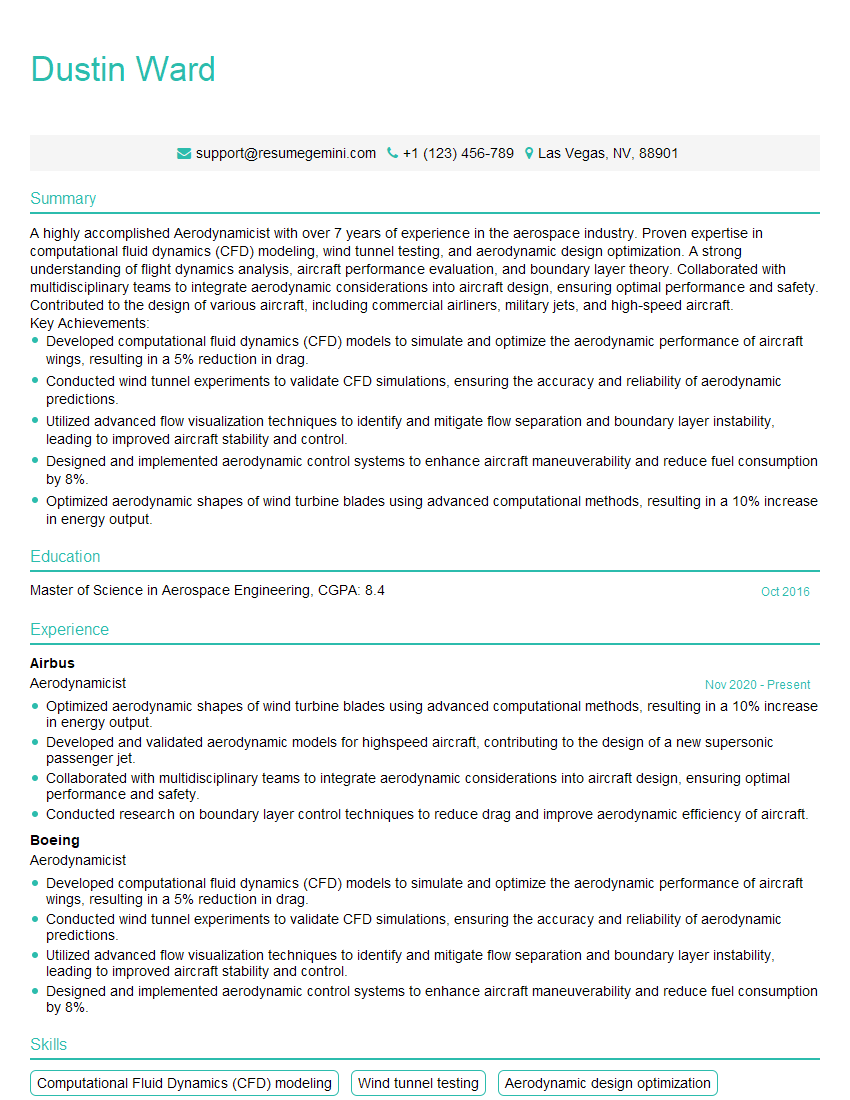
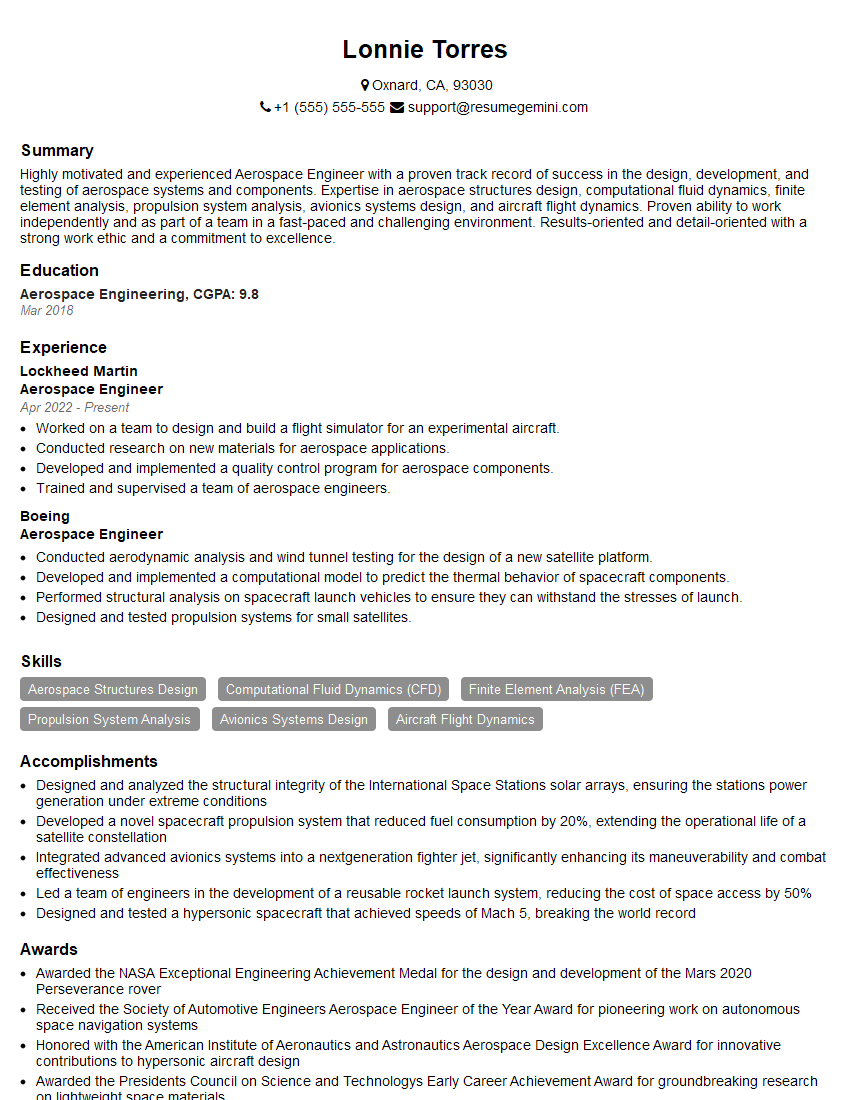
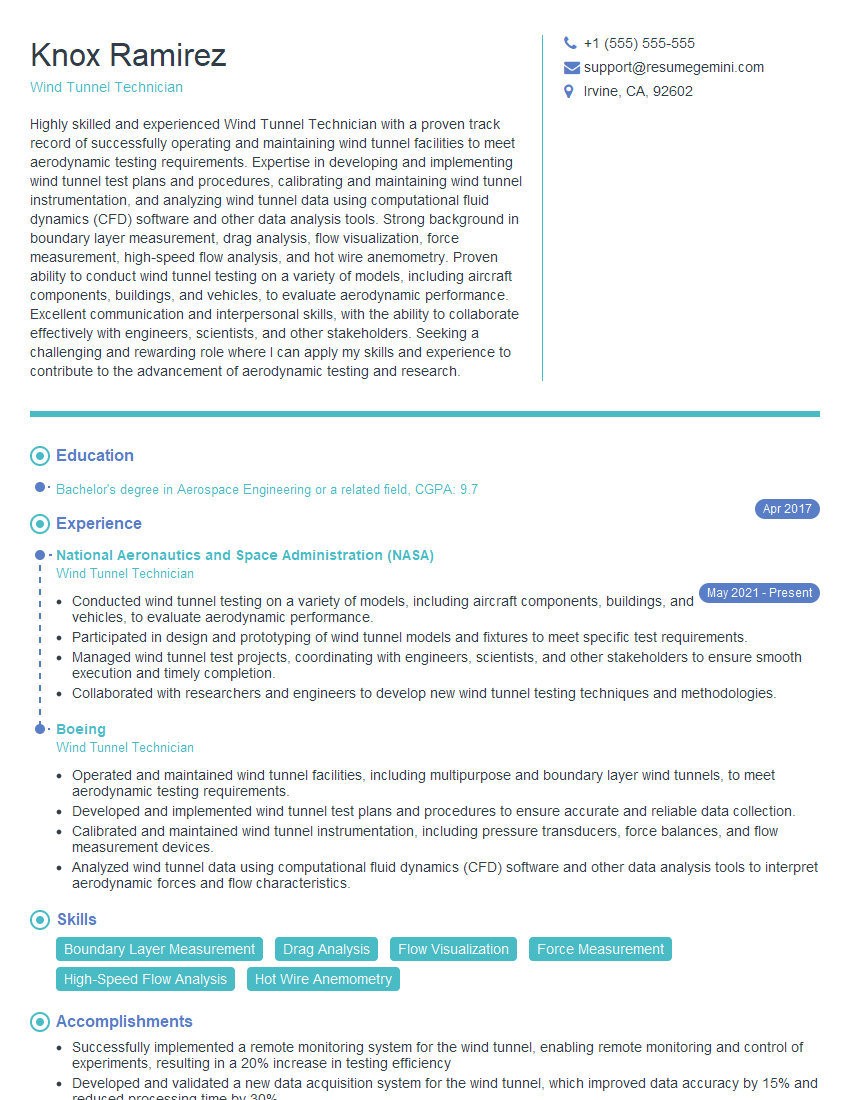
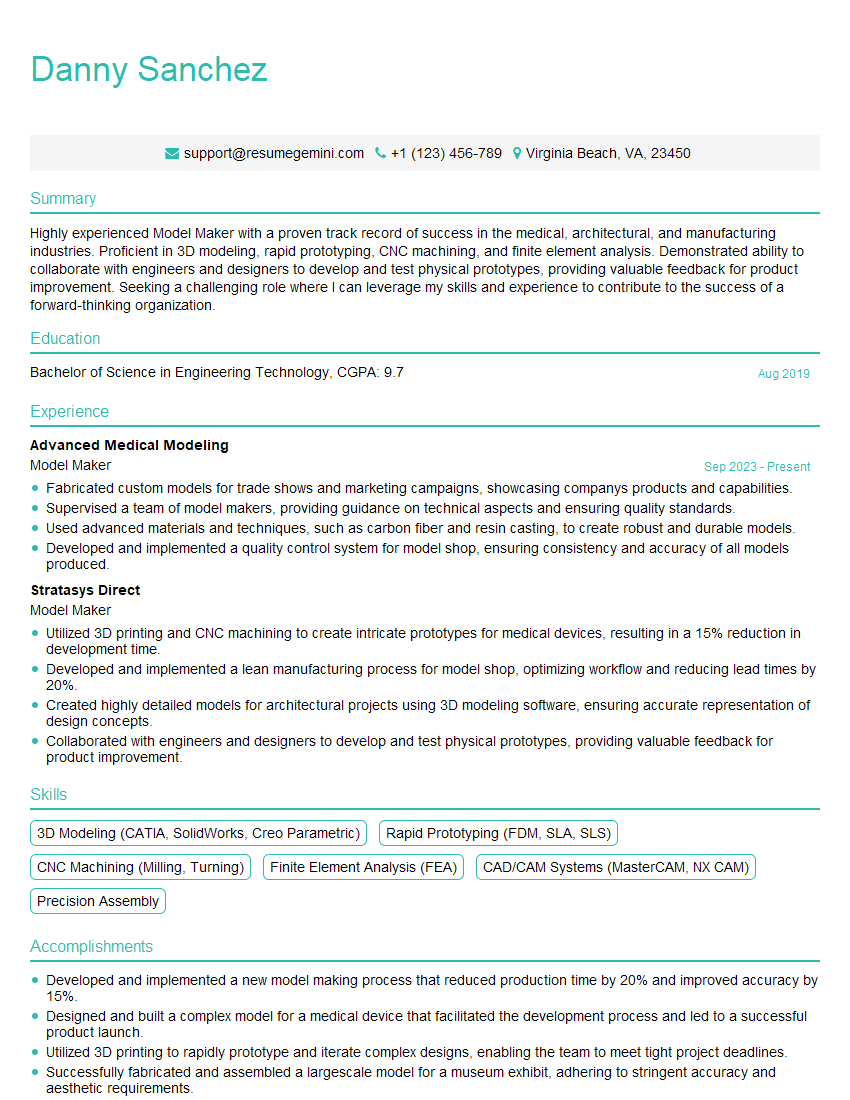
Mastering Wind Tunnel Model Design is crucial for career advancement in aerospace, automotive, and architectural engineering. A strong understanding of these principles will significantly enhance your job prospects and open doors to exciting opportunities. To maximize your chances, create an ATS-friendly resume that highlights your skills and experience effectively. We recommend using ResumeGemini, a trusted resource for building professional resumes, to craft a compelling document that showcases your abilities. ResumeGemini provides examples of resumes tailored to Wind Tunnel Model Design to guide you through the process.
Explore more articles
Users Rating of Our Blogs
Share Your Experience
We value your feedback! Please rate our content and share your thoughts (optional).
What Readers Say About Our Blog
Very informative content, great job.
good