The thought of an interview can be nerve-wracking, but the right preparation can make all the difference. Explore this comprehensive guide to Wood and Composite Deck Installation interview questions and gain the confidence you need to showcase your abilities and secure the role.
Questions Asked in Wood and Composite Deck Installation Interview
Q 1. What types of wood are commonly used for deck construction and what are their pros and cons?
Choosing the right wood for your deck is crucial for its longevity and aesthetic appeal. Several species are commonly used, each with its own set of advantages and disadvantages.
- Cedar: Naturally rot-resistant and beautiful, cedar is a premium choice. Pros: Naturally durable, requires less maintenance, attractive reddish hue. Cons: More expensive than pressure-treated lumber, can be susceptible to insect damage if not properly treated.
- Redwood: Similar to cedar in its natural durability and aesthetic appeal, redwood offers excellent weather resistance. Pros: Naturally resistant to decay and insects, rich reddish-brown color. Cons: High cost, can be prone to warping or checking if not properly dried.
- Pressure-Treated Lumber: Affordable and widely available, pressure-treated wood is chemically treated to resist rot and insect damage. Pros: Cost-effective, readily available, durable when properly treated. Cons: Can contain chemicals that may leach into the environment; less aesthetically pleasing than natural woods; may require more frequent maintenance.
- Ipe: Extremely dense and durable hardwood imported from South America. Pros: Incredibly long-lasting, naturally resistant to rot, insects, and weather. Cons: Very expensive, extremely hard to work with, requires specialized tools and expertise.
The best choice depends on your budget, aesthetic preferences, and the specific climate conditions of your location. For example, in a humid climate, a naturally rot-resistant wood like cedar or redwood might be preferable to pressure-treated lumber.
Q 2. Explain the differences between pressure-treated lumber and cedar for deck building.
Pressure-treated lumber and cedar represent two distinct approaches to deck building materials. Pressure-treated lumber is wood that has been infused with preservatives under pressure to protect it from rot, decay, and insect infestation. Cedar, on the other hand, is a naturally rot-resistant wood that requires less chemical treatment.
- Pressure-Treated Lumber: Generally more affordable, readily available, and provides good protection against rot and insects. However, it can contain chemicals, and its appearance may not be as appealing as natural wood. Over time, the chemicals can leach out, potentially affecting the environment.
- Cedar: Offers superior aesthetic appeal with its natural beauty and rich color. It’s also naturally resistant to rot and decay, making it a low-maintenance option. However, it is generally more expensive than pressure-treated lumber and may require additional treatment to protect against insects.
Think of it like this: pressure-treated lumber is like a durable, workhorse material, while cedar is the sleek, high-end option. The best choice will hinge on your budget and design preferences.
Q 3. Describe the installation process for composite decking boards.
Installing composite decking is a relatively straightforward process, but attention to detail is crucial for a long-lasting, attractive deck. Here’s a step-by-step overview:
- Prepare the substructure: Ensure the framing and joists are properly installed, level, and adequately spaced according to manufacturer’s recommendations.
- Acclimate the decking: Allow the composite boards to acclimate to the outdoor temperature and humidity for several days before installation to prevent expansion and contraction issues.
- Start installation: Begin at one end of the deck, aligning the first board with the desired spacing and fastening it securely to the joists. Use the manufacturer’s recommended fasteners and spacing.
- Continue installation: Install subsequent boards, maintaining consistent spacing and ensuring proper alignment. Composite decking often requires spacing between boards for expansion and contraction.
- Cut and finish: Cut boards to fit as needed using a circular saw with a fine-tooth blade. Caulk any gaps or seams to prevent water penetration.
- Add finishing touches: Install railing, stair treads, and any other deck accessories.
Remember to always consult the manufacturer’s specific installation instructions, as methods can vary slightly depending on the brand and type of composite decking.
Q 4. What are the key considerations for proper deck framing and support structures?
Proper deck framing is the foundation of a safe and durable deck. Several key considerations ensure structural integrity:
- Joist spacing: Follow local building codes and manufacturer’s recommendations regarding the spacing of joists (typically 12 inches or 16 inches on center).
- Joist size: Use appropriately sized joists based on the deck’s span, load requirements, and local building codes. Larger spans necessitate larger, stronger joists.
- Support posts: Ensure adequate support posts are in place, properly anchored to the ground, and spaced appropriately. Posts should be set in concrete footings for maximum stability.
- Beam size and support: If using beams to support the joists, select beams that are adequately sized and supported to carry the anticipated load.
- Fasteners: Use galvanized or stainless steel fasteners to prevent rust and corrosion.
- Leveling: Ensure all framing members are level and plumb to avoid structural problems and uneven decking.
Neglecting these considerations can lead to sagging, instability, and potential structural failure, so careful planning and execution are crucial.
Q 5. How do you ensure proper drainage and prevent water damage on a deck?
Preventing water damage is crucial for a deck’s longevity. Proper drainage involves several key elements:
- Slope: Ensure the deck surface is sloped slightly away from the house (at least 1/4 inch per foot) to allow water to run off. This prevents water from pooling and seeping into the wood.
- Flashing: Install proper flashing around the perimeter where the deck meets the house to prevent water from entering the structure.
- Drainage gaps: Maintain proper spacing between deck boards to allow water to drain through. Do not seal the gaps between decking.
- Gutter system: Consider installing gutters and downspouts to direct water away from the deck and foundation.
- Water-resistant materials: Use materials that are naturally water-resistant or treated to resist moisture damage.
- Regular cleaning: Regularly clean the deck to remove debris and dirt that can retain moisture.
By incorporating these strategies, you’ll significantly reduce the risk of rot, mold, and other water-related damage.
Q 6. What are the best practices for fastening deck boards to joists?
Fastening deck boards correctly ensures a secure and aesthetically pleasing deck. Key considerations include:
- Fastener type: Use exterior-grade screws designed specifically for decking. Stainless steel or galvanized screws are best to resist rust and corrosion.
- Fastener length: Use screws long enough to penetrate at least 1 1/2 inches into the joist.
- Fastener spacing: Follow the manufacturer’s recommendations for fastener spacing, typically every 6 to 8 inches.
- Pre-drilling: Pre-drill pilot holes in the decking boards to prevent splitting, especially with harder wood species.
- Countersinking: Countersink the screws slightly below the surface of the decking board and cover with plugs or sealant.
Using the wrong type of fasteners, improper spacing, or failure to pre-drill can lead to damaged decking boards, loose screws, and an overall unsafe and unsightly deck.
Q 7. Explain the different types of deck railings and their installation methods.
Deck railings are essential for safety and add to the deck’s overall aesthetic appeal. Several types are available:
- Wood Railings: Classic and versatile, wood railings offer a natural look. Installation involves attaching balusters to the posts and rails, ensuring proper spacing and compliance with building codes.
- Metal Railings: Durable and low-maintenance, metal railings (aluminum, steel, wrought iron) are available in various styles and finishes. Installation may require welding or specialized fasteners.
- Composite Railings: Combining the look of wood with the durability of composite materials, composite railings require similar installation techniques to wood but offer less maintenance.
- Glass Railings: Modern and sleek, glass railings offer unobstructed views. Installation requires careful handling and secure attachment to posts.
Regardless of the material chosen, proper installation is crucial for safety. Always ensure the railing meets local building codes regarding height, spacing between balusters, and structural integrity. Think of the railing as the safety net—it should be robust and trustworthy.
Q 8. How do you handle deck construction in varying soil conditions?
Building a deck on unstable soil is a recipe for disaster. The key is proper foundation preparation. We start with a thorough soil analysis – sometimes requiring a geotechnical engineer’s assessment for complex situations. This helps determine the best foundation type.
For well-drained soil, a concrete footing system is often sufficient. We’ll dig holes to the frost line (the depth to which the ground freezes in winter), place gravel for drainage, then pour concrete footings. For poorly drained or unstable soil, we might need a pier and beam system, using pressure-treated lumber or concrete piers driven deep into the ground for support.
In extremely unstable conditions, helical piers (screw piles) are a strong option as they penetrate deep into the earth providing exceptional stability. Regardless of the chosen system, the footings must be spaced according to the deck’s design and local building codes to ensure even weight distribution and prevent settling. Imagine building a house on sand – it wouldn’t last! The same principle applies to decks. A strong foundation ensures longevity and safety.
Q 9. What safety precautions are essential during deck installation?
Safety is paramount! Before even touching a tool, we conduct a thorough site assessment, identifying potential hazards such as underground utilities, uneven terrain, and overhead obstructions. We always use appropriate personal protective equipment (PPE), including safety glasses, hearing protection, work gloves, and steel-toed boots. Working at heights requires extra precautions, such as using harnesses and fall arrest systems when working above 6 feet.
Proper lifting techniques are crucial to avoid injuries. We use lifting aids for heavy materials and never overexert ourselves. Tools are maintained in excellent condition, regularly inspected for damage, and used according to the manufacturer’s instructions. We ensure the work area is well-lit and free of clutter. Regular safety meetings are held to reinforce safe working practices and address any emerging concerns. Ultimately, we are committed to a zero-accident policy.
Q 10. What are common deck design flaws and how can they be avoided?
Common deck design flaws often stem from inadequate planning. Insufficient support, leading to sagging or collapse, is a major one. This is avoided by using appropriately sized and spaced joists and beams, based on load calculations. Poor drainage can lead to rot and insect infestation, easily prevented by incorporating proper grading, flashing, and a gap between the deck and the house.
Another frequent problem is neglecting the impact of wind and snow loads, especially in areas with harsh weather. A properly engineered design addresses these factors. Finally, incorrect fastening methods can compromise the deck’s structural integrity. Using appropriate fasteners and following best practices in fastening techniques is crucial. A poorly planned deck can not only be aesthetically unpleasing but also unsafe.
Q 11. Describe your experience with different deck fastening systems.
My experience encompasses a variety of fastening systems. For joists and beams, we often use galvanized lag screws or structural screws, chosen for their strength and resistance to corrosion. For attaching decking boards, we use exterior-grade screws, ensuring they are long enough to penetrate deeply into the joists without splitting the boards. Hidden fastening systems, which conceal the screws, provide a cleaner, more aesthetically pleasing finish. These usually involve special clips or screws driven from below the deck board.
Recently, I’ve been working with composite decking, which often requires specific fastening methods, like the manufacturer’s recommended hidden fastening system. Each system has its pros and cons regarding cost, ease of installation, and aesthetics, and we select the most appropriate system based on the project’s specific needs and budget. The choice depends on factors including the type of decking material, structural requirements, and the desired aesthetic finish.
Q 12. How do you calculate the necessary materials for a deck project?
Calculating material needs requires careful planning. We start with detailed plans and accurate measurements, usually using CAD software. These plans specify the dimensions of the deck, the spacing of joists and beams, and the type of decking material. We then calculate the linear footage needed for joists, beams, and decking boards, adding extra material for waste and cuts.
For example, if the deck measures 10ft x 12ft and we are using 12ft long decking boards, we’ll require (10ft * 12ft) / 12ft = 10 boards for each row. The total number of boards depends on the number of rows determined by the chosen board spacing. This is where accurate drawings are invaluable. The same process is followed for calculating the quantity of joists and beams based on their spacing and dimensions. We always add a 10-15% contingency for waste and unforeseen circumstances.
Q 13. What are your preferred methods for cutting and shaping decking materials?
Precision cutting is key for a professional finish. For straight cuts, we primarily use a circular saw with a fine-tooth blade specifically designed for wood or composite decking. For more intricate cuts or curves, we use a jigsaw, ensuring the blade is appropriate for the material. We always use a speed square and measuring tape for accurate marking to minimize waste and maintain consistency. For composite materials, it’s crucial to use the right type of blade to avoid chipping and damage. Safety is paramount here; we always secure the material properly before making cuts.
When working with pressure-treated lumber, it’s essential to take precautions to avoid splinters and potentially harmful dust. We use appropriate safety gear and often pre-drill holes for screws to prevent wood splitting, particularly in harder woods. Proper technique and sharp blades ensure clean cuts and a professional-looking deck.
Q 14. How do you ensure the proper spacing between deck boards?
Consistent spacing between deck boards is critical for both aesthetics and drainage. We use spacers – simple pieces of material the correct thickness (typically 1/8 to 3/8 inch) – to maintain uniform gaps between boards. These spacers are placed between the boards as they’re installed, ensuring even spacing across the entire deck surface. The spacer thickness will also vary based on the type of decking being used.
Inconsistent spacing can lead to a very uneven deck surface and improper drainage, which might result in water pooling on the deck, leading to damage. Consistent spacing ensures the deck looks professional and promotes proper drainage, preventing rot and mold. The specific spacing will depend on the manufacturer’s recommendations for the deck boards, but a uniform gap should be maintained.
Q 15. Describe your experience working with hidden fastening systems.
Hidden fastening systems are crucial for achieving a clean, professional look on a deck while also protecting the deck boards from the elements. My experience encompasses a wide range of these systems, from simple concealed clips to more complex, integrated fastening solutions. I’m proficient in installing various brands and types, understanding their individual strengths and limitations. For example, I’ve extensively used the [Insert Brand Name] system which utilizes a specialized clip that sits beneath the decking board, securing it to the joists without visible screws. This not only enhances the aesthetics but also prevents screw holes from becoming water-traps, thus extending the lifespan of the deck. I also have experience with systems that use hidden fasteners driven from the side, allowing for consistent spacing and reducing the chance of board splitting. Proper installation requires precise measurement and attention to detail to ensure a secure and aesthetically pleasing result.
Career Expert Tips:
- Ace those interviews! Prepare effectively by reviewing the Top 50 Most Common Interview Questions on ResumeGemini.
- Navigate your job search with confidence! Explore a wide range of Career Tips on ResumeGemini. Learn about common challenges and recommendations to overcome them.
- Craft the perfect resume! Master the Art of Resume Writing with ResumeGemini’s guide. Showcase your unique qualifications and achievements effectively.
- Don’t miss out on holiday savings! Build your dream resume with ResumeGemini’s ATS optimized templates.
Q 16. Explain the process of installing deck stairs and ensuring compliance with building codes.
Installing deck stairs involves careful planning and adherence to building codes to guarantee safety and structural integrity. The process begins with a detailed design, factoring in local code requirements for rise, run, and tread dimensions, as well as handrail heights and spacing. I always check local codes for specifics on allowable materials and construction methods before commencing any work. Typically, I’ll create a sturdy stringer system using pressure-treated lumber or metal, ensuring the stringers are properly anchored to the deck and the ground. The treads and risers are then attached securely to the stringers, using appropriate fasteners and ensuring proper alignment. Handrails are a critical safety feature, and I meticulously install them according to code specifications, considering the required height, spacing of balusters, and secure attachment to posts. Regular inspections throughout the process ensure compliance and prevent errors that could lead to structural issues or safety hazards. For instance, a common mistake is an inconsistent rise or run on steps, leading to unevenness and potential tripping hazards. My experience ensures I avoid such mistakes and deliver a safe, code-compliant staircase.
Q 17. How do you address issues with uneven ground during deck construction?
Uneven ground presents a common challenge in deck construction. Neglecting this can lead to structural problems and an uneven deck surface. To address this, I employ several techniques. First, a thorough site assessment is crucial to determine the extent of the unevenness. This usually involves using a level and measuring the height differences across the entire deck area. Then, I choose the appropriate leveling method. This could involve excavating and compacting the soil, creating a level base for the footings. Alternatively, for less extreme unevenness, adjustable deck piers or concrete footings of varying heights might suffice, ensuring a stable and level foundation. It is vital that the piers or footings are spaced appropriately, considering both the deck’s size and load-bearing capacity. In certain cases, a combination of these methods might be required. For example, if one section of the ground requires significant excavation while another requires minor leveling, I’ll use a mixed approach to achieve a level and robust foundation. The result is a level, stable deck that stands the test of time.
Q 18. What are your experiences with different types of composite decking materials?
My experience includes working with a variety of composite decking materials, each with its unique properties and advantages. I’ve worked with capped composite materials that offer excellent resistance to fading, staining, and scratching, such as [Insert Brand Name] and [Insert Brand Name]. These are typically more expensive but offer superior longevity and low maintenance. I’ve also worked with uncapped composites, which are generally more budget-friendly but might require more maintenance over time. My experience also extends to various colors and finishes, understanding how different manufacturing processes can impact the material’s durability and aesthetic appeal. For example, I’ve found that certain capped composites are more resistant to moisture absorption and expansion/contraction compared to others, necessitating different fastening and expansion gap considerations. Choosing the right material involves careful consideration of the client’s budget, aesthetic preferences, and the specific environmental conditions.
Q 19. How do you maintain the structural integrity of a deck over time?
Maintaining a deck’s structural integrity involves a multi-pronged approach. Regular inspections are key; I recommend annual checks for loose boards, damaged fasteners, signs of rot or insect infestation, and any evidence of foundation settling. Addressing these issues promptly prevents minor problems from escalating into major structural damage. Proper cleaning and sealing of the deck boards are also vital, especially for wood decks, preventing rot and moisture damage. Composite decks require less maintenance in this area but still need regular cleaning to remove debris and prevent staining. Ensuring proper drainage around the deck is critical to prevent water accumulation, which can lead to rot and foundation problems. This often involves grading the soil to slope away from the deck and ensuring that any gutters or downspouts are directed away from the structure. Finally, proactive maintenance prevents bigger issues down the line – catching small problems early saves time, money, and potentially significant repairs.
Q 20. Describe your familiarity with local building codes and permits related to deck construction.
I’m thoroughly familiar with local building codes and permitting processes. Before starting any deck project, I always obtain the necessary permits from the relevant authorities. This includes providing detailed plans showing materials, dimensions, and construction methods to ensure compliance with local regulations regarding setbacks, height restrictions, structural requirements (load-bearing capacity, wind resistance), and safety features (handrails, stair dimensions). I’m adept at navigating the permit application process, addressing any questions or concerns raised by inspectors, and ensuring the project adheres to all applicable codes and standards. Ignoring these regulations can lead to costly fines or even demolition orders. Staying current with code changes is also important, and I consistently update my knowledge through professional development and resources such as local building department websites and industry publications.
Q 21. What is your experience with deck repair and maintenance?
Deck repair and maintenance are integral aspects of my work. I have extensive experience diagnosing and resolving various deck issues, from replacing damaged boards and fasteners to repairing structural components like joists and beams. Common repairs I undertake include addressing rot, replacing loose or damaged railings, fixing cracks in concrete footings, and repairing water damage. When addressing repairs, I prioritize safety and structural integrity. My approach involves a thorough assessment of the damage, carefully removing affected areas, and using appropriate materials and techniques for replacement or repair. For example, I would never simply replace a rotted joist with a piece of the same damaged material; I would properly assess the load requirements and use appropriate, pressure-treated lumber of the correct dimensions. Preventive maintenance, such as regular cleaning and sealing, minimizes the need for major repairs and extends the lifespan of the deck.
Q 22. How do you manage a deck project timeline and budget?
Managing a deck project’s timeline and budget requires meticulous planning from the outset. It’s like baking a cake – you need all the right ingredients (materials, labor) and a well-defined recipe (schedule). First, I create a detailed scope of work, breaking down the project into manageable phases: site preparation, foundation construction, framing, decking, railing, finishing. Each phase gets its own realistic time estimate, factoring in potential delays due to weather or material availability. I then generate a comprehensive budget, itemizing all costs: materials, labor, permits, equipment rentals, and contingency for unforeseen issues. This detailed breakdown is crucial for transparent communication with the client and allows for effective tracking of expenses throughout the project.
Software like Microsoft Project or similar scheduling tools help me visualize the timeline and track progress. Regular meetings with the client and my team are essential to identify and address potential issues early, preventing cost overruns and schedule slippages. For example, if a material delivery is delayed, we can adjust the schedule accordingly or explore alternative materials without impacting the overall completion date. We also use a cloud-based system to track expenses and invoices, ensuring accuracy and transparency.
Q 23. What software or tools do you use for deck design and planning?
For deck design and planning, I utilize a combination of software and traditional methods. SketchUp is a powerful tool for creating 3D models, allowing clients to visualize the final product before construction begins. It enables me to experiment with different designs, material choices, and layouts. This visualization is crucial for getting client buy-in and ensuring we’re building exactly what they envision. I also use AutoCAD for precise measurements and detailed drawings for the construction phase, particularly for complex designs or custom features. Finally, good old-fashioned pencil and paper are invaluable for quick sketches and on-site measurements. We often combine digital tools with physical site visits to confirm everything aligns perfectly before starting the build.
Q 24. Describe a challenging deck installation project and how you overcame the obstacles.
One particularly challenging project involved building a large deck on a steeply sloped lot with significant elevation changes. The biggest obstacle was ensuring structural stability and preventing soil erosion. The initial plan required extensive excavation and retaining walls, significantly increasing both cost and complexity. To overcome this, we employed a combination of techniques. We opted for a stepped deck design, breaking the structure into smaller, more manageable platforms, which reduced the overall load on the foundation. This also minimized the need for extensive excavation, saving both time and money. We incorporated engineered soil retaining systems to stabilize the slopes and prevent erosion. This involved collaborating closely with a geotechnical engineer to ensure the design was safe and code-compliant. The project took longer than initially anticipated, but careful planning, innovative solutions, and excellent communication ensured a successful outcome, resulting in a stunning deck that perfectly integrated with the challenging terrain.
Q 25. What are the best practices for waterproofing a deck?
Waterproofing a deck is vital for its longevity and safety. It’s like protecting your house from the rain – you wouldn’t want leaks inside! The best practices involve several layers of protection. First, choosing the right materials is key. Pressure-treated lumber is a good starting point, but it’s crucial to ensure proper ventilation to prevent moisture buildup. The use of a waterproof membrane under the decking is essential, especially for composite decks. This acts as a barrier against moisture seeping up from below. Proper flashing around all penetrations – railings, stairs, and any other structures – is critical to prevent water from entering the substructure. Finally, a high-quality sealant should be applied to all exposed wood surfaces to protect against UV damage and moisture penetration.
Regular maintenance is equally important. Inspect the deck regularly for any signs of damage or water ingress. Clean the deck periodically and reapply sealant as needed to keep it protected. Ignoring these steps will gradually lead to rot and structural damage, rendering the deck unsafe and expensive to repair.
Q 26. How do you identify and address potential issues with deck flashing?
Deck flashing is crucial for diverting water away from vulnerable areas. Think of it as the raincoat for your deck’s structure. Potential issues often arise from improper installation or the use of inadequate materials. I identify potential problems by carefully inspecting the flashing during and after installation. Common issues include gaps, wrinkles, or improper overlapping, which can allow water to penetrate. I also check for corrosion or deterioration of the flashing material, especially in areas exposed to harsh weather conditions. Addressing these issues requires meticulous attention to detail. Gaps need to be sealed with a compatible sealant, and damaged flashing must be replaced entirely. It’s crucial to use high-quality, weather-resistant flashing materials designed specifically for outdoor applications. A poorly installed flashing system can lead to significant water damage that is expensive and difficult to repair, which is why careful attention and quality materials are vital.
Q 27. Describe your experience with different types of deck finishes and sealants.
I’ve worked with a wide variety of deck finishes and sealants, each with its own advantages and disadvantages. For wood decks, oil-based stains offer deep penetration and rich color, but they require more frequent reapplication. Solid-color stains provide better UV protection but can be more challenging to apply evenly. For composite decks, I often recommend specialized cleaners and sealants designed to maintain the material’s color and protect it from fading and staining. The choice of finish depends heavily on client preference, budget, and the type of decking material used. For example, a tropical hardwood deck might only require a clear sealant to enhance its natural beauty, while a pressure-treated pine deck might benefit from a solid-color stain to provide enhanced protection. It is important to discuss these options thoroughly with the client and recommend products known for their durability and longevity, always factoring in environmental concerns and sustainability.
Q 28. How do you ensure a safe and effective working environment for yourself and your team?
Safety is paramount on every project. We start by conducting thorough site assessments to identify and mitigate potential hazards, such as uneven terrain, overhead obstructions, and proximity to power lines. Every member of my team is required to wear appropriate personal protective equipment (PPE), including safety glasses, gloves, and hard hats. We follow strict safety protocols, including proper tool usage, fall protection measures (when necessary), and safe material handling techniques. Regular toolbox talks are conducted to reinforce safety procedures and address any concerns. We maintain a clean and organized worksite to minimize trip hazards and ensure efficient workflow. Open communication between team members is encouraged to address potential safety issues immediately. We also ensure that all work complies with relevant building codes and safety regulations, and we always prioritize a safe and respectful working environment for everyone involved.
Key Topics to Learn for Wood and Composite Deck Installation Interview
- Deck Design and Planning: Understanding blueprints, calculating materials, and adhering to building codes. Practical application includes sketching deck layouts and material estimations.
- Foundation Preparation: Proper site preparation, including leveling the ground, constructing footings, and installing support beams. Practical application includes understanding different foundation types and their suitability for various soil conditions.
- Framing and Joist Installation: Constructing the deck frame using pressure-treated lumber, ensuring proper spacing and support. Practical application includes understanding different joist configurations and calculating load-bearing capacity.
- Decking Material Selection and Installation: Working with different decking materials (wood, composite), understanding their properties and installation techniques. Practical application includes identifying and addressing potential material defects and choosing appropriate fasteners.
- Fasteners and Hardware: Selecting appropriate screws, nails, and other hardware for various applications. Practical application includes understanding the implications of using incorrect fasteners.
- Safety Procedures and Regulations: Adhering to OSHA safety regulations and best practices for working at heights. Practical application includes identifying potential hazards and implementing appropriate safety measures.
- Finishing Touches and Detailing: Installing railings, stairs, skirting, and other finishing elements. Practical application includes understanding different railing designs and construction techniques.
- Troubleshooting and Problem-solving: Identifying and resolving common issues during installation, such as uneven surfaces, warped boards, and fastener failures. Practical application involves demonstrating ability to adapt to unexpected challenges on the job site.
- Estimating and Bidding: Developing accurate material and labor cost estimates for deck projects. Practical application includes understanding how to price a project to ensure profitability.
Next Steps
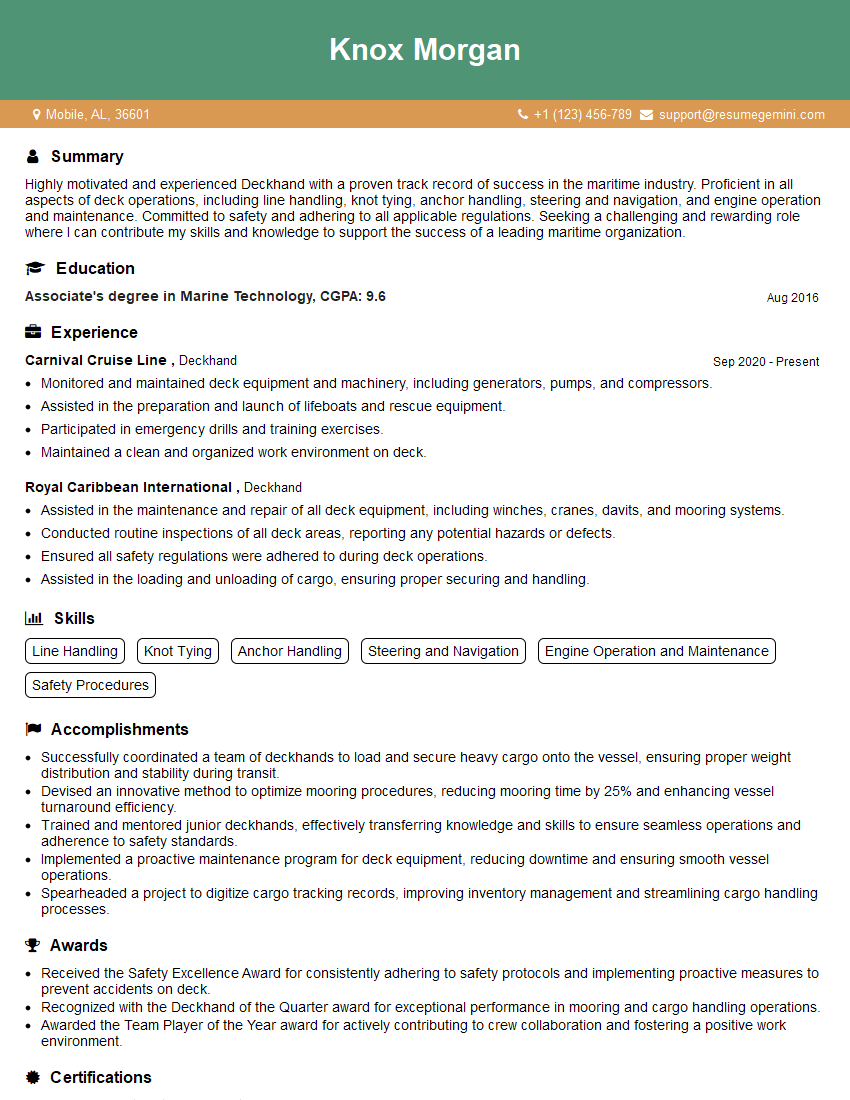
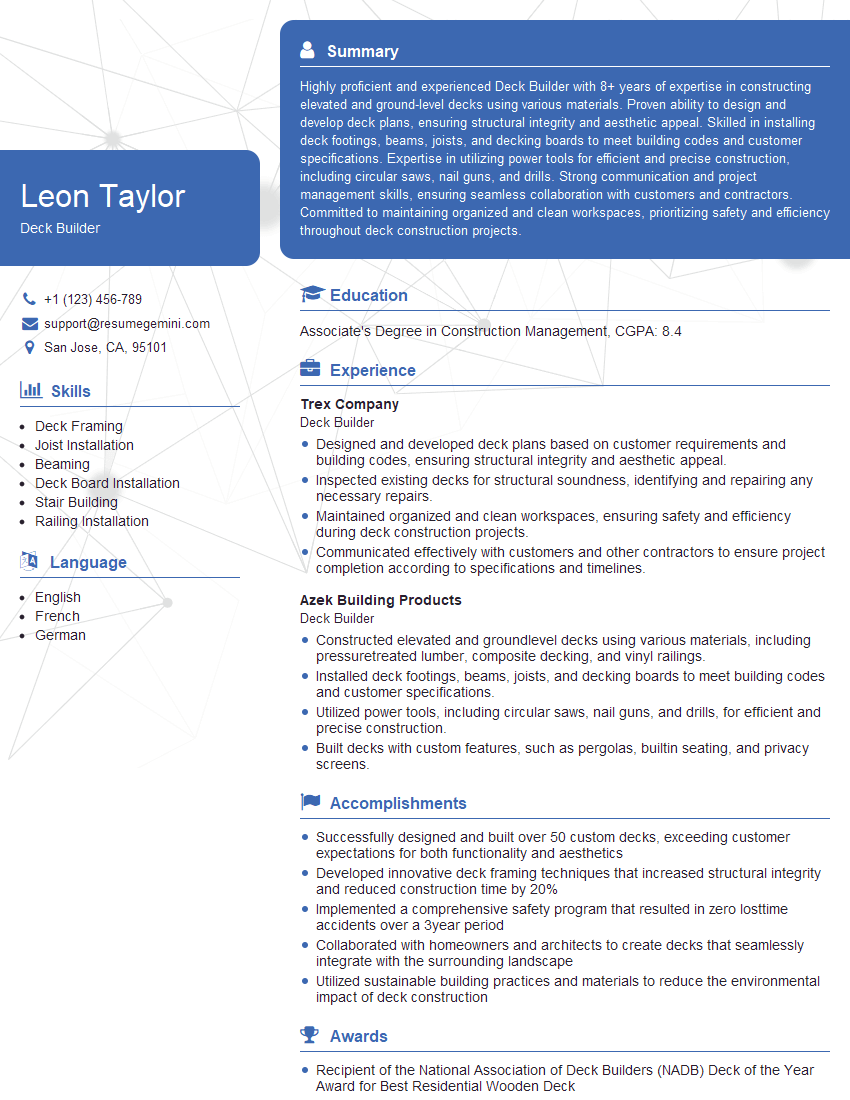
Mastering Wood and Composite Deck Installation opens doors to rewarding careers in construction and landscaping, offering opportunities for advancement and specialization. To maximize your job prospects, creating an ATS-friendly resume is crucial. ResumeGemini is a trusted resource for building professional, impactful resumes that help you stand out to employers. ResumeGemini offers examples of resumes tailored to Wood and Composite Deck Installation to help you present your skills and experience effectively. Invest time in crafting a strong resume – it’s your first impression and a vital step towards landing your dream job.
Explore more articles
Users Rating of Our Blogs
Share Your Experience
We value your feedback! Please rate our content and share your thoughts (optional).
What Readers Say About Our Blog
Very informative content, great job.
good