The thought of an interview can be nerve-wracking, but the right preparation can make all the difference. Explore this comprehensive guide to Wood chip handling and processing interview questions and gain the confidence you need to showcase your abilities and secure the role.
Questions Asked in Wood chip handling and processing Interview
Q 1. Describe the different types of wood chippers and their applications.
Wood chippers come in various types, each designed for specific applications. The choice depends on factors like the size of the wood, the desired chip size, and the volume of material to be processed.
- Drum chippers: These are the most common type, using a rotating drum with knives to shred wood into chips. They are versatile and can handle a wide range of wood sizes, from small branches to large logs. They’re ideal for large-scale operations like pulp mills and biomass power plants.
- Disc chippers: These use a rotating disc with knives to cut the wood. They are generally faster and produce more uniform chips than drum chippers, making them suitable for applications where consistent chip size is crucial, such as in the production of engineered wood products.
- Hammermill chippers: These use hammers to pulverize the wood, producing smaller and more fragmented chips. They excel at processing very tough or knotty wood, but the chip size is less uniform. They’re often used for smaller-scale operations or for creating fuel chips.
- Mobile chippers: These are self-contained units mounted on trailers or trucks, providing on-site chipping for logging operations and land clearing. They offer flexibility and are beneficial for remote locations.
For instance, a large pulp mill would likely use a high-capacity drum chipper, while a landscaping company might opt for a smaller, mobile chipper.
Q 2. Explain the process of wood chip storage and handling to minimize degradation.
Proper wood chip storage and handling is crucial to prevent degradation, which leads to reduced quality and value. Degradation can be caused by factors such as moisture content, microbial activity, and oxidation.
- Pile size and shape: Smaller, well-ventilated piles are preferred to larger ones, which can trap moisture and heat, encouraging microbial growth. A conical shape is often ideal for drainage.
- Location: The storage area should be well-drained to prevent waterlogging. It should also be protected from direct sunlight, which accelerates degradation. Consider using a covered storage area if possible.
- Moisture control: Chips should be stored at a moisture content that minimizes microbial growth. This usually involves proper drying before storage. Monitoring the moisture content regularly with specialized equipment is crucial.
- Covering: Using tarps or other suitable coverings can help protect the chips from rain and snow, maintaining their quality over time.
- Regular inspection: Regularly inspect the piles for signs of heating, mold growth, or insect infestation. Any signs of degradation require immediate action, which may include re-piling or processing the affected chips.
Imagine a scenario where poorly stored wood chips become moldy. This drastically reduces their value for applications like pulp production or biomass fuel, resulting in financial losses.
Q 3. What are the common quality control measures for wood chips?
Quality control in wood chip processing focuses on ensuring consistency in chip size, moisture content, and cleanliness, as these factors directly impact their usability and value. Several measures are employed:
- Screen analysis: This involves using screens of different sizes to separate the chips based on their dimensions. This helps ensure a consistent chip size distribution, meeting the specific requirements of different applications.
- Moisture content measurement: Regular moisture content measurements are essential. Too much moisture can lead to degradation, while too little might hinder certain processes. Different methods, such as oven drying or electrical resistance techniques, are used.
- Foreign material removal: Wood chips should be free from contaminants such as rocks, metal, and other debris. This is typically achieved through magnetic separators and visual inspection.
- Bark content analysis: Bark content is closely monitored as excessive bark can negatively affect processing efficiency and the final product quality.
- Density measurement: Bulk density provides information about the efficiency of storage and transportation. Consistent density is important for smooth operations.
For example, pulp mills have strict specifications for wood chip size and moisture content; failure to meet these standards will negatively impact the pulp quality.
Q 4. How do you ensure the safety of workers involved in wood chip handling?
Worker safety is paramount in wood chip handling. The industry is inherently hazardous due to moving machinery, sharp objects, and dust. Several measures ensure a safe working environment:
- Proper training: Workers must receive comprehensive training on safe operating procedures, emergency protocols, and the use of personal protective equipment (PPE).
- Personal Protective Equipment (PPE): Workers should always use appropriate PPE, including safety glasses, hearing protection, gloves, steel-toed boots, and high-visibility clothing.
- Machine guarding: All machinery should be properly guarded to prevent accidental contact with moving parts. Regular inspections of guards are essential.
- Lockout/Tagout procedures: Strict lockout/tagout procedures must be in place to prevent accidental start-up of equipment during maintenance or repairs.
- Emergency response plan: A well-defined emergency response plan should be in place to deal with accidents or injuries, including first aid procedures and emergency contacts.
- Regular safety inspections: Regular safety inspections should identify and correct potential hazards before they lead to accidents.
Imagine a scenario where a worker isn’t properly trained or lacks PPE. A simple mistake could lead to a serious injury or even fatality. Prioritizing safety is not just ethical but also economically sound.
Q 5. What are the environmental considerations in wood chip processing?
Environmental considerations are crucial in wood chip processing. The industry’s impact on the environment needs careful management:
- Sustainable forestry practices: Wood chips should originate from sustainably managed forests to ensure responsible resource use and biodiversity conservation. This includes responsible harvesting and reforestation practices.
- Air emissions: Chipping operations can generate dust and particulate matter, necessitating air pollution control measures, such as dust suppression systems or enclosed chipping areas.
- Water pollution: Runoff from wood chip storage areas can potentially contaminate water bodies. Proper drainage systems and spill containment measures are necessary.
- Waste management: Proper disposal or reuse of wood chip processing byproducts, such as sawdust or bark, is essential to minimize waste and environmental impact.
- Noise pollution: Chipping operations can generate significant noise, requiring mitigation measures such as noise barriers or quieter machinery.
For example, a company might invest in advanced dust suppression technologies to minimize air pollution or implement a comprehensive water management plan to avoid contaminating nearby streams.
Q 6. Explain the different methods of wood chip transportation.
Wood chips are transported using several methods, each suited to different distances and volumes:
- Trucks: This is the most common method for shorter distances. Trucks can be fitted with specialized trailers to efficiently transport large volumes of wood chips.
- Rail transport: Rail transport is cost-effective for longer distances and larger volumes. Wood chips are typically loaded into open-top railcars.
- Barges or ships: Water transport is particularly suitable for areas with navigable waterways, providing a cost-effective solution for long distances and high volumes.
- Conveyors: Conveyors are commonly used for short-distance transport within processing plants and storage yards.
Consider the example of a pulp mill located near a port. Using barges to transport wood chips from distant logging operations could be a more economical solution than trucking.
Q 7. What are the typical challenges in maintaining wood chip processing equipment?
Maintaining wood chip processing equipment presents unique challenges due to the abrasive nature of wood chips and the harsh operating conditions:
- Knife wear and tear: Knives are subjected to significant wear and tear from the abrasive nature of wood. Regular sharpening, replacement, and proper maintenance are crucial to maintain efficiency and chip quality.
- Screen clogging: Screens can become clogged with wood chips, particularly those with high bark content or foreign materials. Regular cleaning and maintenance are essential.
- Dust and debris buildup: Dust and debris can accumulate in moving parts, leading to mechanical problems. Regular cleaning and lubrication are vital.
- Corrosion: Equipment exposed to moisture can experience corrosion. Regular inspection and protective coatings can help extend the lifespan of the equipment.
- Vibration and stress: High-speed rotating components create vibrations and stress, leading to premature wear. Regular checks and proper balancing of components help mitigate this.
For instance, neglecting regular knife sharpening can result in reduced chip quality, decreased processing capacity, and increased downtime. A proactive maintenance program is essential for optimal performance and longevity.
Q 8. Describe your experience with different types of wood chip screens and their functions.
Wood chip screens are crucial for sizing and cleaning wood chips, ensuring consistent quality for various applications like pulp and paper production or bioenergy. Different screen types offer varying levels of efficiency and suitability depending on the desired chip size and the characteristics of the incoming material.
Rotary Screens: These screens utilize a rotating drum with perforated surfaces. The smaller chips pass through the perforations, while larger pieces are rejected. They’re robust and handle high volumes but can be less efficient for fine screening.
Vibratory Screens: These employ vibrations to separate chips based on size. They offer high screening efficiency and precise size control, particularly useful for producing uniformly sized chips for demanding applications. However, they are more sensitive to material buildup and require regular maintenance.
Trommel Screens: Similar to rotary screens, but often larger and more heavy-duty, ideal for handling large volumes of raw wood chips with significant debris. They are effective in removing oversized material and larger contaminants.
Star Screens: These screens use rotating stars with bars or plates that create a shearing action, effectively breaking down clumps and separating smaller chips from larger ones. They are excellent for handling wet or sticky materials.
Choosing the right screen depends on factors like the desired chip size distribution, the throughput required, the type of wood, and the presence of contaminants. In my experience, I’ve successfully optimized processes by strategically combining different screen types to achieve the desired outcome. For instance, using a trommel screen initially for coarse screening followed by a vibratory screen for fine sizing yielded superior results in a recent project.
Q 9. How do you troubleshoot common issues in a wood chip processing line?
Troubleshooting a wood chip processing line requires a systematic approach. It begins with identifying the specific problem—reduced throughput, inconsistent chip size, increased energy consumption, or material jams—and then systematically investigating potential causes.
Reduced Throughput: This could stem from screen blockages, conveyor belt issues, or problems with the chipping equipment itself. I’d start by visually inspecting the entire line, checking for blockages and ensuring all components are functioning correctly. I’d then monitor the performance of individual components to pinpoint the bottleneck.
Inconsistent Chip Size: This usually points to problems with the screening process or the chipping equipment. Checking screen mesh size, wear, and vibration intensity is crucial. If the issue persists, the chipper knives or hammers might need adjusting or replacement.
Increased Energy Consumption: This can indicate inefficiencies such as excessive friction in the system or overloading of equipment. Lubrication checks, belt tension adjustments, and optimizing operational parameters are typical solutions.
Material Jams: These often result from oversized material, moisture content issues, or poor material flow. Implementing preventative measures like better pre-screening, adjustments to moisture content, and optimized conveyor angles are essential.
Data logging and process monitoring are vital for preventative maintenance and effective troubleshooting. Identifying trends and anomalies in key parameters like throughput, energy consumption, and material moisture can prevent larger problems down the line.
Q 10. What are the key factors affecting the quality of wood chips?
Wood chip quality is paramount and influences its value and suitability for various downstream processes. Several key factors significantly impact it:
Chip Size and Uniformity: Consistent chip size is crucial. Too large, and processing becomes inefficient; too small, and it impacts efficiency in pulping or combustion. Uniformity ensures consistent reaction rates in chemical processes.
Moisture Content: Ideal moisture content varies depending on the intended application. Too much moisture can lead to fungal growth and decreased energy value in combustion, while too little moisture can make chips brittle and difficult to process.
Wood Species: Different wood species have varying properties influencing chip quality. Hardwoods, for instance, produce denser chips than softwoods, impacting their energy density and pulping behavior.
Contaminants: Dirt, rocks, and metal contamination can damage equipment and decrease chip quality. Effective screening and pre-processing are key to minimizing these.
Bark Content: While some bark is unavoidable, excessive bark can reduce pulp yield and impact energy value. Debarking techniques significantly influence this aspect.
Maintaining consistent quality requires meticulous control over each of these factors, including careful selection of raw materials, efficient processing equipment, and effective quality control measures.
Q 11. Explain the importance of moisture content in wood chip processing.
Moisture content in wood chips is a critical factor throughout the entire processing chain, significantly impacting various aspects:
Transportation and Storage: High moisture content increases weight and can lead to spoilage and mold growth during transport and storage.
Processing Efficiency: Optimal moisture content ensures efficient chipping, screening, and conveying. Too much moisture can lead to clogging and jamming, while too little can make chips brittle and prone to breakage.
Energy Content (for combustion): Moisture reduces the energy value of wood chips, as a significant portion of the energy input is used to evaporate the water.
Pulp and Paper Production: Moisture affects the pulping process. Precise moisture content control ensures consistent pulp quality and reduces energy consumption in the pulping process.
Monitoring and controlling moisture content involves using moisture meters at various stages of the process, employing drying techniques if necessary, and adjusting operational parameters based on the measured moisture levels. Precise control translates directly to cost savings and higher product quality.
Q 12. How do you ensure efficient wood chip storage and retrieval?
Efficient wood chip storage and retrieval are crucial for maintaining chip quality and ensuring continuous supply to downstream processes. Key aspects include:
Storage Design: Storage structures must be designed to prevent moisture buildup, degradation, and fire hazards. Proper drainage, ventilation, and protection from the elements are essential. Dome-shaped piles are preferred due to their ability to shed water and reduce compaction.
Material Handling Equipment: Efficient retrieval systems are crucial. This often involves using specialized reclaimer systems (often using wheel loaders or bucket-wheel excavators) that are designed for handling large volumes of stored materials and minimizing degradation. These ensure consistent flow without excessive material handling.
Inventory Management: Tracking wood chip quantities and quality is crucial. Implementing a robust inventory management system allows for efficient allocation of resources and prevents unnecessary waste and delays.
Piling Techniques: Proper piling techniques can minimize compaction and degradation. Creating piles with well-defined slopes and avoiding over-compaction is important.
For example, in one project, implementing a radial stacker and reclaimer system reduced storage costs and improved material flow significantly, leading to a smoother and more efficient overall process.
Q 13. Describe your experience with different types of conveyors used in wood chip handling.
Various conveyor types are employed in wood chip handling, each offering specific advantages depending on the application:
Belt Conveyors: These are the most common type, used for long-distance transport and high volumes. They are cost-effective but require significant space. Different belt types are available for various applications and materials.
Screw Conveyors: These are used for shorter distances and smaller volumes, often for transferring chips between processing stages. They are compact and can handle materials with varying moisture content, but they can be prone to wear and tear.
Apron Conveyors: These are robust and suitable for handling large, heavy, or abrasive materials. However, they are slower and less flexible than belt conveyors.
Vibratory Conveyors: These use vibrations to move material, offering gentle handling and reduced material degradation. They are well-suited for handling delicate materials, but they may not be as efficient for large volumes.
My experience has shown that selecting the right conveyor type requires careful consideration of factors such as distance, volume, material properties, and the desired throughput. In a recent project involving the upgrade of a wood chip processing plant, we replaced outdated belt conveyors with a combination of high-capacity belt conveyors and screw conveyors for increased efficiency and reduced maintenance costs.
Q 14. What safety protocols do you follow when operating wood chip handling equipment?
Safety is paramount in wood chip handling. My experience emphasizes a multi-layered approach that integrates stringent procedures and employee training:
Lockout/Tagout Procedures: Before any maintenance or repair work on equipment, strict lockout/tagout procedures are followed to prevent accidental starts. This is absolutely non-negotiable.
Personal Protective Equipment (PPE): Employees are always required to wear appropriate PPE, including safety glasses, hearing protection, steel-toed boots, and high-visibility clothing.
Machine Guards: All machinery is equipped with appropriate guards to prevent access to moving parts. Regular inspections are conducted to ensure guards are in place and functional.
Emergency Shutdown Systems: Easily accessible emergency stop buttons are located throughout the facility, and all employees are trained on their proper usage.
Regular Inspections and Maintenance: Routine inspections and maintenance schedules are strictly adhered to, ensuring equipment operates safely and efficiently. This includes checks on conveyor belts, screens, and other components.
Training and Awareness: Comprehensive training programs educate employees about safe work practices, hazard identification, and emergency procedures. Regular safety meetings are conducted to reinforce these concepts.
A strong safety culture, emphasizing proactive hazard identification and risk mitigation, is the foundation of a safe and productive workplace. My experience has shown that a well-structured safety program is not just a compliance requirement but a vital element for minimizing accidents and maximizing productivity.
Q 15. How do you calculate the volume and weight of wood chips?
Calculating the volume and weight of wood chips requires understanding that they aren’t uniformly shaped or dense. We employ a combination of methods to achieve reasonable accuracy. Volume is typically determined using either direct measurement in bins or hoppers, or through indirect methods like calculating the volume of a truck or railcar.
Direct Measurement: This involves using calibrated measuring devices on storage areas. For example, if wood chips are in a rectangular bin, we can calculate volume using the formula: Volume = Length x Width x Height. Remember to account for any settling or compaction of the chips, which reduces the actual available volume.
Indirect Measurement: If the chips are in a transport vehicle, we first determine the vehicle’s known capacity, factoring in any known compaction factors. A truck with a 20 cubic yard capacity might actually hold closer to 18 cubic yards of loose wood chips due to the irregular shape and voids between pieces.
Weight Determination: Once the volume is estimated, we use a bulk density value specific to the type of wood and chipping process. This density (usually expressed in tons per cubic yard or kilograms per cubic meter) varies with wood species, chipping size, and moisture content. For instance, hardwood chips will have a higher bulk density than softwood chips. We then calculate weight using the formula: Weight = Volume x Bulk Density.
In practice, we often weigh loaded trucks or railcars to directly determine weight, comparing this to volume estimates to refine our bulk density calculations over time for a given wood source and chipping operation.
Career Expert Tips:
- Ace those interviews! Prepare effectively by reviewing the Top 50 Most Common Interview Questions on ResumeGemini.
- Navigate your job search with confidence! Explore a wide range of Career Tips on ResumeGemini. Learn about common challenges and recommendations to overcome them.
- Craft the perfect resume! Master the Art of Resume Writing with ResumeGemini’s guide. Showcase your unique qualifications and achievements effectively.
- Don’t miss out on holiday savings! Build your dream resume with ResumeGemini’s ATS optimized templates.
Q 16. What are the different methods for measuring the size and uniformity of wood chips?
Measuring wood chip size and uniformity is crucial for consistent combustion (if used as fuel) or processing (for pulp or other applications). Several methods exist:
- Sieve Analysis: This is the most common method. We use a series of sieves with different mesh sizes to separate the chips into various size fractions. By weighing the amount retained on each sieve, we determine the size distribution and uniformity. A high degree of uniformity means that the majority of chips fall within a narrow size range.
- Image Analysis: Advanced systems use cameras and image processing software to automatically analyze chip size and shape in a sample. This is faster and provides more detailed information than sieve analysis.
- Laser Diffraction: This technique employs lasers to measure particle size distribution. It’s particularly useful for finer wood particles produced during some chipping processes.
The results are often expressed as a size distribution curve or as statistical parameters like the average particle size, standard deviation, and a uniformity coefficient. These parameters help ensure consistent quality and avoid issues in downstream processes such as inefficient combustion, clogging in equipment or inconsistent pulp production.
Q 17. Describe your experience with wood chip inventory management.
My experience with wood chip inventory management emphasizes accurate tracking and forecasting. We utilize a combination of physical inventory checks, automated measurement systems (e.g., level sensors in storage piles), and sophisticated inventory management software. This allows for real-time monitoring of stock levels, predicting demand based on past usage and upcoming orders, and optimizing storage and handling to minimize losses due to degradation or spoilage.
Practical example: In one project, we implemented a system of RFID tags on wood chip piles. This allowed us to precisely track the movement of chips from storage to processing, reducing discrepancies and improving overall efficiency. We integrated this data with our ERP system to accurately manage purchasing, production scheduling and sales forecasting, resulting in significantly improved inventory control and cost savings.
Q 18. How do you handle unexpected equipment malfunctions in a wood chip processing plant?
Handling unexpected equipment malfunctions requires a systematic approach focused on safety, minimizing downtime, and preventing recurrence. Our protocol involves:
- Immediate Shutdown: Safety is paramount. We immediately shut down the affected equipment and isolate it to prevent further damage or injury.
- Assessment and Diagnosis: A skilled technician assesses the situation, identifies the problem (often using diagnostic tools), and estimates the repair time.
- Repair or Replacement: Depending on the severity and availability of parts, we either repair the equipment on-site or replace faulty components. We often have a stock of critical spare parts to minimize downtime.
- Root Cause Analysis: Following the repair, we conduct a thorough root cause analysis to understand why the malfunction occurred. This helps to implement preventative maintenance procedures and prevent future failures.
- Documentation: We meticulously document the entire process, including the nature of the malfunction, repair actions, and the findings from the root cause analysis. This information feeds into our continuous improvement programs.
Real-world example: A conveyor belt failure during peak operation required a rapid response. We immediately secured the area, brought in a spare belt section, and had the line back up within two hours. The root cause analysis revealed excessive wear and tear due to inadequate lubrication, leading to revised maintenance schedules.
Q 19. What is your experience with different types of wood chip fuel systems?
My experience encompasses various wood chip fuel systems, each with its own advantages and challenges. Common systems include:
- Fluidized Bed Boilers: These systems provide excellent combustion efficiency and can handle a wide range of wood chip sizes and moisture contents. They are often used in larger-scale power generation facilities.
- Stoker Systems: These systems use a moving grate to feed wood chips into the combustion chamber. They are suitable for smaller-scale applications but might be less efficient with highly variable chip sizes.
- Suspension Firing Systems: These systems inject finely ground wood chips directly into the combustion chamber. They require more advanced fuel preparation but can achieve high combustion rates.
The selection of a wood chip fuel system depends on factors such as the scale of operation, the quality of wood chips, and environmental regulations. I’ve worked on projects involving the design, installation, optimization, and troubleshooting of each of these system types and can assess their suitability in various scenarios.
Q 20. How do you ensure compliance with environmental regulations in wood chip processing?
Ensuring compliance with environmental regulations in wood chip processing is crucial. This requires a multi-faceted approach that includes:
- Air Emission Control: We install and maintain air pollution control devices such as cyclones, scrubbers, and baghouses to minimize particulate matter and other emissions. Regular monitoring and reporting to the relevant authorities are essential.
- Water Management: Proper management of wastewater from cleaning and processing operations is critical. This might involve the use of settling ponds, filtration systems, and biological treatment to remove pollutants before discharge.
- Waste Management: Safe disposal of wood chip residuals and byproducts is crucial. We adhere to all guidelines regarding waste transportation, storage and disposal.
- Permitting and Reporting: We obtain and maintain all necessary environmental permits and submit regular compliance reports to the regulatory agencies.
We employ a dedicated environmental compliance officer to oversee these activities and maintain detailed records. Continuous improvement and proactive strategies are vital to ensuring long-term compliance.
Q 21. What are the best practices for preventing wood chip fires?
Preventing wood chip fires requires a multi-pronged approach focusing on minimizing ignition sources, controlling heat build-up, and ensuring rapid response in case of a fire. Key practices include:
- Proper Storage: Wood chips should be stored in well-ventilated areas, away from ignition sources and with sufficient space for air circulation to prevent excessive heat buildup. We avoid creating large, compact piles.
- Moisture Control: High moisture content can reduce the risk of spontaneous combustion. Monitoring moisture levels is essential, especially during storage.
- Regular Inspections: Frequent inspections of storage areas and processing equipment allow for early detection of potential fire hazards, such as hotspots or smoldering materials.
- Fire Suppression Systems: Appropriate fire suppression systems, including sprinklers and fire extinguishers, should be installed and regularly inspected. Emergency response plans and staff training are essential.
- Equipment Maintenance: Regular maintenance of processing equipment can prevent mechanical failures that could lead to sparks or heat buildup.
We also implement regular fire safety drills and training for all personnel to ensure everyone understands the procedures and knows how to react in an emergency.
Q 22. What is your experience with wood chip drying processes?
Wood chip drying is crucial for optimizing their quality and suitability for various applications. The process aims to reduce the moisture content, preventing microbial growth, improving energy efficiency in subsequent processes, and enhancing the overall handling characteristics. I’ve extensive experience with several drying methods, including:
- Direct drying: This involves exposing the chips to hot air directly, usually in rotary drum dryers or fluidized bed dryers. The efficiency is heavily dependent on air temperature, airflow, and chip residence time. I’ve worked on optimizing these parameters to achieve target moisture levels while minimizing energy consumption. For example, in one project, we implemented a sophisticated control system that adjusted airflow based on real-time moisture readings, resulting in a 15% reduction in energy use.
- Indirect drying: Here, heat is transferred to the chips indirectly, for instance, through heated surfaces in a conveyor dryer. This method offers better control over the drying process and prevents scorching, which is vital for preserving chip quality for sensitive applications like pulp and paper. We used this approach to dry high-value hardwood chips destined for fine paper production.
- Solar drying: While less efficient for large-scale operations, solar drying is a sustainable alternative, particularly suitable for smaller-scale producers or pre-drying stages. I’ve been involved in evaluating the feasibility of incorporating solar drying into existing operations, focusing on maximizing sun exposure and air circulation.
The choice of drying method depends on factors such as chip type, desired moisture content, production scale, and available resources. Careful consideration of these factors is key to ensuring both quality and efficiency.
Q 23. How do you optimize the wood chip processing line for maximum efficiency?
Optimizing a wood chip processing line for maximum efficiency requires a holistic approach, considering every stage from logging to final product. Key strategies include:
- Improved logistics: Minimizing transport times and distances between stages reduces handling losses and delays. This often involves optimizing the layout of the facility and utilizing efficient transport systems, such as conveyor belts or automated guided vehicles (AGVs).
- Process optimization: Analyzing each step of the process—chipping, screening, drying, storage—to identify bottlenecks and inefficiencies. For example, we once improved the throughput of a chipping operation by 20% simply by replacing worn-out chipper blades and optimizing the feed rate. This led to a significant increase in overall plant output.
- Equipment maintenance: A proactive maintenance schedule is crucial. Preventative measures, regular inspections, and timely repairs ensure equipment operates at peak performance, minimizing downtime and maximizing operational efficiency. This includes scheduling preventative maintenance on conveyors, feeders, and screens to ensure material flows smoothly.
- Automation and control: Implementing automated systems for monitoring and controlling process parameters such as temperature, moisture content, and flow rates increases efficiency and consistency. This allows for real-time adjustments to optimize the entire line. We successfully integrated a sophisticated SCADA (Supervisory Control and Data Acquisition) system into a processing plant which significantly reduced manual intervention and improved consistency of output quality.
- Data analytics: Utilizing data collected from various sensors and monitoring systems to identify trends, predict potential problems, and continuously improve the process. This allows for evidence-based decisions for optimization.
Ultimately, achieving maximum efficiency involves a continuous improvement cycle, regularly monitoring performance, identifying areas for improvement, and implementing changes.
Q 24. Describe your experience with different types of wood chip handling systems.
I have experience with a variety of wood chip handling systems, each with its strengths and weaknesses depending on the specific application and scale of operation:
- Conveyor systems: These are commonly used for transporting chips over long distances and between processing stages. They offer high throughput but can be costly to install and maintain, particularly for long distances. I have worked extensively with both belt conveyors and screw conveyors and have optimized systems to minimize spillage and maximize material flow.
- Pneumatic conveying: This method uses air pressure to transport chips through pipelines. It’s highly efficient for transporting chips over long distances and to elevated locations, but it requires specialized equipment and can cause chip degradation if not properly managed. We’ve used this system to transport chips from storage piles to drying facilities. Careful design is crucial to avoid excessive chip attrition.
- Truck and rail transport: These methods are essential for transporting large volumes of chips over long distances. Optimization here involves efficient loading and unloading procedures to minimize transport times and handling costs. We’ve improved loading efficiency using automated loading systems, reducing delays and minimizing operator errors.
- Stacking and reclaiming systems: These systems are crucial for storing large quantities of wood chips. I have worked with various types, including boom stacking and reclaiming, which have different capabilities in terms of storage capacity and operational efficiency. Optimizing these involves strategies like proper pile management to prevent degradation and to ensure efficient retrieval of material.
The optimal system depends on factors such as the volume of chips to be handled, the distance of transport, the terrain, and the overall budget.
Q 25. What are the different types of wood chip applications (e.g., biomass, pulp, paper)?
Wood chips find diverse applications across various industries:
- Biomass energy: Wood chips are a significant source of renewable energy, used in power plants to generate electricity through combustion. The quality requirements for biomass applications often focus on consistent size and moisture content for efficient combustion.
- Pulp and paper: This is one of the largest applications for wood chips, serving as the raw material for producing pulp, which is then used to manufacture paper and paperboard. The specifications are very stringent, requiring high-quality chips with minimal contamination.
- Particleboard and MDF: Wood chips are essential components in the manufacture of particleboard and medium-density fiberboard (MDF), where they are bound together with resins to create engineered wood products. The chip size and quality greatly impact the final product’s strength and durability.
- Animal bedding: Wood chips, particularly those from softwoods, are used as bedding for livestock and pets. This application requires chips that are free from harmful chemicals and contaminants.
- Landscaping and horticulture: Wood chips can be used as mulch in landscaping to improve soil health, retain moisture, and suppress weeds. The size and type of chips will affect their performance.
Understanding the specific requirements of each application is critical for ensuring the wood chips meet the necessary specifications.
Q 26. How do you maintain accurate records of wood chip production and inventory?
Maintaining accurate records of wood chip production and inventory is crucial for efficient operations, inventory management, and financial tracking. We typically use a combination of methods:
- Automated data acquisition: Sensors and monitoring systems integrated into the processing line automatically record parameters such as chip production rates, moisture content, and storage levels. This provides real-time data and eliminates manual data entry errors.
- Inventory management systems (IMS): Software solutions dedicated to tracking inventory levels, locations, and movements. These systems generate reports on inventory levels, allowing for proactive management of supply and demand.
- Enterprise Resource Planning (ERP) systems: These integrate all aspects of the business, including production, inventory, and finance, providing a comprehensive view of the operation. Reporting features help in tracking key performance indicators (KPIs).
- Regular physical inventory checks: Although automated systems are invaluable, regular physical checks help to validate the accuracy of the automated data and ensure proper stock accounting.
Data integrity is paramount. Implementing checks and balances within the systems ensures data accuracy and reliability, which is vital for making informed decisions on production, sales, and inventory management.
Q 27. Explain the importance of preventative maintenance in wood chip handling equipment.
Preventative maintenance (PM) is crucial for the reliable and efficient operation of wood chip handling equipment. Ignoring PM leads to costly breakdowns, reduced production, and safety hazards. A well-structured PM program includes:
- Regular inspections: Visual inspections and operational checks to detect wear and tear, leaks, or other potential problems before they escalate.
- Lubrication: Regular lubrication of moving parts prevents friction, wear, and premature failure.
- Component replacement: Replacing worn-out components such as belts, bearings, and blades before they fail completely minimizes downtime.
- Calibration: Regular calibration of sensors and control systems ensures accuracy and consistency.
- Cleaning: Keeping the equipment clean removes debris that could cause damage or blockages.
We use Computerized Maintenance Management Systems (CMMS) to schedule and track PM tasks, ensuring that all equipment receives necessary attention. A well-defined PM program, coupled with timely execution, drastically reduces the risk of unexpected equipment failures, maximizing uptime and minimizing production disruptions. For example, a scheduled bearing replacement in a conveyor system can prevent a major breakdown which would cost days of production and necessitate extensive repairs.
Q 28. Describe your experience with the use of automation in wood chip handling and processing.
Automation has significantly transformed wood chip handling and processing, improving efficiency, safety, and consistency. My experience includes:
- Automated guided vehicles (AGVs): These robots transport chips between different processing stages, reducing manual labor and improving efficiency. We used AGVs to move chips between storage piles and the processing plant, resulting in faster throughput and reduced labor costs.
- Automated stacking and reclaiming systems: These systems efficiently manage large piles of wood chips, optimizing storage space and minimizing handling losses. The systems also help ensure even chip quality distribution which helps optimize feed to the downstream processes.
- Robotics in chipping and screening: Robots can assist in feeding material to chipping machines and automatically sorting chips based on size and quality. This results in a more consistent product and reduces manual handling, improving safety.
- SCADA systems: These systems monitor and control the entire processing line, optimizing performance and allowing for real-time adjustments based on data analysis. The SCADA system enabled accurate process control and provided valuable insights into production inefficiencies, leading to optimized performance.
While automation involves substantial initial investment, the long-term benefits in efficiency, safety, and consistency usually outweigh the costs. The selection of automation technologies depends on factors like budget, scale of operations, and specific process needs. A well-planned approach ensures that the automated systems effectively enhance the overall efficiency and productivity of the wood chip handling and processing operations.
Key Topics to Learn for Wood Chip Handling and Processing Interviews
- Wood Chip Properties: Understanding different wood species, chip size distribution, moisture content, and their impact on handling and processing efficiency.
- Material Handling Equipment: Familiarity with conveyors, cranes, loaders, trucks, and other equipment used in chip transportation and storage. Practical application: Troubleshooting common equipment malfunctions and optimizing material flow.
- Storage and Stockpiling: Techniques for efficient and safe storage of wood chips, including pile stability, preventing degradation, and minimizing environmental impact. Practical application: Designing effective storage layouts and managing inventory.
- Processing Technologies: Knowledge of chipping, screening, drying, and other processes involved in preparing wood chips for various applications (e.g., pulp and paper, bioenergy). Practical application: Optimizing process parameters for desired product quality and yield.
- Quality Control and Assurance: Methods for monitoring and ensuring consistent chip quality throughout the handling and processing chain. Practical application: Implementing quality control checks and addressing deviations from standards.
- Safety Procedures and Regulations: Understanding and adhering to safety protocols related to machinery operation, material handling, and environmental protection. Practical application: Identifying and mitigating potential hazards in the workplace.
- Process Optimization and Efficiency: Analyzing process bottlenecks, identifying areas for improvement, and implementing cost-effective solutions to enhance productivity. Practical application: Using data analysis techniques to improve overall efficiency.
- Environmental Considerations: Understanding the environmental impact of wood chip handling and processing, including waste management, dust control, and noise reduction. Practical application: Implementing environmentally friendly practices and complying with environmental regulations.
Next Steps
Mastering wood chip handling and processing opens doors to rewarding careers in a growing industry. Demonstrating a strong understanding of these key areas significantly enhances your job prospects. To further strengthen your application, focus on creating an ATS-friendly resume that highlights your skills and experience effectively. ResumeGemini is a trusted resource that can help you build a professional and impactful resume. We provide examples of resumes tailored to the wood chip handling and processing industry to guide you in showcasing your qualifications. Invest the time in crafting a compelling resume – it’s your first impression on potential employers.

Maintenance Manager Resume Sample

Transportation Manager Resume Sample
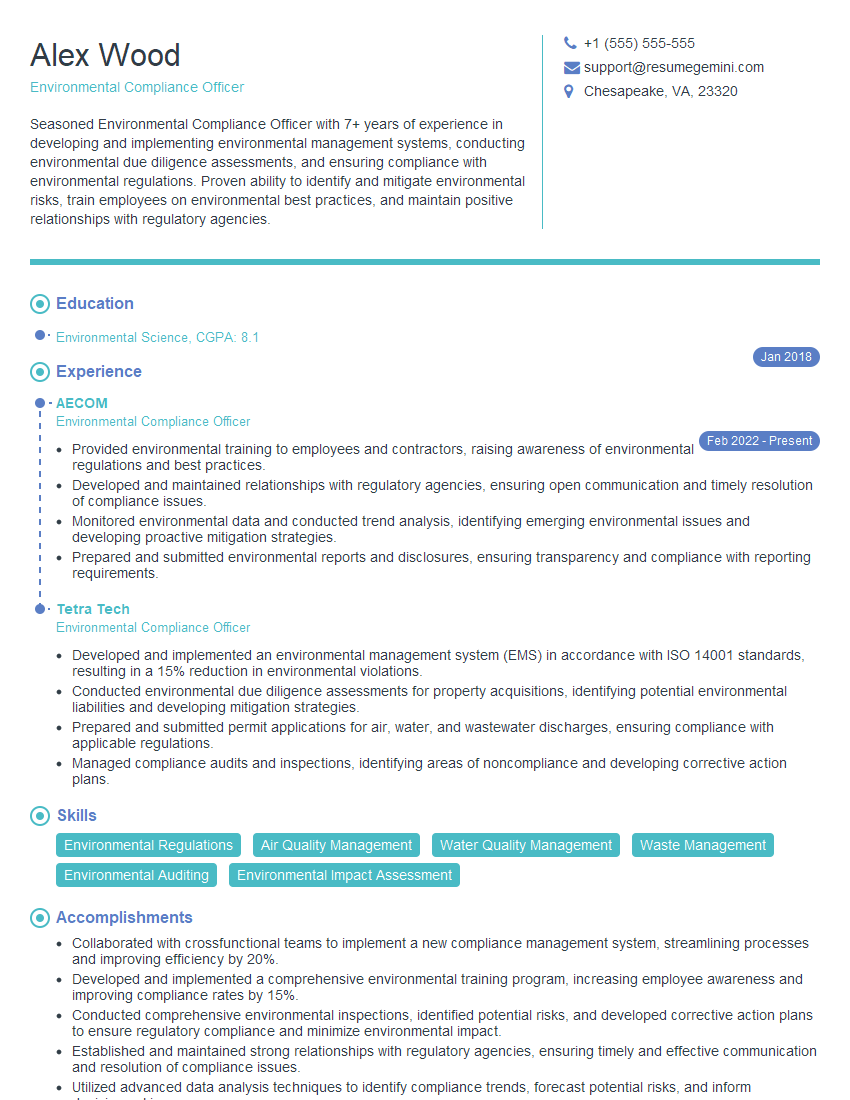
Environmental Compliance Officer Resume Sample

Forestry Technician Resume Sample

Safety Officer Resume Sample
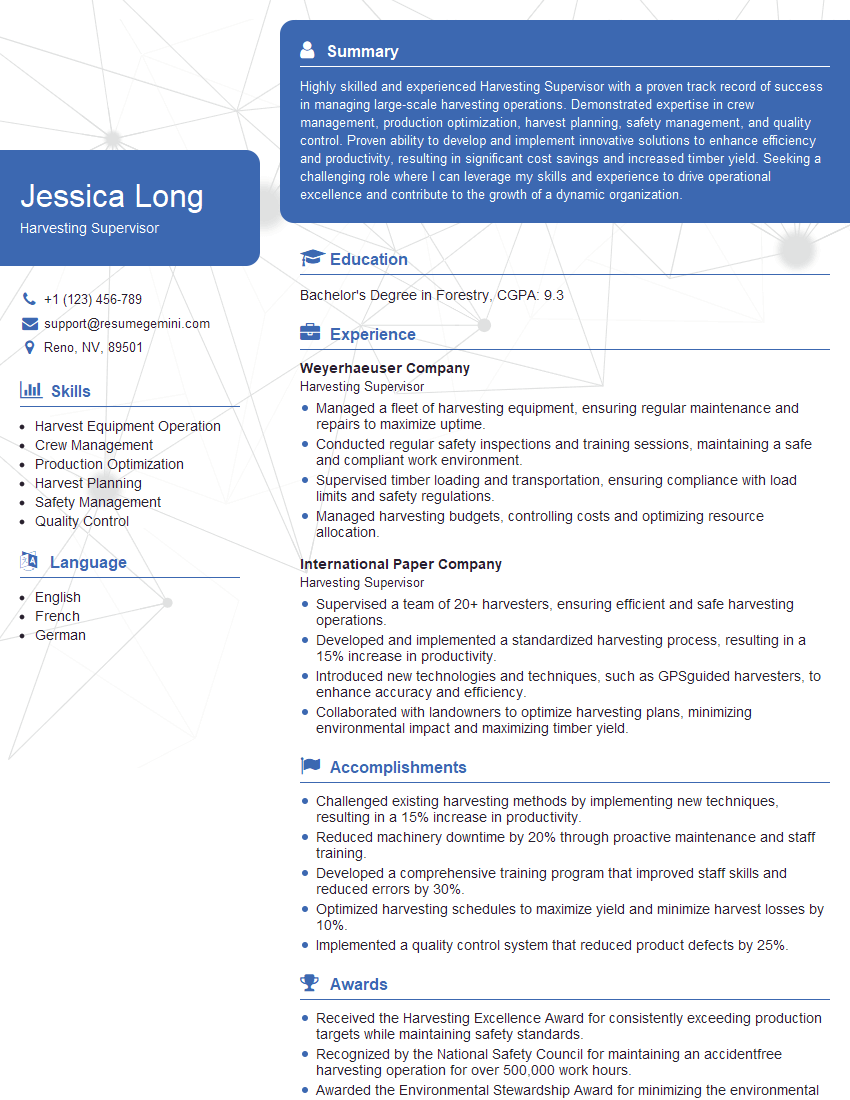
Harvesting Supervisor Resume Sample
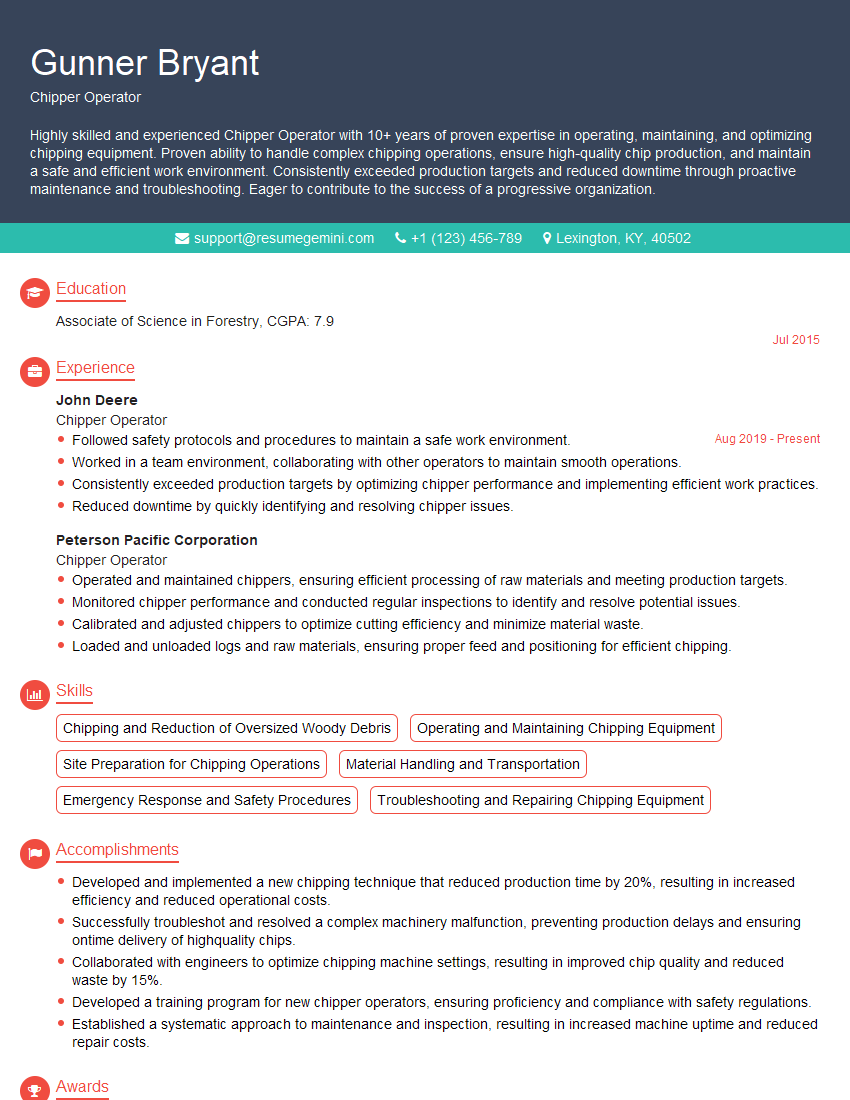
Chipper Operator Resume Sample
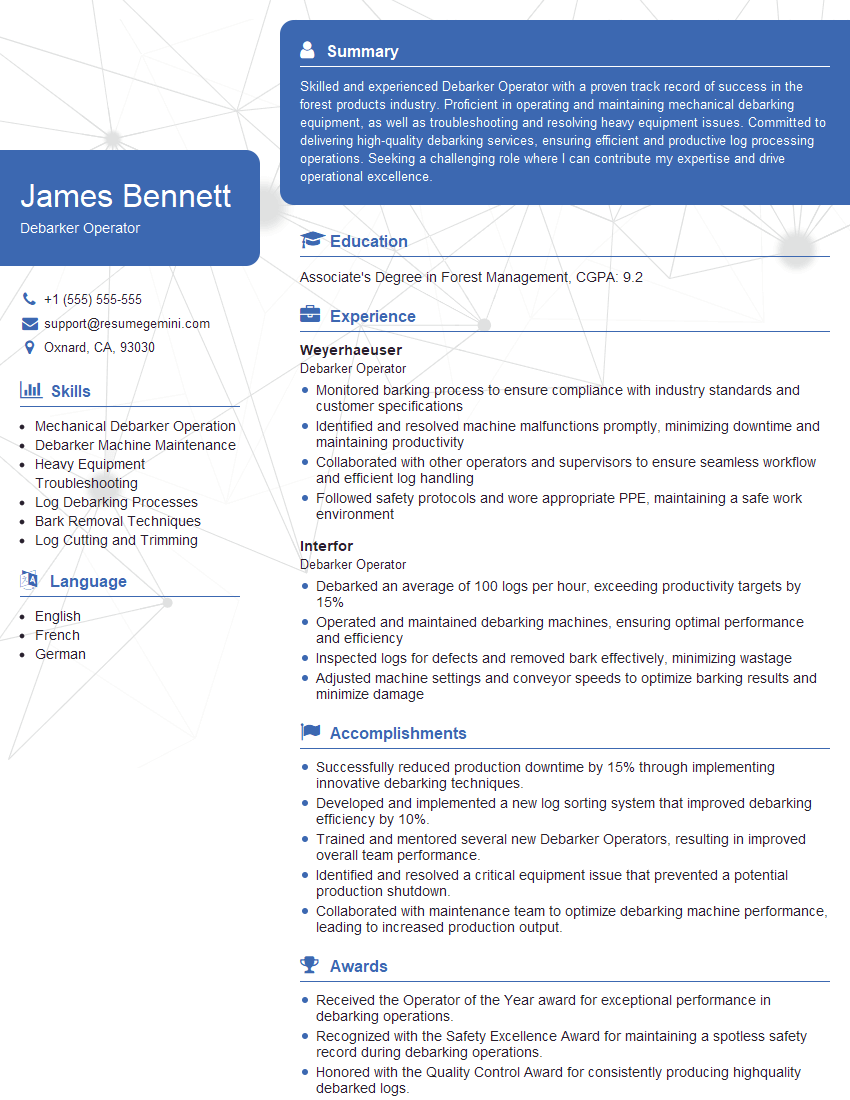
Debarker Operator Resume Sample
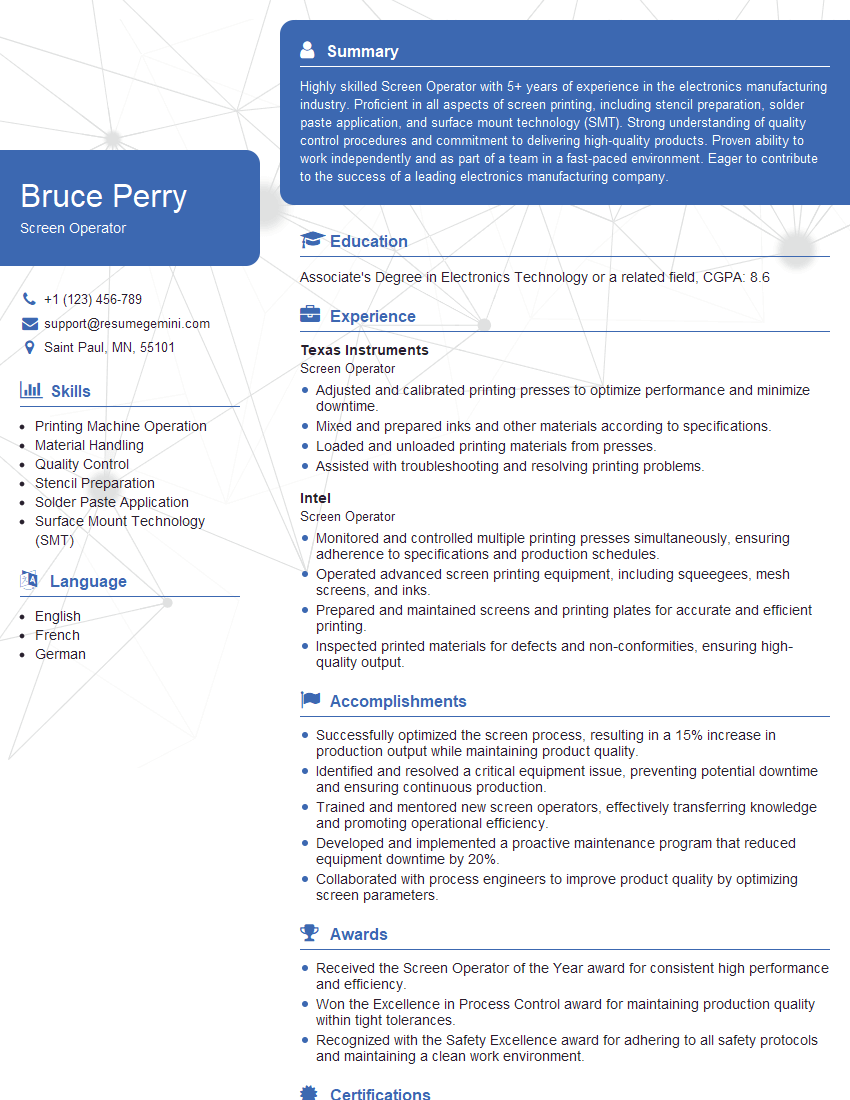
Screen Operator Resume Sample

Conveyor System Operator Resume Sample
Explore more articles
Users Rating of Our Blogs
Share Your Experience
We value your feedback! Please rate our content and share your thoughts (optional).
What Readers Say About Our Blog
Very informative content, great job.
good