Are you ready to stand out in your next interview? Understanding and preparing for Wood Framing interview questions is a game-changer. In this blog, we’ve compiled key questions and expert advice to help you showcase your skills with confidence and precision. Let’s get started on your journey to acing the interview.
Questions Asked in Wood Framing Interview
Q 1. What are the different types of wood used in framing?
Several types of wood are suitable for framing, each with its strengths and weaknesses. The most common are:
- Spruce-Pine-Fir (SPF): A readily available, cost-effective softwood, widely used for studs, joists, and rafters. Its strength-to-weight ratio makes it efficient. Think of it as the ‘workhorse’ of framing lumber.
- Douglas Fir: A stronger and denser softwood than SPF, offering superior strength and stiffness. It’s often preferred for larger structures or applications needing greater load-bearing capacity. Imagine it as the ‘heavy lifter’.
- Hem-Fir: A blend of Hemlock and Fir, offering a balance between cost and strength, falling somewhere between SPF and Douglas Fir in properties.
- Engineered Lumber: This isn’t a single wood type but a category of products manufactured from smaller pieces of wood glued together. Examples include Laminated Veneer Lumber (LVL) and Parallel Strand Lumber (PSL), offering exceptional strength and consistent properties. Think of these as ‘engineered solutions’ for specific applications.
The choice of wood depends on factors like budget, structural requirements, and regional availability. For instance, in areas with abundant SPF, it’s the economical choice, whereas Douglas Fir might be preferred in regions prone to high winds or snow loads.
Q 2. Explain the process of building a standard wall frame.
Building a standard wall frame is a systematic process:
- Layout and Cutting: Start by laying out the studs according to the wall’s length and spacing (usually 16 inches on center). Measure and cut the studs to the correct height, accounting for the top and bottom plates.
- Plate Assembly: Assemble the bottom plate (typically a double 2×4) on a level surface. Use appropriate fasteners like 16d nails or screws.
- Stud Erection: Erect the studs, ensuring they’re plumb and properly spaced. Use temporary bracing to maintain stability until the top plate is secured.
- Top Plate Attachment: Attach the top plate (another double 2×4), ensuring proper alignment with the bottom plate. Again, secure with nails or screws.
- Wall Bracing: Install wall bracing (diagonal bracing or sheathing) to prevent racking and ensure structural stability. This is crucial for resisting lateral forces.
- Opening Creation: Cut out openings for doors and windows, ensuring proper header installation to support the load above.
This process requires precision and attention to detail. Properly framed walls form the backbone of a building and are fundamental to its structural integrity.
Q 3. Describe the different types of roof trusses and their applications.
Roof trusses are prefabricated assemblies designed to efficiently support the roof structure. Common types include:
- W-Trusses: Simple and cost-effective, suitable for smaller spans and lighter loads. They resemble a ‘W’ shape.
- King Post Trusses: Feature a central vertical post providing support for a longer span. Think of this as a basic, stronger ‘A-frame’.
- Queen Post Trusses: Similar to King Post but with two vertical posts, enabling them to handle heavier loads and longer spans.
- Fink Trusses: A common type with a distinctive upward sloping appearance. They’re versatile and widely used for residential construction.
- Howe Trusses: Another widely used truss, known for its efficient load distribution and stability. They’re generally stronger than Fink trusses.
The selection of a truss type depends on the roof’s span, pitch, load requirements, and aesthetic considerations. Engineered plans detailing the specific truss design are always crucial for ensuring structural safety.
Q 4. How do you ensure proper wall bracing and stability?
Proper wall bracing is critical to prevent racking (lateral movement) and ensure structural stability. Methods include:
- Diagonal Bracing: Installing diagonal lumber members (typically 2x4s) between studs, creating a strong, rigid framework. This is a simple yet effective method.
- Sheathing: Applying plywood or OSB sheathing to the exterior of the wall acts as a strong, continuous diaphragm, resisting racking forces.
- Metal Straps: Metal straps or connectors can be used to tie studs together and provide additional bracing, especially at corners and intersections.
The choice of bracing method often depends on building codes and the specific design. Many designs combine sheathing and diagonal bracing for optimal stability.
Think of bracing as the ‘safety net’ for your walls, protecting them from the forces of wind and seismic activity.
Q 5. What are the common methods for connecting wall and floor systems?
Connecting wall and floor systems requires careful planning and execution to ensure load transfer and overall structural integrity. Common methods include:
- Top Plates Anchored to Floor Joists: The top plates of walls are securely fastened to the floor joists using nails, screws, or metal connectors. This is fundamental and critical for load transfer.
- Anchored Sill Plates: The bottom plates (sill plates) of walls are typically anchored to the foundation or floor system with bolts or anchors. This establishes a strong connection to the ground.
- Cripple Studs: Short studs used to fill the space between the bottom plate and the top of the foundation, ensuring a continuous wall structure.
The specific connection methods depend on the type of floor and foundation system employed. A properly executed connection should resist uplift, lateral, and vertical forces.
Q 6. Explain the importance of proper sheathing and its role in structural integrity.
Sheathing, typically plywood or OSB, plays a crucial role in a building’s structural integrity. Its importance goes beyond just cladding:
- Diaphragm Action: Sheathing acts as a large, stiff diaphragm, resisting wind and seismic loads and distributing them throughout the structure. Imagine it as a strong skin holding everything together.
- Increased Rigidity: It significantly improves the overall stiffness and stability of the wall assembly, making it less susceptible to racking.
- Support for Cladding: It provides a solid surface for attaching exterior cladding, such as siding or brick.
Proper sheathing installation, including proper fastening, is essential for its effectiveness. Insufficient fastening can compromise the diaphragm action and reduce the structural integrity of the entire building. It’s a critical component ensuring strength and longevity.
Q 7. How do you calculate the amount of lumber needed for a framing project?
Calculating lumber quantities requires meticulous planning and accurate measurements. Here’s a step-by-step approach:
- Detailed Plans: Begin with detailed architectural plans specifying dimensions and framing details.
- Measure and Calculate: Carefully measure all wall lengths, heights, and distances between studs (typically 16 inches on center). Calculate the number of studs needed for each wall.
- Account for Waste: Always add extra lumber to account for cuts, waste, and potential mistakes. A 10-15% waste factor is generally reasonable, but this can vary depending on complexity.
- Material Lists: Create detailed material lists for each lumber type, specifying quantity and dimensions. This includes studs, plates, joists, rafters, and sheathing.
- Software Assistance: Consider using specialized framing software which can help automate lumber quantity calculations. Many programs can generate cutting lists and optimize material usage.
Example: A 10-foot wall with 16-inch on-center stud spacing will require approximately 8 studs (10 feet * 12 inches/foot / 16 inches/stud ≈ 7.5 studs). Remember to always round up and add the extra material for waste and other aspects.
Q 8. What are the key considerations when working with engineered wood products?
Engineered wood products, like Laminated Veneer Lumber (LVL), Parallel Strand Lumber (PSL), and Glulam beams, offer significant advantages in strength and consistency over traditional lumber. However, careful consideration is crucial during handling and installation.
- Moisture Content: Engineered wood is highly sensitive to moisture. Excessive moisture can lead to swelling, warping, and reduced strength. Proper storage and handling are paramount to prevent damage. For example, I always ensure that materials are stored under cover and off the ground to avoid direct contact with moisture from the ground or rain.
- Fastener Selection: The type of fastener used is critical. Using the wrong fastener can lead to splitting or pull-out failure. For instance, using appropriately sized structural screws with predrilled pilot holes in LVL is essential to prevent splitting. I always consult the manufacturer’s specifications for recommended fastener types and spacing.
- Load Capacity: While engineered wood is strong, its load-bearing capacity depends on the specific product and its dimensions. Always consult design specifications and engineering calculations to ensure the chosen product meets the structural requirements. I rely heavily on engineering drawings to ensure that the correct engineered wood product is selected for the given load.
- Handling and Storage: Engineered wood can be heavy and requires careful handling to prevent damage. Always use appropriate lifting equipment and avoid dropping or impacting the material.
Q 9. Describe your experience with different types of foundation systems and how they impact framing.
My experience encompasses various foundation systems, each impacting framing differently. The foundation type dictates the height and support for the framing.
- Slab-on-Grade: With slab foundations, the framing sits directly on the concrete slab. This requires careful attention to moisture control and proper anchoring to the slab, often using anchor bolts. I always ensure a moisture barrier is in place before starting the framing to prevent moisture transfer.
- Crawl Space: Crawl space foundations allow for inspection and access to plumbing and wiring, but the framing needs to be adequately supported by piers or foundation walls. Proper ventilation is key to prevent moisture buildup and rot. I make sure to design a suitable ventilation strategy to prevent this.
- Basement: Basement foundations offer a secure and stable base for framing. Framing typically rests on foundation walls, allowing for more complex framing designs. Proper waterproofing is crucial to protect the wood framing from moisture damage.
Understanding the foundation’s characteristics is vital. For example, if a foundation settles unevenly, I would adjust the framing to accommodate and prevent structural issues. This involves carefully observing the foundation for any signs of uneven settling and making appropriate adjustments to sill plates and other framing elements.
Q 10. What safety precautions do you take when working at heights during framing?
Safety is paramount when working at heights. I religiously follow a comprehensive safety protocol.
- Fall Protection: I always use a fall arrest system with a properly anchored lifeline. This includes a harness, lanyard, and anchor point. I routinely inspect my equipment to ensure it’s in good working condition.
- Scaffolding: For extensive work at height, properly erected and inspected scaffolding is used, always ensuring it conforms to all safety regulations and building codes. I never overload scaffolding.
- Personal Protective Equipment (PPE): Hard hats, safety glasses, and work boots are mandatory. Depending on the task, additional PPE such as gloves and hearing protection may be needed.
- Proper Training: I ensure my team receives regular training on fall protection procedures and safe working practices at heights.
- Regular Inspections: Before starting any work at heights, I conduct a thorough site inspection to identify any potential hazards and take steps to mitigate them.
I believe that a culture of safety is essential on any construction site. I actively encourage and enforce safe practices and intervene immediately if I see any violations.
Q 11. How do you handle unexpected site conditions or material shortages during construction?
Unexpected site conditions and material shortages are common challenges. My approach involves a combination of planning, problem-solving, and communication.
- Contingency Planning: I always incorporate a degree of flexibility into the schedule, anticipating potential delays. This might include extra buffer time for unforeseen issues.
- Problem-Solving: If I encounter unexpected site conditions (e.g., unexpected soil conditions or underground utilities), I immediately consult with the engineer or project manager to develop a solution that meets building codes and safety standards.
- Material Substitution: In case of material shortages, I explore suitable alternatives that meet the project specifications. This necessitates quick communication with suppliers and potentially finding substitute materials with equivalent strength and properties. I always document the substitution to ensure compliance.
- Communication: Open and clear communication with the client, subcontractors, and project manager is crucial. This ensures everyone is aware of any changes or delays and can adjust accordingly.
For example, I once encountered unexpected bedrock during excavation. Instead of stopping work, we promptly consulted the engineer, revised the foundation plan, and adapted the framing to the new situation, minimizing the overall project delay.
Q 12. Explain your understanding of building codes and regulations related to wood framing.
Understanding and adhering to building codes and regulations is fundamental to my work. These codes dictate everything from structural requirements to fire safety.
- IBC (International Building Code): I’m familiar with the IBC and its specific requirements for wood framing, including those related to load-bearing capacity, spacing requirements, and fire-resistance ratings.
- Local Codes: Beyond the IBC, I meticulously check local building codes and any specific regulations in the project’s jurisdiction. These can vary significantly between regions.
- Energy Codes: I pay attention to energy codes, particularly concerning insulation requirements and thermal bridging, which impact the framing design.
- Accessibility Codes: I’m familiar with accessibility standards related to door clearances, ramp slopes, and other features that affect framing layouts.
Non-compliance can lead to costly revisions, delays, and potential safety risks. I always review the relevant codes before starting any project and regularly consult with building inspectors throughout the construction process.
Q 13. Describe your experience with various types of fasteners and their applications in framing.
My experience spans a wide range of framing fasteners, each with its specific application and advantages.
- Nails: Common nails are used for general framing, but the size and type depend on the wood species and application. For instance, larger, heavier nails are used in structural applications.
- Screws: Structural screws offer superior holding power compared to nails, particularly in engineered wood products. I frequently use them for attaching sill plates, rafters, and trusses. The choice of screw is crucial; I always ensure they are appropriate for the specific wood type.
- Joist Hangers: Joist hangers provide reliable support for joists and beams. These are essential for ensuring proper load transfer. I always choose the correct hanger capacity based on the load-bearing requirement. I choose from a variety of hangers depending on the situation, including joist hangers, beam hangers, and rafter hangers.
- Metal Connectors: These are crucial for complex connections, ensuring structural integrity and load transfer. I use a variety of connectors, including gusset plates, hurricane straps, and other specialized connectors, depending on the load requirements and code specifications.
Proper fastener selection is crucial for structural integrity. I ensure I always consult manufacturer guidelines and the building code requirements to ensure proper installation and load capacity.
Q 14. How do you ensure accurate measurements and layout during the framing process?
Accurate measurements and layout are fundamental to successful framing. Any errors can have cascading effects, causing significant problems later in the project.
- Detailed Plans: I always start with thorough and accurate plans, checking and double-checking dimensions and details.
- Laser Measurement Tools: I use laser measuring tools to ensure precise measurements, greatly increasing accuracy compared to tape measures, particularly in larger structures.
- Layout Techniques: I employ precise layout techniques, using chalk lines and framing squares to establish the correct positions for walls, beams, and other structural elements.
- Regular Checks: I conduct frequent checks throughout the framing process to ensure everything aligns with the plans. This includes checking both horizontal and vertical alignment.
- Teamwork and Communication: Effective teamwork is essential. I ensure everyone on the team understands the layout and the importance of accuracy. Clear communication helps prevent mistakes.
I often use a combination of digital and traditional methods. I might use CAD drawings to plan things out digitally first and then transfer these measurements onto the physical structure.
Q 15. What are the common problems encountered during wood framing and how do you address them?
Common problems in wood framing often stem from poor planning, material issues, or execution errors. Let’s look at some key issues and their solutions:
- Warping and Twisting Lumber: This is caused by uneven moisture content. The solution is to always use properly dried lumber (typically below 19% moisture content) and to store lumber correctly on a level surface, protected from the elements. Inspect each piece before use and reject any significantly warped or twisted members.
- Incorrect Framing Angles and Measurements: Inaccurate cutting or layout can lead to structural instability. Prevention involves meticulous use of measuring tools (tapes, squares), precise cutting techniques, and double-checking dimensions at each stage. A laser level is an invaluable tool for ensuring plumb and level framing.
- Improper Nail Placement and Fastener Selection: Using the wrong nails or placing them incorrectly weakens the structure and reduces load-bearing capacity. Adhering to building codes and using appropriate fasteners for each member is crucial. For instance, using hurricane ties for shear walls in high-wind areas.
- Lack of Proper Support: Insufficient or incorrectly placed supports can lead to sagging floors, ceilings, or walls. Understanding load requirements and applying appropriate support systems is vital. This often involves using engineered lumber or specific framing techniques like engineered wood I-joists for longer spans.
- Pest Infestation: Termites or other wood-boring insects can severely compromise structural integrity. Using treated lumber in areas prone to infestation and regular inspection are crucial preventative measures.
Addressing these problems requires a proactive approach, starting with meticulous planning and material selection, followed by careful execution and regular quality checks throughout the project.
Career Expert Tips:
- Ace those interviews! Prepare effectively by reviewing the Top 50 Most Common Interview Questions on ResumeGemini.
- Navigate your job search with confidence! Explore a wide range of Career Tips on ResumeGemini. Learn about common challenges and recommendations to overcome them.
- Craft the perfect resume! Master the Art of Resume Writing with ResumeGemini’s guide. Showcase your unique qualifications and achievements effectively.
- Don’t miss out on holiday savings! Build your dream resume with ResumeGemini’s ATS optimized templates.
Q 16. Explain your understanding of moisture content and its impact on wood framing.
Moisture content in wood is the amount of water present in the wood relative to its dry weight. It’s expressed as a percentage. This is incredibly important in framing because wood expands and contracts with changes in moisture content. Too much moisture can lead to:
- Rot and Decay: Excess moisture creates the perfect environment for fungal growth, leading to structural weakening and potential failure.
- Warpage and Cracking: As wood dries, it shrinks, often unevenly, resulting in warping and cracking.
- Reduced Strength: Wet wood is significantly weaker than dry wood.
Conversely, excessively dry wood can also be problematic, becoming brittle and prone to splitting. The ideal moisture content for framing lumber is generally between 12% and 19%, depending on the climate and species of wood. We always check the lumber moisture content using a moisture meter before starting a project to prevent issues down the line. Properly storing lumber, allowing for acclimation to the jobsite’s environment before use, and employing appropriate ventilation techniques are crucial for managing moisture content.
Q 17. How do you maintain quality control throughout the framing process?
Maintaining quality control is paramount. My approach involves a multi-faceted strategy:
- Pre-Construction Planning: Thorough review of blueprints, detailed material lists, and scheduling to ensure everything is in place before commencing work.
- Material Inspection: Rigorous inspection of all lumber upon delivery to ensure it meets specifications and is free of defects.
- Regular Inspections During Construction: Consistent checking of squareness, plumb, level, and proper fastener placement at each stage of the framing process.
- Use of Measuring and Leveling Tools: Employing accurate measuring tools, laser levels, and speed squares to ensure precision.
- Team Training and Communication: Ensuring the entire team understands quality standards and communicates effectively to address any potential issues immediately. I’ll often do walkthroughs with my team to check for any issues before moving onto the next phase.
- Documentation: Maintaining detailed records of material usage, inspections, and any corrective actions taken.
This rigorous approach minimizes errors and ensures a structurally sound and high-quality final product. It’s about building trust and pride in every project.
Q 18. What experience do you have with using power tools related to wood framing?
I’m proficient in operating a wide range of power tools commonly used in wood framing. This includes:
- Circular Saws: For precise and efficient cutting of lumber to various lengths and angles.
- Reciprocating Saws (Sawsall): Useful for demolition work, cutting curves, and working in tight spaces.
- Nail Guns: For efficient and consistent nailing, increasing speed and accuracy on the jobsite. I am experienced with various types, including framing nailers, finish nailers, and roofing nailers.
- Power Drills and Impact Drivers: Essential for driving screws and lag bolts, particularly for heavy-duty framing applications.
- Table Saws: For accurate ripping and cross-cutting of lumber, essential for achieving precise dimensions.
Safety is always my top priority when using power tools. I meticulously follow all safety protocols, including wearing appropriate safety gear (safety glasses, hearing protection, and dust masks) and regularly inspecting and maintaining the tools.
Q 19. How do you manage a team effectively during framing projects?
Effective team management in framing requires a blend of clear communication, delegation, and fostering a positive work environment. My approach focuses on:
- Clear Roles and Responsibilities: Assigning specific tasks based on individual skills and experience. This reduces confusion and improves efficiency.
- Open Communication: Maintaining open lines of communication, encouraging team members to voice concerns or suggestions.
- On-site Training and Mentoring: Providing ongoing training and support to ensure everyone understands the requirements and best practices. I believe in building a strong team that can learn from each other and help one another.
- Positive Reinforcement: Acknowledging and appreciating good work, creating a positive and motivating atmosphere.
- Problem-Solving Collaboration: Working collaboratively to address any issues or challenges that arise during the project. I encourage input from all team members and leverage their expertise.
A well-managed team translates to higher productivity, better quality, and a safer work environment.
Q 20. Describe your experience with reading and interpreting blueprints.
I have extensive experience reading and interpreting blueprints, which is fundamental to successful wood framing. My process involves:
- Reviewing the Overall Design: Understanding the project’s scope, dimensions, and overall layout before diving into details.
- Identifying Key Framing Elements: Locating information on wall locations, floor plans, roof trusses, and other structural elements.
- Analyzing Dimensions and Specifications: Precisely interpreting dimensions, materials specifications (lumber sizes, types of fasteners), and any specific construction details.
- Understanding Symbols and Conventions: Being fluent in architectural and structural engineering symbols, notations, and conventions.
- Cross-Referencing with Other Documents: Consulting other relevant documents such as structural calculations, specifications, and material schedules.
Accurate blueprint interpretation ensures that the framing is structurally sound, meets building codes, and aligns perfectly with the overall design vision. Errors in this phase can have significant downstream consequences.
Q 21. How do you determine the appropriate size of lumber for different framing members?
Determining appropriate lumber size depends on several factors, including:
- Span Length: Longer spans require larger, stronger lumber to prevent sagging. Engineering tables and building codes provide guidance on the minimum sizes for specific spans.
- Load Requirements: The anticipated load on the framing member (dead load – weight of the structure, and live load – weight of occupants, furniture, etc.) influences lumber size. Heavier loads necessitate larger lumber.
- Spacing of Framing Members: Closer spacing allows for the use of smaller lumber. For example, using 16” on center spacing allows for smaller joists compared to 24” on center spacing.
- Building Codes and Local Regulations: Adhering to building codes and local regulations is paramount. These codes specify minimum lumber sizes for different applications.
- Type of Lumber: The species of wood (e.g., Spruce-Pine-Fir, Hem-Fir) and its structural grade affect its strength and the appropriate size. Engineered lumber like LVL (Laminated Veneer Lumber) and PSL (Parallel Strand Lumber) can provide significant strength advantages, allowing for smaller member sizes in some applications.
I always refer to engineering tables, building codes, and manufacturer’s specifications to determine the appropriate size. A simple mistake in lumber selection can compromise the integrity of the entire structure – safety is the utmost priority.
Q 22. Explain the difference between platform framing and balloon framing.
The core difference between platform and balloon framing lies in how the wall studs are constructed and connected to the floor and roof systems. Think of it like building with LEGOs: platform framing is like building a solid base layer first, while balloon framing builds vertically, stacking the layers.
- Platform Framing: This is the dominant method today. Each story is built as a separate platform, complete with its own subfloor. The walls are then framed on top of this platform, and are typically only as tall as one story. This method is safer, easier to inspect and build, and offers better lateral stability. Imagine building a LEGO castle, one floor at a time, with each floor a complete, solid platform.
- Balloon Framing: In this method, the exterior wall studs run continuously from the foundation to the roof. Intermediate floors are supported by joists that rest on these long studs. This results in fewer cuts and potentially less material waste but makes plumbing, electrical and insulation installation more difficult. It’s less common now due to safety concerns related to fire spread and the difficulty of inspection.
In practice, the choice depends on project requirements and local building codes. Platform framing is preferred for its safety, ease of construction, and better resistance to wind and seismic forces. Balloon framing might be considered in specific historical preservation projects or in situations where minimizing material use is paramount, although it’s crucial to address the safety concerns before doing so.
Q 23. What is your experience with using different types of scaffolding?
My experience encompasses a wide range of scaffolding types, from simple independent frame scaffolds to more complex system scaffolds and suspended access platforms. I’m proficient in erecting, dismantling, and inspecting various types, ensuring they meet all safety regulations and project demands.
- Independent Frame Scaffolds: These are commonly used on smaller projects and offer good stability for straightforward tasks. I’ve used these extensively for tasks like installing wall sheathing and exterior finishes.
- System Scaffolds: These are highly adaptable and are my go-to for larger, more complex projects requiring intricate configurations. I have experience using these on multi-story buildings, ensuring safe access for large framing crews.
- Suspended Access Platforms: I’m familiar with the safety procedures and regulations for these platforms, often utilizing them for high-level framing work on challenging projects or where conventional scaffolding is impractical.
My experience includes detailed understanding of the necessary safety precautions, load calculations, and proper rigging techniques for all types. Safety is my absolute priority – I always ensure compliance with OSHA regulations and best practices before, during, and after scaffolding construction.
Q 24. How do you ensure the structural integrity of a framed building?
Ensuring structural integrity is paramount. It involves a multi-faceted approach starting with design and continuing through construction and inspection.
- Accurate Design and Engineering: I begin with thorough plan review, ensuring the design accounts for loads (dead load, live load, snow load, wind load), soil conditions, and local building codes. This includes checking for proper shear walls, bracing, and connections.
- Quality Materials: Using only appropriately graded lumber and engineered wood products is critical. I meticulously check each piece for defects and ensure it meets specified dimensions. This helps minimize potential weak points.
- Precise Construction Techniques: Proper framing techniques are vital. This means correctly spacing and fastening studs, joists, and rafters. I consistently use the correct size nails or screws and place them correctly according to engineering specifications.
- Regular Inspections: Throughout the construction process, frequent inspections are key to identifying and rectifying any issues early on. This might involve checking plumbness of walls, squareness of corners, and the overall structural alignment.
- Proper Connections: This includes using appropriate connectors like metal plates, straps, and bolts to securely join framing members. The integrity of these connections directly impacts the overall stability of the structure.
By combining these steps, I ensure the framed building can withstand anticipated loads and remain safe and structurally sound for its intended lifespan.
Q 25. What are your strategies for managing time effectively on a framing project?
Effective time management in framing requires careful planning, efficient execution, and proactive problem-solving.
- Detailed Scheduling: I create detailed schedules that break down the project into smaller, manageable tasks. This includes identifying dependencies between tasks and allocating resources accordingly. This prevents bottlenecks and keeps the project on track.
- Material Procurement: Proactive ordering and delivery of materials are essential to minimize delays. I always double-check quantities and specifications to prevent material shortages.
- Team Coordination: Clear communication and collaboration are crucial within the team. I assign tasks according to each team member’s skillset and regularly hold meetings to address any challenges or adjust the schedule as needed.
- Problem-Solving: Addressing issues promptly is key. This includes anticipating potential problems and having contingency plans to prevent disruptions. It’s about more than simply fixing errors; it’s about preventing them in the first place.
- Quality over Speed: While deadlines are important, I prioritize quality workmanship. Rushing through steps compromises safety and may lead to costly rework later on.
In my experience, a well-planned schedule, along with strong communication and a proactive approach to problem-solving, are the keys to successful time management in any framing project. A slight delay in one stage can quickly snowball into much bigger issues.
Q 26. Explain your experience with inspecting framing work for quality control.
Quality control in framing is an ongoing process, not just a final check. It starts with verifying material quality and continues throughout construction. I’ve developed a systematic approach that incorporates several key elements.
- Material Inspection: I start by carefully checking each lumber piece for defects, knots, and proper grading. Any unacceptable pieces are immediately rejected.
- Dimensional Accuracy: I use measuring tools to verify that framing members are cut to the correct dimensions and properly spaced according to the plans.
- Plumbness and Squareness: I use levels and squares regularly to ensure walls and corners are plumb and square, critical for overall structural stability. I will re-check these multiple times during the construction.
- Fastener Checks: I carefully inspect the number and placement of fasteners (nails or screws), ensuring they meet the specified requirements to avoid weak connections. I have quality control checklists to assist with consistency.
- Code Compliance: Throughout the process, I ensure compliance with all relevant building codes and regulations. This often includes checking for proper shear walls, bracing, and fire protection measures.
I maintain detailed records of inspections and immediately report and correct any deficiencies found. A proactive approach prevents problems from escalating and ensures the finished structure is safe and meets the required quality standards. It’s about building something that will last.
Q 27. How familiar are you with different types of roofing systems and their impact on framing design?
Different roofing systems significantly influence framing design. The weight, slope, and structural requirements of the roofing material must be considered. For instance, a heavy tile roof requires a much stronger and more robust framing system than a lightweight shingle roof.
- Roof Loads: The weight of the roofing material itself, plus snow and wind loads, are major factors. Heavier roofs necessitate stronger rafters, trusses, and supporting walls.
- Roof Slope: The roof’s pitch affects rafter spacing and the overall framing design. Steeper slopes require more closely spaced rafters and stronger connections.
- Roof Type: Different roof types (gable, hip, shed, etc.) have distinct framing requirements. Each type presents unique challenges and requires specialized knowledge of the best way to support the roof structure.
- Material Considerations: The framing needs to be designed to accommodate the specific requirements of the chosen roofing material. For example, a standing-seam metal roof has different attachment needs from asphalt shingles.
My experience encompasses working with various roofing systems, from simple gable roofs to complex mansard roofs, and I know how to design and construct the appropriate framing system to properly support each. A well-designed roof is crucial for the longevity and safety of the entire building.
Q 28. How do you address concerns regarding the sustainability of wood framing?
Sustainability in wood framing is a growing concern, and I address it through several key strategies.
- Sourcing Sustainable Lumber: I prioritize using lumber certified by organizations like the Forest Stewardship Council (FSC), which ensures that the wood comes from responsibly managed forests. This supports sustainable forestry practices.
- Minimizing Waste: Careful planning and precise cutting techniques help reduce material waste. I work closely with the design team to optimize the framing layout and minimize excess material. Careful material management at the jobsite also reduces waste.
- Using Engineered Wood Products: Engineered wood products, such as laminated veneer lumber (LVL) and cross-laminated timber (CLT), can often use smaller, less desirable pieces of wood, increasing efficiency and reducing waste. CLT, in particular, is an increasingly sustainable option for larger projects.
- Life-Cycle Considerations: I take into account the entire life cycle of the building, from construction to demolition. This includes considering the durability of the framing system and the potential for reuse or recycling of materials at the end of the building’s life.
- Energy Efficiency: Properly insulated framing contributes significantly to the building’s energy efficiency. I ensure that insulation is installed correctly to prevent heat loss and reduce energy consumption.
Sustainable practices are not just an environmental concern; they can often lead to cost savings and improved building performance. It’s about building responsibly for the future.
Key Topics to Learn for Your Wood Framing Interview
- Blueprint Reading and Interpretation: Understanding architectural plans, including foundation layouts, wall sections, roof designs, and specifications for framing members.
- Framing Techniques: Practical application of various framing methods like platform framing, balloon framing, and post and beam construction. Understanding the advantages and disadvantages of each.
- Material Selection and Estimation: Calculating lumber quantities, understanding different wood grades and their applications, and recognizing common lumber defects.
- Structural Mechanics: Knowledge of load-bearing principles, shear walls, bracing techniques, and understanding how different framing elements contribute to overall building stability.
- Building Codes and Regulations: Familiarity with local building codes and regulations related to wood framing, including safety standards and compliance requirements.
- Tools and Equipment: Proficiency in using common hand and power tools used in wood framing, including saws, hammers, nail guns, and levels. Safety procedures for tool use.
- Problem-Solving and Troubleshooting: Ability to identify and address potential framing issues, such as dimensional discrepancies, structural weaknesses, or code violations, and develop effective solutions.
- Teamwork and Communication: Understanding the importance of effective communication and collaboration within a construction team.
Next Steps
Mastering wood framing opens doors to a rewarding career with excellent growth potential in the construction industry. Demand for skilled framers remains consistently high, offering opportunities for advancement and competitive salaries. To maximize your job prospects, create a professional and ATS-friendly resume that highlights your skills and experience effectively. ResumeGemini is a trusted resource to help you build a standout resume. We provide examples of resumes tailored to the Wood Framing industry to help you get started. Let ResumeGemini help you build the perfect resume to showcase your expertise!
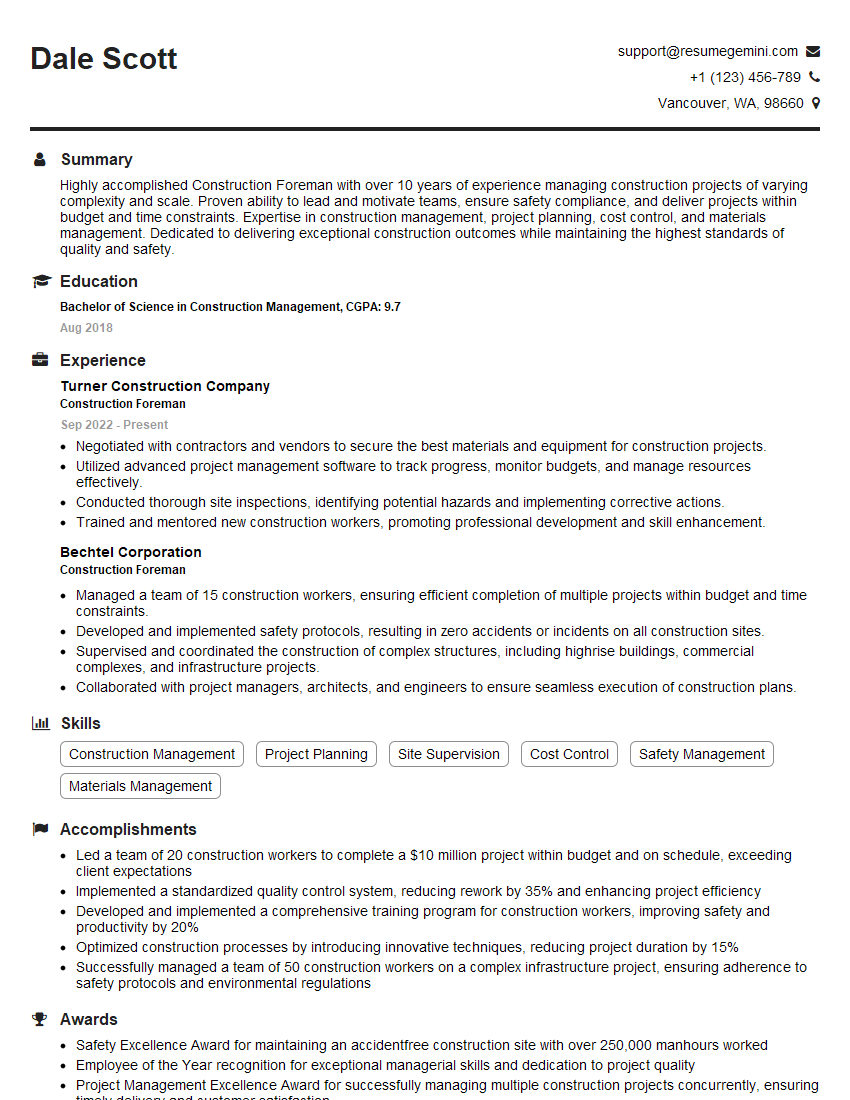
Construction Foreman Resume Sample
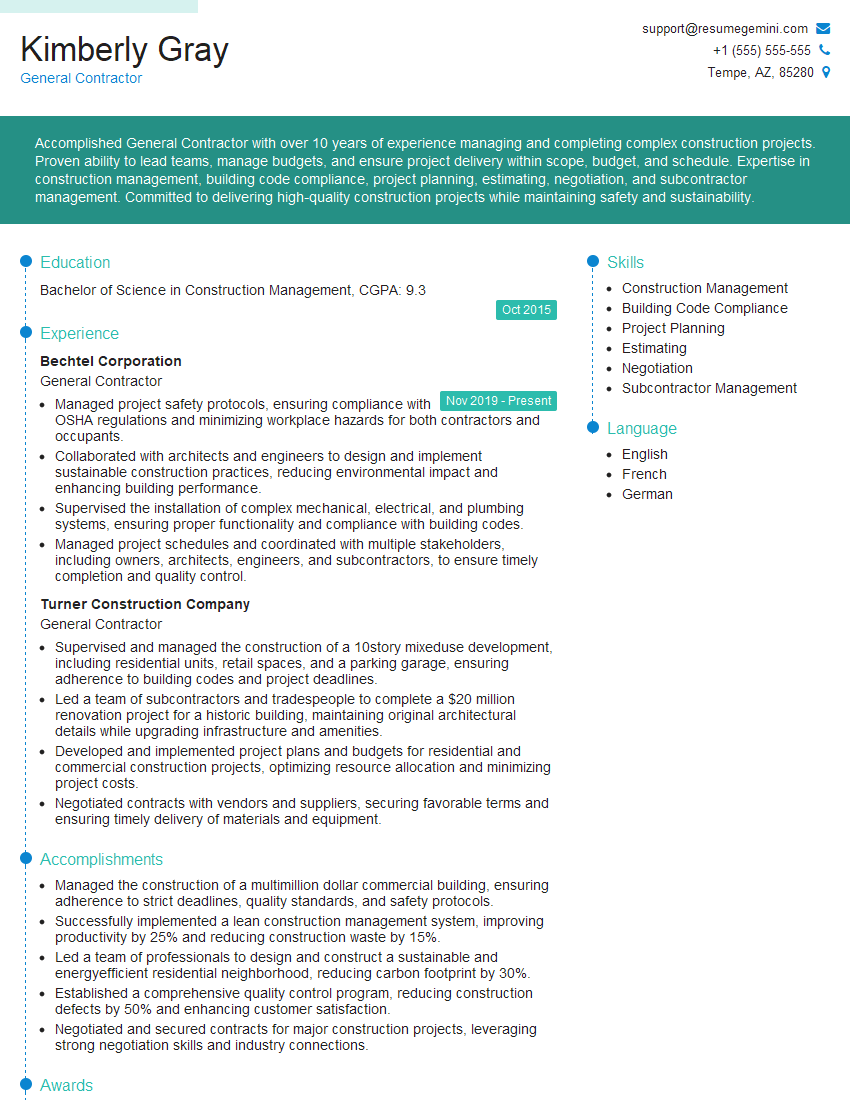
General Contractor Resume Sample
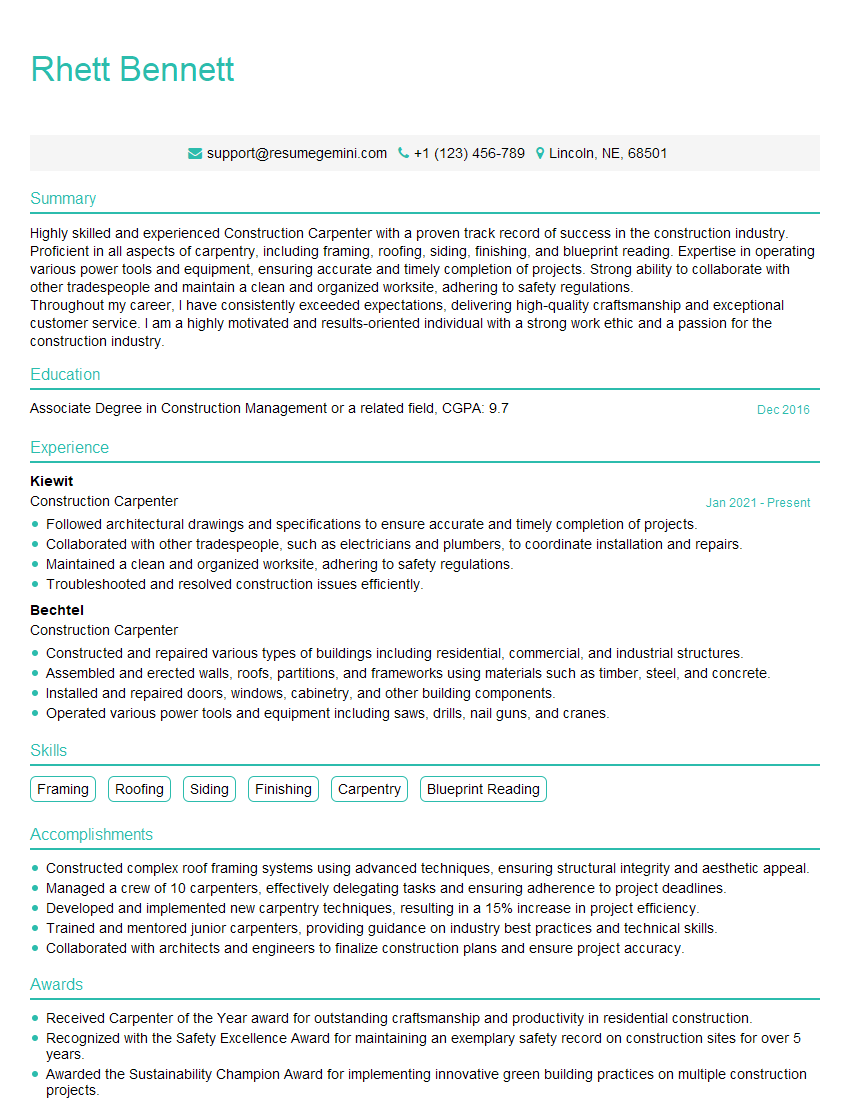
Construction Carpenter Resume Sample
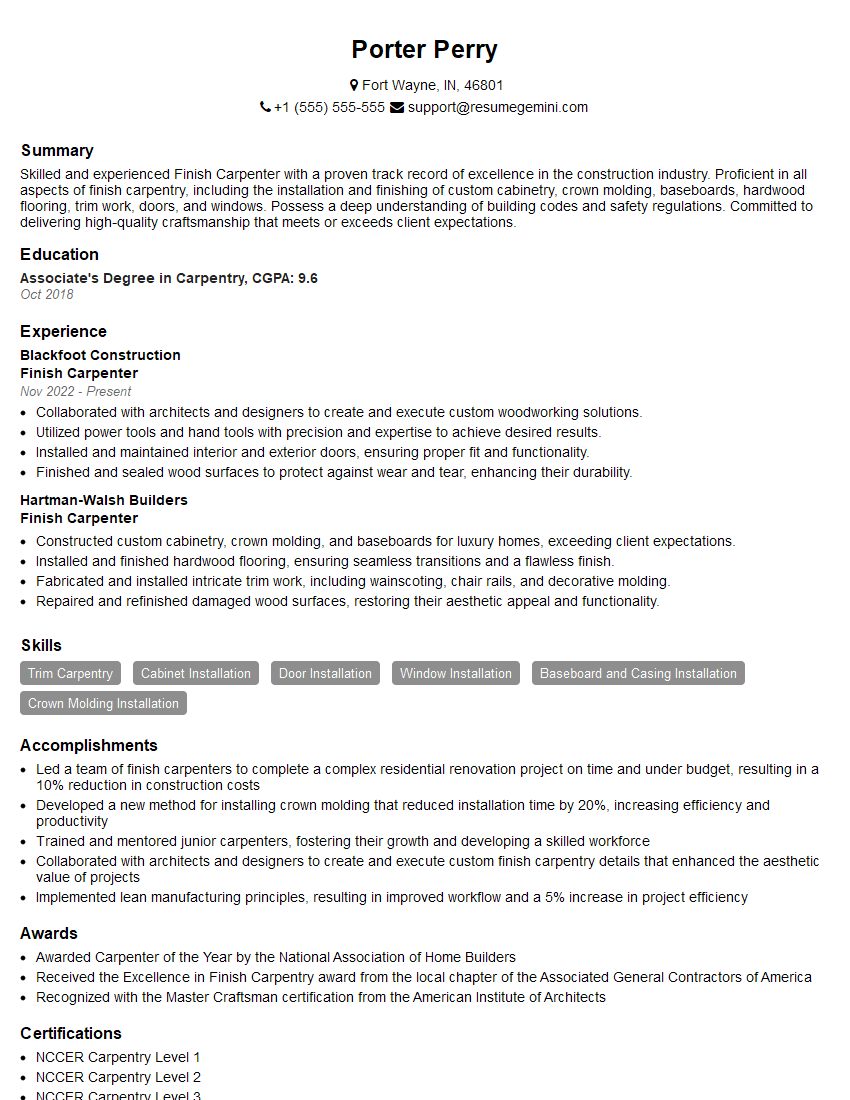
Finish Carpenter Resume Sample
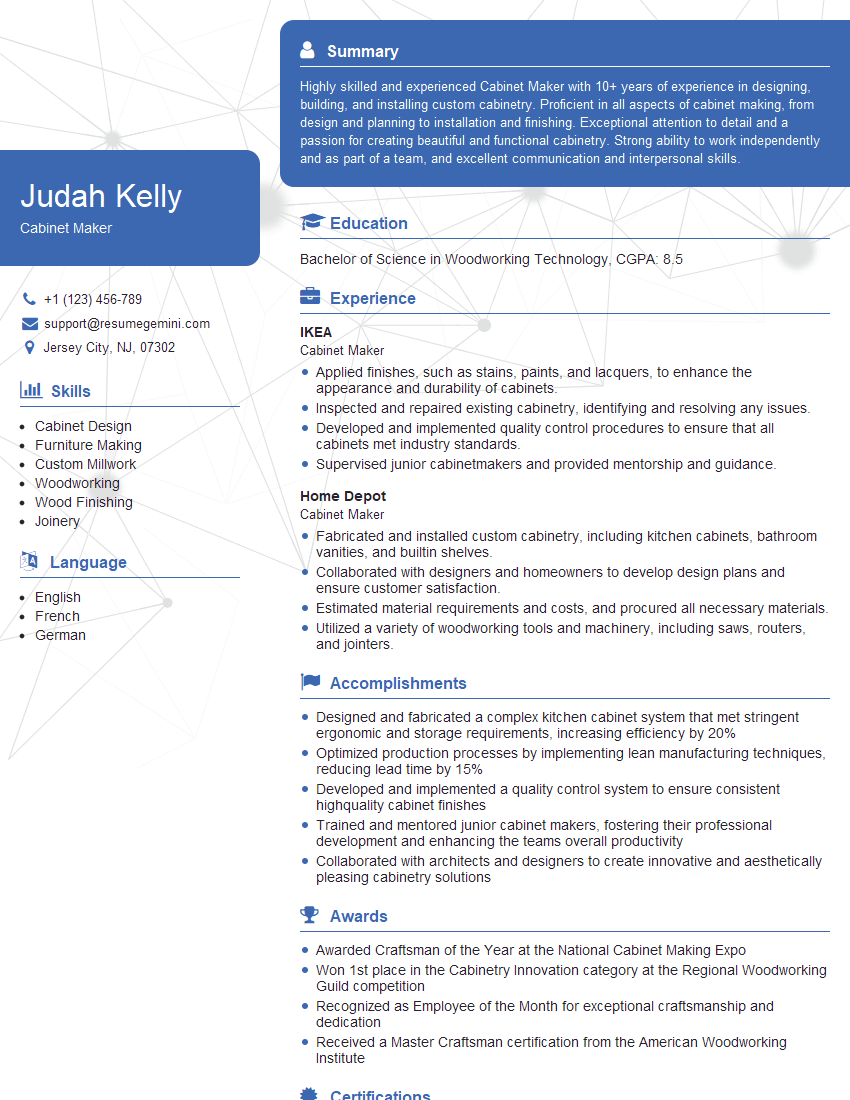
Cabinet Maker Resume Sample
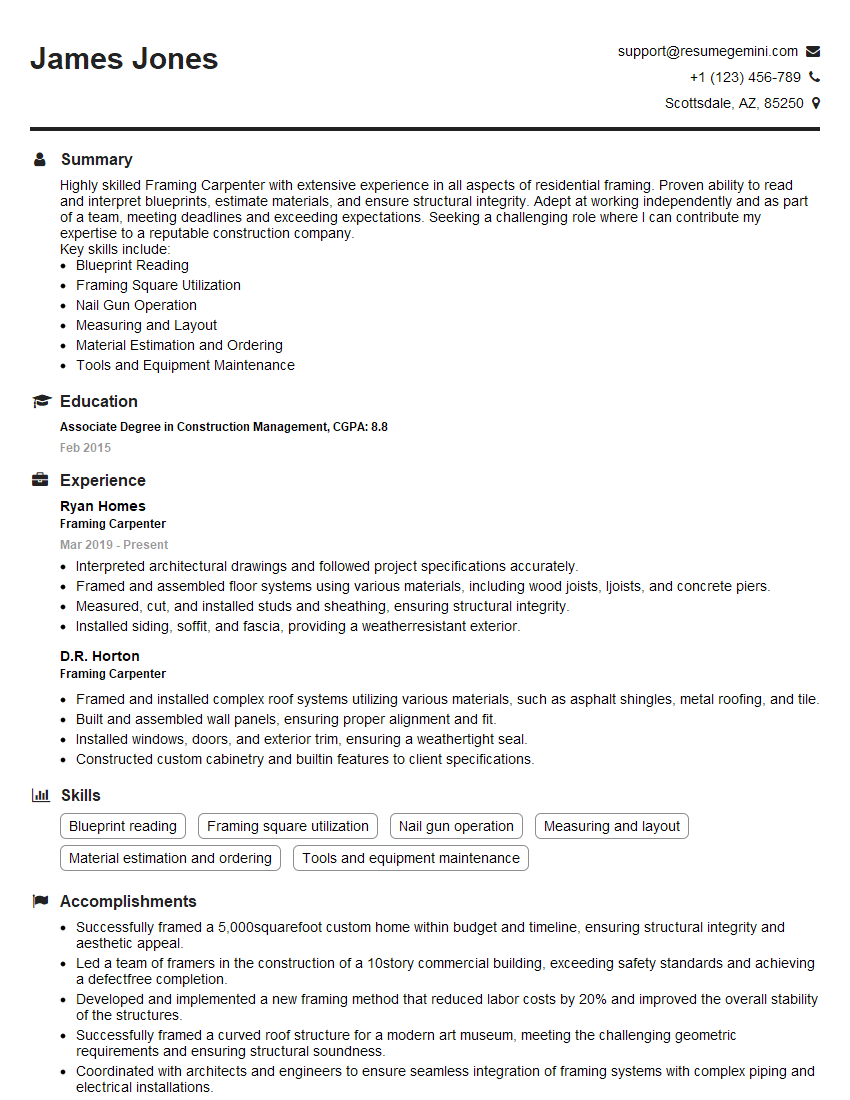
Framing Carpenter Resume Sample
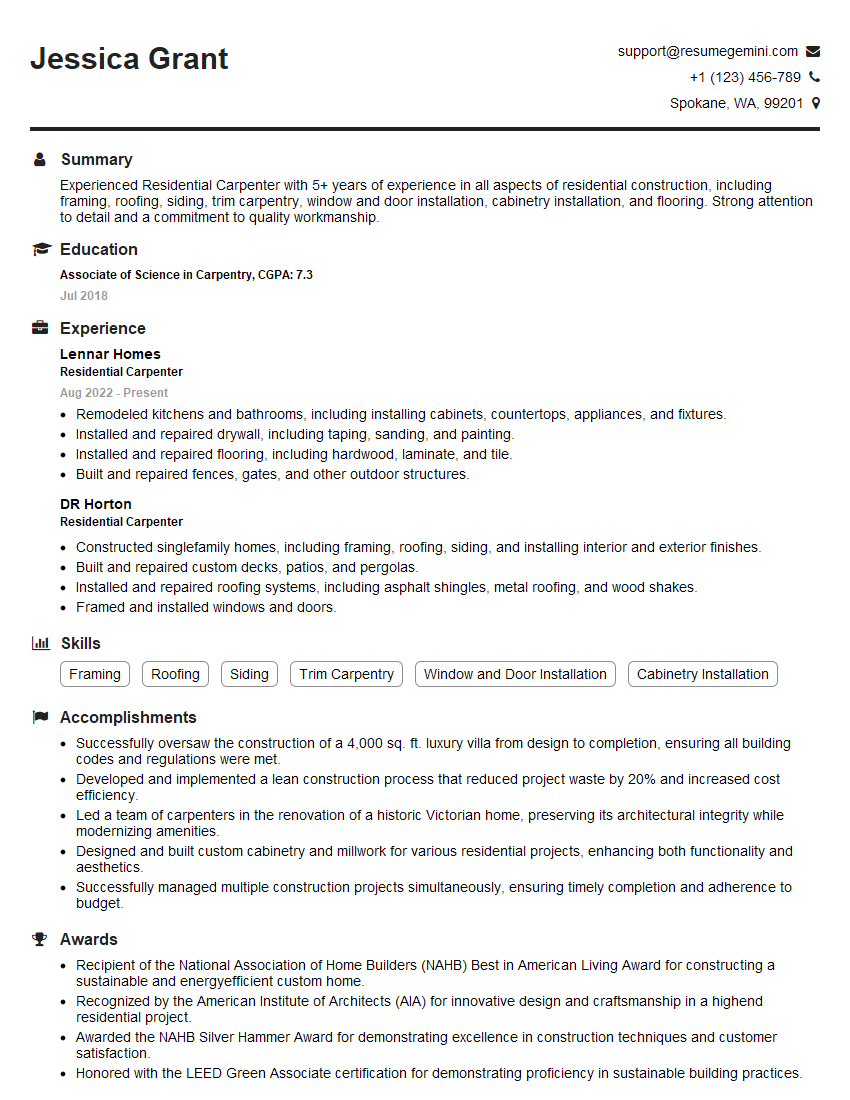
Residential Carpenter Resume Sample
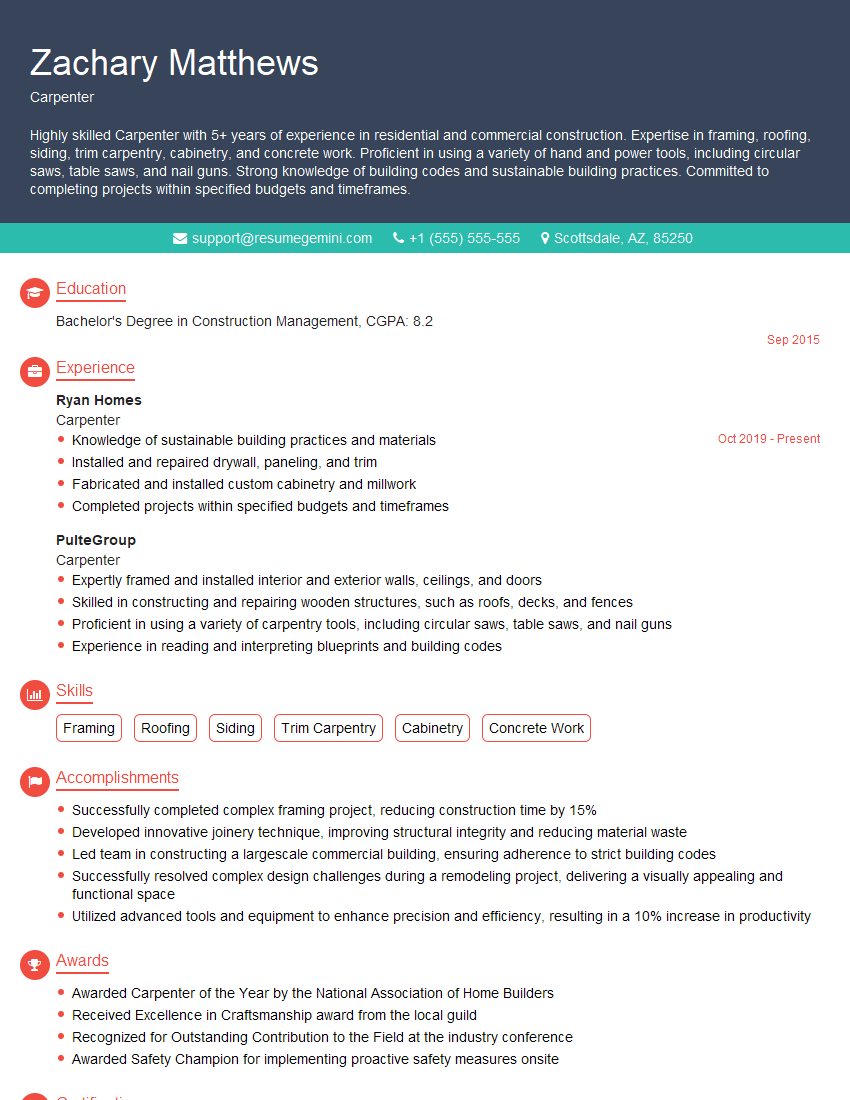
Carpenter Resume Sample
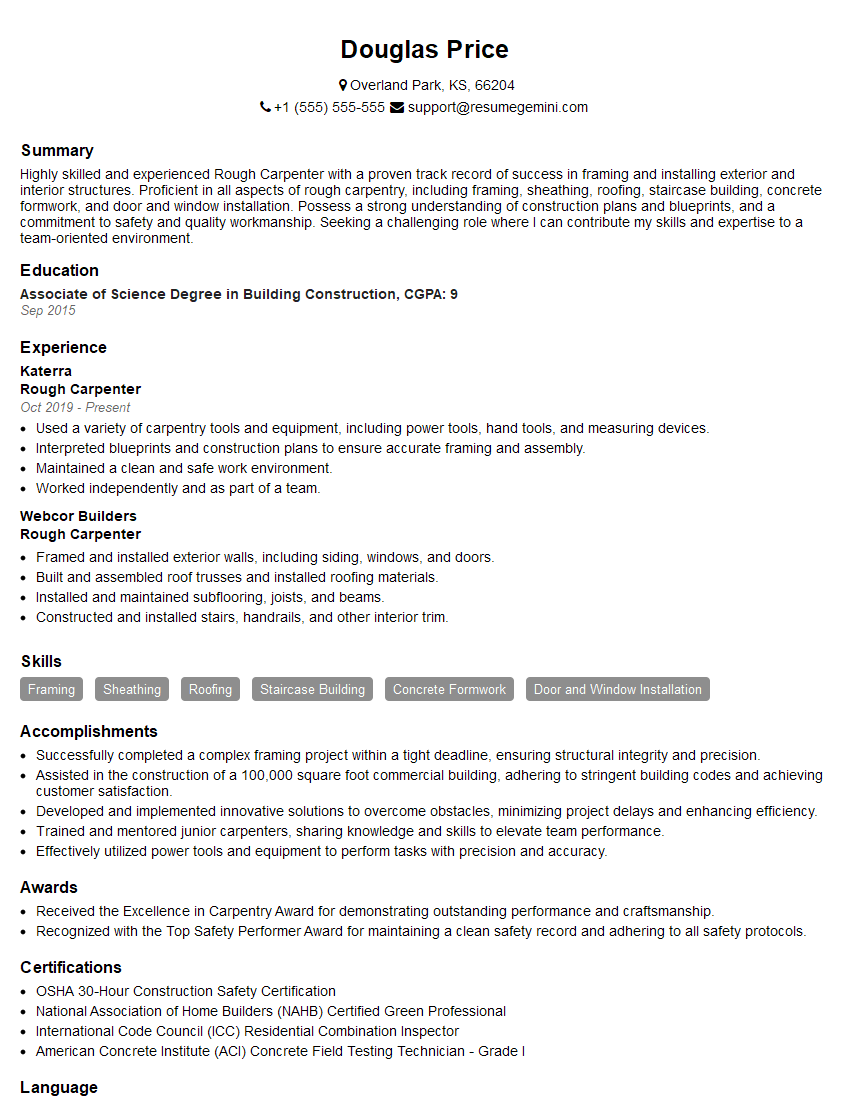
Rough Carpenter Resume Sample
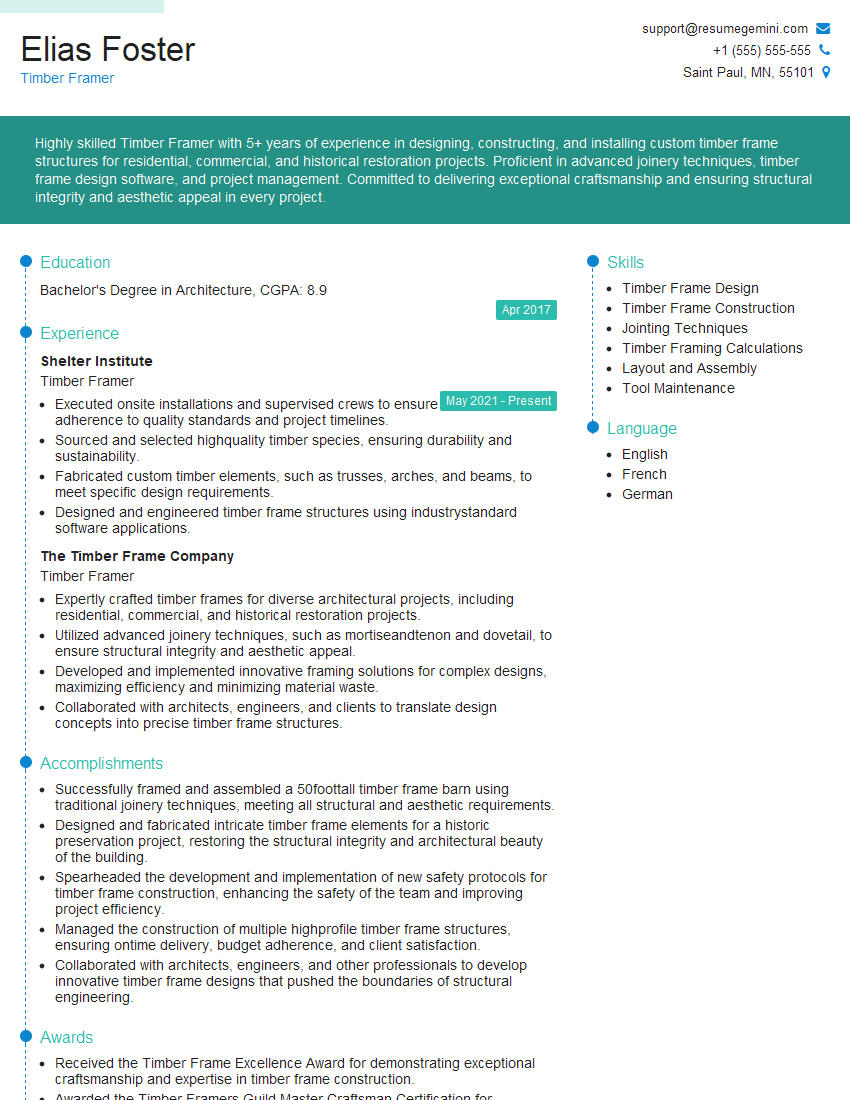
Timber Framer Resume Sample
Explore more articles
Users Rating of Our Blogs
Share Your Experience
We value your feedback! Please rate our content and share your thoughts (optional).
What Readers Say About Our Blog
Very informative content, great job.
good