The thought of an interview can be nerve-wracking, but the right preparation can make all the difference. Explore this comprehensive guide to Working knowledge of agricultural regulations interview questions and gain the confidence you need to showcase your abilities and secure the role.
Questions Asked in Working knowledge of agricultural regulations Interview
Q 1. Explain the role of the USDA in regulating agriculture.
The United States Department of Agriculture (USDA) plays a crucial role in regulating agriculture, ensuring the safety and quality of our food supply, protecting natural resources, and supporting the economic viability of the agricultural sector. Its regulatory functions are multifaceted and span several key areas.
- Food Safety: The USDA’s Food Safety and Inspection Service (FSIS) inspects and regulates meat, poultry, and egg products to guarantee they’re safe for consumption. This includes oversight of processing plants and enforcement of safety standards.
- Animal Health: The USDA’s Animal and Plant Health Inspection Service (APHIS) protects animal health by preventing and controlling animal diseases, regulating the importation and exportation of animals and animal products, and enforcing quarantines when necessary. Think of the role they play in managing outbreaks like Avian flu.
- Plant Health: APHIS also regulates plant health, preventing the introduction and spread of plant pests and diseases that could devastate crops. This includes inspections of imported plants and the establishment of quarantine zones.
- Agricultural Marketing: The USDA establishes and enforces standards for various agricultural products, ensuring quality and facilitating fair trade practices. This includes grading systems for commodities like fruits and vegetables.
- Environmental Protection: The USDA plays a role in promoting sustainable agricultural practices that minimize environmental impacts. This involves supporting programs to conserve soil and water resources and reduce pesticide use.
Essentially, the USDA acts as a regulatory umbrella, ensuring a safe, sustainable, and economically sound agricultural system. Imagine it as the traffic controller for the entire agricultural industry, ensuring everything runs smoothly and safely.
Q 2. Describe the key components of the Food Safety Modernization Act (FSMA).
The Food Safety Modernization Act (FSMA) of 2011 represents a paradigm shift in food safety regulation, moving from a reactive to a preventative approach. It focuses on preventing contamination rather than just responding to outbreaks. Key components include:
- Preventive Controls for Human Food: This rule requires food facilities to identify and implement preventive controls to minimize hazards at every stage of production, from growing to processing.
- Current Good Manufacturing Practices (cGMPs): This establishes minimum standards for sanitation and food facility design to prevent contamination.
- Produce Safety Rule: This rule sets standards for the safe growing, harvesting, packing, and holding of fruits and vegetables to minimize microbial hazards. Think about specific practices to prevent E.coli contamination.
- Foreign Supplier Verification Program (FSVP): This rule mandates that importers verify that their foreign suppliers are following food safety standards.
- Sanitary Transportation Rule: This rule establishes standards for the sanitary transportation of food to prevent contamination during transit.
FSMA’s impact is significant, requiring food businesses to proactively manage food safety risks throughout the supply chain. It’s a crucial piece of legislation that has significantly improved the safety of our food supply.
Q 3. What are Good Agricultural Practices (GAPs) and their significance?
Good Agricultural Practices (GAPs) are a set of voluntary standards designed to minimize risks of microbial contamination in fresh produce. They outline best practices for growing, harvesting, packing, and handling produce to enhance food safety. These practices go beyond simply producing a good crop and delve into food safety procedures.
- Worker Health and Hygiene: GAPs emphasize handwashing, proper clothing, and other hygiene measures to prevent contamination from workers.
- Water Quality: GAPs address water quality used for irrigation and washing produce to prevent contamination from pathogens.
- Soil Health: GAPs promote practices that protect soil health, reducing the likelihood of contamination from the environment.
- Pest Management: GAPs promote responsible pest management practices to minimize the use of pesticides that could harm consumers.
- Equipment Sanitation: GAPs encourage proper cleaning and sanitation of all equipment used in the production process.
The significance of GAPs lies in their contribution to reducing foodborne illnesses associated with fresh produce. By following GAPs, growers can demonstrate their commitment to food safety, build consumer trust, and potentially access premium markets. It’s a crucial step to prevent outbreaks and maintain consumer confidence.
Q 4. How does the Clean Water Act affect agricultural operations?
The Clean Water Act (CWA) significantly impacts agricultural operations by regulating the discharge of pollutants into waterways. Agricultural runoff, containing fertilizers, pesticides, animal waste, and sediment, can contaminate rivers, streams, and lakes, harming aquatic life and potentially impacting human health.
The CWA requires farmers to obtain permits for discharging pollutants if their operations exceed certain thresholds. This involves implementing best management practices (BMPs) to minimize runoff. Common BMPs include:
- Cover crops: To reduce soil erosion and nutrient runoff.
- No-till farming: To minimize soil disturbance and improve water infiltration.
- Nutrient management plans: To optimize fertilizer application and prevent excess nutrients from entering waterways.
- Buffer strips: To filter pollutants from runoff before it reaches streams.
- Animal waste management systems: To prevent manure from contaminating water sources.
Non-compliance with the CWA can result in significant penalties, highlighting the importance of implementing effective BMPs. It’s vital for farmers to understand and comply with CWA regulations to protect water quality and avoid legal consequences. Think of the environmental and economic impacts of a large-scale water pollution event from a farm.
Q 5. Explain the process of obtaining organic certification.
Obtaining organic certification is a rigorous process that verifies that agricultural products meet specific standards established by the USDA’s National Organic Program (NOP). It requires a multi-step process.
- Develop an Organic System Plan: Farmers must create a detailed plan outlining their farming practices, demonstrating compliance with NOP standards. This plan should cover all aspects of production, including soil management, pest control, and livestock management.
- Transition Period: Before harvesting organic crops, there’s a transition period (typically 3 years) where the land must be managed organically, free from prohibited substances.
- Choose a Certifying Agent: Farmers select a USDA-accredited certifying agent to inspect their operation and verify compliance with NOP standards.
- On-site Inspection: The certifying agent conducts an on-site inspection, reviewing records, observing farming practices, and ensuring compliance with the organic system plan.
- Annual Certification: Once certified, farmers must undergo annual inspections to maintain their certification. Compliance with standards is continuously monitored.
Organic certification provides consumers with assurance that the products they purchase meet rigorous standards for environmental sustainability and food safety. This certification opens doors to premium markets and often commands higher prices.
Q 6. What are the regulations surrounding pesticide use in agriculture?
Regulations surrounding pesticide use in agriculture are complex and aim to balance the benefits of pest control with the need to protect human health and the environment. The Environmental Protection Agency (EPA) plays a central role in regulating pesticides.
- Registration: Before a pesticide can be used, it must be registered with the EPA, demonstrating that it meets safety and efficacy standards. This involves rigorous testing and evaluation.
- Labeling: Pesticide labels provide crucial information on safe handling, application, and disposal. Farmers are legally obligated to follow label instructions precisely.
- Residue Tolerance: The EPA sets residue tolerances, which are the maximum levels of pesticide residues allowed on food crops. Testing ensures compliance with these limits.
- Worker Protection Standards (WPS): The WPS establish safety requirements for agricultural workers who handle or are exposed to pesticides.
- Restricted Use Pesticides (RUPs): Certain highly toxic pesticides are classified as RUPs, requiring certified applicators to handle and apply them.
Violation of pesticide regulations can result in substantial penalties. Farmers must adhere to all applicable regulations, receive proper training, and maintain accurate records of pesticide use. Responsible pesticide management is crucial for both agricultural productivity and environmental protection.
Q 7. Describe the different types of agricultural subsidies and their impact.
Agricultural subsidies are government payments or other forms of support provided to farmers to stabilize farm income, support production of certain commodities, or promote environmentally friendly practices. These subsidies come in various forms:
- Direct Payments: These are direct cash payments to farmers based on historical production levels or acreage.
- Counter-cyclical Payments: These payments are triggered when commodity prices fall below certain levels, providing income support to farmers.
- Crop Insurance: Government-subsidized crop insurance protects farmers against losses due to weather events or other unforeseen circumstances.
- Conservation Programs: Subsidies are often provided for farmers who adopt conservation practices, such as no-till farming, cover cropping, or water management techniques.
- Marketing Loans: These programs allow farmers to obtain loans using their crops as collateral, providing them with access to credit and price support.
The impact of agricultural subsidies is complex. While they can stabilize farm incomes and support production, they can also lead to overproduction, environmental concerns, and trade disputes. The design and implementation of subsidy programs need to carefully balance these considerations to achieve desired outcomes. There’s ongoing debate about the most efficient and sustainable ways to support farmers while minimizing negative consequences.
Q 8. How do you ensure compliance with worker safety regulations on a farm?
Ensuring worker safety on a farm is paramount and involves a multi-faceted approach. It begins with a thorough understanding of all applicable Occupational Safety and Health Administration (OSHA) regulations, as well as any state-specific rules. These regulations cover a wide range of hazards, from machinery operation to pesticide handling and heat stress.
- Training: Regular, comprehensive training is crucial. Workers need to be educated on safe operating procedures for all machinery, proper use of personal protective equipment (PPE) like gloves, respirators, and eye protection, and emergency protocols. Training should be documented and updated regularly.
- Hazard Identification and Control: A systematic approach to identifying potential hazards is essential. This involves regular farm inspections to spot dangers like exposed wiring, unguarded machinery, or slippery surfaces. Once identified, appropriate control measures, such as installing guards on machinery or providing non-slip footwear, must be implemented.
- Record Keeping: Maintaining accurate records of safety training, inspections, incidents, and corrective actions is not only legally required but also vital for continuous improvement. This data provides insights into areas needing more attention and helps prevent future accidents.
- Emergency Preparedness: Having a well-defined emergency response plan, including procedures for handling injuries, chemical spills, and fire, is critical. Regular drills ensure that workers are familiar with these procedures and that emergency equipment is readily available and functional.
For example, on a dairy farm, we implemented a comprehensive training program on the safe operation of milking machines, including procedures for cleaning and maintenance to prevent electrical shock. We also provide heat stress awareness training during the summer months, ensuring workers stay hydrated and take frequent breaks.
Q 9. What are the regulations surrounding genetically modified organisms (GMOs)?
Regulations surrounding genetically modified organisms (GMOs) are complex and vary significantly by country. Generally, these regulations focus on several key areas: pre-market approval, labeling, and environmental impact.
- Pre-market Approval: Before a GMO can be cultivated or sold, it typically undergoes a rigorous approval process. This involves extensive testing to assess its safety for human consumption, animal feed, and the environment. Authorities evaluate potential allergenicity, toxicity, and impacts on biodiversity. The specific requirements and the agencies involved vary widely by jurisdiction.
- Labeling: Many countries have mandatory labeling requirements for foods containing GMOs, although the specific details of what needs to be labeled and how vary. Some regions require detailed information about the genetic modification, while others only require a simple statement that the product contains GMOs.
- Environmental Impact: Regulations often address the potential environmental effects of GMOs, including the risk of gene flow to wild relatives, the development of herbicide-resistant weeds, and impacts on non-target organisms. These assessments often include field trials and environmental monitoring.
For instance, in the European Union, the approval process for GMOs is exceptionally stringent, while in the United States, the regulatory framework is less restrictive. Understanding these differences is crucial for anyone involved in the international trade of agricultural products.
Q 10. Explain the importance of traceability in the agricultural supply chain.
Traceability in the agricultural supply chain is the ability to track a product from its origin (farm) to the consumer. It’s essential for food safety, quality control, and consumer confidence. Think of it as creating a detailed ‘passport’ for each agricultural product.
- Food Safety: In case of a foodborne illness outbreak, traceability enables rapid identification of the source of contamination, allowing for swift recall and prevention of further harm.
- Quality Control: Traceability helps identify potential issues in the supply chain, such as spoilage or contamination, which can be addressed proactively.
- Consumer Confidence: Consumers increasingly demand transparency about the origin and production methods of their food. Traceability provides this information, building trust and loyalty.
- Compliance: Traceability systems support compliance with various regulations, such as food safety standards and organic certification.
For example, a system might involve barcodes, RFID tags, or blockchain technology to track produce from the field, through processing and packaging, to the retail shelf. Each step of the process is documented, creating an unbroken chain of information.
Q 11. How do you handle non-compliance issues with agricultural regulations?
Handling non-compliance issues with agricultural regulations requires a systematic approach. The first step is to identify the violation accurately. This involves reviewing records, conducting inspections, and interviewing relevant personnel. Once the violation is confirmed, the severity must be assessed. Minor infractions might be addressed with a warning and a corrective action plan, while more serious violations could result in fines, penalties, or even legal action.
- Corrective Action Plan: A detailed corrective action plan is crucial to remedy the violation and prevent recurrence. This plan should outline the specific steps to be taken, the timeframe for completion, and the responsible parties.
- Documentation: Meticulous documentation of the entire process, including the identification of the violation, the corrective actions taken, and any follow-up inspections, is essential. This documentation helps ensure compliance and protects the business.
- Communication: Effective communication with regulatory agencies is critical. Transparency and cooperation are essential to resolving the issue and maintaining a positive working relationship.
- Legal Counsel: For serious violations or complex legal matters, seeking advice from legal counsel specializing in agricultural regulations is prudent.
For example, if a farm is found to be using unregistered pesticides, a corrective action plan would involve immediately ceasing use, proper disposal of the pesticides, and training staff on using approved products. The farm would also cooperate fully with the regulatory agency’s investigation.
Q 12. Describe your experience with environmental impact assessments in agriculture.
Environmental impact assessments (EIAs) in agriculture are crucial for evaluating the potential environmental consequences of agricultural practices. These assessments are often required for large-scale projects, such as new irrigation systems, livestock facilities, or the introduction of new agricultural technologies. The goal is to identify potential negative impacts and mitigate them through appropriate measures.
- Baseline Data Collection: EIAs begin with collecting baseline data on the existing environmental conditions, such as soil quality, water resources, and biodiversity. This provides a benchmark against which to measure any changes.
- Impact Prediction: This involves using various methods, including modeling and simulations, to predict the potential environmental effects of the proposed agricultural activity. Factors considered include water usage, pesticide runoff, greenhouse gas emissions, and habitat alteration.
- Mitigation Measures: If significant negative impacts are predicted, the EIA should identify and propose mitigation measures to reduce or eliminate these impacts. Examples include using conservation tillage, implementing integrated pest management, or establishing buffer zones.
- Monitoring and Reporting: Post-implementation monitoring is essential to track the effectiveness of the mitigation measures and to identify any unforeseen impacts. Regular reports are typically required to document the findings.
In my experience, I’ve conducted EIAs for several large-scale irrigation projects. The assessments involved detailed hydrological modeling to predict water usage and potential impacts on groundwater resources. Based on the assessment, we implemented measures such as water-efficient irrigation technologies and rainwater harvesting to minimize environmental impact.
Q 13. What are the key aspects of livestock regulations?
Livestock regulations are extensive and aim to ensure animal welfare, food safety, and environmental protection. They cover various aspects of livestock production, from breeding and animal health to transportation and slaughter.
- Animal Welfare: Regulations often mandate specific housing standards, stocking densities, and access to food, water, and veterinary care. They aim to prevent cruelty and ensure the animals’ well-being throughout their lifespan.
- Animal Health: Regulations address disease prevention and control through vaccination programs, biosecurity measures, and monitoring for outbreaks. They may also include restrictions on the movement of animals to prevent the spread of disease.
- Food Safety: Regulations focus on ensuring the safety of meat and other animal products for human consumption. This involves inspections at various stages of production, including slaughterhouses and processing plants.
- Environmental Protection: Regulations address the environmental impact of livestock production, such as manure management, water pollution, and greenhouse gas emissions. They may include requirements for manure storage and handling practices.
For example, regulations might specify minimum space requirements per animal in a poultry house, mandate regular veterinary inspections, or require specific manure management strategies to reduce water pollution. These regulations vary by location and the type of livestock.
Q 14. Explain the role of agricultural insurance in risk management.
Agricultural insurance plays a vital role in risk management by protecting farmers from financial losses due to unforeseen events. These events can range from natural disasters like droughts, floods, or hailstorms to disease outbreaks or market fluctuations.
- Crop Insurance: Protects farmers against yield losses due to adverse weather conditions or crop diseases. It provides financial compensation based on the insured acreage and the extent of the loss.
- Livestock Insurance: Covers losses of livestock due to disease, death, or theft. It helps farmers maintain their herds and avoid significant financial setbacks.
- Revenue Insurance: Provides protection against revenue losses due to both low yields and low market prices. This type of insurance helps farmers manage the combined risks of production and market volatility.
- Risk Management Tool: Agricultural insurance helps farmers better manage risks, allowing them to make more informed decisions about planting, livestock management, and investment.
For example, a farmer could purchase crop insurance to protect their wheat crop against a potential drought. If the drought does occur and significantly reduces the yield, the insurance payout helps offset the financial losses, allowing the farmer to continue operations.
Q 15. How do international trade agreements impact agricultural practices?
International trade agreements significantly influence agricultural practices by setting standards for food safety, sanitary measures, and market access. They can create both opportunities and challenges for farmers and producers.
For example, agreements like the WTO’s Agreement on Sanitary and Phytosanitary Measures (SPS Agreement) establish rules to prevent the spread of plant and animal diseases. This necessitates countries to implement specific phytosanitary measures, such as inspections and certifications, impacting farming practices. Countries might need to adopt new pest control techniques or modify planting schedules to meet export requirements. On the other hand, these agreements can also open up new export markets, stimulating agricultural production and incentivizing farmers to adopt higher standards.
Another example is the impact of trade agreements on subsidies. Some agreements limit the use of export subsidies, forcing countries to restructure their agricultural support programs. This might lead to shifts in production patterns and affect the profitability of certain crops.
Career Expert Tips:
- Ace those interviews! Prepare effectively by reviewing the Top 50 Most Common Interview Questions on ResumeGemini.
- Navigate your job search with confidence! Explore a wide range of Career Tips on ResumeGemini. Learn about common challenges and recommendations to overcome them.
- Craft the perfect resume! Master the Art of Resume Writing with ResumeGemini’s guide. Showcase your unique qualifications and achievements effectively.
- Don’t miss out on holiday savings! Build your dream resume with ResumeGemini’s ATS optimized templates.
Q 16. What are the challenges of enforcing agricultural regulations?
Enforcing agricultural regulations presents numerous challenges, primarily stemming from the sheer scale and complexity of the agricultural sector, along with issues of resource limitations and international cooperation.
- Geographic Dispersion: Farms and agricultural operations are often spread across vast and sometimes remote areas, making consistent monitoring and inspection difficult.
- Technological Limitations: Tracking compliance across the entire supply chain, from farm to table, requires robust data management systems which might be lacking in some regions.
- Resource Constraints: Regulatory agencies often face budget limitations and staffing shortages, hindering their capacity to effectively enforce regulations.
- Lack of International Harmonization: Differences in regulations across countries can create compliance complexities for international trade and make it challenging to establish consistent standards.
- Enforcement Challenges: Penalties for non-compliance might be insufficient to deter violations, especially for large-scale operations. Moreover, proving violations can be difficult and resource-intensive.
To address these challenges, a multi-pronged approach is needed involving improved technology, increased funding for regulatory agencies, international cooperation on standardization, and robust penalty structures to deter violations.
Q 17. Describe your experience with data management related to agricultural compliance.
In my previous role at the Department of Agriculture, I was responsible for managing a database containing information on pesticide use, fertilizer application, and harvest records submitted by farmers. This involved developing and implementing data entry protocols, ensuring data accuracy and integrity, and generating reports for compliance analysis. We used a relational database management system (RDBMS) to store this data.
Example SQL query: SELECT * FROM Pesticide_Use WHERE Pesticide_Name = 'Roundup' AND Application_Date > '2022-01-01';
This query allows us to quickly identify instances of Roundup usage after a specific date. The system also incorporated features for data validation and auditing to ensure data quality and track any changes made to the records. We regularly audited this data to ensure consistency and compliance with relevant regulations.
My experience in data management involved not only technical skills, but also a strong understanding of agricultural regulations and the ability to interpret data to identify potential compliance issues. This allowed for proactive intervention and early detection of any violations.
Q 18. How do you stay updated on changes in agricultural regulations?
Staying updated on agricultural regulations requires a multi-faceted approach. I regularly monitor official government websites, industry publications, and professional organizations for updates and announcements regarding policy changes.
- Subscription to Newsletters and Alerts: I subscribe to newsletters and email alerts from relevant government agencies and industry associations.
- Professional Development: I actively participate in conferences, workshops, and webinars related to agricultural regulations and compliance.
- Networking with Colleagues: Maintaining a professional network with other experts in the field allows for the exchange of information and insights on recent changes.
- Legal Databases: Utilizing specialized legal databases that provide updates on regulations and case laws.
This proactive approach ensures I remain well-informed and can adapt my practices to reflect the current regulatory landscape.
Q 19. Explain your understanding of food labeling regulations.
Food labeling regulations are designed to provide consumers with accurate and complete information about the food they purchase. These regulations cover various aspects, including ingredient lists, nutritional information, allergen declarations, and claims made on the packaging.
For example, the FDA in the US mandates that ingredient lists are declared in descending order by weight, and specific allergens must be clearly identified. Nutritional information, such as calories, fat, and sugar content, must be displayed in a standardized format. Furthermore, any claims made on the label, such as “organic” or “low-fat,” must be substantiated and comply with specific guidelines. Misleading or inaccurate labeling is subject to penalties.
The complexity of food labeling regulations varies by country; however, the overarching goal is always to protect consumers and promote transparency in the food industry. Understanding these regulations is critical for ensuring compliance and avoiding legal repercussions.
Q 20. What are the regulations surrounding the transportation of agricultural products?
Regulations surrounding the transportation of agricultural products focus on ensuring food safety, preventing contamination, and maintaining product quality throughout the supply chain. These regulations often involve temperature control, hygiene standards, and documentation requirements.
For example, perishable goods like fresh produce often require refrigerated transport to maintain their quality and prevent spoilage. Vehicles must be properly cleaned and sanitized to prevent cross-contamination. Detailed documentation, including temperature logs and traceability records, is usually mandated to track the movement of products and ensure accountability. In the case of international transport, additional phytosanitary certificates and customs declarations might be needed.
Failure to comply with these regulations can lead to product spoilage, contamination, and legal penalties. Thorough planning and adherence to industry best practices are essential for safe and efficient transportation of agricultural goods.
Q 21. How do you address conflicts between agricultural production and environmental protection?
Addressing conflicts between agricultural production and environmental protection requires a balanced approach that considers both food security and ecological sustainability. This involves finding solutions that minimize the negative environmental impacts of farming while ensuring food production meets the demands of a growing population.
- Sustainable Agricultural Practices: Promoting the adoption of sustainable farming methods, such as integrated pest management, reduced tillage, and crop rotation, minimizes the use of pesticides and fertilizers while improving soil health.
- Precision Agriculture: Utilizing technology like GPS and sensors allows for precise application of inputs, reducing waste and minimizing environmental impact.
- Conservation Programs: Implementing government-led conservation programs, such as buffer strips and riparian zones, helps protect water quality and biodiversity.
- Carbon Sequestration: Implementing practices like no-till farming and cover cropping can increase carbon sequestration in the soil, mitigating climate change.
- Regulation and Policy: Enacting and enforcing environmental regulations, such as water quality standards and emission limits, sets a baseline for acceptable environmental impact.
Finding a balance requires collaboration among farmers, policymakers, scientists, and environmental organizations to develop and implement innovative solutions that ensure food security while safeguarding the environment for future generations.
Q 22. What are the best practices for managing water resources in agriculture?
Efficient water resource management in agriculture is crucial for sustainable food production. It involves optimizing water use while minimizing environmental impact. This is achieved through a multi-pronged approach.
Water-efficient irrigation techniques: Drip irrigation and micro-sprinklers deliver water directly to plant roots, reducing evaporation and runoff compared to flood irrigation. For example, a vineyard using drip irrigation can save up to 50% of water compared to traditional furrow irrigation.
Soil moisture monitoring: Sensors and data-driven decision-making help farmers irrigate only when necessary, avoiding overwatering. Imagine a farmer using soil moisture sensors to determine the exact water needs of their corn crop, optimizing water application and reducing waste.
Drought-resistant crops: Selecting crops adapted to arid or semi-arid conditions reduces reliance on supplemental irrigation. For instance, choosing drought-tolerant varieties of wheat can significantly lower water consumption in regions facing water scarcity.
Water harvesting and storage: Techniques like rainwater harvesting and the construction of reservoirs can capture and store water for later use during dry periods. A farmer building a small reservoir on their land can collect rainwater during the monsoon season to supplement irrigation during drier months.
Improved water infrastructure: Investing in efficient irrigation systems, canals, and pipelines minimizes water losses during transport and distribution. Government initiatives supporting the modernization of irrigation infrastructure can contribute significantly to efficient water use.
Q 23. Describe your experience with soil conservation techniques.
My experience with soil conservation encompasses various techniques aimed at preventing soil erosion, degradation, and nutrient depletion. I’ve worked directly with farmers implementing and evaluating the effectiveness of several approaches.
No-till farming: Leaving crop residues on the soil surface protects the soil from erosion and improves soil health. I’ve seen firsthand how no-till farming has increased soil organic matter and reduced runoff on farms transitioning from conventional tillage.
Contour farming: Planting crops along the contours of the land slows water runoff and reduces erosion. In hilly regions, contour farming is crucial for preventing significant soil loss.
Cover cropping: Planting cover crops during fallow periods protects the soil from erosion, improves soil fertility, and suppresses weeds. I’ve advised farmers on selecting appropriate cover crop species based on local climate and soil conditions.
Crop rotation: Rotating different crops helps maintain soil fertility and prevents the build-up of soilborne pests and diseases. Implementing crop rotation plans alongside other soil conservation strategies has proven particularly effective.
Terracing: Creating terraces on steep slopes helps prevent erosion and allows for better water management. The construction of terraces requires a significant upfront investment, but the long-term benefits in soil conservation and increased crop yields outweigh the initial costs.
Q 24. Explain the role of technology in enhancing agricultural compliance.
Technology plays a transformative role in enhancing agricultural compliance. It provides tools for monitoring, tracking, and reporting various aspects of agricultural operations, making compliance easier and more efficient.
GPS and GIS: These technologies enable precise application of inputs like fertilizers and pesticides, minimizing environmental impact and ensuring compliance with regulations regarding application rates and buffer zones. For instance, GPS-guided sprayers can accurately apply pesticides, reducing drift and protecting sensitive areas.
Remote sensing: Satellite imagery and drones can monitor crop health, identify areas needing attention, and assist in compliance with regulations related to crop quality and production standards. Early detection of crop diseases or pests using satellite imagery can lead to timely interventions and prevent widespread damage.
Blockchain technology: This can be used to create a transparent and secure record of agricultural practices and supply chain movements, enhancing traceability and accountability. Tracking the origin and handling of food products throughout the supply chain via blockchain increases transparency and facilitates compliance.
Data analytics and predictive modeling: Analyzing large datasets can help identify potential compliance issues before they arise and optimize agricultural practices to minimize risk. Predictive models can help farmers anticipate potential problems and take preventative measures, improving compliance and reducing potential penalties.
Q 25. How do you assess the risk of foodborne illnesses in agricultural settings?
Assessing the risk of foodborne illnesses in agricultural settings requires a thorough understanding of potential hazards at each stage of production. A systematic approach is essential.
Hazard Analysis and Critical Control Points (HACCP): This system identifies potential hazards and establishes critical control points to prevent or minimize risks. A detailed HACCP plan for a poultry farm, for example, would address issues like sanitation, temperature control, and worker hygiene.
Good Agricultural Practices (GAPs): GAPs outline best practices for minimizing contamination risks, including proper sanitation, pest control, and water management. Compliance with GAPs is crucial for preventing the spread of foodborne pathogens.
On-farm inspections and audits: Regular inspections and audits help identify weaknesses in food safety practices and ensure compliance with relevant regulations. These inspections can include assessments of farm hygiene, equipment maintenance, and worker training.
Traceability systems: Tracking the movement of produce from farm to table allows for quick identification of contamination sources in case of an outbreak. A detailed traceability system can pinpoint the origin of a contaminated batch of lettuce and prevent further spread.
Worker training: Educating farm workers on food safety practices, including hygiene, sanitation, and handling procedures, is critical for preventing contamination. Regular training sessions ensure that workers are aware of their roles in maintaining food safety.
Q 26. Describe your understanding of animal welfare regulations.
Animal welfare regulations vary by jurisdiction but generally aim to ensure that animals are treated humanely throughout their lives. These regulations cover various aspects of animal care and management.
Housing and environment: Regulations often specify minimum space requirements, environmental enrichment, and protection from harsh weather conditions. For example, regulations might define the minimum space per pig in a commercial pig farm to ensure adequate space for movement and social interaction.
Feeding and watering: Access to adequate food and water is crucial. Regulations might set standards for feed quality, frequency of feeding, and access to clean drinking water.
Health and disease prevention: Regulations mandate preventative health measures, disease control, and access to veterinary care. This could include mandatory vaccinations or requirements for prompt veterinary attention for sick animals.
Transportation and handling: Regulations aim to minimize stress and injury during transportation and handling. This includes standards for vehicle design, loading density, and humane handling procedures.
Slaughter and processing: Regulations aim to ensure that animals are slaughtered humanely and that appropriate stunning methods are employed to minimize suffering. Compliance includes appropriate stunning techniques and rapid slaughter procedures.
Q 27. What are the ethical considerations related to agricultural practices?
Ethical considerations in agriculture are multifaceted, encompassing animal welfare, environmental sustainability, and social justice. They challenge us to consider the impact of our food systems on the planet and its inhabitants.
Animal welfare: Ethical farming practices prioritize the well-being of animals, minimizing stress and suffering throughout their lives. This extends beyond legal requirements to encompass a broader commitment to animal sentience and respect.
Environmental sustainability: Ethical agriculture aims to minimize environmental impact through sustainable practices, such as reducing pesticide and fertilizer use, conserving water, and protecting biodiversity. Organic farming practices are a prime example of sustainable methods with reduced environmental impact.
Fair labor practices: Ethical considerations extend to fair wages, safe working conditions, and respect for the rights of agricultural workers. This includes ensuring workers receive appropriate compensation and benefits and work in safe environments.
Food security and access: Ethical agriculture considers the need to ensure food security for all populations while mitigating issues of food waste and distribution inequalities. Support for local food systems and initiatives combating food insecurity are key components of an ethical food system.
Transparency and traceability: Ethical farming practices prioritize transparency throughout the food supply chain, allowing consumers to make informed choices and hold producers accountable for their practices. Labeling that details farming practices and sourcing improves consumer choice and promotes ethical practices.
Q 28. How do you communicate complex agricultural regulations to non-technical audiences?
Communicating complex agricultural regulations to non-technical audiences requires clear, concise language and relatable examples. A multi-faceted approach is crucial.
Plain language: Avoid jargon and technical terms; use simple, everyday language that everyone can understand. Instead of ‘integrated pest management,’ explain it as ‘smart ways to control pests without harming the environment.’
Visual aids: Use charts, graphs, infographics, and images to illustrate key concepts and make information more accessible. A simple diagram showing the impact of pesticide runoff on a nearby stream can effectively communicate environmental risks.
Storytelling: Use real-life examples and stories to illustrate the importance of compliance and the consequences of non-compliance. Sharing a farmer’s success story demonstrating the benefits of sustainable farming practices can engage the audience effectively.
Interactive sessions: Engage the audience through interactive sessions, question-and-answer periods, and workshops. This provides opportunities to address specific concerns and build understanding.
Multiple formats: Use a variety of communication formats to reach a wider audience, such as brochures, videos, presentations, and social media posts. Tailoring the message to the specific audience and platform helps improve understanding.
Key Topics to Learn for Working Knowledge of Agricultural Regulations Interview
- Federal and State Regulations: Understanding the key legislation and regulatory frameworks governing agricultural practices in your region. This includes familiarity with relevant acts, codes, and amendments.
- Food Safety and Quality: Knowledge of regulations pertaining to food production, processing, handling, and labeling, including Good Agricultural Practices (GAPs) and Hazard Analysis and Critical Control Points (HACCP).
- Environmental Compliance: Familiarity with regulations regarding water quality, pesticide use, soil conservation, and waste management within agricultural settings. This includes understanding permits and reporting requirements.
- Animal Welfare and Health: Knowledge of regulations surrounding animal husbandry, disease prevention, and ethical treatment of livestock, including transportation and slaughter regulations.
- Organic Farming Regulations: Understanding the standards and certifications related to organic agriculture, including allowable inputs and labeling requirements.
- GMO Regulations: Knowledge of regulations governing genetically modified organisms (GMOs) in agriculture, including labeling and planting restrictions.
- Pest and Disease Management: Understanding integrated pest management (IPM) strategies and regulations surrounding the use of pesticides and other pest control methods.
- Land Use and Zoning: Familiarity with agricultural land use regulations, zoning ordinances, and right-to-farm laws.
- Labor Laws in Agriculture: Understanding regulations pertaining to worker safety, wages, and working conditions in agricultural settings.
- Traceability and Record Keeping: Understanding the importance of maintaining accurate records and implementing traceability systems to comply with regulations.
- Problem Solving & Application: Demonstrating your ability to apply your knowledge to real-world scenarios, such as analyzing compliance issues and proposing solutions.
Next Steps
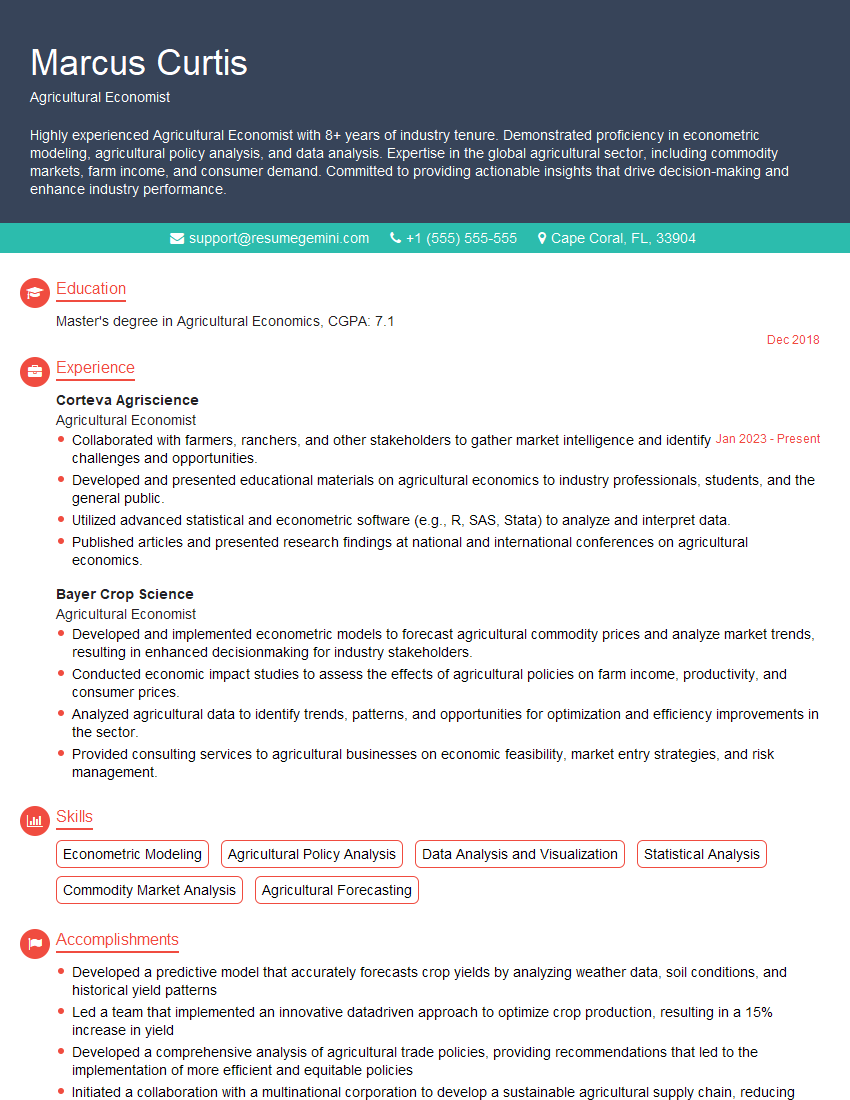
Mastering agricultural regulations is crucial for career advancement in this dynamic field. A strong understanding of these regulations demonstrates your commitment to responsible and sustainable practices, making you a highly valuable candidate. To significantly boost your job prospects, create an ATS-friendly resume that highlights your relevant skills and experience. ResumeGemini is a trusted resource that can help you build a professional and impactful resume tailored to the agricultural sector. Examples of resumes tailored to showcasing Working Knowledge of Agricultural Regulations are available, helping you present yourself effectively to potential employers.
Explore more articles
Users Rating of Our Blogs
Share Your Experience
We value your feedback! Please rate our content and share your thoughts (optional).
What Readers Say About Our Blog
Very informative content, great job.
good