Interviews are more than just a Q&A session—they’re a chance to prove your worth. This blog dives into essential Working Knowledge of Process Control Systems interview questions and expert tips to help you align your answers with what hiring managers are looking for. Start preparing to shine!
Questions Asked in Working Knowledge of Process Control Systems Interview
Q 1. Explain the difference between open-loop and closed-loop control systems.
The core difference between open-loop and closed-loop control systems lies in their feedback mechanisms. An open-loop system operates without feedback; it simply executes a pre-programmed sequence of actions regardless of the actual outcome. Think of a toaster: you set the timer, and it runs for that duration, regardless of whether the bread is perfectly toasted or burnt. The output is not monitored to adjust the input.
A closed-loop system, also known as a feedback control system, continuously monitors the output and uses this information to adjust the input, aiming to maintain the desired output. A thermostat is a great example. It senses the room temperature (output) and adjusts the heating/cooling (input) to keep the temperature at the setpoint. This constant feedback loop ensures the system actively corrects for deviations.
In essence, open-loop systems are simpler but less accurate, while closed-loop systems are more complex but offer better precision and stability.
Q 2. Describe the function of a PID controller and its tuning parameters.
A Proportional-Integral-Derivative (PID) controller is the workhorse of process control. It’s a feedback control algorithm that calculates an error value as the difference between a desired setpoint and a measured process variable. It then uses three distinct control actions – proportional, integral, and derivative – to manipulate the manipulated variable (e.g., valve position) to minimize this error.
- Proportional (P) action: The controller output is proportional to the error. A larger error results in a larger controller output. Think of it as adjusting the valve opening proportionally to how far the temperature is from the setpoint.
- Integral (I) action: This component addresses persistent errors. It accumulates the error over time, ensuring that even small, persistent deviations are eventually corrected. This eliminates steady-state offset, where the output never quite reaches the setpoint.
- Derivative (D) action: This anticipates future errors by considering the rate of change of the error. It helps prevent overshoot and oscillations by reducing the controller’s response speed when the error is changing rapidly.
The tuning parameters (Kp, Ki, Kd) for P, I, and D actions determine the controller’s behavior. Incorrect tuning can lead to oscillations, slow response, or inability to reach the setpoint. Finding the optimal tuning parameters often involves trial and error, utilizing techniques like Ziegler-Nichols method or advanced tuning software.
Q 3. What are the common types of process control valves and their applications?
Many types of process control valves are used, each suited to specific applications based on factors like flow characteristics, pressure, and the media being controlled. Some common types include:
- Globe valves: These are widely used due to their good control characteristics and are suitable for various applications. They can handle high pressure drops.
- Ball valves: Simple on/off valves; less suited for precise control but are known for their quick action and low maintenance. They are often used for isolation or shutoff.
- Butterfly valves: These offer a large flow capacity at a lower cost but are generally less accurate for precise control. They are often used in larger diameter lines.
- Control valves (with various actuators): These valves are specifically designed for precise control, often with pneumatic, electric, or hydraulic actuators. The actuator is controlled by the PID controller to adjust the valve opening precisely.
The choice of valve depends heavily on the specific process requirements. For instance, a precise temperature control system would benefit from a globe valve with a pneumatic actuator, while a simple on/off operation might only need a ball valve.
Q 4. Explain the concept of process gain and its significance.
Process gain represents the ratio of the change in the output to the change in the input of a process. It indicates the sensitivity of the output to changes in the input. A high process gain means a small change in the input causes a large change in the output, making the process more sensitive and potentially unstable if not carefully controlled. Conversely, a low process gain indicates a less sensitive process.
For example, consider a heating system where the input is the power to the heater and the output is the temperature. A high process gain might mean that a small increase in power results in a significant temperature rise. This high gain requires careful tuning of the PID controller to avoid overshooting the desired temperature. Understanding process gain is crucial for proper controller tuning and ensuring process stability.
Q 5. What is a transfer function and how is it used in process control?
A transfer function is a mathematical representation of the relationship between the input and output of a system. In process control, it describes how a process responds to changes in its input. It’s typically represented in the Laplace domain (s-domain) as a ratio of polynomials.
For example, a simple first-order system’s transfer function might be: G(s) = K / (τs + 1), where K is the process gain and τ is the time constant. This describes how the output changes over time in response to a change in the input.
Transfer functions are used extensively in process control for:
- System modeling: Creating mathematical models of processes to simulate and analyze their behavior.
- Controller design: Designing and tuning controllers to achieve desired performance based on the system’s transfer function.
- Stability analysis: Determining the stability of the system by analyzing the poles and zeros of the transfer function.
Q 6. Describe different control strategies (e.g., cascade control, ratio control).
Advanced control strategies enhance the performance and efficiency of process control systems beyond basic PID control. Here are a couple of examples:
- Cascade Control: This employs two or more nested control loops. The primary loop controls a main variable (e.g., reactor temperature), while a secondary loop controls a variable affecting the primary variable (e.g., steam flow to the jacket). The secondary loop’s output becomes the setpoint for the primary loop, offering better disturbance rejection and tighter control. Imagine a situation where the reactor temperature (primary) is sensitive to changes in the steam temperature; using a cascade improves the control.
- Ratio Control: This maintains a constant ratio between two or more process variables. For example, in a fuel-air mixing process, the ratio of fuel to air must be precise for efficient combustion. A ratio controller ensures that the fuel flow is always a certain multiple of the air flow, regardless of changes in overall production rate.
Other advanced strategies include feedforward control (predictive control), selective control, and model predictive control (MPC), offering increasingly sophisticated approaches to control more complex systems and improve overall performance.
Q 7. How do you handle process disturbances and maintain stability?
Process disturbances are inevitable, causing deviations from the desired setpoint. Handling these disturbances and maintaining stability is a primary goal in process control. Strategies include:
- Proper Controller Tuning: A well-tuned PID controller is crucial in responding to disturbances effectively. Appropriate tuning parameters minimize the impact of disturbances and ensure a fast return to the setpoint.
- Feedforward Control: This anticipates disturbances by measuring a disturbance variable (e.g., feed flow rate) and making preemptive adjustments to the manipulated variable. This reduces the error before it significantly impacts the controlled variable.
- Feedback Control: A closed-loop system uses feedback to detect deviations and correct them. PID control is a form of feedback control that continuously adjusts the manipulated variable to minimize the error.
- Robust Control Strategies: Advanced techniques, such as model predictive control (MPC), are designed to handle uncertainties and maintain stability even with significant disturbances and changes in process dynamics.
Effective disturbance rejection requires a comprehensive understanding of the process, accurate measurements, and a well-designed control system. The choice of techniques depends on the nature and frequency of disturbances and the process’s characteristics.
Q 8. Explain the role of sensors and actuators in a process control system.
Sensors and actuators are the fundamental building blocks of any process control system, acting as the system’s eyes and hands, respectively. Sensors constantly monitor process variables like temperature, pressure, flow rate, and level, converting physical phenomena into measurable electrical signals. These signals are then fed to the control system. Actuators, conversely, receive commands from the control system and execute changes in the process, such as opening or closing a valve, adjusting a motor speed, or activating a heater. Think of a thermostat: the temperature sensor is the ‘eye’ detecting the room’s temperature, and the heating element is the ‘hand’ responding by turning on or off to maintain the desired temperature.
For example, in a chemical reactor, temperature sensors monitor the reaction temperature, while actuators control the cooling system to maintain a safe and efficient operation. Pressure sensors ensure the system operates within safe pressure limits, and actuators adjust valve openings to regulate pressure. The seamless interplay between sensors and actuators ensures precise process control and prevents unsafe or inefficient operation.
Q 9. What are the benefits and drawbacks of using digital vs. analog control systems?
Digital and analog control systems both have their place, with the choice depending heavily on the specific application and its requirements. Analog systems use continuous signals, offering simplicity and cost-effectiveness in some scenarios. However, they are susceptible to noise and drift, leading to reduced accuracy and repeatability. Digital systems, on the other hand, use discrete signals and offer higher accuracy, greater flexibility through programmable logic, and improved reliability thanks to advanced diagnostics. They also allow for easier integration with other systems and advanced control algorithms.
- Digital Advantages: Higher precision, better repeatability, enhanced diagnostics and troubleshooting, more flexible programming, easier integration with other systems, advanced control strategies possible.
- Digital Drawbacks: Higher initial cost, potential complexity in programming and setup.
- Analog Advantages: Simpler design and implementation, lower initial cost.
- Analog Drawbacks: Less accuracy, susceptible to noise and drift, limited flexibility, less sophisticated control capabilities.
For instance, a simple temperature control application in a small-scale oven might benefit from the simplicity of an analog system. However, a complex chemical process with stringent safety requirements and many interacting variables would definitely require the robustness and precision of a digital control system.
Q 10. Describe your experience with PLC programming (specify PLC type if possible).
I have extensive experience in PLC programming, primarily with Allen-Bradley PLCs (specifically the CompactLogix and ControlLogix platforms). My proficiency encompasses ladder logic programming, structured text programming, and function block diagrams. I’ve worked on numerous projects, ranging from simple machine automation to complex industrial process control systems. One particular project involved designing and implementing a PLC program for a bottling plant, managing all aspects of the production line, from material handling to quality control. This involved extensive use of timers, counters, analog input/output modules, and communication protocols like Ethernet/IP and Profibus. I successfully integrated the PLC with a SCADA system for remote monitoring and control.
For example, I’ve developed programs to manage conveyor systems, implement safety interlocks, and perform data logging. I am also comfortable working with various PLC hardware components, including input/output modules, communication modules, and motion control modules. I am adept at using PLC simulation software to test and debug programs before deployment to prevent costly downtime on the actual production floor.
Q 11. What is your experience with SCADA systems and HMI design?
My experience with SCADA systems is extensive. I’ve worked with several platforms, including Ignition, Wonderware InTouch, and FactoryTalk ViewSE. My role typically involves the design and implementation of the Human-Machine Interface (HMI), focusing on creating user-friendly and efficient interfaces for operators to monitor and control the process. This includes designing dashboards, alarm systems, trend graphs, and data visualization tools that effectively communicate process information. I prioritize intuitive design and clear visual representations to reduce operator errors and enhance situational awareness.
A recent project involved developing an HMI for a wastewater treatment plant. It incorporated real-time data visualization, alarm management, and historical trending capabilities. I collaborated closely with operators to ensure the HMI met their specific needs and improved their overall efficiency. The successful implementation resulted in improved process monitoring and faster response times to potential issues.
Q 12. How do you troubleshoot a malfunctioning process control system?
Troubleshooting a malfunctioning process control system requires a systematic and methodical approach. My strategy typically involves the following steps:
- Identify the problem: Clearly define the symptoms, including the affected areas, the nature of the malfunction, and the timing of the event. This often includes examining alarm logs, reviewing historical data, and interviewing operators.
- Isolate the cause: Using diagnostic tools and my knowledge of the system architecture, I isolate the potential source of the issue. This might involve checking sensor readings, actuator responses, and communication links.
- Verify the hypothesis: Once a potential cause is identified, I test my hypothesis by making controlled changes to the system and observing the results.
- Implement corrective actions: Once the root cause is confirmed, I implement the necessary repairs or software modifications. This may involve replacing faulty components, updating firmware, or adjusting control parameters.
- Verify the solution: After implementing the corrective actions, I rigorously test the system to ensure the problem is resolved and the system is operating as expected. I also use this opportunity to look for any other weaknesses in the system and implement preventative measures to avoid future similar incidents.
For instance, if a process variable is consistently deviating from its setpoint, I’d first check the sensor for accuracy, then examine the actuator for proper operation, and finally verify the communication link and control algorithm to eliminate the source of the issue. Data logging and trend analysis are crucial throughout this process.
Q 13. Explain your understanding of control system architectures (e.g., distributed control systems DCS).
Process control system architectures vary greatly depending on the complexity and scale of the process. I’m familiar with several architectures, including centralized, distributed control systems (DCS), and programmable logic controllers (PLCs). Centralized systems use a single controller to manage all aspects of the process, whereas distributed systems distribute control functions among multiple controllers, enhancing flexibility, scalability, and redundancy. A DCS is a prime example of a distributed system, offering advanced features like distributed I/O, redundancy, and advanced control algorithms. Each controller manages a specific part of the process, and the controllers communicate with each other through a communication network.
The choice of architecture depends on factors such as the size and complexity of the plant, safety requirements, and budget constraints. Smaller processes may use a simple PLC-based system, while large, complex plants often rely on a DCS architecture for improved reliability and control performance. Understanding the strengths and weaknesses of each architecture is critical in making informed design decisions.
Q 14. Describe your experience with process control software (e.g., AspenTech, Honeywell, Siemens).
My experience with process control software includes working with AspenTech’s process simulation and optimization tools (Aspen Plus, Aspen Dynamics), Honeywell’s Experion Process Knowledge System, and Siemens’ SIMATIC PCS 7. I’ve used these packages for various purposes, ranging from process modeling and simulation to system configuration and operator training. I’m proficient in configuring control loops, implementing advanced control strategies, creating process models, and conducting simulations to optimize process performance. I also have experience using the software for diagnostics and troubleshooting.
For example, I’ve used Aspen Plus to simulate a chemical reactor process, enabling us to optimize operating conditions and predict the impact of changes in process parameters before implementation. This avoided costly trial-and-error testing and ensured a more efficient process startup.
Q 15. How do you ensure the safety and reliability of a process control system?
Ensuring safety and reliability in process control systems is paramount. It’s a multi-layered approach involving robust design, rigorous testing, and ongoing maintenance. Think of it like building a skyscraper – you wouldn’t skimp on the foundation or ignore regular inspections.
- Redundancy and Fail-safes: Critical components are often duplicated (redundancy). If one fails, the backup takes over seamlessly. Fail-safe mechanisms automatically shut down the process if parameters exceed safe limits, preventing accidents. For example, a high-temperature alarm triggering an emergency shutdown in a chemical reactor.
- Safety Instrumented Systems (SIS): These are independent systems dedicated to safety, triggered by hazardous conditions. They operate independently of the main process control system and are designed to meet strict safety standards. Think of them as the emergency brakes in a car.
- Regular Maintenance and Calibration: Preventative maintenance, including calibration of instruments and regular inspections, is crucial. Just as a car needs regular servicing, so too do process control systems. This ensures that everything functions as expected and prevents malfunctions.
- Operator Training: Well-trained operators are the last line of defense. They understand the system, can identify anomalies, and know how to react in emergency situations. Regular training and simulations keep their skills sharp.
- Emergency Shutdown Systems (ESD): These systems quickly shut down the process in case of emergency to prevent escalating hazardous situations. They are designed to be independent and highly reliable.
In my experience, a proactive approach that integrates safety into every stage of the process control system lifecycle, from design to decommissioning, is the key to maximizing both safety and reliability.
Career Expert Tips:
- Ace those interviews! Prepare effectively by reviewing the Top 50 Most Common Interview Questions on ResumeGemini.
- Navigate your job search with confidence! Explore a wide range of Career Tips on ResumeGemini. Learn about common challenges and recommendations to overcome them.
- Craft the perfect resume! Master the Art of Resume Writing with ResumeGemini’s guide. Showcase your unique qualifications and achievements effectively.
- Don’t miss out on holiday savings! Build your dream resume with ResumeGemini’s ATS optimized templates.
Q 16. What are your methods for validating and verifying a process control system?
Validation and verification are distinct but equally important steps in ensuring a process control system functions as intended. Validation confirms the system meets its requirements, while verification confirms it was built correctly.
- Verification: This involves checking the design, programming, and hardware against the specifications. Think of it as making sure the building blueprint matches the actual construction. Techniques include code reviews, unit testing, and factory acceptance testing (FAT).
- Validation: This involves demonstrating that the system consistently performs its intended function. This often involves site acceptance testing (SAT) with simulated and actual process conditions. It’s like testing the skyscraper’s ability to withstand earthquakes and wind.
- Documentation: Meticulous documentation is vital throughout both processes. This includes design specifications, test plans, results, and deviations. A comprehensive audit trail is necessary for regulatory compliance and future troubleshooting.
For example, in a pharmaceutical manufacturing process, validation might involve running simulated batches with different parameters to confirm that the system consistently produces the desired product within the specified quality limits. Verification would entail checking that the programming for temperature and pressure control accurately reflects the intended settings.
Q 17. Explain your understanding of process control loops and their components.
A process control loop is a closed-loop system that automatically maintains a process variable at a desired setpoint. Imagine it as a thermostat controlling room temperature: it senses the temperature, compares it to the setpoint, and adjusts the heating/cooling accordingly.
- Process Variable (PV): The parameter being controlled (e.g., temperature, pressure, level).
- Setpoint (SP): The desired value of the process variable.
- Controller: The device that compares the PV to the SP and calculates the necessary correction.
- Control Element (Actuator): The device that makes the adjustments to the process (e.g., valve, motor).
- Sensor/Transducer: Measures the PV and sends the information to the controller.
A simple example is a temperature control loop in a chemical reactor. A temperature sensor measures the reactor temperature (PV). The controller compares this to the setpoint temperature (SP). If the PV is below the SP, the controller opens a valve (control element) to allow more heating steam into the reactor. Once the PV reaches the SP, the valve closes. Different control algorithms (PID, cascade, etc.) are used to optimize the loop’s performance.
Q 18. How do you handle process upsets and prevent runaway reactions?
Process upsets – unexpected deviations from the normal operating conditions – require immediate attention to prevent runaway reactions or other hazardous situations. A skilled operator’s response is crucial, informed by both experience and an understanding of the process dynamics.
- Alarm Systems: Robust alarm systems alert operators to deviations, allowing timely intervention. These alarms should be well-designed to avoid alarm fatigue.
- Automatic Responses: Many control systems incorporate automatic responses to common upsets. For example, a sudden pressure drop might automatically open a relief valve.
- Operator Training and Procedures: Operators must be trained to identify the root cause of upsets and follow pre-defined emergency procedures. This includes understanding the process flow diagrams and emergency shutdown procedures.
- Safety Instrumented Systems (SIS): These are designed to mitigate hazardous situations where the process control system alone is insufficient.
For instance, imagine a sudden loss of cooling water in a chemical reactor. The automatic response might involve opening a bypass valve to allow emergency cooling, alongside an alarm alerting the operator. The operator would then diagnose the root cause (perhaps a pump failure) and implement corrective actions while simultaneously monitoring the SIS to ensure reactor safety.
Q 19. What is your experience with process control simulations?
Process control simulations are invaluable tools for testing and optimizing control strategies, training operators, and evaluating system performance without risking real-world consequences. Think of it as a virtual testing ground for the process control system.
- Software Packages: I have experience using various software packages, such as Aspen Plus, Simulink, and other industry-specific simulators, to model various processes and test different control algorithms.
- Model Development: Building accurate models requires a solid understanding of the process itself, including its dynamics and potential interactions. Data from the real process is often used to validate the simulation model.
- Scenario Testing: Simulations allow us to test various scenarios, including normal operations, upsets, and failures, to determine the system’s resilience and assess potential vulnerabilities.
- Operator Training: Simulations provide a safe environment for operators to practice their responses to unexpected situations.
In one project, I used a dynamic simulator to optimize the control strategy for a distillation column. By simulating various operating conditions and control parameters, we were able to improve the column’s efficiency and reduce energy consumption significantly before implementing the changes in the real plant.
Q 20. What is your experience with data logging and process monitoring?
Data logging and process monitoring are crucial for maintaining system performance, identifying problems early, and complying with regulations. It’s like keeping a detailed health record for the process control system.
- Data Acquisition Systems (DAS): These systems collect data from various sensors throughout the process. The data may be collected at set intervals or triggered by events.
- Historical Data Storage: Storing historical process data is critical for trend analysis, troubleshooting, and regulatory compliance.
- Real-time Monitoring: Visual displays and alarms provide real-time insights into the process, allowing operators to detect anomalies and respond promptly.
- Data Analysis Tools: Software packages for data analysis allow for efficient exploration of historical data, helping to identify patterns, trends, and root causes of issues.
For instance, in a water treatment plant, data logging might involve continuously monitoring pH, turbidity, and chlorine levels. This data is used to ensure that the water consistently meets quality standards and to identify potential problems early on. If an anomaly is detected, the historical data can be analyzed to pinpoint the cause, optimize control strategies, and predict future problems.
Q 21. Describe your understanding of control system architectures and communication protocols (e.g., Modbus, Profibus).
Control system architectures and communication protocols are the backbone of any process control system. They determine how different components communicate and exchange information.
- Distributed Control Systems (DCS): These systems distribute control functions across multiple processors, enhancing reliability and scalability. It’s like having multiple teams working on different aspects of a project simultaneously.
- Programmable Logic Controllers (PLCs): These are rugged, industrial computers used for automated control and monitoring of industrial processes.
- Supervisory Control and Data Acquisition (SCADA): This system allows operators to monitor and control many processes from a central location.
- Communication Protocols: Modbus, Profibus, Ethernet/IP, and others are used to connect different components of the system. Modbus, for example, is a simple and widely used protocol, while Profibus offers higher speed and more advanced functionalities. These protocols are similar to different languages used for communication.
For example, a large chemical plant might use a DCS with multiple PLCs controlling individual units. These PLCs communicate with the DCS via Ethernet/IP, allowing central monitoring and control. Sensors and actuators might use Modbus for communication with the PLCs. Selecting the appropriate architecture and communication protocols is crucial for ensuring a reliable, scalable, and maintainable system.
Q 22. How do you maintain and upgrade process control systems?
Maintaining and upgrading process control systems (PCS) is a continuous process crucial for ensuring safety, efficiency, and regulatory compliance. It involves a multifaceted approach encompassing preventative maintenance, planned upgrades, and reactive troubleshooting.
- Preventative Maintenance: This includes regular inspections, calibrations, and testing of instruments, actuators, and control hardware. Think of it like servicing your car – regular oil changes and check-ups prevent major breakdowns. We schedule these activities based on manufacturer recommendations and historical data on equipment performance. For instance, we might calibrate flow meters monthly and perform a full system backup weekly.
- Planned Upgrades: These range from software updates to replace obsolete hardware with more modern, efficient components. A common example would be upgrading to a newer version of the DCS (Distributed Control System) software to leverage enhanced features like improved alarm management or advanced analytics. This often requires detailed planning, including system testing in a simulated environment before implementation to minimize downtime.
- Reactive Troubleshooting: This addresses unexpected failures. A skilled engineer needs to efficiently diagnose the problem using tools like historical data trending, loop diagnostics, and potentially specialized equipment to pinpoint the root cause. Once identified, the appropriate repair or replacement is implemented, followed by thorough verification to ensure the system is functioning correctly. For example, if a pressure transmitter fails, we’d use diagnostic tools to identify the fault – a sensor issue, a wiring problem, or a faulty transmitter – and then replace or repair accordingly.
Effective PCS maintenance and upgrades require a well-defined maintenance plan, robust documentation, and a team of skilled technicians and engineers. It’s all about minimizing unplanned downtime and maximizing the system’s operational life and performance.
Q 23. What are the different types of control algorithms used in process control?
Process control systems employ a variety of control algorithms, each suited to different process characteristics. The choice of algorithm depends on factors like the process dynamics, desired response time, and the presence of disturbances.
- PID (Proportional-Integral-Derivative) Control: This is the workhorse of process control, widely used for its simplicity and effectiveness. It uses three terms: Proportional (immediate response to error), Integral (corrects for persistent offsets), and Derivative (anticipates future error based on the rate of change).
PID controller output = Kp * error + Ki * ∫error dt + Kd * d(error)/dt - Feedforward Control: This anticipates disturbances before they affect the process variable. For example, in a temperature control system, if we know the ambient temperature will drop, we can increase the heating before the temperature actually starts to fall.
- Cascade Control: This uses multiple control loops, with the output of one loop serving as the setpoint for another. Imagine controlling the temperature of a reactor using a secondary loop to control the flow of cooling water. The primary loop controls the reactor temperature, and the secondary loop keeps the cooling water temperature constant.
- Ratio Control: This maintains a constant ratio between two process variables. A common example is maintaining a constant air-to-fuel ratio in a combustion process.
- Model Predictive Control (MPC): This advanced technique uses a mathematical model of the process to predict future behavior and optimize control actions. MPC is more complex than PID but allows for more sophisticated control strategies, especially in multivariable processes.
Selecting the right algorithm requires a thorough understanding of the process and often involves tuning the controller parameters to achieve optimal performance. This frequently involves iterative adjustments and analysis of the system’s response.
Q 24. Explain the concept of dead time and its effect on control system performance.
Dead time, also known as transport delay or time delay, is the time it takes for a change in the manipulated variable to affect the process variable. Imagine shouting across a large room – there’s a delay between your shout and the other person hearing you. This delay is analogous to dead time in a process control system.
Dead time significantly impacts control system performance because it introduces instability and reduces the effectiveness of control actions. The longer the dead time, the more difficult it becomes to control the process. If you’re trying to control the temperature of a large tank, the dead time could be several minutes, representing the time it takes for heated fluid to travel through the pipes to the tank and for the temperature sensor to register the change. A controller might overcompensate for temperature changes, leading to oscillations or instability.
Strategies to mitigate the negative effects of dead time include using advanced control techniques like Smith Predictors (which incorporate a model of the dead time to compensate) or tuning the PID controller more conservatively, avoiding aggressive tuning that could lead to oscillations.
Q 25. How do you address issues related to noise and measurement error in process control?
Noise and measurement errors are inherent in process control systems. Noise refers to unwanted random variations in the measured signals, while measurement errors represent systematic deviations from the true value. These issues can lead to poor control performance, false alarms, and even unsafe operating conditions.
- Filtering Techniques: Digital filters (e.g., moving average filters) can smooth out noisy signals, reducing the impact on control algorithms. Think of it like blurring a picture to reduce graininess. The trade-off is that filtering can introduce a delay, so the choice of filter needs to balance noise reduction with response time.
- Redundancy: Using multiple sensors to measure the same variable can help identify and reduce measurement errors. If the readings from the different sensors significantly differ, a fault is indicated, and appropriate actions can be taken.
- Calibration and Maintenance: Regular calibration of sensors and instruments ensures accuracy. Proper maintenance, including cleaning and repairs, helps minimize measurement errors caused by faulty equipment.
- Statistical Process Control (SPC): Techniques like control charts can be used to monitor the process and detect trends or shifts indicating issues with noise or measurement errors. SPC provides a systematic approach to identify and address these issues.
Addressing noise and measurement errors requires a comprehensive approach involving careful sensor selection, appropriate filtering techniques, regular maintenance, and the use of statistical tools to monitor process performance.
Q 26. Explain your experience with advanced process control (APC) techniques.
I have extensive experience with Advanced Process Control (APC) techniques, particularly Model Predictive Control (MPC) and its application in optimizing complex industrial processes. In a previous role, we implemented MPC in a refinery to optimize crude distillation unit operations. This involved developing a detailed process model, tuning the MPC controller using historical data and plant testing, and integrating the controller into the existing DCS system.
The results were significant. We achieved a 5% increase in throughput, a 3% reduction in energy consumption, and a 2% improvement in product quality. The success stemmed from a collaborative approach involving process engineers, control engineers, and operators. We used rigorous testing and simulation before implementation to minimize risks and ensure a smooth transition. The MPC system also provided real-time optimization recommendations, which enhanced operator decision-making and improved overall efficiency.
My experience with APC also includes working with other advanced techniques, such as real-time optimization (RTO) and multivariable control. I understand the challenges associated with data acquisition, model development, and controller implementation in complex industrial environments.
Q 27. Describe your experience with regulatory compliance related to process control systems.
Regulatory compliance is paramount in process control. My experience encompasses working with various safety and environmental regulations, including those related to functional safety (e.g., IEC 61508, IEC 61511), environmental protection (e.g., emission limits), and data integrity (e.g., 21 CFR Part 11).
In my previous role, we ensured compliance with functional safety standards by implementing safety instrumented systems (SIS) to manage hazardous events. This included conducting hazard and operability (HAZOP) studies, defining safety requirements, selecting appropriate safety instrumented functions (SIFs), and verifying the SIS performance through rigorous testing and documentation. We maintained detailed records of all safety-related activities, including maintenance logs, calibration certificates, and safety audits, to ensure traceability and compliance.
I also have experience with ensuring data integrity, which is critical in regulated industries. This includes implementing procedures to manage electronic records, using electronic signatures, and performing regular audits to verify data accuracy and completeness. Compliance is not merely a checklist; it’s a culture that must be integrated into every aspect of the process control system’s design, operation, and maintenance.
Key Topics to Learn for Working Knowledge of Process Control Systems Interview
Ace your interview by mastering these essential concepts. Remember, understanding the “why” behind the “how” is key to demonstrating a strong working knowledge.
- Process Variables and Instrumentation: Understanding the types of process variables (temperature, pressure, flow, level), their measurement, and the instrumentation used (sensors, transmitters, etc.). Consider the limitations and accuracy of different measurement techniques.
- Control Loops and Strategies: Familiarize yourself with different control loop configurations (e.g., PID control, cascade control, feedforward control) and their applications in various industrial processes. Be ready to discuss the tuning of these loops and the impact of different tuning parameters.
- Process Dynamics and Modeling: Develop an understanding of how processes respond to changes and how to represent these dynamics using models (e.g., transfer functions). This is crucial for predicting and controlling process behavior.
- Safety and Alarm Systems: Discuss the importance of safety instrumented systems (SIS) and their role in preventing hazardous situations. Understanding alarm management and the design of effective alarm systems is essential.
- Control System Hardware and Software: Gain familiarity with different types of Programmable Logic Controllers (PLCs), Distributed Control Systems (DCS), and the software used to program and configure them. Understanding basic networking concepts related to process control is also beneficial.
- Troubleshooting and Problem-Solving: Prepare to discuss your approach to diagnosing and resolving problems in process control systems. This might involve analyzing process data, identifying root causes, and implementing corrective actions. Using examples from your experience will strengthen your answers.
- Advanced Control Techniques (Optional): Depending on the seniority of the role, you may want to explore advanced control strategies like model predictive control (MPC) or advanced regulatory control (ARC).
Next Steps
Mastering process control systems opens doors to exciting and rewarding careers in various industries. A strong understanding of these principles is highly valued and directly translates to career advancement and higher earning potential. To maximize your job prospects, it’s crucial to present your skills effectively. Crafting an ATS-friendly resume is the first step towards getting your application noticed. ResumeGemini is a trusted resource that can help you build a professional and impactful resume tailored to the specific requirements of process control engineering roles. Examples of resumes tailored to highlight Working Knowledge of Process Control Systems are available to guide you.
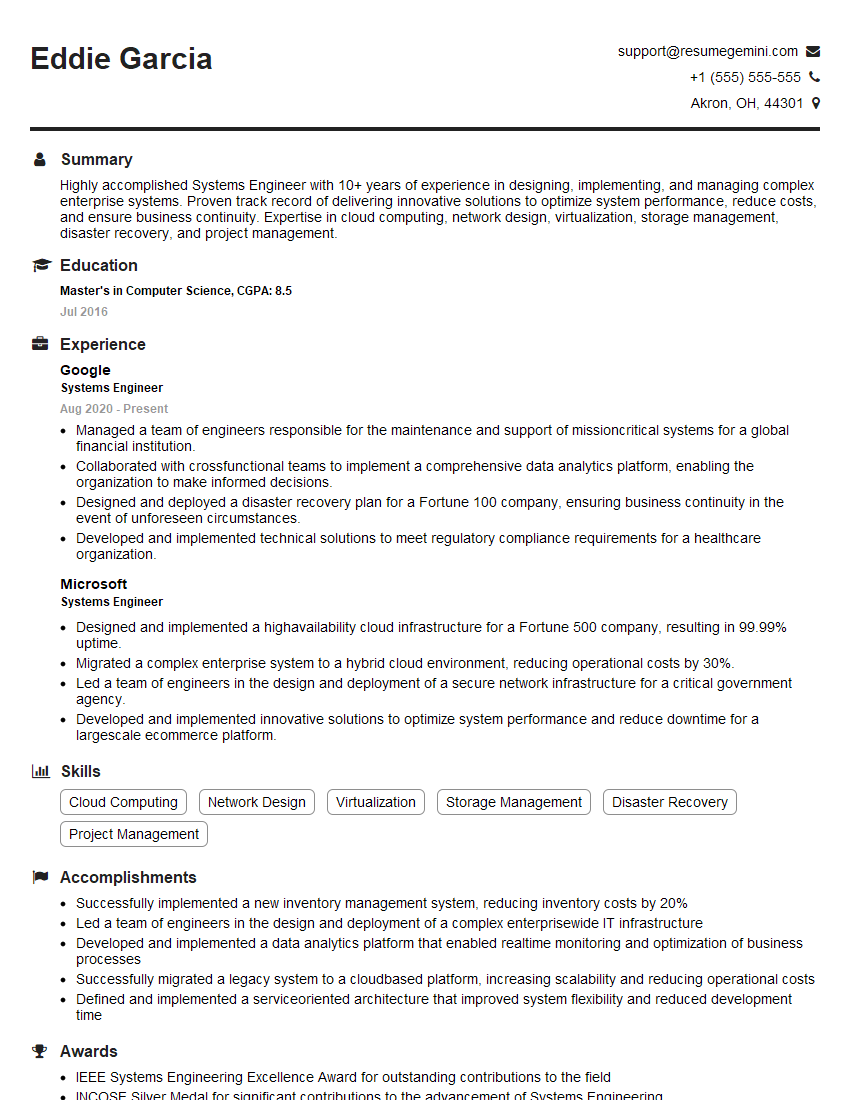
Systems Engineer Resume Sample
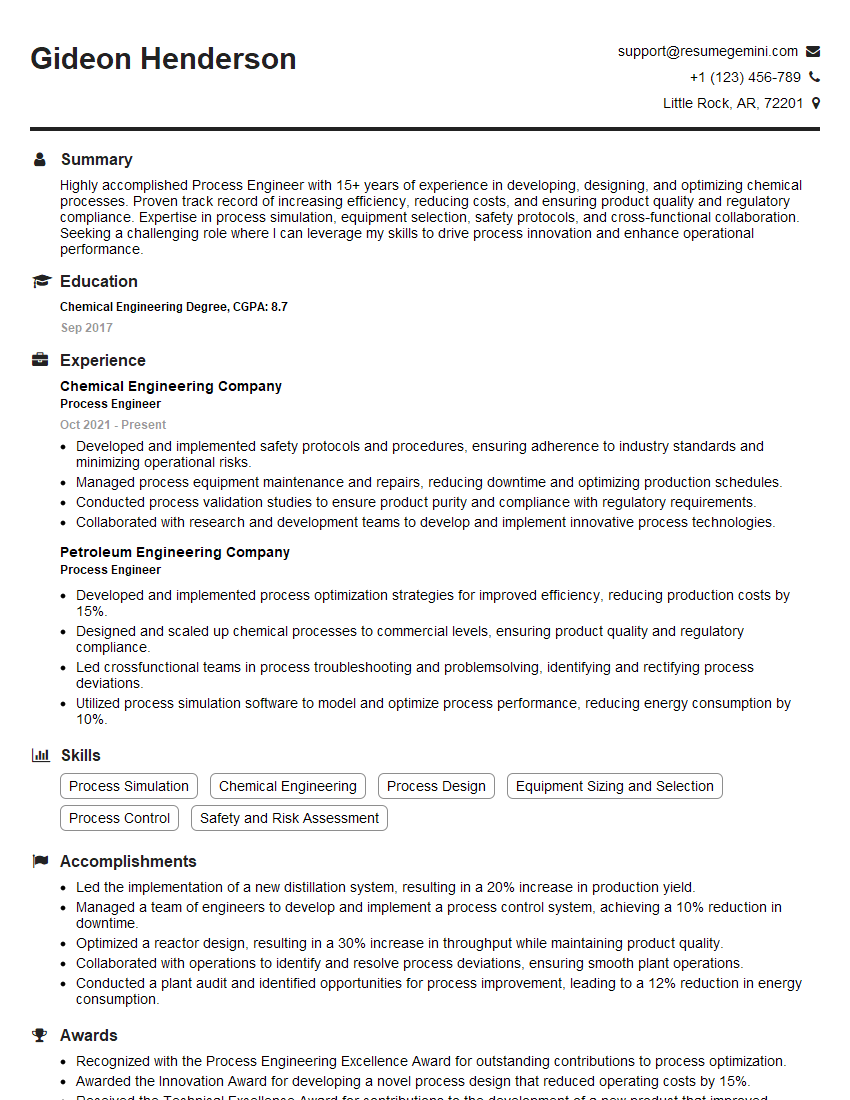
Process Engineer Resume Sample
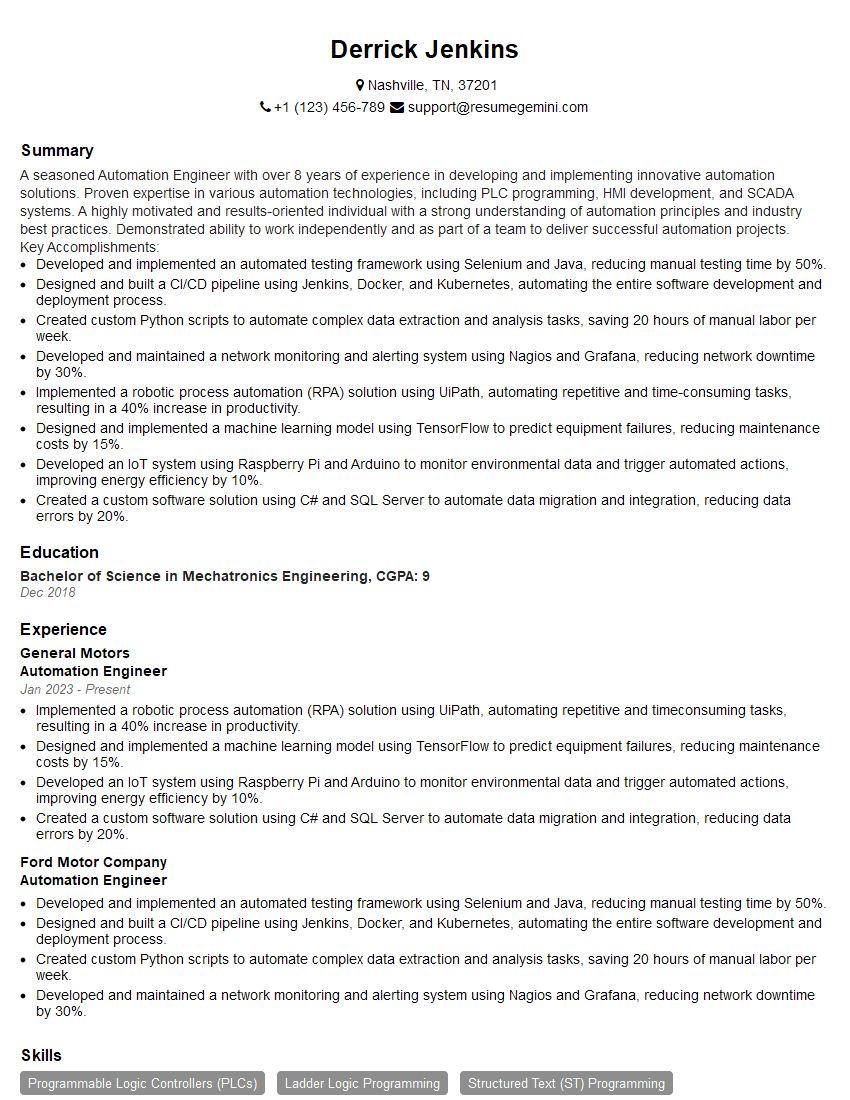
Automation Engineer Resume Sample
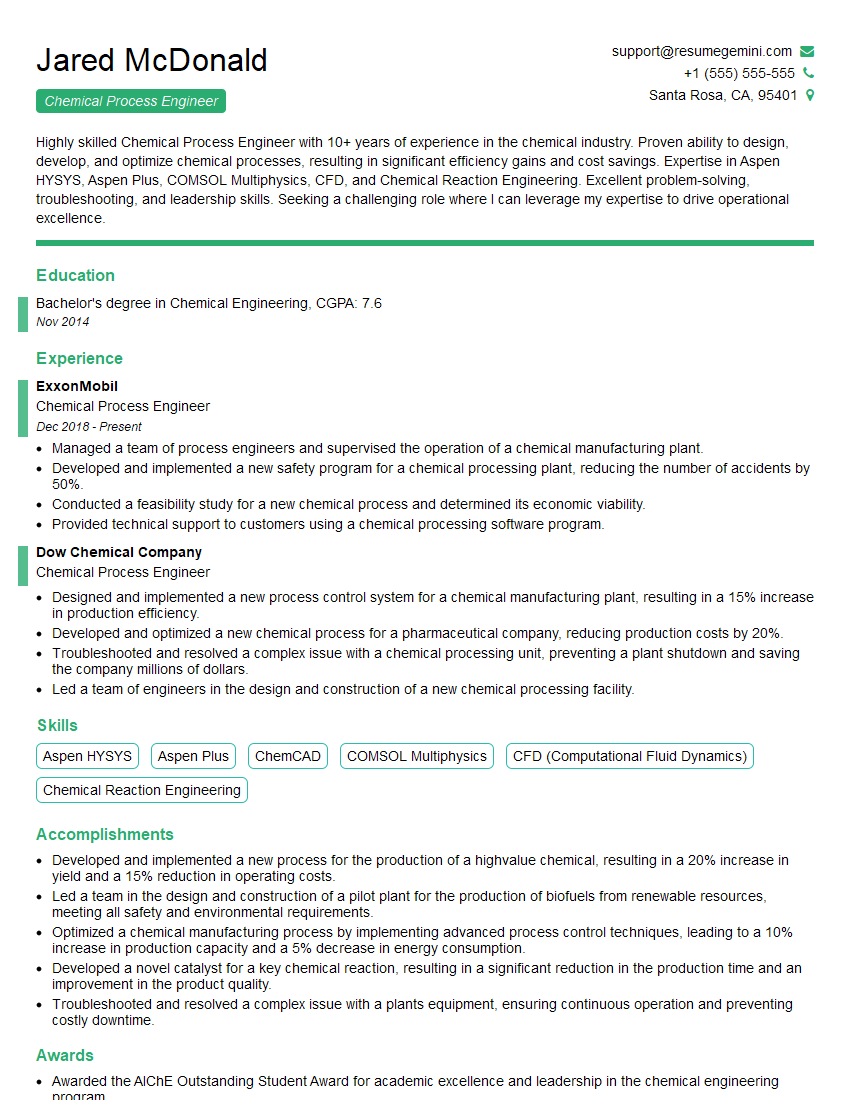
Chemical Process Engineer Resume Sample
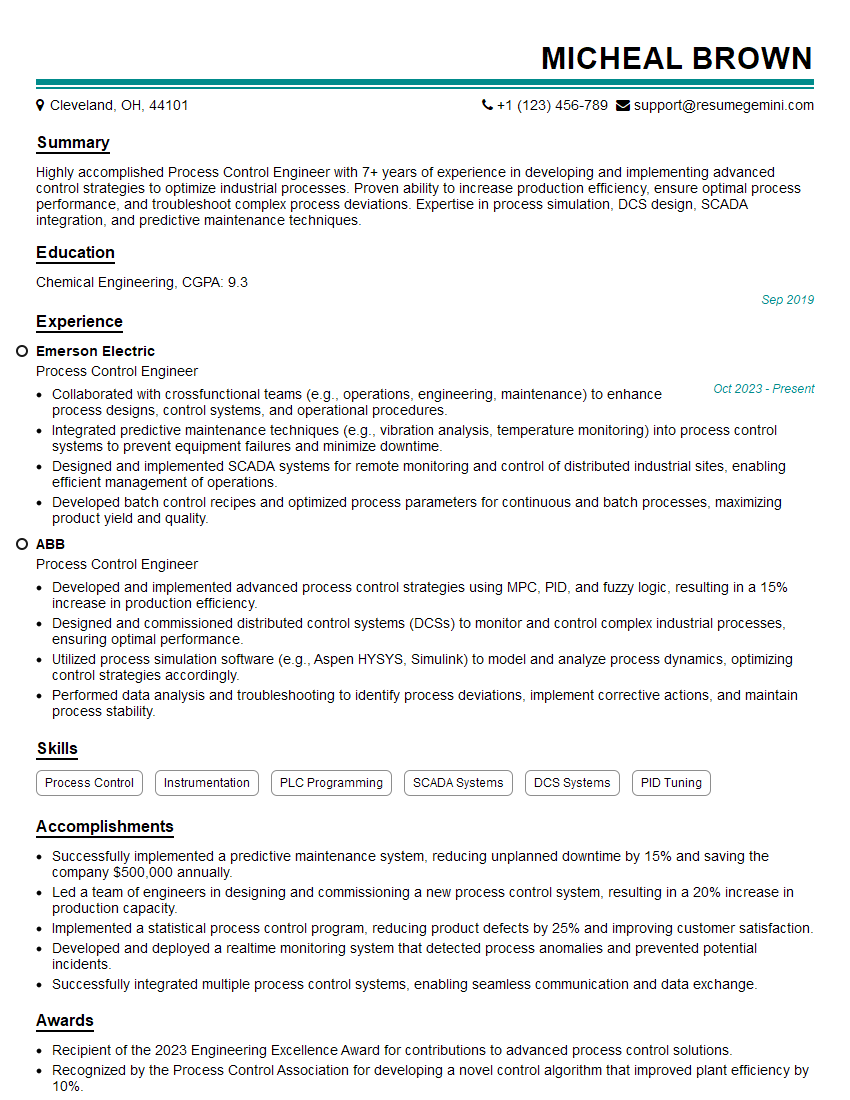
Process Control Engineer Resume Sample
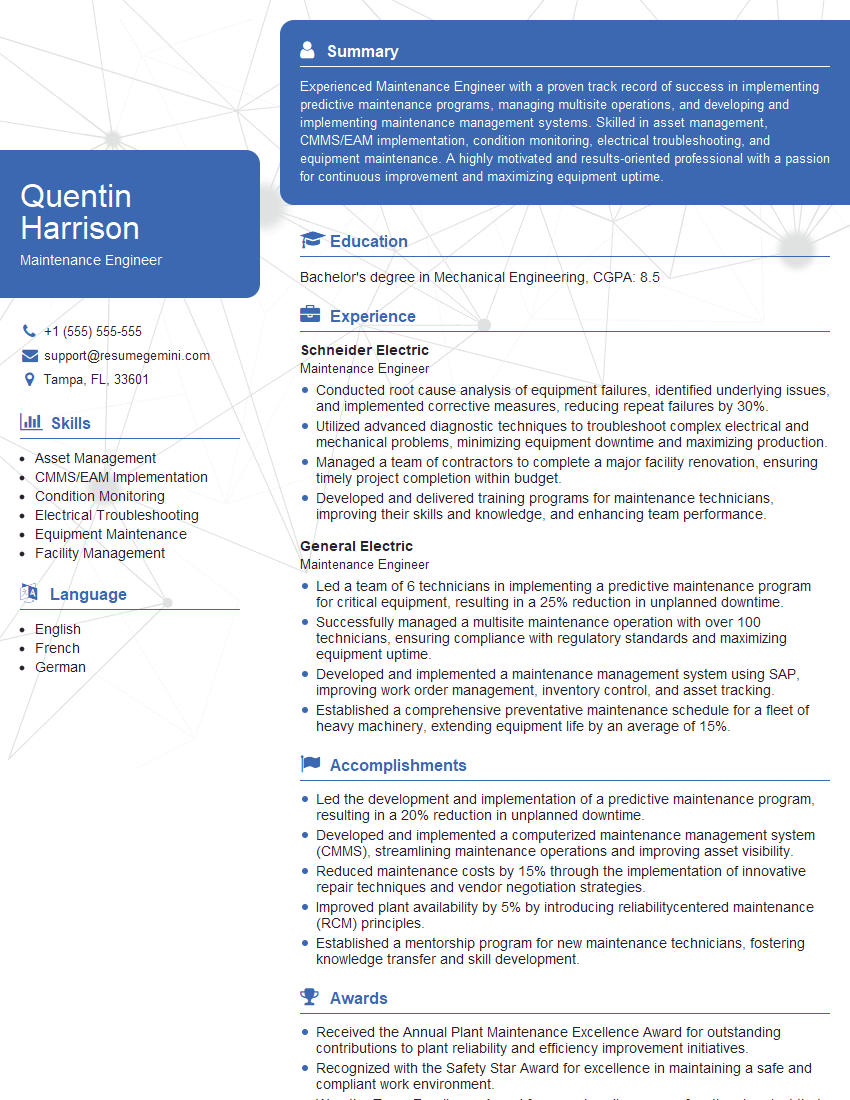
Maintenance Engineer Resume Sample
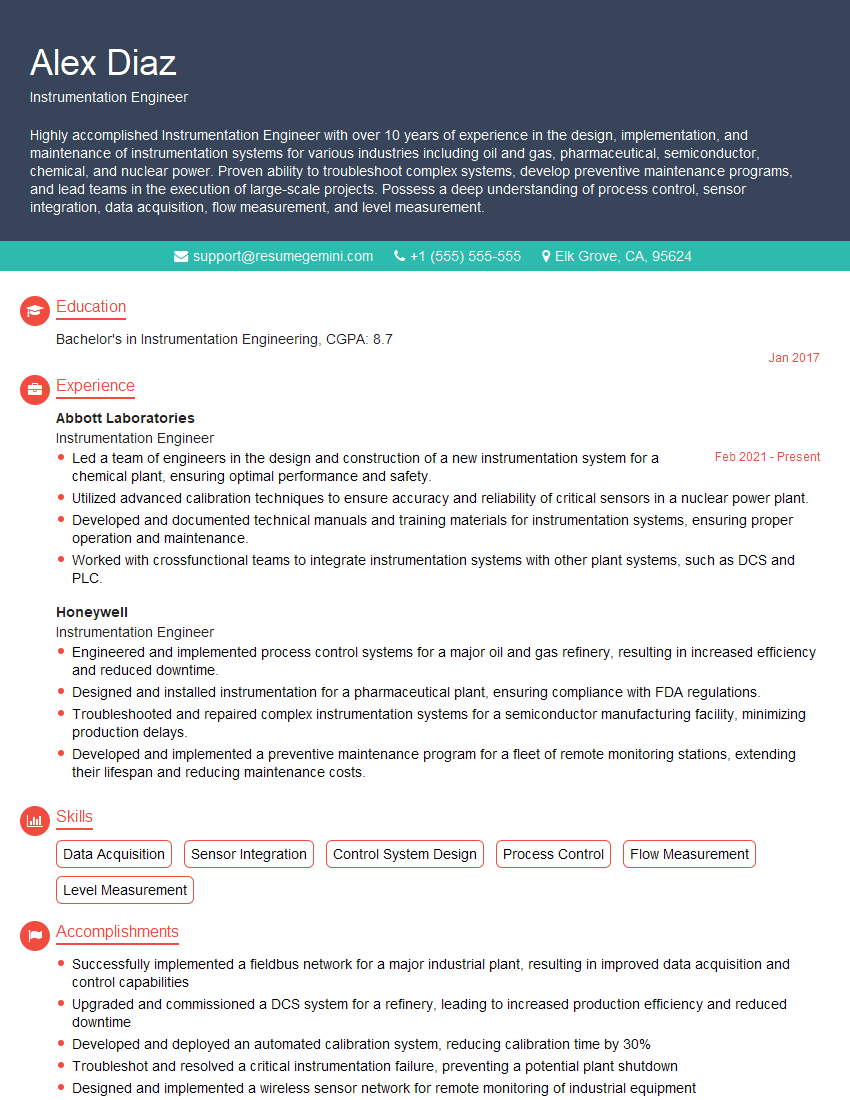
Instrumentation Engineer Resume Sample
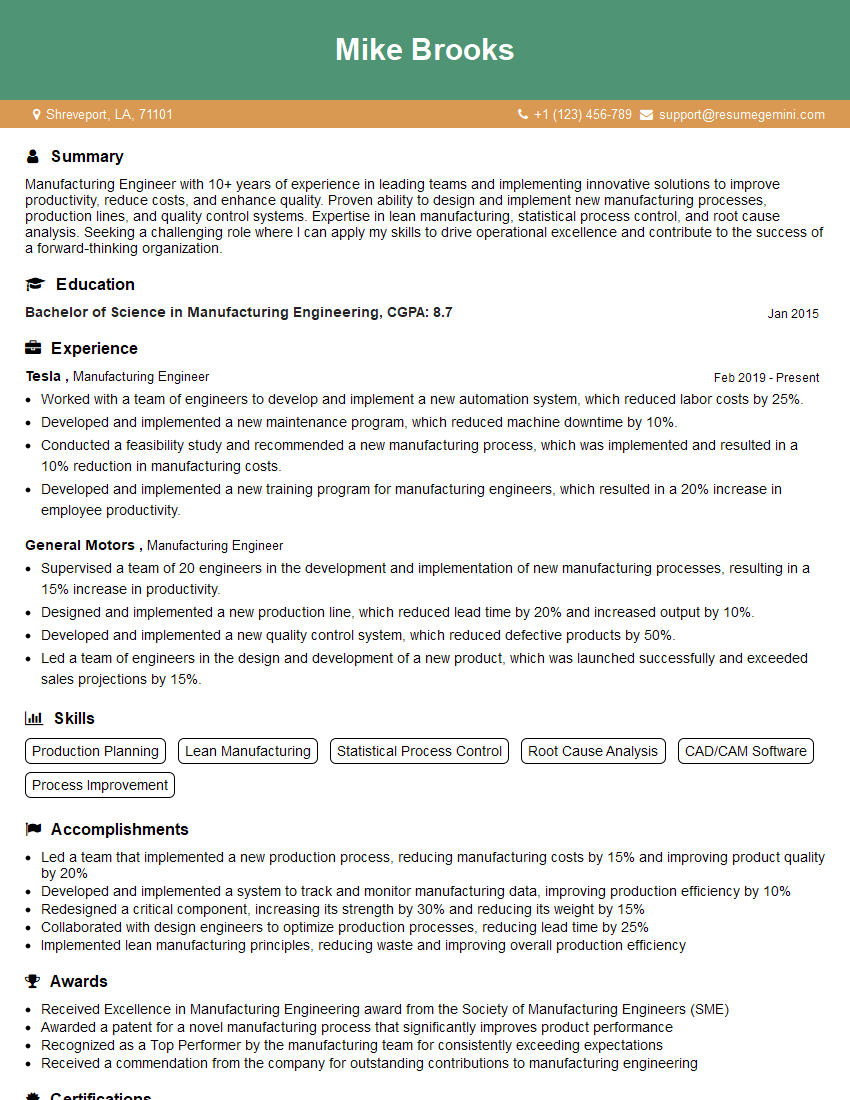
Manufacturing Engineer Resume Sample
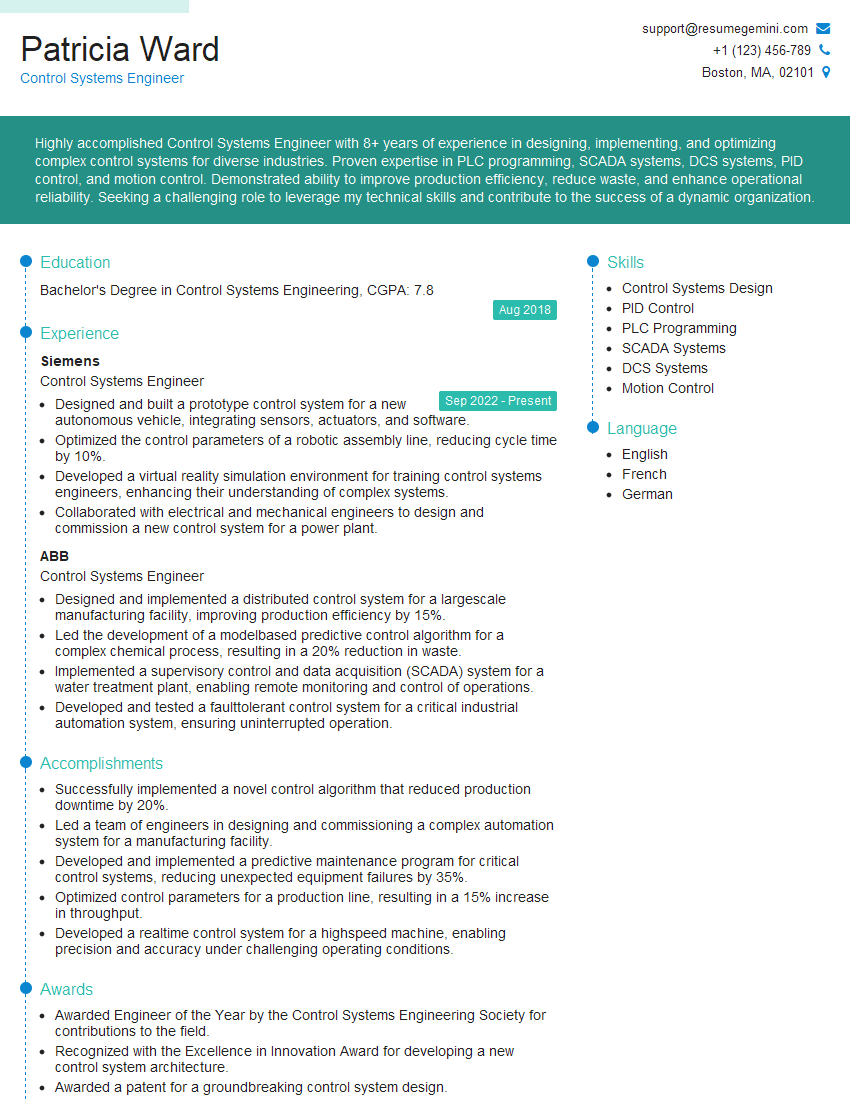
Control Systems Engineer Resume Sample
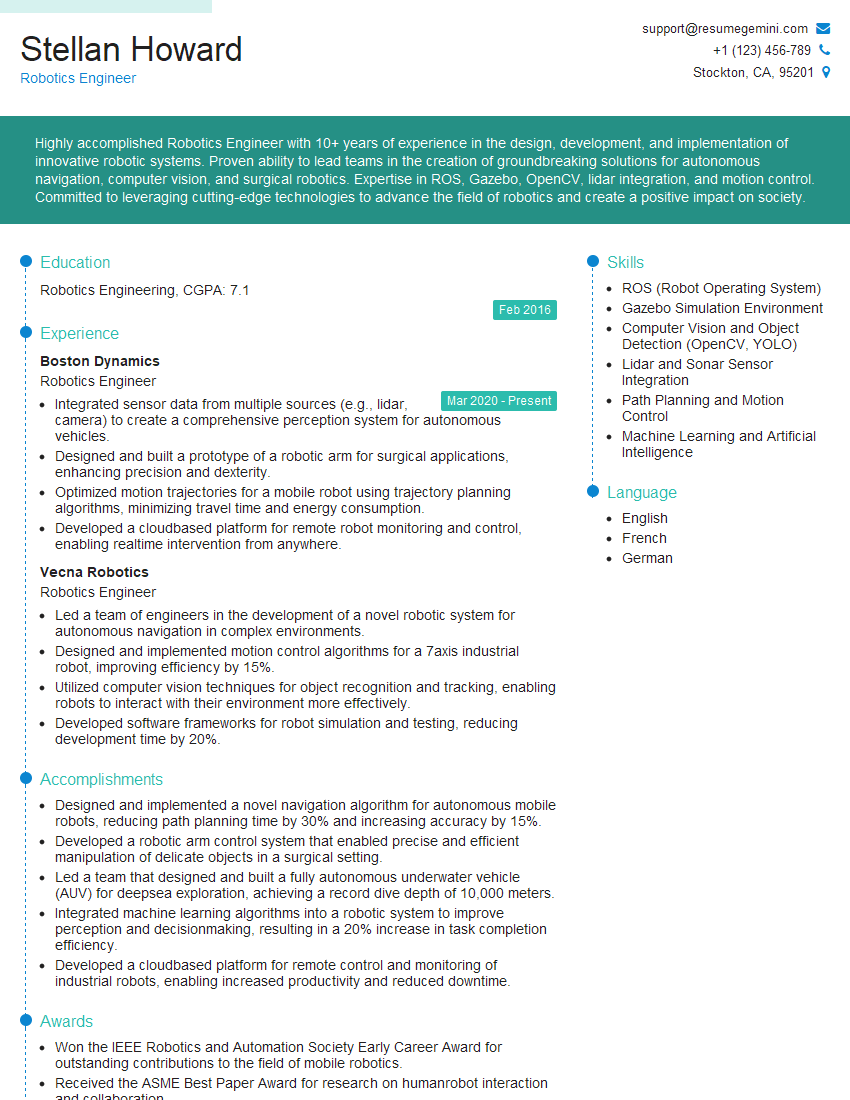
Robotics Engineer Resume Sample
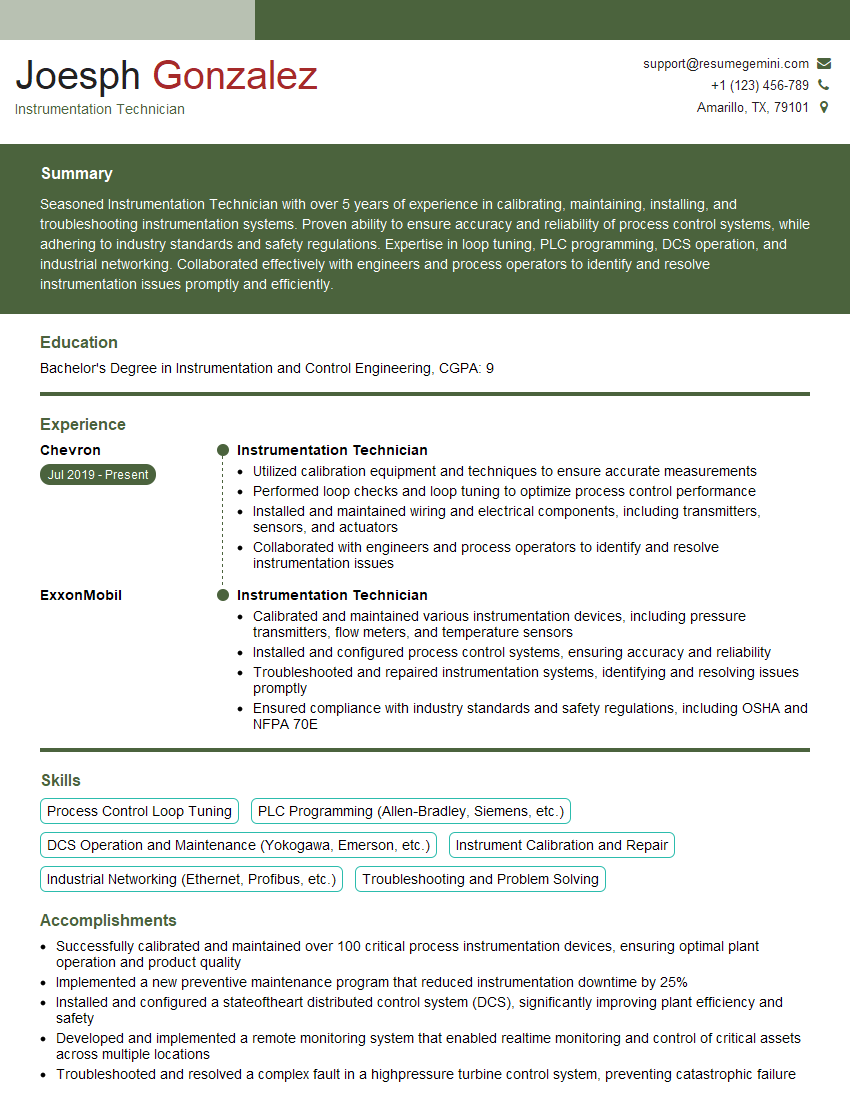
Instrumentation Technician Resume Sample
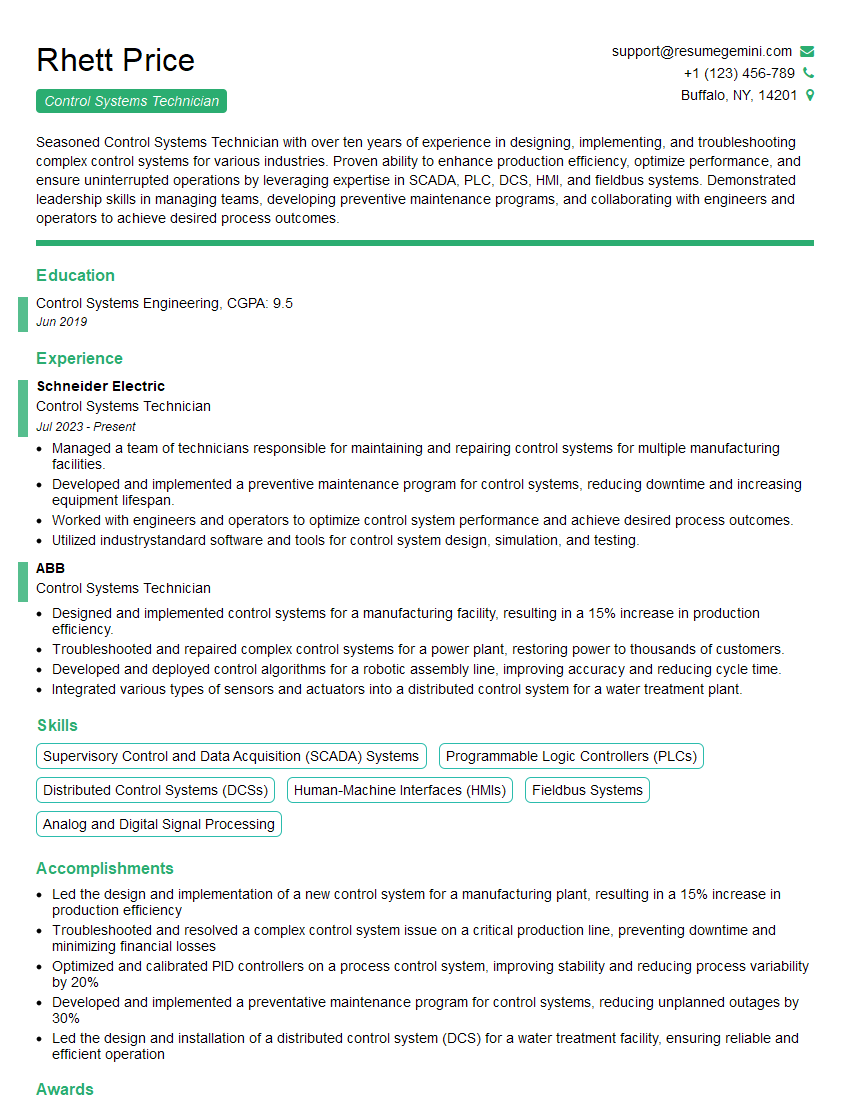
Control Systems Technician Resume Sample
Explore more articles
Users Rating of Our Blogs
Share Your Experience
We value your feedback! Please rate our content and share your thoughts (optional).
What Readers Say About Our Blog
Very informative content, great job.
good