Are you ready to stand out in your next interview? Understanding and preparing for Workpiece Positioning interview questions is a game-changer. In this blog, we’ve compiled key questions and expert advice to help you showcase your skills with confidence and precision. Let’s get started on your journey to acing the interview.
Questions Asked in Workpiece Positioning Interview
Q 1. Explain the different methods of workpiece positioning.
Workpiece positioning methods ensure a part is accurately located and secured for machining or other manufacturing processes. The choice depends on factors like part geometry, material, and the process itself. Common methods include:
- Fixtures: These are custom-designed devices that hold the workpiece rigidly in a precise location. They often utilize multiple clamping points for stability and repeatability. Think of a vise, but more sophisticated, often designed for a specific part.
- Jigs: Similar to fixtures, but they primarily guide tools rather than just holding the workpiece. They are crucial for operations like drilling or tapping, ensuring holes are in the correct position.
- Chucks: These are primarily used in lathe operations. They grip the workpiece (often cylindrical) and rotate it for machining.
- Magnetic Holding: This method uses electromagnets to hold ferromagnetic workpieces. It’s quick and easy but limited to magnetic materials and may not offer the rigidity of other methods.
- Vacuum Holding: Creates a vacuum to hold the workpiece against a surface. Suitable for flat or gently curved parts, it’s often used in automated systems.
- Self-Centering Devices: These devices automatically center the workpiece, simplifying setup and improving accuracy.
The best method often involves a combination of these techniques for optimal results.
Q 2. Describe the importance of accurate workpiece positioning in manufacturing processes.
Accurate workpiece positioning is paramount in manufacturing for several reasons:
- Dimensional Accuracy: Inaccurate positioning leads to parts that are out of tolerance, failing quality checks and potentially causing assembly issues.
- Surface Finish: Improper positioning can lead to collisions or uneven machining, resulting in poor surface quality.
- Repeatability: Consistent positioning is crucial for producing identical parts in large quantities. Inconsistent positioning leads to variations in the finished product.
- Tool Life: Accurate positioning reduces the risk of tool damage from collisions, extending tool life and reducing costs.
- Safety: Secure workpiece holding prevents parts from moving during machining, reducing the risk of accidents.
Imagine trying to drill a hole in a piece of wood without a clamp – it’s impossible to achieve precision! This same principle applies to far more complex manufacturing processes.
Q 3. What are the key considerations when designing a workpiece fixture?
Designing a workpiece fixture requires careful consideration of several factors:
- Workpiece Geometry: The fixture’s design must accommodate the part’s shape and size, ensuring all necessary surfaces are accessible for machining.
- Material Properties: The fixture material and clamping mechanisms should not damage the workpiece. Consider factors like hardness, work-hardening tendencies and potential reactions between the workpiece and fixture materials.
- Machining Process: The fixture must allow for proper tool access and movement during the machining process. This might include considering clearances for specific tools or automated systems.
- Clamping Strategy: The clamping system must secure the workpiece rigidly without causing distortion or damage. Multiple clamping points are generally preferred for stability.
- Accessibility: The fixture must allow for easy loading and unloading of the workpiece, minimizing setup time.
- Rigidity: The fixture should be sufficiently rigid to withstand the forces generated during machining without deflecting. A poorly designed fixture may induce errors in the final product.
- Repeatability: The design should ensure consistent and repeatable positioning of the workpiece.
A poorly designed fixture can lead to scrap parts, machine damage, and even workplace accidents. Careful planning and design are crucial for success.
Q 4. How do you select the appropriate clamping mechanism for a specific workpiece?
Selecting the appropriate clamping mechanism depends on the workpiece material, geometry, and the machining process. Here’s a decision framework:
- Soft Jaws: Used for delicate parts or those with complex shapes, preventing marring or damage. They are often custom-machined to fit the workpiece exactly.
- Hard Jaws: More robust and suitable for repetitive clamping of the same workpiece. They are durable and provide high clamping force.
- Hydraulic Clamping: Offers consistent clamping force and is suitable for large or heavy workpieces. It allows for precise control of the clamping pressure.
- Pneumatic Clamping: Fast and efficient, but may not offer the same precision as hydraulic clamping. It’s often used in automated systems.
- Mechanical Clamping: Simple and reliable, using screws, levers, or cam mechanisms. This is a common method for simpler fixtures.
- Vacuum Clamping: Ideal for flat or gently curved parts, offering a damage-free clamping solution. It’s good for automated processes and delicate components.
For instance, a delicate aluminum part might require soft jaws in a vise, while a hardened steel block could be held securely using hard jaws and mechanical clamping.
Q 5. Explain the concept of workholding and its impact on machining accuracy.
Workholding encompasses all aspects of securing and positioning a workpiece for machining or other manufacturing operations. It directly impacts machining accuracy because:
- Minimizes Vibration: Secure workholding reduces vibrations that can lead to inaccuracies in the final product.
- Prevents Deflection: A rigid workholding system prevents the workpiece from deflecting under cutting forces, ensuring dimensional accuracy.
- Ensures Repeatability: Consistent workholding allows for the production of identical parts repeatedly.
- Improves Surface Finish: Reduces the risk of chatter marks or other surface imperfections that can result from poor workholding.
- Increases Tool Life: Proper workholding minimizes the risk of tool collisions, resulting in improved tool life and reduced costs.
Think of it as the foundation of a building: a weak foundation will lead to a structurally unsound building, just as poor workholding will compromise the accuracy of the final product.
Q 6. What are the common types of workpiece errors and how do you address them?
Common workpiece errors in positioning include:
- Misalignment: The workpiece is not properly aligned with the machine’s axes, leading to dimensional inaccuracies.
- Runout: A rotating workpiece is not perfectly concentric, causing variations in the machined surface.
- Deflection: The workpiece deforms under cutting forces, affecting dimensional accuracy.
- Vibration: Vibrations during machining cause surface imperfections and dimensional inaccuracies.
- Loose Clamping: Insufficient clamping force causes the workpiece to move during machining.
Addressing these errors involves:
- Precise Fixture Design: Ensuring the fixture accurately aligns and secures the workpiece.
- Proper Clamping: Applying sufficient clamping force without causing distortion.
- Vibration Dampening: Implementing methods to minimize vibrations in the machine or the fixture itself.
- Careful Setup: Precisely aligning the workpiece using appropriate measuring tools.
- Regular Maintenance: Keeping the machine and fixtures in good condition to prevent issues.
A systematic approach to setup and a well-designed fixture are key to minimizing these errors.
Q 7. Discuss the role of fixturing in minimizing workpiece distortion during machining.
Fixturing plays a critical role in minimizing workpiece distortion during machining by providing:
- Rigid Support: A well-designed fixture distributes cutting forces evenly across the workpiece, preventing localized deformation.
- Multiple Clamping Points: Multiple clamping points provide better support and reduce the risk of localized stresses.
- Optimized Clamping Force: The clamping force should be sufficient to hold the workpiece securely without causing deformation. This often requires careful consideration of material properties.
- Strategic Support Locations: Support points should be located to minimize deflection in areas being machined.
- Material Selection: The fixture material should be chosen to minimize thermal expansion and ensure stability.
Imagine trying to cut a piece of thin sheet metal without supporting it; it will likely bend or distort. A properly designed fixture prevents this distortion by providing firm and even support throughout the machining process.
Q 8. How do you ensure the repeatability and reliability of workpiece positioning systems?
Repeatability and reliability in workpiece positioning are paramount for consistent manufacturing quality. We achieve this through a multi-pronged approach focusing on robust fixture design, precise positioning mechanisms, and rigorous quality control.
Fixture Design: A well-designed fixture uses multiple locating points to constrain all six degrees of freedom (three translational and three rotational). This prevents workpiece movement during machining or other processes. Think of it like securing a picture frame on a wall – you need multiple nails to keep it stable.
Positioning Mechanisms: High-precision components such as linear guides, ball screws, and encoders ensure accurate and repeatable positioning. Regular calibration and maintenance of these components are crucial.
Quality Control: Regular checks on the fixture’s wear and tear, along with periodic verification of the positioning accuracy, are essential. Statistical Process Control (SPC) techniques can be employed to monitor and control variations.
Material Selection: Using materials with high dimensional stability and resistance to wear is critical. For example, hardened steel components in the fixture will ensure longer life and better accuracy compared to softer materials.
For instance, in a CNC machining operation, a poorly designed fixture could lead to inconsistent part dimensions, requiring re-work or scrap. Our approach ensures minimal variation, maximizing yield and quality.
Q 9. Describe your experience with different types of clamping devices (e.g., hydraulic, pneumatic, mechanical).
My experience encompasses a wide range of clamping devices, each suited to different applications and workpiece characteristics.
Hydraulic Clamping: Offers high clamping force with relatively small actuators, making them ideal for large and heavy workpieces. However, they require a hydraulic power unit and can be more complex to maintain.
Pneumatic Clamping: These offer a good balance between clamping force, speed, and ease of use. They are commonly used in automated systems due to their fast actuation times. However, the clamping force can be less predictable than hydraulic systems.
Mechanical Clamping: This includes cam clamps, toggle clamps, and screw clamps. They are simple, reliable, and often require minimal maintenance. However, they might not provide the same level of clamping force as hydraulic or pneumatic systems and are less suitable for automation.
I’ve worked on projects where we needed the high force of hydraulic clamps for forging dies and the speed of pneumatic clamps for high-volume assembly. The selection always depends on factors such as workpiece size, material, required clamping force, and the automation level of the system.
Q 10. How do you handle workpieces with complex geometries or delicate features?
Handling workpieces with complex geometries or delicate features requires specialized fixturing techniques. The key is to distribute clamping forces strategically to avoid damage.
Soft Jaws: These are custom-machined jaws made from softer materials like aluminum or polyurethane, which conform to the workpiece shape, providing even clamping pressure without marring the surface.
Three-point location: Locating the workpiece on three points (instead of six) is useful for delicate features, as it allows for minimal constraint. This approach still prevents movement in the X, Y, and Z axes but allows flexibility for rotation.
Vacuum Chucking: Ideal for delicate or oddly shaped workpieces, vacuum chucks use suction to hold the part. This method provides a gentle yet secure hold without applying direct pressure.
Custom Fixtures: Complex parts often require custom fixtures tailored to their specific geometry. This might involve using multiple clamping points or incorporating flexible elements within the fixture to accommodate variations.
For example, in a project involving delicate ceramic components, we used vacuum chucking to prevent damage during machining. Careful design and material selection are vital in such situations.
Q 11. What are the safety considerations related to workpiece positioning and handling?
Safety is paramount in workpiece positioning. Hazards include crushing injuries from clamping mechanisms, impact injuries from dropped workpieces, and injuries from moving machine parts.
Emergency Stop Buttons: These must be readily accessible and clearly marked.
Interlocks: These prevent machine operation unless the workpiece is properly secured in the fixture.
Light Curtains and Safety Sensors: These detect the presence of personnel in hazardous areas and automatically stop the machine.
Guards and Enclosures: These should protect operators from moving parts and clamping mechanisms.
Proper Training: Operators must be trained on the safe operation of the equipment and the proper procedures for workpiece handling and fixturing.
Risk Assessment: Regular risk assessments should be conducted to identify and mitigate potential hazards.
Ignoring safety measures can lead to serious accidents. A thorough understanding and implementation of safety protocols are indispensable.
Q 12. Explain the principles of force and moment equilibrium in workpiece fixturing.
Force and moment equilibrium are fundamental principles in workpiece fixturing. A stable fixture ensures that the workpiece remains securely in place, resisting external forces and moments. This is achieved by balancing the forces and moments acting on the workpiece.
Force Equilibrium: The sum of all forces acting on the workpiece must be zero. This means that the clamping forces must balance the external forces (e.g., cutting forces during machining).
Moment Equilibrium: The sum of all moments acting on the workpiece must also be zero. This ensures that the workpiece does not rotate due to unbalanced forces. Careful placement of clamping points is crucial for achieving moment equilibrium.
Imagine trying to balance a seesaw. To prevent it from tipping, you need equal forces on both sides at equal distances from the fulcrum. Similarly, in a fixture, balanced forces and moments prevent the workpiece from moving or rotating.
Q 13. How do you determine the optimal location for support points in a workpiece fixture?
The optimal location for support points depends on the workpiece geometry, material properties, and the applied forces during the process. However, some general guidelines apply:
Minimize overhang: Support points should be located as close as possible to the workpiece’s center of gravity to minimize overhang and reduce the risk of bending or deflection.
Multiple support points: Utilize multiple support points to provide redundancy and distribute the load. This also enhances stability and helps prevent the workpiece from shifting during processing.
Consider load distribution: Support points should be positioned to distribute the load evenly across the workpiece. This minimizes stress concentration and the potential for damage.
Avoid interfering with machining operations: Support points should not obstruct access for tools or interfere with the machining process.
FEA analysis: For complex workpieces, Finite Element Analysis (FEA) can be used to simulate the stress distribution and optimize the placement of support points.
For example, when fixturing a long, slender workpiece, placing support points near both ends is crucial to minimize deflection under load. Proper support point selection is key to achieving the necessary rigidity and stability of the fixture.
Q 14. Describe your experience with automated workpiece positioning systems.
I have extensive experience with automated workpiece positioning systems, particularly in robotic applications and CNC machining centers. These systems offer significant advantages in terms of speed, accuracy, and repeatability.
Robotic Systems: Robots equipped with vision systems and advanced sensors can automatically pick, orient, and place workpieces in fixtures. This allows for flexible and automated manufacturing processes.
CNC Machine Integration: Automated workpiece loaders and unloaders integrated with CNC machines streamline production by eliminating manual handling and reducing cycle times.
Programmable Logic Controllers (PLCs): PLCs control the automated positioning systems, ensuring precise and repeatable movements. This is critical for high-precision operations like micro-machining.
Vision Systems: Vision systems can inspect and verify the correct orientation and placement of the workpiece before the process begins, minimizing errors and improving quality.
In one project, we integrated a robotic arm with a CNC milling machine to automatically load and unload workpieces. The automation significantly increased productivity and reduced labor costs. The choice of automation system always depends on the application’s specific requirements and budget.
Q 15. How do you integrate workpiece positioning into a larger manufacturing process?
Integrating workpiece positioning into a larger manufacturing process is crucial for ensuring consistent product quality and efficient production. It’s not a standalone activity but a carefully planned step within the overall workflow. Think of it like setting the foundation of a house – if the foundation isn’t perfectly aligned, the entire structure will be compromised.
The integration begins with process planning. We first analyze the entire manufacturing sequence, identifying all machining or assembly operations requiring precise workpiece positioning. Then, we design fixtures that securely hold the workpiece in the desired orientation and location for each operation. This includes considering material handling – how the workpiece moves from one station to the next, ensuring no misalignment occurs during transport. For example, in an automotive assembly line, a robot might precisely place a car door into a fixture for welding, relying on accurate workpiece positioning to ensure a flawless weld. Once the fixtures are designed and implemented, we integrate quality control checks to monitor positioning accuracy throughout the process, using tools like CMMs (Coordinate Measuring Machines) to verify dimensional accuracy and alignment.
Finally, we incorporate the positioning system into the overall process control system. This might involve integrating sensors and automated systems that monitor workpiece location and adjust accordingly, using feedback loops to maintain accuracy. This holistic approach ensures that workpiece positioning seamlessly integrates and contributes to the overall efficiency and quality of the manufacturing process.
Career Expert Tips:
- Ace those interviews! Prepare effectively by reviewing the Top 50 Most Common Interview Questions on ResumeGemini.
- Navigate your job search with confidence! Explore a wide range of Career Tips on ResumeGemini. Learn about common challenges and recommendations to overcome them.
- Craft the perfect resume! Master the Art of Resume Writing with ResumeGemini’s guide. Showcase your unique qualifications and achievements effectively.
- Don’t miss out on holiday savings! Build your dream resume with ResumeGemini’s ATS optimized templates.
Q 16. What software or tools do you use for designing and analyzing workpiece fixtures?
Designing and analyzing workpiece fixtures relies on a combination of software and tools. I extensively use CAD (Computer-Aided Design) software such as SolidWorks and AutoCAD to create 3D models of the fixtures. These models allow us to virtually test the fixture’s design, ensuring it securely holds the workpiece and accommodates the manufacturing process. We can simulate forces and movements to identify potential weak points or design flaws.
Finite Element Analysis (FEA) software is invaluable for stress analysis. FEA helps us determine if the fixture can withstand the forces applied during machining or assembly without deformation or failure. For instance, we might simulate clamping forces to ensure the fixture won’t deform and compromise accuracy. Furthermore, simulation software allows us to optimize the fixture design for weight, cost, and manufacturing ease.
Beyond software, physical prototyping is essential. We often build physical prototypes to validate the design and identify any unforeseen issues. Measuring tools like dial indicators and CMMs help verify the accuracy and repeatability of the fixture.
Q 17. How do you address variations in workpiece dimensions or tolerances?
Variations in workpiece dimensions and tolerances are a common challenge in manufacturing. We address these variations through several strategies, starting with designing fixtures that incorporate adjustable components. For instance, we might use adjustable clamps or shims to accommodate slight variations in workpiece dimensions. This ‘flexibility’ is built into the design itself. In other cases, we use self-centering fixtures that automatically adjust to the workpiece’s actual dimensions, minimizing the impact of tolerances.
Statistical Process Control (SPC) techniques play a crucial role. By monitoring the variations in workpiece dimensions, we can identify trends and potential issues. This data informs our fixture design and allows us to optimize it for maximum tolerance accommodation. For example, if we observe a consistent trend of larger workpieces, we can adjust the fixture accordingly. Furthermore, designing fixtures with sufficient clamping force and surface contact ensures that the workpiece is held securely, despite small variations in its dimensions.
In extreme cases where tolerance variations are particularly high, we might consider implementing automated measuring and adjustment systems within the fixture. These systems would dynamically compensate for variations, ensuring consistent positioning regardless of workpiece dimensions.
Q 18. Describe your experience with different materials used in workpiece fixturing.
The choice of material for workpiece fixturing depends heavily on the application. Factors considered include strength, rigidity, machinability, cost, and resistance to wear and corrosion. Steel is a popular choice due to its high strength and rigidity, making it suitable for heavy-duty applications. However, steel can be expensive and requires more machining time.
Aluminum is often preferred for its lightweight yet rigid properties, making it ideal for faster machining and reduced wear on machine tools. For applications involving high temperatures or corrosive environments, materials like stainless steel or specialized polymers might be necessary. Polymers offer advantages in specific applications due to their ability to dampen vibrations or provide flexibility. The selection process requires a careful balance between material properties, cost-effectiveness, and suitability for the specific manufacturing environment and workpiece material.
I’ve had experience using hardened steel for applications requiring high precision and durability, while aluminum has been ideal for lighter workpieces where weight reduction is a key factor. The selection of material for fixturing is a crucial step in ensuring optimal performance and longevity of the fixture.
Q 19. Explain the process of validating a workpiece fixture design.
Validating a workpiece fixture design is a critical step that requires a systematic approach. It starts with a thorough review of the CAD model and FEA results to ensure the design meets specifications and can withstand expected forces. We then proceed to build a prototype and perform rigorous testing.
This testing involves using various measuring tools like dial indicators and CMMs to verify the fixture’s accuracy and repeatability. We conduct repeated measurements on several workpieces to assess the consistency of positioning. We also check for any potential sources of error, such as fixture deformation or insufficient clamping force. A key aspect is ensuring that the fixture’s positioning accuracy meets the required tolerances for the manufacturing process.
Once the prototype passes testing, we often conduct a pilot run in the actual production environment. This involves using the fixture in a small-scale production setting to verify its performance under real-world conditions. Data collected during the pilot run helps refine the design or identify any unforeseen issues. This multi-stage validation process ensures that the fixture is robust, accurate, and reliable for large-scale production.
Q 20. How do you troubleshoot issues related to inaccurate workpiece positioning?
Troubleshooting inaccurate workpiece positioning requires a systematic approach. We begin by reviewing the fixture’s design and manufacturing process, checking for any defects or inconsistencies. We carefully examine the clamping mechanism, ensuring it provides sufficient force and consistent contact with the workpiece. Measuring tools help detect any deviations from the design specifications.
Next, we analyze the machine tool and its setup. We verify the accuracy of the machine’s positioning system and ensure that the workpiece is properly aligned within the machine’s coordinate system. We also check for any vibrations or other factors that could affect the accuracy of the process. Software or sensors in the machine tool can provide valuable diagnostics in this step.
If the problem persists, we may need to conduct a more thorough investigation. This might involve using advanced measuring techniques, such as laser scanning or optical measurement systems, to precisely determine the source of the misalignment. A careful analysis of the collected data usually pinpoints the root cause and informs the necessary corrections.
Q 21. What are the common causes of workpiece misalignment?
Workpiece misalignment stems from several common causes. One frequent culprit is fixture design flaws – insufficient clamping force, improper support, or inadequate contact points can all lead to misalignment. Defects in the fixture’s manufacturing process, such as inaccuracies in machining or assembly, can also contribute to the problem. Similarly, workpiece defects like variations in dimensions or surface imperfections can affect alignment.
Machine tool errors, such as inaccuracies in the machine’s positioning system or vibrations, can also introduce misalignment. Incorrect setup procedures or tool wear can amplify these issues. Finally, environmental factors like temperature changes or vibrations from nearby equipment might also play a role in causing workpiece misalignment. Understanding these sources and implementing appropriate preventive measures is critical for maintaining accurate workpiece positioning.
Q 22. How do you minimize the setup time for workpiece positioning?
Minimizing workpiece positioning setup time is crucial for maximizing productivity. This involves a multi-pronged approach focusing on standardization, automation, and efficient tooling.
Standardization: Employing standardized fixtures and tooling significantly reduces the time spent adapting to different workpiece geometries. Think of it like using a universal wrench instead of searching for different sizes every time – it streamlines the process.
Quick-change fixturing systems: Investing in systems that allow for rapid exchange of fixtures drastically cuts down on setup time. Imagine a system where you can swap a fixture in seconds, rather than minutes or even hours, using levers or pneumatic clamps.
Automated clamping mechanisms: Automated systems can significantly reduce the manual effort involved in clamping down workpieces. This could involve pneumatic or hydraulic clamping systems triggered by a programmable logic controller (PLC).
Pre-set tooling: Pre-setting tooling off-line and having it ready for immediate use eliminates time spent on adjustments at the machine. It’s like having your ingredients pre-measured before starting to cook – it makes the whole process smoother.
For example, in a high-volume automotive manufacturing setting, the implementation of quick-change tooling reduced setup time from 30 minutes to under 5 minutes per workpiece, resulting in a substantial increase in overall throughput.
Q 23. How do you ensure the cleanliness and maintenance of workpiece fixtures?
Cleanliness and maintenance of workpiece fixtures are paramount for ensuring accuracy and repeatability in positioning, and preventing costly errors. A comprehensive maintenance program is essential.
Regular cleaning: Fixtures should be cleaned regularly to remove chips, dust, and debris that could interfere with accurate positioning. Compressed air, brushes, and appropriate cleaning solvents are usually employed. Think of it like regularly cleaning your kitchen utensils – you want to ensure they’re clean and ready for the next task.
Lubrication: Moving parts of fixtures, such as clamps and slides, should be lubricated according to manufacturer recommendations to prevent wear and tear and ensure smooth operation. Proper lubrication is analogous to oiling the hinges on a door – it keeps everything working smoothly and prevents premature failure.
Inspection: Regular inspection of fixtures for wear, damage, or misalignment is crucial. This might involve visual inspection or the use of precision measuring instruments. This step is like a routine car check-up – you want to catch any issues before they become major problems.
Calibration: Periodic calibration of fixtures using precision measuring equipment ensures accuracy. This step guarantees the fixture is correctly positioned and will hold the workpiece with the required tolerance. It’s like ensuring your kitchen scale is properly calibrated before weighing ingredients for a delicate recipe.
Documentation: Maintaining comprehensive documentation of cleaning, maintenance, and calibration activities is essential for traceability and quality control.
Q 24. What are your preferred methods for documenting and communicating workpiece positioning procedures?
Clear and consistent documentation of workpiece positioning procedures is crucial for reproducibility, training, and troubleshooting. I prefer a multi-faceted approach to ensure all team members are on the same page.
Work instructions: Detailed, step-by-step work instructions with accompanying diagrams and images are fundamental. These instructions should be easily accessible and understandable to all operators. These are akin to a well-written recipe in a cookbook.
3D models and simulations: Utilizing 3D models and simulations allows for virtual representation of the workpiece and fixture, improving understanding and aiding in troubleshooting. These virtual representations greatly assist in pre-emptive problem-solving, like reviewing a blueprint before construction.
Video tutorials: Short, focused video tutorials can enhance the learning process and provide a visual aid for complex procedures. These can be especially useful for showcasing the proper techniques and preventing common errors.
Digital databases: Centralized digital databases to store and manage all documentation associated with workpiece positioning. This ensures easy access and version control. Think of this as an organized digital recipe box, easy to access and update.
Regular reviews and updates: Procedures should be regularly reviewed and updated to reflect any changes in processes, fixtures, or workpieces. This is like ensuring your recipe stays up-to-date based on feedback and new techniques.
Q 25. Describe your experience with different types of robots used in workpiece handling.
My experience encompasses a variety of robots used in workpiece handling, each with its strengths and weaknesses. The choice depends heavily on the application and required payload, speed, and precision.
Articulated robots: These are highly versatile and widely used for their dexterity and reach. They are particularly suitable for complex tasks requiring manipulation in confined spaces. I’ve used them extensively in assembly lines for picking and placing components.
SCARA robots: These are well-suited for high-speed pick-and-place operations in a two-dimensional plane. Their speed and accuracy make them ideal for applications like electronic assembly.
Delta robots: These robots are exceptionally fast and precise, making them perfect for high-speed applications like food packaging or sorting tasks. Their speed and efficiency are unparalleled in specific applications.
Cartesian robots: These are excellent for handling heavy payloads and large workpieces due to their rigid structure. They are frequently used in machining and welding processes.
I have also experience with collaborative robots (cobots), which are designed to work alongside humans safely and efficiently. These are especially beneficial in environments requiring human-robot interaction for tasks involving both precision and adaptability.
Q 26. How do you optimize the efficiency of workpiece handling in an automated system?
Optimizing workpiece handling efficiency in an automated system requires a holistic approach that considers the entire workflow.
Optimized robot paths: Programming efficient robot paths minimizes travel time and cycle time. This involves careful consideration of robot kinematics and the layout of the workspace. It’s similar to planning the most efficient route for a delivery driver.
Efficient gripper design: The choice of gripper is crucial; a well-designed gripper ensures quick and reliable gripping and releasing of workpieces. The wrong gripper could lead to delays and dropped parts.
Parallel processing: Where possible, parallel processing should be implemented to maximize throughput. This might involve having multiple robots working simultaneously on different tasks. This is like having multiple chefs in a kitchen, each working on a different dish simultaneously.
Minimizing idle time: System design should aim to minimize the idle time of robots, maximizing their utilization. This involves careful planning of workpiece flow and sequencing.
Integration with other systems: Seamless integration with other automated systems, such as material handling systems and quality control systems, is essential for a smooth workflow. This is like a well-orchestrated symphony, where each instrument plays its part in harmony.
Data-driven optimization: Analyzing data collected from the system to identify bottlenecks and areas for improvement. Data analysis reveals inefficiencies and helps refine the entire system.
Q 27. Describe a time you had to solve a complex workpiece positioning problem.
One particularly challenging project involved positioning a highly delicate and irregularly shaped optical component for laser etching. The component was extremely fragile, and the required positioning accuracy was incredibly tight (within 5 microns).
The initial approach, using a standard vacuum gripper, proved inadequate due to the risk of damaging the component. We had to develop a custom, low-pressure, compliant gripper utilizing soft materials to minimize stress. This gripper was coupled with a high-precision alignment system using a laser sensor for feedback, which allowed for real-time adjustments during the positioning process.
We also developed a vibration-dampening system to mitigate any environmental vibrations that could affect positioning accuracy. The final solution involved a collaborative effort involving engineers from different disciplines, resulting in a successful implementation that exceeded expectations. The project exemplified the importance of creative problem-solving, collaboration, and iterative design in tackling complex workpiece positioning challenges.
Key Topics to Learn for Workpiece Positioning Interview
- Fundamentals of Workpiece Holding: Explore various methods like clamping, fixturing, vacuum holding, magnetic holding, and their suitability for different workpiece materials and geometries.
- Fixture Design Principles: Understand the principles of rigidity, stability, and repeatability in fixture design. Consider factors like material selection, tolerance analysis, and the impact of thermal expansion.
- Automation in Workpiece Positioning: Learn about robotic integration, automated guided vehicles (AGVs), and other automated systems used for workpiece handling and positioning. Analyze the advantages and challenges of each approach.
- Precision and Accuracy: Investigate methods for achieving high precision and accuracy in workpiece positioning, including the use of sensors, feedback control systems, and calibration techniques.
- Workpiece Orientation and Alignment: Examine different techniques for orienting and aligning workpieces prior to machining or other processes. Consider the use of vision systems and other sensing technologies.
- Safety Considerations: Discuss safety protocols and procedures related to workpiece handling and positioning, including the use of appropriate safety equipment and guarding.
- Troubleshooting and Problem-Solving: Develop your ability to diagnose and resolve issues related to inaccurate workpiece positioning, including identifying sources of error and implementing corrective actions.
- Common Workpiece Positioning Challenges & Solutions: Explore case studies of real-world challenges encountered in workpiece positioning and how these were overcome using innovative solutions.
Next Steps
Mastering workpiece positioning opens doors to exciting career opportunities in manufacturing, automation, and robotics. A strong understanding of these principles is highly valued by employers. To increase your chances of landing your dream role, create an ATS-friendly resume that effectively highlights your skills and experience. ResumeGemini is a trusted resource to help you build a professional and impactful resume that stands out from the competition. We provide examples of resumes tailored to Workpiece Positioning to guide you in crafting your perfect application.

Operations Manager Resume Sample
Production Manager Resume Sample
Manufacturing Manager Resume Sample
Quality Control Supervisor Resume Sample
Production Supervisor Resume Sample

Engineering Manager Resume Sample

Project Engineer Resume Sample
Process Engineer Resume Sample

Automation Engineer Resume Sample
Design Engineer Resume Sample
Maintenance Engineer Resume Sample
Industrial Engineer Resume Sample
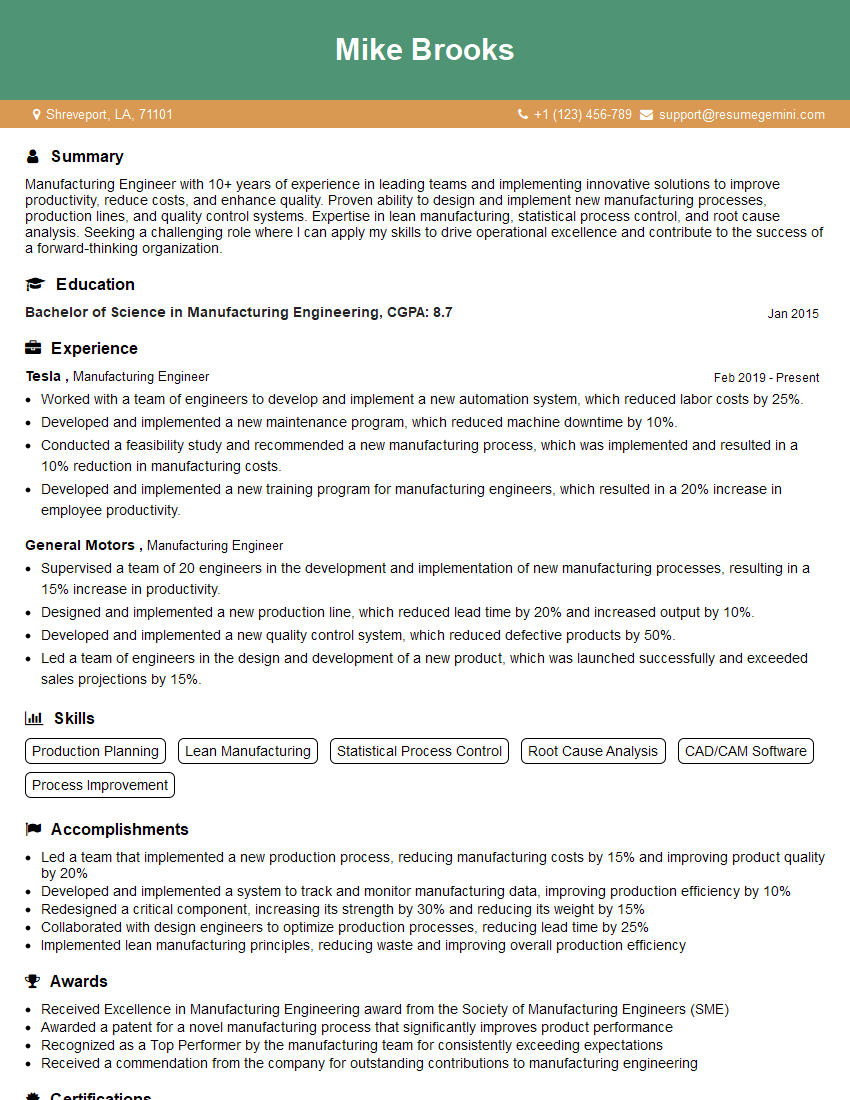
Manufacturing Engineer Resume Sample
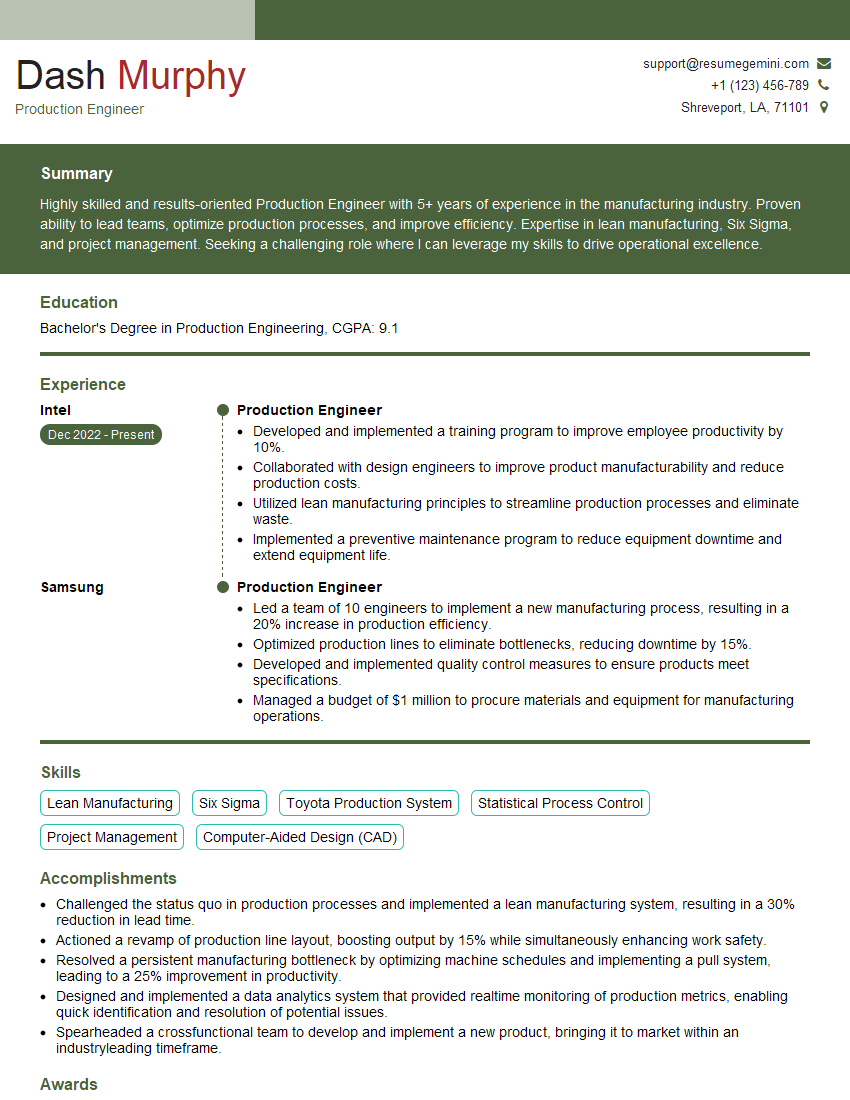
Production Engineer Resume Sample
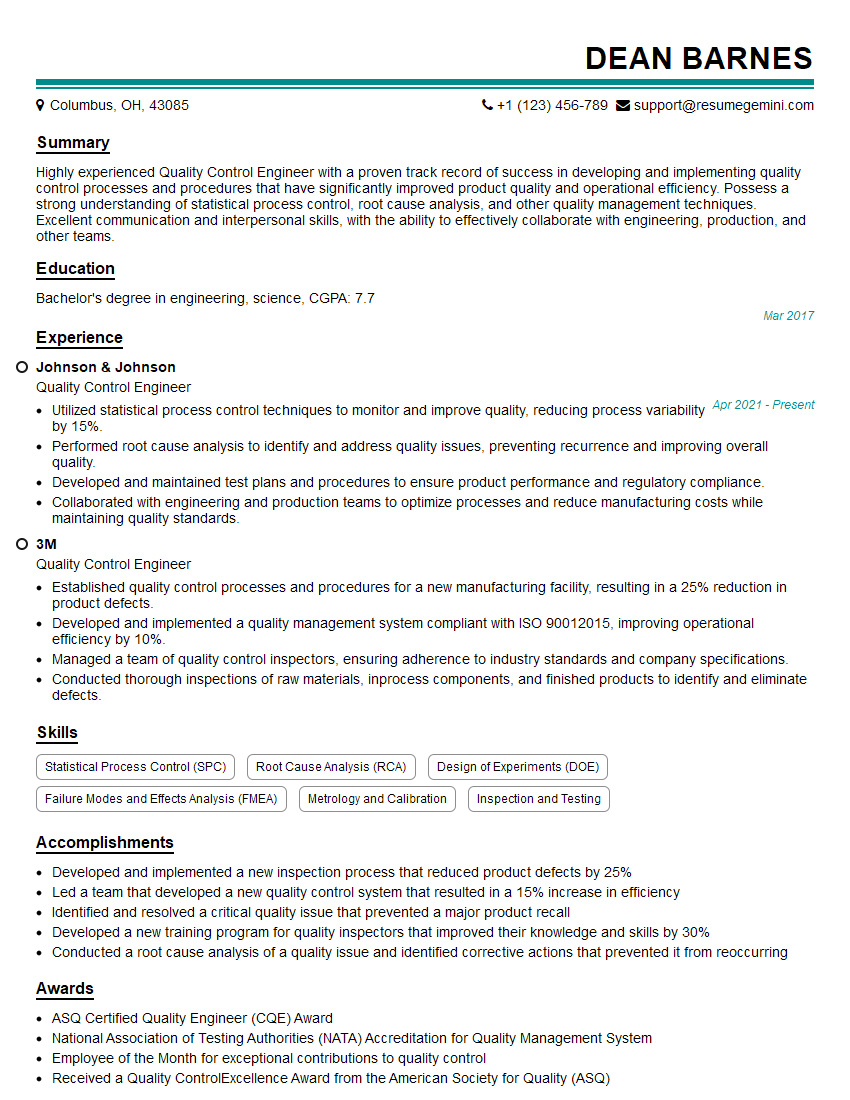
Quality Control Engineer Resume Sample

Tooling Engineer Resume Sample
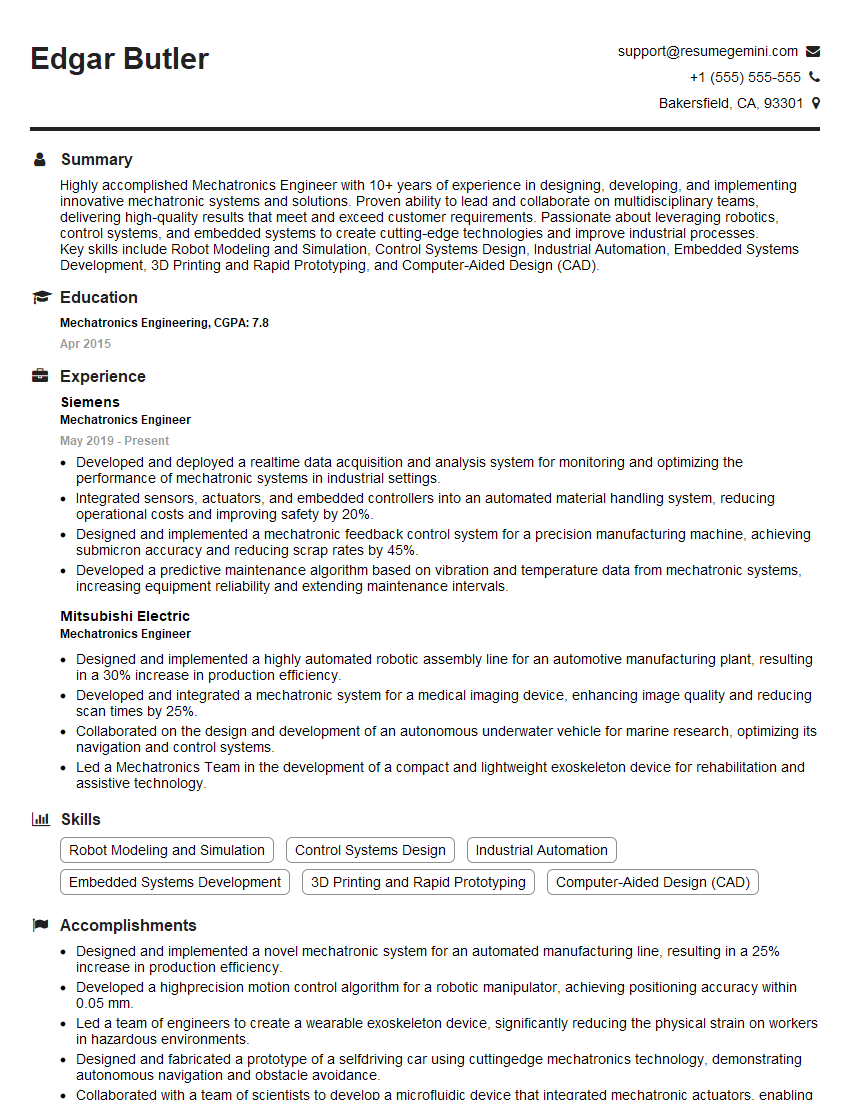
Mechatronics Engineer Resume Sample

Robotics Engineer Resume Sample
Automation Technician Resume Sample
Robotics Technician Resume Sample

Manufacturing Technician Resume Sample
- Operations Manager
- Production Manager
- Manufacturing Manager
- Quality Control Supervisor
- Production Supervisor
- Engineering Manager
- Project Engineer
- Process Engineer
- Automation Engineer
- Design Engineer
- Maintenance Engineer
- Industrial Engineer
- Manufacturing Engineer
- Production Engineer
- Quality Control Engineer
- Tooling Engineer
- Mechatronics Engineer
- Robotics Engineer
- Automation Technician
- Robotics Technician
- Manufacturing Technician
Explore more articles
Users Rating of Our Blogs
Share Your Experience
We value your feedback! Please rate our content and share your thoughts (optional).
What Readers Say About Our Blog
Very informative content, great job.
good