The right preparation can turn an interview into an opportunity to showcase your expertise. This guide to Agile Value Delivery interview questions is your ultimate resource, providing key insights and tips to help you ace your responses and stand out as a top candidate.
Questions Asked in Agile Value Delivery Interview
Q 1. Explain the core principles of Agile Value Delivery.
Agile Value Delivery focuses on maximizing the value delivered to the customer throughout the software development lifecycle. It prioritizes iterative development, frequent feedback loops, and continuous improvement. The core principles are built around collaboration, flexibility, and a customer-centric approach.
- Individuals and interactions over processes and tools: Strong teams and effective communication are prioritized above rigid processes.
- Working software over comprehensive documentation: Delivering functional software is more important than extensive, potentially outdated, documentation.
- Customer collaboration over contract negotiation: Continuous engagement with the customer ensures alignment with their needs and expectations.
- Responding to change over following a plan: Agile embraces change and adapts to evolving requirements throughout the project.
Think of it like building with Lego: instead of meticulously planning every brick before starting, you build in iterations, constantly testing and adjusting based on how the structure is coming together and feedback from your ‘customer’ (imagine you’re building a castle for a child, and they constantly give you new ideas!).
Q 2. Describe your experience with different Agile frameworks (Scrum, Kanban, XP).
I have extensive experience with Scrum, Kanban, and Extreme Programming (XP). In my previous role, we utilized Scrum for a large-scale e-commerce project. We used sprints to deliver incremental functionality, utilizing daily stand-ups, sprint reviews, and retrospectives. This helped us to maintain transparency and adapt to changing business needs. Later, for a smaller team tasked with maintaining existing software, Kanban proved more effective due to its flexibility. The Kanban board allowed us to visualize workflow, identify bottlenecks, and prioritize tasks based on urgency and value. Finally, in a project requiring extremely high-quality code, we integrated elements of XP, such as test-driven development (TDD), pair programming, and continuous integration.
For example, in the Scrum project, we found that sprint reviews, involving both the development team and stakeholders, were crucial to gathering valuable feedback which informed future sprints. This allowed us to adapt quickly to evolving market demands and incorporate the feedback into successive releases.
Q 3. How do you identify and prioritize value in an Agile context?
Identifying and prioritizing value in Agile is a collaborative process. It involves understanding the customer’s needs, mapping those needs to user stories, and estimating their business value. Techniques like MoSCoW (Must have, Should have, Could have, Won’t have) or story point estimation combined with value scoring help prioritize stories. We often use a value-vs-effort matrix to visualize the trade-offs and focus on high-value, low-effort tasks first. This is an iterative process; we regularly reassess priorities throughout the project based on feedback and market changes.
For example, in a recent project, we used a weighted scoring system where we assigned weights based on factors such as revenue generation, customer satisfaction, and risk mitigation. This allowed us to prioritize features based on a holistic understanding of their overall business impact.
Q 4. What are some common challenges in delivering value using Agile, and how have you overcome them?
Common challenges include scope creep, unclear requirements, siloed teams, and resistance to change. To overcome scope creep, we emphasize clear definitions of ‘done,’ timeboxing sprints, and a robust backlog grooming process. Unclear requirements are mitigated through close collaboration with the customer, frequent feedback sessions, and prototyping. Siloed teams are addressed through cross-functional teams, regular communication channels, and collaborative tools. Resistance to change is overcome through education, active engagement of team members in the change process, and by demonstrating the benefits of Agile methodologies.
In one instance, we faced significant resistance from a team accustomed to waterfall methodologies. We addressed this by demonstrating the benefits of Agile through small, incremental successes, gradually building trust and confidence in the new approach. We also offered training and actively solicited feedback, demonstrating our commitment to their concerns.
Q 5. How do you measure the success of Agile value delivery?
Success in Agile Value Delivery is measured through a combination of quantitative and qualitative metrics. Quantitative metrics include velocity, cycle time, defect rate, customer satisfaction scores (CSAT), and return on investment (ROI). Qualitative metrics include team morale, stakeholder satisfaction, and the overall quality of the delivered product. A balanced scorecard approach, considering both quantitative and qualitative factors, provides a holistic view of success.
For example, we regularly track velocity to understand the team’s capacity and identify potential bottlenecks. Similarly, CSAT surveys give us direct feedback on customer satisfaction with the delivered functionality.
Q 6. Explain the concept of a value stream and how it relates to Agile.
A value stream is the sequence of all actions (both value-adding and non-value-adding) required to deliver a product or service to a customer. In Agile, understanding the value stream is crucial because it helps identify bottlenecks, waste, and areas for improvement. By mapping the value stream, we can visualize the entire process from concept to delivery, highlighting inefficiencies and opportunities for optimization. Lean principles are frequently incorporated to eliminate waste and improve the flow of value.
Imagine ordering a pizza. The value stream includes placing the order, preparing the ingredients, baking the pizza, delivering it, and the customer receiving it. Mapping this would highlight potential bottlenecks, such as long wait times for delivery or slow order processing.
Q 7. How do you facilitate collaboration and communication within an Agile team?
Facilitating collaboration and communication is central to successful Agile Value Delivery. This involves establishing clear communication channels (e.g., daily stand-ups, sprint reviews, retrospectives), utilizing collaborative tools (e.g., Jira, Confluence), promoting a culture of open communication and feedback, and fostering a team environment where everyone feels comfortable contributing.
Techniques like regular retrospectives, where the team reflects on its processes and identifies areas for improvement, are vital in maintaining this collaborative environment. Likewise, using visual management tools such as Kanban boards help to keep everyone informed and aligned on the progress of work.
Q 8. Describe your experience with Agile estimation techniques (e.g., story points, T-shirt sizing).
Agile estimation is crucial for planning and delivering value. I’ve extensively used story points and T-shirt sizing, each with its strengths and weaknesses. Story points are relative estimations representing the complexity and effort of a user story, typically using a Fibonacci sequence (1, 2, 3, 5, 8, 13…). This avoids the pitfalls of precise time estimations, which are notoriously inaccurate. For instance, a story requiring simple database updates might receive a ‘3’ while a complex integration task gets an ‘8’. T-shirt sizing (XS, S, M, L, XL) provides a simpler, more high-level estimation, useful for early-stage projects or when precise numbers are less critical. I’ve found that combining both techniques can be effective; using T-shirt sizing for initial rough estimations and refining with story points as the project progresses. In one project, we initially used T-shirt sizing to quickly prioritize features, then transitioned to story points for detailed sprint planning after a better understanding of the product emerged. This two-pronged approach allowed us to manage uncertainty and balance speed with accuracy.
Q 9. How do you handle conflicts within an Agile team?
Conflict is inevitable in any team environment, and Agile teams are no exception. My approach centers on fostering open communication and collaboration. First, I aim to create a safe space where team members feel comfortable expressing their opinions without fear of judgment. When conflict arises, I facilitate a structured discussion focusing on the issue, not the individuals involved. This often involves using active listening techniques to ensure everyone feels heard and understood. We then collaboratively brainstorm solutions, keeping in mind the overall project goals and team values. Sometimes, a simple compromise is all that’s needed. Other times, a more formal mediation process may be required. In one case, two developers clashed over the best approach to a technical problem. Instead of imposing a solution, I encouraged them to present their arguments, highlighting the pros and cons of each approach. They ultimately reached a hybrid solution that leveraged the strengths of both methods, leading to a superior outcome. The key is focusing on problem-solving and finding mutually acceptable solutions, building stronger team relationships in the process.
Q 10. How do you ensure continuous improvement within an Agile team?
Continuous improvement is at the heart of Agile. I ensure this by implementing several key practices. Firstly, regular retrospectives (discussed in more detail below) are crucial. Secondly, I encourage experimentation and learning from failures. We treat mistakes not as setbacks but as opportunities for growth. We document lessons learned and proactively address recurring issues. Thirdly, I actively seek feedback from stakeholders and team members, using various methods like surveys, one-on-one conversations, and daily stand-up meetings. This feedback informs our process improvements. Finally, we regularly review and adapt our processes based on the insights gained. In a previous project, we identified a bottleneck in our testing phase. Through experimentation with different testing approaches and tools, we ultimately streamlined the process, reducing testing time by 20%, which directly contributed to faster value delivery.
Q 11. Describe your experience with Agile retrospectives.
Agile retrospectives are crucial meetings held at the end of each iteration (sprint) to reflect on the past period and identify areas for improvement. I facilitate these meetings using a structured approach, ensuring everyone’s voice is heard. We typically follow a process involving: setting the stage, gathering data (using techniques like the ‘Start, Stop, Continue’ method), generating insights, creating action items, and agreeing on commitments. It’s vital to maintain a blame-free environment, focusing on the processes and not individual mistakes. For example, in one retrospective, the team identified a communication gap between the developers and designers. This led to an action item to improve daily communication practices, using a shared online board to update each other on progress. The focus is on collaborative problem-solving and building a culture of continuous learning.
Q 12. How do you manage dependencies between Agile teams?
Managing dependencies between Agile teams requires proactive communication and coordination. We use several techniques, including regular cross-team meetings to discuss progress, identify potential roadblocks, and resolve conflicts early. We also rely heavily on clear communication channels, such as shared task boards or project management tools, to maintain transparency and visibility across teams. Defining clear interfaces and dependencies up front is essential. In one instance, we faced delays because one team’s output was a critical input for another. By establishing regular checkpoints and creating a shared Kanban board visualizing the dependencies, we were able to proactively address delays and ensure timely delivery.
Q 13. Explain the role of feedback in Agile value delivery.
Feedback is the lifeblood of Agile value delivery. It allows us to validate our assumptions, identify areas needing improvement, and ensure we’re building the right product in the right way. We actively seek feedback throughout the entire development process, from initial user stories to final product demos. This feedback comes from various sources, including users, stakeholders, and the development team itself. We use different methods to gather feedback, such as user interviews, usability testing, surveys, and daily stand-up meetings. Acting on this feedback is crucial. Ignoring feedback can lead to costly mistakes and unmet user needs. In one case, early user feedback revealed a critical usability issue in the product design. By addressing this issue early in the development process, we avoided significant rework and ensured a better user experience.
Q 14. How do you handle changing priorities in an Agile environment?
Changing priorities are a reality in any dynamic environment. Agile’s iterative nature allows us to adapt to these changes effectively. We prioritize work items using various techniques, such as MoSCoW prioritization (Must have, Should have, Could have, Won’t have) or value-based prioritization. The product owner plays a key role in prioritizing features, ensuring alignment with business goals. Transparency is critical; the entire team needs to understand why priorities have shifted. We re-plan accordingly during sprint planning or utilize techniques such as backlog refinement to adjust the upcoming sprints. The key is flexibility and effective communication, ensuring the team remains focused on delivering value, even with changing circumstances. In one project, we had a major shift in market demands requiring us to re-prioritize features. We successfully adapted our sprint backlog, ensuring we still met critical deadlines while delivering value aligned with the new market needs.
Q 15. What are your experiences with Agile tools (Jira, Trello, Azure DevOps)?
My experience with Agile tools spans several years and various projects. I’m proficient in Jira, Trello, and Azure DevOps, each offering unique strengths depending on project needs and team preferences. Jira, for example, is excellent for larger projects with complex workflows and robust issue tracking. Its customizability and reporting features are invaluable for managing sprints and tracking progress against targets. I’ve used Jira extensively to manage backlogs, assign tasks, track sprint progress with burn-down charts, and generate comprehensive reports for stakeholders. Trello, with its Kanban-based approach, is ideal for visualizing workflows and for smaller, less complex projects where simplicity is key. Its drag-and-drop interface makes it intuitive and easy for the entire team to use and understand. Finally, Azure DevOps offers a comprehensive suite of tools integrating development, testing, and deployment, making it a powerful choice for end-to-end project management. I’ve used it for version control (Git), continuous integration/continuous deployment (CI/CD) pipelines, and test management. The selection of the right tool depends critically on the project’s scale, complexity, and the team’s familiarity with specific platforms.
Career Expert Tips:
- Ace those interviews! Prepare effectively by reviewing the Top 50 Most Common Interview Questions on ResumeGemini.
- Navigate your job search with confidence! Explore a wide range of Career Tips on ResumeGemini. Learn about common challenges and recommendations to overcome them.
- Craft the perfect resume! Master the Art of Resume Writing with ResumeGemini’s guide. Showcase your unique qualifications and achievements effectively.
- Don’t miss out on holiday savings! Build your dream resume with ResumeGemini’s ATS optimized templates.
Q 16. How do you balance speed and quality in Agile development?
Balancing speed and quality in Agile development is a constant tightrope walk. It’s not about choosing one over the other; rather, it’s about finding the optimal balance. We achieve this through a combination of strategies. Firstly, continuous testing and integration are paramount. By testing early and often, we catch bugs and regressions quickly, preventing them from snowballing into larger problems later, which would slow us down considerably. Secondly, well-defined acceptance criteria are critical. Clear expectations of what ‘done’ means for a user story ensure that the delivered increment satisfies the business needs without needing costly rework. Thirdly, prioritization is key. Focusing on the highest-value features first maximizes impact while mitigating the risk of wasting time on lower-priority items. Finally, automation wherever possible is a game changer. Automating repetitive tasks like testing and deployments frees up the team to concentrate on higher-value activities, leading to both faster delivery and higher quality. A practical example: in one project, we integrated automated UI testing into our CI/CD pipeline, resulting in faster feedback loops and a significant reduction in defects found in later stages.
Q 17. Describe your experience with risk management in an Agile project.
Risk management in Agile is an ongoing, iterative process, not a one-time event. We employ a proactive approach, identifying and mitigating risks throughout the project lifecycle. Regular risk poker sessions help the team collaboratively assess and prioritize potential issues. We document these risks in a risk register, assigning owners and mitigation strategies. For example, a risk might be a dependency on a third-party library that’s prone to bugs. Our mitigation strategy would involve exploring alternative libraries, creating contingency plans, or building in sufficient buffer time to deal with potential delays. Regular sprint retrospectives provide an opportunity to review the effectiveness of our risk management strategies, learning from past experiences and adapting our approach accordingly. We also incorporate buffer time into our sprint plans to absorb unexpected setbacks. This approach allows us to address risks proactively and prevents them from significantly impacting the project timeline or quality.
Q 18. How do you define and measure ‘done’ in an Agile context?
Defining ‘done’ in Agile is crucial for transparency and accountability. It’s not enough to simply complete the coding; ‘done’ means the user story meets all its acceptance criteria. This typically includes functional correctness, performance benchmarks, security considerations, thorough testing, and documentation. We use a Definition of Done (DoD)—a checklist—that’s agreed upon by the entire team. The DoD ensures everyone understands the quality standards and what constitutes a completed user story. For instance, our DoD might stipulate: ‘Code is peer-reviewed, unit tests pass, integration tests pass, automated deployment is successful, and updated documentation is available.’ Measuring ‘done’ involves tracking the completion of each item in the DoD for each user story. This data is then used to monitor sprint progress and identify potential roadblocks.
Q 19. How do you incorporate customer feedback into the Agile development process?
Incorporating customer feedback is vital for building truly valuable software. We use several techniques to achieve this. Regular sprint demos and show-and-tells allow us to showcase progress and gather feedback directly from customers or stakeholders. These sessions are invaluable for early detection of misalignments between the product and customer expectations. We also use feedback forms, surveys, and usability testing to collect data on user experiences and identify areas for improvement. This feedback directly influences the prioritization of tasks in the product backlog. We also encourage direct communication channels such as daily stand-ups or dedicated customer support channels to promptly address any issues or suggestions. For example, feedback from a sprint demo might reveal that a particular feature is not as intuitive as anticipated. This information will be used to adjust the design and development of subsequent iterations.
Q 20. Explain your understanding of Agile metrics and reporting.
Agile metrics and reporting provide insights into team performance, project progress, and product quality. We use various metrics, including velocity (a measure of the team’s capacity to complete work), cycle time (the time it takes to complete a user story), defect density (the number of defects found per unit of code), and customer satisfaction (measured through surveys and feedback). Reporting focuses on clear, concise visualizations of key metrics. We use burn-down charts to track sprint progress against targets and cumulative flow diagrams to visualize the flow of work through the development process. Reports are tailored to the audience. For example, a daily stand-up might focus on current progress and roadblocks, while a weekly report to management might highlight overall progress against milestones and key risks. These metrics and reports are not simply for management; they inform the team’s decision-making, enabling continuous improvement.
Q 21. What are some techniques for visualizing work in progress (WIP) in Agile?
Visualizing Work in Progress (WIP) is crucial for identifying bottlenecks and improving team efficiency. Several techniques are effective. The most common is using a Kanban board, either physical or digital, which allows the team to visually track the progress of tasks through different stages of development. Another technique is using swimlane diagrams to show the flow of work across different teams or departments. Task boards, often used in conjunction with Kanban, provide a detailed view of individual tasks and their current status. Cumulative flow diagrams graphically illustrate the flow of work through the system, highlighting areas of congestion and allowing for data-driven improvements to workflow. Tools like Jira and Trello offer built-in Kanban boards and other visualization features. In a recent project, we used a physical Kanban board to improve transparency, allowing the team to quickly identify where work was getting stuck and proactively address bottlenecks.
Q 22. How do you identify and mitigate impediments to Agile value delivery?
Identifying and mitigating impediments to Agile value delivery is crucial for project success. It’s like clearing a path for a train – obstacles on the tracks will derail progress. I approach this systematically, employing a combination of proactive measures and reactive problem-solving.
- Proactive Identification: This involves regularly using techniques like daily stand-ups, sprint reviews, and retrospectives. These meetings provide a forum for team members to openly communicate challenges. I also encourage the use of visual tools like Kanban boards to identify bottlenecks visually. For example, if a task consistently sits in the ‘In Progress’ column for extended periods, it suggests an impediment.
- Reactive Problem-Solving: When an impediment arises, I facilitate a structured problem-solving process. This typically includes defining the problem clearly, brainstorming potential solutions, evaluating their feasibility and impact, and assigning ownership for implementing the chosen solution. We document the issue, the resolution, and any lessons learned in our team’s knowledge base to prevent recurrence.
- Impediment Examples and Solutions:
- Problem: Lack of access to a critical system. Solution: Liaise with IT to expedite access or find a workaround.
- Problem: Unclear requirements. Solution: Schedule a clarification session with stakeholders.
- Problem: Team member burnout. Solution: Adjust workload distribution, provide additional support or training, encourage breaks and well-being activities.
By consistently addressing impediments, we maintain a smooth workflow, delivering value predictably and efficiently.
Q 23. Describe your experience with scaling Agile (e.g., SAFe, LeSS).
I have extensive experience scaling Agile using both SAFe (Scaled Agile Framework) and LeSS (Large-Scale Scrum). My experience shows that scaling Agile requires a tailored approach, as a one-size-fits-all solution rarely works.
In my previous role, we adopted SAFe to manage a large, complex software development project involving multiple teams and stakeholders. SAFe’s structure provided a clear framework for organizing and coordinating work across various Agile Release Trains (ARTs). We utilized Program Increment (PI) planning to align the work of different teams and ensure dependencies were managed effectively. The regular synchronization points in SAFe, such as PI Planning and System Demos, were invaluable in maintaining transparency and alignment.
In another project, we opted for LeSS because of its focus on simplicity and self-organization. LeSS emphasizes less formal structure and relies on strong cross-team collaboration. We used a two-team approach where both teams worked on the same product backlog, fostering a culture of shared understanding and collective ownership. The focus on simplifying processes and empowerment of the team proved very efficient in delivering value quickly.
The choice between frameworks like SAFe and LeSS depends heavily on the organization’s context, size, and complexity. A key takeaway from my experiences is the importance of adapting and customizing the framework to fit the specific needs of the project and team, rather than rigidly adhering to a specific methodology.
Q 24. How do you ensure alignment between business goals and Agile development efforts?
Aligning business goals with Agile development efforts is paramount. It’s like aiming a ship – without a clear destination, you’ll drift aimlessly. I achieve this alignment through several key practices:
- Clearly Defined Business Goals: The process begins with a thorough understanding of the overarching business objectives. This typically involves engaging with stakeholders, analyzing market trends, and identifying key performance indicators (KPIs) that will measure success.
- Collaborative Backlog Refinement: The product backlog should reflect the business goals directly. Involving stakeholders actively in backlog refinement sessions ensures that user stories are aligned with business priorities and acceptance criteria are clear.
- Regular Reporting and Demonstrations: Frequent demonstrations of working software provide valuable feedback and ensure the team remains focused on delivering value that meets the business needs. Regular progress reports should highlight the connection between development activities and business outcomes.
- Use of Business Value Metrics: Prioritizing user stories based on business value, using techniques like story points and MoSCoW analysis, helps ensure that the most impactful features are delivered first.
By fostering strong communication and collaboration, and employing these strategies, I ensure that development efforts directly contribute to achieving organizational objectives.
Q 25. Explain the role of technical debt in Agile development and how to manage it.
Technical debt, in essence, is the implied cost of rework caused by choosing an easy solution now instead of using a better approach that would take longer. Think of it like taking a shortcut – it saves time initially but might lead to problems down the road. In Agile development, managing technical debt is vital for long-term sustainability.
Managing Technical Debt:
- Identification: Regularly assess the codebase for areas needing improvement. This could involve code reviews, static analysis tools, and technical debt tracking systems.
- Prioritization: Not all technical debt is equal. Prioritize addressing debt that impacts functionality, maintainability, or scalability the most. Use a risk assessment matrix to weigh the potential consequences of inaction.
- Planning: Allocate time in sprints to address prioritized technical debt. This could involve refactoring code, improving testing, or enhancing documentation.
- Transparency: Keep stakeholders informed about the technical debt and the plan for addressing it. This builds trust and avoids surprises.
Example: If a team uses a quick-and-dirty solution for a particular feature instead of building a more robust, scalable one, that’s technical debt. This will later require more time for refactoring during maintenance. It’s critical to find a balance between short-term speed and long-term maintainability in managing technical debt effectively. This often involves open communication and prioritization of debt based on risk and impact.
Q 26. What is your experience with Agile testing practices?
My experience with Agile testing practices encompasses various methodologies, including Test-Driven Development (TDD), Behavior-Driven Development (BDD), and Acceptance Test-Driven Development (ATDD). I am proficient in implementing different testing levels, from unit and integration testing to system and user acceptance testing (UAT).
TDD emphasizes writing automated tests before writing the actual code. This ensures that the code meets the specified requirements from the outset. BDD focuses on defining tests from the perspective of the user or stakeholder, using a clear and understandable language. ATDD involves collaboration between developers, testers, and stakeholders to define acceptance criteria before development starts.
I also have experience with implementing Continuous Integration/Continuous Delivery (CI/CD) pipelines which automate testing throughout the development lifecycle. Automated tests play a vital role in enabling continuous feedback and ensuring a faster release cycle. I’ve used tools like Selenium, JUnit, and pytest to implement automated testing. I strongly advocate for shifting left testing (performing tests earlier in the development cycle) and implementing comprehensive test automation.
Q 27. How do you foster a culture of continuous learning and improvement in an Agile team?
Cultivating a culture of continuous learning and improvement in an Agile team is essential for its long-term success. It’s like nurturing a garden – consistent care leads to growth. I use various strategies to foster this culture:
- Regular Retrospectives: These dedicated sessions, held after each sprint, encourage open reflection on what went well, what could be improved, and how to implement positive changes.
- Knowledge Sharing: Creating opportunities for team members to share their knowledge and expertise, through brown bag sessions, pair programming, or mentoring, helps build a learning environment.
- Experimentation and Innovation: Encouraging the team to experiment with new techniques and technologies and embrace a culture of experimentation supports continuous improvement. This could involve testing different development methodologies or tools.
- External Training and Conferences: Supporting team members’ participation in external training, conferences, or workshops provides them with fresh perspectives and expands their skillsets.
- Feedback Mechanisms: Establishing regular feedback loops, both peer-to-peer and from stakeholders, facilitates continuous learning and improvement. I make sure the feedback is constructive and actionable.
These strategies, implemented consistently, will cultivate a culture that values continuous learning and improvement.
Q 28. Describe a situation where you had to make a difficult decision regarding Agile value delivery. What was the outcome?
In a previous project, we faced a critical situation nearing the end of a sprint. A significant bug was discovered that impacted a core feature. We had two options: release with the bug and risk damaging our reputation, or postpone the release and potentially miss a crucial deadline. This was a tough decision because both options carried significant consequences.
After carefully weighing the risks and benefits, we opted to postpone the release. We prioritized fixing the bug, understanding that prioritizing quality over speed in this instance was the best approach. We used the extra time to implement robust tests and ensure the issue wouldn’t recur. We communicated transparently with stakeholders, providing clear reasons for the delay and managing their expectations effectively.
The outcome was positive. While we missed the initial deadline, we avoided a potentially catastrophic release. The quality of the final product improved, and stakeholder trust increased due to our transparency and commitment to delivering a high-quality product. This experience reinforced the importance of prioritizing quality and open communication in Agile value delivery, even when facing difficult trade-offs.
Key Topics to Learn for Agile Value Delivery Interview
- Agile Principles and Values: Understand the core tenets of the Agile Manifesto and how they guide value delivery. Consider how these principles translate into practical decision-making.
- Scrum Framework: Master the roles (Product Owner, Scrum Master, Development Team), events (Sprint Planning, Daily Scrum, Sprint Review, Sprint Retrospective), and artifacts (Product Backlog, Sprint Backlog, Increment). Practice applying Scrum in different contexts.
- Kanban Methodology: Learn the principles of visualizing workflow, limiting work in progress (WIP), and managing flow. Be prepared to discuss its advantages and disadvantages compared to Scrum.
- Value Stream Mapping: Understand how to identify and eliminate waste in the value delivery process. Practice mapping a sample process and identifying areas for improvement.
- Estimation Techniques (Story Points, T-Shirt Sizing): Know different methods for estimating effort and complexity. Be ready to discuss the pros and cons of each approach and how to handle uncertainty.
- Risk Management and Mitigation: Understand how to identify, assess, and mitigate risks throughout the development lifecycle. Prepare examples from your experience.
- Metrics and Reporting: Familiarize yourself with key Agile metrics (e.g., velocity, cycle time, lead time) and how they can be used to track progress and identify areas for improvement. Be ready to discuss reporting techniques.
- Continuous Integration/Continuous Delivery (CI/CD): Understand the principles and benefits of CI/CD pipelines and their role in accelerating value delivery. Discuss your experience with relevant tools.
- Stakeholder Management: Discuss your approach to managing expectations and communication with different stakeholders (e.g., product owners, development teams, clients).
- Problem-Solving in Agile Environments: Be prepared to discuss how you approach challenges, such as resolving conflicts, managing dependencies, and adapting to changing priorities. Use the STAR method (Situation, Task, Action, Result) to structure your responses.
Next Steps
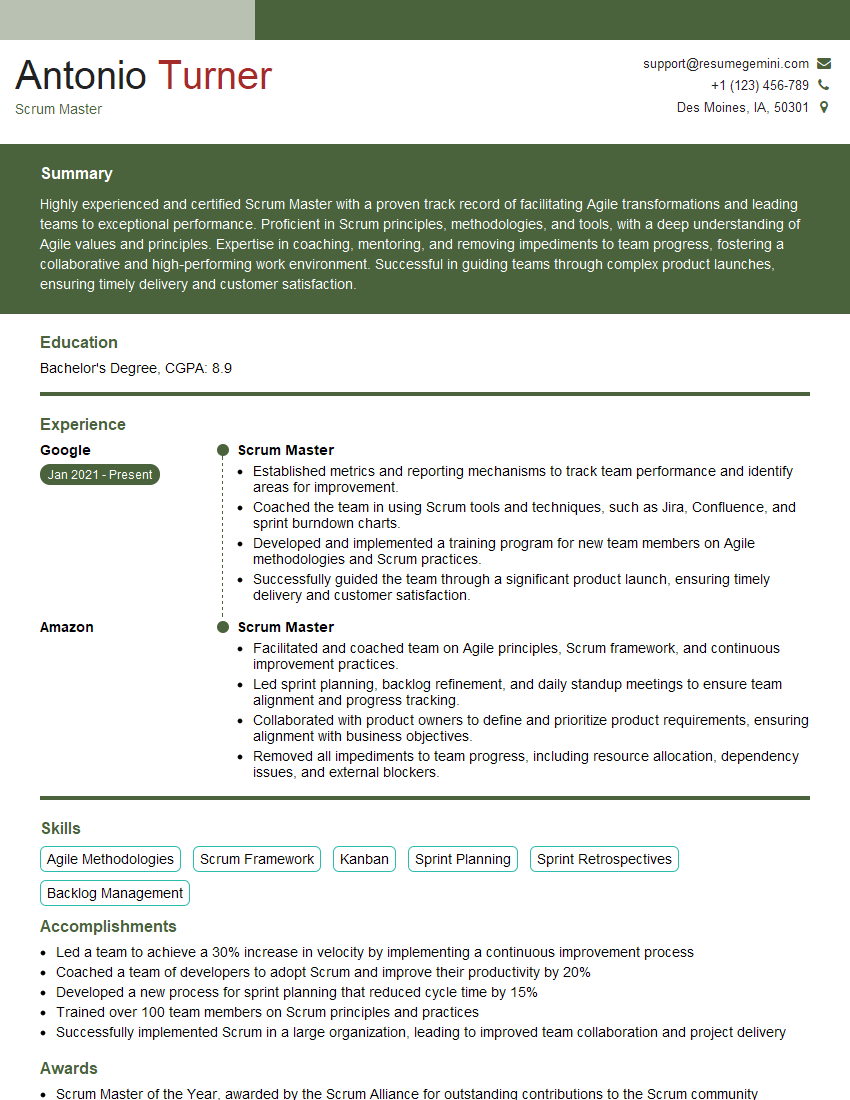
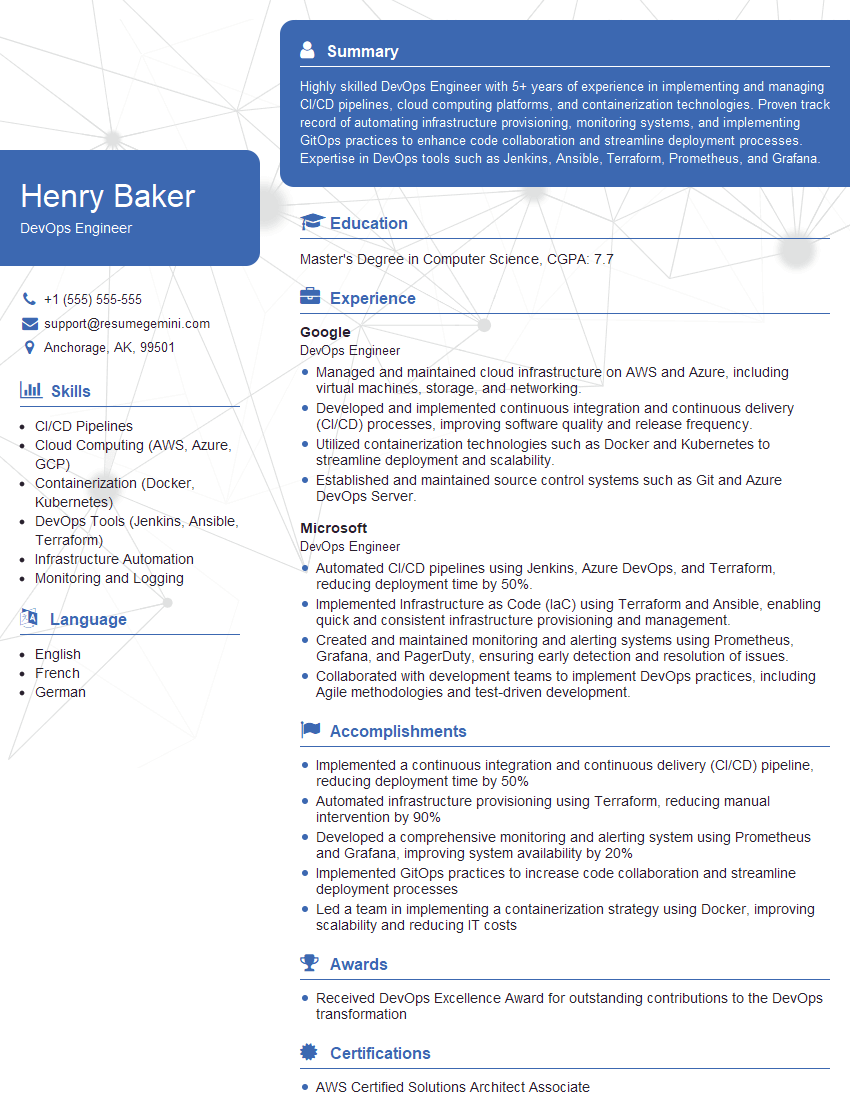
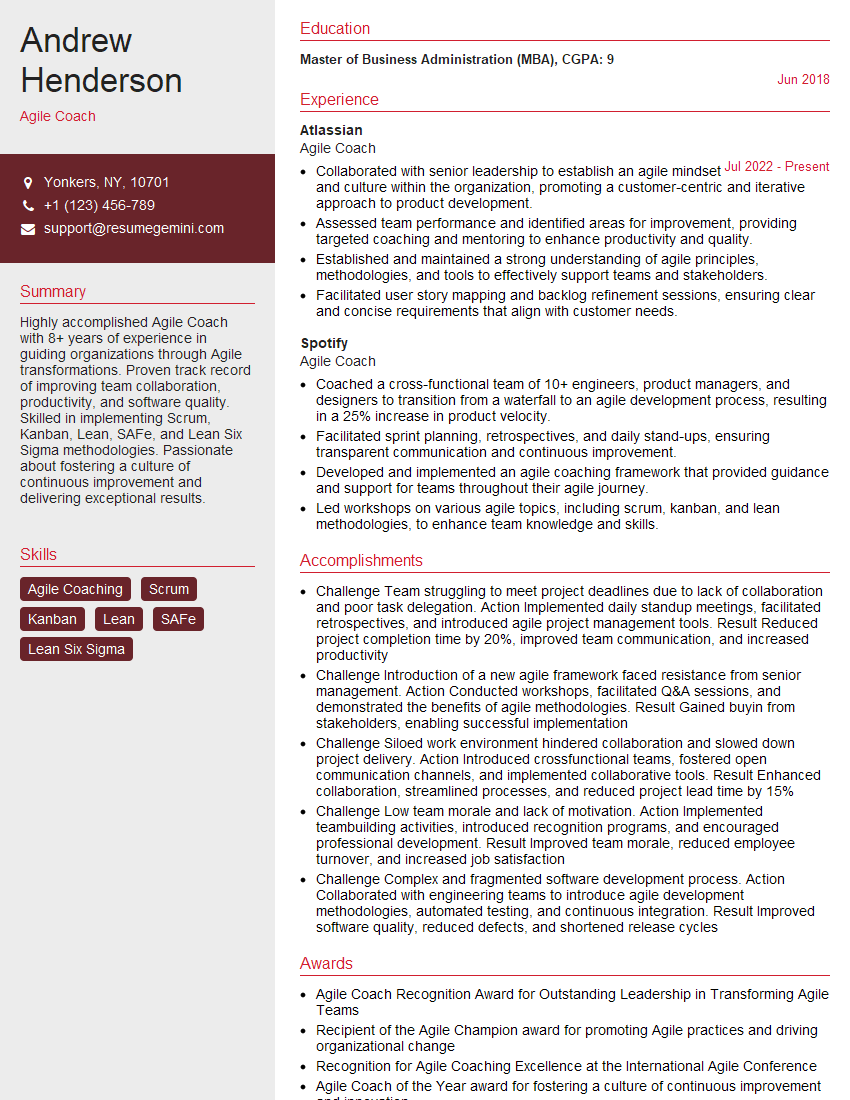
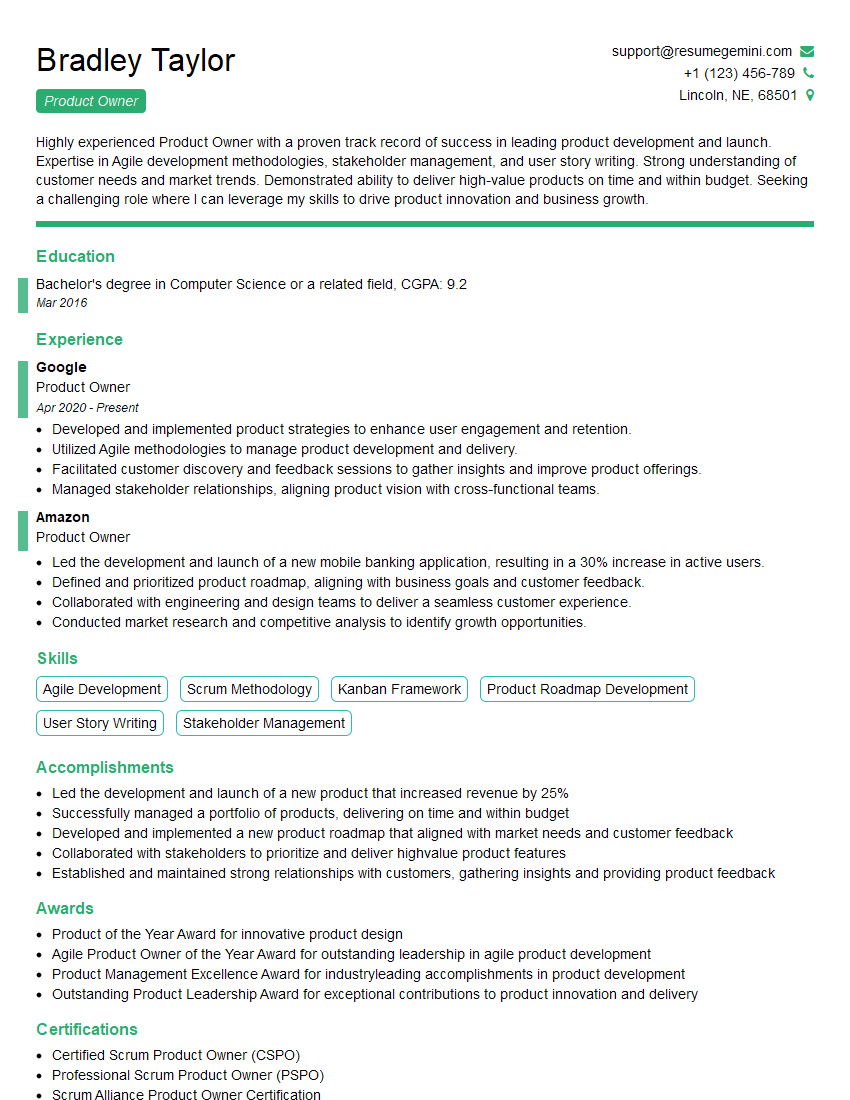
Mastering Agile Value Delivery significantly enhances your career prospects, opening doors to leadership roles and high-impact projects. An ATS-friendly resume is crucial for getting your application noticed. ResumeGemini is a trusted resource to help you craft a compelling and effective resume that highlights your Agile skills. We provide examples of resumes tailored specifically to Agile Value Delivery roles to help guide your creation.
Explore more articles
Users Rating of Our Blogs
Share Your Experience
We value your feedback! Please rate our content and share your thoughts (optional).
What Readers Say About Our Blog
Very informative content, great job.
good