Feeling uncertain about what to expect in your upcoming interview? We’ve got you covered! This blog highlights the most important Yaw and Pitch Control interview questions and provides actionable advice to help you stand out as the ideal candidate. Let’s pave the way for your success.
Questions Asked in Yaw and Pitch Control Interview
Q 1. Explain the difference between yaw, pitch, and roll.
Yaw, pitch, and roll are the three fundamental axes of rotation used to describe the orientation of an object in three-dimensional space. Imagine you’re sitting in a chair:
Yaw is the rotation around the vertical axis, like turning your head from side to side. Think of it as a compass heading; a positive yaw would be turning to the right.
Pitch is the rotation around the lateral axis, like nodding your head up and down. A positive pitch would be tilting your head upwards.
Roll is the rotation around the longitudinal axis, like tilting your head from shoulder to shoulder. A positive roll would be tilting your head to your right shoulder.
These three rotations allow complete description of any object’s orientation relative to a reference frame.
Q 2. Describe the principles of PID control in the context of yaw and pitch.
PID (Proportional-Integral-Derivative) control is a widely used feedback control strategy. In the context of yaw and pitch control, it aims to maintain a desired orientation by adjusting actuators (e.g., motors, thrusters). Let’s break down each component:
Proportional (P): The proportional term corrects the error directly. A larger error leads to a stronger corrective action. For example, if your drone is significantly off course in yaw, the proportional term would make a large corrective adjustment.
Integral (I): The integral term addresses persistent errors. It sums up the error over time and acts to eliminate steady-state error. Imagine your drone is drifting slightly; the integral term will slowly adjust to counteract the drift.
Derivative (D): The derivative term anticipates future error based on the rate of change of the error. This helps dampen oscillations and improve stability. If your drone is oscillating wildly, the derivative term reduces the oscillations by anticipating the overshoot and applying corrective actions.
The PID controller continuously calculates the error (difference between desired and actual yaw/pitch), combines the proportional, integral, and derivative terms, and sends this combined output to the actuators. The specific gains (Kp, Ki, Kd) for each term are tuned to achieve optimal performance, balancing responsiveness and stability. Tuning these gains often involves experimentation and iterative adjustments.
Q 3. How do you handle sensor noise and uncertainties in yaw and pitch control systems?
Sensor noise and uncertainties are inevitable in real-world yaw and pitch control systems. We mitigate these issues through several techniques:
Sensor Fusion: Combining data from multiple sensors (e.g., IMU, GPS, magnetometer) helps to reduce the impact of individual sensor errors. Algorithms like Kalman filtering are frequently used to optimally weigh the sensor data and estimate the true yaw and pitch angles.
Noise Filtering: Applying digital filters (e.g., moving average, Kalman filter) smooths out the noisy sensor readings before feeding them into the control algorithm. This reduces the responsiveness of the controller to transient noise spikes.
Robust Control Design: Robust control techniques design controllers that are less sensitive to parameter uncertainties and disturbances. This includes methods such as H-infinity control, LQR control, or sliding mode control.
Sensor Calibration: Regular calibration of sensors ensures accuracy and minimizes systematic errors.
The specific methods employed will depend on the application and the characteristics of the sensors and actuators.
Q 4. Explain the concept of feedback control in yaw and pitch stabilization.
Feedback control is crucial for yaw and pitch stabilization. It involves continuously measuring the current yaw and pitch angles, comparing them to the desired angles (the setpoint), and then adjusting actuators to minimize the difference (error). This creates a closed-loop system where the controller’s output is influenced by the system’s response.
For example, in an autonomous drone, the on-board sensors measure the current yaw and pitch. The controller compares these measurements to the desired angles from the navigation system. If there is a deviation, the controller adjusts the motor speeds to correct the yaw and pitch, ensuring the drone stays on the desired trajectory. Without feedback, the drone would be susceptible to external disturbances and drift significantly off course.
Q 5. Describe different methods for yaw and pitch angle measurement.
Several methods exist for yaw and pitch angle measurement:
Inertial Measurement Units (IMUs): IMUs contain accelerometers and gyroscopes to measure linear acceleration and angular velocity. However, IMU data is prone to drift over time; therefore, it’s often fused with other sensors.
Global Navigation Satellite Systems (GNSS): GNSS (e.g., GPS) provides position and velocity information, from which yaw and pitch can be estimated, though it’s less accurate for rapid maneuvers.
Magnetometers: These sensors measure the Earth’s magnetic field and can be used to estimate the yaw angle. However, accuracy can be affected by magnetic interference.
Vision Systems: Cameras coupled with computer vision algorithms can be used to estimate the orientation of a vehicle relative to the environment. This provides robust, albeit computationally expensive, orientation measurement.
The choice of measurement method depends on factors like accuracy requirements, cost, and computational constraints.
Q 6. What are the common challenges in designing yaw and pitch control systems?
Designing yaw and pitch control systems presents several challenges:
Non-linear dynamics: The dynamics of many vehicles (e.g., aircraft, drones) are highly non-linear, making linear control design difficult.
Coupled dynamics: Yaw, pitch, and roll are often coupled, meaning that a change in one axis affects the others. This coupling needs to be carefully considered in the controller design.
External disturbances: Wind gusts, waves (for marine vessels), or other external forces can significantly impact yaw and pitch, requiring robust control strategies.
Actuator limitations: Actuators have physical limitations (e.g., saturation, rate limits), which need to be considered to prevent instability.
Sensor noise and bias: As discussed earlier, sensor imperfections can degrade control performance.
Addressing these challenges often requires advanced control techniques, careful system modeling, and extensive testing.
Q 7. How do you design a robust control system that is insensitive to parameter variations?
Designing a robust control system that’s insensitive to parameter variations is crucial for reliable performance. Several techniques can achieve this:
Robust Control Theory: Techniques such as H-infinity control and LQR (Linear Quadratic Regulator) control explicitly consider uncertainties in the system model during the controller design process. These methods aim to minimize the impact of these uncertainties on the system performance.
Adaptive Control: Adaptive control algorithms continuously adjust their parameters based on the system’s response, compensating for parameter variations and disturbances. This involves online estimation of the unknown parameters and adjustment of controller gains.
Gain Scheduling: This involves designing multiple controllers for different operating conditions or parameter ranges and switching between them as needed. This can simplify the control design while maintaining robustness over a wider range of operating conditions.
Nonlinear Control: Methods like sliding mode control are less sensitive to model uncertainties compared to linear control methods. They can also handle nonlinear system dynamics more effectively.
The selection of the most appropriate technique depends on the specifics of the application, such as the level of uncertainty and the computational resources available.
Q 8. Explain the role of Kalman filtering in yaw and pitch estimation.
Kalman filtering is a powerful technique used to estimate the yaw and pitch angles of a system, especially when dealing with noisy sensor data. It’s essentially a sophisticated algorithm that combines predictions from a system model with actual measurements to produce an optimal estimate. Imagine you’re trying to track a ball thrown in the air – your model predicts its trajectory, but wind and other factors introduce errors. Kalman filtering uses these predictions and noisy measurements (e.g., from a camera) to refine the estimate of the ball’s position, minimizing the impact of noise.
In yaw and pitch estimation, the system model often incorporates the dynamics of the vehicle or object (e.g., rotational inertia, motor torques). The measurements come from sensors like gyroscopes (measuring angular rate) and accelerometers (measuring linear acceleration), which are inherently noisy. The Kalman filter intelligently weighs these predictions and measurements, producing a more accurate estimate of yaw and pitch than using either source alone. It’s particularly useful when dealing with sensor drift or intermittent sensor failures.
For example, in an autonomous drone, Kalman filtering combines gyroscope readings (prone to drift) with accelerometer and possibly GPS data (prone to noise and infrequent updates) to get a stable and accurate estimation of the drone’s orientation.
Q 9. Describe your experience with different control algorithms (e.g., LQR, MPC).
I have extensive experience with various control algorithms, including Linear Quadratic Regulator (LQR), Model Predictive Control (MPC), and PID controllers. LQR is a powerful method for designing optimal controllers for linear systems. I’ve used LQR to design robust yaw and pitch controllers for unmanned aerial vehicles (UAVs), focusing on minimizing control energy while ensuring stability. This involves defining a cost function that penalizes deviations from desired yaw and pitch angles and excessive control inputs.
MPC is particularly useful for systems with constraints, such as actuator saturation limits. I’ve applied MPC to control systems with complex dynamics, such as those involving coupled yaw and pitch motions, where the constraints need careful consideration. For instance, when working on a multirotor drone, MPC allows you to handle the limitations of the motor torque while still maintaining precise orientation control.
PID controllers are more intuitive and widely used for their simplicity. While less sophisticated than LQR or MPC, they are often sufficient for well-behaved systems, requiring minimal tuning if the system’s characteristics are well understood. I’ve used PID controllers successfully in numerous projects, demonstrating that their effectiveness stems from a sound understanding of the system and appropriate tuning methodologies.
Q 10. How do you tune a PID controller for optimal performance in yaw and pitch control?
Tuning a PID controller involves carefully adjusting its three parameters – Proportional (P), Integral (I), and Derivative (D) – to achieve optimal performance. The process is often iterative and involves balancing responsiveness, stability, and overshoot.
I usually start by tuning the proportional gain (Kp). A higher Kp leads to faster response but may introduce oscillations or instability. Next, the integral gain (Ki) addresses steady-state errors by accumulating the error over time. Too high a Ki can cause overshoot and oscillations, while too low a Ki results in slow error correction. Finally, the derivative gain (Kd) anticipates future errors based on the rate of change of the error, reducing overshoot and improving settling time. A high Kd can make the controller too sensitive to noise.
There are several tuning methods, such as Ziegler-Nichols, which provide initial estimates for the gains. However, I typically use a combination of these methods and empirical adjustments, observing the system’s response to different gain combinations. Simulation plays a key role in this iterative tuning process, allowing for experimentation without risking damage to the real system. Data logging and visualization tools are crucial for analyzing the system’s behavior and fine-tuning the controller parameters for optimal performance.
Q 11. Explain the concept of controllability and observability in the context of yaw and pitch.
Controllability and observability are fundamental concepts in control systems theory. A system is controllable if its state can be driven to any desired state within a finite time using available control inputs. In the context of yaw and pitch control, this means we can manipulate the yaw and pitch angles to any desired values using available actuators (e.g., motors, rudders). Lack of controllability implies limitations in the ability to control the system’s orientation.
Observability, on the other hand, refers to the ability to determine the system’s state from measurements. For yaw and pitch, this means we can estimate the current yaw and pitch angles and their rates accurately based on sensor data (e.g., from gyroscopes, accelerometers). Lack of observability means that some aspects of the system’s state cannot be determined from the available measurements, which can significantly affect control performance.
For example, if a system is uncontrollable because an actuator is broken, no control algorithm will be able to drive the system to the desired orientation. If a system is unobservable due to faulty sensors, the controller is blindly trying to control a system it cannot fully perceive, leading to potentially erratic behavior.
Q 12. How do you handle actuator saturation in yaw and pitch control systems?
Actuator saturation occurs when the control signal exceeds the physical limits of the actuators. In yaw and pitch control, this often means the motors can only provide a limited amount of torque or the control surfaces (e.g., rudders, ailerons) have limited deflection angles. This saturation can lead to performance degradation or even instability.
Several strategies are used to handle actuator saturation. One common approach is to use anti-windup mechanisms, which prevent the integral term in a PID controller from accumulating excessively when the actuators are saturated. This ensures that the controller doesn’t continue integrating the error beyond the actuator’s limits. Another effective technique is to use a constrained optimization approach within a model predictive control (MPC) framework. MPC inherently incorporates constraints into the optimization problem, ensuring that the control signals never violate actuator limitations.
Furthermore, careful design of the control law and appropriate selection of the control gains is also crucial for minimizing the likelihood of saturation. Using advanced control techniques like MPC can often push the boundaries of achievable performance in a constrained setting.
Q 13. Describe your experience with model-based design and simulation for yaw and pitch control.
Model-based design and simulation are essential parts of my workflow for yaw and pitch control system development. I typically use tools like MATLAB/Simulink to create detailed models of the system, incorporating the vehicle dynamics, sensor characteristics, and actuator limitations. These models help me to analyze the system’s behavior and design controllers before implementing them on the physical system. This significantly reduces the risk of instability or unexpected behavior in real-world testing.
For example, I might model the aerodynamic forces and moments acting on an aircraft, the motor dynamics, and the response of the sensors. The controller is then simulated within this model, allowing for extensive testing under various conditions, including disturbances and failures. Simulation enables efficient exploration of control algorithms and parameter tuning strategies before deployment, significantly decreasing time and cost.
By using these models and performing extensive simulations, we can uncover potential issues, test different design strategies, and optimize the control system before moving to the real-world implementation, which is far more costly and time-consuming.
Q 14. How do you verify and validate a yaw and pitch control system?
Verifying and validating a yaw and pitch control system involves a rigorous process to ensure that the system meets its performance requirements and behaves as expected in real-world conditions. Verification focuses on ensuring that the system is implemented correctly, matching its design specifications. Validation, on the other hand, confirms that the system satisfies the intended purpose and meets the user requirements.
Verification often involves code reviews, unit tests, and integration tests. These tests ensure that the software and hardware components interact correctly and that the control algorithms function as designed. Simulation plays a crucial role in verifying the controller’s behavior under various conditions.
Validation typically involves testing the system in a controlled environment and then in real-world scenarios. This might involve testing the system’s response to various inputs and disturbances in a laboratory setting, followed by flight tests in the case of an aircraft or drone. Rigorous data logging and analysis are crucial throughout the validation process. Metrics such as accuracy, responsiveness, stability, and robustness are carefully evaluated, and the results are compared against pre-defined requirements.
Furthermore, safety verification and failure mode analysis are conducted to determine the system’s response to critical failures. This includes evaluating the system’s ability to safely recover from sensor faults or actuator malfunctions.
Q 15. Explain your experience with different types of actuators used for yaw and pitch control (e.g., motors, hydraulics).
Actuator selection for yaw and pitch control is critical, and my experience encompasses a wide range of technologies. I’ve worked extensively with both electric motors (brushless DC motors, servo motors) and hydraulic actuators. The choice depends heavily on the specific application. For example, in smaller, lighter systems, like a camera gimbal, precise and responsive brushless DC motors are often preferred for their high accuracy and ease of control. Their control is typically achieved through Pulse Width Modulation (PWM) signals.
However, in larger systems requiring significant torque, such as the pitch control of a large wind turbine or the yaw mechanism of a ship’s positioning system, hydraulic actuators become necessary. Hydraulics provide immense power density, making them ideal for high-force applications. Their control is more complex, often involving proportional valves and feedback systems to regulate pressure and flow. I have experience designing and implementing control algorithms for both types of actuators, considering factors like power consumption, response time, and maintenance requirements.
- Electric Motors: I’ve used PID control loops extensively with encoders providing precise position feedback. This allows for accurate tracking of desired yaw and pitch angles.
- Hydraulic Actuators: My experience here includes using servo-valves controlled by proportional signals to manage fluid flow, combined with pressure sensors to provide feedback for closed-loop control. This requires careful consideration of system dynamics and potential for hydraulic leaks.
Career Expert Tips:
- Ace those interviews! Prepare effectively by reviewing the Top 50 Most Common Interview Questions on ResumeGemini.
- Navigate your job search with confidence! Explore a wide range of Career Tips on ResumeGemini. Learn about common challenges and recommendations to overcome them.
- Craft the perfect resume! Master the Art of Resume Writing with ResumeGemini’s guide. Showcase your unique qualifications and achievements effectively.
- Don’t miss out on holiday savings! Build your dream resume with ResumeGemini’s ATS optimized templates.
Q 16. Describe your experience with real-time control systems.
Real-time control is paramount in yaw and pitch control, demanding precise timing and rapid response to changing conditions. My experience centers on using embedded systems and real-time operating systems (RTOS) such as FreeRTOS and VxWorks. These systems provide deterministic timing and ensure that control algorithms execute within their required deadlines, crucial for stability and safety. For example, in a drone’s flight control system, a delay in processing sensor data could lead to instability or even a crash.
I am proficient in programming embedded systems in C and C++, and I have used various techniques to optimize control loop execution times, including interrupt handling, preemptive scheduling and memory management strategies. Moreover, I’ve extensively used data acquisition systems to capture and analyze real-time sensor readings, which allows for effective tuning of control algorithms. I understand the importance of minimizing latency and jitter in the feedback loop and have deployed methods to address such issues in my projects.
//Example code snippet (C++) illustrating a simple real-time control loop: while (true) { readSensorData(); // Read sensor values from ADC updateControlAlgorithm(); // Execute control algorithm sendActuatorCommands(); // Send commands to actuators delay(1); // Wait for a short time }Q 17. How do you handle disturbances and external forces in yaw and pitch control?
Handling disturbances and external forces is a critical aspect of robust yaw and pitch control. Imagine a drone flying in a gust of wind; the wind acts as an external disturbance that needs to be compensated for to maintain the desired orientation. I use a variety of techniques to mitigate these effects. The most common method is incorporating feedback control.
Feedback control uses sensors (e.g., gyroscopes, accelerometers, magnetometers) to measure the actual yaw and pitch angles and compare them to the desired values. The difference (the error) is then used to generate corrective commands to the actuators. My expertise also extends to using advanced control techniques such as:
- Feedforward Control: This anticipates disturbances based on a model of the system and the expected disturbances, reducing the error before it occurs. For example, predicting wind gusts based on weather data.
- Kalman Filtering: This technique combines sensor data with a model of the system to provide an optimal estimate of the state of the system, reducing noise and improving accuracy.
- Adaptive Control: This adjusts the control parameters online to compensate for changing system dynamics or unknown disturbances. This is especially useful in situations where the system parameters vary over time.
The choice of technique depends on factors such as the nature and magnitude of the disturbances and the requirements for accuracy and robustness.
Q 18. Explain the impact of nonlinearities on yaw and pitch control system design.
Nonlinearities are inherent in most yaw and pitch control systems. For instance, friction in actuators, saturation limits, and complex aerodynamic effects in applications like drones introduce nonlinearities. Ignoring these can lead to poor performance or instability. My approach involves using several strategies to address these challenges.
Firstly, I employ detailed system modeling, which incorporates these nonlinearities. This model can be used to design a controller that explicitly compensates for them. Secondly, I utilize nonlinear control techniques, such as feedback linearization or sliding mode control, specifically designed to handle nonlinearities effectively. For instance, feedback linearization transforms a nonlinear system into an equivalent linear one, making it easier to design a linear controller. Sliding mode control, on the other hand, is robust to uncertainties and disturbances and can be particularly useful in dealing with friction-induced nonlinearities.
Finally, gain scheduling is another technique I use, where controller gains are adjusted based on the operating point of the system. This adapts the controller to different operating regimes where nonlinearities have different impacts.
Q 19. Describe your experience with different control architectures (e.g., centralized, decentralized).
I have experience with both centralized and decentralized control architectures. The choice depends on factors such as system complexity, redundancy requirements, and computational limitations.
Centralized control uses a single controller to manage all actuators. This simplifies design and coordination, but it creates a single point of failure. If the central controller fails, the entire system is compromised. I have utilized this in applications where simplicity and low computational load are prioritized.
Decentralized control distributes control among multiple independent controllers, each managing a subset of the actuators. This approach increases robustness and fault tolerance. If one controller fails, the others can continue operating. I have utilized this architecture in complex systems, such as large robotic manipulators, where modularity and fault tolerance are crucial. For instance, in a multi-rotor drone, individual controllers might manage each motor independently, offering resilience in the case of individual motor failures.
Q 20. How do you ensure the safety and reliability of a yaw and pitch control system?
Safety and reliability are paramount. My approach employs a multi-layered strategy to ensure the system is both safe and reliable. Redundancy plays a key role – this could involve using multiple sensors or actuators to provide backup in case of failure. For instance, having backup gyroscopes to ensure accurate orientation measurement. I implement thorough testing, including simulations and real-world testing, to validate the design and identify potential failure points.
Fail-safe mechanisms are implemented to ensure the system enters a safe state in the event of a failure. For example, a drone might automatically land if a critical sensor fails. Furthermore, I adhere to relevant safety standards and regulations, ensuring compliance with industry best practices. This includes employing formal methods, like safety analysis techniques such as Fault Tree Analysis (FTA) and Failure Modes and Effects Analysis (FMEA) to proactively identify and mitigate potential hazards.
Q 21. Explain your experience with fault detection and isolation in yaw and pitch control systems.
Fault detection and isolation (FDI) are crucial for maintaining the safety and reliability of yaw and pitch control systems. My experience involves designing and implementing FDI algorithms to detect and isolate faults in sensors and actuators. This generally involves using analytical redundancy, where multiple sensors measure the same quantity, and any discrepancies can indicate a fault.
I use various techniques, including:
- Parity space methods: These use mathematical models to detect inconsistencies in sensor readings.
- Observer-based methods: These employ state estimators to detect deviations from the expected system behavior.
- Statistical methods: These use statistical analysis of sensor data to detect anomalies.
Once a fault is detected, isolation techniques pinpoint the faulty component. This typically involves using diagnostic observers or decision-making algorithms to determine the most likely fault location. This information is then used to take appropriate corrective actions, such as switching to a backup system or adjusting the control algorithm to compensate for the fault. The ultimate goal is to provide graceful degradation or fail-safe operation even in the presence of faults.
Q 22. Describe your experience with system identification techniques for yaw and pitch control.
System identification is crucial for building accurate control models. In the context of yaw and pitch control, I’ve extensively used techniques like subspace identification and output-error methods. Subspace identification, for instance, is particularly useful when dealing with complex systems where a direct analytical model isn’t readily available. It works by analyzing input-output data to estimate the system’s state-space representation. Output-error methods, on the other hand, focus on minimizing the difference between the model’s predicted output and the actual system’s output. I’ve found that combining these methods often yields the most accurate and robust models. For example, in a project involving the control of a high-speed unmanned aerial vehicle (UAV), I used subspace identification to create a preliminary model and then refined it using an output-error approach, resulting in a significant improvement in controller performance.
Choosing the right technique depends heavily on the data quality and the complexity of the system. Factors like noise levels, the availability of input and output measurements, and the system’s linearity heavily influence my selection. Data preprocessing steps, such as filtering and outlier removal, are always vital to obtain reliable results.
Q 23. How do you deal with control system instability?
Control system instability manifests as oscillations, divergence, or other undesirable behaviors. My approach to resolving this starts with identifying the root cause. Common culprits include improper gain selection, inadequate phase margin, or unmodeled dynamics. I’ll first thoroughly analyze the system’s frequency response to identify any potential instability points. Then, I employ several strategies to stabilize the system:
- Gain reduction: Often, a simple reduction in controller gains can effectively damp oscillations.
- Adding integral action: For systems with steady-state errors, integral action helps to eliminate them without destabilizing the system. However, it is crucial to carefully tune the integral gain to avoid overshoot or instability.
- Lead-lag compensation: Lead compensators help improve phase margin while lag compensators can help reduce the system’s sensitivity to noise and disturbances.
- State-feedback control: If more sophisticated control is required, I’ll implement state-feedback techniques. Pole placement or optimal control methods help directly manipulate the system’s eigenvalues to achieve desired stability characteristics.
- Robust control techniques: For systems with significant uncertainties, I’ll explore robust control techniques like H-infinity or µ-synthesis to ensure stability despite model inaccuracies.
The selection of the most suitable method depends on the severity and nature of the instability and the specific characteristics of the control system. Each solution requires careful tuning and validation through simulations and real-world testing.
Q 24. Explain the importance of gain scheduling in adaptive control systems.
Gain scheduling is an essential component of adaptive control systems. It addresses the issue of system dynamics changing over time or across operating points. Think of it like a driver adjusting their driving style based on the road conditions – a smooth road versus a winding mountain path. In a control system context, gain scheduling modifies the controller parameters (e.g., gains in a PID controller) based on measured system variables. These variables, often referred to as scheduling variables, reflect the changing operating conditions. This results in a controller that is always optimally tuned for the prevailing situation, leading to improved performance and robustness.
For example, in an aircraft yaw control system, the gain might be scheduled based on the aircraft’s airspeed. At high speeds, larger gains might be needed to provide quick response, while at lower speeds, smaller gains may prevent overshoot and instability. Gain scheduling is particularly important in nonlinear systems where linear controllers might not be effective across the entire operating range. Careful selection of scheduling variables and the development of appropriate gain schedules are crucial for success and often involve interpolation or other data-fitting strategies.
Q 25. Describe your experience using MATLAB/Simulink for control system design and simulation.
MATLAB/Simulink is my primary tool for control system design and simulation. I’m proficient in using its various toolboxes, including the Control System Toolbox, the Simulink Control Design, and the Stateflow toolboxes. My workflow typically involves:
- Modeling: Creating mathematical models of the system in Simulink using various blocks, including transfer functions, state-space representations, and custom blocks.
- Control design: Designing controllers using various methods such as PID tuning, LQR (Linear Quadratic Regulator), or H-infinity synthesis, leveraging the built-in algorithms and functionalities.
- Simulation and analysis: Simulating the closed-loop system to evaluate its performance under different conditions and analyzing the results using various plots and metrics such as step response, frequency response, and root locus.
- Code generation: Generating C or other codes from Simulink models for real-time implementation on embedded systems, a necessary step for many control applications.
For example, in a recent project, I used Simulink to design a robust yaw and pitch controller for an autonomous underwater vehicle (AUV) that could account for varying water currents and vehicle dynamics. The simulation results were instrumental in refining the controller parameters and ensured that it met the required stability and performance specifications before deployment.
Q 26. What are the limitations of PID control, and what alternatives might be considered?
PID controllers, while widely used and simple to implement, have limitations. Their primary weakness lies in their reliance on a single set of gains, which may not be optimal across the entire operating range of a system. They struggle with highly nonlinear systems or those with significant uncertainties. Furthermore, tuning PID gains can be challenging, often requiring iterative adjustments and expertise to achieve acceptable performance. Other limitations include sensitivity to noise and difficulty in handling complex dynamics.
Alternatives to PID control include:
- State-space control: Provides more sophisticated control of systems, particularly those with multi-input/multi-output (MIMO) characteristics. Methods like LQR and Linear Model Predictive Control (LMPC) offer better performance and robustness compared to PID.
- Adaptive control: Self-tuning controllers continually adapt to changing system parameters, addressing limitations of fixed-gain PID.
- Nonlinear control: Techniques like feedback linearization or sliding mode control specifically address the challenges associated with nonlinear systems.
- Model predictive control (MPC): Predicts future system behavior to optimize control actions, providing robust performance and the ability to handle constraints.
The best alternative depends on the complexity of the system and the required performance characteristics. While PID controllers suffice for simple systems, more advanced control strategies are necessary for challenging applications requiring superior performance and robustness.
Q 27. How would you approach the design of a yaw and pitch control system for a quadrotor?
Designing a yaw and pitch control system for a quadrotor is a complex undertaking. The system is inherently underactuated (four rotors control six degrees of freedom), requiring a careful approach to control design. My approach would be as follows:
- Modeling: Develop a dynamic model of the quadrotor, considering factors like rotor dynamics, gravity, and aerodynamic forces. This model can be simplified (e.g. using a linearized model around a hover condition) to facilitate initial controller design, with nonlinearities tackled later using more sophisticated techniques.
- Controller architecture: I would likely adopt a cascaded control structure, with an outer loop for attitude control (yaw and pitch) and an inner loop for motor speed control. The inner loop acts as a fast dynamic response layer that allows the outer loop to focus on attitude stabilization and trajectory tracking.
- Attitude control design: For the outer loop, I’d utilize a suitable controller, such as a quaternion-based controller for robust attitude stabilization. This can be designed using techniques like LQR or Linear Model Predictive Control (LMPC) considering the system’s nonlinearity.
- Inner loop design: The inner loop focuses on accurately controlling the rotor speeds to achieve the desired torques and moments for attitude control. This can often be accomplished using simple PID controllers given the relatively simpler dynamics.
- Simulation and testing: Thorough simulations in Simulink (or other tools) are crucial for verifying the controller’s stability and performance before implementation on the real quadrotor. Hardware-in-the-loop simulations can further enhance confidence before deployment.
- Calibration and tuning: Careful calibration of the sensors (IMU, barometer) and rotor dynamics is essential. PID gains and parameters for other controllers must be properly tuned to meet the performance requirements.
Throughout the process, careful consideration of robustness and fault tolerance is paramount. The controller should be able to handle sensor noise, disturbances, and potential motor failures.
Q 28. Explain your understanding of state-space representation in control systems.
The state-space representation is a powerful mathematical framework for describing dynamic systems. It represents a system using a set of first-order differential equations. A system is described by the following equations:
ẋ = Ax + Bu
y = Cx + Du
where:
xis the state vector – a collection of variables that fully describe the system’s internal state.uis the input vector – external signals that affect the system.yis the output vector – measurable signals from the system.Ais the state matrix – governs the evolution of the internal state.Bis the input matrix – maps inputs to changes in the state.Cis the output matrix – maps the state to the measured outputs.Dis the feedthrough matrix – directly maps inputs to outputs (often zero).
The beauty of this representation lies in its ability to handle systems with multiple inputs and outputs, making it ideal for complex systems like the yaw and pitch control of a quadrotor. The state-space representation facilitates the application of advanced control techniques such as LQR, Kalman filtering, and model predictive control. For instance, designing an LQR controller directly uses the A, B, and C matrices to compute optimal control gains.
Key Topics to Learn for Yaw and Pitch Control Interview
- Fundamentals of Yaw and Pitch: Understanding the definitions, axes of rotation, and their relationship to aircraft or vehicle orientation.
- Sensors and Actuators: Exploring the types of sensors (e.g., gyroscopes, accelerometers) used for yaw and pitch measurement and the actuators (e.g., control surfaces, thrust vectoring) used for control.
- Control System Design: Investigating different control algorithms (PID, Kalman filtering) and their application in maintaining stable yaw and pitch. Consider the impact of different control parameters.
- Mathematical Modeling: Developing and analyzing mathematical models representing the yaw and pitch dynamics of systems. This includes understanding transfer functions and state-space representations.
- Stability and Controllability Analysis: Assessing the stability characteristics of a system and determining its controllability and observability. Understanding techniques like root locus analysis and Bode plots.
- Practical Applications: Examining real-world applications, such as flight control systems, autonomous vehicles, robotics, and satellite attitude control.
- Troubleshooting and Debugging: Developing skills to diagnose and solve problems related to yaw and pitch control system malfunctions, including sensor failures and actuator issues.
- Advanced Topics (depending on the role): Explore topics such as non-linear control, adaptive control, and robust control techniques.
Next Steps
Mastering Yaw and Pitch Control opens doors to exciting and rewarding careers in aerospace, automotive, and robotics engineering. A strong understanding of these concepts significantly enhances your employability and positions you for advanced roles. To maximize your job prospects, focus on creating an ATS-friendly resume that showcases your skills and experience effectively. We highly recommend using ResumeGemini to build a professional and impactful resume. ResumeGemini provides a streamlined process and offers examples of resumes tailored to Yaw and Pitch Control positions to help you get started.
Automation Engineer Resume Sample
Systems Integration Engineer Resume Sample
Aerospace Engineer Resume Sample
Flight Controls Engineer Resume Sample
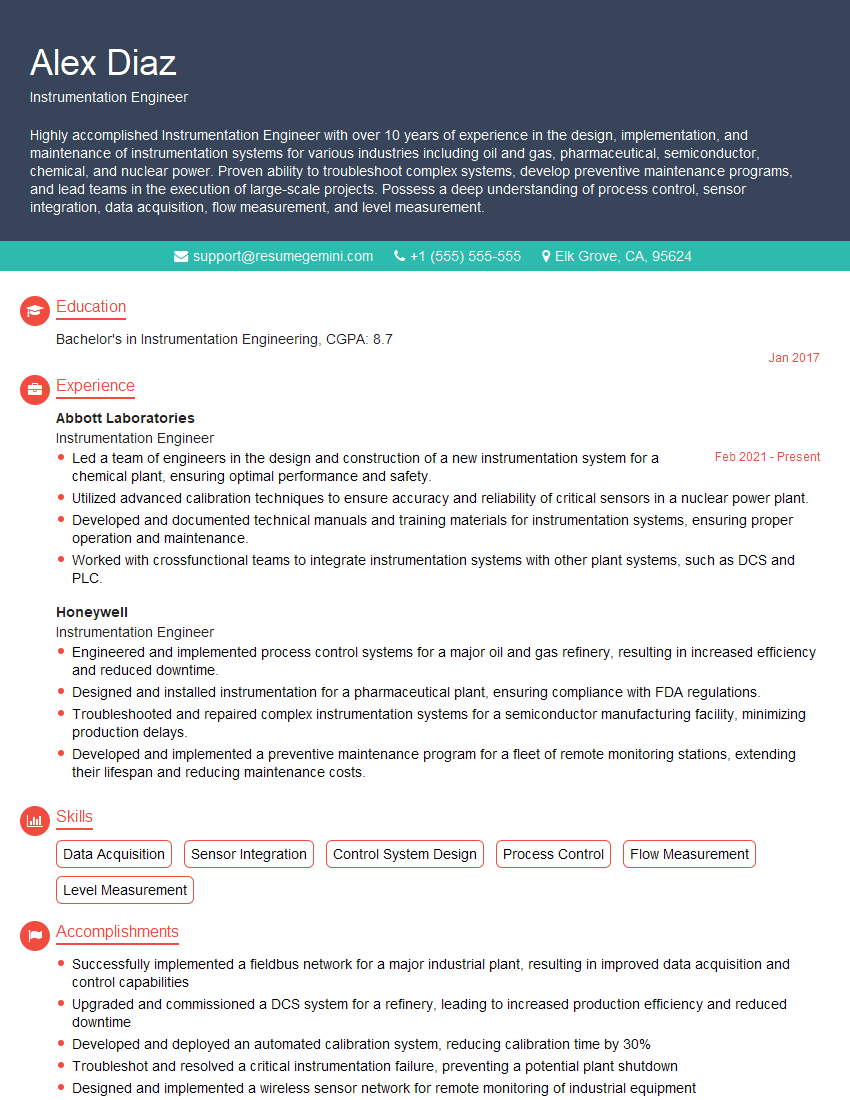
Instrumentation Engineer Resume Sample
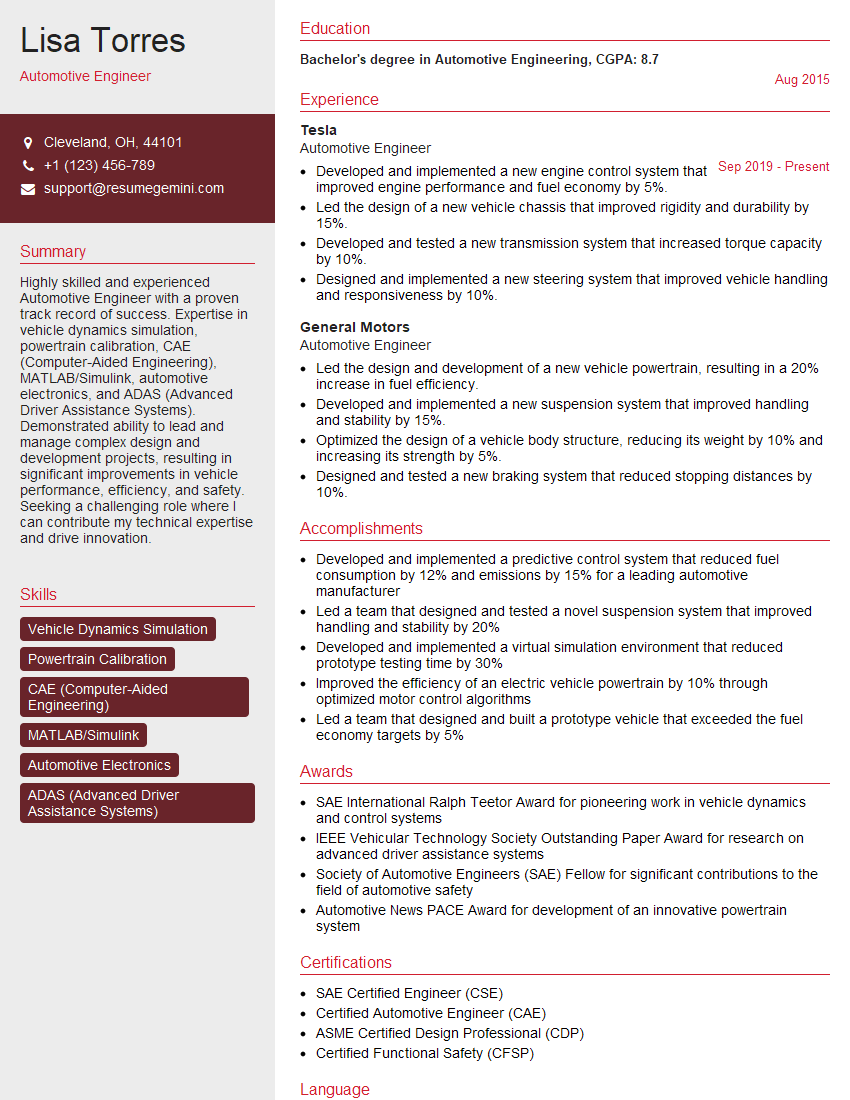
Automotive Engineer Resume Sample
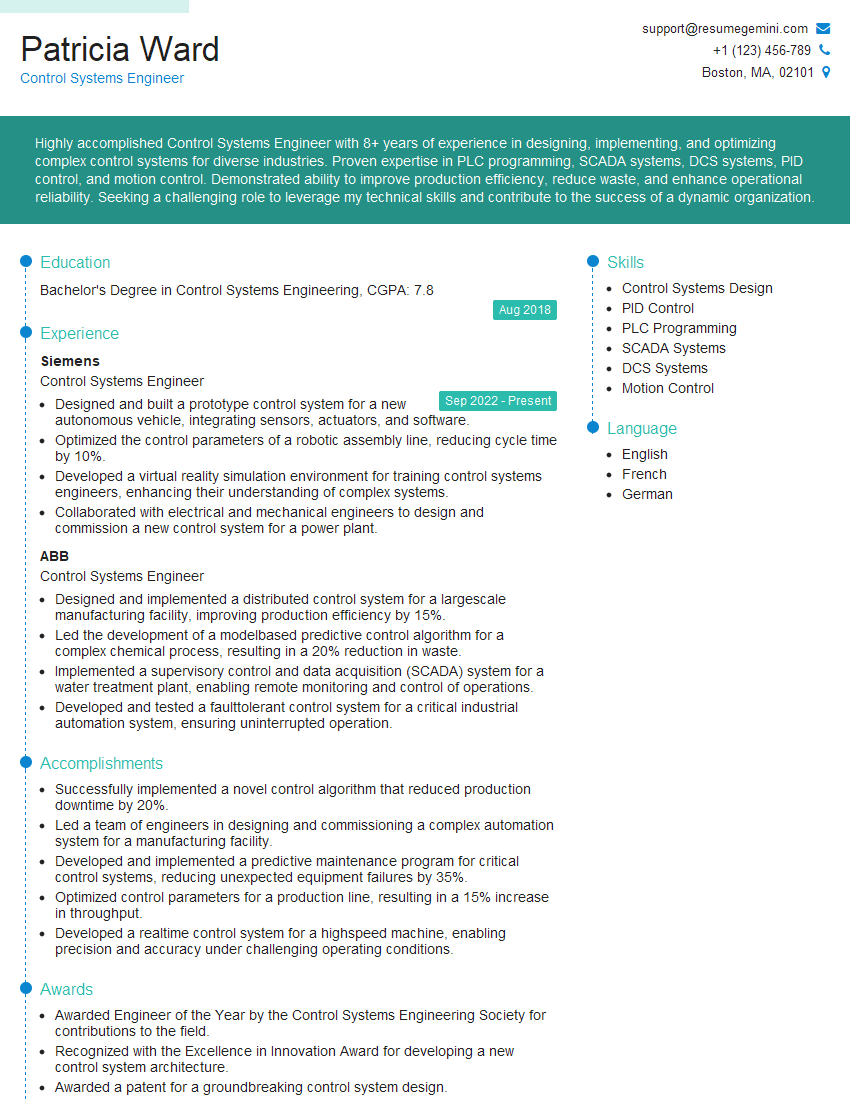
Control Systems Engineer Resume Sample
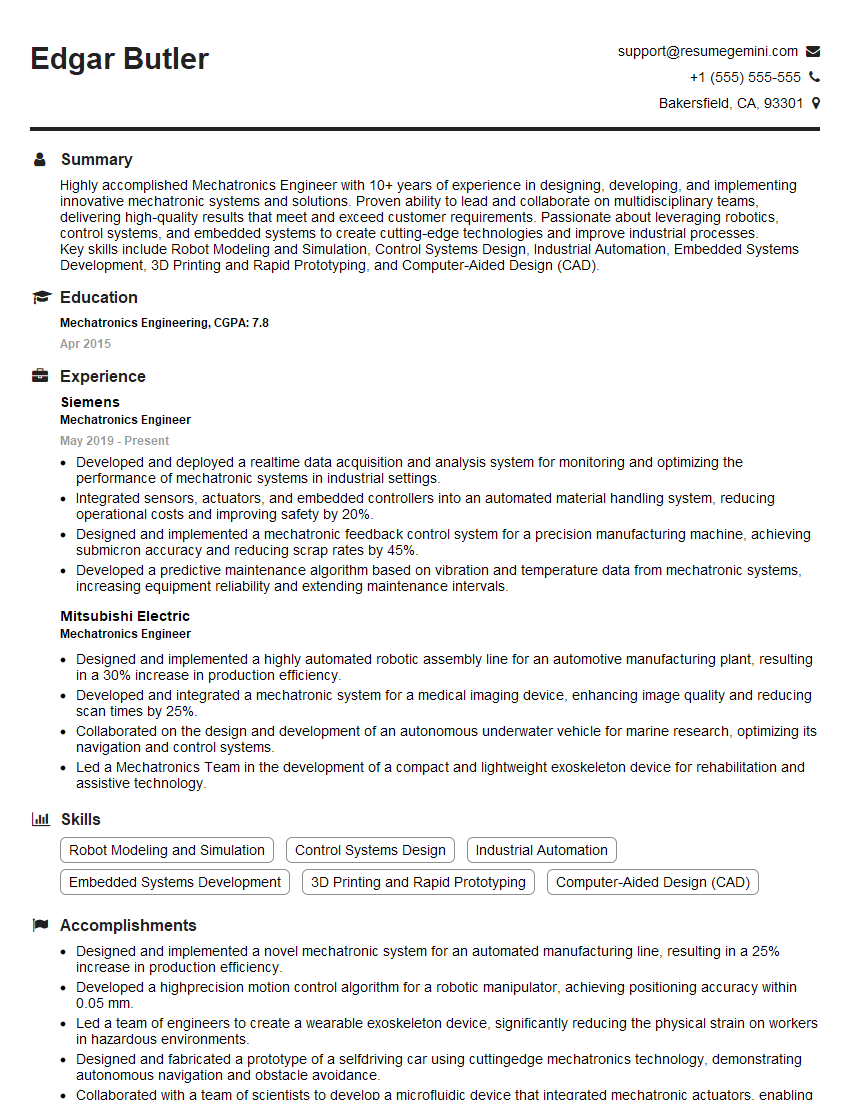
Mechatronics Engineer Resume Sample
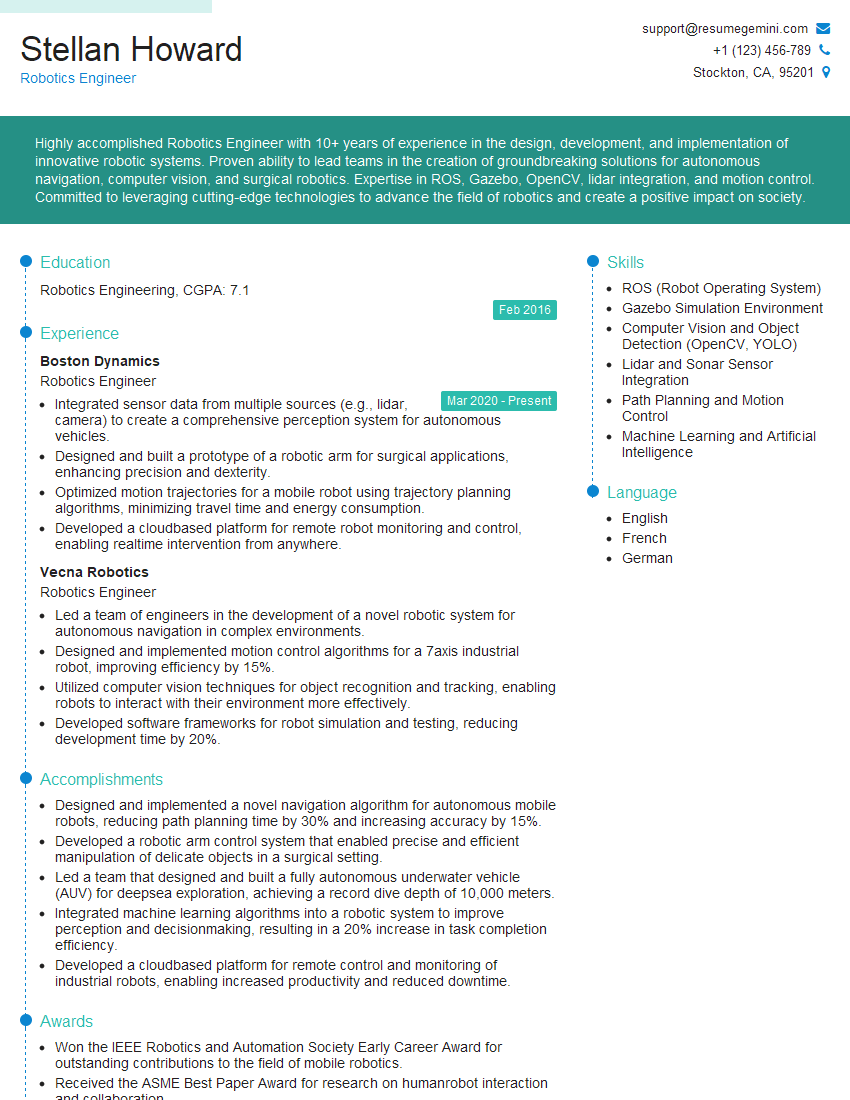
Robotics Engineer Resume Sample
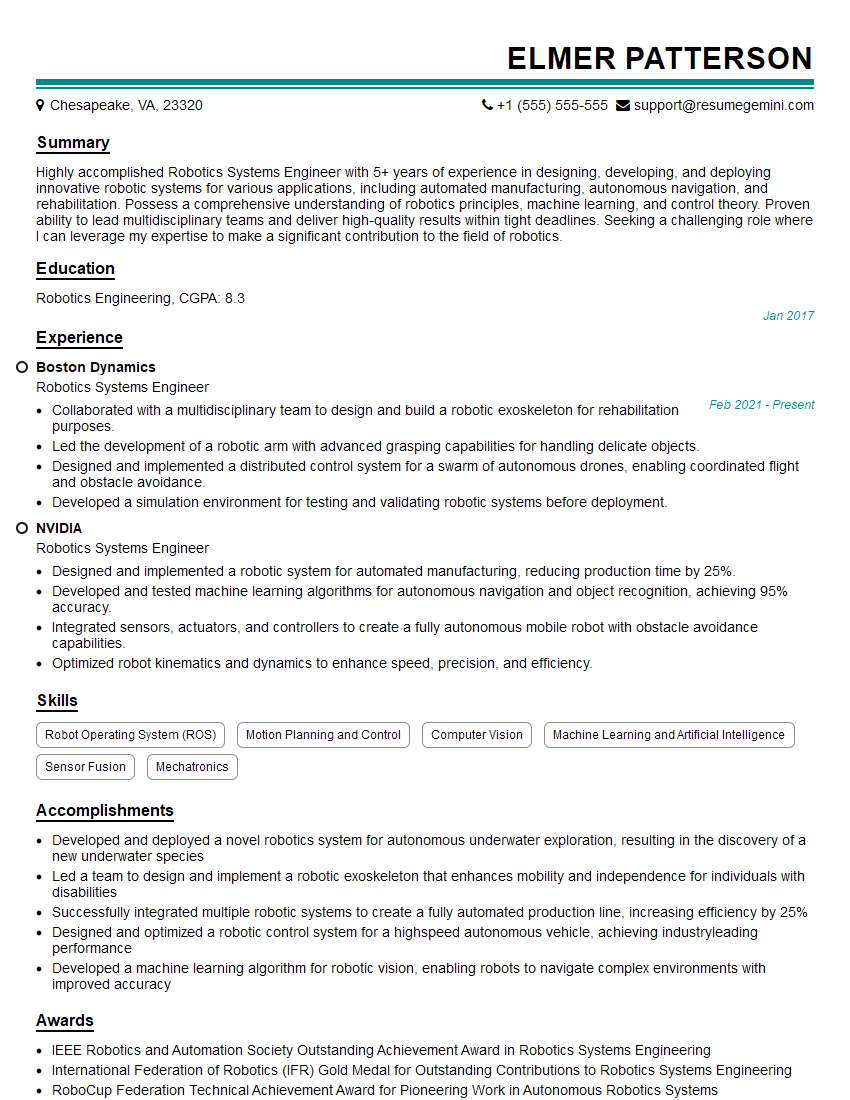
Robotics Systems Engineer Resume Sample
Explore more articles
Users Rating of Our Blogs
Share Your Experience
We value your feedback! Please rate our content and share your thoughts (optional).
What Readers Say About Our Blog
Very informative content, great job.
good