The right preparation can turn an interview into an opportunity to showcase your expertise. This guide to Piano Skills interview questions is your ultimate resource, providing key insights and tips to help you ace your responses and stand out as a top candidate.
Questions Asked in Piano Skills Interview
Q 1. Explain the difference between major and minor scales.
Major and minor scales are the foundational building blocks of Western music, differing primarily in their characteristic sound and emotional effect. A major scale sounds bright and cheerful, while a minor scale often evokes feelings of sadness or introspection. The difference lies in the intervals between the notes.
A major scale is built using the formula: whole, whole, half, whole, whole, whole, half steps between consecutive notes (e.g., C major: C-D-E-F-G-A-B-C). A natural minor scale uses a slightly different formula: whole, half, whole, whole, half, whole, whole steps (e.g., A minor: A-B-C-D-E-F-G-A).
Think of it like this: Major scales are like a sunny day – bright and uplifting. Minor scales are like a cloudy day – more pensive and reflective. This difference in interval structure affects the harmony and overall mood of a piece significantly.
Q 2. Describe the circle of fifths and its practical applications.
The circle of fifths is a visual representation of the relationships between the 12 major keys. It’s a powerful tool for understanding key signatures, chord progressions, and modulation (changing keys within a piece).
Starting on any key, moving clockwise one step represents a perfect fifth interval. For example, from C major, moving clockwise, we get G major (C to G is a perfect fifth), then D major (G to D is a perfect fifth), and so on. Moving counter-clockwise represents perfect fourths.
- Practical Applications:
- Key Signature Understanding: Each step clockwise adds one sharp to the key signature. Conversely, each step counter-clockwise adds one flat.
- Chord Progressions: The circle helps create smooth and logical chord transitions, as adjacent keys share many chords.
- Modulation: The circle guides composers in seamlessly shifting from one key to another, often using keys that are close together on the circle.
For instance, a common progression might move from C major to G major to D major – all closely related keys on the circle of fifths, creating a natural flow.
Q 3. What are the different types of piano chords and their inversions?
Piano chords are built on three or more notes played simultaneously. The most common types include:
- Triads: Composed of three notes – a root, a third, and a fifth. They can be major, minor, augmented, or diminished, depending on the intervals between the notes.
- Seventh Chords: Add a seventh note to a triad, creating more complex harmonies. They also come in various types (major seventh, minor seventh, dominant seventh, half-diminished, fully diminished).
- Inversions: Inversions change the voicing of a chord by moving the bass note to a higher position. For example, a C major triad (C-E-G) has three inversions:
Root position: C-E-GFirst inversion: E-G-CSecond inversion: G-C-E
Understanding inversions is crucial for creating varied textures and bass lines. They add depth and sophistication to the harmonic structure of a piece. Different inversions of the same chord will often have distinct harmonic functions within the context of a piece.
Q 4. How do you approach sight-reading unfamiliar music?
Sight-reading involves playing unfamiliar music at first glance. My approach is systematic:
- Preliminary Scan: I quickly scan the piece to assess its overall structure, tempo, key signature, and time signature. This provides a general roadmap.
- Section-by-Section Approach: I break down the music into manageable sections, focusing on one phrase or measure at a time. This prevents overwhelming myself.
- Focus on Rhythmic Accuracy: I prioritize accurately playing the rhythm before worrying about dynamics or phrasing. A solid rhythmic foundation is critical.
- Gradual Increase in Tempo: I initially play slowly, focusing on accuracy and note reading. I gradually increase the tempo as my comfort level grows.
- Identify Challenges: I identify areas with difficult passages or chord changes, practicing them individually before integrating them into the whole.
- Repetition & Refinement: I repeat sections until they are fluent and musical, gradually working towards a complete performance.
Practice is key! Regular sight-reading exercises are essential for improvement.
Q 5. Explain your approach to teaching beginner piano students.
My approach to teaching beginner piano students emphasizes a fun, engaging, and foundational learning experience. I believe in building a strong musical base from the beginning.
- Start with the Fundamentals: I begin with basic music theory, including notes, rhythms, and simple scales. Hands-on exercises are crucial here.
- Early Introduction to Music Literacy: I incorporate music notation early on, allowing students to connect the physical act of playing to the written representation.
- Age-Appropriate Repertoire: I select interesting and accessible pieces that the students enjoy playing, encouraging creativity and self-expression.
- Patience and Positive Reinforcement: Learning piano takes time and dedication. I provide consistent positive feedback and encourage my students to celebrate their progress, no matter how small.
- Hands-on Approach: I prefer a hands-on method, working individually with the student to address their specific challenges and develop good posture and technique.
My goal is to nurture a lifelong love of music and provide a solid foundation for future musical development.
Q 6. Discuss different musical periods and their stylistic characteristics.
Different musical periods are characterized by distinct stylistic elements that reflect the cultural and social context of their time. Here are some examples:
- Baroque (1600-1750): Characterized by elaborate ornamentation, counterpoint (independent melodic lines woven together), and terraced dynamics (sudden changes in volume).
- Classical (1730-1820): Emphasizes clarity, balance, and formal structure. Homophony (a melody with accompaniment) is prevalent.
- Romantic (1820-1900): Known for expressive melodies, rich harmonies, and a wide range of dynamics. Emotional intensity is a hallmark.
- 20th and 21st Centuries: A period of diverse styles, including atonal music (lacking a tonal center), serialism (using specific numerical sequences to compose), minimalism (repetitive patterns), and eclecticism (blending diverse styles).
Understanding these stylistic differences provides valuable insights into the composer’s intentions and the historical context of their music.
Q 7. Describe your experience with improvisation.
Improvisation is a cornerstone of my musical practice. It allows for spontaneous creativity and exploration. My approach involves:
- Harmonic Understanding: A strong grasp of harmony is crucial. I build improvisations around chord progressions, using scales and modes appropriate to the harmonic context.
- Melodic Development: I focus on creating interesting and memorable melodic phrases, using motifs (short, repeated musical ideas) to develop musical ideas.
- Rhythmic Variation: I utilize diverse rhythmic patterns to keep the improvisation engaging and prevent monotony.
- Dynamic Control: I use dynamics to shape the emotional arc of the improvisation, building tension and release.
- Listening and Responding: When improvising with others, I actively listen to their contributions and respond in a musical and supportive manner.
Improvisation is like a musical conversation – a dialogue between the musician and the instrument, constantly evolving and exploring new possibilities. It’s a rewarding and continually developing skill.
Q 8. How do you handle performance anxiety?
Performance anxiety is a common challenge for musicians, but it’s manageable with the right approach. I address it through a multi-pronged strategy focusing on preparation, mental techniques, and controlled exposure.
Thorough Preparation: This is the cornerstone. Knowing the piece inside and out – technically and musically – dramatically reduces anxiety. This involves detailed practice, addressing challenging passages meticulously, and understanding the musical narrative.
Mental Rehearsal: I encourage visualization techniques. Mentally playing the piece from start to finish, imagining the sounds and feelings, helps build confidence and reduces the fear of the unknown.
Controlled Exposure: Gradually increasing performance opportunities, starting with smaller, informal settings, builds confidence and desensitizes the performer to the pressure of performing.
Breathing Exercises and Mindfulness: Deep, controlled breathing techniques and mindfulness practices can help manage physical symptoms of anxiety like rapid heartbeat and shaky hands.
Positive Self-Talk: Replacing negative self-talk with positive affirmations helps build self-belief and reduce self-doubt. For example, instead of thinking ‘I’m going to mess up’, I focus on ‘I’ve practiced diligently and am prepared to give my best’.
For example, one of my students struggled immensely with performance anxiety before a recital. By incorporating these techniques—specifically focusing on detailed technical practice and incorporating visualization—they not only performed flawlessly but also expressed a newfound sense of calm and control.
Q 9. What is your experience with different piano playing techniques?
My experience encompasses a broad range of piano playing techniques, essential for versatile performance and teaching. I’m proficient in various styles and approaches:
Classical Technique: This forms the foundation, emphasizing proper posture, finger technique, articulation (staccato, legato, etc.), and pedaling for clarity, control, and musical expression. I’m well-versed in the works of Bach, Beethoven, Chopin, and many others.
Romantic Era Techniques: Understanding the nuances of Romantic-era composers like Chopin and Liszt requires a focus on expressive phrasing, rubato (flexible tempo), and a rich, singing tone.
Contemporary Techniques: I’m familiar with approaches to contemporary music, which may involve extended techniques like prepared piano (modifying the strings with objects) or unconventional playing styles.
Jazz and Blues Techniques: This involves improvisation, chord voicings, and a focus on rhythmic phrasing and syncopation.
Other Genres: My understanding extends to playing in various genres including pop, folk, and even some elements of world music adapting techniques accordingly.
The ability to seamlessly transition between these techniques is crucial for a well-rounded pianist. For instance, I might incorporate elements of jazz improvisation into a classical piece to add a unique, personal interpretation while maintaining technical accuracy.
Q 10. Explain your understanding of musical notation.
Musical notation is the system of writing music down, allowing composers to communicate their ideas precisely and enabling performers to reproduce them accurately. It’s a complex yet elegant system. My understanding includes:
Staff Notation: The five-line staff, clef signs (treble, bass, alto), key signatures (sharps and flats), time signatures (meter), note values (whole, half, quarter, etc.), rests, dynamics (crescendo, diminuendo), articulation marks (staccato, legato), and expression markings (tempo, phrasing).
Chord Symbols: Understanding chord symbols (e.g., Cmaj7, Gm7) is crucial for sight-reading and improvisation, particularly in genres outside classical music.
Rhythm and Meter: A solid grasp of rhythm and meter is essential for accurate and expressive performance. Understanding rhythmic notation, including dotted notes, triplets, and syncopation, is paramount.
Interpreting Expression Marks: Going beyond the notes themselves, I understand and apply composer’s expression markings to create a meaningful and expressive performance. Things like tempo indications (allegro, adagio), dynamics, and articulation marks shape the character and feeling of the music.
For example, deciphering a complex passage with multiple accidentals and intricate rhythmic patterns requires a thorough understanding of the notation system to ensure the performance is both accurate and musically satisfying.
Q 11. Describe your approach to teaching advanced piano students.
Teaching advanced students requires a different approach than teaching beginners. It’s less about foundational technique and more about refining skills, exploring musicality, and fostering independent learning.
Individualized Curriculum: Advanced students often have specific goals and interests. I work with them to develop a personalized curriculum that addresses their needs and challenges.
In-Depth Analysis: We delve deeply into musical analysis, exploring form, harmony, and counterpoint. This helps students understand the underlying structure and meaning of the music they’re playing.
Advanced Technical Skills: We focus on refining advanced technical skills such as scales, arpeggios, and other exercises, pushing their boundaries.
Performance Preparation: Advanced students often prepare for recitals, competitions, or auditions. We work on stage presence, performance anxiety management, and interpreting the music for an audience.
Independent Learning: I encourage independent learning, guiding them towards resources and strategies to continue developing their skills outside of lessons.
For example, I recently worked with a student preparing for a concerto competition. We spent time analyzing the score, focusing on phrasing, dynamics, and creating a compelling narrative through their performance. The result was a captivating and highly successful performance.
Q 12. How do you assess a student’s progress?
Assessing a student’s progress is an ongoing process, not a single event. I use a combination of methods:
Regular Performance Evaluations: Students regularly perform pieces for me during lessons, allowing me to assess technical skills, musicality, and overall progress.
Technical Exercises: I regularly assess their ability to execute scales, arpeggios, and other technical exercises to gauge their progress in developing dexterity and control.
Music Theory Assessments: Regular quizzes or assignments on music theory help track their understanding of musical concepts.
Observation and Feedback: During lessons, I observe their technique, posture, and general approach to playing, providing constructive feedback to guide their development.
Goal Setting and Review: We set clear, achievable goals at the beginning of each learning period, regularly reviewing progress to adjust the curriculum as needed.
For instance, I might use a rubric to assess a student’s performance of a particular piece, considering factors such as accuracy, phrasing, dynamics, and overall musicality. This provides a structured evaluation and allows for specific feedback on areas for improvement.
Q 13. What software or technology do you use to enhance your piano skills?
Technology plays a significant role in enhancing my piano skills and teaching. I utilize several tools:
Digital Audio Workstations (DAWs): Software like Logic Pro X or Ableton Live allows me to record and analyze my playing, identify areas for improvement, and experiment with different musical arrangements.
Notation Software: Sibelius or Finale allows me to create and edit scores, analyze musical structures, and create customized exercises for students.
Music Learning Apps: I use apps like Tenuto or Flowkey for supplemental exercises and engaging learning experiences for some of my students.
Virtual Piano: For practicing late at night or when not near a physical piano, virtual piano software on tablets or laptops comes in handy.
For example, recording my performance allows me to listen critically and objectively, identifying subtle issues in timing, phrasing, or dynamics that I might miss during live playing. This self-analysis is crucial for continuous improvement.
Q 14. How do you adapt your teaching style to different learning styles?
Adapting to different learning styles is key to effective teaching. I recognize that students learn in various ways, and I tailor my approach accordingly.
Visual Learners: For visual learners, I use diagrams, charts, and videos to illustrate musical concepts. I might use color-coded charts to show chord progressions or use visual aids to demonstrate proper hand position.
Auditory Learners: I utilize aural exercises, focusing on listening skills and ear training. I might have them sing melodies or identify intervals by ear.
Kinesthetic Learners: For kinesthetic learners, I emphasize hands-on activities and physical practice. I encourage them to experiment with different playing techniques and explore their physical connection with the instrument. I encourage active participation in learning.
Combination of Approaches: Most students are a blend of learning styles. Therefore, I incorporate various methods and techniques within my teaching to cater to each student’s individual strengths and preferences.
For example, when teaching a complex passage, I might first demonstrate it visually on sheet music, then play it audibly to highlight musicality, and finally, guide the student to practice it kinesthetically through careful guidance.
Q 15. Describe your experience with accompanying vocalists or other instruments.
Accompanying vocalists and other instruments requires a high degree of musical sensitivity and responsiveness. It’s not just about playing the notes correctly; it’s about creating a cohesive and supportive musical dialogue. My experience spans a wide range of genres, from classical art song to contemporary pop.
For example, when accompanying a vocalist, I focus intently on their phrasing, dynamics, and emotional expression. I adjust my accompaniment subtly to enhance their performance, providing a harmonic foundation that complements, but never overshadows, their voice. This involves anticipating their breaths, adjusting my tempo to match their pacing, and creating a dynamic balance between the vocal line and the instrumental part. Similarly, when playing with other instrumentalists, I listen carefully to their phrasing and rhythmic nuances, ensuring my part blends seamlessly. I’ve collaborated with string quartets, woodwind ensembles, and even jazz combos, and in each instance, attentive listening and flexible interpretation were crucial.
I am proficient in sight-reading and quickly adapting to different musical styles and levels of performance, making me a versatile accompanist.
Career Expert Tips:
- Ace those interviews! Prepare effectively by reviewing the Top 50 Most Common Interview Questions on ResumeGemini.
- Navigate your job search with confidence! Explore a wide range of Career Tips on ResumeGemini. Learn about common challenges and recommendations to overcome them.
- Craft the perfect resume! Master the Art of Resume Writing with ResumeGemini’s guide. Showcase your unique qualifications and achievements effectively.
- Don’t miss out on holiday savings! Build your dream resume with ResumeGemini’s ATS optimized templates.
Q 16. What are your strengths and weaknesses as a pianist?
My strengths as a pianist lie in my technical proficiency, musicality, and adaptability. I have excellent finger dexterity, allowing me to execute complex passages with accuracy and fluidity. I’m also adept at interpreting musical scores, understanding the composer’s intent and conveying the emotion through my playing. I’ve cultivated a strong understanding of diverse musical styles, allowing me to seamlessly transition between classical, jazz, and pop arrangements. Furthermore, I’m a quick study, readily learning new pieces and adapting to different musical contexts.
However, like every musician, I also have areas for improvement. One area I’m constantly working on is developing even greater emotional depth in my performances. While I can play technically proficient pieces, consistently injecting a higher level of emotional resonance remains a goal. Another area is expanding my repertoire in contemporary styles, such as certain subgenres of jazz and experimental music. I actively seek opportunities to hone these skills through continued practice, performance, and collaboration.
Q 17. How do you maintain your own musical skills?
Maintaining musical skills is a lifelong commitment that requires consistent effort and dedication. My approach is multi-faceted. Firstly, I maintain a regular practice schedule, focusing on both technical exercises and repertoire study. This involves scales, arpeggios, and etudes to maintain finger dexterity and control, alongside working on pieces from diverse periods and styles. Secondly, I actively seek performance opportunities, whether it’s playing in recitals, accompanying other musicians, or performing in public settings. The pressure of performance encourages me to refine my technical skills and deepen my interpretative abilities.
Thirdly, I continually expand my musical knowledge. I attend masterclasses, workshops, and concerts, seeking inspiration from other musicians and exploring new musical styles. I also engage in regular study of music theory, harmony, and history, enriching my understanding of the musical landscape. This ensures I not only refine current skills, but also acquire new ones. Finally, listening critically to a variety of musical recordings remains a core component of my practice, enhancing both my technical awareness and musical appreciation.
Q 18. Explain your understanding of music theory and harmony.
My understanding of music theory and harmony is comprehensive and deeply rooted in my musical practice. I possess a thorough grasp of fundamental concepts such as scales, chords, intervals, key signatures, and rhythm. I can readily analyze musical scores, identifying harmonic progressions, cadences, and voice leading. My knowledge extends to more advanced topics including counterpoint, modulation, and various compositional techniques.
For instance, I can easily identify a modulation from C major to G major by recognizing the characteristic harmonic movement and the change in key signature. I can also analyze a complex chord progression in jazz, recognizing the function of each chord within the harmonic structure and understanding the interplay of different voices. This theoretical knowledge isn’t just theoretical; it directly informs my performance and composition, providing a strong foundation for creative expression and interpretation. It allows me to approach music analytically, yet with an inherent understanding of its emotional and expressive power.
Q 19. Describe your experience with composing or arranging music.
While my primary focus has been performance, I have significant experience in composing and arranging music. I’ve composed several shorter pieces for piano solo, and have arranged existing compositions for different ensembles. This involves adapting existing scores for specific instrumentation, optimizing for different contexts, and potentially re-harmonizing sections to enhance the overall musical effect.
For example, I recently arranged a well-known classical piece for a string quartet and piano, considering the unique timbral characteristics of each instrument and ensuring that the harmonic structure and melodic lines were effectively balanced. Composing involves a more creative process, starting with a musical idea and developing it through sketching, refining melodies and harmonies, and gradually creating a complete composition. Both composing and arranging necessitate a strong grasp of music theory and harmony, as well as consideration of the expressive possibilities of different instruments and musical styles.
Q 20. How do you troubleshoot technical issues with a piano?
Troubleshooting technical issues with a piano involves a systematic approach. Firstly, I assess the nature of the problem. Is it a sound-related issue (e.g., sticking keys, uneven tone), a touch-related issue (e.g., heavy action, unresponsive keys), or a mechanical issue (e.g., pedals malfunctioning)? Secondly, I undertake basic checks. I will check for obvious obstructions, such as debris under the keys or around the hammers. I’ll also check the tuning, as some issues mimic tuning problems.
If the problem persists, I might try simple adjustments, like cleaning the keys or lubricating moving parts. For more complex problems, I would consult a qualified piano technician. I understand the limitations of my technical expertise and recognize when professional intervention is required. However, basic maintenance like dust removal and occasional key cleaning I carry out myself regularly to prevent issues from developing. This preventative maintenance can significantly extend the lifespan and quality of a piano.
Q 21. How familiar are you with different piano styles (classical, jazz, pop)?
My familiarity with different piano styles is extensive. I have a strong foundation in classical piano, having studied the works of Bach, Beethoven, Chopin, and many others. This foundation gives me a deep understanding of technique, musical phrasing, and interpretative nuance. Beyond classical, I have a significant experience with jazz piano, including improvisation, chord voicings, and stylistic approaches. I can play in various jazz styles, from swing to bebop, and can improvise convincingly over standard chord changes.
In the realm of pop music, I understand the characteristic rhythmic patterns, chord progressions, and harmonic structures commonly used in popular song. I’m comfortable sight-reading and accompanying singers in diverse pop styles and can adapt my playing to the specific demands of various pop genres. My broad stylistic knowledge allows me to easily transition between these genres, adapting to different demands of each, from the intricate counterpoint of classical music to the improvisational nature of jazz.
Q 22. What is your experience with ensemble playing?
Ensemble playing is a cornerstone of musical development, requiring a deep understanding of musical phrasing, dynamics, and the ability to listen attentively and respond to other musicians. My experience spans various instrumental combinations, from chamber music (piano trios, quartets) to larger orchestral settings where I’ve collaborated with string players, woodwinds, and brass. I’ve played in numerous concerts and recitals, honing my skills in coordinating with other musicians, blending timbres, and maintaining a cohesive musical interpretation. A specific example would be my participation in a Schubert piano quintet performance where precise articulation and dynamic balance were essential to the success of the piece. This experience taught me the importance of both individual technical proficiency and the ability to adapt to the nuances of other players’ styles.
Q 23. Explain your understanding of rhythm and meter.
Rhythm and meter are fundamental to music. Rhythm refers to the patterned arrangement of sounds and silences in time, while meter provides a framework for organizing rhythm into regular, recurring units. Think of meter as the structural skeleton of a musical piece and rhythm as the lifeblood that flows through it. Meter is often expressed through time signatures, like 4/4 (common time) or 3/4 (waltz time). The top number indicates the number of beats per measure, and the bottom number indicates the type of note receiving one beat. Rhythm, however, can be complex, involving syncopation (accents on weak beats), rests, and various note values. Mastering both rhythm and meter requires careful listening, precise counting, and the ability to internalize the pulse of the music. For instance, in a piece with complex rhythmic patterns, a strong understanding of meter allows one to easily navigate those patterns and maintain a steady pulse, even through sections with syncopation.
Q 24. Describe your approach to practicing scales and arpeggios.
My approach to practicing scales and arpeggios emphasizes efficiency and musicality, rather than just rote repetition. I encourage students to explore various articulations (legato, staccato, etc.), dynamics (pianissimo to fortissimo), and rhythmic variations (e.g., playing scales in triplets or dotted rhythms). This ensures that they don’t just develop technical proficiency but also develop musical expression. I advocate for a structured approach: starting with slow, accurate practice to ensure proper fingering and hand position, gradually increasing tempo only after achieving accuracy and consistency. I also emphasize the importance of listening attentively – ensuring that the scales sound even and clear, and that each note is played with intention. Finally, I encourage students to apply the scales and arpeggios to musical contexts, by using them as warm-ups for pieces they are learning or by incorporating them into improvisations.
Q 25. How do you create a lesson plan for piano students?
Creating a piano lesson plan involves several key steps. First, I assess the student’s current skill level, identifying strengths and weaknesses. This informs the selection of appropriate repertoire and technical exercises. Secondly, I establish clear learning objectives for each lesson, focusing on specific aspects of technique, theory, or musicality. Thirdly, I design activities that are engaging and challenging, balancing technical exercises with musical exploration. A typical lesson might include warm-up exercises (scales, arpeggios), technical studies (Hanon exercises, Czerny studies), repertoire work (learning a new piece), and theory concepts (e.g., chord progressions, key signatures). Finally, I ensure that the lesson culminates in a performance – either playing through a learned piece or a short improvisation – to foster confidence and a sense of accomplishment. Regular assessments and adjustments ensure the plan adapts to the student’s progress. For instance, a beginner student’s lesson plan would heavily emphasize fundamentals, while an advanced student’s might focus on advanced techniques, interpretation, and performance preparation.
Q 26. What is your experience with music pedagogy?
My experience in music pedagogy encompasses over [Number] years of teaching students of all ages and skill levels. I’ve developed a strong understanding of various teaching methodologies, incorporating both traditional and innovative approaches. I believe in creating a supportive and encouraging learning environment where students feel comfortable exploring their musical potential. My teaching philosophy emphasizes a holistic approach, balancing technical skill development with musical understanding and appreciation. I’m familiar with various pedagogical resources and adapt my approach based on each student’s learning style and personality. I’ve successfully helped students prepare for exams (e.g., ABRSM, RCM), competitions, and performance opportunities, fostering their growth as confident and capable musicians. A particular success story is guiding a student from struggling with basic rhythm to winning a local piano competition.
Q 27. How do you handle student discipline or behavioral issues?
Handling student discipline requires a calm, consistent, and understanding approach. I believe that positive reinforcement and encouragement are far more effective than punitive measures. If a behavioral issue arises, I address it privately and calmly, discussing the impact of the behavior on the learning environment. I try to understand the underlying reason for the behavior, addressing any potential anxieties or frustrations. For example, a student’s disruptive behavior could be due to difficulties with the material, leading to frustration. Adjusting the lesson plan to address those difficulties helps resolve both the technical and behavioral problems. Clear expectations and consistent rules are crucial in maintaining a productive learning environment. Ultimately, building a strong rapport with the student fosters trust and cooperation, making positive behavior more likely. If issues persist, I consult with parents or guardians to develop a collaborative strategy.
Q 28. What are your salary expectations?
My salary expectations are commensurate with my experience, qualifications, and the demands of the position. I’m open to discussing a competitive compensation package that reflects my expertise and contributions to the institution. I would be happy to provide a detailed breakdown of my salary expectations based on the specifics of the role and the location.
Key Topics to Learn for Your Piano Skills Interview
- Music Theory Fundamentals: Understanding scales, chords, key signatures, and rhythm is crucial for demonstrating a solid foundation.
- Sight-Reading Proficiency: Practice reading music accurately and efficiently at various tempos and complexities. Be prepared to demonstrate your ability to interpret and perform unfamiliar pieces.
- Performance Techniques: Articulation, dynamics, phrasing, and pedaling are essential elements of musical expression. Prepare examples showcasing your control and artistry.
- Improvisation and Composition: Depending on the role, showcasing creativity through improvisation or demonstrating compositional skills might be advantageous. Prepare examples if applicable.
- Different Musical Styles: Familiarity with various genres (classical, jazz, pop, etc.) demonstrates versatility and adaptability. Highlight your expertise in styles relevant to the job description.
- Technical Proficiency: Demonstrate your skill in playing various musical passages accurately and with expression. Prepare challenging pieces that showcase your abilities.
- Musical Analysis and Interpretation: Understanding the structure, form, and historical context of musical pieces can demonstrate a deeper understanding of the craft. Be ready to discuss your approach to interpreting a piece.
- Teaching Methodology (if applicable): If applying for teaching positions, prepare to discuss your teaching philosophy, methods, and experience working with students of different skill levels.
Next Steps
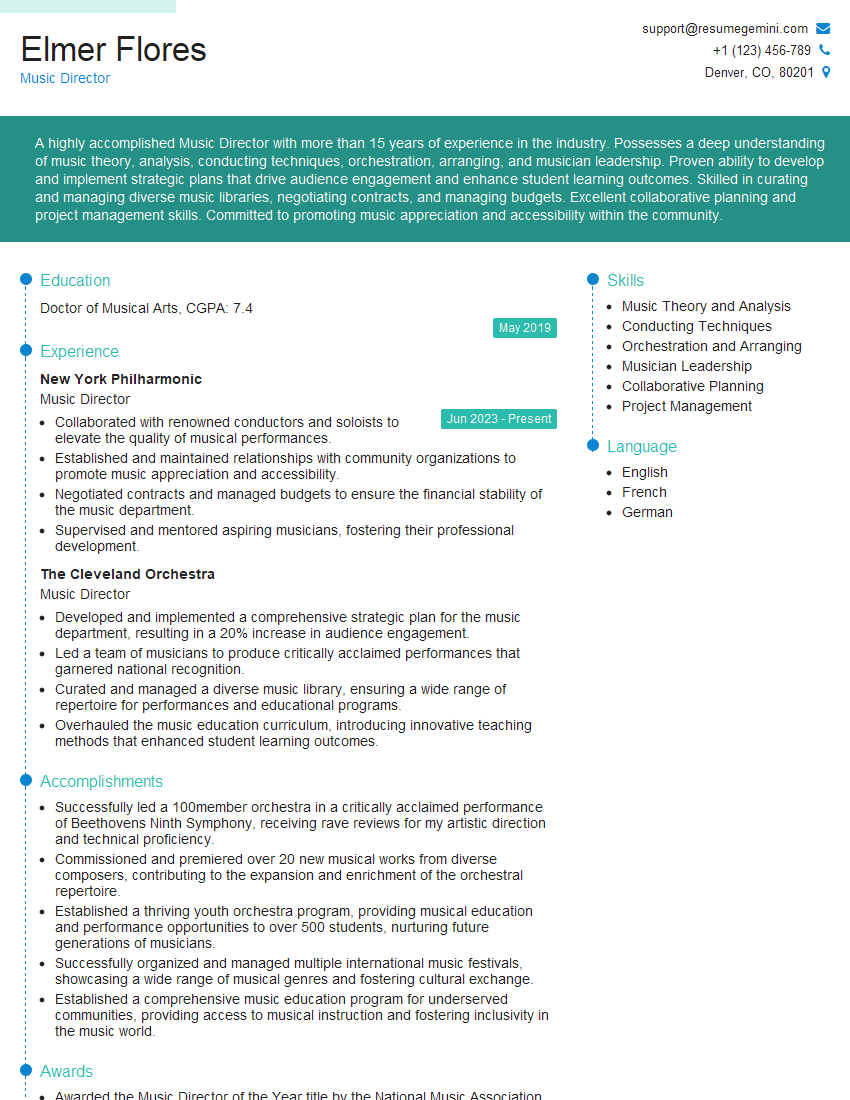
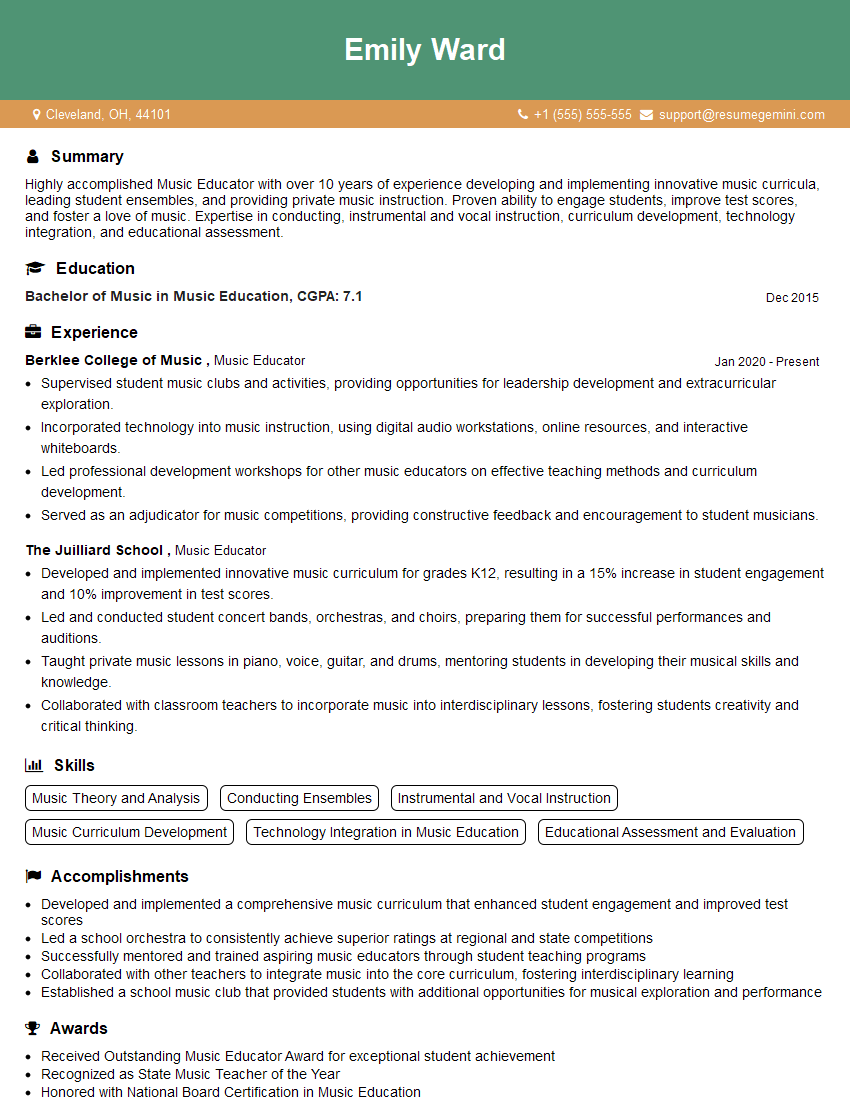
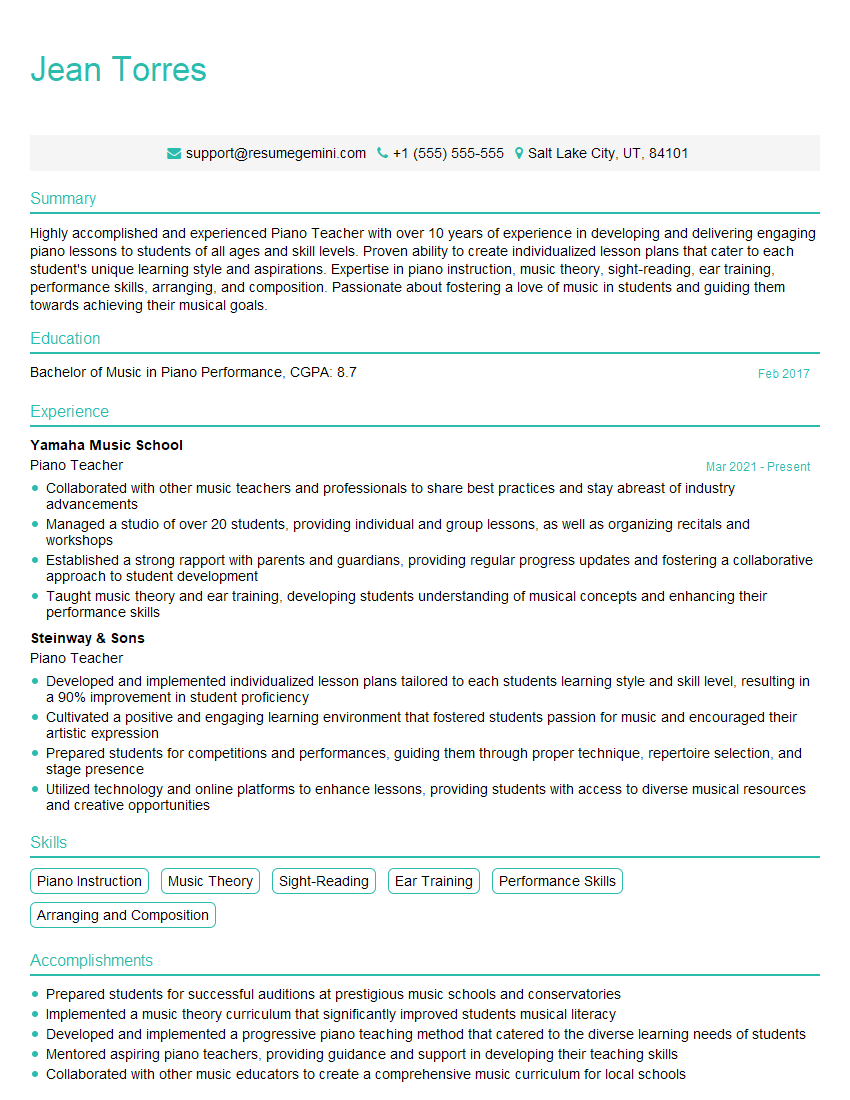
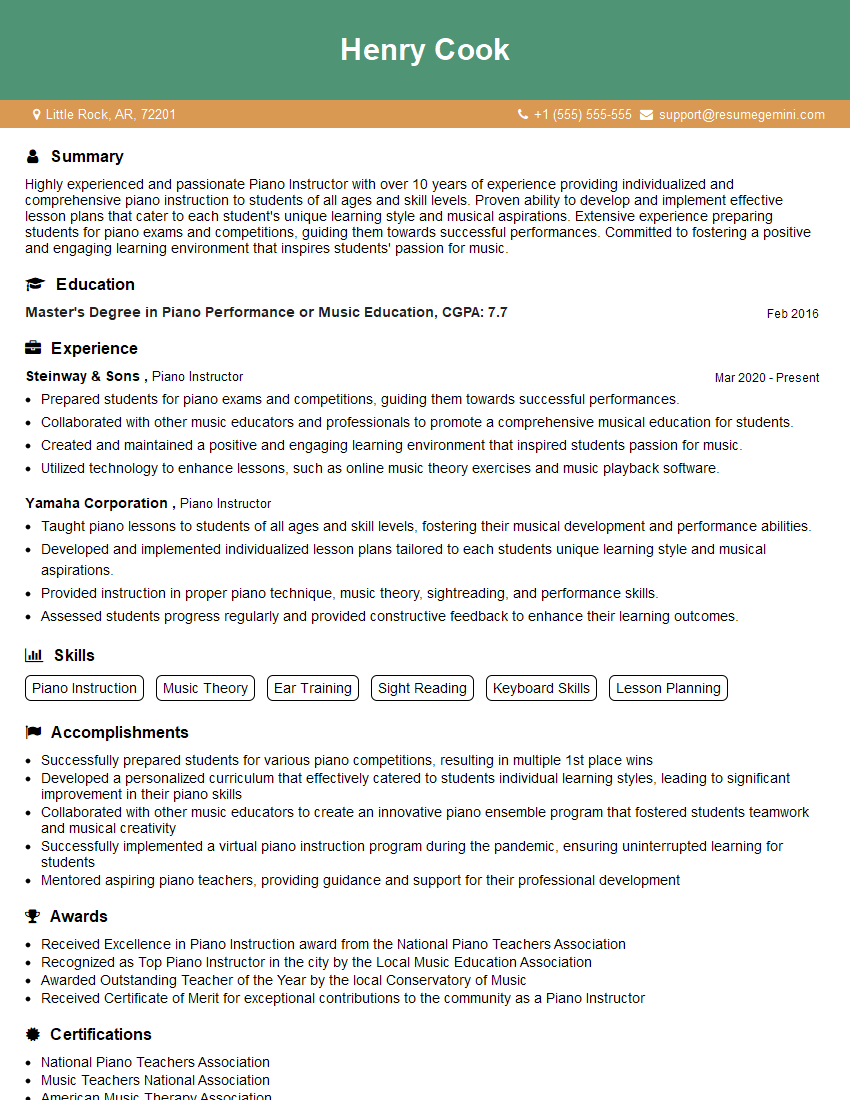
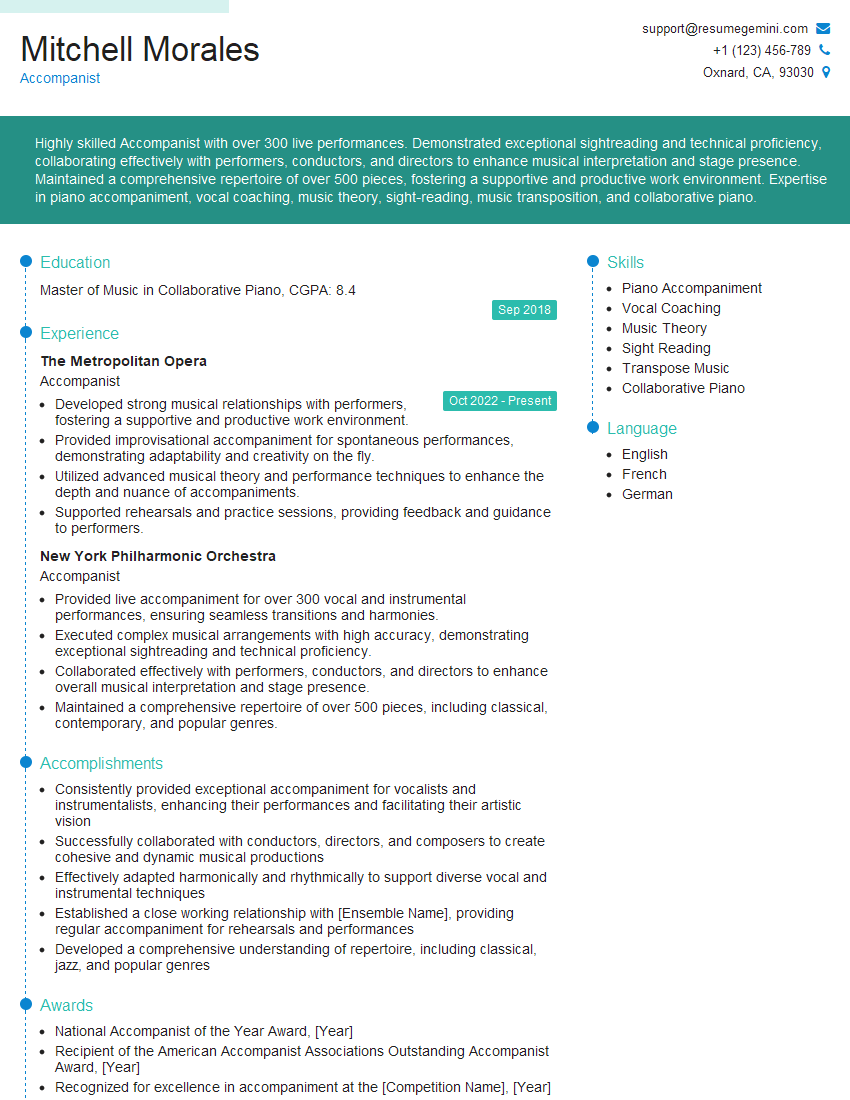
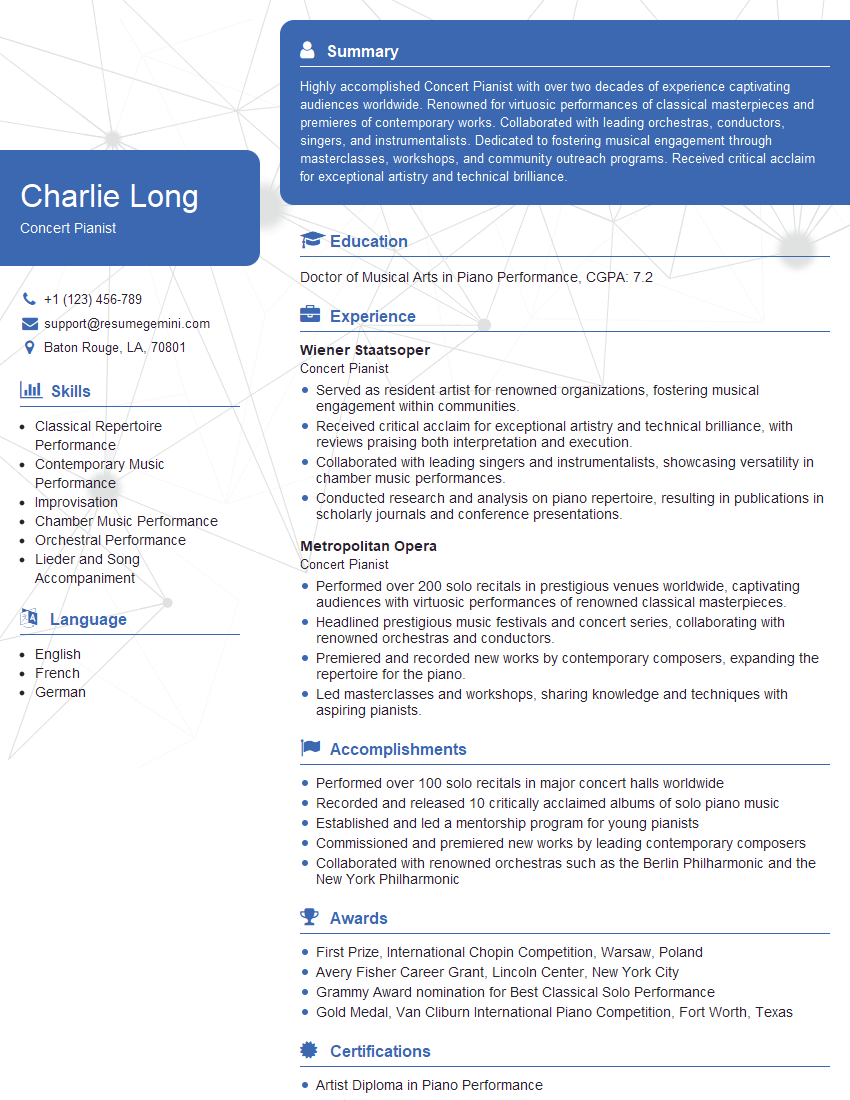
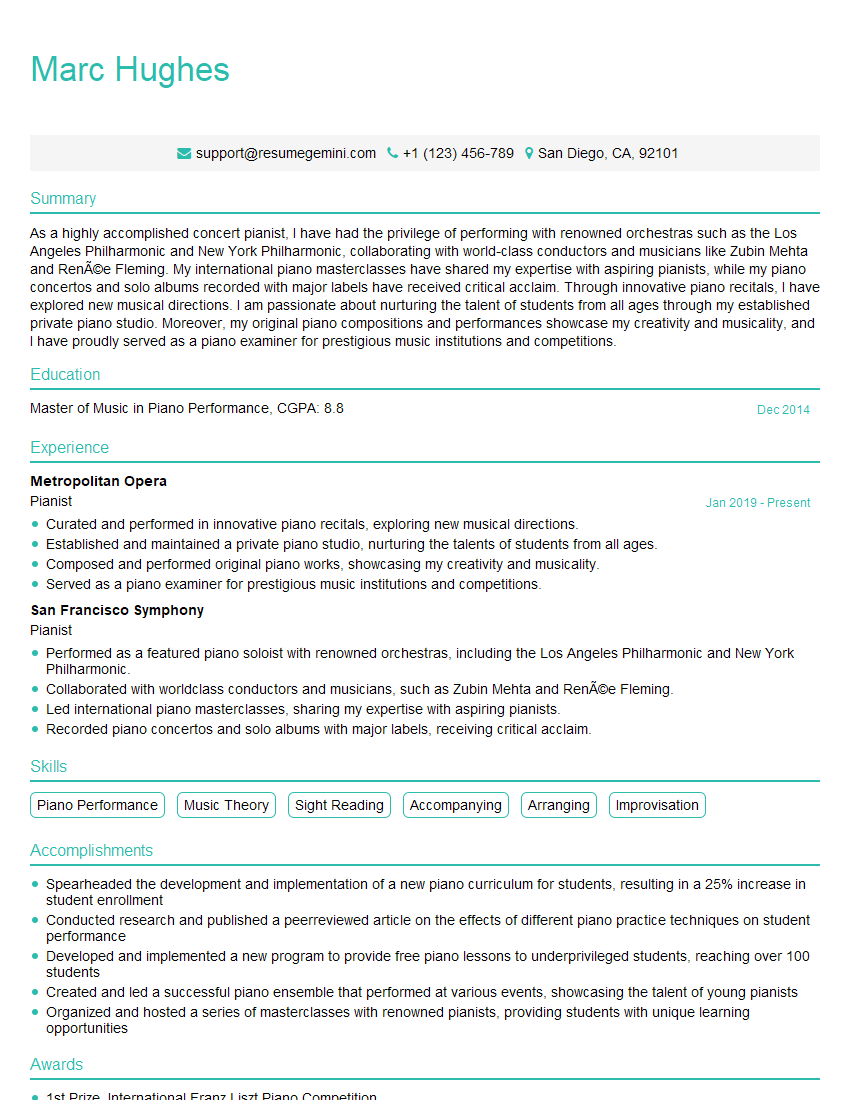
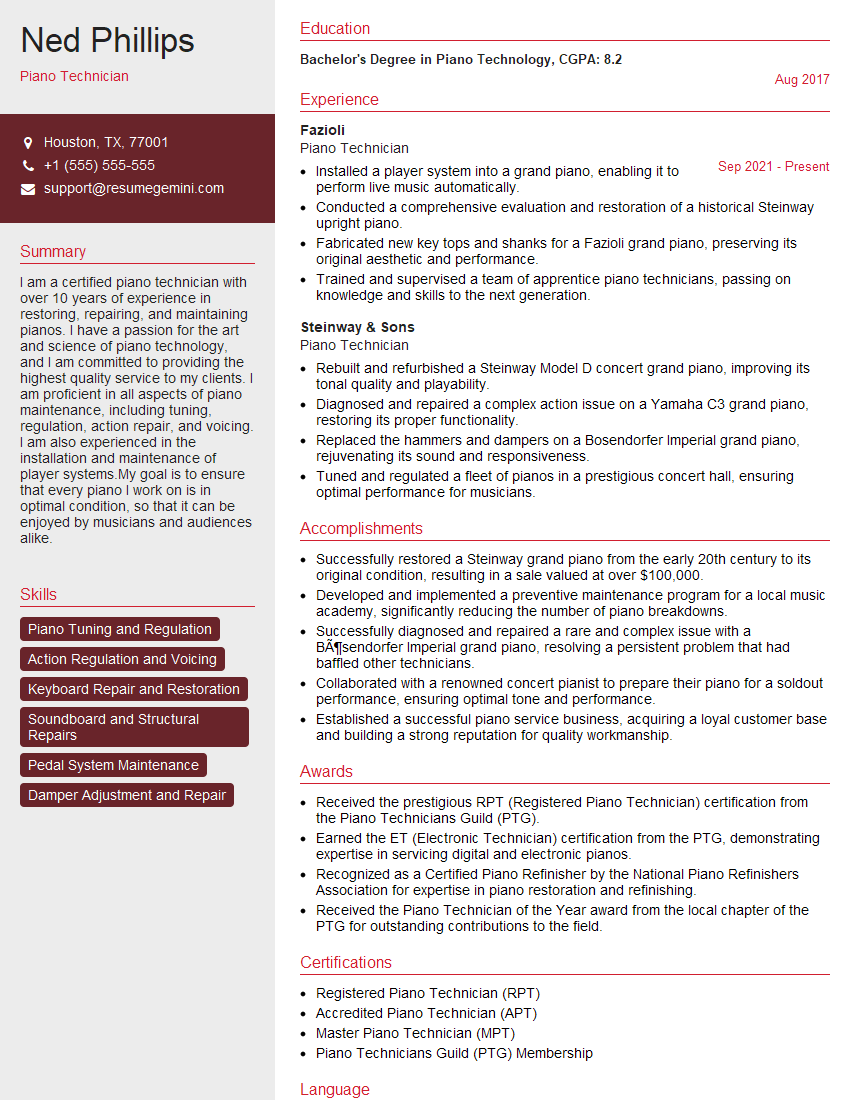
Mastering your piano skills opens doors to exciting career opportunities in performance, education, composition, and more. A strong resume is your key to unlocking these opportunities. Creating an ATS-friendly resume is crucial for getting your application noticed. ResumeGemini is a trusted resource that can help you build a professional and effective resume, maximizing your chances of landing your dream job. Examples of resumes tailored to Piano Skills are available to help you get started.
Explore more articles
Users Rating of Our Blogs
Share Your Experience
We value your feedback! Please rate our content and share your thoughts (optional).
What Readers Say About Our Blog
Very informative content, great job.
good