Interviews are more than just a Q&A session—they’re a chance to prove your worth. This blog dives into essential Youth Programs interview questions and expert tips to help you align your answers with what hiring managers are looking for. Start preparing to shine!
Questions Asked in Youth Programs Interview
Q 1. Describe your experience developing and implementing youth programs.
My experience in developing and implementing youth programs spans over a decade, encompassing a wide range of initiatives. I’ve designed and managed programs focused on everything from academic enrichment and STEM education to leadership development, arts & culture, and social-emotional learning. For instance, in my previous role at the Community Youth Center, I spearheaded a new after-school program focusing on coding and robotics, which resulted in a 30% increase in student engagement and a significant improvement in STEM test scores. Another example involved creating a summer camp centered around environmental conservation, incorporating hands-on activities like trail restoration and wildlife observation, fostering a sense of environmental stewardship among the participants. My approach always begins with a thorough needs assessment of the target population, followed by careful curriculum design, implementation, and ongoing evaluation to ensure maximum impact.
Q 2. What strategies do you employ to engage diverse groups of youth?
Engaging diverse groups of youth requires a multifaceted approach that prioritizes inclusivity and cultural sensitivity. I begin by actively seeking input from the youth themselves to understand their interests, needs, and preferences. This can involve surveys, focus groups, and informal conversations. I then design programs that incorporate a variety of activities to cater to different learning styles and interests. For example, a program might include both team-based sports and individual creative projects. Furthermore, I make a conscious effort to include diverse voices and perspectives in all aspects of program design and delivery – from the selection of program materials to the recruitment of staff and volunteers. Culturally relevant programming is crucial, ensuring that activities reflect and celebrate the diversity of the youth involved. A program targeting a primarily Latino community might incorporate traditional dances and music workshops, while a program serving a diverse population will intentionally embrace the varied cultural backgrounds of participants.
Q 3. How do you assess the effectiveness of youth programs?
Assessing the effectiveness of youth programs requires a comprehensive approach that goes beyond simple attendance figures. I utilize a combination of quantitative and qualitative methods to gather data. Quantitative data might include pre- and post-program assessments to measure changes in knowledge, skills, and attitudes. This could involve standardized tests, surveys measuring self-esteem or leadership skills, or tracking attendance and completion rates. Qualitative data, on the other hand, is gathered through observations, interviews, focus groups, and feedback from participants, staff, and parents. This provides rich insights into the program’s impact on participants’ lives and identifies areas for improvement. For example, in the coding program, we tracked not only test scores but also interviewed students about their experience and level of enjoyment. This holistic approach ensures a more nuanced understanding of the program’s true effectiveness.
Q 4. Explain your approach to conflict resolution among youth.
My approach to conflict resolution emphasizes restorative justice principles, focusing on repairing harm and fostering understanding rather than simply punishing offenders. I start by creating a safe and supportive environment where youth feel comfortable expressing their feelings and perspectives without fear of judgment. I then guide them through a structured process that involves active listening, empathy building, and collaborative problem-solving. This often involves having the involved youth participate in facilitated discussions to help them understand each other’s viewpoints and perspectives. I teach conflict resolution skills such as identifying triggers, managing emotions, and practicing assertive communication. In some cases, mediation by a neutral third party might be necessary. The goal is to empower the youth to resolve conflicts peacefully and respectfully, learning valuable life skills in the process.
Q 5. What methods do you use to create a safe and inclusive environment for youth?
Creating a safe and inclusive environment for youth is paramount. This begins with establishing clear expectations and rules, ensuring that all youth understand the importance of respect, responsibility, and inclusivity. I actively work to create a culture of belonging where every young person feels valued, respected, and accepted for who they are. This involves building strong relationships with participants, demonstrating genuine care and concern for their well-being. I implement strategies to promote positive peer interactions, including team-building activities and opportunities for collaboration. Regular check-ins and open communication channels allow youth to voice concerns and report any incidents of bullying or harassment. Furthermore, I ensure that the physical space is welcoming and accessible, free from hazards and discriminatory elements. Training staff and volunteers on cultural sensitivity, diversity awareness, and conflict resolution is crucial to support this environment.
Q 6. Describe your experience with budgeting and resource allocation for youth programs.
I have significant experience in budgeting and resource allocation for youth programs. My approach starts with identifying program goals and objectives, then translating those into a detailed budget that outlines all anticipated costs, including personnel, materials, facilities, and marketing. I utilize various budgeting methods, including zero-based budgeting and program budgeting, tailoring the approach to the specific needs and resources available. I proactively seek out funding opportunities, writing grant proposals, and developing partnerships with organizations and sponsors. Careful monitoring of expenses throughout the program’s lifecycle is crucial, ensuring that resources are used efficiently and effectively. Regular budget reviews and adjustments based on performance data and unforeseen circumstances are essential to maintain fiscal responsibility and program sustainability.
Q 7. How do you adapt programs to meet the specific needs of individual youth?
Adapting programs to meet the specific needs of individual youth is crucial for maximizing impact. I begin by conducting thorough individual assessments, which might involve interviews, observations, and reviewing existing academic or behavioral records. This helps to understand each youth’s strengths, weaknesses, learning styles, and any specific challenges they may be facing. Based on this information, I differentiate instruction and activities within the program, tailoring the content and delivery to suit individual needs. For example, a youth struggling with reading comprehension might receive additional support and individualized tutoring, while a highly motivated student could be offered advanced challenges or opportunities for leadership. Flexible program structures and individualized learning plans ensure that every young person has the opportunity to succeed and thrive.
Q 8. What are your strategies for building positive relationships with youth and their families?
Building strong, positive relationships with youth and their families is the cornerstone of effective youth programming. It’s about creating a safe, trusting environment where open communication and mutual respect thrive. My strategy involves several key elements:
Active Listening and Empathy: I prioritize truly listening to both the youth and their families, understanding their perspectives, and validating their feelings. This involves asking open-ended questions, demonstrating genuine interest, and reflecting back what I hear to ensure understanding.
Building Trust Through Consistency and Reliability: Youth and families need to know they can depend on me. This means being punctual, following through on commitments, and maintaining clear and consistent expectations. For example, if I say I’ll follow up on a request, I do it promptly.
Collaborative Goal Setting: I work collaboratively with youth and families to establish shared goals. This empowers them to take ownership of their progress and increases their commitment to achieving positive outcomes. Instead of dictating goals, I facilitate discussions to find what’s most meaningful to them.
Regular Communication: I maintain consistent communication through various channels, such as regular meetings, phone calls, emails, or even informal check-ins. This helps address concerns promptly and strengthens the relationship.
Celebrating Successes: Recognizing and celebrating even small achievements boosts morale and strengthens the bond. This could involve acknowledging positive behavior, progress in a program, or simply a personal milestone.
For instance, I once worked with a family who was hesitant to participate. By actively listening to their concerns about their child’s participation and offering tailored support, I built trust and eventually helped the child thrive in the program.
Q 9. How do you incorporate evidence-based practices into your youth programs?
Evidence-based practices are crucial for ensuring program effectiveness and positive youth outcomes. I integrate these practices by:
Researching and Selecting Evidence-Based Programs: I thoroughly research programs proven to be effective through rigorous evaluations. I look for programs with strong empirical support for their impact on youth development.
Utilizing Best Practices in Program Design and Implementation: I implement the program’s core components faithfully, paying close attention to the established protocols and procedures. This ensures that the program’s intended benefits are realized.
Adapting Programs to Meet Local Needs: While adhering to the core components of evidence-based programs, I make necessary adaptations to suit the specific needs and context of the youth I serve. This could involve adjusting program delivery methods or incorporating culturally relevant elements.
Continuously Monitoring and Evaluating Program Outcomes: I regularly assess the program’s effectiveness through data collection and analysis. This allows me to make adjustments as needed to maximize program impact.
For example, if a program uses Cognitive Behavioral Therapy (CBT) techniques, I ensure that staff are trained in delivering CBT effectively and consistently. We then collect data on youth outcomes to see if the CBT interventions are producing the anticipated positive changes.
Q 10. Describe your experience with program evaluation and data collection.
Program evaluation and data collection are integral to improving youth programs and demonstrating their impact. My experience encompasses a range of methods:
Pre- and Post-Program Assessments: I use standardized assessments to measure youth progress on various indicators, such as academic achievement, social skills, and self-esteem. This helps track changes over time.
Qualitative Data Collection: I employ qualitative methods such as interviews, focus groups, and observations to gather rich descriptive data about youth experiences and perspectives. This provides context and depth to quantitative findings.
Data Analysis and Reporting: I use statistical software to analyze collected data, identifying trends and patterns. I then prepare clear and concise reports to communicate findings to stakeholders, including funders, program staff, and community partners.
Developing and Implementing Data Management Systems: I create and manage systems for securely storing and accessing program data to ensure its accuracy, integrity, and confidentiality.
In a previous role, I developed a comprehensive evaluation plan for a youth mentoring program, collecting both quantitative data on mentoring outcomes and qualitative data from mentors and mentees to provide a holistic understanding of program impact.
Q 11. How do you handle challenging behaviors among youth?
Handling challenging behaviors requires a proactive, multi-faceted approach that prioritizes the youth’s well-being and safety. My approach focuses on:
Understanding the Root Cause: I try to understand the underlying reasons for the behavior. Is it due to unmet needs, trauma, learning disabilities, or other factors? Addressing the root cause is often more effective than simply addressing the surface behavior.
Positive Behavior Supports (PBS): I utilize Positive Behavior Supports, which involve identifying and reinforcing positive behaviors while addressing challenging behaviors using a proactive and preventative approach, often creating behavior plans in collaboration with the youth and family.
De-escalation Techniques: I am trained in de-escalation techniques to manage situations calmly and safely. This includes creating a calm environment, active listening, and avoiding confrontational language.
Collaboration with Professionals: When necessary, I collaborate with school counselors, therapists, or other professionals to provide additional support and interventions.
Clear and Consistent Boundaries: Maintaining clear and consistent boundaries is crucial for creating a safe and structured environment.
For instance, if a youth displays anger, I wouldn’t just punish the behavior; I’d try to understand what triggered it and help the youth develop healthier coping mechanisms.
Q 12. What are your strategies for collaborating with community partners?
Collaboration with community partners is essential for creating comprehensive and effective youth programs. My strategies include:
Identifying Key Partners: I identify organizations and individuals in the community that share our goals and can contribute to our programs, such as schools, social service agencies, healthcare providers, and local businesses.
Building Relationships: I actively build relationships with these partners through regular meetings, joint events, and shared initiatives. This establishes trust and mutual understanding.
Developing Joint Projects and Initiatives: We collaborate on projects that leverage the strengths of each partner and address shared concerns. For example, we might partner with a local school to provide after-school programs or with a healthcare provider to offer health and wellness workshops.
Resource Sharing and Referral Networks: We establish clear referral pathways and share resources to better serve youth and families. This ensures that youth have access to a wide range of support services.
In one instance, we partnered with a local library to provide literacy programs for youth, effectively expanding our reach and impact.
Q 13. How do you ensure the safety and well-being of youth in your care?
Ensuring the safety and well-being of youth is paramount. My approach combines preventative measures with responsive strategies:
Safe Environment Policies and Procedures: We have clearly defined policies and procedures to ensure a safe physical and emotional environment. This includes background checks for staff, emergency procedures, and clear guidelines for handling incidents.
Staff Training: Staff receive ongoing training in child safety, trauma-informed care, and recognizing and reporting child abuse and neglect.
Risk Assessment and Management: We proactively identify and assess potential risks to youth safety and develop strategies to mitigate them. This involves careful consideration of program activities, locations, and interactions with youth.
Reporting Procedures: We have clear procedures for reporting any incidents or concerns about youth safety, including mandated reporting of child abuse and neglect.
Parent/Guardian Communication: We maintain open communication with parents/guardians about program activities, policies, and any concerns that may arise.
For instance, we conduct regular safety audits of our facilities and regularly review our policies and procedures to ensure they are up-to-date and effective.
Q 14. Describe your experience working with youth from marginalized communities.
Working with youth from marginalized communities requires cultural humility, sensitivity, and a deep understanding of the unique challenges they face. My experience includes:
Culturally Responsive Programming: I adapt programs to be culturally relevant and sensitive to the specific needs and experiences of the youth I serve. This involves incorporating culturally appropriate activities, languages, and communication styles.
Addressing Systemic Barriers: I actively work to address systemic barriers that impact youth from marginalized communities. This might involve advocating for equitable access to resources, addressing discrimination, or promoting social justice.
Building Trust and Rapport: Building trust with youth from marginalized communities requires patience, understanding, and a genuine commitment to their well-being. I demonstrate respect for their culture and life experiences.
Community Engagement: I engage community leaders and organizations to ensure programs are responsive to the needs of the community.
Advocacy and Empowerment: I advocate for the rights and needs of these youth and empower them to become active participants in their own development.
In one program, I worked closely with a community organization to create a program specifically designed to support refugee youth, tailoring activities to address their unique needs and cultural background.
Q 15. How do you promote youth leadership and empowerment?
Promoting youth leadership and empowerment is about fostering a sense of agency and capability in young people. It’s not just about assigning titles; it’s about creating opportunities for them to develop essential skills, take ownership of their actions, and contribute meaningfully to their communities.
- Youth-led initiatives: We establish youth councils or committees where young people actively participate in decision-making processes related to the program, from planning activities to managing budgets. For example, in one program, a youth council successfully advocated for the addition of a new outdoor recreation program based on their needs and interests.
- Mentorship programs: Pairing youth with adult mentors who can provide guidance, support, and role models is crucial. We ensure our mentors undergo thorough training and provide ongoing support to make the mentorship experience effective and safe.
- Skill-building workshops: We offer workshops focused on leadership skills such as communication, teamwork, conflict resolution, and critical thinking. These workshops use interactive activities and real-world case studies to ensure engagement and practical application.
- Service-learning projects: Engaging youth in community service projects allows them to develop leadership skills while contributing positively to their surroundings. This creates a sense of purpose and social responsibility.
- Celebrating successes: Regularly acknowledging and celebrating achievements, big or small, is vital for boosting confidence and motivation. We use platforms like program newsletters or social media to showcase youth accomplishments.
Career Expert Tips:
- Ace those interviews! Prepare effectively by reviewing the Top 50 Most Common Interview Questions on ResumeGemini.
- Navigate your job search with confidence! Explore a wide range of Career Tips on ResumeGemini. Learn about common challenges and recommendations to overcome them.
- Craft the perfect resume! Master the Art of Resume Writing with ResumeGemini’s guide. Showcase your unique qualifications and achievements effectively.
- Don’t miss out on holiday savings! Build your dream resume with ResumeGemini’s ATS optimized templates.
Q 16. Explain your understanding of child development and adolescent psychology.
Understanding child development and adolescent psychology is fundamental to designing and implementing effective youth programs. It informs our approach to communication, activity selection, and overall program structure. We recognize that different age groups have distinct developmental needs and challenges.
- Child development (early childhood through pre-adolescence): We focus on fostering social-emotional skills, creativity, and a sense of security. Activities are often playful and encourage exploration, emphasizing collaboration over competition.
- Adolescent psychology (adolescence through young adulthood): We acknowledge the unique challenges adolescents face, including identity formation, peer pressure, and emotional volatility. Program activities are designed to support their growing independence, while also providing a safe and supportive environment for self-discovery and risk management. We incorporate opportunities for peer support and adult guidance.
- Individual differences: We also understand that every young person is unique. We employ differentiated instruction, allowing for diverse learning styles and needs. We actively address issues such as learning disabilities, mental health challenges, and trauma-informed care.
For example, we would tailor activities for younger children to involve more hands-on, playful learning, while those for teenagers might involve more debate, critical thinking, and independent project work.
Q 17. How do you track youth progress and measure program outcomes?
Tracking youth progress and measuring program outcomes is essential for ensuring program effectiveness and accountability. We use a multi-faceted approach to gather data and analyze results.
- Pre- and post-program assessments: These assessments, often including surveys, questionnaires, and behavioral observations, measure changes in knowledge, skills, and attitudes related to program goals. For instance, a pre-program survey might assess a youth’s self-confidence level, which we would re-assess after program completion.
- Progress reports and feedback mechanisms: Regular progress reports, both from youth self-reflection and staff observations, track individual development. We use feedback forms, both formal and informal, to continually improve the program.
- Attendance and participation records: Tracking attendance and participation provides insight into engagement levels and can highlight potential barriers to participation.
- Qualitative data collection: We use focus groups, interviews, and anecdotal evidence to gain a deeper understanding of the youth’s experiences and perspectives, going beyond purely quantitative metrics.
- Data analysis and reporting: We use data analysis tools to interpret the gathered data, providing insights into the program’s impact and identifying areas for improvement. This information is included in regular reports for funders and stakeholders.
Q 18. What are your strategies for addressing risk factors and promoting protective factors among youth?
Addressing risk factors and promoting protective factors is critical for creating a safe and supportive environment for youth. We utilize a strength-based approach, focusing on building resilience and fostering protective factors.
- Identifying risk factors: We actively assess individual risk factors such as poverty, substance abuse in the family, academic struggles, and peer pressure through assessments and observations.
- Promoting protective factors: We focus on strengthening protective factors, including positive relationships with adults (mentors, family), academic success, involvement in positive activities (sports, clubs), and strong social connections.
- Early intervention: We implement early intervention strategies for at-risk youth, providing targeted support and resources.
- Collaboration with families and communities: We work closely with families and community partners to create a supportive network around the youth.
- Trauma-informed care: We provide a safe and supportive environment that understands and addresses the impact of trauma. Staff are trained in trauma-informed practices.
For example, if a youth is struggling academically, we may connect them with tutoring services or provide academic support within the program. If a youth is experiencing peer pressure related to substance abuse, we’ll provide education and connect them with support groups or counseling.
Q 19. How do you ensure program sustainability and funding?
Ensuring program sustainability and funding requires a multifaceted strategy that balances effective program delivery with robust funding mechanisms.
- Demonstrating impact: Rigorous evaluation and data-driven reporting demonstrate the effectiveness of our programs to potential funders. This includes clearly showing program outcomes and demonstrating a positive return on investment.
- Diversification of funding sources: We actively seek funding from various sources, including grants, corporate sponsorships, individual donations, and fundraising events. We develop strong relationships with diverse funding agencies.
- Building community partnerships: Collaboration with local businesses, organizations, and community leaders creates a wider support network and opportunities for funding and in-kind contributions.
- Developing a strong brand identity: Creating a compelling narrative and brand identity enhances program visibility and strengthens our ability to attract funders and volunteers.
- Cost-effective program management: We prioritize efficient program management and resource allocation to maximize impact while minimizing costs.
Q 20. Describe your experience with crisis intervention and emergency response.
Crisis intervention and emergency response are crucial components of youth program management. We have protocols and training in place to address various emergency situations.
- Emergency response plan: A comprehensive emergency response plan is developed and regularly reviewed, covering scenarios like medical emergencies, safety incidents, and behavioral crises. This plan clearly outlines roles, responsibilities, and procedures.
- Staff training: All staff receive training in CPR, first aid, and de-escalation techniques. We also conduct regular safety training and drills.
- Crisis intervention protocols: We have established protocols for responding to various crises, including mental health crises, suicidal ideation, and trauma related incidents. This includes knowing when and how to contact emergency services and providing immediate support.
- Collaboration with external agencies: We maintain strong relationships with local emergency services, mental health professionals, and child protective services to ensure a coordinated response in critical situations.
- Post-incident debriefing: After a crisis, we hold debriefing sessions with staff to discuss the event, identify areas for improvement, and provide support to staff members.
For example, if a young person experiences a panic attack, our trained staff are equipped to provide immediate support, utilizing de-escalation techniques and contacting appropriate mental health services if necessary.
Q 21. What are your strategies for managing staff and volunteers?
Managing staff and volunteers effectively is vital for program success. We create a supportive and collaborative environment that empowers individuals to perform their roles effectively.
- Recruitment and selection: We have a robust recruitment process that involves thorough background checks, interviews, and reference checks. For volunteers, we conduct orientation and training to ensure they are equipped to perform their roles safely and effectively.
- Training and professional development: We provide regular training and professional development opportunities to enhance staff skills and knowledge. This includes opportunities for both professional growth and skill-specific training.
- Clear roles and responsibilities: We establish clear job descriptions, roles, and responsibilities to ensure accountability and reduce confusion. We create a well-defined organizational structure.
- Performance management: We conduct regular performance reviews to provide feedback, address performance issues, and acknowledge accomplishments. This allows for open communication and performance improvement.
- Communication and team building: We maintain open communication channels and encourage teamwork through regular meetings, team-building activities, and informal communication. This creates a positive and collaborative work environment.
- Recognition and appreciation: We actively acknowledge and appreciate the contributions of both staff and volunteers through recognition programs, incentives, and expressions of gratitude. This fosters a sense of belonging and encourages continued commitment.
Q 22. Describe your experience using technology to support youth programs.
Technology is integral to modern youth programs, enhancing engagement and impact. My experience spans using various platforms for communication, learning, and program management.
Communication: I’ve used platforms like Slack and email for efficient communication with staff, volunteers, and parents, ensuring timely updates and information dissemination. This reduces misunderstandings and keeps everyone informed about program activities and changes.
Learning Management Systems (LMS): I’ve leveraged platforms like Moodle or Google Classroom to deliver engaging online educational content, track student progress, and provide personalized feedback. This caters to diverse learning styles and offers flexibility for remote or hybrid program delivery.
Program Management Tools: Tools like Trello or Asana have been invaluable for task management, scheduling, and collaborative planning, ensuring program activities run smoothly and efficiently. This allows for better resource allocation and minimizes potential logistical issues.
Data Analysis and Reporting: I use data analytics tools to track program outcomes, such as attendance, participant engagement, and skill development. This allows us to assess the program’s effectiveness and make data-driven improvements.
For instance, during a summer STEM camp, we utilized a gamified online platform to deliver coding lessons. This increased student engagement significantly compared to traditional methods, resulting in improved learning outcomes. The platform also allowed for real-time progress tracking, enabling personalized support for struggling students.
Q 23. How do you comply with relevant regulations and safety standards?
Compliance with regulations and safety standards is paramount. This involves a multi-pronged approach that includes background checks, staff training, and adherence to established guidelines.
Background Checks: All staff and volunteers undergo thorough background checks to ensure the safety and well-being of the youth. This includes criminal record checks and reference verifications.
Child Protection Policies: We have stringent child protection policies in place, including clear guidelines on appropriate adult-youth interactions, reporting procedures for suspected abuse or neglect, and emergency response protocols. Regular training ensures that everyone understands and follows these policies.
First Aid and CPR Training: Staff receive training in first aid and CPR, equipped to handle medical emergencies effectively. We also maintain well-stocked first-aid kits in all program locations.
Risk Assessments: We conduct thorough risk assessments for all activities to identify potential hazards and implement mitigation strategies. This ensures a safe and controlled environment for participants.
Adherence to Local Regulations: We maintain updated knowledge of all relevant local, state, and federal regulations governing youth programs, including licensing requirements and health and safety standards.
For example, our annual summer camp involves a thorough risk assessment for each activity, from hiking trips to swimming sessions. This includes identifying potential hazards like weather conditions, uneven terrain, or water depth, and implementing appropriate safety measures like buddy systems, supervision ratios, and emergency contact protocols.
Q 24. How do you maintain confidentiality and protect the privacy of youth?
Maintaining confidentiality and protecting the privacy of youth is of utmost importance. We adhere to strict privacy protocols, both legally and ethically.
Data Security: All youth information, including personal details, medical records, and program participation data, is stored securely using encrypted databases and access control measures. Only authorized personnel have access to this information.
Informed Consent: We obtain informed consent from parents or guardians before collecting any personal information about the youth and ensure they understand how this information will be used and protected.
Confidentiality Agreements: All staff and volunteers sign confidentiality agreements, committing to protecting the privacy of youth information and refraining from sharing it with unauthorized individuals.
Data Minimization: We only collect the minimum necessary information required for program operation and participation. We avoid collecting unnecessary or sensitive data.
Compliance with Regulations: We ensure full compliance with relevant privacy regulations, such as FERPA (Family Educational Rights and Privacy Act) and HIPAA (Health Insurance Portability and Accountability Act) where applicable.
For instance, we use coded identifiers instead of names in program evaluations and reports, safeguarding participant anonymity. We also utilize secure online platforms to store and transmit sensitive information.
Q 25. Describe your experience developing partnerships with schools or other organizations.
Building strong partnerships with schools and other organizations is crucial for program success. This involves proactive outreach, shared goals, and mutual benefit.
Outreach and Networking: I actively participate in community events and meetings to build relationships with school administrators, teachers, and representatives from other relevant organizations. This allows us to identify potential collaboration opportunities.
Shared Goals and Objectives: Partnerships are built on shared goals and objectives that align with the needs of the youth and the community. We actively seek out organizations whose missions complement our own.
Resource Sharing: Partnerships allow for the sharing of resources, expertise, and facilities, maximizing program impact and efficiency. For example, we may partner with a school to use their facilities for after-school programs.
Joint Programming: Collaborative program development strengthens the program’s reach and impact. For example, we might partner with a local library to offer literacy programs during summer vacation.
Communication and Collaboration: Effective communication and collaboration are essential to maintaining successful partnerships. We prioritize open communication and regular meetings to ensure everyone is informed and working towards shared objectives.
For example, we partnered with a local high school to develop a mentorship program connecting high school students with younger children interested in STEM fields. This partnership provided valuable mentorship opportunities for the high school students while providing early STEM exposure to younger children.
Q 26. What is your approach to staff training and professional development?
Staff training and professional development are ongoing processes vital for maintaining high-quality programs. We focus on both initial training and ongoing professional growth.
Initial Training: New staff receive comprehensive initial training that covers program policies, procedures, safety protocols, and relevant legal and ethical guidelines. This includes modules on child development, crisis management, and diversity and inclusion.
Ongoing Professional Development: We offer opportunities for ongoing professional development through workshops, conferences, online courses, and mentorship programs. This helps our staff stay current with best practices and enhance their skills.
Mentorship and Supervision: Experienced staff mentor newer team members, offering guidance and support. Regular supervision ensures quality control and provides opportunities for feedback and improvement.
Feedback Mechanisms: We implement mechanisms for regular feedback, including staff evaluations and anonymous surveys. This helps us identify areas for improvement in our training programs and overall staff performance.
Specialized Training: Staff receive specialized training based on their roles and responsibilities. For instance, program coordinators receive additional training in program planning and management, while activity leaders may receive specialized training in specific skills, such as art or sports.
For example, last year, we sent several staff members to a workshop on trauma-informed care, which significantly enhanced our ability to support youth facing adversity. This reflects our commitment to continuous improvement and providing a supportive and nurturing environment.
Q 27. How do you involve parents and families in your youth programs?
Engaging parents and families is crucial for successful youth programs. We actively seek ways to involve them in various aspects of the program.
Communication: We maintain open communication channels with parents through regular newsletters, email updates, and parent meetings. This keeps parents informed about program activities and progress.
Parent Volunteers: We actively encourage parental involvement by offering volunteer opportunities. Parents can assist with program activities, help with administrative tasks, or participate in fundraising events.
Parent Feedback: We solicit parent feedback through surveys, focus groups, and informal conversations. This helps us understand their needs and expectations and make improvements to the program.
Parent Workshops: We sometimes organize parent workshops on topics relevant to youth development, such as parenting skills, communication strategies, or adolescent challenges. This provides a forum for shared learning and support among parents.
Program Events: We include parents in program events and celebrations. This creates a stronger sense of community and strengthens parent-youth connections.
For instance, during our annual talent show, we invited parents to participate in judging the performances. This created a fun and engaging experience for everyone and highlighted the talents of the youth.
Q 28. How do you balance program structure with youth autonomy?
Balancing program structure with youth autonomy is crucial for fostering a positive learning environment. We aim to create a structured yet flexible framework that encourages both engagement and independent thought.
Clear Expectations: We establish clear expectations for behavior, participation, and responsibilities. This provides a sense of structure and safety for the youth.
Choice and Ownership: We provide choices and opportunities for youth to exercise autonomy, such as selecting activities, setting goals, and making decisions within the framework of the program. This fosters a sense of ownership and responsibility.
Participatory Planning: We involve youth in planning aspects of the program whenever possible, such as suggesting activities, designing projects, or creating rules for group work. This gives them a voice and increases their engagement.
Progressive Responsibility: As youth mature and demonstrate responsibility, we gradually increase the level of autonomy they have within the program. This helps them develop self-reliance and decision-making skills.
Reflection and Feedback: We create opportunities for youth to reflect on their experiences and provide feedback on the program. This helps us identify areas where we can improve the balance between structure and autonomy.
For example, in our after-school program, we offer a variety of activities, allowing youth to choose which ones they participate in each day. However, we still have established guidelines for behaviour and attendance to maintain a productive and safe environment.
Key Topics to Learn for Youth Programs Interview
- Youth Development Theories: Understanding key theories like Erikson’s stages of psychosocial development, Piaget’s cognitive development stages, and Maslow’s hierarchy of needs, and how they apply to program design and implementation.
- Program Planning & Implementation: Developing and executing effective youth programs, including needs assessment, goal setting, curriculum development, activity planning, and budget management. Practical application: Describe a time you planned and implemented a successful event or activity for young people.
- Risk & Protective Factors: Identifying and addressing risk factors (e.g., poverty, trauma) and fostering protective factors (e.g., strong family support, positive peer relationships) in the lives of youth. Practical application: Explain how you would address a challenging behavior exhibited by a participant in a youth program.
- Communication & Collaboration: Building rapport with youth, parents, and colleagues; effective communication strategies; teamwork and collaboration in a program setting. Practical application: Describe your experience working collaboratively with a team to achieve a common goal.
- Assessment & Evaluation: Utilizing various methods to assess youth progress and program effectiveness; interpreting data to inform program improvements. Practical application: Explain how you would measure the success of a specific youth program outcome.
- Diversity, Equity, and Inclusion: Creating inclusive and equitable program environments that celebrate diversity and address systemic inequalities. Practical application: Describe your experience working with youth from diverse backgrounds and how you fostered inclusivity.
- Legal & Ethical Considerations: Understanding relevant laws and ethical guidelines related to working with youth, including child protection, confidentiality, and data privacy. Practical application: Explain how you would handle a situation involving a potential ethical dilemma in a youth program setting.
Next Steps
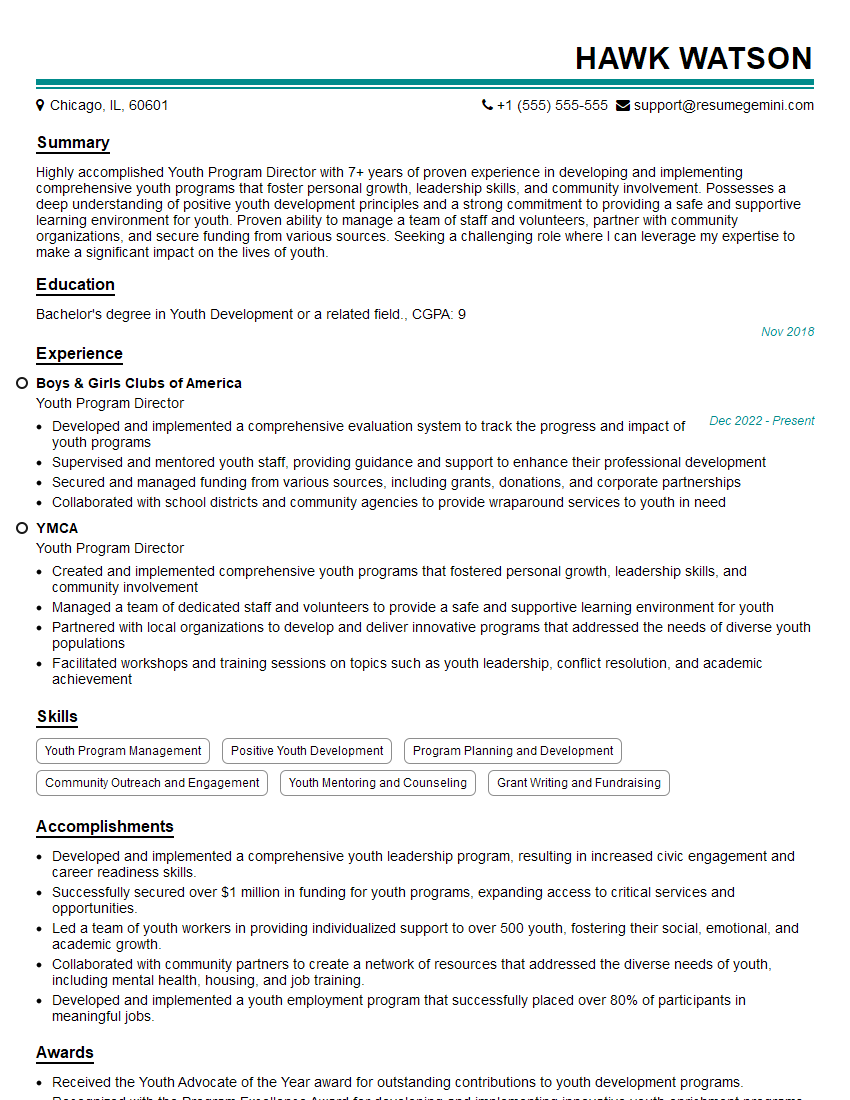
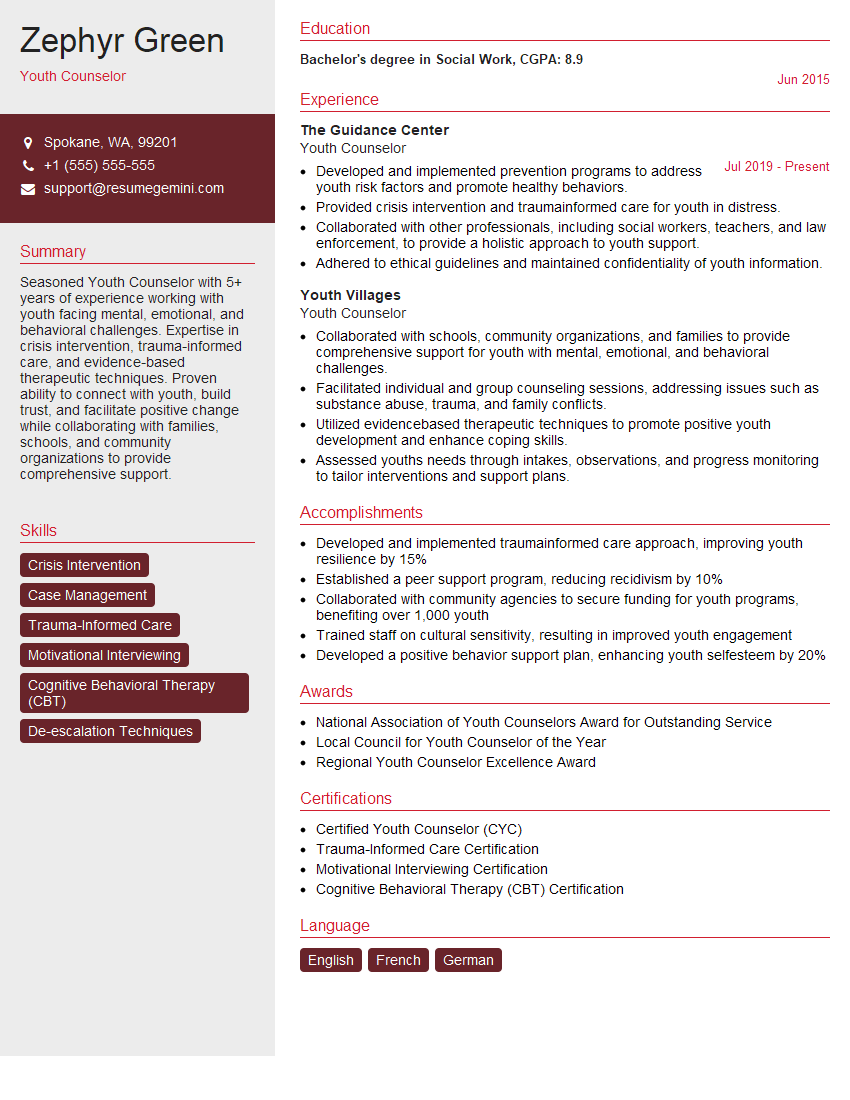
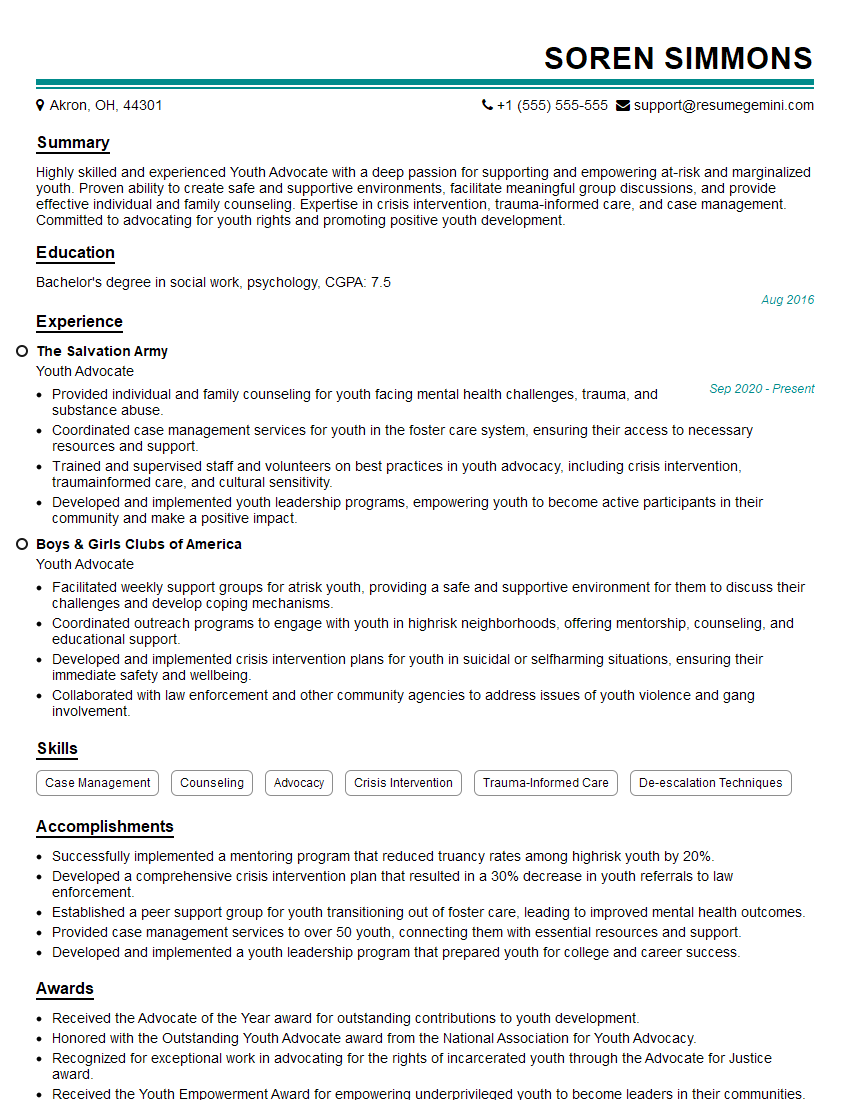
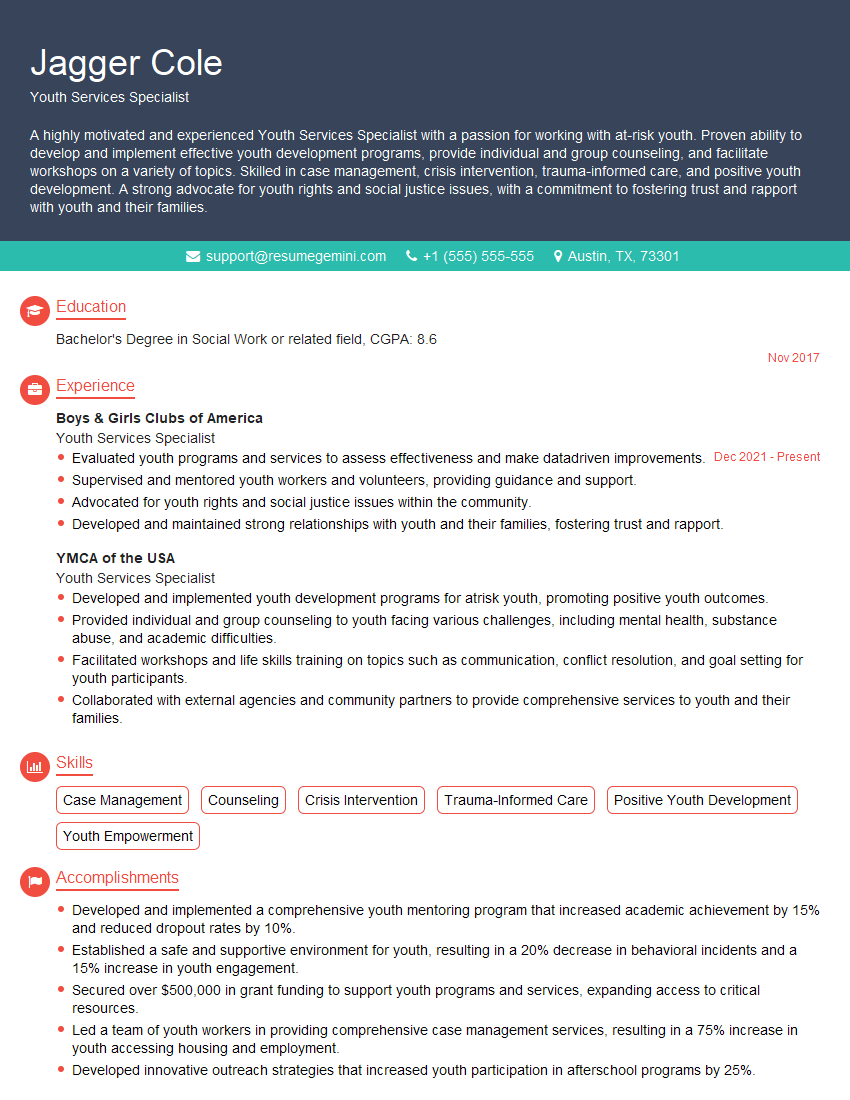
Mastering the key aspects of Youth Programs significantly enhances your career prospects in the vibrant and impactful field of youth development. It opens doors to rewarding roles that allow you to make a real difference in the lives of young people. To maximize your chances of landing your dream job, focus on creating an ATS-friendly resume that highlights your skills and experience effectively. ResumeGemini is a trusted resource to help you build a professional and impactful resume that stands out. They offer examples of resumes tailored to Youth Programs to guide you through the process, ensuring your application makes a strong first impression.
Explore more articles
Users Rating of Our Blogs
Share Your Experience
We value your feedback! Please rate our content and share your thoughts (optional).
What Readers Say About Our Blog
Very informative content, great job.
good