Cracking a skill-specific interview, like one for Solar Energy Project Feasibility Studies, requires understanding the nuances of the role. In this blog, we present the questions you’re most likely to encounter, along with insights into how to answer them effectively. Let’s ensure you’re ready to make a strong impression.
Questions Asked in Solar Energy Project Feasibility Studies Interview
Q 1. Explain the key stages involved in a solar energy project feasibility study.
A solar energy project feasibility study is a crucial process that determines if a project is viable. It systematically evaluates various aspects, ensuring a well-informed investment decision. The key stages typically include:
- Scoping and Site Assessment: Identifying potential project sites, understanding land ownership, and preliminary assessments of solar resource and grid connection possibilities. This often involves initial geographic information system (GIS) analysis.
- Resource Assessment: Detailed evaluation of solar irradiance using satellite data, weather stations, and specialized software. This helps determine the potential energy generation capacity of the site.
- Technical Design and Engineering: This involves designing the solar power plant’s layout, including panel selection, inverters, and other key components. It considers factors like shading analysis, land use restrictions, and environmental impact.
- Financial Analysis: The core of the feasibility study. This involves estimating the project’s costs (capital expenditures, operating expenses), revenue projections (based on energy production and power purchase agreements or market prices), and overall profitability. Various financial models are used, incorporating risk assessment and sensitivity analysis.
- Environmental and Social Impact Assessment: Evaluating potential environmental impacts (e.g., land use change, habitat disruption) and social considerations (e.g., community engagement, job creation). Necessary permits and approvals are considered here.
- Risk Assessment and Mitigation: Identifying potential risks (e.g., financing challenges, regulatory changes, equipment failures) and developing strategies to mitigate them. This often involves Monte Carlo simulations to assess the probability and impact of various uncertainties.
- Report Writing and Recommendation: A comprehensive report summarizing the findings of all stages, including a clear recommendation on whether the project is feasible and outlining potential next steps.
Q 2. How do you assess the technical feasibility of a solar project?
Assessing technical feasibility involves verifying the project’s ability to achieve its energy production goals within the constraints of the site and the existing infrastructure. Key aspects include:
- Solar Resource Availability: Determining sufficient solar irradiance to meet production targets. This often utilizes specialized software and on-site measurements to account for local conditions like shading and cloud cover.
- Grid Connection: Evaluating the feasibility of connecting the solar plant to the existing power grid. This involves working with utility companies, assessing grid capacity, and understanding interconnection procedures and costs.
- Land Suitability: Assessing the land’s suitability for the project, considering factors like terrain, soil conditions, access, and zoning regulations.
- System Design and Engineering: Ensuring a technically sound and efficient system design, considering factors such as panel orientation, tracking systems, and inverter sizing. Detailed simulations are performed using specialized software (PVsyst, SAM, etc.).
- Environmental Considerations: Addressing environmental impacts like land use change, wildlife impacts, and potential water usage. Compliance with environmental regulations and obtaining necessary permits are crucial.
For example, a project might be deemed technically infeasible if the grid connection requires excessively high upgrade costs or if the site experiences excessive shading that significantly reduces energy output.
Q 3. Describe your experience with solar resource assessment tools and methodologies.
My experience encompasses a wide range of solar resource assessment tools and methodologies. I’ve extensively utilized satellite-based data (e.g., from NASA’s POWER or Solcast) to estimate solar irradiance, along with on-site measurements using pyranometers and weather stations for ground truth validation. I’m proficient in using specialized software such as PVsyst and Helioscope for detailed system performance simulations, taking into account shading, soiling, and temperature effects. I’m also experienced in applying statistical methods like Monte Carlo simulations to account for uncertainties in resource availability and energy production.
For instance, in a recent project, we utilized satellite data to create a high-resolution solar irradiance map of the project area. Then, we conducted on-site measurements to calibrate the satellite data and account for localized variations. This combination enabled us to achieve a high degree of accuracy in our solar resource assessment, directly impacting the financial model’s reliability.
Q 4. How do you evaluate the financial viability of a solar project?
Evaluating the financial viability of a solar project involves a thorough analysis of the project’s costs and revenues over its lifespan. This process typically includes:
- Estimating Capital Expenditure (CAPEX): Determining the total cost of the project, including land acquisition, equipment purchase, construction, engineering, and permitting fees.
- Projecting Operating Expenditure (OPEX): Forecasting ongoing costs such as maintenance, insurance, and operations and management.
- Estimating Revenue: Projecting energy production based on the solar resource assessment and system design. This revenue is calculated using power purchase agreements (PPAs), feed-in tariffs, or market energy prices.
- Financial Modeling: Building detailed financial models using tools like Excel or specialized software to project cash flows, net present value (NPV), internal rate of return (IRR), and other key metrics. Sensitivity analysis is crucial to understand the project’s resilience to variations in key input parameters.
- Debt Financing and Equity: If applicable, we incorporate different financing options, including debt, equity investments, and the terms of loans or PPAs into the model. These options considerably impact the financial viability and returns.
For example, we might use a discounted cash flow (DCF) model to determine the NPV of the project, considering the time value of money and incorporating a discount rate that reflects the project’s risk profile.
Q 5. What are the key financial metrics used in solar project feasibility analysis?
Key financial metrics used in solar project feasibility analysis include:
- Net Present Value (NPV): The difference between the present value of cash inflows and the present value of cash outflows over a period of time. A positive NPV indicates profitability.
- Internal Rate of Return (IRR): The discount rate that makes the NPV of a project zero. It represents the project’s expected annual rate of return.
- Payback Period: The time it takes for the cumulative cash inflows to equal the cumulative cash outflows.
- Levelized Cost of Energy (LCOE): The average cost of producing one unit of electricity over the project’s lifetime. This metric is crucial for comparing different energy sources.
- Debt Service Coverage Ratio (DSCR): Measures the project’s ability to cover debt payments from its operating cash flow. A higher DSCR is preferable.
- Return on Investment (ROI): The ratio of net profit to the cost of investment. Indicates the profitability of the investment.
Q 6. How do you account for various financing options (e.g., PPAs, loans) in your analysis?
Different financing options significantly impact a project’s financial viability. We incorporate these options into the financial model by:
- Power Purchase Agreements (PPAs): Modeling the revenue stream generated from a PPA, accounting for the contract’s terms (e.g., price, duration, escalation clauses). We incorporate risk associated with the counterparty default.
- Loans: Incorporating loan terms (e.g., interest rate, loan amount, repayment schedule) into the cash flow projections. This directly impacts the debt service and overall profitability.
- Equity Financing: Accounting for the equity investment, its cost of capital, and the resulting ownership structure. This affects the distribution of project profits.
- Government Incentives: Incorporating tax credits, grants, and other incentives into the financial model, reflecting their impact on project costs and profitability. This varies significantly based on geographic location and government policy.
For example, if a project uses a PPA, the financial model needs to carefully consider the PPA’s price and the risk of price volatility. If the project uses debt financing, the model should reflect the interest payments and principal repayments.
Q 7. Explain the concept of Levelized Cost of Energy (LCOE) and its importance.
The Levelized Cost of Energy (LCOE) is a crucial metric in evaluating the cost-effectiveness of electricity generation technologies. It represents the average cost per unit of electricity generated over the project’s lifetime, considering all costs (CAPEX, OPEX, financing costs) and the total energy produced. Think of it as the average price of producing one kilowatt-hour (kWh) of electricity over the project’s life.
The formula is generally represented as:
LCOE = (Total Discounted Costs) / (Total Discounted Energy Production)Its importance lies in its ability to compare the cost of different electricity generation technologies (e.g., solar, wind, fossil fuels) under consistent conditions. A lower LCOE indicates a more cost-competitive technology. It is widely used by investors, policymakers, and utilities to make informed decisions about energy projects and broader energy strategies.
Q 8. How do you incorporate environmental and regulatory factors into your feasibility studies?
Incorporating environmental and regulatory factors is paramount in a solar project’s feasibility. It’s not just about generating power; it’s about doing so responsibly. We begin by conducting thorough environmental impact assessments (EIAs), identifying potential impacts on flora, fauna, and water resources. This involves site surveys, species assessments, and hydrological studies. We then analyze relevant regulations at the local, regional, and national levels. This includes zoning laws, building codes, environmental permits (like those related to endangered species protection or wetland disturbance), and grid connection regulations. For example, a project near a protected bird sanctuary would require specialized mitigation strategies, perhaps using bird-deterrent technologies or adjusting the project layout. Furthermore, we analyze carbon footprint implications, comparing the project’s life-cycle emissions to those of traditional energy sources to highlight its environmental benefits. Compliance is meticulously tracked throughout the project lifecycle, ensuring adherence to all permits and regulations.
- EIA: Environmental Impact Assessment
- Zoning Laws: Local regulations determining land use.
- Grid Connection Regulations: Rules governing the integration of renewable energy sources into the electricity grid.
Q 9. What are the common risks and challenges associated with solar energy projects?
Solar projects, while promising, face several risks and challenges. Financial risks include fluctuating energy prices, securing adequate financing, and potential delays impacting project timelines and budgets. Technical risks involve equipment malfunctions (inverters, panels), unforeseen site conditions (soil instability), and grid integration complexities. Regulatory and permitting risks can arise from delays in obtaining necessary permits, changes in regulations, or legal challenges from community groups. Environmental risks encompass unexpected impacts on the ecosystem, such as habitat disruption or water contamination. For instance, a project might face delays due to unexpected archaeological finds requiring additional assessments and modifications to the project plan. Another example is the risk of lower-than-projected energy yield due to shading from unexpectedly tall vegetation. Market risks can arise from changes in government policies favoring different energy sources, resulting in lower-than-anticipated demand for solar power. Lastly, unforeseen weather events, like hailstorms, can damage solar panels, impacting the overall energy output.
Q 10. How do you mitigate the risks identified during feasibility studies?
Risk mitigation is a proactive process, not a reactive one. We employ several strategies. Financial risk is mitigated through thorough financial modeling, considering various scenarios and securing robust financing packages. Technical risks are reduced through rigorous due diligence, site assessments, and the use of high-quality equipment from reputable manufacturers with warranties. Regulatory risks are minimized through proactive engagement with regulatory agencies, engaging early in the permitting process, and building strong relationships with local communities. We conduct thorough community consultations and address any concerns transparently. Environmental risks are addressed through robust EIAs, environmental monitoring, and mitigation plans that are clearly defined and implemented throughout the project lifecycle. For example, if soil instability is detected, we could employ specialized foundation techniques. To mitigate market risks, we focus on projects with long-term power purchase agreements (PPAs) that guarantee a stable income stream. We also perform a thorough sensitivity analysis of pricing, demand and interest rates to be well prepared for various scenarios. Finally, insurance policies, such as those covering weather damage, are crucial to handling unforeseen events.
Q 11. Describe your experience with different solar technologies (e.g., PV, CSP).
My experience spans both photovoltaic (PV) and concentrated solar power (CSP) technologies. With PV, I’ve worked on projects ranging from small-scale rooftop installations to large-scale utility-scale solar farms, using various PV technologies, including monocrystalline, polycrystalline, and thin-film panels. I understand the nuances of each technology, considering factors like efficiency, cost, and environmental impact. In CSP, I have expertise in parabolic trough and power tower systems. I understand the complexities of thermal storage, heat transfer, and the integration of thermal energy into the power generation process. I have experience evaluating the suitability of each technology for a given location considering factors like solar irradiance, land availability, and water resources. For example, a region with high solar irradiance and abundant land might be ideal for a large-scale CSP plant with thermal storage, while a region with less land might benefit more from a PV farm.
Q 12. Explain your understanding of grid integration issues related to solar projects.
Grid integration is critical for solar projects. Issues arise from the intermittent nature of solar power, its variable output throughout the day, and its potential impact on grid stability. We address these challenges using various strategies. This includes power flow studies to analyze the impact on the grid, the installation of inverters to ensure the solar power is compatible with the grid’s frequency and voltage, and potentially the incorporation of energy storage systems (batteries) to smooth out power fluctuations. Furthermore, we need to work closely with the grid operator (transmission system operator or TSO) to ensure seamless integration and obtain the necessary interconnection agreements. A lack of grid infrastructure in some areas can also be a significant challenge, requiring investment in new transmission lines and substations. This requires close collaboration with local utilities and regulatory bodies to ensure a smooth and efficient process.
Q 13. How do you determine the appropriate size and location of a solar power plant?
Determining the appropriate size and location involves a multi-faceted approach. We start with a detailed site assessment, including solar resource mapping using data from satellite imagery and weather stations. This analysis helps us determine the average daily solar irradiance at the potential locations. We then consider land availability, cost, proximity to the grid, and environmental constraints. The size is determined by considering the project’s goals (e.g., power generation capacity, economic returns), the available land area, and the anticipated energy demand. We utilize specialized software to model various scenarios and optimize the system design for maximum efficiency. For example, we might use geographic information systems (GIS) to identify areas with optimal solar irradiance and minimal environmental impact. This is followed by detailed engineering design to ensure efficient land use and optimal panel placement to minimize shading effects.
Q 14. How do you conduct a comprehensive market analysis for a solar energy project?
A comprehensive market analysis is essential for solar project success. It involves studying the current and projected demand for electricity in the target market, analyzing existing energy sources and competition, identifying potential customers (e.g., utilities, businesses, residential consumers), and assessing the regulatory landscape and government incentives. We analyze energy prices, energy policies, and the potential for power purchase agreements (PPAs). We also conduct a thorough review of existing solar projects in the area to understand the market dynamics. For example, a market analysis might reveal a growing demand for renewable energy in a specific region, driven by government policies favoring solar power and an increasing awareness of climate change amongst consumers. Understanding these market drivers helps us to accurately assess the economic viability of the project and develop a targeted marketing strategy.
Q 15. What software or tools do you use for solar project modeling and simulation?
For solar project modeling and simulation, I utilize a suite of software tools tailored to different aspects of the project lifecycle. This isn’t a one-size-fits-all approach; the selection depends on the project’s specifics and the phase of development.
For resource assessment and performance simulation, I frequently use PVsyst and Helioscope. PVsyst is particularly powerful for detailed modeling of PV systems, accounting for various factors like shading, soiling, and temperature effects. Helioscope excels in its user-friendly interface and rapid generation of performance predictions, especially helpful in the early stages of a project.
For financial modeling, I employ tools like SAM (System Advisor Model) from the National Renewable Energy Laboratory (NREL). SAM allows for comprehensive financial analysis, including levelized cost of energy (LCOE) calculations and sensitivity analyses to various input parameters. I also use spreadsheet software like Microsoft Excel for detailed financial modeling and customized calculations.
Finally, GIS software such as ArcGIS is invaluable for site selection, land use analysis, and visualizing project layouts. The interplay of these tools ensures a holistic and accurate project simulation.
Career Expert Tips:
- Ace those interviews! Prepare effectively by reviewing the Top 50 Most Common Interview Questions on ResumeGemini.
- Navigate your job search with confidence! Explore a wide range of Career Tips on ResumeGemini. Learn about common challenges and recommendations to overcome them.
- Craft the perfect resume! Master the Art of Resume Writing with ResumeGemini’s guide. Showcase your unique qualifications and achievements effectively.
- Don’t miss out on holiday savings! Build your dream resume with ResumeGemini’s ATS optimized templates.
Q 16. Describe your experience with energy yield assessments and forecasting.
Energy yield assessments and forecasting are critical to project viability. My experience involves a multi-faceted approach. First, I meticulously gather historical weather data, including solar irradiance, temperature, and wind speed, from reliable sources like the National Solar Radiation Database (NSRDB) or local meteorological stations. This data forms the foundation of my analysis.
Then, I use specialized software, such as those mentioned previously (PVsyst, Helioscope), to model the performance of the proposed solar system based on this weather data, system specifications (panel type, inverter efficiency etc.), and site characteristics (terrain, shading). These models provide detailed predictions of energy generation on an hourly, daily, and yearly basis.
I also incorporate uncertainty analysis into my forecasts. Solar irradiance is inherently variable, and I account for this variability using statistical methods to generate probability distributions of energy yield. This allows for realistic estimations of project risk and potential deviations from predicted outputs. Presenting this probabilistic information (e.g., a range of possible energy production instead of a single value) is key to informed decision-making.
Finally, I validate the models by comparing predicted energy production against the actual performance data of similar projects in the region. This allows for adjustments and calibration of the model, ensuring a higher level of accuracy.
Q 17. How do you evaluate the land use and permitting aspects of a solar project?
Land use and permitting are significant hurdles in solar project development. My approach begins with a thorough site assessment, employing GIS tools to analyze land ownership, zoning regulations, environmental constraints (wetlands, endangered species habitats), and proximity to transmission infrastructure.
Next, I conduct a legal review to understand the relevant regulations and permitting requirements, which vary widely by jurisdiction. This includes analyzing local zoning ordinances, building codes, and environmental protection laws. I often work with land use lawyers specializing in renewable energy projects to navigate complex permitting processes.
Community engagement is crucial. I facilitate meetings and presentations to address community concerns and gain local support for the project. This can involve discussions on aesthetic impacts, property values, and potential economic benefits.
Permitting strategy is developed in collaboration with regulatory agencies, aiming to streamline the approval process and minimize delays. This may involve submitting comprehensive environmental impact assessments, participating in public hearings, and navigating potential appeals. A well-planned and community-sensitive approach significantly accelerates project timelines.
Q 18. How do you incorporate energy storage systems into your project feasibility analysis?
Incorporating energy storage systems (ESS) is becoming increasingly crucial for solar project feasibility. The analysis involves evaluating the economic and technical benefits of adding batteries to the system.
From a technical perspective, I assess the suitability of different battery technologies based on factors like capacity, lifespan, charging/discharging rates, and cost. The optimal ESS size is determined through simulation to meet specific project goals, such as improving grid stability, increasing self-consumption, or providing backup power.
Economically, I evaluate the impact of ESS on the project’s financial performance by considering factors like capital costs, operating and maintenance expenses, and increased revenue streams from grid services (e.g., frequency regulation) or time-of-use arbitrage. A detailed financial model is used to assess the return on investment (ROI) of the ESS and its influence on the project’s overall profitability.
I employ software like HOMER Pro or SAM, which have built-in capabilities for modeling and analyzing hybrid renewable energy systems including ESS, to quantify these benefits and determine optimal configurations.
Q 19. How do you assess the social and community impacts of a solar project?
Assessing social and community impacts is essential for responsible solar project development. My approach includes identifying potential positive and negative impacts, and devising mitigation strategies.
Potential positive impacts might include job creation during construction and operation, increased tax revenue for local governments, and improved local air quality. I quantify these benefits using economic modeling and data from similar projects.
Potential negative impacts could involve visual impacts on the landscape, noise pollution during construction, or impacts on local wildlife. I employ methods like visual impact assessments, noise modeling, and ecological surveys to gauge these impacts. Mitigation strategies, such as careful site selection, noise barriers, and habitat restoration plans, are designed to minimize negative effects.
Community engagement is central to this process. I actively seek input from local residents, stakeholders, and community groups through public meetings, surveys, and open forums to address concerns and build consensus. Addressing concerns transparently and proactively strengthens project acceptance and reduces potential conflicts.
Q 20. Explain your understanding of different interconnection procedures and regulations.
Interconnection procedures and regulations dictate how a solar project connects to the electricity grid. These processes are complex and vary greatly based on location and grid operator.
My understanding encompasses the entire process, from initial interconnection studies to final grid connection. I’m familiar with different interconnection agreements, application procedures, technical requirements (e.g., voltage and frequency compliance, protection relay settings), and associated costs.
I have experience working with various grid operators, navigating their specific requirements, and preparing the necessary documentation, including interconnection studies, protection and control plans, and compliance reports. This typically involves working with engineering consultants specializing in grid interconnection. Understanding and meeting these requirements are crucial to ensuring a successful and timely grid connection of the solar project.
Furthermore, I stay updated on evolving interconnection standards and regulations to maintain compliance and optimize the grid connection process.
Q 21. Describe your experience with due diligence processes in the solar industry.
Due diligence in the solar industry involves a thorough investigation of all aspects of a project to assess its risks and opportunities before investment or acquisition. My experience encompasses a systematic approach covering several key areas.
Technical due diligence involves reviewing the engineering designs, system performance data, and equipment specifications to verify the project’s technical feasibility and operational efficiency. This includes reviewing site assessments, interconnection studies, and performance guarantees.
Financial due diligence includes analyzing the project’s financial statements, contracts, and financing arrangements to assess its financial health and profitability. This includes review of capital costs, operational expenses, revenue projections, and risk factors.
Legal and regulatory due diligence examines permits, licenses, land ownership, and environmental compliance to ensure the project is legally sound and compliant with all applicable regulations.
Environmental due diligence evaluates potential environmental impacts and risks associated with the project, including land disturbance, wildlife impacts, and water resource use.
Finally, a thorough insurance due diligence review is essential to assess the project’s insurance coverage and risk management strategies. By systematically evaluating all these aspects, I provide a comprehensive assessment of project risks and opportunities to support informed investment decisions.
Q 22. What are some key considerations when evaluating the performance of solar panels?
Evaluating solar panel performance involves a multifaceted approach, going beyond simply looking at the manufacturer’s specifications. We need to consider several key factors to accurately assess their real-world efficiency and longevity.
Power Output (Wattage): This is the most basic metric, indicating the panel’s electricity generation capacity under standard test conditions (STC). However, real-world output varies significantly depending on factors like sunlight intensity, temperature, and angle.
Efficiency: This represents how effectively a panel converts sunlight into electricity. Higher efficiency means more power from a smaller area, impacting land use and costs. For instance, a 20% efficient panel generates 200W from 1000W of sunlight.
Temperature Coefficient: Solar panel output decreases as temperature increases. The temperature coefficient quantifies this reduction. A lower coefficient is preferable, indicating less performance degradation in hot climates. This is critical for projects in regions with high average temperatures.
Degradation Rate: Solar panels gradually lose efficiency over time. A typical degradation rate is around 0.5% per year. We account for this in long-term performance projections to ensure realistic energy yield predictions.
Spectral Response: Different panels react differently to varying wavelengths of sunlight. This is particularly important in areas with high levels of atmospheric dust or haze that can affect the light spectrum. A broader spectral response is advantageous.
Performance Ratios: These ratios (e.g., capacity factor, performance ratio) account for real-world factors like shading, soiling, and inverter losses, providing a more accurate measure of actual energy production. Analyzing these ratios allows for a realistic assessment of overall system efficiency.
In practice, I often use performance monitoring data from similar projects in the same geographical location to calibrate our models and improve accuracy. This data-driven approach significantly enhances our understanding of the true performance of solar panels.
Q 23. Explain the difference between utility-scale and distributed generation solar projects.
Utility-scale and distributed generation (DG) solar projects differ significantly in scale, ownership, and application.
Utility-scale solar involves large-scale solar farms, typically several megawatts or more in capacity. These projects are usually owned and operated by large utilities or independent power producers (IPPs) and connect directly to the transmission grid, supplying electricity to a vast area. Think of large fields covered in solar panels supplying power to a city.
Distributed generation (DG) solar comprises smaller-scale installations, such as rooftop solar panels on residential or commercial buildings. These projects are typically owned by the building owner or a third-party through power purchase agreements (PPAs). DG systems can feed electricity directly into the building or contribute to the local grid through net metering. An example would be solar panels on the roof of a supermarket, generating power directly for the business’s use.
The key difference lies in the scale and connection point to the grid. Utility-scale projects focus on large-scale power generation for widespread distribution, while DG projects focus on local power generation and consumption, with potential grid integration. The feasibility studies for each differ in scale and required analysis – from grid impact studies for large-scale projects to detailed building assessments for DG installations.
Q 24. How do you incorporate climate change projections into your long-term feasibility analysis?
Incorporating climate change projections into long-term feasibility analyses is crucial for ensuring project viability. Ignoring these factors can lead to inaccurate projections and significant financial risks.
We use climate models and projections to understand how changing weather patterns (increased temperatures, altered rainfall patterns, changes in solar irradiance) may affect solar energy generation over the project’s lifespan (often 25-30 years). This involves:
Obtaining climate data: We utilize high-resolution climate projections from reputable sources like the IPCC (Intergovernmental Panel on Climate Change) or national meteorological agencies. This data incorporates various emission scenarios to reflect the uncertainty inherent in future climate changes.
Modifying solar resource assessments: We adjust our initial solar resource assessments (irradiance, temperature) using the projected climate data. This often involves sophisticated modeling techniques to account for the complex interactions between climate variables and solar energy generation.
Assessing impacts on other parameters: Climate change can influence other factors impacting feasibility like increased frequency of extreme weather events (hurricanes, hailstorms), affecting the project’s lifespan and insurance costs. We use probabilistic methods to assess the likelihood and severity of such events and incorporate these into the financial models.
Sensitivity analysis: We perform sensitivity analyses to test the robustness of our projections under different climate change scenarios. This helps in identifying the key climate-related risks and developing mitigation strategies (e.g., using more robust solar panel designs that can withstand extreme weather).
By explicitly considering these factors, we create more realistic and resilient feasibility studies that account for the long-term impacts of climate change, helping to secure investments and reduce financial risks.
Q 25. Describe your experience working with engineering, procurement, and construction (EPC) contractors.
I have extensive experience collaborating with Engineering, Procurement, and Construction (EPC) contractors on numerous solar projects. This typically involves a complex interplay of technical, logistical, and contractual aspects.
Project scoping and design review: I actively participate in the early stages of project development, reviewing the EPC contractor’s proposed design, specifications, and methodologies to ensure alignment with the project’s technical and financial goals. This includes thorough review of equipment selections, construction methods, and safety plans.
Cost estimation and budgeting: I work closely with EPC contractors to develop detailed cost estimates and project budgets, ensuring accuracy and transparency. This includes identifying potential cost overruns and implementing risk mitigation strategies.
Contract negotiation and management: I am skilled in negotiating contracts with EPC contractors, ensuring that the agreement clearly defines responsibilities, deliverables, and performance guarantees. Effective contract management is vital for keeping projects on schedule and budget.
Project monitoring and oversight: Throughout the construction phase, I oversee the project’s progress, regularly reviewing the EPC contractor’s work to ensure compliance with technical specifications, quality standards, and safety regulations. This usually involves site visits and regular progress reports.
Commissioning and performance testing: I participate in the project commissioning, ensuring that the completed solar plant meets performance expectations and is operating optimally. This includes comprehensive testing and validation to verify energy output and system efficiency.
My experience has shown that a collaborative approach, based on mutual trust and clear communication, is essential for successful project execution. Open communication and a proactive approach to problem-solving are crucial to navigating the complexities of working with EPC contractors.
Q 26. How do you handle uncertainties and variations in project costs and timelines?
Handling uncertainties and variations in project costs and timelines is a critical aspect of feasibility studies. We employ several strategies to address this:
Sensitivity Analysis: We perform sensitivity analysis on key variables (e.g., equipment costs, labor rates, permitting timelines, financing costs) to understand how changes in these variables affect the project’s financial viability. This allows us to identify areas of high risk and develop mitigation strategies.
Monte Carlo Simulation: For more complex projects, Monte Carlo simulation is used. This probabilistic approach assigns probability distributions to uncertain variables and runs thousands of simulations, producing a range of possible outcomes. This provides a more comprehensive understanding of the project’s risk profile.
Contingency Planning: We incorporate contingency buffers into the project budget and schedule to account for unexpected delays or cost increases. The size of the buffer is determined by the level of uncertainty associated with each variable.
Risk Assessment and Mitigation: A detailed risk assessment identifies potential risks and uncertainties throughout the project lifecycle. Mitigation strategies are developed to reduce the likelihood or impact of these risks, including alternative sourcing of materials, insurance coverage, and robust contract clauses.
Phased Approach: For large-scale projects, breaking down the project into phases allows for more manageable risk assessment and easier adaptation to evolving circumstances.
By proactively addressing uncertainties and incorporating risk management techniques into our analysis, we enhance the reliability of our feasibility studies and provide stakeholders with a clear picture of the project’s potential risks and rewards.
Q 27. How would you present your findings from a solar feasibility study to stakeholders?
Presenting findings from a solar feasibility study to stakeholders requires a clear, concise, and visually engaging approach. My presentation strategy usually involves the following:
Executive Summary: A concise summary of the key findings, including the project’s financial viability, key risks, and recommendations.
Project Overview: A brief description of the proposed project, including its location, size, technology, and intended purpose.
Technical Analysis: A detailed presentation of the technical aspects of the study, including solar resource assessment, system design, and performance projections. Visual aids like maps, diagrams, and charts are essential.
Financial Analysis: A thorough analysis of the project’s financial viability, including capital costs, operating costs, revenue projections, and key financial metrics (e.g., IRR, NPV, payback period). This section may include sensitivity analyses to demonstrate the project’s robustness under various scenarios.
Risk Assessment and Mitigation: A clear presentation of the identified risks and uncertainties, along with the proposed mitigation strategies. This builds stakeholder confidence in the project’s planning.
Recommendations: Clear and concise recommendations based on the study’s findings, including whether to proceed with the project and any suggested modifications.
Q&A Session: Allocating time for a Q&A session is crucial to address stakeholders’ questions and concerns.
The presentation format is tailored to the specific audience. For technical stakeholders, a more detailed technical analysis is provided, while for non-technical audiences, the focus is on the key findings and financial implications. Using clear and simple language, avoiding technical jargon whenever possible, is essential for effective communication.
Key Topics to Learn for Solar Energy Project Feasibility Studies Interview
- Resource Assessment: Understanding solar irradiance data, site characteristics (topography, shading), and available land area. Practical application: Analyzing GIS data and using solar resource assessment tools to determine project viability.
- Technical Design & Engineering: Selecting appropriate PV technology, system sizing (kWp), system architecture (ground-mounted, rooftop), and energy storage considerations (batteries). Practical application: Developing system schematics and performing energy yield calculations using PVSyst or similar software.
- Financial Modeling & Analysis: Developing detailed project budgets, evaluating different financing options (debt, equity), performing levelized cost of energy (LCOE) calculations, and assessing project returns (IRR, NPV). Practical application: Creating financial models in Excel or dedicated financial modeling software to demonstrate project profitability.
- Environmental Impact Assessment: Understanding and assessing the environmental implications of solar projects, including land use, biodiversity, and carbon footprint. Practical application: Preparing environmental impact statements and incorporating sustainable practices into project design.
- Regulatory Compliance & Permitting: Navigating the regulatory landscape, obtaining necessary permits and approvals from local, state, and federal authorities. Practical application: Understanding interconnection requirements with the grid and complying with building codes.
- Risk Assessment & Mitigation: Identifying potential risks (technical, financial, regulatory) and developing strategies to mitigate them. Practical application: Developing contingency plans and incorporating risk factors into financial models.
- Grid Integration & Interconnection: Understanding the technical aspects of connecting a solar power plant to the electrical grid. Practical application: Analyzing grid capacity, understanding power flow studies, and ensuring grid stability.
Next Steps
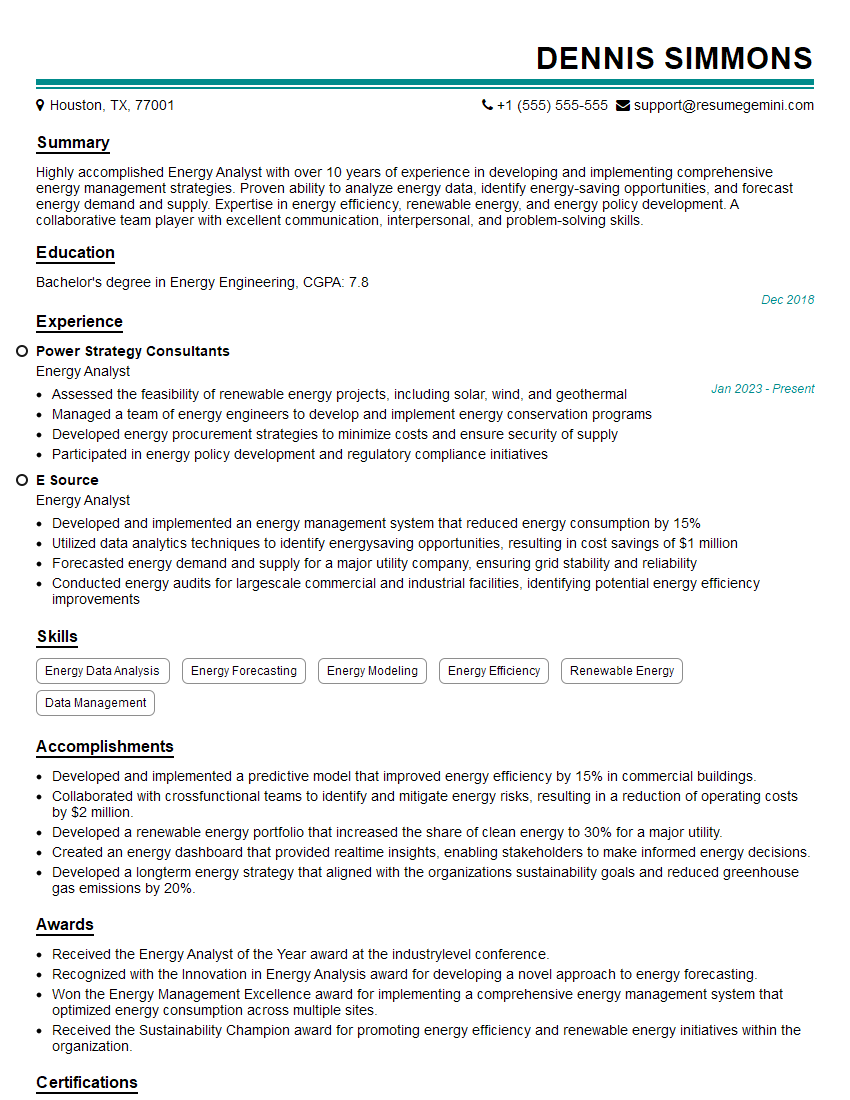
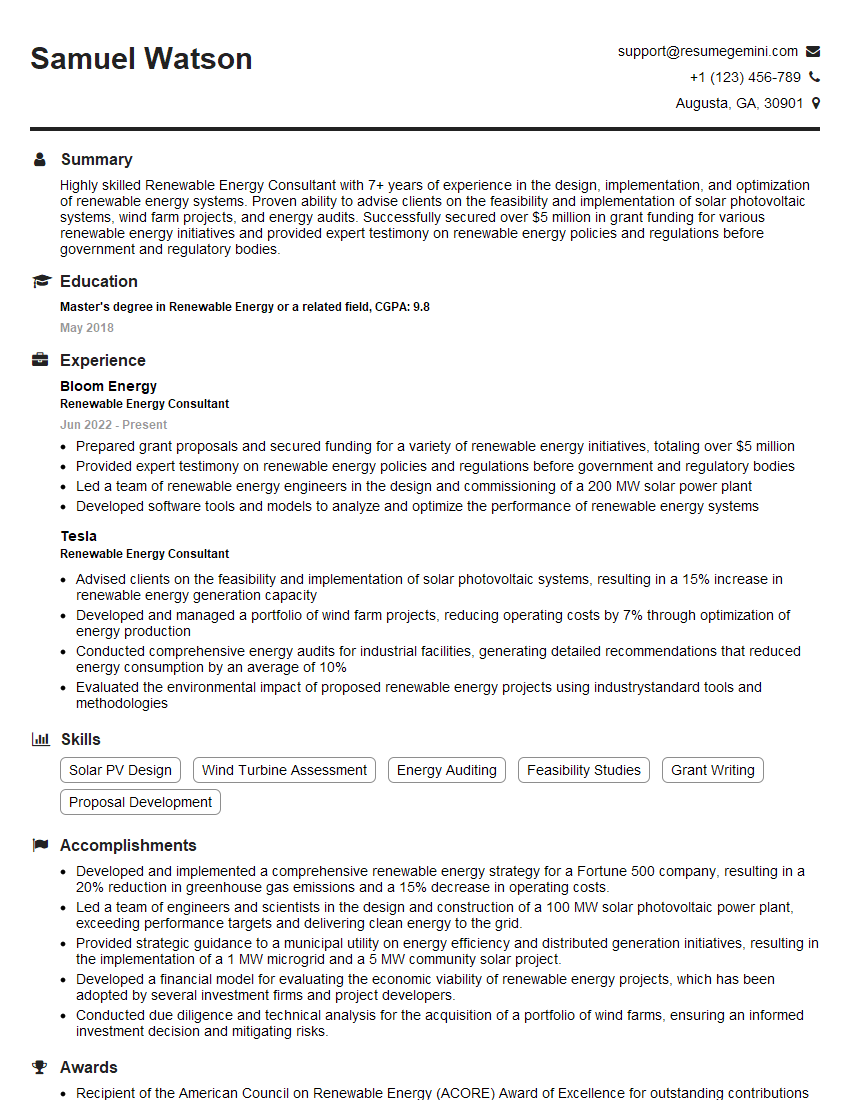
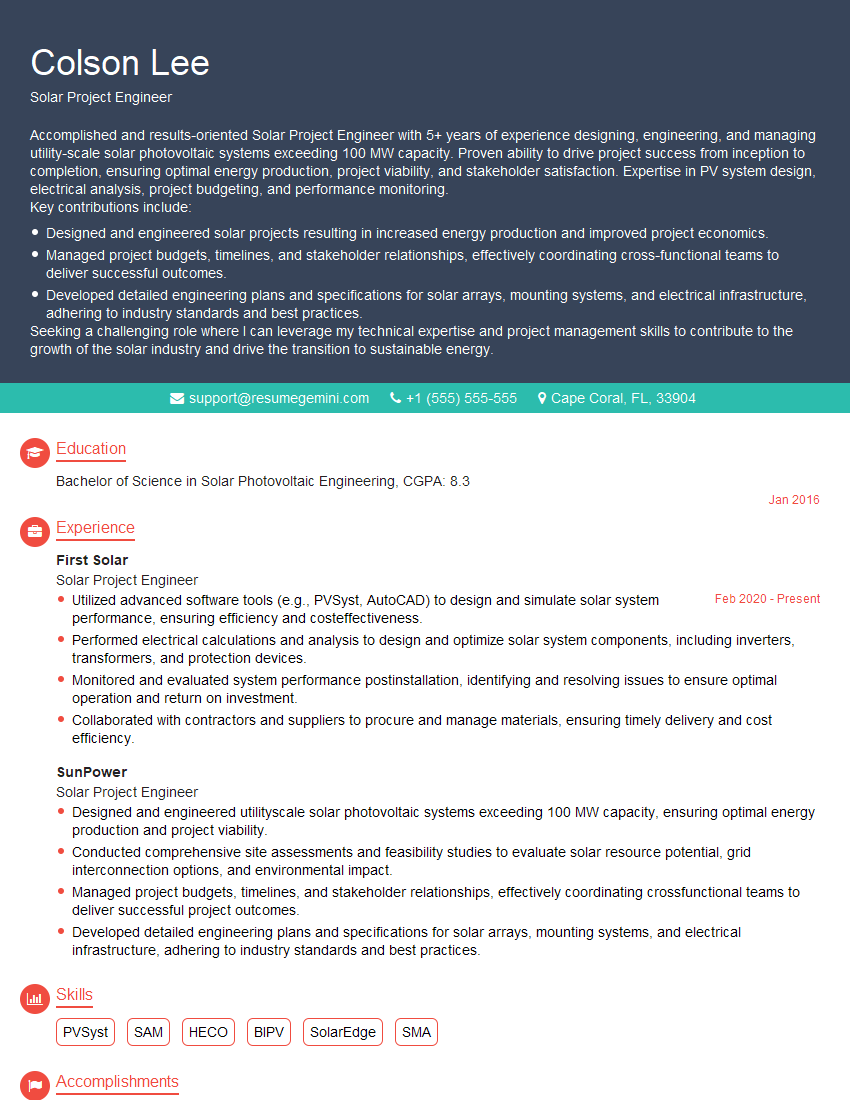
Mastering Solar Energy Project Feasibility Studies is crucial for career advancement in the rapidly growing renewable energy sector. It demonstrates a comprehensive understanding of technical, financial, and environmental aspects of project development, making you a highly valuable asset to any organization. To enhance your job prospects, focus on building a strong, ATS-friendly resume that highlights your skills and experience effectively. ResumeGemini is a trusted resource that can help you create a professional and impactful resume tailored to the solar energy industry. Examples of resumes specifically designed for candidates with expertise in Solar Energy Project Feasibility Studies are available to guide you.

Explore more articles
Users Rating of Our Blogs
Share Your Experience
We value your feedback! Please rate our content and share your thoughts (optional).
What Readers Say About Our Blog
Very informative content, great job.
good