Interviews are more than just a Q&A session—they’re a chance to prove your worth. This blog dives into essential Ability to Handle Delicate Fabric and Garments interview questions and expert tips to help you align your answers with what hiring managers are looking for. Start preparing to shine!
Questions Asked in Ability to Handle Delicate Fabric and Garments Interview
Q 1. What are the key differences between different fabric types (e.g., silk, wool, linen, cotton) and how does this affect cleaning and handling?
Different fabrics possess unique fiber structures and sensitivities, demanding tailored care. For instance, silk, a protein fiber, is exceptionally delicate and prone to damage from harsh treatments. Wool, another protein fiber, is similarly sensitive, while linen, a plant fiber, is more durable but can wrinkle easily. Cotton, also a plant fiber, is generally the most robust and easy to care for.
- Silk: Requires gentle handling, hand-washing or delicate cycle, and air drying. Its smooth surface can snag easily.
- Wool: Often requires hand-washing or a specialized wool cycle, and should be laid flat to dry to prevent stretching. It’s susceptible to felting (matting of fibers) with harsh treatment.
- Linen: Can tolerate machine washing but benefits from a delicate cycle and cool temperature. Ironing is often necessary to remove wrinkles.
- Cotton: Generally more durable and can withstand machine washing and higher heat, though always check the care label.
Understanding these differences is crucial for preventing damage. For example, using hot water on silk can cause it to shrink or lose its sheen, while using harsh detergents on wool can lead to felting. Always check the garment’s care label for specific instructions before cleaning.
Q 2. Explain the proper techniques for hand-washing delicate fabrics.
Hand-washing delicate fabrics requires a gentle touch and the right tools. Imagine you’re handling a precious piece of art—that’s the level of care needed!
- Fill a basin: With lukewarm water, add a small amount of a mild, pH-neutral detergent specifically designed for delicates.
- Submerge the garment: Gently swish the garment in the water, avoiding harsh rubbing or twisting. Let it soak for about 10-15 minutes.
- Rinse thoroughly: Rinse the garment under cool, running water until all traces of detergent are gone. Avoid wringing or twisting.
- Gently remove excess water: Roll the garment in a clean towel to absorb excess water. Do not squeeze or wring.
- Lay flat to dry: Place the garment on a clean, dry towel, reshaping it to its original form. Avoid direct sunlight or heat.
Remember, patience is key. Rushing the process can damage the fabric. For heavily soiled items, you might consider a professional cleaning service.
Q 3. Describe the appropriate methods for ironing various delicate fabrics, including temperature settings and pressing techniques.
Ironing delicate fabrics demands precision and the right temperature. Using too much heat can scorch or damage the fabric, while too little won’t remove wrinkles effectively.
- Silk: Iron on a low setting (preferably using a silk setting if your iron has one) with the iron on the reverse side of the fabric, using a pressing cloth to prevent shine.
- Wool: Iron on a low setting with steam, using a pressing cloth to prevent shine and damage. Avoid direct heat and excessive pressure.
- Linen: Can tolerate higher heat than silk or wool, but still requires a moderate setting. Steam can help remove wrinkles effectively.
- Cotton: Generally, cotton can handle higher iron temperatures. Always check the care label to determine the correct setting.
Always test the iron temperature on an inconspicuous area first. A pressing cloth is highly recommended to protect delicate fabrics from direct heat and potential damage. Consider using a steam iron to loosen wrinkles and reduce the need for harsh pressure.
Q 4. How would you identify and treat common fabric stains on delicate garments?
Treating stains on delicate garments requires a gentle approach and a keen eye for the stain’s type. Never scrub vigorously!
- Identify the stain: Determine the type of stain (e.g., wine, oil, coffee). Different stains require different treatments.
- Blot, don’t rub: Gently blot the stain with a clean cloth to lift as much of the stain as possible.
- Test a cleaning solution: Apply a small amount of a gentle cleaning solution (e.g., mild detergent, stain remover designed for delicates) to an inconspicuous area to test for colorfastness.
- Apply the solution: If the test is successful, apply the solution to the stain, working from the outside in. Avoid rubbing.
- Rinse thoroughly: Rinse the treated area with cool water.
- Air dry: Allow the garment to air dry completely before wearing.
For stubborn stains or very delicate fabrics, professional cleaning is recommended. For instance, a professional dry cleaner has the expertise and equipment to treat delicate items safely and effectively.
Q 5. What are the potential risks of using harsh chemicals or improper techniques on delicate fabrics?
Using harsh chemicals or improper techniques on delicate fabrics can lead to irreversible damage. Imagine using sandpaper on a delicate painting—the results would be disastrous.
- Color loss or fading: Harsh chemicals can strip the color from the fabric, leaving it dull and faded.
- Fiber damage: Strong detergents and high temperatures can weaken and damage the fibers, leading to shrinkage, stretching, or even holes.
- Shrinkage: Hot water and harsh treatments can cause delicate fabrics to shrink significantly.
- Pilling: Rough handling can cause small balls of fiber (pills) to form on the surface of the fabric.
- Irreversible damage: In severe cases, improper care can lead to irreparable damage, rendering the garment unusable.
Always follow the care label instructions meticulously and err on the side of caution. When in doubt, consult a professional dry cleaner.
Q 6. How do you determine the appropriate drying method for a delicate garment?
Choosing the right drying method is crucial for preserving the shape and integrity of delicate garments. Think of it as choosing the right environment for a delicate plant—it needs the perfect conditions to thrive.
- Air drying: This is generally the safest method for most delicate fabrics. Lay the garment flat on a clean, dry towel or hang it on a padded hanger, away from direct sunlight and heat.
- Machine drying: Only use a machine dryer if the care label explicitly allows it, and select the ‘delicates’ or ‘air dry’ setting. Even then, it’s often preferable to air dry.
- Tumble drying: Should generally be avoided with delicate fabrics, as the heat and tumbling action can damage the fibers.
The best method depends on the fabric type and the garment’s care label. Air drying is always the safest option unless explicitly stated otherwise. Never put a delicate garment in a hot dryer.
Q 7. Describe your experience with steam cleaning or pressing delicate fabrics.
Steam cleaning and pressing are effective methods for refreshing and de-wrinkling delicate fabrics, but require a light touch and the right equipment.
My experience includes using steam irons and garment steamers on various delicate fabrics like silk, wool, and lace. I always utilize a pressing cloth to protect the fabric from direct heat and to avoid creating shine. For delicate items, I prefer garment steamers as they offer a gentler approach, reducing the risk of damage compared to a traditional iron. The steamer’s consistent moisture helps loosen wrinkles without harsh direct heat or pressure.
With steam cleaning or pressing, it’s critical to maintain a safe distance and avoid prolonged exposure to one area. This prevents scorching or water damage. For example, when steaming a silk blouse, I would work in sections, holding the steamer a few inches from the fabric, and moving it continuously to prevent any water spots.
Q 8. How do you handle garments with intricate embellishments or beading?
Handling garments with intricate embellishments like beading or sequins requires utmost care to prevent damage. Think of it like handling a delicate piece of art – each element needs individual attention. My approach begins with a thorough visual inspection to identify any loose or potentially problematic elements. I then proceed with a gentle hand, supporting the embellished areas from underneath while manipulating the garment. For cleaning, I would opt for hand washing or a specialized machine with a delicate cycle, potentially using a mesh laundry bag to further protect the embellishments. I would never use harsh chemicals or aggressive scrubbing actions. For example, when cleaning a beaded evening gown, I might use a soft-bristled brush to gently remove surface dirt before a delicate hand wash with a mild detergent. Finally, the garment would be laid flat to dry, again ensuring the embellishments are supported to maintain their shape and prevent them from becoming snagged or dislodged.
Q 9. What are your strategies for preventing damage to delicate fabrics during storage?
Preventing damage during storage is crucial for maintaining the longevity of delicate fabrics. Imagine storing a prized silk scarf – you wouldn’t just toss it in a drawer! My strategy focuses on three key elements: proper folding or hanging, protective coverings, and appropriate environmental conditions. Delicate items should ideally be folded using acid-free tissue paper between layers to prevent creasing and abrasion. They should then be stored in breathable fabric bags or acid-free boxes to protect against dust, light, and insects. Acid-free storage is particularly important because acidic materials can gradually damage the fibers. Lastly, the storage area should be cool, dark, and dry to minimize the risk of deterioration. Avoid attics or basements with fluctuating temperatures and humidity.
Q 10. How would you handle a garment with a delicate zipper or button?
A delicate zipper or button presents a unique challenge. The key here is gentle manipulation and the use of appropriate tools. If a zipper is stuck, I’d apply a tiny amount of zipper lubricant and gently work it back and forth, avoiding any forceful pulling. For buttons, if a button is loose, I’d carefully assess the type of fastening. For a simple button, I might carefully re-sew it using thread that matches the original. For more complex fastenings, a professional tailor might be consulted. If the button is broken, I’d take the garment to a skilled tailor or repair specialist to avoid causing further damage to the surrounding fabric by attempting a repair myself. Always prioritize preserving the integrity of the garment.
Q 11. What are the signs of fabric damage and how would you address them?
Recognizing fabric damage early on is vital for effective remediation. Signs of damage can include: snags or pulls, discoloration, holes, weakening of fibers, and pilling. For example, a small snag can be carefully worked back into place with a crochet hook. Discoloration might require specialized cleaning techniques. Holes might be repairable depending on the size and location, potentially needing patching or darning. Weakening fibers might signify the need for gentle handling and specialized care. Pilling, the formation of small balls of fiber, can be removed with a fabric shaver. Addressing these issues promptly can prevent further damage and extend the life of the garment. In cases of extensive damage, a professional dry cleaner or tailor should be consulted.
Q 12. Describe your experience with using specialized cleaning equipment for delicate fabrics.
My experience with specialized cleaning equipment includes using both professional-grade washing machines with delicate cycles and steam cleaners. I’m proficient in operating these machines while adhering to manufacturer’s instructions for the best results and to avoid damaging delicate materials. Professional washing machines allow me to meticulously control water temperature, cycle duration, and spin speed to customize the cleaning process for various fabrics. Steam cleaners are invaluable for spot cleaning or refreshing delicate garments without subjecting them to full submersion in water. For example, a silk scarf can be lightly steamed to remove wrinkles, while heavily soiled items could require a more thorough wet cleaning process in a specialized machine. Safety training and regular maintenance of this equipment is crucial for preserving both the equipment and the garments.
Q 13. How do you assess the condition of a garment before cleaning or handling it?
Assessing the condition of a garment before handling is the cornerstone of responsible care. My approach begins with a visual inspection, noting any stains, tears, loose threads, or embellishments that require special attention. I would then check the fabric label for composition and care instructions. This would inform my cleaning method and the choice of cleaning products. For example, a wool sweater would need a different approach compared to a silk blouse. After identifying the fabric type, I check for areas of weakness or potential damage, ensuring I understand the garment’s unique needs before beginning any cleaning or handling procedure. This careful assessment allows me to tailor my techniques for optimal results and to minimize the risk of damage.
Q 14. What safety precautions do you take when handling delicate fabrics and garments?
Safety is paramount when handling delicate fabrics and garments. This involves both personal safety and the preservation of the garment. I always wear clean, cotton gloves to prevent the transfer of oils, dirt, and cosmetics to the fabric. I work in a clean and well-lit area to avoid accidental damage or staining. When using cleaning equipment, I strictly adhere to the manufacturer’s instructions and safety guidelines. Sharp objects like pins or needles are used with extreme care to avoid punctures or snags. If there’s any doubt or uncertainty about the best handling procedure, I always err on the side of caution and consult a professional. This methodical approach ensures the safety of both myself and the entrusted garments.
Q 15. What are your methods for preventing shrinkage or stretching of delicate fabrics?
Preventing shrinkage and stretching in delicate fabrics requires a multi-pronged approach focusing on careful handling during washing, drying, and storage. Think of it like caring for a precious heirloom – gentle handling is key.
Washing: Always check the care label! Hand-washing in cool water with a gentle detergent is usually best. Avoid harsh agitation. Instead of wringing, gently squeeze out excess water. Consider using a mesh laundry bag for added protection in a washing machine’s delicate cycle (only if the label permits machine washing).
Drying: Never put delicate fabrics in a machine dryer unless explicitly allowed on the care label. The high heat can cause irreversible damage. Instead, lay the garment flat on a clean, dry towel, gently rolling it up to absorb excess moisture. Then, lay it flat again on a clean, dry surface away from direct sunlight or heat to air dry.
Storage: Store delicate garments properly to prevent stretching or wrinkling. Fold them carefully, avoiding sharp creases, or hang them on padded hangers appropriate for the fabric type (e.g., velvet hangers for heavier fabrics). Avoid overcrowding in drawers or closets, allowing for proper air circulation.
For example, a silk scarf should always be hand-washed and laid flat to dry. A cashmere sweater, while sometimes machine washable on a delicate cycle, benefits greatly from hand washing and flat drying to prevent stretching.
Career Expert Tips:
- Ace those interviews! Prepare effectively by reviewing the Top 50 Most Common Interview Questions on ResumeGemini.
- Navigate your job search with confidence! Explore a wide range of Career Tips on ResumeGemini. Learn about common challenges and recommendations to overcome them.
- Craft the perfect resume! Master the Art of Resume Writing with ResumeGemini’s guide. Showcase your unique qualifications and achievements effectively.
- Don’t miss out on holiday savings! Build your dream resume with ResumeGemini’s ATS optimized templates.
Q 16. How do you deal with a torn or damaged delicate garment?
Dealing with a torn or damaged delicate garment requires a delicate touch and often specialized skills. The approach depends on the type of fabric, the extent of the damage, and the garment’s value.
Assessment: First, carefully examine the damage. Is it a small tear, a larger rip, or something more complex like a burn or snag? The location of the damage is also crucial (e.g., a tear in a seam is different from a hole in the body of the garment).
Repair Methods: For small tears, invisible mending techniques using fine needles and thread matching the garment’s color are ideal. Larger tears might require patching, carefully choosing a fabric that matches the weight and texture of the original. For more complex damage, professional help from a seamstress specializing in delicate fabrics is often advisable.
Tools and Materials: Sharp, fine needles, appropriate thread (silk thread for silk garments, for example), and possibly a darning needle (for delicate knits) are essential. A thimble protects your fingers. You may also need fabric glue or a fusible interfacing for certain repairs.
For example, a small snag on a lace tablecloth can be carefully repaired with a needle and thread, while a significant tear in a vintage silk dress might need the expertise of a textile conservator.
Q 17. Describe your experience with repairing minor damages to delicate fabrics.
My experience with repairing minor damages to delicate fabrics is extensive. I’ve handled everything from loose buttons on antique blouses to tiny holes in heirloom linens. I pride myself on using techniques that are both effective and invisible.
Seam Rips: I can meticulously resew seams, matching the original stitching as closely as possible. This often involves using a very fine needle and thread to ensure the repair is barely noticeable.
Small Holes & Tears: For minor damage, I’ve employed methods like darning or patching using fabrics that are nearly imperceptible. The choice of technique depends heavily on the fabric type and its construction.
Snags & Runs: In knitted fabrics, I carefully work to prevent further unraveling before either darning or reinforcing the affected area with a similar thread.
For instance, I recently repaired a small tear in a hand-knitted silk scarf using a darning needle and thread that almost perfectly matched the yarn. The repair is virtually undetectable.
Q 18. How would you prevent color bleeding in delicate garments?
Color bleeding in delicate garments is a significant concern. Preventing it requires careful pre-treatment and washing techniques. Think of it like separating your whites from your colors—but with even more finesse.
Pre-Washing Test: Always test a small, inconspicuous area of the garment before washing the entire piece. Dab a damp cloth on the fabric and see if any color transfers to the cloth.
Cold Water Wash: Wash delicate garments in cold water to reduce the likelihood of color bleeding. Hot water can cause colors to run more easily.
Separate Washes: Wash each delicate garment separately, especially if you have any concerns about colorfastness. Never mix colors with whites.
Color-Catching Sheets: Consider using a color-catching sheet (a special sheet designed to absorb loose dye) in the washing machine to help prevent color bleeding, especially for newly purchased garments.
For example, if you have a bright red silk blouse, always wash it separately in cold water to ensure the color doesn’t bleed onto other items.
Q 19. How familiar are you with different types of fabric finishes and their care requirements?
My familiarity with different fabric finishes and their care requirements is extensive. Understanding these finishes is crucial for proper garment care, as they significantly impact how a fabric responds to cleaning and handling.
Common Finishes: I’m well-versed in finishes like mercerized cotton (stronger, shinier), silk charmeuse (smooth, lustrous), linen slub (textured), and various types of water-resistant finishes. Each finish requires specific care instructions. For example, mercerized cotton is more durable than regular cotton and can sometimes tolerate machine washing, while a delicate silk charmeuse should always be hand-washed.
Label Reading: Care labels are invaluable. I carefully read and understand the instructions for each garment, paying attention to any warnings or specific washing and drying recommendations.
Fabric Research: When faced with an unfamiliar fabric or finish, I consult reliable sources, such as fabric care guides, textile dictionaries, and online resources to ensure I’m handling it appropriately.
For instance, a garment treated with a water-repellent finish might require a specific cleaning method to prevent damage to this finish.
Q 20. What is your approach to identifying and handling various types of fabric fibers?
Identifying and handling various types of fabric fibers is fundamental to my work. It’s like being a textile detective—using clues to determine the best care approach.
Visual Inspection: I start by visually inspecting the fabric. This includes examining the texture (smooth, rough, stiff, soft), drape (how it hangs), and luster (shininess). Different fibers have distinct characteristics.
Burn Test (with caution): In some cases, a small burn test can help identify the fiber type (note: this should only be done on a hidden, inconspicuous area). The smell and how the fiber burns (e.g., melts, crisps) provide valuable clues.
Touch Test: Feeling the fabric’s texture often gives clues. For instance, wool feels soft and warm, while linen is stiffer and crisper.
Microscopy (for precise identification): In cases requiring precise identification, microscopy is a useful tool to analyze fiber characteristics under magnification.
For example, distinguishing between silk and rayon requires a closer look; silk has a smoother, more luxurious feel and a subtle sheen that rayon often lacks.
Q 21. Describe your experience with working with vintage or antique fabrics.
Working with vintage or antique fabrics requires a specialized approach. It’s like restoring a piece of history; great care and attention are crucial.
Careful Handling: Vintage and antique fabrics are often more fragile than modern fabrics. I handle them gently, avoiding unnecessary stretching or tugging.
Specialized Cleaning: Cleaning techniques are adapted to the age and condition of the fabric. Often, dry cleaning or gentle hand washing is necessary; harsh chemicals or methods must be avoided. The use of conservation-grade cleaning products may be warranted.
Repairing with Authenticity: Repairs are conducted with utmost care, aiming to preserve the garment’s original character. Matching thread color and stitching patterns are vital. Sometimes, conservation methods are used, for example, using non-invasive techniques such as soluble adhesive for delicate repairs instead of stitching.
Preservation: Proper storage is crucial for long-term preservation. Acid-free tissue paper and protective boxes help prevent damage and deterioration.
For example, I once restored a vintage lace tablecloth that was yellowed with age. This required specialized cleaning and careful pressing to revive the lace without causing damage.
Q 22. How do you maintain a high level of attention to detail while handling delicate garments?
Maintaining a high level of attention to detail when handling delicate garments is paramount. It’s about treating each item as a unique work of art, understanding its inherent fragility. This requires a methodical approach. I always begin by carefully inspecting the garment for any pre-existing damage or special features like embellishments or delicate seams. Then, I select the appropriate tools and techniques – from using soft brushes for cleaning to employing specialized pressing techniques – based on the fabric composition and construction. For instance, a silk blouse might require hand-washing and a specific type of pressing cloth to avoid shine, while a beaded gown demands extra careful handling to prevent the beads from snagging or falling off. Throughout the entire process, I use a gentle touch, avoiding any unnecessary pulling or tugging.
Think of it like assembling a complex jigsaw puzzle – each piece, each stitch, must be treated with the utmost care to avoid damaging the overall picture. This constant mindfulness, combined with the right tools and a deep understanding of textile properties, is essential to preserving the integrity of the garment.
Q 23. How would you prioritize tasks when handling multiple delicate garments simultaneously?
Prioritizing tasks with multiple delicate garments involves a strategic approach based on several factors. Urgency is key – items needing immediate attention, such as those for a time-sensitive event, are prioritized. Then, I consider the garment’s fragility; items made of highly delicate materials like lace or silk are handled first to minimize the risk of damage. The complexity of the cleaning or repair also plays a role; garments requiring extensive cleaning or intricate repairs are scheduled accordingly. I usually create a numbered list or a visual queue to help manage the workflow, keeping the items in order and preventing accidental mixing up.
Imagine a hospital emergency room – the most critical patients are seen first, regardless of their order of arrival. Similarly, in my work, the most delicate and time-sensitive garments get immediate attention, ensuring efficient and safe processing of all items.
Q 24. How familiar are you with industry standards for delicate fabric and garment care?
I am very familiar with industry standards for delicate fabric and garment care. My understanding encompasses various cleaning methods, including dry cleaning, wet cleaning, and hand washing, along with appropriate pressing and finishing techniques. I’m knowledgeable about different fiber types – silk, wool, cashmere, linen, etc. – and their unique care requirements. I am also aware of relevant safety standards concerning chemical handling and proper disposal of cleaning solutions. Adherence to these standards is crucial to prevent damage to garments and ensure the safety of both the garments and the handler. I’ve stayed updated on regulations set by organizations like the Drycleaning and Laundry Institute and other relevant professional bodies.
For example, knowing the difference between a ‘P’ and an ‘F’ on a garment’s care label is fundamental. ‘P’ indicates professional dry clean only, while ‘F’ signifies that it can be dry-cleaned using petroleum solvents. This knowledge prevents accidental damage due to improper cleaning techniques.
Q 25. How do you stay updated on new techniques and advancements in delicate fabric care?
Staying updated on new techniques and advancements in delicate fabric care is an ongoing process. I regularly attend industry workshops and conferences, read professional journals, and subscribe to online publications focusing on textile care and conservation. I also actively network with colleagues and experts in the field, exchanging information and best practices. Participation in online forums and professional development courses allows me to learn about emerging technologies and techniques in garment care, ensuring I stay at the forefront of the industry.
For instance, I recently attended a seminar on the use of new eco-friendly dry-cleaning solvents, which are gentler on fabrics and reduce environmental impact. Continuous learning keeps my skills sharp and adapts my knowledge to the constantly evolving landscape of textile care.
Q 26. Explain your understanding of the importance of proper labeling and handling instructions.
Proper labeling and handling instructions are crucial for preserving the quality and longevity of delicate garments. Labels provide vital information about fabric composition, care instructions, and any special handling requirements. These instructions act as a roadmap for appropriate cleaning, pressing, and storage, preventing accidental damage from improper treatment. Understanding these labels helps me make informed decisions regarding the best approach for each garment. For example, a garment labeled ‘Dry Clean Only’ should never be machine washed or tumble-dried, as this would almost certainly damage the item. Ignoring these instructions can lead to shrinkage, discoloration, and irreversible damage.
Accurate and easily understandable labels are the cornerstone of effective communication between the garment maker, the cleaner, and the consumer, ensuring that delicate items are treated with the care they deserve.
Q 27. Describe your experience working with different types of textile dyes and their care requirements.
My experience with various textile dyes and their specific care requirements is extensive. I understand that different dyes react differently to various cleaning methods. For instance, natural dyes like indigo or madder root often require more delicate handling than synthetic dyes. Acid dyes, commonly found in silk garments, can be sensitive to alkaline solutions, while reactive dyes, frequent in cotton fabrics, may bleed if not properly treated. Therefore, careful analysis of the dye type is paramount before choosing a cleaning method. This understanding of dye chemistry is crucial to successfully clean and preserve the color vibrancy and overall quality of the garments. Additionally, I’m aware of the environmental implications of different dyes and the responsible disposal of wastewater.
For example, a garment dyed with a reactive dye requires a cold water wash to prevent color bleeding and fading. Conversely, a garment dyed with an acid dye may need a pH-balanced cleaning solution to avoid damage to the fibers.
Q 28. How would you handle a customer complaint related to damage to a delicate garment?
Handling customer complaints concerning damage to a delicate garment requires a calm, empathetic, and professional approach. My first step is to listen carefully to the customer’s concerns, acknowledge their frustration, and express sincere apologies for the inconvenience. I would then thoroughly examine the garment, comparing its current condition with any documentation or photos taken upon receipt. It’s essential to determine the cause of the damage – whether it was pre-existing, due to improper handling on our part, or perhaps resulted from an unforeseen circumstance. Based on my assessment, I’d offer a fair and appropriate resolution, which may include repair, replacement, or a refund, depending on the severity of the damage and the circumstances. Transparency and effective communication are vital in resolving customer complaints satisfactorily.
Maintaining clear and open communication and aiming for a mutually agreeable solution is paramount. A positive resolution not only helps retain customers but also demonstrates a commitment to quality service and accountability.
Key Topics to Learn for Ability to Handle Delicate Fabric and Garments Interview
- Fabric Identification and Properties: Understanding different fiber types (silk, wool, linen, lace, etc.), their characteristics (strength, drape, elasticity), and how these impact handling techniques.
- Washing and Cleaning Techniques: Knowing appropriate methods for various fabrics, including hand-washing, machine washing (delicate cycles), dry cleaning considerations, and stain removal strategies.
- Proper Garment Handling: Mastering techniques for folding, pressing, storing, and transporting garments to avoid damage (e.g., using tissue paper, proper hangers, avoiding harsh creases).
- Repair and Maintenance: Understanding basic mending techniques (e.g., patching, darning, replacing buttons) and recognizing when professional repair is necessary.
- Equipment and Tools: Familiarity with relevant equipment (e.g., steam irons, pressing cloths, garment bags) and their safe and effective use.
- Safety and Quality Control: Prioritizing the safety of the garments during handling and applying quality control checks to ensure the highest standards are maintained.
- Problem-Solving and Adaptability: Demonstrating the ability to assess and resolve unexpected challenges, such as minor damages or unfamiliar fabric types.
Next Steps
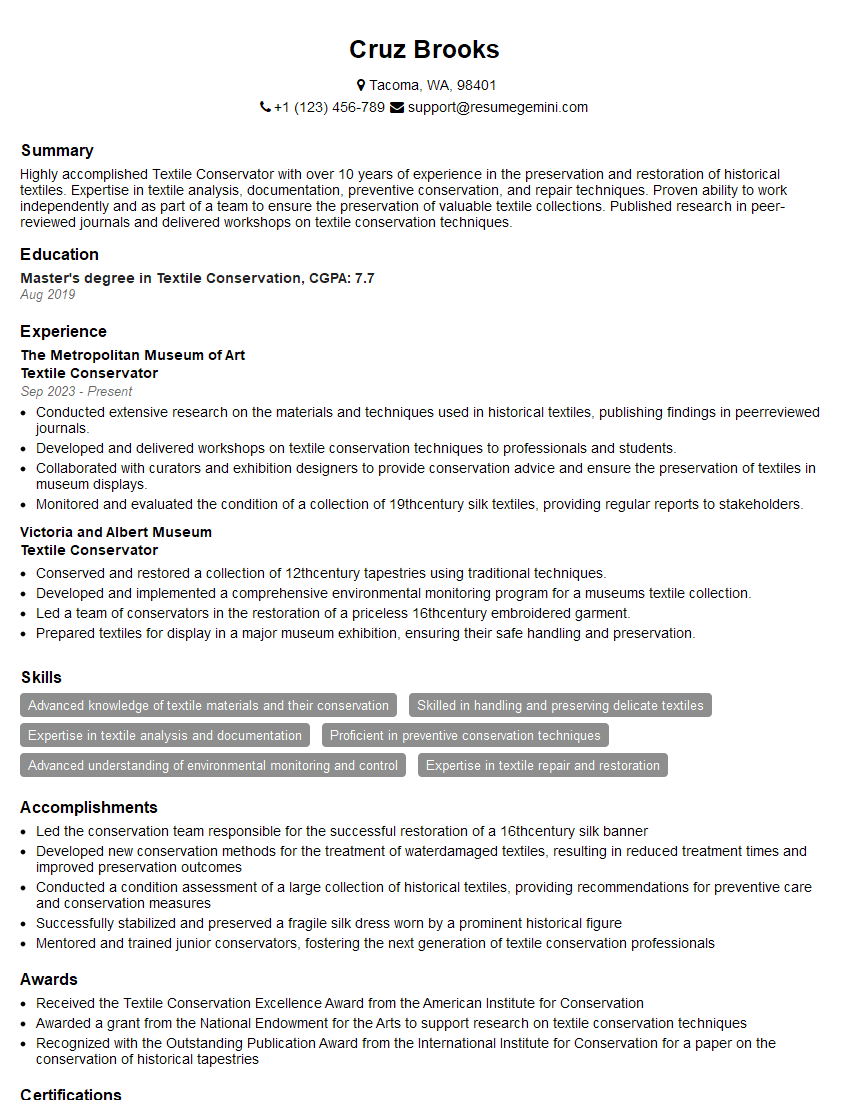
Mastering the ability to handle delicate fabrics and garments is crucial for career advancement in various industries, including fashion, retail, and luxury goods. A strong understanding of these skills demonstrates professionalism, attention to detail, and a commitment to preserving valuable items. To significantly improve your job prospects, focus on crafting an ATS-friendly resume that highlights these crucial abilities. ResumeGemini is a trusted resource to help you build a powerful and effective resume. We provide examples of resumes tailored to highlight expertise in handling delicate fabrics and garments; leverage these resources to showcase your skills and secure your dream role.





Explore more articles
Users Rating of Our Blogs
Share Your Experience
We value your feedback! Please rate our content and share your thoughts (optional).
What Readers Say About Our Blog
Very informative content, great job.
good