Cracking a skill-specific interview, like one for Sustainable Energy Planning, requires understanding the nuances of the role. In this blog, we present the questions you’re most likely to encounter, along with insights into how to answer them effectively. Let’s ensure you’re ready to make a strong impression.
Questions Asked in Sustainable Energy Planning Interview
Q 1. Explain the difference between renewable and non-renewable energy sources.
The core difference between renewable and non-renewable energy sources lies in their replenishment rate. Renewable energy sources are naturally replenished at a rate faster than they are consumed. Think of sunlight, wind, or flowing water – these resources are essentially inexhaustible on human timescales. Non-renewable energy sources, on the other hand, are finite resources formed over geological timescales. Once they are used, they are gone, or at least take millions of years to replenish. Examples include fossil fuels (coal, oil, and natural gas) and nuclear fuels (uranium).
A simple analogy: Imagine a well. A renewable source is like a well constantly refilled by a spring – you can draw water indefinitely. A non-renewable source is like a sealed tank – once the water is gone, it’s gone. The environmental impact also differs significantly. Renewable energy sources generally produce far fewer greenhouse gas emissions and pollutants compared to non-renewable sources, making them crucial for mitigating climate change.
Q 2. Describe your experience with Life Cycle Assessment (LCA) in the context of energy projects.
Life Cycle Assessment (LCA) is crucial for evaluating the environmental impact of energy projects throughout their entire lifespan, from raw material extraction to decommissioning. In my experience, I’ve used LCA to compare different renewable energy options, like solar PV versus wind power, for a specific location. This involved assessing factors such as energy consumption during manufacturing, transportation, installation, operation, and end-of-life disposal. For instance, we analyzed the embodied carbon in solar panels versus the land use impacts of wind farms. The results helped stakeholders make informed decisions, considering not just immediate energy production but also the long-term environmental consequences.
I’ve also applied LCA to assess the sustainability of energy storage solutions. Comparing lithium-ion batteries to pumped hydro storage, for example, requires analyzing the mining impacts associated with battery production against the ecological effects of dam construction and reservoir creation. LCA isn’t just about comparing technologies; it also allows us to identify critical ‘hotspots’ in the life cycle – stages with the most significant environmental burdens – to guide improvements and innovation.
Q 3. What are the key challenges in integrating renewable energy sources into the existing grid?
Integrating renewable energy sources into existing grids presents several significant challenges. One major hurdle is the intermittency of renewable resources like solar and wind power. The output fluctuates depending on weather conditions, unlike the steady supply from traditional power plants. This variability requires sophisticated grid management techniques, including forecasting, demand-side management, and energy storage solutions to maintain grid stability and reliability.
- Grid Infrastructure Limitations: Existing grids may not be adequately designed to handle the decentralized nature of many renewable energy sources. Upgrades are often necessary to accommodate the influx of power from distributed generation.
- Transmission and Distribution Challenges: Renewable energy resources are often located far from population centers, requiring investment in new transmission lines to connect them to the grid. This can be expensive and face regulatory hurdles.
- Balancing Supply and Demand: Accurately predicting the output of renewable sources and matching it with real-time electricity demand is essential to prevent blackouts or oversupply. This is a complex problem requiring advanced control systems.
Addressing these challenges requires a combination of technological advancements (smart grids, advanced forecasting), policy support (incentives for grid upgrades and renewable energy deployment), and market mechanisms that properly value grid services from renewable energy providers.
Q 4. How would you assess the economic feasibility of a renewable energy project?
Assessing the economic feasibility of a renewable energy project involves a thorough financial analysis, taking into account various factors. A crucial step is calculating the Levelized Cost of Energy (LCOE), which represents the average cost per unit of energy generated over the project’s lifetime. This involves estimating capital costs (equipment, land acquisition, construction), operating and maintenance costs, financing costs, and the expected energy output.
Beyond LCOE, we also consider the following:
- Return on Investment (ROI): This indicates the profitability of the project over its lifespan.
- Payback Period: This is the time it takes for the cumulative energy sales revenue to equal the initial investment costs.
- Net Present Value (NPV): This accounts for the time value of money, discounting future cash flows to their present-day equivalent.
- Internal Rate of Return (IRR): This is the discount rate that makes the NPV of the project equal to zero.
- Government Incentives and Subsidies: These can significantly impact the overall financial viability of a renewable energy project.
Sensitivity analyses are often performed to assess the impact of uncertainties (e.g., fluctuating energy prices, changes in government policies) on the project’s profitability. A robust economic analysis considers all these factors to determine the financial soundness of a renewable energy investment.
Q 5. Explain your understanding of energy storage technologies and their applications.
Energy storage technologies are vital for addressing the intermittency of renewable energy sources. They store excess energy generated during periods of high renewable output and release it when demand is high or renewable generation is low. Several technologies exist, each with its advantages and disadvantages.
- Batteries (Lithium-ion, flow batteries, etc.): These offer fast response times and high power density, making them suitable for applications such as grid stabilization and backup power. However, they have limited lifecycles and may raise environmental concerns regarding material sourcing and disposal.
- Pumped Hydro Storage: This technology uses excess electricity to pump water uphill to a reservoir, and then releases the water to generate electricity during peak demand. It is a mature technology with long lifecycles but is geographically limited by suitable sites.
- Compressed Air Energy Storage (CAES): This involves compressing air into underground caverns and releasing it to drive turbines during peak demand. It offers large-scale storage potential but requires suitable geological formations.
- Thermal Energy Storage: This involves storing energy as heat (e.g., molten salt) or cold (e.g., ice) and using it later for heating or cooling applications. It is suitable for integrating concentrated solar power.
The optimal choice of energy storage technology depends on various factors, including scale, cost, application, and environmental impact. For example, grid-scale storage might favor pumped hydro or CAES due to their capacity, while residential applications may benefit from battery systems.
Q 6. Describe your experience with energy modeling software (e.g., HOMER, SAM, etc.)
I have extensive experience using energy modeling software, primarily HOMER and SAM. HOMER (Hybrid Optimization of Multiple Energy Resources) is particularly useful for microgrid design and optimization. I’ve used it to model various off-grid and grid-connected systems, including those using solar PV, wind turbines, diesel generators, and different energy storage options. HOMER’s optimization capabilities help determine the optimal mix of technologies to minimize the cost of energy while meeting reliability requirements. For example, I’ve used HOMER to size a solar-diesel hybrid system for a remote village, balancing the initial investment with the long-term operating costs and fuel consumption.
SAM (System Advisor Model) is excellent for assessing the performance and economics of larger-scale renewable energy projects, especially solar and wind. I’ve utilized SAM to simulate the energy production of solar PV farms under different climate conditions and to evaluate the financial aspects of these projects. The software’s detailed modeling capabilities allow for a precise assessment of energy output, financial returns, and environmental impacts.
These software packages are invaluable tools for informed decision-making in renewable energy project development and planning. They provide a quantitative framework for comparing different scenarios and identifying the most cost-effective and sustainable solutions.
Q 7. What are the key factors to consider when developing a sustainable energy plan for a community?
Developing a sustainable energy plan for a community requires a holistic approach considering various factors. The plan should be tailored to the community’s specific needs, resources, and context. Key factors include:
- Energy Demand Assessment: A thorough understanding of the community’s current and future energy consumption patterns across different sectors (residential, commercial, industrial, transportation) is crucial for setting realistic targets.
- Resource Assessment: Evaluating the availability of renewable energy resources (solar, wind, hydro, biomass) within the community or its vicinity is essential for choosing suitable technologies.
- Technological Suitability: Considering factors such as the cost-effectiveness, technical feasibility, and environmental impacts of different renewable energy technologies is crucial.
- Grid Infrastructure: Assessing the capacity and suitability of the existing grid infrastructure for integrating renewable energy sources and determining the necessary upgrades is important.
- Economic Analysis: Conducting a comprehensive economic analysis to evaluate the cost-effectiveness of different energy scenarios, including capital costs, operating costs, and potential savings.
- Policy and Regulatory Framework: Understanding existing policies, regulations, and incentives related to renewable energy deployment at the local, regional, and national levels is crucial for successful implementation.
- Stakeholder Engagement: Involving the community members, businesses, and other relevant stakeholders throughout the planning process is crucial for creating a plan that is both feasible and socially acceptable.
- Environmental Impact Assessment: A thorough assessment of the environmental impacts of the planned energy system, addressing potential effects on ecosystems, air and water quality, land use, and biodiversity.
A successful sustainable energy plan is not just about adopting renewable energy; it’s about creating a resilient, affordable, and environmentally friendly energy future for the community.
Q 8. How do you evaluate the environmental impact of different energy sources?
Evaluating the environmental impact of energy sources requires a holistic approach, considering the entire lifecycle, from resource extraction to waste disposal. This is often referred to as a Life Cycle Assessment (LCA). We analyze factors like greenhouse gas emissions (GHGs), air and water pollution, land use, and biodiversity impacts.
- Fossil Fuels (Coal, Oil, Natural Gas): These have high GHG emissions, contributing significantly to climate change. They also cause air and water pollution through combustion and extraction processes. For example, coal mining can lead to habitat destruction and water contamination.
- Nuclear Power: While nuclear power plants don’t directly emit GHGs during operation, they generate radioactive waste requiring long-term storage and pose risks associated with accidents. The uranium mining process also has environmental consequences.
- Renewable Energy (Solar, Wind, Hydro): These generally have lower GHG emissions and pollution compared to fossil fuels. However, solar panel manufacturing uses energy and produces waste. Large-scale hydropower projects can impact river ecosystems and displace communities. Wind turbines can affect bird and bat populations. A thorough LCA is critical for each renewable energy source.
We use standardized methodologies and databases to quantify these impacts, often expressing them in terms of carbon dioxide equivalents (CO2e) to facilitate comparisons.
Q 9. Explain your understanding of carbon accounting and emission reduction strategies.
Carbon accounting is the process of measuring, monitoring, and reporting greenhouse gas emissions. It’s crucial for understanding our environmental footprint and tracking progress towards emission reduction targets. Emission reduction strategies involve identifying emission sources, quantifying their emissions, and implementing measures to decrease them.
Example: A carbon accounting exercise for a manufacturing facility might involve measuring emissions from energy consumption, transportation, and industrial processes. We’d use data from energy bills, fuel consumption records, and emission factors for different materials.
Strategies for reduction include:
- Energy Efficiency Improvements: Upgrading equipment, improving insulation, optimizing processes.
- Renewable Energy Integration: Switching to solar, wind, or other renewable energy sources.
- Carbon Capture and Storage (CCS): Capturing CO2 emissions from power plants and storing them underground.
- Process Optimization: Improving manufacturing processes to reduce energy and material use.
- Sustainable Transportation: Shifting to electric vehicles, public transport, or cycling.
These strategies are often implemented through a combination of technological upgrades, policy changes, and behavioral shifts. A successful strategy requires a thorough understanding of the emission sources and the feasibility of different reduction options.
Q 10. What are the different types of energy efficiency measures and their effectiveness?
Energy efficiency measures aim to reduce energy consumption while maintaining or improving the level of service. These measures can be implemented across various sectors – buildings, industry, and transportation.
- Building Efficiency: Improved insulation, high-efficiency windows, energy-efficient HVAC systems, LED lighting, smart thermostats. These can significantly reduce heating and cooling energy needs.
- Industrial Efficiency: Process optimization, heat recovery systems, energy-efficient motors and drives, improved equipment design. Industries can achieve considerable savings through better resource management.
- Transportation Efficiency: Fuel-efficient vehicles, electric vehicles, public transportation, improved traffic management, and cycling infrastructure. These reduce fuel consumption and emissions from transportation.
- Behavioral Changes: Promoting energy-conscious behavior among individuals and businesses through awareness campaigns and incentives. Simple changes like turning off lights and appliances when not in use can make a difference.
The effectiveness of these measures varies depending on factors like climate, building type, technology used, and behavioral factors. A comprehensive energy efficiency plan involves identifying the most cost-effective and impactful measures for a specific context.
Q 11. Describe your experience with energy audits and identifying energy-saving opportunities.
Energy audits are systematic assessments of energy use in a building or facility to identify opportunities for improvement. My experience includes conducting both walk-through audits (visual inspections) and detailed energy audits using specialized software and data analysis.
Process:
- Data Collection: Gathering energy consumption data from utility bills, reviewing building plans, and conducting site visits.
- Energy Modeling: Using specialized software to simulate energy flows and identify energy losses.
- On-site Inspection: Identifying areas with potential energy waste, such as leaky insulation, inefficient equipment, or poor lighting.
- Recommendations: Developing a prioritized list of energy-saving opportunities with estimated costs and payback periods.
- Reporting: Presenting findings and recommendations to the client in a clear and concise report.
Example: In one audit, we discovered significant air leakage in a warehouse leading to excessive heating costs. We recommended sealing air leaks and upgrading insulation, resulting in a 25% reduction in energy consumption.
Q 12. How do you approach stakeholder engagement in sustainable energy planning?
Stakeholder engagement is essential for successful sustainable energy planning. It involves actively involving all parties who have an interest in or are affected by the energy project. This includes communities, businesses, government agencies, environmental groups, and indigenous populations (where applicable).
My approach involves:
- Early and Continuous Engagement: Involving stakeholders from the initial planning stages throughout the project lifecycle.
- Transparent Communication: Clearly communicating project goals, benefits, and potential impacts.
- Two-Way Communication: Actively listening to stakeholder concerns, addressing questions, and incorporating feedback into the project design.
- Collaborative Decision-Making: Working with stakeholders to develop consensus-based solutions.
- Capacity Building: Providing training and support to stakeholders to build their understanding of sustainable energy issues.
Example: For a community solar project, we organized public forums, held individual meetings with residents, and collaborated with local government officials to address concerns about land use and visual impacts. This collaborative approach ensured the project’s acceptance and success.
Q 13. Explain your understanding of energy policy and regulations.
Energy policy and regulations play a crucial role in driving the transition to sustainable energy systems. These policies aim to promote energy efficiency, renewable energy deployment, and reduce greenhouse gas emissions. Examples include:
- Renewable Portfolio Standards (RPS): Mandating a certain percentage of electricity generation from renewable sources.
- Carbon Pricing Mechanisms: Implementing carbon taxes or cap-and-trade systems to incentivize emission reductions.
- Building Codes: Setting energy efficiency standards for new and renovated buildings.
- Feed-in Tariffs (FITs): Providing guaranteed prices for renewable energy generated by individuals or businesses.
- Energy Efficiency Standards for Appliances: Setting minimum efficiency requirements for appliances and equipment.
Understanding these policies and regulations is vital for developing sustainable energy projects that comply with legal requirements and can access available incentives. The specific policies and regulations vary by jurisdiction, and staying updated on the latest developments is critical.
Q 14. How do you balance environmental sustainability with economic viability in energy projects?
Balancing environmental sustainability and economic viability in energy projects requires a careful consideration of costs, benefits, and risks. It’s not simply a trade-off, but rather an integrated approach where both aspects are considered essential for long-term success.
Strategies include:
- Life-Cycle Cost Analysis (LCCA): Evaluating the total costs and benefits of a project over its entire lifetime, including construction, operation, maintenance, and decommissioning.
- Financial Modeling: Developing detailed financial models to assess the project’s financial viability, including revenue projections, financing options, and return on investment.
- Risk Assessment: Identifying and managing potential risks, such as technological risks, regulatory changes, market fluctuations, and environmental impacts.
- Incentives and Subsidies: Leveraging government incentives, tax credits, and subsidies to reduce project costs and improve financial feasibility.
- Innovative Financing Mechanisms: Exploring different financing options, such as green bonds and crowd-funding, to attract investment in sustainable energy projects.
Example: In assessing a wind farm project, we would conduct an LCCA to account for the initial investment, ongoing operation and maintenance, and eventual decommissioning costs. We would also analyze the revenue stream from electricity sales and factor in potential risks such as changes in electricity prices and potential impacts on local wildlife. This comprehensive approach helps to ensure the project is both environmentally sound and economically viable.
Q 15. What are the different types of renewable energy technologies and their potential applications?
Renewable energy technologies harness naturally replenishing resources to generate power. Several key types exist, each with specific applications:
- Solar Power: Photovoltaic (PV) systems convert sunlight directly into electricity, ideal for rooftops, solar farms, and even portable applications. Concentrated solar power (CSP) uses mirrors to focus sunlight, generating heat to drive turbines – more suitable for large-scale power plants.
- Wind Power: Wind turbines capture kinetic energy from wind, transforming it into electricity. They’re best deployed in areas with consistent, strong winds, often forming wind farms on land or offshore.
- Hydropower: This uses the energy of moving water to generate electricity, typically through dams creating reservoirs. It’s a mature technology, effective for large-scale power generation but with environmental considerations.
- Geothermal Energy: This taps into the Earth’s internal heat, used for direct heating or generating electricity via geothermal power plants. It’s location-specific, relying on geothermal hotspots.
- Biomass Energy: This involves burning organic matter (wood, crops) to generate heat or electricity. While renewable, it carries environmental concerns related to emissions and land use.
- Ocean Energy: This harnesses the power of waves, tides, and ocean currents. It’s still a developing field, but technologies like wave energy converters and tidal barrages hold promise for coastal areas.
The choice of technology depends on factors like geographic location, resource availability, environmental impact, and economic feasibility. For instance, a sunny desert region might be ideal for CSP, while a windy coastline would suit wind power.
Career Expert Tips:
- Ace those interviews! Prepare effectively by reviewing the Top 50 Most Common Interview Questions on ResumeGemini.
- Navigate your job search with confidence! Explore a wide range of Career Tips on ResumeGemini. Learn about common challenges and recommendations to overcome them.
- Craft the perfect resume! Master the Art of Resume Writing with ResumeGemini’s guide. Showcase your unique qualifications and achievements effectively.
- Don’t miss out on holiday savings! Build your dream resume with ResumeGemini’s ATS optimized templates.
Q 16. Describe your experience with project management in the context of renewable energy projects.
My experience in renewable energy project management spans over ten years, encompassing all phases from initial feasibility studies to commissioning and operation. I’ve led teams in developing various projects, including a 50MW solar farm and a community-scale wind turbine project. My approach emphasizes:
- Detailed Planning: This includes thorough site assessments, environmental impact studies, regulatory compliance, and risk management strategies. For example, in the solar farm project, detailed weather data analysis was crucial to optimize panel placement and energy yield.
- Stakeholder Management: Successful projects require effective communication and collaboration with landowners, local communities, regulatory bodies, and investors. In the community wind project, I facilitated workshops to address local concerns and secure community support.
- Budget and Schedule Management: I employ agile project management methodologies, leveraging tools like Gantt charts and critical path analysis to track progress, manage resources, and mitigate delays. This ensured both projects were completed on time and within budget.
- Quality Control: Stringent quality assurance measures are critical for long-term project success. Regular site inspections, rigorous testing, and adherence to industry standards are key components of my approach.
My expertise extends to managing diverse teams, leveraging each member’s skills to achieve optimal outcomes. I have a proven track record of delivering projects safely, efficiently, and sustainably.
Q 17. How do you utilize data analysis to inform sustainable energy planning decisions?
Data analysis is fundamental to informed decision-making in sustainable energy planning. I utilize various techniques to analyze data from diverse sources:
- Resource Assessment: Analyzing weather data (wind speed, solar irradiance), hydrological data (river flow), and geological data (geothermal potential) to assess the feasibility and potential yield of different renewable energy resources.
- Energy Demand Forecasting: Utilizing historical consumption patterns, population growth projections, and economic indicators to predict future energy demands and plan for capacity expansion.
- Grid Integration Studies: Analyzing grid stability, transmission capacity, and distribution network constraints to determine the optimal integration of renewable energy sources. This often involves simulations using software like PowerWorld Simulator.
- Environmental Impact Assessment: Analyzing environmental data to assess the ecological footprint of energy projects, considering factors like land use, water consumption, and greenhouse gas emissions. This helps in selecting optimal locations and mitigation strategies.
- Economic Analysis: Evaluating the financial viability of projects, including capital costs, operational expenses, and potential revenue streams. This involves tools like levelized cost of energy (LCOE) calculations.
The insights gained from these analyses inform key decisions on technology selection, project sizing, grid infrastructure development, and policy recommendations, ensuring efficient and sustainable energy systems.
Q 18. What are your views on the future of the sustainable energy sector?
The future of the sustainable energy sector is bright, driven by technological advancements, growing environmental awareness, and supportive government policies. I foresee several key trends:
- Decentralized Energy Systems: Microgrids and distributed generation will become increasingly prevalent, enhancing grid resilience and integrating renewable energy sources at the local level.
- Energy Storage: Advancements in battery technology and other energy storage solutions will address the intermittency of renewable energy sources, improving grid reliability and enabling greater penetration of renewables.
- Smart Grid Technologies: Smart grids will facilitate efficient energy management, optimized grid operations, and increased integration of distributed generation and demand-side management strategies.
- Artificial Intelligence (AI) and Machine Learning (ML): AI and ML will optimize energy production, grid management, and demand forecasting, leading to greater efficiency and cost savings.
- Green Hydrogen: Hydrogen produced from renewable energy sources will play a crucial role in decarbonizing hard-to-abate sectors like transportation and industry.
Challenges remain, including the need for further technological advancements, policy support, and public awareness to drive the transition to a sustainable energy future. However, the potential benefits in terms of environmental protection, energy security, and economic growth are immense.
Q 19. Explain your experience with smart grid technologies and their potential benefits.
Smart grid technologies are crucial for integrating renewable energy resources and improving grid efficiency. My experience includes working on projects incorporating advanced metering infrastructure (AMI), demand-side management (DSM) programs, and distributed energy resource (DER) integration. Key benefits include:
- Enhanced Grid Reliability: Smart grid technologies improve grid stability and resilience by enabling real-time monitoring and control of power flows.
- Improved Efficiency: Smart meters and advanced analytics provide data-driven insights for optimizing energy consumption and reducing transmission losses.
- Increased Renewable Energy Integration: Smart grids facilitate the seamless integration of renewable energy sources by managing variability and ensuring grid stability.
- Reduced Costs: By optimizing energy use and improving grid efficiency, smart grid technologies contribute to lower electricity bills for consumers.
- Enhanced Customer Engagement: Smart meters and online portals empower customers to actively manage their energy consumption and reduce their carbon footprint.
For example, I worked on a project that implemented an AMI system, providing real-time data on energy consumption patterns. This data was then used to design a DSM program that incentivized customers to shift their energy consumption to off-peak hours, reducing peak demand and improving grid stability.
Q 20. Describe a time you had to solve a complex problem related to energy planning.
During the planning of a large-scale offshore wind farm, we faced a significant challenge: unforeseen geological conditions at the proposed site. Initial surveys indicated suitable seabed conditions, but during the foundation installation phase, we encountered unexpectedly hard rock formations. This significantly increased installation time and costs, threatening the project’s timeline and budget.
To solve this, I led a cross-functional team including geologists, engineers, and contractors. We adopted a multi-pronged approach:
- Detailed Geological Re-assessment: We commissioned further detailed geophysical surveys to accurately map the rock formations and understand their properties.
- Alternative Foundation Design: Based on the new geological data, the engineering team redesigned the foundations to accommodate the harder rock, opting for a more robust and costly, yet more effective, solution.
- Negotiation with Contractors: We renegotiated the contracts with the installation contractors, securing revised timelines and costs that reflected the added complexity.
- Risk Mitigation Plan: A robust risk mitigation plan was implemented to prevent similar issues in future phases of the project.
Through collaborative problem-solving and proactive adaptation, we successfully completed the project, albeit with a revised schedule and budget. This experience reinforced the importance of thorough due diligence, flexible project management, and effective communication in overcoming unforeseen challenges.
Q 21. What are the key considerations for designing a microgrid?
Designing a microgrid requires careful consideration of several key factors:
- Load Profile: Understanding the energy demands of the community or facility being served is crucial. This includes analyzing peak and off-peak demands, load variability, and the types of loads (residential, commercial, industrial).
- Resource Assessment: Determining the availability of renewable energy resources (solar, wind, etc.) and their potential contribution to the microgrid. This involves site assessments, resource modeling, and feasibility studies.
- Generation Capacity: Selecting the appropriate generation technologies (solar PV, wind turbines, generators) and sizing them to meet the load demands while ensuring sufficient reserve capacity for reliability.
- Energy Storage: Incorporating energy storage systems (batteries, pumped hydro) to address the intermittency of renewable energy sources and improve grid stability. The size and type of storage depend on load variability and renewable resource availability.
- Grid Connection: Determining whether the microgrid will operate in islanded mode (completely independent) or grid-connected mode (connected to the main grid). Grid-connected mode offers backup power but raises integration complexities. Islanded requires self-sufficiency.
- Control System: Implementing a sophisticated control system that manages power flow, regulates voltage and frequency, and ensures seamless transitions between operating modes (grid-connected/islanded).
- Protection System: Integrating a robust protection system to prevent damage from faults, overloads, and other events. This is crucial for ensuring microgrid safety and reliability.
- Economic Analysis: Evaluating the economic viability of the microgrid considering capital costs, operating expenses, and potential revenue streams.
A well-designed microgrid offers enhanced resilience, improved energy security, and reduced reliance on the main grid, especially beneficial in remote or disaster-prone areas.
Q 22. How do you evaluate the reliability and resilience of an energy system?
Evaluating the reliability and resilience of an energy system involves assessing its ability to consistently meet energy demands and withstand disruptions. Reliability focuses on the system’s ability to provide uninterrupted power, while resilience measures its capacity to recover quickly from disturbances.
We use a multi-faceted approach. First, we analyze the system’s capacity – the total power generation – against peak demand and forecast future needs. We factor in generation diversity, considering the mix of renewable and non-renewable sources to mitigate risks associated with single-source failures. For instance, a system heavily reliant on solar power is vulnerable during periods of low sunlight. A diverse portfolio, including wind, hydro, and possibly natural gas peaking plants, is more reliable.
Secondly, we assess the system’s infrastructure: transmission and distribution networks. Robust grid infrastructure is key to resilience. We look for redundancies, advanced monitoring systems, and flexible grid management strategies like smart grids, capable of optimizing energy flow and quickly isolating faults. Think of it like a highway system – multiple routes ensure smooth traffic even if one road is blocked.
Thirdly, we perform stress tests simulating various scenarios such as extreme weather events, cyberattacks, or equipment failures. These simulations help identify vulnerabilities and inform improvement strategies. Finally, we conduct thorough risk assessments, quantifying the likelihood and impact of potential disruptions and establishing contingency plans. This holistic approach allows for a comprehensive evaluation and planning for a reliable and resilient energy system.
Q 23. What is your experience with demand-side management strategies?
Demand-side management (DSM) strategies aim to optimize energy consumption, reducing peak demand and improving overall energy efficiency. My experience spans various DSM programs, from residential energy efficiency upgrades to industrial load shifting.
I’ve worked on projects involving time-of-use pricing, where electricity prices vary throughout the day to incentivize shifting energy consumption to off-peak hours. For example, encouraging electric vehicle charging overnight when demand is lower. This reduces strain on the grid during peak periods.
Another strategy I’ve implemented is energy efficiency retrofits in buildings. We assess building energy usage, identify areas for improvement (insulation, lighting, HVAC), and implement cost-effective solutions. This lowers overall energy consumption and reduces utility bills for customers. We also use advanced metering infrastructure (AMI) and smart home technologies to give consumers real-time energy consumption data, promoting behavioral changes and energy savings. A successful project saw a 15% reduction in peak demand in a large residential area through a combination of time-of-use pricing and targeted energy efficiency programs.
Q 24. How do you incorporate energy equity considerations into your planning?
Incorporating energy equity means ensuring fair access to affordable, reliable, and clean energy for all communities, regardless of socioeconomic status, race, or geographic location. This is crucial for achieving a truly sustainable energy future.
We begin by conducting thorough analyses of energy access and affordability across different demographics. This may involve mapping energy burden – the percentage of household income spent on energy – across different communities. We identify areas with limited access to electricity or high energy costs, often disproportionately affecting low-income households.
Our strategies include targeted programs to assist vulnerable communities in improving energy efficiency, accessing renewable energy resources, and navigating complex utility regulations. This might include subsidized energy efficiency upgrades for low-income housing, community-owned renewable energy projects, or educational initiatives to improve energy literacy. For example, in one project, we partnered with a community organization to install solar panels on low-income housing units, reducing energy costs and improving residents’ quality of life. It’s about ensuring that the benefits of a clean energy transition are shared equitably.
Q 25. What are the potential impacts of climate change on energy systems and how to mitigate them?
Climate change significantly impacts energy systems through increased extreme weather events, sea-level rise, and changes in resource availability. Extreme weather events like hurricanes and heat waves can damage energy infrastructure, disrupting power supply and increasing energy demand for cooling. Sea-level rise threatens coastal power plants and transmission lines.
Mitigation strategies are vital. The most significant is a rapid transition to renewable energy sources like solar and wind power, reducing our reliance on fossil fuels that contribute to climate change. We need to improve grid resilience by incorporating distributed generation, smart grids, and microgrids, which can operate independently in case of disruptions. This means investing in more robust infrastructure, including underground power lines and hardened facilities. We also need to adapt energy systems to the changing climate, such as designing cooling systems that can withstand extreme heat and incorporating climate projections into long-term energy planning. For example, coastal power plants may require elevated foundations or flood defenses.
Q 26. Explain your understanding of energy markets and trading.
Energy markets are where electricity and other energy resources are bought and sold. Understanding these markets is crucial for effective energy planning. They range from wholesale markets, where large generators and utilities trade power, to retail markets, where consumers purchase electricity from suppliers.
The complexity varies considerably. Some markets are highly centralized and regulated, while others are more decentralized and market-driven. Trading involves sophisticated strategies, forecasting, and risk management. Factors influencing prices include supply and demand, fuel costs, weather patterns (especially for renewables), and regulatory policies. My experience includes working with energy market data to assess the economic viability of various renewable energy projects, model the impact of different policy scenarios on energy prices, and optimize energy portfolios to minimize costs while meeting environmental targets.
Understanding these dynamics is critical for informed decision-making, determining the most economically viable and sustainable energy solutions. For example, analyzing price forecasts helps determine the optimal timing for investments in renewable energy infrastructure, considering potential subsidies or carbon pricing mechanisms.
Q 27. Describe your experience with GIS (Geographic Information Systems) and its application in energy planning.
Geographic Information Systems (GIS) are indispensable tools in energy planning. They allow us to visualize and analyze spatial data, providing critical insights for siting new energy infrastructure, assessing environmental impacts, and optimizing energy distribution networks.
I’ve extensively used GIS in various applications, from mapping renewable energy resource potential (solar irradiance, wind speeds) to identifying optimal locations for new wind farms or solar power plants, considering factors like land use, proximity to transmission lines, and environmental sensitivities. We use GIS to model the impact of transmission line construction on land use and ecosystems, conducting environmental impact assessments. We utilize spatial analysis to determine the optimal placement of charging stations for electric vehicles, minimizing travel distances and maximizing accessibility.
Example: Using GIS software, we can overlay maps showing wind speed data, land ownership, and environmental protection areas to identify suitable locations for a new wind farm, ensuring minimal environmental impact and efficient energy generation.
Q 28. How do you ensure the long-term sustainability of a renewable energy project?
Ensuring the long-term sustainability of a renewable energy project requires careful consideration of environmental, economic, and social factors throughout its entire lifecycle. This goes beyond just initial construction and encompasses operation, maintenance, decommissioning, and potential repurposing.
First, environmental sustainability is paramount. We assess potential environmental impacts, such as habitat disruption or visual impacts, implementing mitigation measures like habitat restoration or using less visually intrusive technology. We also ensure responsible sourcing of materials and minimize waste during construction and operation.
Economic sustainability involves ensuring the project remains financially viable over its lifespan. We develop detailed financial models, considering factors like energy production, operating costs, maintenance, and potential revenue streams. We also assess the project’s potential economic benefits to the local community, including job creation and tax revenue.
Social sustainability requires engaging local communities, addressing concerns, and ensuring the project aligns with their values and needs. This includes transparent communication, community consultation, and initiatives that benefit the local population, such as skills training or educational programs. Finally, we plan for the project’s eventual decommissioning, ensuring responsible disposal of materials and potential reuse of the site.
Key Topics to Learn for Sustainable Energy Planning Interview
- Energy Auditing and Assessment: Understanding methodologies for evaluating energy consumption, identifying inefficiencies, and proposing cost-effective solutions.
- Renewable Energy Technologies: Familiarize yourself with the technical aspects, advantages, and limitations of solar, wind, hydro, geothermal, and biomass energy systems. Practical application: Analyzing the feasibility of a specific renewable energy project considering local resources and environmental impact.
- Energy Storage Systems: Explore various energy storage technologies (batteries, pumped hydro, etc.) and their role in grid stability and renewable energy integration. Practical application: Designing an optimal energy storage solution for a microgrid powered by intermittent renewable sources.
- Grid Integration and Modernization: Understand the challenges and opportunities associated with integrating renewable energy sources into existing electricity grids. Practical application: Evaluating the impact of large-scale renewable energy deployment on grid infrastructure.
- Energy Policy and Regulation: Become familiar with relevant national and international policies, regulations, and incentives promoting sustainable energy development. Practical application: Analyzing the economic viability of a renewable energy project under different policy scenarios.
- Life Cycle Assessment (LCA): Understand the principles and methodologies for evaluating the environmental impacts of energy systems throughout their entire life cycle. Practical application: Comparing the environmental performance of different energy technologies.
- Sustainable Transportation Planning: Explore strategies for reducing the environmental impact of transportation, including electrification, alternative fuels, and improved efficiency.
- Data Analysis and Modeling: Develop proficiency in using data analysis and modeling tools to support decision-making in sustainable energy planning. This includes understanding key metrics and forecasting energy demand.
Next Steps
Mastering Sustainable Energy Planning is crucial for a successful and rewarding career in a rapidly growing field. This area offers diverse opportunities for innovation and positive impact on the environment. To maximize your job prospects, it’s vital to create a compelling and ATS-friendly resume that highlights your skills and experience effectively. ResumeGemini is a trusted resource to help you build a professional and impactful resume. They provide examples of resumes specifically tailored to the Sustainable Energy Planning field, ensuring your application stands out. Use their resources to craft a resume that showcases your qualifications and helps you land your dream job.
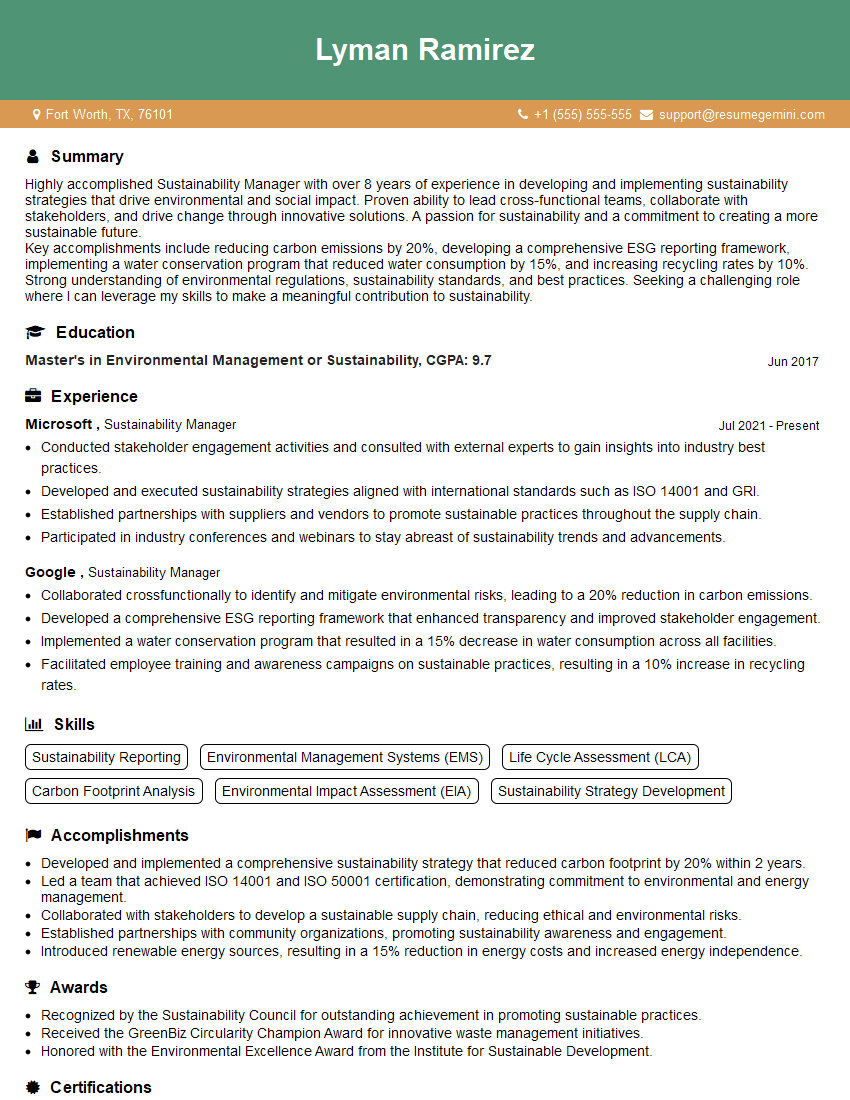
Sustainability Manager Resume Sample
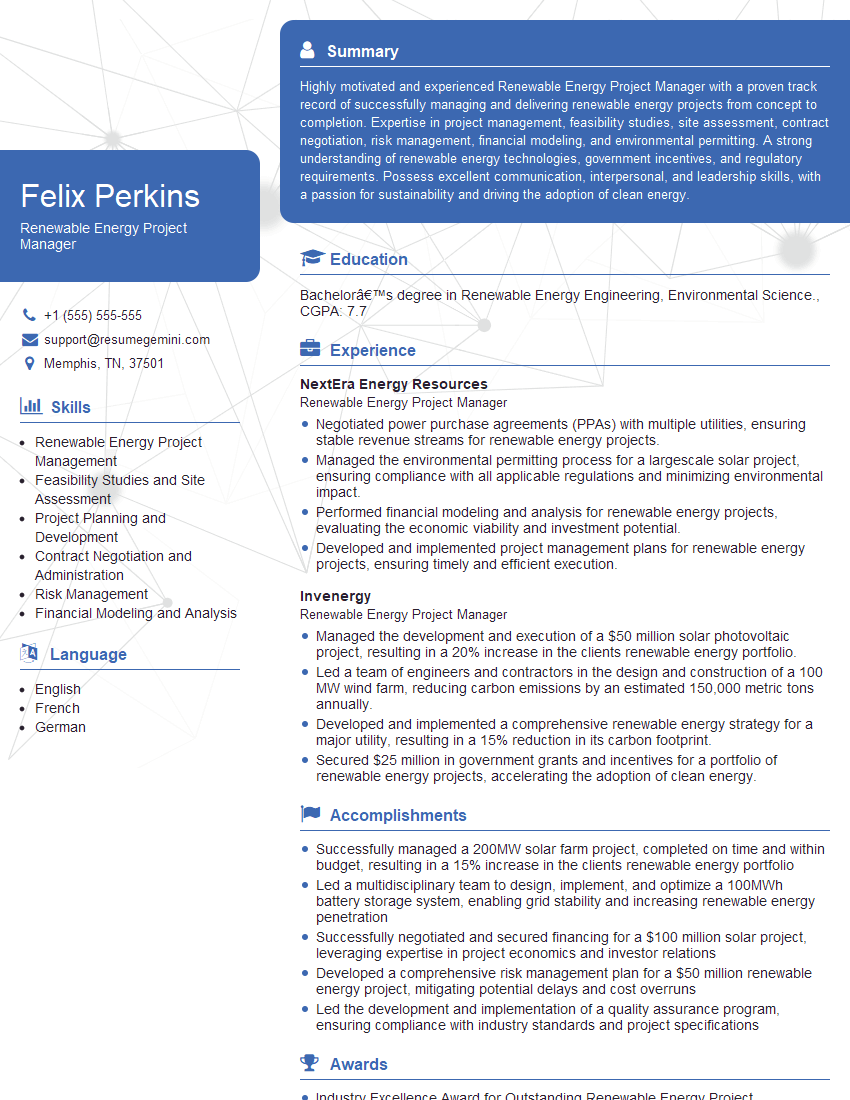
Renewable Energy Project Manager Resume Sample
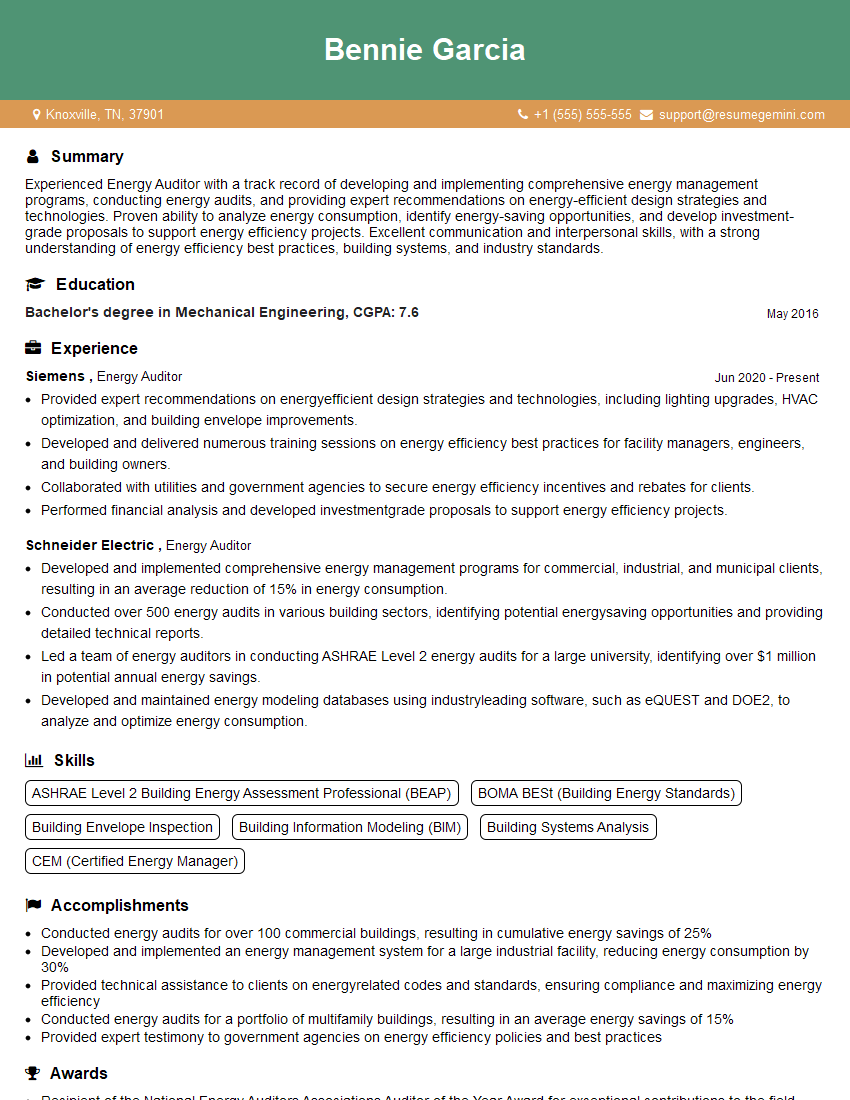
Energy Auditor Resume Sample
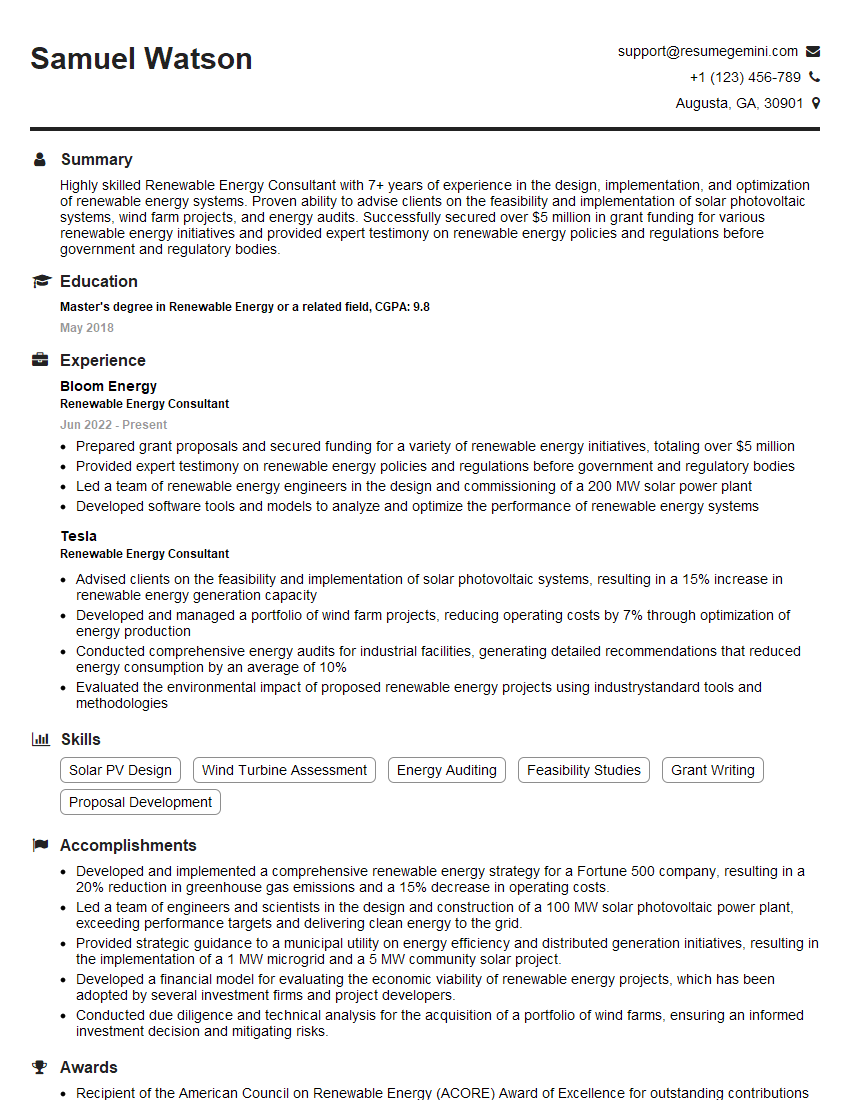
Renewable Energy Consultant Resume Sample
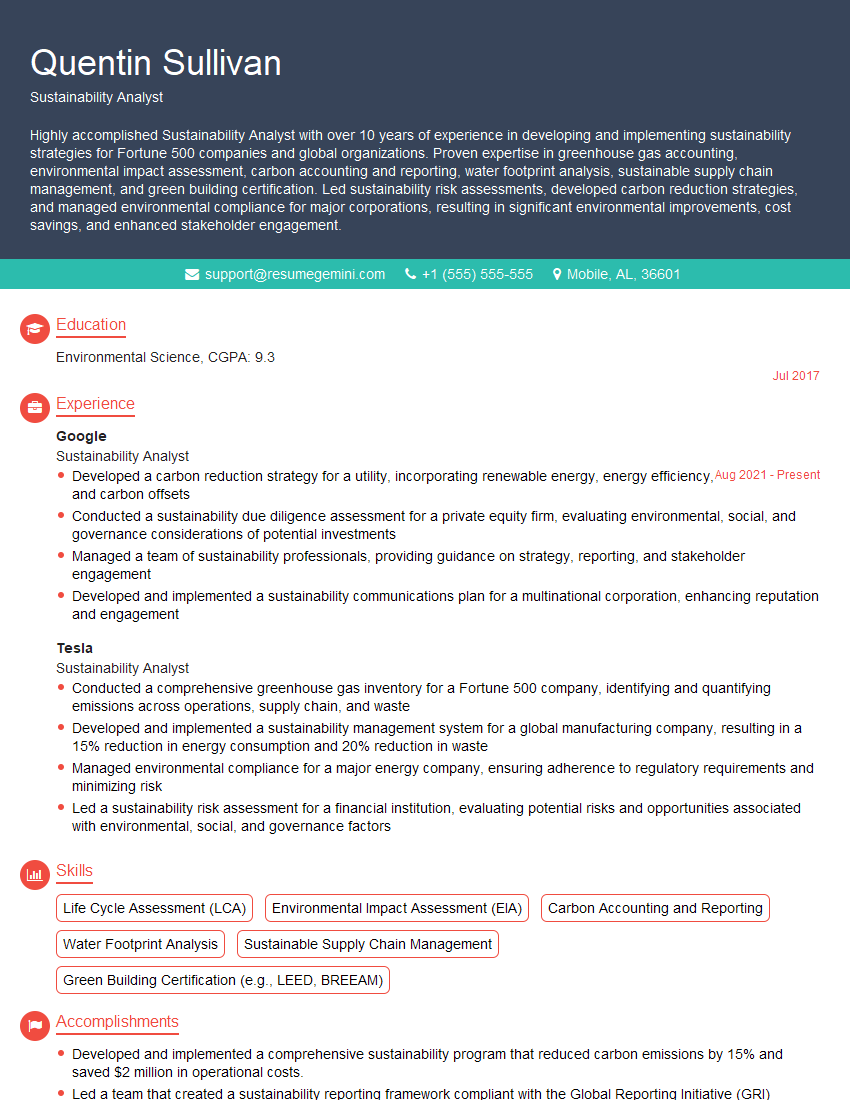
Sustainability Analyst Resume Sample
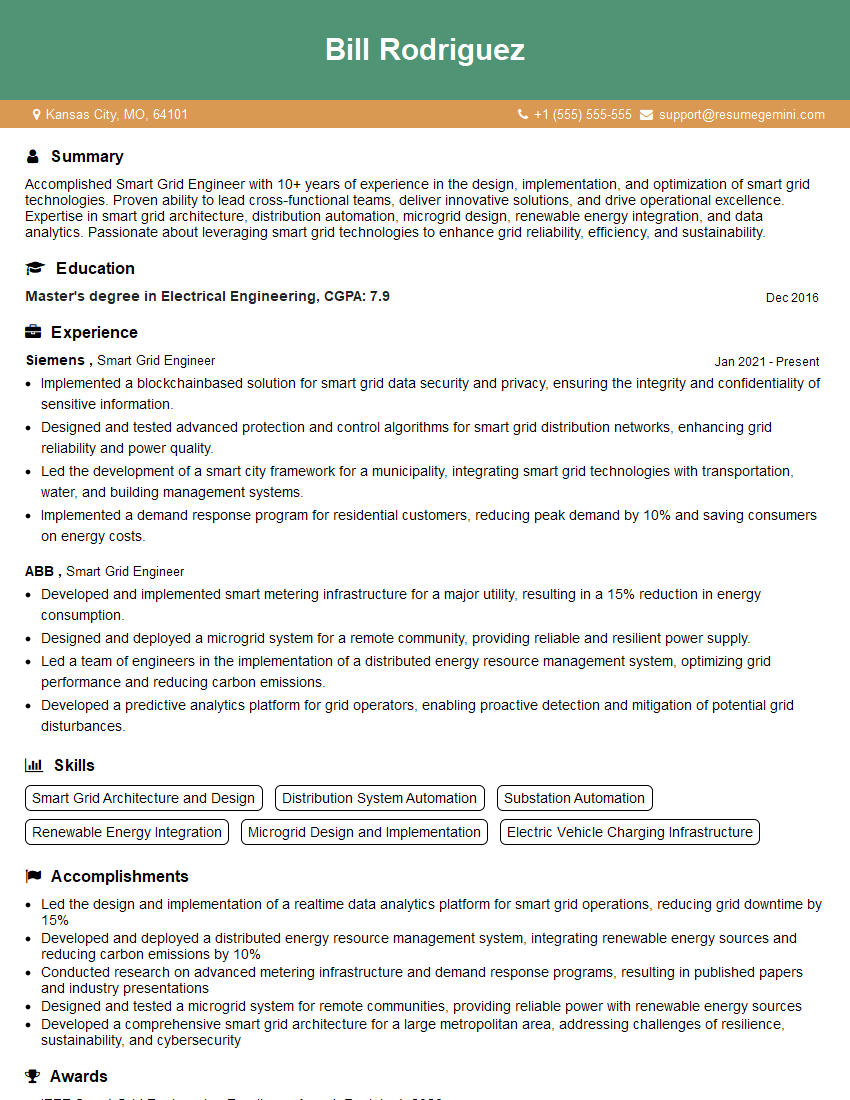
Smart Grid Engineer Resume Sample
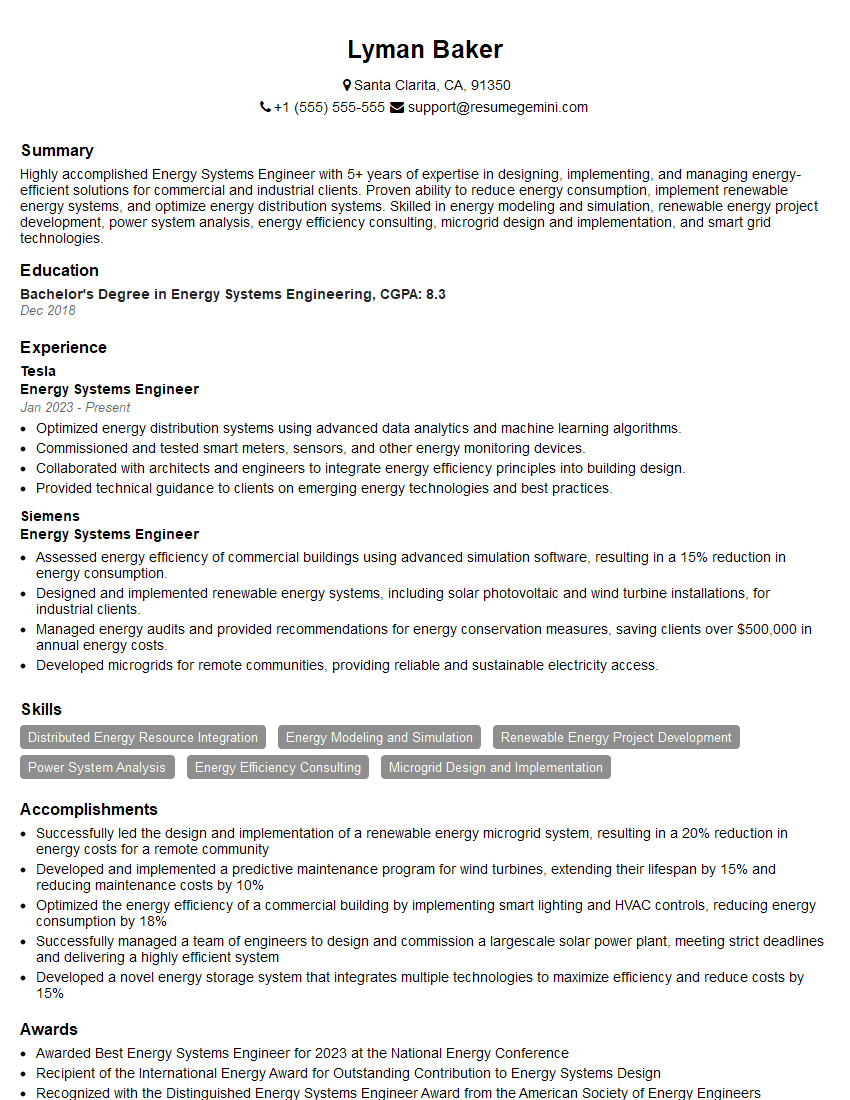
Energy Systems Engineer Resume Sample
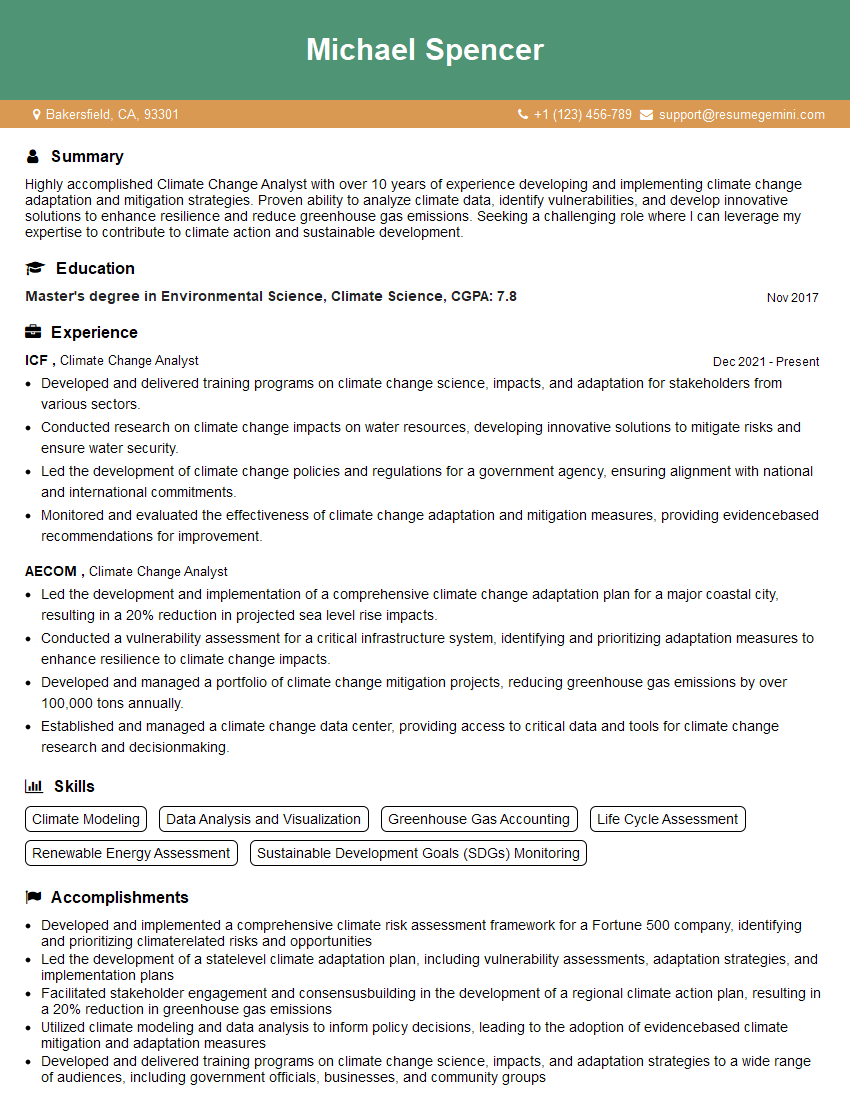
Climate Change Analyst Resume Sample
Explore more articles
Users Rating of Our Blogs
Share Your Experience
We value your feedback! Please rate our content and share your thoughts (optional).
What Readers Say About Our Blog
Very informative content, great job.
good