The thought of an interview can be nerve-wracking, but the right preparation can make all the difference. Explore this comprehensive guide to Ability to lead congregational singing interview questions and gain the confidence you need to showcase your abilities and secure the role.
Questions Asked in Ability to lead congregational singing Interview
Q 1. Describe your experience leading congregational singing in various settings.
My experience leading congregational singing spans over fifteen years, encompassing diverse settings such as traditional churches, contemporary worship services, community events, and even outdoor festivals. I’ve led singing groups ranging from intimate gatherings of a few dozen to large congregations exceeding five hundred. In smaller settings, I can foster a more intimate and interactive experience, focusing on individual engagement and encouraging participation. In larger settings, my approach emphasizes clear communication, strong visual cues, and energetic leadership to ensure everyone feels included and involved. I’ve successfully led singing in both acapella settings and those with instrumental accompaniment, adapting my techniques to suit the specific context. For example, in a traditional church setting, I might focus on precise articulation and reverence, while at a festival, I might adopt a more lively and less formal approach.
Q 2. How do you adapt your leadership style to different musical preferences within a congregation?
Adapting to diverse musical preferences is crucial. I begin by actively listening to the congregation’s responses to different styles of music. This involves observing body language and engagement levels during services. I then incorporate a varied repertoire, including hymns from different eras and styles, contemporary Christian music, gospel songs, and even folk or inspirational songs. I might offer a blend of familiar favorites alongside newer pieces, carefully introducing them through explanation and engaging introductions. For example, if a congregation leans towards traditional hymns, I’ll introduce contemporary songs gradually, perhaps starting with those that share a similar melodic structure or thematic content to familiar hymns. It’s about finding a balance and creating a space where everyone feels comfortable and included, even if they don’t share the same musical preferences. I see my role as facilitating a shared experience, not dictating musical taste.
Q 3. What techniques do you use to ensure clear vocal projection and intonation during congregational singing?
Clear vocal projection and intonation are vital. I employ several techniques: Firstly, I model proper vocal technique myself, demonstrating clear diction and intonation. Secondly, I use visual cues – conducting with clear gestures, pointing to different sections of the congregation to encourage balanced participation. Thirdly, I utilize a microphone appropriately, ensuring clear sound amplification without overpowering the congregation’s voices. Fourthly, I might suggest specific breathing techniques or vocal warm-ups before beginning, especially for challenging pieces. Finally, I provide constructive feedback, gently guiding individuals or sections toward improved intonation and projection, avoiding any criticism that might discourage participation. Think of it like conducting an orchestra – a clear conductor ensures a unified and harmonious sound.
Q 4. How do you select appropriate hymns or songs for different services or events?
Hymn selection is carefully considered, aligning with the theme and overall tone of each service or event. For instance, a somber funeral service calls for reflective and comforting hymns, while a celebratory wedding might include joyful and uplifting songs. I often consult with the pastor or event organizers to understand the desired atmosphere and choose songs accordingly. The liturgical calendar, if applicable, also guides my choices. I aim for a balance between familiar favorites that create a sense of community and newer songs that introduce variety and maintain freshness. I also consider the vocal range and abilities of the congregation, ensuring that the chosen music is accessible and enjoyable for all.
Q 5. Explain your approach to teaching new songs to a congregation.
Teaching new songs involves a multi-step approach. I begin by providing context – explaining the background of the song, its meaning, and perhaps its composer. Then, I model the song several times, focusing on pronunciation, rhythm, and phrasing. I break down complex sections, teaching them phrase by phrase. I encourage active listening and repetition through call-and-response sections and sing-along practice. Using visual aids, such as lyrics projected on a screen, further enhances learning. I also encourage people to listen to the song beforehand, making it more accessible for them. Finally, I offer a positive and supportive environment, encouraging everyone to participate, even if they make mistakes. Learning is a journey, not a race.
Q 6. How do you handle situations where a congregation struggles to sing in tune or at the correct tempo?
When a congregation struggles, I remain calm and encouraging. I might adjust the tempo, slowing it down to allow for better intonation and rhythmic accuracy. I can also simplify the melody, focusing on the core notes, or emphasize the melody line with the instrumental accompaniment. I might also isolate sections of the congregation, providing specific guidance and encouragement. It’s important to avoid singling individuals out and instead use positive reinforcement, celebrating even small improvements. Sometimes, a brief break to allow for rest and refocusing can be beneficial. Remember, the goal is to create a positive and supportive environment where everyone feels comfortable to participate.
Q 7. How do you maintain enthusiasm and energy while leading congregational singing for extended periods?
Maintaining enthusiasm during extended periods requires careful planning and conscious effort. I vary my approach – using different conducting styles, incorporating movement, engaging the congregation with stories or anecdotes between songs, and ensuring the music itself is varied and engaging. I also maintain eye contact with different members of the congregation, creating a sense of connection and participation. Taking short breaks between songs or sections can also help to refresh both myself and the congregation. Ultimately, my own energy and passion for the music are contagious, and a genuine love for the hymns and the people singing them helps to fuel my own enthusiasm throughout the service.
Q 8. What strategies do you employ to encourage participation from quieter members of the congregation?
Encouraging participation from quieter members requires a multifaceted approach focusing on creating a safe and welcoming environment. It’s not about forcing participation, but fostering a sense of belonging where everyone feels comfortable contributing at their own level.
Visual Cues: I often use subtle hand gestures or facial expressions to invite quieter individuals to join in. A gentle smile or encouraging nod can go a long way.
Strategic Seating: Placing myself near quieter members allows me to offer individual encouragement and make them feel more included. I might even softly sing a phrase alongside them to build confidence.
Simple Starting Points: Beginning with well-known, easy-to-sing hymns or songs can ease everyone in, particularly those who may feel less confident. Building confidence gradually is key.
Positive Reinforcement: Acknowledging and praising any level of participation, no matter how small, is crucial. A simple ‘thank you’ or a warm smile can make a significant difference. I might also say something like, ‘Your voice adds so much to the song!’
Building Community: Creating a relaxed and friendly atmosphere helps. I might share a brief anecdote or personal story related to the song before starting, to create a connection and reduce anxiety.
Q 9. Describe your experience using musical instruments to accompany congregational singing.
Accompanying congregational singing with instruments adds depth and richness to the experience. My experience spans various instruments, primarily piano and guitar, but also includes leading with simpler instruments like ukulele or percussion depending on the setting and musical style. My approach focuses on supporting the congregation, not overshadowing them.
Dynamic Accompaniment: I adjust my playing to match the energy and volume of the congregation. If they are singing softly, I play softly; if they’re enthusiastic, I mirror that energy.
Clarity and Simplicity: I prioritize clear and straightforward accompaniment. Intricate arrangements can distract from the singing, so I opt for arrangements that complement, rather than compete with, the voices.
Varied Styles: My experience includes playing a variety of styles to complement the songs, from gospel piano to traditional hymns on guitar. I adapt my instrumental style to the needs of each piece.
Technical Proficiency: It is essential to have a strong technical understanding of the instrument to be able to confidently support any range of voices.
Q 10. How do you incorporate technology (e.g., projectors, audio systems) to enhance congregational singing?
Technology can significantly enhance congregational singing, creating a more engaging and inclusive experience. My experience incorporates projectors for lyrics, audio systems for better sound, and even interactive elements.
Projectors for Lyrics: Displaying lyrics on a projector eliminates the need for hymnals, making it easier for visitors or those with limited eyesight to participate.
High-Quality Audio: A well-maintained sound system ensures that every voice is clearly heard, promoting participation and confidence. This is particularly helpful in larger venues.
Interactive Elements: While less common in traditional settings, I’ve experimented with using interactive screens to display song information or have simple visual effects that synchronize with the music, making the experience more dynamic.
Accessibility Features: Using technology to accommodate diverse needs is essential; for instance, employing closed captions for hearing-impaired members.
Q 11. What methods do you use to gauge the congregation’s engagement and adjust your leadership accordingly?
Gauging engagement and adjusting my leadership requires constant observation and active listening. I rely on a combination of visual and auditory cues to understand the congregation’s response.
Visual Cues: Observing body language, facial expressions, and overall energy levels helps me gauge the enthusiasm and engagement of the group.
Auditory Cues: Listening to the clarity, strength, and evenness of the singing gives me immediate feedback on whether adjustments are needed.
Adjustments: Based on this feedback, I may adjust my tempo, volume, or even choose a different song if needed. I might also offer encouraging words or change my approach to improve participation. For instance, if participation is low, I might encourage people to sing the final verse loudly and confidently.
Post-Service Feedback: Though less immediate, gathering feedback after the service (informally through conversation or formally through surveys) can provide valuable insights for future services.
Q 12. How familiar are you with different musical styles (e.g., gospel, contemporary, traditional)?
I’m familiar with a wide range of musical styles, including gospel, contemporary Christian, traditional hymns, and even some folk and inspirational music. My repertoire is extensive and adaptable to different contexts and congregational preferences.
Gospel: I understand the rhythmic and emotional intensity of gospel music and can effectively lead congregations in this style.
Contemporary Christian: I’m comfortable leading contemporary songs, adapting my style to match the upbeat tempo and modern arrangements.
Traditional Hymns: I have a deep understanding of the history and tradition behind hymns and can effectively lead congregations in these songs.
Adaptability: My ability to adapt my style and repertoire to match the preferences and demographics of a congregation is a key strength.
Q 13. How do you create a positive and inclusive atmosphere during congregational singing?
Creating a positive and inclusive atmosphere is paramount. Congregational singing should be a joyful and uplifting experience for everyone, regardless of their musical abilities or background.
Welcoming Language: I use welcoming and inclusive language, avoiding any phrases that might make people feel excluded or judged.
Gentle Guidance: I provide gentle guidance and encouragement, rather than criticism. My goal is to help people feel comfortable and confident in their singing.
Variety of Songs: Offering a variety of songs in different styles ensures that there’s something for everyone. This caters to different musical tastes and preferences.
Active Listening: By paying attention to individuals’ contributions and engaging with them, I help create a sense of community and belonging.
Emphasis on Participation, Not Perfection: I always emphasize the importance of participation over perfection. The goal is to create a sense of shared joy and worship, not to achieve a flawless performance.
Q 14. Describe a time you had to address a challenging situation during congregational singing.
During a particularly important service, the projector displaying the lyrics malfunctioned mid-song. The congregation was mid-verse, and a sudden blank screen caused a noticeable pause and some confusion.
I quickly reacted by calmly addressing the congregation. I explained the technical difficulty, using the moment to make a connection by sharing a short anecdote about the importance of faith even in the midst of unexpected challenges. Then, I confidently continued leading the song from memory, focusing on maintaining the pace and the energy. We successfully completed the song with a sense of collective resilience and even a bit of laughter afterwards, showing that unexpected glitches can be turned into opportunities for connection and community-building. I later followed up with the tech team to prevent similar incidents.
Q 15. How do you manage the balance between leading the singing and providing a sense of worshipful atmosphere?
Leading congregational singing is about more than just hitting the right notes; it’s about cultivating a spirit of worship. I achieve this balance by carefully considering the song selection, my own demeanor, and the overall flow of the service.
Song Selection: I choose songs known for their ability to evoke a sense of reverence and connection with God. The melody, lyrics, and overall mood are crucial factors. For instance, a simple, heartfelt hymn like ‘Amazing Grace’ can be profoundly moving, while a more upbeat contemporary worship song can create a joyful atmosphere of praise. The key is to choose a diverse selection that caters to various preferences within the congregation while maintaining a consistent atmosphere of worship.
Demeanor and Leadership: My approach is gentle yet confident. I don’t aim to dominate the space but rather to guide the singing, allowing the congregation’s voices to shine. My facial expressions, posture, and even hand gestures communicate the spirit of the music, inviting participation without pressure. I often make eye contact with different sections of the congregation, ensuring everyone feels included.
Flow of the Service: The context matters. A powerful song at the beginning can set a reverent tone for the entire service, while a more uplifting piece after a sermon can bring a sense of hope and encouragement. I collaborate closely with the worship pastor to ensure the musical elements are seamlessly integrated into the service’s overall flow and purpose.
Career Expert Tips:
- Ace those interviews! Prepare effectively by reviewing the Top 50 Most Common Interview Questions on ResumeGemini.
- Navigate your job search with confidence! Explore a wide range of Career Tips on ResumeGemini. Learn about common challenges and recommendations to overcome them.
- Craft the perfect resume! Master the Art of Resume Writing with ResumeGemini’s guide. Showcase your unique qualifications and achievements effectively.
- Don’t miss out on holiday savings! Build your dream resume with ResumeGemini’s ATS optimized templates.
Q 16. What is your approach to working with other musicians or members of the worship team?
Collaboration is key to a successful worship experience. I believe in building strong relationships with other musicians and worship team members based on mutual respect and shared vision. My approach involves:
- Open Communication: Regular rehearsals and pre-service meetings are essential for discussing song choices, arrangements, and technical aspects. I encourage open dialogue and actively seek input from other team members.
- Shared Leadership: While I lead the congregational singing, I empower others to contribute their talents and expertise. This might involve a guitarist leading an instrumental intro, a keyboardist adding a beautiful harmony line, or a vocalist providing a solo.
- Mutual Support: We create a supportive environment where everyone feels comfortable sharing their ideas and offering assistance to one another. If someone is struggling with a particular part, we work together to find a solution. For example, during one service, the pianist had difficulty reading a particularly complex piece of sheet music. I adjusted my cues to accommodate, allowing time for him to settle, and also offered to rehearse that part with him after the service.
Q 17. How do you prepare for special services or events that require unique musical arrangements?
Preparing for special services requires meticulous planning and creativity. My process starts well in advance:
- Theme and Context: I begin by understanding the overall theme and context of the special service (e.g., Christmas Eve, Easter Sunday, or a specific event). This informs my song selection and arrangements.
- Arrangement Research: I research suitable musical arrangements, considering the overall tone and style appropriate for the event. This might involve finding existing arrangements or composing new ones.
- Rehearsals and Refinement: We have extra rehearsals specifically focused on the unique arrangements for the special service. This allows us to refine the music, ensure everyone is comfortable with their parts, and perfect the transitions between songs.
- Instrumentation and Technology: If the service involves unique instrumentation or technology (e.g., a string quartet, special lighting effects), I work closely with the tech team to ensure everything is coordinated and functional.
For example, for our Christmas Eve service, we incorporated a medley of traditional carols with new arrangements, including a section for a string quartet and a reflective instrumental interlude. Thorough planning and rehearsal were crucial to the successful performance.
Q 18. How familiar are you with copyright laws related to church music?
I am very familiar with copyright laws related to church music. I understand that many hymns and songs are protected by copyright, and it is crucial to obtain the necessary licenses or permissions before using them publicly. This typically involves checking the copyright status of each piece and securing licenses through organizations such as OneLicense.net or CCLI (Christian Copyright Licensing International).
I regularly review our song list to ensure compliance. We maintain a detailed record of the licenses we have obtained and ensure that proper attribution is given to composers and publishers where required. Ignorance of copyright law can lead to legal issues and fines; therefore, it is a high priority for me to ensure our church is compliant.
Q 19. Describe your experience with various forms of musical notation and arrangements.
I am proficient in reading and interpreting various forms of musical notation, including traditional staff notation, chord charts, and lead sheets. I can adapt arrangements easily between these formats. My experience encompasses working with different styles of music, from classical hymns to contemporary worship songs, each requiring a unique approach to arrangement and notation.
For example, I am comfortable working with both simple chord charts for congregational singing and complex scores for instrumental arrangements. I can also transcribe music from audio recordings if needed, adapting it to suit our worship team’s capabilities and the overall needs of the service. The flexibility to work with different notation styles enables me to effectively prepare a diverse range of music for our congregation.
Q 20. How do you handle requests for specific hymns or songs from the congregation?
I welcome requests from the congregation for specific hymns or songs. This provides valuable insight into their preferences and spiritual journey. My approach is to:
- Assess Feasibility: I assess whether the requested song is appropriate for the service’s context and our worship team’s capabilities. If the song is complex or unfamiliar, I might need more time to prepare.
- Communicate and Collaborate: If the request is feasible, I communicate this to the congregation and possibly integrate it into a future service. I may also discuss alternative options if the requested song is unsuitable.
- Balance and Variety: I strive to balance congregational requests with a well-planned program that caters to a broader audience. I will often incorporate requests thoughtfully while maintaining the overall flow and balance of the service.
Open communication with the congregation is crucial. I make them aware that while I try to accommodate their requests, it might not always be possible due to time constraints, musical arrangements, or suitability for the service’s purpose.
Q 21. What is your approach to learning new music and preparing for performances?
Learning new music and preparing for performances is a continuous process. My approach involves:
- Thorough Listening: I start by listening to the piece multiple times to understand its melody, harmony, rhythm, and overall feel. I try to understand the emotion and message of the song.
- Practicing and Analyzing: I then practice the music, paying close attention to details such as phrasing, dynamics, and articulation. I analyze the arrangement to identify any challenges or areas that need further work.
- Rehearsals and Feedback: Rehearsals with the worship team are vital. This allows me to refine my performance, get feedback from my colleagues, and ensure the overall musical arrangement flows smoothly.
- Seeking Assistance: When necessary, I’m not afraid to seek help from other musicians or music teachers to clarify any ambiguities or improve my technique.
For instance, when learning a new, complex piece for a special event, I’ll often break it down into smaller sections, mastering each section before combining them. I also utilize online resources and recordings to help me understand the nuances of the composition.
Q 22. How do you choose appropriate accompaniment for different hymns and songs?
Choosing appropriate accompaniment hinges on understanding the hymn or song’s style, mood, and intended message. A rousing gospel hymn will require a completely different approach than a quiet reflective ballad.
For instance, a traditional hymn might benefit from a simple organ accompaniment, perhaps with a gentle string section for added warmth. The accompaniment should support, not overshadow, the congregational singing. A more contemporary song might lend itself to a piano, guitar, or even a full band, depending on the arrangement and overall feel. I carefully consider the harmonic structure of the piece, selecting instruments that complement the melody and chords without distracting from the congregational singing. I always prioritize clarity; the accompaniment must ensure the melody remains easily accessible to all singers.
I also take into account the overall context of the service. A joyful, celebratory occasion might warrant a more upbeat and energetic accompaniment, while a somber occasion might call for a more subdued and reflective approach.
Q 23. How do you ensure the musical arrangements are appropriate for the age and capabilities of the congregation?
Ensuring age-appropriateness in musical arrangements involves a multi-pronged approach. Firstly, I consider the key and tempo. Simpler, slower tempos in easily accessible keys (like C major or G major) are often better suited for younger children or less experienced singers. Secondly, the range of the melody is crucial. I’ll avoid extremely high or low notes that might challenge the capabilities of a wider age range. Thirdly, I assess the overall complexity of the arrangement. Simple, repetitive melodies are generally easier to learn and sing than complex, intricate pieces.
For example, when working with children, I often choose songs with repetitive verses and choruses, incorporating actions or simple dances to enhance engagement. For senior congregations, I might select songs with a slower tempo and a more comfortable vocal range. Always, the goal is to foster a sense of inclusion and enjoyment for every participant. I actively seek feedback to gauge the effectiveness of my arrangements and make adjustments as necessary.
Q 24. What is your experience working with children’s or youth choirs?
I have extensive experience working with children’s and youth choirs, ranging from directing small groups to leading larger ensembles. I find that working with younger singers requires a balance of patience, creativity, and clear communication. My approach emphasizes building confidence and fostering a love of music.
In my experience, I’ve used a variety of techniques to engage children and youth, including games, movement activities, and storytelling. I firmly believe that a positive and encouraging environment is crucial for their musical development. I’ve also found that teaching vocal technique in an age-appropriate way – using playful exercises and clear demonstrations – yields better results than simply imposing rigorous technical demands. This includes learning basic music theory in a fun way and teaching about vocal health and care.
With youth choirs, I tend to incorporate more challenging repertoire, providing opportunities for skill development and musical exploration. The emphasis shifts towards developing performance skills and building ensemble cohesion.
Q 25. How do you handle constructive criticism regarding your leadership style or musical choices?
Constructive criticism is invaluable for professional growth. I view feedback as an opportunity for improvement and refinement. My approach is to listen attentively, ask clarifying questions, and thoughtfully consider the perspective offered. I don’t take criticism personally, but rather focus on its practical applications.
For example, if someone suggests a different arrangement for a particular song, I would investigate their suggestion, listening to alternative versions and considering whether it might better suit the congregation’s needs. If the criticism highlights a weakness in my leadership style, such as a lack of clarity in instructions, I would work on strategies to improve that aspect. Open communication and a willingness to learn are key to addressing and utilizing feedback effectively. I maintain a collaborative spirit, ensuring that feedback is always welcomed and integrated into my practice.
Q 26. Describe your understanding of different vocal ranges and how you accommodate them during congregational singing.
Understanding vocal ranges is fundamental to effective congregational singing. Vocal ranges typically fall into soprano, alto, tenor, and bass, each with sub-categories. Accommodating different ranges involves selecting music with a manageable tessitura (the comfortable range of a voice part) and making conscious choices about arrangements.
Specifically, I might use a variety of techniques: arranging songs in different keys to better suit the strengths of my congregation, providing optional lower or higher parts where appropriate, or offering simplified versions of melodies that allow participation for individuals with limited vocal range. I might also encourage those with stronger voices to support those with weaker ones. Creating a supportive and inclusive environment ensures that everyone feels empowered to participate regardless of their vocal ability. I carefully consider the key of the piece and ensure it sits comfortably within the capabilities of the entire congregation.
Q 27. How do you maintain a good balance between traditional and contemporary music in your selections?
Balancing traditional and contemporary music in congregational singing is about finding a harmonious blend that caters to the diverse preferences within the congregation. A strictly traditional approach might alienate younger members, while an exclusively contemporary approach might leave older members feeling excluded.
My strategy involves thoughtfully selecting a mix of both types of music, ensuring a variety that reflects the richness and depth of our musical heritage while also embracing modern expressions of faith. This could involve alternating traditional hymns with contemporary gospel songs, or incorporating modern arrangements of traditional pieces. The key is to present both styles with equal reverence and enthusiasm, making sure that the choice of music reflects the overall message and purpose of the service. I regularly solicit feedback from the congregation to gauge their preferences and ensure a balanced and engaging musical experience.
Q 28. How do you promote congregational singing beyond the services, such as through rehearsals or training sessions?
Promoting congregational singing beyond the service involves proactive engagement and ongoing training. This could encompass a variety of activities, including regular rehearsals dedicated to learning new songs or perfecting existing ones. These rehearsals would not be strict, but rather opportunities to build confidence and skill.
I might also organize informal singing groups or workshops to explore different vocal techniques, music theory, or simply the joy of singing together. Providing resources such as songbooks with simplified chord charts and lyrics could greatly encourage personal practice at home. A website with audio clips or video tutorials also helps individuals to familiarize themselves with the music ahead of time. Moreover, I would highlight the importance of participation and make it clear that everyone’s voice is welcome and valued, regardless of their vocal ability. Celebrating the successes – large and small – of the congregation strengthens their confidence and encourages further involvement.
Key Topics to Learn for Ability to Lead Congregational Singing Interview
- Understanding Different Musical Styles: Knowing how to adapt your leadership style to various hymns, gospel songs, contemporary Christian music, and other genres commonly sung in congregations.
- Vocal Technique and Projection: Developing clear diction, breath control, and resonant vocal projection to ensure audibility and engagement across a large space. This includes understanding microphone techniques if applicable.
- Leading and Guiding a Congregation: Techniques for starting and ending songs smoothly, managing tempo and dynamics, and encouraging participation from diverse skill levels within the congregation. This includes understanding how to build energy and maintain focus.
- Musical Knowledge and Interpretation: Demonstrating a strong understanding of musical theory, harmony, and rhythm to facilitate confident and accurate leading. This includes being able to adjust to different key signatures or improvisational requests.
- Communicating with Musicians: If working with instrumentalists, understanding how to collaborate effectively, give clear cues, and maintain a unified musical experience.
- Creating a Worshipful Atmosphere: Understanding the role of congregational singing in creating a spiritual and emotionally resonant experience for the congregation. This includes considering the nuances of the chosen songs and their theological context.
- Adaptability and Problem Solving: Demonstrating the ability to handle unexpected situations, such as forgotten words, off-key singing, or technical difficulties, with grace and composure.
Next Steps
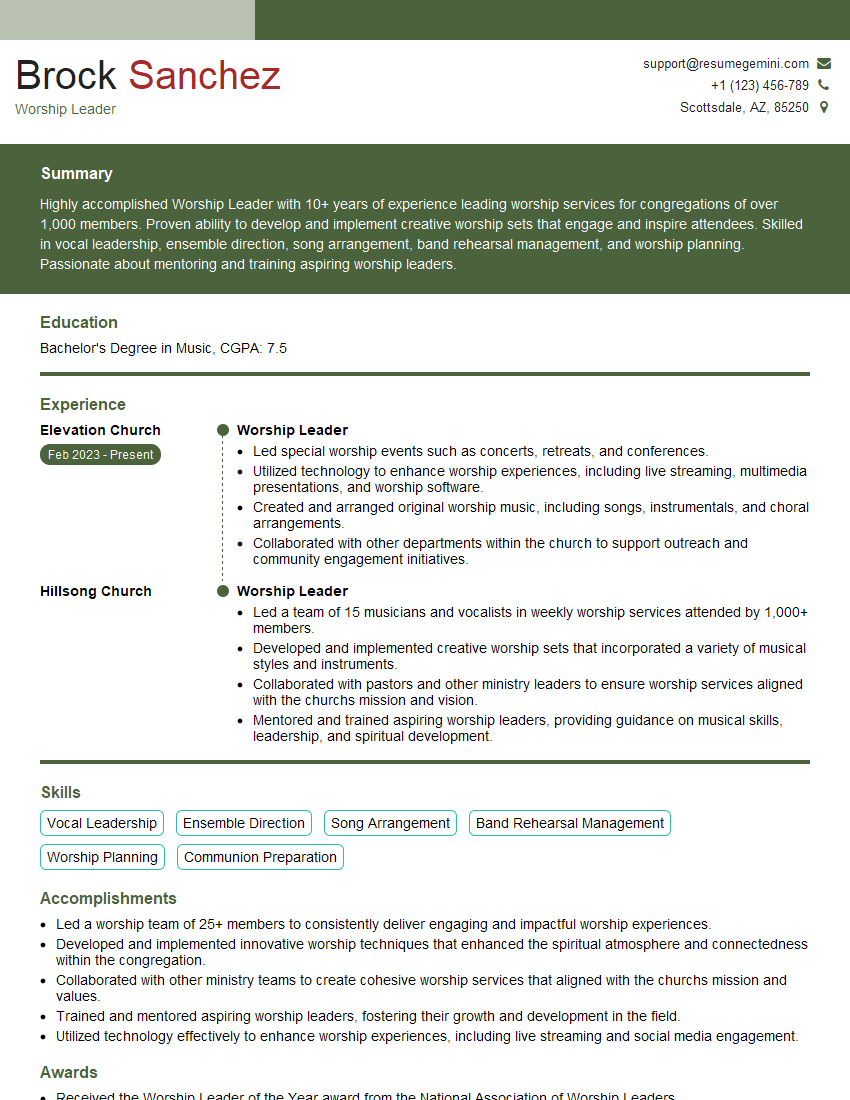
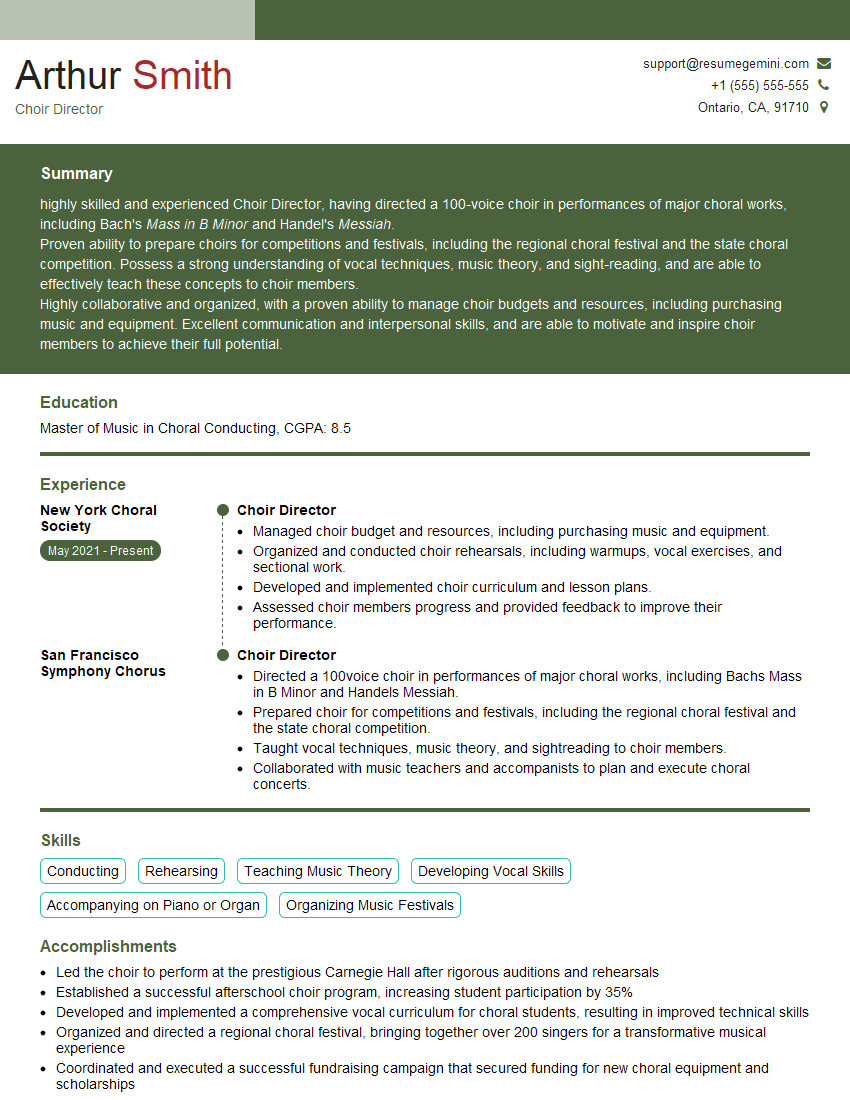
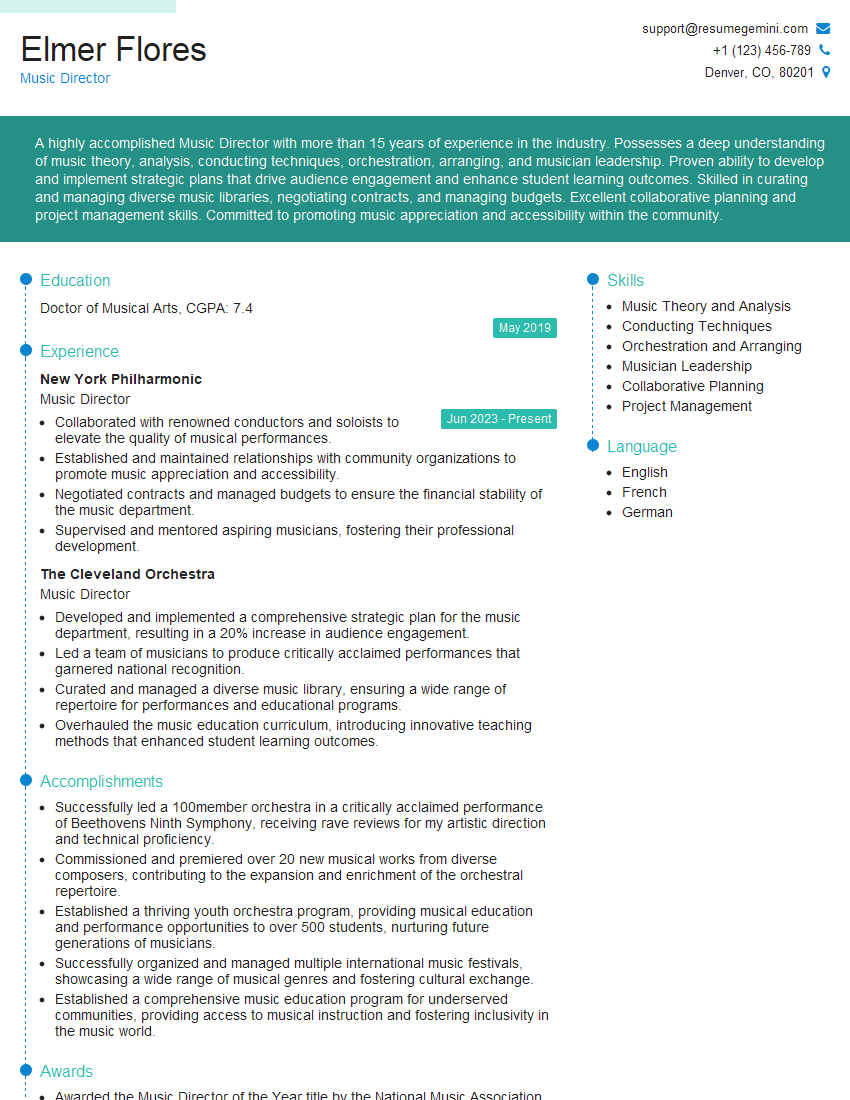
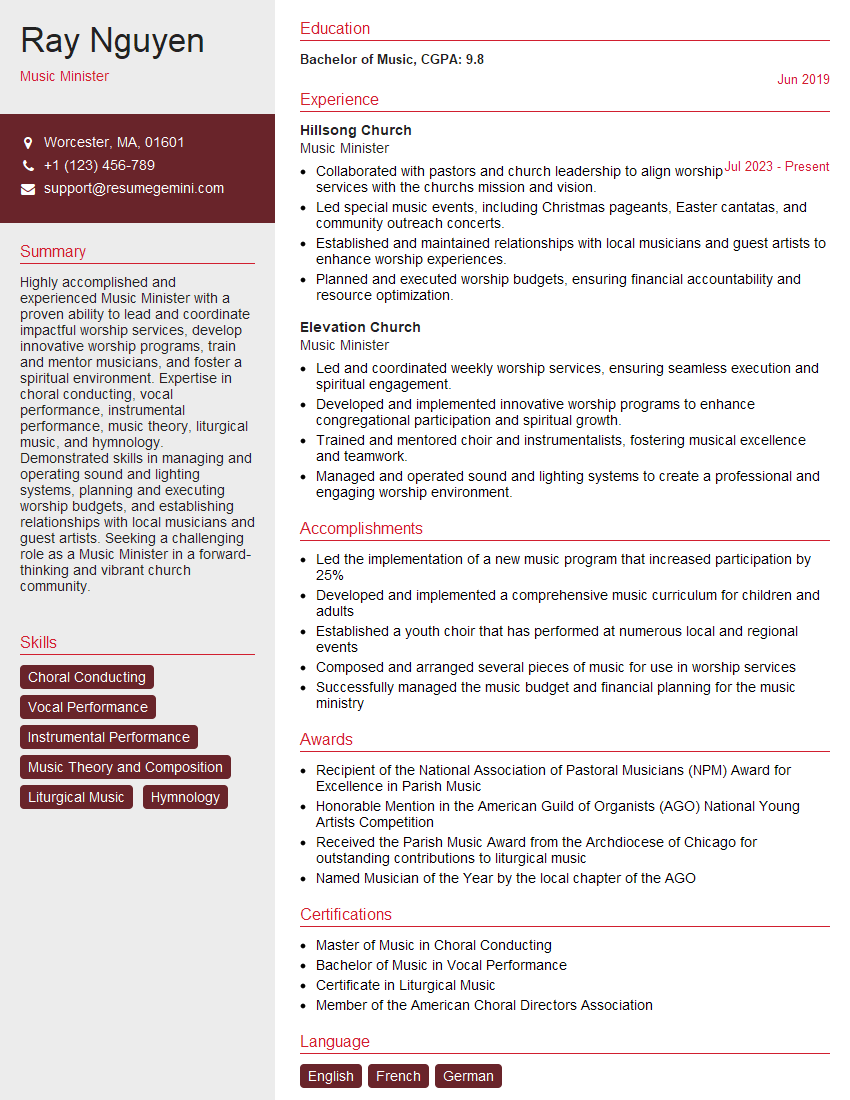
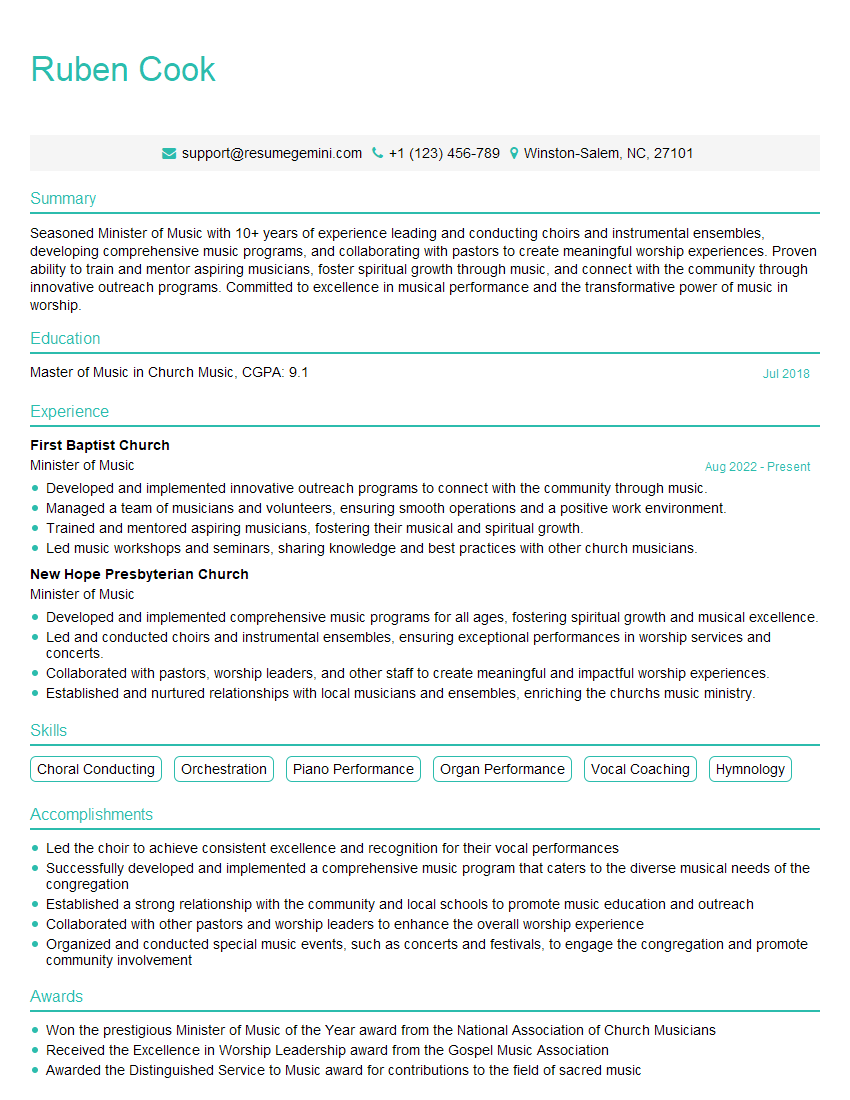
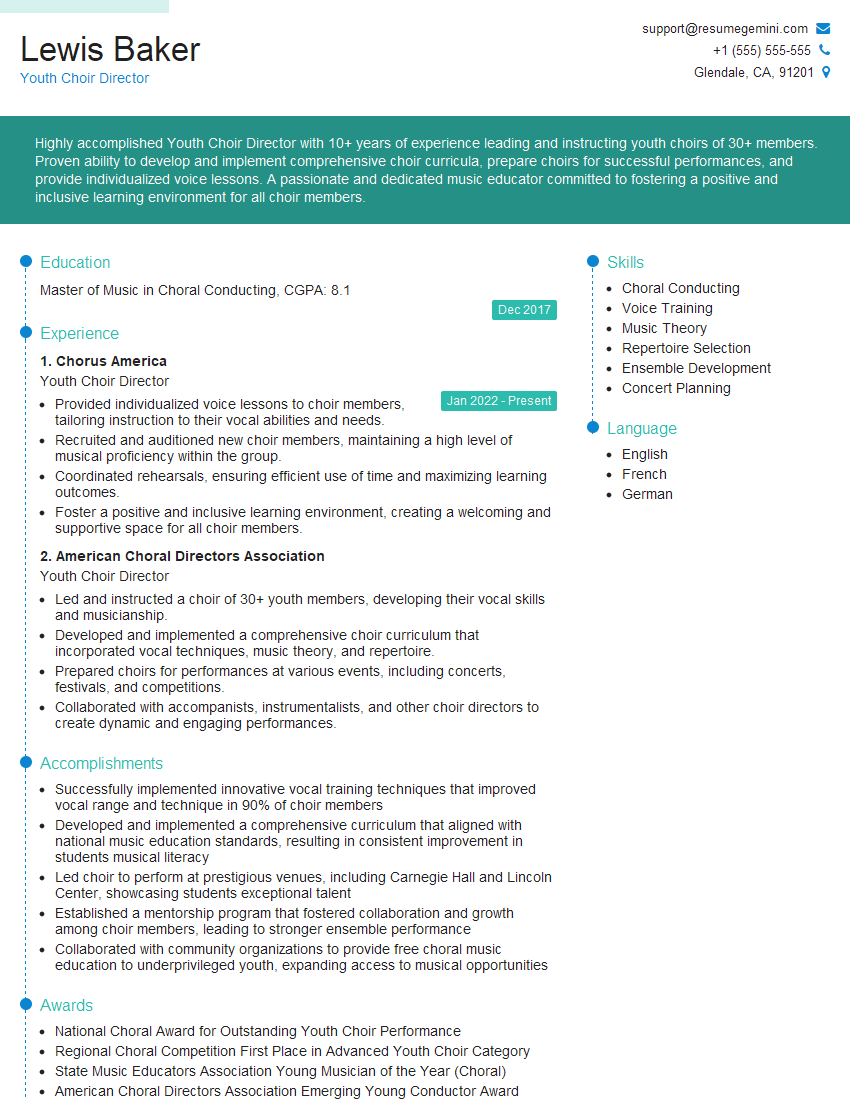
Mastering the ability to lead congregational singing significantly enhances your value as a musician and leader within a faith community. It demonstrates strong musical skills, communication abilities, and a deep understanding of creating a powerful spiritual experience. To highlight these strengths effectively to potential employers, it’s crucial to craft a compelling and ATS-friendly resume. ResumeGemini is a trusted resource that can help you build a professional and impactful resume tailored to showcase your abilities. Examples of resumes specifically tailored for candidates with experience in leading congregational singing are available through ResumeGemini.
Explore more articles
Users Rating of Our Blogs
Share Your Experience
We value your feedback! Please rate our content and share your thoughts (optional).
What Readers Say About Our Blog
Very informative content, great job.
good