Cracking a skill-specific interview, like one for Ability to operate and troubleshoot scouting equipment, requires understanding the nuances of the role. In this blog, we present the questions you’re most likely to encounter, along with insights into how to answer them effectively. Let’s ensure you’re ready to make a strong impression.
Questions Asked in Ability to operate and troubleshoot scouting equipment Interview
Q 1. Describe your experience operating and maintaining GPS receivers.
My experience with GPS receivers spans over eight years, encompassing various models from manufacturers like Trimble and Leica. I’m proficient in both operating and maintaining these devices. This includes understanding the intricacies of signal acquisition, differential correction techniques (like RTK and PPK), and data post-processing. For example, I once encountered an issue where a receiver was losing satellite lock frequently in a heavily forested area. Through methodical troubleshooting, I identified the issue as multipath interference caused by dense tree cover. The solution involved strategically repositioning the antenna to minimize signal reflections and utilizing a higher-frequency signal to improve penetration. Beyond operational proficiency, I routinely perform preventative maintenance, ensuring the unit’s battery is in optimal condition, and regularly check for any physical damage to the antenna or cable connectors. Accurate data acquisition hinges on the careful maintenance and proper operation of this equipment, and I make this a priority.
- Regular battery checks and maintenance.
- Antenna and cable inspection for damage.
- Understanding and utilizing various differential correction techniques (RTK, PPK).
- Troubleshooting signal loss due to factors like atmospheric conditions and obstructions.
Q 2. How do you troubleshoot a malfunctioning Total Station?
Troubleshooting a malfunctioning Total Station requires a systematic approach. I start by visually inspecting the instrument for any obvious problems, such as loose connections, physical damage, or obstructions in the optical path. Next, I verify the instrument’s power and battery level. Then, I move to checking the basic functionalities: Does the instrument power on? Are the displays working correctly? Can I see the target? Many issues stem from simple problems like low battery or improperly seated batteries. If the basic functions seem sound but the readings are inaccurate, I move to more advanced diagnostics. This could involve checking the level of the instrument, ensuring that the compensator is functioning correctly (via self-test functions, if available), and verifying the prism constant settings. Sometimes, errors are related to the EDM (electronic distance measurement) readings. This involves checking the atmospheric conditions (temperature, pressure, and humidity) to ensure accurate distance calculation. If after exhausting all these checks the problem persists, I would check the instrument’s internal diagnostics (often found via the instrument’s menu), which would help pinpoint the specific area of malfunction. I then consult the instrument’s manual or contact technical support if needed. In one case, a Total Station was giving erroneous readings due to a faulty internal component, identified only after checking the instrument’s diagnostics.
- Visual inspection for physical damage.
- Checking power and battery level.
- Testing basic instrument functions.
- Verifying instrument level and compensator function.
- Examining EDM readings and atmospheric corrections.
- Consult the instrument’s manual and/or technical support.
Q 3. Explain the process of calibrating a drone’s sensor.
Calibrating a drone’s sensor, typically referring to its camera or LiDAR, is crucial for accurate data acquisition. The process depends on the specific sensor and manufacturer but generally involves a series of steps. Firstly, it’s important to select a suitable calibration target, often a checkerboard pattern of known dimensions. This pattern allows for precise geometric analysis during the calibration process. The drone is then flown over this target at a specific altitude and orientation, capturing several images or point clouds, depending on whether it’s a camera or LiDAR sensor. Using dedicated calibration software (supplied by the drone manufacturer or a third-party provider), these acquired data are then processed to determine the intrinsic and extrinsic parameters of the sensor. Intrinsic parameters represent the internal characteristics of the sensor, such as focal length and principal point. Extrinsic parameters define the sensor’s position and orientation relative to the drone’s body. These parameters are then used to adjust the sensor’s settings and correct for any systematic errors, like lens distortion or inaccuracies in position and orientation measurements. Regular calibration is essential to maintain the accuracy of the drone’s data over time. A poorly calibrated sensor could lead to large errors in measurements, ultimately affecting the reliability of data analysis.
- Selection of calibration target (checkerboard).
- Data acquisition using the drone.
- Processing data using specialized calibration software.
- Adjusting sensor settings based on calibration results.
Q 4. What are common causes of data loss during field data acquisition?
Data loss during field data acquisition can be attributed to several factors. One common cause is equipment malfunction, such as a sudden power failure in the data recorder or a corrupted memory card. Environmental factors, like extreme temperatures or moisture, can also damage equipment and compromise data integrity. Human error, like accidentally deleting data or failing to properly back up data, is another frequent contributor. For example, not saving data frequently enough can lead to major loss in case of a sudden system crash. Data transfer issues, arising from faulty cables or incompatible software, can also result in data loss or corruption. Using a robust data management system is crucial. This includes regular data backups, employing redundancy in data storage methods (such as storing data on two independent drives simultaneously), and meticulously verifying data integrity throughout the field operations. Furthermore, employing data validation techniques during post-processing helps identify and potentially recover from some data loss situations.
- Equipment malfunction (power failure, memory card corruption).
- Environmental factors (extreme temperature, moisture).
- Human error (accidental deletion, insufficient backup).
- Data transfer issues (faulty cables, software incompatibility).
Q 5. How do you handle unexpected equipment failures in the field?
Handling unexpected equipment failures in the field requires a calm and methodical approach. First, I would assess the severity of the failure and its potential impact on the project timeline. Then, I will try to employ any contingency plans I had previously created. This often involves having backup equipment readily available. If a backup is not immediately accessible, I would communicate the issue to the project manager or supervisor to discuss available options. If the issue can be resolved locally and quickly, I would attempt to do so. For example, replacing a faulty battery or clearing a clogged sensor. If the problem is more complex and requires specialist knowledge or repair, I would contact the relevant technical support. If no immediate solutions are possible, I may need to reschedule the affected portion of the fieldwork or consider alternative data acquisition methods if feasible. Documentation is key; I always thoroughly document the failure, troubleshooting steps, and any resolutions taken. This ensures that the issue is properly addressed and to prevent similar events in the future.
- Assessment of failure severity and impact.
- Utilization of contingency plans (backup equipment).
- Communication with project manager/supervisor.
- Local troubleshooting and repairs (if possible).
- Contacting technical support.
- Rescheduling fieldwork or considering alternatives (if necessary).
- Thorough documentation of the incident.
Q 6. Describe your experience with different types of surveying equipment.
My experience encompasses a wide range of surveying equipment, including Total Stations (Leica, Trimble, Sokkia), GPS receivers (Trimble, Leica, Topcon), levels (automatic and digital), and data collectors (Trimble, Leica). I’m familiar with their operational procedures, maintenance requirements, and limitations. I’ve used these tools in diverse settings, from precise engineering surveys to large-scale topographic mapping. Understanding the strengths and weaknesses of each tool allows me to select the most appropriate equipment for a given task. For instance, while GPS is excellent for broad area coverage, a Total Station might be preferred for highly precise measurements in confined spaces. I’m equally proficient with both traditional optical instruments and modern digital equipment.
- Total Stations (Leica, Trimble, Sokkia).
- GPS Receivers (Trimble, Leica, Topcon).
- Levels (automatic and digital).
- Data Collectors (Trimble, Leica).
Q 7. Explain your knowledge of LiDAR technology and its applications.
LiDAR (Light Detection and Ranging) technology employs lasers to measure distances and create highly accurate 3D representations of the environment. I understand its applications in various fields, including surveying, mapping, and environmental monitoring. LiDAR’s ability to penetrate vegetation makes it ideal for creating detailed terrain models in forested areas, unlike traditional photogrammetry which can struggle with dense tree cover. It also enables the precise measurement of building heights and infrastructure, crucial for urban planning. The data processing of LiDAR point clouds involves filtering, classifying, and generating various products like Digital Terrain Models (DTMs), Digital Surface Models (DSMs), and intensity images. I am familiar with the use of various LiDAR processing software packages. I’ve worked on projects using airborne LiDAR for topographic surveys and terrestrial LiDAR for detailed building scans. Understanding the various types of LiDAR, from terrestrial to airborne to mobile, and their respective capabilities is crucial for selecting the most appropriate technology for different project needs.
- High-accuracy 3D data acquisition.
- Vegetation penetration capability.
- Applications in surveying, mapping, and environmental monitoring.
- Data processing techniques (filtering, classification).
- Generation of DTMs, DSMs, and intensity images.
- Different LiDAR types (airborne, terrestrial, mobile).
Q 8. How familiar are you with various types of GIS software?
My GIS software proficiency spans several platforms. I’m highly proficient in ArcGIS Pro, including its geoprocessing tools for spatial analysis and data management. I also have experience with QGIS, a powerful open-source alternative, particularly useful for tasks like raster processing and map composition. Furthermore, I’m familiar with the basics of other platforms like Google Earth Pro and MapInfo Pro, allowing me to adapt to various project requirements and leverage the strengths of each software based on the specific need. For example, ArcGIS Pro’s sophisticated analysis tools are invaluable for complex terrain analysis in scouting, while QGIS’s flexibility makes it ideal for quickly creating custom maps for specific scouting objectives.
Q 9. Describe your experience with data processing and analysis techniques.
Data processing and analysis are central to my work. My experience includes cleaning and pre-processing data from various sources, including GPS trackers, UAV imagery, and sensor data. I use techniques like spatial interpolation (kriging, inverse distance weighting) to estimate values at unsampled locations, particularly useful in creating comprehensive vegetation maps from sparse data points. For instance, I’ve successfully used kriging to interpolate soil moisture readings from a limited number of sensors across a large field, producing a detailed map vital for optimizing irrigation strategies in agricultural scouting. I’m also skilled in statistical analysis, employing techniques such as regression analysis to identify correlations between environmental variables and crop health indicators. I utilize scripting languages like Python with libraries such as NumPy and Pandas to automate repetitive tasks and enhance the efficiency of data analysis.
Q 10. What is your experience with UAV (drone) flight planning and execution?
I have extensive experience with UAV flight planning and execution, using both commercial and open-source software. I’m proficient in using planning software like DJI GS Pro and Litchi to create flight paths, considering factors such as no-fly zones, battery life, and optimal image overlap. My experience includes both pre-programmed autonomous flights and manual control for more intricate scenarios. I’m adept at adjusting flight parameters based on weather conditions and terrain challenges. For example, I once had to adapt a planned flight path due to unexpected strong winds, using my knowledge of UAV aerodynamics and the software’s manual control capabilities to safely complete the mission. Post-flight, I meticulously check flight logs for any anomalies and assess the quality of the captured imagery to ensure the mission objectives were successfully met.
Q 11. How do you ensure the accuracy of your data collection?
Accuracy is paramount. I employ several strategies to ensure data accuracy. Ground control points (GCPs) are routinely used in UAV surveys to georeference imagery with high precision. This involves placing identifiable markers in the survey area, then measuring their coordinates using a high-accuracy GPS receiver. These GCPs serve as reference points for correcting any positional errors in the aerial imagery. For sensor data, I regularly calibrate instruments according to manufacturer specifications and conduct quality control checks, comparing readings against known standards. Data validation is performed using multiple independent measurements whenever possible, highlighting and addressing any inconsistencies. Using robust statistical methods helps me identify and mitigate outliers in the datasets.
Q 12. Explain the importance of proper equipment maintenance.
Proper equipment maintenance is crucial for data integrity and safety. My routine includes regular cleaning and inspection of all equipment, following manufacturer guidelines for each device. This includes checking for any physical damage, loose connections, or signs of wear and tear. I maintain detailed logs of maintenance activities, including dates of service, repairs performed, and any replacement parts used. Software updates are promptly installed to ensure optimal performance and security. Preventative maintenance, such as battery conditioning and sensor calibration, is crucial in extending the lifespan of the equipment and minimizing the risk of malfunctions during critical scouting missions.
Q 13. What safety precautions do you follow when operating scouting equipment?
Safety is my top priority. When operating scouting equipment, I adhere strictly to all relevant safety regulations and guidelines. This includes obtaining necessary permits and approvals for UAV flights, maintaining a safe distance from power lines and other obstacles, and conducting thorough pre-flight checks. I always wear appropriate personal protective equipment (PPE), such as safety glasses and gloves, when handling equipment. For UAV operations, I always ensure I have a clear line of sight to the drone and am aware of the surrounding environment. I rigorously follow emergency procedures in case of equipment malfunctions and prioritize the safety of myself and others.
Q 14. How do you interpret and analyze data from scouting equipment?
Interpreting and analyzing data involves a multi-step process. I begin by visually inspecting the data from various sources – images, sensor readings, GPS tracks – to identify any obvious anomalies or trends. I then utilize GIS software and statistical tools to quantify these observations and gain insights. For instance, I might use NDVI (Normalized Difference Vegetation Index) analysis on UAV imagery to assess crop health, correlating variations in NDVI values with potential issues like nutrient deficiencies or pest infestations. Similarly, I might analyze soil moisture data to identify areas requiring irrigation. I then integrate these findings to generate comprehensive reports, which highlight critical areas requiring attention and support informed decision-making in the scouting process.
Q 15. Describe your problem-solving skills in the context of equipment malfunction.
My problem-solving approach to equipment malfunction centers around a systematic process. I start with observation – carefully noting the symptoms and error messages. Then, I move to a logical diagnostic phase, eliminating potential causes one by one. This often involves checking power sources, cable connections, and software configurations. I rely heavily on troubleshooting guides and manufacturers’ documentation, but I also utilize my experience to identify patterns and common issues. For example, if a drone’s camera isn’t functioning, I’d first check the power supply and cable connections. If that doesn’t resolve it, I’d examine the software settings, firmware updates, and even the camera’s internal settings. If the problem persists, I’d consider a deeper investigation, potentially involving contacting the manufacturer’s support team. Throughout this entire process, detailed documentation is critical – noting every step taken, each test conducted, and the outcome. This ensures traceability and facilitates future problem solving.
Career Expert Tips:
- Ace those interviews! Prepare effectively by reviewing the Top 50 Most Common Interview Questions on ResumeGemini.
- Navigate your job search with confidence! Explore a wide range of Career Tips on ResumeGemini. Learn about common challenges and recommendations to overcome them.
- Craft the perfect resume! Master the Art of Resume Writing with ResumeGemini’s guide. Showcase your unique qualifications and achievements effectively.
- Don’t miss out on holiday savings! Build your dream resume with ResumeGemini’s ATS optimized templates.
Q 16. How would you troubleshoot a connectivity issue with a remote sensor?
Troubleshooting a remote sensor connectivity issue begins with verifying the basics: power to the sensor, proper cable connections, and signal strength at the sensor location. I’d use a multimeter to check the sensor’s power supply, ensuring it receives the correct voltage and amperage. Next, I’d inspect all connections, looking for loose wires, damaged cables, or corrosion. If the problem persists, I’d investigate the wireless communication link. This might involve verifying network configuration, checking for interference (from other devices or environmental factors), and testing the communication protocol, for example checking if the correct baud rate is being used in serial communication. For instance, if using a Zigbee network, I’d examine the mesh network topology and check for node failures. If the sensor is still unreachable, more advanced tools might be necessary – signal strength meters, spectrum analyzers or network monitoring software to identify bottlenecks or interference. Remote diagnostics through the sensor’s onboard system (if available) can provide vital clues.
Q 17. What are the limitations of different types of scouting equipment?
Scouting equipment, while powerful, has limitations. GPS systems, for example, can be affected by atmospheric conditions, signal blockage (e.g., by dense foliage or buildings), and multipath errors (signals bouncing off surfaces). This leads to inaccuracies in location data. Similarly, aerial photography (using drones) can be affected by weather conditions (wind, rain, low light), battery life, and regulatory restrictions on flight zones. Ground-penetrating radar (GPR) has limitations in the type of soil it can effectively penetrate and the depth it can reach. Each type of sensor has specific limitations based on its technology, range, resolution, power consumption, and environmental susceptibility. Understanding these limitations is crucial in data interpretation and planning effective scouting missions. For instance, using GPR in very rocky areas might result in unreliable data. Consequently, careful consideration of the equipment and site conditions is critical for successful scouting.
Q 18. Explain the differences between various types of GPS systems.
GPS systems differ significantly in accuracy, capabilities, and cost. Basic GPS receivers utilize the signals from multiple satellites to obtain a position with a relatively lower accuracy (around 4.9 meters). Differential GPS (DGPS) enhances accuracy by correcting for atmospheric errors using a fixed reference station. Real-Time Kinematic (RTK) GPS offers even higher accuracy (centimeter-level) by using a second receiver for real-time corrections. Furthermore, different GPS systems utilize different satellite constellations (GPS, GLONASS, Galileo, BeiDou), allowing for better signal reception in different geographic areas. Finally, some GPS systems include features like mapping capabilities, data logging, and integration with other equipment.
Q 19. How do you manage large datasets collected from scouting equipment?
Managing large datasets from scouting equipment requires efficient data organization and analysis tools. I typically begin by establishing a clear data naming convention and storage system, using a combination of cloud storage (e.g., AWS S3, Google Cloud Storage) and local backups for redundancy. Then, I utilize geographic information systems (GIS) software and programming languages such as Python (with libraries like Pandas and NumPy) to process and analyze the data. Data cleaning and preprocessing steps are crucial – identifying and handling missing values, outliers, and inconsistencies. For example, I might use spatial interpolation techniques to fill gaps in sensor data based on neighboring values. Finally, data visualization (using tools like QGIS, ArcGIS, or custom plots created in Python) is essential for interpreting findings and effectively communicating results. This systematic approach ensures data integrity and allows for comprehensive data analysis and interpretation. For very large datasets, distributed computing frameworks like Apache Spark might be beneficial.
Q 20. Describe your experience with different types of mapping software.
My experience encompasses various mapping software, including ArcGIS, QGIS, and Google Earth Pro. ArcGIS is powerful for complex spatial analysis and data management, suitable for detailed mapping projects. QGIS provides an open-source alternative with a wide range of functionalities. Google Earth Pro excels in visualizing 3D terrain and imagery, ideal for initial project assessment and reporting. The choice of software often depends on the specific project requirements and data formats. For instance, ArcGIS’s advanced geoprocessing tools are useful for working with complex datasets, while QGIS’s plugin architecture allows for customization to suit specific workflows. My selection criteria include the software’s ease of use, capabilities relative to project needs, and the availability of support and training resources.
Q 21. How do you ensure the quality control of data acquired during a scouting project?
Ensuring data quality during a scouting project requires a multi-faceted approach. It starts with meticulous equipment calibration and pre-flight checks before data acquisition. This often includes verifying GPS accuracy, sensor calibration, and battery levels. During data acquisition, regular quality checks are performed using real-time monitoring tools and automated data validation routines. This includes identifying and flagging potential errors such as outliers and inconsistencies. Post-acquisition, a thorough data validation and cleaning process is applied, employing statistical methods to assess the accuracy, precision, and completeness of the data. This process might involve error correction, data imputation, and the rejection of obviously unreliable data points. A well-documented quality control process ensures that the final data is reliable and meets the project’s requirements. Proper documentation of all calibration procedures, data acquisition protocols, and processing steps are crucial for transparency and reproducibility.
Q 22. What are the key performance indicators (KPIs) for scouting equipment?
Key Performance Indicators (KPIs) for scouting equipment are metrics that measure how effectively the equipment is performing its intended function. These KPIs vary depending on the type of equipment, but generally fall into categories like accuracy, reliability, efficiency, and maintainability.
- Accuracy: This refers to how precisely the equipment measures or records data. For example, a GPS unit’s accuracy might be measured in meters, while a spectrometer’s accuracy might be measured in nanometers. High accuracy is critical for making informed decisions based on the collected data.
- Reliability: This KPI assesses how consistently the equipment functions without failures. It can be expressed as a mean time between failures (MTBF) or uptime percentage. Reliable equipment minimizes downtime and ensures consistent data collection.
- Efficiency: This measures how quickly and effectively the equipment completes its tasks. Factors like data processing speed, sample acquisition rate, and power consumption contribute to efficiency. A more efficient system allows for greater productivity.
- Maintainability: This focuses on the ease and cost of maintaining and repairing the equipment. It includes factors like the availability of spare parts, the complexity of repairs, and the time required for maintenance. Easy maintenance reduces downtime and operating costs.
For example, a drone used for aerial scouting might have KPIs for flight time, image resolution, and successful mission completion rate. A soil sensor might be evaluated based on its accuracy in measuring nutrient levels and its longevity in challenging field conditions. Regular monitoring of these KPIs allows for proactive maintenance and optimization of equipment performance.
Q 23. How do you stay updated on the latest advancements in scouting equipment?
Staying updated on advancements in scouting equipment involves a multifaceted approach. I actively participate in industry conferences and webinars, read trade publications like Precision Agriculture and Agricultural Engineering International, and follow key manufacturers and researchers on social media platforms like LinkedIn and Twitter.
Furthermore, I subscribe to relevant newsletters and technical journals to receive updates on new technologies and research findings. Engaging with online forums and communities dedicated to precision agriculture and remote sensing allows me to learn about practical applications and troubleshooting techniques directly from other professionals. Attending workshops and training sessions offered by equipment manufacturers provides hands-on experience with the latest technologies.
Finally, I make it a point to review relevant patents and research papers to stay abreast of cutting-edge innovations in sensor technology, data processing, and data analysis techniques. This holistic strategy helps me ensure my knowledge remains current and allows me to adapt to emerging trends quickly.
Q 24. What are your preferred methods for documenting equipment maintenance?
I prefer a digital, centralized system for documenting equipment maintenance, using a combination of Computerized Maintenance Management System (CMMS) software and a detailed equipment logbook.
The CMMS software allows me to track preventative maintenance schedules, record repairs, and store digital copies of manuals, warranties, and service records. This ensures easy access to all relevant information and facilitates reporting. For instance, I might use a CMMS to schedule regular calibration checks for a GPS receiver and record the results in the system.
In addition, I maintain a physical logbook, which contains handwritten notes about daily inspections, minor adjustments, and any unusual observations. This provides a readily available record even if the digital system is unavailable. I include details such as the date, time, specific equipment, actions taken, and any relevant measurements or notes. For example, I might note down the battery voltage of a drone after a flight or the soil moisture reading from a sensor before and after cleaning.
This combination of digital and physical records provides a robust and redundant system to ensure all maintenance information is accurately captured and readily accessible.
Q 25. Describe a time you had to troubleshoot a complex equipment problem.
During a large-scale soil sampling project, our automated soil sampler malfunctioned. It was unexpectedly halting mid-operation, causing significant delays and frustration. The error messages were vague, suggesting a generic hardware problem.
My troubleshooting process started with a thorough inspection of the physical components, checking for loose connections, damaged wires, and signs of wear and tear. This revealed nothing immediately apparent. I then systematically tested each component using the built-in diagnostics, focusing on the hydraulic system and the sensor readings. I discovered that a pressure sensor was providing erratic readings, causing the system to halt as a safety precaution. The sensor was failing intermittently, making the problem difficult to diagnose initially.
After consulting the manufacturer’s documentation and technical support, I determined that the sensor needed replacement. We ordered a new sensor, but faced a delay in shipping. To minimize downtime, I devised a temporary workaround. Utilizing the data from other operational sensors, I adjusted the sampling parameters, ensuring we could continue, albeit at a slightly reduced efficiency, until the new sensor arrived. The new sensor was installed, and the sampler resumed normal operation without further issues.
This experience highlighted the importance of methodical troubleshooting, thorough documentation, and creative problem-solving when dealing with complex equipment malfunctions.
Q 26. How do you prioritize tasks when multiple equipment issues arise simultaneously?
When multiple equipment issues arise simultaneously, I prioritize based on a combination of factors: urgency, impact, and resources. I use a risk-based approach to triage the problems.
- Urgency: Issues that cause immediate safety hazards or significant operational disruptions are prioritized first. For instance, a malfunctioning irrigation system during a drought would take precedence over a minor software glitch in a data logger.
- Impact: Problems with equipment critical to ongoing operations are prioritized higher than issues with less critical equipment. A malfunctioning GPS unit impacting a precise planting operation takes precedence over a faulty weather station.
- Resources: I consider the resources required to fix each problem— time, personnel, and parts. Problems that can be addressed quickly with readily available resources are often tackled before those requiring more extensive effort.
I often create a prioritized list, assigning a severity level and estimated repair time to each issue. This helps to visually organize the problems and allows me to allocate resources effectively. This method ensures that the most critical issues are addressed promptly and resources are used efficiently, reducing downtime and maximizing productivity.
Q 27. What is your understanding of different data formats used in scouting?
My understanding of data formats used in scouting encompasses various types, each with its strengths and limitations. Common formats include:
- CSV (Comma Separated Values): A simple, widely compatible format suitable for tabular data. It’s easily imported into spreadsheets and databases. However, it lacks the capability to store complex data structures.
- Shapefiles: Used to represent geographical vector data (points, lines, polygons). Common in GIS (Geographic Information Systems) applications for mapping and spatial analysis.
- GeoTIFF: Combines geospatial data with a TIFF image, allowing for the storage of raster data (images) with location information. Useful for aerial imagery analysis and remote sensing data.
- GeoJSON: A text-based format for encoding geographical data structures, offering better support for complex features than shapefiles and being widely used in web mapping applications.
- Databases (e.g., SQL, NoSQL): Relational (SQL) and non-relational (NoSQL) databases offer robust structures for storing and managing large, complex datasets with efficient query capabilities. They are essential for integrating data from multiple sources and performing advanced analytics.
Understanding these formats is crucial for data integration, analysis, and interpretation in scouting. The choice of format depends heavily on the type and volume of data, the intended analysis, and the software and tools used for processing.
Q 28. Explain your familiarity with different types of remote sensing platforms.
My familiarity with remote sensing platforms includes various types, each with unique capabilities and applications in scouting:
- Satellite Imagery: Offers wide area coverage and regular revisit times. Examples include Landsat, Sentinel, and commercial satellite constellations. These are suitable for large-scale assessments of crop health, soil characteristics, and land use changes.
- Unmanned Aerial Systems (UAS) or Drones: Provide high-resolution imagery and flexibility in data acquisition. They are ideal for detailed field-level observations and close-range sensing. Different drones can carry multispectral and hyperspectral cameras, LiDAR, and other sensors, depending on the specific scouting requirements.
- Ground-Based Sensors: These include handheld devices and stationary sensors measuring various parameters such as soil moisture, temperature, and nutrient levels. They offer highly localized data collection for precise assessments. Examples include soil sensors, weather stations, and handheld spectral sensors.
- Aircraft-Based Remote Sensing: These systems are suitable for larger areas compared to drones, offering a compromise between satellite imagery’s broad coverage and drone’s resolution. They might include various sensors like multispectral cameras, hyperspectral imagers, LiDAR systems, and thermal cameras.
Selecting the appropriate platform depends on the specific scouting needs, budget, area size, desired resolution, and temporal requirements. For instance, satellites are efficient for monitoring large fields over long periods but might lack the fine resolution of drone imagery. Ground-based sensors are valuable for detailed localized information, while aircraft offer flexibility between the two extremes.
Key Topics to Learn for Ability to Operate and Troubleshoot Scouting Equipment Interview
- Equipment Familiarity: Understanding the various types of scouting equipment used in your field (e.g., GPS devices, surveying tools, drones, specialized cameras). Knowing their capabilities and limitations is crucial.
- Operational Procedures: Mastering the safe and efficient operation of each piece of equipment. This includes pre-flight checks, calibration processes, data collection techniques, and post-operation maintenance.
- Data Acquisition and Analysis: Understanding how to accurately collect, record, and interpret data from the equipment. This might involve using specific software or understanding data formats.
- Troubleshooting Techniques: Developing a systematic approach to identifying and resolving common equipment malfunctions. This includes understanding error codes, performing basic repairs, and knowing when to escalate issues to more experienced personnel.
- Safety Procedures: Prioritizing safety in all operations. This includes adhering to relevant regulations, using appropriate safety equipment, and understanding emergency protocols.
- Software Proficiency: Familiarity with any software used to control, manage, or analyze data from the equipment. This might involve GIS software, data processing tools, or specialized applications.
- Maintenance and Calibration: Understanding routine maintenance tasks and calibration procedures to ensure the accuracy and longevity of the equipment.
Next Steps
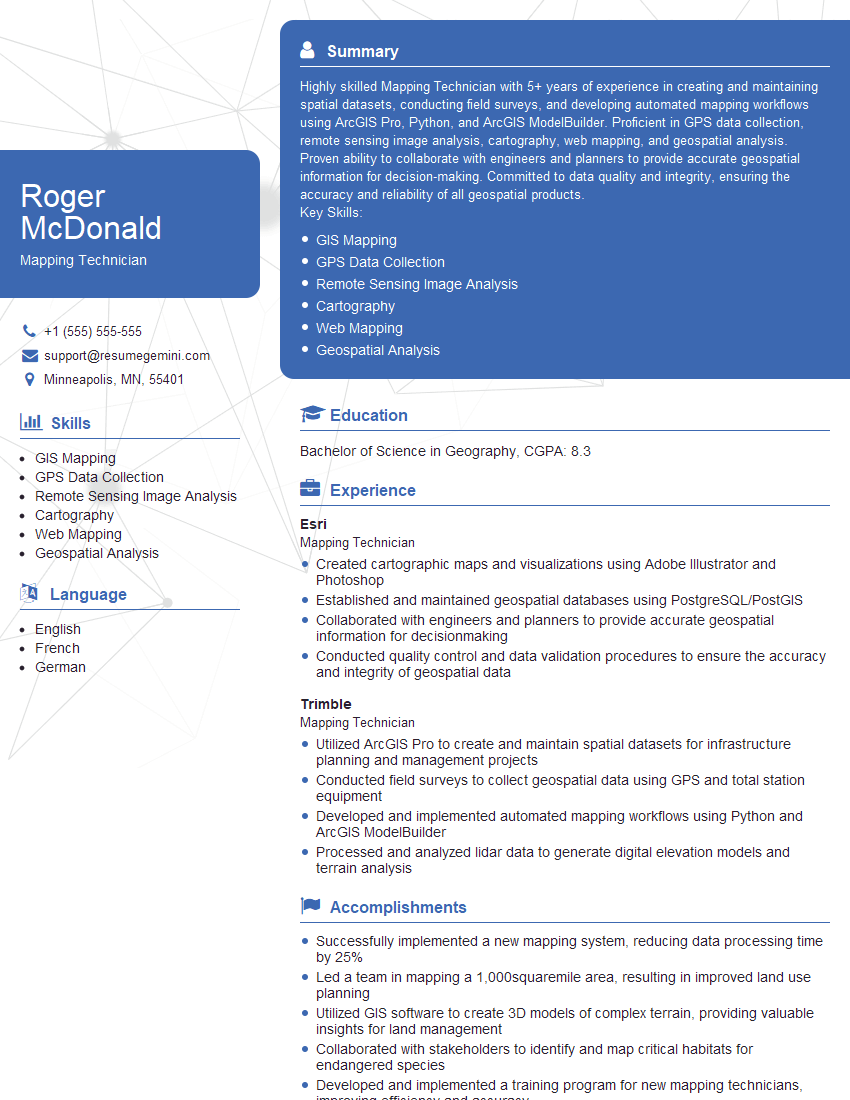
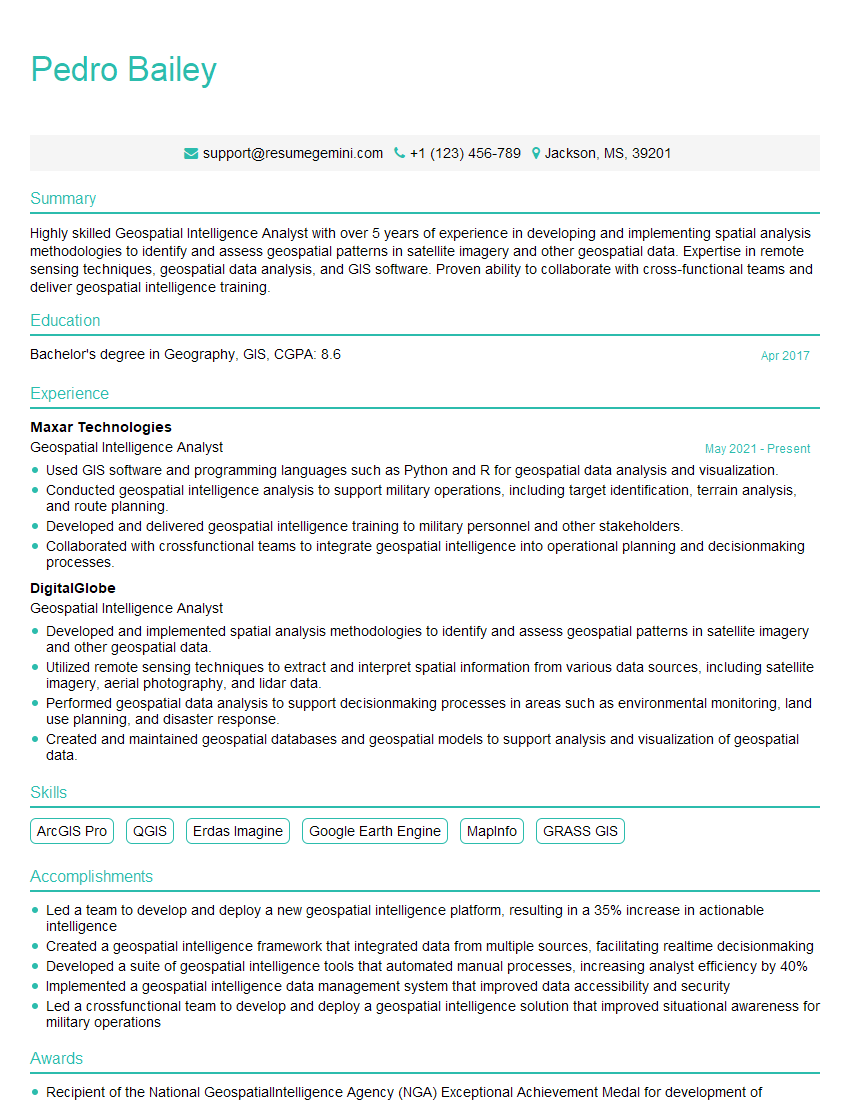
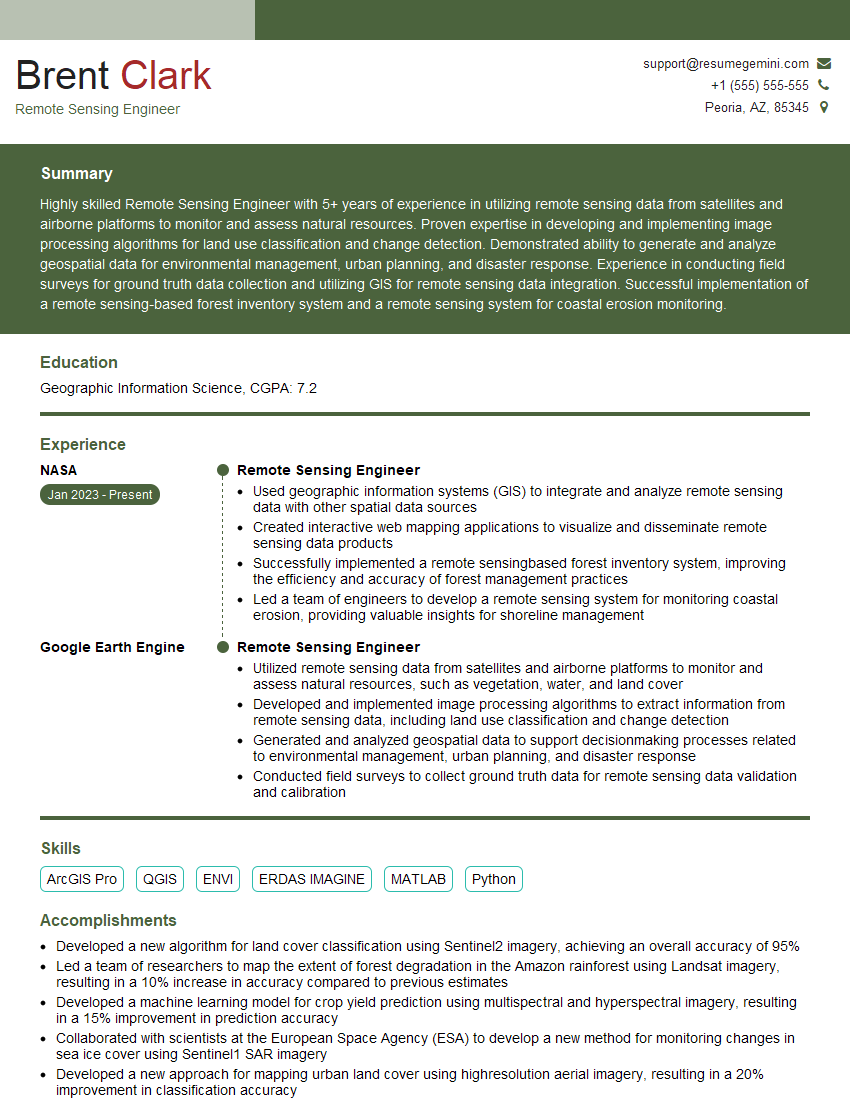
Mastering the ability to operate and troubleshoot scouting equipment is vital for career advancement in this field. Proficiency in this area demonstrates technical expertise, problem-solving skills, and a commitment to safety – all highly valued attributes. To significantly enhance your job prospects, create an ATS-friendly resume that showcases these skills effectively. ResumeGemini is a trusted resource that can help you build a professional and impactful resume. We provide examples of resumes tailored to highlight expertise in operating and troubleshooting scouting equipment, ensuring your application stands out from the competition.



Explore more articles
Users Rating of Our Blogs
Share Your Experience
We value your feedback! Please rate our content and share your thoughts (optional).
What Readers Say About Our Blog
Very informative content, great job.
good