Every successful interview starts with knowing what to expect. In this blog, we’ll take you through the top Adjudicating claims and protests interview questions, breaking them down with expert tips to help you deliver impactful answers. Step into your next interview fully prepared and ready to succeed.
Questions Asked in Adjudicating claims and protests Interview
Q 1. Explain the process of adjudicating a claim.
Adjudicating a claim involves a systematic process of reviewing, evaluating, and resolving a dispute. Think of it like being a judge in a mini-courtroom, but often without the formality of a full trial. The process typically starts with the submission of a claim, which is a formal request for compensation or resolution of a problem.
- Claim Review: I begin by thoroughly reviewing all documentation provided by the claimant, including supporting evidence, contracts, and relevant policies. This includes checking for completeness and identifying any missing information.
- Evidence Gathering: If necessary, I gather additional evidence, potentially interviewing witnesses or requesting further documentation from relevant parties. For example, in an insurance claim for property damage, I might request a detailed appraisal from an independent assessor.
- Assessment of Liability: This crucial step involves determining who is responsible for the situation leading to the claim. This often requires carefully analyzing the presented evidence and comparing it with the applicable laws, regulations, or contract terms. For example, in a contract dispute, I’d refer to the specific clauses to ascertain the obligations of each party.
- Determination of Damages: After establishing liability, I calculate the extent of the damages or losses incurred. This step often requires applying specific formulas or considering expert opinions, depending on the nature of the claim. For instance, in a personal injury claim, medical records and expert testimony on future medical expenses would be crucial.
- Decision and Communication: Finally, I issue a written decision outlining the findings and rationale, along with the final resolution. This decision is then communicated to all involved parties. Transparency is key; explaining the reasoning behind the decision builds trust and understanding.
Q 2. Describe your experience handling complex claims.
I have extensive experience managing intricate claims involving multiple parties, substantial financial implications, and complex legal frameworks. One notable case involved a multi-million dollar construction dispute where I had to analyze extensive engineering reports, contract amendments, and conflicting testimony from multiple contractors and subcontractors.
The challenge was to untangle the web of responsibility for cost overruns and delays. I meticulously reviewed each contractor’s contractual obligations, compared their work against project specifications, and cross-referenced witness statements with project timelines and documentation. Ultimately, my adjudication, based on detailed analysis and reasoned judgment, resulted in a fair distribution of liability and financial responsibility among the parties involved, avoiding expensive and lengthy litigation.
Q 3. How do you prioritize competing claims?
Prioritizing competing claims requires a systematic approach that ensures fairness and efficiency. I use a multi-faceted strategy:
- Urgency and Time Sensitivity: Claims with immediate needs, such as medical emergencies or critical infrastructure failures, are prioritized. Think of it like triage in a hospital – those in most immediate danger receive attention first.
- Legal Precedence: Claims with established legal precedence or those involving significant legal risk are given priority to avoid potential larger consequences. Some claims may carry more significant legal repercussions than others.
- Complexity and Resources Required: Claims requiring extensive investigation or specialized expertise are assessed based on resource availability and potential impact. A simpler claim can be handled more quickly than a complex one involving many expert reports.
- Documentation and Evidence: Claims with complete and well-documented evidence are prioritized to reduce delays caused by information gathering. A well-prepared case is easier and faster to adjudicate.
This prioritized approach ensures that resources are allocated effectively and the most time-sensitive and legally significant claims are addressed promptly.
Q 4. What methods do you use to verify the validity of claims?
Verifying the validity of claims relies on a combination of methods aimed at establishing the truth and accuracy of the information provided. This involves:
- Document Verification: I carefully examine all supporting documents for authenticity, consistency, and completeness. This includes verifying dates, signatures, and the source of information. I may cross-reference documents against other sources of information to check for inconsistencies.
- Witness Interviews: When appropriate, I conduct interviews with witnesses to corroborate the claimant’s account and gather additional perspectives. This helps to gain a more complete picture of events.
- Third-Party Verification: I often utilize third-party experts or agencies (e.g., appraisers, engineers, accountants) to independently verify specific aspects of a claim. This adds objectivity and removes potential bias.
- Data Analysis: Where applicable, I analyze available data to identify patterns, inconsistencies, or anomalies that could indicate fraud or inaccuracies. For instance, in a financial claim, I might compare reported transactions against bank records.
This multi-pronged approach strengthens the validity and reliability of the findings in the adjudication.
Q 5. How do you handle contradictory evidence in a claim?
Contradictory evidence is a common challenge in claim adjudication. Addressing it requires a careful and methodical approach:
- Identify and Document: The first step is to clearly identify all conflicting pieces of evidence and meticulously document their source and content. This establishes a clear record of the discrepancies.
- Assess Reliability: I then evaluate the reliability and credibility of each piece of evidence, considering factors such as the source’s expertise, potential biases, and the supporting evidence. A witness testimony, for instance, needs to be weighed against other evidence to determine its overall strength.
- Cross-Reference and Reconcile: I attempt to reconcile the conflicting evidence by looking for potential explanations for the discrepancies. Perhaps there were misunderstandings or errors in documentation. Could there be alternate interpretations of the same evidence?
- Weight of Evidence: If reconciliation is impossible, I weigh the evidence based on its credibility and strength. The evidence that is more convincing and better supported will have a stronger influence on the final decision.
- Seek Clarification: If crucial elements are missing, or if the evidence is inconclusive, I may request clarification or additional evidence from the relevant parties.
This process allows for a balanced and informed decision despite the conflicting evidence.
Q 6. Describe your experience with different types of claims (e.g., insurance, contract).
My experience encompasses a wide range of claims, including insurance claims (property, liability, health), contract disputes (construction, commercial, employment), and regulatory claims (environmental, licensing). For example:
- Insurance Claims: I’ve handled numerous property damage claims following natural disasters, assessing damage, verifying insured losses, and ensuring fair compensation within policy guidelines.
- Contract Disputes: I’ve adjudicated construction disputes, resolving disagreements about payment schedules, project completion, and contractual breaches. This involved analyzing complex contracts and technical specifications.
- Regulatory Claims: I’ve reviewed environmental impact assessments and adjudicated claims related to environmental violations, ensuring adherence to relevant laws and regulations.
This diverse experience has equipped me with a broad understanding of various legal and contractual frameworks, allowing me to approach each claim with the necessary expertise and impartiality.
Q 7. How do you ensure fairness and impartiality in your adjudications?
Ensuring fairness and impartiality is paramount in my role. I employ several key strategies to achieve this:
- Objective Evaluation: I strive to maintain a completely objective approach, basing my decisions solely on the evidence presented and applicable regulations. I avoid personal opinions or biases.
- Due Process: I adhere strictly to established procedures, ensuring that all parties have a fair opportunity to present their case and be heard. This includes providing ample time and opportunity to provide information and respond to arguments.
- Transparency and Documentation: I maintain meticulous records of the entire adjudication process, including all evidence, findings, and rationale behind my decisions. This transparency increases accountability and fosters trust.
- Conflict of Interest Management: I am extremely vigilant in identifying and managing any potential conflicts of interest, immediately disclosing and resolving any situations that could compromise my impartiality. This is crucial for maintaining confidence in the process.
- Continuous Learning: I stay updated on relevant laws, regulations, and best practices in claim adjudication to ensure my decisions align with current standards and legal precedents.
By consistently applying these principles, I can uphold the integrity of the adjudication process and ensure fairness for all parties involved.
Q 8. What is your experience with mediation or arbitration?
My experience with mediation and arbitration spans over 10 years, encompassing a wide range of disputes. I’ve acted as both a mediator and an arbitrator in various contexts, including commercial disagreements, construction claims, and intellectual property disputes. In mediation, my focus is on facilitating communication and helping parties reach a mutually acceptable agreement. This often involves active listening, identifying common ground, and suggesting creative solutions. For example, in a recent commercial dispute, I helped two businesses negotiate a settlement that avoided costly litigation, resulting in a positive outcome for both parties. As an arbitrator, I conduct formal hearings, hear evidence from both sides, and issue a legally binding decision. This requires a deep understanding of legal principles, evidence evaluation, and the ability to render impartial judgments. One notable arbitration involved a complex construction contract dispute where I meticulously reviewed architectural plans, financial documents, and witness testimonies to arrive at a fair and equitable award.
Q 9. How do you communicate decisions to claimants?
Communicating decisions to claimants is crucial and requires sensitivity and clarity. I ensure decisions are conveyed in a timely and professional manner, typically through a formal written decision. This document clearly outlines the findings of fact, the applicable legal principles, and the reasoning behind the decision. I use plain language, avoiding technical jargon, and provide a detailed explanation of the rationale. For claimants whose claims were partially or fully denied, I provide a compassionate and empathetic explanation, acknowledging their disappointment and clarifying the reasoning behind the decision. Whenever possible, I offer an opportunity for a follow-up discussion to address any remaining questions or concerns. For example, if a claim is denied due to a lack of sufficient evidence, I clearly state what evidence would be needed to strengthen a future claim.
Q 10. How do you manage difficult or challenging claimants?
Managing difficult or challenging claimants requires patience, empathy, and a strong understanding of conflict resolution techniques. I always approach interactions with professionalism and respect, regardless of the claimant’s demeanor. I actively listen to their concerns, validate their feelings, and strive to understand their perspective, even if I don’t necessarily agree with it. Clear and consistent communication is vital. I set clear expectations for behaviour and adhere to strict procedural fairness. If communication breakdowns persist, I may involve a third party, such as a supervisor or legal counsel, to assist in de-escalating the situation and ensuring adherence to established processes. In instances of disruptive or abusive behavior, I may impose sanctions as per the relevant rules and regulations.
Q 11. How do you handle protests against your decisions?
Protests against my decisions are handled in a structured and transparent manner. The process usually begins with a formal written protest that clearly articulates the grounds for appeal. I thoroughly review the protest and any supporting documentation. If the protest raises valid concerns or reveals procedural errors, I may reconsider my decision or refer the matter to a higher authority for review. If the protest is deemed unfounded, I will issue a written response explaining the reasons for upholding the original decision. This process ensures accountability and maintains fairness and impartiality within the system. Transparency is key; I ensure the claimant understands the reasons behind the outcome and the avenues available for further action, such as internal appeals or external legal remedies.
Q 12. What legal frameworks guide your adjudication process?
My adjudication process is guided by a variety of legal frameworks, which vary depending on the specific type of claim. These often include national and international laws related to contract law, tort law, intellectual property rights, and specific statutes relevant to the industry in question. For example, in construction disputes, I often refer to building codes and contract specifications. In commercial claims, relevant statutes governing sales, warranties, and intellectual property might be referenced. Additionally, procedural rules, such as those set out in arbitration agreements or internal organizational policies, also play a significant role. Adherence to these legal frameworks ensures the impartiality and fairness of the decision-making process.
Q 13. How do you stay up-to-date with relevant laws and regulations?
Staying current with relevant laws and regulations is essential. I accomplish this through various methods. I subscribe to legal journals and online databases providing up-to-date information on case law and legislative changes. I actively participate in professional development programs and attend conferences and workshops hosted by legal and industry organizations. This continuous learning enables me to refine my skills and ensure my decisions remain consistent with the latest legal precedent and best practices. Furthermore, I maintain a network of colleagues and experts in related fields to share knowledge and insights.
Q 14. Describe your experience using claims adjudication software or systems.
My experience with claims adjudication software and systems is extensive. I’m proficient in using several platforms designed for managing claims, tracking documents, and scheduling hearings. These systems typically incorporate features for secure document storage, case management tools, and communication portals for claimants and other stakeholders. For example, I’ve used software that automates certain aspects of the claims processing workflow, such as generating reports, managing deadlines, and sending notifications. The use of such systems significantly enhances efficiency and transparency while minimizing the risk of errors. Data security is paramount, and I ensure all systems used adhere to the highest standards of data protection.
Q 15. How do you document and maintain records of your adjudications?
Maintaining meticulous records is paramount in claim adjudication. We utilize a comprehensive, auditable system, typically a combination of digital and physical files. Each claim receives a unique identifier, and all related documentation – from the initial application to the final decision and any supporting evidence – is carefully organized and indexed. This includes digital scans of all paperwork, audio recordings of interviews (if any), and detailed notes on every interaction and decision made. We use a dedicated case management software that allows for version control, secure storage, and easy retrieval of information. This ensures transparency, accountability, and facilitates efficient review during appeals or audits.
For example, a claim involving a damaged shipment might include the initial claim form, photos of the damage, the carrier’s delivery report, communication logs with the claimant, and the final adjudication decision with reasoning. Each document is timestamped and linked to the case file. This ensures a clear audit trail.
Career Expert Tips:
- Ace those interviews! Prepare effectively by reviewing the Top 50 Most Common Interview Questions on ResumeGemini.
- Navigate your job search with confidence! Explore a wide range of Career Tips on ResumeGemini. Learn about common challenges and recommendations to overcome them.
- Craft the perfect resume! Master the Art of Resume Writing with ResumeGemini’s guide. Showcase your unique qualifications and achievements effectively.
- Don’t miss out on holiday savings! Build your dream resume with ResumeGemini’s ATS optimized templates.
Q 16. How do you identify and prevent fraudulent claims?
Fraudulent claims represent a significant challenge. Our approach is multi-layered, starting with proactive measures like robust application forms designed to identify inconsistencies, and thorough background checks where appropriate. We also utilize data analytics to identify patterns indicative of fraud, such as unusually high claim frequency from a single source or claims with suspiciously similar characteristics. Reactive measures involve rigorous investigations, involving cross-referencing information with external databases, conducting interviews, and verifying supporting documents. We actively collaborate with law enforcement agencies when necessary.
For instance, if multiple claims are received from the same address involving identical circumstances and unusually high claim amounts, this would trigger a red flag, prompting a deeper investigation.
Q 17. Describe your experience investigating claims.
My experience in investigating claims encompasses a wide range of scenarios, from straightforward matters with readily available evidence to complex cases requiring extensive research and interviewing multiple parties. I’m adept at gathering information from various sources, including claimant testimonies, witness statements, physical evidence, and digital records. I employ a structured investigative approach, beginning with clearly defining the scope of the investigation, meticulously documenting all findings, and meticulously analyzing evidence to determine the validity of the claim. I also utilize various investigative techniques like interviewing skills to elicit truthful information, and data analysis to identify patterns and anomalies.
A recent example involved a claim for a lost package. Through thorough investigation, including reviewing shipping tracking data and contacting the delivery service, we uncovered that the claimant had provided an inaccurate address, leading to the package being misdelivered. This ultimately resolved the claim in a fair and efficient manner.
Q 18. What are some common challenges in adjudicating claims?
Adjudicating claims presents several common challenges. Ambiguous policy language can lead to interpretation disputes. Incomplete or conflicting evidence makes establishing the facts of a case difficult. Balancing fairness and efficiency is also a constant challenge. We need to ensure claimants feel heard and understood while also managing a high volume of claims within tight deadlines. Additionally, managing emotional claimants and addressing their concerns requires strong communication and interpersonal skills. Finally, staying up-to-date with ever-changing regulations and legal precedents is crucial for accuracy and consistency.
Q 19. How do you handle time constraints and deadlines?
Time management is critical. I employ a prioritized task management system that allows me to effectively allocate time to different claims based on urgency and complexity. This involves using tools like project management software and setting clear deadlines for each stage of the adjudication process. I also leverage technology to automate routine tasks and streamline workflows whenever possible. Effective communication with claimants, keeping them updated on the progress, helps manage expectations and prevents unnecessary delays.
For instance, prioritizing claims with imminent deadlines or involving perishable goods helps ensure timely resolutions and prevents potential losses.
Q 20. How do you ensure the accuracy and consistency of your decisions?
Accuracy and consistency are ensured through a combination of standardized procedures, regular training, and quality control mechanisms. We use detailed checklists and decision-making frameworks to ensure consistent application of policies and regulations across all cases. Regular internal audits and peer reviews help identify and address any inconsistencies or biases in decision-making. Our team is regularly updated on changes in policy and legal precedents through training sessions and knowledge-sharing initiatives.
For example, a standardized scoring system for assessing the validity of evidence contributes to consistent application of criteria across different cases.
Q 21. What is your experience with appeals processes?
I have extensive experience managing appeals. Our appeals process is transparent and clearly defined, providing claimants with a fair opportunity to challenge a decision. This involves a thorough review of the original adjudication, allowing claimants to submit additional evidence. Decisions on appeals are made by a senior adjudicator or a review panel, applying the same rigorous standards of fairness and accuracy. Detailed rationale for appeal decisions is provided to the claimant, ensuring transparency and understanding.
The appeal process helps identify areas where our adjudication practices could be improved, contributing to greater consistency and fairness in our decisions.
Q 22. How do you work effectively under pressure?
Working effectively under pressure in claim adjudication requires a structured approach. I thrive in high-pressure environments by prioritizing tasks, focusing on critical details, and maintaining a calm demeanor. My strategy involves breaking down complex claims into manageable components, creating clear timelines, and utilizing efficient time management techniques. I’ve found that proactively anticipating potential bottlenecks and proactively communicating with stakeholders significantly reduces stress and improves overall efficiency.
For example, during a period of exceptionally high claim volume, I implemented a prioritization system based on urgency and potential impact. This allowed me to address the most critical claims first while keeping other claims on track. This systematic approach, combined with clear communication, not only ensured timely resolutions but also reduced team stress.
Q 23. Describe a situation where you had to make a difficult decision in a claim.
One particularly challenging claim involved a dispute over a significant construction delay. Both the contractor and the client presented compelling but conflicting evidence. The contractor cited unforeseen geological conditions as the cause, while the client argued for negligence on the contractor’s part. The decision had the potential to impact millions of dollars.
My approach involved meticulously reviewing all submitted documentation – contracts, geological surveys, progress reports, and expert testimonies – cross-referencing information, and identifying discrepancies. I organized a meeting with both parties to clarify inconsistencies and encourage a collaborative approach to resolving the dispute. Ultimately, I concluded that while unforeseen geological conditions contributed to the delay, the contractor’s response wasn’t optimal, justifying a partial compensation to the client. This solution balanced fairness and accountability and ultimately avoided costly litigation.
Q 24. How do you balance the needs of different stakeholders in a claim?
Balancing stakeholder needs in claim adjudication requires empathy, strong communication, and a deep understanding of the legal framework governing claims. It’s a delicate balancing act, ensuring that the decision is fair, just, and compliant with all relevant regulations.
I achieve this through transparent communication, actively listening to each stakeholder’s perspective, and documenting every interaction and decision made. I strive to build consensus wherever possible, emphasizing shared goals and highlighting common ground. However, when necessary, I will firmly uphold the established rules and regulations, making objective decisions based on evidence, even if it means one party is dissatisfied. For example, in a recent case, I had to prioritize the safety standards upheld by regulations over a client’s desire for quick completion, to ensure the project adhered to safety codes. The client, while initially frustrated, ultimately appreciated the emphasis on safety.
Q 25. How do you measure the effectiveness of your adjudication processes?
Measuring the effectiveness of adjudication processes is crucial for continuous improvement. I employ several key metrics, including:
- Timeliness: Average time taken to resolve claims, broken down by claim type and complexity. This helps to identify bottlenecks and improve efficiency.
- Accuracy: Rate of successful appeals, suggesting the accuracy and fairness of initial decisions. A low appeal rate indicates effective and thorough adjudication.
- Stakeholder Satisfaction: Surveys and feedback mechanisms gather insights into stakeholder perceptions of fairness, transparency, and communication. These qualitative data provide valuable context alongside the quantitative metrics.
- Cost-effectiveness: Total cost of adjudication relative to the value of claims settled. This metric demonstrates efficient resource allocation and cost control.
By regularly monitoring these metrics and analyzing trends, we can identify areas for improvement and refine our processes for better outcomes.
Q 26. What are your strengths and weaknesses in claim adjudication?
My strengths lie in my analytical skills, attention to detail, and ability to remain objective under pressure. I have a proven track record of resolving complex claims fairly and efficiently. My ability to communicate clearly and empathetically with diverse stakeholders is also a significant asset.
One area where I’m continuously working on improvement is delegation. While I’m comfortable handling a high volume of work independently, effectively delegating tasks to junior team members is key to overall team growth and efficiency. I’m actively seeking opportunities to mentor and train others, improving both my delegation skills and team capabilities.
Q 27. What are your salary expectations?
My salary expectations are in line with my experience and skills within the industry. I’m open to discussing a competitive compensation package that reflects my contributions and aligns with the responsibilities of this role. I would be happy to provide more detailed figures based on the specific benefits and compensation structure offered.
Q 28. What are your long-term career goals?
My long-term career goals involve developing into a leadership position within the claim adjudication field. I aspire to lead and mentor a team, contributing to the development of innovative and efficient processes. I am also interested in pursuing further professional development opportunities, such as obtaining relevant certifications, to enhance my expertise and contribute to industry best practices.
Key Topics to Learn for Adjudicating Claims and Protests Interview
- Understanding Claim Types and Procedures: Familiarize yourself with various claim types (e.g., factual, legal, procedural), the stages of the claims process, and relevant regulations or guidelines.
- Evidence Evaluation and Analysis: Develop strong analytical skills to critically assess the validity and weight of evidence presented by different parties. Practice identifying biases and inconsistencies.
- Legal Frameworks and Regulations: Thoroughly understand the legal basis for adjudicating claims and protests, including relevant statutes, case law, and precedents.
- Impartiality and Due Process: Grasp the principles of fairness, impartiality, and due process. Understand how to ensure all parties receive a fair hearing and that decisions are unbiased.
- Communication and Negotiation Skills: Develop effective communication strategies for interacting with claimants, protestors, and other stakeholders. Practice active listening and conflict resolution techniques.
- Decision-Making and Justification: Learn to articulate clear, concise, and well-justified decisions based on evidence and legal principles. Practice structuring your reasoning logically and persuasively.
- Record Keeping and Documentation: Understand the importance of meticulous record-keeping and the proper documentation of all aspects of the claims and protest process.
- Ethical Considerations: Familiarize yourself with ethical guidelines and potential conflicts of interest that may arise during the adjudication process.
- Problem-Solving and Critical Thinking: Develop your ability to analyze complex situations, identify key issues, and formulate effective solutions within the legal framework.
Next Steps
Mastering the art of adjudicating claims and protests opens doors to exciting career opportunities in diverse sectors, offering excellent prospects for growth and advancement. A strong resume is crucial to showcasing your skills and experience effectively to potential employers. To significantly increase your chances of landing your dream job, focus on crafting an ATS-friendly resume that highlights your key competencies. We highly recommend leveraging ResumeGemini, a trusted resource for building professional resumes. ResumeGemini provides valuable tools and resources, including examples of resumes tailored specifically to Adjudicating claims and protests, to help you create a compelling and impactful document that stands out from the competition.
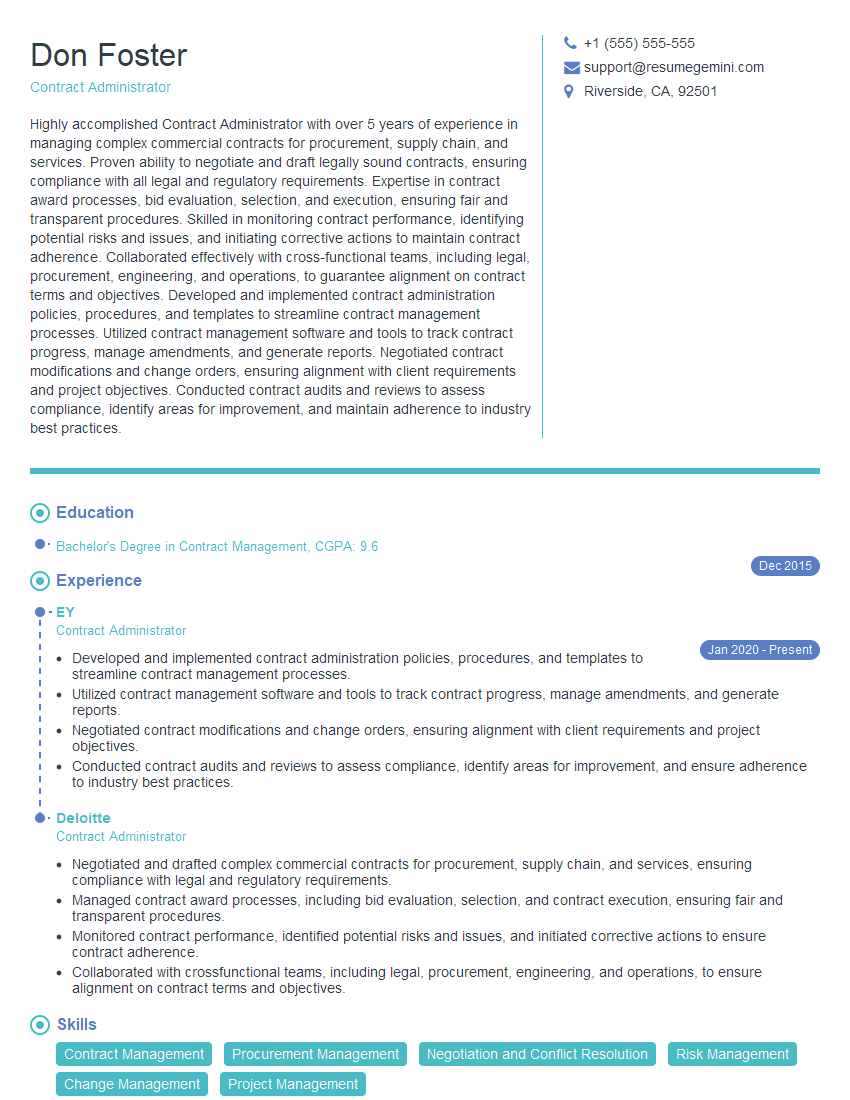
Contract Administrator Resume Sample

Compliance Officer Resume Sample
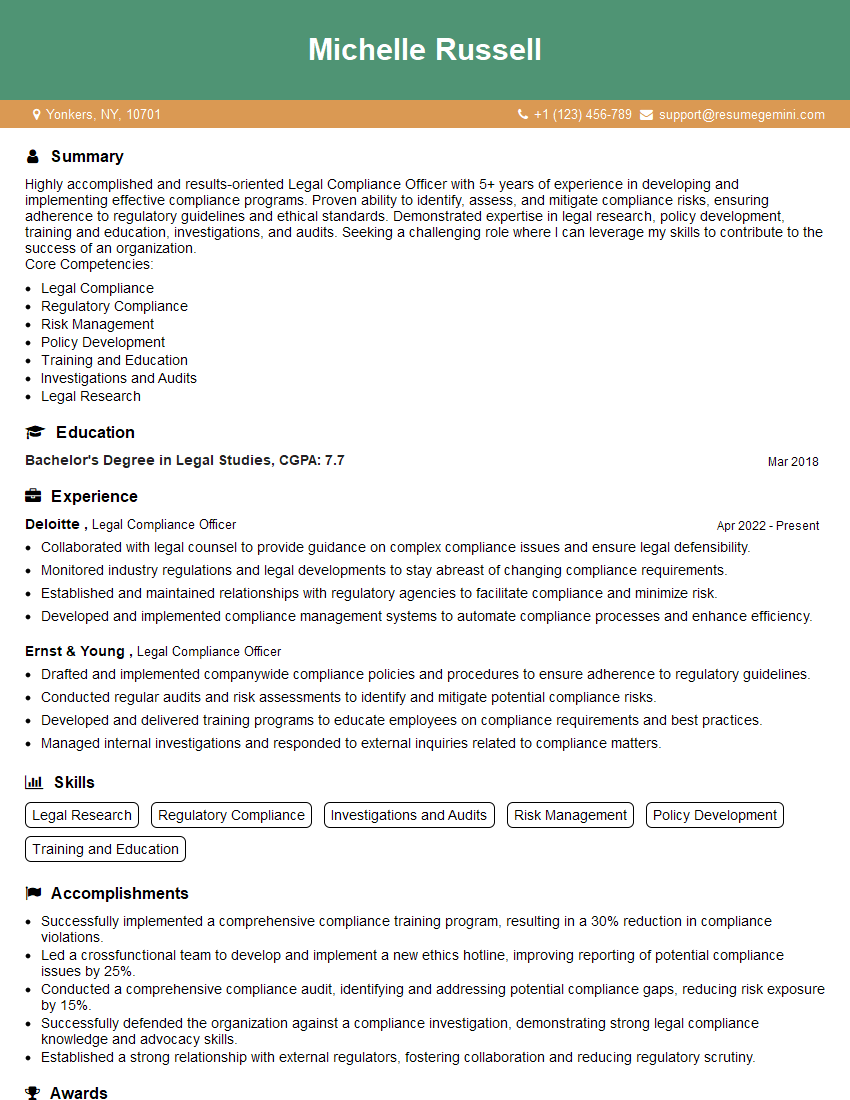
Legal Compliance Officer Resume Sample
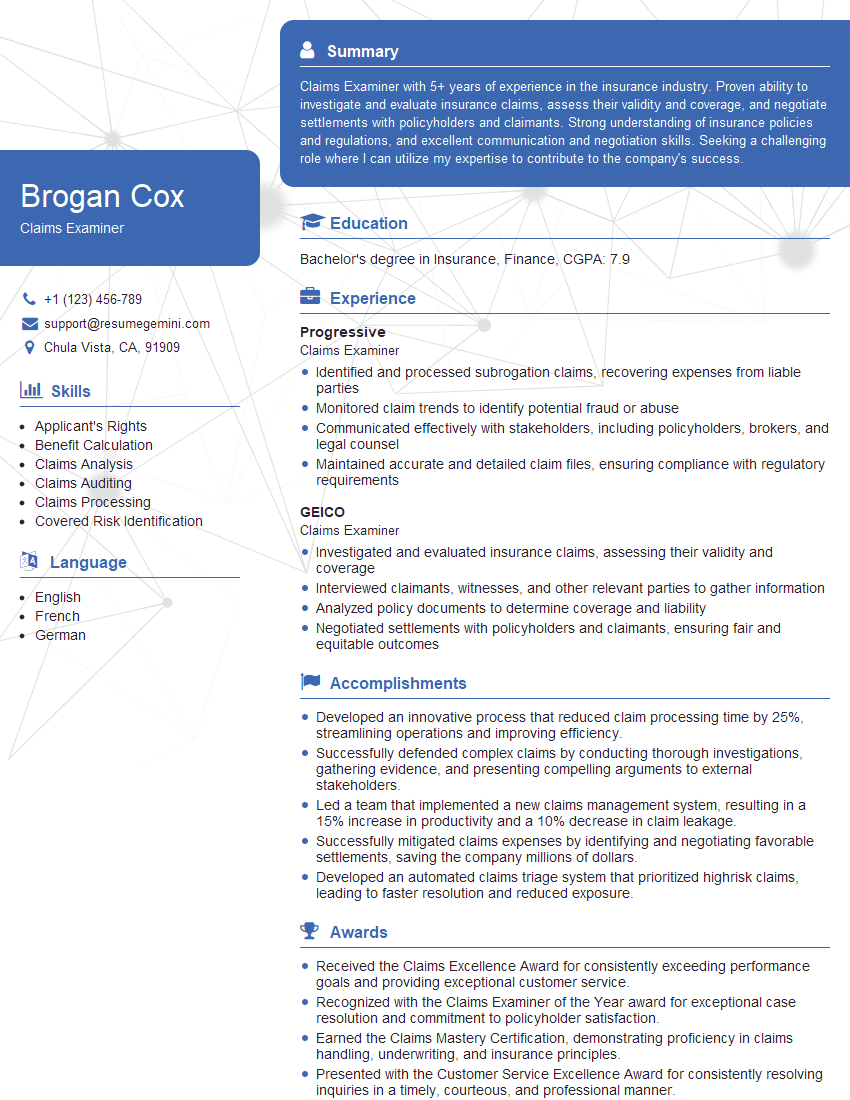
Claims Examiner Resume Sample
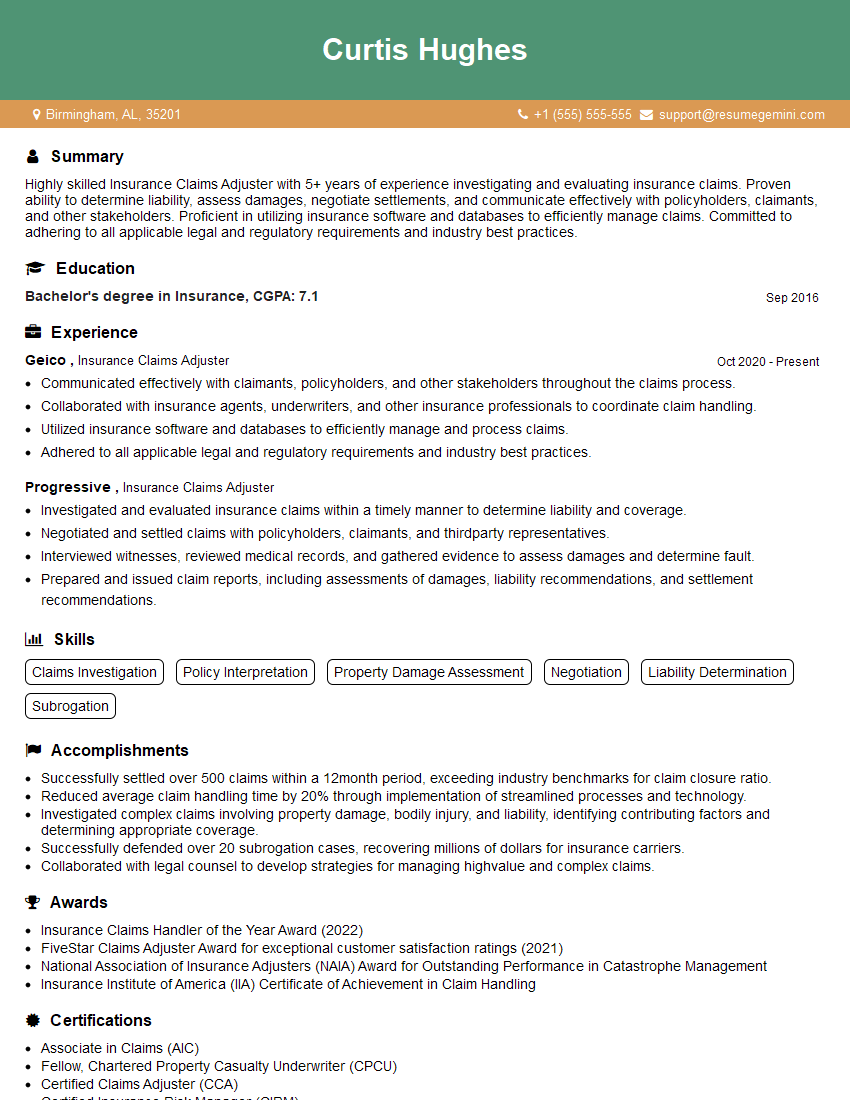
Insurance Claims Adjuster Resume Sample
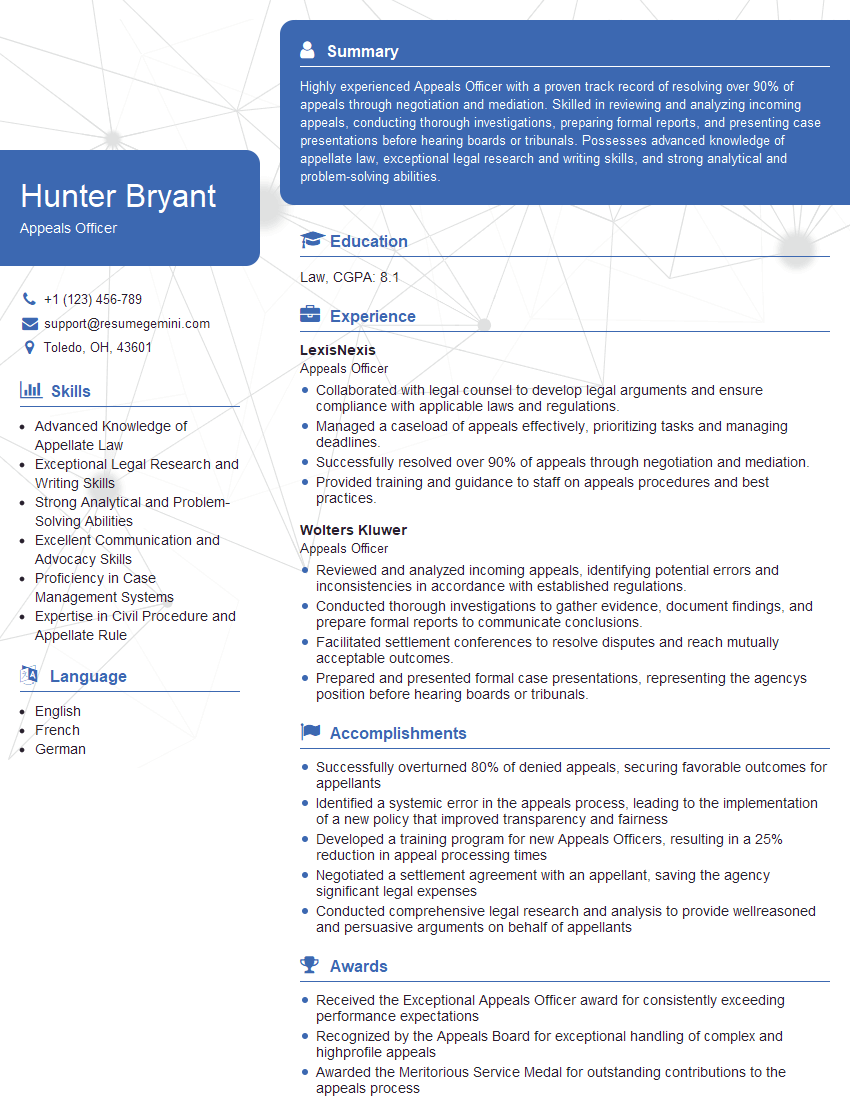
Appeals Officer Resume Sample
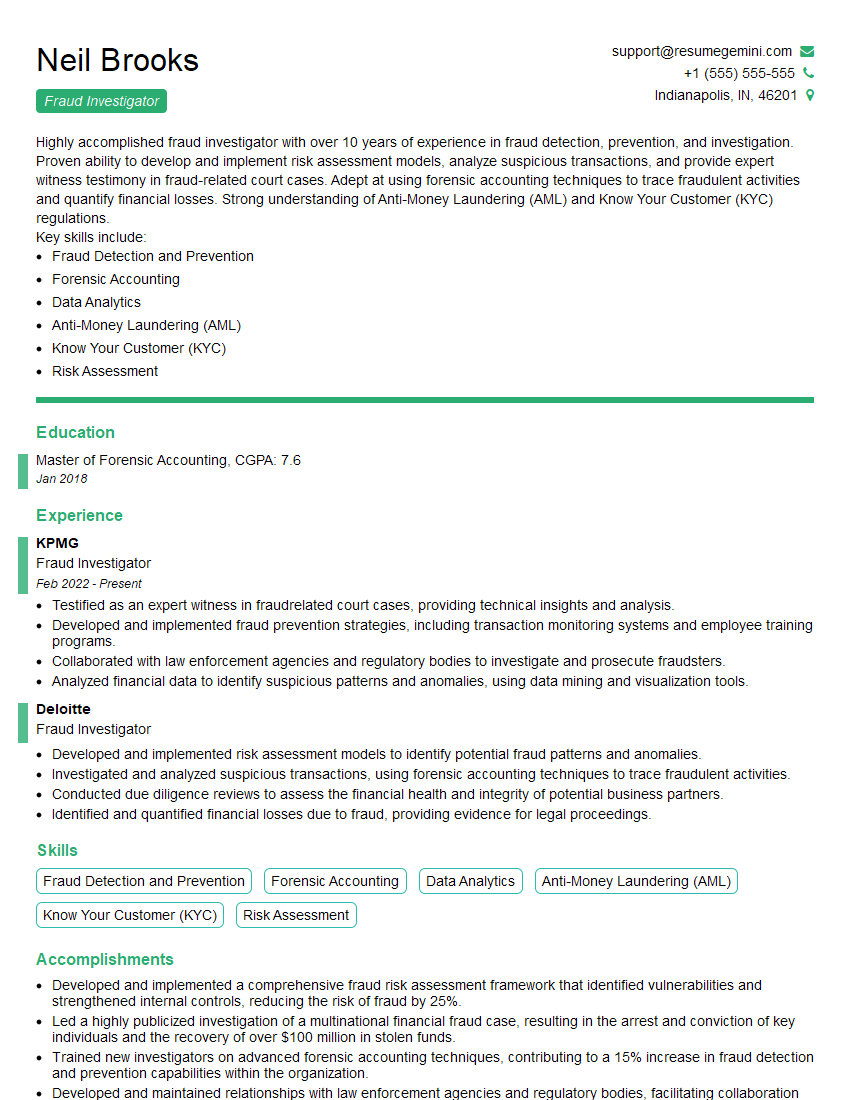
Fraud Investigator Resume Sample
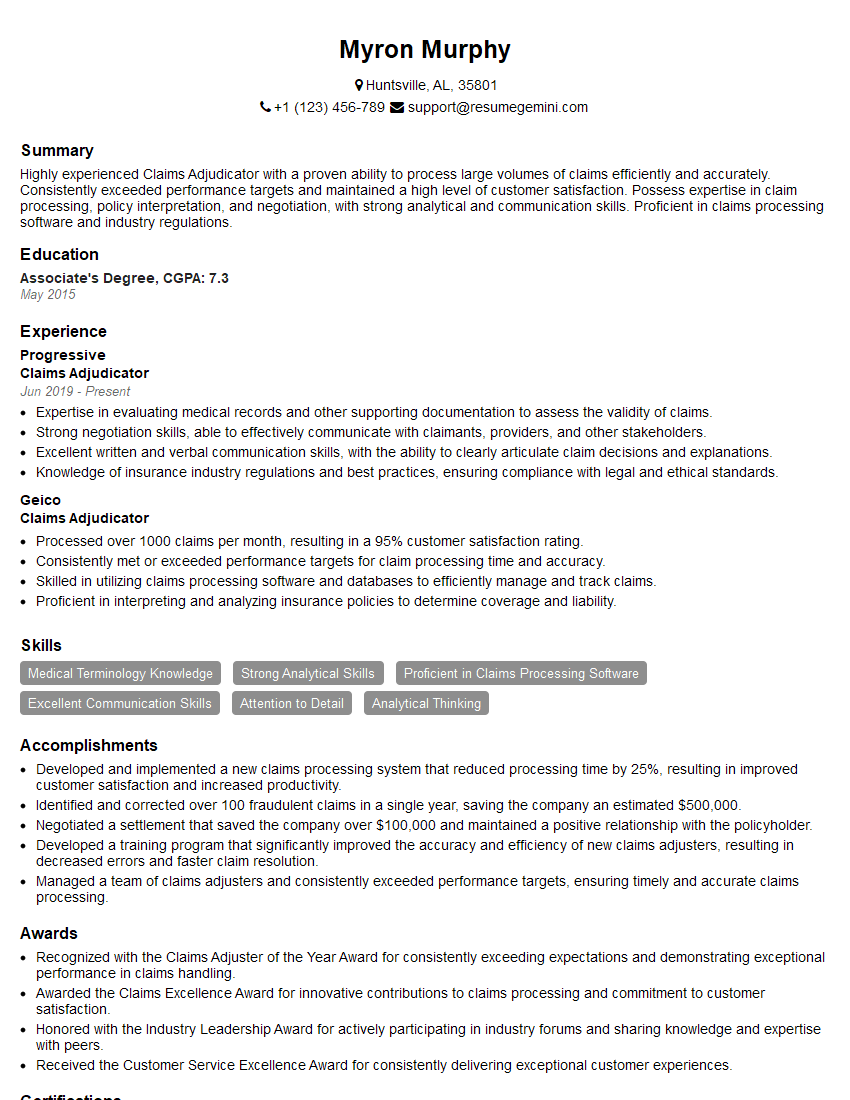
Claims Adjudicator Resume Sample
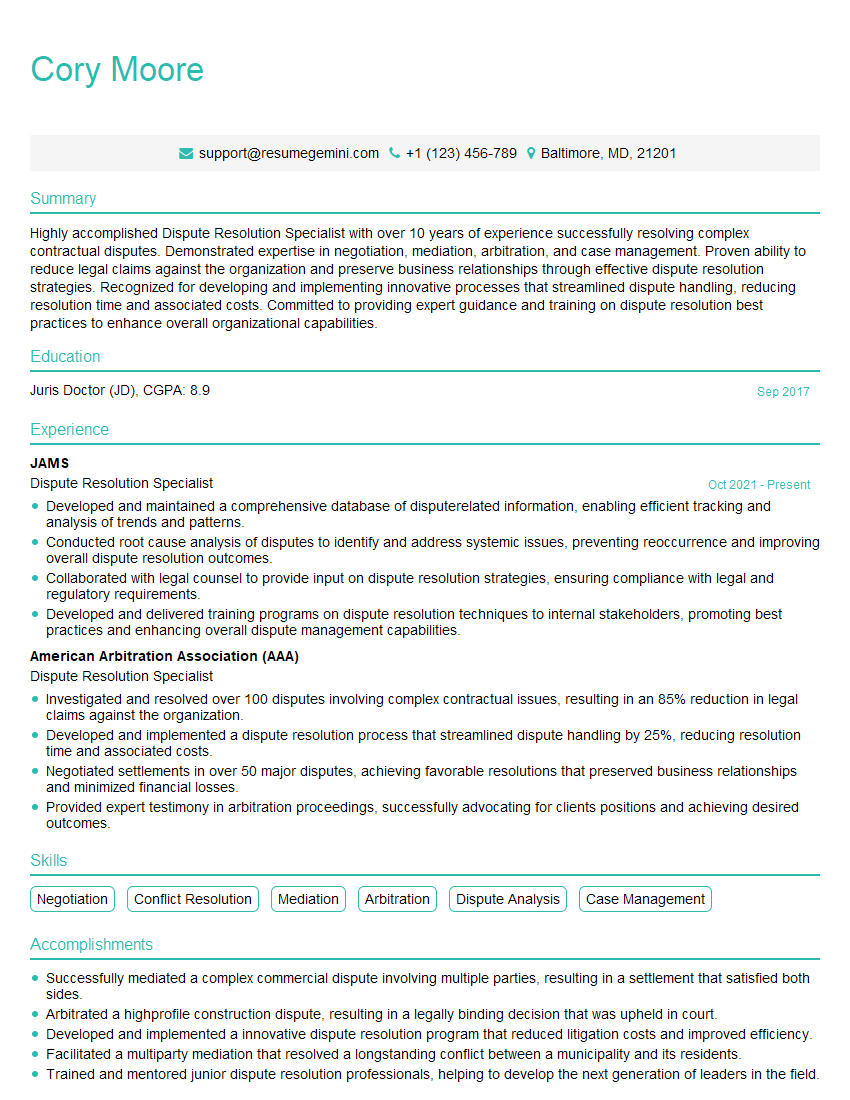
Dispute Resolution Specialist Resume Sample
Explore more articles
Users Rating of Our Blogs
Share Your Experience
We value your feedback! Please rate our content and share your thoughts (optional).
What Readers Say About Our Blog
Very informative content, great job.
good