Interviews are more than just a Q&A session—they’re a chance to prove your worth. This blog dives into essential Advanced Photoshop and Lightroom interview questions and expert tips to help you align your answers with what hiring managers are looking for. Start preparing to shine!
Questions Asked in Advanced Photoshop and Lightroom Interview
Q 1. Explain your workflow for retouching a product image for e-commerce.
My e-commerce product retouching workflow prioritizes clean, consistent visuals that accurately represent the product. It begins with careful image selection; a well-lit, sharp source image is crucial. Then, I move into Lightroom for initial adjustments. This involves:
- Basic Corrections: Adjusting exposure, contrast, whites, blacks, and highlights/shadows to achieve a balanced image. I often use the Histogram to guide these adjustments, ensuring detail is retained in both highlights and shadows.
- White Balance: Achieving accurate color temperature is critical for consistency. I meticulously adjust the white balance to ensure the image is neutral and free from color casts, using either the eyedropper tool on a neutral area or selecting a preset.
- Lens Corrections: Lightroom’s automated lens corrections address distortion and vignetting, leading to a more professional look. I typically leave the automatic settings but fine-tune based on individual needs.
- Cropping & Straightening: I carefully crop and straighten the image to ensure pleasing composition and avoid distracting elements.
Next, I move to Photoshop for more detailed retouching:
- Spot Removal: I use the healing brush, clone stamp, and patch tools to remove blemishes, dust, and other imperfections. I pay close attention to maintaining texture and realism.
- Color Correction & Adjustment Layers: I use adjustment layers (Curves, Levels, Color Balance) for targeted color corrections, ensuring non-destructive editing. This allows me to go back and refine adjustments as needed.
- Sharpness: I apply sharpening carefully using techniques discussed in my answer to question 4. Over-sharpening can lead to artifacts.
- Final Export: I export the image at the required resolution and file format (usually JPEG) for the e-commerce platform, optimizing for web use without excessive compression artifacts.
This structured workflow ensures efficiency and high-quality results, critical for successful e-commerce product photography.
Q 2. Describe your experience with masking and layer blending modes in Photoshop.
Masking and layer blending modes are fundamental to my Photoshop workflow. Masking allows for precise selection and modification of specific areas within an image without affecting others. I regularly use:
- Layer Masks: These non-destructive masks allow for the selective revealing or hiding of parts of a layer. I find them invaluable for retouching portraits, removing backgrounds, or selectively adjusting specific areas of a product image. For instance, I might use a layer mask to selectively brighten a specific portion of a product, leaving the rest unaffected.
- Vector Masks: These offer precision with sharp edges, perfect for isolating elements with defined lines. These are often used to create precise cutouts for complex objects or backgrounds.
- Quick Selection Mask: This tool is great for rapid selection of simple objects or areas and can be refined further with the brush tool.
Blending modes change how layers interact with each other. I frequently utilize modes like:
- Overlay: Increases contrast, ideal for enhancing details or adding depth.
- Soft Light: Subtly enhances contrast and color saturation, a great tool for subtle improvements.
- Multiply & Screen: Used for darkening or lightening, respectively. I use these to selectively adjust the tonal range of parts of the image.
- Hue, Saturation, and Luminosity: These modes allow isolated adjustment of these color components, letting me fine-tune the color within a masked area.
Imagine trying to retouch a product image with a reflective surface: Masking would help me selectively adjust the reflections without impacting the product itself. Blending modes would then help me integrate those adjustments seamlessly into the main image.
Q 3. How do you manage color consistency across multiple images in Lightroom?
Maintaining color consistency across multiple images is crucial for a professional look. In Lightroom, I achieve this primarily through:
- Calibration: Setting up a consistent color profile is my first step. I use a calibrated monitor to minimize discrepancies between what I see on screen and the final print or web image.
- White Balance Consistency: I establish a consistent white balance across all images by applying the same white balance settings to a series of photographs taken under similar lighting conditions, adjusting white balance and tint according to the color temperature and tint of the primary light source.
- Using Presets and Adjustments: Once I’ve dialed in the perfect look for one image, I’ll use Lightroom’s preset functionality to apply those settings to other images. Minor individual tweaks often still need to be done, but this provides a great starting point for consistency.
- Local Adjustments: I use graduated filters and radial filters to target adjustments to specific areas across different images, particularly useful if images were shot in varied light conditions or have differing backgrounds.
- The Color Grading Panel: This is particularly useful for color harmony. I can apply a global color grade to make all the photos feel more consistent, particularly regarding color mood or atmosphere.
Using a combination of these techniques, including syncing adjustments across multiple images, allows me to create a cohesive and professional visual style regardless of individual lighting variations within a photoshoot.
Q 4. What are your preferred methods for sharpening images in Photoshop?
Sharpness is critical for print and web images. My preferred methods in Photoshop involve a multi-step approach avoiding harsh results:
- Unsharp Mask: This classic filter is my go-to for general sharpening. I usually start with subtle settings, fine-tuning the Amount, Radius, and Threshold to avoid halos or artifacts. Lower amounts and radii are often better than aggressive sharpening.
- Smart Sharpen: Photoshop’s Smart Sharpen filter offers more control, allowing me to specify the sharpening method (Gaussian Blur, Unsharp Mask, or Lens Blur), reducing haloing and ensuring natural sharpening.
- High Pass Sharpening: This technique involves duplicating the layer, applying a high-pass filter (adjusting the radius based on image details), changing the blend mode to Overlay or Soft Light, and adjusting the layer opacity to control the intensity of the sharpening. It’s a good option for creating a more natural look.
- Output Sharpening: I always remember to save sharpening for the final output. Sharpening too early can lead to unwanted artifacts that become magnified during subsequent processes.
The best approach depends on the image and its intended use. For web images, I might use less aggressive settings, whereas print images often require more detailed sharpening, especially for images with larger prints. I always zoom in at 100% to assess the effects of my sharpening, ensuring a balance between sharpness and detail preservation.
Q 5. Explain the difference between non-destructive and destructive editing.
The key difference between destructive and non-destructive editing lies in how changes are applied to an image.
- Destructive editing directly modifies the original image file. Once a change is made, it’s permanently part of the image. Examples include using the Brightness/Contrast adjustment, directly applying filters like sharpening, or using tools such as Crop. If you make a mistake, you might need to revert to a previously saved version.
- Non-destructive editing involves applying changes without altering the original image data. The changes are recorded as instructions separate from the original file. This is achieved through techniques like using adjustment layers, layer masks, and smart filters. You can easily modify or remove these changes later without losing the original image.
Think of it like writing on a whiteboard versus writing in a notebook. The whiteboard (destructive) allows for quick changes but any mistakes are permanent. The notebook (non-destructive) allows you to make notes and easily erase or amend them later.
I almost always prefer non-destructive editing for its flexibility and workflow advantages, especially in projects with multiple revisions or collaborative efforts.
Q 6. How do you handle RAW image processing in Lightroom?
RAW image processing in Lightroom is a cornerstone of my workflow. RAW files contain significantly more image data than JPEGs, offering greater flexibility in post-processing. My process typically involves:
- Import and Organization: I begin by importing RAW files into Lightroom, organizing them into catalogs and folders for easy management and retrieval.
- Initial Adjustments: I start with basic adjustments like exposure, contrast, white balance, and highlights/shadows. RAW files allow for significant adjustments without losing much quality. Lightroom’s tools like the Histogram are especially useful at this stage.
- Lens Corrections: I use Lightroom’s automated lens correction features to correct for distortion, vignetting, and chromatic aberration.
- Targeted Adjustments: Local adjustments using graduated filters, radial filters, and adjustment brushes are crucial to fine-tune specific areas of the image. For example, I may brighten a shadowy area or adjust the saturation of a specific color range.
- Color Grading and Tone Curves: I use the color grading and tone curve tools to refine the image’s overall color and tonal balance, fine-tuning the look and feel.
- Noise Reduction (if necessary): Lightroom offers effective noise reduction tools to minimize digital noise, especially in high-ISO images, without losing detail.
- Export: Finally, I export the image in the desired format (JPEG, TIFF, or even another RAW file) and resolution, depending on its intended purpose. I carefully assess the image quality to avoid unnecessary file sizes.
Working with RAW files in Lightroom provides the maximum control and flexibility, significantly improving image quality and workflow efficiency compared to editing JPEGs directly.
Q 7. Describe your experience with using adjustment layers in Photoshop.
Adjustment layers are a powerful non-destructive editing technique in Photoshop. They allow for applying adjustments to a layer without directly modifying the layer’s pixels. This is crucial for maintaining flexibility and control. I use adjustment layers for:
- Global Adjustments: For overall adjustments to brightness, contrast, color balance, saturation, etc. They are easier and quicker to modify than making global edits directly on the layer.
- Targeted Adjustments: Combined with masking, adjustment layers allow for incredibly precise adjustments to specific areas of an image. For example, I might use a curves adjustment layer to brighten the sky while masking to prevent overexposure in other areas.
- Non-destructive Color Corrections: Color balance, hue/saturation, and channel mixer adjustment layers provide non-destructive ways to correct color casts or enhance colors without permanently altering pixel data.
- Experimentation and Iteration: Adjustment layers allow me to experiment with different adjustment settings without fear of ruining my original work. I can easily turn off or edit adjustment layers later.
- Workflow Efficiency: They maintain a clean and organised layer palette, allowing for easy identification and modification of various adjustments, which helps me manage complex edits more easily.
Imagine retouching a product photo with a poorly lit background. I might use a curves adjustment layer to brighten the background, carefully masking the product itself so it remains unaffected. Then, with another adjustment layer, I can add vibrancy to the product while leaving the background untouched. The non-destructive nature of adjustment layers means I can easily tweak and refine these changes throughout the retouching process.
Q 8. How do you create and use actions in Photoshop to automate tasks?
Photoshop Actions are recorded sequences of steps that automate repetitive tasks, saving significant time and ensuring consistency. Think of them as mini-programs within Photoshop. Creating an action is straightforward: you begin recording, perform your desired edits (like resizing, sharpening, adding a watermark), and then stop the recording. This creates an action that you can then apply to multiple images with a single click.
For example, let’s say I frequently process product shots for an e-commerce site. My action might include resizing to specific dimensions, sharpening, adjusting levels for optimal contrast, and adding a subtle vignette. Instead of manually repeating these steps for every image, I can simply play the action. This is invaluable for batch processing, maintaining a consistent style across many images, and reducing the risk of human error.
To create an action, go to Window > Actions. Click the ‘Create new action’ icon (a folded paper icon), give your action a name, assign it to a set, and click ‘Record’. Perform your edits, and then click the ‘Stop’ button. To apply the action, select your images, select your action, and click the ‘Play’ button.
Q 9. Explain your approach to color correction and grading.
Color correction aims to restore the natural colors of an image, while color grading is a more artistic process used to enhance the mood and style. My approach is always context-dependent. For a product photograph, accurate color correction is paramount; I’d carefully use tools like Levels, Curves, and the White Balance adjustment to ensure colors are realistic and consistent. For a portrait, I might apply more creative color grading using Color Lookup tables or selective color adjustments to emphasize certain tones and create a specific atmosphere.
I typically start with color correction in Lightroom, using its powerful global and localized adjustment tools. Then I might move to Photoshop for finer adjustments, masking specific areas to affect colors precisely. For example, if I’m working on a landscape image with a dull sky, I might selectively brighten the sky using curves and masking, while keeping the foreground colors intact. In both Lightroom and Photoshop, I always reference a calibrated monitor to ensure the colors are accurate.
Q 10. What are your preferred techniques for removing blemishes and wrinkles?
Removing blemishes and wrinkles involves a delicate balance between effective retouching and maintaining a natural look. I avoid over-retouching that can make the subject look unrealistic. My preferred tools are the Healing Brush, Clone Stamp, and Patch tools in Photoshop. I frequently utilize the Spot Healing Brush for smaller imperfections, the Clone Stamp for larger areas requiring more precise blending, and the Patch tool for seamlessly integrating textures.
The key is to sample from a similar skin tone and texture nearby, ensuring a smooth and natural blend. I often work at high magnification to carefully assess the results. If a wrinkle is particularly deep, I might use a combination of these tools, gradually reducing the appearance without completely eliminating it. Subtlety is key. Finally, I always check my work at lower magnification to ensure that the retouching doesn’t appear jarring or unnatural.
Q 11. How do you work with high-resolution images in Photoshop?
Working with high-resolution images requires careful management of file size and RAM. I often use Photoshop’s ‘Large Document Handling’ options to optimize performance. This involves setting memory usage and scratch disk locations, ensuring Photoshop has adequate resources. Depending on the computer’s specs and the image size, I might need to adjust these settings to prevent crashes or slowdowns.
For extremely large images, I might use image proxies, which are lower-resolution versions of the original image, to work efficiently and then make edits to the high-resolution image as a final step. Layer management is crucial as well. I use layer comps to save different versions of my edits, and I frequently flatten layers when no further edits are needed to reduce file size and improve performance. I also optimize the final image using ‘Save for Web (Legacy)’ or ‘Save as’ depending on the image’s intended use to minimize file size without significantly impacting quality.
Q 12. Describe your experience with using the healing brush tool and the clone stamp tool.
The Healing Brush and Clone Stamp are essential retouching tools. The Healing Brush intelligently blends the sampled texture into the target area, making it ideal for removing blemishes and scratches while maintaining a natural look. The Clone Stamp directly copies pixels, offering more control but requiring careful selection of the source area for a natural result.
For example, I might use the Healing Brush to remove a small blemish on someone’s face, as it automatically blends the surrounding skin tone. For removing a larger object like a distracting element in a landscape, the Clone Stamp would be more effective. A good technique is using a soft-edged brush for both tools at varying opacities to control the blending and prevent the retouching from looking too harsh or obvious. The key with both tools is to sample from a source area that blends naturally with the target area; careful selection of this source area is crucial for a seamless and realistic result.
Q 13. Explain your experience with panorama stitching and image merging.
Panorama stitching and image merging are powerful techniques for creating wider perspectives or combining multiple images. In Photoshop, the Photomerge feature simplifies panorama stitching by automatically aligning and blending images. For more complex merges or situations with significant perspective differences, manual alignment and masking might be necessary. It’s crucial to shoot images with sufficient overlap for optimal results.
For example, stitching multiple shots of a panoramic landscape ensures a wide-angle view that a single image couldn’t capture. Merging multiple images of a product might be necessary to provide multiple angles or show the product in detail. Before merging images, I carefully assess for issues like ghosting (moving objects that appear multiple times) and ensure images are appropriately exposed and white balanced to provide consistency. I then use layered masks to blend the images seamlessly.
Q 14. How do you prepare images for print versus web?
Preparing images for print and web requires different approaches to resolution, color space, and file format. For print, high resolution (at least 300 DPI) is essential for sharp, detailed output. The color space should be set to CMYK (Cyan, Magenta, Yellow, Key/Black), the standard for printing presses. The file format is typically TIFF or PSD to preserve image quality.
For web, lower resolution (72 DPI) is sufficient, and the color space should be set to RGB (Red, Green, Blue), appropriate for screens. The file format is usually JPEG for smaller file sizes or PNG for images with transparency. Web images need to be optimized for fast loading times, typically through compression techniques which reduce the file size without significant loss in image quality.
A common mistake is to not convert images to the correct color space. For instance, directly printing an RGB image might result in unexpected color shifts. I often use the ‘Save for Web (Legacy)’ option in Photoshop to manage web image optimization effectively, allowing for adjustments in the file size and quality settings, balancing image quality with file size and download time.
Q 15. Describe your proficiency with using different file formats (JPEG, TIFF, PSD, etc.).
Understanding the nuances of different file formats is crucial for efficient workflow and maintaining image quality. JPEG, TIFF, and PSD each serve distinct purposes.
- JPEG (Joint Photographic Experts Group): A lossy format, meaning some image data is discarded during compression. This results in smaller file sizes, ideal for web use and sharing. However, repeated saving can degrade image quality. I use JPEGs primarily for web-optimized images and situations where file size is paramount.
- TIFF (Tagged Image File Format): A lossless format, preserving all image data. This ensures high quality, making it perfect for archival purposes, print work, and situations where maximum detail is critical. TIFF files are generally larger than JPEGs.
- PSD (Photoshop Document): Photoshop’s native format, it’s a lossless format that supports layers, masks, and other editing features. I always save my work in PSD format before exporting to other formats for maximum flexibility and the ability to revisit edits later. It’s essential for preserving editing history and non-destructive workflow.
Choosing the right format depends entirely on the project’s needs. For a client needing a high-resolution print, I’d use TIFF. For website images, I prioritize JPEG. PSD is my workspace standard for preserving layers and edits.
Career Expert Tips:
- Ace those interviews! Prepare effectively by reviewing the Top 50 Most Common Interview Questions on ResumeGemini.
- Navigate your job search with confidence! Explore a wide range of Career Tips on ResumeGemini. Learn about common challenges and recommendations to overcome them.
- Craft the perfect resume! Master the Art of Resume Writing with ResumeGemini’s guide. Showcase your unique qualifications and achievements effectively.
- Don’t miss out on holiday savings! Build your dream resume with ResumeGemini’s ATS optimized templates.
Q 16. What methods do you use to optimize images for web performance?
Optimizing images for web performance involves balancing image quality and file size. My approach uses a multi-pronged strategy:
- Appropriate File Format: I almost always use JPEG for web images, choosing the right level of compression to balance quality and file size. Experimentation is key to finding the sweet spot. I never use unnecessarily high-quality settings if the image is small and less detail is visible.
- Resizing: Images should be scaled down to the exact dimensions required for their intended use. Upsizing a small image will result in a blurry, pixelated image; so I always work with the appropriate size and resolution from the outset.
- Compression: I use Photoshop’s ‘Save for Web (Legacy)’ feature or the newer ‘Export As’ functionality to compress JPEGs, carefully adjusting the quality settings. I’ll often test various compression levels to observe the trade-off between file size and visual quality.
- Image Optimization Tools: I might use online tools or plugins to further optimize image sizes, potentially reducing file size without significant visible quality loss. This includes tools that automatically optimize and compress images.
For example, a large high-resolution image intended for a hero image on a website might be optimized to be around 1-2MB, while smaller images could be much smaller. The goal is to ensure fast loading times without compromising user experience.
Q 17. Explain your understanding of color spaces (sRGB, Adobe RGB, etc.).
Color spaces define the range of colors a device can display or print. Understanding the differences is vital to ensure accurate color reproduction.
- sRGB (Standard Red Green Blue): The most common color space for the web and most consumer displays. It has a relatively small color gamut, meaning it can’t reproduce all the colors visible to the human eye. But it is widely supported and is a safe option for web publishing.
- Adobe RGB (1998): A wider color gamut than sRGB, capable of displaying a more extensive range of colors. It is often the preferred color space for professional photography and printing, as it captures more detail in shadows and highlights. However, it’s not universally supported on screens and might be converted to sRGB during web publishing, which could result in color shifts.
I typically work in Adobe RGB for photography and then convert to sRGB for web publishing to ensure accurate color representation for the target medium. This two-stage approach allows me to retain the maximum color information during editing and then deliver optimized results for the intended platform.
Q 18. How do you utilize Lightroom’s catalog system for managing large image libraries?
Lightroom’s catalog system is indispensable for managing extensive image libraries. It’s essentially a database that stores all metadata and adjustments without storing the raw image files. This allows for efficient organization and management of thousands of images.
- Keywords and Metadata: I thoroughly tag my images with relevant keywords, creating a structured system for fast searching and retrieval. This ensures I can instantly locate specific images based on location, subject, event, or any other relevant tags.
- Collections: I use collections extensively for grouping images by project, theme, or any other logical categorization. This surpasses simple folder organization, enabling flexible and dynamic grouping of images.
- Ratings and Flags: These tools are invaluable for quickly flagging star images or images needing further attention. This allows efficient pre-selection of images for further processing or client presentation.
- Smart Collections: These allow for automatic filtering based on customizable criteria, such as camera model, date, rating, or keywords. This automated organization saves a significant amount of time and effort.
For example, I might create a smart collection of all images shot with a specific lens and rated four stars or higher. This allows easy access to a curated collection of images based on pre-defined criteria, streamlining my editing workflow.
Q 19. Describe your experience with using Lightroom’s presets and developing profiles.
Lightroom’s presets and developing profiles are powerful tools for consistency and efficiency. Presets allow for batch editing and stylistic consistency, while profiles offer camera-specific adjustments.
- Presets: I create custom presets for common edits like color grading, sharpening, and noise reduction. This saves time by applying consistent edits across many images. They can range from subtle adjustments to drastic stylistic changes. I also carefully curate and utilize presets from trusted sources to explore different editing styles.
- Developing Profiles: Camera profiles correct lens and sensor imperfections, ensuring accurate color and exposure. I use these profiles as a starting point for my editing, providing a more accurate representation of the original scene before applying personal stylistic choices. Different cameras may require different profiles for optimized results.
For example, a preset for landscape photography might include adjustments for increased contrast, clarity, and saturation, while a preset for portrait photography might focus on skin tone adjustments and subtle lighting tweaks. The flexibility of both presets and profiles helps maintain consistency and enhances editing speed.
Q 20. How do you effectively utilize layers and masks for complex image editing tasks?
Layers and masks are fundamental tools in Photoshop for non-destructive editing and complex image manipulation. They provide ultimate control and flexibility.
- Layers: Each layer acts as a separate canvas, allowing for independent editing of elements within an image. This ensures changes to one part of the image do not affect others.
- Masks: Masks control the visibility of a layer, allowing for precise editing of specific areas. They can be used to blend layers seamlessly, isolate areas for adjustments, or add special effects.
Imagine retouching a portrait. I might use a layer to correct blemishes, applying a mask to only target the affected areas. Another layer might adjust the lighting, and again, a mask is used to control precisely where the effect is applied. This layered approach enables fine-grained control and the ability to make changes non-destructively.
Example: A complex composite image might involve dozens of layers, each with masks to isolate various elements and achieve a seamless final product.
Q 21. Explain your experience with HDR imaging techniques.
HDR (High Dynamic Range) imaging captures a wider range of tones and details than a standard photograph. This leads to images with greater detail in both shadows and highlights.
- Bracketing: The core of HDR photography is capturing multiple exposures of the same scene, each at a different exposure value. This captures the full dynamic range of the scene.
- Merging Exposures: Software like Photoshop or Lightroom can merge these bracketed images to produce a single HDR image with extended dynamic range. Careful alignment and tone mapping are crucial to avoid artifacts.
- Tone Mapping: Tone mapping is the process of compressing the wide dynamic range of the HDR image into a displayable range. This involves adjustments to contrast, highlights, and shadows to create a visually appealing image. Careful tone mapping is crucial to avoid an unrealistic or unnatural look.
I often use HDR techniques when photographing landscapes or architectural scenes with high contrast. This process captures details that would otherwise be lost in the highlights or shadows of a single exposure. It results in a more realistic and detailed image.
Q 22. How do you handle the challenges of working with images of varying quality?
Handling images of varying quality is a core skill in professional image editing. It often involves a combination of techniques in both Lightroom and Photoshop. The first step is assessment – identifying the specific quality issues. This could range from low resolution and noise to poor color balance and dynamic range.
- Low Resolution: If the resolution is simply too low for the intended use, there’s little that can be done to magically increase detail. However, you can carefully upscale using AI-based techniques within Photoshop (like Super Resolution) while minimizing artifacts. Realistically, managing expectations with the client is key here – sometimes you have to accept limitations.
- Noise: Noise reduction tools in Lightroom and Photoshop (like Adobe Camera Raw’s noise reduction sliders or Topaz Denoise AI) are crucial. The trick is finding the sweet spot between noise reduction and detail preservation. Over-reducing noise can lead to a muddy, lifeless image.
- Poor Color Balance and Dynamic Range: Lightroom is your best friend here. Its powerful adjustment tools allow for precise color grading, white balance correction, and recovery of detail in shadows and highlights. Careful use of the curves and split toning tools can dramatically improve the image’s overall look. Understanding histograms is vital for this process.
For example, I once worked with a client who provided images from a very old film scan. They were noisy, low in resolution, and had a significant color cast. By meticulously employing Lightroom’s noise reduction, color grading, and sharpening tools, followed by targeted Photoshop retouching, I managed to deliver usable, aesthetically pleasing images.
Q 23. Describe your experience with Photoshop’s 3D features.
I have extensive experience with Photoshop’s 3D features, utilizing them for both creating 3D models from scratch and integrating 3D elements into existing images. I’m proficient in using tools like the 3D panel, the mesh editing tools, and the various material and lighting options. My workflow typically involves:
- Model Importing and Manipulation: I often import 3D models from external software like Blender or Cinema 4D. Then, I use Photoshop’s tools to manipulate the models, adjusting their position, rotation, and scale, and applying textures and materials.
- 3D Painting: I use Photoshop’s 3D painting capabilities to create and customize textures directly onto 3D models, adding intricate details and realistic surfaces.
- Lighting and Rendering: Photoshop allows for adjusting the lighting of 3D models, creating realistic shadows and highlights to enhance the overall look. Mastering the interplay of lighting and materials is crucial for achieving photorealism.
- Compositing: Finally, I seamlessly integrate the rendered 3D element into a 2D photograph, carefully matching lighting, shadows, and perspective for a cohesive final image.
For instance, I once created a promotional image for a product using a 3D model of the product I built in Blender, then brought it into Photoshop. I used Photoshop’s lighting tools to precisely match the lighting in the background photograph, resulting in a believable and visually appealing final composite.
Q 24. What are your strategies for dealing with difficult clients or feedback?
Dealing with difficult clients or feedback requires a combination of strong communication, empathy, and problem-solving skills. I always begin by actively listening to their concerns, clarifying their vision, and asking clarifying questions.
- Understanding the Perspective: I try to understand the reasoning behind the feedback, even if it initially seems unreasonable. Sometimes, a client’s dissatisfaction stems from a misunderstanding of the process or the creative direction. Clear and patient communication is key.
- Collaboration and Compromise: Rather than viewing feedback as criticism, I frame it as an opportunity to collaborate and refine the work. I offer alternative solutions, explaining the rationale behind my suggestions and finding common ground.
- Setting Expectations: From the outset, I clearly define the scope of work, including revisions and timelines, to mitigate potential disagreements later. Providing regular updates and keeping the client involved in the process helps in managing expectations.
- Professionalism: Maintaining a professional demeanor is crucial, regardless of how challenging the interaction might be. Respectful communication and a willingness to find a mutually agreeable solution are essential for navigating difficult situations.
For example, I once had a client who was initially unhappy with the color grading in a series of product photos. After carefully listening to their concerns and asking for specific examples, I realized they were looking for a warmer, more vibrant tone than I had initially provided. By making the requested adjustments and explaining the technical rationale behind the changes, I not only satisfied the client but also deepened their understanding of the creative process.
Q 25. How do you stay current with new developments in Photoshop and Lightroom?
Staying current in the rapidly evolving world of Photoshop and Lightroom is essential. My approach is multi-faceted:
- Adobe’s Official Resources: I regularly consult Adobe’s official blog, tutorials, and help documentation. This ensures I’m aware of the latest features and updates.
- Online Tutorials and Courses: Platforms like LinkedIn Learning, Skillshare, and YouTube offer a vast array of courses and tutorials taught by industry experts. I actively seek out tutorials on new features and techniques.
- Industry Blogs and Publications: I follow industry blogs and publications dedicated to Adobe software and photography post-processing to stay abreast of new trends and best practices.
- Community Engagement: Participating in online forums and communities allows me to learn from other professionals, share knowledge, and get insights into new workflows and techniques.
- Experimentation: I dedicate time to experimenting with new features and plugins to deepen my understanding and discover creative applications.
Continuous learning is a priority, allowing me to adapt quickly to evolving technologies and maintain a competitive edge.
Q 26. Describe your experience with utilizing plugins or extensions in Photoshop and Lightroom.
Plugins and extensions significantly expand the capabilities of Photoshop and Lightroom, adding functionalities that aren’t built-in. I have extensive experience with a variety of plugins, both free and commercial.
- Noise Reduction Plugins: Plugins like Topaz Denoise AI offer advanced noise reduction capabilities that often surpass the built-in tools in Lightroom and Photoshop, providing better detail preservation.
- Sharpening Plugins: Plugins specialized in sharpening, such as Nik Sharpener Pro, allow for more precise control over sharpening algorithms, leading to better results.
- Retouching Plugins: Plugins designed for retouching and blemish removal can significantly streamline the process, offering tools that are not available in Photoshop’s standard toolkit.
- Workflow Extensions: Plugins such as those that automate tasks, such as batch processing, or provide advanced organizational tools for Lightroom libraries are indispensable for increased efficiency.
The choice of plugin depends on the specific needs of the project. For example, when working on images with heavy noise, I might utilize Topaz Denoise AI to achieve optimal results, while for precise sharpening, I might prefer Nik Sharpener Pro. My experience extends to managing plugin conflicts and understanding their system requirements.
Q 27. Explain your understanding of image resolution and its implications.
Image resolution refers to the number of pixels in an image, usually expressed as width × height (e.g., 3000 × 2000 pixels). It directly impacts the image’s sharpness, detail, and ability to be printed or displayed at various sizes.
- Implications of High Resolution: High-resolution images (e.g., 300 DPI for print) contain significantly more detail, resulting in sharper images that can be printed at larger sizes without pixelation. They are ideal for print media, large format displays, or situations where significant zooming is required.
- Implications of Low Resolution: Low-resolution images (e.g., 72 DPI for web) have fewer pixels and appear less sharp, especially when enlarged. They are suitable for online use, web design, and situations where file size is a major concern.
- Resolution and Scaling: Scaling a low-resolution image to a larger size will result in pixelation and loss of quality. Conversely, scaling a high-resolution image down usually preserves quality but can increase file size if done carelessly. Using appropriate resampling methods in Photoshop (Bicubic Smoother for downsampling and Bicubic Sharper for upsampling) is vital for minimizing artifacts during scaling.
Understanding resolution is vital for selecting appropriate images for different applications. For instance, a web banner requires a lower resolution image optimized for fast loading times, while a print advertisement for a billboard needs a very high-resolution image to maintain sharpness at such a large scale.
Q 28. How do you troubleshoot common issues encountered during image editing?
Troubleshooting common image editing issues often involves a systematic approach. My strategy generally involves these steps:
- Identify the Problem: Clearly define the problem. Is it a color issue, a technical glitch, a file corruption problem, or something else?
- Reproduce the Issue: Try to reproduce the issue to understand its cause. Sometimes, this helps isolate variables.
- Check File Integrity: Ensure the original file isn’t corrupted. Try opening it in another program. If it is corrupted, you may need a file recovery tool.
- Restart Software: Simple steps can sometimes solve the problem. A restart of the software can resolve temporary glitches.
- Review Software Updates: Check if your software is up-to-date. Bugs are often fixed with updates.
- Check Hardware Resources: Memory limitations or storage issues can sometimes impact software performance. Ensure your computer has sufficient resources.
- Consult Online Resources: If the issue remains, searching online forums and communities can often provide solutions or workarounds. Adobe’s support website is a good starting point.
- Seek Expert Help: If all else fails, seeking help from Adobe support or experienced Photoshop and Lightroom users is a valuable approach.
For example, if I’m experiencing slow performance, I’d check if there are any RAM-intensive processes running in the background, if my storage is running low, and if my software is up-to-date. If a specific tool isn’t functioning correctly, I’d check for updates or look for information about the specific issue in Adobe’s help documentation or online forums.
Key Topics to Learn for Advanced Photoshop and Lightroom Interview
- Advanced Masking Techniques: Mastering layer masks, vector masks, and clipping masks for precise image editing and retouching. Understand the nuances of different masking methods and their applications in complex projects.
- High-Dynamic Range (HDR) Imaging: Learn to merge multiple exposures to create HDR images with expanded dynamic range and detail. Practice tone mapping and color grading techniques for optimal results.
- Color Correction and Grading: Go beyond basic adjustments. Explore advanced color correction workflows, including color profiles, color spaces, and advanced color grading techniques using curves, split toning, and HSL adjustments in both Photoshop and Lightroom.
- Non-Destructive Editing: Understand and apply non-destructive editing workflows in both applications to maintain maximum flexibility and image quality. This includes leveraging adjustment layers and smart objects effectively.
- Advanced Retouching Techniques: Master frequency separation, healing brush tools, and other advanced techniques for flawless skin retouching, object removal, and image restoration.
- Workflow Optimization: Develop efficient and streamlined workflows for both Photoshop and Lightroom, leveraging automation techniques and actions to maximize productivity. Understand the strengths of each application and how to best utilize them together.
- Image Sharpening and Noise Reduction: Learn advanced techniques for sharpening images without introducing artifacts, and effectively reducing noise while preserving detail. Understand the differences in sharpening techniques for print versus web.
- File Management and Organization: Develop a robust system for organizing and managing your image files using Lightroom’s cataloging features. This includes keywording, metadata management, and efficient file naming conventions.
- Understanding Color Theory: Develop a solid understanding of color theory principles, including color harmonies, color mixing, and color psychology, to apply to your editing decisions.
- Problem-Solving and Troubleshooting: Be prepared to discuss troubleshooting common issues encountered during image editing, such as color casts, artifacts, and file corruption, and how you approach these challenges.
Next Steps
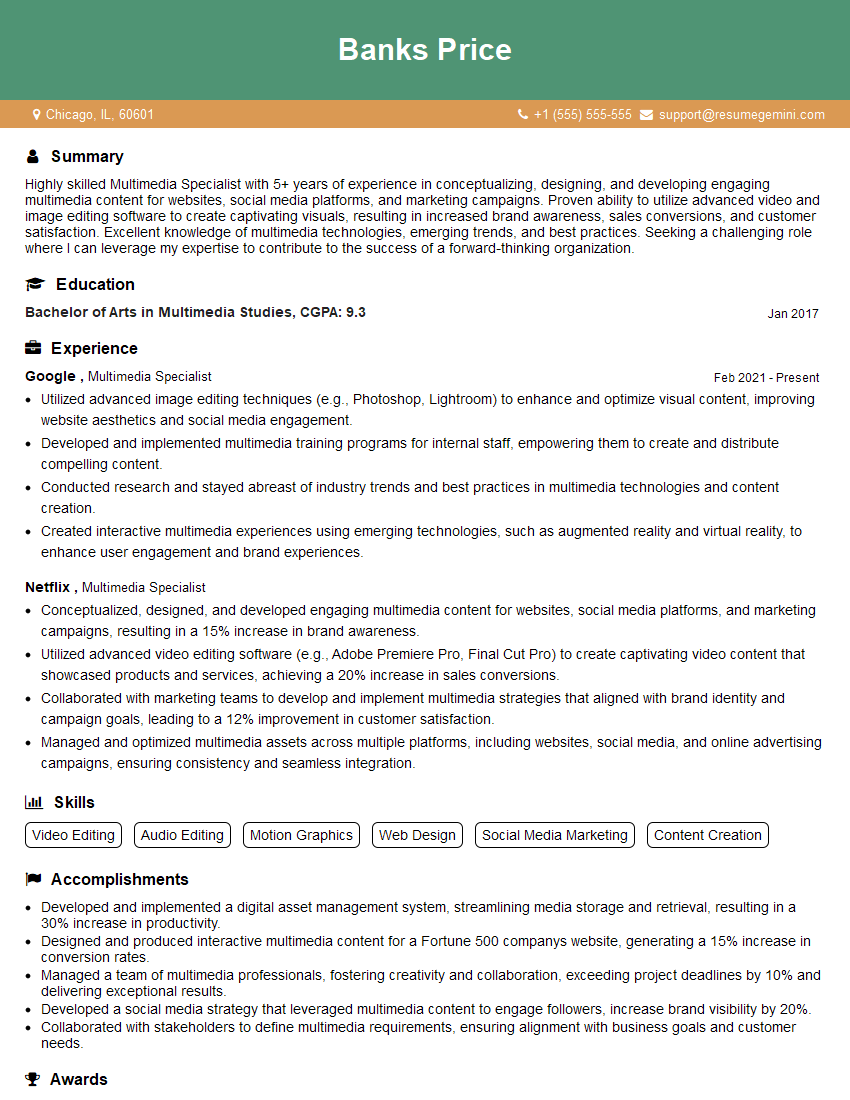
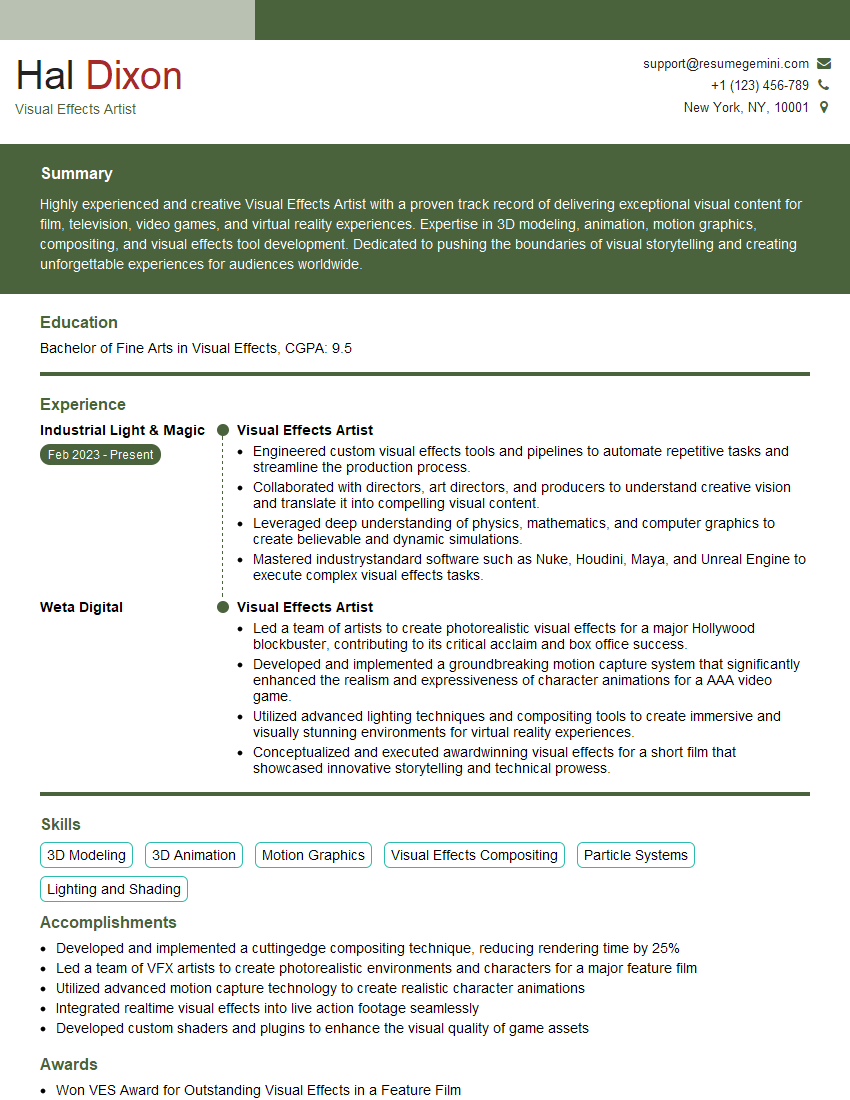
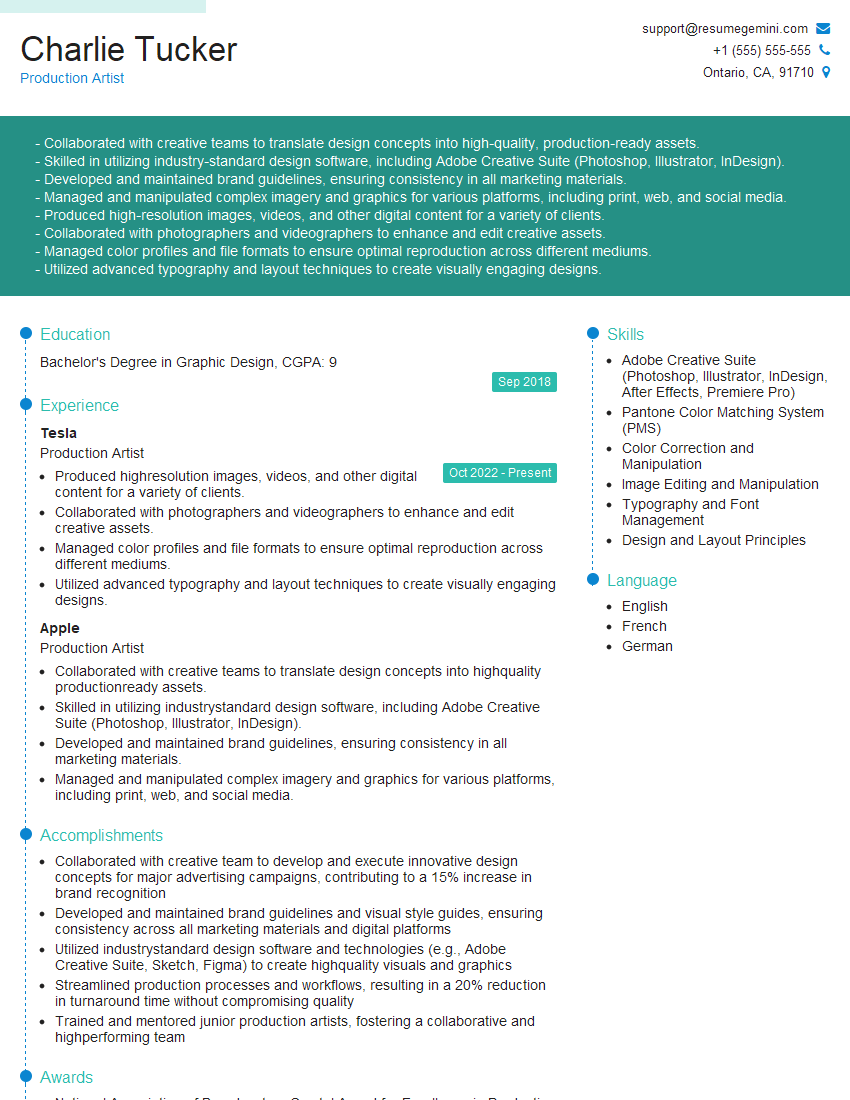
Mastering advanced Photoshop and Lightroom skills significantly enhances your marketability and opens doors to exciting career opportunities in photography, graphic design, and related fields. To maximize your job prospects, create a compelling and ATS-friendly resume that highlights your technical abilities and experience. ResumeGemini is a trusted resource to help you craft a professional and effective resume, and examples of resumes tailored to Advanced Photoshop and Lightroom professionals are available to guide you. Invest the time to create a resume that truly showcases your talents – it’s a crucial step in landing your dream job.
Explore more articles
Users Rating of Our Blogs
Share Your Experience
We value your feedback! Please rate our content and share your thoughts (optional).
What Readers Say About Our Blog
Very informative content, great job.
good