Interviews are opportunities to demonstrate your expertise, and this guide is here to help you shine. Explore the essential Advanced welding techniques (TIG, MIG, etc.) interview questions that employers frequently ask, paired with strategies for crafting responses that set you apart from the competition.
Questions Asked in Advanced welding techniques (TIG, MIG, etc.) Interview
Q 1. Explain the differences between MIG and TIG welding processes.
MIG (Metal Inert Gas) and TIG (Tungsten Inert Gas) welding are both arc welding processes using shielding gas to protect the weld pool from atmospheric contamination, but they differ significantly in their techniques and applications. MIG welding uses a consumable electrode (wire) that feeds continuously into the weld pool, acting as both the electrode and the filler material. TIG welding, on the other hand, uses a non-consumable tungsten electrode to create the arc, and a separate filler rod is added manually to the weld pool as needed. Think of MIG as a ‘spray painting’ approach—fast and efficient—while TIG is more like ‘hand-painting’—precise and controlled.
- Electrode: MIG uses a consumable electrode; TIG uses a non-consumable tungsten electrode.
- Filler Metal: MIG uses the electrode wire as filler; TIG uses a separate filler rod.
- Speed: MIG welding is generally faster; TIG welding is slower and more precise.
- Weld Quality: TIG typically produces cleaner, higher-quality welds with better penetration control.
- Applications: MIG is suitable for mass production; TIG is preferred for precision work and thin materials.
Q 2. What are the advantages and disadvantages of using TIG welding?
TIG welding offers exceptional control and produces high-quality welds, but it’s slower and requires more skill.
- Advantages:
- Excellent Weld Quality: Produces clean, aesthetically pleasing welds with minimal spatter and excellent penetration control.
- Versatile: Can be used on a wide variety of metals, including aluminum, stainless steel, and magnesium.
- Precise Control: Allows for precise control over the weld puddle and heat input.
- Low Distortion: Minimizes heat distortion, crucial for delicate or precision work.
- Disadvantages:
- Slower Process: Compared to MIG, it’s significantly slower, impacting productivity.
- Higher Skill Requirement: Requires a higher level of skill and training.
- More Expensive: The equipment and consumables are generally more expensive than MIG welding equipment.
- Limited to Thin Materials In Some Cases: Very thick materials might be challenging to weld efficiently with TIG.
For instance, TIG is ideal for automotive exhaust systems requiring tight seams and corrosion resistance. Conversely, MIG would be better for large-scale fabrication projects where speed and production rates are paramount.
Q 3. What are the advantages and disadvantages of using MIG welding?
MIG welding prioritizes speed and efficiency, making it suitable for large-scale projects, but it sacrifices some precision compared to TIG.
- Advantages:
- High Deposition Rate: Much faster than TIG, increasing productivity significantly.
- Relatively Easy to Learn: Requires less skill than TIG to achieve acceptable welds.
- Cost-Effective: Lower equipment and consumables cost, making it economically viable for large-scale projects.
- Versatile in Applications: Suitable for a range of materials, though some require specific settings and wire types.
- Disadvantages:
- Lower Weld Quality: Compared to TIG, welds can be less aesthetically pleasing and have a higher susceptibility to porosity.
- Higher Spatter: More spatter tends to occur, requiring more cleanup.
- Limited Precision: Less precise control over heat input and weld puddle compared to TIG.
- Less Suitable for Thin Materials: Can easily burn through thin materials due to higher heat input.
Think of constructing a large steel framework—MIG’s speed is a clear advantage. However, for intricate stainless steel components, TIG’s precision is essential.
Q 4. Describe the different types of filler metals used in TIG and MIG welding.
Filler metals in both TIG and MIG welding are chosen based on the base metal’s composition to ensure compatibility and weld quality. The choice depends on factors such as strength requirements, corrosion resistance, and weldability.
- TIG Welding: Uses filler rods in various diameters and compositions, often matching the base metal. For instance, ER70S-6 is a common filler rod for mild steel, while ER5356 is used for aluminum alloys.
- MIG Welding: Employs solid wire electrodes that serve as the filler metal. The wire composition corresponds to the base material. Examples include ER70S-6 for mild steel and ER308L for stainless steel.
Selection involves understanding the AWS (American Welding Society) classification system, which provides detailed information about each filler metal’s chemical composition, mechanical properties, and suitability for specific applications.
Q 5. How do you select the appropriate shielding gas for different welding applications?
Shielding gas selection is critical for preventing atmospheric contamination during the welding process, which can lead to defects like porosity and weakening of the weld. The choice depends heavily on the type of metal being welded.
- Mild Steel: Typically uses a mixture of Argon and Carbon Dioxide (e.g., 75% Argon/25% CO2) in MIG welding, providing a good balance of arc stability and weld penetration. For TIG, pure Argon is often preferred for cleaner welds.
- Aluminum: Requires pure Argon for both MIG and TIG welding because aluminum readily reacts with oxygen and other atmospheric gases.
- Stainless Steel: MIG welding often utilizes Argon or a mixture of Argon and Helium for good penetration and arc stability, while TIG generally uses pure Argon or Argon/Helium mixtures. Helium increases penetration but may affect the arc stability.
The gas flow rate is also crucial. Insufficient flow rate exposes the weld to atmospheric contamination, while excessive flow can lead to dilution of the shielding gas and inefficient welding.
Q 6. What are the common causes of porosity in welds?
Porosity, the presence of small holes or voids in a weld, is a significant defect that weakens the weld. Several factors contribute to it:
- Moisture Contamination: Moisture in the base metal, filler metal, or shielding gas can create gas pockets during welding.
- Gas Entrapment: Insufficient shielding gas coverage or improperly cleaned surfaces can trap air or other gases in the weld pool.
- Excessive Heat Input: Using excessive heat can lead to the formation of gas bubbles that are not expelled from the weld pool.
- Improper Welding Technique: Incorrect welding parameters, like excessively fast travel speed, can lead to incomplete fusion and gas entrapment.
- Contaminated Filler Metal: Using filler materials that have absorbed moisture or other contaminants can result in porosity.
Troubleshooting porosity involves checking for moisture in the materials, ensuring proper gas coverage, adjusting the welding parameters, and ensuring cleanliness of the welding surfaces.
Q 7. How do you prevent weld spatter?
Weld spatter, the ejection of molten metal droplets during welding, is aesthetically undesirable and weakens the weld. Several strategies can minimize spatter:
- Proper Welding Parameters: Optimizing current, voltage, and travel speed is crucial. Too high current or voltage promotes spatter.
- Correct Gas Flow Rate: Maintaining the correct gas flow rate helps to shield the weld pool and minimize spatter.
- Cleanliness of Work Pieces: Ensuring the surfaces are clean and free of grease, oil, or paint reduces spatter formation.
- Proper Electrode Stick-out: Maintaining an appropriate length of the electrode stick-out prevents excessive arcing, which is a source of spatter.
- Specialized Spatter-Reducing Additives: For MIG welding, some manufacturers offer wires with spatter-reducing compounds incorporated into their formulations.
- Use of Spatter Shielding: Using materials like ceramic or copper shielding can intercept spatter before it adheres to the workpiece.
Remember, preventing spatter is a combination of proper technique and optimized settings. For instance, using a pulsed MIG setting often produces less spatter than constant current MIG, yet requires more practice.
Q 8. Explain the importance of pre-weld cleaning procedures.
Pre-weld cleaning is absolutely crucial for achieving strong, reliable welds. Think of it like preparing a surface for painting – you wouldn’t paint over rust or dirt, would you? Similarly, contaminants on the base metal can significantly weaken the weld, leading to defects and failures. These contaminants include things like oil, grease, paint, rust, scale, and even moisture. They prevent proper fusion between the base metal and the filler material, resulting in porosity (small holes) or incomplete penetration.
The cleaning process typically involves several steps: First, a thorough visual inspection to identify any obvious contaminants. Then, mechanical cleaning might be employed using methods like wire brushing, grinding, or sandblasting to remove loose material. Chemical cleaning, using solvents or specialized cleaners, is often necessary to remove stubborn residues. Finally, a final wipe-down with a clean, lint-free cloth ensures a pristine surface ready for welding. Ignoring this step can lead to costly rework or even catastrophic failures in critical applications like structural welding in bridges or pipelines.
Q 9. Describe the different types of weld joints.
Weld joints are classified based on how the base materials are positioned relative to each other before welding. Understanding these types is vital for selecting the appropriate welding process and technique for optimal strength and penetration. Some common types include:
- Butt Joint: The edges of two pieces are butted together, creating a simple, straight joint. This is commonly used for joining sheets of metal.
- Lap Joint: One piece overlaps another, offering a strong joint with good surface area for welding. It’s commonly used for joining thinner materials.
- T-Joint: One piece is welded perpendicularly to another, forming a ‘T’ shape. This requires careful technique to ensure complete penetration at the intersection.
- Corner Joint: Two pieces are joined at a 90-degree angle. This joint is relatively simple but needs proper preparation to avoid gaps.
- Edge Joint: Similar to a butt joint, but with the edges bevelled to allow deeper penetration and stronger weld.
The choice of joint type depends on factors such as material thickness, the required strength of the weld, and the accessibility of the joint.
Q 10. What are the common weld defects and how are they identified?
Weld defects are imperfections that compromise the structural integrity and quality of a weld. Identifying them is essential for ensuring safety and reliability. Some common defects include:
- Porosity: Tiny holes within the weld metal caused by trapped gas during welding. It significantly weakens the weld.
- Incomplete Penetration: The weld metal doesn’t fully fuse with the base material, resulting in a weak area.
- Undercut: A groove melted into the base metal at the edge of the weld, weakening the joint.
- Crack: A fracture or break in the weld metal, usually indicating severe problems with the welding procedure or material selection.
- Slag Inclusion: Pieces of slag (a by-product of the welding process) trapped within the weld, reducing strength and impacting appearance.
These defects are identified through visual inspection, often with magnification, and sometimes using non-destructive testing methods such as radiography (X-ray) or ultrasonic testing. Experienced welders develop a keen eye for spotting defects, and employing proper welding techniques greatly minimizes their occurrence.
Q 11. How do you interpret welding symbols?
Welding symbols are a standardized graphical representation of welding requirements on engineering drawings. They provide crucial information about the type of weld, its location, dimensions, and specific parameters. Understanding them is critical for accurate fabrication. A typical symbol includes:
- Reference Line: A horizontal line connecting the symbol to the part of the drawing that it refers to.
- Arrow Side: The side of the joint where the symbol is placed indicates the location of the weld.
- Basic Weld Symbol: Indicates the type of weld (e.g., fillet weld, groove weld).
- Supplementary Symbols: Provide additional details such as weld size, length, pitch, and other specifications.
- Tail: On the opposite side of the arrow, the tail contains supplementary information.
For example, a symbol showing a triangle pointing downwards on the arrow side might indicate a fillet weld with a specific size indicated near the symbol.
Proper interpretation of welding symbols ensures that the welder constructs the joint according to the engineering specifications, avoiding costly errors and potential safety hazards.
Q 12. Explain the principles of proper weld penetration.
Proper weld penetration is essential for creating a strong and reliable joint. It refers to the depth of fusion between the filler metal and the base metal. Think of it like a handshake – a firm, complete handshake ensures a strong connection. Inadequate penetration leaves weak points and can lead to failure. Several factors influence penetration:
- Amperage and Voltage: Higher amperage generally leads to deeper penetration. Voltage affects the arc length and heat input, impacting penetration.
- Travel Speed: Moving too fast results in shallow penetration, while moving too slow might lead to excessive penetration and burn-through.
- Joint Design: The design of the joint (butt, lap, T-joint, etc.) significantly influences the required penetration.
- Filler Metal: The composition and size of the filler metal impact heat transfer and penetration depth.
Achieving proper penetration involves careful adjustment of these parameters based on the specific material, joint design, and welding process. Monitoring the weld bead visually and using appropriate techniques (like using a proper welding angle or weaving) are also vital to achieve consistent penetration.
Q 13. How do you adjust the amperage and voltage for different welding materials?
Adjusting amperage and voltage is crucial for optimal welding. These settings depend on the material’s thickness, type, and the desired weld bead characteristics. Different metals require different heat inputs to achieve proper fusion. For instance:
- Thicker materials generally require higher amperage to penetrate deeply.
- Higher voltage usually results in a wider weld bead, while lower voltage provides a narrower bead.
- Aluminum, being a good conductor, demands higher amperage than steel for similar penetration.
- Stainless steel, with its susceptibility to overheating and warping, needs careful control of amperage and voltage.
The specific settings are often found in welding data sheets or manufacturer’s guidelines. Experiences welders learn to fine-tune these parameters based on their observations of the weld pool and bead formation. Starting with recommended settings and making minor adjustments based on real-time feedback is the best approach. Incorrect settings can result in poor penetration, excessive spatter, burn-through, or other undesirable results.
Q 14. What safety precautions are necessary when performing TIG and MIG welding?
Safety is paramount in welding. Both TIG and MIG welding pose specific hazards requiring strict adherence to safety protocols. These include:
- Eye Protection: Always wear a welding helmet with appropriate shade lenses to protect against intense UV and infrared radiation from the arc. Failure to do so can result in severe eye damage, including ‘arc eye’.
- Respiratory Protection: Welding fumes contain harmful particles and gases. Use a respirator to filter out these contaminants, especially when working in confined spaces or with specific materials.
- Clothing Protection: Wear flame-resistant clothing, including gloves, long sleeves, and sturdy footwear to protect against sparks, hot spatter, and potential burns.
- Fire Prevention: Keep a fire extinguisher nearby and ensure the surrounding area is clear of flammable materials. Always weld on a non-combustible surface.
- Proper Ventilation: Ensure adequate ventilation to remove welding fumes. In confined spaces, mechanical ventilation is necessary.
- Electrical Safety: Inspect welding equipment regularly to ensure proper grounding and insulation. Avoid working in wet or damp conditions.
Regular training and awareness of potential hazards are crucial for safe welding practices. It is important to follow all safety regulations and guidelines provided by your employer and relevant safety authorities.
Q 15. Describe your experience with different welding positions (e.g., flat, vertical, overhead).
Welding in various positions demands different techniques due to gravity’s effect on the weld pool. My experience spans all the common positions: flat, horizontal, vertical, and overhead. Flat position welding, the easiest, allows the weld pool to sit naturally. Horizontal welding, both fillet and groove welds, requires careful manipulation to prevent sagging. Vertical welding needs a fast, controlled technique to avoid excessive penetration or burn-through; I’ve mastered both up-hand and down-hand techniques. Overhead welding is the most challenging, demanding precise control and a steady hand to prevent weld pool drop. I’ve successfully completed numerous projects involving all these positions, including intricate pipe welding and structural steel fabrication. For example, I once welded a complex stainless steel framework for a pharmaceutical cleanroom, requiring proficiency in all welding positions to ensure both structural integrity and a smooth, sanitary surface.
- Flat: Simple, gravity assists weld pool.
- Horizontal: Requires consistent travel speed and puddle control.
- Vertical: Demands precise control to avoid sagging or burn-through.
- Overhead: Most challenging, necessitates a steady hand and precise manipulation.
Career Expert Tips:
- Ace those interviews! Prepare effectively by reviewing the Top 50 Most Common Interview Questions on ResumeGemini.
- Navigate your job search with confidence! Explore a wide range of Career Tips on ResumeGemini. Learn about common challenges and recommendations to overcome them.
- Craft the perfect resume! Master the Art of Resume Writing with ResumeGemini’s guide. Showcase your unique qualifications and achievements effectively.
- Don’t miss out on holiday savings! Build your dream resume with ResumeGemini’s ATS optimized templates.
Q 16. How do you troubleshoot common welding problems?
Troubleshooting welding problems involves a systematic approach. I start by identifying the visual defects – porosity, cracking, undercut, incomplete fusion, etc. Then, I analyze the process parameters: amperage, voltage, travel speed, shielding gas flow, and electrode type. For instance, excessive porosity could indicate insufficient shielding gas, a contaminated electrode, or improper cleaning of the base metal. Cracking might suggest too high a heat input or improper preheating. I then adjust parameters based on my findings and observe the results. If the issue persists, I check the equipment for proper functioning—voltage fluctuations, gas leaks, or faulty welding machine components. Documentation and root cause analysis are essential; this ensures consistent quality and helps prevent future problems. One instance involved persistent porosity in a MIG weld. After checking everything, I discovered a leak in the shielding gas line. Replacing the faulty section solved the problem.
Q 17. Explain your understanding of different welding codes and standards (e.g., AWS D1.1).
Welding codes and standards like AWS D1.1 (Structural Welding Code – Steel) provide essential guidelines for ensuring the safety and integrity of welded structures. I have a deep understanding of these codes, including the requirements for welder qualification, weld procedure specifications (WPS), and acceptance criteria for various types of welds. AWS D1.1, for instance, details the requirements for the welding of steel structures, including specific tests and procedures. I understand the implications of non-compliance, and always prioritize adherence to relevant standards. My experience includes working on projects that adhere to ASME Section IX (Boiler and Pressure Vessel Code), highlighting my capacity to work with different codes in diverse applications. This ensures our welds meet the high standards required for safety and reliability.
Q 18. What is your experience with automated welding systems?
My experience with automated welding systems includes working with robotic welding cells and CNC-controlled welding machines. I’m proficient in programming and operating these systems, using software such as FANUC or ABB RobotStudio. This involves setting up welding parameters, creating welding programs, and performing regular maintenance. Automated systems enhance productivity, precision, and consistency. For example, I worked on a project involving the automated welding of automotive parts, where the robotic system significantly increased production efficiency while maintaining high weld quality.
Q 19. How do you ensure the quality of your welds?
Ensuring weld quality is paramount. My approach involves a multi-faceted strategy. First, meticulous preparation is key – proper cleaning and fitting of base materials. Second, precise control of welding parameters during the process itself is crucial. Third, post-weld inspection plays a vital role. This involves visual inspection to check for surface defects, followed by non-destructive testing (NDT) such as radiographic testing (RT), ultrasonic testing (UT), or dye penetrant testing (PT) to detect internal flaws. I meticulously document each step, maintaining a complete record of the welding process and inspection results. This allows for traceability and ensures accountability. A recent project involved the fabrication of a pressure vessel. The thorough NDT ensured the vessel met the required safety standards.
Q 20. Describe your experience with different types of welding equipment.
I have extensive experience with a variety of welding equipment, including various types of TIG (Gas Tungsten Arc Welding) and MIG (Gas Metal Arc Welding) machines, stick welders, and specialized equipment like pulsed MIG for thin materials. I’m comfortable using different power sources (DC, AC) and understanding the nuances of their applications in different materials and situations. I have worked with different brands of machines and understand their operational specifics. For instance, I’ve successfully used Lincoln Electric’s Power MIG 255 and Miller’s Dynasty 200 DX for large-scale projects and precise thin-gauge applications respectively.
Q 21. How do you maintain welding equipment?
Regular maintenance of welding equipment is crucial for safety and consistent performance. This involves daily checks for gas leaks, cleaning of contact tips and nozzles, and ensuring proper grounding. Regular servicing, including preventative maintenance procedures recommended by the manufacturer, is also important. This could include periodic internal inspections, lubrication, and replacing worn parts. Proper storage of consumables, like electrodes and shielding gas cylinders, also extends their lifespan. Neglecting this can lead to equipment malfunction, unsafe working conditions, and compromised weld quality. I always follow a rigorous maintenance schedule to ensure my equipment operates at peak efficiency and remains safe to use.
Q 22. What are your preferred methods for inspecting welds?
Weld inspection is crucial for ensuring structural integrity and safety. My preferred methods involve a multi-pronged approach, combining visual inspection with more advanced techniques. Visual inspection is the first step, checking for obvious defects like cracks, porosity, undercuts, or incomplete penetration. I use magnification tools as needed. Beyond visual, I’m proficient in using various Non-Destructive Testing (NDT) methods, which I’ll detail later. For example, on a critical pipeline weld, I’d use radiographic testing (RT) to detect internal flaws, supplementing this with ultrasonic testing (UT) for precise flaw location and sizing.
I always document my findings meticulously, using photographs and detailed reports, referencing specific standards like AWS D1.1 for steel structures. This ensures traceability and allows for effective problem-solving and quality control.
Q 23. What experience do you have with different base metals (e.g., steel, aluminum, stainless steel)?
My experience spans a wide range of base metals, including carbon steel, stainless steel (austenitic and ferritic grades), and aluminum alloys. Each material presents unique challenges. For instance, welding carbon steel might involve managing high heat input to avoid excessive distortion, while aluminum requires meticulous cleanliness and the use of specialized filler metals to prevent porosity. Stainless steel necessitates careful control of heat input to avoid sensitization and intergranular corrosion.
I’ve worked extensively on projects involving structural steel fabrication, aluminum automotive components, and stainless steel piping systems, adapting my techniques to each material’s specific characteristics. I’m comfortable selecting the appropriate welding process, filler material, and parameters for optimal weld quality and longevity in each case. For example, I’d use GMAW (MIG) for high-speed production welding of steel, GTAW (TIG) for precise welds on aluminum, and potentially SMAW (stick) in situations with limited access or power availability.
Q 24. Explain your understanding of heat-affected zones (HAZ).
The Heat Affected Zone (HAZ) is the area of the base metal surrounding the weld that has been altered by the welding process. The heat from the welding arc changes the microstructure of the base metal in this region, potentially impacting its properties, such as hardness, toughness, and ductility. The size and properties of the HAZ depend on several factors, including the base metal’s composition, the welding process, and the heat input.
Understanding the HAZ is critical because changes in its properties can lead to cracking, embrittlement, or reduced corrosion resistance. In high-strength steels, for example, a poorly managed HAZ can lead to hydrogen cracking. Mitigation strategies include preheating the base metal to reduce the temperature gradient, using appropriate welding parameters, and post-weld heat treatment to relieve stresses and refine the microstructure of the HAZ.
Q 25. How do you manage weld distortion?
Weld distortion is a common problem caused by the uneven heating and cooling during the welding process. It can lead to misalignment and unacceptable dimensional variations in the welded structure. I employ various strategies to manage weld distortion, including:
- Proper joint design: Selecting joint designs that minimize distortion, such as butt joints instead of lap joints whenever feasible.
- Welding sequence control: Strategic planning of the welding sequence to balance heat input and minimize warping. This might involve tack welding strategically or using intermittent welds.
- Fixturing and clamping: Using jigs and clamps to restrain the workpiece and prevent distortion during welding.
- Preheating: Applying preheat to the base material to reduce temperature gradients and minimize distortion.
- Post-weld heat treatment: Stress relieving the weldment after welding to reduce residual stresses and minimize distortion.
For example, when welding a large steel plate, I would carefully plan the welding sequence, starting from the center and working outwards to create a more even distribution of heat. I’d also use strong clamps to hold the plates in place.
Q 26. Describe your experience with non-destructive testing (NDT) methods used in welding.
My NDT experience includes radiographic testing (RT), ultrasonic testing (UT), magnetic particle testing (MT), and liquid penetrant testing (PT). RT uses X-rays or gamma rays to detect internal flaws like porosity and cracks; UT uses high-frequency sound waves to detect both surface and subsurface flaws; MT is used to detect surface and near-surface cracks in ferromagnetic materials; and PT is used to detect surface-breaking flaws in all materials.
I’m familiar with interpreting the results of these tests and relating them to relevant acceptance criteria. For example, on a pressure vessel, I’d use RT to verify the integrity of the welds, while PT might be sufficient for less critical components. Proper NDT is essential for ensuring the structural soundness of welded structures and complying with industry regulations.
Q 27. What is your experience with different types of joint preparation?
Joint preparation is vital for achieving a strong and reliable weld. My experience includes various joint designs tailored to the specific application and material. Common preparations include:
- Butt joints: These are simple joints where the edges of the parts are butted together. Preparation can range from a simple square butt to a bevel or V-groove to allow for sufficient weld metal volume.
- Lap joints: One part overlaps the other. They’re straightforward but may be weaker than butt joints.
- T-joints: One part is perpendicular to the other. These require careful preparation to ensure complete penetration.
- Corner joints: Similar to T-joints but with parts intersecting at a corner.
The choice of joint preparation depends on several factors, including the thickness of the base materials, the welding process, and the desired strength of the joint. I select the optimal preparation based on project-specific requirements, employing precision techniques to ensure accurate dimensional tolerances for consistent weld quality.
Q 28. Explain your understanding of the effects of different welding parameters on weld properties.
Welding parameters significantly influence weld properties. These parameters—including voltage, amperage, travel speed, and shielding gas—interact to affect the weld bead geometry, penetration, heat input, and ultimately, the mechanical properties of the weld and the HAZ. For example, a higher amperage generally results in greater penetration and a wider weld bead but could also increase distortion. A slower travel speed allows more heat to be input, leading to deeper penetration but potentially creating a wider HAZ and greater risk of cracking in some materials.
Shielding gas composition is crucial. For example, the use of argon-helium mixtures in TIG welding can increase penetration on certain materials. Proper parameter selection requires a good understanding of metallurgy and the interaction between the welding process and the base material. I utilize pre-weld testing and parameter optimization to ensure consistent, high-quality welds that meet the specified mechanical requirements. This often includes selecting the correct filler material to complement the base metal and achieve desired properties in the final weld.
Key Topics to Learn for Advanced Welding Techniques (TIG, MIG, etc.) Interview
- TIG Welding: Understanding different filler metals, gas flow rates, amperage control, and techniques for various joint types (butt, fillet, lap). Focus on achieving high-quality welds with minimal imperfections.
- MIG Welding: Mastering wire feed speed, voltage adjustments, and shielding gas selection for different materials (steel, aluminum, stainless steel). Explore techniques for controlling weld penetration and minimizing spatter.
- Weld Joint Design: Understanding the strengths and weaknesses of various weld joint configurations and selecting the appropriate joint design based on the application’s stress requirements.
- Weld Defects and Remediation: Identifying common welding defects (porosity, cracking, undercut) and understanding the causes and corrective actions.
- Welding Codes and Standards (AWS D1.1, etc.): Familiarity with relevant codes and standards for weld procedures and quality control.
- Advanced Welding Processes: Exposure to specialized techniques such as pulsed MIG, GTAW (TIG) with pulsed current, or specialized processes for specific materials (e.g., aluminum alloys).
- Safety Procedures and Regulations: Demonstrating a comprehensive understanding of safety protocols and regulations related to advanced welding techniques.
- Practical Application: Be prepared to discuss your experience with specific projects, highlighting challenges overcome and solutions implemented using advanced welding techniques.
- Problem-solving in Welding: Describe scenarios where you identified and resolved welding issues, emphasizing your analytical and troubleshooting skills.
Next Steps
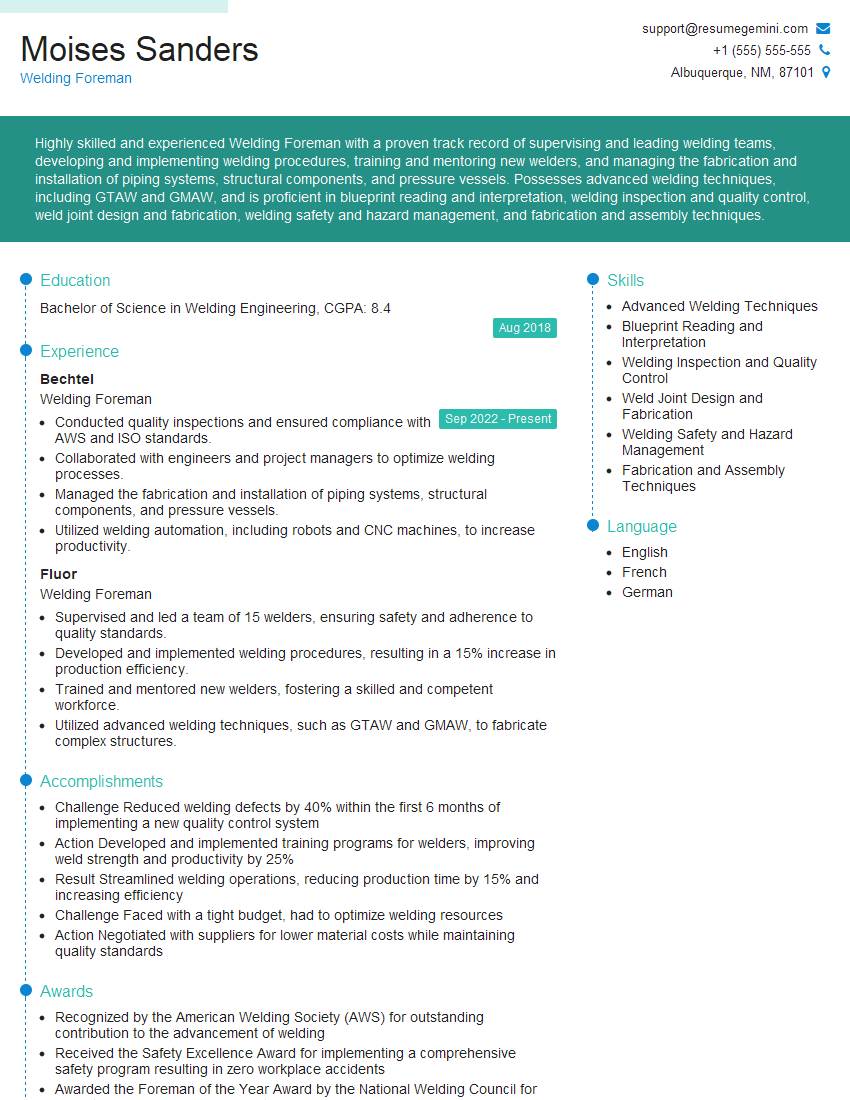
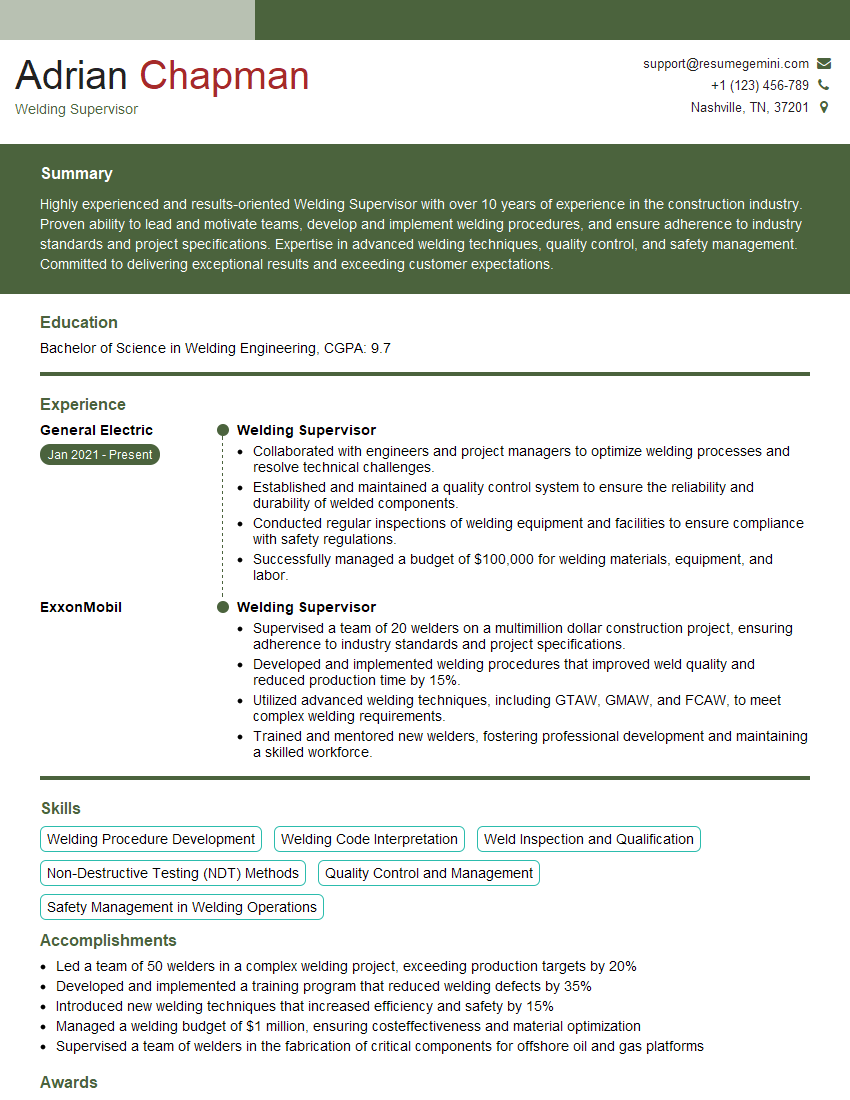
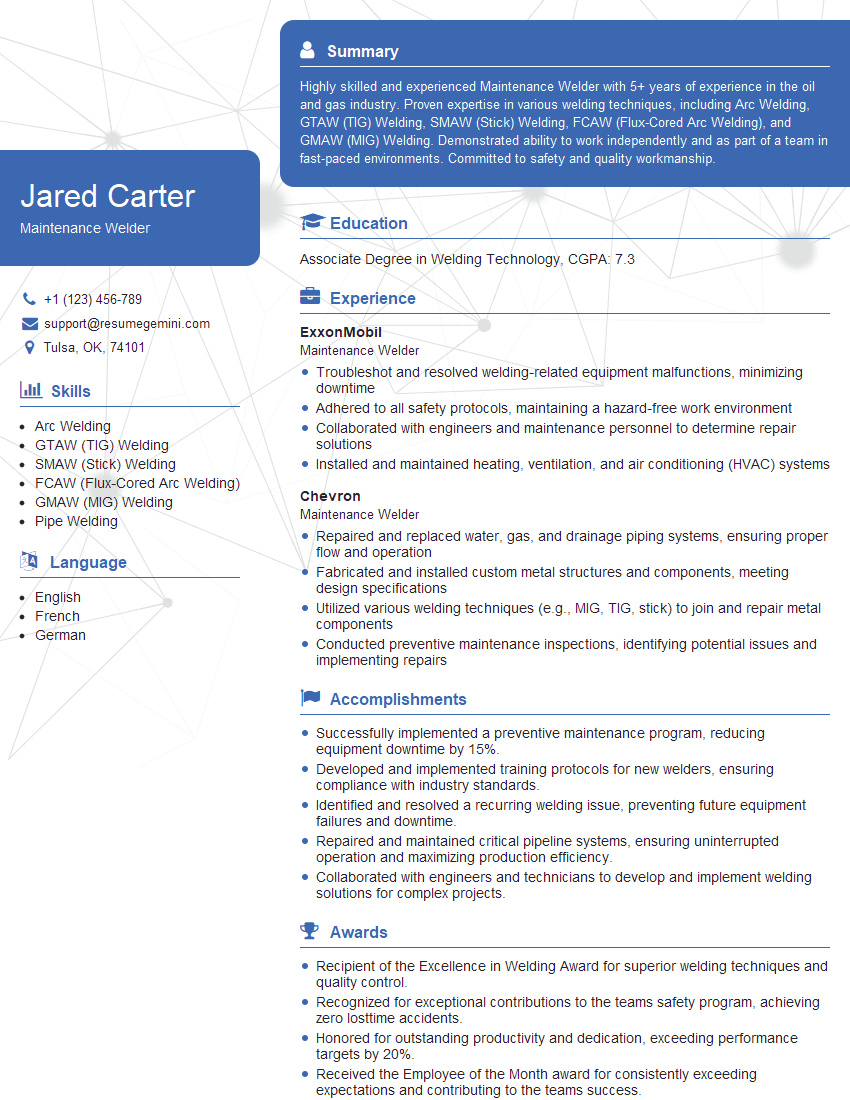
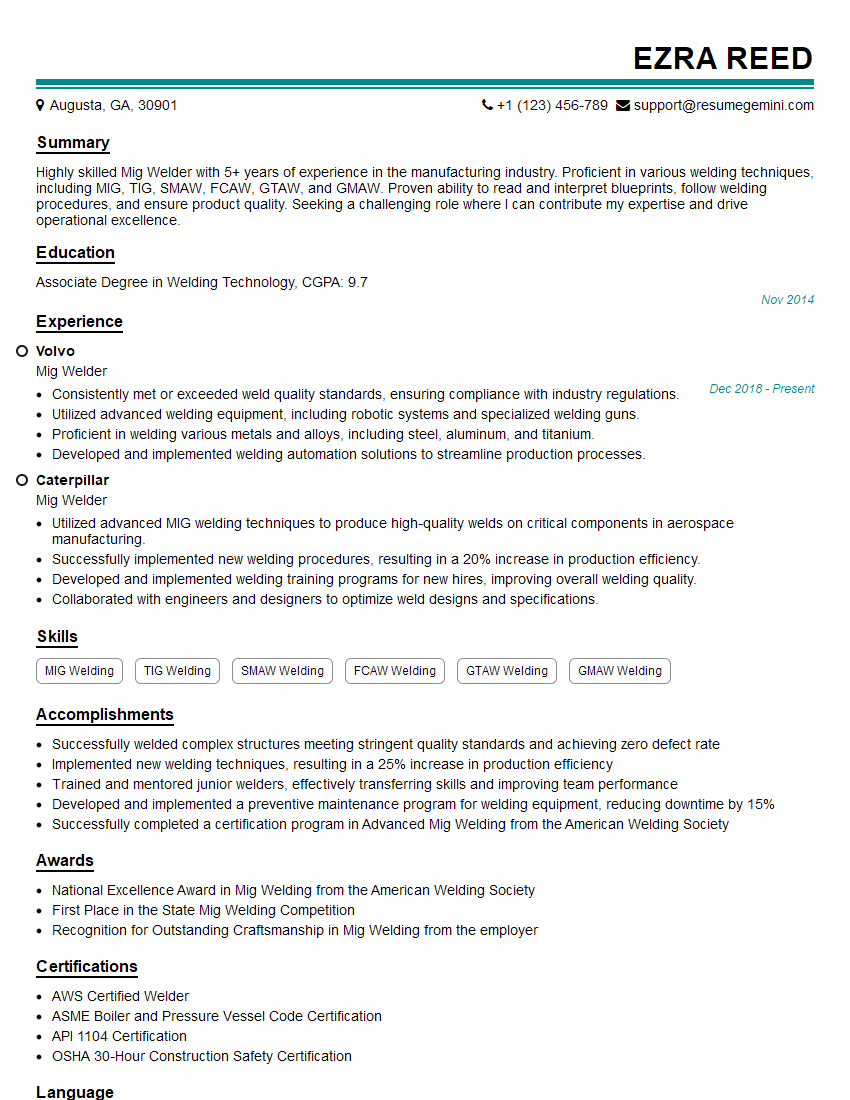
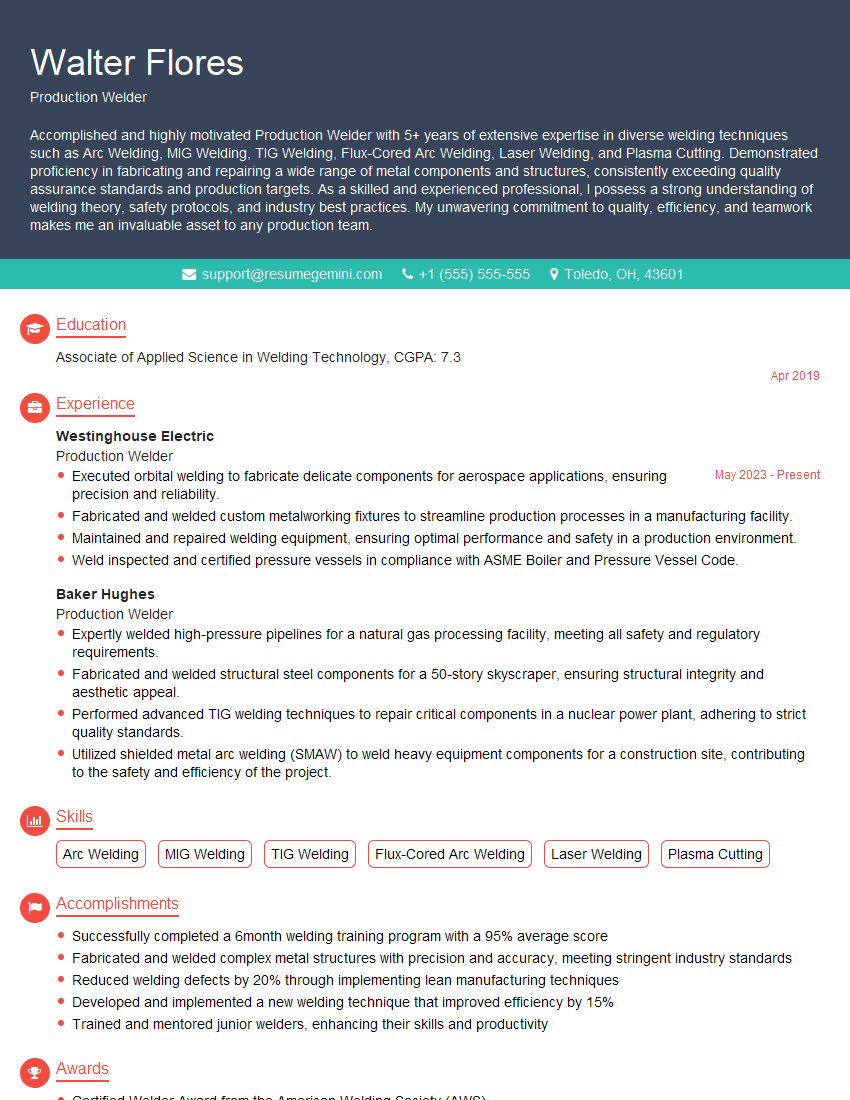
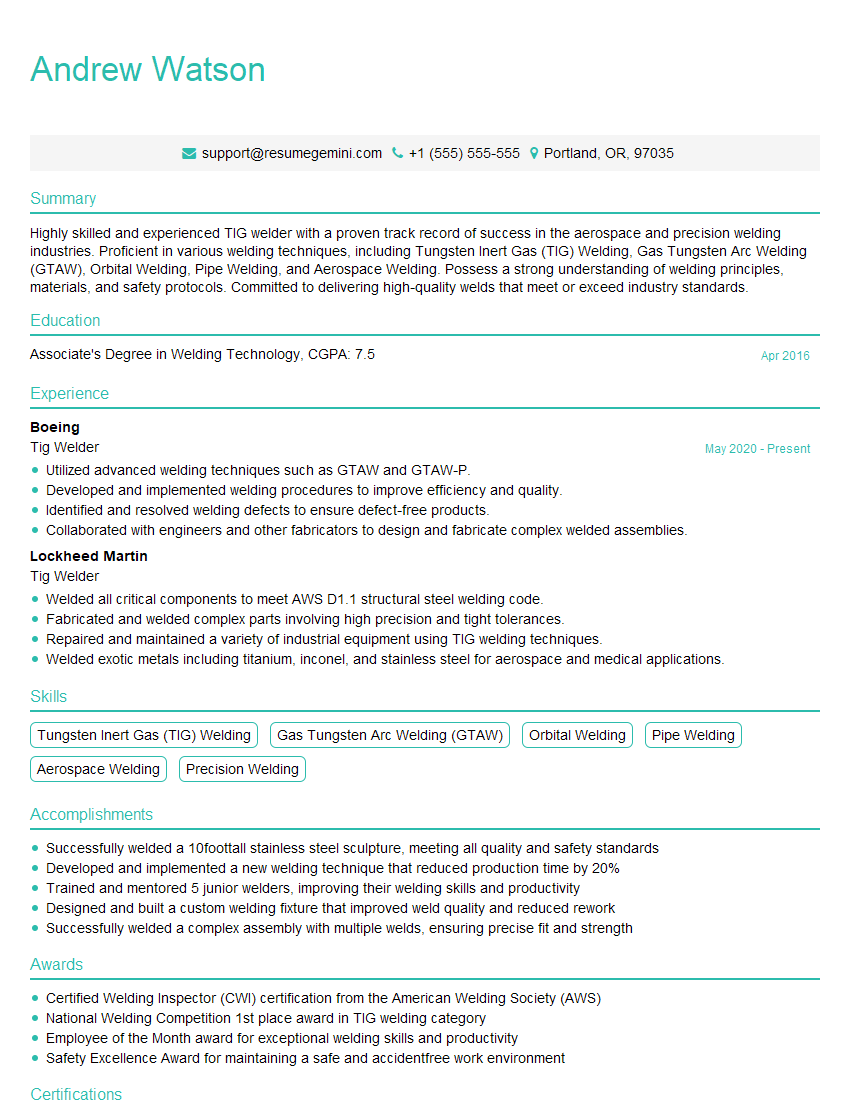
Mastering advanced welding techniques like TIG and MIG opens doors to exciting career opportunities with higher earning potential and greater responsibility. To showcase your skills effectively and land your dream job, a well-crafted resume is crucial. An ATS-friendly resume increases your chances of getting noticed by recruiters. ResumeGemini is a trusted resource to help you build a professional and impactful resume that highlights your advanced welding expertise. Examples of resumes tailored to advanced welding techniques (TIG, MIG, etc.) are available to guide you through the process.


Explore more articles
Users Rating of Our Blogs
Share Your Experience
We value your feedback! Please rate our content and share your thoughts (optional).
What Readers Say About Our Blog
Very informative content, great job.
good