Cracking a skill-specific interview, like one for Industrial Engraving, requires understanding the nuances of the role. In this blog, we present the questions you’re most likely to encounter, along with insights into how to answer them effectively. Let’s ensure you’re ready to make a strong impression.
Questions Asked in Industrial Engraving Interview
Q 1. What types of engraving machines are you familiar with?
My experience encompasses a wide range of engraving machines, categorized primarily by their engraving method. I’m proficient with both traditional and modern equipment. Traditional methods include manual engravers, like those using a hand-held graver, and pantograph engravers, which mechanically scale down designs. Modern machinery includes CNC (Computer Numerical Control) routers, laser engravers, and electro-chemical etching systems. Each has its strengths and weaknesses depending on the material and desired outcome.
- Manual Engravers: Offer fine control and artistic flexibility, ideal for intricate designs on smaller items. Think custom jewelry or detailed nameplates.
- Pantograph Engravers: Suitable for replicating designs on a larger scale. They excel in producing multiple identical pieces efficiently.
- CNC Routers: Provide high precision and automation, perfect for mass production and deep engravings on harder materials like metal. I’ve used these extensively for creating custom molds and dies.
- Laser Engravers: Offer non-contact engraving, ideal for delicate materials like wood and acrylic, capable of intricate detail and fast processing. I regularly employ these for personalization projects and creating prototypes.
- Electro-chemical Etching Systems: Excellent for creating deep, highly precise engravings on conductive materials, particularly metals. This is crucial for producing circuit boards and specialized tooling.
Q 2. Describe your experience with different engraving techniques.
My engraving experience spans several key techniques. Each technique leaves a unique mark and demands specific expertise:
- Rotary Engraving: Using a rotating bit to cut into the material. This is versatile and applicable to various materials, from soft wood to hard metals, depending on the bit used. I’ve used this technique for creating deep engravings and detailed lettering on plaques and signage.
- Laser Engraving: Using a focused laser beam to ablate or alter the material’s surface. It’s excellent for fine details, quick processing, and on materials that don’t handle mechanical cutting well. Think personalized gifts, promotional items, and intricate designs on wood.
- Electro-chemical Etching: Using an electric current to dissolve material away. It’s ideal for deep, clean engravings on metals, and provides a high level of consistency. This is commonly used in the electronics industry and for creating highly durable markings.
- Ultrasonic Engraving: Using ultrasonic vibrations to erode the material. While less common, it is valuable for delicate materials and specific applications. I have used it for engravings on some plastics.
The choice of technique heavily influences the final result, from the depth and width of the engraving to its overall aesthetic quality.
Q 3. How do you select the appropriate engraving method for a given material?
Material selection is critical in industrial engraving. The properties of the material dictate the appropriate engraving method. Factors like hardness, density, thermal conductivity, and electrical conductivity must be considered.
- Hard Materials (Steel, Aluminum): CNC routing or electro-chemical etching are generally preferred due to their ability to withstand high forces and provide deep engravings.
- Soft Materials (Wood, Acrylic): Laser engraving or rotary engraving with appropriate bits are ideal because they minimize material damage and can produce intricate designs.
- Delicate Materials (Glass, Ceramics): Laser engraving is often preferred as it offers a non-contact method which prevents cracking or shattering.
- Conductive Materials (Metals): Electro-chemical etching is the most suitable method for creating clean, precise markings.
I always conduct material tests before large-scale engraving to confirm compatibility and optimize settings for the chosen method. This prevents costly mistakes and ensures a quality product.
Q 4. Explain the process of setting up an engraving machine for a specific job.
Setting up an engraving machine is a meticulous process that varies depending on the equipment and the job requirements. A typical workflow includes:
- Design Preparation: Creating or importing the design in the appropriate vector format (e.g., DXF, AI) is crucial. This ensures precise control over the engraving process. The design needs to be scaled correctly and positioned appropriately for the workpiece.
- Machine Setup: This involves selecting the correct tools (bits, lenses, etc.), setting up the material clamping system, and configuring the machine’s parameters (speed, depth, power, etc.) based on the chosen method and material properties. Accurate calibration is essential.
- Workpiece Preparation: Cleaning and properly securing the workpiece to the machine’s bed is paramount to prevent movement during engraving and ensure consistent results. This often includes using specialized fixtures or clamps.
- Test Run: Before committing to the entire project, conducting a test run on a sample piece is highly recommended. This allows for adjustments to parameters to achieve the desired outcome and ensures that the settings are correct.
- Production Run: Once the test run confirms the desired quality, the full engraving operation can begin. Continuous monitoring is important to ensure the process runs smoothly.
For example, setting up a CNC router involves precisely aligning the workpiece, selecting the right cutting bit, setting the depth of cut, feed rate, and spindle speed based on the material. For laser engraving, setting the correct laser power, speed, and focal length are crucial steps.
Q 5. How do you ensure accuracy and precision in your engravings?
Accuracy and precision are paramount in industrial engraving. I employ several strategies to ensure high-quality results:
- Precise Calibration: Regular calibration of the machine using certified standards is crucial for maintaining accuracy. This can involve checking the machine’s positioning systems, laser alignment, or bit alignment.
- High-Resolution Design: Using high-resolution vector files ensures accurate representation of the design in the engraving process. Low-resolution files can lead to jagged edges or distortion.
- Material Stability: Securing the workpiece rigidly to prevent movement during engraving is critical. Vibration dampening can further enhance precision.
- Controlled Environment: Maintaining a stable temperature and humidity can prevent material expansion or contraction, leading to more precise engraving.
- Quality Control Checks: Regularly inspecting the engravings during and after production helps to identify and correct deviations from the desired outcome early on. Measurement tools are invaluable here.
For example, in CNC routing, using a high-quality bit and maintaining the correct cutting parameters leads to a smooth, precise cut. With laser engraving, precise laser alignment ensures that the pattern is etched correctly without over-exposure or burn marks.
Q 6. What are the common challenges in industrial engraving, and how do you address them?
Common challenges in industrial engraving include:
- Material Variations: Inconsistent material properties can affect engraving depth and quality. Careful material selection and testing are necessary to mitigate this.
- Tool Wear: Bits, lasers, and other tools wear down over time, impacting accuracy and precision. Regular tool replacement and maintenance are essential.
- Machine Malfunctions: Mechanical or electrical failures can disrupt the engraving process. Preventive maintenance and quick troubleshooting skills are critical.
- Design Errors: Mistakes in the design file can lead to incorrect engravings. Careful design review and verification are required.
- Environmental Factors: Temperature fluctuations, humidity, and vibrations can negatively influence the outcome. A controlled environment helps mitigate this.
I address these challenges through proactive measures such as regular machine maintenance, careful material selection, detailed design reviews, and the use of high-quality tools. Data logging from the machines helps identify trends and potential problems.
Q 7. How do you troubleshoot malfunctioning engraving equipment?
Troubleshooting malfunctioning engraving equipment requires a systematic approach. My process involves:
- Safety First: Always disconnect power before conducting any repairs or inspections. Safety is the utmost priority.
- Visual Inspection: Begin with a thorough visual inspection of the machine, looking for any obvious issues like loose connections, damaged parts, or obstructions.
- Check Error Messages: Most modern engraving machines display error messages that provide clues about the problem. Consult the machine’s manual to understand these codes.
- System Diagnostics: Run any built-in diagnostics provided by the machine’s software. This might involve checking the machine’s sensors, motors, or other components.
- Component Testing: If the problem persists, I systematically test individual components, using multimeters or other diagnostic tools to isolate the faulty part.
- Consult Documentation: Refer to the machine’s operation manual, troubleshooting guides, or online resources for assistance.
- Seek Professional Help: If unable to identify and fix the problem, I seek assistance from a qualified service technician or the manufacturer.
For instance, if a CNC router fails to cut correctly, I’d check the bit, its clamping, the machine’s speed settings, and then check the motor and control system.
Q 8. Describe your experience with CAD/CAM software for engraving.
My experience with CAD/CAM software for engraving is extensive. I’m proficient in several industry-standard programs, including Mastercam, Vectric Aspire, and ArtCAM. These programs allow me to translate design concepts into precise instructions for engraving machines. For example, in Mastercam, I can create 3D models, generate toolpaths, and simulate the engraving process before actually cutting the material. This significantly reduces material waste and ensures accuracy. With Vectric Aspire, I’m particularly adept at creating intricate designs for woodworking and routing applications, while ArtCAM excels in creating highly detailed 2D and 3D engravings on various materials. My workflow usually involves importing designs from various sources (like Adobe Illustrator or SolidWorks) and then using the CAM capabilities to generate optimized toolpaths, considering factors such as material type, tool size, and desired depth of cut.
I’ve also worked extensively with post-processors to customize the CAM output for different CNC machines, adapting the generated code to each machine’s specific capabilities and control system. This allows for efficient and accurate material removal, regardless of the equipment I’m using. I regularly optimize toolpaths for speed and efficiency while maintaining high-quality results.
Q 9. How do you maintain and clean engraving equipment?
Maintaining and cleaning engraving equipment is crucial for both safety and consistent performance. My routine includes daily cleaning of all surfaces with compressed air to remove debris and chips. I also regularly lubricate moving parts according to the manufacturer’s recommendations, using the correct type of lubricant to avoid damaging the machinery. For example, using the wrong lubricant on a spindle bearing can lead to premature wear and tear. I inspect the spindle for any signs of wear or damage, and I meticulously clean the collet chuck after each use to prevent build-up and ensure accurate tool clamping.
More involved maintenance tasks are performed at set intervals, such as replacing worn-out cutting tools promptly, regularly inspecting the cooling system, and checking the accuracy of the machine’s alignment using precision measurement tools. I maintain detailed logs of all maintenance activities, documenting when tasks were performed and any issues encountered. This allows me to identify potential problems early and schedule preventive maintenance to minimize downtime and ensure the longevity of the equipment.
Q 10. What safety precautions do you follow while operating engraving machinery?
Safety is paramount in industrial engraving. I always adhere to strict safety protocols, including wearing appropriate personal protective equipment (PPE) such as safety glasses, hearing protection, and a dust mask, especially when working with materials that produce fine particles or dust. Before operating any machine, I ensure that all safety guards are in place and functioning correctly. I never operate machinery when fatigued or under the influence of any substance that could impair my judgment.
I follow the lock-out/tag-out procedure when performing maintenance or repairs on any machine to prevent accidental startup. I’m trained in emergency procedures and know how to react appropriately in case of an accident. I regularly review safety procedures and receive updates on new safety regulations or best practices. My commitment to safety is not only a personal responsibility but also a demonstration of professionalism and a proactive approach to hazard mitigation. For instance, I always ensure the work area is properly lit and free from obstacles that could cause trips or falls.
Q 11. How do you interpret engineering drawings and specifications for engraving?
Interpreting engineering drawings and specifications for engraving requires a keen eye for detail and a solid understanding of geometric dimensioning and tolerancing (GD&T). I begin by thoroughly reviewing the drawing to understand the overall design, dimensions, and tolerances. I pay close attention to the material type, surface finish requirements, and any special instructions for engraving depth or style. I look for specific notes indicating the location and orientation of text, logos, or other design elements.
For example, if a drawing specifies a tolerance of ±0.005 inches for the depth of an engraved logo, I make sure to program the CNC machine to achieve that precision. I frequently use digital calipers and other measuring tools to verify the accuracy of the engraved parts against the specified dimensions. If discrepancies arise, I analyze the potential causes—such as tool wear, machine misalignment, or errors in the CAD/CAM programming—and implement corrective actions to ensure that future engravings meet the required specifications.
Q 12. Explain your experience with different engraving materials (metals, plastics, wood, etc.).
My experience with different engraving materials is vast. I’ve worked extensively with metals (aluminum, stainless steel, brass), plastics (acrylic, ABS), wood (various hardwoods and softwoods), and even glass. Each material presents unique challenges and requires a different approach to engraving.
For instance, engraving soft metals like aluminum requires different cutting parameters compared to harder materials like stainless steel. With plastics, I need to consider the melting point and avoid excessive heat buildup to prevent distortion or discoloration. Wood engraving requires careful selection of tools and speeds to avoid tearing or chipping the surface. When working with glass, I use specialized tools and techniques to ensure clean and precise engraving without causing fractures. I adjust my tool selection, cutting speeds, feeds, and depths of cut to optimize the engraving process for each specific material, always prioritizing quality and avoiding damage. Experience has taught me to precisely tailor my approach to each material’s properties.
Q 13. How do you manage multiple engraving projects simultaneously?
Managing multiple engraving projects simultaneously requires excellent organizational skills and efficient time management. I employ a project management system, often using software like Asana or Trello, to track deadlines, prioritize tasks, and allocate resources effectively. Each project receives a unique ID and is broken down into smaller, manageable tasks with assigned due dates.
This allows for clear visualization of progress and helps to identify potential bottlenecks. For instance, I might prioritize urgent projects with tight deadlines while scheduling less time-sensitive tasks to fill gaps in the production schedule. Communication with clients is critical to managing expectations and keeping them informed of progress. Regular updates ensure that everyone is on the same page and allows for quick resolution of any arising issues. My approach aims for consistent production while ensuring that quality is maintained across all projects.
Q 14. What is your experience with quality control procedures in engraving?
Quality control is a non-negotiable aspect of my engraving work. My quality control procedures begin with meticulous inspection of the raw materials before starting any project. I verify dimensions and ensure the materials are free from defects that might compromise the final product. During the engraving process, I regularly monitor the machine’s performance and the quality of the engravings themselves, using digital measuring tools to ensure precision.
After the engraving is complete, a thorough visual inspection is conducted to check for surface flaws, inconsistencies in depth, or any other imperfections. Sometimes, I employ specialized measuring equipment such as a profilometer to measure surface roughness and depth precisely, especially for critical applications with stringent tolerances. Each finished product undergoes a final quality check before packaging and shipment. Detailed records are kept of all quality control checks, allowing me to identify trends and improve processes to further enhance product quality and consistency. Any rejected pieces are documented, the reasons for rejection are analyzed, and corrective actions are implemented to prevent similar issues in the future.
Q 15. Describe your understanding of engraving depth and line width control.
Engraving depth and line width are fundamental aspects of controlling the final aesthetic and functionality of an engraved piece. Depth affects the visual impact – a shallow engraving might be subtle, while a deep one creates a more dramatic effect. Line width influences the detail and readability; fine lines are needed for intricate designs, while thicker lines suit bolder, simpler ones. Control over both is achieved through a combination of factors:
- Bit Selection: Different engraving bits have varying diameters (influencing line width) and cutting profiles (affecting depth). A V-bit, for example, creates a V-shaped groove, offering a different depth and width profile than a ball-nose bit.
- Software Settings: CAD/CAM software allows precise control over depth by setting the ‘cut depth’ parameter. Line width is defined by selecting the appropriate bit diameter or adjusting the path width in the software.
- Material Properties: The hardness and density of the material being engraved will affect how easily it’s cut, and thus the final depth and line width. A harder material will require less aggressive parameters to avoid damage.
- Feed Rate and Spindle Speed: A slower feed rate with a higher spindle speed often yields cleaner, more precise engravings, especially with intricate detail. However, this can vary significantly based on material and bit type.
For instance, when engraving a delicate pattern onto stainless steel, I would choose a small diameter ball-nose bit, set a shallow cut depth, a slower feed rate, and a higher spindle speed to achieve the desired fine detail and prevent chipping. Conversely, engraving a deep logo onto a soft wood might use a larger V-bit, a faster feed rate, and a moderate spindle speed to maximize efficiency.
Career Expert Tips:
- Ace those interviews! Prepare effectively by reviewing the Top 50 Most Common Interview Questions on ResumeGemini.
- Navigate your job search with confidence! Explore a wide range of Career Tips on ResumeGemini. Learn about common challenges and recommendations to overcome them.
- Craft the perfect resume! Master the Art of Resume Writing with ResumeGemini’s guide. Showcase your unique qualifications and achievements effectively.
- Don’t miss out on holiday savings! Build your dream resume with ResumeGemini’s ATS optimized templates.
Q 16. How do you handle complex or intricate engraving designs?
Complex engravings demand a meticulous approach. I begin by carefully analyzing the design, breaking it down into manageable sections to ensure accurate execution. This often involves vectorizing the design (converting it to a format usable by engraving software), ensuring smooth curves and sharp corners, and optimizing the path for efficient cutting.
Multi-pass engraving is commonly used for intricate designs. This involves making multiple shallower passes over the same area, gradually increasing the overall depth rather than attempting a single deep cut. This helps prevent breakage or chipping of the bit, particularly when working with harder materials. The software plays a crucial role in coordinating these passes.
For extremely intricate designs, I sometimes explore using micro-engraving techniques, utilizing specialized, smaller bits and precise control over the machine’s parameters. In cases where extreme detail is required and the machine might struggle, I might consider hand-engraving certain sections for perfect control. The key is careful planning and a layered approach, adapting techniques based on the design’s complexity and the material’s properties.
Q 17. What are your preferred methods for engraving different types of text?
The choice of engraving method for text depends heavily on the font, style, and desired aesthetic. For example:
- Serif Fonts (e.g., Times New Roman): Often look best engraved with a V-bit, creating crisp, defined characters. The V-shaped groove adds a subtle three-dimensional effect.
- Sans-serif Fonts (e.g., Arial): Can be engraved successfully with both V-bits and ball-nose bits. Ball-nose bits can yield slightly softer, less sharply defined characters.
- Script Fonts: These are often best hand-engraved, as the flowing nature of the letters lends itself to the precision and control of manual techniques. Mechanical engraving can struggle to accurately follow the curves.
- Bold, Large Text: Larger text often benefits from multiple passes with a larger bit or the use of a different method such as rotary engraving which can remove more material at a faster rate.
In all cases, I would pay close attention to kerning (spacing between letters) and leading (spacing between lines) to ensure the text is legible and visually appealing. I also utilize the software’s ability to simulate the engraving before actually cutting, which is incredibly helpful in fine-tuning placement and avoiding mistakes.
Q 18. Explain your knowledge of different engraving bit types and their applications.
Various engraving bits are designed for different applications and materials. Here are some common types:
- V-Bits: These create V-shaped grooves, ideal for sharp lines, lettering, and decorative details. The angle of the V can be varied to create different groove widths.
- Ball-Nose Bits: Their rounded tips produce smooth curves and are well-suited for three-dimensional sculpting and engraving on curved surfaces.
- Flat End Mills: These create flat-bottomed cuts, useful for removing large amounts of material quickly or for creating clean, flat surfaces for subsequent engraving.
- Graver Bits: Specifically designed for hand engraving, often with various shapes and cutting edges for fine detail work.
- Drill Bits: Used for creating holes, often as a preliminary step before engraving.
Bit selection is critical. A V-bit would be unsuitable for engraving a rounded logo; a ball-nose bit would be a better choice. The material’s hardness also affects bit selection – a harder material might require a carbide bit for durability, whereas softer materials could use high-speed steel bits.
Q 19. How do you calibrate and maintain the accuracy of your engraving equipment?
Maintaining accuracy is paramount. I regularly calibrate my engraving equipment using precision measuring tools like dial indicators and calipers. This involves checking the machine’s alignment, spindle runout, and the accuracy of the X, Y, and Z axes movements. The calibration process typically involves:
- Spindle Runout Check: Ensuring that the bit rotates perfectly true to avoid uneven cuts. This is done with a dial indicator.
- Axis Alignment: Verifying the perpendicularity and parallelism of the axes to prevent inaccuracies in the engraved piece. This uses precise measuring tools.
- Software Verification: I perform test engravings on a sample material to verify that the software’s settings translate accurately to the machine’s actions.
Regular maintenance includes cleaning the machine, lubricating moving parts, and inspecting and replacing worn bits. Keeping the machine clean and well-maintained extends its lifespan and ensures its accuracy, contributing to consistently high-quality engravings. Ignoring maintenance can lead to inaccuracies and damage to both the machine and the materials.
Q 20. What are your skills in using hand tools for engraving?
While I primarily use CNC engraving machines, I possess proficient skills in hand engraving. This involves using various hand tools like gravers, punches, and burnishers. It requires a steady hand, precise control, and a good understanding of material properties.
Hand engraving offers unparalleled control and precision for intricate details or artistic flourishes that are difficult or impossible to achieve with a machine. I often combine hand engraving with machine engraving; for instance, I might machine-engrave the main design elements and then use hand tools to add fine details or stylistic touches.
I’ve worked with various materials using hand engraving, including metals, wood, and even some plastics. The techniques differ slightly depending on the material – soft metals like copper require different approaches than harder metals such as steel.
Q 21. How do you determine the optimal feed rate and spindle speed for various materials?
Determining the optimal feed rate and spindle speed is crucial for achieving high-quality engravings. This depends on several interconnected factors:
- Material Hardness: Harder materials require slower feed rates and potentially higher spindle speeds to prevent tool breakage. Softer materials allow for faster feed rates and lower spindle speeds.
- Bit Type: Different bit types have different optimal cutting parameters. A small, sharp V-bit will require a slower feed rate than a larger, more robust bit.
- Desired Depth: Deeper cuts often necessitate a slower feed rate to prevent excessive heat build-up and to ensure a clean cut.
- Detail Complexity: Intricate designs require slower feed rates to maintain precision and prevent skipping or uneven cutting.
I typically start with conservative settings and gradually increase the feed rate until I achieve a balance between cutting speed and quality. Experimentation and experience are invaluable in finding the optimal parameters for various material-bit combinations. Software often provides estimations, but fine-tuning is often needed based on observation during the process. Incorrect settings can lead to damaged bits, uneven cuts, or even ruined material.
Q 22. Explain your experience with different types of engraving software.
My experience with engraving software spans a wide range of programs, from entry-level options to sophisticated industry-standard software. I’m proficient in using software like LaserDRW, RDWorks, and LightBurn. Each program offers unique features and strengths. For example, LaserDRW excels in its intuitive interface for beginners, making it ideal for quick projects and simple designs. RDWorks, on the other hand, is powerful for advanced users, offering more control over laser parameters and intricate design manipulation. Finally, LightBurn stands out for its compatibility across various laser systems and its robust features for managing complex projects and optimizing laser settings for different materials.
- LaserDRW: Best for quick, simple projects; user-friendly interface.
- RDWorks: Powerful features; ideal for complex designs and advanced users; requires more technical knowledge.
- LightBurn: Excellent compatibility; strong features for project management and optimization.
My expertise allows me to choose the appropriate software depending on the project complexity, client requirements, and available equipment. I’m also comfortable learning new software as needed, ensuring adaptability to evolving industry standards.
Q 23. What is your experience with laser safety protocols?
Laser safety is paramount in my work, and I adhere strictly to all relevant protocols. My experience includes comprehensive training on laser safety classes, covering topics such as eye protection, proper ventilation, fire prevention, and emergency procedures. I always ensure the laser area is properly enclosed with safety interlocks and that the appropriate laser safety glasses are worn by myself and anyone in the vicinity. Before each operation, I perform thorough safety checks of the laser system, ensuring all safety features are functioning correctly. Regular maintenance of the laser equipment is also crucial, preventing potential hazards. I’m familiar with the ANSI Z136.1 safety standards and always prioritize safe operational practices.
Think of it like this: just as a surgeon wouldn’t perform surgery without sterile equipment and proper protocols, I would never operate a laser without meticulous safety precautions. It’s not just about following rules; it’s about ensuring the well-being of myself and those around me.
Q 24. How do you handle customer specifications and revisions during the engraving process?
Handling customer specifications and revisions is a crucial aspect of my work. I begin by carefully reviewing customer designs and specifications, clarifying any ambiguities before commencing the engraving process. I utilize the chosen software to create a digital representation of the design, ensuring it matches the client’s exact requirements. Throughout the process, I maintain open communication, providing regular updates and sharing proof-of-concept samples whenever necessary. This proactive approach minimizes misunderstandings and ensures a smooth workflow.
If revisions are needed, I work closely with the client to understand their feedback and implement the changes efficiently. I always provide revised samples before the final engraving is performed to confirm the changes meet the client’s expectations. My process emphasizes collaboration and transparency to deliver a final product that meets or exceeds client expectations.
Q 25. Describe your experience with post-processing techniques for engraved parts.
Post-processing techniques are essential for achieving the desired quality and finish of engraved parts. My experience encompasses a variety of techniques, depending on the material and the desired result. These can include:
- Cleaning: Removing debris and residue from the engraving using compressed air, brushes, or ultrasonic cleaning for intricate details.
- Polishing: Enhancing the shine and smoothness of the engraved area using polishing compounds and buffing wheels, particularly important for metallic parts.
- Coating: Applying protective coatings, such as powder coating or clear coats, to increase durability and prevent corrosion.
- Anodizing (for aluminum): Creates a durable, colored surface, protecting the engraving and adding an aesthetic touch.
The choice of post-processing method depends on several factors, including the material being engraved, the depth and intricacy of the engraving, and the desired final appearance. For example, a deep engraving on a metallic part might require polishing to achieve a smooth, reflective surface, while a delicate engraving on wood might only need careful cleaning.
Q 26. How familiar are you with different types of engraving fonts and styles?
I possess a broad understanding of various engraving fonts and styles. My knowledge encompasses both classic and contemporary font styles, ranging from serif and sans-serif fonts to decorative and script fonts. I can select fonts based on aesthetic considerations, readability, and material suitability. For instance, a bold, sans-serif font might be suitable for a metal plate intended for easy readability from a distance, while a more delicate script font might be more appropriate for personalized jewelry. Furthermore, I understand the nuances of font kerning and spacing to achieve optimal visual appeal.
Beyond standard fonts, I can also work with custom designs, creating unique and personalized engravings based on specific client requests. This ability to adapt and implement custom solutions allows me to create one-of-a-kind engraved items.
Q 27. What is your understanding of the impact of different laser powers on the engraving outcome?
Laser power significantly impacts the engraving outcome. A higher laser power generally leads to deeper and wider engravings, and can produce more dramatic markings. However, excessively high power can damage the material, causing charring, burning, or even material loss. Conversely, low power results in shallower, more subtle engravings. Finding the correct balance is critical for achieving the desired results. This depends on the material being engraved; some materials require higher power settings than others.
For example, engraving stainless steel requires significantly more power compared to engraving wood. Careful experimentation and calibration, often using test pieces, are crucial to determine the optimal laser power for any given material and design. It’s a balancing act: enough power for a clean cut or mark, but not so much as to damage the piece.
Q 28. Describe a time you had to solve a complex engraving problem. What was the solution?
I once faced a challenge engraving a complex, three-dimensional design onto a curved, ceramic surface. The curvature of the surface caused inconsistencies in the engraving depth and clarity, resulting in an uneven and unsatisfactory outcome. The problem wasn’t simply the software, but the physics of the laser interacting with the uneven surface.
My solution involved a multi-pronged approach. First, I adjusted the laser focus and speed settings numerous times for different areas of the curved surface to compensate for the varying distances between the laser head and the ceramic. Second, I created a custom jig to secure the ceramic piece and ensure consistent positioning during the engraving process. Third, I used a series of overlapping passes with reduced power to create a more uniform engraving depth across the curve. This careful adjustment of laser parameters and the use of a custom jig allowed me to achieve the desired level of precision and create an even, high-quality engraving that met the client’s expectations.
Key Topics to Learn for Your Industrial Engraving Interview
- Laser Engraving Techniques: Understanding different laser types (CO2, fiber), their applications in various materials (metals, plastics, wood), and the parameters influencing engraving quality (power, speed, focal length).
- Mechanical Engraving Processes: Familiarity with hand engraving, rotary engraving, and CNC engraving machines; including their operational principles, maintenance, and limitations.
- Material Science and Selection: Knowledge of material properties influencing engravability (hardness, thermal conductivity, surface finish), and selecting appropriate materials for specific engraving applications.
- Design and Layout: Proficiency in CAD software for creating engraving designs, understanding vector graphics, and optimizing designs for different engraving methods.
- Quality Control and Troubleshooting: Identifying and resolving common engraving issues (burn marks, inconsistent depth, material damage), implementing quality control measures, and utilizing diagnostic tools.
- Safety Procedures and Regulations: Awareness of laser safety regulations, proper handling of engraving equipment, and adherence to safety protocols to prevent accidents.
- Industry Standards and Best Practices: Familiarity with relevant industry standards and best practices for producing high-quality, consistent, and durable engravings.
- Project Management and Workflow: Understanding project timelines, managing resources, and collaborating effectively within a team environment.
Next Steps
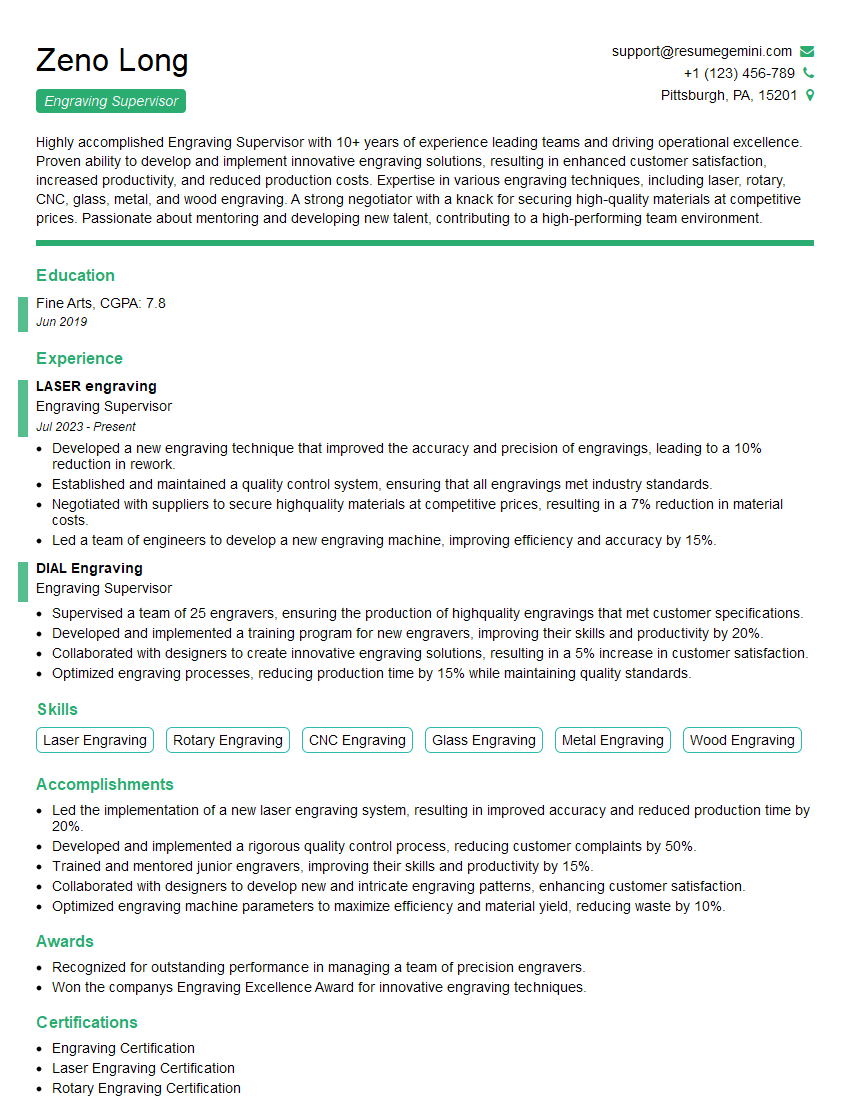
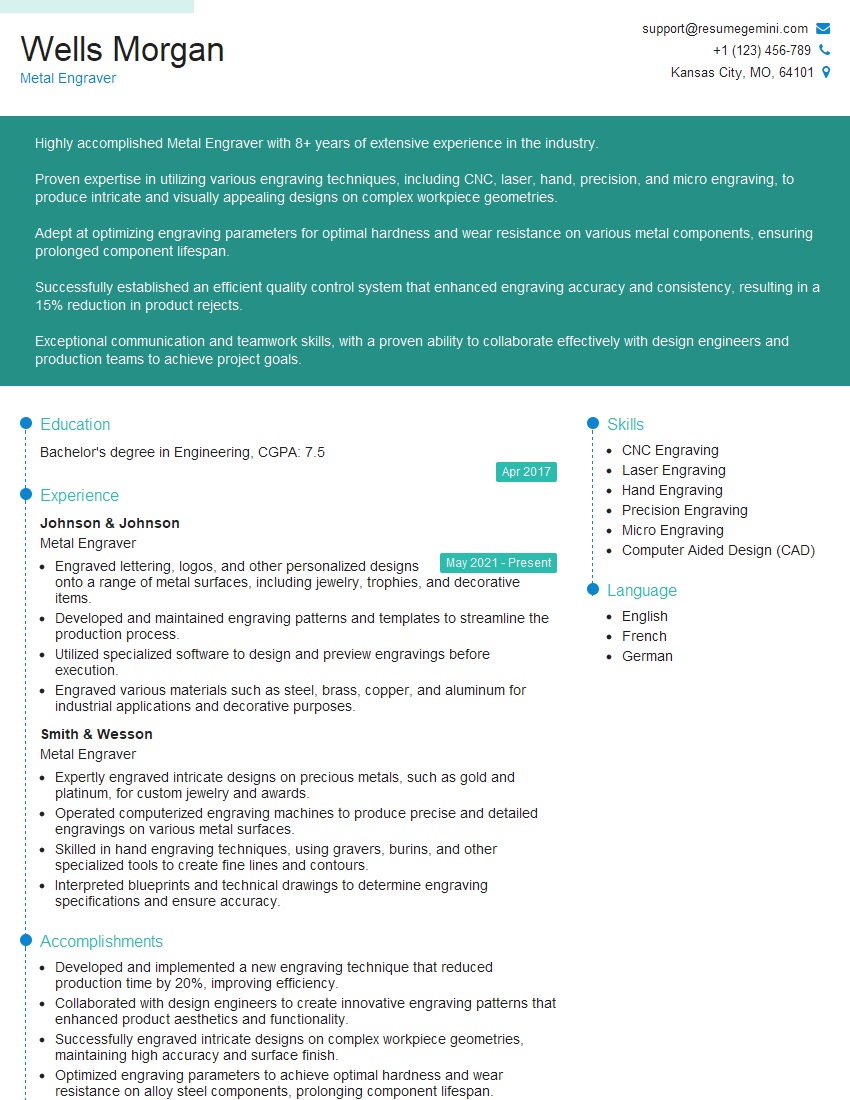
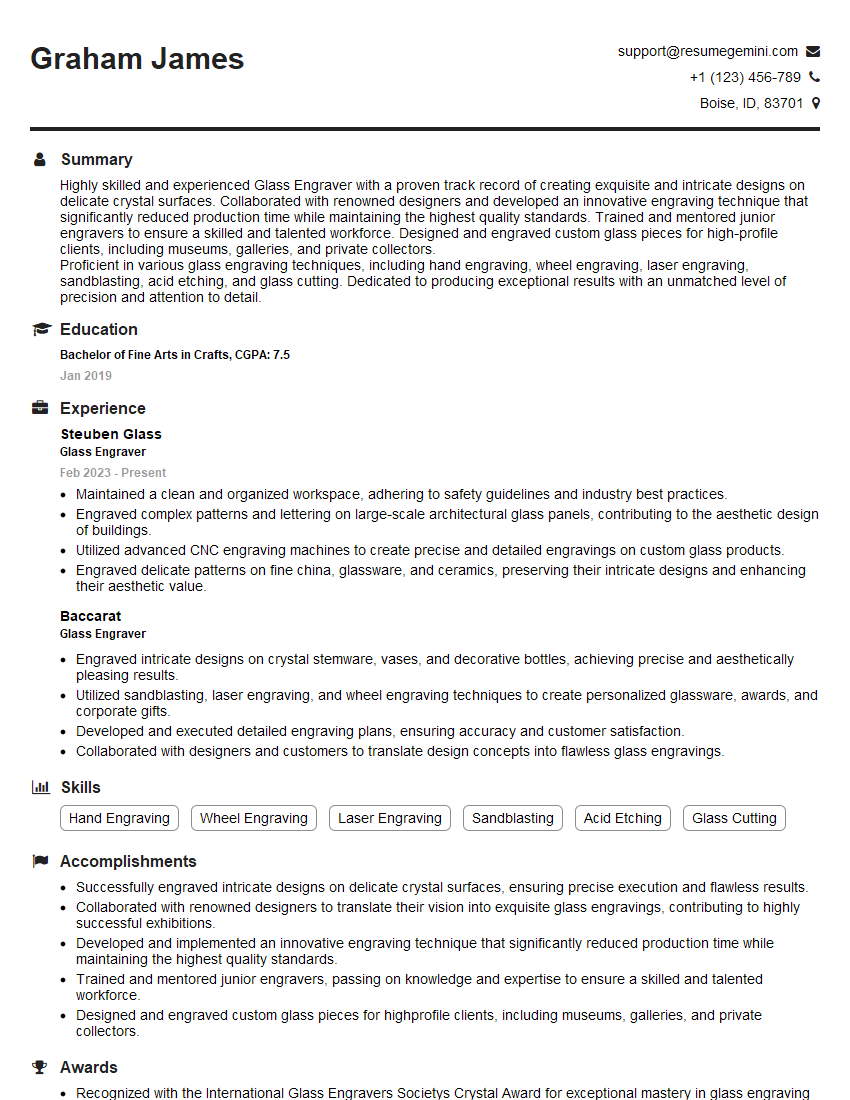
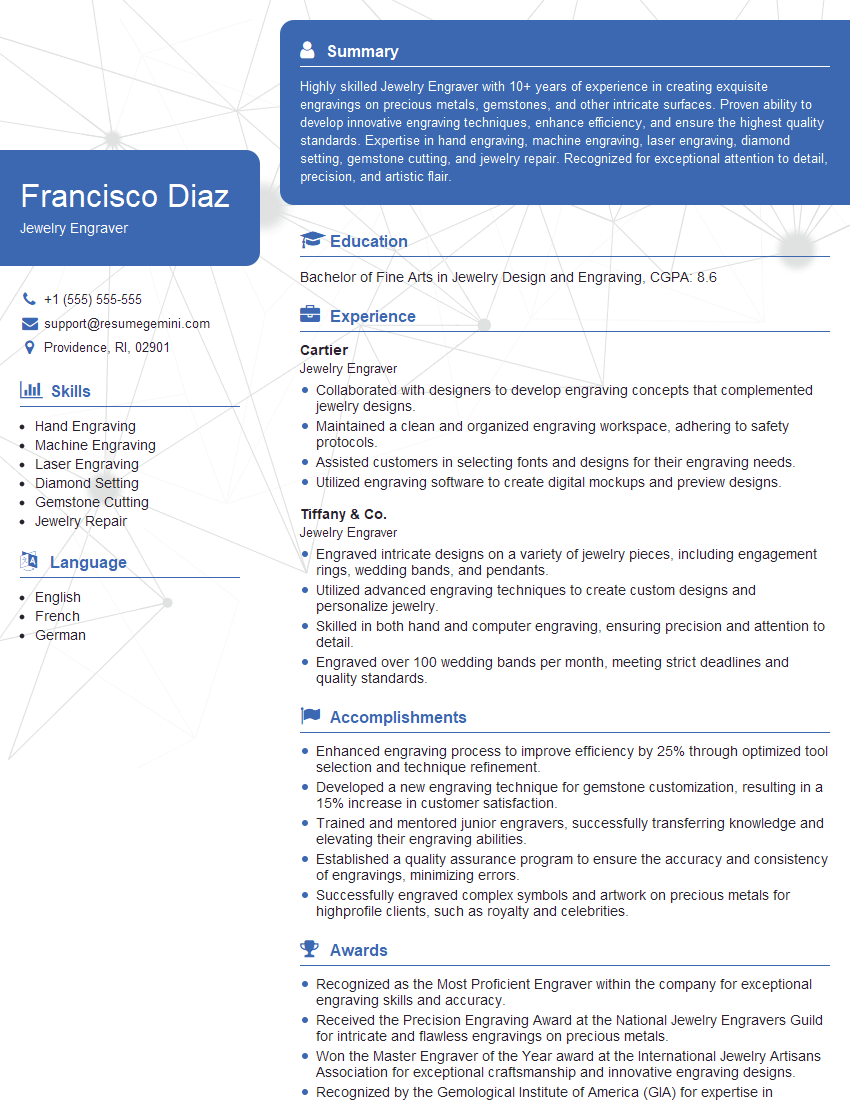
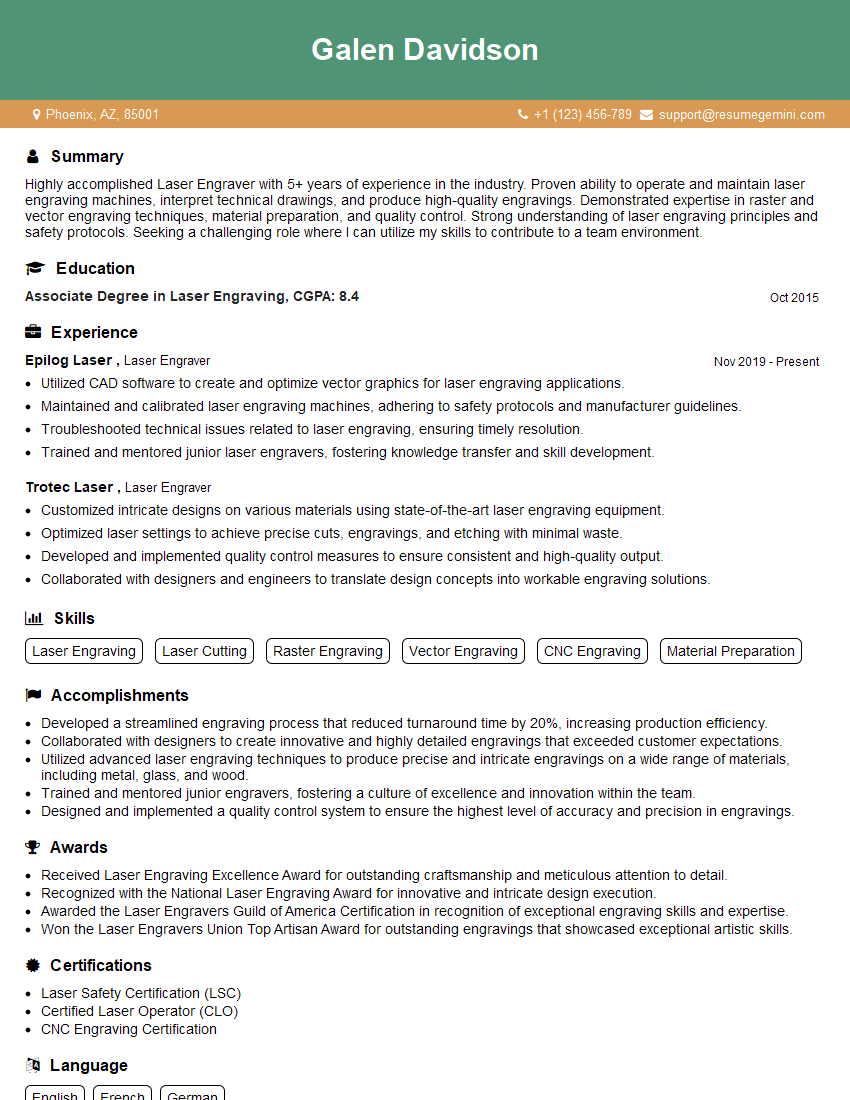
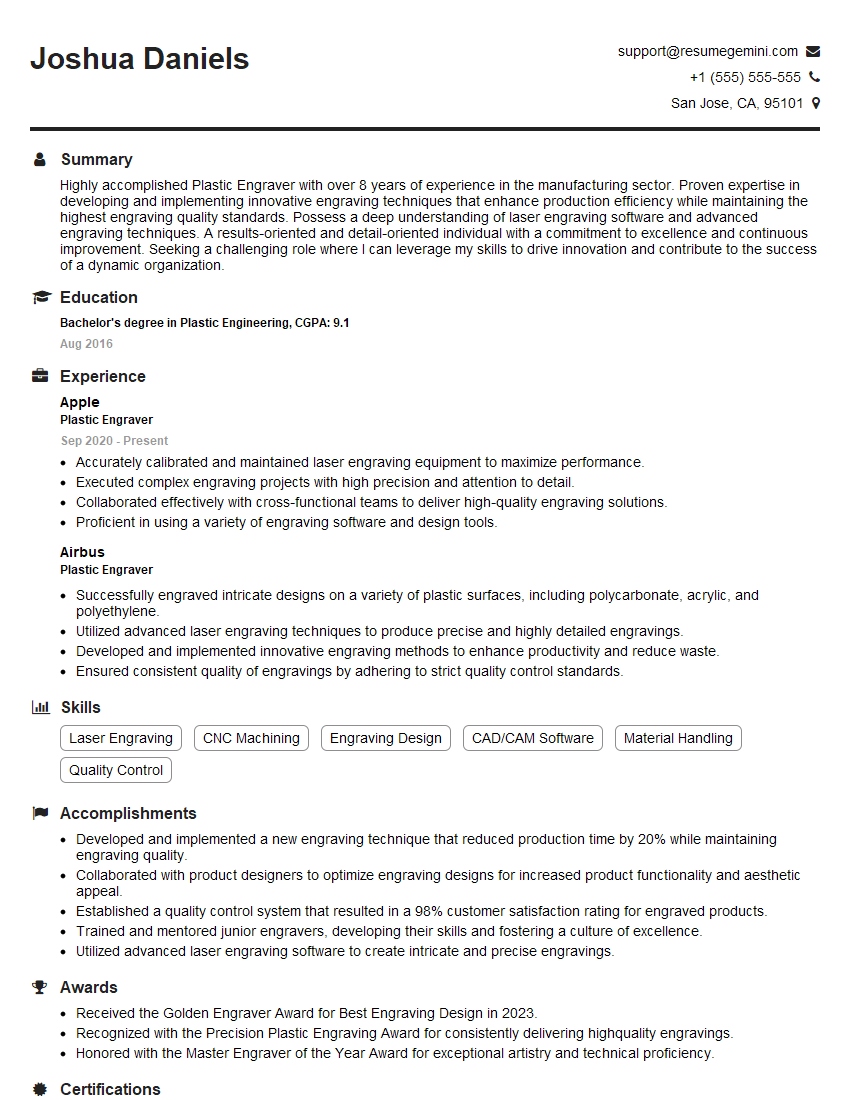
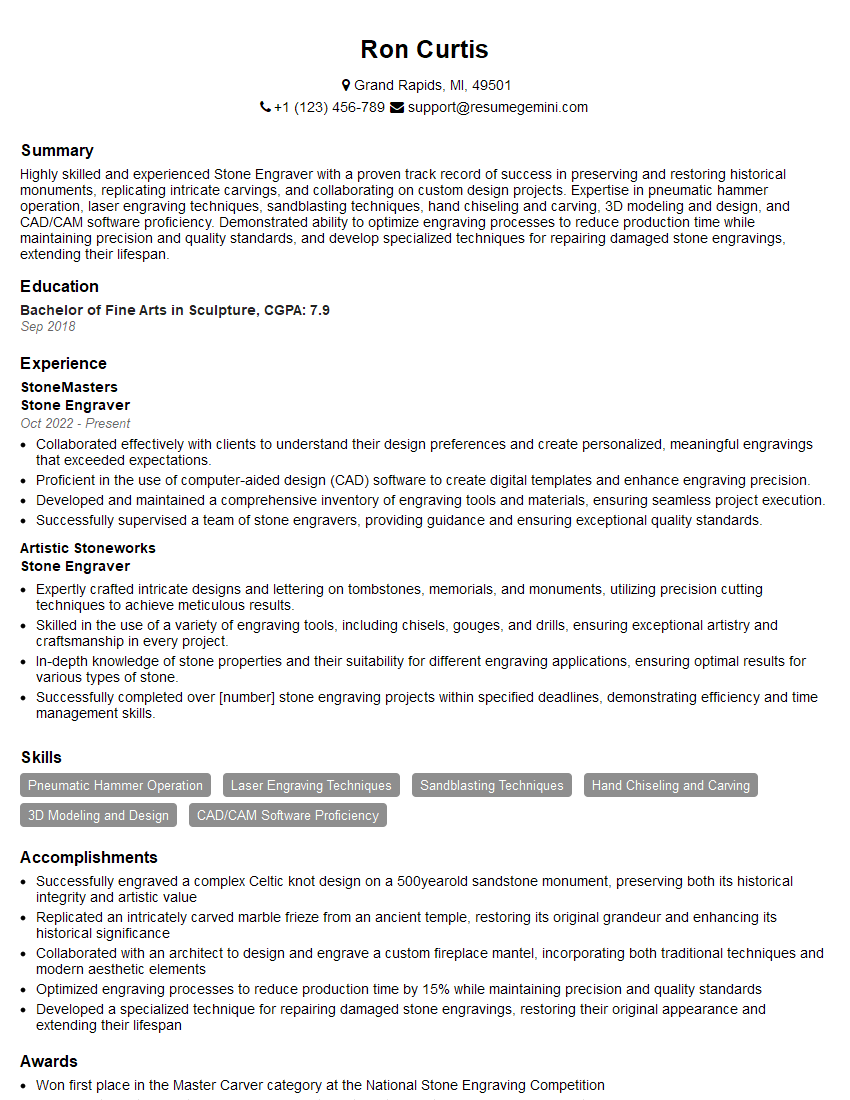
Mastering Industrial Engraving opens doors to a rewarding career with diverse opportunities for growth and specialization. To maximize your job prospects, creating a strong, ATS-friendly resume is crucial. ResumeGemini can help you build a professional resume that highlights your skills and experience effectively. We provide examples of resumes tailored to Industrial Engraving to guide you in crafting a compelling application. Invest time in crafting a resume that showcases your unique qualifications—it’s your first impression on a potential employer.

Explore more articles
Users Rating of Our Blogs
Share Your Experience
We value your feedback! Please rate our content and share your thoughts (optional).
What Readers Say About Our Blog
Very informative content, great job.
good