Unlock your full potential by mastering the most common Agri-Business and Marketing Knowledge interview questions. This blog offers a deep dive into the critical topics, ensuring you’re not only prepared to answer but to excel. With these insights, you’ll approach your interview with clarity and confidence.
Questions Asked in Agri-Business and Marketing Knowledge Interview
Q 1. Explain the current market trends in the agricultural sector.
The agricultural sector is experiencing a dynamic shift, driven by several key trends. Sustainability is paramount, with consumers increasingly demanding ethically and environmentally sourced products. This translates to a growing market for organic produce, sustainably raised livestock, and reduced-impact farming practices. Precision agriculture, leveraging technology like GPS, sensors, and data analytics, is optimizing resource use and boosting yields. Globalization continues to shape the market, creating both opportunities and challenges for farmers and businesses. E-commerce is revolutionizing distribution channels, offering direct-to-consumer sales and expanding market reach. Finally, increasing concerns about food security and climate change are forcing adaptations in farming techniques and supply chains.
- Increased consumer demand for sustainable products: This pushes farmers to adopt practices that minimize environmental impact, such as reducing pesticide use and conserving water.
- Technological advancements: Precision agriculture allows for efficient resource management and optimized yields, improving profitability and sustainability.
- Global trade dynamics: Fluctuations in global markets and trade policies significantly impact agricultural commodity prices and market access.
- Growth of e-commerce: Online platforms are providing new opportunities for farmers and businesses to connect directly with consumers and expand their reach beyond local markets.
Q 2. Describe your experience with developing and implementing marketing strategies for agricultural products.
My experience encompasses the entire marketing spectrum for agricultural products, from strategic planning to execution and evaluation. I’ve worked with diverse products, including grains, fruits, vegetables, and livestock. For example, I spearheaded a campaign for a local dairy farm that focused on highlighting the quality and ethical sourcing of their milk. This involved creating targeted social media content, partnering with local retailers, and developing compelling packaging. Results showed a 15% increase in sales within six months. In another project, I developed a digital marketing strategy for an organic grain producer, utilizing search engine optimization (SEO) and pay-per-click (PPC) advertising to reach a wider consumer base. This led to a significant expansion of their online sales channel. In all my work, data-driven decision making is crucial. I rely on market research, analytics, and customer feedback to inform strategic choices and continuously refine our approach.
Q 3. How do you measure the success of a marketing campaign in the agribusiness industry?
Measuring the success of an agribusiness marketing campaign requires a multifaceted approach. We go beyond simply looking at sales figures. Key Performance Indicators (KPIs) include:
- Sales growth: A direct measure of campaign effectiveness in driving revenue.
- Brand awareness: Monitoring changes in brand recognition and consumer perception through surveys, social media engagement, and website traffic.
- Market share: Tracking the campaign’s impact on the company’s share of the overall market.
- Return on investment (ROI): Calculating the net profit generated relative to the investment made in the campaign.
- Customer acquisition cost (CAC): Determining the cost of acquiring a new customer, helping to optimize marketing spend.
- Social media engagement: Measuring likes, shares, comments, and other interactions to gauge consumer interest and brand sentiment.
By tracking these KPIs, we can accurately assess the impact of a campaign and make data-driven adjustments as needed.
Q 4. What are the key challenges in marketing agricultural products to consumers?
Marketing agricultural products to consumers presents unique challenges. One significant hurdle is bridging the gap between the farm and the consumer. Many consumers lack a direct connection to where their food comes from, making it difficult to communicate the value proposition effectively. Another challenge is managing consumer perceptions. Concerns about food safety, ethical treatment of animals, and environmental sustainability heavily influence purchasing decisions. Furthermore, agricultural products are often seasonal, requiring flexible marketing strategies to adapt to fluctuating supply and demand. Finally, competition is fierce, with many companies vying for consumer attention in a crowded marketplace. Therefore, a strong brand story that highlights sustainability, quality, and origin is crucial.
Q 5. How would you adapt a marketing strategy to different agricultural products (e.g., grains vs. livestock)?
Marketing strategies need to be tailored to the specific characteristics of each agricultural product. For example, marketing grains might focus on highlighting bulk purchasing options for industrial users, emphasizing price competitiveness and consistent quality. The communication would be primarily business-to-business (B2B), possibly through trade shows and industry publications. In contrast, marketing livestock would require a more consumer-focused approach, emphasizing animal welfare, quality of meat, and traceability. This might involve storytelling, showcasing the farm’s practices and the animals’ life cycle, creating a connection with ethically minded consumers. The use of visuals (photography and videography) would be central to this approach. Visual storytelling can be extremely effective in this context. Digital marketing, particularly social media, could play a major role in both cases, but the messaging and target audience would differ significantly.
Q 6. What are the ethical considerations related to marketing agricultural products?
Ethical considerations in agricultural product marketing are crucial for maintaining consumer trust and building a sustainable business. Accuracy in labeling and advertising is paramount. Misleading claims about product origin, quality, or production methods are unethical and potentially illegal. Transparency in supply chains is also critical, allowing consumers to understand the origin and journey of their food. Respecting animal welfare is paramount when marketing livestock products. Depicting animals in a way that misrepresents their treatment is unethical and can severely damage a brand’s reputation. Environmental sustainability is a growing concern. Greenwashing, making exaggerated claims about environmental benefits without proper evidence, is unethical and undermines consumer trust. Ultimately, ethical marketing builds lasting relationships with consumers who appreciate transparency, authenticity, and responsible practices.
Q 7. Explain your understanding of supply chain management in the agribusiness sector.
Supply chain management in agribusiness is a complex process involving the coordination of multiple stages, from farm to consumer. It begins with production on the farm, including planting, harvesting, and animal husbandry. Next comes processing, packaging, and storage, often involving multiple intermediaries. Distribution involves transportation and logistics, ensuring timely delivery to wholesalers, retailers, and finally, consumers. Effective supply chain management requires close collaboration between all stakeholders, including farmers, processors, distributors, and retailers. Technology plays a vital role in streamlining the process, improving efficiency, and enhancing traceability. Data analytics, blockchain technology, and GPS tracking can optimize logistics, minimize waste, and ensure food safety. Challenges include managing seasonality, maintaining product quality, and adapting to fluctuating market demands. Effective supply chain management is essential for ensuring the efficient flow of agricultural products and maintaining consumer trust.
Q 8. How do you analyze market research data to inform marketing decisions?
Analyzing market research data for marketing decisions involves a systematic approach. It starts with understanding the research objectives – what questions are we trying to answer? This could range from understanding consumer preferences for a new type of fertilizer to gauging the effectiveness of a recent advertising campaign. Once the objectives are clear, I’d move to data cleaning and preparation, ensuring accuracy and consistency. This often involves handling missing data and transforming variables into usable formats. Then comes the actual analysis:
Descriptive Statistics: I’d start by calculating basic statistics like means, medians, and standard deviations to understand the central tendencies and variability of the data. For example, what’s the average age of our customers, and how much does it vary?
Inferential Statistics: To make predictions or test hypotheses, I’d use techniques like regression analysis or t-tests. This might involve building a model predicting fertilizer sales based on factors like rainfall and price. A t-test could compare the effectiveness of two different advertising strategies.
Segmentation Analysis: I’d group customers based on shared characteristics (demographics, purchasing behavior) to target specific segments with tailored marketing messages. For instance, identifying large-scale commercial farmers versus smallholder farmers allows for distinct marketing approaches.
Qualitative Data Analysis: This involves analyzing open-ended responses from surveys or interviews to gain deeper insights into customer motivations and perceptions. Themes and patterns emerging from qualitative data provide valuable context to quantitative findings.
Finally, I’d synthesize all findings into actionable insights. This includes creating clear, concise reports and presentations that communicate key findings and recommendations to stakeholders, leading to data-driven marketing decisions.
Q 9. What are the various marketing channels effective in reaching agricultural customers?
Reaching agricultural customers requires a multi-channel strategy because farmers are diverse in their tech-savviness and communication preferences. Effective channels include:
Direct Marketing: This involves personalized communication, such as targeted mailers, emails, or phone calls. It’s particularly effective for high-value products or when building relationships with key accounts.
Field Demonstrations and Trials: Showing the product in action is highly persuasive. Farmers can see firsthand the benefits, which is crucial for building trust and adoption.
Industry Trade Shows and Events: These are great for networking, showcasing products, and learning about industry trends. Face-to-face interaction is invaluable in the agricultural sector.
Digital Marketing: This includes websites, social media (especially platforms popular with farmers), targeted online advertising, and email marketing. Digital marketing enables precise targeting and cost-effective outreach.
Partnerships with Agricultural Retailers and Cooperatives: Leveraging existing distribution networks is crucial for efficient reach. These partnerships provide access to established customer bases.
Print Media: Agricultural publications and magazines are still relevant, particularly for reaching older generations of farmers.
The optimal channel mix depends on factors like the product, target audience, budget, and marketing goals. A well-rounded strategy uses a combination of channels for maximum impact.
Q 10. Describe your experience with digital marketing in the agricultural sector.
My experience with digital marketing in agriculture centers on leveraging data-driven strategies to enhance reach and engagement. I’ve successfully implemented several campaigns using:
Search Engine Optimization (SEO): Optimizing website content and structure to rank higher in search engine results pages (SERPs) for relevant keywords like ‘organic farming techniques’ or ‘precision agriculture solutions.’ This drives organic traffic to the website.
Social Media Marketing: Creating engaging content tailored to specific platforms like Facebook, Twitter, and even Instagram or TikTok depending on the target audience, sharing valuable information, running contests, and responding to comments fosters community building.
Pay-Per-Click (PPC) Advertising: Utilizing platforms like Google Ads to target specific keywords and demographics, enabling precise targeting of potential customers interested in relevant products or services.
Email Marketing: Building targeted email lists and nurturing leads through personalized email sequences, providing valuable content, and promoting offers. Email remains a powerful tool for direct communication.
Content Marketing: Creating high-quality educational content, like blog posts, videos, and webinars, establishing thought leadership and providing value to farmers. This attracts organic traffic and builds trust.
A recent project involved developing a targeted social media campaign for a new drought-resistant seed variety. By utilizing geotargeting and engaging visuals showcasing the seed’s performance in dry conditions, we reached farmers in drought-prone areas and achieved a significant increase in sales leads.
Q 11. How would you handle a crisis in agricultural product marketing?
Handling a crisis in agricultural product marketing requires a swift, transparent, and decisive response. My approach involves:
Rapid Assessment: Immediately identify the nature and scope of the crisis. Is it a food safety issue, a product recall, or negative publicity? Collect all relevant information.
Crisis Communication Plan Activation: Follow a pre-established communication plan outlining key messages, spokespeople, and communication channels. Transparency is paramount.
Stakeholder Engagement: Communicate proactively with customers, retailers, regulators, and other stakeholders. Address their concerns honestly and empathetically.
Corrective Actions: Implement immediate corrective actions to address the root cause of the crisis. This may involve a product recall, a change in production processes, or a revised marketing strategy.
Monitoring and Evaluation: Continuously monitor the situation and assess the effectiveness of the response. Gather feedback from stakeholders and adapt the strategy as needed.
Reputation Management: Take steps to repair damaged reputation through proactive communication and positive messaging. Focus on rebuilding trust and highlighting the company’s commitment to quality and safety.
For instance, if a contamination issue arises, immediate product recall, transparent communication with affected parties, and a detailed explanation of corrective actions are crucial to mitigating damage and regaining trust.
Q 12. Discuss your understanding of sustainable agricultural practices and their marketing implications.
Sustainable agricultural practices are essential for long-term viability and environmental responsibility. They encompass methods that minimize environmental impact while maximizing productivity and economic efficiency. Marketing implications of sustainable practices include:
Premium Pricing: Consumers are increasingly willing to pay more for sustainably produced products. This presents an opportunity for higher margins.
Brand Differentiation: Highlighting sustainability certifications and practices helps differentiate products from competitors and attract environmentally conscious consumers.
Enhanced Brand Reputation: Demonstrating commitment to sustainability enhances brand image and builds trust with consumers.
Reduced Risk: Adopting sustainable practices mitigates risks associated with environmental damage and resource depletion.
Access to New Markets: Growing demand for sustainable products opens new market opportunities, both domestically and internationally.
For example, a coffee company that uses shade-grown coffee beans and environmentally friendly processing methods can market this to consumers who value both quality and sustainability, often commanding a higher price point than conventionally grown coffee.
Q 13. Explain your knowledge of government regulations affecting agricultural marketing.
Government regulations significantly impact agricultural marketing. My understanding encompasses various aspects, including:
Food Safety Regulations: Regulations like the Food Safety Modernization Act (FSMA) in the US mandate stringent food safety practices, impacting labeling, handling, and traceability of agricultural products. Compliance is mandatory.
Labeling Requirements: Regulations dictate what information must be included on product labels, such as ingredients, nutritional facts, and country of origin. Non-compliance can lead to penalties.
Marketing Claims and Advertising: Regulations govern the claims made about agricultural products in marketing materials. False or misleading claims can result in legal action.
Trade Restrictions and Tariffs: International trade agreements and tariffs influence the import and export of agricultural products. Understanding these regulations is vital for international marketing.
Environmental Regulations: Regulations related to pesticide use, water quality, and soil conservation impact agricultural production and marketing. Sustainable practices are often incentivized through government programs.
Subsidies and Support Programs: Government subsidies and support programs can significantly influence the competitiveness of agricultural products. Understanding these programs is crucial for strategic marketing.
Staying informed about these regulations is critical to ensure legal compliance and effective marketing. Ignoring these regulations can have serious legal and financial consequences.
Q 14. How would you segment the target market for a new agricultural product?
Segmenting the target market for a new agricultural product requires understanding the diverse needs and characteristics of potential customers. I’d employ a multi-faceted approach:
Geographic Segmentation: Dividing the market based on location, considering factors like climate, soil type, and farming practices. A drought-resistant seed would target arid regions differently than a high-yield variety.
Demographic Segmentation: Grouping customers based on age, farm size, income, education, and experience. Marketing to young, tech-savvy farmers will differ from targeting experienced, traditional farmers.
Psychographic Segmentation: Classifying customers based on values, attitudes, and lifestyles. Organic farming practices appeal to environmentally conscious consumers.
Behavioral Segmentation: Analyzing purchasing patterns, brand loyalty, and usage rates. Identifying high-volume buyers versus infrequent buyers allows for tailored marketing messages.
Once segments are defined, I’d develop tailored marketing strategies for each. This might involve creating different messaging, pricing, distribution channels, and promotional activities to resonate with the specific needs and preferences of each segment. For example, a new fertilizer could be marketed to large commercial farms through direct sales and industry events, while reaching smaller farms through local retailers and digital marketing campaigns focusing on cost-effectiveness and ease of use.
Q 15. What is your experience with pricing strategies in the agricultural market?
Pricing strategies in agriculture are complex, balancing market forces, production costs, and the needs of diverse stakeholders. My experience encompasses various methods, including cost-plus pricing (calculating costs and adding a markup), value-based pricing (setting prices based on perceived value to the customer), competitive pricing (matching or undercutting competitors), and premium pricing (charging a higher price for superior quality or unique features).
For example, I worked with a farmer’s cooperative to implement a value-based pricing strategy for their organically grown produce. Instead of solely focusing on production costs, we highlighted the environmental benefits and superior taste, justifying a higher price point and increasing profitability. Conversely, during a period of market glut for a specific crop, we employed competitive pricing to maintain market share, accepting slightly lower margins to avoid waste.
Understanding market dynamics, demand elasticity, and competitor analysis are crucial. Sophisticated models can be used to predict price fluctuations based on factors like weather patterns, global demand, and government policies. Ultimately, effective pricing involves a blend of quantitative analysis and market intuition.
Career Expert Tips:
- Ace those interviews! Prepare effectively by reviewing the Top 50 Most Common Interview Questions on ResumeGemini.
- Navigate your job search with confidence! Explore a wide range of Career Tips on ResumeGemini. Learn about common challenges and recommendations to overcome them.
- Craft the perfect resume! Master the Art of Resume Writing with ResumeGemini’s guide. Showcase your unique qualifications and achievements effectively.
- Don’t miss out on holiday savings! Build your dream resume with ResumeGemini’s ATS optimized templates.
Q 16. How do you balance profitability and sustainability in agribusiness marketing?
Balancing profitability and sustainability is paramount in agribusiness. It’s not a zero-sum game; rather, it’s a synergistic relationship. Sustainable practices often lead to long-term profitability by reducing costs, enhancing yields, and improving brand reputation.
For instance, implementing water-efficient irrigation techniques can reduce operational expenses and mitigate the risks associated with drought. Investing in soil health improves crop yields, leading to increased revenue. Moreover, consumers are increasingly willing to pay more for sustainably produced goods, creating a premium market opportunity.
To achieve this balance, we need to integrate sustainability into every aspect of the business, from production to marketing. This includes evaluating the environmental impact of each decision, promoting transparency with consumers, and investing in sustainable technologies and practices. KPls must include metrics that measure both financial performance and environmental sustainability. For example, tracking carbon footprint reduction alongside profit margins provides a holistic view of success.
Q 17. Describe your experience with building relationships with key stakeholders in the agriculture industry.
Building strong relationships with key stakeholders is critical for success in agriculture. This includes farmers, distributors, retailers, government agencies, and consumers. I’ve consistently prioritized open communication, mutual respect, and collaborative problem-solving.
One memorable project involved working with a group of smallholder farmers to improve their access to market information and secure fair prices for their produce. By establishing trust and providing technical assistance, we improved their yields and market access. Similar initiatives included building partnerships with retailers to create attractive product displays and educational materials that highlighted the unique qualities of our farmers’ products.
Active listening, understanding their individual needs, and providing valuable support are essential. Regular meetings, collaborative projects, and transparent communication build trust and fosters long-term partnerships. I leverage these relationships to access industry insights, navigate regulatory challenges, and create mutually beneficial opportunities.
Q 18. What are the key performance indicators (KPIs) you would use to track marketing effectiveness?
Tracking marketing effectiveness requires a robust set of KPIs, tailored to specific marketing objectives. The KPIs I utilize can be broadly categorized into:
- Website Analytics: Website traffic, bounce rate, time on site, conversion rates (e.g., inquiries, sales).
- Social Media Engagement: Reach, impressions, likes, shares, comments, follower growth.
- Sales and Revenue: Sales volume, revenue generated, average order value, customer lifetime value.
- Brand Awareness: Brand mentions, social media sentiment analysis, survey results.
- Market Share: Percentage of market share captured.
- Return on Investment (ROI): A critical metric to assess the overall effectiveness of marketing spend.
It’s crucial to use a combination of quantitative and qualitative data, including customer feedback and market research, for a complete picture. Regular monitoring and analysis of these KPIs enables data-driven decision-making and continuous improvement of marketing strategies.
Q 19. Explain your understanding of consumer behavior in the agricultural market.
Understanding consumer behavior in the agricultural market is multifaceted. Consumers are influenced by factors beyond just price, including:
- Food Safety and Quality: Consumers are increasingly concerned about food safety and seek assurance regarding the origin, production methods, and quality of agricultural products.
- Sustainability and Ethical Concerns: Growing awareness of environmental and social issues is influencing purchasing decisions. Consumers are more likely to buy products from companies committed to sustainability and ethical labor practices.
- Health and Wellness: Demand for healthy and nutritious food is driving interest in organic, locally sourced, and minimally processed agricultural products.
- Convenience and Taste: Convenience plays a role, especially for busy consumers. Taste and sensory appeal are also important factors influencing purchasing choices.
- Price Sensitivity: Although consumers are increasingly willing to pay more for quality and sustainability, price remains a significant consideration.
Market research, consumer surveys, and focus groups can provide insights into consumer preferences and attitudes, helping businesses tailor their marketing strategies to meet consumer needs and expectations.
Q 20. How would you create a marketing plan for a new agricultural technology?
Creating a marketing plan for a new agricultural technology requires a strategic approach. Here’s a step-by-step process:
- Market Research: Identify the target audience (farmers, distributors, etc.), their needs, and pain points. Analyze the competitive landscape and understand the unique value proposition of the technology.
- Define Marketing Objectives: Set SMART (Specific, Measurable, Achievable, Relevant, Time-bound) goals, such as increasing brand awareness, generating leads, or driving sales.
- Develop Marketing Strategies: Outline the methods to achieve the objectives, which might include digital marketing (SEO, SEM, social media), content marketing (blog posts, videos, case studies), trade shows, and direct sales.
- Create a Marketing Budget: Allocate resources effectively across different marketing channels based on their potential ROI.
- Implement and Track: Execute the marketing plan and regularly monitor KPIs to assess its effectiveness. Make adjustments as needed.
- Evaluate and Optimize: Analyze the results and make data-driven improvements to optimize the marketing campaign over time.
For example, promoting a precision irrigation system would involve demonstrating its cost savings and yield improvement through data-driven case studies and online webinars. Collaboration with agricultural extension services could also be leveraged to increase awareness and adoption.
Q 21. Describe your experience with budgeting and resource allocation in marketing.
Budgeting and resource allocation in marketing requires careful planning and prioritization. My experience involves developing detailed budgets that align with overall business objectives. I start by defining marketing goals and then allocating funds to different marketing activities based on their potential ROI and alignment with strategic priorities. This often involves a combination of qualitative and quantitative analysis.
For instance, I might allocate a larger portion of the budget to digital marketing if research suggests a significant online presence among the target audience. Conversely, if the target audience prefers face-to-face interactions, I may invest more in trade shows and events. Regular monitoring of expenses and performance allows for efficient resource management and enables adjustments to the budget as needed. The use of marketing automation tools can help improve efficiency and better track the ROI of various marketing initiatives.
A well-structured budget enables me to optimize marketing spend, avoid wasteful expenditure and maximize return on investment. It is a dynamic document, subject to changes based on performance and market opportunities. Regular reporting and analysis are vital to ensure effective management of resources.
Q 22. How do you stay up-to-date on current trends in agribusiness and marketing?
Staying current in the dynamic world of agribusiness and marketing requires a multi-faceted approach. I leverage several key strategies:
- Industry Publications and Journals: I regularly read publications like the Progressive Farmer, Farm Journal, and Agribusiness Global, keeping abreast of the latest research, market trends, and technological advancements.
- Conferences and Trade Shows: Attending industry events like the Commodity Classic and Agritechnica provides invaluable networking opportunities and exposes me to cutting-edge innovations and emerging market trends firsthand. I actively participate in discussions and workshops to deepen my understanding.
- Online Resources and Databases: I utilize online databases like Statista and the USDA Economic Research Service to access market data, reports, and analyses. Following key influencers and organizations on social media platforms like LinkedIn and Twitter provides timely insights.
- Government Reports and Policy Updates: Agricultural policy significantly impacts the sector. I closely monitor government websites and reports from agencies like the USDA and the FAO to understand the regulatory landscape and its implications for the industry.
- Competitive Analysis: I continuously analyze the strategies and performance of competitors, both domestically and internationally, to identify opportunities and areas for improvement. This includes monitoring their marketing campaigns and product offerings.
This combination of traditional and digital resources ensures I remain informed about the latest developments and best practices in the field.
Q 23. How would you handle objections from potential customers in the agricultural sector?
Handling objections from potential agricultural customers requires a consultative approach that focuses on understanding their concerns and building trust. My strategy involves:
- Active Listening: I carefully listen to the customer’s objection, asking clarifying questions to fully understand their perspective. This shows genuine interest and helps me tailor my response.
- Empathy and Validation: I acknowledge the customer’s concerns and validate their feelings. For example, if they express concern about the price, I might say, “I understand that cost is a major factor, and we want to find a solution that works for your budget.”
- Addressing Concerns Directly: I address the objection directly and honestly, providing factual information and evidence to support my claims. This might involve demonstrating the long-term cost savings of a product, showcasing positive customer testimonials, or highlighting the product’s superior performance.
- Offering Solutions: Instead of just rebutting the objection, I offer solutions that address the customer’s needs. This could involve proposing alternative products, negotiating pricing, or offering financing options.
- Building Rapport: I focus on building a strong rapport with the customer, demonstrating my expertise and creating a sense of trust. This makes them more receptive to my solutions.
For example, if a farmer objects to a new seed variety due to unfamiliarity, I’d provide data on its yield, disease resistance, and adaptability to their specific conditions, perhaps even offer a trial run.
Q 24. What is your approach to team collaboration in a marketing environment?
My approach to team collaboration emphasizes open communication, shared goals, and mutual respect. I believe in creating a collaborative environment where every team member feels valued and empowered to contribute their unique skills and perspectives.
- Clearly Defined Roles and Responsibilities: We start by establishing clear roles and responsibilities to avoid confusion and duplication of effort. This ensures everyone understands their contributions to the overall marketing strategy.
- Regular Communication: I facilitate regular team meetings, using various communication channels (email, instant messaging, project management software) to ensure consistent and effective information sharing.
- Constructive Feedback: I encourage open and constructive feedback, creating a safe space for team members to express their opinions and ideas without fear of judgment. This fosters continuous improvement.
- Shared Goals and Objectives: We work towards shared goals and objectives, ensuring everyone is aligned with the overall marketing strategy. This promotes unity and a sense of shared purpose.
- Leveraging Individual Strengths: I strive to leverage the unique strengths and talents of each team member, assigning tasks that align with their skills and interests. This maximizes efficiency and team productivity.
In practice, this might involve using project management tools like Asana or Trello to track progress, hold regular brainstorming sessions, and conduct post-campaign analyses to identify areas for improvement.
Q 25. Explain your experience with market analysis and forecasting in agriculture.
My experience in market analysis and forecasting in agriculture involves utilizing both quantitative and qualitative methods to understand market dynamics and predict future trends. This includes:
- Data Collection and Analysis: I gather data from various sources, including government reports (USDA, FAO), industry publications, market research firms, and internal sales data. I use statistical software (e.g., R, SPSS) to analyze this data, identifying trends and patterns.
- Demand Forecasting: I use various forecasting techniques, such as time series analysis, regression analysis, and econometric modeling, to predict future demand for agricultural products. This involves considering factors such as weather patterns, consumer preferences, and government policies.
- Supply Analysis: I analyze factors influencing the supply of agricultural products, such as production costs, technological advancements, and disease outbreaks. This helps in predicting future supply and potential price fluctuations.
- Competitive Analysis: I assess the competitive landscape, identifying key players, their market shares, and their strategies. This provides insights into potential market opportunities and threats.
- Scenario Planning: I develop various scenarios based on different assumptions about future conditions, allowing us to anticipate potential challenges and opportunities and develop contingency plans.
For example, I recently used a combination of time series analysis and regression modeling to forecast the price of soybeans over the next five years, considering factors such as weather patterns, global demand, and government policies on biofuel production.
Q 26. How would you utilize social media for marketing agricultural products?
Social media offers a powerful platform for marketing agricultural products, allowing direct engagement with consumers and building brand awareness. My strategy focuses on:
- Platform Selection: Identifying the most relevant platforms for the target audience (e.g., Instagram for visually appealing content, Facebook for broader reach, TikTok for short, engaging videos).
- Content Strategy: Creating high-quality, engaging content that showcases the product’s benefits, the farming process, and the people behind it. This could include videos showing the harvesting process, images of the product’s quality, and stories highlighting the farmers.
- Targeted Advertising: Using paid advertising to reach specific demographics or geographic locations, ensuring efficient resource allocation and maximizing impact.
- Community Building: Actively engaging with followers, responding to comments and questions, and fostering a sense of community around the brand. Running contests or giveaways can increase engagement.
- Influencer Marketing: Partnering with relevant influencers (e.g., food bloggers, chefs, or agricultural experts) to reach a wider audience and build credibility.
- Data Analytics: Tracking key metrics such as engagement, reach, and website traffic to measure the effectiveness of the social media campaign and make data-driven adjustments.
For example, a campaign for organic strawberries might utilize visually appealing Instagram posts showcasing the berries’ freshness and highlighting the sustainable farming practices. Simultaneously, educational videos on TikTok could demystify the growing process and build trust with consumers.
Q 27. Discuss your experience with international agricultural trade and marketing.
My experience with international agricultural trade and marketing involves understanding and navigating the complexities of global markets, including:
- International Trade Regulations: I am familiar with various trade regulations, tariffs, and import/export procedures. This includes understanding phytosanitary regulations (related to plant health) and other compliance requirements.
- Market Research and Analysis: I conduct thorough market research to identify potential export markets, understand their specific requirements, and assess market opportunities and risks. This involves analyzing factors such as consumer preferences, import regulations, and competitive landscapes in different countries.
- Logistics and Supply Chain Management: I understand the complexities of international logistics, including transportation, warehousing, and customs clearance. I can manage the entire supply chain, ensuring efficient delivery of products to international markets.
- Currency Exchange and Risk Management: I have experience managing currency exchange risks and implementing strategies to mitigate potential losses due to fluctuations in exchange rates.
- Cultural Sensitivity: I understand the importance of cultural sensitivity in international marketing, adapting marketing messages and strategies to resonate with local audiences.
For instance, I’ve worked on projects facilitating the export of organic coffee beans from a South American country to European markets, navigating the intricacies of EU food safety regulations and optimizing the supply chain for efficient delivery.
Q 28. What are your salary expectations for this role?
My salary expectations for this role are in the range of $X to $Y annually, depending on the specifics of the position, including responsibilities, benefits package, and company performance. This range reflects my experience, skills, and contributions to the agribusiness and marketing field.
I am confident that my expertise and track record align perfectly with the requirements of this role, and I am eager to discuss this further.
Key Topics to Learn for Agri-Business and Marketing Knowledge Interview
- Understanding the Agricultural Landscape: Global and regional market trends, key crops and livestock, production methods, and emerging technologies in agriculture.
- Supply Chain Management in Agri-Business: Analyzing the flow of agricultural products from farm to consumer, including logistics, storage, and distribution. Practical application: Discuss strategies for improving efficiency and reducing waste within a specific agricultural supply chain.
- Marketing Strategies for Agricultural Products: Developing effective marketing plans targeting different consumer segments, understanding branding and pricing strategies, and utilizing digital marketing techniques for agricultural products. Problem-solving approach: Case study analysis of successful (and unsuccessful) marketing campaigns in the agri-business sector.
- Sustainability and Ethical Considerations: Understanding the role of sustainable agriculture practices, environmental regulations, and ethical sourcing in agri-business marketing. Practical application: Discuss the challenges and opportunities of marketing sustainably produced agricultural goods.
- Data Analysis and Market Research in Agri-Business: Utilizing data analytics to understand market trends, consumer behavior, and production efficiency. Practical application: Explain how market research informs marketing decisions and product development in the agricultural sector.
- Agri-Business Finance and Economics: Understanding financial statements, cost analysis, pricing strategies, and risk management in agriculture. Problem-solving approach: Analyze a hypothetical financial scenario for an agricultural business.
- Sales and Distribution Channels: Explore various methods of sales and distribution for agricultural products, including direct-to-consumer, wholesale, and retail channels. Practical application: Compare and contrast the effectiveness of different sales channels for a specific agricultural product.
Next Steps
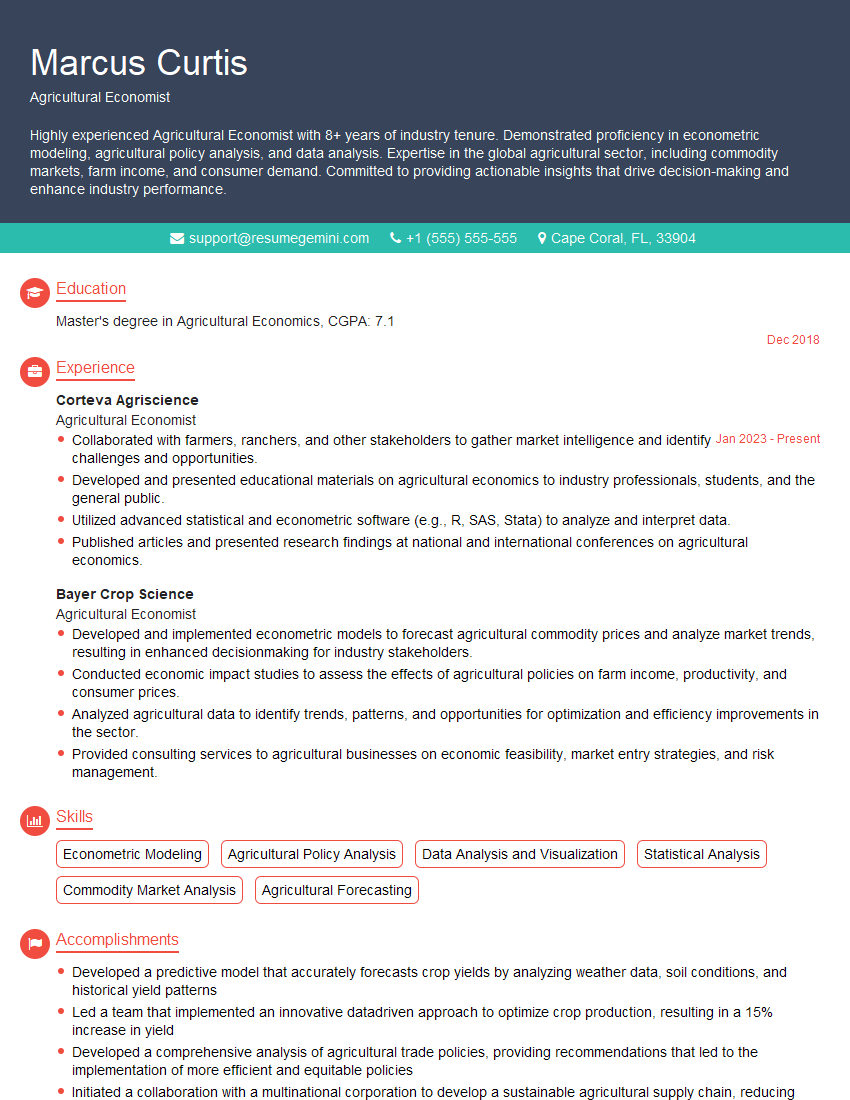
Mastering Agri-Business and Marketing Knowledge is crucial for a successful and rewarding career in this dynamic industry. A strong understanding of these concepts will significantly enhance your job prospects and allow you to contribute effectively to a company’s success. To maximize your chances, create a compelling and ATS-friendly resume that highlights your skills and experience. ResumeGemini is a trusted resource that can help you build a professional resume tailored to the Agri-Business and Marketing sector. Examples of resumes tailored to Agri-Business and Marketing Knowledge are available to help you get started.
Explore more articles
Users Rating of Our Blogs
Share Your Experience
We value your feedback! Please rate our content and share your thoughts (optional).
What Readers Say About Our Blog
Very informative content, great job.
good