The thought of an interview can be nerve-wracking, but the right preparation can make all the difference. Explore this comprehensive guide to Agricultural Equipment Operation and Maintenance interview questions and gain the confidence you need to showcase your abilities and secure the role.
Questions Asked in Agricultural Equipment Operation and Maintenance Interview
Q 1. Describe your experience with preventative maintenance schedules for agricultural equipment.
Preventative maintenance is the cornerstone of efficient and reliable agricultural equipment operation. It involves regularly scheduled inspections and servicing to prevent breakdowns and extend the lifespan of machinery. My experience encompasses developing and implementing comprehensive PM schedules tailored to specific equipment and operational conditions. This includes creating checklists covering everything from fluid levels and filter changes to more complex tasks like belt tension checks and component lubrication. For example, on a large combine harvester, I’d schedule weekly checks of the feeder house chain lubrication, monthly checks of the engine oil and filters, and a more thorough seasonal inspection involving cleaning the grain tank and checking the augers. For tractors, the frequency of checks is influenced by hours of operation; a high-use tractor might require daily fluid level checks, while a less-used one may only need weekly inspections. I also document all maintenance activities, using software to track when parts were replaced and when the next service is due. This allows for proactive planning and helps to accurately predict maintenance costs and improve operational efficiency.
Q 2. How do you troubleshoot common issues with tractor hydraulic systems?
Troubleshooting tractor hydraulic systems requires a systematic approach. I begin by visually inspecting the system for leaks, damaged hoses, or loose connections. A slow leak might be identified by a damp patch or a trail of hydraulic fluid. Next, I’d check fluid levels and ensure the hydraulic oil is clean and at the correct level. Low fluid levels indicate a leak that needs to be located and fixed. Then I would examine the hydraulic pump itself for any unusual noises or vibrations – a humming or whining sound often suggests a problem within the pump. I use pressure gauges to measure hydraulic pressure at various points in the system, comparing readings to the manufacturer’s specifications. Low pressure could indicate a problem with the pump, a clogged filter, or a faulty control valve. If the problem is electrical, I would use a multimeter to check for voltage and continuity in the wiring harness. A common example I’ve encountered is a malfunctioning hydraulic valve which I’ve resolved by either cleaning or replacing the valve, which restored normal functionality. For more complex issues, I use diagnostic tools to help pinpoint the cause of the problem.
Q 3. Explain the process of diagnosing and repairing a faulty engine in a combine harvester.
Diagnosing and repairing a faulty combine harvester engine involves a methodical process starting with identifying the symptoms. These could be anything from loss of power and unusual noises, to smoke or overheating. First, I’d conduct a visual inspection checking for obvious issues like leaks, loose connections, or damaged components. Next, I’d check the engine oil level and condition, looking for signs of contamination or low levels. I’d then use diagnostic tools to read engine codes which provide clues to the underlying issue. For instance, a code might point to a faulty sensor, an injection problem, or an issue with the engine control module (ECM). I would carefully check fuel supply, air intake, and exhaust systems for blockages or leaks. Then, based on the diagnosis, I would proceed with repair, which may involve replacing faulty components such as sensors, fuel injectors, or spark plugs (for petrol engines). If the problem is more significant, it might require a more complex repair or even an engine rebuild, necessitating specialized tools and expertise. I’ve personally resolved issues ranging from faulty fuel pumps to sensor failures in various combine models, always adhering to safety protocols and manufacturer’s guidelines.
Q 4. What safety procedures do you follow when operating and maintaining farm equipment?
Safety is paramount in agricultural equipment operation and maintenance. Before starting any work, I always conduct a thorough pre-operational inspection of the equipment, checking for any potential hazards. This includes checking fluid levels, tire pressure, and the integrity of all safety guards. I ensure all safety devices, such as PTO shields and emergency shut-offs, are functioning correctly. When operating machinery, I wear appropriate personal protective equipment (PPE), including safety glasses, hearing protection, gloves, and sturdy boots. I am particularly cautious when working near moving parts and maintain a safe distance from the equipment while it is running. Lockout/tagout procedures are strictly followed whenever maintenance or repair work is being done on energized equipment, preventing accidental starts. I’m also trained in first aid and emergency response, and familiar with the appropriate procedures to follow in the event of an accident. For example, I always have a fire extinguisher readily available when working on engines and regularly inspect it to ensure functionality.
Q 5. What experience do you have with GPS-guided agricultural equipment?
I have extensive experience with GPS-guided agricultural equipment, including tractors, planters, and sprayers. My experience includes configuring and using GPS systems for precision farming techniques such as variable rate application (VRA) and automated steering. I understand the principles of GPS operation, including signal reception, data processing, and correction methods. I’m proficient in using different GPS systems and software packages for precision farming. For example, I’ve used GPS guidance systems to automatically steer a tractor along pre-programmed field paths, enabling accurate and consistent planting or spraying, minimizing overlaps and maximizing yield efficiency. I’m also familiar with the data management aspects, utilizing software to generate field maps, analyze yield data, and optimize inputs for improved productivity. Troubleshooting issues with GPS signals and system malfunctions is also part of my expertise, ranging from correcting signal interference to dealing with software glitches.
Q 6. How familiar are you with different types of tillage equipment and their applications?
My familiarity with tillage equipment is comprehensive, encompassing various types and their applications. I understand the differences between moldboard plows (for deep tillage), chisel plows (for less intensive soil disruption), disk harrows (for seedbed preparation), and cultivators (for weed control). I know how to select the appropriate equipment based on soil type, field conditions, and desired outcome. For instance, I’d use a moldboard plow on heavy clay soils requiring deep tillage to improve soil structure, whereas a disk harrow would be more suitable for preparing a seedbed in lighter soils. I understand the principles of soil conservation and the impact of tillage practices on soil health, including the implications of reduced tillage methods like no-till farming. I have practical experience operating and maintaining different types of tillage equipment, including troubleshooting issues such as broken shanks, worn blades, and improper adjustments. Proper maintenance is crucial for optimal performance and longevity, ensuring consistent operation and preventing unnecessary wear and tear.
Q 7. Describe your experience with repairing or maintaining irrigation systems.
My experience with irrigation systems includes both maintenance and repair. I’m familiar with various irrigation methods, including center pivot, drip, and sprinkler systems. My maintenance tasks include regularly checking pumps, valves, pipes, and filters for leaks, blockages, and wear and tear. I’m proficient in troubleshooting issues such as low water pressure, clogged emitters, or malfunctioning controllers. I can identify and repair leaks, replace worn-out components, and perform necessary adjustments to optimize water distribution. I understand the principles of water management and the importance of efficient irrigation for crop production. For example, I’ve resolved issues in a center pivot system caused by a faulty motor, replacing it and ensuring proper alignment to optimize its operation. Additionally, I’m familiar with irrigation scheduling and water usage monitoring and optimization, making sure water resources are used efficiently and effectively.
Q 8. What is your experience with different types of fertilizer application equipment?
My experience encompasses a wide range of fertilizer application equipment, from the simplest broadcast spreaders to sophisticated GPS-guided systems. I’ve worked extensively with:
- Broadcast Spreaders: These are ideal for large, open fields requiring even distribution of dry granular fertilizers. I’m proficient in calibrating these spreaders to ensure accurate application rates, considering factors like wind speed and terrain.
- Nutrient Injectors: I have experience with systems that inject liquid fertilizers directly into irrigation lines, maximizing efficiency and minimizing nutrient runoff. Maintaining the injector pumps and ensuring proper mixing ratios are critical skills I’ve honed.
- GPS-guided applicators: These advanced systems allow for variable rate application, adjusting the fertilizer amount based on soil conditions and crop needs. My experience includes operating, calibrating, and troubleshooting these technologically advanced machines, including the data management aspects.
- Band Spreaders: I understand the importance of precise placement of fertilizers in rows or bands for optimal plant uptake. Calibration and maintenance of these spreaders, focusing on even band width and depth are key aspects of my skillset.
I understand the importance of proper calibration for all types of applicators to ensure the right amount of fertilizer is applied, avoiding waste and environmental damage. I’ve consistently demonstrated the ability to optimize fertilizer application for maximum crop yield and cost-effectiveness.
Q 9. How do you handle emergency repairs in the field?
Emergency repairs in the field demand quick thinking and practical problem-solving skills. My approach is systematic:
- Safety First: Secure the area, ensuring the equipment is safely turned off and any hazards are mitigated. This might involve turning off power sources, engaging parking brakes, and using warning signs.
- Assessment: Quickly diagnose the problem. This often involves checking obvious issues like fuel lines, fluid levels, and loose connections. I carry a basic toolkit with common spares, which greatly aids in initial assessment.
- Temporary Fix (if possible): If the problem is minor, I’ll implement a temporary fix to allow for continued operation. For example, a temporary repair of a leaking hose with duct tape and clamps may be enough to get the job done until a permanent repair is possible.
- Communication: If a more extensive repair is needed, I immediately communicate with the appropriate personnel, providing a detailed description of the problem and my initial findings. This could involve contacting a mechanic or supervisor.
- Documentation: After the repair – temporary or permanent – I thoroughly document the issue, the solution, and any parts replaced for future reference and maintenance records.
For example, I once encountered a broken drive belt on a combine harvester during harvest. I quickly replaced it with a spare belt I carried, minimizing downtime. I later documented the incident and ordered a new belt to replace the temporary one.
Q 10. Explain your experience with diagnosing and repairing electrical systems in agricultural machinery.
Diagnosing and repairing electrical systems in agricultural machinery requires a methodical approach and a strong understanding of basic electrical principles. My experience includes troubleshooting issues with:
- Wiring Harnesses: I can trace wiring diagrams to identify broken wires, short circuits, or corroded connections. I utilize a multimeter to test voltage and continuity to pinpoint the problem.
- Sensors and Switches: I’m experienced in testing and replacing various sensors (e.g., temperature, speed, position sensors) and switches to ensure the proper functioning of different systems.
- Control Modules: While I can diagnose basic control module issues, I understand when to seek expert help for more complex problems involving sophisticated electronic control units (ECUs). I can however often identify the error codes that help pinpoint the fault within the ECU.
- Lighting Systems: I am proficient in repairing and maintaining the various lighting systems on farm machinery, including headlamps, work lights and signaling lights. This includes wiring, bulb replacement and fuse checking.
For instance, I once diagnosed a faulty ignition system on a tractor by systematically checking the wiring, battery connections, and ignition switch using a multimeter. After identifying a corroded connection, I cleaned and repaired it, restoring the tractor to working condition.
Q 11. Describe your experience working with various types of farm machinery.
My experience spans a broad range of farm machinery, including:
- Tractors: I’m proficient in operating various sizes and types of tractors, from small utility tractors to large four-wheel drive models. This includes experience with both manual and automatic transmissions, and understanding the different PTO (Power Take-Off) configurations.
- Combines: I have extensive experience operating and maintaining various types of combines, including header adjustments, threshing adjustments and grain tank emptying.
- Planters: My experience includes operating various types of planters, from simple no-till planters to precision planters using GPS guidance. This experience encompasses seed depth control and proper calibration.
- Sprayers: I’m skilled in operating self-propelled and pull-behind sprayers, understanding the importance of accurate calibration and boom height adjustments for optimal application.
- Balers: My experience extends to the operation and maintenance of round and square balers, encompassing knotter adjustments and twine management.
I’m also familiar with other equipment such as tillage implements (plows, disks, harrows), cultivators and loaders. This broad experience allows me to quickly adapt to different machines and efficiently address operational challenges.
Q 12. How do you ensure the safe operation of agricultural equipment?
Safe operation of agricultural equipment is paramount. My approach is multifaceted:
- Pre-Operational Checks: Before starting any equipment, I conduct thorough pre-operational checks, inspecting fluid levels, tire pressure, lights, safety features (e.g., PTO shields, safety switches), and general condition. I also ensure I have the necessary personal protective equipment (PPE).
- Proper Training: I am fully trained and licensed for operating all the equipment I use, and I am always updated on new safety regulations and procedures.
- Following Manufacturer’s Instructions: I strictly adhere to the manufacturer’s operating instructions and maintenance schedules for every piece of equipment.
- Awareness of Surroundings: When operating equipment, I maintain constant awareness of my surroundings, including other personnel, obstacles, and potential hazards. This includes maintaining safe speeds and distances from others.
- Regular Maintenance: Regular scheduled maintenance is key to preventing breakdowns and ensuring the safe operation of equipment. I adhere to the prescribed maintenance schedules for all machines.
For example, before operating a tractor, I always check the hydraulic fluid levels, ensure the PTO shield is in place, and test the brakes. This proactive approach minimizes the risk of accidents and breakdowns.
Q 13. What is your experience with maintaining and repairing harvesting equipment?
Maintaining and repairing harvesting equipment requires specialized knowledge and skills. My experience includes:
- Header Maintenance: This includes tasks like adjusting knife sections, replacing worn parts, and ensuring proper alignment for efficient crop cutting. I understand the importance of header alignment to minimize crop losses and maximize efficiency.
- Thresher Adjustments: I’m proficient in adjusting various components of the threshing mechanism to optimize separation of grain from straw, based on crop type and conditions. This includes understanding concaves, rotor speeds, and sieves.
- Cleaning Systems: I’m familiar with maintaining and repairing the cleaning systems in combines, including adjusting fan speeds and sieves to optimize grain cleaning and minimize losses.
- Repair of components: This includes both mechanical and electrical repairs, such as belt replacements, bearing replacements, hydraulic component repairs and electrical system troubleshooting.
For instance, I successfully diagnosed and repaired a faulty concave in a combine harvester, resolving an issue that significantly impacted harvesting efficiency. This involved understanding the mechanics of threshing and carefully adjusting and replacing the damaged component.
Q 14. What are the common causes of engine overheating in tractors?
Engine overheating in tractors can stem from several common causes:
- Low Coolant Levels: Insufficient coolant prevents effective heat dissipation, leading to overheating. Regularly checking coolant levels is crucial.
- Clogged Radiator: A radiator clogged with debris (e.g., dust, dirt, insects) hinders efficient heat transfer. Regular cleaning of the radiator is necessary.
- Faulty Thermostat: A malfunctioning thermostat can prevent the coolant from circulating properly, leading to overheating. Testing the thermostat is a necessary step in diagnostics.
- Water Pump Failure: A failing water pump prevents coolant circulation, resulting in overheating. Checking the water pump for leaks and proper operation is important.
- Fan Belt Issues: A broken or loose fan belt prevents the radiator fan from working effectively, causing overheating. Regular inspection and replacement of fan belts are essential.
- Coolant Leaks: Leaks in the coolant system lead to coolant loss, reducing the system’s ability to regulate temperature. Identifying and repairing leaks are vital for preventing overheating.
- Blocked air intake: This reduces the oxygen supply to the engine leading to inefficient combustion and heat buildup.
Addressing these issues promptly prevents engine damage. For example, I once addressed a tractor overheating problem by identifying a clogged radiator. After thorough cleaning, the engine functioned correctly.
Q 15. How familiar are you with different types of fuel systems in agricultural machinery?
Agricultural machinery utilizes a variety of fuel systems, primarily diesel, gasoline, and increasingly, alternative fuels like biodiesel and propane. Diesel systems are most common due to their higher energy density and suitability for heavy-duty applications. Understanding these systems involves knowledge of components like fuel tanks, filters (primary, secondary, and sometimes even water separators), fuel pumps (both mechanical and electric), injectors (critical for precise fuel delivery), and the engine control unit (ECU) which manages fuel injection timing and quantity. Gasoline systems are simpler, often lacking the sophisticated injection systems of diesel engines, but still requiring careful maintenance of filters and carburetors (in older equipment) or fuel injectors. Alternative fuel systems require specialized knowledge of their unique properties and handling requirements; for example, biodiesel can affect seals and require adjustments to fuel lines. Troubleshooting these systems often involves systematically checking fuel flow, pressure, and quality, as well as examining the injectors and ECU for malfunctions. I have extensive experience diagnosing and repairing all these types of fuel systems, including diagnosing issues with clogged filters resulting in reduced engine performance and replacing faulty fuel pumps causing complete engine failure.
- Diesel Systems: Common issues include fuel contamination, injector wear, and pump failures.
- Gasoline Systems: Often susceptible to carburetor issues (if applicable), fuel line leaks, and ignition problems.
- Alternative Fuel Systems: Require specific expertise due to their varied characteristics and compatibility issues.
Career Expert Tips:
- Ace those interviews! Prepare effectively by reviewing the Top 50 Most Common Interview Questions on ResumeGemini.
- Navigate your job search with confidence! Explore a wide range of Career Tips on ResumeGemini. Learn about common challenges and recommendations to overcome them.
- Craft the perfect resume! Master the Art of Resume Writing with ResumeGemini’s guide. Showcase your unique qualifications and achievements effectively.
- Don’t miss out on holiday savings! Build your dream resume with ResumeGemini’s ATS optimized templates.
Q 16. Explain your knowledge of hydraulic systems in farm equipment and common problems.
Hydraulic systems are vital in modern farm equipment, powering functions like lifting, steering, and implement operation. They typically consist of a hydraulic pump, a reservoir holding hydraulic fluid, valves to control fluid flow, and hydraulic cylinders or motors. Understanding hydraulics involves comprehending pressure, flow rate, and the role of each component. Common problems include fluid leaks (easily spotted by wet spots or drips), worn seals (leading to decreased pressure and performance), malfunctioning valves (causing erratic operation), and contaminated fluid (leading to system damage). Diagnosing these problems requires a systematic approach; for instance, checking fluid levels and looking for leaks is the first step. Using pressure gauges to measure system pressure is vital for pinpointing issues within the system, and listening for unusual noises can point towards faulty components. For example, a grinding noise could indicate wear in a pump or motor, while a whining sound might signify a problem with a valve. I’ve encountered and successfully repaired several hydraulic system problems ranging from simple hose replacements to more complex repairs involving pump rebuilds and valve replacements. My experience includes dealing with issues on tractors, combines, and various other implements.
Q 17. How do you interpret and utilize maintenance manuals for agricultural machinery?
Maintenance manuals are essential for safe and effective equipment operation and repair. I approach them systematically, starting with the safety precautions and then focusing on the specific section relevant to the task at hand. I look for diagrams, troubleshooting guides, torque specifications, and part numbers. For example, if I am replacing a worn-out PTO clutch, the manual will provide detailed instructions, diagrams showing component locations, the correct torque values for bolt tightening, and the part number for ordering the correct replacement component. I understand that following these manuals meticulously is crucial to prevent damage, ensure longevity, and maintain warranty conditions if applicable. I’ve found that keeping the manual readily accessible and using it as a check-list while performing maintenance tasks prevents costly mistakes and ensures the job is done correctly the first time.
Q 18. Describe your experience with using diagnostic tools for agricultural equipment.
My experience with diagnostic tools for agricultural equipment is extensive. I am proficient in using various diagnostic scanners and code readers specific to different brands and models of machinery. These tools allow me to read diagnostic trouble codes (DTCs), monitor sensor readings, and perform various system tests. For instance, I can use a diagnostic scanner to diagnose a problem with a tractor’s engine management system; if the engine is running poorly, the scanner can pinpoint whether the issue stems from a faulty sensor, injector, or some other problem within the electronic control system. Besides scanners, I’m experienced in using other tools such as multimeters for electrical diagnostics, pressure gauges for hydraulic systems, and compression testers for internal combustion engines. Knowing how to interpret the data provided by these tools and combining that with my practical knowledge is essential to accurately diagnose and fix problems.
Q 19. What is your experience with welding and fabrication related to farm equipment repair?
Welding and fabrication skills are invaluable in agricultural equipment repair. I am proficient in various welding techniques, including MIG, TIG, and stick welding, allowing me to repair broken parts, fabricate custom components, and modify existing equipment. For example, I have repaired cracked tractor frames, fabricated custom hitches for implements, and replaced worn-out sections of cultivator shanks. My fabrication skills extend to working with different metals, including steel, aluminum, and stainless steel. I understand the importance of using the correct welding techniques and materials to ensure the repairs are strong, durable, and safe. Furthermore, I am skilled in using cutting, grinding, and shaping tools to prepare metal for welding and ensure precise fits. Being capable of welding and fabrication is a huge benefit for quickly fixing issues and extending the lifespan of equipment without the expense and delay of ordering replacement parts.
Q 20. How do you stay up-to-date on the latest technologies and maintenance practices in agricultural equipment?
Staying current in the field of agricultural equipment maintenance requires continuous learning. I regularly attend industry conferences and workshops, read trade publications, and participate in online forums. Manufacturers often provide updated service bulletins and technical information, which I actively follow. I also utilize online resources, such as manufacturer websites and technical training videos, to expand my knowledge of new technologies and repair techniques. For instance, I recently completed an online course on the operation and maintenance of precision planting technology. This ongoing professional development ensures I stay abreast of technological advancements in areas like precision agriculture, GPS-guided equipment, and advanced engine control systems, allowing me to adapt and provide the best possible service.
Q 21. Describe your experience working with various types of planters and seed drills.
My experience encompasses various types of planters and seed drills, from simple, mechanical models to sophisticated precision planting systems. This includes working with both air seeders and row crop planters, understanding their different mechanisms for seed placement and metering. I’m familiar with the various components: seed hoppers, metering units, seed tubes, furrow openers, and closing wheels. I know how to adjust planting depth, seed spacing, and downforce to optimize planting accuracy and ensure proper seed-to-soil contact. I have experience troubleshooting issues such as seed jams, inconsistent planting depth, and inaccurate seed spacing. This involves identifying the root causes, whether it’s a problem with the metering unit, seed tubes, or other components, and performing the necessary repairs or adjustments. For example, I have resolved issues with planter drive systems, seed plate wear, and vacuum leaks in air seeders, leading to improved planting efficiency and yield.
Q 22. What are your experiences with managing and maintaining a fleet of farm equipment?
Managing a fleet of farm equipment involves much more than just keeping the machines running; it’s about optimizing their performance, minimizing downtime, and maximizing return on investment. My experience encompasses overseeing preventative maintenance schedules, coordinating repairs, managing inventory of spare parts, and tracking operational costs for a fleet of over 20 pieces of equipment, including tractors, combines, planters, and sprayers. This involved developing and implementing a robust maintenance program using a computerized maintenance management system (CMMS), which allowed for proactive scheduling, tracking of repairs, and analysis of maintenance costs. For example, we implemented a predictive maintenance strategy for our combine harvesters, using oil analysis to detect potential engine problems before they led to costly breakdowns during the harvest season. This resulted in a significant reduction in downtime and improved overall efficiency.
Beyond the technical aspects, I have experience managing a team of mechanics and technicians. This included training, performance reviews, and ensuring adherence to safety regulations. Effective communication and delegation were crucial to keeping the fleet operational and the team motivated. One challenge I overcame was implementing a new preventative maintenance system, requiring training the existing team, managing resistance to change, and ultimately demonstrably improving their work processes through improved efficiency and reduced repair costs.
Q 23. Explain your knowledge of different types of lubrication systems in agricultural machinery.
Agricultural machinery uses a variety of lubrication systems, each tailored to specific components and operational demands. The most common are:
- Pressure lubrication systems: These systems use a pump to deliver oil under pressure to various components like bearings, gears, and hydraulic systems. This is typical in engines and transmissions, ensuring adequate lubrication even under high loads and speeds. A good example is the engine oil system of a modern tractor.
- Splash lubrication systems: Simpler than pressure systems, splash lubrication relies on the oil being slung onto moving parts by rotating components, like the crankshaft. While simpler, it’s less effective at lubricating under heavy loads and can be prone to uneven distribution. You often find this type in older or simpler equipment, such as some older types of gearboxes.
- Grease lubrication systems: Grease, a thicker lubricant, is used for applications requiring long-lasting lubrication and protection from environmental factors. This is common in bearings, chassis components, and other points where regular oil changes are inconvenient or difficult. Think of the wheel bearings on a trailer or the universal joints on a PTO shaft.
- Combination systems: Many machines utilize a combination of these systems, leveraging the strengths of each to optimally protect their diverse components. For instance, a combine harvester may have a pressure system for the engine, a splash system for some gears, and grease lubrication for chassis components.
Understanding the different systems is crucial for effective maintenance. The wrong lubricant or inadequate lubrication can lead to premature wear, component failure, and costly repairs. Regularly checking oil levels, monitoring oil condition (via analysis), and using the correct grease are essential.
Q 24. Describe your problem-solving approach when dealing with complex equipment malfunctions.
My approach to troubleshooting complex equipment malfunctions is systematic and data-driven. I follow a structured process:
- Gather information: I start by gathering all relevant information from the operator, including the circumstances leading to the malfunction, any unusual noises or symptoms, and the machine’s operational history. I’ll also visually inspect the equipment to identify any obvious problems.
- Identify potential causes: Based on the information gathered, I develop a list of potential causes. This often involves consulting service manuals, diagnostic charts, or online resources.
- Perform diagnostic tests: I then conduct specific tests to rule out or confirm the potential causes. This may involve using diagnostic tools, testing electrical circuits, checking hydraulic pressures, or even disassembling components. This step may necessitate the use of advanced diagnostic equipment such as computer diagnostic systems.
- Implement the solution: Once the root cause is identified, I implement the appropriate repair or replacement strategy. This includes sourcing parts, performing repairs, and retesting the equipment.
- Document the findings: I meticulously document the entire troubleshooting process, including the symptoms, tests performed, cause identified, and repairs made. This documentation is invaluable for future reference and contributes to a comprehensive maintenance history.
This method ensures a thorough and efficient approach to fault-finding, minimizing downtime and preventing similar problems from recurring. For instance, when a tractor’s hydraulic system experienced intermittent failure, I systematically checked the hydraulic fluid levels, pressure, filters, and the pump itself, eventually isolating a faulty pressure relief valve as the culprit.
Q 25. What experience do you have with PTO (Power Take-Off) systems?
The Power Take-Off (PTO) system is a critical component of many agricultural machines, transferring power from the tractor’s engine to implements like mowers, balers, and pumps. My experience with PTO systems is extensive, encompassing installation, maintenance, and troubleshooting. I’m proficient in understanding different PTO types (e.g., 540 rpm, 1000 rpm, ground drive), identifying PTO shaft misalignments, ensuring correct engagement and disengagement procedures, and diagnosing issues like worn U-joints or slipping clutches. I’ve worked with both mechanical and hydraulic PTO systems. I’ve successfully diagnosed and repaired several instances of PTO issues, for instance, a failing PTO clutch caused by worn components, which I addressed by replacing worn components with OEM parts, preventing future failures.
Beyond repair, I understand the importance of safety protocols concerning PTO operation. This includes proper shielding, ensuring correct engagement techniques to avoid potential injuries, and regular inspections to prevent accidents.
Q 26. How do you prioritize maintenance tasks to ensure optimal equipment uptime?
Prioritizing maintenance tasks is essential for maximizing equipment uptime and minimizing downtime costs. I employ a multi-pronged approach:
- Preventative Maintenance Schedules: I utilize a CMMS to create and track preventative maintenance schedules based on manufacturer recommendations and operational hours. Critical components receive more frequent attention.
- Condition Monitoring: Regular inspections, oil analysis, and vibration analysis provide insights into the condition of various components, allowing for proactive repairs before major failures. For example, monitoring engine oil viscosity helps detect early signs of wear and tear.
- Criticality Analysis: I assess the criticality of each piece of equipment and its components based on their impact on overall farm operations. Equipment crucial to planting or harvesting receives higher priority.
- Seasonal Considerations: Maintenance tasks are prioritized based on the farming season. For example, preventative maintenance on planting equipment is scheduled before the planting season.
- Cost-Benefit Analysis: A cost-benefit analysis is performed for each task to ensure that the cost of maintenance is justified by the potential savings from avoiding costly repairs or downtime.
By combining these strategies, I ensure that maintenance tasks are efficiently scheduled, leading to greater equipment reliability and less disruption to farming activities. I’ve successfully applied this approach to reduce downtime by 15% on our farm.
Q 27. What is your understanding of environmental regulations related to agricultural equipment operation and maintenance?
My understanding of environmental regulations related to agricultural equipment operation and maintenance is comprehensive and up-to-date. I’m familiar with regulations concerning:
- Emissions: I’m aware of emission standards for diesel engines and the use of approved fuels and emission control systems (e.g., Diesel Particulate Filters, Selective Catalytic Reduction). Regular maintenance is crucial to maintain compliance.
- Waste disposal: Proper disposal of used oil, filters, and other hazardous waste is essential. I’m familiar with the legal requirements for recycling and disposal, ensuring compliance.
- Pesticide and herbicide application: I’m knowledgeable about regulations related to the safe handling, storage, and application of pesticides and herbicides to minimize environmental impact. This includes proper calibration of sprayers and adherence to label instructions.
- Soil erosion and water quality: I understand the measures required to minimize soil erosion during tillage and protect water quality from runoff during fertilizer and pesticide applications. This includes proper conservation tillage techniques and buffer strip management.
- Noise pollution: I’m aware of noise emission regulations and how to minimize noise pollution during equipment operation, often utilizing noise-reducing equipment and best practice operation guidelines.
Staying informed about these regulations is a continuous process, and I actively seek out updates and training to ensure our operations remain compliant and environmentally responsible.
Q 28. Describe your experience with using and interpreting data from telematics systems in agricultural equipment.
Telematics systems provide valuable data that greatly enhances equipment management. My experience with these systems involves using data from GPS tracking, fuel consumption monitoring, engine performance parameters, and diagnostic codes. This data allows for proactive maintenance scheduling and identification of operational inefficiencies. For example, by analyzing fuel consumption data, I’ve identified and addressed instances of excessive fuel consumption, leading to cost savings. GPS tracking allows for efficient routing and monitoring of equipment location and utilization, ensuring machines are used efficiently and preventing theft or misuse.
Interpreting this data involves using both the software provided by the telematics system and my own analytical skills. I’m comfortable identifying trends and anomalies in data, using that information to predict potential problems, improve operational efficiency, and optimize maintenance strategies. For instance, identifying a pattern of elevated engine temperature readings in a particular tractor using the telematics system allowed us to address a cooling system issue proactively, preventing a potentially major breakdown during critical fieldwork.
Key Topics to Learn for Agricultural Equipment Operation and Maintenance Interview
- Engine Systems: Understanding different engine types (diesel, gasoline), their operating principles, preventative maintenance schedules (oil changes, filter replacements), and troubleshooting common engine problems (starting issues, overheating).
- Hydraulic Systems: Knowledge of hydraulic fluid properties, system components (pumps, valves, cylinders), troubleshooting leaks and malfunctions, and performing routine maintenance checks.
- Electrical Systems: Familiarity with basic electrical circuits, diagnosing electrical faults (wiring, sensors, components), working safely with electrical systems, and understanding the use of diagnostic tools.
- Transmission and Drivetrain: Understanding different transmission types (manual, automatic, CVT), recognizing signs of wear and tear, performing routine inspections, and troubleshooting drivetrain issues.
- Safety Procedures: Comprehensive understanding of safety regulations, proper use of Personal Protective Equipment (PPE), lockout/tagout procedures, and hazard identification and risk assessment.
- Preventive Maintenance: Developing a proactive approach to maintenance, creating and following maintenance schedules, performing routine inspections, and utilizing lubrication charts.
- Troubleshooting and Repair: Developing problem-solving skills to diagnose equipment malfunctions, utilizing diagnostic tools and manuals, and performing repairs effectively and efficiently.
- GPS and Precision Agriculture Technology: Understanding the applications of GPS technology in agriculture, familiarity with auto-steer systems, data logging and analysis, and precision farming techniques.
- Specific Equipment Knowledge: Demonstrate understanding of the operation and maintenance of specific equipment relevant to the job description (e.g., tractors, combines, planters, sprayers).
- Record Keeping and Documentation: Maintaining accurate and detailed records of maintenance activities, repairs, and parts used. Understanding the importance of proper documentation for compliance and tracking.
Next Steps
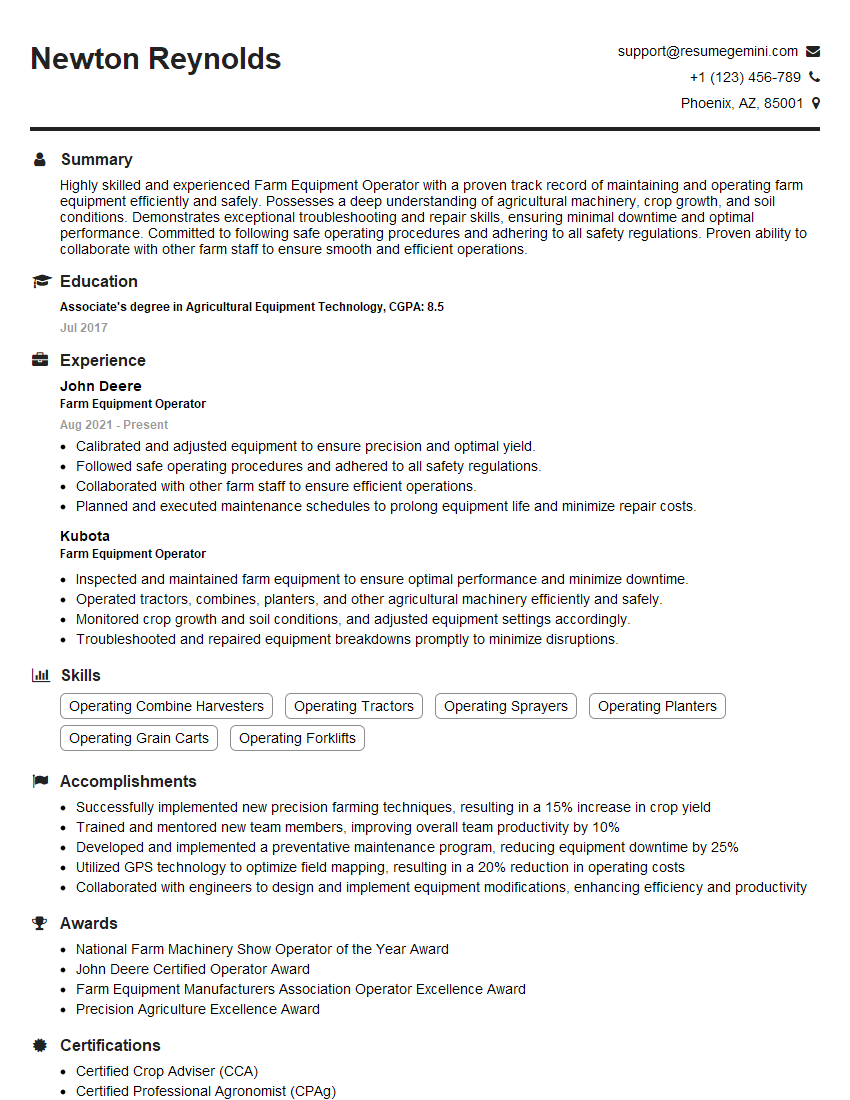
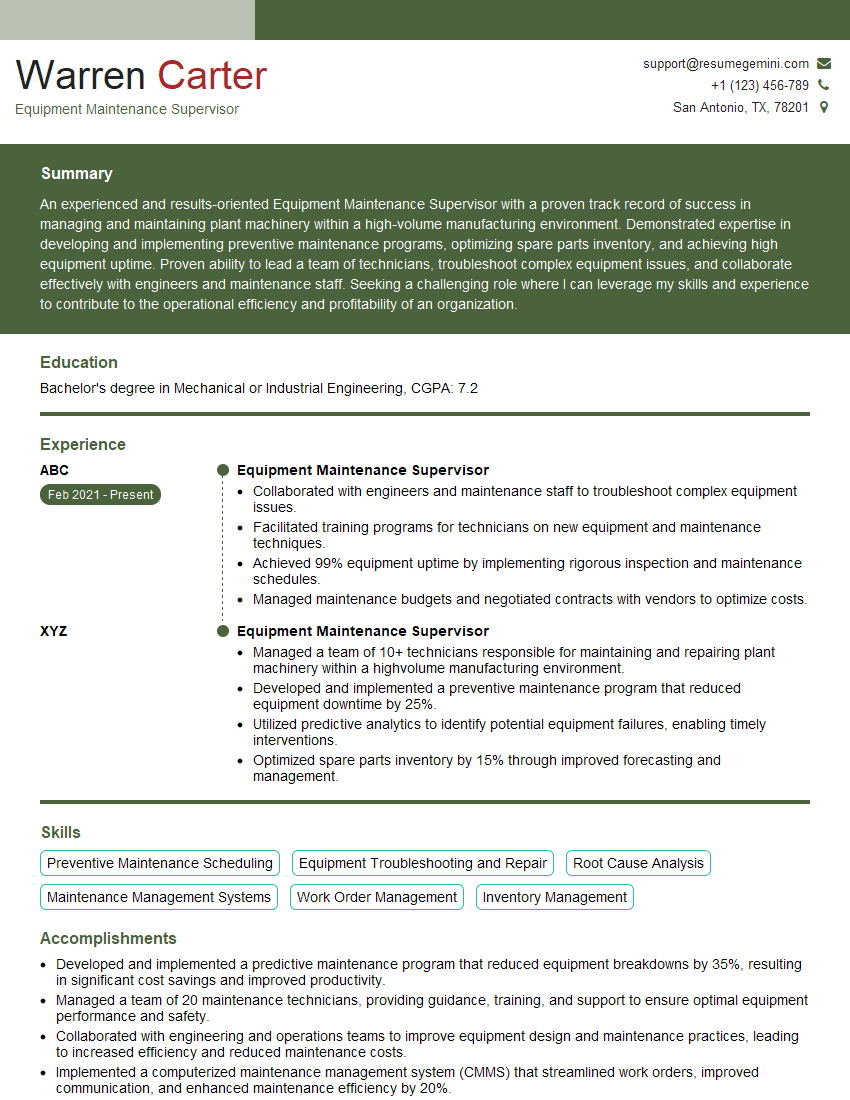
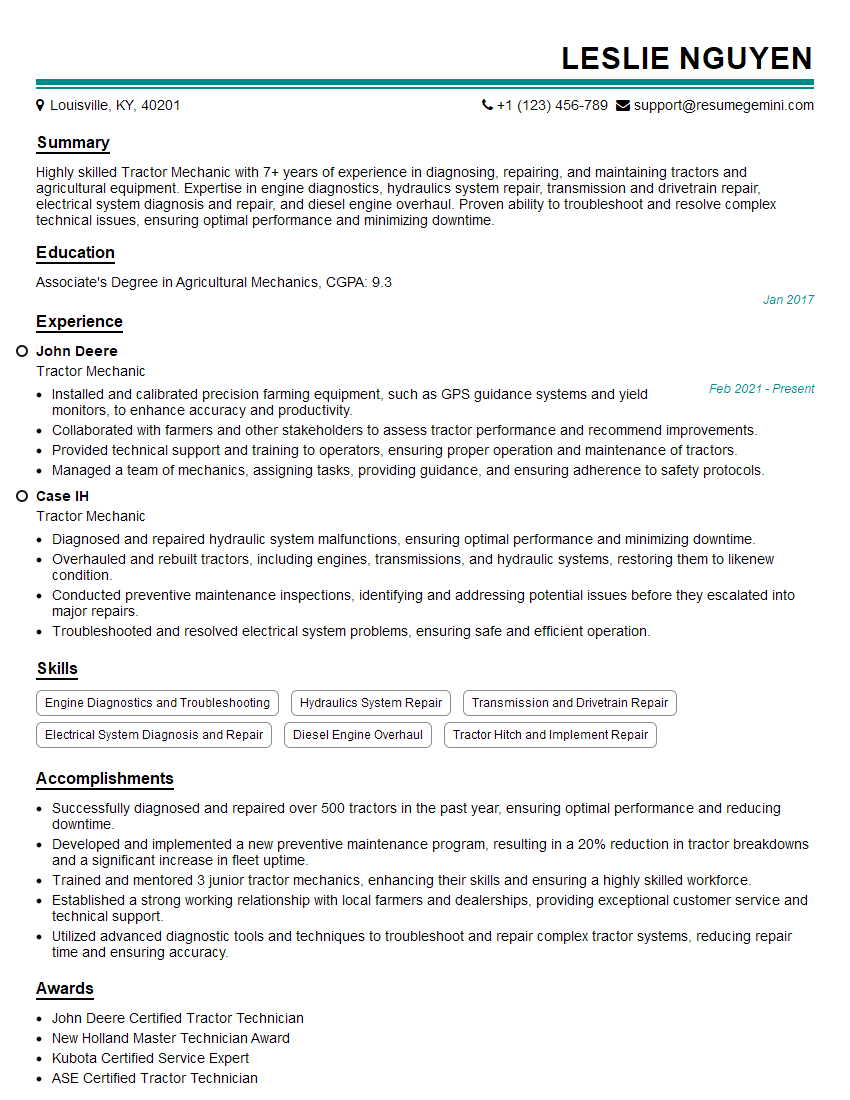
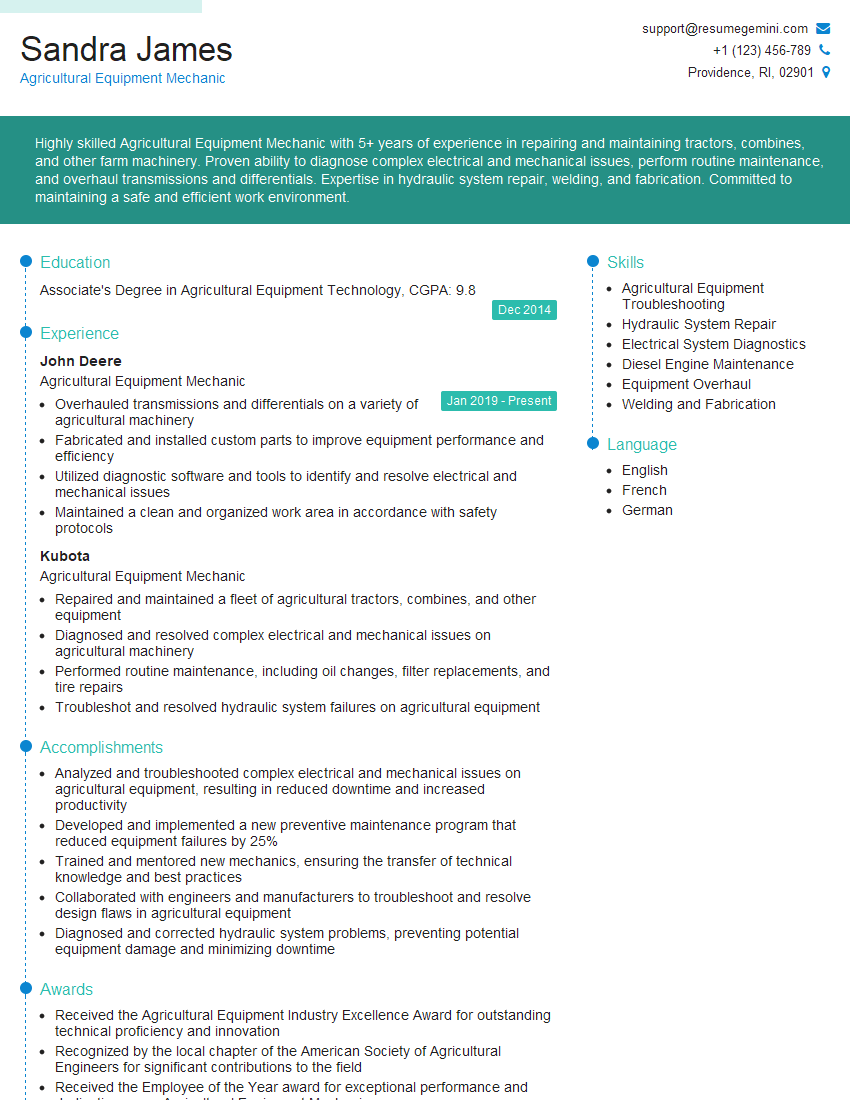
Mastering Agricultural Equipment Operation and Maintenance is crucial for career advancement in this dynamic field. It demonstrates your commitment to safety, efficiency, and technological proficiency, leading to greater responsibility and higher earning potential. To significantly increase your job prospects, it’s vital to create an ATS-friendly resume that highlights your skills and experience effectively. ResumeGemini is a trusted resource that can help you build a professional and impactful resume. They offer examples of resumes tailored to Agricultural Equipment Operation and Maintenance roles to guide you in crafting yours. Take advantage of this valuable tool to present yourself in the best possible light to potential employers.


Explore more articles
Users Rating of Our Blogs
Share Your Experience
We value your feedback! Please rate our content and share your thoughts (optional).
What Readers Say About Our Blog
Very informative content, great job.
good