Cracking a skill-specific interview, like one for Agricultural Machinery and Equipment, requires understanding the nuances of the role. In this blog, we present the questions you’re most likely to encounter, along with insights into how to answer them effectively. Let’s ensure you’re ready to make a strong impression.
Questions Asked in Agricultural Machinery and Equipment Interview
Q 1. Explain the principles of operation of a combine harvester.
A combine harvester is a remarkable machine that performs three crucial harvesting operations simultaneously: reaping, threshing, and winnowing. Think of it as a highly efficient all-in-one system for grain harvesting.
Reaping involves cutting the crop from the field. The combine’s cutter bar, equipped with rotating knives, slices through the stalks at ground level. The cut crop is then conveyed to the next stage.
Threshing separates the grain from the plant material. The crop enters a rotating drum with concave bars. The drum’s action beats the grain loose from the stalks, heads, and chaff. This mixture then moves towards the next stage.
Winnowing, the final step, separates the grain from the remaining debris (chaff, straw). This typically involves a series of sieves and fans that use air currents to blow away the lighter chaff, leaving the heavier grain behind. This clean grain is collected in a hopper for storage or transport.
In essence, a combine harvester mechanizes a process that traditionally required numerous manual steps and a large workforce. This automation vastly increases efficiency and reduces labor costs in modern agriculture.
Q 2. Describe the different types of tractors and their applications.
Tractors are classified based on several factors, primarily their power and intended use. We can broadly categorize them as:
- Wheel Tractors: These are the most common type, featuring wheels for traction. They range from small, compact garden tractors ideal for small farms or landscaping, to large, high-horsepower models used for heavy tillage and hauling in large-scale operations. Their versatility makes them suitable for a vast array of tasks.
- Crawler Tractors (or Track Tractors): These tractors utilize continuous tracks instead of wheels, providing superior traction on soft or uneven terrain. This makes them indispensable for working in muddy fields, hilly landscapes, or construction sites. They are often used for tasks requiring significant pulling power, like land clearing or heavy-duty plowing.
- Specialized Tractors: This category encompasses tractors designed for specific agricultural operations. Examples include orchard tractors with low-profile designs for maneuverability in tight spaces, rice tractors suited for paddy fields, and vineyard tractors with narrow frames for optimal operation between rows of vines.
Application Examples: A small wheel tractor might be used for mowing lawns and smaller fields, while a large crawler tractor would be essential for deep plowing heavy clay soils. An orchard tractor, due to its design, would be ideal for tasks within a fruit orchard.
Q 3. What are the maintenance procedures for a tractor’s engine?
Maintaining a tractor engine is crucial for its longevity and efficient operation. Regular maintenance should include:
- Regular Oil Changes: Following the manufacturer’s recommended intervals is key. This ensures the engine’s components are adequately lubricated, preventing wear and tear.
- Air Filter Replacement: A clean air filter prevents dust and debris from entering the engine, which can cause damage and reduce performance. Replacing this filter regularly, according to the manual, is vital.
- Fuel Filter Cleaning/Replacement: A clogged fuel filter can restrict fuel flow, impacting engine performance. Regular cleaning or replacement is essential, particularly if the fuel is not of high quality.
- Coolant Checks: Regularly checking coolant levels and ensuring the system is free of leaks prevents overheating, a major cause of engine damage. Consider using a coolant tester to ensure proper concentration.
- Belt Inspection: Regularly inspecting drive belts for wear and tear, and replacing them when necessary, prevents breakdowns and ensures proper power transmission.
- Spark Plug Replacement (if applicable): For gasoline or diesel engines with spark plugs, regular replacement ensures efficient combustion and optimal performance. Consult your manual for recommendations.
Beyond these routine checks, regular inspections of hoses, wiring, and other components can help identify potential problems early, preventing more serious, costly repairs down the line. Proper record-keeping of maintenance schedules is highly recommended.
Q 4. How do GPS guidance systems improve farming efficiency?
GPS guidance systems significantly enhance farming efficiency by enabling precise and repeatable machine operation. Imagine trying to drive perfectly straight lines for hours without assistance – nearly impossible! GPS guidance makes this effortless.
Improved Accuracy: GPS systems guide tractors and other machinery along pre-planned paths with centimeter-level accuracy. This reduces overlap in spraying, seeding, and fertilizing, minimizing waste of inputs and maximizing resource use. Reduced overlap translates directly into cost savings.
Increased Productivity: By automating steering, GPS allows operators to focus on other tasks, increasing their overall productivity and reducing fatigue. This is especially beneficial during long operating hours.
Optimized Operations: GPS data can be integrated with other farm management tools to create detailed maps of field operations. This data allows for improved decision-making, leading to better crop management strategies and increased yields. For example, variable-rate technology can adjust seeding rates or fertilizer application based on soil conditions mapped via GPS.
Overall, GPS guidance leads to optimized resource use, enhanced productivity, and improved data management in farming, resulting in significant improvements in overall farm efficiency and profitability.
Q 5. Explain the function of a planter and its calibration process.
A planter is a vital piece of agricultural equipment used to precisely deposit seeds into the soil at the correct depth and spacing. It’s essentially a precision-planting machine that ensures optimal seed placement for germination and growth.
Planter Function: A planter consists of several key components: hoppers for holding seeds, metering mechanisms to dispense seeds individually or in small groups, furrow openers to create seed slots in the soil, seed placement mechanisms to deposit seeds accurately, and closing mechanisms to cover the seeds with soil.
Calibration Process: Accurate calibration is crucial for successful planting. This typically involves:
- Measuring the planter’s ground speed: This can be achieved with GPS or using a calibrated wheel measurement over a measured distance.
- Measuring the seed spacing: This needs to match the target population of plants per acre.
- Measuring seed flow rate: Using the planter’s output in a measured time period, calculate the rate of seeds delivered.
- Adjusting settings: Based on the measurement, fine-tune the planter’s settings (e.g., metering mechanism, seed plates) to achieve the desired seed spacing and density.
- Verification: Conduct a test run to ensure the calibration is accurate and consistent.
Real-world application: Without proper calibration, a planter could lead to either over-seeding, resulting in overcrowding, stunted plant growth, and resource competition, or under-seeding, leading to low yields and wasted land potential.
Q 6. Describe the various types of tillage equipment and their uses.
Tillage equipment is used to prepare the soil for planting. The types of equipment and their uses vary depending on soil conditions and crop requirements. Some common types include:
- Moldboard Plows: These traditional plows invert the soil, burying crop residue and creating a smooth seedbed. They are effective but can lead to soil erosion and degradation.
- Disk Harrows: These harrows use rotating disks to cut and pulverize the soil, incorporating crop residue and preparing a seedbed. They are good for working through tougher residue.
- Chisel Plows: These tools use shanks or tines to loosen the soil without complete inversion. They are used for deep tillage and are less disruptive to soil structure than moldboard plows.
- Subsoilers: These implements are used for deep tillage to break up compacted layers of soil, improving water infiltration and root growth. They are crucial in areas with hardpan.
- Rotary Tillers: Also called rototillers, these implements use rotating blades to pulverize the soil, creating a fine seedbed. They are often used for smaller plots or for preparing seedbeds for specific crops.
Choosing the right equipment depends on factors such as soil type, climate, crop, and the farmer’s conservation goals. No-till farming, for example, minimizes soil disturbance to conserve moisture and protect soil health.
Q 7. What are the safety precautions when operating agricultural machinery?
Operating agricultural machinery involves inherent risks. Safety precautions are paramount to prevent accidents and injuries. These should include:
- Proper Training: Operators should receive thorough training on the specific machinery they are operating, understanding its controls, limitations, and potential hazards.
- Pre-Operation Checks: Before starting any machinery, a comprehensive inspection is critical. This includes checking fluids, tire pressure, safety devices, and the overall mechanical condition.
- Personal Protective Equipment (PPE): This is essential and should include hearing protection, safety glasses or goggles, sturdy footwear, and appropriate clothing. Gloves might also be needed for certain operations.
- Awareness of Surroundings: Operators need to be constantly aware of their surroundings, including other machinery, people, and animals. Maintaining a safe distance is crucial.
- Safe Operating Procedures: Following established operating procedures is key. Never operate machinery under the influence of alcohol or drugs.
- Regular Maintenance: Regular maintenance not only ensures machinery operates efficiently but also reduces the risk of breakdowns and accidents.
- Emergency Procedures: Operators should be aware of emergency procedures in case of accidents or breakdowns.
Beyond these, adherence to all relevant safety regulations and legislation is mandatory. Safety should always be the top priority when operating any agricultural machinery.
Q 8. How do you troubleshoot a malfunctioning baler?
Troubleshooting a malfunctioning baler requires a systematic approach. Think of it like diagnosing a car problem – you need to identify the symptoms before you can find the cause.
- Start with a visual inspection: Check for obvious issues like clogged rollers, broken belts, or damaged needles. Is the pickup functioning correctly? Are there any foreign objects interfering with the baling process?
- Listen carefully: Unusual noises – grinding, squealing, or knocking – can indicate specific problems. For example, a grinding noise might suggest worn bearings, while a squealing sound could be a slipping belt.
- Check the hydraulic system: Baler operation often relies on hydraulics. Low fluid levels, leaks, or a malfunctioning pump can significantly impact performance. Inspect hoses and cylinders for damage.
- Examine the knotting mechanism: Proper twine feeding and knotting are crucial. If bales are coming out loose or improperly tied, this area requires detailed examination. Check for proper twine tension and look for broken or worn parts.
- Consult the owner’s manual: Every baler has a manual that outlines common troubleshooting steps and provides diagrams. This is your best resource for identifying specific component locations and addressing known problems.
- Use diagnostic tools: Some balers have onboard diagnostic systems that can pinpoint problems. If your baler has such a system, utilize it to narrow down the fault.
Remember safety first! Always disconnect the power source before conducting any repairs or inspections.
Q 9. Explain the principles of precision agriculture and its benefits.
Precision agriculture involves using technology to optimize farming practices and improve efficiency. Imagine farming with a GPS guiding your tractor, sensors monitoring soil conditions, and data analytics guiding your decisions. That’s the essence of precision agriculture.
Principles:
- Site-specific management: Tailoring inputs (fertilizers, pesticides, water) to specific areas within a field based on their unique needs. This avoids over-application in areas that don’t require it, saving money and reducing environmental impact.
- GPS technology: Using GPS and GIS (Geographic Information Systems) to create precise maps of fields, enabling precise application of inputs and monitoring crop health.
- Remote sensing: Employing drones, satellites, and sensors to gather data on crop growth, soil conditions, and other relevant factors.
- Variable-rate technology: Adjusting equipment settings (e.g., fertilizer application rate) in real-time based on the data collected.
Benefits:
- Increased yields: Optimized input application leads to healthier crops and higher yields.
- Reduced costs: Precise application minimizes waste of inputs, saving money.
- Environmental sustainability: Reduced chemical use and improved water management minimize environmental impact.
- Improved efficiency: Automation and data-driven decision-making streamline operations.
Example: A farmer uses a GPS-guided sprayer to apply herbicide only to weed-infested areas, avoiding unnecessary herbicide use in healthy crop areas.
Q 10. What are the common problems associated with irrigation systems?
Irrigation systems, while essential for agriculture, are susceptible to various problems. Think of them as a complex network of pipes, valves, and pumps – each component can potentially fail.
- Clogged emitters or sprinklers: Mineral deposits, sediment, or algae can clog irrigation emitters, reducing water flow and impacting crop health. Regular cleaning and filtration are vital.
- Leaks in pipes or fittings: Leaks waste water and can lead to significant water loss. Regular inspection and prompt repair are crucial to prevent this.
- Pump malfunctions: Pumps are the heart of the irrigation system. Failures can range from simple issues like belt slippage to more complex problems like motor burnouts. Routine maintenance and prompt repair are essential.
- Improper water pressure: Insufficient water pressure can lead to uneven water distribution, while excessive pressure can damage components. Pressure regulators are crucial for maintaining optimal pressure.
- Uneven water distribution: This can be caused by a variety of factors, including clogged emitters, broken sprinkler heads, or poorly designed systems. Careful system design and regular monitoring are key.
- Water quality issues: High salinity or other contaminants in the water source can damage the system and negatively affect crop growth.
Proper system design, regular maintenance, and prompt attention to problems are key to avoiding these issues.
Q 11. Describe your experience with hydraulic systems in agricultural machinery.
Hydraulic systems are the muscles of many agricultural machines, providing power for lifting, steering, and operating implements. My experience encompasses diagnosing and repairing a wide range of hydraulic problems in various types of equipment, from tractors to harvesters.
I’m proficient in troubleshooting issues such as:
- Hydraulic leaks: Identifying leak locations, replacing seals, and repairing damaged hoses.
- Low hydraulic fluid levels: Determining the cause of fluid loss and replenishing levels.
- Malfunctioning hydraulic pumps: Diagnosing pump failures and performing necessary repairs or replacements.
- Faulty hydraulic valves: Testing valves and replacing faulty components.
- Clogged hydraulic filters: Replacing filters and cleaning contaminated fluid.
I also possess hands-on experience with different types of hydraulic components, including pumps, valves, cylinders, and actuators, and I understand the importance of maintaining correct hydraulic fluid levels and cleanliness to ensure optimal system performance and longevity.
For example, I once resolved a complex issue in a combine harvester where a failing hydraulic valve was causing inconsistent operation of the auger. Through systematic troubleshooting involving pressure testing and component replacement, I successfully restored the machine’s functionality.
Q 12. How do you diagnose and repair electrical issues in farm equipment?
Diagnosing and repairing electrical issues in farm equipment requires a systematic approach, combining theoretical knowledge with practical skills. Think of it like solving a complex puzzle, where each wire and component plays a vital role.
My process typically involves:
- Visual inspection: Check for frayed wires, loose connections, corroded terminals, and any signs of physical damage.
- Circuit testing: Use a multimeter to test voltage, current, and continuity in different parts of the circuit to identify faults. This helps pinpoint the location of the problem.
- Component testing: Test individual components like switches, relays, solenoids, and sensors to identify faulty units.
- Wiring diagrams: Consult wiring diagrams to trace circuits and identify the function of different components. These diagrams are essential for understanding the electrical system.
- Safety precautions: Always disconnect the power source before working on any electrical system. This prevents electrical shocks and potential damage.
I’ve successfully diagnosed and repaired a range of electrical problems, including faulty wiring harnesses, malfunctioning sensors, and problematic control modules in various pieces of farm equipment. For instance, I once fixed an issue in a planter where a faulty seed sensor was causing inaccurate seed spacing. By identifying and replacing the faulty sensor, I restored the planter’s functionality and increased the farmer’s planting efficiency.
Q 13. Explain the importance of regular maintenance in extending the lifespan of farm equipment.
Regular maintenance is paramount in extending the lifespan of farm equipment. It’s like preventative medicine for your machines – addressing small issues before they become major problems. Ignoring maintenance is like driving a car without ever changing the oil; eventually, it will lead to significant breakdowns and costly repairs.
Regular maintenance includes:
- Lubrication: Regular lubrication of moving parts prevents friction and wear, extending the life of components.
- Fluid changes: Regular changes of engine oil, transmission fluid, and hydraulic fluid remove contaminants and maintain optimal performance.
- Inspection and cleaning: Regularly inspect components for wear, damage, or leaks. Clean components to prevent buildup of debris.
- Belt and tire checks: Ensure belts are properly tensioned and tires are properly inflated to avoid premature wear.
- Tightening bolts and nuts: Regularly check and tighten bolts and nuts to prevent loosening and component failure.
By performing regular maintenance, you prevent costly breakdowns, minimize downtime, and ensure your equipment is functioning at peak efficiency. This not only saves money but also enhances safety and productivity.
Q 14. What are the different types of harvesting equipment used for various crops?
Harvesting equipment varies widely depending on the crop being harvested. It’s not a one-size-fits-all scenario.
- Grain harvesting: Combines are the workhorses of grain harvesting, efficiently cutting, threshing, and separating grain from stalks. Different types of combines are available depending on the crop and field conditions.
- Forage harvesting: Forage harvesters, balers, and silage choppers are used to harvest crops like hay, silage corn, and alfalfa. These machines chop the forage and either bale it or store it in silos.
- Fruit and vegetable harvesting: This is a more specialized area, often employing a range of equipment, from hand-held tools to mechanical harvesters. Examples include potato harvesters, tomato harvesters, and various fruit picking machines, which may be automated or require human assistance.
- Cotton harvesting: Cotton harvesters are designed to efficiently pick cotton bolls from plants. They typically have spindles that pull the cotton from the plants.
- Sugarcane harvesting: Sugarcane harvesters are used to cut and process sugarcane stalks for sugar production. They often involve a combination of cutting, cleaning, and chopping mechanisms.
The selection of harvesting equipment depends on factors such as crop type, yield, field conditions, and economic considerations. Advances in technology continue to drive innovation in harvesting equipment, resulting in improved efficiency and reduced losses.
Q 15. Describe your experience working with different types of soil and their impact on equipment selection.
Soil type significantly impacts machinery selection. Different soils have varying densities, moisture content, and compositions, influencing the tools needed for optimal performance and minimizing soil compaction.
- Clay soils, for example, are heavy and sticky when wet, requiring high horsepower tractors with specialized tillage implements like heavy-duty moldboard plows to break them up. Using lighter equipment would lead to slippage and poor performance.
- Sandy soils, conversely, are lighter and drain quickly. They require less powerful machinery and may benefit from lighter tillage tools to avoid excessive soil disturbance.
- Loamy soils (a mixture of sand, silt, and clay) represent a happy medium and generally require less specialized equipment.
I’ve personally experienced the challenges of working with heavy clay soils in the Midwest. Switching from a lighter tractor to a heavier-duty model with wider tires significantly improved traction and reduced the time needed for plowing. Conversely, I found that using a heavy-duty cultivator on sandy soil led to excessive erosion, demonstrating the need to match equipment to the specific soil conditions.
Career Expert Tips:
- Ace those interviews! Prepare effectively by reviewing the Top 50 Most Common Interview Questions on ResumeGemini.
- Navigate your job search with confidence! Explore a wide range of Career Tips on ResumeGemini. Learn about common challenges and recommendations to overcome them.
- Craft the perfect resume! Master the Art of Resume Writing with ResumeGemini’s guide. Showcase your unique qualifications and achievements effectively.
- Don’t miss out on holiday savings! Build your dream resume with ResumeGemini’s ATS optimized templates.
Q 16. How do you ensure the safety of yourself and others while operating heavy machinery?
Safety is paramount when operating heavy agricultural machinery. My approach to safety is multi-faceted, encompassing pre-operational checks, adherence to regulations, and proactive risk mitigation.
- Pre-operational checks: Before starting any machine, I meticulously inspect it for mechanical issues, fluid levels, and tire pressure. I also ensure safety features like lights, brakes, and warning signals are functioning correctly.
- Operator training and certification: I’m certified to operate various types of agricultural machinery and I regularly participate in refresher courses to update my knowledge on safety protocols and best practices.
- Environmental awareness: I carefully assess the work area for hazards like overhead power lines, ditches, and obstacles. I maintain a safe distance from other operators and bystanders.
- Protective equipment: I always wear appropriate personal protective equipment (PPE), including safety glasses, hearing protection, and sturdy work boots. For tasks involving chemicals, I use respirators and protective clothing as required.
A specific example is when operating a combine harvester. Before starting, I meticulously check the augers, belts, and cutting mechanism for any signs of damage or wear and tear. I ensure visibility is clear and make sure I have a clear understanding of the terrain to avoid accidents.
Q 17. Explain the process of repairing a damaged tractor component.
Repairing a damaged tractor component involves a systematic approach, from diagnosis to testing and final assembly.
- Diagnosis: First, we identify the faulty component and the nature of the damage. This may involve visual inspection, using diagnostic tools, or reviewing error codes.
- Part procurement: Once the damaged part is identified, we source a replacement. This might involve ordering a new part from a supplier, or, if possible, using a reconditioned part.
- Repair or replacement: Depending on the nature of the damage, we might repair the component (welding, machining, etc.) or replace it entirely.
- Reassembly: Once the repair or replacement is complete, the component is carefully reassembled, ensuring all connections are secure and functioning correctly.
- Testing: The repaired or replaced part is rigorously tested to make sure it functions as intended. This often involves a test run of the tractor or equipment.
For instance, if a tractor’s hydraulic pump fails, we first check for leaks, then we might test the pump’s motor and electrical connections before determining if the pump itself needs replacing or if a less costly repair, such as replacing a seal, is sufficient.
Q 18. What are the environmental considerations when using agricultural machinery?
Environmental considerations are critical in agricultural machinery usage. Minimizing soil erosion, reducing greenhouse gas emissions, and managing chemical runoff are key concerns.
- Soil conservation: Using conservation tillage techniques (no-till or reduced-till farming) minimizes soil disturbance and erosion. Selecting appropriate tillage equipment and avoiding excessive passes are crucial.
- Fuel efficiency: Choosing fuel-efficient machinery, properly maintaining equipment, and employing precision farming techniques reduce fuel consumption and greenhouse gas emissions.
- Chemical management: Using precise fertilizer and pesticide application techniques (e.g., GPS-guided sprayers) minimizes chemical waste and prevents runoff into water bodies. Proper storage and disposal of chemicals are also essential.
- Noise pollution: Using noise-reducing equipment and adhering to noise regulations minimize environmental noise pollution.
For example, I’ve implemented variable-rate technology to apply fertilizer according to soil conditions, which drastically reduces fertilizer overuse and consequent environmental damage.
Q 19. Describe your experience with different types of fertilizer application equipment.
I have extensive experience with various fertilizer application methods and equipment. The choice depends on the type of fertilizer, field size, and desired application precision.
- Broadcast spreaders: These are used for dry granular fertilizers and distribute them evenly across the field. The calibration is crucial for accurate application rates.
- Liquid fertilizer applicators: These are typically used for liquid fertilizers and can be incorporated into planter systems or used separately as boom sprayers.
- Precision applicators: GPS-guided systems allow for variable rate application, delivering fertilizer only where needed, optimizing nutrient use efficiency and minimizing environmental impact.
- Injectors: For liquid fertilizers, injectors are used for direct placement into the soil, minimizing nutrient loss through volatilization or runoff.
I’ve used GPS-guided applicators to apply nitrogen fertilizer based on real-time soil nutrient analysis, leading to significant cost savings and reduced environmental impact compared to traditional methods.
Q 20. How do you manage equipment downtime and minimize its impact on operations?
Equipment downtime is a major concern in agriculture because it directly impacts productivity. Minimizing downtime requires a proactive approach.
- Preventative maintenance: Regular servicing, lubrication, and inspections prevent breakdowns. This includes adhering to manufacturer’s recommendations for maintenance schedules.
- Spare parts management: Having critical spare parts on hand reduces repair time when breakdowns do occur.
- Efficient repair services: Establishing relationships with reliable repair shops or having in-house mechanics can speed up repairs.
- Data-driven maintenance: Using sensors and telematics data allows for predictive maintenance, identifying potential problems before they cause downtime.
For instance, I use a maintenance management software to track service history and schedule maintenance, helping to reduce unexpected breakdowns and maximize equipment uptime. Having a readily available stock of critical components for our harvesters meant we only experienced minimal downtime during the harvest season.
Q 21. What are the benefits of using automated guidance systems in farming?
Automated guidance systems, such as GPS-guided tractors and sprayers, offer significant benefits in modern farming.
- Increased precision: These systems enable precise application of inputs (fertilizers, pesticides, seeds), reducing waste and optimizing resource utilization.
- Improved efficiency: Automated steering reduces overlaps and skips, improving field coverage and efficiency. This translates to reduced operating time and fuel consumption.
- Reduced operator fatigue: Automated systems reduce the physical strain on the operator, leading to increased comfort and reduced errors.
- Enhanced data collection: Guidance systems collect data on field operations, enabling better farm management decisions and improved overall productivity.
Using GPS-guided sprayers, we’ve achieved a significant reduction in herbicide use due to the accurate application, resulting in both environmental and economic benefits.
Q 22. Explain the principles of different types of spraying equipment.
Spraying equipment applies pesticides, herbicides, or fertilizers to crops efficiently. Different types utilize varying principles:
- Hydraulic Sprayers: These use a pump to generate pressure, forcing the liquid through nozzles. Nozzle type (e.g., flat fan, hollow cone) dictates spray pattern and droplet size, crucial for optimal coverage and minimizing drift. Think of a garden hose with a spray nozzle – the higher the pressure, the finer the spray.
- Airblast Sprayers: These combine high-pressure liquid with high-volume airflow. The air directs the spray to the target, ensuring thorough coverage, especially on taller crops like orchards. Imagine a powerful leaf blower combined with a water sprayer – it reaches even the furthest leaves.
- Electrostatic Sprayers: These use an electrical charge to attract the spray to the plant surface, resulting in less wasted chemical and better coverage, even on difficult-to-reach areas. It’s like using magnets to stick the spray to the leaves.
- Boom Sprayers: Commonly used in large-scale field applications, these feature a long boom with multiple nozzles that distribute spray evenly across a wide swath. They are designed for efficiency and high coverage in large fields.
The choice of sprayer depends on the crop, the type of chemical being applied, and the size of the operation. For example, a small orchard might use an airblast sprayer, while a large field of soybeans would typically utilize a boom sprayer.
Q 23. How do you handle emergency situations involving agricultural machinery?
Emergency situations with agricultural machinery require immediate and decisive action, prioritizing safety. My approach involves:
- Assessment: Immediately assess the situation – is there an injury, fire, equipment malfunction, or environmental hazard? Is the equipment still running? Is anyone in immediate danger?
- Securing the Scene: Turn off the machinery’s power immediately, if safe to do so. Warn others in the vicinity and set up warning signs or barriers if necessary. For example, if a tractor has overturned, we would ensure the area is cordoned off and no one approaches.
- First Aid/Emergency Services: If there are injuries, provide first aid according to my training and call for emergency medical services.
- Damage Control: If there’s a spill of chemicals or fuel, contain the spill and follow appropriate protocols for cleanup to prevent environmental damage. We have detailed emergency response plans for all chemicals used on the farm.
- Reporting: Thoroughly document the incident, including the cause, damage, and any injuries. Report the incident to the relevant authorities as required.
Regular safety training and maintenance protocols are crucial for preventing such emergencies. I always emphasize safe operating procedures and regular equipment inspections.
Q 24. Describe your experience with different types of post-harvest equipment.
My experience encompasses a range of post-harvest equipment, including:
- Harvesters (Combines): I’m familiar with various combine types, from those used for grain harvesting (wheat, corn, soybeans) to those designed for harvesting other crops like rice or sunflowers. Understanding their maintenance, operation, and the factors influencing harvesting efficiency (e.g., crop maturity, moisture content) is crucial.
- Threshers: Used to separate grains from stalks and chaff after harvesting. Different threshing mechanisms exist depending on the crop, some using cylinders and concave plates, others employing different technologies.
- Cleaners and Grain Dryers: Essential for removing impurities from harvested grain and drying it to the appropriate moisture level for storage and sale. I have experience troubleshooting common problems in grain drying.
- Storage Equipment: This includes silos, bins, and other storage facilities, along with handling equipment like conveyors and augers. Correct storage prevents spoilage and pest infestation.
- Processing Equipment: For crops that undergo further processing after harvesting (e.g., fruit sorting, vegetable washing), I’m familiar with the operational requirements and maintenance of specialized machinery.
Experience with these diverse technologies gives me a holistic understanding of the post-harvest process and its optimization for reducing losses and maximizing product quality.
Q 25. What are the factors to consider when choosing the appropriate tractor for a specific farm operation?
Choosing the right tractor involves a careful consideration of various factors:
- Farm Size and Type of Operation: Larger farms with extensive tillage needs will require higher horsepower tractors than smaller farms focused on horticulture. The type of crops and soil conditions also influence the choice.
- Power Requirements: This depends on the implements to be used (plow, cultivator, sprayer etc.), the soil type, and the terrain. Sufficient power ensures efficient operation and prevents overloading.
- Fuel Efficiency: Fuel costs are a significant factor, and selecting a fuel-efficient tractor can lead to considerable savings over time. The choice between diesel and other fuels is also relevant.
- Transmission Type: Different transmissions (manual, semi-automatic, automatic) offer varying levels of control and ease of use. Consider the operator’s experience and the complexity of the operations.
- Three-Point Hitch Capacity: This determines the weight and type of implements that can be attached. It is essential to ensure the tractor can handle the implements needed for the farm operation.
- Cost and Maintenance: The initial cost of the tractor, along with the anticipated maintenance costs over its lifetime, must be factored in.
- Technology and features: Factors such as GPS guidance, auto-steer, and data logging capabilities are becoming increasingly important, depending on the level of precision required.
For example, a small vegetable farm might opt for a compact, maneuverable tractor with a front-end loader, while a large grain farm would require a high-horsepower tractor with a three-point hitch capable of handling a large plow and other heavy equipment.
Q 26. Explain your understanding of agricultural machinery regulations and safety standards.
Agricultural machinery regulations and safety standards are crucial for worker safety and environmental protection. My understanding encompasses:
- Operator Safety: Regulations mandate safety features on tractors and other machinery like rollover protection structures (ROPS), seatbelts, and audible warning devices. Regular inspections and maintenance to ensure these features function correctly are critical.
- Environmental Regulations: Regulations govern the use of pesticides and fertilizers, including application methods to minimize drift and runoff. Correct calibration of spraying equipment and adherence to label instructions are vital.
- Maintenance and Inspections: Regular maintenance and inspections are legally required and help ensure safety and efficiency. Records should be maintained to show compliance.
- Emission Standards: Regulations aim to reduce emissions from agricultural machinery, encouraging the use of cleaner fuels and technologies. Understanding these standards and their implications for equipment selection is crucial.
- Noise Regulations: Regulations may limit noise levels from machinery, requiring the use of noise-reducing equipment or operating restrictions.
I am familiar with the relevant legislation in my area and strictly adhere to all safety standards and regulations to ensure compliance and create a safe work environment.
Q 27. Describe your experience with data analysis and its application in optimizing agricultural machinery use.
Data analysis plays a vital role in optimizing agricultural machinery use. My experience includes:
- Yield Monitoring: Analyzing yield data collected by yield monitors on combines allows us to identify areas of high and low yields, helping to optimize fertilizer application and planting strategies in subsequent seasons. We can generate maps showing yield variations across a field.
- Precision Farming: Using GPS data and sensors, we can create variable rate application maps for fertilizers, pesticides, and seeds. This ensures optimal resource use and minimizes waste.
- Machine Monitoring: Modern tractors and machinery provide data on fuel consumption, engine performance, and operational parameters. Analyzing this data helps identify areas for improvement in maintenance and operational efficiency. This also allows for predictive maintenance strategies.
- Software and Tools: I’m proficient in using various software and tools for data analysis, including GIS software (Geographic Information Systems) and farm management software to visualize and analyze this data, making data-driven decisions.
For example, by analyzing yield maps from previous years, we were able to identify soil compaction issues in specific areas of a field, leading to a change in tillage practices that resulted in a significant increase in yield.
Q 28. How do you stay updated on the latest technologies and advancements in agricultural machinery?
Staying current in the rapidly evolving field of agricultural machinery requires a proactive approach:
- Trade Shows and Conferences: Attending industry events allows me to see new technologies firsthand and network with other professionals.
- Industry Publications and Journals: I regularly read specialized publications and journals to stay abreast of the latest research and developments.
- Online Resources and Websites: I utilize online resources and manufacturer websites to access technical specifications, manuals, and updates on new equipment.
- Manufacturer Training: Participating in manufacturer-sponsored training programs keeps my skills up-to-date on the latest equipment and technologies.
- Networking with Colleagues: Sharing knowledge and experience with colleagues and other professionals through discussions and workshops is invaluable.
Continuous learning is vital in this field, ensuring I can leverage the latest technologies to improve efficiency, sustainability, and productivity.
Key Topics to Learn for Agricultural Machinery and Equipment Interview
- Tractor Mechanics and Operation: Understanding different tractor types (wheeled, tracked), power transmission systems (gearboxes, hydraulics), and maintenance procedures.
- Precision Farming Technologies: Practical application of GPS, auto-steer, variable rate technology (VRT) for optimizing efficiency and yield. Troubleshooting common issues with these systems.
- Harvesting Equipment: Knowledge of combines, harvesters, and other post-harvest machinery; understanding their operational principles, maintenance, and safety protocols.
- Soil Tillage and Planting Equipment: Familiarity with ploughs, seed drills, cultivators, and their impact on soil health and crop yields. Analyzing different tillage methods and their suitability for various soil types.
- Irrigation Systems: Understanding different irrigation techniques (drip, sprinkler, center pivot), water management strategies, and the role of technology in optimizing water use efficiency.
- Agricultural Machinery Safety and Regulations: Compliance with safety standards and regulations; understanding risk assessment and mitigation strategies in agricultural operations.
- Maintenance and Repair: Troubleshooting mechanical and electrical problems, preventative maintenance scheduling, and utilizing diagnostic tools for efficient repairs.
- Data Analysis and Interpretation: Analyzing yield data, machine performance data, and using this information to improve operational efficiency and profitability.
- Emerging Technologies: Awareness of advancements in automation, robotics, AI, and their potential applications in agriculture.
Next Steps
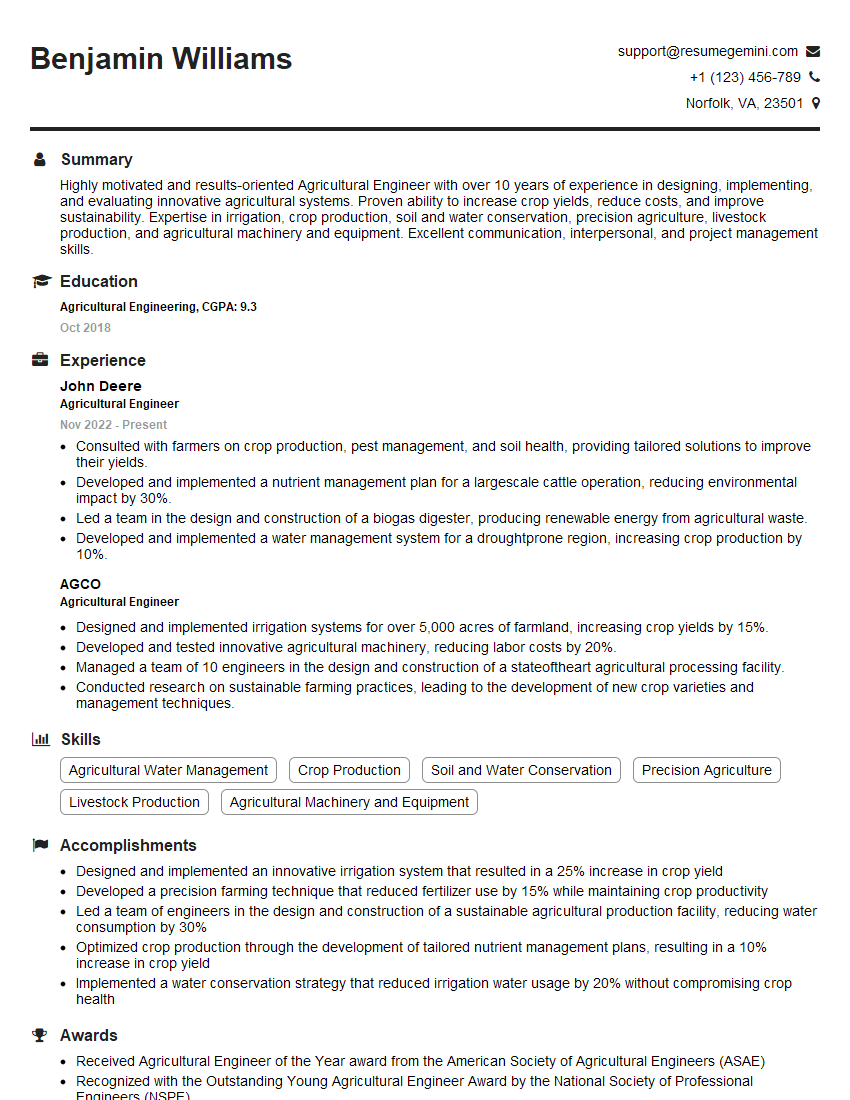
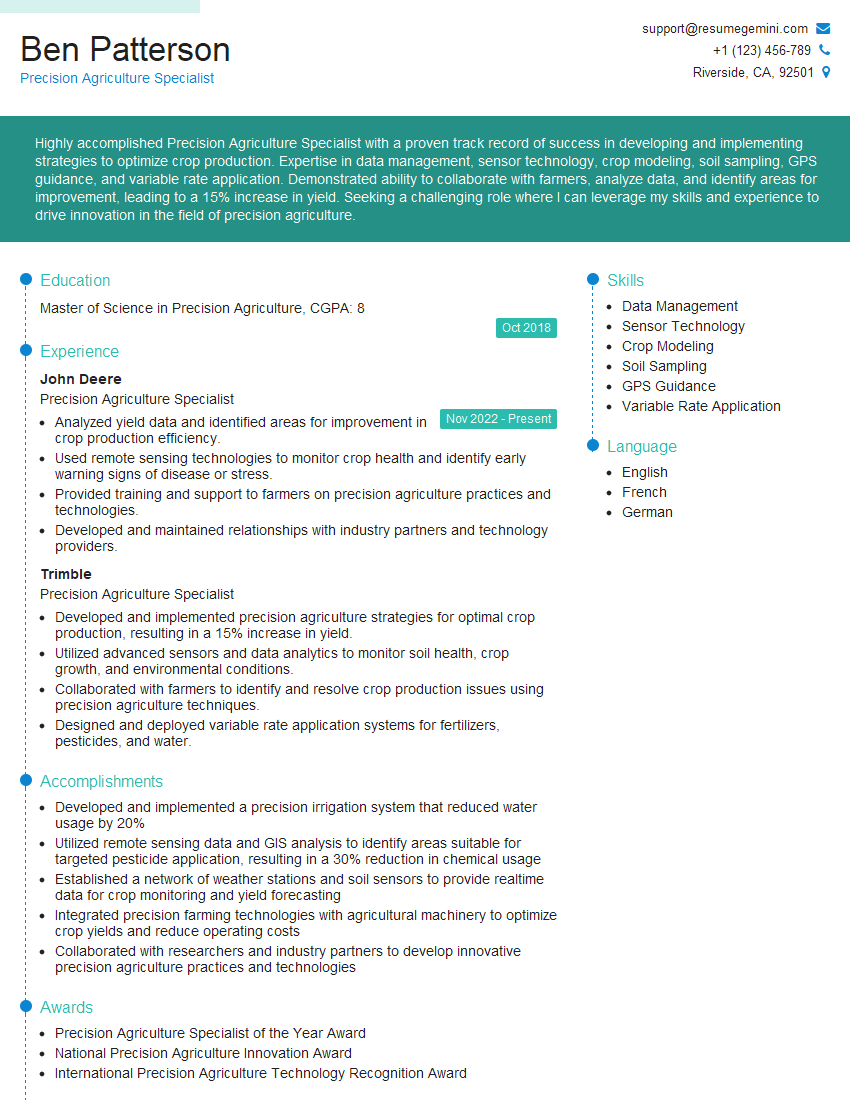
Mastering Agricultural Machinery and Equipment is crucial for a successful and rewarding career in this dynamic field. A strong understanding of these technologies positions you for higher-paying roles and increased responsibilities. To maximize your job prospects, focus on crafting a compelling and ATS-friendly resume that highlights your skills and experience. ResumeGemini is a trusted resource that can help you build a professional resume that truly showcases your qualifications. Examples of resumes tailored to the Agricultural Machinery and Equipment sector are available through ResumeGemini to guide you in creating a standout application.


Explore more articles
Users Rating of Our Blogs
Share Your Experience
We value your feedback! Please rate our content and share your thoughts (optional).
What Readers Say About Our Blog
Very informative content, great job.
good