Every successful interview starts with knowing what to expect. In this blog, we’ll take you through the top Air Handling Units (AHUs) interview questions, breaking them down with expert tips to help you deliver impactful answers. Step into your next interview fully prepared and ready to succeed.
Questions Asked in Air Handling Units (AHUs) Interview
Q 1. Explain the function of an Air Handling Unit (AHU).
An Air Handling Unit (AHU) is essentially the heart of a building’s HVAC (Heating, Ventilation, and Air Conditioning) system. Its primary function is to condition and distribute air throughout a building or specific zones within a building. Think of it as a central processing unit for your building’s air. It takes in outside air or recirculates existing air, cleans it, heats or cools it to the desired temperature, and then distributes it through a network of ducts. This ensures a comfortable and healthy indoor environment.
Q 2. Describe the different types of AHUs and their applications.
AHUs come in various types, each tailored to specific needs and applications. Some common types include:
- Packaged AHUs: These are pre-assembled units, typically smaller and suitable for smaller buildings or individual rooms. They’re like a ready-to-use appliance, easy to install and maintain. Think of them as the ‘all-in-one’ solution for smaller spaces.
- Split AHUs: These units have their components separated, allowing for greater flexibility in placement and customization. This allows for more efficient space usage and allows for better customization of system configuration for larger spaces.
- Custom AHUs: Designed and built to meet the exact specifications of a project. This is ideal for large, complex buildings with unique HVAC needs, providing a perfect fit and maximum efficiency.
- Rooftop AHUs: These units are positioned on the roof, often used in larger commercial buildings for better space utilization and easier access for maintenance.
The application depends greatly on the building size, the specific climate, and the required level of air quality control. For instance, a hospital would require a custom AHU with advanced filtration capabilities, while a small office might utilize a compact packaged AHU.
Q 3. What are the key components of an AHU?
Key components of an AHU typically include:
- Fans: These move the air through the system, creating airflow. The type and size of the fan are crucial for achieving the desired air volume.
- Heating coils: These warm the air, usually using hot water or steam. The size and capacity of the heating coil determine the unit’s heating capabilities.
- Cooling coils: These cool the air, usually using chilled water or refrigerant. The capacity and design affect the cooling performance.
- Filters: These remove dust, pollutants, and other airborne particles. The filter type and efficiency directly impact indoor air quality.
- Dampers: These control the airflow direction and volume. They are crucial for balancing airflow within the building.
- Control system: This monitors and regulates the various components to maintain the desired temperature and air quality.
- Mixing box: This blends outside air and recirculated air to maintain proper air quality and energy efficiency.
Q 4. How does an AHU’s control system work?
An AHU’s control system is the brain of the operation. It uses sensors to monitor parameters like temperature, humidity, air pressure, and CO2 levels. Based on this data, it adjusts the operation of various components—fans, heating/cooling coils, and dampers—to maintain pre-set conditions. These systems can be simple on/off controls or sophisticated Building Management Systems (BMS) which are computer-based systems that monitor and control various aspects of the building. Some systems utilize predictive algorithms to optimize energy usage and maintain optimal comfort levels based on occupancy and historical data. Think of it as a sophisticated thermostat on steroids, capable of managing and optimizing all aspects of the system.
Q 5. Explain the role of filters in an AHU.
Filters are essential in AHUs, acting as the first line of defense against airborne contaminants. They protect the other components of the AHU from damage caused by dust and debris, and more importantly, they maintain good indoor air quality by removing pollutants and allergens that could impact the health and well-being of building occupants. Imagine your lungs; you wouldn’t want them to be constantly exposed to dirty air. AHU filters play that protective role for the entire building.
Q 6. Describe different types of AHU filters and their efficiency.
AHU filters vary in type and efficiency. Common types include:
- Pre-filters: These are coarse filters that remove larger particles like dust and lint. They protect the finer filters downstream.
- HEPA (High-Efficiency Particulate Air) filters: These are highly efficient at removing very fine particles, including bacteria and viruses. They are often used in critical environments such as hospitals or clean rooms.
- ULPA (Ultra-Low Penetration Air) filters: Even more efficient than HEPA filters, these are used in ultra-clean environments like semiconductor fabrication facilities.
Efficiency is typically measured by the Minimum Efficiency Reporting Value (MERV) rating. A higher MERV rating indicates a higher efficiency at removing smaller particles. For example, a MERV 8 filter is more efficient than a MERV 6 filter. Choosing the appropriate filter depends heavily on the application and desired level of air cleanliness.
Q 7. How do you troubleshoot an AHU with low airflow?
Troubleshooting low airflow in an AHU involves a systematic approach. Here’s a step-by-step process:
- Check the fan: Ensure the fan motor is running and functioning correctly. Check for any obstructions in the fan blades.
- Inspect the filters: Clogged filters significantly restrict airflow. Replace or clean filters as needed. This is often the most common cause of low airflow.
- Examine dampers: Verify that all dampers are open to the correct positions. A partially closed damper will reduce airflow.
- Check for pressure drops: Use a manometer to measure pressure drops across the coils and filters. High pressure drops indicate restrictions in the system.
- Inspect the ductwork: Look for any leaks, kinks, or blockages in the ductwork that could impede airflow. This may require a visual inspection of the ductwork and potentially using specialized equipment to detect leaks.
- Verify the fan speed: Ensure the fan is operating at the correct speed. A slow fan will reduce airflow.
- Check the control system: Ensure the control system is functioning properly and not restricting airflow.
If the problem persists, contacting a qualified HVAC technician is crucial. They have the expertise and tools to diagnose more complex issues.
Q 8. How do you troubleshoot an AHU with high airflow?
Troubleshooting an AHU with high airflow involves systematically checking various components to identify the source of the increased air volume. Think of it like investigating a leaky faucet – you need to trace the source of the leak to fix it. High airflow can be caused by several factors, including problems with the fan, dampers, or the system’s overall design.
Fan Speed: The first step is to verify the fan speed. Is it running faster than it should? Check the fan speed control, looking for potential malfunctions or incorrect settings. A faulty VFD (Variable Frequency Drive) could be causing this.
Dampers: Check all dampers (both supply and return) for proper operation. Are they fully closed when they should be? A stuck-open damper will significantly increase airflow.
Filters: Clogged air filters restrict airflow. Surprisingly, extremely clean filters can *also* cause increased airflow due to decreased resistance, leading to higher fan speeds to compensate.
External Static Pressure: Higher than normal external static pressure can force more air through the system. This could be caused by a blockage in the ductwork or issues with the building’s ventilation system.
Sensor Issues: Examine the pressure sensors that regulate airflow. If they’re malfunctioning, they might be sending incorrect signals, resulting in higher fan speed.
By systematically checking these components, you can pinpoint the cause of the high airflow and implement the necessary repairs or adjustments.
Q 9. How do you troubleshoot an AHU with excessive noise?
Excessive noise from an AHU can stem from various sources, each requiring a different approach to troubleshooting. Think of it like diagnosing a car engine noise – you need to pinpoint the exact source before fixing it.
Fan Noise: This is a common culprit. Check for fan blade imbalance (easily detectable by visual inspection). Loose mounting bolts, bearing wear, or motor problems can all cause increased fan noise. Listen carefully to the fan – a high-pitched whine may indicate bearing issues.
Ductwork Noise: Whistling or rattling sounds often originate from the ductwork itself. This can be caused by loose connections, insufficient duct insulation, or vibrations transferred from the fan. Inspect duct connections and add insulation where needed. Sometimes simply tightening loose screws can make a significant difference.
Damper Noise: The clattering of dampers might indicate wear and tear, loose screws, or problems with the damper actuator. Inspect dampers for proper operation and tighten any loose connections.
Refrigerant Noise (in cooling systems): Unusual hissing or rumbling noises can indicate a refrigerant leak or other issues within the refrigeration cycle. This requires specialized expertise and leak detection equipment.
Vibration: Excessive vibration from the AHU can radiate noise throughout the building. Check for proper mounting, isolating feet, and ensure the AHU is securely fastened to its base.
A systematic approach, beginning with the most common causes, will lead you to the source of the noise. Often, using a stethoscope can help pinpoint the location of the noise.
Q 10. How do you troubleshoot an AHU with temperature inconsistencies?
Temperature inconsistencies in an AHU indicate a problem with the system’s ability to deliver the desired temperature to the conditioned space. This can result from several issues.
Sensor Malfunction: Faulty temperature sensors (supply air, return air, or room sensors) provide inaccurate readings, leading to incorrect control actions. Check the sensors for calibration and proper function.
Refrigerant Charge (Cooling Systems): In cooling systems, insufficient refrigerant charge reduces cooling capacity, leading to higher temperatures. Leak detection and refrigerant recharge are essential here.
Heating Element Problems (Heating Systems): Malfunctioning heating elements, such as electric heaters or gas burners, will cause heating issues. Inspect and test these elements for functionality.
Airflow Imbalance: Inadequate or uneven airflow distribution can lead to temperature variations across the conditioned space. This requires checking dampers, filters, and the overall ductwork design. Balancing dampers is crucial for uniform air distribution.
Control System Issues: Problems with the AHU’s control system, such as faulty control boards or wiring, can cause temperature inconsistencies. This may require professional expertise and troubleshooting of the control logic.
Properly diagnosing temperature inconsistencies requires a careful examination of the entire system, using a combination of visual inspection, sensor checks, and understanding the fundamentals of HVAC thermodynamics.
Q 11. Explain the importance of regular AHU maintenance.
Regular AHU maintenance is crucial for several reasons. Think of it like regular car maintenance – neglecting it leads to bigger, more expensive problems down the line.
Efficiency: Clean filters, properly functioning components, and calibrated controls all contribute to optimal energy efficiency, reducing operational costs.
Reliability: Regular maintenance prevents unexpected breakdowns and downtime, ensuring continuous operation of the HVAC system.
Safety: Maintaining the AHU according to safety standards helps prevent potential hazards such as refrigerant leaks, electrical shocks, or fire.
Air Quality: Clean filters and proper operation improve indoor air quality by reducing the presence of dust, allergens, and other contaminants.
Extended Lifespan: Preventive maintenance significantly extends the lifespan of the AHU, delaying the need for costly replacements.
Investing in regular maintenance offers significant returns in the form of cost savings, enhanced reliability, and improved air quality.
Q 12. What are the typical maintenance tasks for an AHU?
Typical AHU maintenance tasks vary depending on the AHU’s type and size but generally include:
Filter Changes: Replacing air filters regularly is crucial for maintaining optimal airflow and improving air quality. The frequency depends on the type of filter and operating conditions, but it can range from monthly to quarterly.
Coil Cleaning: Cleaning evaporator and condenser coils removes dirt and debris, improving heat transfer efficiency. This can be done using specialized cleaning solutions and brushes.
Belt and Motor Inspections: Checking for wear and tear on belts and motors, ensuring proper tension, and lubricating bearings as necessary.
Damper Inspection and Lubrication: Inspecting and lubricating dampers ensures smooth operation and reduces noise.
Fan Blade Inspection: Inspecting fan blades for balance and damage. Unbalanced blades can cause increased vibration and noise.
Refrigerant Charge Check (for cooling systems): Checking refrigerant levels and looking for leaks. This often requires specialized equipment.
Safety System Checks: Verifying the proper operation of safety devices like high-temperature cut-offs, pressure switches, and interlocks.
Control System Inspection: Checking the calibration and function of sensors, control boards, and actuators.
These maintenance tasks, performed according to a scheduled maintenance plan, help ensure the AHU operates efficiently and reliably.
Q 13. What safety precautions should be taken when working on an AHU?
Safety is paramount when working on an AHU. Never compromise on safety procedures.
Lockout/Tagout (LOTO): Always perform LOTO procedures before working on any electrical components to prevent accidental energization. This is non-negotiable.
Personal Protective Equipment (PPE): Wear appropriate PPE, including safety glasses, gloves, and protective clothing. Respiratory protection may be necessary when working with refrigerant or cleaning coils.
Confined Space Entry: If working inside the AHU requires entering a confined space, follow all confined space entry procedures, including atmospheric monitoring, and having a standby person present.
Handling Refrigerant: If working with refrigerants, be aware of their hazards, and use proper handling and recovery techniques. Refrigerant leaks are dangerous and must be handled carefully.
Electrical Safety: Always use appropriate tools and techniques when working with electrical components. Never work on live circuits.
Lifting and Handling: Use proper lifting techniques to avoid injuries when moving heavy components. Use equipment designed for the task.
Awareness of Hazards: Be aware of potential hazards such as sharp edges, moving parts, and hot surfaces.
Prioritizing safety ensures your well-being and prevents potential accidents. If unsure, consult with a qualified professional.
Q 14. Describe the process of installing an AHU.
Installing an AHU is a complex process requiring careful planning and execution. It’s not a DIY project.
Site Preparation: Begin with thorough site preparation, including creating adequate space for the unit, ensuring proper structural support, and planning for ductwork connections.
Unit Placement and Mounting: Carefully position and secure the AHU according to the manufacturer’s instructions. Ensure proper leveling and vibration isolation.
Ductwork Installation: Connect the supply and return ductwork, ensuring airtight seals and proper sizing for optimal airflow. Ensure proper insulation to minimize heat loss or gain.
Electrical Connections: Connect the electrical wiring according to the electrical drawings and local codes. This step should only be done by qualified electricians.
Refrigerant Lines (for cooling systems): For cooling systems, connect and properly charge the refrigerant lines following best practices and the manufacturer’s recommendations.
Control System Wiring and Commissioning: Wire the control system and program the controller to ensure proper operation of all components.
Testing and Commissioning: Thoroughly test the AHU to ensure it operates as designed. This includes checking airflow, temperature, pressure, and safety systems.
Documentation: Maintain detailed documentation of the installation process, including all components, wiring diagrams, and test results.
Professional installation is essential to ensure proper operation, efficiency, and safety. Improper installation can lead to significant problems.
Q 15. What are the common causes of AHU failures?
AHU failures stem from a variety of sources, often interconnected. Think of it like a car – many parts working together. A single failure can trigger a cascade of problems.
- Component Wear and Tear: Motors, belts, bearings, and dampers wear out over time, leading to reduced efficiency and eventual failure. For example, a worn-out motor in a fan might cause inadequate airflow.
- Refrigerant Leaks: In cooling coils, refrigerant leaks reduce cooling capacity and can even damage the compressor. Regular inspection and leak detection are crucial.
- Dirty Filters: Clogged air filters restrict airflow, forcing the system to work harder, leading to overheating and potential component failure. It’s like trying to breathe through a clogged straw.
- Control System Malfunctions: Faulty sensors, wiring, or control boards can disrupt the AHU’s operation, causing erratic behavior or complete shutdown. Imagine the car’s computer malfunctioning.
- Lack of Maintenance: Neglecting routine maintenance, such as filter changes, lubrication, and inspections, significantly accelerates wear and tear and increases the risk of failure. It’s the equivalent of never changing your car’s oil.
- Improper Installation: Issues during initial installation, such as incorrect ductwork or wiring, can lead to long-term problems and premature failure.
Addressing these issues through preventative maintenance and regular inspections is key to ensuring optimal AHU performance and longevity.
Career Expert Tips:
- Ace those interviews! Prepare effectively by reviewing the Top 50 Most Common Interview Questions on ResumeGemini.
- Navigate your job search with confidence! Explore a wide range of Career Tips on ResumeGemini. Learn about common challenges and recommendations to overcome them.
- Craft the perfect resume! Master the Art of Resume Writing with ResumeGemini’s guide. Showcase your unique qualifications and achievements effectively.
- Don’t miss out on holiday savings! Build your dream resume with ResumeGemini’s ATS optimized templates.
Q 16. How do you perform an AHU energy audit?
An AHU energy audit systematically assesses the unit’s energy consumption to identify areas for improvement. It’s like a health check-up for your AHU.
- Data Acquisition: We start by gathering data on energy consumption, airflow rates, and temperatures using specialized meters. This involves measuring air volume and temperatures at various points in the system.
- Performance Analysis: We analyze the collected data to identify inefficiencies. For example, a low airflow rate could indicate a clogged filter or a malfunctioning fan. High energy consumption for a given airflow might indicate a faulty motor or inefficient components.
- Component Assessment: This involves inspecting the components for wear and tear, leaks, and other defects. We look at everything from the fan and motor to the coils and dampers.
- Control System Evaluation: We evaluate the control system’s effectiveness in regulating temperature, airflow, and other parameters. This often involves checking the settings and calibration of sensors and controllers.
- Recommendations: Based on the analysis, we provide recommendations for improvements. These might include replacing faulty components, upgrading to more efficient equipment, optimizing control strategies, or implementing better maintenance practices. This is where the cost-benefit analysis comes in to prioritize which improvements offer the best return on investment.
The audit concludes with a report outlining the findings, energy-saving recommendations, and associated costs. This allows building owners to make informed decisions about upgrades and maintenance to reduce energy consumption and operating costs.
Q 17. Explain the concept of AHU balancing.
AHU balancing ensures that the airflow throughout the system meets the design specifications. Think of it as distributing water evenly throughout a sprinkler system. If one sprinkler is too strong and another too weak, you’ve got an unbalanced system. Similarly, if some areas of a building receive too much air while others receive too little, then you need to balance the system.
Proper balancing optimizes comfort, efficiency, and minimizes noise by delivering the correct amount of air to each zone or space served by the AHU.
Q 18. How do you balance an AHU’s airflow?
Balancing an AHU’s airflow involves adjusting dampers and other components to achieve the desired airflow distribution. It’s an iterative process requiring specialized tools and expertise. We want to make sure that the right amount of air reaches the right places in the building.
- Initial Measurements: We start by measuring the actual airflow in each duct using a calibrated airflow meter (e.g., a velometer).
- Comparison to Design: We then compare these measurements with the designed airflow rates for each zone.
- Damper Adjustments: Using the dampers located in the ductwork, we adjust the airflow to match the design specifications. This might involve closing some dampers slightly to reduce airflow in certain areas and opening others to increase it in areas with low airflow.
- Iterative Process: This is an iterative process. After making adjustments, we re-measure the airflow to ensure that the changes have been effective. We repeat steps 2 and 3 until the system is balanced.
- Final Verification: Once balanced, we document the final airflow rates and damper positions. This ensures that we can maintain the system’s balance over time.
Specialized software and techniques can facilitate and automate aspects of this process, increasing efficiency and accuracy.
Q 19. What are the different types of AHU fans?
AHUs utilize various fan types, each with its own strengths and weaknesses. The choice depends on factors such as airflow requirements, pressure, noise levels, and budget.
- Forward Curved Centrifugal Fans: These are commonly used for their high airflow at relatively low pressure. They’re known for relatively high noise levels and a lower efficiency compared to other types, especially at higher pressures.
- Backward Inclined Centrifugal Fans: These fans are known for higher efficiency and lower noise levels compared to forward curved fans, especially at higher pressures. They are a good choice when higher static pressures are needed.
- Axial Fans: Also known as propeller fans, these are generally used for low-pressure, high-volume applications. They are compact and relatively inexpensive but are less efficient at higher pressures.
- Airfoil Fans: These fans feature specially designed blades to improve efficiency and reduce noise. They often provide a balance between performance and sound, and are common in more sophisticated AHU designs.
Q 20. What are the advantages and disadvantages of each fan type?
Let’s compare the advantages and disadvantages of each fan type:
- Forward Curved:
- Advantages: High airflow at low pressure, relatively inexpensive.
- Disadvantages: Lower efficiency, higher noise levels, sensitive to dirt and debris.
- Backward Inclined:
- Advantages: Higher efficiency, lower noise, suitable for higher pressure applications.
- Disadvantages: More expensive than forward curved fans.
- Axial:
- Advantages: Compact, inexpensive, high airflow at low pressure.
- Disadvantages: Low efficiency at higher pressures, can be noisy.
- Airfoil:
- Advantages: High efficiency, low noise, good balance of performance and cost.
- Disadvantages: Typically more expensive than forward curved or axial fans.
The best choice depends on the specific application and priorities for the AHU system.
Q 21. Explain the function of an AHU’s cooling coil.
The cooling coil is the heart of an AHU’s cooling system. It’s responsible for lowering the air temperature. Think of it as the evaporator in your refrigerator.
Refrigerant, a liquid under low pressure, flows through the coil’s tubes. As warm air passes over the coil’s finned surface, heat is transferred from the air to the refrigerant, causing the refrigerant to absorb heat and evaporate. This cools the air, and the now-warmer refrigerant moves on to a compressor to be cooled again and repeat the process.
The coil’s design, size, and material affect its cooling capacity and efficiency. Regular cleaning is crucial to maintain its performance and prevent the buildup of dirt and debris that can reduce its efficiency.
Q 22. Explain the function of an AHU’s heating coil.
An AHU’s heating coil is responsible for warming the air that passes through the unit. Think of it as a radiator within the AHU. Hot water or steam flows through a series of fins, and as air is blown across these fins, the heat transfers to the air, raising its temperature. This warmed air is then distributed throughout the building. The type of heating coil (electric, steam, or hot water) depends on the building’s heating system.
For instance, in a building using a hot water boiler system, the coil will be connected to the boiler’s circulation loop. The temperature of the water flowing through the coil dictates the output air temperature. This temperature can be precisely controlled through thermostats and valves, ensuring optimal comfort within the building.
Q 23. How do you diagnose problems with an AHU’s cooling coil?
Diagnosing problems with an AHU’s cooling coil often involves a systematic approach. First, we check for airflow restrictions. Is the fan motor operating correctly? Is the filter clogged, restricting airflow across the coil? Reduced airflow leads to poor heat transfer, resulting in inefficient cooling.
Next, we measure the coil’s temperature difference between the inlet and outlet air. A significant drop indicates proper heat transfer; a small drop points to a problem. We’ll also check the refrigerant pressure and temperature using gauges. Low refrigerant pressure or abnormally high temperatures often signify leaks or compressor issues. Visual inspection for ice buildup or signs of refrigerant leaks are crucial.
Finally, we check the cooling coil’s cleanliness. Dirt and debris buildup on the fins reduces efficiency. We use specialized brushes or cleaning solutions to clear the fins, improving heat transfer and cooling capacity. If we suspect a refrigerant leak, specialized equipment like leak detectors is used to pinpoint the leak location for repair. Think of it like a car’s radiator – if it’s clogged or leaking, the cooling system won’t work properly.
Q 24. How do you diagnose problems with an AHU’s heating coil?
Diagnosing heating coil issues in an AHU begins with checking the hot water or steam supply. Is there sufficient flow and appropriate temperature? Using a thermometer to measure the temperature at the coil’s inlet and outlet helps assess heat transfer efficiency. A significant difference indicates good performance; a small difference points to a potential blockage or other issues. We check the heating medium’s pressure and flow rate to ensure optimal performance.
Next, we visually inspect the coil for damage or debris buildup. Just like the cooling coil, a dirty heating coil is significantly less effective. We check the fan operation, ensuring adequate airflow across the coil. Insufficient airflow hinders heat transfer to the airstream. We also check the control system, ensuring the thermostat and valves are functioning correctly. For electric heating coils, we check the electrical connections and the heating element’s resistance to identify any malfunctions.
If the heating coil is part of a hydronic (hot water) system, we might also need to check the boiler’s operation, water pressure, and flow rates in the whole system to ensure there aren’t broader system problems impacting the AHU’s heating coil.
Q 25. Explain the importance of proper ventilation in an AHU.
Proper ventilation within an AHU is critical for maintaining indoor air quality (IAQ) and occupant comfort. It ensures the removal of stale, potentially contaminated air and the introduction of fresh, outside air. Inadequate ventilation can lead to a buildup of pollutants like carbon dioxide, volatile organic compounds (VOCs), and other contaminants, negatively impacting health and productivity. It also helps regulate temperature and humidity, creating a comfortable environment.
For example, in an office setting, sufficient outside air intake through the AHU is needed to dilute carbon dioxide exhaled by occupants. Without this, the CO2 levels can rise, leading to drowsiness and reduced cognitive performance. Similarly, in areas with high humidity, proper ventilation helps to prevent mold growth and other IAQ issues.
Q 26. How do you ensure proper ventilation in an AHU?
Ensuring proper ventilation involves several key steps. First, verify the AHU’s design specifications to determine the required outside air volume. This volume is typically calculated based on occupancy and building codes. We then check that the outside air dampers are functioning correctly and are opening to the calculated amount. A faulty damper can restrict airflow.
Next, we measure the actual airflow rates using an anemometer or other appropriate flow measurement devices at various points in the system. We compare the measured airflow to the design specifications. Any discrepancies need to be investigated and addressed. We also inspect the filters; a clogged filter can restrict outside air intake, and regular filter replacements are critical. Finally, we check for any leaks in the ductwork that might compromise the airflow rates.
Remember, proper ventilation is a balance. Too much outside air can result in energy loss during heating or cooling seasons. Too little can lead to poor IAQ. The proper design and careful monitoring of the system is crucial for optimization.
Q 27. What are the common causes of AHU leaks?
AHU leaks can stem from several sources. The most common causes are condensation buildup, corrosion of the unit’s components, and damage to the ductwork. Condensation often occurs in areas where the air temperature drops below the dew point, leading to water accumulation. This is especially true in older AHUs without proper insulation or in poorly maintained systems. Corrosion, particularly in areas with high humidity or exposure to corrosive chemicals, can weaken metal components and create leaks.
Damage to the ductwork, whether from impacts, poor installation, or general wear and tear, is another frequent cause. Improper sealing of connections and joints in the ductwork also contributes to air leaks and, in some cases, water leaks. Lastly, leaks can also occur in the coil drain pans, which collect condensate from the cooling coils. Cracks or holes in these pans can lead to water leakage.
Q 28. How do you repair leaks in an AHU?
Repairing AHU leaks requires careful assessment and appropriate action. For leaks resulting from condensation, improving insulation and ensuring proper drainage are key. This might involve adding insulation to pipes and ductwork or checking and clearing drain lines. For corrosion-related leaks, the damaged component may need to be replaced. This often involves patching or replacing sections of ductwork or other components.
Leaks in the ductwork are repaired by sealing the joints and connections properly using appropriate sealant. Any damaged sections of ductwork need to be replaced. Leaks in the coil drain pan typically involve patching the pan or replacing it entirely. In case of refrigerant leaks, a specialized HVAC technician needs to be called in to locate the leak, recover the refrigerant, and repair or replace the faulty component, always adhering to safety regulations.
Remember, safety is paramount. Always disconnect the power supply before working on any electrical components of the AHU. If you are not qualified, call a professional HVAC technician to handle the repairs.
Key Topics to Learn for Air Handling Units (AHUs) Interview
- AHU Components and Functionality: Understanding the roles of fans, filters, coils (heating and cooling), dampers, and controls. Consider the airflow path and pressure relationships within the unit.
- Airflow Dynamics and Calculations: Learn about static pressure, total pressure, volume flow rate, and how they relate to AHU performance. Be prepared to discuss methods for calculating and balancing airflow.
- Control Systems and Automation: Familiarize yourself with different types of control systems (e.g., pneumatic, electronic, DDC) and their applications in AHUs. Understand the concepts of setpoints, sensors, and feedback loops.
- Energy Efficiency and Optimization: Explore strategies for improving AHU energy efficiency, such as variable-frequency drives (VFDs), economizers, and optimized control strategies. Be ready to discuss relevant metrics like EER and COP.
- Troubleshooting and Maintenance: Develop your understanding of common AHU problems, including airflow restrictions, leaks, sensor malfunctions, and component failures. Discuss preventative maintenance procedures and diagnostic techniques.
- Safety and Regulations: Understand relevant safety regulations and codes related to AHU operation and maintenance. This includes aspects like lockout/tagout procedures and proper handling of refrigerants.
- Types of AHUs and Applications: Become familiar with different types of AHUs (e.g., single-zone, multi-zone, rooftop units) and their applications in various building types (e.g., commercial, industrial, residential).
- Integration with Building Management Systems (BMS): Understand how AHUs integrate with BMS for centralized monitoring and control. This includes data acquisition, remote diagnostics, and automated responses.
Next Steps
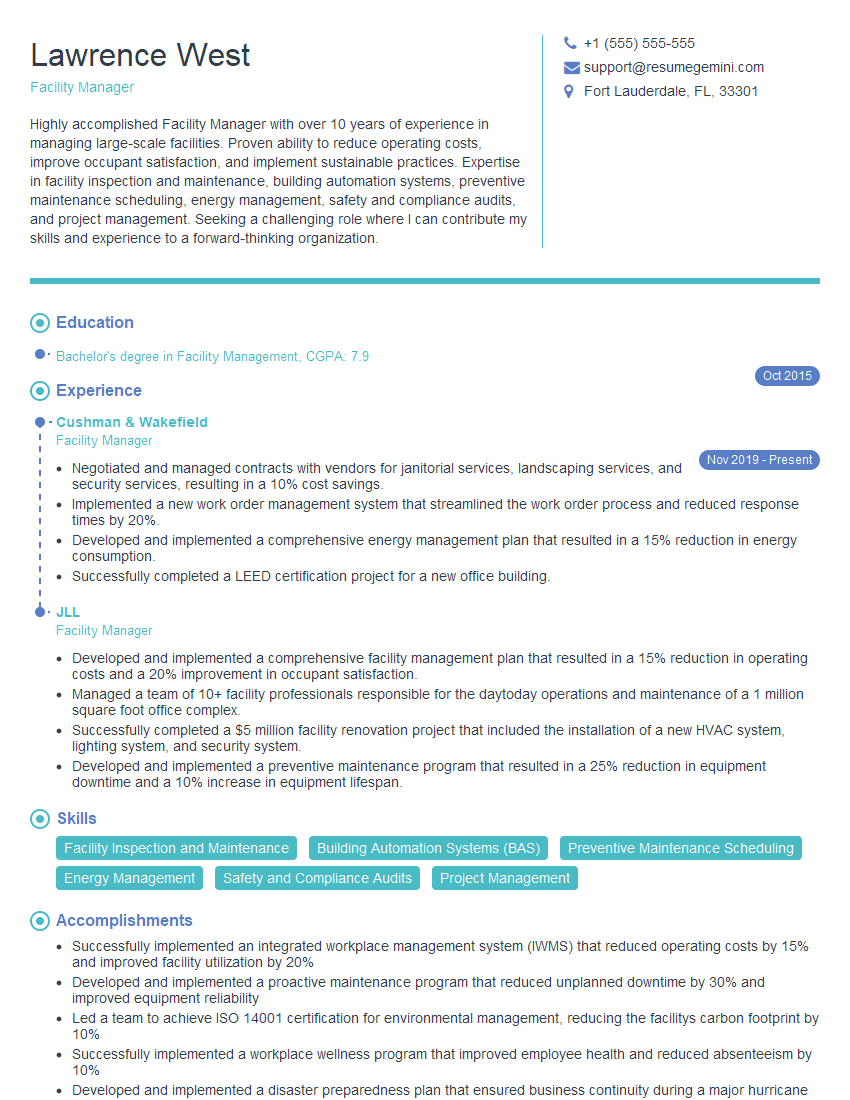
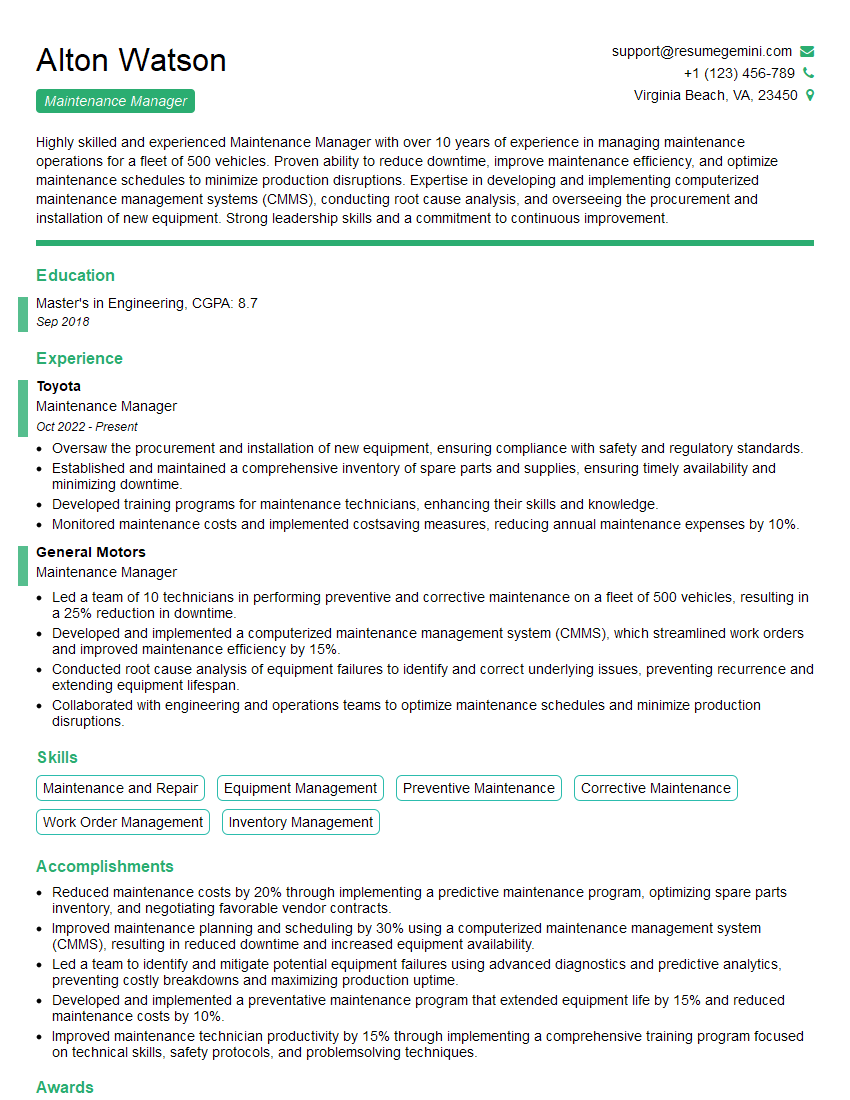
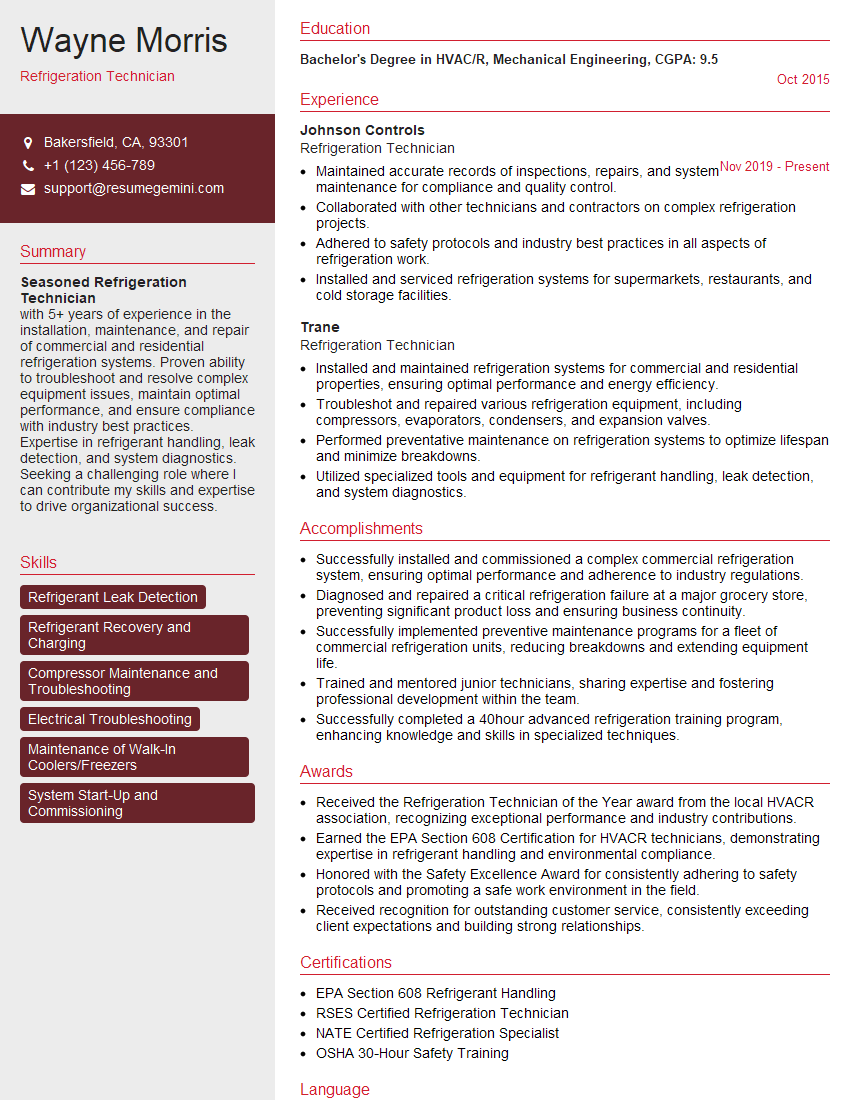
Mastering Air Handling Units is crucial for career advancement in HVAC and related fields. A strong understanding of AHU principles opens doors to specialized roles and higher earning potential. To maximize your job prospects, create an ATS-friendly resume that highlights your skills and experience effectively. ResumeGemini is a trusted resource that can help you build a professional, impactful resume tailored to the specific requirements of AHU-related positions. Examples of resumes tailored to Air Handling Units (AHUs) are available to guide you.
Explore more articles
Users Rating of Our Blogs
Share Your Experience
We value your feedback! Please rate our content and share your thoughts (optional).
What Readers Say About Our Blog
Very informative content, great job.
good