Feeling uncertain about what to expect in your upcoming interview? We’ve got you covered! This blog highlights the most important Aircraft System Knowledge interview questions and provides actionable advice to help you stand out as the ideal candidate. Let’s pave the way for your success.
Questions Asked in Aircraft System Knowledge Interview
Q 1. Explain the principles of flight.
An aircraft flies due to the interaction of four fundamental forces: lift, weight, thrust, and drag. Think of it like a tug-of-war. For sustained flight, lift must be greater than or equal to weight, and thrust must be greater than or equal to drag.
Lift: Generated by the airfoil shape of the wings. As air flows over the curved upper surface, it travels faster, creating lower pressure. The higher pressure below the wing pushes upwards, creating lift. This is described by Bernoulli’s principle.
Weight: The force of gravity acting on the aircraft and everything inside it. This is directly proportional to the aircraft’s mass.
Thrust: The force that propels the aircraft forward, overcoming drag. This is generated by the engines – propellers, turbofans, or rockets.
Drag: The resistance to motion through the air. It increases with speed and air density. Drag is minimized through aerodynamic design.
In essence, pilots manipulate these forces through control surfaces (ailerons, elevators, rudder) and engine power to achieve and maintain desired flight conditions.
Q 2. Describe the function of a flight control system.
The flight control system is the nervous system of an aircraft, enabling the pilot to control its attitude (orientation) and flight path. It comprises several interconnected components: control surfaces (ailerons, elevators, rudder, flaps, slats), actuators (hydraulic, electric, or mechanical), and a control system (mechanical linkages, fly-by-wire).
Control Surfaces: These are hinged surfaces on the wings and tail that change the airflow, creating forces to control roll, pitch, and yaw.
Ailerons: Control roll (rotation around the longitudinal axis).
Elevators: Control pitch (rotation around the lateral axis).
Rudder: Controls yaw (rotation around the vertical axis).
Flaps and Slats: Increase lift at lower speeds during takeoff and landing.
Actuators: These convert pilot commands into mechanical movement of the control surfaces. Hydraulic actuators are common in larger aircraft due to their power and efficiency. Electric actuators are increasingly used for their lighter weight and precision.
Control System: This may be a mechanical system of linkages, or a more complex fly-by-wire system where electronic signals from the pilot’s controls actuate the surfaces, enhancing stability and safety.
For example, in a fly-by-wire system, sensors constantly monitor the aircraft’s attitude and flight path, providing feedback to the control system, which then adjusts the control surfaces to maintain stability or execute pilot commands.
Q 3. What are the different types of aircraft engines and their operating principles?
Aircraft engines are broadly classified into piston engines, turboprops, turbofans, and turbojets, each with its operating principle.
Piston Engines: These are essentially internal combustion engines similar to those found in cars. They use reciprocating pistons to convert fuel combustion into mechanical energy, which drives a propeller. They are relatively simple but less fuel-efficient than jet engines. Smaller aircraft often use piston engines.
Turboprops: These gas turbine engines use a turbine to drive a propeller. The hot gases from the combustion chamber expand and spin the turbine, which in turn drives the propeller. They are more fuel-efficient than piston engines, particularly at higher altitudes.
Turbofans: The most common engine type in modern airliners. They are similar to turboprops, but a large fan at the front draws in a significant amount of air, bypassing the core engine. This bypass air provides additional thrust and improves fuel efficiency. The core engine drives the fan.
Turbojets: These engines rely entirely on the high-velocity exhaust gases for thrust. While simple in design, they are generally less fuel-efficient than turbofans, and are mostly used in military aircraft or older designs.
All gas turbine engines (turboprops, turbofans, turbojets) rely on the Brayton cycle: air is compressed, fuel is added and ignited, causing expansion of hot gases to drive the turbine, and finally the hot gases are expelled to produce thrust.
Q 4. Explain the operation of a hydraulic system in an aircraft.
An aircraft’s hydraulic system is a high-pressure fluid system used to power various flight control surfaces, landing gear, brakes, and other essential mechanisms. It relies on Pascal’s principle, which states that pressure applied to an enclosed fluid is transmitted uniformly throughout the fluid.
The system consists of a hydraulic pump, which pressurizes the fluid (usually mineral oil), reservoirs to store fluid, actuators to move control surfaces, and various valves and control units. The pump is usually engine-driven, providing the necessary pressure for the actuators to operate.
A typical scenario involves the pilot’s input to move the control column (stick). This input is transmitted through the flight control system to a hydraulic actuator connected to the control surface (e.g., aileron). The actuator receives hydraulic pressure, extending or retracting to move the control surface, generating the desired aerodynamic force.
Redundancy is crucial in hydraulic systems, with multiple independent systems often present to ensure safe operation even if one system fails. This safeguards against catastrophic failure in flight.
Q 5. Describe the function of an aircraft’s electrical system.
The aircraft’s electrical system provides power for various onboard systems, from flight instruments and lighting to communication equipment and environmental control. It typically involves several sources of power and a complex distribution network.
The main sources of electrical power are the engine-driven generators (alternators) and batteries. The alternators provide the primary power during flight, while batteries provide power during engine start-up, emergencies, and when the engines are off. Some aircraft also utilize auxiliary power units (APUs) for ground power.
The electrical power is distributed through a network of wires and buses, providing power to various components as needed. Circuit breakers and fuses are used to protect the system from overloads and short circuits.
Electrical systems in modern aircraft are sophisticated and often incorporate advanced technologies like power management systems to efficiently distribute and regulate power, ensuring all essential systems remain operational during various flight phases.
Q 6. How does an aircraft’s pneumatic system work?
An aircraft’s pneumatic system uses compressed air to operate various systems, often supplementing or complementing the hydraulic system. These systems are typically used for less critical operations where high force isn’t essential, making them lighter and more cost-effective.
The system comprises an air compressor, usually engine-driven, air reservoirs to store compressed air, and actuators or valves that use the pressure to perform specific tasks. This compressed air is used for several functions:
Brake actuation: In some aircraft, compressed air assists in braking.
Door operation: Compressed air opens and closes aircraft doors and cargo hatches.
Ice protection: In some aircraft, heated air is used for anti-icing or de-icing of critical surfaces.
Environmental control: Pneumatic systems might power certain components of the aircraft’s climate control.
The pneumatic system operates using the pressure difference between the compressed air and the ambient atmosphere. This pressure difference actuates valves or pistons, performing the desired functions. Safety valves and pressure regulators ensure that the system operates within safe limits.
Q 7. What are the various types of aircraft instruments and their functions?
Aircraft instruments provide pilots with crucial information about the aircraft’s condition and the surrounding environment. They are categorized into various types:
Flight Instruments: These show the aircraft’s attitude, altitude, airspeed, and heading. Examples include altimeters, airspeed indicators, vertical speed indicators, heading indicators, and attitude indicators (artificial horizons).
Engine Instruments: These monitor engine performance parameters such as temperature, pressure, RPM, and fuel flow. Examples include engine pressure gauges, temperature gauges, and fuel flow indicators.
Navigation Instruments: These aid in navigation, including VOR (VHF Omnidirectional Range) indicators, GPS receivers, and radio navigation instruments.
Warning and Caution Systems: These alert pilots of potential problems or critical situations. Examples include stall warnings, low fuel warnings, and fire warnings.
Communication Instruments: Radios, transponders, and other communication devices allow communication with air traffic control and other aircraft.
Modern aircraft often integrate these instruments into a sophisticated Electronic Flight Instrument System (EFIS), providing a comprehensive display of flight and system information on screens, greatly enhancing situational awareness and safety.
Q 8. Explain the principles of GPS navigation.
GPS, or Global Positioning System, navigation relies on a constellation of satellites orbiting the Earth. These satellites transmit precise timing signals, allowing GPS receivers (like those in aircraft) to calculate their position, velocity, and time. It works on the principle of trilateration: by measuring the distance to at least four satellites, the receiver can pinpoint its location in three dimensions.
Imagine you’re trying to find a specific spot in a large field. You know the distance to three different trees. Drawing circles around each tree with a radius equal to your measured distance, the point where the three circles intersect is your location. GPS uses a similar principle, but with satellites instead of trees and radio signals instead of measuring tape. The accuracy is further enhanced by using highly precise atomic clocks within the satellites and sophisticated error correction algorithms.
In aviation, GPS is crucial for navigation, providing accurate position data for flight planning, approach procedures, and even autonomous landing systems. It’s integrated with other navigation systems to enhance safety and reliability. The system constantly updates the aircraft’s position, allowing pilots to monitor their progress and make necessary corrections in real-time.
Q 9. Describe the function of an air conditioning system in an aircraft.
An aircraft air conditioning system is responsible for maintaining a comfortable cabin temperature and humidity for passengers and crew, regardless of the outside conditions. This is achieved through a complex system involving air cycle machines or vapor cycle systems (similar to car air conditioners, but far more robust), which produce conditioned air.
Air cycle systems utilize bleed air (compressed air from the engines) as a source of cooling. This air is passed through a heat exchanger to remove heat before entering the cabin. Vapor cycle systems utilize refrigerants to cool and dehumidify the air. Both systems typically employ various components such as compressors, expansion valves, and heat exchangers to regulate temperature and humidity. This conditioned air is distributed throughout the cabin using ducts and vents. These systems also include sophisticated controls to regulate temperature and air flow based on pilot input and environmental sensors. Furthermore, they are designed to handle significant pressure differentials between the cabin and the outside environment.
Think of it as a giant, highly sophisticated version of your home air conditioning unit, but designed to withstand extreme altitudes, pressures, and temperatures, and to maintain a safe and comfortable environment for all onboard.
Q 10. What are the different types of aircraft fuel systems?
Aircraft fuel systems vary significantly depending on the aircraft size and type. However, common features include:
- Gravity-fed systems: Simpler systems found in smaller aircraft, relying on gravity to draw fuel from the tanks to the engine(s).
- Pump-fed systems: More complex systems using pumps to transfer fuel, often employed in larger aircraft and allowing for more fuel tank flexibility.
- Pressure-fed systems: Utilize fuel pumps to maintain consistent fuel pressure, essential for high-performance engines and efficient fuel delivery.
Beyond the basic pumping mechanism, fuel systems include several essential components such as fuel tanks (often multiple for redundancy), fuel gauges, fuel filters to remove contaminants, fuel pumps, and fuel flow indicators. The design also incorporates redundancy and safety features like leak detection systems, fire suppression systems, and fuel tank inerting (filling the tank with an inert gas to prevent explosions).
The choice of system depends on the aircraft’s complexity and performance requirements. For instance, a small general aviation aircraft might use a gravity-fed system, while a large airliner would require a significantly more complex pump-fed or pressure-fed system with sophisticated monitoring and safety mechanisms.
Q 11. Explain the operation of an aircraft’s anti-ice and de-icing systems.
Aircraft anti-ice and de-icing systems protect critical surfaces from the build-up of ice, which can significantly impact aerodynamic performance and flight safety. De-icing is the removal of existing ice, while anti-icing prevents ice formation.
De-icing systems typically use fluids applied to the aircraft surfaces before takeoff. These fluids melt existing ice and provide a short-term delay in ice reformation.
Anti-icing systems are used during flight to prevent ice accretion. Common methods include:
- Thermal anti-icing: Electric heating elements embedded in the wings and other critical surfaces melt accumulating ice. This requires a substantial electrical power supply.
- Pneumatic boots (boots): Inflatable rubber boots on the leading edges of wings and tail surfaces are periodically inflated and deflated, breaking off ice buildup.
- Fluid anti-icing: Continuously spraying heated or chemically treated fluids onto critical surfaces to prevent ice formation.
The choice of system depends on the type of aircraft and operating conditions. Small aircraft might utilize pneumatic boots, while larger aircraft may rely on a combination of thermal anti-icing and fluid systems. The system effectiveness relies on proper sensor input, timely activation, and sufficient fluid/electrical power.
Q 12. Describe the function of an aircraft’s landing gear system.
The aircraft landing gear system is responsible for supporting the aircraft’s weight during ground operations, enabling takeoff and landing. It is a critical system ensuring safe ground handling and protecting the aircraft’s structure.
A typical system comprises:
- Main landing gear: Located beneath the wings or fuselage, these are usually the largest and strongest components.
- Nose/tail gear: Located at the front or rear of the aircraft, this helps maintain balance during ground maneuvers. The nose gear often incorporates a steering mechanism for ground control.
- Shock absorbers: Integrated into the landing gear structure to absorb the impact during landing, mitigating stress on the aircraft frame.
- Retraction system: (In retractable gear) A hydraulic or electric system to retract the landing gear into the wings or fuselage during flight to minimize drag.
- Brakes: Integrated within the landing gear, typically wheel brakes, to decelerate the aircraft during landing and ground operations.
The system’s functionality is crucial for safe takeoff and landing. Failures in the landing gear system can result in severe accidents. Therefore, the design incorporates significant safety features like redundancy, emergency extension systems, and comprehensive safety checks prior to every flight.
Q 13. What are the different types of aircraft brakes and their operation?
Aircraft braking systems are essential for safe deceleration during landing and ground operations. Several types exist:
- Wheel brakes: The most common type, these are typically disc brakes similar to those in automobiles, but designed for significantly higher loads and thermal stresses. They utilize hydraulic or pneumatic pressure to apply braking force to the wheels.
- Reverse thrust: Engines can be used to generate reverse thrust to aid braking, reducing the workload on the wheel brakes and shortening the stopping distance. This is often used on larger aircraft.
- Spoiler brakes: These aerodynamic surfaces deploy on the wings to increase drag, aiding deceleration during landing. They are supplementary to wheel brakes.
- Anti-skid system: This electronic system prevents wheel lockup during braking, maintaining directional control and maximizing braking effectiveness. It prevents skidding and improves stopping performance.
The operation of the braking system involves a combination of these methods. Pilots typically use a combination of wheel brakes and reverse thrust, while the anti-skid system automatically manages wheel lockup. These systems must be highly reliable and robust to ensure safe aircraft stopping under various conditions. The effectiveness of the system is further enhanced by the aircraft’s tire design, runway surface conditions, and pilot skill.
Q 14. Explain the principles of aircraft stability and control.
Aircraft stability and control are fundamental to safe and efficient flight. Stability refers to an aircraft’s tendency to return to its original flight path after a disturbance, while control refers to the pilot’s ability to maneuver the aircraft.
Stability is achieved through the aircraft’s design and involves several factors:
- Longitudinal stability: The aircraft’s tendency to return to its original pitch attitude after a disturbance (nose up or down).
- Lateral stability: The aircraft’s tendency to return to its original roll attitude after a disturbance (bank).
- Directional stability: The aircraft’s tendency to return to its original yaw attitude after a disturbance (nose left or right).
These stabilities are influenced by the aircraft’s center of gravity, aerodynamic surfaces (wings, tail), and the design of the control surfaces.
Control is achieved through the manipulation of control surfaces such as:
- Elevators (pitch control): Located on the tailplane, they control the aircraft’s pitch attitude (nose up or down).
- Ailerons (roll control): Located on the wings, they control the aircraft’s roll attitude (bank left or right).
- Rudder (yaw control): Located on the vertical tail, it controls the aircraft’s yaw attitude (nose left or right).
The pilot uses these control surfaces to maintain stability and maneuver the aircraft. The interaction between stability and control is critical. A stable aircraft is easier to control, but overly stable aircraft can be difficult to maneuver. The aircraft design aims for a balance between stability and control to ensure safe and efficient flight.
Q 15. Describe the function of a flight data recorder (FDR).
A Flight Data Recorder (FDR), often called a ‘black box,’ is a crucial piece of equipment on an aircraft that continuously records a vast amount of flight data during operation. Think of it as an aircraft’s detailed diary, meticulously logging crucial information that helps investigators understand what happened during a flight, especially in the event of an accident. This data includes parameters like airspeed, altitude, heading, vertical acceleration, engine performance (thrust, RPM, fuel flow), control surface positions (ailerons, elevators, rudder), and many more.
This information is invaluable in accident investigations, enabling safety experts to reconstruct the flight’s sequence of events, identify contributing factors, and ultimately prevent similar incidents in the future. The FDR data is typically stored on a solid-state memory device that is extremely robust and designed to withstand the impact forces associated with aircraft crashes.
Career Expert Tips:
- Ace those interviews! Prepare effectively by reviewing the Top 50 Most Common Interview Questions on ResumeGemini.
- Navigate your job search with confidence! Explore a wide range of Career Tips on ResumeGemini. Learn about common challenges and recommendations to overcome them.
- Craft the perfect resume! Master the Art of Resume Writing with ResumeGemini’s guide. Showcase your unique qualifications and achievements effectively.
- Don’t miss out on holiday savings! Build your dream resume with ResumeGemini’s ATS optimized templates.
Q 16. What is the role of a cockpit voice recorder (CVR)?
The Cockpit Voice Recorder (CVR), another part of the ‘black box’ system, complements the FDR by recording the conversations between the pilots and any other audio within the cockpit. It also captures sounds from the environment, such as warning alerts or engine noises. Imagine it as a witness to the events unfolding inside the cockpit, providing vital context to the flight data recorded by the FDR.
During accident investigations, the CVR audio provides insight into the crew’s actions, decision-making processes, and communication exchanges, potentially revealing crucial details about the circumstances leading up to an incident. The data is crucial for understanding crew resource management, pilot performance, and potential human factors that might have played a role. Like the FDR, the CVR is designed to withstand extreme conditions to preserve its recordings.
Q 17. Explain the principles of aircraft weight and balance.
Aircraft weight and balance is a critical aspect of flight safety, ensuring the aircraft remains within its operational limits throughout the flight. It involves carefully calculating and managing the aircraft’s total weight, its center of gravity (CG), and how these factors affect its stability and handling characteristics.
The total weight includes the aircraft’s empty weight, fuel, payload (passengers, cargo), and any other additional equipment. The center of gravity is the point where the aircraft’s weight is evenly distributed. If the CG is too far forward or backward, it can significantly impact the aircraft’s stability, making it difficult to control and potentially leading to dangerous situations. Aircraft have specific weight and balance limits defined by their design and certification, and exceeding these limits can compromise safety.
- Weight Limits: These prevent overloading, which can strain the aircraft’s structure and affect performance.
- Center of Gravity Limits: These maintain flight stability and controllability.
Weight and balance calculations are performed before every flight using weight and balance charts specific to the aircraft type. Improper weight and balance can lead to stall, difficulty in maneuvering, and potentially catastrophic consequences.
Q 18. Describe the different types of aircraft sensors and their applications.
Aircraft sensors are vital for providing real-time information about the aircraft’s condition and its environment. They range from simple pressure sensors to complex systems incorporating multiple sensors for redundancy and reliability.
- Air Data Sensors: These measure parameters like airspeed, altitude, and air temperature, crucial for navigation and flight control. Pitot tubes and static ports are common examples.
- Inertial Measurement Units (IMUs): These measure acceleration and rotational rates, essential for navigation and flight control systems. They help determine the aircraft’s attitude, heading, and velocity.
- Engine Sensors: These monitor various engine parameters, such as temperature, pressure, fuel flow, and RPM, providing essential information for engine health and performance monitoring.
- Position Sensors: These measure the position of control surfaces (ailerons, elevators, rudder) and other flight control components, providing feedback to the flight control system.
- Environmental Sensors: These measure external factors like wind speed, wind direction, and precipitation, assisting in navigation and weather avoidance.
The data collected by these sensors are integrated into various aircraft systems, including the flight management system (FMS), autopilot, and flight displays, enabling pilots to make informed decisions and maintain safe flight operations.
Q 19. What are the common types of aircraft malfunctions and troubleshooting techniques?
Aircraft malfunctions can range from minor issues to catastrophic failures. Troubleshooting techniques involve systematic problem-solving and often leverage built-in aircraft systems.
- Engine Malfunctions: Loss of power, engine fire, or abnormal vibrations require immediate attention. Pilots follow emergency procedures, while mechanics use diagnostic tools and maintenance manuals to identify the root cause.
- Hydraulic System Failures: Loss of hydraulic pressure can affect flight controls, landing gear, and brakes. Troubleshooting often involves checking fluid levels, inspecting lines for leaks, and replacing faulty components.
- Electrical System Malfunctions: These can impact various aircraft systems, from communication to navigation. Troubleshooting involves checking circuit breakers, isolating faulty circuits, and performing voltage checks.
- Flight Control System Problems: Malfunctions can affect the aircraft’s stability and controllability. Troubleshooting involves checking sensor readings, actuator performance, and potentially isolating or switching to backup systems.
Troubleshooting often follows a methodical approach, involving checking checklists, consulting maintenance manuals, and utilizing onboard diagnostic systems. In many cases, pilots and maintenance crews undergo extensive training to effectively handle malfunctions and make repairs.
Q 20. How do you perform a pre-flight inspection?
A pre-flight inspection is a crucial step in ensuring a safe flight. It involves a thorough visual and functional check of the aircraft’s major systems and components before takeoff.
This typically involves a walk-around inspection, checking:
- Exterior: Inspecting the fuselage, wings, control surfaces, landing gear, propellers (if applicable), and antennas for any damage, signs of leaks, or foreign object debris (FOD).
- Interior: Checking the cockpit instruments, flight controls, seats, and safety equipment for proper functioning.
- Systems: Testing critical systems like lights, radios, navigation systems, and emergency equipment to ensure proper operation.
- Fuel: Checking fuel levels, ensuring sufficient fuel for the planned flight.
- Documentation: Reviewing the aircraft’s documentation, including maintenance logs and any outstanding discrepancies.
The thoroughness of the pre-flight inspection varies based on the aircraft type and regulations. However, the primary goal remains the same: to identify any potential hazards before the flight commences, preventing accidents and ensuring safe operations.
Q 21. Explain the importance of aircraft maintenance scheduling.
Aircraft maintenance scheduling is critical for ensuring aircraft airworthiness and preventing catastrophic failures. It’s based on a combination of time-based and condition-based maintenance.
Time-based maintenance involves performing scheduled maintenance tasks at predetermined intervals (e.g., engine overhaul after a certain number of flight hours). This proactive approach helps catch potential problems before they escalate. Condition-based maintenance involves monitoring the condition of components and systems through inspections, sensors, and data analysis. This reactive approach enables maintenance only when necessary, optimizing maintenance costs while still ensuring safety.
Effective maintenance scheduling utilizes sophisticated software and data analytics to optimize maintenance plans. Factors like aircraft type, operating environment, and usage patterns are all considered. Proper maintenance scheduling is crucial for cost-effectiveness, operational efficiency, and, most importantly, safety. Regular inspections and maintenance help ensure that aircraft remain airworthy and reliable, reducing the risk of accidents and maximizing operational efficiency.
Q 22. What are the regulatory requirements for aircraft maintenance?
Aircraft maintenance is governed by a complex web of national and international regulations, primarily aiming to ensure airworthiness and passenger safety. The most significant regulatory body is the International Civil Aviation Organization (ICAO), which sets global standards. National aviation authorities, like the FAA (Federal Aviation Administration) in the US or EASA (European Union Aviation Safety Agency) in Europe, then implement and enforce these standards, adapting them to their specific contexts. These regulations cover all aspects of maintenance, from the initial design and certification of the aircraft to the ongoing maintenance procedures and personnel qualifications.
- Airworthiness Directives (ADs): These are mandatory actions required by regulatory bodies to address safety issues discovered after an aircraft enters service. They might involve inspections, repairs, or modifications. For example, an AD might be issued if a specific component shows a higher-than-acceptable failure rate.
- Maintenance Manuals: Each aircraft type has a comprehensive maintenance manual detailing recommended maintenance tasks, intervals, and procedures. These manuals are essential for compliance and are regularly updated.
- Personnel Licensing and Training: Maintenance personnel must possess appropriate licenses and undergo regular training to maintain their competence. This includes theoretical knowledge and practical skills assessments.
- Record Keeping: Meticulous record-keeping is crucial. All maintenance actions, inspections, and repairs must be documented accurately and stored for a specified period. This allows for tracking aircraft history and ensuring compliance.
Non-compliance can result in serious consequences, ranging from hefty fines and operational restrictions to grounding of the aircraft.
Q 23. Describe the process of aircraft troubleshooting using fault detection systems.
Troubleshooting aircraft systems using fault detection systems involves a systematic approach. Modern aircraft are equipped with sophisticated onboard computer systems that constantly monitor various parameters. These systems can detect anomalies and provide clues to pinpoint the source of a malfunction. The process typically involves:
- Alert and Indication: The fault detection system will trigger an alert, often visually (on a display) and audibly, indicating a potential problem. It might give a specific fault code or a more general indication.
- Data Acquisition: The system logs various parameters associated with the affected system. This data can include sensor readings, actuator positions, and system performance indicators.
- Fault Isolation: Using the logged data and built-in diagnostic capabilities, the system tries to isolate the fault to a specific component or subsystem. This often involves cross-referencing the data with pre-programmed fault trees or diagnostic routines.
- Troubleshooting and Repair: Based on the fault isolation, the maintenance crew can proceed with troubleshooting and repair. This may involve further diagnostics using specialized tools, replacement of faulty components, or more complex repairs.
Think of it like a highly advanced car diagnostic system, but much more complex and critical. For example, if a hydraulic pressure sensor indicates a low pressure in a flight control system, the fault detection system might identify the faulty sensor itself, a leak in the hydraulic lines, or a malfunctioning pump. The system’s diagnostic capabilities will help narrow down the possibilities and guide the technicians to the problem area.
Q 24. Explain your experience with aircraft diagnostic software.
I have extensive experience with various aircraft diagnostic software packages, including [mention specific software names if you want to, e.g., AIMS, Boeing’s Maintenance Planning System, etc.]. These software packages are crucial for analyzing data from onboard systems, generating maintenance reports, and managing aircraft maintenance schedules. My experience spans data analysis, fault code interpretation, generating maintenance reports and managing component lifecycles. I am proficient in interpreting fault codes, identifying trends, and predicting potential future failures. For example, I have used these systems to analyze recurring sensor failures on a specific aircraft model, ultimately identifying a design flaw that led to a service bulletin and improved component design.
My skills include using these software packages to integrate data from various sources, creating visualizations for improved trend analysis, and effectively communicating findings to maintenance personnel. This has enabled proactive maintenance decisions, reducing the risk of unplanned downtime and improving overall operational efficiency.
Q 25. What are the safety regulations regarding aircraft systems?
Aircraft system safety regulations are paramount and focus on preventing accidents and mitigating risks. They cover various aspects, including:
- Redundancy: Critical systems often have redundant components to ensure that if one fails, another takes over. This is especially important for flight control systems, engines, and hydraulics. For example, many aircraft have multiple hydraulic systems.
- Fail-Safe Mechanisms: Systems are designed with fail-safe mechanisms that prevent catastrophic failures. For example, a flight control system might have a mechanism that automatically defaults to a safe flight attitude in case of a sensor failure.
- System Monitoring: Constant monitoring of critical systems is crucial, both in-flight and on the ground. Fault detection systems play a vital role in early detection of anomalies.
- Regular Inspections and Maintenance: Strict adherence to scheduled inspections and maintenance is critical to maintaining airworthiness. This involves both routine checks and more in-depth inspections at specific intervals.
- Certification and Standards: Aircraft systems must meet strict certification standards and undergo rigorous testing before they can be used in commercial operation.
These regulations are driven by a commitment to minimizing risk and ensuring the safe operation of aircraft. Penalties for non-compliance can be severe, including substantial fines and potential criminal charges in cases involving negligence leading to accidents.
Q 26. How do you ensure compliance with aviation safety standards?
Ensuring compliance with aviation safety standards requires a multifaceted approach involving strict adherence to regulations, proactive maintenance, and continuous improvement. It’s a culture, not just a checklist.
- Following Regulations: This is the foundation. Staying updated on all relevant regulations, airworthiness directives, and maintenance manuals is crucial. This includes attending regular training courses to remain abreast of industry best practices.
- Proactive Maintenance: Instead of simply reacting to problems, a proactive approach involves predictive maintenance, using data analysis to anticipate potential issues before they occur. This can prevent costly unscheduled maintenance and minimize disruptions.
- Audits and Inspections: Regular internal and external audits are essential to identify potential weaknesses and areas for improvement in our compliance procedures.
- Continuous Improvement: A safety management system (SMS) is essential for continuous monitoring and improvement of safety processes. This involves documenting and analyzing incidents, even near misses, to learn from mistakes and prevent future occurrences.
- Effective Documentation: Maintaining accurate and comprehensive records of all maintenance activities is crucial for demonstrating compliance during audits and investigations.
Ultimately, compliance is about a commitment to safety. It’s not just about checking boxes; it’s about a culture that values safety as the highest priority.
Q 27. Describe your experience with different types of aircraft systems.
My experience encompasses a wide range of aircraft systems, including:
- Flight Control Systems: I have worked extensively with hydraulic, fly-by-wire, and mechanical flight control systems. This involves understanding their operation, troubleshooting malfunctions, and ensuring their safe and reliable performance.
- Engine Systems: My expertise includes various engine types, including turbofan, turboprop, and piston engines. I am familiar with their maintenance procedures, performance monitoring, and troubleshooting techniques.
- Avionics Systems: I have experience with navigation systems, communication systems, flight management systems, and other electronic systems. This includes understanding their operation, software updates, and integration with other aircraft systems.
- Environmental Control Systems: I am familiar with systems that regulate cabin pressure, temperature, and humidity. I understand their operation and maintenance to ensure passenger comfort and safety.
- Hydraulic and Pneumatic Systems: I possess a thorough understanding of aircraft hydraulic and pneumatic systems, which are crucial for flight control, landing gear operation, and other essential functions.
This diverse experience allows me to approach problems holistically, understanding how different systems interact and impact each other. This holistic approach is crucial in aircraft maintenance, where a seemingly minor issue in one system can have far-reaching consequences.
Q 28. Explain how you would handle an in-flight emergency related to aircraft systems.
Handling an in-flight emergency related to aircraft systems requires a calm, decisive, and systematic approach. The first step is to prioritize safety and follow established emergency procedures.
- Assess the Situation: Quickly determine the nature and severity of the emergency. This involves analyzing the available information from the fault detection system, cockpit instruments, and the flight crew’s observations.
- Follow Emergency Procedures: Consult the aircraft’s emergency checklist and follow the established procedures for the specific type of emergency. These procedures often involve checklists and system isolation procedures.
- Communicate Effectively: Maintain clear communication with the flight crew. Provide them with relevant information and guidance for managing the situation. This collaboration is paramount for successful emergency response.
- Troubleshooting and Mitigation: Try to isolate and mitigate the problem. Depending on the nature of the emergency, this may involve activating backup systems, implementing emergency power procedures, or performing in-flight repairs if feasible and safe.
- Prepare for Landing: Collaborate with the flight crew to prepare for an emergency landing at the nearest suitable airport. This involves coordinating with air traffic control and emergency services on the ground.
- Post-Flight Analysis: Following a safe landing, a thorough investigation must be conducted to determine the root cause of the emergency. This involves gathering data, reviewing flight data recorders, and conducting a detailed inspection of the aircraft to prevent future incidents.
The ability to remain calm under pressure, make sound judgments, and work effectively as part of a team are crucial skills in handling such situations. My experience in aircraft maintenance and troubleshooting provides me with the necessary skills and expertise to contribute effectively to the safe resolution of such incidents.
Key Topics to Learn for Aircraft System Knowledge Interview
- Flight Mechanics and Aerodynamics: Understanding lift, drag, thrust, and weight; application in performance calculations and flight planning.
- Propulsion Systems: Jet engines (turbojets, turbofans, turboprops), piston engines; troubleshooting common malfunctions and understanding performance limitations.
- Avionics Systems: Flight management systems (FMS), GPS, communication systems, navigation systems; practical application in safe and efficient flight operations.
- Flight Controls: Understanding primary and secondary flight controls, flight control systems (fly-by-wire, conventional), and their integration; troubleshooting system failures and understanding redundancy.
- Hydraulic and Pneumatic Systems: Operation and maintenance of hydraulic and pneumatic systems; understanding pressure, flow, and component function; troubleshooting leaks and malfunctions.
- Electrical Systems: Aircraft electrical power generation and distribution; understanding AC and DC systems, circuit breakers, and bus bars; troubleshooting electrical faults.
- Environmental Control Systems: Understanding cabin pressurization, air conditioning, and heating systems; troubleshooting related issues and ensuring passenger comfort and safety.
- Aircraft Structures and Materials: Understanding aircraft structural components, materials used (e.g., aluminum alloys, composites), and stress analysis; identifying potential structural weaknesses and their impact on flight safety.
- Systems Integration and Troubleshooting: Understanding the interaction between different aircraft systems and developing systematic approaches to problem-solving and fault isolation.
- Safety Regulations and Procedures: Familiarity with relevant aviation safety regulations and standard operating procedures (SOPs).
Next Steps
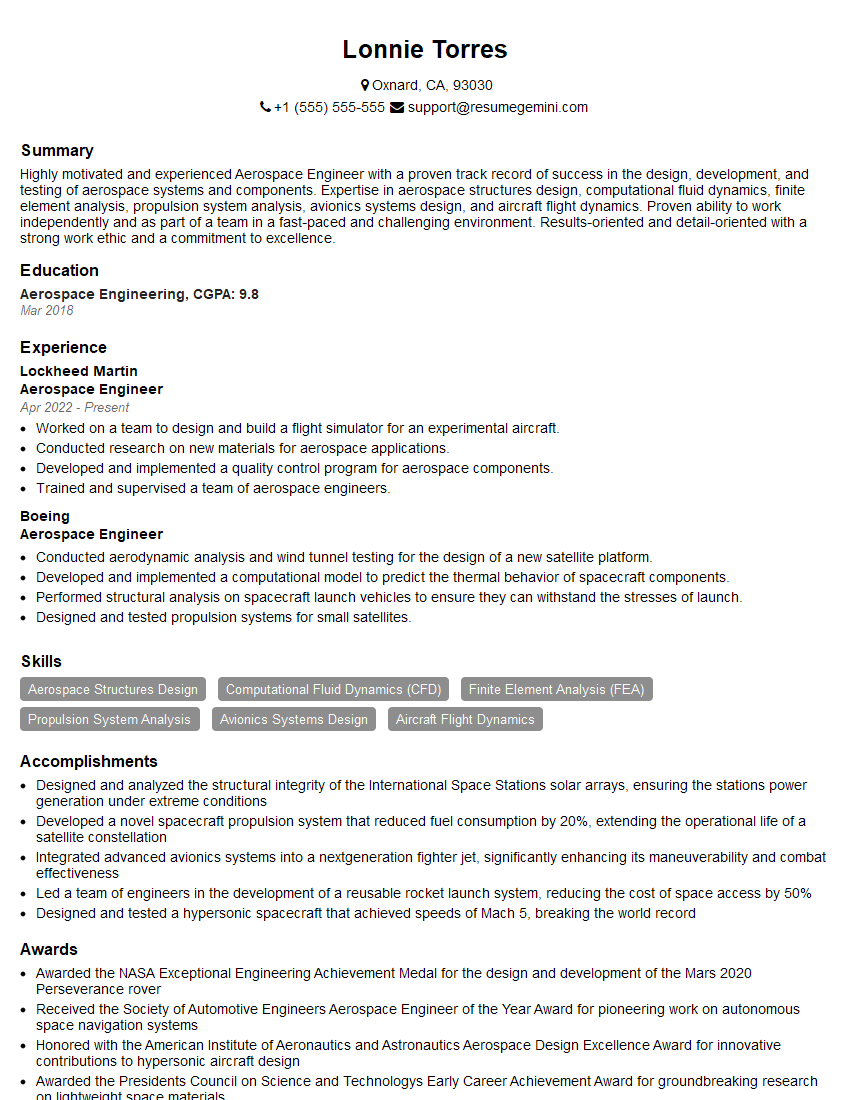
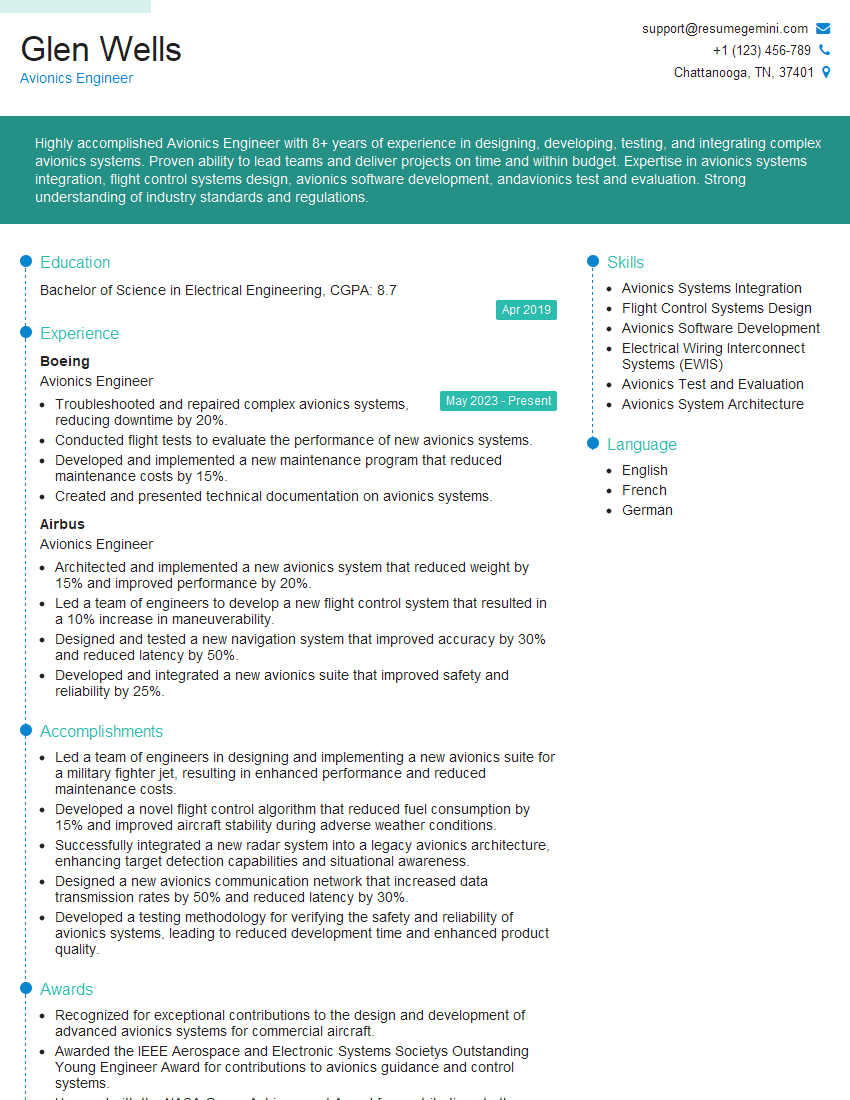
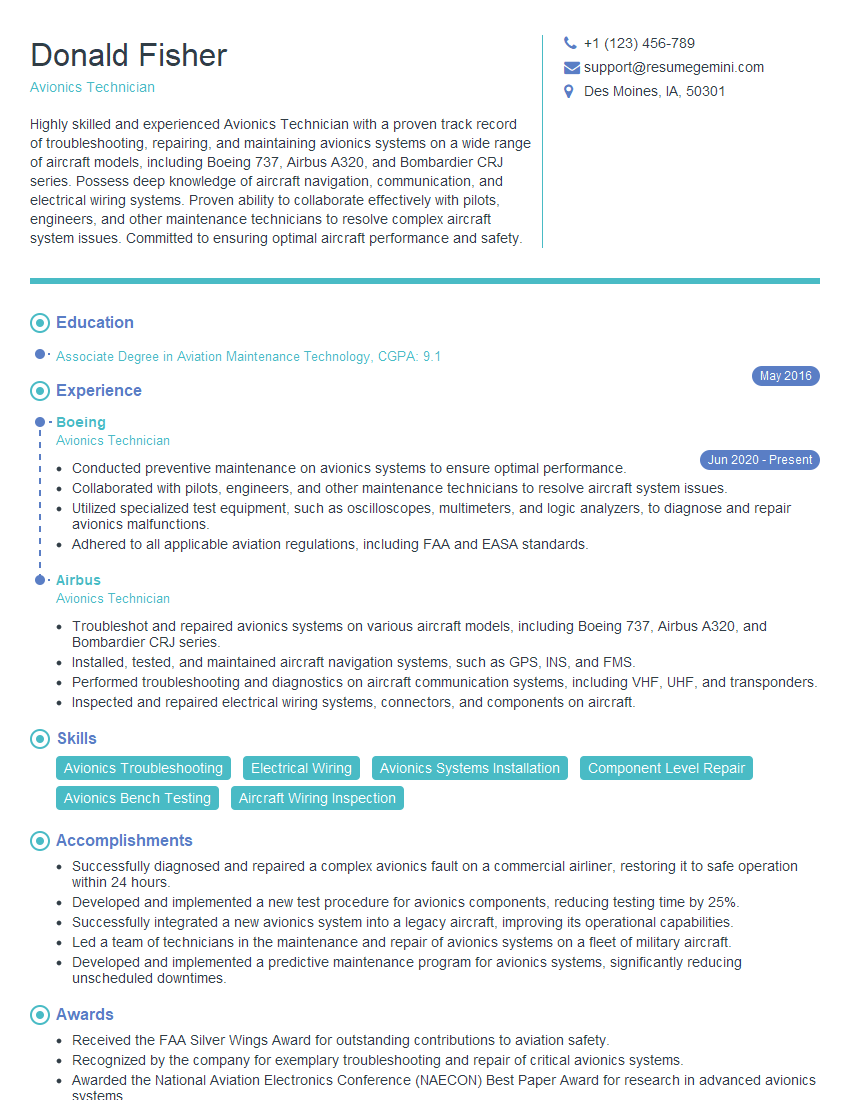
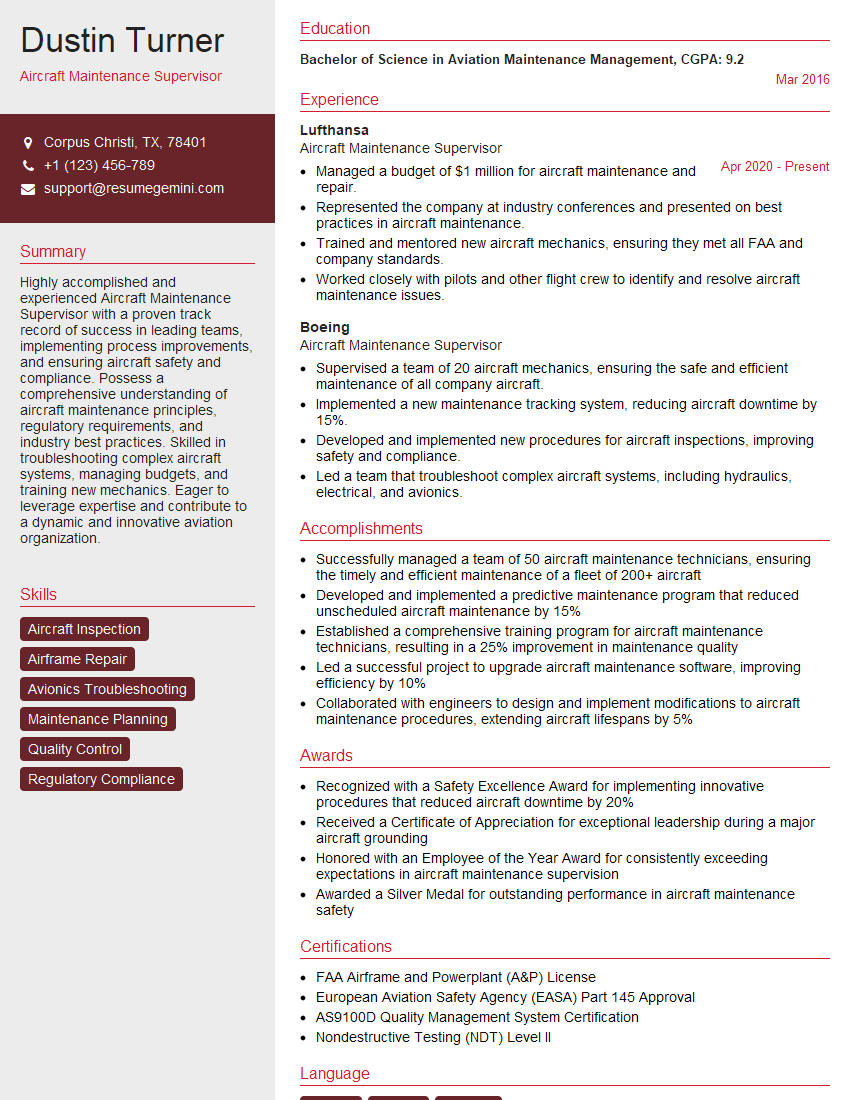
Mastering Aircraft System Knowledge is crucial for career advancement in the aviation industry, opening doors to specialized roles and increased earning potential. A strong resume is your key to unlocking these opportunities. To maximize your chances, create an ATS-friendly resume that highlights your skills and experience effectively. ResumeGemini can help you build a professional and impactful resume tailored to the aviation industry. We provide examples of resumes specifically designed for candidates with Aircraft System Knowledge, ensuring your application stands out.
Explore more articles
Users Rating of Our Blogs
Share Your Experience
We value your feedback! Please rate our content and share your thoughts (optional).
What Readers Say About Our Blog
Very informative content, great job.
good