Are you ready to stand out in your next interview? Understanding and preparing for Internal and External Audits interview questions is a game-changer. In this blog, we’ve compiled key questions and expert advice to help you showcase your skills with confidence and precision. Let’s get started on your journey to acing the interview.
Questions Asked in Internal and External Audits Interview
Q 1. Explain the difference between internal and external audits.
Internal and external audits, while both aiming to assess an organization’s performance, differ significantly in their scope, objectives, and the nature of their reporting.
- Internal Audits: These are conducted by an organization’s internal audit team or department. They focus on evaluating the effectiveness and efficiency of internal controls, risk management processes, and operational performance. Internal audit reports are typically confidential and intended for management to improve operations. Think of it as a company’s ‘self-check’ to identify and fix problems before they escalate. For example, an internal audit might assess the accuracy of inventory records or the effectiveness of cybersecurity protocols.
- External Audits: These audits are performed by independent, external audit firms (like the Big Four accounting firms) and are typically required for publicly traded companies. Their primary focus is to provide an independent opinion on the fairness and accuracy of the company’s financial statements. This opinion is then provided to external stakeholders, such as investors and creditors. Imagine it as an independent expert verifying the company’s financial health for everyone else.
In essence, internal audits are forward-looking, focusing on improvement, while external audits are backward-looking, verifying the accuracy of past information.
Q 2. Describe the key components of an internal control framework (e.g., COSO).
The Committee of Sponsoring Organizations of the Treadway Commission (COSO) framework is widely recognized as the leading internal control framework. It defines internal control as a process, effected by an entity’s board of directors, management, and other personnel, designed to provide reasonable assurance regarding the achievement of objectives in the following categories:
- Control Environment: This sets the tone at the top, encompassing the organization’s ethics, values, and commitment to internal control. Think of this as the overall culture of integrity within the company.
- Risk Assessment: This involves identifying and analyzing risks that could prevent the achievement of objectives. This includes both financial and operational risks. A great example is analyzing the risk of fraud or cybersecurity breaches.
- Control Activities: These are the actions established through policies and procedures to help ensure that management’s directives to mitigate risks to the achievement of objectives are carried out. This could include segregation of duties, authorizations, and reconciliations.
- Information and Communication: This includes the methods used to obtain and exchange information within the organization. Effective communication ensures that everyone understands their roles and responsibilities in relation to internal controls.
- Monitoring Activities: This involves ongoing evaluations and separate evaluations of the effectiveness of internal controls. This could involve regular reviews of controls by management or periodic internal audits.
COSO provides a comprehensive framework for designing, implementing, and monitoring internal controls across an organization.
Q 3. What are the primary objectives of an external audit?
The primary objectives of an external audit are to provide reasonable assurance to users of financial statements that:
- Fair Presentation: The financial statements are presented fairly, in all material respects, in accordance with applicable accounting standards (e.g., Generally Accepted Accounting Principles (GAAP) or International Financial Reporting Standards (IFRS)). This means that the financial statements accurately reflect the financial position and performance of the company.
- Freedom from Material Misstatement: The financial statements are free from material misstatements, whether due to error or fraud. A material misstatement is an error or omission significant enough to influence the decisions of financial statement users.
Essentially, the external auditor’s role is to provide an independent and objective opinion on the reliability of a company’s financial reporting.
Q 4. How do you assess the risk of material misstatement in financial statements?
Assessing the risk of material misstatement involves a systematic process that combines professional judgment with a detailed understanding of the client’s business and environment. It typically involves the following steps:
- Understanding the Entity and its Environment: This involves gaining an in-depth understanding of the client’s industry, business model, operations, and internal controls. This helps identify inherent risks.
- Identifying Risks of Material Misstatement: This step focuses on identifying potential errors or fraud that could lead to material misstatements in the financial statements. This might include risks related to revenue recognition, inventory valuation, or accounting estimates.
- Assessing the Risk of Material Misstatement: Once risks have been identified, the auditor needs to assess the likelihood and potential impact of those risks. This assessment often involves considering the effectiveness of internal controls designed to mitigate these risks.
- Responding to Assessed Risks: Based on the assessed risks, the auditor determines the appropriate audit procedures to perform. Higher risks require more extensive testing and scrutiny.
For example, a company with weak internal controls over cash might have a higher risk of material misstatement related to cash balances than a company with strong controls. The auditor would tailor their audit procedures accordingly, perhaps performing more extensive cash testing.
Q 5. Explain your experience with different audit methodologies (e.g., risk-based auditing).
Throughout my career, I have extensive experience employing various audit methodologies, with a strong emphasis on risk-based auditing. This approach recognizes that not all areas of an organization carry the same level of risk. Instead of a uniform, blanket approach, risk-based auditing focuses resources on areas of higher risk.
- Risk-Based Auditing: This methodology prioritizes the areas with the highest probability and potential impact of material misstatement, allowing for the efficient allocation of audit resources. It involves identifying and assessing risks, designing audit procedures to address those risks, and documenting the work performed. For instance, in auditing a bank, we might prioritize the loan portfolio and associated credit risk over less risky areas.
- Substantive Testing: This involves directly testing the accuracy of financial statement balances through procedures like confirmations, analytical procedures, and detailed testing of transactions. This might involve verifying accounts receivable balances with customers or testing the accuracy of inventory counts.
- Compliance Auditing: This focuses on ensuring the organization adheres to laws, regulations, and internal policies. This might involve reviewing compliance with environmental regulations or Sarbanes-Oxley Act (SOX) requirements.
My experience across these methodologies ensures I can tailor my approach to specific client needs and objectives, maximizing efficiency and effectiveness.
Q 6. What are the key differences between compliance auditing and operational auditing?
Compliance and operational audits, while both part of the broader audit function, differ significantly in their focus and objectives.
- Compliance Auditing: This type of audit focuses on assessing whether an organization is adhering to applicable laws, regulations, and internal policies. The primary objective is to determine compliance and identify any violations. For example, a compliance audit might focus on ensuring adherence to environmental regulations or internal policies related to data privacy.
- Operational Auditing: This audit focuses on the effectiveness and efficiency of an organization’s operations. The primary objective is to identify areas for improvement in efficiency, productivity, and cost-effectiveness. An operational audit might examine the efficiency of a company’s supply chain or the effectiveness of its customer service processes. The goal isn’t just to find problems, but to offer recommendations for improvement.
In short, compliance audits check for rule-following, while operational audits examine how well things are being done.
Q 7. How do you develop an audit plan?
Developing a comprehensive audit plan is crucial for a successful audit. The process involves several key steps:
- Understanding the Engagement Objectives: Clearly define the scope, objectives, and timing of the audit. What are we trying to achieve? What is the timeframe?
- Risk Assessment: Conduct a thorough risk assessment to identify the areas of highest risk and prioritize them accordingly. This involves understanding the client’s business, industry, and control environment.
- Developing Audit Procedures: Design specific audit procedures to address the identified risks. This might include tests of controls, substantive procedures, and analytical procedures.
- Resource Allocation: Allocate the necessary resources – time, personnel, and technology – based on the assessed risks and the complexity of the audit.
- Timing Considerations: Coordinate the audit timeline with the client’s business cycles and deadlines. Ensure that testing is performed during the most relevant periods.
- Documentation: Thoroughly document the entire audit planning process. This documentation serves as a roadmap for the audit team and provides evidence of the work performed.
A well-structured audit plan ensures that the audit is efficient, effective, and addresses the client’s needs. It also provides a framework for managing the audit process and for communicating findings to the client.
Q 8. Describe your experience with audit software and tools.
My experience with audit software and tools is extensive. I’m proficient in a variety of tools, ranging from general-purpose audit management systems like ACL and CaseWare to specialized software for specific audit areas. For example, I’ve used ACL for data analysis and continuous auditing, identifying anomalies and trends in large datasets that would be impossible to detect manually. CaseWare has been instrumental in organizing and documenting audit workpapers, ensuring a standardized and auditable process. In IT audits, I’ve leveraged tools like Nessus for vulnerability scanning and Splunk for log analysis to assess the security posture of IT systems. The selection of the appropriate software always depends on the specific audit objectives and the nature of the data being examined.
Beyond specific software, I’m adept at using various data extraction and manipulation techniques, including SQL queries and scripting languages like Python, to efficiently gather and analyze data from diverse sources. For example, during a recent financial audit, I used SQL to extract transactional data from a client’s database, which I then analyzed using ACL to identify potential instances of fraud.
Q 9. How do you document your audit findings?
Documenting audit findings is crucial for transparency and traceability. My approach involves creating a comprehensive audit file that includes detailed workpapers for each audit step. This typically involves a standardized format including: an audit plan outlining the scope and objectives, test procedures used, evidence gathered (e.g., screenshots, data extracts), and a clear articulation of the findings. Each finding is documented with a unique identifier, a detailed description of the issue, its impact, the supporting evidence, and recommended corrective actions.
I utilize a standardized template within my chosen audit management system to ensure consistency and completeness. For example, a finding might be documented as follows: ‘Finding ID: F-2023-10-01; Description: Inadequate segregation of duties in the accounts payable process; Impact: Increased risk of fraud; Evidence: Process flowchart showing lack of separation; Recommendation: Implement a revised process with clear separation of duties.’
Q 10. How do you communicate audit results to management?
Communicating audit results effectively is paramount. I tailor my communication approach to the audience, ensuring clarity and conciseness. For senior management, I provide a high-level summary report focusing on key findings and their overall implications, including quantifiable risks where possible. This report often includes executive summaries, charts, and graphs to visualize the key results. For operational management, I provide more detailed reports with specific recommendations and action plans to address each identified deficiency.
I often present my findings in person, allowing for a Q&A session to address any concerns or questions. I strive to be collaborative, not confrontational. My goal is not to simply point out problems but to facilitate improvements and enhance internal controls. I follow up with written reports, including action plans and timelines, to ensure accountability and monitor the implementation of corrective actions.
Q 11. How do you handle disagreements with auditees?
Disagreements with auditees are inevitable, but they can be handled professionally and constructively. My approach focuses on respectful dialogue and a collaborative spirit. I always begin by carefully reviewing the auditee’s perspective and thoroughly documenting my own findings and supporting evidence. This ensures that any disagreement is based on facts, not opinions.
If a disagreement persists, I escalate it through the appropriate channels, seeking guidance from senior management or an independent third party if necessary. The goal is always to reach a mutually agreeable resolution that reflects the audit’s objectives and maintains a positive working relationship with the auditee. It’s crucial to remain objective, professional, and focus on finding a solution that addresses the identified risk.
Q 12. How do you ensure the independence and objectivity of your audit work?
Maintaining independence and objectivity is the cornerstone of a credible audit. This is achieved through various measures. Firstly, I ensure that I have no financial or personal interests that could compromise my impartiality. I avoid any situation that could create a conflict of interest. Secondly, I adhere strictly to professional auditing standards, employing a rigorous and systematic approach to my work, ensuring that all findings are evidence-based and unbiased.
Regularly rotating audit teams and establishing clear lines of reporting help maintain objectivity. In cases where potential conflicts might arise, I proactively disclose these to management and take appropriate steps to mitigate any risks. This might involve seeking an independent review of my findings, using alternative methodologies, or even recusing myself from the specific area of concern. This commitment to transparency is crucial for building trust and ensuring that the audit work is perceived as impartial and credible.
Q 13. Describe your experience with auditing IT systems and controls.
My experience in auditing IT systems and controls is substantial. I’ve conducted numerous audits encompassing various aspects of IT infrastructure, including network security, data security, application controls, and system development life cycle (SDLC) processes. I possess a strong understanding of IT governance frameworks such as COBIT and ITIL. I am experienced in assessing the effectiveness of access controls, change management processes, and disaster recovery plans.
I’ve utilized various techniques during these audits, including vulnerability assessments, penetration testing (where appropriate and authorized), and review of system documentation and security logs. For example, I’ve helped clients identify vulnerabilities in their network security, leading to the implementation of stronger firewalls and intrusion detection systems. I’ve also reviewed the effectiveness of access controls to ensure that only authorized personnel have access to sensitive data.
Q 14. What is your experience with data analytics in auditing?
Data analytics plays a critical role in modern auditing. I leverage data analytics techniques to enhance the efficiency and effectiveness of audits. This involves using data from various sources—databases, spreadsheets, logs—to identify trends, anomalies, and patterns that might indicate risks or control weaknesses. Techniques such as regression analysis, anomaly detection, and predictive modeling can uncover insights not readily apparent through traditional manual audit procedures.
For example, during a recent audit, I used data analytics to identify unusual patterns in purchasing transactions, flagging potential instances of fraud. This allowed me to focus my audit efforts more efficiently and identify risks earlier than would have been possible using traditional methods. My proficiency includes using tools like ACL and SQL to analyze large datasets, enabling more thorough and comprehensive audit coverage.
Q 15. How do you stay current with auditing standards and best practices?
Staying current in the dynamic field of auditing requires a multi-pronged approach. It’s not a one-time effort, but a continuous process of learning and adaptation.
- Professional Organizations: Active membership in organizations like the Institute of Internal Auditors (IIA) and the American Institute of Certified Public Accountants (AICPA) provides access to updated standards, publications, and continuing professional education (CPE) courses. These resources ensure I’m aware of the latest changes in auditing methodologies and regulatory requirements.
- Conferences and Webinars: Attending industry conferences and webinars offers valuable insights into emerging trends and best practices shared by leading experts. Networking with fellow professionals allows for the exchange of knowledge and perspectives.
- Publications and Journals: Regularly reviewing professional journals and publications keeps me informed about new research, case studies, and regulatory updates impacting the auditing field. This includes staying abreast of publications from regulatory bodies themselves.
- Online Resources: Utilizing reputable online resources, including government websites and professional organizations’ online platforms, provides access to the latest standards, guidelines, and interpretations.
For example, I recently completed a CPE course on the latest updates to the COSO framework, directly applicable to my risk assessment methodologies. This constant engagement ensures my audit practices remain aligned with the highest standards.
Career Expert Tips:
- Ace those interviews! Prepare effectively by reviewing the Top 50 Most Common Interview Questions on ResumeGemini.
- Navigate your job search with confidence! Explore a wide range of Career Tips on ResumeGemini. Learn about common challenges and recommendations to overcome them.
- Craft the perfect resume! Master the Art of Resume Writing with ResumeGemini’s guide. Showcase your unique qualifications and achievements effectively.
- Don’t miss out on holiday savings! Build your dream resume with ResumeGemini’s ATS optimized templates.
Q 16. Describe your experience with regulatory compliance audits (e.g., SOX, HIPAA).
I possess extensive experience conducting regulatory compliance audits, particularly focusing on SOX (Sarbanes-Oxley Act) and HIPAA (Health Insurance Portability and Accountability Act).
SOX Compliance: My experience includes testing internal controls over financial reporting (ICFR) for publicly traded companies. This involves understanding and evaluating the design and operating effectiveness of controls related to financial statement assertions. I’ve utilized techniques such as walkthroughs, data analytics, and inquiry to assess control effectiveness and identify deficiencies. For example, in one engagement, I identified a weakness in the revenue recognition process that could lead to material misstatement. Through collaborative work with the client, we implemented corrective actions to mitigate the risk.
HIPAA Compliance: I have conducted audits to ensure compliance with HIPAA regulations, focusing on the protection of patient health information (PHI). This includes reviewing security measures, access controls, and data breach protocols. I’ve used risk assessment methodologies specific to HIPAA, identifying vulnerabilities and recommending improvements. In one instance, I discovered a lack of proper encryption for electronic PHI transmission, a critical vulnerability. My recommendations led to the implementation of robust encryption protocols, enhancing the organization’s security posture.
My experience with these regulations extends beyond simple compliance checks; it includes understanding the underlying business processes and recommending improvements to enhance operational efficiency while ensuring compliance.
Q 17. How do you identify and assess fraud risk?
Identifying and assessing fraud risk is a critical component of any audit. It’s not simply about finding fraud; it’s about proactively identifying vulnerabilities and mitigating the potential for it.
My approach involves a combination of risk assessment techniques, including:
- Understanding the business: A deep understanding of the client’s operations, industry, and competitive landscape is essential to identify areas susceptible to fraud. For instance, industries with high cash transactions or weak internal controls are inherently more vulnerable.
- Fraud risk factors: I use established frameworks like the ACFE’s Fraud Triangle (Opportunity, Pressure, Rationalization) and other risk assessment models to identify potential red flags. This involves considering factors such as incentives, opportunities, and capabilities.
- Data analytics: I leverage data analytics to identify anomalies and unusual patterns that may indicate fraudulent activity. This could involve analyzing financial transactions, sales data, or employee compensation records for inconsistencies.
- Interviews and inquiries: Direct communication with employees at all levels helps gather insights and identify potential concerns. These interviews are conducted with a focus on gaining an understanding of processes and identifying any hesitation in answering questions.
- Documentation review: A thorough review of key documentation, such as contracts, invoices, and bank statements, can unveil inconsistencies or irregularities that warrant further investigation.
The assessment isn’t just a checklist. It requires critical thinking and professional skepticism to connect the dots and evaluate the overall risk. For example, unexpectedly high sales figures combined with unexplained increases in inventory might suggest potential revenue inflation.
Q 18. What is your experience with forensic auditing techniques?
While I primarily focus on internal and external audits, I have experience utilizing forensic auditing techniques, especially when dealing with suspected or confirmed fraudulent activity.
My experience incorporates techniques like:
- Document examination: Thoroughly reviewing documents for alterations, inconsistencies, or missing information. This might involve using forensic document examination software in more complex cases.
- Data extraction and analysis: Using specialized software to retrieve and analyze data from various sources, even those that have been deleted or altered. This allows for a deeper investigation into potential fraudulent activity.
- Interviewing and interrogation techniques: Using proven methods to elicit information from witnesses, suspects, and employees to get to the truth effectively.
- Digital forensics: Assisting with investigations involving electronic data, focusing on recovering and analyzing information from computers, servers, and mobile devices. This often involves working closely with specialized experts.
I understand the importance of maintaining the chain of custody and adhering to legal and ethical standards when utilizing forensic techniques. While I might not be a certified forensic accountant, I have the skills to identify situations requiring specialized expertise and work effectively with forensic specialists to reach a conclusive outcome.
Q 19. How do you manage multiple audit engagements simultaneously?
Managing multiple audit engagements simultaneously demands strong organizational skills, effective time management, and a clear understanding of priorities. I utilize several strategies to ensure all engagements are completed efficiently and effectively.
- Project Planning: For each engagement, I create a detailed project plan outlining timelines, deliverables, and resource allocation. This includes specifying key milestones and assigning responsibilities to team members.
- Prioritization: I prioritize engagements based on factors such as deadlines, risk, and client importance. This ensures critical engagements receive the necessary attention.
- Teamwork and Delegation: I effectively delegate tasks to team members, leveraging their skills and expertise to optimize productivity. Regular communication and collaboration are crucial for success.
- Technology: I utilize project management software and other technological tools to track progress, manage documents, and facilitate communication. This ensures transparency and accountability.
- Regular Progress Reviews: I conduct regular progress reviews with team members and clients to monitor progress, identify potential issues, and make necessary adjustments to the plan.
Think of it like conducting an orchestra. Each instrument (audit engagement) needs careful attention, but the conductor (me) needs to orchestrate the entire performance for a harmonious outcome. This requires a combination of planning, delegation, and communication.
Q 20. Describe a time you had to deal with a challenging audit situation.
During an audit of a manufacturing company, we uncovered significant discrepancies in inventory records. Initial reviews suggested potential theft or misreporting. The challenge was to determine the root cause without disrupting ongoing operations.
We initially faced resistance from some personnel, leading us to carefully re-evaluate our approach. We employed a combination of strategies:
- Data Analytics: We used data analytics techniques to identify patterns and inconsistencies in inventory movement and transactions. This provided objective evidence to support our findings.
- Improved Communication: We shifted from accusatory questioning to collaborative discussions, emphasizing our goal of identifying the root cause to improve processes. This fostered a more open dialogue.
- Reconciliation Procedures: We worked with the client to implement robust reconciliation procedures between physical inventory counts and accounting records. This provided a more accurate picture of the situation and assisted in identifying the actual discrepancies.
- Employee Interviews: We conducted interviews in a non-accusatory manner, focusing on understanding processes and identifying potential weaknesses. This eventually led to discovering a procedural flaw that allowed for unintentional misreporting, rather than intentional theft.
By focusing on collaboration, thorough investigation, and careful communication, we resolved the situation without disruption and implemented corrective measures that prevented future occurrences. It highlighted the importance of professional skepticism, combined with empathy and effective communication.
Q 21. How do you prioritize audit tasks and manage your time effectively?
Effective time management and task prioritization are crucial for success in auditing. I employ a structured approach that ensures I dedicate my time and resources effectively.
- Prioritization Matrix: I utilize a prioritization matrix, often an Eisenhower Matrix (urgent/important), to categorize tasks based on urgency and importance. This helps me focus on high-impact activities first.
- Time Blocking: I allocate specific time blocks for different tasks, ensuring dedicated focus. This prevents multitasking and improves efficiency.
- To-Do Lists and Task Management Software: I use to-do lists and task management software to track progress, set deadlines, and maintain a clear overview of my workload. This keeps everything organized and prevents tasks from slipping through the cracks.
- Regular Review and Adjustment: I regularly review my schedule and adjust priorities as needed, adapting to changing circumstances. This ensures I remain flexible and responsive to unexpected events.
- Delegation: I delegate appropriate tasks to team members, freeing up my time to focus on high-priority activities. This leverages the strengths of the team and enhances overall productivity.
For example, I might allocate the morning to reviewing critical financial statements, the afternoon to leading team meetings, and the evening to responding to client inquiries. This focused approach helps ensure optimal use of my time and allows me to deliver high-quality work consistently.
Q 22. What are your strengths and weaknesses as an auditor?
My greatest strength as an auditor is my meticulous attention to detail. I’m able to identify inconsistencies and potential risks others might miss, ensuring thorough and comprehensive audits. I’m also a strong communicator, able to explain complex findings clearly and concisely to both technical and non-technical audiences. This is crucial for effective audit reporting. For example, during an audit of a large financial institution, my attention to detail uncovered a subtle but significant error in their reconciliation process that could have led to substantial financial losses.
However, I’m constantly working on improving my time management skills. Audits often involve tight deadlines and numerous tasks, and I’m actively implementing project management techniques to enhance my efficiency and ensure timely completion of all audit procedures. This involves prioritizing tasks effectively and strategically allocating my time to optimize output.
Q 23. What are your salary expectations?
My salary expectations are in line with the industry standard for an auditor with my experience and skillset. I’m open to discussing a specific range after learning more about the compensation and benefits package offered by your organization. However, my primary focus is on finding a challenging and rewarding role where I can contribute to a successful team and further develop my expertise in auditing.
Q 24. Why are you interested in this position?
I’m highly interested in this position because of [Company Name]’s reputation for excellence and its commitment to [mention company values or a specific project that interests you]. Your company’s work in [mention industry or area] particularly aligns with my professional goals and passion for [mention area of expertise]. I’m eager to contribute my expertise in both internal and external audits, leveraging my skills to help [Company Name] enhance its operational efficiency and mitigate risk. The opportunity to work alongside a team of experienced professionals is also incredibly appealing.
Q 25. Where do you see yourself in 5 years?
In five years, I envision myself as a senior auditor within your organization, playing a key role in mentoring junior staff and leading complex audit engagements. I aim to have significantly expanded my expertise in [mention specific area like data analytics or a particular industry], contributing to the development of innovative audit methodologies. I also hope to have obtained relevant professional certifications, such as a CIA (Certified Internal Auditor) or CISA (Certified Information Systems Auditor), further enhancing my capabilities and value to the organization.
Q 26. What is your experience with sampling techniques in auditing?
I have extensive experience with various sampling techniques in auditing. My experience ranges from using statistical sampling methods like stratified random sampling and monetary unit sampling for financial statement audits to non-statistical methods like haphazard sampling for operational audits. The choice of sampling method depends heavily on the audit objective and the characteristics of the population being sampled. For instance, in a financial audit, monetary unit sampling is often preferred because it helps identify material misstatements. In operational audits, however, a non-statistical approach might be more suitable if the focus is on gaining a general understanding of a particular process rather than quantifying errors.
Q 27. Explain your understanding of audit sampling methods.
Audit sampling methods are used to select a subset of a population for examination, allowing auditors to make inferences about the entire population without reviewing every single item. This is crucial for efficiency, particularly with large populations. There are two main categories:
- Statistical Sampling: This involves using statistical techniques to determine the sample size, select the sample, and quantify the sampling risk. Examples include:
Stratified Random Sampling:Dividing the population into strata (e.g., by transaction type) and then randomly selecting samples from each stratum.Monetary Unit Sampling (MUS):Selecting items proportionally to their monetary value, focusing on high-value items which are more likely to contain material misstatements.- Non-statistical Sampling: This approach doesn’t use statistical formulas to determine the sample size but relies on the auditor’s judgment. Examples include:
Haphazard Sampling:Selecting items without any specific pattern or method, relying on the auditor’s judgment to ensure a representative sample.Block Sampling:Selecting consecutive items from a sequence.
The choice between statistical and non-statistical sampling depends on the specific audit objective and the resources available. Statistical sampling provides a quantifiable measure of sampling risk, while non-statistical sampling is often simpler and quicker to implement.
Q 28. Describe your experience with audit reporting and presentation.
I have extensive experience in preparing and presenting audit reports, tailoring my approach to the audience. For example, when reporting to senior management, I focus on the key findings and recommendations, using clear visuals and concise language. For detailed technical reports, I include comprehensive evidence and detailed analysis. I’m proficient in using various software tools to create professional reports, including data visualization and analytics tools to effectively present findings. I’ve presented findings to various audiences, including audit committees, executive management, and regulatory bodies, consistently ensuring that the reports are well-structured, accurate, and easy to understand. I believe strong communication skills are crucial for effectively conveying the results of an audit and ensuring that recommendations are implemented.
Key Topics to Learn for Internal and External Audits Interview
- Internal Audit Fundamentals: Understanding the purpose, scope, and objectives of internal audits. This includes knowledge of internal control frameworks like COSO.
- External Audit Fundamentals: Grasping the differences between internal and external audits, focusing on regulatory compliance and financial statement audits (e.g., GAAP, IFRS).
- Risk Assessment & Management: Identifying, analyzing, and evaluating risks within an organization. Practical application involves discussing methodologies used to assess and mitigate risks.
- Audit Planning & Execution: Developing audit plans, selecting appropriate audit procedures, and effectively documenting findings. Consider discussing the importance of efficient time management and resource allocation.
- Data Analysis Techniques: Demonstrating proficiency in using data analytics tools to identify trends, anomalies, and potential risks. Mention specific tools or techniques you are familiar with.
- Communication & Reporting: Clearly and concisely communicating audit findings and recommendations to both technical and non-technical audiences. This includes preparing comprehensive audit reports.
- Audit Standards & Regulations: Familiarity with relevant auditing standards (e.g., ISA, IIA standards) and regulations impacting the audit process.
- Problem-Solving & Critical Thinking: Demonstrate your ability to approach complex situations, identify root causes, and propose effective solutions. Prepare examples showcasing your analytical and problem-solving skills.
- Fraud Detection & Prevention: Understanding common fraud schemes and the methodologies used to detect and prevent fraudulent activities. Discuss your understanding of red flags and internal controls to prevent fraud.
- IT Auditing (if applicable): If your target role involves IT auditing, showcase your knowledge of IT systems, cybersecurity, and data governance.
Next Steps
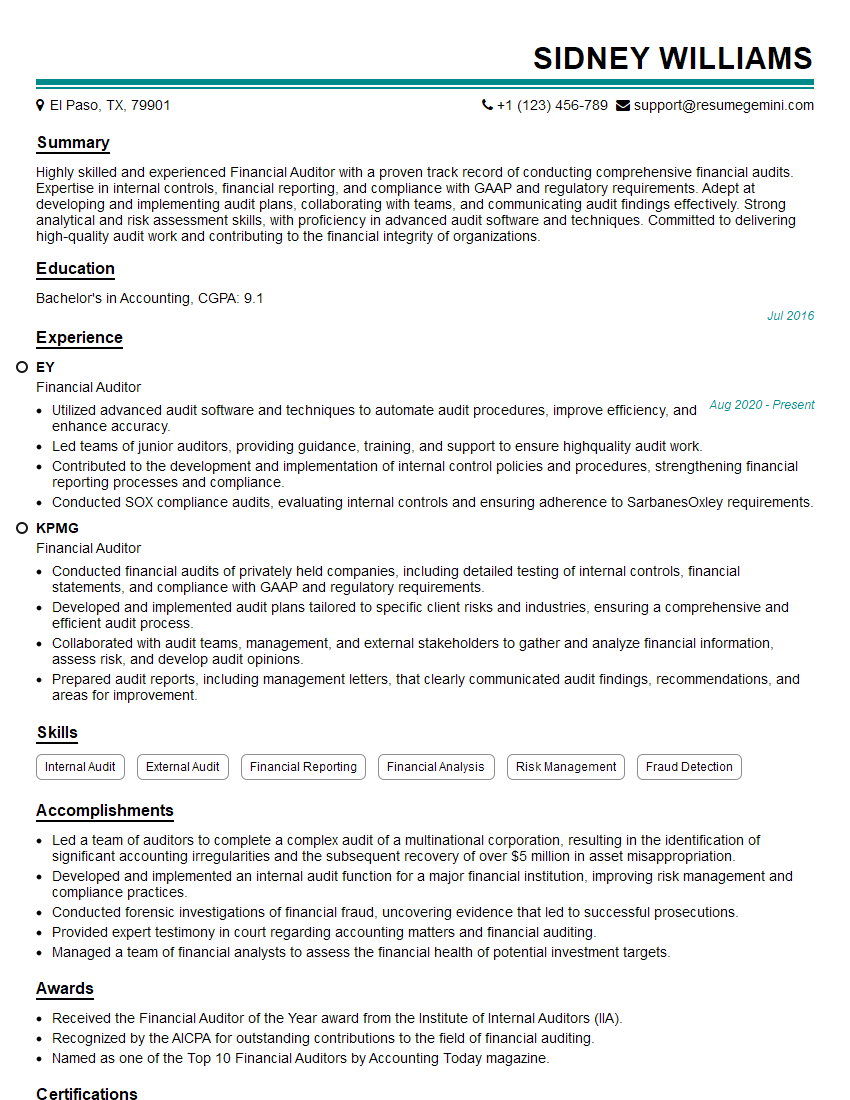
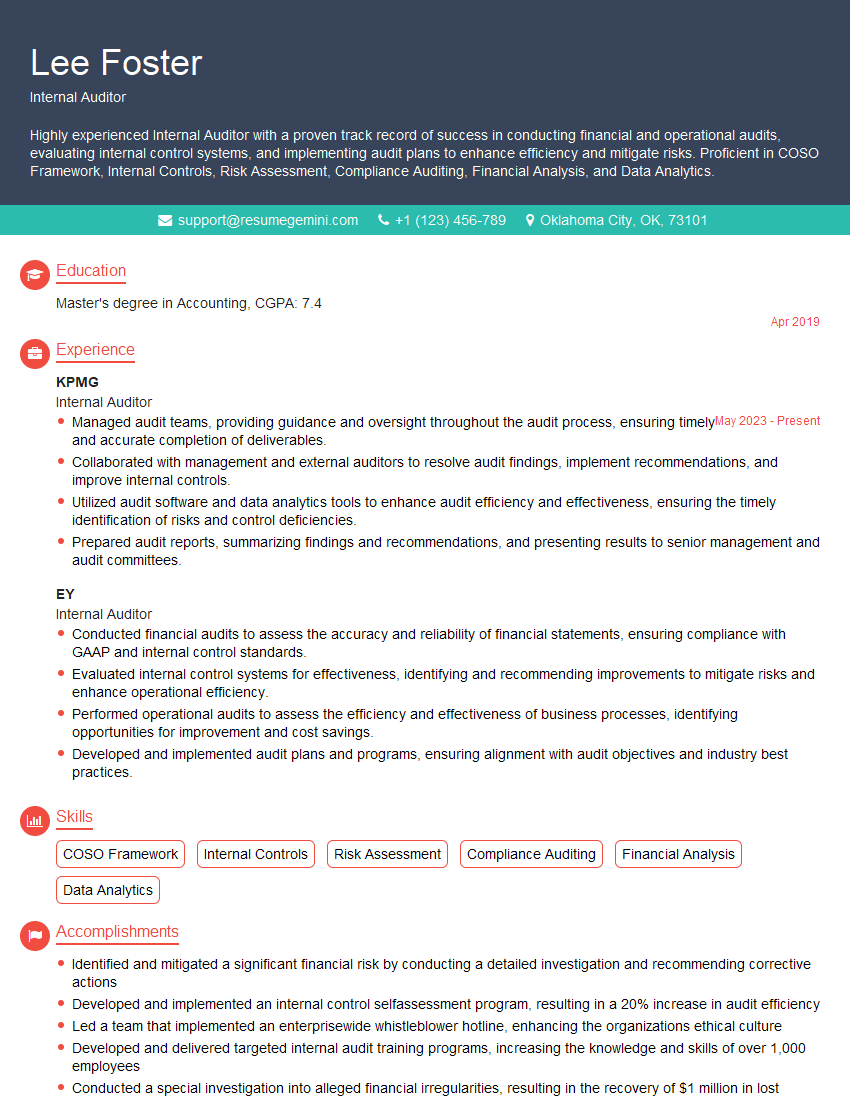
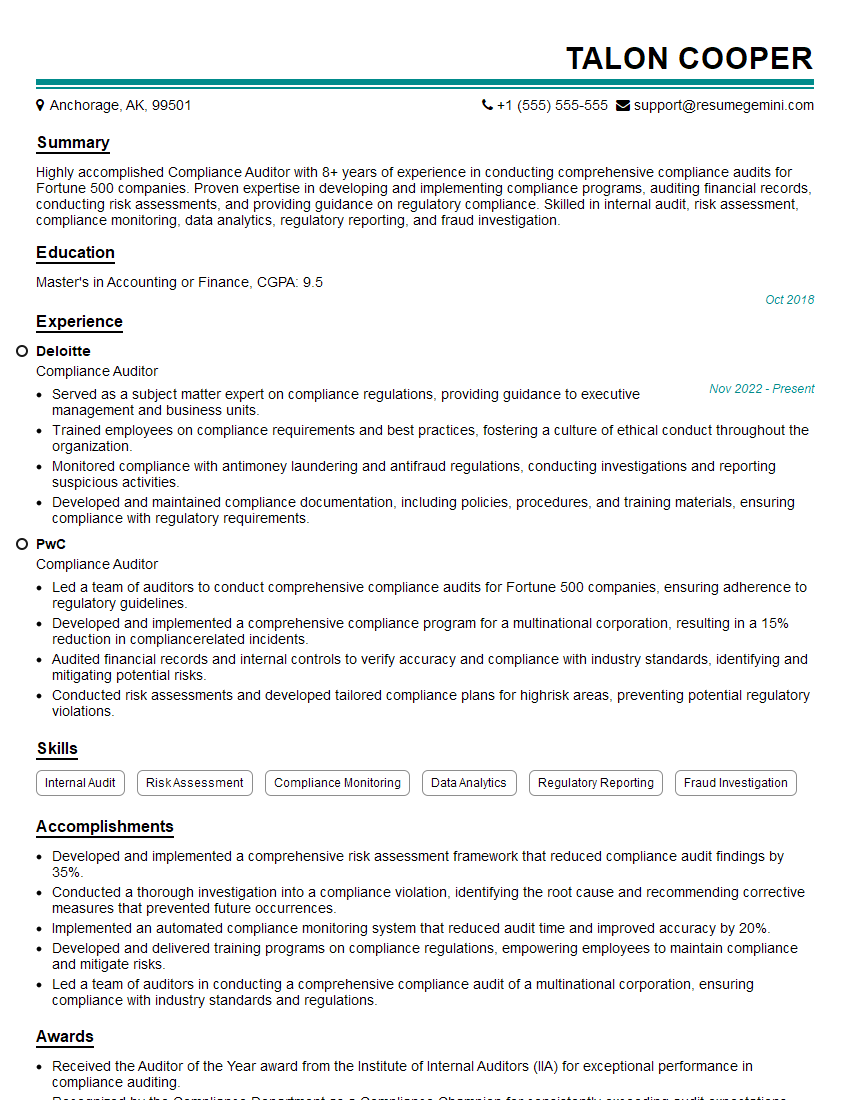
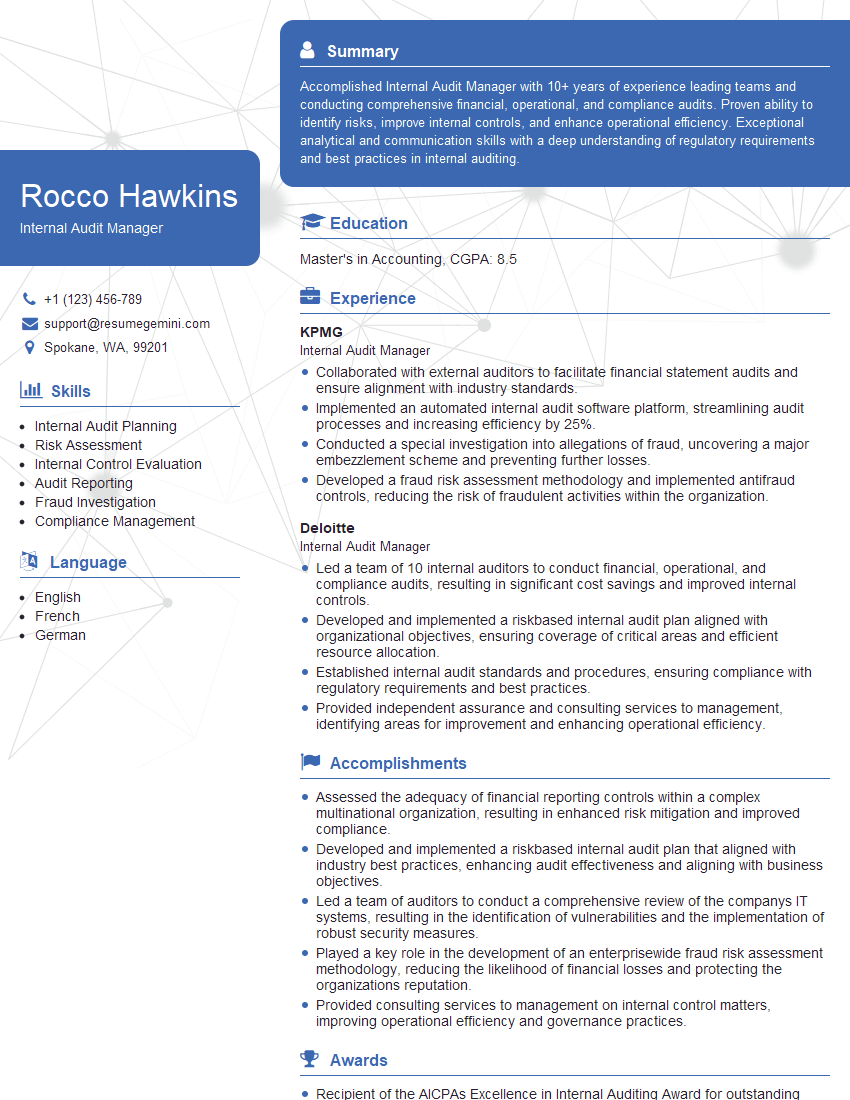
Mastering Internal and External Audits opens doors to exciting career opportunities in finance, accounting, and compliance. A strong understanding of these concepts is highly sought after, leading to increased job prospects and higher earning potential. To maximize your chances, create an ATS-friendly resume that highlights your skills and experience effectively. ResumeGemini is a trusted resource that can help you build a professional and impactful resume tailored to the specific requirements of Internal and External Audit roles. Examples of resumes tailored to these fields are available to help you get started.
Explore more articles
Users Rating of Our Blogs
Share Your Experience
We value your feedback! Please rate our content and share your thoughts (optional).
What Readers Say About Our Blog
Very informative content, great job.
good