Interviews are more than just a Q&A session—they’re a chance to prove your worth. This blog dives into essential AllSource Analysis interview questions and expert tips to help you align your answers with what hiring managers are looking for. Start preparing to shine!
Questions Asked in AllSource Analysis Interview
Q 1. Explain the process of conducting All-Source analysis.
All-Source Analysis is the process of integrating information from diverse sources to create a comprehensive understanding of a situation or issue. It’s like putting together a puzzle, where each piece of information (from different sources) contributes to the overall picture. The process typically involves these key steps:
- Intelligence Requirements Definition: Clearly defining the specific information needed. For example, understanding the motivations behind a competitor’s new product launch.
- Collection: Gathering information from various sources – open-source intelligence (OSINT), human intelligence (HUMINT), signals intelligence (SIGINT), measurement and signature intelligence (MASINT), and geospatial intelligence (GEOINT).
- Processing and Exploitation: Transforming raw data into usable intelligence. This involves cleaning, organizing, and analyzing the data. For example, verifying the authenticity of a social media post or cross-referencing data from different satellite images.
- Analysis and Production: Integrating information from multiple sources, identifying patterns, drawing conclusions, and producing an assessment. This might involve comparing data from news articles, government reports, and social media to understand public sentiment towards a political event.
- Dissemination: Sharing the analyzed intelligence with relevant stakeholders in a timely and effective manner. For instance, briefing decision-makers about the potential impact of a natural disaster.
Q 2. Describe your experience with different data sources (e.g., open source, classified, etc.).
My experience spans a wide range of data sources. I’ve worked extensively with open-source intelligence, including news articles, social media, academic publications, and government reports. I’m proficient in using OSINT tools and techniques to gather and analyze information. I’ve also had experience with classified data, adhering strictly to security protocols and handling sensitive information responsibly. My experience with classified sources includes working with intelligence reports and databases, which requires a high level of security clearance and strict adherence to handling protocols. I understand the importance of data provenance and handling sensitivity labels appropriately.
Furthermore, I’m adept at utilizing various databases and tools for data retrieval and analysis, adapting my approach depending on the source’s specific structure and format.
Q 3. How do you assess the credibility and reliability of information from various sources?
Assessing the credibility and reliability of information is crucial in All-Source Analysis. I use a multi-faceted approach:
- Source Evaluation: Identifying the source’s background, reputation, potential biases, and past accuracy. Is it a reputable news organization, a biased blog, or a government agency?
- Methodological Assessment: Examining how the information was collected and processed. Were appropriate research methods used? Is the data clearly sourced and verifiable?
- Cross-Referencing: Comparing the information with data from other independent sources to see if it aligns. Does the information corroborate or contradict other findings?
- Fact-Checking: Verifying the factual accuracy of the information, using multiple sources to verify claims and dates.
- Contextual Analysis: Considering the information’s context, including the timeframe, location, and surrounding events. Does the information make sense in the larger context?
Think of it like evaluating witnesses in a court case – you need to assess their credibility and the reliability of their testimony before forming a conclusion.
Q 4. Explain your approach to validating and corroborating information.
Validating and corroborating information is a cornerstone of All-Source Analysis. My approach involves:
- Triangulation: Comparing information from at least three independent sources to increase confidence in its accuracy. This reduces the likelihood of relying on a single flawed source.
- Pattern Analysis: Looking for recurring themes or patterns across multiple sources to identify consistent information and potential anomalies.
- Data Fusion: Combining quantitative and qualitative data to create a more complete picture. This might involve integrating statistical data with expert interviews or field reports.
- Open Source Verification: Utilizing publicly available information and tools to verify the authenticity of data obtained from other sources.
For example, if I’m analyzing a report on a natural disaster, I’d compare data from government agencies, news reports, and social media posts to validate the scale and impact of the event.
Q 5. How do you handle conflicting information from multiple sources?
Conflicting information is common in All-Source Analysis. Handling these discrepancies requires careful consideration:
- Identify the Discrepancy: Pinpoint the exact points of conflict between sources.
- Evaluate Source Credibility: Assess the reliability of each source involved in the conflict, considering potential biases or limitations.
- Seek Additional Information: Gather more data from independent sources to resolve the discrepancies.
- Contextualize the Conflict: Consider the potential reasons for the conflict, such as differences in perspective, methodology, or timing.
- Document Uncertainty: If a definitive resolution cannot be reached, clearly document the uncertainty and conflicting perspectives in the final analysis.
It’s important to acknowledge that not all conflicts can be resolved. Transparency in reporting uncertainty is crucial.
Q 6. Describe your experience with data visualization and presentation techniques.
Data visualization and presentation are vital for effectively communicating complex information. My experience includes using various tools and techniques, including:
- Charts and Graphs: Creating effective visual representations of data using bar charts, line graphs, scatter plots, and other visual tools.
- Maps: Utilizing geographic information systems (GIS) to display location-based data and identify patterns.
- Infographics: Designing visually appealing infographics to present key findings in a concise and engaging manner.
- Interactive Dashboards: Developing dashboards that allow users to interact with data and explore different aspects of the analysis.
I tailor my visualization approach to the specific audience and the complexity of the data, ensuring clarity and effective communication.
Q 7. How do you prioritize information and focus on the most critical aspects?
Prioritizing information involves focusing on the most critical aspects relevant to the analytical objective. My approach combines:
- Relevance Assessment: Identifying information directly related to the intelligence requirements. This filters out irrelevant data.
- Impact Assessment: Evaluating the potential impact of each piece of information. High-impact information takes precedence.
- Time Sensitivity: Prioritizing information based on its timeliness and urgency. Time-sensitive information gets immediate attention.
- Uncertainty Reduction: Focusing on information that reduces uncertainty and clarifies ambiguities. This aims to improve the clarity and certainty of the conclusions.
Imagine investigating a cyberattack. Prioritizing the time and source of the initial breach over less critical details is crucial to mitigate the ongoing damage.
Q 8. How do you identify biases and limitations in different data sources?
Identifying biases and limitations in data sources is crucial for accurate All-Source Analysis. It’s like being a detective – you need to assess the reliability of your witnesses. Each source has its own inherent biases and limitations based on its origin, purpose, and methodology.
- Source Bias: A news article from a pro-government outlet will likely present a different narrative than one from an opposition group. We must consider the potential motivations behind the information presented.
- Sampling Bias: A survey focusing solely on one demographic might not represent the broader population accurately. We need to evaluate if the sample size and selection method are appropriate.
- Confirmation Bias: We need to be aware of our own tendency to favor information that confirms pre-existing beliefs. Critical self-reflection is essential.
- Data Quality: Outdated, incomplete, or poorly documented data can skew analysis. Data validation and verification are paramount.
- Omission Bias: The deliberate or unintentional absence of critical information can lead to a flawed understanding. We must be vigilant in seeking contradictory evidence.
To mitigate these, I employ a rigorous process of source triangulation, comparing information from multiple independent sources to identify inconsistencies and biases. I also use techniques like fact-checking and cross-referencing with reputable sources to validate information and identify potential inaccuracies.
Q 9. Describe your experience using specific All-Source analysis tools or software.
My experience with All-Source analysis tools spans several platforms. I’m proficient in using Palantir Gotham, which excels in visualizing complex relationships between entities and data points through its powerful network graph capabilities. I’ve also worked extensively with open-source intelligence (OSINT) tools like Maltego and Gephi for link analysis and data visualization, allowing me to connect disparate pieces of information and identify patterns that might otherwise go unnoticed. In addition to these, I have experience using commercially available data aggregation and analysis tools, customizing them to efficiently manage and analyze the diverse data inputs of an All-Source intelligence operation.
For example, during a recent project investigating a complex financial fraud scheme, I utilized Palantir Gotham to map relationships between individuals, companies, and financial transactions. The visual representation helped me identify key players and uncover previously unknown connections, significantly enhancing the investigation’s effectiveness. The use of Maltego helped verify identities and locate additional information via online social networks and other public sources.
Q 10. How do you maintain situational awareness and adapt to changing information?
Maintaining situational awareness and adapting to changing information is fundamental to effective All-Source Analysis. It’s like navigating a constantly shifting landscape; you need to be agile and responsive. I achieve this through a combination of techniques:
- Continuous Monitoring: I regularly scan news feeds, social media, and other relevant sources for updates and breaking news, utilising RSS feeds and automated alerts.
- Structured Information Management: I use a robust system for organizing and prioritizing information, ensuring I can quickly access and review relevant data points. Using tools that help organise information chronologically and thematically is essential here.
- Collaboration and Communication: I actively participate in team briefings and intelligence sharing sessions to stay updated on the collective knowledge and insights.
- Scenario Planning: I regularly develop alternative scenarios based on potential developments, allowing for proactive adjustments to analysis and strategic planning.
- Feedback Loops: I constantly evaluate the accuracy and relevance of my analysis, incorporating new information and making adjustments as needed.
For example, during a crisis event, I might need to rapidly adjust my analysis based on unfolding events, prioritizing immediate information needs and re-evaluating assumptions based on real-time updates. Adaptability and a willingness to modify my understanding are paramount.
Q 11. Explain your experience with different analytical methodologies (e.g., link analysis, trend analysis).
I’m experienced in a variety of analytical methodologies, each offering unique insights into complex datasets. These methods are not mutually exclusive and are often used in conjunction.
- Link Analysis: This involves mapping relationships between entities, identifying connections and patterns within networks. For example, I’ve used this to uncover hidden networks of illicit activity, such as drug trafficking or money laundering. Software like Maltego is integral in this process.
- Trend Analysis: This focuses on identifying patterns and trends over time. This might involve analyzing historical data to predict future events, such as evaluating economic indicators to forecast market shifts or tracking the spread of an infectious disease.
- Comparative Analysis: This involves comparing different sources of information to identify similarities, differences, and anomalies. This is essential for validating data and identifying potential biases.
- Geo-spatial Analysis: This utilizes geographic information systems (GIS) to analyze spatial patterns and relationships. This is crucial in understanding the geographical context of events and pinpointing key locations.
The choice of methodology depends on the specific intelligence requirement. Often, a combination of approaches is used to gain a holistic understanding.
Q 12. How do you synthesize information from disparate sources to develop a coherent narrative?
Synthesizing information from disparate sources to develop a coherent narrative is the core of All-Source Analysis. It’s like piecing together a jigsaw puzzle, where each piece represents a different source of information. The key is to identify common themes and relationships, even when the sources seem contradictory.
My approach involves:
- Data Validation and Verification: Checking the reliability and credibility of each source.
- Identifying Key Themes and Patterns: Looking for recurring motifs across different sources.
- Reconciling Conflicting Information: Examining discrepancies and attempting to resolve them by seeking additional information or reinterpreting existing data.
- Building a Logical Framework: Structuring the information in a clear and coherent manner.
- Prioritizing Information: Focusing on the most credible and relevant information to build the narrative.
For example, in a scenario involving international conflict, information might come from government reports, social media, news outlets, and open-source intelligence. Synthesizing these sources requires careful evaluation, cross-referencing, and a deep understanding of the geopolitical landscape.
Q 13. Describe your experience in writing intelligence reports or assessments.
I have extensive experience in writing intelligence reports and assessments, crafting clear, concise, and actionable intelligence products for decision-makers. The key is to present complex information in a digestible format, focusing on the most critical findings and implications.
My reports typically include:
- Executive Summary: A brief overview of the key findings and conclusions.
- Background Information: Relevant context and historical information.
- Methodology: A description of the analytical methods used.
- Analysis: A detailed explanation of the findings, supported by evidence.
- Conclusions: The key takeaways and implications.
- Recommendations: Potential courses of action based on the analysis.
I pay close attention to clarity, accuracy, and objectivity, ensuring that my reports are unbiased and factual. I strive to use a language appropriate for the intended audience, tailoring my reports to meet their specific needs.
Q 14. How do you ensure the accuracy and timeliness of your analysis?
Ensuring the accuracy and timeliness of my analysis is paramount. It’s akin to being a surgeon – precision and speed are critical. I employ several strategies:
- Rigorous Source Validation: Thoroughly checking the credibility and reliability of all sources used.
- Regular Data Updates: Continuously monitoring for new information and updating my analysis accordingly.
- Version Control: Maintaining records of all changes made to my analysis, allowing for tracking and auditing.
- Peer Review: Seeking feedback from colleagues to identify potential errors or biases.
- Time Management Techniques: Prioritization and efficient workflow to meet deadlines.
- Automated Alerts: Setting up alerts for critical information updates.
For example, if analyzing a rapidly evolving situation, I will actively monitor multiple sources, constantly updating my analysis and disseminating the information in a timely manner, ensuring critical decision makers have the latest intelligence available.
Q 15. How do you work effectively in a team environment?
Effective teamwork in All-Source Analysis relies heavily on clear communication, mutual respect, and a shared understanding of the overall objective. I thrive in collaborative environments, actively contributing my expertise while valuing the perspectives of my colleagues. For example, in a recent project involving the analysis of a complex geopolitical event, I took the lead in synthesizing information from multiple sources, but I ensured that everyone’s input was considered and integrated into the final product. This involved regular check-ins, open discussions, and the use of collaborative tools to track progress and share findings. I believe in a distributed leadership model where team members take ownership of specific tasks while working towards a common goal.
My approach includes actively listening to others, offering constructive criticism, and mediating disagreements to ensure a positive and productive working environment. I also strive to clearly articulate my own ideas and findings, ensuring that everyone understands the rationale behind my conclusions. Ultimately, successful teamwork is about leveraging individual strengths to achieve a shared outcome, and I consistently strive to foster this collaborative spirit.
Career Expert Tips:
- Ace those interviews! Prepare effectively by reviewing the Top 50 Most Common Interview Questions on ResumeGemini.
- Navigate your job search with confidence! Explore a wide range of Career Tips on ResumeGemini. Learn about common challenges and recommendations to overcome them.
- Craft the perfect resume! Master the Art of Resume Writing with ResumeGemini’s guide. Showcase your unique qualifications and achievements effectively.
- Don’t miss out on holiday savings! Build your dream resume with ResumeGemini’s ATS optimized templates.
Q 16. Explain your understanding of the intelligence cycle.
The intelligence cycle is a crucial framework in All-Source Analysis, guiding the process of collecting, analyzing, and disseminating intelligence information. It typically consists of five key phases: Planning and Direction, Collection, Processing and Exploitation, Analysis and Production, and Dissemination and Feedback.
- Planning and Direction: This stage defines the intelligence requirements, sets priorities, and allocates resources. It involves identifying the specific information needed and the best methods for obtaining it.
- Collection: This involves gathering information from various sources, including open-source intelligence (OSINT), human intelligence (HUMINT), signals intelligence (SIGINT), imagery intelligence (IMINT), and measurement and signature intelligence (MASINT). This is where All-Source Analysis plays a crucial role in integrating these disparate data sets.
- Processing and Exploitation: Raw data is transformed into usable intelligence. This includes translating languages, deciphering codes, and converting imagery into analyzable formats.
- Analysis and Production: This involves interpreting the processed information, identifying patterns and trends, and drawing conclusions. This is where the analyst’s expertise is paramount in interpreting the meaning and significance of the collected data.
- Dissemination and Feedback: The finished intelligence product is shared with the appropriate decision-makers. Feedback on the usefulness and accuracy of the intelligence is crucial for improving the process.
Understanding this cycle is fundamental to effective All-Source Analysis, ensuring that the intelligence process is efficient, rigorous, and produces actionable results. Think of it as a continuous loop, where feedback from the dissemination stage informs the planning for future intelligence gathering.
Q 17. How do you handle classified information responsibly?
Handling classified information responsibly is paramount in All-Source Analysis. My approach is rooted in strict adherence to established security protocols and regulations. This includes understanding and complying with all relevant security clearances, handling procedures, and storage guidelines. I have undergone extensive training on safeguarding classified information, including proper storage, access control, and dissemination procedures.
I always maintain situational awareness of my surroundings and ensure that sensitive materials are never left unattended or accessible to unauthorized individuals. I am meticulous in properly marking and storing classified documents and understand the implications of unauthorized disclosure. Furthermore, I utilize secure communication channels and systems when handling classified information. In the event of a security breach, I am well-versed in the reporting procedures and am fully committed to transparency and cooperation in any investigation. Protecting national security is a fundamental aspect of my professional responsibility.
Q 18. Describe your experience with specific geopolitical or security challenges.
My experience encompasses several geopolitical and security challenges. For instance, I was involved in a project analyzing the evolving security situation in the South China Sea. This required synthesizing information from a wide range of sources, including satellite imagery, open-source news reports, academic publications, and government reports. The challenge was in correlating this diverse data to form a coherent picture of the evolving maritime disputes and the potential for escalation. This experience sharpened my skills in identifying biases, evaluating the reliability of different sources, and communicating complex geopolitical scenarios to a non-technical audience. I also have experience in analyzing the rise of cyber warfare and disinformation campaigns, focusing on techniques used to influence public opinion and undermine national security.
Q 19. How do you stay up-to-date on current events and trends?
Staying current on events and trends is crucial in All-Source Analysis. My approach is multi-faceted: I subscribe to reputable news sources and journals, both domestic and international; I actively monitor relevant social media platforms while critically assessing their reliability; I utilize specialized intelligence databases and analytical tools; and I attend conferences and workshops to network with other experts in the field and learn about cutting-edge developments. I also leverage advanced search techniques and online resources to quickly find relevant information. For example, regularly searching for specific keywords and utilizing advanced search operators on Google, and other search engines helps to find relevant information.
Furthermore, I actively engage in continuous professional development, taking online courses and attending training sessions to hone my analytical skills and keep abreast of new technologies and techniques. This ensures that my analytical work remains relevant and informed by the latest developments in the field.
Q 20. Describe a situation where you had to make a critical decision based on incomplete information.
During an analysis of a potential terrorist threat, we faced incomplete information regarding the group’s capabilities and intentions. We had intercepted some communications, but their meaning was ambiguous, and we lacked crucial details about their logistical support and potential targets. The decision we faced was whether to issue a public warning, which could cause unnecessary panic, or to delay, risking the potential for a catastrophic event.
We used a structured decision-making process. First, we established a clear definition of the threat and the potential consequences of different actions. We then assigned probabilities to different scenarios based on the available (albeit incomplete) information. Finally, we conducted a cost-benefit analysis of various courses of action, weighing the potential benefits of a public warning against the risks of triggering unwarranted fear and disruption. We decided to issue a low-level warning that highlighted the potential for increased risk without causing widespread panic, while simultaneously intensifying our intelligence-gathering efforts to fill the information gaps.
Q 21. How do you manage information overload in a high-pressure environment?
Managing information overload in high-pressure situations requires a structured approach. First, I prioritize information based on its relevance to the immediate task at hand, using a triage system to filter out irrelevant data. This involves identifying key questions that need to be answered and focusing solely on information relevant to them. Secondly, I utilize advanced search techniques and data visualization tools to make sense of large datasets. For example, using keyword searches and filters helps to refine information and highlight patterns and relationships within large data sets.
Thirdly, I rely on automation wherever possible to streamline the analysis process, using tools and software designed to process and analyze large amounts of data efficiently. Finally, I work closely with my team to divide the workload and ensure that the overall analysis remains comprehensive and focused. Breaking down complex tasks and assigning responsibilities ensures a more efficient and effective analysis process. Regular breaks and mindfulness techniques are also important to avoid burnout and maintain clarity of thought.
Q 22. What are the ethical considerations involved in All-Source analysis?
Ethical considerations in All-Source Analysis are paramount. We’re dealing with potentially sensitive information from diverse sources, and mishandling it can have serious consequences. Key ethical concerns include:
- Data Privacy: Protecting the privacy of individuals whose information is included in the analysis. This requires careful anonymization techniques and adherence to relevant privacy laws (like GDPR or CCPA).
- Source Integrity: Ensuring the reliability and authenticity of the information used. We must be transparent about our sources and avoid using unreliable or biased sources without proper caveats.
- Bias Mitigation: Actively working to identify and mitigate our own biases, and those present in the data itself. Conscious effort is needed to avoid skewed conclusions based on pre-conceived notions.
- Transparency and Accountability: Documenting our methods and sources clearly and being accountable for the conclusions drawn. This allows for scrutiny and verification by others.
- Misinformation and Disinformation: Identifying and carefully handling misinformation and disinformation campaigns, avoiding the unintentional amplification of false narratives. Proper attribution and contextualization are crucial.
For instance, if analyzing social media posts related to a political event, we must ensure we don’t inadvertently reveal the identities of individuals participating in the discussion without their consent. We should also cross-reference information with multiple sources to confirm its accuracy and avoid drawing conclusions based on manipulated or fabricated data.
Q 23. How do you deal with ambiguous or conflicting information?
Dealing with ambiguous or conflicting information is a core skill in All-Source Analysis. It’s rarely a straightforward process. My approach involves:
- Triangulation: Comparing information from multiple independent sources to identify patterns and corroborate information. The more independent sources that confirm a piece of information, the higher the confidence in its validity.
- Source Evaluation: Assessing the credibility and reliability of each source based on its expertise, history of accuracy, and potential biases. This involves checking the source’s reputation and considering the context of the information.
- Contextualization: Placing the information within a broader context, considering historical events, geopolitical factors, and the overall situation. This helps in understanding the meaning and significance of conflicting data points.
- Data Visualization: Using visual tools like timelines or network graphs to better understand relationships between different pieces of information and identify discrepancies or inconsistencies.
- Probabilistic Reasoning: Acknowledging uncertainty and expressing conclusions in terms of probabilities rather than certainties, especially when dealing with conflicting information.
For example, if one news source reports an imminent attack while another denies it, I would look at other sources like social media trends, intelligence reports, and expert opinions to determine the likelihood of an attack. I might conclude that the evidence suggests a potential threat but that more data is needed for definitive confirmation.
Q 24. What are the limitations of All-Source analysis?
All-Source Analysis, while powerful, has limitations. These include:
- Data Availability: Access to certain data sources might be limited due to security classifications, legal restrictions, or cost. This can create gaps in the analysis.
- Data Bias: Information from different sources might be biased, reflecting the perspectives, ideologies, or interests of those who created it. This bias can skew analysis if not properly accounted for.
- Information Overload: The sheer volume of data available can make it challenging to effectively process, analyze, and synthesize all information. Filtering and prioritization are crucial.
- Time Sensitivity: The speed of information dissemination in the digital age requires rapid analysis, and this can sometimes lead to hasty conclusions if not managed carefully.
- Technological Dependence: The effectiveness of All-Source Analysis relies heavily on access to sophisticated data collection, processing, and analysis tools. Technical issues can disrupt the process.
For example, relying heavily on open-source information for geopolitical analysis might be incomplete, omitting crucial insights from classified intelligence reports. Similarly, a bias in social media data can influence the analysis of public opinion on a particular topic.
Q 25. Explain the difference between open source intelligence (OSINT) and all-source intelligence.
While both OSINT and All-Source Intelligence use multiple sources, they differ significantly in scope and approach.
- Open-Source Intelligence (OSINT): Focuses exclusively on publicly available information. This includes news articles, social media posts, government websites, academic publications, and other openly accessible sources.
- All-Source Intelligence: Uses a broader range of sources, including both open-source and closed-source (classified) information. This might include intelligence reports, signals intelligence (SIGINT), human intelligence (HUMINT), and measurement and signature intelligence (MASINT).
Think of it like this: OSINT is a subset of All-Source Intelligence. OSINT relies solely on freely available data, while All-Source Intelligence incorporates this data along with information that’s not publicly accessible.
Q 26. How do you incorporate social media data into your All-Source analysis?
Social media data is an invaluable resource in All-Source analysis, offering real-time insights into public sentiment, events unfolding, and potential threats. However, it must be handled carefully due to its inherent biases and potential for misinformation.
My approach involves:
- Data Collection: Using specialized social media monitoring tools to collect data from various platforms (Twitter, Facebook, Instagram, etc.). This includes keyword searches, hashtag tracking, and location-based monitoring.
- Data Cleaning and Filtering: Removing irrelevant information, spam, bots, and fake accounts to improve data quality. This is crucial to avoid being misled by manipulated data.
- Sentiment Analysis: Using natural language processing (NLP) techniques to gauge public sentiment towards specific topics or events. This identifies trends and potential shifts in opinion.
- Network Analysis: Mapping relationships between individuals and groups to identify influencers, patterns of communication, and potential misinformation campaigns.
- Cross-Referencing: Comparing social media data with information from other sources to verify its accuracy and identify any discrepancies.
For example, during a natural disaster, analyzing social media posts can help identify areas in most urgent need of aid, while during a political campaign, it can reveal public opinion and potential narratives being used.
Q 27. Describe your experience with geospatial intelligence and its integration into All-Source analysis.
Geospatial intelligence (GEOINT) is crucial for All-Source analysis, providing context and visualization for events and trends. I have extensive experience integrating GEOINT, specifically using GIS software like ArcGIS to:
- Map Events and Locations: Visualizing the location and temporal relationships of events using geographic information. This allows for improved understanding of patterns and connections.
- Analyze Spatial Patterns: Identifying clusters, outliers, and spatial relationships to reveal potential trends or anomalies. This could involve analyzing the geographic distribution of protests or crime.
- Integrate with Other Data: Combining GEOINT with data from other sources (like social media or intelligence reports) to create a comprehensive picture of the situation. For example, overlaying crime statistics with demographic data for a targeted analysis.
- Develop Predictive Models: Using spatial analysis techniques to develop models that predict future events or trends based on historical patterns and current information.
In a recent project involving a civil unrest analysis, I used GEOINT to map protest locations, identify key infrastructure points that might be targets, and predict potential areas of escalation, based on proximity to previous incidents.
Q 28. How do you ensure your analysis is objective and avoids confirmation bias?
Objectivity is vital in All-Source Analysis to avoid drawing flawed conclusions. To mitigate confirmation bias (the tendency to favor information confirming pre-existing beliefs):
- Structured Analytical Techniques: Employing structured methods like the Analysis of Competing Hypotheses (ACH) to systematically consider multiple alternative explanations for the same events. This reduces the influence of personal beliefs.
- Devil’s Advocacy: Actively challenging my own assumptions and conclusions by actively seeking evidence that contradicts my initial hypotheses. This helps identify potential blind spots.
- Team-Based Analysis: Working with a diverse team to leverage different perspectives and backgrounds, encouraging critical discussion and scrutiny of each other’s analyses.
- Transparency and Peer Review: Documenting my analysis thoroughly, including methods and sources, to allow for scrutiny and peer review. This helps identify potential biases or flaws in the reasoning.
- Regular Self-Reflection: Periodically evaluating my own biases and assumptions to recognize and mitigate their influence on my analyses. This involves seeking feedback from trusted colleagues.
For instance, when analyzing a potential cyberattack, I would actively consider alternative explanations, such as a system malfunction or accidental data breach, even if my initial hypothesis points toward malicious intent. A diverse team will contribute various perspectives, providing more robust analysis and objectivity.
Key Topics to Learn for AllSource Analysis Interview
- Data Collection & Integration: Understanding various data sources (open-source, proprietary, etc.), techniques for data gathering, cleaning, and integration into a unified view.
- Data Analysis & Interpretation: Applying analytical techniques to identify trends, patterns, and insights from the collected data. This includes practical experience with statistical analysis and data visualization.
- Information Synthesis & Reporting: Effectively communicating findings through concise and well-structured reports, presentations, or briefs, tailored to the audience and context.
- Open-Source Intelligence (OSINT) Techniques: Familiarization with methodologies and tools for ethically collecting and analyzing publicly available information.
- Problem-Solving & Critical Thinking: Demonstrating the ability to approach complex problems systematically, identify key questions, and formulate effective solutions based on data-driven insights.
- Technological Proficiency: Understanding and applying relevant software and tools commonly used in AllSource Analysis (mention specific tools if appropriate, but avoid being overly prescriptive).
- Ethical Considerations: Demonstrating awareness of ethical implications and legal constraints related to data collection and analysis.
Next Steps
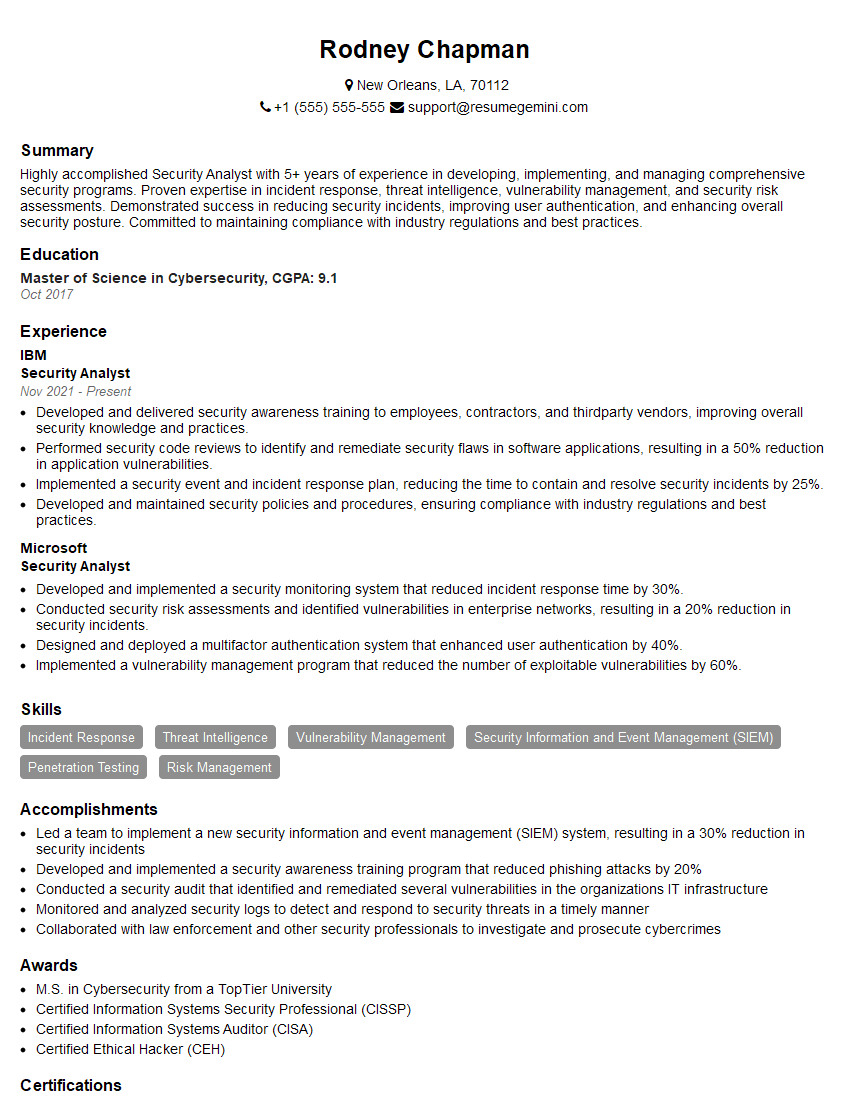
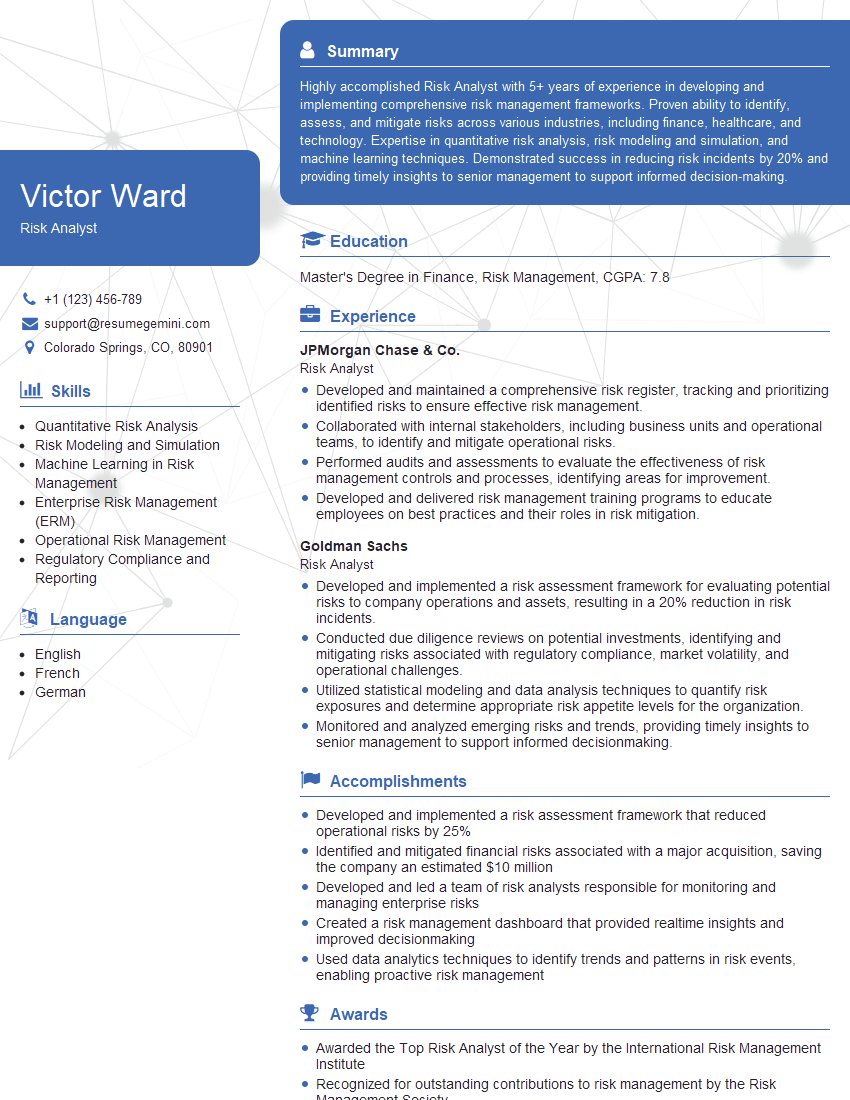
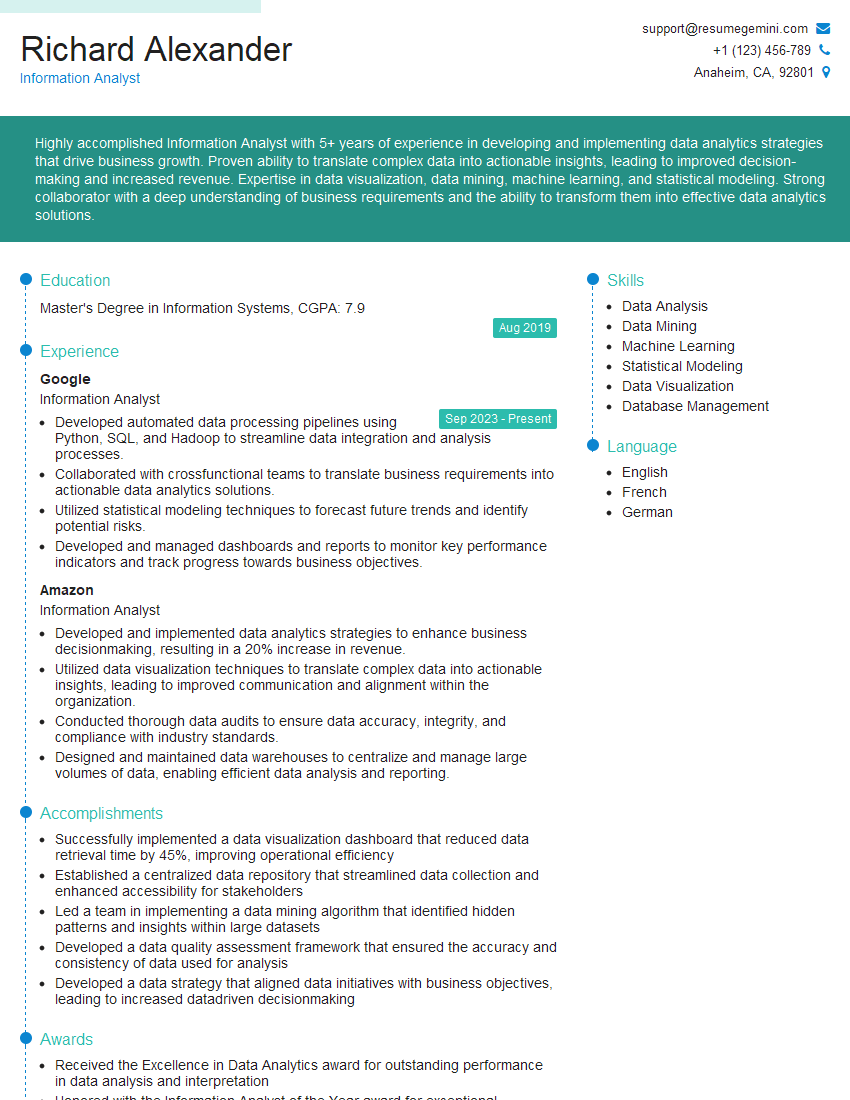
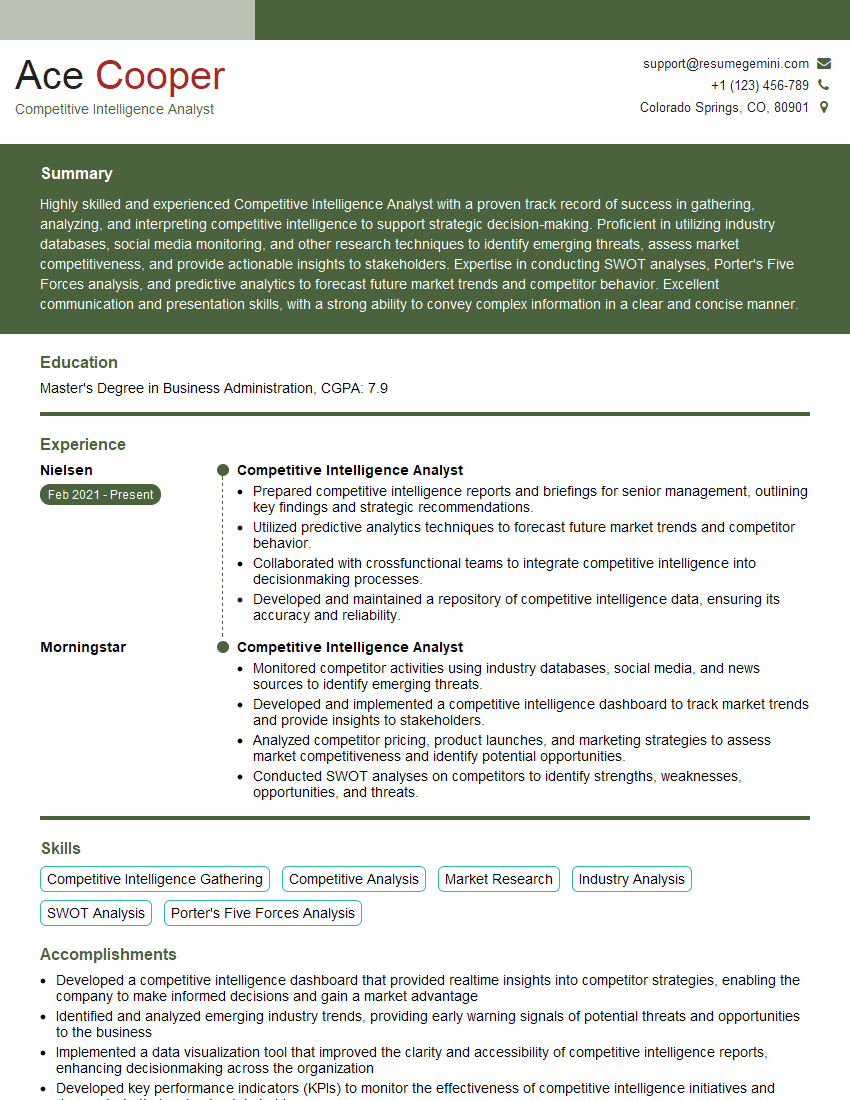
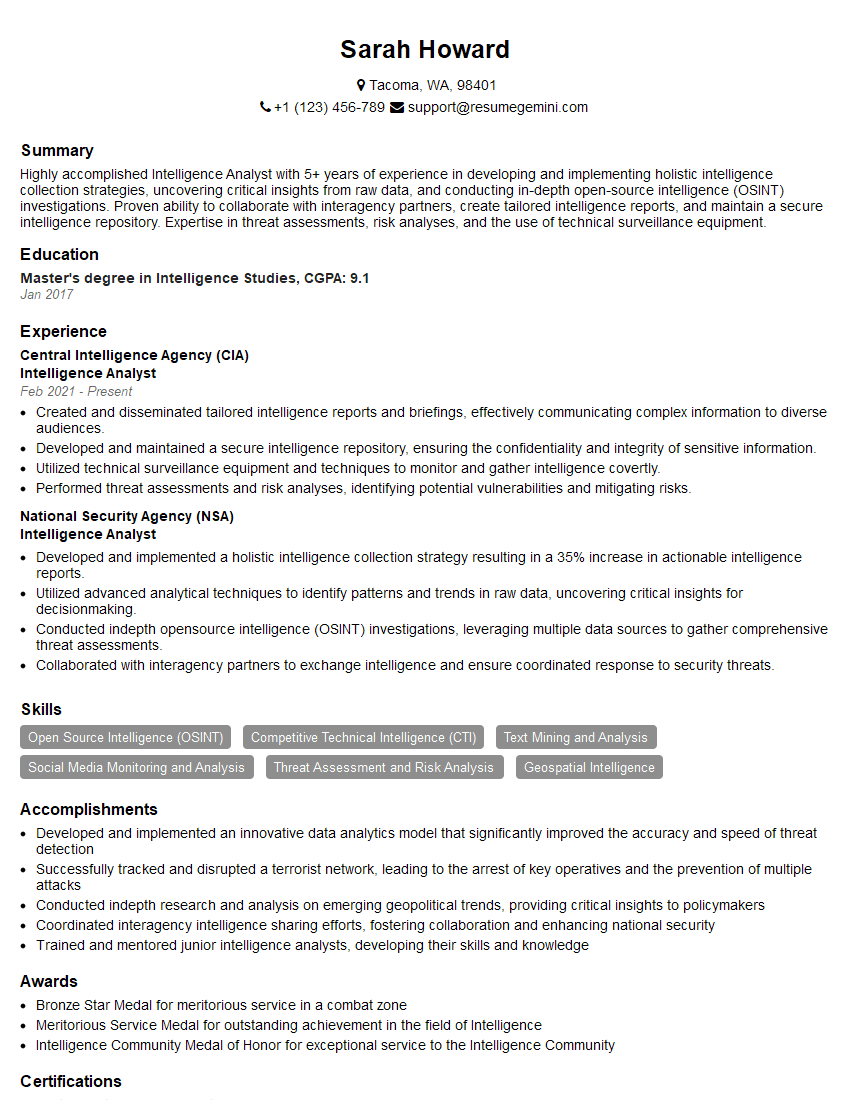
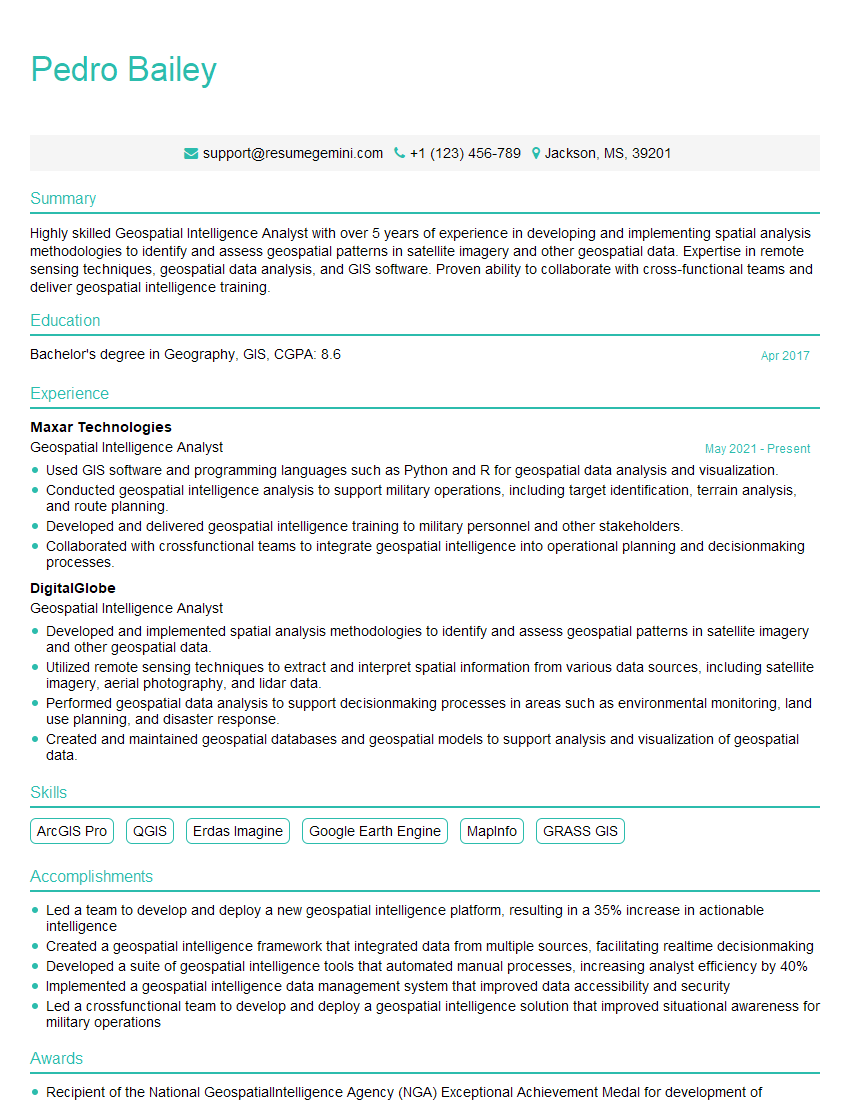
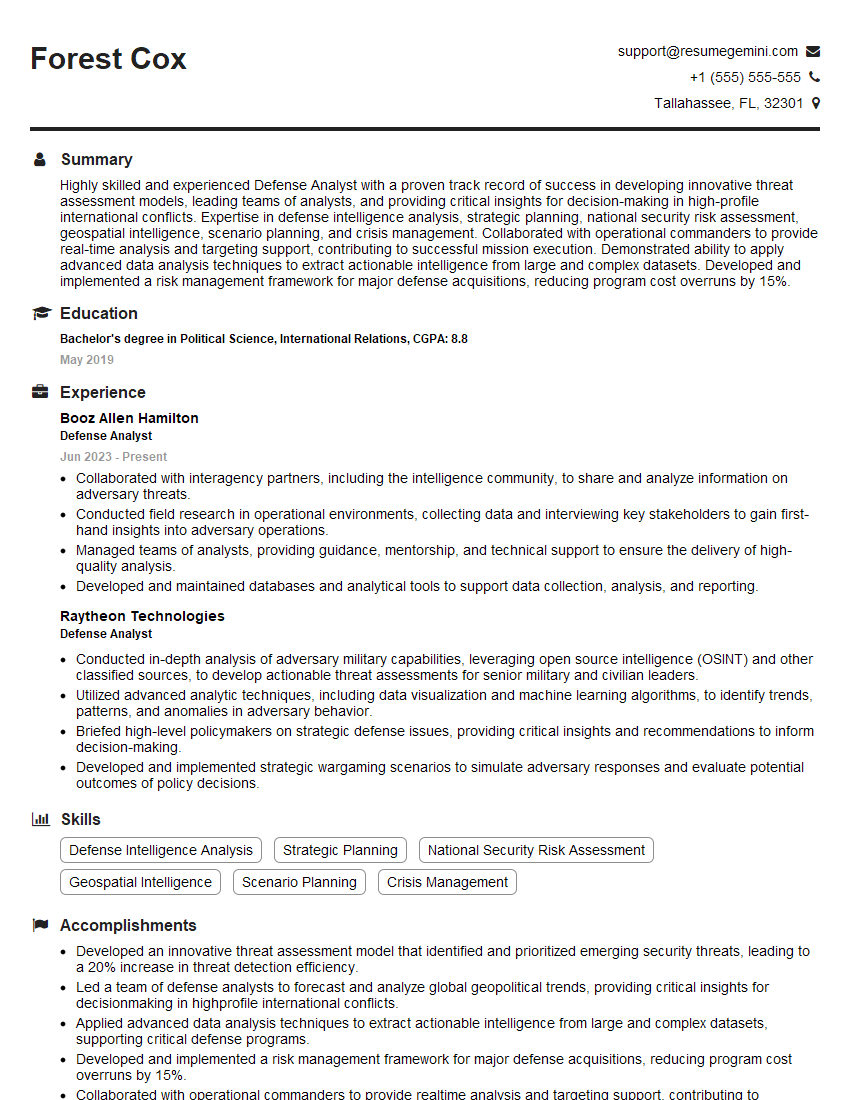
Mastering AllSource Analysis opens doors to exciting and impactful careers, offering opportunities for significant growth and influence in various fields. To maximize your job prospects, crafting a compelling and ATS-friendly resume is crucial. ResumeGemini is a trusted resource that can significantly enhance your resume-building experience, helping you showcase your skills and experience effectively. We provide examples of resumes tailored to AllSource Analysis positions to help you build a winning application. Invest time in creating a strong resume – it’s your first impression and a key element in securing your dream role.
Explore more articles
Users Rating of Our Blogs
Share Your Experience
We value your feedback! Please rate our content and share your thoughts (optional).
What Readers Say About Our Blog
Very informative content, great job.
good