Feeling uncertain about what to expect in your upcoming interview? We’ve got you covered! This blog highlights the most important Experience with supplier management and sourcing interview questions and provides actionable advice to help you stand out as the ideal candidate. Let’s pave the way for your success.
Questions Asked in Experience with supplier management and sourcing Interview
Q 1. Describe your experience with different sourcing strategies (e.g., competitive bidding, reverse auctions, negotiation).
Sourcing strategies are crucial for securing the best value and quality from suppliers. I have extensive experience employing various approaches, tailoring my selection to the specific needs of the project and the supplier market.
- Competitive Bidding: This involves inviting multiple suppliers to submit sealed bids for a clearly defined requirement. It’s effective for standardized goods and services where price is the primary driver. For example, I once used competitive bidding for procuring office supplies, resulting in a 15% cost reduction compared to our previous supplier.
- Reverse Auctions: This is a dynamic online process where suppliers compete in real-time to lower their prices. It’s ideal for high-volume purchases where price is paramount and transparency is desired. I utilized a reverse auction for a large IT hardware procurement, achieving a 20% cost saving over initial quotes.
- Negotiation: This is a more collaborative approach focusing on building long-term relationships with strategic suppliers. It’s beneficial when dealing with complex, customized goods or services where quality, innovation, and delivery reliability are critical. For instance, I negotiated a long-term contract with a specialized manufacturer, ensuring a steady supply of high-quality components and leveraging volume discounts to reduce unit costs.
The choice of strategy depends on several factors including market conditions, urgency, complexity of the requirements, and the desired level of supplier engagement. I always carefully assess these factors before selecting the most appropriate approach.
Q 2. Explain your process for supplier selection and evaluation.
Supplier selection and evaluation are critical to mitigating risks and ensuring consistent performance. My process involves a structured approach with clearly defined stages:
- Requirement Definition: Clearly defining specifications, quality standards, delivery timelines, and other crucial requirements. This ensures all potential suppliers are evaluating the same criteria.
- Supplier Identification & Pre-qualification: Identifying potential suppliers through market research, industry databases, and referrals. Pre-qualification screens out suppliers who don’t meet basic criteria (e.g., financial stability, certifications).
- Supplier Assessment & Scoring: A detailed evaluation of shortlisted suppliers based on predefined criteria. This often includes financial stability analysis, capacity assessment, quality management systems review, and site visits. A weighted scoring system helps rank suppliers objectively.
- Negotiation & Contract Finalization: Negotiating favorable terms and conditions, including pricing, payment terms, service level agreements, and risk mitigation clauses.
- Onboarding & Performance Monitoring: A structured onboarding process to integrate the chosen supplier into our systems and procedures. Ongoing performance monitoring to ensure continuous compliance and adherence to contractual obligations.
Throughout this process, I leverage various tools and techniques, such as supplier questionnaires, reference checks, and benchmark data to ensure a thorough and transparent assessment.
Q 3. How do you manage supplier relationships to ensure performance and compliance?
Managing supplier relationships effectively is essential for long-term success. I focus on building collaborative partnerships rather than transactional relationships. This involves:
- Regular Communication: Maintaining open and transparent communication channels with key supplier contacts. Regular meetings, performance reviews, and proactive feedback sessions are crucial.
- Collaborative Problem-Solving: Working closely with suppliers to identify and resolve issues promptly and effectively. This fosters a sense of shared responsibility and mutual trust.
- Performance Monitoring & Feedback: Continuous monitoring of supplier performance against pre-defined metrics. Providing constructive feedback to help suppliers improve their processes and capabilities.
- Relationship Management Tools: Utilizing supplier relationship management (SRM) software to streamline communication, track performance, and manage contracts.
- Incentive Programs: Implementing incentive programs to reward superior performance and encourage continuous improvement. This could include early payment discounts or performance-based bonuses.
By fostering strong relationships, I encourage open communication, collaboration, and ultimately achieve better outcomes for both my organization and our suppliers. For example, by proactively addressing a quality issue with a key supplier, we prevented a major production delay and strengthened our relationship.
Q 4. What metrics do you use to measure supplier performance?
Measuring supplier performance requires a balanced scorecard approach, considering both quantitative and qualitative metrics. Key metrics I use include:
- On-Time Delivery: Percentage of orders delivered on or before the agreed-upon date.
- Quality Performance: Defect rate, return rate, and customer satisfaction related to the supplier’s products or services.
- Cost Performance: Price competitiveness, adherence to agreed-upon pricing, and cost reduction initiatives.
- Lead Time: Time taken from order placement to delivery.
- Compliance: Adherence to contractual obligations, regulatory requirements, and ethical standards.
- Innovation: Supplier’s contributions to process improvements or new product development.
- Financial Stability: Supplier’s credit rating, financial performance, and solvency.
These metrics are tracked regularly and analyzed to identify areas for improvement and to inform future supplier selection decisions. The specific metrics used are tailored to the nature of the goods or services being sourced.
Q 5. Describe your experience with supplier risk management.
Supplier risk management is a proactive process that identifies, assesses, and mitigates potential disruptions to the supply chain. My approach involves:
- Risk Identification: Identifying potential risks, including financial instability, geopolitical events, natural disasters, quality issues, and supply chain disruptions.
- Risk Assessment: Evaluating the likelihood and potential impact of each identified risk.
- Risk Mitigation: Developing strategies to mitigate identified risks. This may involve diversifying suppliers, implementing contingency plans, establishing safety stock levels, or negotiating flexible contract terms.
- Risk Monitoring: Regularly monitoring the identified risks and adjusting mitigation strategies as needed.
- Supplier Due Diligence: Conducting thorough background checks and financial audits on potential suppliers to assess their stability and reliability.
For example, during the COVID-19 pandemic, I proactively diversified our sourcing for critical components, mitigating the risk of supply chain disruptions. Having a robust risk management framework is essential to ensure business continuity and resilience.
Q 6. How do you negotiate contracts with suppliers?
Negotiating contracts with suppliers requires a strategic approach that balances the interests of both parties. My process involves:
- Preparation: Thorough research on market prices, supplier capabilities, and industry best practices. Developing clear objectives and desired outcomes for the negotiation.
- Relationship Building: Establishing a positive working relationship with the supplier’s negotiation team. Open communication and mutual respect are essential for a successful outcome.
- Value Proposition: Clearly articulating the value proposition for the supplier, highlighting the long-term benefits of a mutually beneficial relationship.
- Strategic Concession: Identifying areas where concessions can be made without compromising key objectives. This demonstrates flexibility and willingness to compromise.
- Documentation: Ensuring all agreed-upon terms and conditions are clearly documented in a legally binding contract.
I always strive for win-win negotiations, creating long-term partnerships based on trust and mutual benefit. This approach has consistently resulted in favorable contract terms and strong supplier relationships. For instance, I negotiated a contract that included performance incentives, motivating the supplier to improve their quality and on-time delivery performance.
Q 7. What is your experience with different contract types (e.g., fixed-price, cost-plus)?
Different contract types suit different circumstances. I have experience working with various contract models, choosing the most appropriate one based on the project’s specifics.
- Fixed-Price Contracts: These define a fixed price for a clearly specified scope of work. They provide price certainty but can be less flexible if requirements change. I used this for a website development project where the scope was well-defined.
- Cost-Plus Contracts: These reimburse the supplier for their actual costs plus a pre-agreed markup. They provide flexibility when requirements are uncertain but can lead to cost overruns if not managed carefully. I employed this for a research and development project where the scope was evolving.
- Time & Materials Contracts: These reimburse the supplier for their time and materials at pre-agreed rates. They offer flexibility but require strict tracking and control to avoid cost overruns. I used this for a consultancy project with an evolving scope of work.
Selecting the right contract type requires careful consideration of project complexity, risk tolerance, and the desired level of flexibility. I always ensure the contract clearly defines roles, responsibilities, payment terms, and performance expectations, to minimize ambiguity and potential disputes.
Q 8. How do you handle supplier performance issues?
Handling supplier performance issues requires a structured approach that focuses on identifying the root cause, implementing corrective actions, and preventing future occurrences. It’s not about blame, but about continuous improvement.
- Identification: I begin by gathering data – reviewing performance metrics (on-time delivery, quality, cost), conducting performance reviews, and directly communicating with the supplier. For instance, if a supplier consistently misses deadlines, I’d analyze whether it’s due to internal issues at their end, unforeseen circumstances, or inadequate capacity planning on my side.
- Root Cause Analysis: Once the problem is identified (e.g., quality defects, late deliveries), a root cause analysis (e.g., 5 Whys, fishbone diagram) helps pinpoint the underlying factors. This may reveal issues like insufficient training, faulty equipment, or ineffective processes.
- Corrective Actions: A collaborative corrective action plan (CAP) is developed with the supplier, outlining specific, measurable, achievable, relevant, and time-bound (SMART) goals. This might involve providing technical assistance, improving communication channels, or renegotiating contract terms. Regular follow-up meetings are crucial to track progress.
- Preventive Actions: To prevent recurrence, we implement preventive measures. This might involve improving supplier selection criteria, strengthening quality control processes, or implementing early warning systems to identify potential problems before they escalate. For example, we might incorporate regular performance reviews or use predictive analytics based on past data.
In one instance, a key supplier experienced significant production delays due to a natural disaster. We worked collaboratively to find alternative sourcing options temporarily, while also supporting the supplier’s recovery efforts through flexible payment terms and technical assistance. This preserved our relationship and ensured uninterrupted supply.
Q 9. Describe your experience with supplier audits.
Supplier audits are critical for ensuring compliance, quality, and risk mitigation. My experience encompasses both first-party (internal) and second-party (customer) audits, covering various aspects of the supplier’s operations.
- Planning & Scope: A thorough audit plan is essential, outlining the scope (e.g., quality management system, environmental compliance, financial stability), methodology (e.g., checklist, sampling), and timelines. This plan should align with industry standards and regulations.
- On-site Assessment: On-site audits involve reviewing documents, observing processes, and interviewing personnel to assess the supplier’s adherence to agreed-upon standards and requirements. I use checklists and data gathering techniques to ensure a systematic and objective evaluation. For example, verifying the presence of necessary certifications, inspecting production facilities and equipment, and reviewing quality records.
- Reporting & Follow-up: Post-audit, a comprehensive report is prepared detailing findings, including both strengths and weaknesses. Non-conformances are clearly identified, and corrective actions are agreed upon with the supplier. Follow-up audits are conducted to verify the effectiveness of corrective actions.
For example, during an audit of a manufacturing supplier, we discovered inconsistencies in their documentation management system. We worked with them to implement a new system, providing training and support, resulting in significant improvements in record keeping and traceability.
Q 10. What is your experience with developing supplier scorecards?
Supplier scorecards are valuable tools for monitoring and evaluating supplier performance. They provide a clear, concise overview of a supplier’s performance across various key performance indicators (KPIs).
- KPI Selection: The KPIs chosen should reflect the strategic importance of the supplier and the critical aspects of their performance. These might include on-time delivery, quality, cost, responsiveness, and innovation. Weighting can be applied to KPIs based on their relative importance.
- Data Collection & Measurement: Reliable data sources are crucial for accurate measurement. This might include purchase orders, delivery receipts, quality reports, and supplier feedback surveys. Automated data collection systems can significantly improve efficiency and accuracy.
- Scorecard Development: The scorecard itself can be a simple spreadsheet or a more sophisticated dashboard, visualizing performance against targets. Color-coding or other visual cues help identify areas for improvement.
- Performance Review & Feedback: Regular reviews of the scorecards facilitate open communication with suppliers. This enables proactive identification of performance gaps and allows for targeted improvement initiatives.
I’ve developed scorecards for various suppliers, from small component manufacturers to large logistics providers. One successful implementation involved using a weighted scorecard to evaluate suppliers based on not only cost but also factors like sustainability practices and ethical sourcing, leading to better supplier selection and improved corporate social responsibility.
Q 11. How do you manage supplier diversity initiatives?
Managing supplier diversity initiatives involves proactively seeking out and engaging with suppliers from underrepresented groups, including minority-owned businesses, women-owned businesses, veteran-owned businesses, and disability-owned businesses. This fosters a more inclusive and equitable supply chain.
- Setting Goals & Targets: Establishing clear goals and targets for supplier diversity is critical. This might involve setting specific percentages for spending with diverse suppliers. Regular monitoring is needed to track progress against these goals.
- Supplier Identification & Outreach: Identifying potential diverse suppliers requires proactive outreach. This could involve utilizing online databases, attending diversity supplier events, and partnering with organizations that support diverse businesses.
- Mentorship & Development: Providing mentorship and development opportunities to diverse suppliers can enhance their capabilities and competitiveness. This might include training programs, technical assistance, and access to networking opportunities.
- Performance Monitoring & Reporting: Regularly monitoring the performance of diverse suppliers and reporting progress towards diversity goals is crucial for demonstrating commitment and ensuring accountability.
In a previous role, I implemented a supplier diversity program that resulted in a significant increase in spending with diverse suppliers. This was achieved through a combination of proactive outreach, targeted training programs, and strong leadership commitment.
Q 12. How do you ensure supplier compliance with regulations and ethical standards?
Ensuring supplier compliance with regulations and ethical standards is paramount for mitigating risk and maintaining a responsible supply chain. This requires a multi-faceted approach.
- Due Diligence: Thorough due diligence is crucial during supplier selection, evaluating their compliance history, certifications, and adherence to ethical standards. This might include reviewing their environmental, social, and governance (ESG) performance.
- Contractual Requirements: Contracts should explicitly outline compliance requirements, including adherence to relevant laws, industry standards, and ethical codes of conduct. Penalties for non-compliance should be clearly defined.
- Regular Monitoring & Audits: Regular monitoring and audits, including third-party audits, are essential to verify ongoing compliance. This may involve reviewing supplier documentation, conducting on-site inspections, and evaluating performance against established criteria.
- Training & Communication: Regular training and communication are needed to keep suppliers informed of relevant regulations and ethical expectations. This helps ensure that they have the necessary knowledge and support to maintain compliance.
For example, we implemented a robust compliance program that included regular audits and supplier training on anti-bribery and corruption laws. This helped minimize our risk of non-compliance and strengthened relationships with our suppliers.
Q 13. Describe your experience with using e-procurement systems.
E-procurement systems streamline the procurement process, improving efficiency, transparency, and cost savings. My experience encompasses the implementation and utilization of various e-procurement platforms.
- System Selection & Implementation: Selecting the right e-procurement system requires careful consideration of the organization’s needs and requirements. This involves evaluating different platforms, considering factors like functionality, scalability, integration with existing systems, and user-friendliness. Implementation often involves user training and data migration.
- Process Optimization: E-procurement systems enable process optimization by automating tasks such as purchase requisition, purchase order creation, and invoice processing. This reduces manual effort, minimizes errors, and speeds up the procurement cycle.
- Supplier Collaboration: Many e-procurement systems facilitate collaboration with suppliers, enabling efficient communication, order tracking, and performance monitoring. This improves transparency and strengthens supplier relationships.
- Data Analysis & Reporting: E-procurement systems provide valuable data for analysis and reporting. This data can be used to identify cost savings opportunities, improve supplier performance, and make informed procurement decisions.
In a previous role, we implemented an e-procurement system that reduced our procurement cycle time by 50% and improved accuracy of purchase orders by 20%. The system also provided valuable data on supplier performance, enabling us to make more strategic sourcing decisions.
Q 14. What is your experience with global sourcing?
Global sourcing involves procuring goods and services from suppliers located in different countries. It presents opportunities for cost savings, access to specialized skills and resources, and expanded market reach, but also introduces complexities.
- Supplier Selection: Global sourcing requires careful evaluation of potential suppliers, considering factors such as geographic location, cost, quality, lead times, regulatory compliance, and political risk. Thorough due diligence is critical to mitigate potential risks.
- Cultural & Language Differences: Effective communication and understanding of cultural differences are essential. This involves adapting communication strategies, building strong relationships with suppliers, and addressing any language barriers.
- Logistics & Transportation: Managing global logistics and transportation effectively is crucial to ensure timely delivery and minimize costs. This requires selecting appropriate shipping methods, managing customs procedures, and tracking shipments.
- Risk Management: Global sourcing introduces various risks, including political instability, currency fluctuations, natural disasters, and supply chain disruptions. Effective risk management strategies are needed to mitigate these risks.
I’ve been involved in global sourcing initiatives for various products and services. For example, we successfully sourced a critical component from a supplier in Asia, leveraging their expertise and cost advantages while implementing robust risk mitigation strategies to manage potential supply chain disruptions.
Q 15. How do you manage supplier lead times and inventory levels?
Managing supplier lead times and inventory levels is crucial for maintaining a smooth and efficient supply chain. It involves a delicate balancing act between minimizing storage costs and avoiding stockouts. My approach focuses on a collaborative relationship with suppliers and leveraging data-driven forecasting.
Firstly, I work closely with suppliers to understand their production capabilities and lead times. This involves regular communication and potentially on-site visits to assess their processes. We jointly define service level agreements (SLAs) that specify acceptable lead times and penalties for delays. Transparency is key; we share our demand forecasts with suppliers, enabling them to plan their production schedules effectively.
Secondly, I utilize inventory management systems to monitor stock levels in real-time. These systems provide accurate data on consumption rates, enabling us to predict future demand and adjust our orders accordingly. We employ various inventory management techniques like Just-In-Time (JIT) or Kanban to optimize inventory levels. For instance, in a previous role, implementing JIT inventory management for a key component reduced our warehousing costs by 15% while maintaining sufficient stock levels.
Thirdly, safety stock is incorporated into our calculations to account for unexpected disruptions. The optimal safety stock level is determined based on factors like lead time variability, demand volatility, and the cost of stockouts. We regularly review and adjust our safety stock levels to reflect changes in the market or supply chain dynamics.
Career Expert Tips:
- Ace those interviews! Prepare effectively by reviewing the Top 50 Most Common Interview Questions on ResumeGemini.
- Navigate your job search with confidence! Explore a wide range of Career Tips on ResumeGemini. Learn about common challenges and recommendations to overcome them.
- Craft the perfect resume! Master the Art of Resume Writing with ResumeGemini’s guide. Showcase your unique qualifications and achievements effectively.
- Don’t miss out on holiday savings! Build your dream resume with ResumeGemini’s ATS optimized templates.
Q 16. Describe your experience with supplier consolidation.
Supplier consolidation involves reducing the number of suppliers used for a particular product or service. This strategy offers several advantages, including improved cost efficiencies, stronger supplier relationships, and reduced administrative overhead. My experience with supplier consolidation includes a project where we reduced our number of electronics component suppliers from 15 to 5.
The process started with a thorough analysis of our current supplier base. We evaluated suppliers based on factors such as price, quality, reliability, and capacity. We identified opportunities for consolidation by grouping similar products or services and selecting a few top-performing suppliers for each category. This often involves negotiating better terms with the selected suppliers due to increased order volumes.
The transition involved careful planning and risk mitigation. We phased out contracts with less desirable suppliers and gradually shifted our orders to the consolidated suppliers. This gradual approach minimized disruption and allowed ample time to address any potential issues. Continuous monitoring and communication were crucial during the transition to ensure a smooth workflow. The result was a 10% reduction in procurement costs and a 12% improvement in on-time delivery.
Q 17. How do you forecast future supplier needs?
Forecasting future supplier needs is essential for proactive procurement and preventing supply chain disruptions. My approach combines quantitative and qualitative methods to arrive at a robust forecast. I start by analyzing historical data on product demand, factoring in seasonal trends and market fluctuations.
Quantitative methods include utilizing time series analysis, regression models, and forecasting software. These tools help identify patterns and trends in demand and project future needs with a degree of statistical confidence. For example, I’ve used ARIMA models to forecast demand for seasonal products with great accuracy.
Qualitative methods incorporate market intelligence and expert opinions. We engage with sales, marketing, and product development teams to get their insights into future product launches, anticipated changes in customer demand, and potential market disruptions. This combined approach provides a more comprehensive and accurate forecast.
Regular review and adjustment of the forecast are critical. We track the forecast accuracy against actual demand and make adjustments as needed. This iterative process ensures the forecast remains relevant and reliable, allowing us to proactively manage supplier relationships and secure necessary resources.
Q 18. What is your experience with supplier onboarding?
Supplier onboarding is a critical process to ensure new suppliers meet our quality, compliance, and performance standards. My experience involves establishing a structured and standardized onboarding program that covers all aspects of supplier integration.
The process begins with a thorough due diligence assessment. This includes evaluating the supplier’s financial stability, production capabilities, quality management systems, and ethical practices. We utilize questionnaires, audits, and site visits to gather the necessary information.
Next, we establish clear communication channels and define roles and responsibilities. This involves creating a dedicated point of contact within our organization and clearly communicating our expectations to the supplier. We provide them with all necessary documentation, including our procurement policies, quality standards, and payment terms.
Finally, we implement a robust training program for the new supplier and regularly monitor their performance. This involves tracking key performance indicators (KPIs) such as on-time delivery, quality, and cost. We conduct regular performance reviews and provide feedback to the supplier, ensuring continuous improvement. A well-structured onboarding process significantly reduces the risk of future issues and helps build a strong, collaborative relationship.
Q 19. How do you identify and mitigate potential supply chain disruptions?
Identifying and mitigating potential supply chain disruptions is paramount to ensure business continuity. My approach involves a multi-layered strategy focused on proactive risk assessment, contingency planning, and supplier diversification.
Risk assessment begins with identifying potential disruptions. This involves considering factors such as geopolitical instability, natural disasters, pandemics, supplier financial instability, and logistical challenges. We use risk matrices to prioritize potential threats based on their likelihood and impact.
Contingency planning involves developing alternative strategies to mitigate identified risks. This might include securing multiple sourcing options, building safety stock, establishing alternative transportation routes, or developing backup suppliers. For example, during the recent global chip shortage, we proactively secured alternative suppliers and increased our safety stock levels to avoid production delays.
Supplier diversification is key to reduce reliance on any single supplier. By diversifying our sourcing across multiple suppliers, we reduce our vulnerability to disruptions affecting a single source. Regularly reviewing and updating our supplier portfolio ensures we maintain the necessary resilience.
Finally, continuous monitoring and communication are essential. We track key indicators, such as lead times, inventory levels, and geopolitical events, to identify potential problems early. Effective communication with suppliers and internal stakeholders allows for timely responses to emerging challenges.
Q 20. Describe your experience with cost reduction initiatives in procurement.
Cost reduction initiatives in procurement require a strategic and data-driven approach. My experience involves a multi-pronged strategy encompassing supplier negotiations, process optimization, and technology implementation.
Supplier negotiations are crucial for achieving cost savings. This involves leveraging our purchasing power to negotiate better pricing, payment terms, and other favorable conditions. We utilize market analysis and benchmark data to justify our desired price points. For example, in a recent negotiation, we secured a 7% reduction in the cost of a key raw material by demonstrating our significant purchasing volume and highlighting competitor pricing.
Process optimization involves identifying and eliminating inefficiencies in our procurement processes. This might involve streamlining approval workflows, automating tasks, and improving communication with suppliers. We often use process mapping tools to identify bottlenecks and areas for improvement. In one instance, implementing a new e-procurement system reduced our processing time by 30% and lowered administrative costs.
Technology implementation plays a significant role in enhancing efficiency and reducing costs. Investing in advanced procurement technologies such as spend analytics tools, contract management systems, and e-procurement platforms can significantly improve cost control and transparency.
Q 21. How do you measure the ROI of procurement initiatives?
Measuring the ROI of procurement initiatives is crucial for demonstrating their value and justifying future investments. My approach involves quantifying both the costs and benefits of the initiatives and calculating the return on investment.
Cost measurement involves tracking all expenses associated with the initiative, including implementation costs, consulting fees, software licenses, and training expenses. We maintain meticulous records of these costs to ensure accuracy.
Benefit measurement focuses on quantifying the positive outcomes of the initiative. This might include cost savings from supplier negotiations, reduced inventory costs, improved efficiency gains from process optimization, and avoided costs from supply chain disruptions. We use various metrics such as cost reduction percentages, efficiency improvements, and avoidance of potential losses.
ROI is calculated by subtracting the total costs from the total benefits and dividing the result by the total costs. For example, if an initiative cost $10,000 and generated $20,000 in savings, the ROI would be 100%. Regular monitoring and reporting of the ROI are essential to assess the ongoing performance of the initiative and to make necessary adjustments.
Q 22. How do you manage supplier communication and collaboration?
Effective supplier communication and collaboration are the bedrock of a successful supply chain. It’s not just about exchanging information; it’s about building trust and fostering a mutually beneficial relationship. My approach involves a multi-faceted strategy:
- Regular communication channels: Establishing clear and consistent communication channels, such as regular meetings (both virtual and in-person), email updates, and a shared online platform for document sharing. This ensures transparency and keeps everyone informed.
- Collaborative problem-solving: When challenges arise, I actively involve the supplier in finding solutions. This collaborative approach fosters shared responsibility and builds stronger relationships. Instead of assigning blame, we work together to identify root causes and implement corrective actions.
- Performance reviews and feedback mechanisms: Regular performance reviews provide structured feedback, allowing for open dialogue on strengths and areas for improvement. We use Key Performance Indicators (KPIs) to track progress and identify trends.
- Relationship building: I prioritize building personal relationships with key contacts at supplier organizations. This creates a foundation of trust and mutual understanding, leading to more effective communication and problem-solving.
For example, during a recent project, I implemented a weekly virtual meeting with our key raw material supplier. This allowed us to proactively address potential delays, discuss quality concerns, and adjust our production schedules based on real-time feedback. This proactive approach saved us significant time and resources.
Q 23. What is your experience with using data analytics in supplier management?
Data analytics plays a crucial role in optimizing supplier management. I leverage data to gain insights into supplier performance, identify risks, and make data-driven decisions. My experience includes:
- Supplier performance dashboards: I use dashboards to visualize key metrics such as on-time delivery, quality defects, and cost performance. This allows for quick identification of trends and potential issues.
- Predictive analytics: By analyzing historical data, we can predict potential risks, such as supply chain disruptions or price fluctuations. This allows for proactive mitigation strategies.
- Spend analysis: Detailed spend analysis helps identify opportunities for cost savings through negotiation, consolidation, or alternative sourcing strategies.
- Risk assessment: Data analysis supports the development of robust risk assessment models, allowing us to prioritize mitigation efforts based on the likelihood and impact of potential issues.
For instance, by analyzing delivery data, we identified a consistent delay pattern with a specific supplier. This led to an investigation that uncovered a bottleneck in their production process, which we helped them resolve through process improvement recommendations. This improved their on-time delivery rate significantly.
Q 24. How do you build and maintain strong working relationships with internal stakeholders?
Building and maintaining strong relationships with internal stakeholders is essential for aligning interests and ensuring successful supplier management. I accomplish this by:
- Open communication: Regular updates and transparent communication keep stakeholders informed about supplier performance and potential risks. This fosters trust and collaboration.
- Stakeholder engagement: I actively involve relevant stakeholders in the supplier selection process, ensuring their needs and requirements are considered.
- Collaboration and teamwork: I view myself as a facilitator, bringing together different departments to collaboratively address supplier-related challenges.
- Proactive problem-solving: Addressing issues promptly and proactively prevents escalation and maintains positive relationships.
In one instance, I worked closely with the engineering and procurement departments to select a new supplier for a critical component. By engaging both teams early in the process, we ensured that the chosen supplier met both the technical and cost requirements. This collaborative approach prevented delays and ensured a successful project outcome.
Q 25. How do you stay current on best practices in supplier management and sourcing?
Staying current with best practices in supplier management and sourcing is an ongoing process. I achieve this through a combination of methods:
- Industry publications and conferences: I regularly read industry journals, attend conferences, and participate in webinars to stay abreast of new trends and technologies.
- Professional networks: I actively participate in professional organizations, such as the Institute for Supply Management (ISM), to network with other professionals and share best practices.
- Benchmarking: I frequently benchmark our supplier management practices against industry leaders to identify areas for improvement.
- Continuous learning: I actively seek out opportunities for professional development, such as online courses and certifications, to enhance my skills and knowledge.
For example, recently I completed a certification in strategic sourcing, which broadened my understanding of advanced negotiation techniques and risk mitigation strategies. This immediately improved my effectiveness in supplier negotiations.
Q 26. Describe a time you had to resolve a significant supplier issue.
In one instance, a key supplier experienced a significant production delay due to unforeseen circumstances. This threatened to disrupt our production schedule and impact our ability to meet customer demand. My response involved:
- Immediate communication: I immediately contacted the supplier to understand the root cause of the delay and the potential impact.
- Contingency planning: We explored alternative sourcing options to mitigate the risk of disruption. This involved identifying backup suppliers and negotiating emergency orders.
- Collaboration and problem-solving: We worked closely with the supplier to develop a recovery plan that minimized the impact on our production schedule.
- Transparent communication with stakeholders: I kept our internal stakeholders informed of the situation and the steps we were taking to resolve it.
Ultimately, through proactive communication and collaboration, we were able to minimize the impact of the delay and successfully meet our customer commitments. This experience highlighted the importance of having a robust risk management plan and backup suppliers in place.
Q 27. What is your experience with implementing a new supplier management system?
I have extensive experience in implementing new supplier management systems (SMS). This involves a structured approach that includes:
- Needs assessment: Clearly defining the requirements and objectives for the new system, considering factors such as functionality, scalability, and integration with existing systems.
- Vendor selection: Evaluating and selecting a suitable vendor based on factors such as cost, functionality, and reputation.
- System implementation: Managing the implementation process, including data migration, user training, and system testing.
- Change management: Developing a comprehensive change management plan to ensure smooth adoption of the new system by stakeholders.
- Post-implementation support: Providing ongoing support and maintenance to ensure the system operates effectively.
In a past role, I led the implementation of a new SMS that automated many manual processes, resulting in improved efficiency and reduced operational costs. This involved careful planning, stakeholder engagement, and effective change management to ensure a successful transition. The new system streamlined our supplier onboarding process, automated performance tracking, and enhanced reporting capabilities.
Q 28. How do you balance cost, quality, and delivery when selecting a supplier?
Balancing cost, quality, and delivery when selecting a supplier is a critical aspect of effective sourcing. It’s not about finding the cheapest option, but rather optimizing the value proposition. I approach this using a weighted scoring system:
- Define criteria: Clearly define the key criteria for evaluating suppliers, including cost, quality, delivery performance, financial stability, and ethical practices. Each criterion is assigned a weight based on its relative importance.
- Supplier evaluation: Develop a scoring system to evaluate each supplier against the defined criteria. This involves collecting data through questionnaires, site visits, and performance reviews.
- Weighted scoring: Each supplier’s score is calculated by multiplying its score on each criterion by its corresponding weight. This provides an objective comparison of different suppliers.
- Decision making: The supplier with the highest weighted score is selected, provided it meets minimum acceptable thresholds for all criteria.
This approach helps avoid focusing solely on cost, ensuring a holistic evaluation that considers the overall value proposition. For example, a supplier might offer a slightly higher price, but consistently deliver high-quality products on time, making them the more valuable choice in the long run.
Key Topics to Learn for Experience with Supplier Management and Sourcing Interview
- Supplier Selection & Qualification: Understanding the process of identifying, evaluating, and selecting suitable suppliers based on criteria like cost, quality, reliability, and capacity. Practical application: Describe a scenario where you had to choose between multiple suppliers and the decision-making process you followed.
- Negotiation & Contract Management: Mastering negotiation techniques to secure favorable terms and conditions in supplier contracts. Practical application: Explain your experience in negotiating pricing, payment terms, or service level agreements with suppliers.
- Supplier Relationship Management (SRM): Building and maintaining strong, collaborative relationships with key suppliers. Practical application: Describe a successful strategy you implemented to improve communication and collaboration with a challenging supplier.
- Risk Management & Mitigation: Identifying and mitigating potential risks associated with supplier relationships, such as supply chain disruptions or quality issues. Practical application: Outline a process you’ve used to identify and address potential supplier risks.
- Performance Monitoring & Improvement: Tracking supplier performance against agreed-upon metrics and implementing improvement plans. Practical application: Describe how you’ve measured and improved a supplier’s performance using key performance indicators (KPIs).
- Sourcing Strategies: Understanding different sourcing strategies (e.g., single sourcing, multiple sourcing, global sourcing) and their implications. Practical application: Discuss your experience in choosing the optimal sourcing strategy for a specific product or service.
- Cost Reduction & Value Engineering: Implementing strategies to reduce procurement costs without compromising quality. Practical application: Provide an example of a cost reduction initiative you led that resulted in significant savings.
- Technology & Systems in Procurement: Familiarity with procurement software and systems used for supplier management, sourcing, and contract management. Practical application: Describe your experience with any procurement software or systems.
Next Steps
Mastering supplier management and sourcing is crucial for career advancement in procurement, supply chain management, and related fields. Demonstrating a strong understanding of these concepts significantly increases your chances of landing your dream role. To make your application stand out, focus on creating an ATS-friendly resume that clearly highlights your relevant skills and experience. ResumeGemini is a trusted resource that can help you build a professional and effective resume tailored to your specific experience. Examples of resumes tailored to Experience with supplier management and sourcing are available to help guide you.
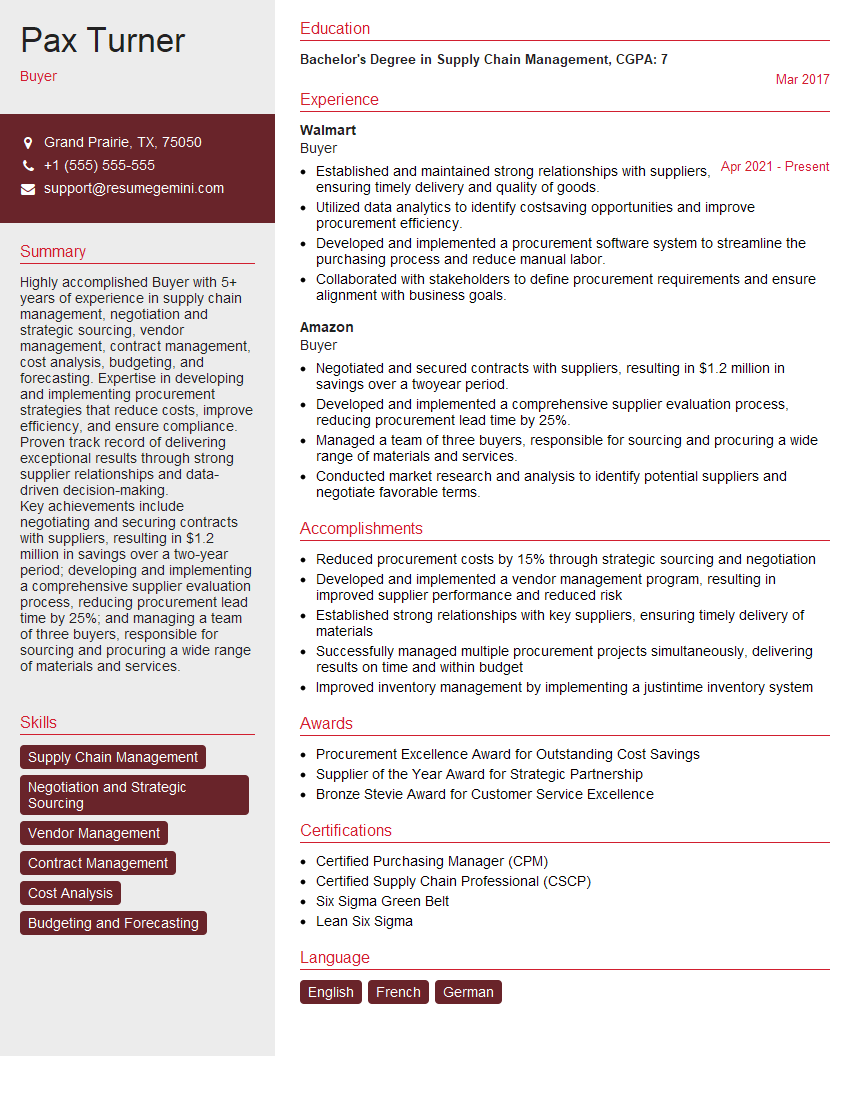
Buyer Resume Sample
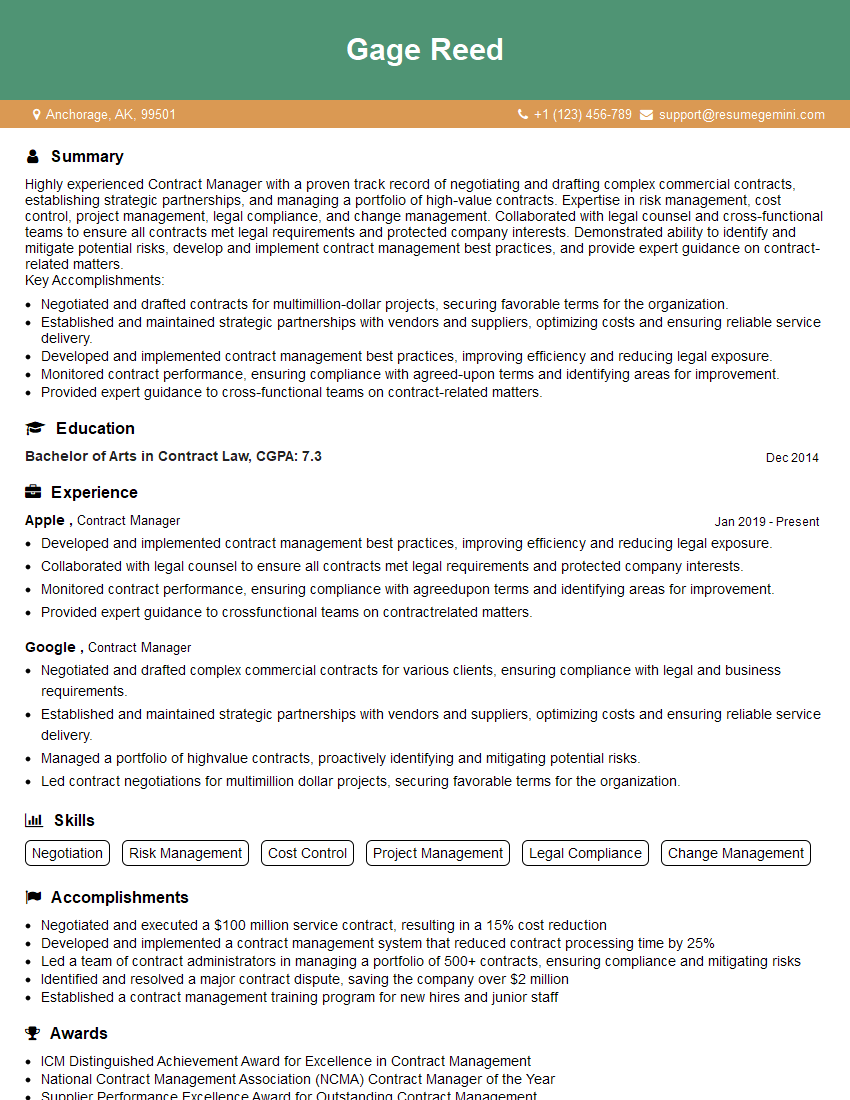
Contract Manager Resume Sample

Procurement Manager Resume Sample
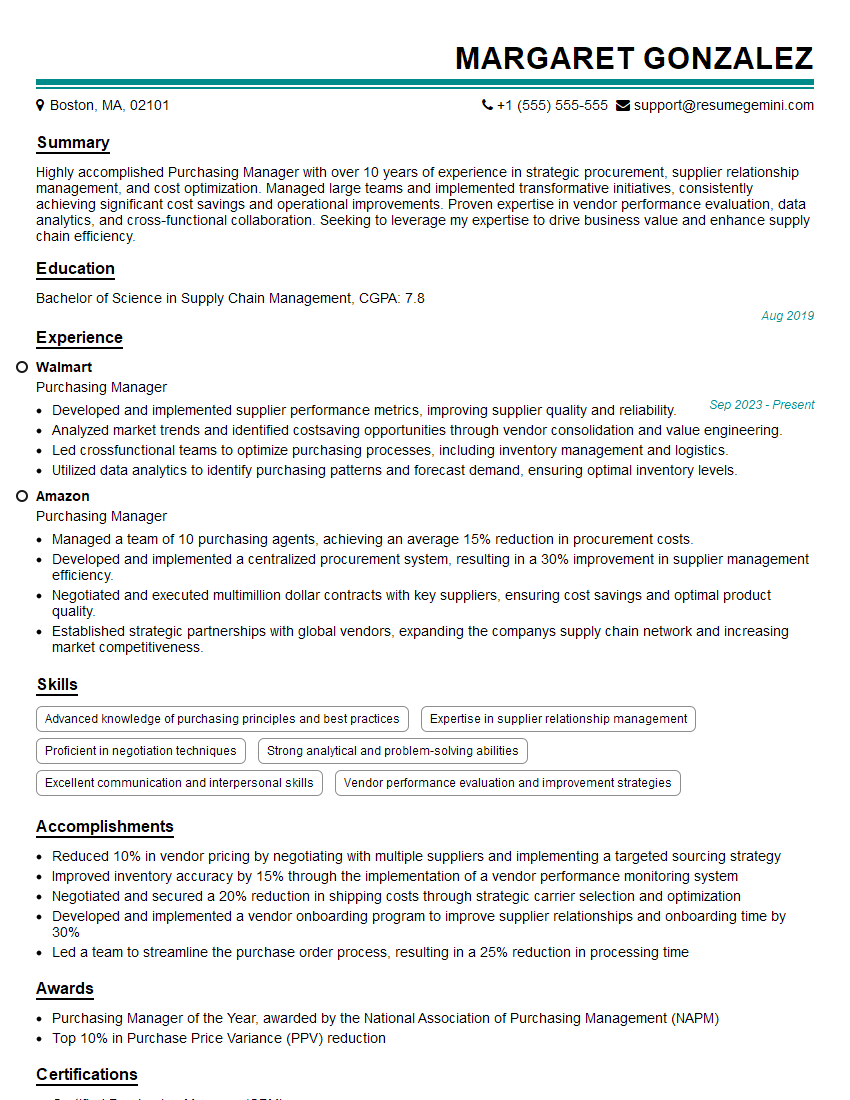
Purchasing Manager Resume Sample
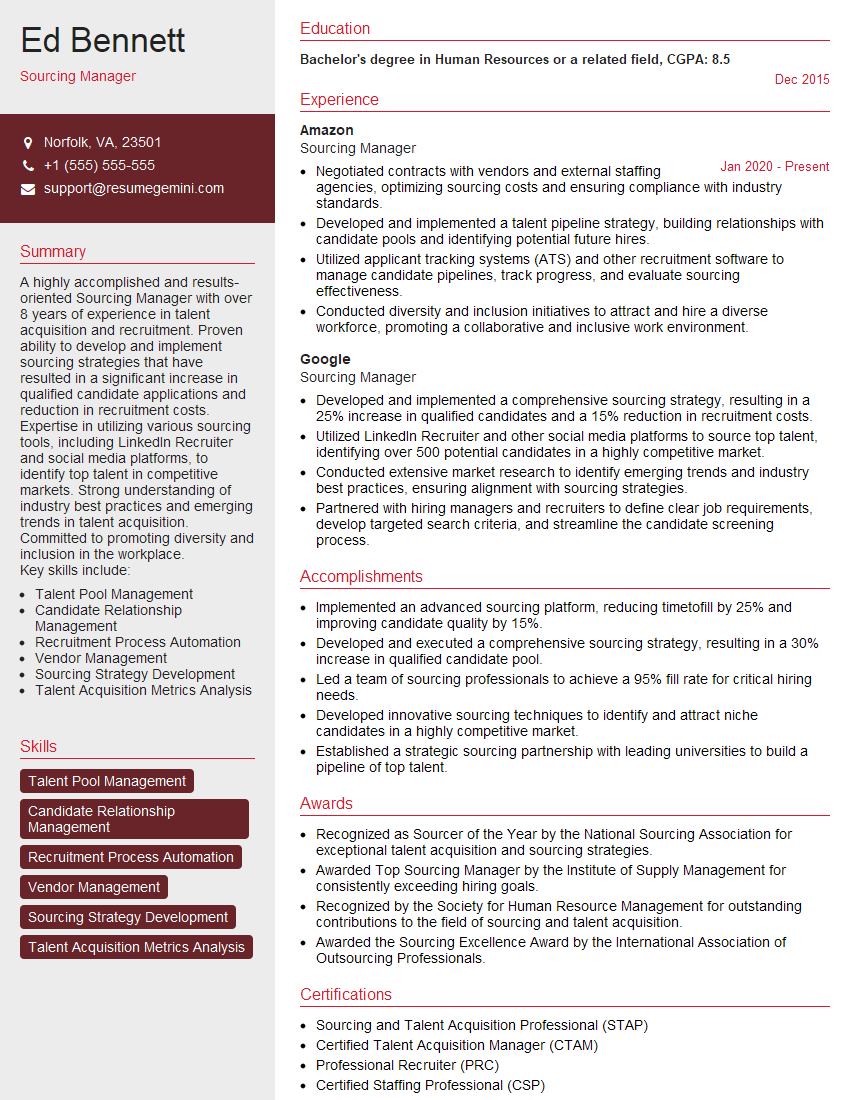
Sourcing Manager Resume Sample

Sourcing Specialist Resume Sample
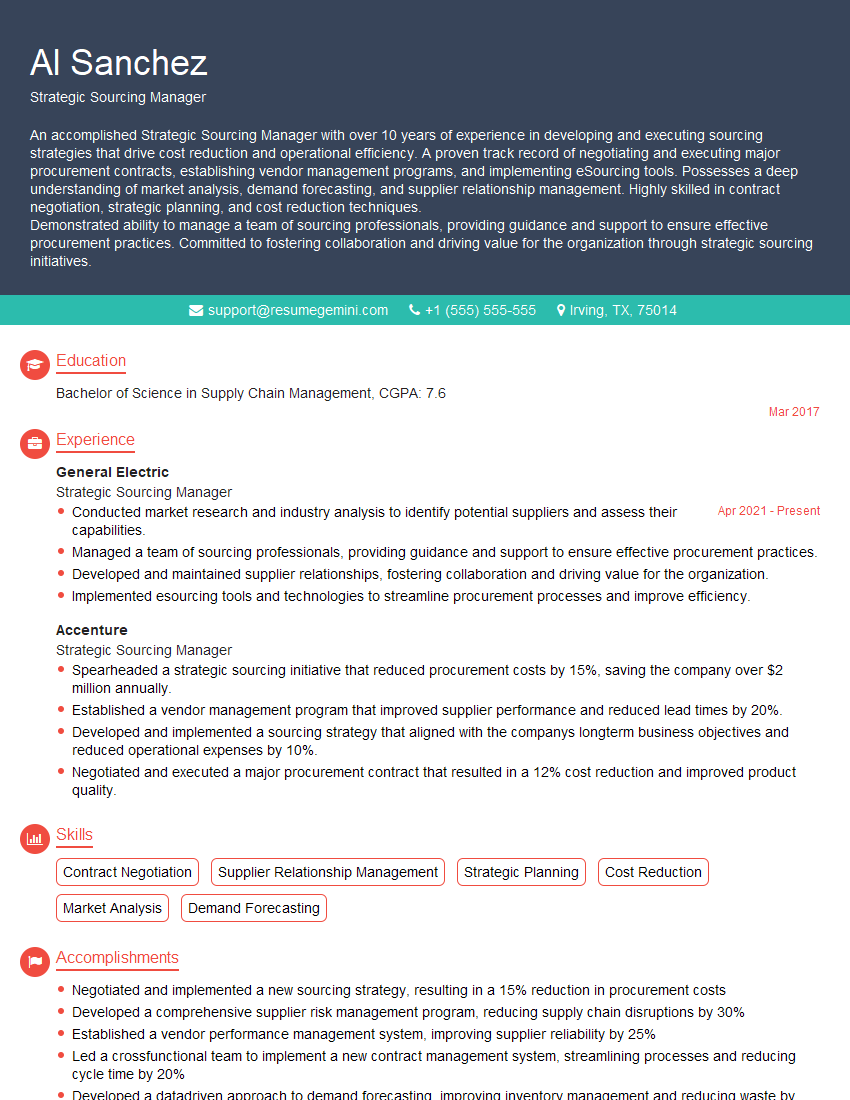
Strategic Sourcing Manager Resume Sample
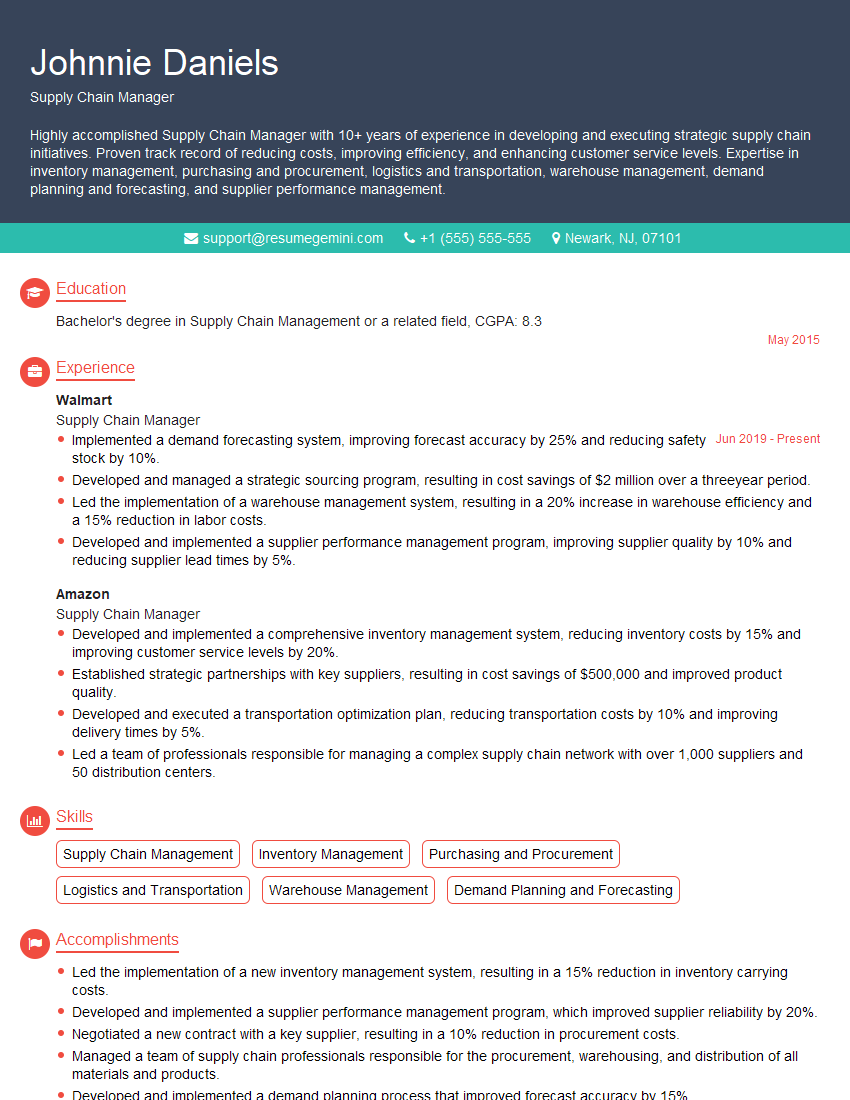
Supply Chain Manager Resume Sample
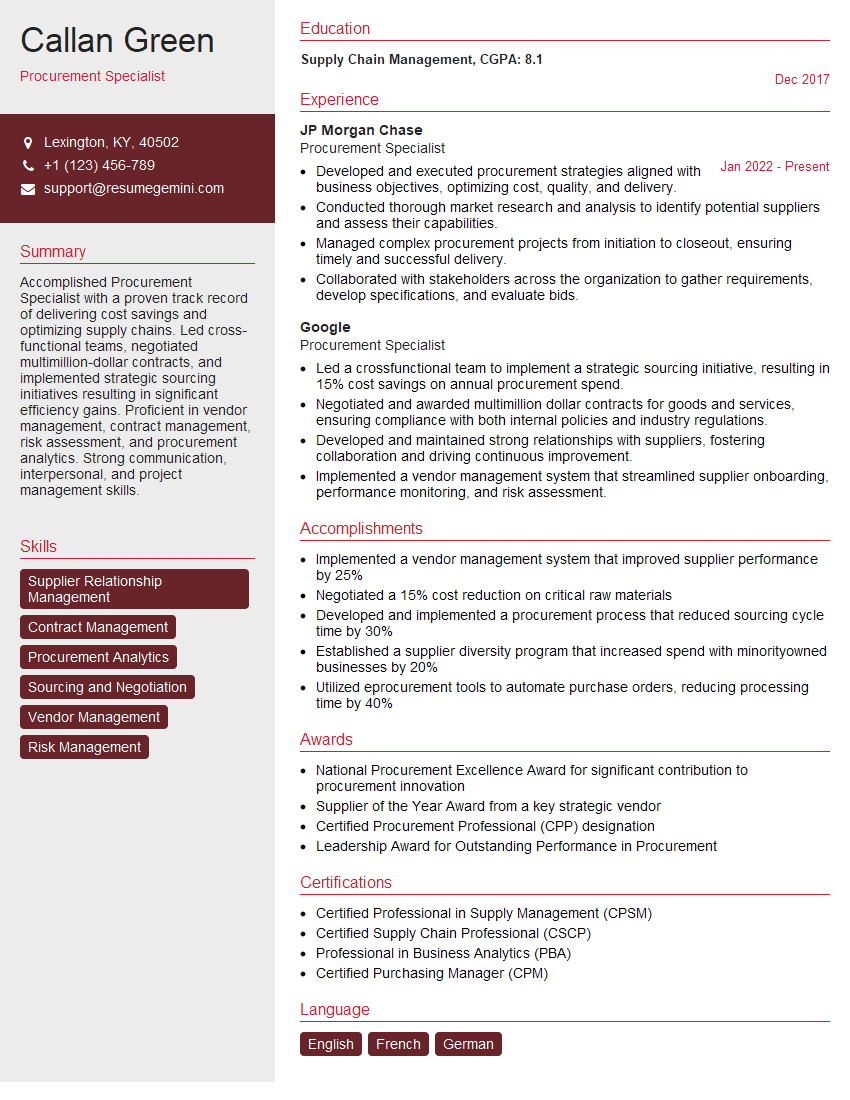
Procurement Specialist Resume Sample
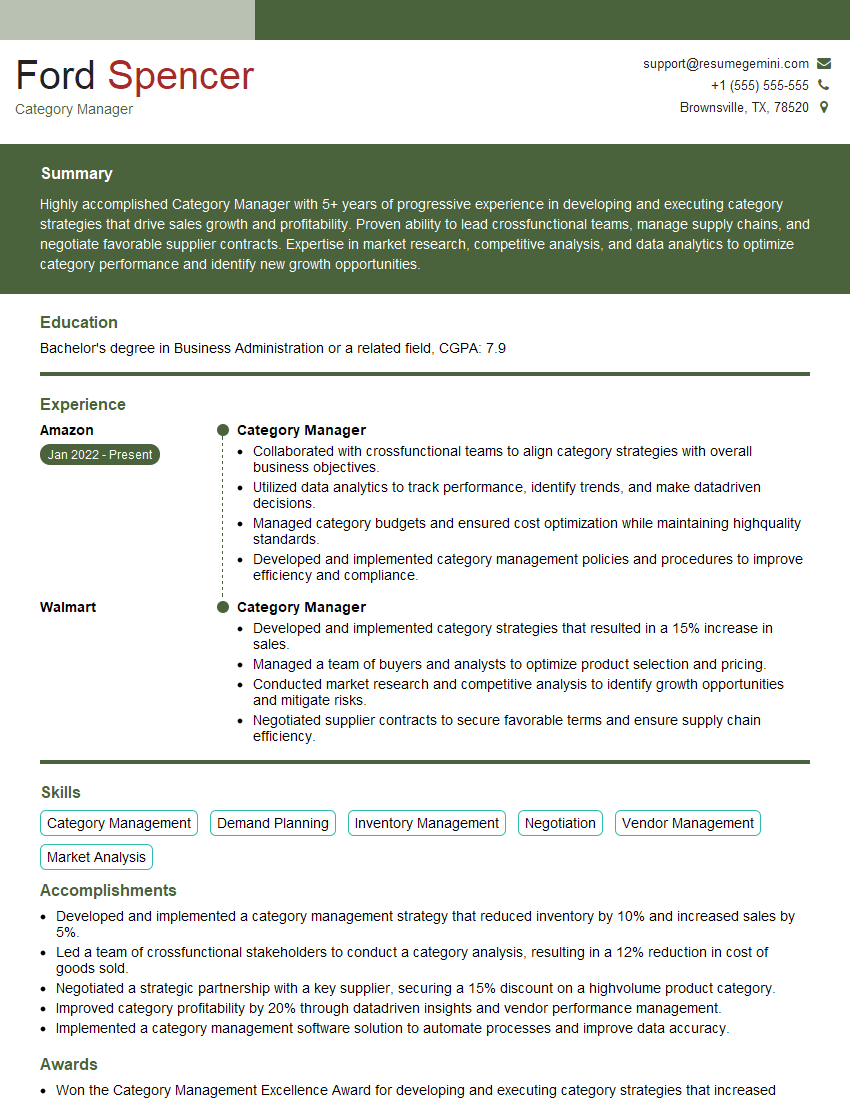
Category Manager Resume Sample
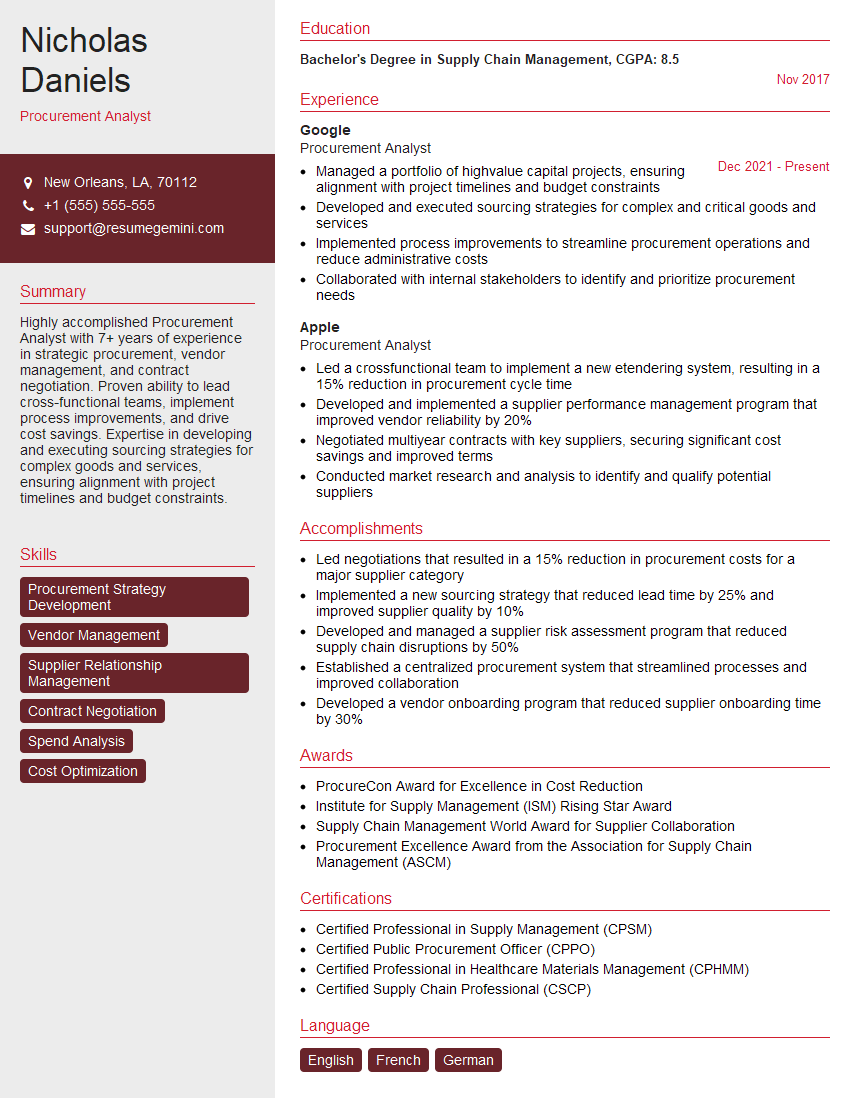
Procurement Analyst Resume Sample
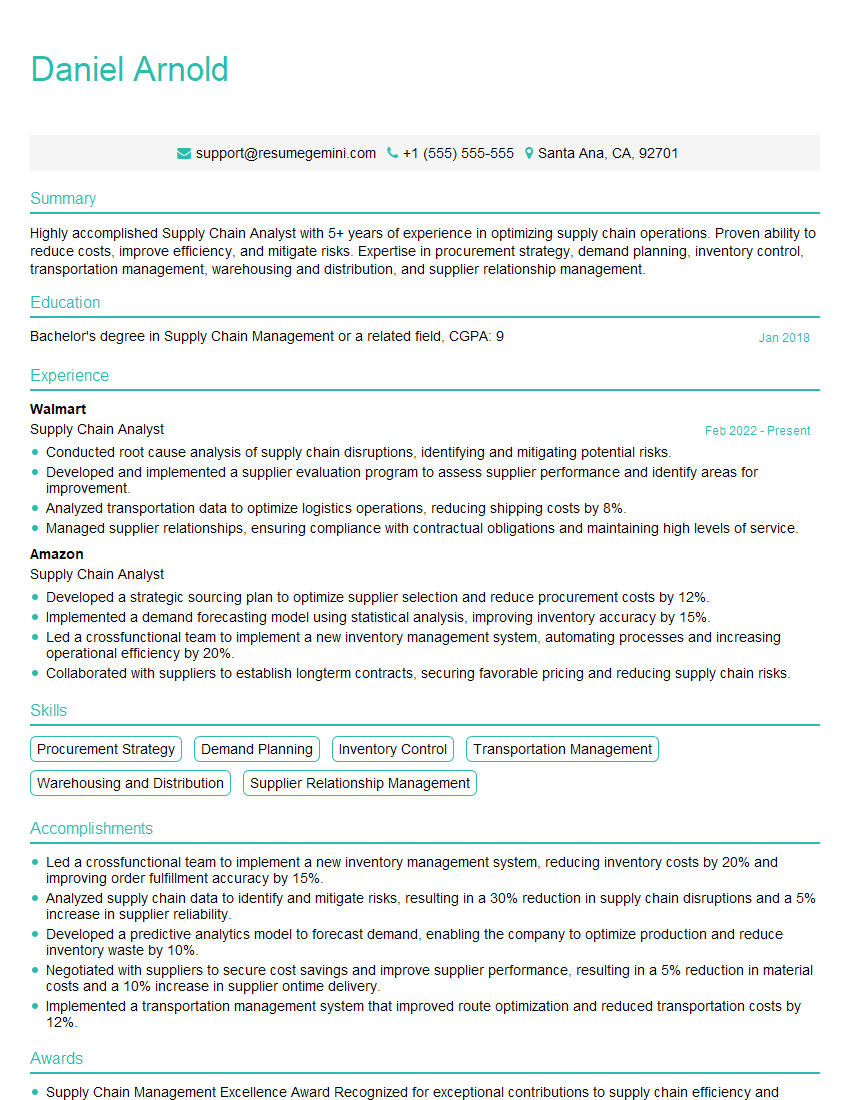
Supply Chain Analyst Resume Sample
Explore more articles
Users Rating of Our Blogs
Share Your Experience
We value your feedback! Please rate our content and share your thoughts (optional).
What Readers Say About Our Blog
Very informative content, great job.
good