Every successful interview starts with knowing what to expect. In this blog, we’ll take you through the top Analog and Digital Audio Systems interview questions, breaking them down with expert tips to help you deliver impactful answers. Step into your next interview fully prepared and ready to succeed.
Questions Asked in Analog and Digital Audio Systems Interview
Q 1. Explain the difference between analog and digital audio.
Analog and digital audio represent sound in fundamentally different ways. Analog audio is a continuous representation of the sound wave, much like a vinyl record’s groove mirrors the waveform. The signal’s amplitude and frequency directly reflect the sound’s loudness and pitch. Think of it like a smoothly flowing river.
Digital audio, on the other hand, is a discrete representation. It samples the analog waveform at regular intervals and converts each sample’s amplitude into a numerical value. This creates a series of discrete data points that approximate the original waveform. Imagine taking snapshots of the river at fixed time intervals; you’re getting a discrete representation of the continuous flow.
The key difference lies in their susceptibility to noise and degradation. Analog signals are prone to noise and distortion throughout the signal path, like ripples in the river. Digital signals, however, once properly digitized, can be perfectly copied without loss of information—each ‘snapshot’ is pristine. However, the initial conversion to digital (digitization) and any subsequent processing can introduce errors.
Q 2. Describe the Nyquist-Shannon sampling theorem.
The Nyquist-Shannon sampling theorem is a fundamental principle in digital audio. It states that to accurately reconstruct a continuous analog signal from its discrete samples, the sampling rate must be at least twice the highest frequency present in the original signal. In simpler terms, you need to take at least two samples per cycle of the highest frequency component.
For example, if you have a signal containing frequencies up to 20 kHz (the upper limit of human hearing), you need to sample it at a minimum of 40 kHz to avoid aliasing. Aliasing is a distortion where high-frequency components masquerade as lower-frequency components after sampling, resulting in a muddy or unnatural sound. This is why CD audio uses a 44.1 kHz sampling rate, providing ample headroom.
Failure to meet the Nyquist-Shannon criterion results in information loss, leading to a distorted reconstruction of the original signal. This highlights the importance of choosing an appropriate sampling rate based on the signal’s frequency content for accurate and high-fidelity digital audio.
Q 3. What is quantization noise and how can it be minimized?
Quantization noise is the inherent error introduced during the conversion of an analog signal’s amplitude into a digital value (quantization). Since digital audio uses a finite number of bits to represent amplitude, it cannot perfectly capture the continuous range of the analog signal. Think of trying to represent the height of a person using only whole numbers of inches – you’ll always have some rounding error.
This error manifests as a low-level hissing or granular noise. The higher the bit depth (more bits used for each sample), the finer the quantization steps, leading to less quantization noise and a higher dynamic range. A 16-bit system has finer steps than an 8-bit system, resulting in quieter quantization noise.
Minimizing quantization noise involves: increasing the bit depth (e.g., using 24-bit instead of 16-bit audio), employing dithering (adding a small amount of carefully designed noise to mask quantization noise), and using high-quality analog-to-digital converters (ADCs).
Q 4. Explain the concept of dynamic range in audio.
Dynamic range in audio refers to the difference between the quietest and loudest sounds a system can handle without distortion. It’s usually measured in decibels (dB). A larger dynamic range implies a greater ability to reproduce both subtle details and powerful peaks without clipping (distortion caused by exceeding the system’s maximum level).
Imagine a concert: the softest whispered melody and the loudest drum beat. A system with a wide dynamic range can capture both with fidelity, while a system with a narrow dynamic range might lose detail in either the quiet passages or the loud ones. High-quality audio systems aim for a wide dynamic range to capture the full expressiveness of the music.
For example, a system with a 90dB dynamic range can reproduce sounds with a 90dB difference in loudness, from barely audible to extremely loud, without distortion. This is a key element in achieving a natural and immersive listening experience.
Q 5. What are the different types of microphone polar patterns?
Microphone polar patterns describe the microphone’s sensitivity to sound from different directions. Different patterns are useful for different recording situations.
- Omnidirectional: Equally sensitive to sound from all directions. Good for recording ambience or situations where sound source location isn’t critical.
- Cardioid: Most sensitive to sound from the front, with reduced sensitivity from the sides and rear. Common for vocals and instruments where you want to isolate the main sound source from background noise.
- Figure-8: Equally sensitive to sound from front and rear, but rejects sound from the sides. Useful for stereo recording or capturing specific sounds from two directions.
- Supercardioid: More directional than cardioid, with a narrower pickup pattern and a small area of sensitivity at the rear. Provides more rejection of rear sounds.
- Hypercardioid: Even more directional than supercardioid, with a very narrow pickup pattern and increased sensitivity to rear sounds. Used in specialized applications requiring extreme directivity.
The choice of polar pattern depends on the recording environment and the desired sound capture. A cardioid mic is popular for vocal recording to minimize background noise, while an omnidirectional mic might be preferred for recording a large ensemble where multiple sound sources contribute to the desired sound.
Q 6. Describe the principles of signal-to-noise ratio (SNR).
Signal-to-noise ratio (SNR) is a measure of the relative strength of the desired audio signal compared to the unwanted noise. It’s expressed in decibels (dB) and indicates the cleanliness of the audio signal. A higher SNR implies a clearer signal with less noise interference.
For instance, a recording with an SNR of 60dB means that the signal is 60dB louder than the noise floor. This suggests a high-quality recording with minimal audible noise. Conversely, a lower SNR, say 30dB, indicates a significantly noisier recording, where noise is more prominent and can potentially mask the details of the audio signal.
SNR is crucial in audio systems because noise detracts from listening enjoyment. Minimizing noise through proper design of audio circuits, using high-quality components, and employing noise reduction techniques enhances the quality of audio production and reproduction.
Q 7. Explain the use of equalizers (EQs) in audio processing.
Equalizers (EQs) are audio processing tools used to adjust the amplitude of specific frequency ranges within an audio signal. They allow for shaping the tonal balance of the sound, enhancing certain frequencies while attenuating others. This is like a sculptor carefully refining a form.
Different types of EQs exist, including graphic EQs (with multiple sliders for adjusting frequency bands), parametric EQs (allowing precise control over center frequency, gain, and Q factor – the width of the frequency band affected), and shelving EQs (affecting frequencies above or below a certain point).
EQs are used extensively in various audio applications, for example:
- Mixing: To shape the tonal balance of individual instruments and vocals, improving clarity and preventing frequency clashes.
- Mastering: To provide the final sonic polish and ensure consistency across all frequencies.
- Sound reinforcement: To compensate for the acoustic characteristics of a room and ensure even sound distribution.
- Audio restoration: To reduce unwanted noise or enhance the clarity of older recordings.
Careful use of EQs can significantly improve the quality and enjoyment of audio, while inappropriate use can lead to unnatural-sounding or unbalanced audio.
Q 8. What are compressors and limiters, and how are they used?
Compressors and limiters are dynamic processing tools used to control the dynamic range of an audio signal. Think of dynamic range as the difference between the quietest and loudest parts of a song. Compressors reduce this range, making quieter parts louder and louder parts quieter, resulting in a more even and consistent sound. Limiters are a type of compressor that prevents the signal from exceeding a specified threshold, essentially preventing clipping (distortion caused by exceeding the maximum amplitude).
Compressors: They work by attenuating (reducing) the gain of the signal when it exceeds a pre-defined threshold. Key parameters include threshold (the level at which compression begins), ratio (the amount of gain reduction applied above the threshold), attack time (how quickly the compressor reacts to a signal exceeding the threshold), and release time (how quickly the compressor returns to its normal gain after the signal falls below the threshold). A fast attack and release might be used for punchy drums, while a slow attack and release could be used for vocals to smooth out dynamics.
Limiters: These are essentially compressors with a very high ratio (often 10:1 or higher), designed to prevent the signal from exceeding a specific level. They are crucial for preventing clipping and ensuring a consistent loudness throughout a track. Mastering engineers frequently use limiters to maximize the perceived loudness of a finished mix without introducing distortion.
Example: Imagine a singer with a very dynamic vocal performance. A compressor can smooth out the peaks and valleys, making the quiet parts more audible and the loud parts less harsh. A limiter at the end of the mastering chain ensures that no peaks exceed 0dBFS (digital full scale), preventing distortion.
Q 9. Describe the function of a gate in audio processing.
A gate is a dynamic processor that reduces or eliminates audio signals below a specified threshold. Think of it as a volume control that automatically mutes the signal when it falls below a certain level. This is extremely useful for reducing unwanted noise or background sounds, often referred to as ‘noise gating’.
It’s particularly helpful in situations where you want to eliminate unwanted sounds between notes or phrases of an instrument. For example, in recording a bass guitar, there might be a significant amount of ambient room noise between notes. A gate can be set to only allow the signal through when it rises above the threshold, effectively silencing the background noise during the pauses.
Key parameters for gates include threshold (the level at which the gate opens), range (the amount of gain reduction below the threshold), attack time (how quickly the gate closes when the signal falls below the threshold), and release time (how quickly the gate opens when the signal rises above the threshold). Incorrect settings can lead to undesirable artifacts, such as ‘pumping’ (a rhythmic variation in volume) if the release time is too short, or a choked sound if the attack time is too slow.
Q 10. Explain the difference between reverb and delay effects.
Reverb and delay are both time-based effects that add ambience and depth to audio, but they achieve this in different ways. Delay is a simple echo effect, while reverb is a more complex simulation of a sound reflecting off of surfaces in a space.
Delay: Creates distinct repetitions of the original sound, each repetition occurring after a specified delay time. It is defined by delay time (the time between the original sound and the echo), feedback (the amount of the delayed signal that is mixed back into the input), and wet/dry mix (the balance between the original signal and the delayed signal).
Reverb: Simulates the natural reflections of sound in a room or space. It’s characterized by a dense, complex set of reflections that gradually decay over time. Parameters include decay time (how long the reverb lasts), size (the perceived size of the space), and pre-delay (a short delay before the reverb starts). Different types of reverb emulate specific acoustic spaces, like halls, rooms, plates, or springs.
Example: A simple slap-back delay can create a rhythmic effect, while a large hall reverb can give a vocal performance a grand, spacious quality. Delay is often used in rhythmic and percussive applications, whereas reverb is commonly used for creating atmosphere and depth in recordings.
Q 11. What are the different types of audio file formats (e.g., WAV, MP3, AIFF)?
Audio file formats differ in their compression methods, bit depth (the resolution of the audio sample), and sample rate (how many samples are taken per second), affecting file size and audio quality.
- WAV (Waveform Audio File Format): A lossless format, meaning no audio data is lost during encoding or decoding. It results in large file sizes but provides the highest audio fidelity. Commonly used for professional audio work.
- AIFF (Audio Interchange File Format): Another lossless format, similar to WAV but primarily used on Apple systems.
- MP3 (MPEG Audio Layer III): A lossy compression format, meaning some audio data is discarded during encoding to reduce file size. It results in smaller files but with a lower audio quality compared to lossless formats. Widely used for music distribution and streaming due to its balance between file size and acceptable audio quality.
- AAC (Advanced Audio Coding): A lossy format often considered superior to MP3 in terms of audio quality at similar bitrates. It’s widely used for streaming audio and digital distribution.
- FLAC (Free Lossless Audio Codec): A lossless format offering excellent audio quality with smaller file sizes than WAV or AIFF. It is gaining popularity as a high-quality alternative to lossy codecs.
Q 12. Describe the process of audio mixing and mastering.
Audio mixing and mastering are distinct but related processes in post-production:
Mixing: Involves combining and balancing individual tracks (e.g., vocals, drums, bass, guitar) to create a cohesive and balanced final mix. This includes EQ (equalization to adjust frequency balance), compression (to control dynamics), reverb and delay (to add ambience), panning (to position instruments in the stereo field), and automation (to control parameter changes over time). A skilled mixer will focus on clarity, balance, and sonic cohesion.
Mastering: Is the final stage of production, where the mixed audio is processed to optimize it for playback across different systems and listening environments. It involves subtle adjustments to loudness, dynamics, stereo imaging, and overall frequency balance, ensuring the track translates well on various playback devices. Mastering engineers use specialized equipment and techniques to ensure consistent loudness and prevent clipping or distortion. It’s a critical stage for ensuring professional-sounding releases.
Example: Imagine you recorded a band playing a song. The mixing stage would involve adjusting individual levels and applying effects to each instrument and vocal to make them sound good together, ensuring a balanced and clear final track. Mastering would then take this mix, prepare it for release and ensure it sounds good across all platforms – from small earbuds to high-fidelity speakers.
Q 13. What is dithering and why is it important in digital audio?
Dithering is a process of adding carefully calculated noise to a digital audio signal before reducing its bit depth. This seemingly counterintuitive technique helps to avoid distortion caused by quantization error – the error introduced when converting a high-resolution signal to a lower-resolution one. Lower resolution means that some information is lost because the number of possible levels is smaller.
When you reduce the bit depth (e.g., from 24-bit to 16-bit), the signal is rounded to the nearest available level. This rounding process can create distortion, particularly audible as harsh artifacts. Dithering, however, introduces a small amount of noise that distributes these quantization errors more evenly across the frequency spectrum, making them less noticeable and resulting in a smoother, cleaner sound. The added noise is generally inaudible or below the threshold of human hearing.
It’s crucial for tasks like mastering, where the audio is prepared for CD, MP3, or other lower-resolution formats. Without dithering, the reduction in bit-depth could create audible distortion, compromising the quality of the audio.
Q 14. Explain the concept of phase cancellation in audio.
Phase cancellation occurs when two or more audio signals with the same frequency but opposite phase alignment are combined. Phase refers to the position of a waveform in its cycle. When two identical signals are perfectly out of phase (180 degrees out of phase), their positive and negative amplitudes cancel each other out, resulting in silence or a significant reduction in level.
This can happen when signals are improperly recorded or when using multiple microphones in close proximity to each other. It often leads to a loss of bass frequencies in the final mix as the low frequencies tend to be more susceptible to phase cancellation due to their longer wavelengths. Phase cancellation can also create a thin or hollow sound due to frequencies ‘fighting’ against each other.
Example: Imagine two microphones recording the same instrument. If the signals from the microphones have a phase difference of 180 degrees, they will cancel out each other, leading to a reduction in the volume of the recorded signal. This is more likely with low-frequency signals as their wavelengths are longer and a small change in microphone position relative to the sound source can introduce a significant phase shift.
Careful microphone placement and phase alignment techniques are crucial in recording to avoid this issue. Techniques to check and fix phase issues involve signal comparison in phase meters or using phase correlation software.
Q 15. Describe the different types of audio signal routing.
Audio signal routing is the process of directing audio signals between different components in an audio system. Think of it like a road map for your sound. It dictates how your microphone signal gets to the speakers, passing through various processing stages along the way. Different routing methods provide different levels of flexibility and control.
- Direct Routing: The simplest form, where a signal goes directly from a source (like a microphone) to a destination (like a mixer input). Imagine a straight road.
- Matrix Routing: A more complex system where multiple sources can be routed to multiple destinations simultaneously. This is like a highway system with multiple interchanges and exits.
- Patch Bay Routing: A physical panel with jacks that allows you to manually connect and disconnect audio sources and destinations using patch cables. This is akin to a central telephone exchange that connects different lines.
- Digital Routing (DAW): In digital audio workstations (DAWs), routing happens virtually, using software to connect audio tracks and plugins. This offers high flexibility and recall of routing configurations, unlike physical patch bays.
For example, in a live sound setting, you might use a patch bay to route different microphones to different inputs on a mixing console, allowing for flexibility in signal processing and monitor mixes. In a recording studio, you might use a DAW to route a vocal track through a compressor, equalizer, and reverb plugin, before sending it to the main mix.
Career Expert Tips:
- Ace those interviews! Prepare effectively by reviewing the Top 50 Most Common Interview Questions on ResumeGemini.
- Navigate your job search with confidence! Explore a wide range of Career Tips on ResumeGemini. Learn about common challenges and recommendations to overcome them.
- Craft the perfect resume! Master the Art of Resume Writing with ResumeGemini’s guide. Showcase your unique qualifications and achievements effectively.
- Don’t miss out on holiday savings! Build your dream resume with ResumeGemini’s ATS optimized templates.
Q 16. How do you troubleshoot audio equipment problems?
Troubleshooting audio equipment requires a systematic approach. I always start by isolating the problem. Think like a detective; gather clues.
- Identify the Problem: What exactly isn’t working? No sound? Distortion? Hum? Be specific.
- Check the Obvious: Power cables, connections, volume levels. Are the devices turned on? Are cables securely connected? Is the volume fader up? You’d be surprised how often this solves the issue.
- Isolate the Faulty Component: Start by eliminating possible causes one by one. For example, if you have a problem with a microphone, try a different microphone on the same channel. If the issue persists, the problem is likely not the microphone.
- Signal Tracing: Follow the audio signal path from source to output. Check each component along the way. Use a multimeter to check for signal presence and voltage levels if you’re comfortable with that.
- Consult Documentation: Check the manuals for the equipment. They often have troubleshooting sections with helpful tips and diagrams.
- Seek Professional Help: If you can’t identify the problem, it’s time to call a qualified technician. Attempting to repair complex electronics without the proper knowledge and tools can cause further damage.
For example, if I encounter excessive hum in my audio system, I would first check ground loops (connections between multiple grounds), then ensure proper grounding of the equipment, and finally look at the signal path for potential sources of interference.
Q 17. What is the difference between impedance and resistance?
While both impedance and resistance oppose the flow of current, they differ significantly in their behavior, especially at audio frequencies. Resistance is simply the opposition to the flow of direct current (DC). Impedance, on the other hand, is the opposition to the flow of alternating current (AC), which is what audio signals are. Impedance is a complex quantity that includes both resistance and reactance (opposition due to capacitance and inductance).
Think of it like this: Resistance is a simple friction, while impedance is friction combined with inertia and springiness (from inductance and capacitance). Resistance is always positive; impedance can be positive, negative or even complex (having both real and imaginary components). Impedance varies with frequency, while resistance remains relatively constant across frequencies.
Importance in Audio: Mismatched impedance can cause signal loss, reflections, and distortion. For instance, connecting a high-impedance microphone to a low-impedance input will result in a weak and attenuated signal. Proper impedance matching ensures that maximum power transfer happens between components. It’s crucial for clear and accurate audio reproduction.
Q 18. Explain the concept of harmonic distortion.
Harmonic distortion occurs when a system adds frequencies to an input signal that are multiples (harmonics) of the original frequency. Imagine playing a pure tone – a harmonic distortion would add extra tones that are twice, three times, etc., the frequency of the original tone. These added frequencies are usually unwanted and can result in a harsh or unpleasant sound.
It’s often expressed as a percentage. For instance, a 1% Total Harmonic Distortion (THD) means that the added harmonic frequencies are 1% of the power of the original signal. Lower THD indicates better fidelity; the closer to zero, the cleaner the signal.
Causes: Many audio components can introduce harmonic distortion. These include overdriven amplifiers, non-linear elements in circuits, and even the limitations of transducers (like speakers or microphones). In mastering, a small amount of even-order harmonics can sometimes add warmth, but excessive distortion is generally undesirable.
Q 19. What is a parametric EQ and how is it used?
A parametric equalizer (parametric EQ) allows for precise control over specific frequencies in an audio signal. Unlike simpler graphic equalizers, it lets you adjust not only the amount of boost or cut (gain) at a particular frequency (center frequency), but also the bandwidth (Q factor) and frequency itself.
- Gain: This controls the amount of boost or cut (in decibels) at the center frequency.
- Frequency: This selects the center frequency being adjusted.
- Q (bandwidth): This controls the width of the frequency range affected by the gain adjustment. A narrow Q will only affect a small range of frequencies around the center, while a wide Q will affect a broader range.
Uses: Parametric EQs are used for many purposes, including:
- Sculpting Tone: Adjusting the tonal balance of an instrument or vocal, for example, boosting the presence frequencies for a brighter sound or cutting muddiness in the low mids.
- Problem Solving: Fixing resonance issues or removing unwanted frequencies that cause harshness or muddiness.
- Mixing: Creating space in a mix by cutting frequencies that clash with other instruments.
For instance, you might use a parametric EQ to subtly boost the 2-5kHz range of a vocal to improve its clarity, or cut a harsh resonance around 3kHz in a guitar sound.
Q 20. Describe the principles of acoustic treatment in a recording studio.
Acoustic treatment in a recording studio aims to control the sound reflections (reverberation) and standing waves within the room, preventing unwanted coloration of the recorded sound. The goal is to achieve a neutral acoustic environment that accurately reflects the sound source. It’s a crucial aspect of professional recording.
Key Elements:
- Absorption: Materials like acoustic foam, bass traps (which are particularly important for low-frequency absorption), and curtains absorb sound energy, preventing reflections that create echoes or muddiness. This helps create a ‘dead’ sound.
- Diffusion: Diffusers scatter sound waves, preventing harsh reflections and creating a more natural, three-dimensional sound. They break up standing waves to help make a space sound more even in sound.
- Isolation: This deals with sound leakage. It involves using techniques like double-wall construction, soundproofing materials, and isolation booths to prevent external sounds from entering and internal sounds from leaving.
A well-treated room provides a consistent and predictable acoustic environment, where recordings sound accurate and free from unwanted artifacts. Imagine recording vocals in a very live room; every word has a distracting echo.
Q 21. How does digital audio workstation (DAW) software work?
A Digital Audio Workstation (DAW) is essentially a software application that acts as a digital recording studio. It combines many functions, including recording, editing, processing, and mixing audio, and often MIDI data as well.
Key Components:
- Audio Interface: A physical device that connects to the computer, converting analog audio signals (from microphones, instruments) into digital data for the DAW, and vice versa.
- Audio Tracks: Individual recordings or channels of audio data within the DAW.
- MIDI Tracks: Tracks that contain musical information (notes, velocity, etc.) rather than audio recordings.
- Plugins (VSTs, AU, etc.): Software effects and instruments that are used to process and manipulate the audio signals.
- Mixer: Allows control of levels, panning, routing, and other aspects of multiple audio tracks.
- Editor: Used for detailed manipulation of audio waveforms, enabling functions like cutting, splicing, time stretching, and pitch shifting.
The DAW essentially works by recording and storing audio (and MIDI) as digital files. It then allows you to edit and process these files using various tools and effects. Finally, it mixes and masters these files to create a final audio output (or master file). Think of it as a powerful digital toolbox for audio manipulation.
Q 22. What are some common audio plugins and their functionalities?
Audio plugins are software tools that add effects or processing capabilities to audio signals within a Digital Audio Workstation (DAW). They’re essential for shaping sound and achieving a desired aesthetic. Common types include:
- Equalizers (EQs): Adjust the balance of frequencies in an audio signal. For example, a parametric EQ allows precise control over frequency bands, boosting or cutting specific frequencies to enhance clarity or remove muddiness. Imagine sculpting a song, removing unwanted rumble or highlighting a vocal’s presence.
- Compressors: Reduce the dynamic range of a signal, making quieter parts louder and louder parts softer. This creates a more consistent level and punchier sound. Think of a drum track – compression makes the hits more even and powerful.
- Reverbs: Simulate the acoustic environment of a space, adding depth and spaciousness. A large hall reverb makes a vocal sound grand, while a plate reverb provides a shimmery effect. Choosing the right reverb greatly impacts the mood and ambience of a track.
- Delays: Create echoes or repetitions of a signal. These can range from subtle rhythmic delays that add movement to dramatic, repeating echoes. This is commonly used in creating rhythmic textures in electronic music or to add a spacious feel to vocals.
- Distortion/Overdrive: Adds harmonic richness and saturation, often used on guitars, vocals, or bass to create a heavier or more aggressive sound. Imagine the gritty sound of a classic rock guitar solo – distortion is key.
The functionalities are vast, and the selection depends on the creative goal. Many plugins offer sophisticated parameter control, allowing for nuanced sound design.
Q 23. Explain the principles of microphone placement and techniques.
Microphone placement and techniques are crucial for capturing high-quality audio. The goal is to minimize unwanted sounds and optimize the desired signal. Key principles include:
- Distance: Closer microphones capture more detail and direct sound, while further microphones capture more room ambience. Think of a close mic on a vocalist capturing their intimate nuances, versus a room mic picking up the resonant sound of the space.
- Angle: The angle of the microphone relative to the sound source affects the tonal balance. Off-axis placement can lead to a less accurate and potentially muddier sound. Experimentation is key here.
- Polar Patterns: Different microphone polar patterns (e.g., cardioid, omnidirectional, figure-eight) affect how they pick up sound from different directions. A cardioid mic is great for isolating a sound source, while an omnidirectional mic is better for capturing ambient sounds.
- Placement relative to reflective surfaces: Surfaces like walls and ceilings can reflect sound, creating unwanted echoes or coloration. Careful positioning minimizes these issues; often positioning the mic away from walls is a good first step.
Techniques often involve using multiple microphones (e.g., stereo pair, XY, Blumlein) to create a more complete and natural sound. Experienced engineers consider the acoustic properties of the room when determining the best microphone positions. The choice of microphone also greatly influences the sound captured.
Q 24. What are some common issues with audio interfaces and their solutions?
Audio interfaces, the bridge between your computer and audio equipment, can present various issues:
- Driver Issues: Incompatibility or outdated drivers are frequent culprits, causing dropouts, latency, or no sound. Solutions: Update drivers from the manufacturer’s website, ensure compatibility with your operating system.
- Latency: Excessive delay between recording and playback. Solutions: Lower buffer size (in your DAW’s settings), use a lower sample rate, upgrade to a faster interface with lower latency.
- Ground Loops: Humming or buzzing noise caused by ground potential differences. Solutions: Use balanced cables, ground lift adapters, ensure all equipment is plugged into the same electrical outlet (ideally a single power strip).
- Hardware Malfunctions: Faulty inputs, outputs, or internal components. Solutions: Check cables, try different ports and devices, consider repair or replacement.
- Connectivity Problems: Loose connections, damaged cables, incompatible connectors. Solutions: Secure connections, inspect cables for damage, ensure proper connector types.
Troubleshooting involves a systematic approach: isolate the problem by checking connections, cables, software settings, and then consider hardware issues as a last resort. Careful maintenance and regular driver updates can prevent many problems.
Q 25. Discuss your experience with different types of audio converters.
I’ve worked extensively with various audio converters, including:
- Analog-to-Digital Converters (ADCs): These convert analog audio signals (from microphones, instruments) into digital data for computer processing. Higher bit depth (e.g., 24-bit) and sample rates (e.g., 96kHz) result in higher fidelity, capturing more dynamic range and detail. I’ve used ADCs in high-end recording setups that prioritized capturing the nuances of acoustic instruments.
- Digital-to-Analog Converters (DACs): These perform the opposite conversion, transforming digital data back into analog signals for playback through speakers or headphones. The quality of DACs significantly impacts the final audio quality; some emphasize detail and precision, others prioritize a warm and natural sound.
My experience encompasses both built-in converters within audio interfaces and standalone, high-end converters used in professional studios. The choice depends on the project’s requirements; high-resolution audio often necessitates superior converters to avoid sonic degradation.
Q 26. Describe your experience with professional audio mixing consoles.
My experience with professional audio mixing consoles spans various brands and models, from smaller analog consoles to large-format digital desks. I’m proficient in:
- Signal routing: Connecting various audio sources (microphones, instruments, playback devices) to different channels and processing units.
- EQ and Dynamics Processing: Using built-in EQs, compressors, and gates to shape individual channels and achieve a balanced mix.
- Aux Sends and Returns: Routing signals to external effects processors (reverbs, delays, etc.) and bringing them back into the mix.
- Monitoring and Soloing: Using the console’s monitoring features to listen to individual channels, groups, or the entire mix.
- Digital Workflow (on digital consoles): Utilizing features like scene recall, automation, and DAW integration.
I’ve used consoles in live sound reinforcement for concerts and theater productions, as well as in studio settings for recording and mixing. Understanding the console’s signal flow and capabilities is key to efficient and effective mixing.
Q 27. Explain the concept of headroom in audio recording and mixing.
Headroom refers to the difference between the maximum signal level a system can handle (its ceiling) and the average signal level being recorded or mixed. Think of it like the space between the top of a glass and the level of the liquid inside. Leaving ample headroom is crucial because:
- Prevents Clipping: Clipping occurs when the signal exceeds the maximum level, resulting in distortion. Clipping is irreversible damage, so avoid it at all costs.
- Allows for Processing: Applying effects (like compression or EQ) often increases the signal level. Headroom provides space for this processing without causing clipping.
- Improves Dynamic Range: Adequate headroom ensures the full dynamic range of the audio signal is preserved.
In practice, good mixing techniques aim for around 6-12dB of headroom (depending on the equipment and genre), giving enough space for peaks and adjustments. Metering is essential to visually monitor signal levels and prevent clipping.
Q 28. How do you handle feedback issues in a sound reinforcement system?
Feedback, a high-pitched squeal or howl, occurs when a sound system picks up its own output and amplifies it. Here’s how to handle feedback issues:
- Reduce Gain: Lowering the gain on microphones and speakers is the simplest and often most effective method. This reduces the system’s overall sensitivity.
- EQ Adjustments: Notch filters (parametric EQs) can be used to cut specific frequencies that are causing feedback. This requires identifying the frequency through careful listening or using a real-time analyzer.
- Microphone Placement: Strategically repositioning microphones to minimize sound pickup from speakers is crucial. Pointing microphones away from speakers is a fundamental rule.
- Directional Microphones: Using cardioid or super-cardioid microphones can improve isolation and reduce unwanted sound pickup.
- Speaker Placement: Proper speaker placement and aiming can also help reduce the likelihood of feedback.
- Room Treatment: Acoustic treatment, such as bass traps and absorbers, can reduce reflections and standing waves, minimizing feedback problems.
Addressing feedback often involves a combination of these techniques. A systematic approach, starting with gain reduction and then using EQ adjustments if needed, is essential. Careful monitoring and listening are key to identifying and eliminating feedback effectively.
Key Topics to Learn for Analog and Digital Audio Systems Interview
- Analog Audio Fundamentals: Understanding signal flow, impedance matching, microphone types and polar patterns, preamplification, equalization, compression, and dynamic processing. Consider the practical limitations and advantages of analog systems.
- Digital Audio Fundamentals: Sampling theory, quantization, Nyquist-Shannon theorem, digital audio formats (WAV, AIFF, MP3), digital signal processing (DSP) concepts, and the role of AD/DA converters. Explore real-world applications in digital audio workstations (DAWs).
- Signal Processing Techniques: Familiarize yourself with filters (low-pass, high-pass, band-pass), equalizers (parametric, graphic), reverberation, delay, and other effects processing. Understand how these techniques are implemented in both analog and digital domains.
- Audio System Design: Learn about the design considerations for different audio systems, including speaker systems, microphone arrays, and audio interfaces. Focus on system integration and troubleshooting common issues.
- Audio Measurement and Testing: Understanding techniques for measuring frequency response, distortion, signal-to-noise ratio (SNR), and other audio parameters. Familiarize yourself with test equipment used in audio engineering.
- Troubleshooting and Problem Solving: Develop your ability to diagnose and solve problems related to audio system malfunctions. Practice identifying the source of audio issues and proposing effective solutions.
- Specific Applications: Depending on the role, focus on relevant applications such as live sound reinforcement, recording studio techniques, broadcast audio, or embedded audio systems.
Next Steps
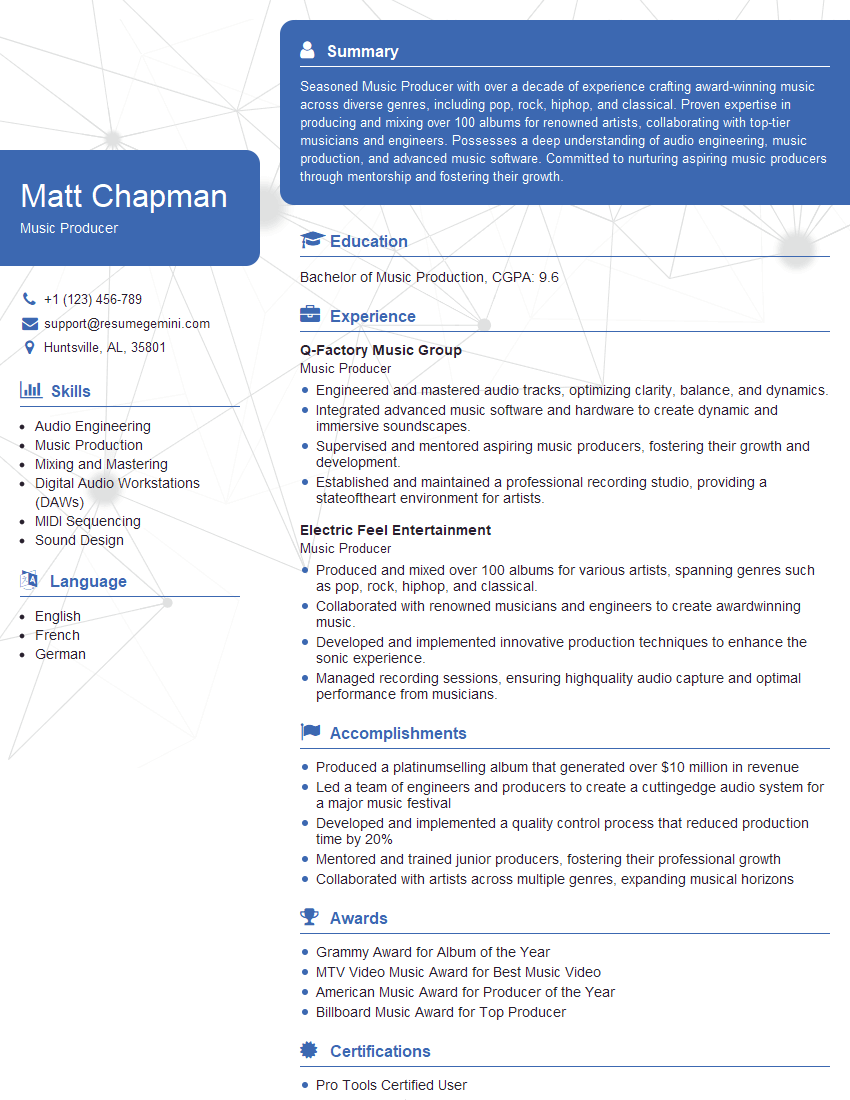
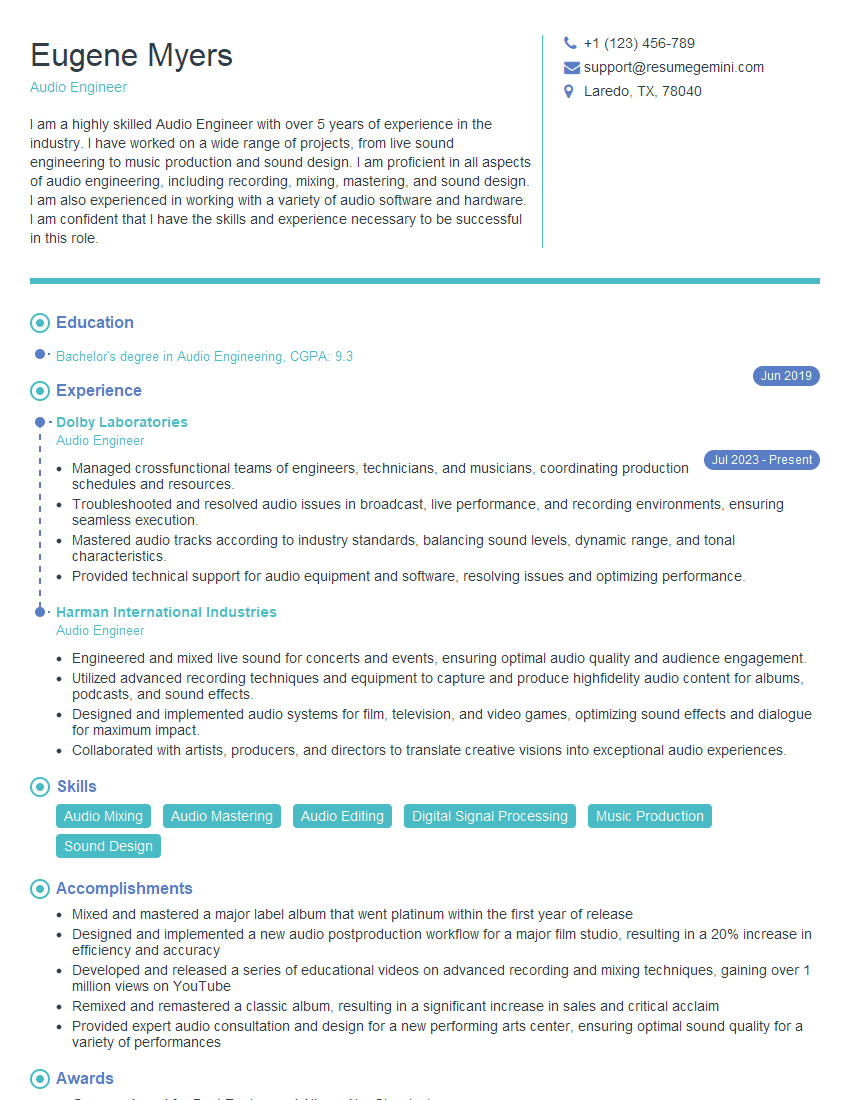
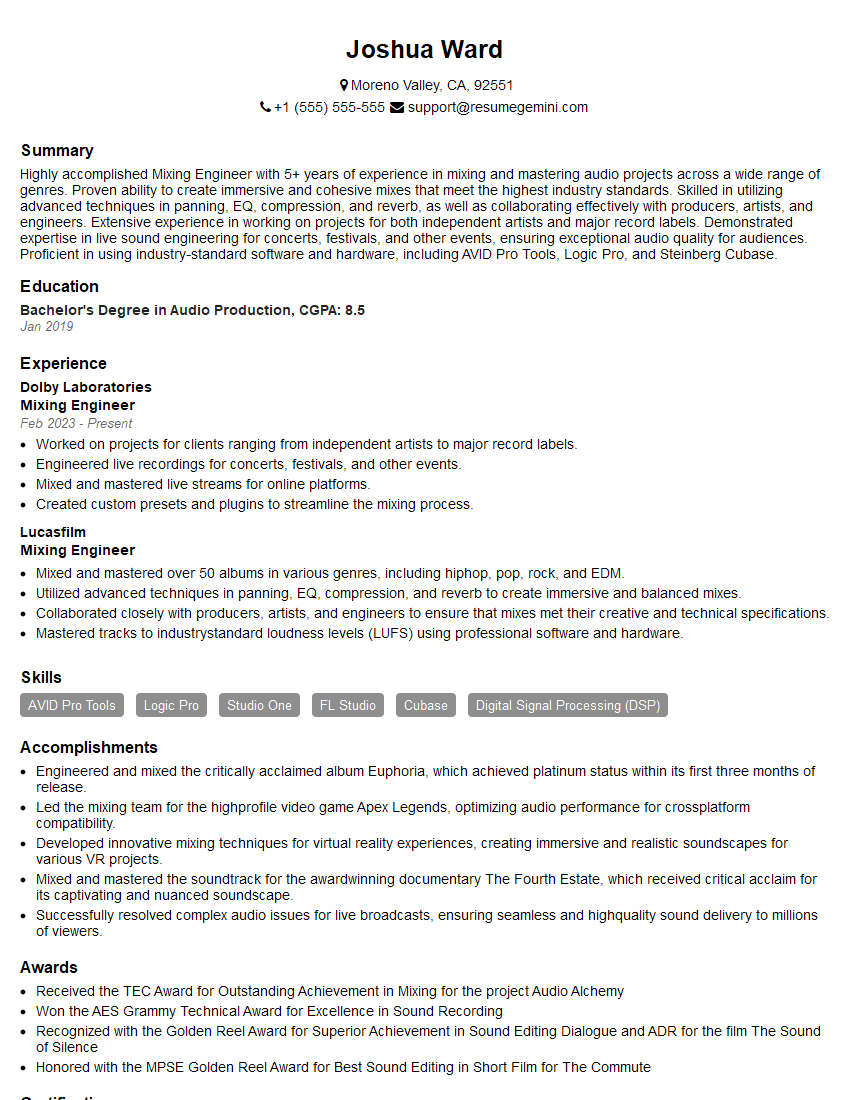
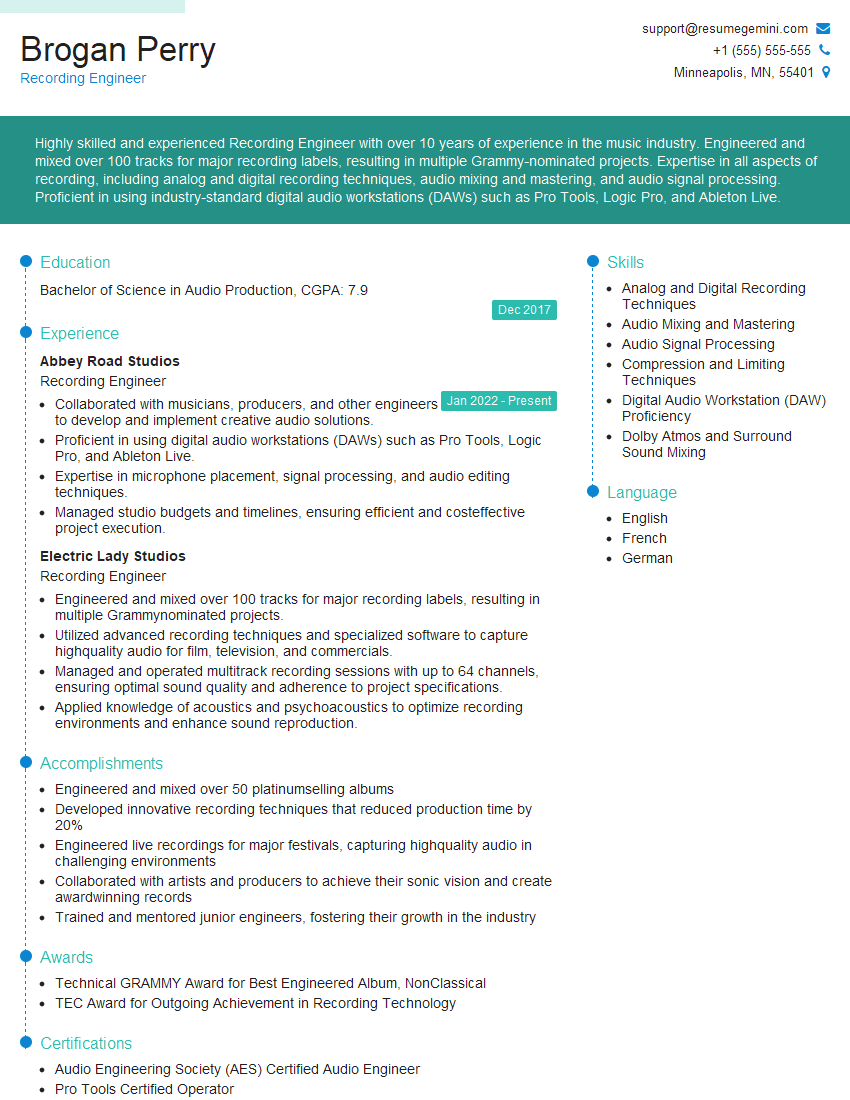
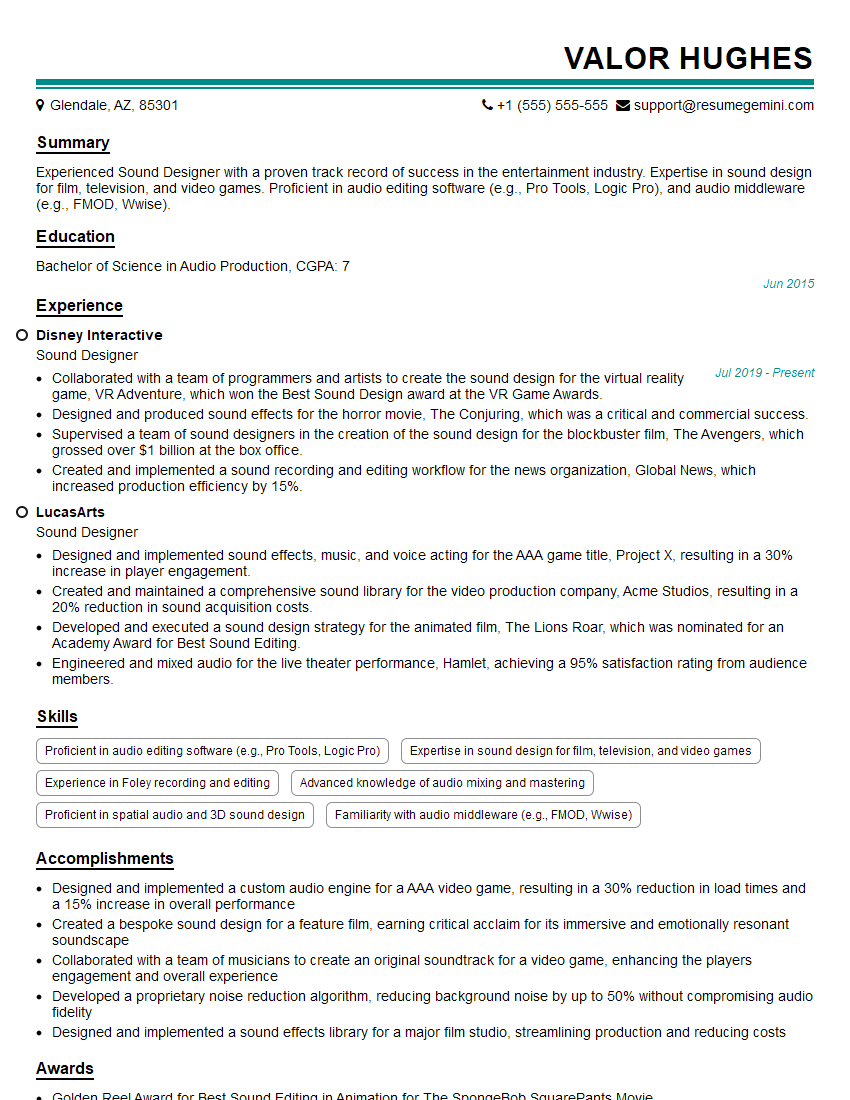
Mastering Analog and Digital Audio Systems is crucial for career advancement in the audio industry, opening doors to exciting opportunities in diverse fields. A strong understanding of these concepts showcases your technical expertise and problem-solving abilities, making you a highly sought-after candidate. To enhance your job prospects, focus on crafting an ATS-friendly resume that effectively highlights your skills and experience. ResumeGemini is a trusted resource that can help you build a professional resume tailored to your specific career goals. We provide examples of resumes specifically designed for professionals in Analog and Digital Audio Systems to help you stand out from the competition.
Explore more articles
Users Rating of Our Blogs
Share Your Experience
We value your feedback! Please rate our content and share your thoughts (optional).
What Readers Say About Our Blog
Very informative content, great job.
good