Cracking a skill-specific interview, like one for Print Production Estimation and Job Costing, requires understanding the nuances of the role. In this blog, we present the questions you’re most likely to encounter, along with insights into how to answer them effectively. Let’s ensure you’re ready to make a strong impression.
Questions Asked in Print Production Estimation and Job Costing Interview
Q 1. Explain the difference between estimating and costing in print production.
Estimating and costing in print production are closely related but distinct processes. Estimating focuses on predicting the total cost of a print job before it begins. It involves making educated guesses based on experience, historical data, and client specifications. The goal is to provide a client with a competitive yet profitable price. Costing, on the other hand, is the detailed accounting of all expenses incurred during the production process. It’s a precise calculation used for internal analysis, tracking profitability, and improving future estimates. Think of estimating as creating a budget, and costing as tracking actual spending against that budget.
For example, estimating might involve calculating the cost of paper based on a client’s requested quantity and paper stock, while costing would involve recording the actual amount of paper used and the precise price paid, accounting for any discounts or additional charges.
Q 2. Describe your experience with various print processes (offset, digital, large format).
My experience spans all major print processes. With offset printing, I’ve worked extensively on high-volume projects, optimizing for platemaking, ink usage, and press speeds. I’m proficient in calculating costs considering makeready time, run length, and the number of colors. In digital printing, I’ve focused on shorter runs, personalized materials, and variable data printing. My expertise includes understanding the cost per page, ink and toner consumption, and the impact of finishing options. Finally, with large format printing, I’ve managed projects involving banners, posters, and vehicle wraps, factoring in material costs, specialized inks, and the unique challenges of handling larger print sizes. I understand the implications of different substrates like vinyl, canvas, and paper on pricing.
For instance, in a recent project involving offset printing of 50,000 brochures, I meticulously calculated the cost per thousand impressions, factored in the cost of plates, and accounted for potential waste during the press run. This involved detailed analysis of the client’s design to estimate the setup time and potential challenges, translating to accurate cost estimations.
Q 3. How do you calculate the cost of paper for a print job?
Calculating paper costs requires a methodical approach. First, you need the quantity of paper needed, typically expressed in sheets or reams. Second, you need the size and weight of the paper stock (e.g., 8.5×11”, 80lb cover). This determines the cost per sheet or ream. Finally, you’ll factor in the supplier’s price. The formula is straightforward:
Total Paper Cost = (Quantity x Price per Unit) + Shipping and HandlingExample: Let’s say you need 1,000 sheets of 8.5×11”, 80lb cover stock, and the price per ream (500 sheets) is $30. The calculation would be: (1000 sheets / 500 sheets/ream) x $30/ream = $60. Then add shipping and any handling fees.
It’s crucial to always account for overruns to compensate for waste and spoilage, adding a percentage buffer to the calculated cost.
Q 4. What are the key factors to consider when estimating pre-press costs?
Estimating pre-press costs requires a careful consideration of several factors. The most significant are:
- Design and artwork preparation: This includes the time spent on design revisions, file preparation, color correction, and trapping (overprinting to avoid white gaps between colors).
- Platemaking (for offset): The cost of creating printing plates varies based on the number of colors and the complexity of the design.
- Proofing: This encompasses the cost of producing color proofs to ensure accurate color reproduction and client approval.
- Imposition and preflighting: This involves arranging pages for optimal printing and checking the files for potential errors before sending them to the press.
For example, if the client provides low-resolution artwork, it might increase the time needed for pre-press, directly influencing the overall cost. Complex designs with many colors will also add to platemaking expenses.
Q 5. How do you account for waste and spoilage in your estimations?
Waste and spoilage are inevitable in print production. Accounting for them is crucial for accurate estimation. I typically use a percentage-based approach, adding a buffer to the quantity of materials needed. The percentage varies depending on the print process, complexity of the job, and the experience of the press operators.
For example, in offset printing, I might add 5-10% to the paper quantity to account for makeready waste, misprints, and potential misfeeds. Digital printing generally has lower waste, but a small percentage (2-5%) is still advisable to cover potential errors. This waste factor is then incorporated into the cost calculations to ensure the final price reflects all potential expenses.
Q 6. Explain your process for calculating labor costs in print production.
Calculating labor costs involves identifying all personnel involved in the print job, from pre-press to finishing. This includes designers, pre-press operators, press operators, bindery personnel, and quality control staff. For each role, I consider the hourly rate or salary, and estimate the time required for each task.
Total Labor Cost = (Hourly Rate x Hours Spent) + Benefits (if applicable)
To maintain accuracy, I often use time tracking software or historical data to estimate labor hours. For example, if a press operator takes an average of 2 hours to set up a specific press, and the hourly rate is $25, the labor cost for setup is $50. Accumulating these costs for all labor elements gives the total labor cost for the job.
Q 7. How do you handle unexpected costs or delays during a print job?
Handling unexpected costs or delays requires a proactive and transparent approach. First, I investigate the root cause of the issue. This might involve reviewing the initial estimates, checking for unforeseen material shortages, or analyzing equipment malfunctions.
Once the cause is identified, I communicate promptly with the client, explaining the situation and outlining potential solutions. This might involve suggesting alternative materials, adjusting the production schedule, or re-evaluating the scope of work. The goal is to find a mutually agreeable solution that minimizes disruptions and maintains client satisfaction. In some cases, it might require revising the project’s budget, documenting the extra costs transparently.
For example, if a paper shortage causes a delay, I would communicate with the client, explore alternative sources, and possibly negotiate a revised timeline or a small price adjustment to cover additional expedited shipping costs, always maintaining open communication.
Q 8. What software or tools do you use for print production estimating and job costing?
For print production estimating and job costing, I leverage a combination of software and tools tailored to different aspects of the process. My primary software is a dedicated MIS (Management Information System) like PrintVis or EFI Radius. These systems are crucial for managing the entire workflow, from initial quote generation and cost tracking to production scheduling and financial reporting. They allow for accurate costing based on job specifications and automate many aspects of the process, minimizing manual calculations and errors. In addition, I utilize spreadsheet software like Microsoft Excel for creating customized templates for specific client needs or for more detailed analysis of particular cost components. Finally, I rely on industry-specific pricing guides and supplier catalogs to ensure up-to-date material costs.
Q 9. Describe your experience with different quoting methods (fixed price, time & materials).
I have extensive experience with both fixed-price and time & materials quoting methods. Fixed-price quotes are best suited for projects with clearly defined scopes and deliverables. For example, a 5000-copy print run of a specific brochure with established specifications can easily be quoted with a fixed price, offering predictable revenue and project management. This is calculated by summing all anticipated direct and indirect costs and applying a profit margin. The challenge here lies in accurately scoping the project upfront; any unforeseen changes often necessitate change orders.
Time & materials quotes are ideal for projects with evolving scopes or requirements, such as design work or complex projects requiring multiple revisions. For instance, designing a unique custom packaging solution for a new product would be best suited to a time & materials quote, where I bill for the hours spent on design and the costs of associated materials. Here, clear communication about hourly rates and material costs upfront is key to avoiding disputes.
Q 10. How do you determine the appropriate markup percentage for a print job?
Determining the appropriate markup percentage is crucial for profitability. It’s not a fixed number; it depends on several factors, including project complexity, client relationship, market competition, and overhead costs. I generally consider a multi-faceted approach:
- Cost of Goods Sold (COGS): This includes direct costs like materials, labor, and outside services. I meticulously calculate this before adding any markup.
- Overhead Costs: This covers indirect costs like rent, utilities, and salaries. A thorough understanding of this is critical; often, companies underestimate these hidden costs.
- Profit Margin: This is the desired profit percentage and depends on the factors mentioned earlier. For low-risk, high-volume projects, a lower margin might be sufficient. Conversely, highly customized, complex jobs may justify a higher margin to compensate for risk and time investment.
- Market Analysis: Benchmarking against competitors’ pricing provides valuable insight into the competitive landscape and helps in making informed decisions.
For instance, a simple job might have a 20% markup, whereas a complex design-intensive project could justify a markup closer to 40%. The key is to create a balanced and well-justified markup structure.
Q 11. How do you track and manage project profitability?
Tracking and managing project profitability is an ongoing process. My MIS system plays a vital role, allowing me to compare actual costs to estimated costs for each job. I regularly review:
- Job Cost Reports: These reports detail direct and indirect costs, comparing actuals against estimates and highlighting variances.
- Profitability Analysis: This involves analyzing profitability by client, product type, and other relevant metrics to pinpoint areas for improvement.
- Variance Analysis: I thoroughly investigate significant discrepancies between estimated and actual costs, identifying causes and implementing corrective actions.
For instance, if a project runs over budget, I’ll examine each cost category to find the source of the overspend, whether it’s due to material price fluctuations, unexpected labor costs, or inaccurate initial estimations. This iterative process leads to refinements in estimating techniques and cost controls.
Q 12. How do you handle client negotiations regarding pricing?
Client negotiations around pricing require tact, transparency, and justification. I approach negotiations by:
- Clearly explaining the cost breakdown: I provide clients with a detailed explanation of all costs involved, including materials, labor, and overhead, avoiding any ambiguity.
- Highlighting value: I focus on the value proposition, showcasing the quality of materials, expertise, and efficiency of the services offered. This often justifies a higher price point.
- Offering flexibility: I explore various options, like adjusting the scope, quantity, or materials to accommodate the client’s budget, if possible.
- Maintaining professionalism: It’s essential to be firm but flexible, establishing clear boundaries while demonstrating a willingness to find mutually beneficial solutions.
For example, if a client challenges the cost of a particular material, I might propose an alternative option with a slightly lower cost without compromising quality. This collaborative approach fosters positive client relationships and ensures mutual satisfaction.
Q 13. What are some common mistakes to avoid when estimating print jobs?
Several common mistakes can significantly impact the accuracy of print job estimations and lead to financial losses. These include:
- Underestimating labor costs: Failing to accurately account for setup time, press time, finishing, and post-press operations.
- Ignoring material waste: Not factoring in material waste due to spoilage, misprints, or trimming. This is especially crucial for large-format printing.
- Inaccurate material pricing: Using outdated pricing or failing to consider price fluctuations of paper, ink, and other supplies.
- Overlooking hidden costs: Not including expenses like shipping, handling, and potential design revisions.
- Poor communication with clients: Lack of clarity on specifications can lead to misunderstandings and unexpected costs.
Avoiding these mistakes requires meticulous attention to detail, comprehensive job scoping, and regular review of cost data.
Q 14. How do you stay updated on current market pricing for print materials and services?
Staying updated on market pricing is critical. I employ a multi-pronged approach:
- Industry publications and websites: I regularly consult industry-specific publications and online resources that track material price trends and market changes.
- Supplier relationships: Maintaining strong relationships with key suppliers provides access to up-to-date price lists and early alerts about price changes.
- Market research: I regularly perform market research, analyzing competitor pricing and overall market dynamics. This provides a broader context for setting my own prices.
- Price tracking software: Some dedicated software solutions specifically track material prices, providing alerts on changes and historical data.
Proactive monitoring ensures my estimates are grounded in realistic market conditions and helps me mitigate risks related to material cost fluctuations.
Q 15. Describe your experience with different types of printing inks and their impact on costs.
Understanding the different types of printing inks and their cost implications is crucial for accurate print production estimation. The cost varies significantly depending on the ink’s properties and the printing method.
- Water-based inks: These are environmentally friendly and relatively inexpensive, making them suitable for large-volume jobs where cost is a major factor. However, their vibrancy might be less compared to other types.
- Solvent-based inks: Offering superior vibrancy and durability, these inks are often used for outdoor applications or projects requiring high color accuracy. Their cost is generally higher due to their complex formulation and environmental considerations.
- UV-curable inks: These inks cure instantly upon exposure to UV light, resulting in a quick turnaround time and exceptional durability. They are perfect for packaging or materials that require immediate handling, but they tend to be more expensive than water-based or solvent-based inks.
- Specialty inks: This category includes metallic inks, fluorescent inks, and others that add unique visual effects. These inks come with premium price tags because of their specialized components and production processes.
For instance, a large-scale poster print job might benefit from the cost-effectiveness of water-based inks, while a high-end brochure would likely utilize UV-curable inks for their vibrant colors and immediate dry time. The selection directly impacts the overall job cost, often a significant percentage of the total.
Career Expert Tips:
- Ace those interviews! Prepare effectively by reviewing the Top 50 Most Common Interview Questions on ResumeGemini.
- Navigate your job search with confidence! Explore a wide range of Career Tips on ResumeGemini. Learn about common challenges and recommendations to overcome them.
- Craft the perfect resume! Master the Art of Resume Writing with ResumeGemini’s guide. Showcase your unique qualifications and achievements effectively.
- Don’t miss out on holiday savings! Build your dream resume with ResumeGemini’s ATS optimized templates.
Q 16. How do you assess the complexity of a print job and its impact on cost?
Assessing the complexity of a print job involves a detailed breakdown of various aspects, all influencing the final cost. It’s not just about the number of pages; it’s about the intricacy of the design and the technical requirements.
- Number of colors: More colors mean more plates and ink, directly increasing costs. A four-color process (CMYK) is standard, but adding spot colors significantly raises the price.
- Image resolution: High-resolution images require more processing power and ink, leading to higher costs. Low-resolution images might compromise print quality.
- Paper type and weight: Specialty papers like textured stocks or heavy cardstock add to the expense. The weight affects the cost of shipping as well.
- Design complexity: Intricate designs with many small details or fine lines necessitate more precise printing techniques and careful setup, increasing labor costs.
- Finishing requirements: The type of binding, lamination, or other finishing techniques significantly adds to the complexity and cost (discussed further in the next answer).
Think of it like baking a cake: a simple vanilla cake is cheaper and easier than a multi-layered cake with intricate frosting. Similarly, a simple one-color business card is much cheaper to produce than a full-color brochure with embossing.
Q 17. How familiar are you with different finishing techniques (binding, lamination, etc.) and their associated costs?
Finishing techniques are critical to the final product’s appeal and functionality, but they substantially impact the cost. My experience encompasses a wide range of these techniques and their associated costs:
- Binding: Saddle stitch (stapling) is economical for smaller booklets; perfect binding (glue binding) is more expensive but suitable for larger books. Wire-O or spiral binding offers a more durable, lay-flat option at a higher cost.
- Lamination: Gloss lamination provides a shiny, protective finish, while matte lamination offers a more subtle, less reflective look. Both increase the cost compared to an unlaminated finish.
- Die-cutting: This process uses custom dies to cut intricate shapes, increasing costs significantly due to the die creation and setup.
- Foil stamping: Adds metallic accents, enhancing the visual appeal, but it requires specialized equipment and materials, hence a higher cost.
- Embossing/debossing: Creates raised or indented images, adding a tactile dimension to the print job. The setup costs can be high, especially for intricate designs.
For example, a simple flyer might only need cutting and folding, while a high-end product catalog might require perfect binding, lamination, and potentially foil stamping, leading to a much higher final cost.
Q 18. Explain how you would handle a discrepancy between your estimated cost and the actual cost of a print job.
Discrepancies between estimated and actual costs are inevitable in print production. A systematic approach is necessary to address them:
- Thorough review of the job specifications: Compare the initial job brief with the actual work performed. Were there any changes or additions not initially accounted for?
- Detailed cost analysis: Analyze each cost component – materials, labor, machine time, and finishing – to identify areas where the actual cost deviates from the estimate.
- Identify the root cause: Was the initial estimate inaccurate? Was there an unforeseen issue during production, such as material waste or machine downtime? Were there any unexpected price increases from suppliers?
- Document and communicate findings: Clearly document the reasons for the discrepancy. Communicate transparently with the client, explaining the situation and proposing a solution (potentially a revised invoice with a detailed breakdown).
- Improve estimation process: Use the experience to refine the estimation process. Are there gaps in your cost database or are there aspects of the estimation process that need improvement? Implement changes to improve future accuracy.
For instance, if the paper supplier increased prices unexpectedly, this needs to be communicated to the client, along with a justifiable adjustment to the final cost. Transparency is key to maintaining trust.
Q 19. How do you prioritize multiple print jobs with competing deadlines?
Prioritizing multiple print jobs with competing deadlines requires a structured approach to maximize efficiency and meet client expectations.
- Job scheduling software: Utilize project management software to create a clear schedule, assigning each job a priority based on deadlines, urgency, and complexity.
- Capacity planning: Assess available resources (machines, personnel, materials) and allocate them to jobs based on their priority and resource requirements.
- Communication with clients: Keep clients informed about potential delays or adjustments to the schedule. Transparency maintains positive relationships.
- Flexibility and contingency planning: Be prepared to adjust the schedule as needed based on unforeseen circumstances (e.g., machine malfunctions, material delays). Having backup plans minimizes disruptions.
- Regular monitoring and adjustment: Continuously monitor progress and make necessary adjustments to ensure timely completion of high-priority jobs.
Imagine it like an air traffic controller managing multiple flights: they prioritize takeoffs and landings based on urgency, runway availability, and other factors. Similarly, effective prioritization in print production ensures smooth workflow and client satisfaction.
Q 20. How do you manage and track inventory of print materials?
Effective inventory management is crucial for efficient print production and cost control. This involves a multi-faceted approach:
- Regular stocktaking: Conduct regular physical inventory counts to compare against records and identify discrepancies.
- Inventory management software: Utilize software to track stock levels, monitor consumption rates, and predict future needs, minimizing waste and stockouts.
- First-in, first-out (FIFO) system: Use this method to ensure that older materials are used before newer ones, minimizing the risk of spoilage or obsolescence.
- Supplier relationships: Maintain strong relationships with reliable suppliers to ensure timely delivery and consistent quality of materials.
- Storage and handling: Proper storage conditions (temperature, humidity) are essential to maintain material quality and prevent damage.
Without effective inventory management, you risk running out of essential materials during peak production or accumulating obsolete stock, both of which negatively impact profitability.
Q 21. What is your experience with project management software and its use in tracking print job costs?
My experience with project management software, such as Monday.com, Asana, and Basecamp, is extensive. These tools are invaluable for managing print job costs and ensuring project success:
- Job tracking: Software allows for detailed tracking of each job’s progress, from initial quote to final delivery.
- Cost tracking: Real-time tracking of all costs associated with each job, including materials, labor, and machine time, provides accurate cost data.
- Reporting and analysis: Generate reports to analyze cost trends, identify areas for improvement, and enhance future estimations.
- Collaboration and communication: Facilitates communication among team members and clients, ensuring everyone is on the same page.
- Automated workflows: Automates tasks such as generating invoices and tracking payments, improving efficiency and accuracy.
For example, using Asana, I can create tasks for each stage of a print job (design, printing, finishing, delivery), assign responsibilities, track deadlines, and monitor costs in real-time. This allows for better cost control and avoids unexpected overruns.
Q 22. How do you identify potential cost-saving measures without compromising quality?
Identifying cost-saving measures without compromising quality requires a strategic approach focusing on efficiency and smart material selection. It’s not about cutting corners but optimizing processes.
Negotiate with Suppliers: Building strong relationships with vendors allows for better pricing and potentially bulk discounts. For example, negotiating a contract for a consistent supply of paper can significantly reduce per-unit costs.
Optimize Design: A well-designed print piece reduces waste. For example, using a bleed area efficiently can minimize material usage, or using a smart imposition plan on larger formats will save on paper. Careful consideration of image resolution and file sizes helps minimize print time.
Explore Alternative Printing Methods: Depending on the job, alternative printing methods might be more cost-effective. For large print runs, offset printing often beats digital. For small runs, digital offers flexibility and lower setup costs. This requires considering run length as a crucial factor
Streamline Workflow: Efficient pre-press processes reduce errors and rework, saving time and money. Automated processes, such as preflight checks and digital proofing, can prevent costly mistakes.
Consolidate Orders: Combining multiple smaller print jobs into one larger run can lead to economies of scale, impacting the cost per unit. Consider this when possible, while still managing individual deadlines.
Ultimately, the key is to analyze each element of the print job meticulously. A thorough cost breakdown can uncover hidden areas for improvement without sacrificing quality.
Q 23. Describe your experience with different types of print substrates and their cost implications.
My experience encompasses a wide range of print substrates, each with its own cost profile and suitability. The choice of substrate significantly impacts the final product’s cost and quality.
Paper: Paper costs vary greatly depending on weight, finish (coated, uncoated, textured), and sourcing (recycled, sustainably sourced). Coated paper, ideal for high-resolution images, is generally more expensive than uncoated paper.
Cardboard/Card Stock: The thickness and type of cardboard (e.g., solid bleached sulfate, recycled) affect cost. This is a common material for business cards, brochures, and packaging.
Vinyl: Used for banners, stickers, and signage, vinyl costs depend on thickness, finish (matte, gloss), and adhesive type. It’s generally more expensive than paper but offers durability.
Canvas: Primarily for fine art reproduction, canvas prices vary based on the weave, weight, and treatment.
Specialty Substrates: These include materials like metallic papers, textured stocks, and synthetic materials, all commanding higher prices due to their unique properties.
Understanding these cost variations is crucial for accurate budgeting and client communication. I always advise clients on the best substrate choices based on their needs and budget, ensuring they get the best value for their money.
Q 24. How do you handle client requests for revisions to a print job and their cost implications?
Handling client revisions is a critical aspect of print production. Transparency and clear communication are key.
Define Revision Policy Upfront: My contracts clearly outline the number of revisions included and the costs associated with exceeding that limit. This prevents misunderstandings.
Document All Changes: Each revision request is documented, detailing the changes and their impact on the production timeline and costs. This could be tracked via a project management software.
Provide Accurate Estimates: I carefully assess the scope of each revision and provide a detailed quote for the additional work. This includes factors like additional design time, prepress, material costs, and potential reprint costs.
Communicate Effectively: I maintain open communication with clients, keeping them informed about the progress of revisions and any cost implications. This includes promptly responding to queries, proactively communicating potential delays, and clearly explaining pricing adjustments.
A well-defined process protects both the client and the print shop. It avoids unexpected costs and ensures both parties are on the same page throughout the process. A simple revision tracking form can be immensely helpful.
Q 25. Explain your experience with creating detailed print specifications.
Creating detailed print specifications is fundamental to successful print production. It prevents errors, ensures consistency, and allows for accurate costing. The specification document acts as a blueprint.
Dimensions: Precise dimensions (width, height, bleed, trim) are essential to avoid issues with cutting and finishing.
Resolution: The appropriate resolution (usually 300 dpi for print) must be specified to ensure high-quality output.
Color Mode: CMYK (cyan, magenta, yellow, key/black) is the standard for print, while RGB is for screens. Clearly stating this avoids color mismatches.
Paper Type & Weight: Detailed specifications, including the manufacturer and grade of paper, are included to ensure consistency.
Finishing Requirements: This covers processes like folding, binding, lamination, cutting, and die-cutting. Each requires careful specification.
File Formats: Acceptable file formats (PDF, TIFF, etc.) and their specific requirements are clearly stated to minimize prepress challenges.
A comprehensive specification document is a vital tool. A well-structured specification sheet, often provided as a checklist ensures that nothing crucial is overlooked.
Q 26. What are your strategies for ensuring accurate and timely delivery of print jobs within budget?
Ensuring accurate and timely delivery within budget requires a multi-faceted approach encompassing planning, communication, and quality control.
Detailed Project Planning: I use project management tools to create detailed timelines, assigning tasks and responsibilities clearly. Critical paths are identified to proactively manage potential delays.
Effective Communication: Regular communication with clients and vendors is crucial. Transparent updates about progress and potential challenges prevent surprises.
Rigorous Quality Control: Multiple quality checks are incorporated throughout the process, starting from pre-press, through printing, and finishing. This minimizes errors and rework.
Contingency Planning: I always include buffer time in the schedule to account for unexpected delays. This mitigates the risk of missing deadlines. Also, contingency plans are prepared to account for potential issues like material shortages.
Budget Tracking: Closely monitoring expenses against the budget allows for proactive adjustments if necessary. This often requires using specialized project management and accounting software.
The combination of planning, communication, and monitoring is essential for delivering projects successfully, within budget and on time.
Q 27. How do you build and maintain strong relationships with print vendors and suppliers?
Building and maintaining strong relationships with print vendors and suppliers is vital for success. It leads to better pricing, faster turnaround times, and reliable service.
Open Communication: I maintain regular contact, keeping vendors updated on project needs and deadlines. This fosters trust and ensures a smooth workflow.
Fair and Respectful Business Practices: I always treat vendors fairly and with respect. This includes paying invoices promptly and addressing concerns professionally.
Negotiate Favorable Terms: I leverage my relationships to negotiate competitive pricing, bulk discounts, and preferential service. This is built on long-term trust and mutual benefit.
Strategic Partnerships: I build long-term relationships with reliable vendors who consistently meet quality and delivery expectations.
Regular Feedback: I provide constructive feedback to vendors, allowing them to improve their services and maintain high standards.
These relationships are investments that pay off in the long run. A reliable vendor network ensures smooth operations and enhances the overall print production process.
Q 28. Describe a time you had to make a difficult decision regarding pricing or cost management on a print job.
One challenging situation involved a large-scale brochure project with a tight deadline and a fixed budget. During production, we encountered unforeseen issues with the paper supplier, causing a delay. The client was understandably concerned about the deadline.
My decision was to explore alternative paper sources while simultaneously negotiating with the original supplier for expedited delivery of the remaining order. This was not the ideal solution, as the paper source variation slightly increased the total project cost and required additional prepress work to ensure consistency.
Ultimately, I presented two options to the client: a slight budget increase to maintain the original paper and deadline, or a minor aesthetic adjustment using a readily available alternative, which resulted in saving money and time but a slightly different texture.
The client chose the second option. While the situation was stressful, proactive communication and transparent cost analysis allowed me to find a viable solution, safeguarding the client’s interests and avoiding significant financial losses.
This experience emphasized the importance of meticulous planning, having contingency plans, and maintaining open communication with clients and suppliers. It reinforced the need for flexible problem-solving abilities in the demanding world of print production.
Key Topics to Learn for Print Production Estimation and Job Costing Interview
- Understanding Client Briefs and Specifications: Accurately interpreting client needs, translating them into production requirements, and identifying potential challenges.
- Material Cost Calculation: Mastering the process of calculating costs for paper, inks, coatings, and other consumables, factoring in waste and variations.
- Labor Cost Estimation: Accurately estimating the time required for each stage of production, including pre-press, printing, finishing, and binding, and assigning appropriate labor costs.
- Equipment and Machinery Costs: Calculating depreciation, maintenance, and operational costs associated with printing equipment and machinery used in the job.
- Overhead Costs: Understanding and incorporating fixed and variable overhead costs (rent, utilities, salaries, etc.) into the overall job cost.
- Profit Margin Determination: Defining and applying appropriate profit margins based on market analysis, competition, and company policy.
- Estimating Software and Tools: Familiarity with industry-standard estimating software and the ability to effectively utilize these tools for accurate and efficient cost calculations.
- Job Costing Methodologies: Understanding and applying different job costing methodologies to ensure accurate tracking of costs throughout the production process.
- Variance Analysis: Identifying and analyzing discrepancies between estimated and actual costs, and implementing strategies for improvement.
- Presentation of Estimates: Clearly and professionally presenting cost estimates to clients, justifying the pricing structure, and addressing any questions or concerns.
Next Steps
Mastering Print Production Estimation and Job Costing is crucial for career advancement in the print industry. Accurate cost estimation and job costing directly impact profitability and client satisfaction. A strong understanding of these concepts demonstrates a high level of professional competence and attention to detail, making you a valuable asset to any team.
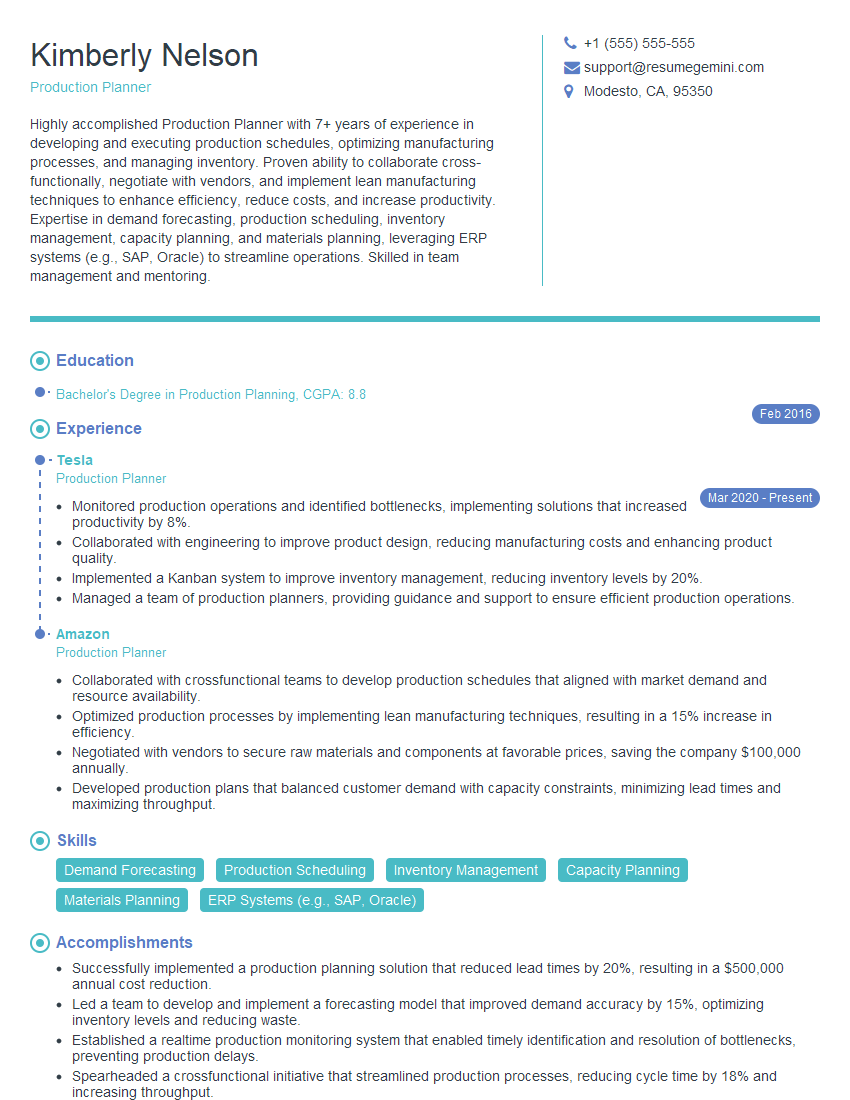
To further enhance your job prospects, focus on creating an ATS-friendly resume that highlights your skills and experience effectively. We highly recommend using ResumeGemini, a trusted resource for building professional resumes. ResumeGemini provides tools and resources to create a compelling resume, and we offer examples of resumes tailored to Print Production Estimation and Job Costing to help you get started.


Explore more articles
Users Rating of Our Blogs
Share Your Experience
We value your feedback! Please rate our content and share your thoughts (optional).
What Readers Say About Our Blog
Very informative content, great job.
good