Feeling uncertain about what to expect in your upcoming interview? We’ve got you covered! This blog highlights the most important Analysis of Military Intelligence interview questions and provides actionable advice to help you stand out as the ideal candidate. Let’s pave the way for your success.
Questions Asked in Analysis of Military Intelligence Interview
Q 1. Explain the difference between strategic, operational, and tactical intelligence.
The differences between strategic, operational, and tactical intelligence lie primarily in their time horizons and the levels of military planning they support. Think of it like a military campaign: strategic intelligence informs the overall why and where, operational intelligence directs the how, and tactical intelligence focuses on the immediate what.
- Strategic Intelligence: This long-term intelligence focuses on broad, national-level issues and informs high-level decision-making. It addresses long-term threats, opportunities, and capabilities of nations and non-state actors. For example, assessing the long-term military build-up of a rival nation, predicting potential future conflicts based on geopolitical trends, or analyzing the overall economic and political stability of a region crucial to national security.
- Operational Intelligence: This mid-range intelligence supports the planning and execution of military campaigns or operations. It provides information on enemy forces, terrain, and infrastructure relevant to a specific operation. An example would be assessing the enemy’s troop deployments and logistics capabilities before a major offensive, or analyzing weather patterns to optimize the timing of an amphibious assault.
- Tactical Intelligence: This short-term intelligence directly supports immediate combat operations. It is time-sensitive and focuses on real-time information about the enemy’s immediate actions and capabilities. Examples include identifying enemy positions during a patrol, tracking the movement of enemy armor, or locating enemy artillery during a firefight.
Q 2. Describe the intelligence cycle and its key phases.
The intelligence cycle is a continuous process of gathering, processing, analyzing, and disseminating intelligence information. It’s a cyclical process, meaning the output of one phase feeds into the next. Think of it as a loop constantly refining our understanding.
- Planning and Direction: This initial phase defines the intelligence requirements, identifying what information is needed and how it will be used. This often involves prioritization, resource allocation, and establishing clear objectives.
- Collection: This phase involves gathering raw data from various sources using different methods, as discussed later. This is where the ‘boots on the ground’ work happens, as well as sophisticated satellite imagery analysis.
- Processing: This phase involves organizing and converting raw data into usable intelligence. This includes things like translating intercepted communications, transcribing audio, or georeferencing satellite imagery.
- Analysis and Production: This is where the raw data is transformed into meaningful intelligence through assessment, interpretation, and synthesis. Analysts draw conclusions, assess reliability, and create reports and briefings for decision-makers.
- Dissemination: This final phase involves distributing the finished intelligence products to those who need them, including military commanders, policymakers, and other intelligence agencies. The timing and method of dissemination are crucial for effectiveness.
- Feedback: This crucial, often overlooked step involves evaluating the effectiveness of the intelligence provided. This feedback loop helps refine future intelligence collection and analysis efforts. Did the intelligence meet its objectives? What can we do better next time?
Q 3. What are the different types of intelligence collection methods?
Intelligence collection methods are diverse, often categorized into the following types:
- HUMINT (Human Intelligence): This involves gathering information from people, including spies, informants, defectors, and prisoners of war. Think of classic espionage, but also the subtle art of interviewing captured enemy soldiers.
- SIGINT (Signals Intelligence): This involves intercepting and analyzing electronic communications, such as radio transmissions, satellite communications, and radar signals. Think of intercepting enemy orders or tracking their movement via electronic signals.
- IMINT (Imagery Intelligence): This involves analyzing images gathered from satellites, aircraft, and drones. This can provide critical information on troop deployments, infrastructure, and weapons systems. Think of satellite photos of military bases.
- MASINT (Measurement and Signature Intelligence): This involves collecting and analyzing data from a variety of sources such as acoustics, electromagnetics, and nuclear explosions. Think of analyzing the sonic signature of a missile launch or detecting nuclear isotopes in atmospheric samples.
- OSINT (Open Source Intelligence): This involves collecting information from publicly available sources such as news reports, social media, and academic publications. This method is surprisingly powerful, offering a broad range of information from unexpected sources.
- GEOINT (Geospatial Intelligence): This involves the analysis and interpretation of location-based information including maps, imagery, and geographic data. Often combined with other intelligence types to create a rich contextual understanding.
Q 4. How do you assess the credibility and reliability of intelligence sources?
Assessing the credibility and reliability of intelligence sources is paramount. It’s like weighing evidence in a courtroom – some sources are more trustworthy than others. We use a combination of methods:
- Source Track Record: Have they provided accurate information in the past? A history of reliable information boosts credibility.
- Source Motivation: What does the source stand to gain or lose by providing this information? Are they biased or trying to manipulate us?
- Method of Acquisition: How was the information obtained? Was it overheard, intercepted, or provided directly? The collection method affects the reliability of the information.
- Corroboration: Does the information align with other intelligence from different sources? Multiple sources confirming the same thing increase the reliability.
- Bias Detection: We critically analyze the source’s inherent biases based on their background, location, and affiliation. This involves understanding their worldview and potential influences.
- Data Triangulation: This involves comparing information from multiple sources, even if they are different types of intelligence (e.g., combining HUMINT from a defector with satellite imagery).
In practice, we often assign confidence levels to intelligence, ranging from high confidence (highly credible and reliable) to low confidence (suspect or unverified).
Q 5. Explain the concept of ‘all-source intelligence’ analysis.
All-source intelligence analysis is the cornerstone of modern military intelligence. It involves integrating information from multiple intelligence disciplines (HUMINT, SIGINT, IMINT, etc.) to create a comprehensive and holistic understanding of a situation. It’s like assembling a jigsaw puzzle – each piece (different intelligence type) contributes to the complete picture.
The power of all-source intelligence lies in its ability to overcome the limitations of single-source analysis. For example, a single intercepted communication (SIGINT) might be ambiguous, but when combined with satellite imagery (IMINT) showing troop movements and human intelligence (HUMINT) confirming the communication’s content, we achieve a much clearer and more reliable assessment. This avoids drawing faulty conclusions based on incomplete or potentially misleading information.
This process often involves sophisticated data fusion techniques and advanced analytical tools to integrate and synthesize diverse data types effectively.
Q 6. How do you handle conflicting intelligence reports?
Conflicting intelligence reports are common. It’s rare to have a perfectly consistent picture. Handling these conflicts requires a systematic approach:
- Identify the Discrepancies: Clearly pinpoint where the reports differ. What are the points of contention?
- Evaluate Source Credibility: Reassess the credibility and reliability of each source involved. Which sources have stronger track records?
- Analyze Collection Methods: Consider how each piece of intelligence was gathered. Were there potential biases or limitations?
- Seek Corroboration: Try to find additional intelligence from other sources that might support one report over another.
- Consider Context: Place the conflicting reports within the broader context. Are there geopolitical factors or operational considerations that might explain the discrepancies?
- Develop Alternative Hypotheses: Consider different explanations for the discrepancies. Perhaps both reports are partially true, reflecting different aspects of a complex situation.
- Document the Uncertainty: If the conflict cannot be resolved, it’s crucial to acknowledge the uncertainty in the intelligence assessment, presenting it clearly to decision-makers.
In essence, it’s a process of thoughtful deliberation, triangulation, and cautious interpretation. Transparency regarding the uncertainties is key.
Q 7. Describe your experience with geospatial intelligence (GEOINT) analysis.
My experience with geospatial intelligence (GEOINT) analysis is extensive. I’ve worked extensively with various GEOINT data sources, including satellite imagery, aerial photography, and maps, to support a wide range of military operations and strategic assessments. This includes:
- Target Identification and Location: Using high-resolution satellite imagery to identify and locate enemy military installations, weapons systems, and troop concentrations. We use image analysis software to enhance resolution and interpret details.
- Damage Assessment: Assessing the damage caused by air strikes or other military actions. This involves analyzing before-and-after imagery, calculating the size of craters, and assessing the damage to buildings and infrastructure.
- Route Planning and Terrain Analysis: Analyzing terrain features to plan military movements, identifying optimal routes and potential obstacles.
- Infrastructure Analysis: Assessing the condition of roads, bridges, airports, and other infrastructure critical for logistics and military operations.
- Change Detection: Monitoring changes in the landscape over time to detect military activities, construction projects, and other relevant developments.
My expertise extends to using various GIS software and analytical tools to process, analyze, and visualize GEOINT data. I’m proficient in georeferencing imagery, performing measurements, and generating maps and reports for military decision-makers.
Q 8. How do you use open-source intelligence (OSINT) in your analysis?
Open-Source Intelligence (OSINT) is the practice of collecting information from publicly available sources. In my analysis, OSINT forms a crucial foundation. I leverage it to establish a baseline understanding of a situation, identify potential threats, and corroborate information from other intelligence sources. My approach involves a systematic process:
- Source Identification and Selection: I meticulously identify relevant sources like news articles, social media platforms, academic journals, government websites, and commercial databases. The selection is based on the reliability, credibility, and relevance of the source to the specific intelligence requirement.
- Data Collection and Aggregation: I employ various tools and techniques to collect information efficiently, ranging from manual searches to automated web scraping. The data is then meticulously organized and categorized.
- Data Analysis and Interpretation: This step involves critically assessing the gathered information, identifying patterns, and drawing inferences. I use techniques such as content analysis, network analysis, and geospatial analysis to extract meaningful insights.
- Validation and Correlation: It’s vital to cross-reference OSINT findings with data from other intelligence disciplines to validate accuracy and build a more comprehensive picture. This helps to avoid misinformation or biases inherent in single sources.
For example, during a recent analysis of a potential geopolitical instability, I used OSINT to track social media activity, news reports, and official government statements to assess public sentiment and identify potential flashpoints. By combining these findings with other intelligence, I contributed to a more comprehensive risk assessment.
Q 9. Explain your experience with signals intelligence (SIGINT) analysis.
Signals Intelligence (SIGINT) analysis involves interpreting intercepted communications and electronic signals to gather intelligence. My experience includes analyzing various types of SIGINT data, including communications intelligence (COMINT), electronic intelligence (ELINT), and foreign instrumentation signals intelligence (FISINT).
My work focuses on identifying patterns and anomalies within intercepted data, employing techniques like traffic analysis, signal processing, and cryptanalysis (when applicable and legally permissible). For example, I’ve used signal processing techniques to identify specific radio frequencies used by a target organization, revealing information about their communication network and operational capabilities.
The process often involves working closely with technical specialists to ensure accurate interpretation. Careful consideration is given to the context of the intercepted signals to avoid misinterpretations. A rigorous methodology that includes quality control checks, validation against other intelligence sources and data integrity assessments is crucial for generating accurate and reliable SIGINT analysis.
Q 10. Describe your experience with human intelligence (HUMINT) analysis.
Human Intelligence (HUMINT) analysis is the process of evaluating information gathered from human sources. My experience includes reviewing reports from human intelligence operatives, including spies, informants, and defectors. The analysis involves evaluating the credibility and reliability of the source, identifying biases, and assessing the validity of the information provided.
It’s crucial to consider the source’s motivation, their access to information, and the potential for deception. I employ various techniques such as source evaluation matrices, triangulation (corroborating information from multiple sources), and developing an understanding of the source’s background and operational context to ascertain reliability.
For example, I have analyzed HUMINT reports describing the internal structure and decision-making processes of a foreign military organization. Careful evaluation of the source’s credibility, coupled with analysis of other intelligence, allowed the information to inform our understanding and help predict the organization’s likely future actions.
Q 11. How do you analyze imagery intelligence (IMINT)?
Imagery Intelligence (IMINT) analysis involves the examination of imagery, such as satellite photos, aerial photographs, and videos, to extract intelligence. My approach involves several key steps:
- Image Interpretation: This begins with visually examining the imagery to identify objects, structures, and activities. This can range from identifying military equipment to assessing infrastructure development.
- Geospatial Analysis: I use geographic information system (GIS) software to analyze location, proximity, and spatial relationships within the imagery. For example, mapping the locations of military bases and assessing their proximity to civilian populations.
- Change Detection: This technique involves comparing images captured at different times to identify changes. This allows for monitoring construction, troop movements, or changes in infrastructure.
- Measurement and Scaling: Precise measurement of distances, sizes, and other quantitative information is critical for informed assessments.
- Validation and Correlation: The information derived from IMINT is validated by comparison with other intelligence sources, ensuring accuracy and context.
For example, I have used IMINT to monitor construction activity at a suspected weapons facility, providing valuable insight into the scope and timeline of their project. Combining that with other intelligence confirmed our suspicions and enabled effective countermeasures.
Q 12. What are the common challenges in military intelligence analysis?
Military intelligence analysis faces several common challenges:
- Information Overload: The sheer volume of data from various sources can be overwhelming, requiring efficient methods of filtering, processing, and prioritizing relevant information.
- Information Gaps: Often, there are incomplete or missing pieces of information, requiring analysts to use inferential reasoning and make educated guesses based on the available evidence.
- Time Sensitivity: Intelligence needs are often time-sensitive, requiring rapid analysis and timely dissemination of findings to inform decision-making.
- Source Reliability: Assessing the trustworthiness and validity of sources is crucial to avoid basing assessments on misinformation or propaganda.
- Bias and Misinterpretation: Analysts must be aware of their own biases and ensure objectivity in interpretation to avoid drawing inaccurate conclusions.
- Technological Advancements: Keeping up with the rapid technological advancements in data acquisition and analytical techniques is paramount to maintain professional currency.
Overcoming these challenges requires a combination of advanced analytical skills, rigorous methodologies, and effective collaboration with other intelligence professionals.
Q 13. How do you prioritize intelligence requirements?
Prioritizing intelligence requirements is crucial to focus efforts on the most critical needs. My approach involves:
- Understanding the Strategic Context: I begin by assessing the overall strategic goals and objectives to determine the most pressing intelligence needs.
- Assessing Urgency and Impact: Each intelligence requirement is assessed based on its time sensitivity and potential impact on decision-making.
- Feasibility and Cost-Benefit Analysis: The likelihood of successfully obtaining the intelligence, along with the resources required, are factored in.
- Prioritization Matrix: I often use a matrix to visually represent the prioritized intelligence requirements based on urgency and impact. This allows for clear visualization and communication.
- Regular Review and Adjustment: Intelligence priorities are regularly reviewed and adjusted as the situation evolves.
For example, during a major military operation, prioritizing intelligence concerning enemy troop movements and weapons capabilities would be critical compared to a less pressing need, such as the analysis of long-term economic trends in the region.
Q 14. Explain your experience with intelligence data fusion techniques.
Intelligence data fusion combines information from multiple sources (HUMINT, SIGINT, OSINT, IMINT, etc.) to create a more comprehensive and accurate picture than any single source could provide. My experience involves using various techniques, including:
- Data Integration: This initial step involves bringing together data from different sources into a common format, ensuring data consistency and compatibility.
- Data Correlation: Identifying relationships and connections between different pieces of information to corroborate findings and reveal patterns.
- Conflict Resolution: Dealing with inconsistencies or contradictions between data from different sources.
- Inference and Hypothesis Generation: Using the combined data to develop new insights and hypotheses that could not be derived from individual sources.
- Visualization and Presentation: Presenting the fused intelligence in a clear and concise manner, using maps, charts, and other visual aids.
For example, I recently combined HUMINT on a specific target’s activities with SIGINT intercepting their communications and IMINT showing their movements. This allowed me to build a far more detailed and accurate picture of their operations than would have been possible using only one of the individual intelligence sources.
Q 15. How do you identify and mitigate bias in intelligence analysis?
Identifying and mitigating bias in intelligence analysis is crucial for objective decision-making. Bias, whether conscious or unconscious, can skew our interpretation of information, leading to inaccurate assessments and flawed conclusions. We combat this through a multi-pronged approach.
Structured Analytic Techniques (SATs): These techniques, such as analysis of competing hypotheses (ACH) and structured decision-making, force analysts to systematically consider alternative explanations and challenge their own assumptions. For example, in ACH, we explicitly lay out different hypotheses about an adversary’s intentions, then rigorously test each one against available evidence, reducing the influence of preconceived notions.
Diverse Teams: Assembling teams with varied backgrounds, experiences, and perspectives fosters healthy debate and challenges individual biases. A diverse team is more likely to identify blind spots and offer contrasting interpretations.
Data Triangulation: We corroborate information from multiple independent sources to validate findings and reduce reliance on any single potentially biased source. This might involve cross-referencing open-source intelligence (OSINT) with signals intelligence (SIGINT) and human intelligence (HUMINT).
Regular Self-Reflection and Peer Review: Analysts should regularly reflect on their own biases and potential blind spots. Peer review processes allow colleagues to examine each other’s work, identifying potential biases and inconsistencies.
Ultimately, mitigating bias is an ongoing process, not a one-time fix. It requires constant vigilance, a commitment to rigorous methodology, and a culture of open and honest feedback.
Career Expert Tips:
- Ace those interviews! Prepare effectively by reviewing the Top 50 Most Common Interview Questions on ResumeGemini.
- Navigate your job search with confidence! Explore a wide range of Career Tips on ResumeGemini. Learn about common challenges and recommendations to overcome them.
- Craft the perfect resume! Master the Art of Resume Writing with ResumeGemini’s guide. Showcase your unique qualifications and achievements effectively.
- Don’t miss out on holiday savings! Build your dream resume with ResumeGemini’s ATS optimized templates.
Q 16. Describe your experience with intelligence reporting and briefing.
My experience in intelligence reporting and briefing spans over [Number] years, encompassing various roles and contexts. I’ve crafted numerous intelligence products, from concise daily summaries to detailed analytical reports for senior leadership. I’ve presented briefings to audiences ranging from small, specialized teams to high-level policymakers.
One memorable experience involved preparing a briefing on a rapidly evolving geopolitical situation. We had to synthesize a massive amount of raw intelligence, quickly assess its credibility, and translate complex findings into a clear and concise presentation for decision-makers under significant time pressure. This involved prioritizing key findings, using clear visuals, and anticipating potential questions.
In another instance, I was responsible for constructing a detailed report on a specific adversary’s capabilities, focusing on their technological advancements. This required deep technical analysis, rigorous source validation, and a high level of precision in order to communicate credible assessments to military planners.
Throughout my career, I’ve consistently focused on tailoring my communication style and content to the specific audience and the urgency of the situation. Clear, concise, and accurate reporting is paramount.
Q 17. How do you use technology and software in military intelligence analysis?
Technology and software are indispensable tools in modern military intelligence analysis. We leverage a range of software and platforms to collect, process, analyze, and visualize intelligence data. These include:
Geospatial Intelligence (GEOINT) software: This allows us to analyze satellite imagery, maps, and other geospatial data to identify patterns, track movements, and build situational awareness.
Signals Intelligence (SIGINT) analysis tools: These tools help us process and interpret intercepted communications, radar signals, and other electronic emissions, identifying key information about adversary activities.
Data mining and machine learning algorithms: These techniques enable us to identify patterns and anomalies in large datasets, potentially uncovering hidden connections and insights that might be missed through manual analysis. For example, we might use machine learning to identify potential terrorist networks based on communication patterns or financial transactions.
Database management systems: These allow for efficient storage, retrieval, and sharing of intelligence data amongst analysts.
Collaboration platforms: Secure communication and collaborative platforms allow real-time information sharing and coordination within and across teams.
I am proficient in using [List specific software or systems e.g., Palantir, ArcGIS, specific SIGINT analysis software]. My skills ensure efficient and effective use of technology to enhance the accuracy and timeliness of our intelligence assessments.
Q 18. How do you maintain situational awareness in a dynamic environment?
Maintaining situational awareness in a dynamic environment requires a proactive and multi-faceted approach. It’s not simply about reacting to events; it’s about anticipating them.
Continuous Monitoring: We constantly monitor a variety of open-source and classified intelligence feeds for any relevant developments.
All-Source Intelligence Fusion: We integrate information from various intelligence disciplines (HUMINT, SIGINT, GEOINT, OSINT, etc.) to build a comprehensive picture of the situation.
Predictive Modeling: We utilize analytical tools and models to predict potential future developments based on observed trends and patterns. This helps us anticipate challenges and opportunities.
Network Analysis: Understanding the relationships between different actors and entities is critical. We use network analysis techniques to map connections, identify key players, and anticipate the flow of information and influence.
Regular Briefings and Communication: Frequent updates and communication within the team and with relevant stakeholders ensure everyone stays informed.
Think of it like air traffic control. We are constantly tracking numerous ‘aircraft’ (actors, events), anticipating potential collisions (conflicts), and coordinating responses to maintain a safe and orderly ‘airspace’ (operational environment). Proactive monitoring, predictive modeling and adaptability are essential for success.
Q 19. How do you communicate complex intelligence information to non-technical audiences?
Communicating complex intelligence information to non-technical audiences requires careful planning and execution. The key is to translate complex data and technical jargon into clear, concise, and easily understandable language.
Plain Language: Avoid technical jargon and acronyms. If unavoidable, define terms clearly.
Visual Aids: Use charts, graphs, and maps to illustrate key findings and make the information more accessible. A picture is often worth a thousand words.
Storytelling: Framing the information within a narrative helps to engage the audience and makes the information easier to remember.
Analogies and Metaphors: Using relatable examples and analogies can help illustrate complex concepts. For instance, explaining network structures using a social network analogy can be effective.
Tailoring the Message: The level of detail and the specific information presented should be adjusted based on the audience’s knowledge and needs.
For example, when briefing senior leaders, the focus should be on the key implications and recommendations. In contrast, a briefing to a technical team might require more detailed technical information.
Q 20. Describe your experience with threat assessment and risk analysis.
Threat assessment and risk analysis are fundamental aspects of my work. These processes involve identifying potential threats, evaluating their likelihood and impact, and developing strategies to mitigate risks. My experience includes:
Identifying potential threats: This involves analyzing open-source information, intelligence reports, and other data to identify potential adversaries, their capabilities, and their intentions.
Evaluating likelihood and impact: We use various methodologies, including probability and impact matrices, to quantitatively assess the likelihood and potential impact of each identified threat.
Developing mitigation strategies: Based on our assessments, we develop strategies to mitigate or reduce the impact of identified threats. These might include defensive measures, preemptive actions, or contingency planning.
A recent project involved conducting a threat assessment for a specific military operation. This involved identifying potential threats from various sources (e.g., enemy combatants, natural disasters, logistical challenges), assessing their likelihood and impact, and recommending specific mitigation strategies to minimize risks to personnel and equipment. This involved extensive data analysis, coordination with other experts, and presenting findings to senior leadership for decision-making.
Q 21. What are your experiences with intelligence database management?
My experience with intelligence database management encompasses both the technical aspects of database design and implementation and the strategic aspects of data governance and information sharing. I’m familiar with relational databases, data warehousing techniques, and the importance of data security and integrity within classified environments.
I have worked with systems that manage large volumes of structured and unstructured data, including text documents, imagery, sensor data, and geospatial information. I have experience in designing and implementing systems that allow for efficient data retrieval, query processing, and data analysis. This includes data cleaning, validation, and the implementation of appropriate access controls to ensure data security and compliance with regulations.
A crucial aspect of this work is ensuring the accuracy, consistency, and timeliness of the data within the database. This includes establishing data quality control processes and implementing data validation rules to minimize errors. Effective database management is critical for timely and effective intelligence analysis.
Q 22. How familiar are you with different intelligence classification levels?
My familiarity with intelligence classification levels is extensive. I understand the crucial role these levels play in safeguarding sensitive information and ensuring its appropriate dissemination. The system typically employs a tiered approach, with varying degrees of sensitivity and access restrictions. For example, in the US system, we have:
- Top Secret (TS): Information whose unauthorized disclosure could cause exceptionally grave damage to national security.
- Secret (S): Information whose unauthorized disclosure could cause serious damage to national security.
- Confidential (C): Information whose unauthorized disclosure could cause damage to national security.
- Unclassified: Information that does not require protection under the security classification system.
Beyond these basic levels, additional compartments and handling caveats might be applied to further restrict access based on specific programs or projects. For instance, a document might be classified ‘Top Secret//SI//NOFORN,’ indicating Top Secret, Sensitive Intelligence, and Not Releasable to Foreign Nationals. This granular control is essential for managing the risk associated with different types of intelligence information.
Q 23. How do you ensure the security and confidentiality of intelligence information?
Ensuring the security and confidentiality of intelligence information requires a multi-layered approach that combines technical safeguards, procedural protocols, and a strong security culture. This begins with proper classification of the information itself, followed by rigorous access control measures.
- Secure Facilities: Intelligence work necessitates physically secure facilities with restricted access, surveillance systems, and robust cybersecurity measures.
- Data Encryption: Encryption at rest and in transit is crucial to protect digital intelligence. We employ strong encryption algorithms and regularly update our systems to address emerging threats.
- Need-to-Know Basis: Access to intelligence is granted strictly on a ‘need-to-know’ basis, minimizing the number of individuals with access to sensitive information. This principle significantly reduces the risk of unauthorized disclosure.
- Personnel Security Clearances: Thorough background checks and security clearances are required for individuals handling classified information. Regular security briefings and training ensure that personnel remain aware of their responsibilities.
- Secure Communication Channels: Secure communication channels, such as encrypted email, secure phone lines, and secure messaging platforms, are used to protect intelligence during transmission.
Finally, a strong security culture within the organization is paramount. This involves fostering a mindset where security is everyone’s responsibility and reporting any potential security breaches is encouraged and rewarded.
Q 24. Describe your experience with intelligence briefings and presentations.
I have extensive experience in crafting and delivering intelligence briefings and presentations to diverse audiences, ranging from senior military leaders to technical specialists. My approach prioritizes clarity, conciseness, and tailored messaging. I adapt my presentation style based on the audience’s understanding of the subject matter and their specific needs.
For example, when briefing senior leadership, I focus on the strategic implications and high-level assessments. In contrast, when briefing technical experts, I emphasize the details of the analysis and methodologies used. I always ensure the information is presented in a visually engaging manner, often using maps, charts, and other visual aids to effectively convey complex information. My presentations are always well-rehearsed and I am comfortable fielding questions and engaging in discussions.
One specific example involved preparing a briefing on a rapidly evolving geopolitical situation for a group of high-ranking officers. I structured the briefing chronologically, starting with background information, then moving into current events and concluding with potential future scenarios and recommendations for action. The briefing was well-received, and the feedback emphasized its clarity and actionable insights.
Q 25. Explain your understanding of the legal and ethical considerations in intelligence work.
Legal and ethical considerations are paramount in intelligence work. Operations must adhere to both domestic and international laws, and strict ethical guidelines dictate how we collect, analyze, and disseminate intelligence. These legal frameworks often define permissible collection methods, data protection standards, and the handling of sensitive information. For instance, the US has the Foreign Intelligence Surveillance Act (FISA) which regulates surveillance and data collection.
Ethical considerations encompass issues such as:
- Protecting privacy rights: We must balance the need for intelligence gathering with the protection of individual privacy rights.
- Maintaining objectivity: Analysis must be objective and free from bias, avoiding preconceived notions that could skew the conclusions.
- Transparency and accountability: There needs to be a clear chain of command and accountability for intelligence activities. This includes documenting all actions and decisions.
- Avoiding the misuse of intelligence: Intelligence information should never be used to violate human rights or international law.
I am thoroughly familiar with these legal and ethical considerations and always ensure that my work and the work of my team aligns with these standards. Failure to do so can have severe legal and reputational consequences.
Q 26. What are some common analytical fallacies to avoid in intelligence analysis?
Many analytical fallacies can hinder effective intelligence analysis. Avoiding these pitfalls is crucial for producing accurate and reliable assessments. Some common fallacies include:
- Confirmation Bias: The tendency to favor information that confirms pre-existing beliefs, ignoring contradictory evidence. We mitigate this by actively seeking out dissenting opinions and rigorously testing our hypotheses.
- Mirror Imaging: Assuming that other actors think and act like we do. This is countered by understanding the cultural, political, and social context of the target.
- Bias from Availability: Overestimating the likelihood of events that are easily recalled or readily available, often due to recent events or media coverage. We address this by considering the full range of potential outcomes, not just the most salient ones.
- Groupthink: A situation where a group’s desire for harmony overrides critical evaluation of alternatives. This is prevented by fostering a culture of open debate and challenging assumptions.
- Anchoring Bias: Over-reliance on the first piece of information received, even if it is not fully accurate or reliable. We counter this by developing analysis based on multiple independent sources and methods.
Regularly reviewing our analytical processes and seeking feedback from peers helps us identify and correct these biases, leading to more robust and reliable intelligence assessments.
Q 27. How do you stay current with emerging intelligence trends and technologies?
Staying current in the rapidly evolving field of intelligence requires a proactive and multifaceted approach. I utilize several methods to maintain my knowledge and skills:
- Professional Development: I regularly attend conferences, workshops, and training sessions focusing on emerging intelligence trends and technologies. This allows for networking and exposure to new ideas and methods.
- Academic Research: I engage with scholarly articles, journals, and books in relevant fields such as geopolitical analysis, strategic studies, and technological advancements.
- Industry Publications: I closely follow reputable intelligence publications and journals to stay abreast of the latest analysis and developments in the field.
- Online Resources: I utilize reputable online resources and databases for accessing up-to-date information, data, and reports.
- Networking: Building relationships with colleagues and experts in the field through professional organizations and conferences is vital for sharing knowledge and insights.
Through this continuous learning process, I ensure my analytical skills and understanding of intelligence trends and technologies remain at the cutting edge.
Key Topics to Learn for Analysis of Military Intelligence Interview
- Intelligence Cycle: Understand the entire process, from planning and collection to analysis, production, and dissemination. Consider how each stage impacts the overall effectiveness of intelligence gathering.
- All-Source Intelligence Analysis: Demonstrate your ability to integrate information from diverse sources (e.g., HUMINT, SIGINT, OSINT, IMINT) to form a cohesive and comprehensive picture. Be prepared to discuss the challenges and benefits of using multiple intelligence sources.
- Geopolitical Analysis: Show your understanding of regional conflicts, political dynamics, and international relations. Be ready to discuss how these factors influence intelligence assessments.
- Analytical Tradecraft: Master techniques such as hypothesis generation, evidence evaluation, and analytical reasoning. Practice applying these skills to hypothetical scenarios.
- Threat Assessment and Risk Management: Discuss your ability to identify, analyze, and assess potential threats, and develop strategies to mitigate risk. Prepare examples from your experience or studies.
- Data Analysis and Visualization: Showcase your skills in interpreting complex datasets, identifying patterns and trends, and effectively communicating your findings through visualizations (charts, graphs, etc.).
- Report Writing and Briefing: Demonstrate your ability to clearly and concisely communicate complex intelligence findings to both technical and non-technical audiences. Practice structuring your arguments logically and persuasively.
- Ethical Considerations in Intelligence: Understand and articulate the ethical implications and responsibilities associated with intelligence analysis.
Next Steps
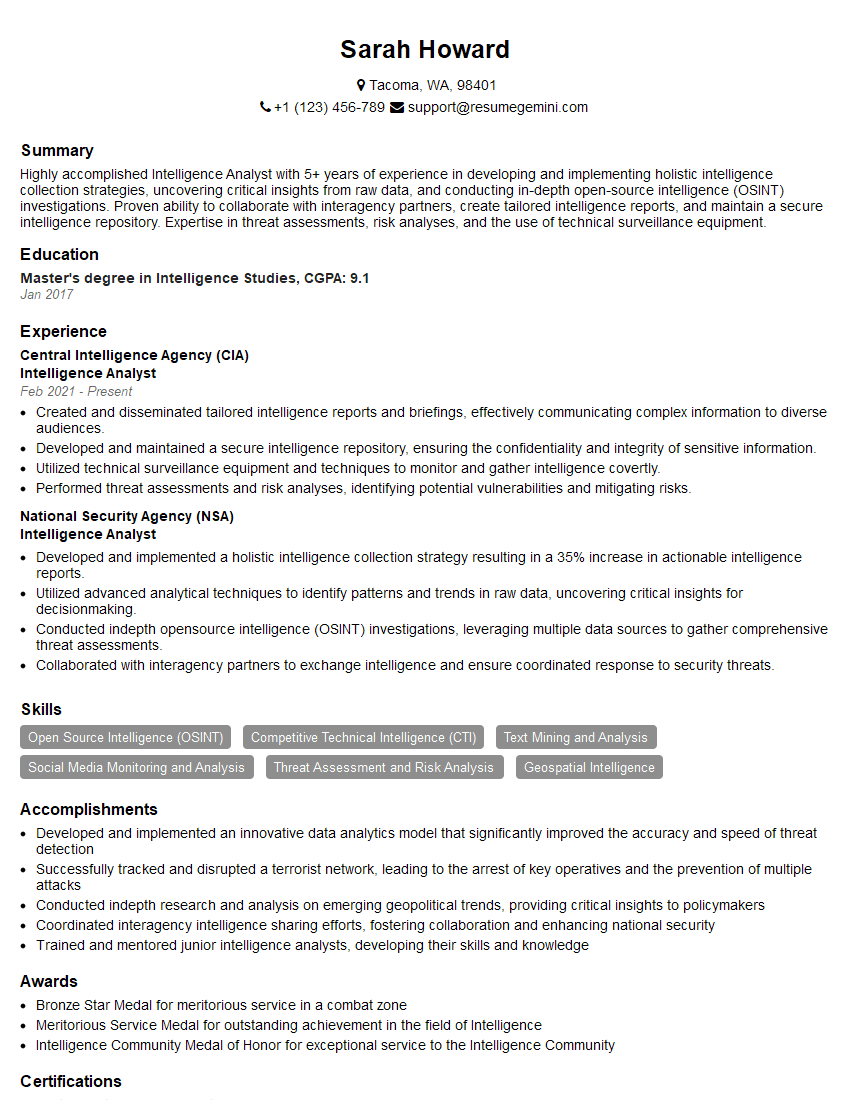
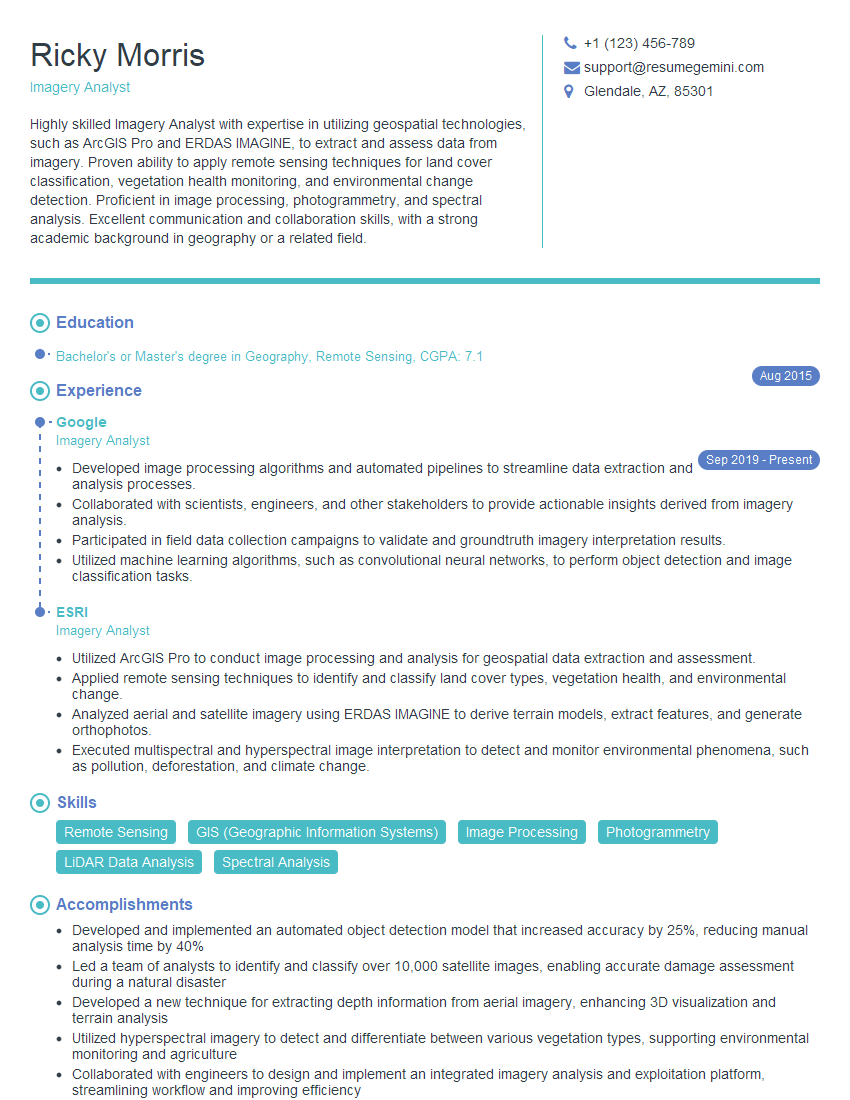
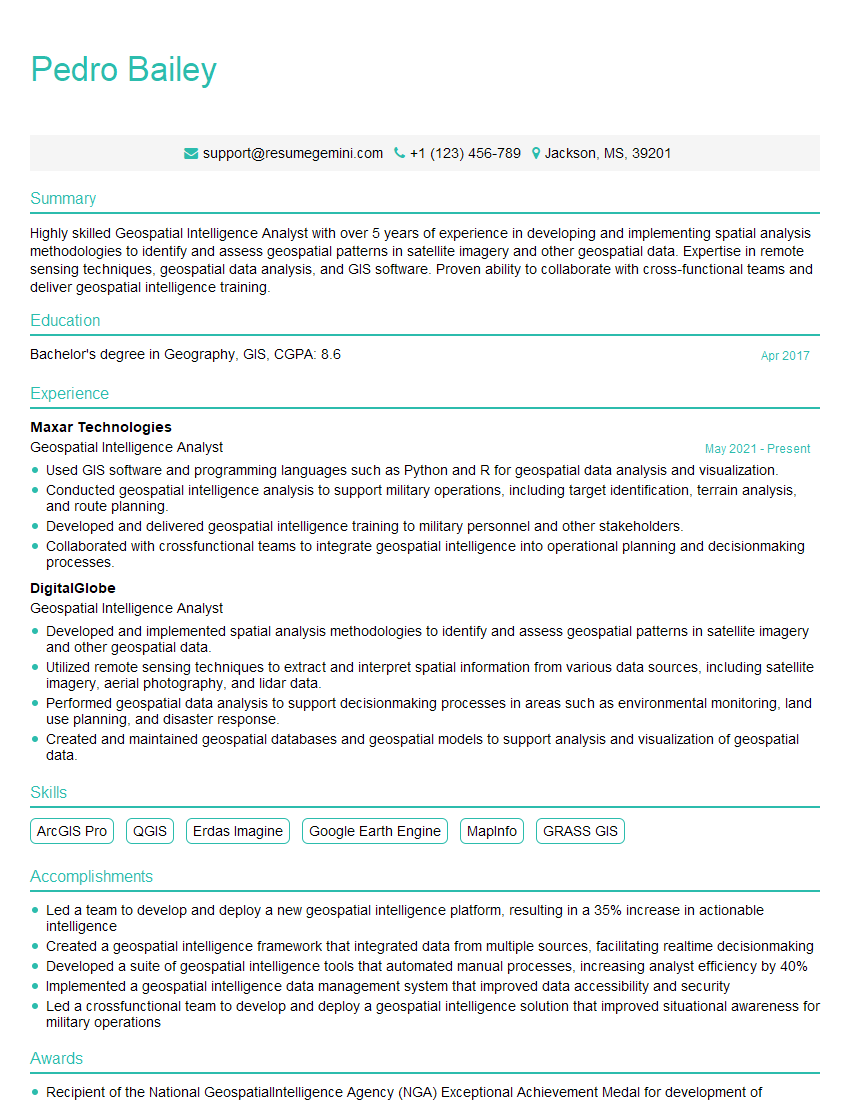
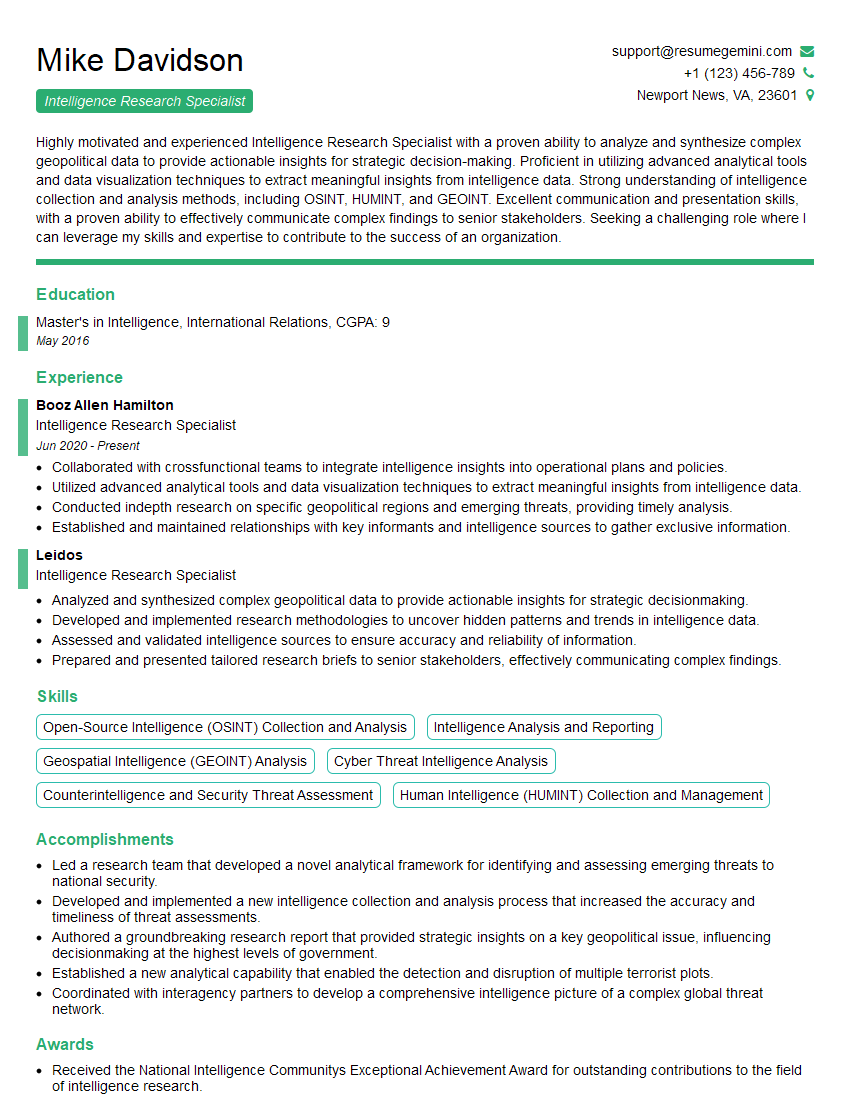
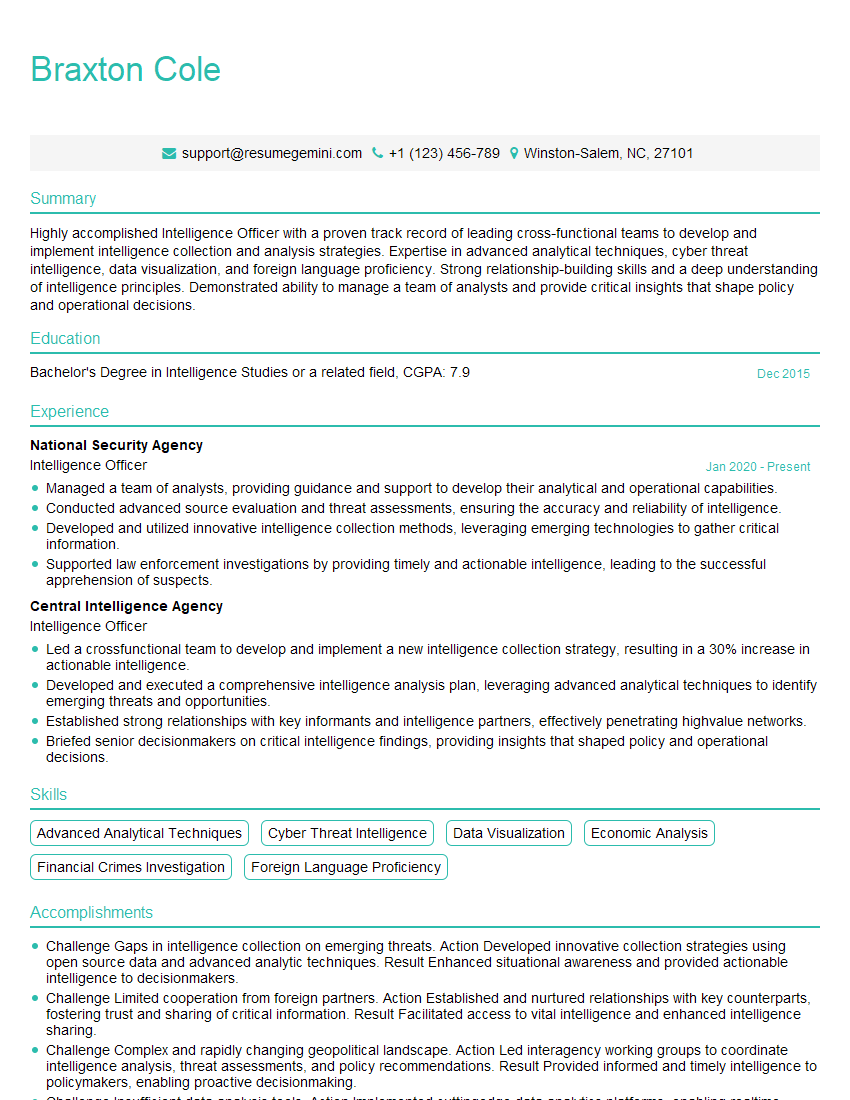
Mastering Analysis of Military Intelligence opens doors to a challenging and rewarding career with significant impact. To maximize your job prospects, a well-crafted resume is crucial. An ATS-friendly resume ensures your qualifications are effectively communicated to hiring managers. We strongly recommend using ResumeGemini to build a professional and impactful resume that highlights your skills and experience in this specialized field. ResumeGemini provides examples of resumes tailored specifically to Analysis of Military Intelligence positions, allowing you to craft a compelling document that showcases your expertise. Take the next step towards your dream career – build your best resume with ResumeGemini today!
Explore more articles
Users Rating of Our Blogs
Share Your Experience
We value your feedback! Please rate our content and share your thoughts (optional).
What Readers Say About Our Blog
Very informative content, great job.
good