Every successful interview starts with knowing what to expect. In this blog, we’ll take you through the top Animal Grooming interview questions, breaking them down with expert tips to help you deliver impactful answers. Step into your next interview fully prepared and ready to succeed.
Questions Asked in Animal Grooming Interview
Q 1. Describe your experience with different dog breeds and their grooming needs.
My experience spans a wide range of dog breeds, each with unique grooming needs. Think of it like tailoring a suit – you wouldn’t use the same pattern for a Great Dane and a Chihuahua!
For example, breeds like Shih Tzus and Yorkies require frequent brushing to prevent matting, often daily. Their long, luxurious coats demand meticulous attention. Conversely, short-haired breeds like Labradors need less frequent brushing but benefit from regular baths to manage shedding. Double-coated breeds like Huskies and Malamutes require special tools and techniques to avoid damaging their undercoat during shedding seasons. Then there are breeds like Poodles, which are famously low-shedding and require regular haircuts to maintain their elegant look. I’ve worked with breeds of all sizes, coat types, and temperaments, adapting my approach to each individual animal’s specific needs.
- Long-haired breeds: Daily brushing, regular bathing, and professional haircuts are essential.
- Short-haired breeds: Regular baths, occasional brushing, and nail trims.
- Double-coated breeds: Specialized de-shedding tools and techniques during shedding season.
- Wire-haired breeds: Hand stripping or trimming to maintain coat texture.
Q 2. What are the common health concerns you might identify during grooming?
During grooming, I’m trained to identify several potential health concerns. It’s like a quick health check-up! I look for things like skin irritations, such as rashes, redness, or excessive dryness; this could indicate allergies or infections. I also check for parasites like fleas or ticks. Abnormal lumps or bumps, changes in skin pigmentation, and unusual discharge from the ears or eyes all warrant further attention and could point to underlying health problems. Matted fur can be a breeding ground for bacteria, causing skin infections. Finally, I carefully examine the nails and pads of the paws for injuries or infections. If I notice anything unusual, I always alert the pet owner immediately and advise them to consult a veterinarian.
Q 3. Explain your approach to handling aggressive or fearful animals.
Handling aggressive or fearful animals requires patience, understanding, and a calm demeanor. It’s about building trust, not forcing a procedure. My approach involves creating a safe and comfortable environment, using positive reinforcement techniques, such as treats and gentle praise. For fearful animals, I start with slow introductions, allowing them to get used to my presence and the sounds of the grooming tools before starting the process. I always work calmly and avoid sudden movements. For aggressive animals, I might employ muzzle training (with prior owner approval and guidance) to ensure both the animal’s and my safety. The key is to read the animal’s body language and adjust my approach accordingly. Sometimes, a grooming session might need to be broken down into smaller, less overwhelming stages spread over several days. Safety is paramount. I always prioritize both the animal’s and my own well-being.
Q 4. How do you maintain hygiene and sanitation in your grooming area?
Maintaining hygiene and sanitation is crucial for both the animals and my health. This involves several steps. First, I disinfect all surfaces – tables, tools, and the entire grooming area – before and after each pet. I use hospital-grade disinfectants recommended for use with pets. All towels and washcloths are laundered at high temperatures after each use. I also employ thorough cleaning protocols for all equipment, including clippers, shears, and brushes. Proper ventilation is essential to reduce the spread of airborne particles. I regularly empty trash receptacles and ensure proper disposal of waste. Handwashing is a constant practice throughout the grooming process, before and after handling each animal. These meticulous practices help minimize the risk of disease transmission and create a healthy environment for both pets and humans.
Q 5. What tools and equipment are essential for professional pet grooming?
Professional pet grooming demands a range of specialized tools and equipment. These include high-quality clippers with various blade sizes to accommodate different coat lengths and textures. Shears, both straight and curved, are necessary for precise trimming and shaping. A variety of brushes are essential, from slicker brushes for removing mats to de-shedding tools for double-coated breeds. Other important tools are nail clippers, ear cleaning solution, shampoo and conditioner specifically formulated for pets, and towels. A comfortable and adjustable grooming table is also a must. A high-velocity dryer can significantly shorten drying time. Additionally, safety equipment such as muzzles (used with owner permission and training) and protective gloves may be needed.
Q 6. Describe your experience with various grooming techniques (e.g., scissor cuts, clipper work).
I’m proficient in various grooming techniques, tailoring my approach to the breed and the individual animal’s needs. Scissor cuts require precision and artistry. I can create a variety of styles, from traditional to modern, paying close attention to symmetry and balance. My clipper work is equally precise, ranging from short, even clips to more stylized trims. I’m adept at using different clipper blade attachments to achieve various lengths and textures. I also know how to blend scissor and clipper work seamlessly for a polished, professional finish. This mastery allows me to tailor the grooming style to the breed standard or to the owner’s preferences while ensuring the animal’s comfort and health.
Q 7. How do you handle skin conditions or allergies during grooming?
Handling skin conditions or allergies during grooming requires careful attention and specialized products. I carefully assess the condition before starting the groom, noting any areas of irritation or inflammation. I use hypoallergenic shampoos and conditioners that are gentle on sensitive skin. I avoid harsh chemicals or fragrances that could exacerbate the condition. For animals with allergies, I frequently communicate with the owner to understand their pet’s sensitivities and any necessary precautions. I always thoroughly rinse all products to prevent residue that could cause further irritation. In severe cases, I would advise the pet owner to consult a veterinarian for appropriate medical treatment before proceeding with the grooming. My goal is to provide a gentle and effective grooming experience that minimizes discomfort and promotes healing.
Q 8. What is your approach to managing a client’s concerns about their pet’s grooming?
Addressing client concerns about their pet’s grooming is paramount. My approach begins with active listening. I encourage clients to openly share any anxieties or specific requests regarding their pet’s grooming needs. I then carefully explain the grooming process, outlining each step and addressing any potential concerns proactively. For instance, if a client is worried about their dog’s sensitive skin, I’ll discuss hypoallergenic shampoos and gentle brushing techniques. I also use visual aids like photos or videos of previous successful grooms of similar breeds and coat types to build confidence. Transparency is key; if a particular style might be challenging or unsuitable for their pet, I’ll offer alternative options and explain the rationale. Finally, I maintain open communication throughout the grooming process, offering regular updates and welcoming any further questions or adjustments.
For example, I once had a client anxious about their cat’s first grooming experience. By showing the cat a quiet, safe space in the salon, letting it sniff my hands and gently stroking it before the actual grooming, we built trust. This significantly eased the client’s concerns and resulted in a positive first experience for the cat.
Q 9. Describe your experience with different types of pet hair and coat types.
My experience encompasses a wide range of pet hair and coat types. I’m proficient in handling everything from the short, smooth coats of Doberman Pinschers to the thick, double coats of Siberian Huskies, the long, flowing locks of Yorkshire Terriers, and the wiry coats of Scottish Terriers. Each coat type demands a specific approach. Short, smooth coats require less frequent brushing but regular baths to maintain shine, while double coats need regular brushing to prevent matting and shedding. Long coats are prone to tangles and mats, necessitating more frequent brushing and potentially detangling sprays. Wiry coats need stripping or plucking to maintain their texture. I am also familiar with handling various coat conditions, including allergies and sensitivities.
I adapt my techniques according to each animal’s unique coat characteristics and any underlying health conditions. For instance, I use different shampoos and conditioners tailored to each coat type. For a cat with a long, delicate coat, I’d use a gentle, detangling shampoo and carefully comb through the coat to prevent breakage. Conversely, for a dog with a thick, oily coat, I might use a clarifying shampoo to remove excess oils.
Q 10. How do you ensure the safety and comfort of animals during the grooming process?
Ensuring the safety and comfort of animals is my top priority. I achieve this through several key strategies. First, I create a calming and stress-free environment. My grooming salon is designed to minimize noise and visual distractions. Gentle handling is crucial; I use positive reinforcement techniques, talking soothingly to the animals and rewarding calm behavior with treats or praise. I carefully assess each animal’s temperament before starting the grooming process, customizing my approach accordingly. I prioritize using safe and high-quality grooming tools, regularly checking them for damage or wear. I also always pay close attention to the animal’s body language, watching for signs of stress or discomfort. If an animal shows signs of distress, I immediately stop the grooming process and take a break to calm them down.
For example, I always introduce new grooming tools slowly and gradually, letting the animal investigate and become comfortable before using them. For anxious pets, I might start with a shorter session, gradually increasing the duration as they become more relaxed.
Q 11. How do you handle a situation where an animal becomes injured during grooming?
In the unfortunate event of an animal being injured during grooming, my immediate priority is to assess the injury and provide first aid. This includes stopping the bleeding if necessary, cleaning the wound, and applying a suitable antiseptic. Then, I’ll contact the pet owner immediately to inform them of the situation. Depending on the severity of the injury, I may recommend that the owner take their pet to a veterinarian. I’ll also thoroughly document the incident, including the type of injury, the steps taken, and any communication with the pet owner. Preventing injuries is crucial, which is why I emphasize careful handling and the use of appropriate tools. Post-incident, I review my procedures to identify and address any contributing factors to avoid similar incidents in the future. I’ll also maintain open communication with the client, ensuring they’re informed of the animal’s progress and recovery.
I once had a minor incident where a dog accidentally nicked its paw on a nail clipper. I immediately treated the minor cut, contacted the owner, and followed all documented procedures. The owner was kept fully informed, and the dog recovered quickly with no long-term effects.
Q 12. What is your understanding of breed-specific grooming standards?
Breed-specific grooming standards are crucial for maintaining a pet’s health and appearance. Each breed has unique coat characteristics and grooming requirements. For example, a Poodle needs regular haircuts and trimming to prevent matting, whereas a Greyhound needs less frequent grooming due to its short coat. I’m well-versed in breed standards and utilize appropriate techniques for each breed. This includes understanding the ideal coat length, texture, and style for show-quality grooming as well as for pets who are not participating in shows.
Knowledge of breed standards also extends to understanding potential health issues specific to certain breeds. For instance, some breeds are prone to skin conditions, requiring specialized shampoos and careful handling. I research breed-specific health considerations and always adapt my grooming methods accordingly.
Q 13. Describe your experience with nail trimming and grinding.
Nail trimming and grinding are essential aspects of pet grooming. I use both methods, choosing the most appropriate technique depending on the pet’s individual needs and preferences. Nail trimming with clippers requires precision and care to avoid cutting into the quick (the sensitive part of the nail containing blood vessels and nerves). I always use sharp clippers and trim nails incrementally, visually checking for the quick before each cut. Nail grinding uses a grinder to slowly and evenly file down the nails. This method is often preferred for pets with dark nails, making it easier to avoid cutting into the quick. With both methods, I prioritize the animal’s comfort. If a pet shows resistance, I might use treats or calming techniques. I explain the process to the owner and answer any questions they might have.
I always work carefully and swiftly to minimize stress for the animal and the owner.
Q 14. How do you clean and maintain your grooming tools?
Maintaining clean and sanitized grooming tools is crucial for preventing the spread of bacteria and maintaining hygiene. After each grooming session, I thoroughly clean all my tools. This involves removing loose hair and debris with a brush, then washing tools with warm, soapy water. I then disinfect tools using a pet-safe disinfectant spray, ensuring all surfaces are thoroughly cleaned. Clippers and grinders require special attention; I use clipper oil to lubricate moving parts and keep them in good working order. Tools are stored in a clean, dry environment to prevent rust or damage. Regular maintenance extends the lifespan of my tools and helps ensure the safety and well-being of my clients.
This meticulous cleaning process is not just a matter of hygiene; it’s a commitment to providing the safest and highest quality grooming services. A clean work environment is critical for maintaining a calm and reassuring atmosphere for my furry clients.
Q 15. What are your strategies for dealing with matted or tangled fur?
Dealing with matted fur requires a multifaceted approach prioritizing the pet’s comfort and safety. We assess the severity of the matting; minor mats can often be carefully brushed out with a de-matting tool, working slowly and gently to avoid pulling the pet’s skin. For severe matting, however, sometimes the only humane option is to carefully trim away the matted fur. This prevents pulling and potential skin irritation. We always use sharp, high-quality clippers to minimize discomfort. Before tackling heavily matted areas, we may apply a detangling spray or conditioner to help loosen the mats and make the process smoother. After de-matting, a thorough brushing helps remove any remaining loose fur and helps prevent future matting. Think of it like carefully untangling a very delicate necklace – slow, steady, and methodical movements are crucial.
- Assessment: Evaluate mat severity.
- De-matting Tools: Use appropriate tools (wide-tooth combs, de-matting tools, clippers).
- Conditioning: Use detangling products to aid the process.
- Patience: Work slowly and gently to minimize discomfort.
- Post-Grooming: Brush thoroughly to prevent recurrence.
Career Expert Tips:
- Ace those interviews! Prepare effectively by reviewing the Top 50 Most Common Interview Questions on ResumeGemini.
- Navigate your job search with confidence! Explore a wide range of Career Tips on ResumeGemini. Learn about common challenges and recommendations to overcome them.
- Craft the perfect resume! Master the Art of Resume Writing with ResumeGemini’s guide. Showcase your unique qualifications and achievements effectively.
- Don’t miss out on holiday savings! Build your dream resume with ResumeGemini’s ATS optimized templates.
Q 16. How do you communicate with pet owners about the grooming process and results?
Communication with pet owners is paramount. Before the grooming process, I thoroughly discuss the pet’s needs, coat type, and any specific concerns the owner might have. I explain the steps involved in the grooming process, including estimated timeframes. After grooming, I provide a detailed overview of the services rendered and highlight any observations, such as skin conditions or potential health issues. I show the owner the results and invite feedback. Visual aids like before-and-after photos can be incredibly helpful in showcasing the transformation. We maintain detailed records for each pet’s grooming history which aids in future communication and care planning. For instance, if a dog has sensitive skin, I’ll note this and suggest a specific shampoo for future appointments. Open, clear communication fosters trust and ensures the pet receives the best possible care.
Q 17. Describe your experience with ear cleaning and anal gland expression.
Ear cleaning and anal gland expression are crucial aspects of pet hygiene, though they require a gentle touch and expertise. For ear cleaning, I use a veterinarian-approved ear cleaning solution appropriate for the pet’s breed and any specific sensitivities. I carefully clean the visible portion of the ear canal, ensuring to avoid pushing any debris further in. Anal gland expression should only be performed by experienced groomers who understand the anatomy and potential risks. Improper expression can cause pain and infection. I always assess the need for expression based on the pet’s condition; unnecessary expression can be harmful. Any abnormalities are immediately communicated to the owner for veterinary consultation. I always prioritize the pet’s comfort and safety. Think of it like carefully cleaning a delicate instrument – precision and understanding are paramount.
Q 18. How do you handle emergency situations during grooming?
Emergency situations during grooming, though infrequent, require quick thinking and decisive action. These can range from minor cuts to more serious issues like allergic reactions. I have advanced first aid training for pets, including handling bleeding, minor wound care, and recognizing signs of allergic reactions. For any serious injury or reaction, immediate veterinary care is sought. A well-stocked first aid kit is always readily accessible. My priority is always the pet’s well-being, and I work calmly and efficiently to minimize stress and ensure the pet’s safety. Regularly scheduled professional development ensures my skills remain up-to-date, enhancing my ability to handle any unexpected event.
Q 19. What is your knowledge of different shampoos and conditioners for different coat types?
Different coat types necessitate specialized shampoos and conditioners. For instance, dogs with sensitive skin require hypoallergenic, fragrance-free shampoos, while dogs with thick, oily coats need clarifying shampoos to remove excess oil. Long-haired breeds might benefit from detangling conditioners, while breeds prone to dry skin require moisturizing conditioners. I am familiar with a wide range of products from different manufacturers, understanding their ingredients and suitability for various coat types and skin conditions. I assess each pet’s specific needs and discuss product choices with the owner before proceeding. Selecting the right shampoo is like selecting the right tool for a job; using the wrong one can do more harm than good.
Q 20. What is your experience with using dryers and other grooming equipment?
Proficiency in using dryers and other grooming equipment is essential. I am skilled in using high-velocity dryers, which are efficient and gentle on the pet’s coat, preventing excessive heat exposure. I also use various brushes, combs, and clippers, selecting the appropriate tools based on the pet’s coat type and grooming needs. Safety is paramount when operating this equipment, and I always follow manufacturer instructions and best practices to prevent any injuries to the pet or myself. Regular maintenance of the equipment is key to ensuring its safe and efficient operation. This is akin to a chef having a mastery of their kitchen equipment—the tools must be used correctly and safely to achieve the desired result.
Q 21. How do you manage your time effectively to complete grooming appointments on schedule?
Effective time management is crucial for maintaining a smooth workflow. I use appointment scheduling software to manage appointments efficiently, allotting sufficient time for each pet based on their breed, coat type, and grooming needs. This involves careful organization and prioritization. A systematic approach to grooming, proceeding step-by-step through each grooming process, prevents delays. Anticipating potential challenges and having contingency plans helps me stick to my schedule. Proper preparation, such as having all necessary tools ready, significantly improves efficiency. Just like a conductor leading an orchestra, effective time management is essential to ensure a harmonious and productive work environment.
Q 22. Describe your experience with working in a team environment.
Throughout my career, teamwork has been essential. In my previous role at ‘Pawsh Pets,’ we had a team of five groomers, each specializing in different areas – from breed-specific cuts to hand-stripping. We relied heavily on communication and collaboration. For instance, if a particularly anxious dog came in, one groomer would focus on calming it while another prepared the necessary tools. We also regularly held team meetings to discuss challenging cases, share best practices, and improve our efficiency. Effective teamwork allows us to handle a larger volume of clients smoothly and to provide the highest quality care for each animal.
We also often assisted each other. If one groomer was running behind, others would pitch in to ensure clients weren’t kept waiting unduly. This collaborative spirit not only improved client satisfaction but also fostered a positive and supportive work environment.
Q 23. How do you handle customer complaints or negative feedback?
Handling customer complaints is a crucial aspect of this profession. I believe in actively listening to the client’s concerns without interruption, demonstrating empathy and understanding. I then calmly reiterate their concerns to ensure I’ve fully grasped the issue. For example, if a client feels their pet’s haircut wasn’t as requested, I would show them the photos from the consultation and explain any discrepancies, offering possible reasons (e.g., unexpected matting, the pet’s movement during the grooming process).
My goal is always to find a mutually acceptable solution. This might involve offering a complimentary bath or a partial redo of the haircut, or even a partial refund depending on the severity of the issue. I follow up with the client afterward to ensure their satisfaction and to demonstrate my commitment to providing excellent service. Documenting the complaint and resolution is also essential for continuous improvement and learning.
Q 24. What are your professional development goals related to animal grooming?
My professional development goals focus on continuous improvement and specialization. I’m particularly interested in expanding my expertise in breed-specific grooming techniques, especially for challenging breeds like terriers that require hand-stripping. I plan to achieve this through attending advanced grooming workshops and seminars, as well as pursuing certifications from recognized grooming organizations. Furthermore, I want to improve my skills in handling anxious or aggressive animals through specialized training courses. Ultimately, my goal is to become a highly skilled and sought-after groomer who can confidently handle any canine or feline client.
I also aim to deepen my understanding of canine and feline anatomy and physiology. This knowledge is crucial for safe and effective grooming practices, including recognizing potential skin conditions or health concerns.
Q 25. How do you stay updated with the latest trends and techniques in animal grooming?
Staying updated in the dynamic field of animal grooming requires consistent effort. I regularly attend industry conferences and workshops, such as those offered by the National Dog Groomers Association of America (NDGAA). I also subscribe to professional grooming magazines and online journals. Following prominent groomers on social media platforms like Instagram and YouTube provides valuable insights into new techniques and styles. Participating in online forums and communities dedicated to animal grooming allows for the exchange of information and best practices with other professionals. This multifaceted approach keeps my skills sharp and ensures I’m abreast of the latest trends in grooming tools, products, and techniques.
Q 26. What safety measures do you take to protect yourself and the animals during grooming?
Safety is paramount in animal grooming. I always prioritize the well-being of both the animal and myself. Before starting any grooming session, I ensure the animal is properly secured, using appropriate restraints like non-slip mats and grooming loops – but always being mindful of their comfort and not causing undue stress or pain. I use sharp, well-maintained tools to minimize the risk of cuts or nicks. I carefully handle sharp objects like scissors and clippers, and I regularly disinfect all tools and equipment to prevent the spread of infection. I also wear protective gear like gloves when handling potentially aggressive animals or those with skin conditions. When dealing with anxious animals, I use positive reinforcement techniques and a calm, reassuring approach. Finally, I thoroughly clean the grooming area after each session to maintain a sanitary environment.
Q 27. What is your understanding of animal behavior and how it affects grooming?
Understanding animal behavior is fundamental to successful grooming. A fearful or anxious dog, for example, may react unpredictably, making the grooming process more challenging and potentially dangerous. I approach each animal individually, observing its body language – its posture, tail wags, ear position – to assess its mood and temperament. A relaxed dog will generally have loose muscles, a soft gaze, and a wagging tail. However, a tense dog might show signs of stress, such as flattened ears, tucked tail, or excessive panting. I adapt my approach accordingly, using positive reinforcement techniques like treats and praise to create a positive experience. For aggressive animals, I use appropriate muzzles and restraints while keeping a calm and assertive demeanor.
For instance, with a very anxious cat, I would start with slow, gentle brushing, allowing the cat to acclimate to my presence and touch. I would then gradually progress to more involved grooming tasks. This patient and understanding approach ensures a safe and comfortable grooming experience for the animal.
Q 28. Describe your experience with handling different grooming styles.
My experience encompasses a wide range of grooming styles, from breed-specific cuts to creative styling. I’m proficient in performing traditional haircuts like the ‘puppy cut’ and ‘lion cut,’ as well as more elaborate styles tailored to specific breeds. For instance, I have extensive experience in hand-stripping terriers, which requires specialized knowledge and a delicate touch to remove dead hair without harming the skin. I’m also skilled in trimming nails, cleaning ears, and expressing anal glands. I’ve worked with a diverse clientele, including dogs of all breeds and sizes, and cats. My adaptability allows me to confidently approach any grooming request, while always prioritizing the animal’s comfort and well-being.
I’m always eager to learn new styles and techniques. I find inspiration in grooming magazines, online resources, and competitions. I believe continuous learning is essential to staying current in this constantly evolving field.
Key Topics to Learn for Your Animal Grooming Interview
- Breed-Specific Grooming Needs: Understanding the unique coat types, grooming requirements, and potential health concerns of various breeds (e.g., shedding patterns, skin sensitivities).
- Practical Application: Demonstrate your knowledge by describing your experience with different grooming techniques for various breeds, including bathing, drying, brushing, trimming, and styling.
- Safety and Handling: Explain your approach to safely handling animals of different sizes, temperaments, and levels of comfort with grooming procedures. Discuss techniques for stress reduction and calming anxious animals.
- Tool Knowledge and Maintenance: Detail your familiarity with various grooming tools (clippers, shears, dryers, brushes) and their proper use, cleaning, and maintenance.
- Health and Hygiene: Describe your ability to identify potential skin conditions, parasites, or other health issues during grooming and your approach to reporting such concerns.
- Client Communication: Explain how you would communicate effectively with clients to understand their needs and expectations, discuss grooming options, and address any concerns.
- Professionalism and Ethics: Showcase your understanding of professional conduct, including punctuality, hygiene, and maintaining a clean and organized workspace.
- Business Acumen (for Salon Roles): If applying for a salon position, discuss your understanding of appointment scheduling, client management, and inventory control.
Next Steps
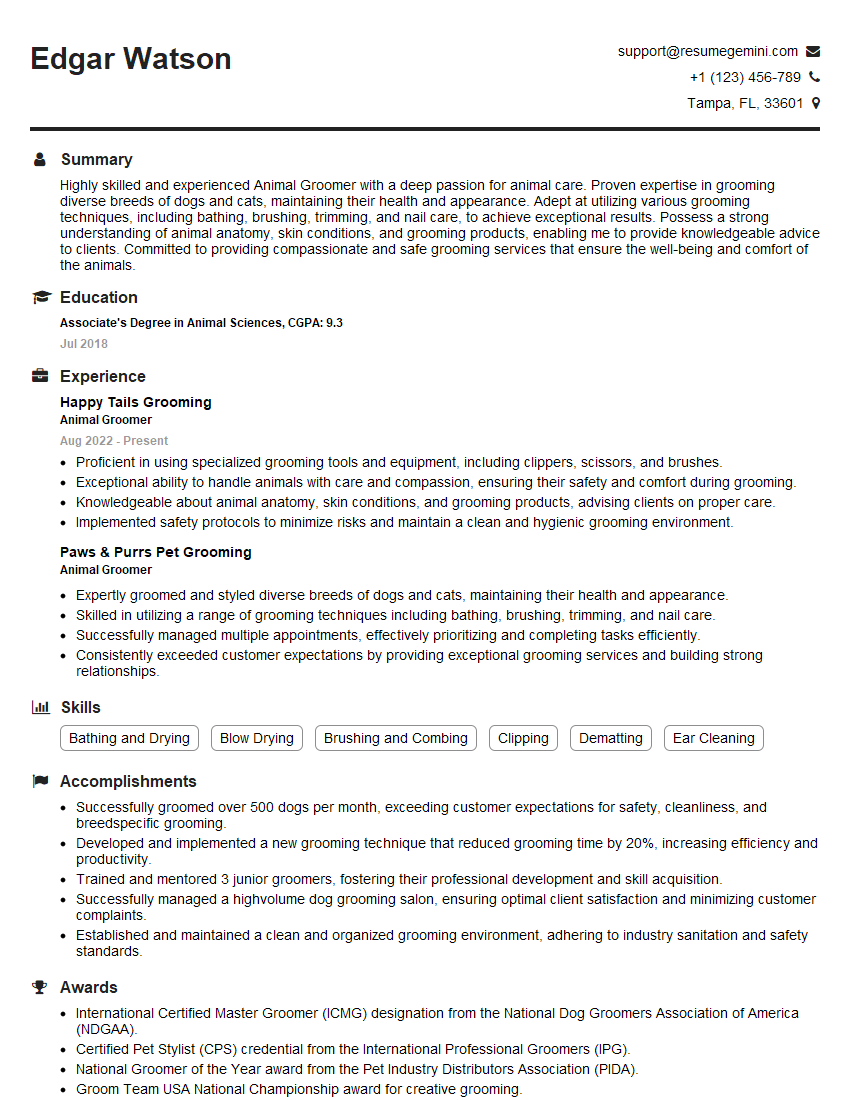
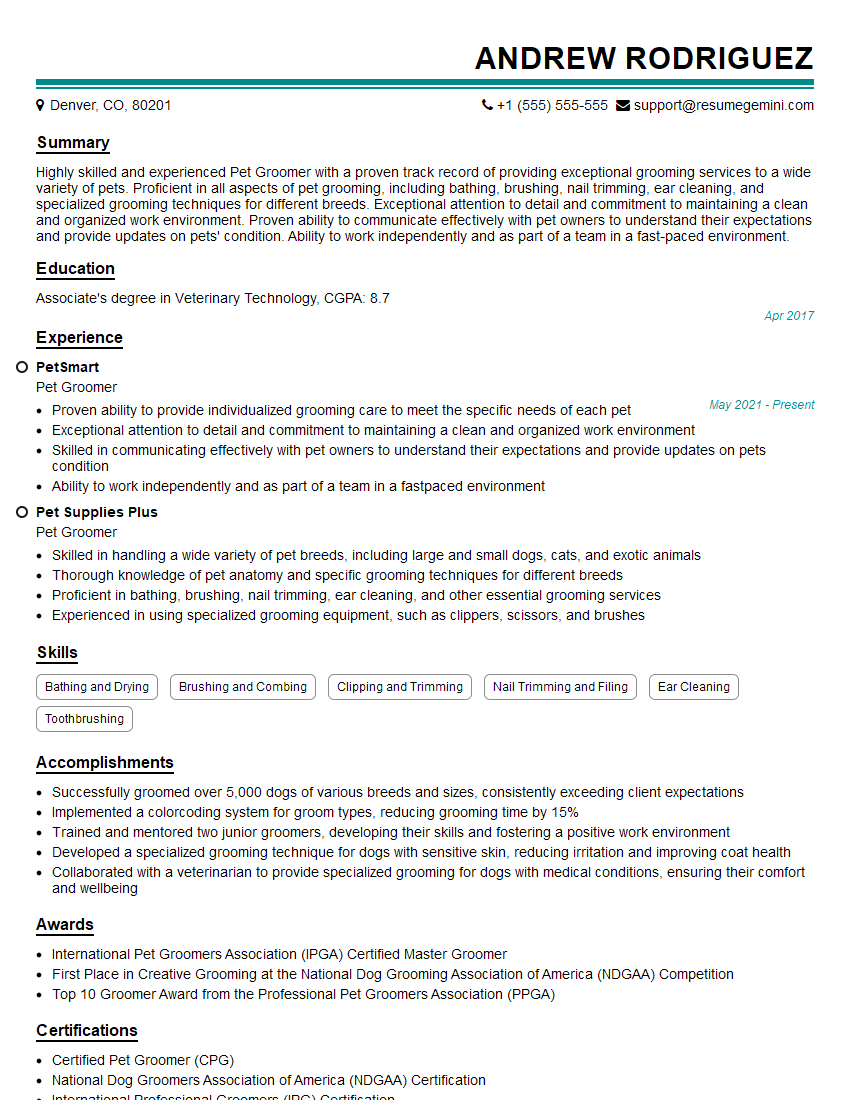
Mastering the art of animal grooming opens doors to a rewarding career with diverse opportunities for growth, from independent grooming to working in prestigious salons or veterinary clinics. To significantly increase your chances of landing your dream job, crafting a compelling and ATS-friendly resume is crucial. ResumeGemini can help you build a professional resume that highlights your skills and experience effectively. We provide examples of resumes tailored to the Animal Grooming field to guide you in creating a stand-out application. Take the next step towards your successful career in animal grooming with ResumeGemini.


Explore more articles
Users Rating of Our Blogs
Share Your Experience
We value your feedback! Please rate our content and share your thoughts (optional).
What Readers Say About Our Blog
Very informative content, great job.
good