Interviews are opportunities to demonstrate your expertise, and this guide is here to help you shine. Explore the essential Anodic Aluminum Etching interview questions that employers frequently ask, paired with strategies for crafting responses that set you apart from the competition.
Questions Asked in Anodic Aluminum Etching Interview
Q 1. Explain the process of anodic aluminum etching.
Anodic aluminum etching is an electrochemical process used to create controlled surface textures and oxide layers on aluminum. It involves immersing an aluminum workpiece as the anode in an electrolyte bath, and applying a direct current. The electrochemical reaction causes the aluminum to oxidize, forming a porous aluminum oxide layer. This layer’s thickness and porosity can be precisely controlled by adjusting process parameters, ultimately determining the surface’s final morphology.
Imagine it like slowly dissolving the aluminum surface in a controlled manner. Instead of completely dissolving, we’re creating a layer of protective aluminum oxide, with tiny pores that can be used for various applications like dyeing, sealing, or improving surface adhesion.
Q 2. What are the different types of anodic aluminum etching?
Anodic aluminum etching encompasses several types, primarily categorized by the resulting oxide layer characteristics:
- Porous Anodizing: This creates a thick, porous oxide layer, ideal for dyeing and sealing applications. The pore size and spacing are controllable, allowing for customized surface appearances.
- Hard Anodizing: This produces a harder, denser oxide layer compared to porous anodizing, providing excellent wear and corrosion resistance. The pores are significantly smaller and less numerous, reducing dye absorption but enhancing durability.
- Micro-Arc Oxidation (MAO): This more advanced technique uses higher voltages and results in a thicker, ceramic-like coating, superior for extreme wear and corrosion conditions. It’s not strictly ‘etching’ in the same sense as porous or hard anodizing, as it forms a composite coating.
The choice depends entirely on the desired final properties of the aluminum component. A decorative part might use porous anodizing for vibrant colors, while a high-performance engine component would benefit from hard anodizing or MAO.
Q 3. Describe the role of electrolytes in anodic aluminum etching.
Electrolytes are crucial in anodic aluminum etching; they act as the medium for the electrochemical reactions. They influence the process significantly by affecting the oxide layer’s growth rate, porosity, and morphology. Different electrolytes lead to different results.
- Sulfuric Acid (H2SO4): Commonly used for porous anodizing, producing relatively large pores and a relatively high etching rate.
- Oxalic Acid (C2H2O4): Produces finer pores and a denser oxide layer compared to sulfuric acid, often preferred for applications requiring improved corrosion resistance.
- Chromic Acid (H2CrO4): Used less frequently due to its toxicity, it forms a thin, non-porous, hard oxide layer.
The electrolyte’s concentration, temperature, and purity also significantly impact the etching process. Impurities can lead to inconsistent oxide layer formation and defects. Think of the electrolyte as the ‘chemical sculptor,’ shaping the aluminum surface by its very composition and conditions.
Q 4. How does current density affect the etching process?
Current density directly influences the etching rate and the resulting oxide layer’s properties. Higher current densities lead to faster etching rates and thicker oxide layers, but can also result in uneven etching, pitting, or even burning of the aluminum surface if not properly controlled.
Lower current densities result in slower etching rates, thinner oxide layers, and a smoother surface finish, providing greater uniformity. It’s a delicate balance – a higher current density may speed up production, but it also increases the risk of defects. Finding the optimal current density is crucial for achieving the desired surface characteristics and minimizing defects.
Q 5. What are the factors that influence the etching rate?
Several factors influence the etching rate in anodic aluminum etching:
- Current Density: As discussed, higher current density generally leads to a faster etching rate.
- Electrolyte Type and Concentration: Different electrolytes and their concentrations have different etching efficiencies.
- Temperature: Higher temperatures generally increase the reaction rate and the etching speed.
- Aluminum Alloy: Different aluminum alloys have varying etching characteristics due to their compositions.
- Surface Preparation: A clean, well-prepared aluminum surface will etch more consistently than a contaminated one.
- Agitation: Proper electrolyte agitation ensures uniform current distribution and etching.
Optimizing these parameters is crucial for consistent and predictable results in anodic aluminum etching. This requires meticulous control and careful process monitoring.
Q 6. Explain the difference between hard anodizing and porous anodizing.
The key difference between hard anodizing and porous anodizing lies in the density and porosity of the resulting oxide layer:
- Porous Anodizing: Creates a thick, porous aluminum oxide layer with numerous interconnected pores. This porosity allows for easy dye absorption, enabling the creation of color anodized parts. It offers moderate corrosion and wear resistance.
- Hard Anodizing: Produces a much denser and harder oxide layer with significantly fewer and smaller pores. This makes it less suitable for dyeing but drastically improves wear, abrasion, and corrosion resistance. It’s typically thicker than porous anodizing, making it ideal for applications demanding high durability.
Imagine porous anodizing as a sponge, easily absorbing liquids, while hard anodizing is like a tightly sealed container, resistant to penetration.
Q 7. How do you control the surface morphology in anodic aluminum etching?
Controlling surface morphology in anodic aluminum etching is achieved primarily by carefully managing the process parameters. This involves:
- Electrolyte Selection: Choosing the appropriate electrolyte is fundamental in defining the pore size, spacing, and overall surface texture.
- Current Density Control: Precise control of current density affects the etching rate and hence the surface morphology.
- Temperature Regulation: Maintaining a stable temperature ensures consistent etching and prevents irregularities.
- Agitation: Uniform electrolyte agitation promotes even etching and prevents localized variations in oxide layer growth.
- Pre-treatment of Aluminum: Thorough cleaning and surface preparation of the aluminum workpiece is essential for consistent and defect-free etching.
- Post-treatment: Processes like sealing can further modify the surface properties, for example, reducing porosity and improving corrosion resistance.
Mastering these parameters through experimentation and process optimization is essential for obtaining the desired surface morphology, be it a highly porous surface for dyeing or a smooth, dense surface for improved wear resistance.
Q 8. What are the common defects observed in anodic aluminum etching and how are they addressed?
Common defects in anodic aluminum etching stem from inconsistencies in the process or material imperfections. These can include pitting (small holes), uneven etching (rough surface), insufficient etching depth, and discoloration. Addressing these requires a systematic approach.
Pitting: Often caused by impurities in the aluminum or the etching solution. Solution: Improve cleaning procedures before etching, ensuring thorough removal of oils and contaminants. Use high-purity electrolytes and regularly filter the bath.
Uneven Etching: Can result from variations in current density across the workpiece, poor solution agitation, or non-uniform surface properties. Solution: Employ proper jigging techniques to ensure even current distribution. Agitate the electrolyte solution vigorously to maintain homogeneity. Pre-treat the aluminum to achieve a uniform surface.
Insufficient Etching Depth: Results from insufficient etching time, voltage, or electrolyte concentration. Solution: Optimize the etching parameters based on the desired depth and material properties. Carefully monitor and control these parameters throughout the process.
Discoloration: Often due to impurities in the electrolyte or uncontrolled process conditions. Solution: Use high-purity chemicals and carefully maintain the electrolyte’s temperature and concentration. Consider adding corrosion inhibitors to the bath.
Troubleshooting these defects often involves careful examination of the etched surface, analysis of the etching parameters, and adjustments to the pre-treatment and etching processes. It’s a process of iterative refinement.
Q 9. Describe the quality control measures used in anodic aluminum etching.
Quality control in anodic aluminum etching is crucial for consistent results. It involves several key measures:
Regular electrolyte analysis: Monitoring the concentration, purity, and temperature of the electrolyte solution is essential. Deviations from the optimal range can significantly impact etching quality. This often involves titration or other chemical analysis techniques.
Surface inspection: Visual inspection of the etched surfaces is a fundamental quality control step. This involves checking for defects like pitting, uneven etching, and discoloration using microscopes or magnifying glasses. Microscopic analysis can provide quantitative data on the surface roughness.
Dimensional measurements: Precise measurement of the etch depth using profilometry or other suitable techniques ensures that the etching process meets the specified requirements.
Regular maintenance of equipment: Maintaining the etching tank, power supply, and other equipment in good working order is crucial. Regular cleaning and preventative maintenance can prevent unexpected issues and ensure consistent performance.
Statistical process control (SPC): Using SPC methods allows for tracking key process parameters over time and identifying trends that could lead to defects. This helps anticipate and prevent problems before they significantly impact production.
Implementing a comprehensive quality control program helps maintain high standards, reduce waste, and ensure customer satisfaction.
Q 10. Explain the safety precautions involved in anodic aluminum etching.
Anodic aluminum etching involves handling corrosive chemicals and electrical currents, necessitating stringent safety precautions:
Personal Protective Equipment (PPE): Always wear appropriate PPE, including acid-resistant gloves, eye protection, and a lab coat. Depending on the setup, respiratory protection may also be necessary.
Ventilation: The etching process generates fumes, which should be effectively vented to prevent exposure. Local exhaust ventilation near the etching tank is essential.
Emergency procedures: Establish clear emergency procedures for handling spills, chemical burns, or electrical shocks. Ensure that appropriate safety showers and eyewash stations are readily available.
Electrical safety: Ensure all electrical connections are properly insulated and grounded. Follow all safety regulations related to high-voltage power supplies.
Chemical handling: Follow proper chemical handling procedures, including appropriate storage, labeling, and disposal methods. Consult the Safety Data Sheets (SDS) for all chemicals used.
Training: All personnel involved in the etching process should receive proper training on safety procedures and the handling of hazardous materials.
Safety is paramount in this process. Neglecting safety measures can lead to serious injuries or environmental damage.
Q 11. How is the etching process optimized for specific applications?
Optimizing the etching process for specific applications involves tailoring the parameters to achieve the desired surface properties. For example:
For decorative applications: The focus is on achieving a uniform, aesthetically pleasing surface texture. This might involve adjusting the voltage and time to achieve a specific surface roughness. The choice of electrolyte can also influence the final appearance.
For functional applications (e.g., heat sinks): The priority is achieving a high surface area to enhance heat dissipation. This requires optimizing the etching parameters to create a porous structure with a large surface area. The pore size and density are key factors to control.
For surface treatment before bonding: The goal is to create a surface with good adhesion properties. The etching parameters might be adjusted to remove surface oxides and create a clean, active surface.
The optimization process often involves experimentation and iterative adjustments of parameters like voltage, time, temperature, and electrolyte composition, guided by detailed surface analysis techniques to ensure the desired outcome is achieved.
Q 12. What are the environmental concerns related to anodic aluminum etching?
Environmental concerns related to anodic aluminum etching primarily involve the disposal of spent electrolytes. These solutions contain chemicals that can be harmful to the environment if not disposed of properly. Key concerns include:
Acid waste disposal: The spent electrolyte usually contains acids (e.g., sulfuric acid) that require neutralization before disposal. Improper disposal can contaminate soil and water sources.
Metal contamination: The electrolyte may contain dissolved aluminum and other metal ions, which can be toxic to aquatic life if released into the environment.
Air emissions: Though less significant than waste disposal, the process can generate fumes that need to be properly controlled to prevent air pollution.
Responsible environmental management requires adherence to local and national regulations for waste disposal and emission control. Techniques like electrolyte regeneration or recycling can help minimize environmental impact. Investing in closed-loop systems to reduce waste is a proactive and responsible measure.
Q 13. How do you determine the appropriate etching time and voltage?
Determining the appropriate etching time and voltage is crucial and depends on several factors:
Desired etch depth: Deeper etching requires longer times and/or higher voltages. This relationship isn’t linear and needs empirical determination for a specific setup.
Electrolyte concentration and temperature: Higher concentration and temperature generally lead to faster etching rates. These parameters need to be tightly controlled to achieve consistent results.
Aluminum alloy: Different aluminum alloys etch at different rates. This must be considered when defining etching parameters.
Current density: A uniform current density across the workpiece is essential. Uneven current distribution can result in uneven etching.
Typically, a series of experimental runs are conducted to establish the optimal etching time and voltage for a given set of conditions. This often involves etching samples under different conditions and measuring the etch depth using techniques like profilometry. The data obtained helps build a process model to predict the outcomes at different parameter sets.
Q 14. What is the role of pre-treatment in anodic aluminum etching?
Pre-treatment in anodic aluminum etching is crucial for ensuring a clean, consistent, and uniform surface before the etching process. It prepares the aluminum for even etching and enhances the quality of the final product. Pre-treatment typically includes:
Cleaning: Removing oils, greases, and other contaminants from the aluminum surface is vital. This is usually done using alkaline cleaning agents or solvents.
De-oxidizing: Removing surface oxides is important because these layers can interfere with the etching process and lead to uneven etching. Acidic solutions (e.g., nitric acid) are commonly used for de-oxidation.
Surface activation (optional): In some cases, surface activation treatments are employed to improve the uniformity of etching or promote specific surface properties. This may include processes like chromic acid etching or other specialized surface modifications.
The goal of pre-treatment is to ensure that the surface of the aluminum is perfectly ready to receive a uniform etch, leading to better quality and consistency in the final product. It’s a key step often overlooked, but its impact on overall quality is significant.
Q 15. Explain the post-treatment processes after anodic aluminum etching.
Post-treatment processes after anodic aluminum etching are crucial for achieving the desired surface finish and properties. These processes typically involve several steps, each serving a specific purpose. Think of it like finishing a piece of artwork – the etching is the base, and post-treatments are the refining touches.
- Rinsing: Thorough rinsing with deionized water is essential to remove residual electrolyte from the etched surface. Failure to do so can lead to corrosion or staining. Multiple rinses are often employed, sometimes with a final rinse in hot deionized water to ensure complete removal.
- Neutralization: Neutralization is performed to remove any remaining alkaline residues from the etching process. This usually involves a dip in an acid solution, often dilute nitric acid, to neutralize the surface. This is critical for preventing future issues and improving adhesion of subsequent coatings.
- Sealing: Sealing the porous anodic layer is often necessary to improve corrosion resistance and dye retention (if coloring is involved). Common sealing methods include boiling water sealing, chromate sealing (though less common due to environmental concerns), or nickel acetate sealing. The choice depends on the desired properties and environmental regulations.
- Dyeing (Optional): If a colored anodized finish is desired, the porous anodic layer is dyed using organic or inorganic dyes. The dye molecules penetrate the pores, creating a vibrant, durable color. The choice of dye depends on the desired hue and lightfastness.
- Final Rinsing & Drying: Following dyeing (if applicable), a final rinse and careful drying process are implemented. This is important to prevent staining and ensure the longevity of the finished product. Methods include air drying, hot air drying, or even gentle centrifugal drying.
For instance, in the aerospace industry, where corrosion resistance is paramount, the sealing step is crucial. A poorly sealed anodized surface would compromise the structural integrity of an aircraft component.
Career Expert Tips:
- Ace those interviews! Prepare effectively by reviewing the Top 50 Most Common Interview Questions on ResumeGemini.
- Navigate your job search with confidence! Explore a wide range of Career Tips on ResumeGemini. Learn about common challenges and recommendations to overcome them.
- Craft the perfect resume! Master the Art of Resume Writing with ResumeGemini’s guide. Showcase your unique qualifications and achievements effectively.
- Don’t miss out on holiday savings! Build your dream resume with ResumeGemini’s ATS optimized templates.
Q 16. What are the different types of aluminum alloys suitable for anodizing?
Not all aluminum alloys are created equal when it comes to anodizing. Some alloys anodize beautifully, while others are simply unsuitable. The best alloys for anodizing generally have high purity and a controlled composition, minimizing impurities that can interfere with the process. Here’s a breakdown:
- 6061: This is arguably the most popular alloy for anodizing, offering a good balance of strength, machinability, and anodizing properties.
- 5052: Known for its excellent corrosion resistance, this alloy is a strong contender, particularly where high durability is required.
- 6063: Often used in architectural applications due to its extrudability and good anodizing characteristics.
- 5083: Another alloy with superior corrosion resistance, frequently employed in marine environments.
The selection of the alloy depends on the final application. For instance, a high-strength alloy might be needed for aerospace components, while corrosion resistance would be critical for marine applications. Alloys containing significant amounts of silicon or copper can be problematic, often leading to uneven etching or poor surface quality.
Q 17. How do you troubleshoot problems during the etching process?
Troubleshooting anodic aluminum etching involves systematic investigation to identify the root cause of the problem. It’s a detective’s game, requiring careful observation and attention to detail. Here’s a structured approach:
- Visual Inspection: Begin with a thorough visual examination of the etched parts. Look for inconsistencies such as pitting, uneven etching, discoloration, or other surface defects. Note the location and extent of the defects.
- Electrolyte Analysis: Check the concentration and purity of the electrolyte. Contamination or improper concentration can drastically affect the etching process. This may require laboratory testing to confirm the electrolyte composition.
- Process Parameter Review: Analyze the process parameters such as current density, voltage, temperature, and etching time. Deviations from the optimal parameters can lead to undesirable results. Review logs meticulously.
- Pre-treatment Evaluation: Assess the quality of the pre-treatment steps, including cleaning and surface preparation. Any residue or imperfections on the surface will affect the uniformity of the etching.
- Equipment Check: Ensure that the anodizing equipment is functioning correctly. Problems with the rectifier, tank, or other equipment can cause variations in the etching process.
For example, if you observe uneven etching, you might first suspect variations in current distribution caused by faulty equipment or inadequate agitation of the electrolyte. Alternatively, if the color is inconsistent post-dyeing, the cause may be related to irregularities in the porous layer formation during the etching phase.
Q 18. What are the advantages and disadvantages of anodic aluminum etching compared to chemical etching?
Anodic aluminum etching and chemical etching are both used to create textured or patterned surfaces on aluminum, but they differ significantly in their mechanisms and characteristics. Think of it like using a chisel versus a laser – both can shape material, but their approaches are vastly different.
Anodic Etching (Advantages):
- Better control over pore size and distribution: Provides more consistent and predictable results.
- Improved corrosion resistance: The anodic layer formed provides superior protection against corrosion.
- Enhanced dye absorption (for coloring): Creates a porous surface ideal for dye penetration, resulting in vibrant and durable colors.
Anodic Etching (Disadvantages):
- Requires specialized equipment: More complex setup and higher initial investment compared to chemical etching.
- Longer processing time: The anodizing process typically takes longer than chemical etching.
- Environmental considerations: Some electrolytes can be hazardous, requiring careful handling and disposal.
Chemical Etching (Advantages):
- Simpler process and less expensive equipment: More accessible and cost-effective for small-scale operations.
- Faster processing times: Chemical etching typically completes much faster.
Chemical Etching (Disadvantages):
- Less control over surface morphology: Can lead to less consistent and more unpredictable results.
- Lower corrosion resistance: The etched surface typically offers less protection against corrosion.
- Limited dye absorption: Typically doesn’t provide the same level of dye uptake for color.
Ultimately, the choice depends on the specific application and desired outcome. For high-quality, corrosion-resistant finishes with precise control over the surface texture, anodic etching is preferred. For simpler, faster, and more cost-effective processes where precise control is less crucial, chemical etching may suffice.
Q 19. Describe the different types of electrolyte used in the process.
The electrolyte is the heart of the anodic etching process, responsible for dissolving the aluminum and creating the porous layer. Different electrolytes yield different results, influencing the pore size, morphology, and overall surface finish. The choice of electrolyte is critical and depends on factors such as the desired surface properties and environmental considerations.
- Sulfuric Acid (H₂SO₄): This is the most common electrolyte for architectural anodizing, producing a relatively thick, hard, and highly porous layer.
- Chromic Acid (H₂CrO₄): While highly effective, its use is declining due to its toxicity and environmental concerns. It produces thinner, less porous layers with excellent corrosion resistance.
- Oxalic Acid (C₂H₂O₄): This electrolyte produces a very fine, dense, and uniform porous layer, ideal for applications requiring high precision and smoothness.
- Other Acids: Other acids like phosphoric acid and boric acid can also be used but are less common than sulfuric, chromic, and oxalic acid.
Imagine choosing the right tool for a job: sulfuric acid might be the hammer for general anodizing, while oxalic acid is more like a precision scalpel for fine details. The characteristics of each electrolyte directly influence the final product.
Q 20. How do you determine the concentration of the electrolyte?
Precise control over the electrolyte concentration is paramount for consistent and high-quality anodizing. Inaccurate concentration can lead to inconsistent etching, poor surface finish, or even equipment damage. There are two primary methods to determine electrolyte concentration:
- Titration: This is a precise laboratory method that involves reacting a known volume of the electrolyte with a standard solution of a known concentration. The volume of the standard solution required to neutralize the electrolyte is used to calculate the electrolyte’s concentration. This is the gold standard for accuracy.
- Density Measurement: A simpler and quicker method is to measure the density of the electrolyte using a hydrometer. A hydrometer is a device that floats in the liquid, and its submerged level indicates the density, which is directly related to the concentration. While less precise than titration, density measurement is suitable for routine checks in production settings.
Regular monitoring of the electrolyte concentration is crucial. Over time, the concentration can change due to evaporation or the dissolution of aluminum during the etching process. Consistent checks ensure that the process remains within the optimal parameters.
Q 21. What are the different types of equipment used in anodic aluminum etching?
Anodic aluminum etching requires specialized equipment to ensure the safety, efficiency, and quality of the process. Here are some key components:
- Anodizing Tank(s): Usually made of inert materials like stainless steel or polypropylene, these tanks house the electrolyte and the parts to be anodized. The size and configuration vary based on production volume and part size.
- Rectifier: This is a crucial piece of equipment that provides the controlled DC power source for the anodizing process. It regulates the current and voltage, ensuring consistent anodizing conditions.
- Heating/Cooling System: Maintaining the optimal electrolyte temperature is critical. Heating and cooling systems are used to control the temperature precisely, enhancing process stability and quality.
- Agitation System: Good electrolyte circulation ensures uniform etching and prevents localized variations in current density. Agitation can be achieved through mechanical stirring or air bubbling.
- Rinsing System: A well-designed rinsing system is crucial for effectively removing residual electrolyte from the etched parts, preventing corrosion and other issues. Multiple rinse stages may be employed, often using deionized water.
- Safety Equipment: This is crucial and includes personal protective equipment (PPE) such as gloves, eye protection, and aprons. Ventilation systems are also necessary to remove harmful fumes and maintain a safe working environment.
Investing in high-quality equipment is a significant upfront cost but is crucial for consistent production and long-term efficiency. Remember, the quality of the equipment directly reflects the quality of the final product.
Q 22. Explain the importance of maintaining the electrolyte temperature.
Maintaining the electrolyte temperature in anodic aluminum etching is crucial for consistent and predictable results. Think of it like baking a cake – if your oven temperature fluctuates wildly, you won’t get a consistent product. The etching rate, surface finish, and even the uniformity of the anodized layer are all significantly influenced by temperature.
Typically, the electrolyte temperature is maintained within a narrow range, often between 15-25°C (59-77°F), depending on the specific electrolyte composition and desired outcome. Variations outside this range can lead to uneven etching, poor surface quality, or even damage to the aluminum substrate. For example, excessively high temperatures can accelerate the etching process, leading to pitting or roughness, while lower temperatures might result in a slower, less efficient process and a duller finish. Precise temperature control is usually achieved using immersion heaters, chillers, or both, ensuring the bath maintains a stable temperature throughout the process. Regular monitoring with accurate thermometers is vital to ensure process stability and product quality.
Q 23. Describe the role of agitation in the etching process.
Agitation in anodic aluminum etching plays a vital role in ensuring a uniform etching process and preventing localized variations. Imagine stirring a pot of soup to ensure even heating – similar is the effect of agitation. The primary function is to ensure a uniform concentration of the electrolyte around the aluminum component. Without proper agitation, the electrolyte near the surface may become depleted of reactants or enriched with reaction products, leading to uneven etching, pitting, or localized variations in the anodized layer thickness.
Agitation techniques vary depending on the scale of the process. For smaller parts, simple methods like gentle swirling or rocking of the tank may suffice. For larger-scale processes, more robust methods such as air agitation (bubbling air through the electrolyte) or mechanical stirring (using impellers or paddles) are employed. The intensity of agitation must be carefully controlled; excessive agitation can cause pitting and damage the delicate anodized layer while insufficient agitation results in non-uniform etching. Finding the optimal balance between effective mixing and preventing damage is key to achieving high-quality results.
Q 24. How is the thickness of the anodized layer measured?
Measuring the thickness of the anodized layer is critical for quality control and ensuring the coating meets specifications. There are several methods employed, each with its own strengths and limitations:
- Destructive methods: These methods require the destruction of a sample, and include techniques like cross-sectional microscopy (using a microscope to examine a cross-section of the anodized layer after embedding and polishing the sample). This provides the most accurate thickness measurement but is obviously not suitable for routine quality control on every piece.
- Non-destructive methods: These are preferred for quality control and include methods such as eddy current testing, which uses electromagnetic induction to measure the coating thickness. This method is fast, relatively inexpensive and suitable for in-situ measurements. Other non-destructive techniques include capacitance measurements and X-ray fluorescence.
The choice of method depends on factors such as the required accuracy, the availability of equipment, and the cost constraints. Often, a combination of methods might be used to ensure accurate and reliable thickness measurements across diverse parts and production volumes.
Q 25. How does anodic aluminum etching affect the corrosion resistance of aluminum?
Anodic aluminum etching, more precisely anodizing, dramatically improves the corrosion resistance of aluminum. Aluminum naturally forms a thin oxide layer when exposed to air, providing some protection, but this layer is quite thin and fragile. Anodizing significantly thickens this protective oxide layer, creating a highly corrosion-resistant barrier.
The porous nature of the anodized layer allows for further enhancements in corrosion protection. The pores can be sealed or filled with various substances, further impeding the penetration of corrosive agents. For instance, sealing with dichromate or nickel salts forms a more impervious barrier. The increased thickness and improved barrier properties of the anodized layer offer significantly superior corrosion resistance compared to untreated aluminum, making it suitable for applications in harsh environments.
Q 26. What are the applications of anodic aluminum etching?
Anodic aluminum etching, particularly anodizing, finds applications in a wide variety of industries. Its versatility stems from the ability to create a durable, corrosion-resistant, and aesthetically pleasing surface finish.
- Architectural applications: Anodized aluminum is widely used in building facades, window frames, and roofing due to its excellent weather resistance and attractive appearance.
- Automotive industry: It is used in components requiring high durability and corrosion resistance, such as trim pieces, wheels, and exterior parts.
- Aerospace industry: The lightweight and corrosion-resistant properties make it suitable for aircraft components.
- Electronics industry: Anodizing provides electrical insulation and improved heat dissipation, making it ideal for heat sinks and other electronic components.
- Medical devices: The biocompatibility and corrosion resistance make it useful for certain medical implants and instruments.
The specific applications often depend on the chosen electrolyte, anodizing parameters, and post-treatment processes, allowing for fine-tuning of the properties to meet the requirements of individual applications.
Q 27. Explain the importance of proper waste disposal in anodic aluminum etching.
Proper waste disposal in anodic aluminum etching is paramount for environmental protection and worker safety. The electrolytes used often contain corrosive chemicals, heavy metals, or other hazardous substances. Improper disposal can lead to soil and water contamination, harming ecosystems and human health.
The specifics of waste disposal vary depending on local regulations and the composition of the electrolyte. Typically, the spent electrolyte requires neutralization before disposal. This might involve reacting the acid with a base to adjust its pH to a safe level. Heavy metals, if present, need to be removed or treated to prevent their leaching into the environment. Often, specialized waste disposal companies are contracted to handle the hazardous waste, ensuring its safe and compliant disposal. Strict adherence to environmental regulations and proper record-keeping are crucial to minimizing the environmental impact of the etching process. Regular monitoring of electrolyte composition and periodic testing to confirm its safe disposal are also good practices.
Q 28. What are the latest advancements and trends in anodic aluminum etching?
Advancements in anodic aluminum etching are focused on several key areas: improving efficiency, enhancing sustainability, and expanding the range of achievable surface properties.
- Improved electrolytes: Research focuses on developing more environmentally friendly electrolytes, reducing or eliminating hazardous chemicals. This often involves exploring alternative chemicals or processes that achieve similar results with lower environmental impact.
- Advanced process control: Automation and sophisticated sensors are improving process control, leading to greater consistency, reduced waste, and improved efficiency. Real-time monitoring and feedback systems allow for dynamic adjustments, resulting in superior quality control.
- Novel surface treatments: New techniques, such as pulsed anodizing and micro-arc oxidation, offer enhanced control over the surface morphology and properties, creating coatings with tailored characteristics for specific applications. For instance, superhydrophilic or superhydrophobic surfaces can be created to meet diverse requirements.
- Sustainability initiatives: There is increased emphasis on closed-loop systems to recover and recycle valuable resources and reduce waste generation. This aims to make the anodizing process more sustainable and environmentally responsible.
These advancements are continuously improving the performance, environmental impact, and versatility of anodic aluminum etching, opening new horizons for its applications across diverse industries.
Key Topics to Learn for Anodic Aluminum Etching Interview
- Fundamentals of Electrochemistry: Understanding oxidation-reduction reactions, Faraday’s laws, and the role of electrolytes in the etching process.
- Aluminum Surface Preparation: Importance of cleaning, degreasing, and pre-treatments to ensure consistent and high-quality etching results. This includes understanding different surface preparation techniques and their impact on the final etched product.
- Anodization Process Parameters: Mastering the control of voltage, current density, temperature, and electrolyte composition to achieve desired etching profiles and surface morphologies. Understanding the effects of varying these parameters is crucial.
- Etchant Chemistry and Selection: Knowledge of different etching solutions (e.g., acids, alkalis) and their suitability for various aluminum alloys and desired etching outcomes. Knowing how to choose the right etchant for a specific application is key.
- Etch Rate and Uniformity: Analyzing and optimizing the etching process to achieve uniform etch depths and consistent surface finishes across large areas. This involves troubleshooting issues and identifying factors influencing etch uniformity.
- Safety Procedures and Environmental Considerations: Familiarity with safe handling of chemicals, waste disposal practices, and environmental regulations associated with anodic aluminum etching.
- Quality Control and Inspection: Understanding techniques for inspecting etched surfaces for defects, measuring etch depth, and ensuring compliance with quality standards. This includes familiarizing yourself with relevant testing methods.
- Practical Applications of Anodic Aluminum Etching: Knowledge of the diverse applications of this process in various industries, such as aerospace, automotive, electronics, and architecture.
- Troubleshooting Common Issues: Ability to identify and resolve problems related to etching defects, inconsistent etching rates, and other process-related challenges. This showcases practical problem-solving skills.
Next Steps
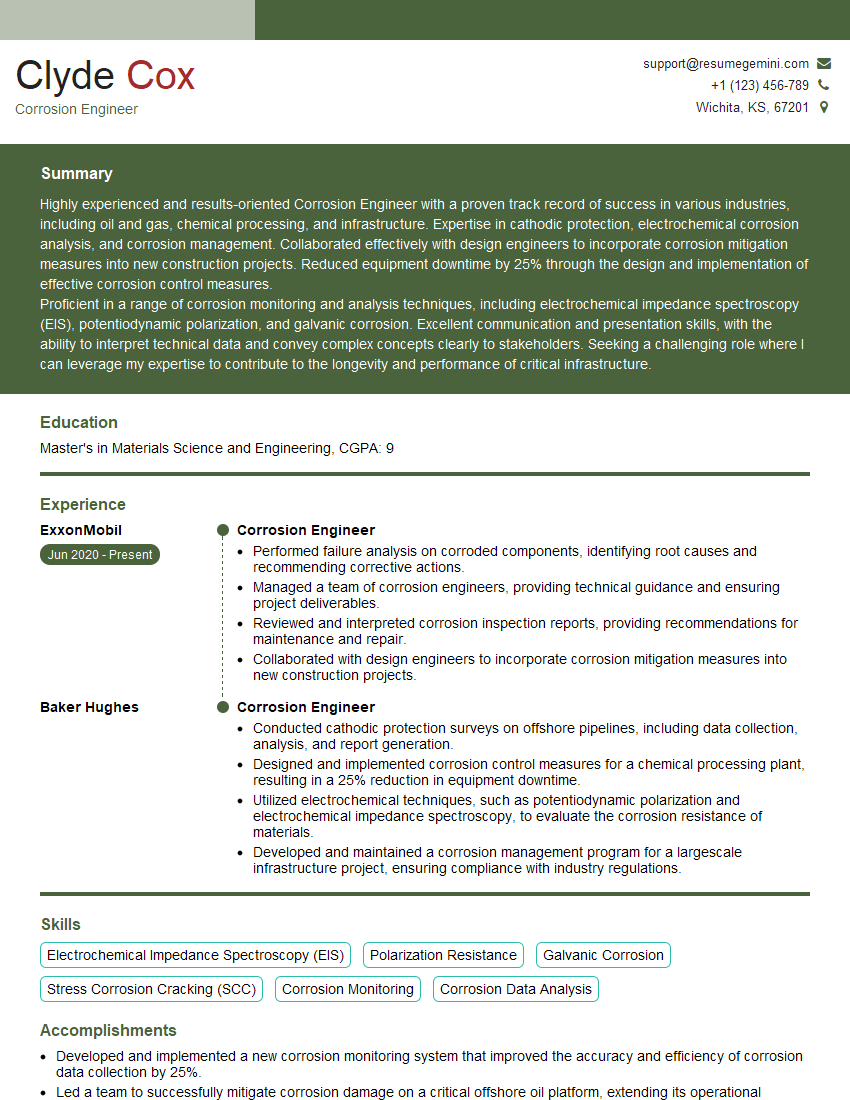
Mastering Anodic Aluminum Etching opens doors to exciting career opportunities in materials science, manufacturing, and engineering. A strong understanding of this process is highly valued by employers. To increase your chances of landing your dream role, focus on building an ATS-friendly resume that highlights your skills and experience effectively. ResumeGemini is a trusted resource that can help you craft a professional and impactful resume, maximizing your chances of getting noticed. Examples of resumes tailored to Anodic Aluminum Etching are available to help guide your resume building process.

Explore more articles
Users Rating of Our Blogs
Share Your Experience
We value your feedback! Please rate our content and share your thoughts (optional).
What Readers Say About Our Blog
Very informative content, great job.
good