The right preparation can turn an interview into an opportunity to showcase your expertise. This guide to Artificial Intelligence (AI) and Machine Learning (ML) Concepts interview questions is your ultimate resource, providing key insights and tips to help you ace your responses and stand out as a top candidate.
Questions Asked in Artificial Intelligence (AI) and Machine Learning (ML) Concepts Interview
Q 1. Explain the difference between supervised, unsupervised, and reinforcement learning.
The core difference between supervised, unsupervised, and reinforcement learning lies in how the algorithm learns from data. Think of it like teaching a dog:
- Supervised Learning: This is like explicitly showing your dog pictures of squirrels and saying “squirrel!” You provide the algorithm with labeled data – input data paired with the correct output. The algorithm learns to map inputs to outputs. Examples include image classification (identifying objects in images) and spam detection (classifying emails as spam or not spam).
- Unsupervised Learning: This is like letting your dog explore a park and discover patterns on its own. You provide the algorithm with unlabeled data, and it aims to find structure or patterns within the data. Examples include clustering (grouping similar data points together) and dimensionality reduction (reducing the number of variables while preserving important information).
- Reinforcement Learning: This is like training your dog with rewards and punishments. The algorithm learns through trial and error by interacting with an environment. It receives rewards for correct actions and penalties for incorrect ones, learning an optimal policy to maximize cumulative reward. Examples include game playing (like AlphaGo) and robotics (learning to navigate and manipulate objects).
In essence, supervised learning uses labeled examples, unsupervised learning finds structure in unlabeled data, and reinforcement learning learns through interaction and feedback.
Q 2. What is the bias-variance tradeoff?
The bias-variance tradeoff is a fundamental concept in machine learning that describes the tension between the complexity of a model and its ability to generalize to unseen data. Imagine you’re trying to hit a bullseye with a dart:
- High Bias (Underfitting): This is like aiming at the wrong part of the dartboard consistently. Your model is too simple and doesn’t capture the underlying patterns in the data. It consistently misses the target in a similar way. The error is primarily due to the model’s inherent assumptions (bias).
- High Variance (Overfitting): This is like throwing darts all over the place, sometimes close, sometimes far. Your model is too complex and fits the training data too well, including noise and outliers. It performs well on the training data but poorly on unseen data. The error is due to the model’s sensitivity to random fluctuations in the training data (variance).
The goal is to find a sweet spot with low bias and low variance, achieving a good balance between model complexity and generalization ability. This is often achieved through techniques like cross-validation and regularization.
Q 3. Describe different types of regularization techniques.
Regularization techniques are used to prevent overfitting by adding a penalty to the model’s complexity. Think of it as adding constraints to prevent the model from becoming too wild.
- L1 Regularization (LASSO): Adds a penalty proportional to the absolute value of the model’s coefficients. This encourages sparsity, meaning some coefficients become zero, effectively performing feature selection. It’s useful for feature selection and reducing model complexity.
- L2 Regularization (Ridge): Adds a penalty proportional to the square of the model’s coefficients. This shrinks the coefficients towards zero, reducing their impact and preventing overfitting. It’s less prone to produce zero coefficients compared to L1.
- Elastic Net: A combination of L1 and L2 regularization, combining the benefits of both. It offers a balance between feature selection and coefficient shrinkage.
- Dropout (Neural Networks): Randomly ignores neurons during training, forcing the network to learn more robust features and preventing reliance on individual neurons. It’s particularly useful in deep learning.
The choice of regularization technique depends on the specific problem and dataset. Experimentation and cross-validation are often necessary to find the optimal regularization strength.
Q 4. Explain the concept of overfitting and underfitting.
Overfitting and underfitting are two major challenges in machine learning that impact a model’s ability to generalize to new data. Let’s use the analogy of learning to ride a bicycle:
- Overfitting: You learn to ride your specific bicycle perfectly, but when you try a different bike (new data), you struggle. The model has learned the training data too well, including its noise or specific characteristics, making it inflexible to new data.
- Underfitting: You haven’t grasped the fundamental concepts of balance and steering. Your model is too simple and hasn’t captured the underlying patterns in the data; it performs poorly on both training and unseen data.
Overfitting leads to high variance and poor generalization, while underfitting leads to high bias and poor performance. Techniques like cross-validation, regularization, and using more data can help mitigate both issues.
Q 5. How do you handle missing data in a dataset?
Handling missing data is crucial for building robust machine learning models. Ignoring missing data can lead to biased and inaccurate results. Here are several strategies:
- Deletion: Removing data points or features with missing values. This is simple but can lead to significant data loss, especially if missing values are not Missing Completely at Random (MCAR).
- Imputation: Filling in missing values with estimated values. Common methods include:
- Mean/Median/Mode Imputation: Replacing missing values with the mean, median, or mode of the respective feature. Simple but can distort the distribution.
- K-Nearest Neighbors (KNN) Imputation: Imputing missing values based on the values of similar data points. More sophisticated than mean/median/mode.
- Multiple Imputation: Creating multiple plausible imputations for missing values and analyzing results to account for uncertainty.
- Model-Based Imputation: Using a predictive model to estimate missing values. This is a more sophisticated approach that considers the relationships between variables.
The best approach depends on the nature of the missing data, the size of the dataset, and the characteristics of the features. Understanding the mechanism behind missing data (MCAR, MAR, MNAR) is vital for selecting the appropriate technique.
Q 6. What are the different types of neural networks?
Neural networks come in a wide variety of architectures, each designed for specific tasks. Here are some prominent examples:
- Feedforward Neural Networks (Multilayer Perceptrons – MLPs): The most basic type, where information flows in one direction through layers. Used for classification, regression, and other tasks.
- Convolutional Neural Networks (CNNs): Designed for processing grid-like data, such as images and videos. They use convolutional layers to extract features, making them particularly effective for image recognition and object detection.
- Recurrent Neural Networks (RNNs): Designed for processing sequential data, such as text and time series. They have loops that allow information to persist across time steps, making them well-suited for natural language processing and speech recognition.
- Long Short-Term Memory networks (LSTMs) and Gated Recurrent Units (GRUs): Advanced types of RNNs designed to address the vanishing gradient problem, allowing them to learn long-range dependencies in sequential data. They are used for tasks requiring memory of past information.
- Autoencoders: Used for unsupervised learning tasks like dimensionality reduction and feature extraction. They learn a compressed representation of the input data.
- Generative Adversarial Networks (GANs): Consist of two networks, a generator and a discriminator, that compete against each other. They are used for generating new data samples that resemble the training data.
The choice of neural network architecture depends on the nature of the data and the specific task. Many variations and hybrid architectures also exist.
Q 7. Explain the backpropagation algorithm.
Backpropagation is a crucial algorithm used to train neural networks. It’s the method by which the network learns from its mistakes. Think of it as a feedback mechanism:
The process involves calculating the error at the output layer and then propagating this error backward through the network to adjust the weights of the connections between neurons. This adjustment is done using gradient descent, an optimization algorithm that iteratively updates the weights to minimize the error.
- Forward Pass: The input data is fed forward through the network, and the output is computed.
- Loss Calculation: The difference between the network’s output and the actual target value is calculated. This is the loss function (e.g., Mean Squared Error).
- Backward Pass: The error is propagated back through the network, calculating the gradient of the loss function with respect to each weight. This gradient indicates the direction and magnitude of the weight update.
- Weight Update: The weights are updated using an optimization algorithm (e.g., gradient descent) to minimize the loss. The learning rate determines the size of the weight update.
This process is repeated iteratively over many training examples until the network’s performance on a validation set is satisfactory. The chain rule of calculus is fundamental to the backward pass, allowing the calculation of gradients for all weights in the network.
Q 8. What is the difference between a convolutional neural network (CNN) and a recurrent neural network (RNN)?
Convolutional Neural Networks (CNNs) and Recurrent Neural Networks (RNNs) are both types of artificial neural networks, but they excel at different tasks. CNNs are designed for processing grid-like data, such as images and videos, while RNNs are specialized for handling sequential data, like text and time series.
Think of it this way: CNNs are excellent at recognizing patterns within spatial data. They use convolutional layers that scan the input data with filters, detecting features like edges, corners, and textures in images. This allows them to learn hierarchical representations of the input. For example, in image recognition, a CNN might first detect edges, then combine those edges to identify shapes, and finally combine shapes to recognize objects.
RNNs, on the other hand, have a ‘memory’ mechanism. They process sequential data one element at a time, maintaining a hidden state that captures information from previous inputs. This allows them to understand context and dependencies between elements in a sequence. For example, in natural language processing, an RNN can use its hidden state to remember previous words in a sentence, helping it understand the overall meaning.
In short: CNNs are masters of spatial patterns, while RNNs are experts in sequential dependencies.
Q 9. Explain the concept of attention mechanisms in NLP.
Attention mechanisms in Natural Language Processing (NLP) are a powerful technique that allows models to focus on the most relevant parts of the input when making predictions. Imagine reading a sentence: you don’t focus equally on every word; instead, you pay more attention to the words crucial for understanding the meaning. Attention mechanisms mimic this behavior.
In a traditional sequence-to-sequence model like an RNN, all input words contribute equally to the output. Attention allows the model to assign different weights to different words based on their relevance to the specific part of the output being generated. This leads to improved performance, especially in tasks involving long sequences, where the RNN might struggle to remember earlier parts of the input.
For instance, in machine translation, the attention mechanism helps the model focus on the most relevant words in the source sentence when translating each word in the target sentence. A word in the target sentence might be strongly influenced by only one or two words in the source sentence, rather than the entire sentence.
Technically, attention calculates a ‘context vector’ by weighting the different input words. These weights are learned during training and reflect the importance of each input word for the specific output.
Q 10. Describe different techniques for feature scaling and selection.
Feature scaling and selection are crucial preprocessing steps in machine learning, aimed at improving model performance and reducing computational cost.
Feature scaling transforms the features to a common scale, preventing features with larger values from dominating the model. Common techniques include:
- Min-Max scaling: Scales features to a range between 0 and 1.
- Standardization (Z-score normalization): Centers the data around 0 with a standard deviation of 1.
Feature selection aims to reduce the number of features by selecting the most relevant ones. This improves model efficiency, reduces overfitting, and enhances interpretability. Techniques include:
- Filter methods: Use statistical measures like correlation or mutual information to rank features and select the top ones.
- Wrapper methods: Use a model to evaluate the performance of different feature subsets, recursively adding or removing features based on performance. This is computationally expensive.
- Embedded methods: Integrate feature selection directly into the model training process, like L1 regularization (LASSO) which automatically shrinks the weights of less important features to zero.
For example, in a model predicting house prices, you might scale features like area and number of bedrooms to a common range and select features like location and year built based on their correlation with the target variable.
Q 11. How do you evaluate the performance of a machine learning model?
Evaluating a machine learning model involves assessing its performance on unseen data. This is crucial to ensure the model generalizes well to new inputs and doesn’t overfit the training data. The evaluation process usually involves:
- Splitting the data: Dividing the data into training, validation, and testing sets. The model is trained on the training set, hyperparameters are tuned on the validation set, and the final performance is measured on the testing set.
- Choosing appropriate metrics: Selecting metrics that align with the problem’s goals. For example, accuracy might be suitable for classification problems, while RMSE might be better for regression problems.
- Using cross-validation: A technique that trains and evaluates the model multiple times on different subsets of the data, providing a more robust estimate of performance.
The specific evaluation methods will depend on the type of machine learning problem (classification, regression, clustering, etc.) and the desired performance characteristics.
Q 12. Explain different performance metrics like precision, recall, F1-score, and AUC.
These metrics are commonly used to evaluate the performance of classification models:
- Precision: Out of all the instances predicted as positive, what proportion is actually positive? High precision means few false positives.
- Recall (Sensitivity): Out of all the actual positive instances, what proportion was correctly predicted as positive? High recall means few false negatives.
- F1-score: The harmonic mean of precision and recall, providing a balanced measure. Useful when both precision and recall are important.
- AUC (Area Under the ROC Curve): Measures the ability of the classifier to distinguish between classes. A higher AUC indicates better discrimination ability. The ROC curve plots the true positive rate against the false positive rate at various thresholds.
Imagine a spam detection system: high precision is crucial to avoid misclassifying legitimate emails as spam (false positives), while high recall is important to catch as much spam as possible (avoiding false negatives). The F1-score balances these two aspects. The AUC measures the overall effectiveness of the system in distinguishing spam from non-spam.
Q 13. What are some common techniques for dimensionality reduction?
Dimensionality reduction techniques aim to reduce the number of variables in a dataset while preserving important information. This is beneficial for improving model performance, reducing computational complexity, and enhancing data visualization.
Common techniques include:
- Principal Component Analysis (PCA): A linear transformation that finds the principal components, which are new uncorrelated variables that capture the maximum variance in the data. It’s effective when the data has linear relationships between variables.
- t-distributed Stochastic Neighbor Embedding (t-SNE): A non-linear technique that aims to preserve local neighborhood structures in the reduced dimensional space. Useful for visualizing high-dimensional data.
- Linear Discriminant Analysis (LDA): A supervised technique that maximizes the separation between different classes in the reduced dimensional space.
- Feature selection (as discussed earlier): While not strictly a dimensionality reduction method, it can effectively reduce the number of features by selecting the most relevant ones.
For example, in image processing, PCA can be used to reduce the dimensionality of image data by representing it using a smaller number of principal components, while preserving important features like edges and textures. t-SNE can then be used to visualize these reduced-dimensional data points.
Q 14. Explain the difference between gradient descent and stochastic gradient descent.
Both gradient descent and stochastic gradient descent (SGD) are iterative optimization algorithms used to find the minimum of a function (typically a loss function in machine learning).
Gradient descent calculates the gradient of the loss function using the entire dataset. It then updates the model’s parameters in the opposite direction of the gradient to minimize the loss. This approach is computationally expensive for large datasets but guarantees a smooth descent towards the minimum.
Stochastic gradient descent calculates the gradient using only a single data point or a small batch of data points (mini-batch SGD). This makes it much faster for large datasets, as it doesn’t need to process the entire dataset at each iteration. However, because it uses only a subset of the data, the descent is noisy and may not always follow the smoothest path to the minimum. The noisy updates can help escape local minima.
Imagine descending a mountain: gradient descent carefully surveys the entire landscape before taking each step, ensuring the most efficient path down. SGD takes rapid, less informed steps based on local observations, which can be faster but potentially more erratic.
Q 15. What is cross-validation and why is it important?
Cross-validation is a powerful resampling technique used to evaluate machine learning models and prevent overfitting. Imagine you’re baking a cake – you wouldn’t just taste one tiny piece to determine if it’s good; you’d try several slices from different parts of the cake. Cross-validation does something similar. It divides your dataset into multiple subsets (folds), trains the model on some folds, and tests its performance on the remaining folds. This process is repeated multiple times, with different folds used for training and testing each time.
The most common type is k-fold cross-validation, where k represents the number of folds. For example, in 5-fold cross-validation, the data is split into 5 folds. The model is trained on 4 folds and tested on the remaining fold. This process is repeated 5 times, with each fold serving as the test set once. The average performance across all folds gives a more robust estimate of the model’s generalization ability – its ability to perform well on unseen data.
Why is it important? Because it provides a much more reliable assessment of a model’s performance than a simple train-test split. A single train-test split can be highly susceptible to the particular way the data is split, leading to overly optimistic or pessimistic performance estimates. Cross-validation mitigates this risk by averaging the performance across multiple train-test splits.
Career Expert Tips:
- Ace those interviews! Prepare effectively by reviewing the Top 50 Most Common Interview Questions on ResumeGemini.
- Navigate your job search with confidence! Explore a wide range of Career Tips on ResumeGemini. Learn about common challenges and recommendations to overcome them.
- Craft the perfect resume! Master the Art of Resume Writing with ResumeGemini’s guide. Showcase your unique qualifications and achievements effectively.
- Don’t miss out on holiday savings! Build your dream resume with ResumeGemini’s ATS optimized templates.
Q 16. Explain the concept of hyperparameter tuning.
Hyperparameter tuning is the process of finding the optimal set of hyperparameters for a machine learning model. Think of it like adjusting the knobs and dials on a complex piece of equipment to get the best possible outcome. Unlike model parameters, which are learned during training (e.g., weights in a neural network), hyperparameters are set *before* the training process begins (e.g., learning rate, number of hidden layers, regularization strength).
Different models have different hyperparameters, and finding the best combination can significantly impact performance. Common techniques for hyperparameter tuning include:
- Grid Search: Systematically tries all possible combinations of hyperparameters within a specified range.
- Random Search: Randomly samples hyperparameter combinations from a specified range. Often more efficient than grid search.
- Bayesian Optimization: Uses a probabilistic model to guide the search for optimal hyperparameters, intelligently exploring the hyperparameter space.
Tools like scikit-learn in Python offer convenient functions for implementing these techniques. The choice of method depends on the computational resources available and the complexity of the hyperparameter space. Proper hyperparameter tuning is crucial for achieving optimal model performance.
Q 17. What are some common challenges in deploying machine learning models?
Deploying machine learning models into real-world applications presents several challenges:
- Data Drift: The characteristics of the input data may change over time, leading to a decrease in model accuracy. For example, a model trained to detect fraudulent credit card transactions may become less effective if fraudsters change their tactics.
- Model Degradation: The model’s performance may degrade over time due to various factors, including data drift, changes in the environment, or simply the model becoming outdated.
- Scalability: The model may need to handle a large volume of data or requests, which requires efficient infrastructure and deployment strategies.
- Monitoring and Maintenance: Deployed models require continuous monitoring to detect performance degradation and ensure they continue to meet business requirements. This involves tracking key metrics and retraining or updating the model as needed.
- Integration with Existing Systems: Integrating the model seamlessly with existing systems and workflows can be a complex task.
- Explainability and Interpretability: Understanding why a model makes specific predictions is crucial, especially in sensitive applications like healthcare and finance. Many advanced models (like deep learning) are notoriously difficult to interpret.
Addressing these challenges requires a robust deployment pipeline, including thorough testing, monitoring, and a plan for model updates and retraining.
Q 18. Describe different approaches to model deployment (e.g., cloud, edge).
Model deployment refers to the process of making a trained machine learning model available for use in a real-world application. There are several approaches:
- Cloud Deployment: Deploying the model to a cloud platform like AWS, Google Cloud, or Azure. This offers scalability, high availability, and managed infrastructure. Services like AWS SageMaker or Google AI Platform simplify the process.
- On-Premise Deployment: Deploying the model to servers within an organization’s own data center. This offers more control but requires managing the infrastructure.
- Edge Deployment: Deploying the model directly to edge devices, such as smartphones, IoT devices, or embedded systems. This reduces latency and enables offline operation but often requires model optimization for resource-constrained devices.
- Serverless Deployment: Deploying the model as a serverless function, allowing it to scale automatically based on demand. This is a cost-effective solution for applications with fluctuating workloads.
The best approach depends on factors like scalability requirements, latency tolerance, security considerations, and available resources.
Q 19. How do you handle imbalanced datasets?
Imbalanced datasets, where one class significantly outnumbers others, are a common problem in machine learning. For example, in fraud detection, fraudulent transactions are far less frequent than legitimate ones. This imbalance can lead to models that are biased towards the majority class, performing poorly on the minority class (which is often the class of interest).
Here are some strategies to handle imbalanced datasets:
- Resampling: This involves modifying the dataset to balance class proportions. Techniques include oversampling (duplicating instances of the minority class) and undersampling (removing instances of the majority class). Careful consideration is needed to avoid overfitting with oversampling.
- Cost-Sensitive Learning: Assigning different misclassification costs to different classes. For example, misclassifying a fraudulent transaction as legitimate could be much more costly than the reverse, so a higher penalty is assigned to this type of error.
- Ensemble Methods: Using ensemble methods like bagging or boosting (explained in the next answer) can be effective, as they can improve the performance on minority classes.
- Anomaly Detection Techniques: If the minority class represents anomalies, specialized anomaly detection techniques may be more appropriate than traditional classification methods.
The best approach depends on the specific dataset and the characteristics of the classes.
Q 20. Explain different ensemble methods (e.g., bagging, boosting).
Ensemble methods combine multiple individual models to create a more accurate and robust prediction model. Think of it like getting multiple opinions from experts before making a decision.
- Bagging (Bootstrap Aggregating): Creates multiple subsets of the training data by sampling with replacement. A separate model is trained on each subset, and the final prediction is obtained by aggregating the predictions of all models (e.g., by averaging or majority voting). Random Forest is a popular bagging-based algorithm.
- Boosting: Sequentially trains models, with each subsequent model focusing on correcting the errors made by the previous models. Popular boosting algorithms include AdaBoost, Gradient Boosting Machines (GBM), and XGBoost. Boosting is often more accurate than bagging but can be more prone to overfitting.
Both bagging and boosting improve predictive accuracy by reducing variance (bagging) or bias (boosting). The choice between them depends on the dataset and the desired level of robustness. For example, Random Forests (bagging) are known for their robustness and are less prone to overfitting compared to boosting methods like XGBoost, which can achieve higher accuracy but require careful tuning to avoid overfitting.
Q 21. What are some ethical considerations in developing and deploying AI systems?
Developing and deploying AI systems raises several ethical considerations:
- Bias and Fairness: AI models can inherit and amplify biases present in the training data, leading to unfair or discriminatory outcomes. For example, a facial recognition system trained on a dataset primarily representing one race may perform poorly on other races.
- Privacy: AI systems often require access to sensitive personal data, raising concerns about privacy violations. Data anonymization and differential privacy techniques can help mitigate these risks.
- Transparency and Explainability: Understanding how AI systems make decisions is crucial, particularly in high-stakes applications. Lack of transparency can erode trust and make it difficult to identify and correct errors.
- Accountability: Determining who is responsible when AI systems make mistakes or cause harm is a complex issue.
- Job Displacement: Automation driven by AI can lead to job displacement, requiring careful planning and societal adaptation.
- Security: AI systems can be vulnerable to adversarial attacks, where malicious actors try to manipulate the system’s behavior.
Addressing these ethical considerations requires a multidisciplinary approach, involving researchers, developers, policymakers, and the broader community. Developing ethical guidelines, conducting thorough risk assessments, and promoting transparency are essential steps in ensuring responsible AI development and deployment.
Q 22. Explain different types of time series analysis techniques.
Time series analysis involves analyzing data points collected over time to understand patterns, trends, and seasonality. Different techniques cater to various data characteristics and objectives.
- Classical Decomposition: This method separates a time series into its constituent components: trend, seasonality, and residual (random noise). It’s useful for understanding the underlying drivers of the data. For example, analyzing monthly ice cream sales might reveal a strong seasonal component (higher sales in summer) and an upward trend over time.
- ARIMA (Autoregressive Integrated Moving Average): ARIMA models are powerful statistical models that capture the autocorrelations within the time series. They are specified by three parameters (p, d, q) representing the autoregressive (AR), integrated (I), and moving average (MA) components. The order of the model (p,d,q) needs to be carefully selected based on the data’s characteristics (e.g., using ACF and PACF plots). ARIMA is great for forecasting future values.
- Exponential Smoothing: This technique assigns exponentially decreasing weights to older observations, giving more importance to recent data points. Different variations exist (simple, double, triple exponential smoothing) depending on the presence of trend and seasonality. It’s computationally efficient and works well for short-term forecasting.
- Prophet (Developed by Facebook): Prophet is a robust time series forecasting model particularly adept at handling seasonality and trend changes. It’s designed for business applications and can handle missing data and outliers relatively well. It often requires less preprocessing than ARIMA.
- Machine Learning Techniques: Models like Recurrent Neural Networks (RNNs), particularly LSTMs and GRUs, are powerful for capturing long-term dependencies in time series data. They excel in complex scenarios but require significant computational resources and careful hyperparameter tuning.
The choice of technique depends heavily on the specific data, the desired outcome (forecasting, anomaly detection, etc.), and computational constraints.
Q 23. How do you deal with noisy data?
Noisy data is a common challenge in machine learning. It refers to data points that deviate significantly from the expected pattern due to errors in measurement, data entry, or other factors. Dealing with it effectively is crucial for building accurate and reliable models.
- Data Cleaning: This is often the first step and involves identifying and removing or correcting erroneous data points. Techniques include outlier detection (using box plots, IQR, or Z-scores), handling missing values (imputation using mean, median, mode, or more sophisticated methods), and error correction based on domain knowledge.
- Smoothing Techniques: Methods like moving averages, median filtering, or Savitzky-Golay filtering can smooth out the noise by averaging values over a window. This reduces the impact of individual noisy points.
- Robust Regression: Robust regression techniques are less sensitive to outliers than ordinary least squares regression. Examples include RANSAC (Random Sample Consensus) and Theil-Sen regression.
- Feature Engineering: Sometimes, the noise is not in the data itself but in the way features are represented. Transforming features (e.g., logarithmic transformation, standardization) can mitigate the effect of noise.
- Ensemble Methods: Using ensemble methods like bagging (Bootstrap Aggregating) or boosting can reduce the impact of noise by aggregating predictions from multiple models. The noise gets averaged out during the aggregation.
The best approach depends on the nature and severity of the noise. A combination of these techniques is often employed to achieve optimal results.
Q 24. What is transfer learning and when would you use it?
Transfer learning leverages knowledge gained from solving one problem to improve performance on a related but different problem. Instead of training a model from scratch, you use a pre-trained model (often on a massive dataset) as a starting point and fine-tune it for your specific task.
Example: Imagine you have a limited dataset of images of cats and dogs. Instead of training a convolutional neural network (CNN) from scratch, you could use a pre-trained model like ResNet50 (trained on ImageNet, a huge image dataset) and replace its final layers with new layers specific to your cat/dog classification task. You then train only these new layers, using the weights of the pre-trained layers as a good initial guess. This speeds up training and often improves accuracy, especially when your dataset is small.
When to Use It:
- Limited Data: When you have a small dataset for your target task.
- Computational Constraints: Training a deep learning model from scratch can be computationally expensive. Transfer learning significantly reduces training time.
- Related Tasks: When your target task is similar to the task the pre-trained model was trained on.
Transfer learning is a powerful technique in deep learning, saving time and resources while often boosting performance.
Q 25. Describe your experience with a specific machine learning project.
In a previous role, I worked on a project to predict customer churn for a telecommunications company. We used a combination of structured and unstructured data, including customer demographics, billing information, call records, and customer service interactions (text data). The goal was to build a model that could accurately identify customers at high risk of churning.
Methodology:
- Data Preprocessing: We cleaned and preprocessed the data, handling missing values and converting categorical features into numerical representations using one-hot encoding. We also performed feature scaling to improve model performance.
- Feature Engineering: We created new features from existing ones. For example, we calculated the average call duration, the number of customer service tickets, and the ratio of successful to unsuccessful calls. For the text data, we used techniques like TF-IDF and word embeddings to extract meaningful features.
- Model Selection: We evaluated several classification models, including logistic regression, support vector machines (SVMs), random forests, and gradient boosting machines (GBMs). We used techniques like cross-validation to evaluate the models’ performance.
- Model Deployment: The best-performing model (a GBM) was deployed to a production environment, providing real-time churn predictions.
This project demonstrated the power of combining different machine learning techniques with effective data preprocessing and feature engineering to achieve high accuracy in a real-world business problem. The results significantly improved the company’s ability to proactively engage at-risk customers.
Q 26. Explain your understanding of different deep learning frameworks (e.g., TensorFlow, PyTorch).
TensorFlow and PyTorch are the two dominant deep learning frameworks. They both provide tools for building and training neural networks, but they differ in their approach and philosophy.
- TensorFlow: TensorFlow is a more established framework, known for its production-readiness and scalability. It uses a static computational graph, meaning you define the entire computation before running it. This allows for optimizations and deployments across various platforms, including mobile and embedded systems. TensorFlow has a strong ecosystem of tools and libraries, making it suitable for large-scale projects.
- PyTorch: PyTorch uses a dynamic computational graph, meaning the computation is defined and executed on the fly. This allows for greater flexibility and ease of debugging, particularly during research and development. PyTorch’s intuitive Pythonic interface makes it easier to learn and use, particularly for those already familiar with Python. It’s gaining popularity in research due to its flexibility.
The choice between TensorFlow and PyTorch often depends on the project’s specific needs and the developer’s familiarity with the framework. Both are powerful tools capable of tackling a wide range of deep learning tasks.
Q 27. What are some common challenges in working with large datasets?
Working with large datasets presents unique challenges:
- Storage and Computation: Large datasets require significant storage capacity and computational resources. Specialized hardware (GPUs, TPUs) and distributed computing frameworks (like Apache Spark) are often necessary.
- Data Processing Time: Preprocessing, cleaning, and feature engineering on massive datasets can take a substantial amount of time. Techniques like parallel processing and data streaming can help alleviate this.
- Memory Management: Loading an entire large dataset into memory can be impossible. Techniques like mini-batch gradient descent, which processes data in smaller chunks, are essential.
- Data Quality: Large datasets are more prone to inconsistencies and errors. Robust data validation and cleaning techniques are crucial to ensure data quality.
- Model Complexity: Large datasets often benefit from more complex models. However, this also increases the risk of overfitting and requires careful hyperparameter tuning and regularization.
Efficient data management, distributed computing, and careful model selection are critical when working with large datasets.
Q 28. How do you stay up-to-date with the latest advancements in AI/ML?
Staying up-to-date in the rapidly evolving field of AI/ML requires a multi-faceted approach:
- Following Research Publications: Regularly reading papers from top AI/ML conferences (NeurIPS, ICML, ICLR) and journals helps me stay abreast of cutting-edge research.
- Attending Conferences and Workshops: Attending conferences and workshops provides opportunities to learn from leading experts and network with other professionals.
- Online Courses and Tutorials: Platforms like Coursera, edX, and fast.ai offer excellent resources for learning new techniques and tools.
- Engaging with Online Communities: Participating in online forums, discussion groups, and communities (e.g., Reddit’s r/MachineLearning) provides access to a wealth of information and diverse perspectives.
- Reading Blogs and Technical Articles: Many blogs and online publications provide insightful analyses and commentary on current trends.
- Experimentation and Personal Projects: Working on personal projects allows me to apply new knowledge and gain hands-on experience.
A commitment to continuous learning is crucial for remaining competitive in this field.
Key Topics to Learn for Artificial Intelligence (AI) and Machine Learning (ML) Concepts Interview
- Supervised Learning: Regression, Classification; Understanding different algorithms (Linear Regression, Logistic Regression, Support Vector Machines, Decision Trees, Random Forests) and their applications.
- Unsupervised Learning: Clustering (K-means, hierarchical), Dimensionality Reduction (PCA); Applying these techniques to discover patterns and insights in unlabeled data.
- Deep Learning: Neural Networks (CNNs, RNNs, Transformers); Understanding the architecture and applications of deep learning models in image recognition, natural language processing, and more.
- Model Evaluation & Selection: Metrics (precision, recall, F1-score, AUC-ROC), Bias-Variance Tradeoff, Cross-validation; Choosing the right metrics and techniques to assess model performance and prevent overfitting.
- Data Preprocessing & Feature Engineering: Handling missing values, outliers, feature scaling, encoding categorical variables; Transforming raw data into a format suitable for machine learning models.
- Reinforcement Learning: Markov Decision Processes (MDPs), Q-learning, Deep Q-Networks (DQNs); Understanding the principles of reinforcement learning and its applications in robotics and game playing.
- Bias and Fairness in AI: Understanding the ethical considerations and potential biases in AI systems and how to mitigate them.
- Practical Applications: Discuss real-world examples of AI/ML applications in your field of interest, showcasing your understanding of practical implementations.
- Problem-Solving Approaches: Be prepared to discuss your approach to tackling complex AI/ML problems, highlighting your analytical and problem-solving skills.
Next Steps
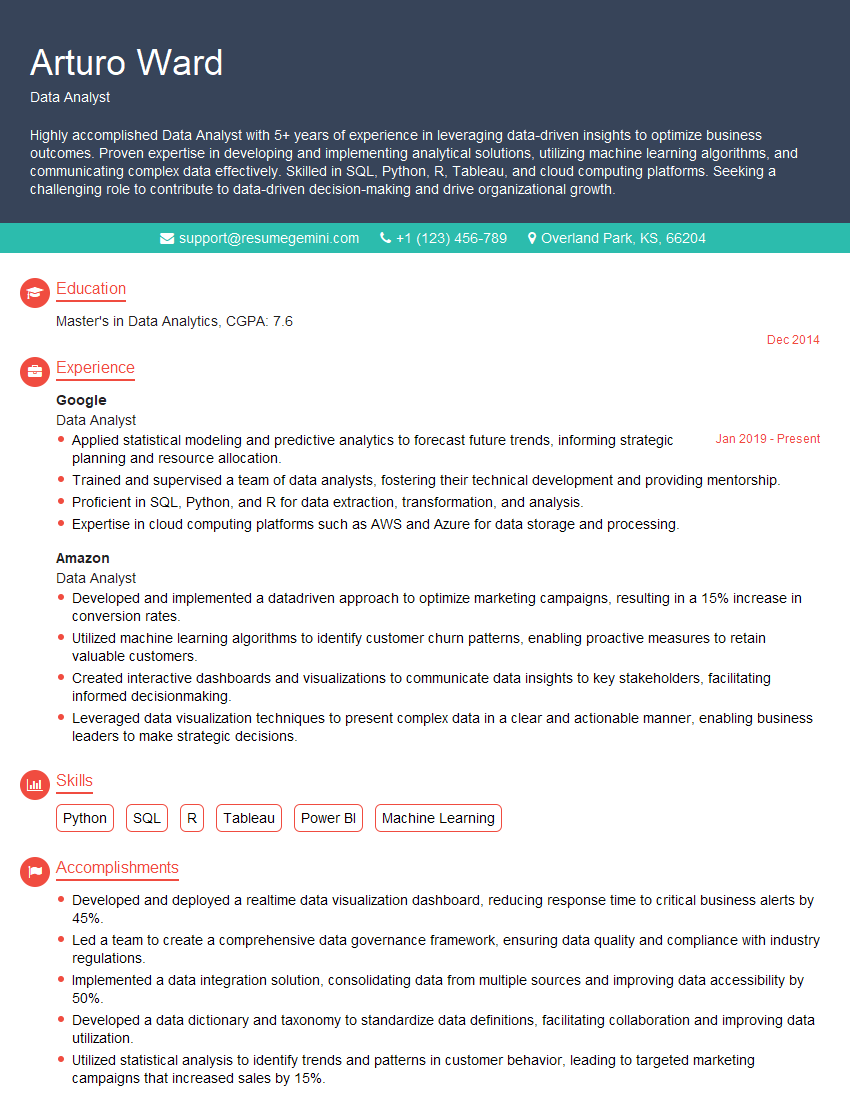
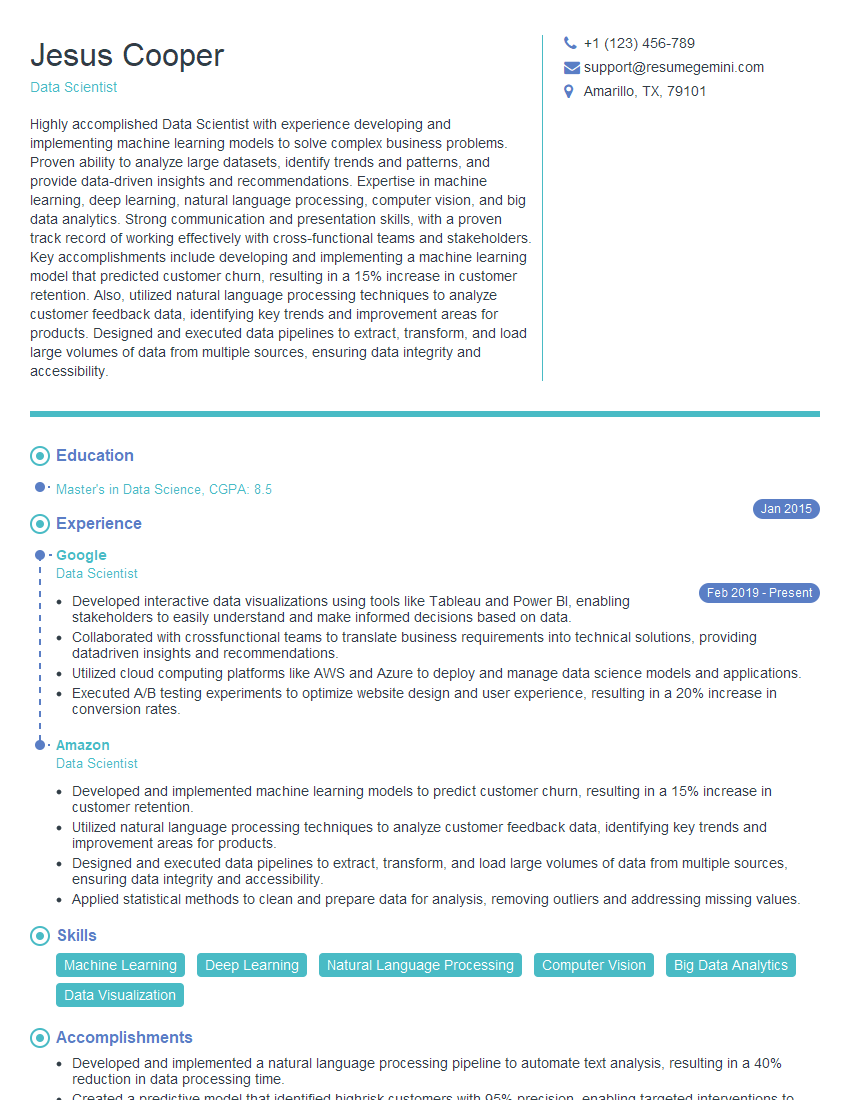
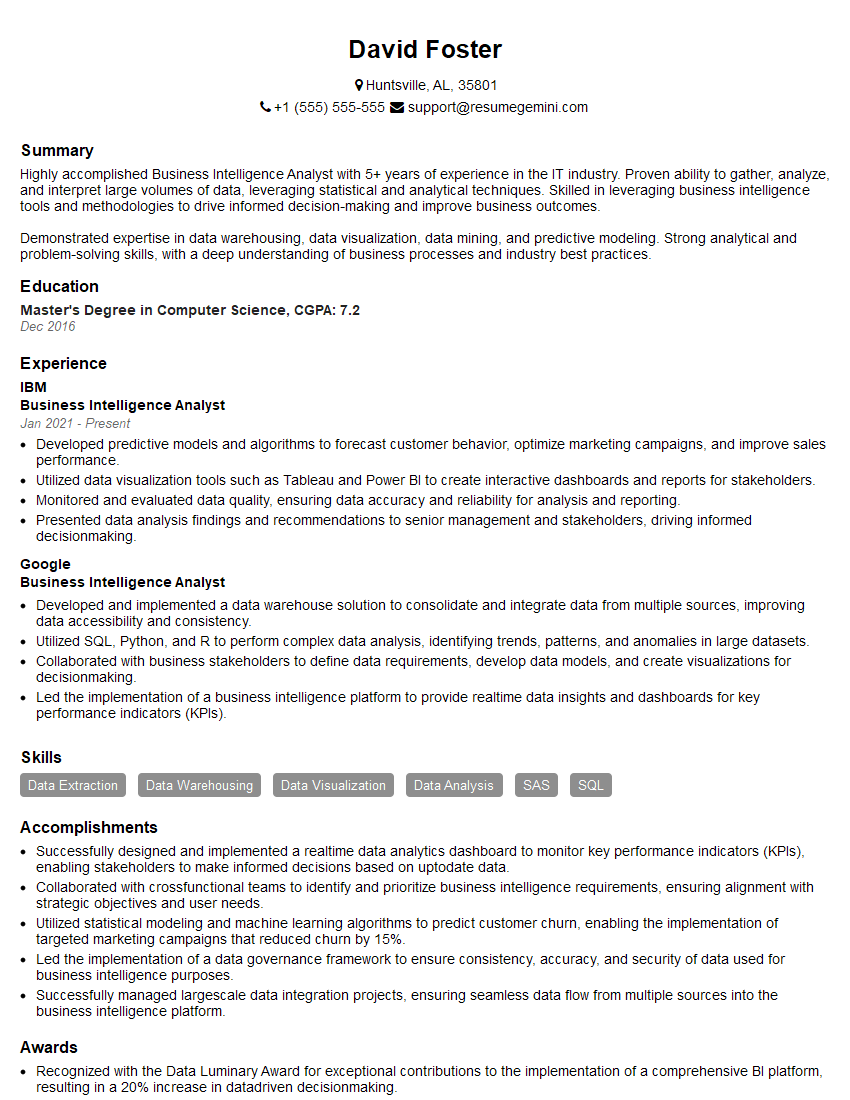
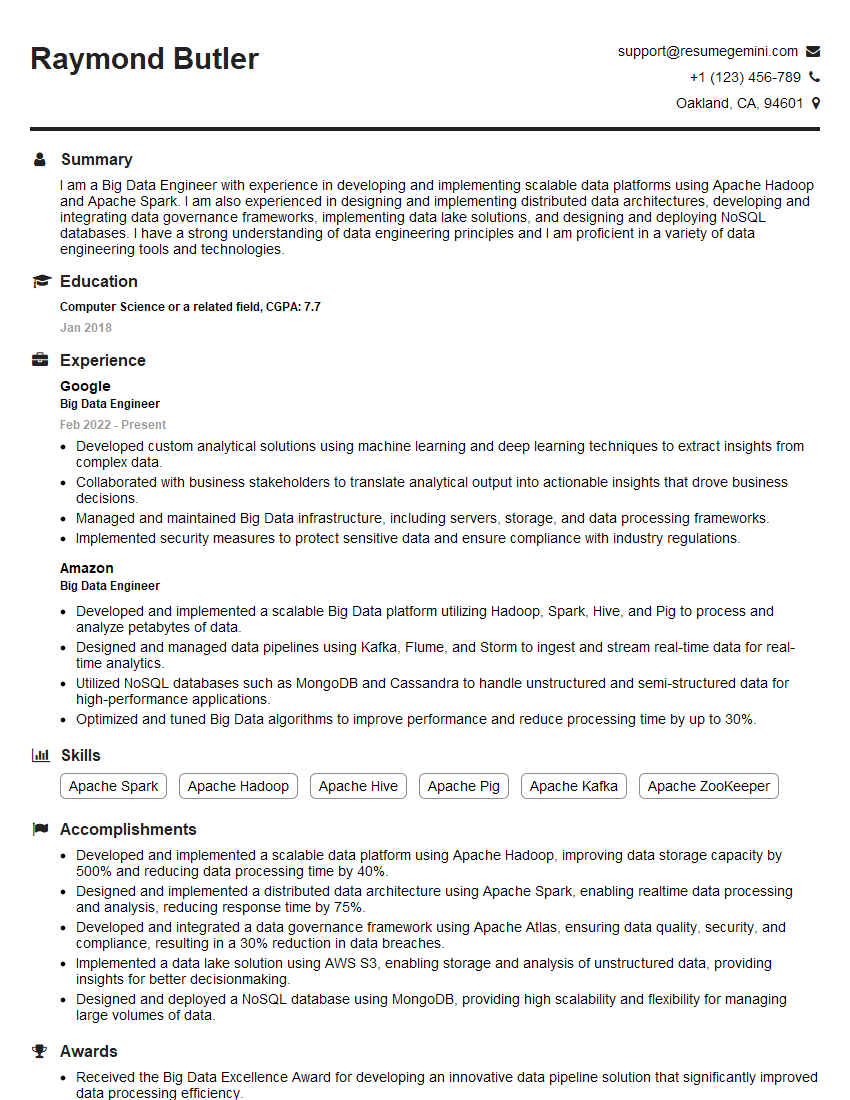
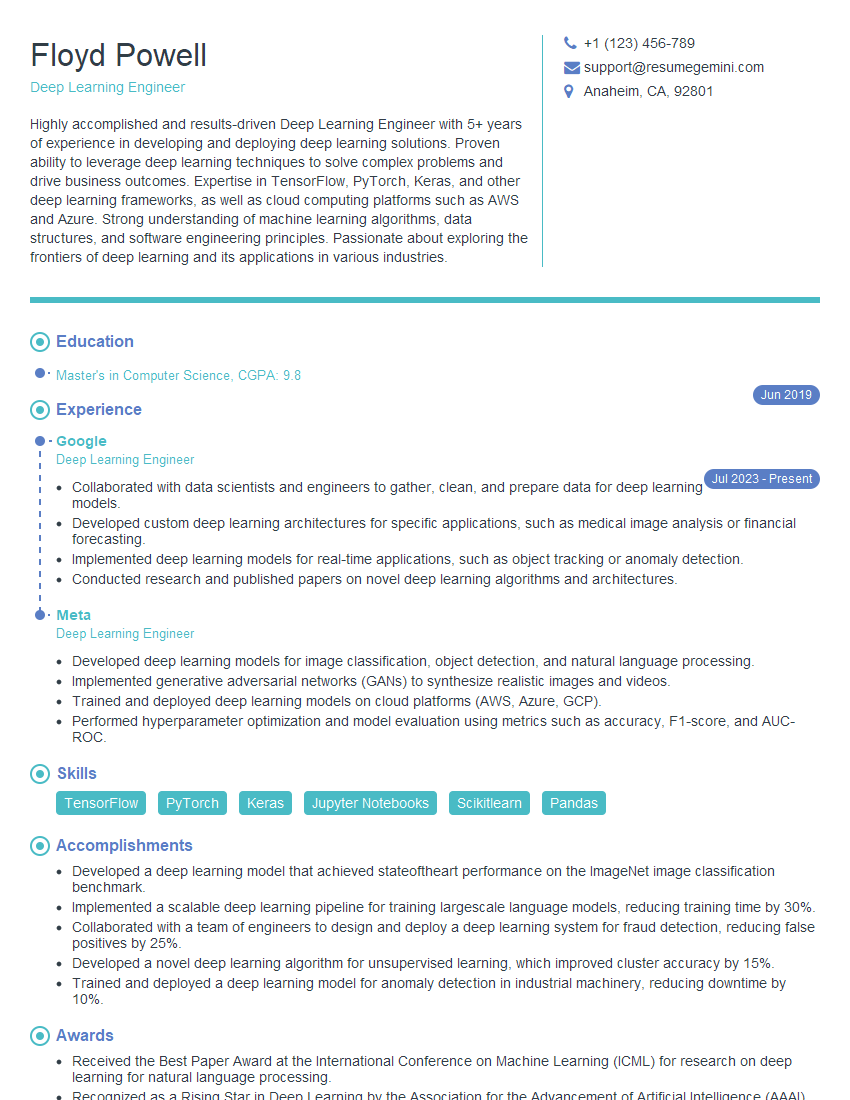
Mastering AI and ML concepts is crucial for a successful and rewarding career in this rapidly evolving field. A strong foundation in these areas significantly enhances your job prospects and opens doors to exciting opportunities. To maximize your chances, crafting a compelling and ATS-friendly resume is essential. ResumeGemini can be a trusted partner in this process, helping you build a professional resume that highlights your skills and experience effectively. Examples of resumes tailored to AI and ML roles are available to guide you.



Explore more articles
Users Rating of Our Blogs
Share Your Experience
We value your feedback! Please rate our content and share your thoughts (optional).
What Readers Say About Our Blog
Very informative content, great job.
good