Interviews are more than just a Q&A session—they’re a chance to prove your worth. This blog dives into essential Fabric Manufacturing Environmental Regulations interview questions and expert tips to help you align your answers with what hiring managers are looking for. Start preparing to shine!
Questions Asked in Fabric Manufacturing Environmental Regulations Interview
Q 1. Explain the key environmental regulations impacting fabric manufacturing in your region.
The key environmental regulations impacting fabric manufacturing in my region (let’s assume it’s a region adhering to EU standards for this example) are multifaceted, focusing on air and water pollution, waste management, and chemical usage. These are primarily governed by the EU’s Industrial Emissions Directive (IED), Waste Framework Directive (WFD), and REACH regulation. The IED sets emission limits for various pollutants from textile plants, covering everything from volatile organic compounds (VOCs) released during dyeing and printing to particulate matter from energy generation. The WFD mandates stringent wastewater treatment to protect water bodies, imposing limits on the discharge of chemical oxygen demand (COD), biochemical oxygen demand (BOD), suspended solids, and specific dyes. REACH, the Registration, Evaluation, Authorization, and Restriction of Chemicals regulation, controls the use of hazardous substances throughout the textile production chain. Specific national and regional regulations often add further detail and may impose stricter limits. For instance, many regions have specific regulations concerning the discharge of certain azo dyes known for their carcinogenic potential. Non-compliance can lead to significant fines and operational shutdowns.
Q 2. Describe your experience with wastewater treatment in textile production.
My experience with wastewater treatment in textile production spans over 10 years, encompassing both design and operational aspects. I’ve worked on projects involving various treatment technologies, including physicochemical processes such as coagulation, flocculation, and sedimentation, followed by biological treatment utilizing activated sludge systems. One particularly challenging project involved optimizing the treatment of wastewater containing reactive dyes, which required careful control of pH and oxidation-reduction potential to ensure effective degradation. We also implemented advanced oxidation processes (AOPs) like ozonation and UV-peroxide treatment to remove recalcitrant dye molecules. The key to effective wastewater treatment is a combination of robust process design, rigorous monitoring, and proactive maintenance. Regular sludge management, including dewatering and disposal in accordance with regulations, is also crucial. I’ve found that a data-driven approach, using real-time monitoring and process optimization software, is essential for maximizing treatment efficiency and minimizing environmental impact.
Q 3. How would you assess the environmental impact of a new fabric dyeing process?
Assessing the environmental impact of a new fabric dyeing process requires a lifecycle assessment (LCA), considering all stages from raw material extraction to end-of-life disposal. This involves a detailed evaluation of:
- Water usage: Quantity of water used per unit of fabric, and its impact on local water resources.
- Energy consumption: Energy intensity of the dyeing process, including heating and pumping.
- Chemical usage: Types and quantities of dyes, auxiliaries (chemicals to aid in dyeing process), and their toxicity and persistence in the environment.
- Waste generation: Quantities and types of wastewater, sludge, and solid waste produced, their treatment, and disposal.
- Air emissions: Identification and quantification of volatile organic compounds (VOCs) and other air pollutants.
Q 4. What are the main air pollutants emitted during fabric manufacturing, and how are they controlled?
The main air pollutants emitted during fabric manufacturing include particulate matter (PM), volatile organic compounds (VOCs), nitrogen oxides (NOx), and sulfur dioxide (SO2). PM is generated from various processes, including weaving, cutting, and finishing. VOCs are primarily released during dyeing and printing processes. NOx and SO2 are mainly produced from combustion processes, such as boiler operations for heating and energy generation. These pollutants are controlled using various technologies:
- Particulate matter control: Bag filters, electrostatic precipitators, and scrubbers.
- VOC control: Activated carbon adsorption, thermal oxidation, and biofiltration.
- NOx and SO2 control: Selective catalytic reduction (SCR) and flue-gas desulfurization (FGD) technologies.
Q 5. Describe your experience with implementing ISO 14001 or similar environmental management systems.
I have extensive experience implementing and maintaining ISO 14001, the internationally recognized standard for environmental management systems (EMS). In my previous role, I led the implementation of ISO 14001 across a large textile manufacturing facility. This involved a thorough assessment of our environmental aspects and impacts, establishing clear environmental objectives and targets, and developing documented procedures to manage environmental risks. The key to successful ISO 14001 implementation is embedding environmental considerations into all aspects of the business, from procurement and production to waste management. This requires strong leadership commitment, employee training, and ongoing monitoring and improvement. Regular internal audits and management reviews ensure the continued effectiveness of the EMS, and the certification process demonstrates our commitment to environmental stewardship to stakeholders.
Q 6. How do you ensure compliance with hazardous waste regulations in textile manufacturing?
Ensuring compliance with hazardous waste regulations in textile manufacturing requires a multi-pronged approach. First, we meticulously identify all hazardous wastes generated, including spent dyes, solvents, heavy metal-containing sludge, and contaminated cleaning materials. This involves detailed waste characterization to classify wastes according to their hazardous properties. Secondly, we implement strict waste segregation and storage procedures, ensuring hazardous wastes are stored separately in properly labeled containers to prevent cross-contamination. Third, we engage licensed waste contractors for the safe transportation, treatment, and disposal of hazardous wastes, ensuring compliance with all relevant regulations and obtaining necessary documentation. Regular internal audits and external inspections ensure our adherence to best practices and legal requirements. Furthermore, we implement a robust waste minimization program, exploring opportunities for waste reduction, reuse, and recycling, and maintaining detailed records of all waste generation, management, and disposal activities. This proactive approach helps reduce environmental risks and minimizes operational costs associated with hazardous waste management.
Q 7. What are the best practices for reducing water consumption in fabric production?
Reducing water consumption in fabric production requires a holistic strategy focused on both process optimization and technological upgrades. Process optimization can include implementing closed-loop water systems where wastewater is treated and reused within the production process. Techniques like improved rinsing and dyeing processes, which use less water while maintaining quality, significantly reduce water use. Investing in efficient water-saving equipment, such as low-flow nozzles and automated control systems, also plays a vital role. Technological advancements like the use of supercritical carbon dioxide (scCO2) dyeing, a water-free dyeing technique, can further minimize water usage. Furthermore, careful selection of raw materials with reduced water footprint in their production process contributes to overall water reduction. A comprehensive water management plan, including regular monitoring of water consumption and identification of water-saving opportunities, is crucial for achieving significant water reduction goals.
Q 8. Explain your understanding of lifecycle assessments (LCA) in the context of textile manufacturing.
A lifecycle assessment (LCA) in textile manufacturing is a comprehensive analysis of the environmental impacts associated with a textile product, from raw material extraction to end-of-life disposal. It’s like creating a detailed environmental footprint for a shirt, for example. We examine every stage: cultivation of cotton (or production of synthetic fibers), yarn spinning, weaving or knitting, dyeing and finishing, manufacturing into garments, transportation, use by the consumer, and ultimately, waste management or recycling.
An LCA considers impacts such as greenhouse gas emissions, water consumption, energy use, waste generation, and the use of hazardous chemicals. By quantifying these impacts across the entire lifecycle, we can identify hotspots – stages where the environmental burden is highest – and then focus improvement efforts on those areas. For instance, an LCA might reveal that the dyeing process contributes disproportionately to water pollution. This information guides the development of more sustainable practices and helps companies make informed decisions about materials, processes, and product design.
- Example: A company might use an LCA to compare the environmental impact of using organically grown cotton versus conventionally grown cotton, considering factors like pesticide use and water consumption.
- Example: An LCA can help assess the environmental implications of switching from a resource-intensive dyeing process to a more water-efficient alternative, like low-impact dyeing techniques.
Q 9. How do you identify and mitigate environmental risks in a textile production facility?
Identifying and mitigating environmental risks in a textile production facility involves a multi-pronged approach. It starts with a thorough environmental audit to pinpoint potential hazards. This audit should cover all aspects of the facility, from raw material handling to wastewater discharge.
- Risk Identification: This involves identifying potential sources of pollution like chemical spills, wastewater discharge exceeding permitted limits, and improper waste disposal. We use checklists, inspections, and monitoring data to identify these risks.
- Risk Assessment: Once identified, we assess the likelihood and severity of each risk. This helps prioritize mitigation efforts, focusing on the most significant threats first. We might use risk matrices that combine probability and impact.
- Mitigation Strategies: Mitigation strategies depend on the specific risk. For example:
- Wastewater Treatment: Investing in advanced wastewater treatment systems to remove pollutants before discharge.
- Chemical Management: Implementing robust chemical management protocols, including proper storage, handling, and disposal to minimize spills and emissions.
- Energy Efficiency: Implementing energy-efficient technologies and practices to reduce energy consumption and greenhouse gas emissions. This could involve upgrading equipment or adopting more efficient processes.
- Employee Training: Providing comprehensive training to employees on environmental regulations, safe handling procedures, and waste management practices.
Regular monitoring and reporting are crucial to ensure the effectiveness of mitigation measures and to identify any emerging risks. A robust environmental management system (EMS), such as ISO 14001, provides a framework for managing these processes.
Q 10. What are your strategies for managing textile waste and promoting recycling?
Managing textile waste and promoting recycling requires a holistic approach that begins with design and extends to end-of-life management. The goal is to minimize waste generation in the first place through innovative design and efficient processes.
- Waste Reduction at Source: Implementing lean manufacturing principles to minimize fabric waste during the cutting and sewing processes. This might involve optimizing cutting patterns or using more efficient cutting technologies.
- Waste Segregation and Sorting: Setting up a robust waste segregation system at the facility to separate different types of waste (e.g., cotton scraps, synthetic fibers, packaging). This allows for more efficient recycling and recovery of valuable materials.
- Recycling and Upcycling: Exploring opportunities for recycling textile waste, such as converting scraps into insulation materials or turning old clothes into new garments (upcycling). Collaborating with recycling facilities is essential.
- Technological Solutions: Investing in new technologies that can process and recycle textile waste, such as advanced sorting systems or chemical recycling processes.
- Closed-Loop Systems: Design products with recyclability in mind and consider creating closed-loop systems where waste from one process becomes a raw material for another.
Transparency and traceability are key. Knowing the composition of the textiles allows for more efficient sorting and processing. Educating consumers about proper textile disposal practices plays a critical role in increasing recycling rates.
Q 11. Describe your experience with energy audits and energy efficiency improvements in textile manufacturing.
My experience with energy audits and energy efficiency improvements in textile manufacturing includes conducting numerous audits across various textile production facilities. These audits typically begin with a thorough assessment of energy consumption patterns, identifying major energy users within the facility (e.g., dyeing machinery, air conditioning, lighting).
Following the audit, we develop detailed energy efficiency improvement plans. These plans might include:
- Equipment Upgrades: Replacing older, less efficient equipment with newer, more energy-efficient models. This might include upgrading dyeing machines, boilers, or air compressors.
- Process Optimization: Improving operational practices to reduce energy consumption. This can involve adjusting operating parameters, optimizing production schedules, or implementing better process control.
- Energy Management Systems (EMS): Implementing an EMS to monitor and control energy use in real-time. This allows for proactive identification and correction of energy inefficiencies.
- Renewable Energy Integration: Exploring options for integrating renewable energy sources such as solar power or biomass energy into the facility’s energy supply.
- Building Envelope Improvements: Improving building insulation to reduce heating and cooling loads. This could involve upgrading windows, doors, or insulation materials.
The success of these improvements is carefully monitored through post-implementation energy audits to track energy savings and identify any further optimization opportunities. We use Key Performance Indicators (KPIs) like energy consumption per unit of production to measure the effectiveness of the implemented changes. For instance, a successful improvement plan might demonstrate a significant reduction in energy consumption and corresponding decrease in greenhouse gas emissions.
Q 12. How familiar are you with REACH regulations concerning chemicals in textiles?
I am very familiar with REACH (Registration, Evaluation, Authorisation and Restriction of Chemicals) regulations. REACH is a European Union regulation that governs the use of chemicals in a wide range of products, including textiles. It aims to protect human health and the environment from the risks that can be posed by chemicals.
My understanding of REACH in the context of textiles focuses on the following:
- Substance Identification: Manufacturers and importers of articles containing substances of very high concern (SVHCs) above a certain concentration threshold are required to identify and register those substances with the European Chemicals Agency (ECHA).
- Restriction of Substances: REACH restricts or bans the use of certain hazardous substances in textiles. This means that specific chemicals might be prohibited or their use limited based on their potential risks.
- Authorization: For some particularly hazardous substances, manufacturers need to obtain authorization from ECHA before they can use them. This requires demonstrating that the benefits of using the substance outweigh the risks.
- Information Requirements: REACH requires manufacturers and importers to provide information about the substances used in their textiles, including safety data sheets and information on the composition of the products. This is essential for downstream users and consumers.
Compliance with REACH is essential for textile manufacturers exporting to the EU. Failure to comply can result in significant penalties. Staying up-to-date with the latest REACH updates and regulations is crucial for maintaining compliance.
Q 13. Explain your understanding of the role of sustainable sourcing in reducing environmental impact.
Sustainable sourcing is crucial for reducing the environmental impact of textile manufacturing. It means selecting and procuring raw materials and other inputs in a way that minimizes their environmental footprint throughout their lifecycle.
Key aspects of sustainable sourcing in textiles include:
- Fiber Selection: Choosing environmentally friendly fibers like organic cotton, recycled fibers, or innovative plant-based materials. These fibers often require less water, pesticides, and fertilizers compared to conventionally grown cotton.
- Supplier Assessment: Evaluating suppliers based on their environmental performance and social responsibility practices. This might involve conducting supplier audits or using certification schemes.
- Traceability: Ensuring transparency and traceability throughout the supply chain, from raw material sourcing to finished product. This enables companies to track the environmental and social impacts of their materials and identify areas for improvement.
- Fair Labor Practices: Ensuring fair wages, safe working conditions, and no child labor throughout the supply chain. Sustainable sourcing considers social sustainability in addition to environmental sustainability.
- Water Stewardship: Sourcing raw materials from regions that manage water resources sustainably and have efficient irrigation practices.
Sustainable sourcing helps reduce the overall environmental burden by reducing water consumption, pesticide use, greenhouse gas emissions, and overall resource depletion. It is a fundamental element in creating truly sustainable textile products.
Q 14. How would you respond to a non-compliance issue discovered during an environmental audit?
Responding to a non-compliance issue discovered during an environmental audit requires a prompt, transparent, and proactive approach. The first step is to thoroughly investigate the root cause of the non-compliance. This might involve reviewing operational records, interviewing employees, and examining physical evidence.
Once the root cause is identified, we develop a corrective action plan (CAP) to address the non-compliance. This CAP must outline specific actions, timelines, and responsibilities for implementing the corrective measures. It might include:
- Immediate Actions: Addressing immediate threats to worker safety or environmental damage.
- Corrective Actions: Implementing measures to prevent the non-compliance from recurring.
- Preventative Actions: Implementing measures to prevent similar non-compliance issues from arising in the future.
- Verification: Verifying that the corrective and preventative actions have been effectively implemented.
We’ll document the entire process, including the audit findings, root cause analysis, CAP, implementation, and verification. This documentation helps ensure accountability and transparency. Depending on the severity of the non-compliance, regulatory agencies may need to be informed. Open communication with regulatory authorities is essential to demonstrate a commitment to compliance and to ensure a positive resolution.
Q 15. Describe your experience with environmental monitoring and reporting.
My experience in environmental monitoring and reporting spans over 15 years in the textile industry. This includes developing and implementing comprehensive environmental management systems (EMS) compliant with ISO 14001. I’ve overseen the monitoring of various parameters, including wastewater discharge (COD, BOD, TSS, pH), air emissions (volatile organic compounds, particulate matter), and energy consumption. This involved using a combination of automated monitoring equipment and manual sampling procedures, ensuring data accuracy and regulatory compliance. Reporting has included creating detailed reports for internal management, regulatory agencies (like the EPA), and stakeholders, demonstrating our environmental performance and progress towards sustainability goals. For example, I successfully implemented a new automated wastewater monitoring system that reduced reporting errors by 20% and provided real-time data for proactive adjustments to our treatment processes.
My work often involves analyzing trends in environmental data to identify areas for improvement. For instance, we discovered a seasonal fluctuation in COD levels through consistent monitoring, which led to adjustments in our pre-treatment process, resulting in a significant reduction in pollutant discharge.
Career Expert Tips:
- Ace those interviews! Prepare effectively by reviewing the Top 50 Most Common Interview Questions on ResumeGemini.
- Navigate your job search with confidence! Explore a wide range of Career Tips on ResumeGemini. Learn about common challenges and recommendations to overcome them.
- Craft the perfect resume! Master the Art of Resume Writing with ResumeGemini’s guide. Showcase your unique qualifications and achievements effectively.
- Don’t miss out on holiday savings! Build your dream resume with ResumeGemini’s ATS optimized templates.
Q 16. What strategies do you employ to educate employees on environmental regulations and best practices?
Educating employees is crucial for effective environmental management. I employ a multi-pronged approach: Firstly, we incorporate environmental training into new employee onboarding, covering relevant regulations and best practices. Secondly, we conduct regular workshops and training sessions tailored to different roles, focusing on practical application. We use interactive methods like case studies and group discussions to enhance engagement. Thirdly, we utilize visual aids, posters, and easily accessible internal documentation outlining key regulations and best practices. Finally, we actively promote a culture of environmental responsibility, rewarding employees for their contributions towards sustainability. For example, one successful initiative was a ‘Green Team’ competition among different departments, where the team with the best environmental performance received recognition and a small reward. This generated significant enthusiasm and proactive engagement with our environmental policies.
Q 17. How do you ensure that environmental considerations are integrated into the production process?
Integrating environmental considerations into the production process is a continuous effort. It begins with designing processes that minimize waste and pollution from the outset. This includes selecting eco-friendly raw materials, optimizing water and energy usage, and implementing closed-loop systems wherever possible. We use lifecycle assessments (LCAs) to evaluate the environmental impact of our products and processes, identifying hotspots for improvement. We regularly review our procedures, seeking opportunities to incorporate cleaner production technologies and waste reduction strategies. Implementing stricter quality control measures further reduces waste through minimizing defects. For example, we switched to a new dyeing process that significantly reduced water and chemical consumption, minimizing our wastewater treatment burden and reducing our overall environmental footprint.
Q 18. What are the key performance indicators (KPIs) used to measure environmental performance in textile manufacturing?
Key Performance Indicators (KPIs) are crucial for monitoring environmental performance. In textile manufacturing, we track indicators across different areas: Water Consumption (liters/kg of fabric), Energy Consumption (kWh/kg of fabric), Wastewater Discharge (COD, BOD, TSS levels), Solid Waste Generation (kg/kg of fabric), Chemical Consumption (kg/kg of fabric), and Greenhouse Gas Emissions (kg CO2e/kg of fabric). These KPIs are tracked monthly, providing a clear picture of our environmental performance. We regularly compare these KPIs against industry benchmarks and our own past performance to identify areas for improvement and measure the effectiveness of our environmental initiatives. We also analyze these KPIs in relation to production output to ensure that environmental improvements are not achieved at the cost of production efficiency.
Q 19. Describe your experience with developing and implementing environmental improvement plans.
Developing and implementing environmental improvement plans involves a structured approach. It starts with a thorough environmental audit, identifying areas for improvement. This is followed by setting measurable, achievable, relevant, and time-bound (SMART) goals. We then develop action plans with detailed timelines and responsibilities. Implementation involves regular monitoring and evaluation of progress against our goals. We use data analysis to identify bottlenecks and adjust our plans as needed. One successful example is our plan to reduce water consumption by 15% within three years. This involved implementing water recycling systems, upgrading our dyeing machinery, and conducting employee training programs on water conservation. Regular progress reviews and data analysis ensured that the plan remained on track, and we exceeded our target by 5%.
Q 20. How familiar are you with different wastewater treatment technologies used in textile manufacturing?
I’m very familiar with various wastewater treatment technologies in textile manufacturing. These include physical treatment (screening, filtration), chemical treatment (coagulation, flocculation), biological treatment (activated sludge, anaerobic digestion), and advanced treatment methods (membrane filtration, ozonation, UV disinfection). The choice of technology depends on the specific pollutants in the wastewater and regulatory requirements. For example, we currently use a combination of biological treatment and membrane filtration to treat our wastewater. The biological process handles organic pollutants, while membrane filtration removes suspended solids and remaining dissolved contaminants, ensuring the treated water meets discharge standards. I have experience in evaluating the effectiveness and cost-efficiency of different technologies, helping us select the optimal solution for our specific needs and the changing regulatory landscape.
Q 21. Explain your understanding of the role of technology in reducing the environmental footprint of textile manufacturing.
Technology plays a pivotal role in reducing the environmental footprint of textile manufacturing. This includes automation to improve process efficiency and reduce waste, advanced sensors and monitoring systems for real-time data collection and process optimization, and the adoption of cleaner production technologies, such as low-impact dyeing processes and water-efficient machinery. Data analytics can identify trends and patterns, enabling proactive adjustments and preventative measures. Digital twin technology can simulate different scenarios and optimize processes before implementation, minimizing environmental impact. For example, implementing a digital twin of our dyeing process allowed us to simulate different operating parameters, leading to a 10% reduction in chemical usage and a 5% decrease in water consumption. The future of sustainable textile manufacturing relies heavily on continued technological advancements and their effective implementation.
Q 22. What are the challenges of implementing sustainable practices in a global textile supply chain?
Implementing sustainable practices across a global textile supply chain presents a complex web of challenges. Think of it like trying to orchestrate a massive, interconnected orchestra – each section (supplier, manufacturer, retailer) needs to play in harmony, but they are geographically dispersed, often operate under different regulations, and may have varying levels of commitment to sustainability.
- Traceability and Transparency: Tracking materials and processes across multiple tiers of the supply chain is incredibly difficult. Knowing where cotton is grown, how it’s processed, and the environmental impact at each stage is crucial, yet often opaque.
- Enforcement and Standardization: Lack of uniform environmental standards across countries makes it challenging to ensure consistent sustainability performance. What’s considered acceptable in one region might be highly polluting in another.
- Cost and Competition: Sustainable practices often involve higher upfront costs (e.g., organic farming, water treatment). Companies may be hesitant to adopt them if competitors aren’t, fearing a loss of competitiveness.
- Lack of Capacity and Awareness: Smaller suppliers, particularly in developing countries, may lack the resources, training, and technical knowledge to implement sustainable practices effectively.
- Consumer Demand and Greenwashing: Balancing genuine sustainability with market demands and avoiding ‘greenwashing’ (making misleading claims about environmental benefits) requires careful management.
Q 23. How would you evaluate the environmental performance of a textile supplier?
Evaluating a textile supplier’s environmental performance requires a multi-faceted approach, going beyond simple self-reported data. I would use a framework encompassing several key areas:
- Material Sourcing: Assessing the origin and sustainability certifications of raw materials (e.g., organic cotton, recycled fibers). Are they using sustainably harvested materials? Do they have traceability systems in place?
- Water Usage and Treatment: Examining water consumption throughout the production process and the efficiency of wastewater treatment systems. A key metric is water usage per unit of production. Are they using closed-loop water systems?
- Energy Consumption: Analyzing energy sources and overall energy efficiency. Do they utilize renewable energy sources? Are they implementing energy-efficient technologies?
- Waste Management: Evaluating how effectively they manage textile waste, including recycling and disposal practices. What percentage of waste is recycled or reused? What are their methods for hazardous waste disposal?
- Chemical Usage: Reviewing the use of chemicals in dyeing and finishing processes, prioritizing the use of low-impact, certified chemicals. Do they have a policy for reducing hazardous chemical use? What is their discharge profile?
- Compliance and Certifications: Examining their compliance with relevant environmental regulations and certifications (e.g., OEKO-TEX, GOTS, BSCI). These independent certifications provide third-party verification.
I’d combine desk research with on-site audits to gain a complete picture and ensure data accuracy. This approach allows for a holistic assessment of their environmental responsibility.
Q 24. Describe your experience with environmental impact assessments (EIAs) for new textile manufacturing projects.
My experience with EIAs for new textile manufacturing projects emphasizes a proactive and collaborative approach. It’s not just about ticking boxes; it’s about building a project that’s environmentally responsible from the outset.
An EIA for a new textile facility would include:
- Baseline Studies: Detailed assessment of the existing environmental conditions (water quality, air quality, biodiversity) in the project area.
- Impact Prediction: Modeling the potential environmental impacts of the project throughout its lifecycle (construction, operation, decommissioning), particularly focusing on water and air pollution, waste generation, and energy use.
- Mitigation Measures: Developing and implementing strategies to minimize negative impacts, such as using efficient water treatment systems, adopting renewable energy sources, and implementing robust waste management plans.
- Stakeholder Engagement: Consulting with local communities and other stakeholders to address their concerns and integrate their input into the EIA process.
- Monitoring and Evaluation: Establishing a plan to monitor environmental performance during and after construction to ensure that mitigation measures are effective.
I’ve been involved in several EIAs where we successfully integrated sustainable design principles into the projects, leading to facilities that met environmental regulations while minimizing their environmental footprint. For example, in one project, we incorporated a rainwater harvesting system and a closed-loop wastewater treatment plant, significantly reducing water consumption and pollution.
Q 25. How do you balance environmental protection with the economic needs of a textile manufacturing company?
Balancing environmental protection and economic needs in textile manufacturing requires a strategic approach that views sustainability not as a cost, but as an opportunity. This involves integrating environmental considerations into all aspects of the business, from design to production to marketing.
- Investing in Green Technologies: Adopting cleaner production technologies (e.g., water-efficient dyeing machines, energy-efficient machinery) can reduce costs in the long run by minimizing resource consumption and waste.
- Improving Operational Efficiency: Streamlining processes, optimizing resource use, and reducing waste can enhance profitability while minimizing the environmental impact.
- Developing Green Products: Creating products from sustainable materials (e.g., recycled fibers, organic cotton) can attract environmentally conscious consumers, commanding premium prices.
- Carbon Accounting and Reporting: Tracking and reporting greenhouse gas emissions can help identify areas for improvement and attract investors seeking environmentally responsible companies.
- Supply Chain Collaboration: Working with suppliers who share your commitment to sustainability fosters a collective effort to reduce the overall environmental impact of the supply chain.
It’s about finding win-win solutions – investing in sustainability enhances efficiency, reduces risk, and improves the company’s image, ultimately boosting its long-term financial performance.
Q 26. What is your experience with environmental permits and licensing in the textile industry?
My experience with environmental permits and licensing in the textile industry spans various jurisdictions and regulations. It’s a complex area requiring detailed knowledge of local, regional, and even international regulations.
The process typically involves:
- Identifying Applicable Regulations: Determining which environmental laws and regulations apply to the specific textile manufacturing processes and location. This can involve analyzing discharge permits, air emission permits, waste management permits, and other relevant legislation.
- Permit Application: Preparing and submitting detailed applications to the relevant regulatory authorities, including comprehensive information on the proposed operations, pollution control measures, and environmental impact assessments.
- Compliance Monitoring: Maintaining accurate records of environmental performance, regularly monitoring emissions and discharges, and ensuring compliance with permit conditions. This often involves self-monitoring and periodic audits by regulatory agencies.
- Reporting and Record-Keeping: Submitting regular reports to regulatory agencies on environmental performance, including emissions data, waste management data, and other relevant information.
- Audits and Inspections: Collaborating with regulatory agencies during inspections and audits, ensuring transparency and addressing any compliance issues promptly.
Navigating this process requires meticulous attention to detail and proactive communication with regulatory bodies to ensure smooth and compliant operations.
Q 27. How would you handle a conflict between environmental regulations and production targets?
Handling conflicts between environmental regulations and production targets requires a structured approach that prioritizes compliance while minimizing disruption to operations. It’s a balancing act that demands creative problem-solving.
- Identify the Conflict: Clearly define the specific conflict between the regulation and production targets. What aspect of the production process is causing the conflict?
- Analyze Options: Evaluate various solutions, including modifying the production process to comply with the regulation, seeking exemptions or variances, investing in new technology to enhance compliance, or adjusting production targets to align with regulatory requirements.
- Cost-Benefit Analysis: Assess the economic and environmental implications of each option, considering both short-term and long-term costs and benefits.
- Stakeholder Consultation: Engage with relevant stakeholders (regulatory agencies, employees, customers) to discuss the various options and reach a mutually agreeable solution.
- Implementation and Monitoring: Implement the chosen solution and monitor its effectiveness, making necessary adjustments along the way. Regular monitoring helps ensure continued compliance.
It’s critical to remember that non-compliance can lead to significant penalties and reputational damage. Prioritizing environmental compliance is essential for the long-term sustainability and success of any textile manufacturing company.
Q 28. Describe your understanding of the evolving landscape of environmental regulations in the textile sector.
The environmental regulatory landscape in the textile sector is constantly evolving, driven by increasing awareness of the industry’s environmental impact and stricter global commitments to sustainability.
- Increased Scrutiny on Water Pollution: Regulations regarding wastewater discharge are becoming stricter, with greater emphasis on reducing the discharge of harmful chemicals and improving water treatment efficiency.
- Growing Focus on Greenhouse Gas Emissions: There’s increased pressure to reduce carbon emissions across the supply chain, with regulations and incentives promoting the use of renewable energy and carbon capture technologies.
- Emphasis on Circular Economy Principles: Regulations are shifting toward promoting the circular economy model, encouraging the use of recycled materials, reducing waste, and extending product lifecycles.
- Enhanced Supply Chain Transparency: There’s a growing push for greater transparency and traceability throughout the textile supply chain, requiring companies to disclose their environmental performance and sourcing practices.
- Strengthened Chemical Management: Regulations are becoming more stringent regarding the use and management of hazardous chemicals, promoting the substitution of hazardous chemicals with safer alternatives.
Staying informed about these evolving regulations and proactively adapting business practices to maintain compliance is crucial for success in the textile industry. Companies need to adopt a proactive and adaptive approach, investing in research and development to stay ahead of the curve.
Key Topics to Learn for Fabric Manufacturing Environmental Regulations Interview
- Water Pollution Control: Understanding effluent discharge limits, wastewater treatment technologies (e.g., biological treatment, membrane filtration), and compliance monitoring strategies.
- Air Emissions Management: Knowledge of air quality standards related to textile manufacturing (e.g., particulate matter, volatile organic compounds), emission control technologies (e.g., scrubbers, filters), and permit applications.
- Hazardous Waste Management: Identifying and classifying hazardous waste generated in fabric manufacturing, proper storage, transportation, and disposal methods, and compliance with relevant regulations (e.g., RCRA).
- Energy Efficiency and Sustainability: Exploring methods for reducing energy consumption in textile processes, implementing renewable energy sources, and minimizing carbon footprint. Practical application includes calculating energy usage and identifying areas for improvement.
- Environmental Auditing and Reporting: Understanding environmental compliance audits, reporting requirements (e.g., TRI reporting), and record-keeping best practices. This includes understanding how to interpret audit findings and develop corrective action plans.
- Chemical Management: Safe handling, storage, and use of chemicals in fabric manufacturing, including understanding SDS (Safety Data Sheets) and minimizing chemical usage through process optimization.
- Regulatory Compliance: Familiarity with relevant federal, state, and local environmental regulations specific to textile manufacturing, and the processes involved in obtaining and maintaining permits.
- Sustainable Textile Practices: Understanding and applying principles of sustainable textile production, including the use of eco-friendly materials, water recycling, and waste reduction strategies.
Next Steps
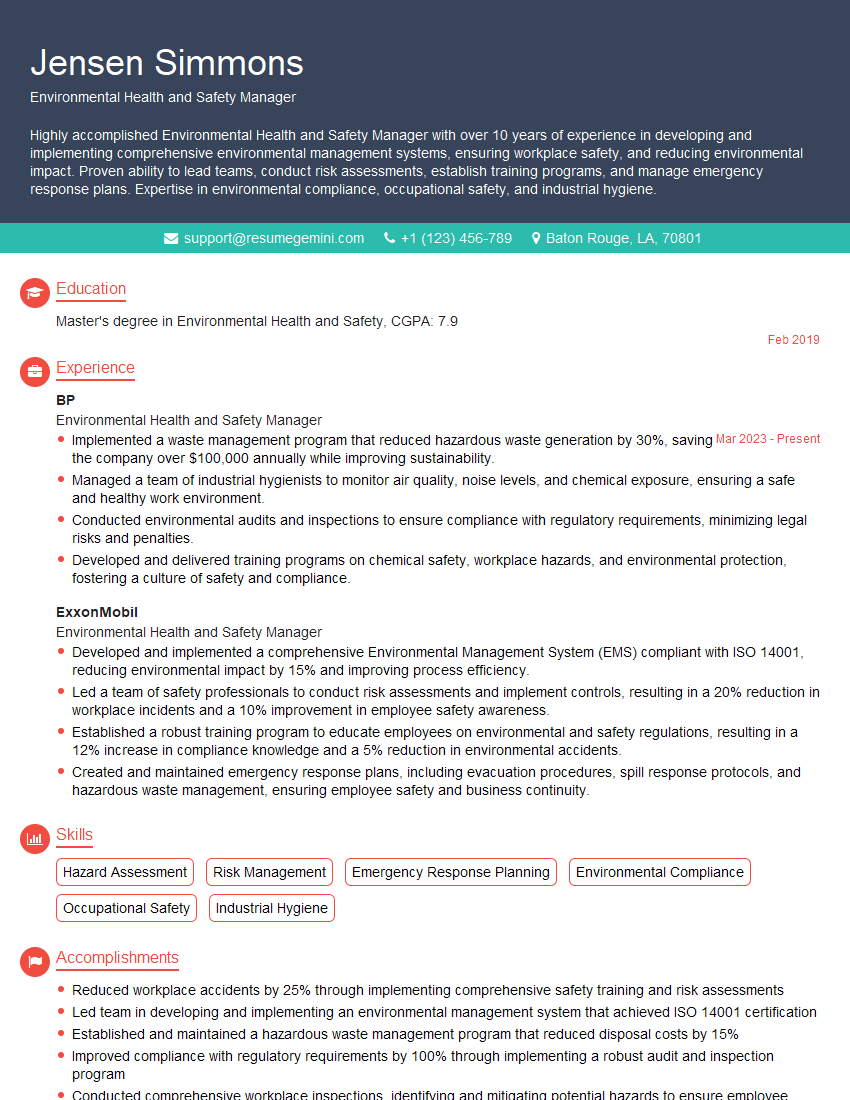
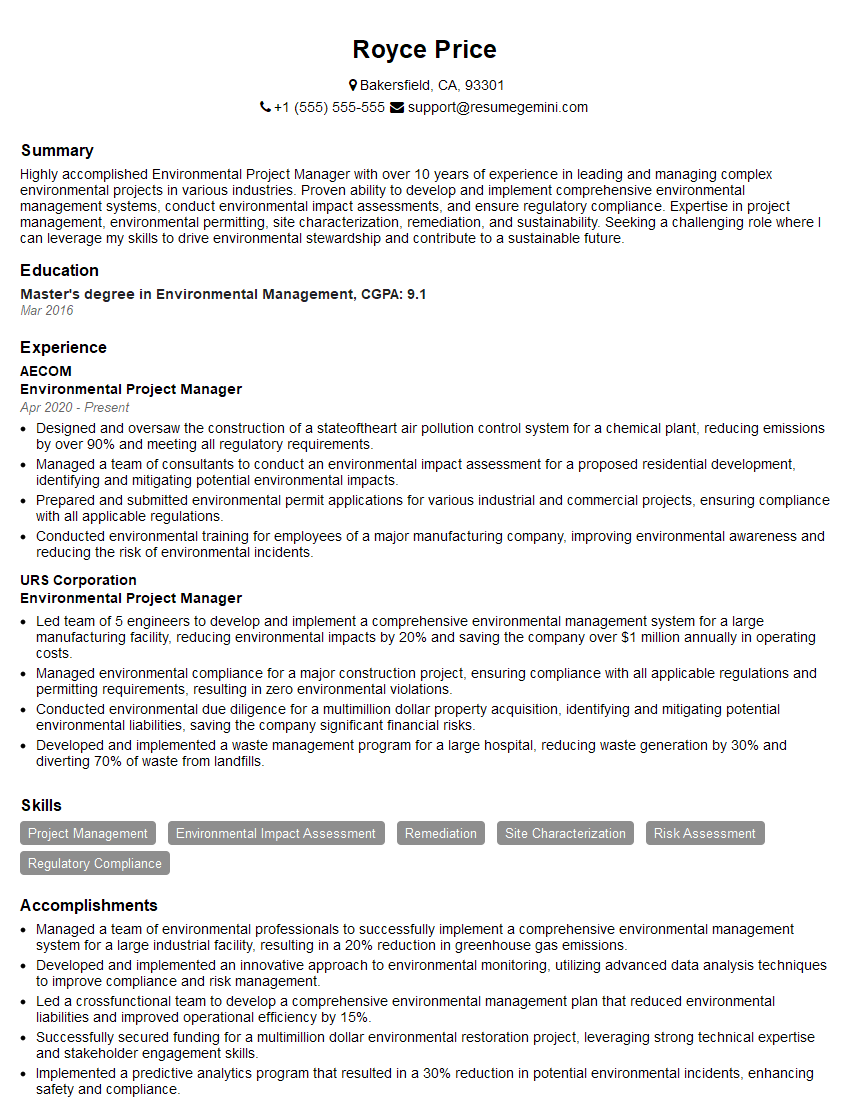
Mastering Fabric Manufacturing Environmental Regulations is crucial for career advancement in this field. Demonstrating a deep understanding of these regulations will significantly enhance your job prospects and position you as a valuable asset to any organization. To maximize your chances of landing your dream role, crafting an ATS-friendly resume is paramount. ResumeGemini is a trusted resource to help you build a professional and effective resume that highlights your skills and experience. ResumeGemini provides examples of resumes tailored to Fabric Manufacturing Environmental Regulations to guide you through the process, ensuring your qualifications are presented clearly and persuasively. Take the next step towards your ideal career today!
Explore more articles
Users Rating of Our Blogs
Share Your Experience
We value your feedback! Please rate our content and share your thoughts (optional).
What Readers Say About Our Blog
Very informative content, great job.
good