Cracking a skill-specific interview, like one for Artwork Handling and Storage, requires understanding the nuances of the role. In this blog, we present the questions you’re most likely to encounter, along with insights into how to answer them effectively. Let’s ensure you’re ready to make a strong impression.
Questions Asked in Artwork Handling and Storage Interview
Q 1. Describe your experience with different types of artwork packaging materials.
My experience encompasses a wide range of artwork packaging materials, each chosen based on the artwork’s fragility, size, and the transport conditions. For example, I’ve extensively used acid-free tissue paper for wrapping delicate paintings and sculptures to prevent staining and abrasion. Corrugated cardboard boxes, often custom-sized, provide excellent protection against shocks and impacts, especially for framed pieces. For larger or more valuable pieces, I’ve utilized specialized crates made of plywood or foam-lined cases, providing superior protection against external forces. Climate-controlled shipping containers are sometimes necessary for especially vulnerable works. Furthermore, I’ve worked with archival-quality bubble wrap for cushioning, ensuring minimal pressure points. The selection process always prioritizes the artwork’s preservation and safe transit.
For instance, a delicate ceramic sculpture might require multiple layers of acid-free tissue, followed by bubble wrap, and then secured within a custom-fit foam-lined crate. In contrast, a robust bronze sculpture might only require a protective layer of foam and a strong cardboard box for transport.
Q 2. Explain the proper handling techniques for fragile sculptures.
Handling fragile sculptures requires meticulous care and precision. The first step is always a thorough assessment of the piece’s condition – identifying weak points or areas needing special attention. I use soft cotton gloves to prevent skin oils and dirt from transferring onto the surface. When lifting, the sculpture should be supported evenly, preferably with two people using a stable base, distributing weight efficiently. We avoid sudden movements and jarring motions. Specialized lifting equipment like padded slings or cradles is used for heavier or more complex forms. During transport, the sculpture is always secured firmly within a custom-fit crate, cushioned with archival-quality materials to minimize any movement. Imagine moving a delicate porcelain vase—you wouldn’t just grab it; you’d use both hands, support its base, and move slowly and carefully. Sculptures deserve the same level of respect and cautious handling.
Q 3. How do you ensure the environmental stability of artwork in storage?
Maintaining environmental stability for artwork in storage is crucial for longevity. This involves controlling temperature, relative humidity (RH), and light exposure. Ideal storage conditions typically range from 68-72°F (20-22°C) and 45-55% RH to prevent warping, cracking, fading, or pest infestations. UV filtering is essential to minimize light damage, particularly for light-sensitive materials such as pastels or watercolors. I use digital monitoring systems in storage facilities to track these parameters, providing real-time data and alerts for any deviations from the ideal ranges. Regular inspections are also crucial, and environmental sensors help pinpoint issues early. For example, inconsistent RH levels can lead to mold growth; a consistent temperature ensures no expansion/contraction stresses within the artwork.
Q 4. What are the safety procedures you follow when handling heavy artwork?
Safety is paramount when handling heavy artwork. We always assess the weight and dimensions beforehand, planning the lift and move strategically. Appropriate lifting equipment, such as dollies, hand trucks, or even specialized art handling systems, is employed. Multiple people are always involved in the lift, using proper lifting techniques and maintaining clear communication. Protective gear, like gloves and safety shoes, is mandatory. The route is carefully checked for obstacles, and the final destination is prepared to accommodate the artwork’s size and weight. Imagine moving a large, heavy painting—you wouldn’t risk injury by attempting to lift it alone. Teamwork and proper equipment ensure both the safety of the handlers and the artwork.
Q 5. Describe your experience with inventory management systems for artwork.
My experience with inventory management systems for artwork involves using specialized software and databases. These systems provide a centralized record-keeping solution that includes detailed information such as artwork titles, artists, dimensions, materials, acquisition dates, condition reports, insurance valuations, and storage locations. This allows for efficient tracking, easy access to information, and prevents potential losses or damage. Using barcodes or RFID tags assists in precise inventory tracking. Furthermore, the systems often integrate with digital asset management systems, allowing for online access to high-resolution images and condition reports. This is crucial for insurance claims, loan requests, or internal reviews of the collection. The software often includes features that support reporting and analyses.
Q 6. How do you manage the transportation of large-scale artwork?
Transporting large-scale artwork requires careful planning and coordination. We begin with a thorough assessment of the artwork’s size, weight, and fragility. Appropriate transportation methods are then selected, potentially involving specialized vehicles such as climate-controlled trucks or even dedicated art transport companies. Custom-built crates are essential to ensure the artwork remains secure and protected during transit. The crate’s design incorporates shock absorption and environmental protection. Detailed route planning accounts for potential obstacles and weather conditions. Insurance coverage is crucial to mitigate any potential risks or damages. Imagine shipping a monumental sculpture – it needs a specialized truck, careful loading, and rigorous protection throughout the journey. This same level of planning is implemented across all large-scale artwork transportation.
Q 7. What are the key considerations for climate-controlled art storage?
Climate-controlled art storage is critical for preserving artwork. Key considerations include maintaining stable temperature and relative humidity (RH) levels within the ideal range (typically 68-72°F and 45-55% RH). This prevents damage from temperature fluctuations and moisture changes. Proper ventilation is essential to prevent the buildup of pollutants or mold. Security systems, including alarms, surveillance cameras, and access controls, are needed to safeguard against theft or vandalism. The storage facility should also be pest-free to avoid insect or rodent damage. Furthermore, it’s essential to use archival-quality storage materials that are inert and free of harmful chemicals. The facility itself should be structurally sound and environmentally stable, and regular monitoring and maintenance are crucial to ensure the long-term preservation of the artwork.
Q 8. Explain your experience with pest control measures in an art storage facility.
Pest control is paramount in art storage, as insects and rodents can cause irreparable damage to artwork. My experience involves implementing a multi-pronged approach, starting with preventative measures. This includes regular inspections to detect early signs of infestation, maintaining a clean and well-ventilated environment, and using physical barriers like sealed containers and tightly-fitting doors. For example, I’ve successfully implemented a system of strategically placed pheromone traps in a large storage facility, monitoring their effectiveness monthly and adjusting placement as needed. In the case of a confirmed infestation, I collaborate with licensed pest control professionals specializing in art conservation. This ensures the use of approved, non-toxic methods that won’t harm the artwork or the environment. Documentation of all pest control activities, including inspection reports and treatment records, is meticulously maintained to ensure compliance and traceability.
Q 9. How do you identify and document any damage to artwork during handling?
Identifying and documenting damage is crucial for insurance claims and responsible art handling. My process begins with a thorough visual inspection before and after any handling. I use a high-resolution digital camera and detailed checklists to document the artwork’s condition. Any pre-existing damage is noted, along with precise locations and descriptions (e.g., ‘small scratch, 2cm long, located 1cm from lower-right corner’). New damage, if any, is meticulously documented with photographs, written descriptions, and sketches highlighting the exact nature and location. I use standardized terminology and photographic techniques to ensure consistency. For instance, I employ macro photography to capture fine details of damage. This comprehensive documentation serves as irrefutable evidence of the artwork’s condition and any changes that occurred under my care.
Q 10. Describe your proficiency in using specialized art handling equipment.
My proficiency extends to a wide range of specialized equipment, including art handling carts with different wheel sizes and maneuverability for various floor types; acid-free gloves and protective clothing to prevent contamination; specialized lifting equipment like vacuum lifts for large, delicate pieces; climate-controlled crates and transport cases; and various types of mounts and cradles for secure transportation and storage. For example, I’m highly experienced in using a conservation-grade suction cup lift to safely move large canvases without risk of damage. I understand the limitations and capabilities of each piece of equipment and choose the appropriate tools for each task based on the artwork’s size, weight, fragility, and material. Regular maintenance and safety checks are conducted to ensure optimal functionality and prevent accidents.
Q 11. What is your experience with the installation and de-installation of artwork?
I possess extensive experience in both the installation and de-installation of artwork, ranging from small-scale paintings to large-scale sculptures and installations. This includes assessing the installation site, ensuring adequate lighting, security, environmental control (temperature and humidity), and structural integrity. My approach is always methodical, beginning with a thorough risk assessment to identify potential hazards. For instance, I carefully plan the route of heavy pieces through a building, considering doorways, floor strength, and potential obstacles. I use appropriate equipment and safety protocols, including spotters and safety harnesses, where necessary. De-installation follows a mirror-image process, with careful dismantling and repackaging to maintain the artwork’s integrity. Thorough documentation, including photographs and detailed notes, is maintained throughout the entire process.
Q 12. How do you prioritize tasks when handling multiple art pieces simultaneously?
Prioritizing tasks when handling multiple art pieces requires a structured approach. I typically start by assessing each piece’s condition, fragility, and urgency of handling (e.g., upcoming exhibition deadlines, conservation needs). I then create a prioritized schedule based on these factors. For example, using a Kanban-style workflow, I might organize tasks by urgency and type – high priority, fragile items are handled first, followed by more robust items with less urgent deadlines. This method helps me maintain a clear workflow, preventing bottlenecks and minimizing the risk of damage or delays. Regular communication with colleagues and clients is crucial to ensure adjustments can be made to the schedule as necessary.
Q 13. Explain your understanding of art insurance and its relevance to handling.
Art insurance is crucial for mitigating financial risks associated with damage, loss, or theft during handling and storage. My understanding of art insurance goes beyond mere awareness; it involves understanding the various types of coverage, valuation methods (agreed value vs. market value), and claims procedures. I’m familiar with common exclusions and limitations. Before any handling, I verify that the artwork is adequately insured. Comprehensive documentation – the same rigorous documentation used for damage tracking – is essential for successful insurance claims. My attention to detail and proactive risk management directly contribute to minimizing the chances of needing to file a claim in the first place, acting as a safeguard for both the artwork and the institution’s resources.
Q 14. Describe your experience with different types of artwork display systems.
My experience encompasses a variety of display systems for diverse artworks. This includes traditional methods like picture frames, easels, and pedestals, as well as more specialized systems such as museum-grade display cases with climate control, archival-quality matting and framing, and custom-designed mounts and supports for sculptures and three-dimensional artworks. I’m proficient in working with various materials like wood, metal, and acrylic, and understand the importance of selecting materials that are compatible with the artwork and the surrounding environment. For instance, I’ve worked with environmentally stable display cases to protect delicate watercolors from light damage and fluctuating humidity. I always prioritize the preservation of the artwork and select the display system that best minimizes environmental factors while maximizing the aesthetic presentation.
Q 15. How do you ensure the security of artwork during transportation and storage?
Ensuring artwork security during transportation and storage is paramount. It involves a multi-layered approach encompassing physical security measures, environmental controls, and meticulous documentation.
- Physical Security: This involves robust packaging, secure vehicles with GPS tracking for transportation, and climate-controlled storage facilities with alarm systems, surveillance cameras, and restricted access. Think of it like Fort Knox for your art – multiple layers of protection.
- Environmental Controls: Artwork is sensitive to temperature, humidity, and light. Maintaining stable conditions prevents damage from fluctuating temperatures which can cause cracking or warping of materials, and light exposure can cause fading or discoloration. We use specialized crates with climate control and monitor conditions continuously.
- Documentation and Insurance: Comprehensive inventories, detailed condition reports, and high-quality photographs are crucial. Insurance coverage is also essential to mitigate financial losses in case of damage or theft. Imagine having a detailed medical history for each piece of artwork – this is what thorough documentation provides.
For example, I once oversaw the transport of a delicate 18th-century porcelain sculpture. We used a custom-built crate with internal suspension to absorb shocks, temperature monitoring devices during transit, and white-glove handling by specialized art handlers throughout the process.
Career Expert Tips:
- Ace those interviews! Prepare effectively by reviewing the Top 50 Most Common Interview Questions on ResumeGemini.
- Navigate your job search with confidence! Explore a wide range of Career Tips on ResumeGemini. Learn about common challenges and recommendations to overcome them.
- Craft the perfect resume! Master the Art of Resume Writing with ResumeGemini’s guide. Showcase your unique qualifications and achievements effectively.
- Don’t miss out on holiday savings! Build your dream resume with ResumeGemini’s ATS optimized templates.
Q 16. What is your experience with creating and maintaining art storage records?
Maintaining accurate art storage records is fundamental to responsible artwork management. My experience involves utilizing a combination of digital and physical record-keeping systems.
- Digital Database: I’m proficient in using database software to maintain detailed records of each artwork, including accession numbers, artist details, title, dimensions, materials, condition notes, insurance information, and storage location. This allows for easy searching and retrieval of information.
- Physical Inventory: A physical inventory, often accompanied by high-resolution photographs, is also maintained. This provides a visual record and allows for regular physical checks of the artwork’s condition.
- Condition Reports: Detailed condition reports are created before and after any handling or movement, noting any pre-existing damage or changes in condition. This is critical for insurance purposes and for tracking the artwork’s history.
I’ve implemented a system where every change in the artwork’s status, from storage location to conservation treatment, is meticulously documented and cross-referenced between the digital and physical records. This ensures data integrity and allows for efficient tracking of the artwork’s journey.
Q 17. How do you handle artwork that requires specialized handling techniques (e.g., wet media)?
Artwork requiring specialized handling, particularly wet media like watercolors or pastels, demands careful consideration of environmental factors and appropriate handling techniques.
- Environmental Control: Maintaining stable temperature and humidity is crucial to prevent warping, cracking, or mold growth. Specialized storage environments with controlled climate are often necessary.
- Protective Encapsulation: Acid-free materials such as archival-quality mats, backing boards, and sleeves are used to protect the artwork from external factors.
- Careful Handling: Gloves should always be worn to avoid transferring oils or dirt from hands. Artwork should be handled with the utmost care, avoiding direct contact with the artwork surface whenever possible.
For instance, handling a watercolor painting involves using acid-free materials to prevent discoloration. They are often stored flat to prevent buckling or damage. Supporting the painting’s surface during handling is also crucial to avoid accidental damage.
Q 18. Describe your experience with working with different types of art materials (e.g., canvas, wood, glass).
My experience encompasses working with a wide variety of art materials, each requiring unique handling and storage considerations.
- Canvas: Canvas paintings need to be protected from light, humidity, and physical damage. Proper stretching and framing are crucial for preservation.
- Wood: Wooden sculptures and frames are vulnerable to changes in humidity and temperature, which can cause warping and cracking. Regular inspection for pest infestation is also necessary.
- Glass: Glass artwork requires careful handling to avoid breakage. Padding and secure crating are essential during transportation. Glass is vulnerable to scratches and chipping.
For example, I once worked with a large, intricate wooden sculpture that required specialized cradling and climate-controlled storage to prevent warping. The wood needed to be treated with natural oils for conservation as well.
Q 19. How do you maintain a clean and organized art storage facility?
Maintaining a clean and organized art storage facility is essential for preserving the artwork and ensuring efficient retrieval. This requires a structured approach.
- Regular Cleaning: Regular cleaning of the storage space is essential to remove dust and debris. Vacuuming, dusting, and mopping should be carried out periodically.
- Organized Storage Systems: Using a systematic shelving and storage system, with clearly labeled storage units, allows for easy identification and retrieval of artwork. Each item should be assigned a unique identifying number and location tracked digitally.
- Pest Control: Regular pest control measures, such as inspections and treatment, are crucial to prevent infestation and damage to the artwork.
- Environmental Monitoring: Continuous monitoring of temperature, humidity, and light levels ensures a stable environment for preserving the collection.
Implementing a color-coded system for different media types and a comprehensive inventory management system contribute to an organized and efficient storage facility. Regular audits and inspections are critical to maintaining this high standard.
Q 20. Explain your understanding of proper lifting and carrying techniques for artwork.
Proper lifting and carrying techniques are crucial for preventing injuries and damage to the artwork. This involves understanding the artwork’s weight, fragility, and size.
- Assess the Weight and Size: Before attempting to lift, assess the artwork’s weight and size. If it’s too heavy or large for one person to handle safely, obtain assistance.
- Use Proper Lifting Techniques: Bend at the knees and lift with your legs, keeping your back straight. Maintain a firm grip on the artwork, ensuring it’s properly supported.
- Use Lifting Equipment When Necessary: For very heavy or large pieces, use appropriate lifting equipment such as hand trucks or dollies.
- Wear Protective Gear: Gloves and other protective gear should always be worn to protect both the artwork and the handler.
For example, when lifting a large, framed painting, I would use a two-person lift to maintain balance and prevent accidental dropping. We would support the frame from all sides, using straps if necessary, and move slowly to avoid any sudden jolts or vibrations.
Q 21. What are the different methods for securing artwork during transport?
Securing artwork during transport is crucial to preventing damage and theft. Different methods are employed depending on the artwork’s fragility and value.
- Custom-Crated Packaging: This is often the most secure option, especially for fragile or valuable pieces. The crate is designed to protect the artwork from shocks, vibrations, and environmental factors. Internal bracing, cushioning, and climate control can be incorporated.
- Specialized Transport Vehicles: Climate-controlled vehicles with suspension systems that minimize shocks and vibrations are essential. GPS tracking and security systems offer added protection.
- Secure Strapping and Padding: Artwork should be securely strapped and padded to prevent movement within the vehicle. This minimizes the risk of damage during transit.
- Insurance and Documentation: Comprehensive insurance coverage and detailed documentation are crucial to mitigate losses in case of damage or theft during transport.
For particularly sensitive pieces, I might utilize a climate-controlled truck with air-ride suspension, and include real-time GPS tracking for monitoring the transport. This would be paired with comprehensive insurance and meticulous documentation of the handling process.
Q 22. How do you address unexpected issues or damage during an art installation?
Unexpected damage during an art installation is a serious concern, demanding immediate, decisive action. My approach prioritizes safety and preservation. First, I assess the situation, documenting the damage with high-quality photographs and notes. This includes noting the location, extent, and type of damage, as well as any pre-existing conditions. The next step is to carefully stabilize the artwork, preventing further harm. This might involve using appropriate supports or carefully placing the piece in a protective environment. Depending on the severity, I might consult a conservator immediately for expert advice. For example, if a delicate sculpture sustains a crack, I wouldn’t attempt any repairs myself but instead focus on securing it until a conservator arrives. Finally, depending on the cause, I’ll investigate what went wrong to prevent recurrence – was it improper handling, faulty equipment, or unforeseen environmental factors? A thorough incident report would be created to ensure accountability and continuous improvement in handling procedures.
Q 23. Explain your experience with using specialized software for art management.
I have extensive experience using specialized art management software, primarily CollectionSpace and The Museum System (TMS). These platforms allow for meticulous tracking of artwork, from acquisition to deaccessioning. I’m proficient in data entry, ensuring accuracy in fields such as artist details, provenance, condition, and location. I’ve used TMS to create custom reports, generating inventory lists and condition summaries for insurance purposes or internal review. My skill extends beyond simple data input; I understand the importance of data integrity and consistency for generating meaningful reports and analysis. For example, I’ve used CollectionSpace’s reporting features to identify artworks requiring immediate conservation attention, based on condition reports and environmental data logged within the system. This allows for proactive management of the collection and helps prevent deterioration.
Q 24. Describe your understanding of artwork conservation principles.
Artwork conservation principles are the cornerstone of my practice. It’s about the ethical and scientific preservation of art for future generations. This involves understanding the materials used in the artwork (pigments, canvas, paper, etc.), and the factors that can cause deterioration (light, temperature, humidity, pests, handling). My understanding encompasses preventive conservation, minimizing risk through proper storage and handling, and interventive conservation, which might include professional cleaning, repair, or restoration, done only when absolutely necessary and by qualified professionals. For example, I understand that prolonged exposure to ultraviolet light can fade pigments, so I always prioritize UV-filtering glazing and controlled lighting in galleries and storage. Similarly, I know that fluctuating temperatures and humidity can cause warping and cracking in paintings and wooden sculptures, necessitating consistent climate control in storage facilities.
Q 25. What are your strategies for preventing damage or deterioration of artwork in storage?
Preventing damage in storage is paramount. My strategy involves a multi-layered approach. First, the environment is crucial: stable temperature and humidity are controlled using climate control systems, minimizing fluctuations. Secondly, appropriate packaging and storage materials are used: acid-free tissue paper, archival-quality boxes and crates prevent direct contact with potentially harmful materials. Thirdly, the artworks are stored correctly, considering factors like weight, fragility, and size. Heavy pieces are supported, delicate items are individually wrapped, and artworks are stored strategically to minimize pressure and potential damage. Regular inspections are vital to catch any early signs of deterioration or pest infestation. For instance, I might use pest control measures proactively, and implement a system of regular inventory checks coupled with photography, to document the condition of pieces over time. Documentation is key to understanding any changes and identifying potential threats. Finally, monitoring environmental conditions (temperature, humidity, light levels) through sensors provides real-time data that aids in proactive intervention.
Q 26. How familiar are you with industry best practices for artwork handling?
I’m intimately familiar with industry best practices, adhering to standards set by organizations like the AIC (American Institute for Conservation) and the UK Institute for Conservation. This includes knowledge of safe handling techniques such as using appropriate gloves and supports, understanding the fragility of various materials, and employing proper lifting techniques to prevent physical damage. I’m also versed in the use of specialized equipment, including climate-controlled vehicles for transportation, and proper packing materials to withstand shocks and vibrations during transit. I am proficient in risk assessment, identifying potential hazards and implementing appropriate mitigation strategies. For example, I meticulously plan artwork transport, selecting appropriate vehicles and routes to minimize handling and exposure to environmental hazards. This encompasses everything from cradle-packing sculptures to employing specialized climate-controlled containers for sensitive works on paper.
Q 27. Explain your ability to work effectively as part of a team in a high-pressure environment.
Teamwork is essential in this field. I thrive in high-pressure environments, contributing positively through clear communication, collaboration, and problem-solving. During installations, I’ve worked closely with curators, registrars, conservators, and installers, coordinating activities and ensuring seamless execution. I’m adept at delegating tasks effectively, providing guidance to junior staff, and managing multiple projects concurrently. For example, during a recent large-scale exhibition installation, I successfully coordinated a team to meet a tight deadline while ensuring the safety and integrity of all artworks. This involved effective communication with the various stakeholders, careful planning, and flexibility to adapt to unforeseen challenges. My approach prioritizes open communication and mutual respect, leading to effective collaboration under even the most intense circumstances.
Q 28. Describe your experience with creating accurate and detailed condition reports for artwork.
Creating accurate and detailed condition reports is a crucial aspect of my work. My reports are comprehensive, using standardized terminology and incorporating photographic documentation. These reports detail the artwork’s physical condition, noting any damage, deterioration, or pre-existing issues. I meticulously document the materials, technique, and any previous restorations. For example, a condition report for a painting might detail the presence of craquelure (cracking in the paint), areas of paint loss, or evidence of previous repairs. I use a standardized format ensuring consistency and facilitating easy comparison over time. These reports serve as invaluable records for insurance purposes, conservation treatment, and tracking the artwork’s condition throughout its lifecycle. The precision and detail in my reports help ensure proactive conservation, efficient management, and a clear historical record of the artwork’s condition.
Key Topics to Learn for Artwork Handling and Storage Interview
- Environmental Controls: Understanding the impact of temperature, humidity, and light on artwork; practical application in selecting appropriate storage facilities and implementing preventative conservation measures.
- Packing and Crating Techniques: Safe and secure packaging methods for various artwork types (paintings, sculptures, etc.); problem-solving approaches to unique packaging challenges presented by fragile or unusual pieces.
- Handling Procedures: Proper lifting, moving, and transportation techniques to prevent damage; understanding the use of specialized equipment and safety protocols.
- Inventory Management Systems: Familiarity with database systems and cataloging methods for tracking artwork location, condition, and history; practical application in maintaining accurate records and facilitating efficient retrieval.
- Insurance and Risk Management: Understanding insurance policies related to artwork handling and storage; strategies for mitigating risks of loss, damage, or theft.
- Pest Control and Prevention: Methods for preventing insect and rodent infestations; implementing preventative measures and recognizing signs of infestation.
- Artwork Condition Assessment: Basic understanding of artwork condition issues and documentation; ability to identify potential problems and report them appropriately.
- Security Protocols: Implementation and adherence to security procedures, including access control, surveillance, and alarm systems.
- Health and Safety Regulations: Compliance with relevant health and safety regulations, including manual handling and hazardous materials.
Next Steps
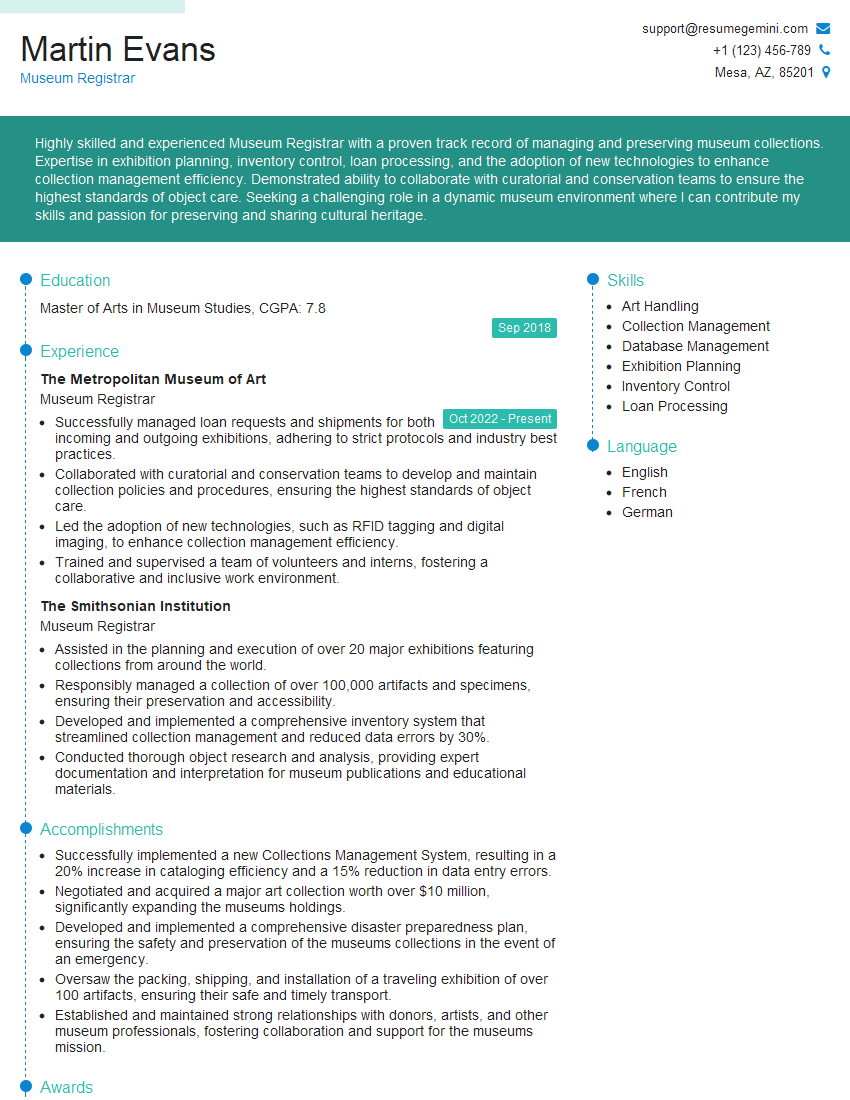
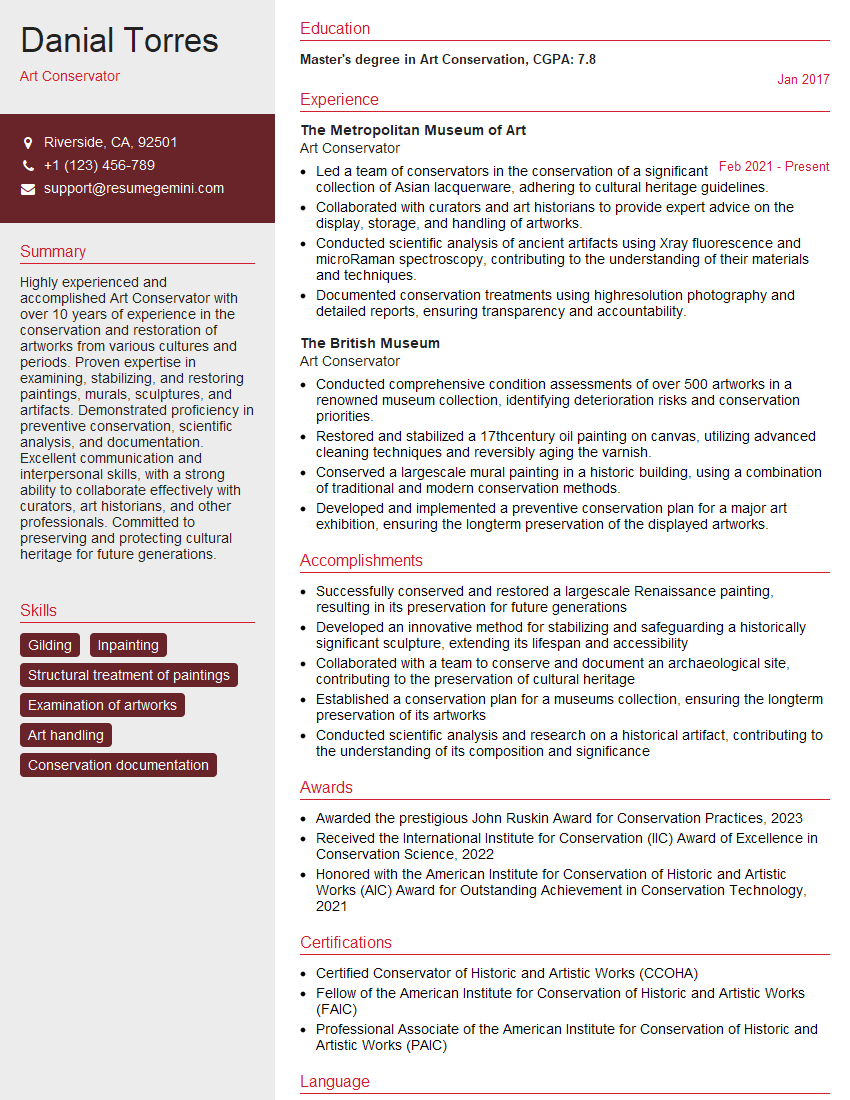
Mastering Artwork Handling and Storage opens doors to exciting career opportunities in museums, galleries, auction houses, and private collections. Demonstrating expertise in these areas significantly strengthens your job application. To maximize your chances of success, crafting an ATS-friendly resume is crucial. ResumeGemini is a trusted resource that can help you build a compelling and effective resume. ResumeGemini provides examples of resumes tailored to Artwork Handling and Storage positions, ensuring your resume showcases your skills and experience effectively. Take the next step and create a resume that truly represents your potential.
Explore more articles
Users Rating of Our Blogs
Share Your Experience
We value your feedback! Please rate our content and share your thoughts (optional).
What Readers Say About Our Blog
Very informative content, great job.
good