Feeling uncertain about what to expect in your upcoming interview? We’ve got you covered! This blog highlights the most important Navigation and Tide Reading interview questions and provides actionable advice to help you stand out as the ideal candidate. Let’s pave the way for your success.
Questions Asked in Navigation and Tide Reading Interview
Q 1. Explain the difference between true north, magnetic north, and compass north.
Understanding the difference between true north, magnetic north, and compass north is crucial for accurate navigation. True north is the direction towards the geographic North Pole, a fixed point on the Earth. Magnetic north, however, is the direction the north pole of a freely-spinning magnet points towards – the location where the Earth’s magnetic field lines converge. This point isn’t fixed and shifts over time. Finally, compass north is the direction your compass needle points, which is influenced by both magnetic north and any local magnetic disturbances (deviation).
Imagine a globe. True north is the point at the top. Magnetic north is like a slightly off-center target that moves a bit each year. Your compass is trying to point to that moving target, but local metals in your boat or nearby objects can subtly tug the needle off course (deviation), causing the compass to show compass north – a slightly different direction again. The differences between these three directions are essential to correct for accurate navigation.
Q 2. Describe the various types of nautical charts and their uses.
Nautical charts are the sailor’s maps, each designed for specific purposes. There are several types, including:
- General charts: These show a large area with coastlines, depths, navigational hazards, and aids to navigation. They’re ideal for planning long voyages and getting a broad overview.
- Coastal charts: Covering smaller areas closer to shore, these offer more detail on coastal features, harbors, and navigation channels. These are used during coastal navigation.
- Harbor charts: These charts provide extremely detailed information about a specific harbor or bay, including mooring areas, depths, and potential obstructions. Essential for safe harbor entry and exit.
- Electronic Navigational Charts (ENCs): Digital equivalents of paper charts, ENCs offer dynamic data such as position updates, tide information, and safety warnings. Many modern vessels rely heavily on ENCs.
- Special-purpose charts: These can be focused on specific aspects like currents, tides, or specific hazards. They might detail an area known for strong currents or a particularly shallow reef.
Choosing the correct chart depends on your vessel, the location, and the planned voyage. A small sailing boat entering a crowded harbor needs a harbor chart, while a large ocean-going vessel would start with a general chart for planning and then switch to coastal and harbor charts as the destination nears.
Q 3. How do you correct for magnetic deviation and variation?
Magnetic deviation and variation are errors affecting your compass reading. Variation is the angular difference between true north and magnetic north, and it varies depending on your location. Deviation is the error caused by magnetic materials on your vessel (like the boat’s engine or metal fittings) affecting the compass needle. To correct for these errors:
- Variation correction: This is found on your chart, usually given as East or West variation. If you have 10° East variation, you would add 10° to your compass heading to get your true heading. Conversely, you’d subtract for West variation.
- Deviation correction: This is determined using a deviation card, created by swinging the vessel and comparing the compass reading to a known true bearing. This card provides correction values for different compass headings. For example, if your deviation card indicates +2° at your heading, you would add 2° to your compass reading.
In practice, you would correct your compass heading by applying variation and then deviation corrections. Example: Compass heading 100°, Variation 10°E, Deviation 2° at 100° heading. Corrected true heading = 100° + 10° + 2° = 112°
Q 4. Explain the process of taking a celestial fix.
A celestial fix determines your position using the measured altitudes of celestial bodies (sun, moon, stars). It involves:
- Sight Reduction: You use a sextant to measure the altitude (angle above the horizon) of at least two celestial bodies. Simultaneously, you note the exact time of each observation.
- Nautical Almanac: You consult a nautical almanac or an electronic equivalent to find the declination (celestial latitude) and Greenwich Hour Angle (GHA) of each body at the time of the observation.
- Sight Reduction Tables or Computer: Using sight reduction tables or navigational software, you calculate the line of position (LOP) for each celestial body based on its altitude, declination, GHA, and your assumed latitude (you’ll iterate). The LOP is a line on the chart representing all possible positions where the body could have been at that observed altitude.
- Intersection: Where the LOPs from at least two celestial bodies intersect, that’s your fix – your determined position. More bodies (usually three) improve accuracy and account for potential errors.
Celestial navigation requires careful observation, precise calculations, and a thorough understanding of celestial mechanics. It’s a skill that, while less common with modern GPS, still holds immense value in emergency situations or remote areas where electronic navigation might fail.
Q 5. How do you use a sextant?
A sextant is a precision instrument used to measure the angle between two objects, primarily used to measure the altitude of celestial bodies above the horizon for navigation. Its use involves:
- Horizon Acquisition: Hold the sextant steady, looking through the telescope or horizon glass to align the horizon clearly.
- Object Acquisition: Using the micrometer drum, adjust the index arm until the image of the celestial body (reflected from the horizon glass) aligns perfectly with the horizon.
- Reading the Altitude: The altitude of the celestial body is read from the sextant’s scale, usually in degrees and minutes of arc.
- Recording the Time: The precise time of the observation is also recorded and is crucial for celestial navigation calculations.
Accurate sextant use requires practice and a steady hand. Errors due to improper handling, atmospheric refraction (bending of light), and parallax (the apparent shift of an object’s position due to a change in observer position) need to be taken into account for accurate readings. It’s a precise instrument demanding meticulous technique.
Q 6. Describe the different types of tides and their causes.
Tides are the periodic rise and fall of sea levels caused primarily by the gravitational forces of the moon and the sun. Different types of tides exist, largely influenced by the relative positions of the sun and the moon:
- Spring tides: Occur when the sun, moon, and Earth are aligned (new moon or full moon). The combined gravitational pull of the sun and moon creates higher high tides and lower low tides, resulting in a larger tidal range.
- Neap tides: Occur when the sun and moon are at right angles to each other (first or third quarter moon). The gravitational forces partially cancel each other out, leading to smaller tidal ranges with less difference between high and low tide.
- Diurnal tides: One high tide and one low tide per day. These are less common.
- Semi-diurnal tides: Two high tides and two low tides per day, approximately equal in height. This is common in many areas.
- Mixed tides: A combination of diurnal and semi-diurnal patterns, resulting in two high tides and two low tides per day of unequal height.
The shape of the coastline, seafloor topography, and other geographical features also influence the specific characteristics of tides in a particular location.
Q 7. Explain the concept of tidal currents and their prediction.
Tidal currents are the horizontal movement of water caused by the rise and fall of tides. They’re crucial for safe navigation, especially in shallow or confined waterways. Predicting tidal currents involves understanding:
- Tidal range: The difference between high and low tide, a major factor affecting current strength.
- Tidal period: The time it takes for a complete tidal cycle.
- Local geography: The shape of the coastline, channels, and seabed influence current direction and speed.
- Tidal charts and tables: These provide predictions of current speed and direction at specific locations and times.
Predicting tidal currents is vital for safe navigation. For example, a vessel navigating a narrow channel during a strong ebb (outgoing) current must adjust its speed and course to avoid grounding or colliding with other vessels. Accurate current prediction minimizes risk and ensures smooth passage.
Q 8. How do you calculate the time of high and low water?
Predicting high and low water times requires understanding tidal patterns, which are influenced by the gravitational pull of the sun and moon, and the shape of the coastline. Precise calculation is complex and typically relies on harmonic analysis, a mathematical model using multiple constituent waves to represent the tide. However, for practical navigation, we use pre-calculated tide tables or online prediction services.
Simplified methods exist for approximating tidal times. For example, if you know the time of high water on a particular day and the average tidal range (the difference between high and low water), you can estimate the time of low water approximately 6 hours and 12.5 minutes later. However, this is a rough estimate and should not be relied upon for critical navigation. Real-world tidal patterns are far more nuanced and can vary significantly based on location and astronomical conditions. Accurate predictions require specialized tools and data.
Q 9. How do you use a tide table?
Tide tables provide predictions of high and low water times, and tidal heights, for specific locations. They are essential for safe navigation, particularly in shallow waters or areas with significant tidal ranges. To use a tide table, you need to know your location and the date. Look up the port or location nearest to you in the table. The table will usually list the times of high and low water for each day, along with their corresponding heights.
For example, a table might show that for a specific location on July 20th, high water is at 10:30 AM (height 3 meters) and low water is at 4:45 PM (height 0.5 meters). This information is critical for planning safe passage, ensuring you have sufficient water depth under your vessel’s keel. It’s crucial to remember that these times are predictions; actual times can vary slightly.
Q 10. What are the different methods for determining position at sea?
Determining position at sea utilizes various methods, each with its own strengths and weaknesses. Traditionally, celestial navigation (using the positions of stars and the sun) and visual methods (using landmarks, range bearings) were essential. Modern methods heavily rely on electronic systems.
- Celestial Navigation: Uses sextant measurements of celestial bodies’ altitudes to calculate latitude and longitude. Requires knowledge of time and celestial almanacs. Excellent for independent position determination, but time-consuming and requires clear skies.
- Visual Methods: Utilizes landmarks, lighthouses, or ranges (two or more objects aligned). Simple and reliable in good visibility, but limited range and affected by weather conditions.
- GPS (Global Positioning System): A satellite-based radio-navigation system providing precise three-dimensional position, velocity, and time information. Very accurate and widely used.
- LORAN-C (Long Range Navigation): A radio-navigation system using low-frequency radio signals. Provides long-range positioning, but less accurate than GPS.
- Radar: While primarily for collision avoidance, radar can also be used to determine position by bearing and distance to known objects.
Choosing the appropriate method depends on factors such as the accuracy required, weather conditions, available technology, and the mariner’s skill set. Often a combination of methods is used for redundancy and increased reliability.
Q 11. Explain the principles of GPS navigation.
GPS navigation relies on a network of satellites orbiting the Earth. These satellites transmit precisely timed signals. A GPS receiver on board a vessel receives signals from at least four satellites. By measuring the time it takes for the signals to reach the receiver, and knowing the satellites’ precise positions, the receiver can calculate the distance to each satellite through triangulation. Using this information and sophisticated algorithms, the receiver computes the vessel’s three-dimensional position (latitude, longitude, and altitude).
The system’s accuracy depends on several factors, including the number of satellites visible, the atmospheric conditions (ionospheric and tropospheric delays), and the quality of the receiver. Differential GPS (DGPS) and other augmentation systems improve accuracy by using reference stations to correct for errors.
Q 12. How do you use a GPS receiver?
Using a GPS receiver is relatively straightforward. Firstly, ensure the receiver is properly powered and has a clear view of the sky (at least four satellites are needed). The receiver will typically acquire signals from the satellites and display your position in latitude and longitude coordinates. Many receivers also display speed, course, time, and other navigational data.
Some receivers offer additional features such as waypoint storage (saving specific locations), route planning (creating a path between waypoints), and electronic charts. Properly setting the datum (a reference point for geographic coordinates) is crucial for accuracy, as different datums are used in different parts of the world. Familiarize yourself with your receiver’s specific functions and user interface through the provided manual.
Q 13. What are the limitations of GPS?
GPS, while incredibly useful, has several limitations.
- Signal Blockage: Obstructions like buildings, heavy foliage, or even atmospheric conditions can block satellite signals, leading to loss of signal or reduced accuracy.
- Atmospheric Delays: The ionosphere and troposphere can delay GPS signals, causing positioning errors. These errors are typically corrected by augmentation systems.
- Multipath Errors: Signals reflecting off surfaces (water, buildings) can reach the receiver at slightly different times, leading to inaccurate position fixes.
- Satellite Geometry: The geometry of the satellites in relation to the receiver affects accuracy. Poor satellite geometry (e.g., satellites clustered close together in the sky) can result in lower precision.
- Intentional Interference: GPS signals can be intentionally jammed or spoofed, potentially leading to inaccurate or misleading position data.
It’s vital to be aware of these limitations and to utilize backup navigation methods, especially in critical situations or areas known for GPS signal interference.
Q 14. Explain the concept of electronic chart display and information systems (ECDIS).
Electronic Chart Display and Information Systems (ECDIS) are advanced electronic charting systems that integrate various navigational information onto a single display. They are far more than just electronic charts; they’re sophisticated navigational tools. Unlike paper charts, ECDIS uses digital charts, which can be updated frequently and provide much more information than traditional paper charts.
Key features include the ability to display real-time position, planned routes, navigational warnings, and other important data such as tidal currents and depth information. ECDIS also offers route planning and monitoring capabilities, significantly enhancing safety and efficiency at sea. Compliance with ECDIS standards is mandated for many commercial vessels by international maritime organizations.
The integration of various data sources—such as GPS, AIS (Automatic Identification System), and other sensors—creates a comprehensive picture of the vessel’s surroundings and allows for advanced decision-making. For example, an ECDIS can automatically warn of potential collisions with other vessels or hazards based on its integrated systems.
Q 15. How do you interpret weather forecasts relevant to navigation?
Interpreting weather forecasts for navigation is crucial for safe and efficient travel. I look for information impacting visibility, wind speed and direction, wave height and period, and significant weather phenomena like storms, fog, or ice. I don’t just read the summary; I analyze the detailed forecast charts, paying close attention to the timing and location of predicted changes. For example, a sudden shift in wind direction could significantly affect a vessel’s course and speed, requiring adjustments to the planned route. Similarly, forecasts of reduced visibility due to fog necessitate slower speeds and increased vigilance for other vessels and navigational hazards. I always consider the predicted conditions in relation to the vessel’s capabilities and limitations.
I also factor in the geographical area. Coastal regions often experience microclimates, where localized conditions can differ significantly from the broader regional forecast. Understanding these nuances is vital. For instance, a sheltered bay might experience calm conditions even if the open sea is experiencing a storm. I use a combination of sources like meteorological services, specialized nautical weather apps, and even local weather reports to create a comprehensive picture of expected conditions.
Career Expert Tips:
- Ace those interviews! Prepare effectively by reviewing the Top 50 Most Common Interview Questions on ResumeGemini.
- Navigate your job search with confidence! Explore a wide range of Career Tips on ResumeGemini. Learn about common challenges and recommendations to overcome them.
- Craft the perfect resume! Master the Art of Resume Writing with ResumeGemini’s guide. Showcase your unique qualifications and achievements effectively.
- Don’t miss out on holiday savings! Build your dream resume with ResumeGemini’s ATS optimized templates.
Q 16. Describe the different types of navigational errors and how to mitigate them.
Navigational errors can be broadly categorized into human errors, instrument errors, and environmental errors. Human errors encompass mistakes in chart reading, calculations, or judgment. For example, a simple calculation mistake in determining position could lead to a significant course deviation. Instrument errors arise from malfunctioning equipment or improper calibration. An inaccurate compass reading, for instance, can result in substantial course errors. Environmental errors stem from unpredictable factors like currents, tides, or magnetic variations. Unforeseen strong currents could push a vessel off course, and inaccurate knowledge of tidal variations could lead to grounding.
Mitigation strategies involve a layered approach. Redundancy in equipment is crucial – using multiple instruments to cross-check readings helps identify discrepancies. Thorough training and adherence to established procedures minimize human errors. Regular calibration and maintenance of navigational equipment are vital to prevent instrument errors. Consulting tide tables and current charts, and utilizing advanced navigational systems like GPS and radar, help account for environmental factors. Furthermore, a good navigator always maintains a safety margin, keeping a safe distance from hazards and regularly checking position using multiple methods.
Q 17. Explain the importance of proper chart work.
Proper chart work is the cornerstone of safe navigation. Charts provide a detailed depiction of the navigable waters, including depths, hazards, aids to navigation, and other vital information. Accurate chart work ensures you understand your position, plan a safe route, and avoid potential dangers. This involves not just identifying your position but also understanding the chart’s scale, symbols, and notations.
For example, understanding the chart’s datum (the reference level for depths) is crucial for safe passage. Failing to account for the difference between chart datum and actual water level could lead to grounding. Similarly, correctly interpreting navigational symbols is essential. A seemingly small symbol could represent a significant hazard, like a submerged rock or wreck. Furthermore, proper chart work involves planning the route well in advance, considering factors like tides, currents, and potential weather impacts. It’s a continuous process: regularly plotting your position, monitoring progress against the planned route, and making adjustments as needed. Think of it as following a detailed map, but with the added complexity of a dynamic environment.
Q 18. How do you handle a navigational emergency?
Handling a navigational emergency requires a calm and methodical approach. The first step involves assessing the situation: What is the nature of the emergency? (e.g., grounding, collision, fire, man overboard). What are the immediate threats? What resources are available?
Next, I’d activate emergency procedures. This includes contacting relevant authorities (e.g., Coast Guard) via radio, deploying distress signals, and implementing damage control measures. The specific actions depend on the nature of the emergency. For example, grounding might involve attempting to refloat the vessel or contacting salvage services. A collision might necessitate assessing damage, assisting injured persons, and exchanging information with the other involved party. In all cases, the safety of the crew and passengers is paramount. This includes ensuring everyone is wearing appropriate safety gear and following emergency evacuation procedures if necessary. Accurate documentation of the event, including times, locations, and communication logs, is critical for any subsequent investigation or insurance claims.
Q 19. What safety procedures are in place for navigation?
Safety procedures for navigation are multifaceted and aim to prevent accidents and ensure the safety of both crew and passengers. They include, but aren’t limited to, regular maintenance of navigational equipment, ensuring the proper use and calibration of instruments, and the adherence to the International Regulations for Preventing Collisions at Sea (COLREGs). COLREGs provide a framework for safe navigation by defining rules for vessel traffic, lights, and sound signals. A thorough understanding and strict adherence to these rules is vital for preventing collisions.
Additionally, proper voyage planning, regular position checks, and maintaining situational awareness are essential. This includes monitoring other vessels, weather conditions, and navigational hazards. Crew training and drills for emergency situations, including fire drills, man overboard drills, and abandon ship drills, play a crucial role. Pre-departure checks of the vessel, its systems, and the crew’s readiness are all part of a sound safety regime. Regular self-assessments of competency and professional development are also vital to maintaining a high level of safety proficiency.
Q 20. Describe the use of various navigational instruments such as radar and AIS.
Radar and AIS are invaluable navigational instruments. Radar (Radio Detection and Ranging) uses radio waves to detect objects, providing information on their range, bearing, and sometimes even speed. This is particularly useful in low-visibility conditions, such as fog or heavy rain, enabling the navigator to detect other vessels, landmasses, and navigational hazards that might otherwise be unseen. It helps to avoid collisions and plan safe routes. The radar image displays a representation of the surrounding area, with targets appearing as blips on the screen. Interpreting these blips requires knowledge and experience to distinguish between various objects and account for any potential errors or limitations in the system.
AIS (Automatic Identification System) is a broadcast system that transmits information from a vessel’s identity, position, course, and speed. This data is then received by other vessels and shore-based stations, enhancing situational awareness and collision avoidance. By seeing other vessels’ data on the screen, a navigator can predict their future positions, helping to avoid close encounters. AIS is also valuable for search and rescue operations, allowing authorities to quickly locate vessels in distress.
Q 21. How do you plot a course on a chart?
Plotting a course on a chart is a fundamental navigational skill. It involves carefully determining the desired destination, identifying potential hazards along the route, and calculating the necessary course and distance. First, mark your vessel’s current position accurately on the chart using GPS coordinates or other methods. Then, locate the desired destination. Next, draw a straight line between the two points. This line represents the initial course line. This is often done with a parallel rule or a plotter.
However, the simplest direct route may not be the safest or most efficient one. The next step involves considering the navigational hazards along the course line, such as shoals, reefs, or restricted areas. The course might need to be adjusted to avoid them. Finally, the course line is converted into compass bearings or GPS waypoints, which are then used to steer the vessel along the planned route. The course should be regularly checked and adjustments made as necessary, considering factors like currents, winds, and changes in position. The accuracy of the plotted course directly impacts the safety and efficiency of the voyage. This process, coupled with understanding navigational aids and considering the prevailing conditions, ensures efficient and safe navigation.
Q 22. Explain the concept of dead reckoning.
Dead reckoning (DR) is a method of estimating your position by using your known starting point, course, speed, and time. It’s essentially calculating where you should be based on your movements, without relying on external position fixes like GPS or celestial navigation. Think of it like following a map without ever checking your current location on the map itself – you’re relying on your estimated progress.
Imagine you’re sailing a boat. You start at a known point, set a course of 30 degrees and maintain a speed of 5 knots for 2 hours. Using DR, you’d calculate your estimated position after those 2 hours based on those parameters. Of course, this method is susceptible to errors caused by current, wind, and inaccuracies in your speed and course estimations. Therefore, it’s always best practice to use DR in conjunction with other navigational techniques for a more accurate position.
Q 23. How do you estimate speed and distance traveled?
Estimating speed and distance traveled involves several methods. For speed, a traditional method uses a log line – a rope with knots tied at regular intervals that’s tossed overboard. The speed is calculated by timing how long it takes for a certain number of knots to pass. More modern methods include using a GPS device, which provides instantaneous speed readings, or a log, which measures the vessel’s speed through the water. Accurate speed is crucial for DR.
For distance, once speed is known, distance can be easily calculated using the formula: Distance = Speed x Time. For example, a vessel traveling at 10 knots for 3 hours has traveled 30 nautical miles (10 knots * 3 hours = 30 nautical miles). Again, GPS provides a convenient method to determine distance traveled, comparing the initial and final coordinates.
Q 24. How do you use bearings to determine your position?
Bearings are directional measurements, typically taken with a compass, relative to your vessel’s heading. To determine your position using bearings, you’ll need to take bearings to at least two known landmarks (such as lighthouses, buoys, or prominent features on land). This technique is known as triangulation.
Let’s say you take a bearing of 045 degrees to Lighthouse A and a bearing of 135 degrees to Lighthouse B. Using a plotting chart, you’d draw a line from each lighthouse at the corresponding bearing. The intersection of these two lines represents your position. The accuracy of this method relies on the accuracy of your bearings and the identification of the landmarks. Remember, multiple bearings increase accuracy.
Q 25. What are the key considerations for navigating in restricted waters?
Navigating restricted waters demands heightened attention and precision. Key considerations include:
- Detailed Chart Knowledge: Thorough familiarity with the charts, including depths, obstructions, and navigational aids is paramount. Pay close attention to the chart’s scale and any annotations.
- Reduced Speed: Lowering speed provides increased reaction time to obstacles and hazards.
- Increased Vigilance: Constant monitoring of radar, GPS, and surrounding environment is essential. Lookouts should be posted.
- Understanding Tide and Current: Accurate predictions of tidal streams and currents are vital to ensure safe passage and avoid grounding.
- Following Regulations: Adherence to all applicable rules, regulations, and traffic separation schemes is mandatory.
- Use of Aids to Navigation: Properly interpret and use all aids to navigation, like buoys, lights, and beacons.
Failing to consider any of these points in restricted waters could lead to dangerous situations, such as collisions, grounding, or running aground.
Q 26. Explain the importance of collision avoidance rules.
Collision avoidance rules, often referred to as the COLREGs (Collision Regulations), are internationally standardized rules designed to prevent collisions at sea. Their importance cannot be overstated. These rules establish responsibilities for vessels in various situations, including crossing, overtaking, and head-on encounters. They dictate actions to be taken by vessels to maintain a safe distance and avoid collision.
Understanding and applying COLREGs is critical for safe navigation, protecting both your vessel and others. Improper adherence can lead to serious accidents. The rules emphasize good seamanship, maintaining a proper lookout, and taking early and decisive action to avoid collision.
Q 27. Describe your experience using different navigational software and applications.
Throughout my career, I’ve extensively used various navigational software and applications. I am proficient with electronic charting systems (ECS) such as those offered by various manufacturers, which integrate charts, GPS data, and other sensors to provide a comprehensive navigational picture. These systems often include features for planning routes, plotting positions, and simulating various scenarios. I’ve also utilized specialized software for tidal prediction and current analysis, crucial for optimizing routes and avoiding hazardous conditions. Mobile apps for navigation have also been part of my toolset, particularly when performing tasks that require location-based services offline or in areas with limited connectivity.
Experience with these tools has allowed me to appreciate the strengths and limitations of different technologies, ensuring that I choose the most suitable application for any given situation. I am comfortable seamlessly integrating diverse data sources to get a clearer understanding of the situation at hand.
Q 28. How do you maintain up-to-date knowledge of navigational charts and publications?
Maintaining up-to-date knowledge of navigational charts and publications is crucial for safe navigation. I subscribe to Notice to Mariners and other official publications that detail chart corrections, new regulations, and important navigational warnings. I regularly check for updates through official online sources and ensure all my charts are corrected to the latest version. It’s a continuous process and a fundamental responsibility.
Furthermore, attending workshops and conferences helps to keep my knowledge fresh and abreast of emerging trends and technologies in navigation, further enhancing safety and proficiency.
Key Topics to Learn for Navigation and Tide Reading Interview
- Chartwork and Chart Interpretation: Understanding various chart types, symbols, and scales; practical application in route planning and position fixing.
- Celestial Navigation: Theoretical understanding of celestial bodies’ movements and their use in determining latitude and longitude; practical application using a sextant and nautical almanac.
- Electronic Navigation Systems: Familiarity with GPS, radar, and other electronic aids to navigation; troubleshooting common system errors and interpreting data effectively.
- Tide Prediction and Analysis: Understanding tidal patterns, using tide tables and prediction methods; calculating tidal heights and currents for safe navigation.
- Safety at Sea Procedures: Knowledge of collision regulations, distress signaling, and emergency procedures; demonstrating awareness of navigational safety protocols.
- Meteorological Factors: Understanding the impact of weather on navigation; interpreting weather forecasts and adapting navigation plans accordingly.
- Dead Reckoning and Piloting: Combining estimated position with compass bearings and other positional aids; employing effective piloting techniques.
- Navigation Instruments and Equipment: Practical knowledge of compasses, sextants, GPS receivers, and other navigational tools; understanding their limitations and potential errors.
- Problem-Solving and Decision-Making under Pressure: Demonstrating the ability to analyze navigational challenges, make informed decisions, and adapt to unforeseen circumstances.
Next Steps
Mastering Navigation and Tide Reading is crucial for career advancement in maritime industries, offering exciting opportunities in diverse roles. A strong resume is your key to unlocking these opportunities. An ATS-friendly resume, optimized for applicant tracking systems, significantly increases your chances of getting noticed by recruiters. To build a compelling and effective resume, we encourage you to utilize ResumeGemini, a trusted resource for creating professional resumes. ResumeGemini provides examples of resumes tailored to Navigation and Tide Reading roles, giving you a head start in showcasing your skills and experience. Invest time in crafting a standout resume – it’s your first impression and a critical step in securing your dream job.
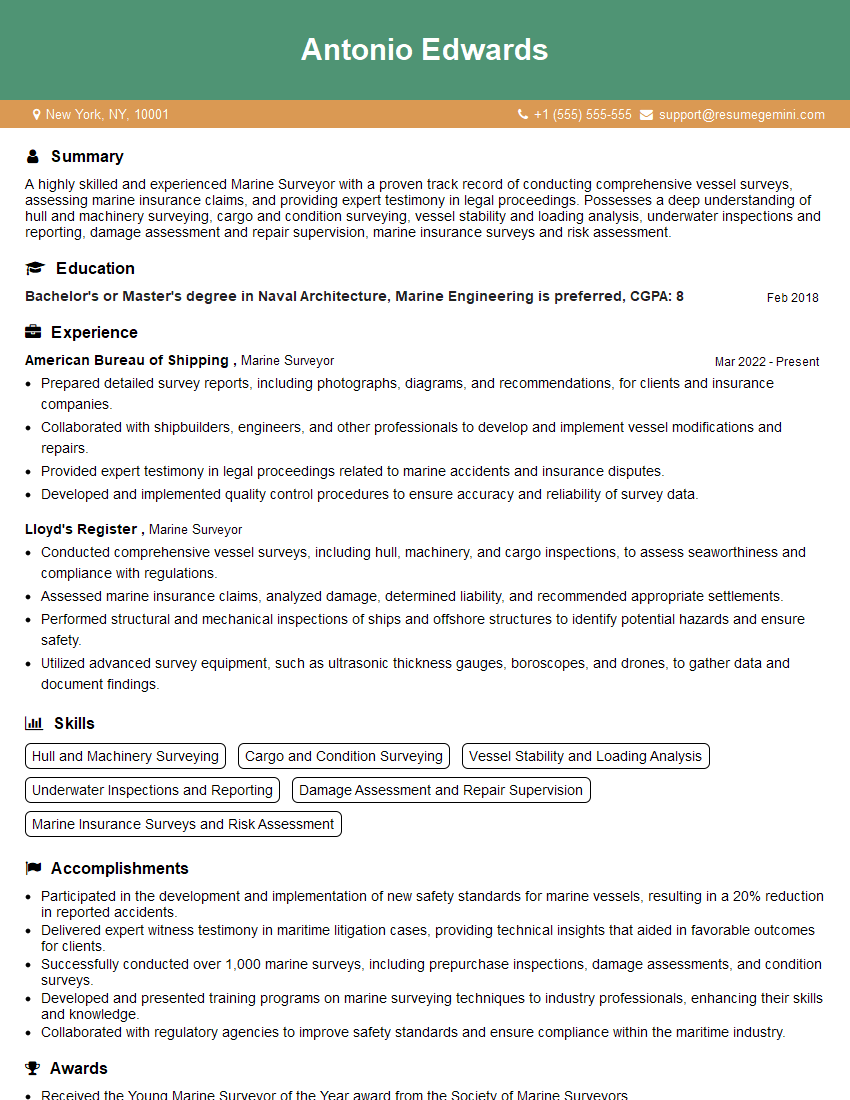
Marine Surveyor Resume Sample
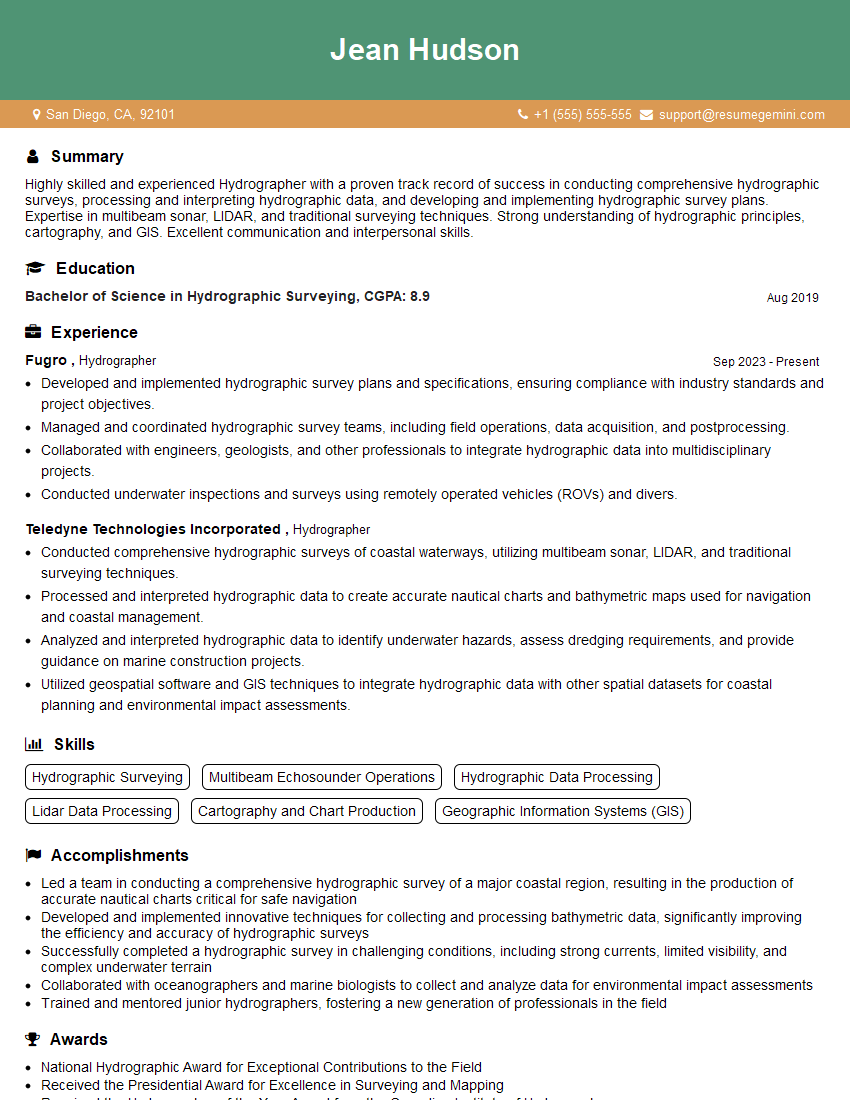
Hydrographer Resume Sample
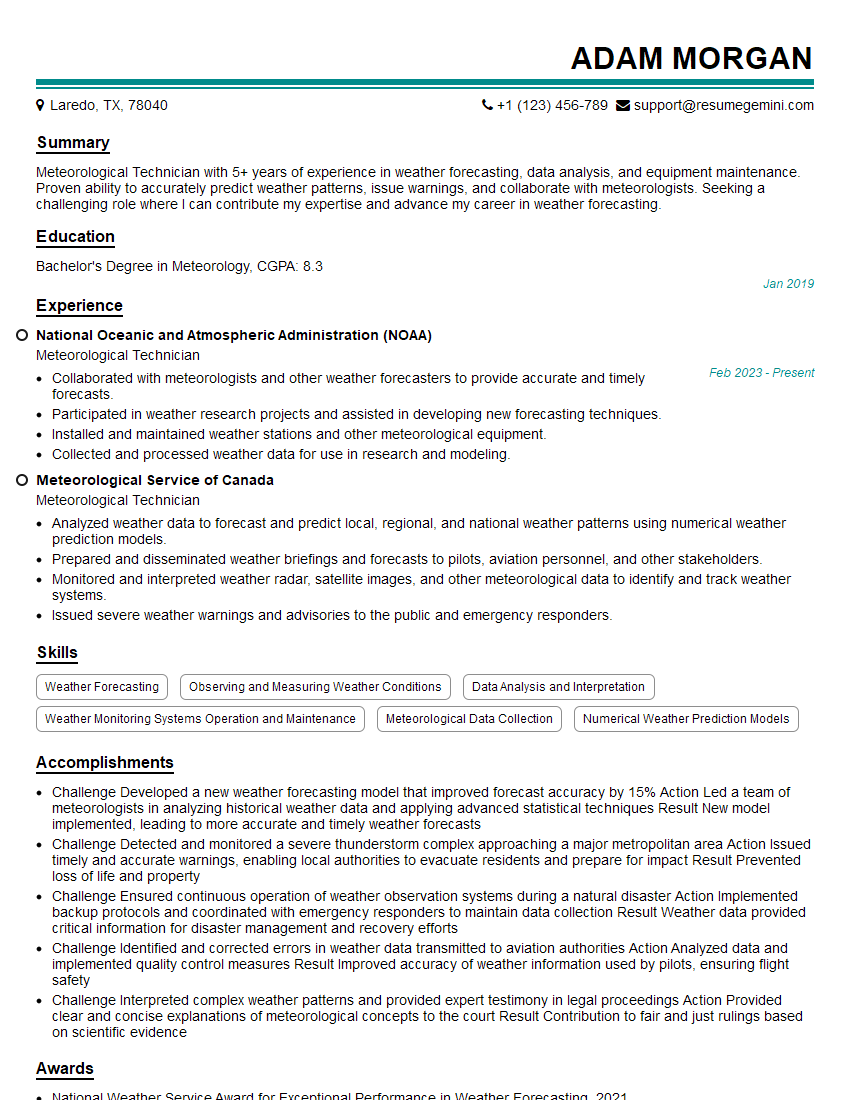
Meteorological Technician Resume Sample
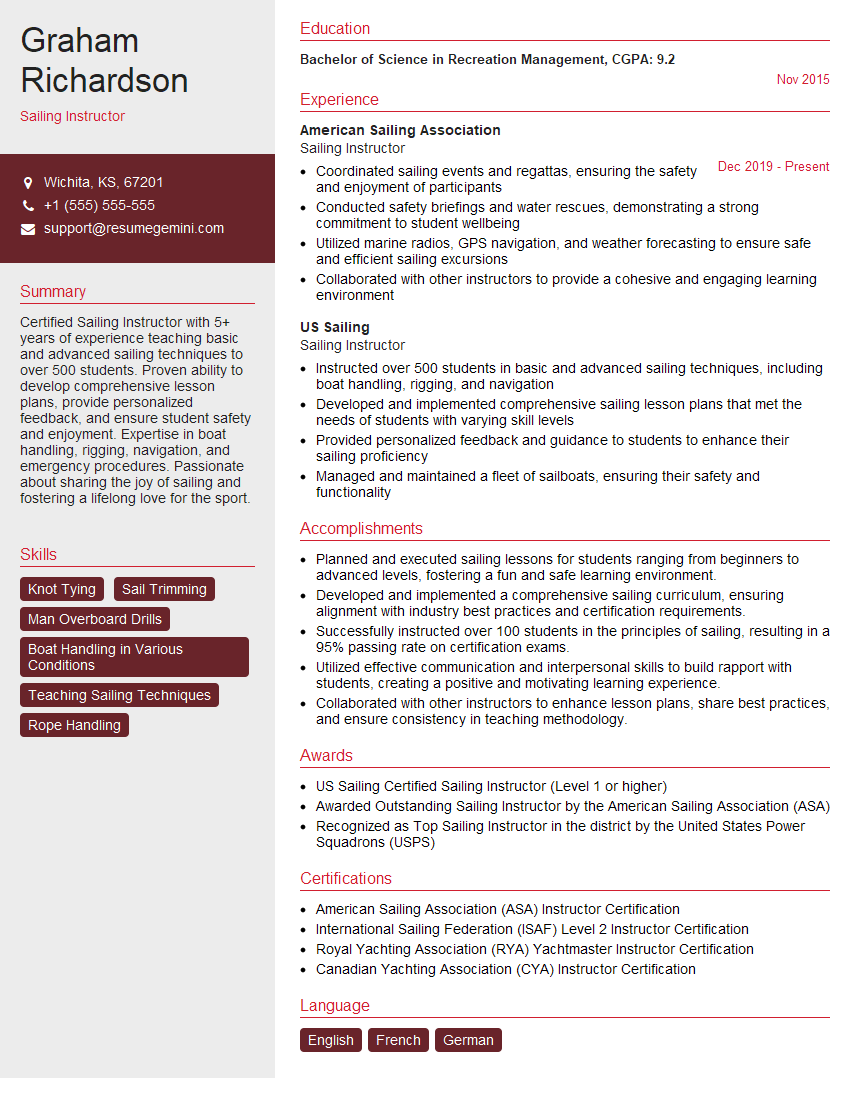
Sailing Instructor Resume Sample
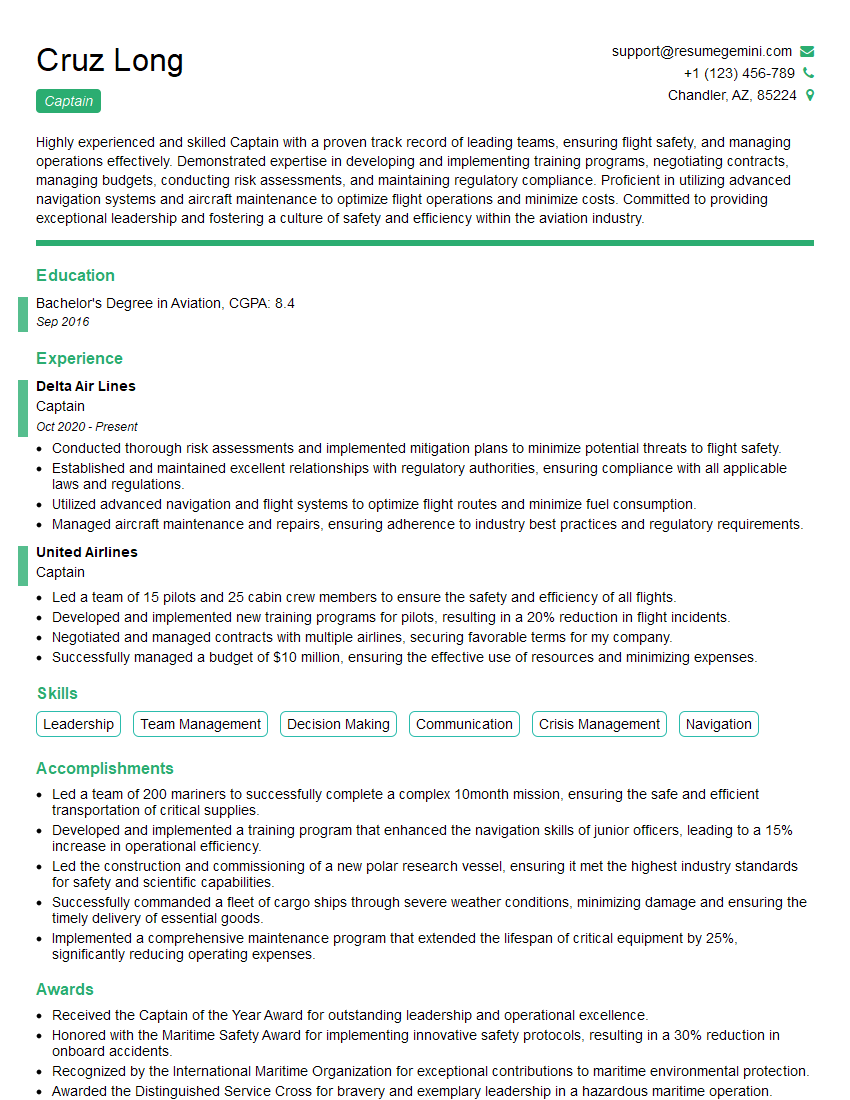
Captain Resume Sample
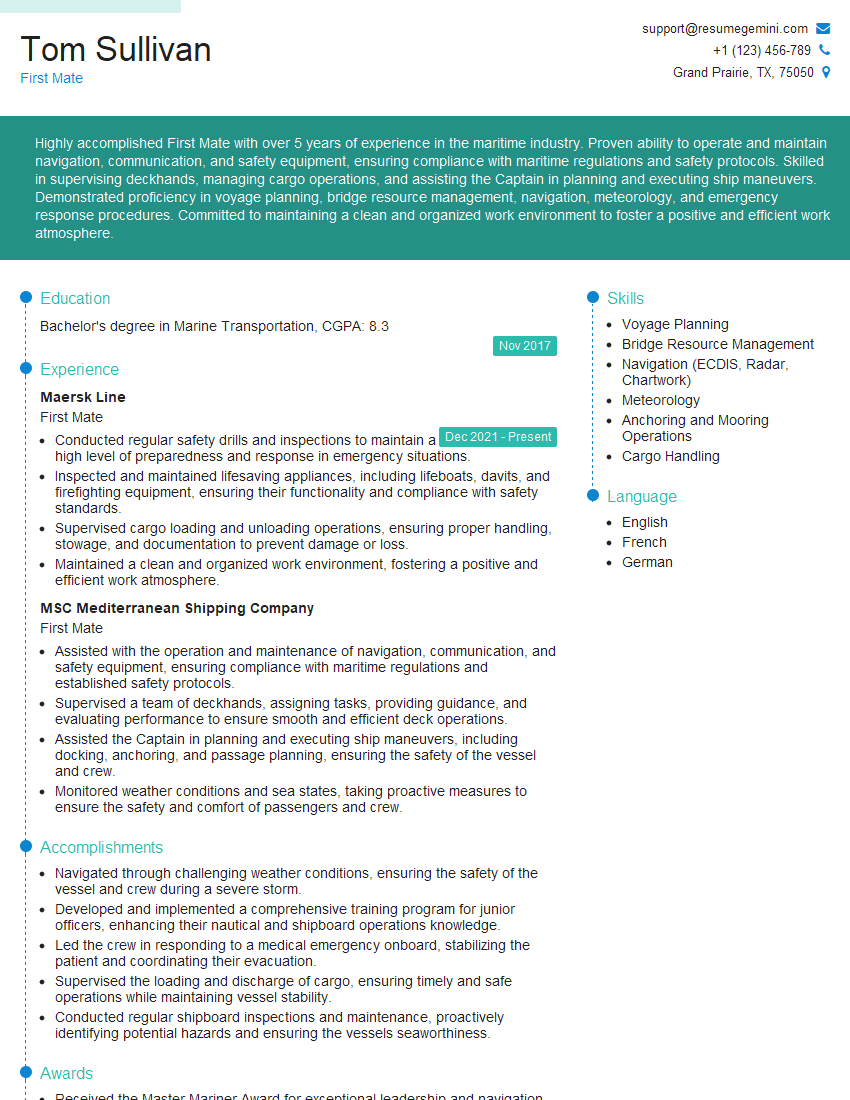
First Mate Resume Sample
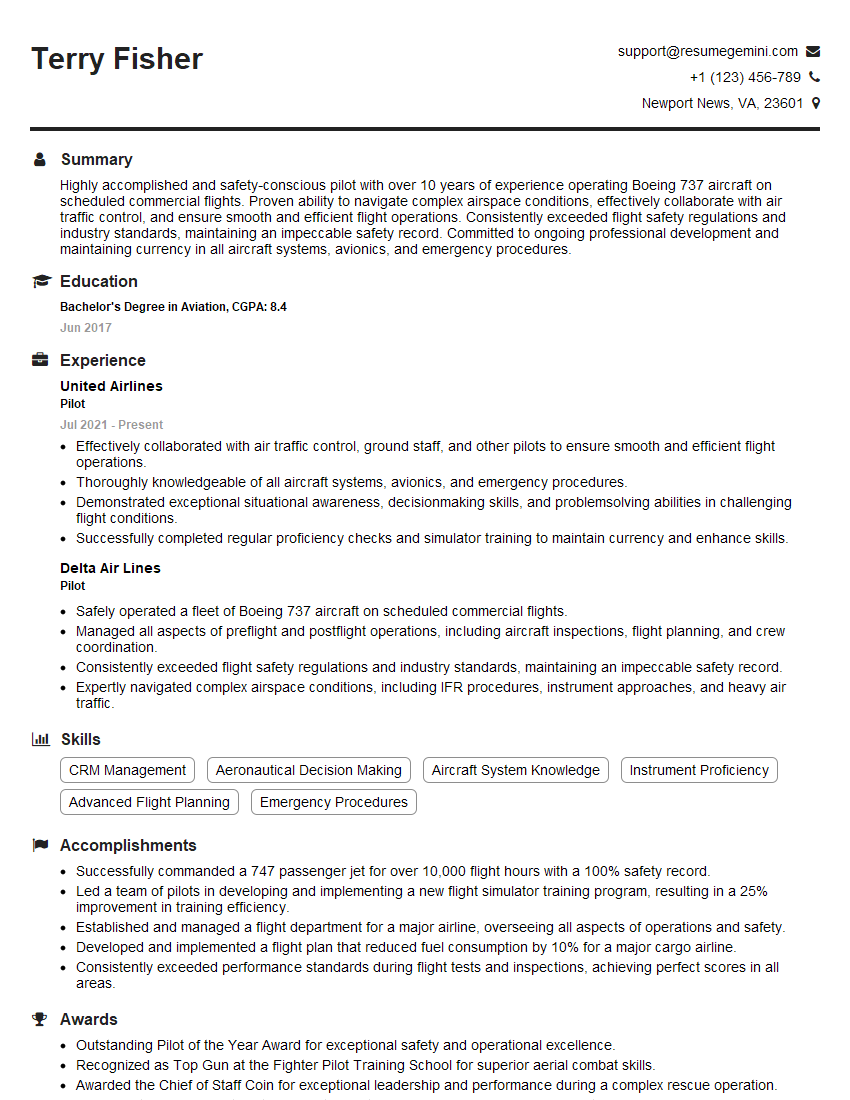
Pilot Resume Sample
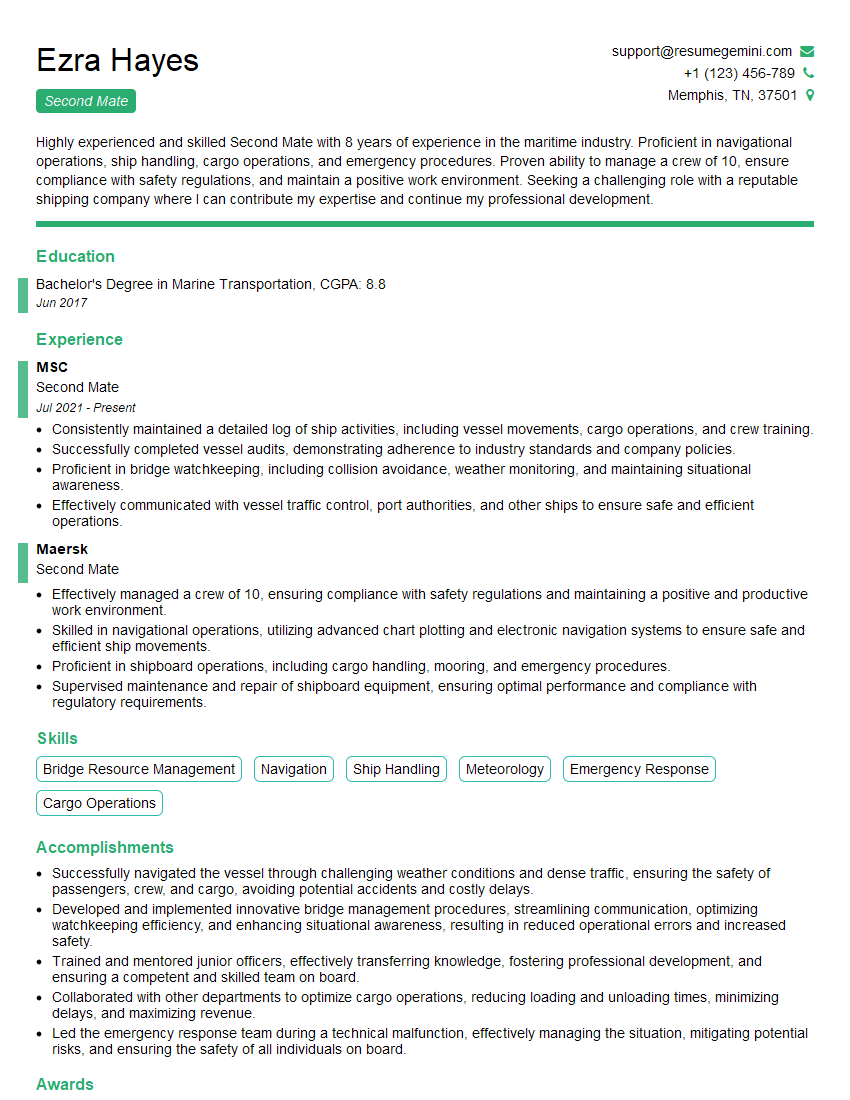
Second Mate Resume Sample
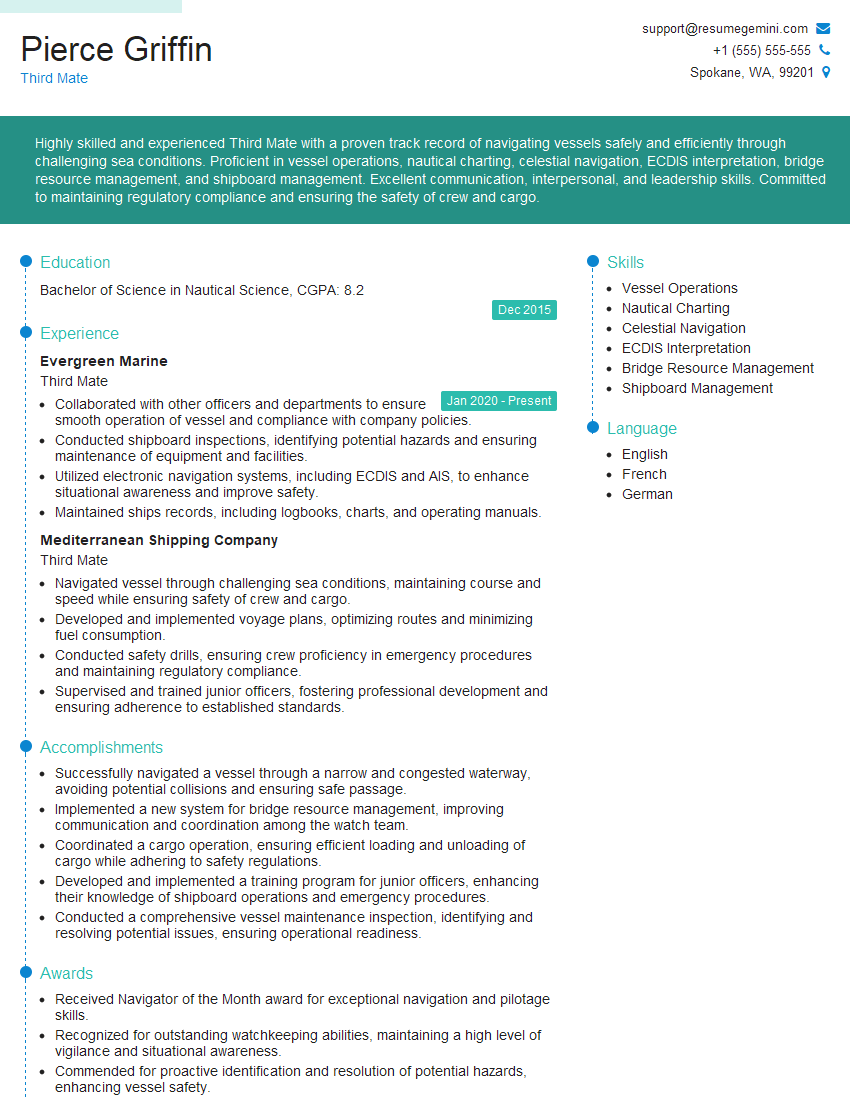
Third Mate Resume Sample
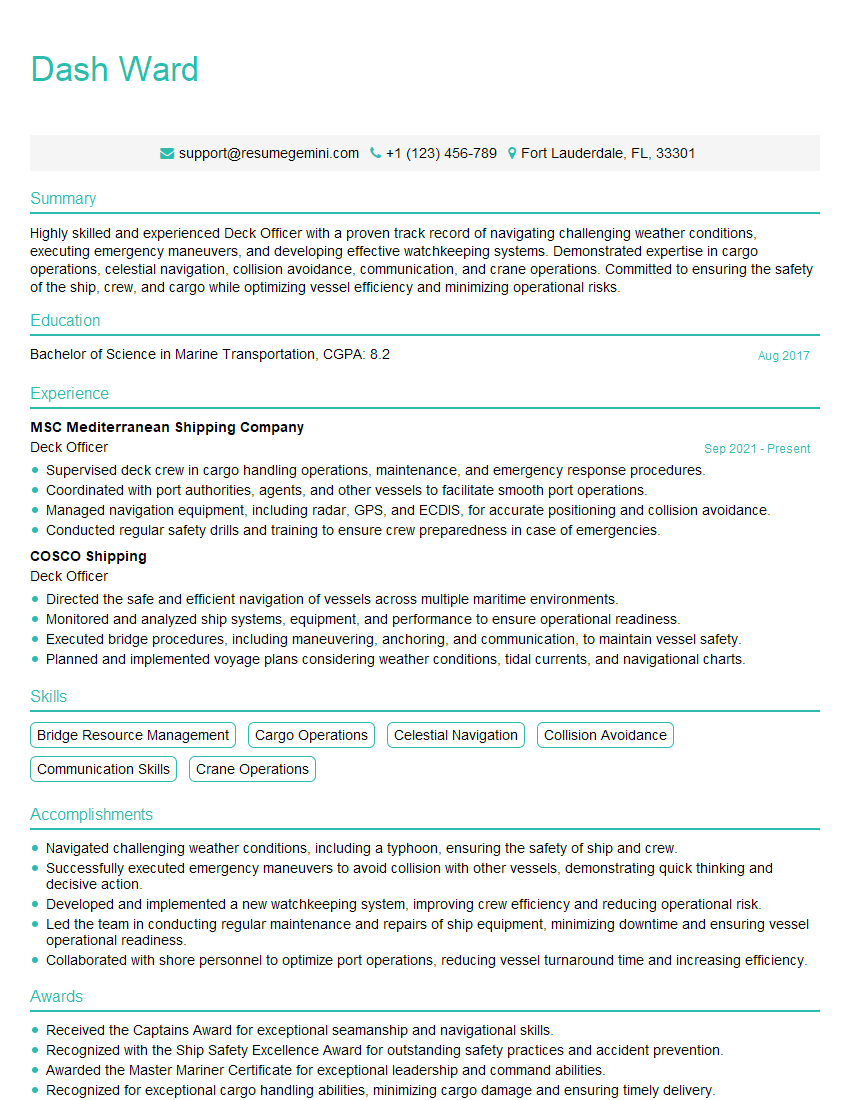
Deck Officer Resume Sample
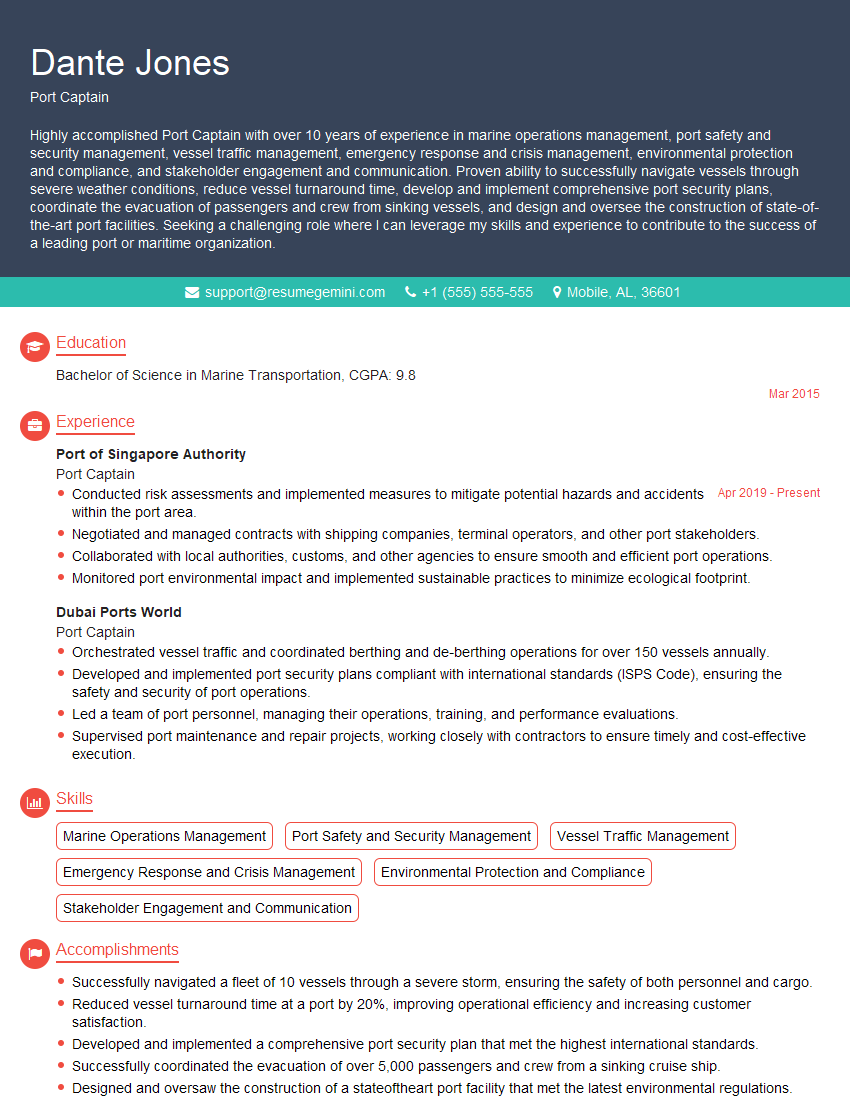
Port Captain Resume Sample
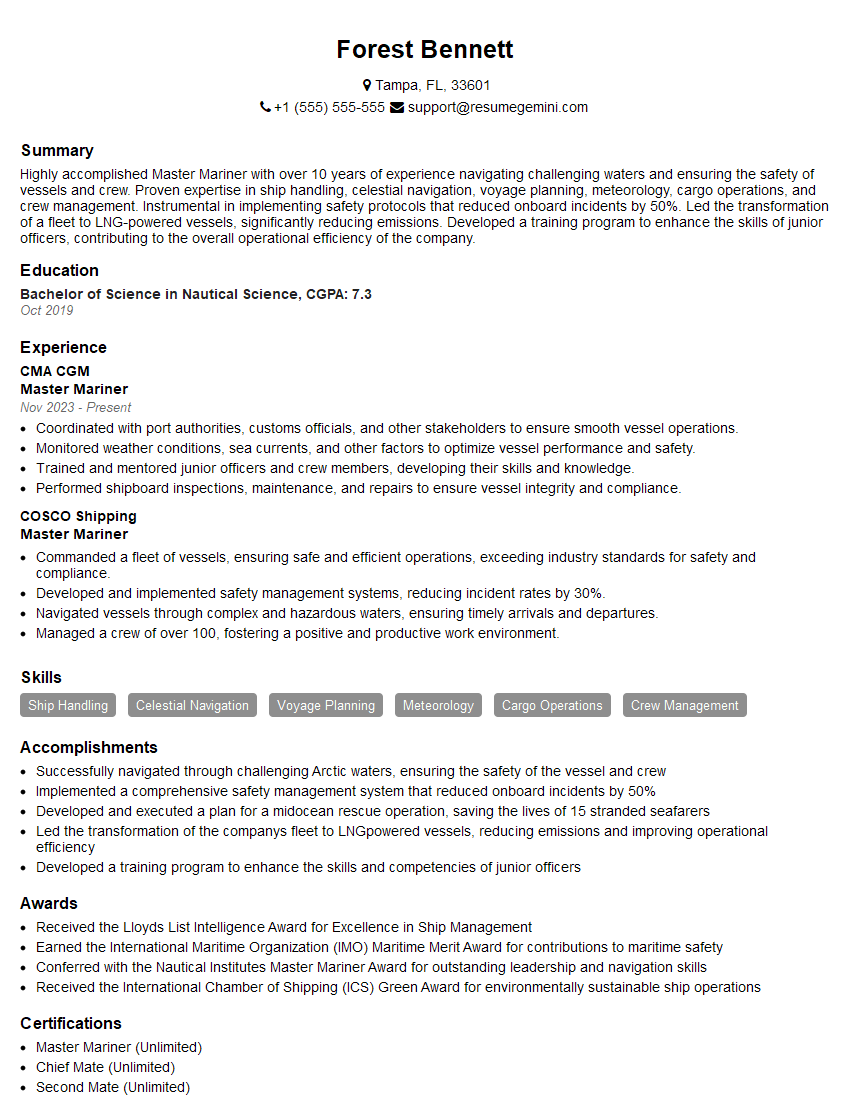
Master Mariner Resume Sample
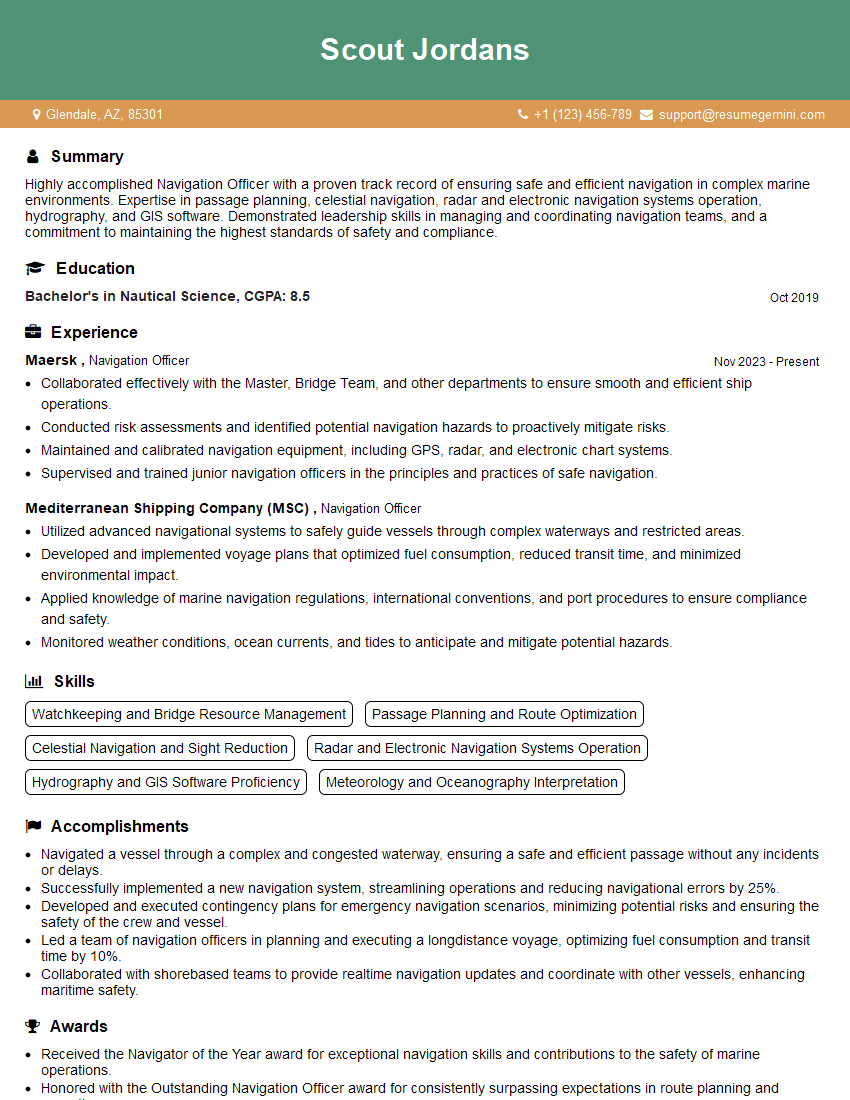
Navigation Officer Resume Sample
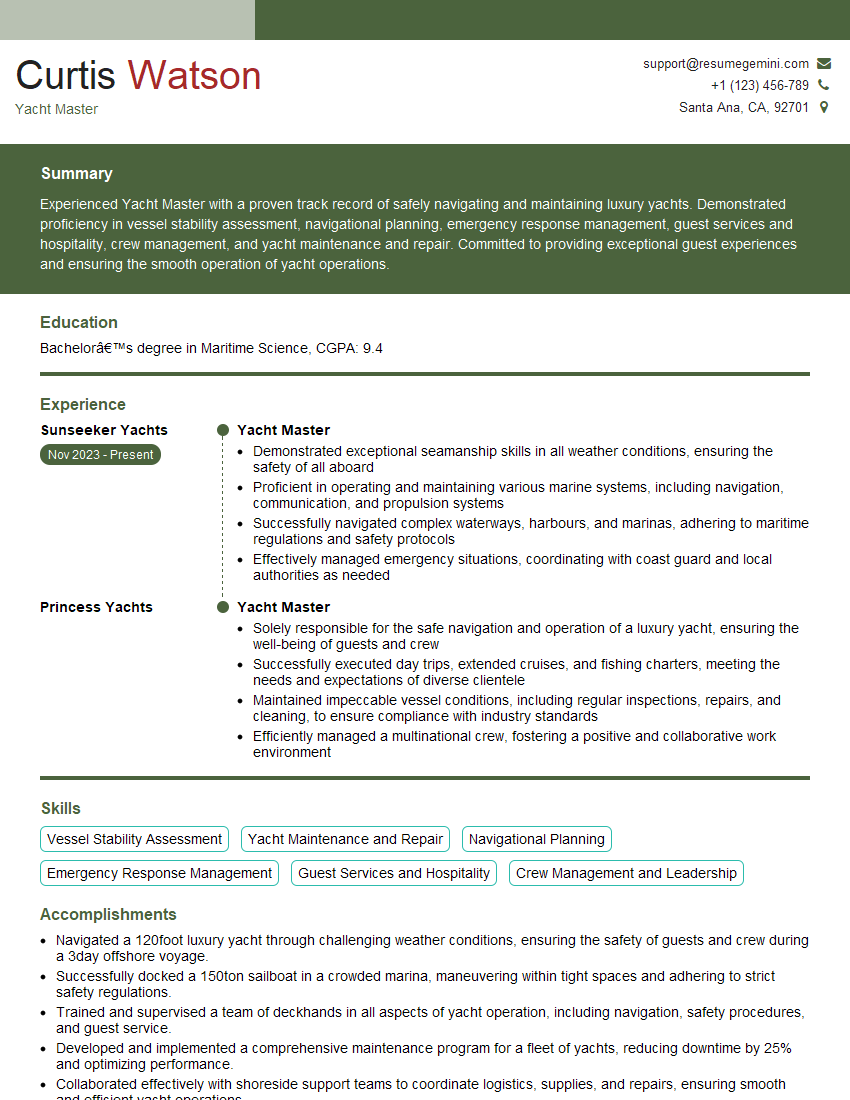
Yacht Master Resume Sample
Explore more articles
Users Rating of Our Blogs
Share Your Experience
We value your feedback! Please rate our content and share your thoughts (optional).
What Readers Say About Our Blog
Very informative content, great job.
good