Every successful interview starts with knowing what to expect. In this blog, we’ll take you through the top Asphalt Repair interview questions, breaking them down with expert tips to help you deliver impactful answers. Step into your next interview fully prepared and ready to succeed.
Questions Asked in Asphalt Repair Interview
Q 1. Describe the different types of asphalt used in road construction.
Asphalt, or bitumen, is a complex mixture of hydrocarbons used extensively in road construction. Different types are chosen based on factors like climate, traffic volume, and budget. Here are some common types:
- Hot Mix Asphalt (HMA): This is the most prevalent type, composed of aggregates (rocks, sand, etc.) bound together by heated asphalt cement. It’s durable and versatile, offering excellent strength and flexibility. Different HMA mixes are designed with varying aggregate gradations and asphalt cement content to achieve specific engineering properties.
- Warm Mix Asphalt (WMA): WMA uses lower temperatures during production and placement compared to HMA, reducing energy consumption and emissions. It offers similar performance to HMA in many applications.
- Cold Mix Asphalt: This type doesn’t require heating, making it suitable for smaller repairs and temporary patching. However, it’s generally less durable than hot mix asphalt.
- Polymer-Modified Asphalt (PMA): Additives like polymers are incorporated into the asphalt cement to enhance its properties, particularly its durability and resistance to cracking and rutting. This is a great option for high-traffic areas.
Think of it like baking a cake: The aggregates are the flour and sugar, the asphalt cement is the binding agent (eggs and butter), and the type of mix determines the final product’s texture and durability.
Q 2. Explain the process of pothole repair, including materials and techniques.
Pothole repair is a crucial aspect of asphalt maintenance. The process is straightforward but requires careful attention to detail:
- Clean the Pothole: Thoroughly remove loose debris, dirt, and any remaining deteriorated asphalt from the pothole using a shovel, broom, and compressed air. Ensure the hole is clean and dry for optimal adhesion.
- Prepare the Edges: Clean and square off the edges of the pothole to prevent the patch from dislodging. This might involve chipping away loose material.
- Apply Tack Coat (optional): A thin layer of asphalt emulsion or tack coat is often applied to the bottom and sides of the pothole to improve the bond between the old and new asphalt.
- Fill the Pothole: Fill the cleaned pothole with the appropriate asphalt patching material – cold mix asphalt is frequently used for smaller potholes. Ensure the material is compacted firmly to eliminate air voids. For larger potholes, you may need to use specialized equipment to compact the material.
- Compact and Finish: Compact the patch to ensure it’s tightly bound to the surrounding pavement. Use a tamper or a plate compactor to achieve this. Finally, smooth the surface of the patch to blend it seamlessly with the existing pavement.
I’ve seen countless potholes successfully repaired using this method. The key is proper preparation and thorough compaction. Neglecting either leads to premature failure and recurring potholes.
Q 3. What are the common causes of asphalt pavement cracking?
Asphalt pavement cracking is a common problem resulting from a variety of factors. These can be broadly categorized as:
- Environmental Factors: Temperature changes cause expansion and contraction of the asphalt, leading to cracking. Freeze-thaw cycles are particularly damaging. Repeated wetting and drying cycles can also contribute to cracking.
- Traffic Loads: Heavy vehicle traffic places significant stress on the pavement, creating fatigue cracks that eventually propagate and widen.
- Subgrade Issues: Poor subgrade (the soil layer beneath the asphalt) stability, settlement, or inadequate compaction can lead to significant pavement cracking.
- Construction Defects: Improper construction practices, including insufficient compaction or inadequate material quality, can lead to early pavement failure and cracking.
- Age and Deterioration: Over time, the asphalt’s binder naturally hardens and loses its flexibility, increasing its susceptibility to cracking.
Imagine a rubber band: repeatedly stretching and contracting it will eventually cause it to crack. Similar forces act on asphalt pavements, leading to cracking over time.
Q 4. How do you determine the severity of asphalt damage?
Assessing the severity of asphalt damage requires a combination of visual inspection and potentially more detailed investigations. Here’s a breakdown:
- Visual Inspection: Note the type of crack (alligator cracking, longitudinal cracking, transverse cracking, etc.), the crack’s width and length, the amount of raveling (loss of aggregate), and the overall extent of the damage. Photographing the damage is extremely helpful for documentation and later analysis.
- Severity Classification: Based on the visual inspection and the traffic conditions, the damage can be categorized into minor, moderate, or severe levels. This categorization guides the appropriate repair strategy.
- Further Investigation (if needed): For more severe damage or to determine the underlying cause, additional investigations might include ground-penetrating radar (GPR) surveys to assess subgrade conditions or core sampling to evaluate the quality of the asphalt layers.
Think of it like diagnosing a patient: A visual check may be sufficient for minor issues, but more complex tests are needed for serious problems.
Q 5. What safety precautions are essential when working with asphalt?
Safety is paramount when working with asphalt. The following precautions are essential:
- Personal Protective Equipment (PPE): Always wear appropriate PPE, including safety glasses, gloves, hearing protection, and steel-toe boots. For hot asphalt, specialized heat-resistant clothing is necessary.
- Hot Asphalt Safety: Exercise extreme caution when working with hot asphalt. Use proper tools and techniques to avoid burns. Never approach hot asphalt without proper protection.
- Traffic Control: Implement appropriate traffic control measures, such as flaggers and signage, to protect workers and the public from traffic hazards. Work zones should be clearly marked and illuminated.
- Emergency Preparedness: Have a first-aid kit readily available and know how to respond to burns or other injuries. Ensure emergency contact information is accessible.
- Proper Training: All personnel working with asphalt must receive adequate safety training on proper procedures, equipment use, and hazard recognition.
Working with asphalt is inherently dangerous; following safety protocols diligently is essential to prevent accidents and injuries.
Q 6. Describe different asphalt crack sealing methods.
Several methods are used to seal cracks in asphalt pavements, preventing water infiltration and further damage:
- Crack Filling with Sealant: This is a common method involving filling the cracks with a hot-pour or cold-pour crack sealant. Hot-pour sealants require heating before application, while cold-pour sealants can be applied directly from the container. The choice depends on the crack width and temperature conditions.
- Crack Sealing with Emulsion: Asphalt emulsions are used to seal smaller cracks. They are typically applied using a specialized crack-sealing machine.
- Saw Cut and Seal: For wider or deeper cracks, a saw cut is made to create a clean, uniform crack to then be filled with sealant. This creates a more durable and long-lasting repair compared to simply filling the crack.
Selecting the right crack sealing method depends on several factors, including crack width and depth, the type of crack, weather conditions, and the available equipment. Proper preparation and sealant selection are crucial for successful crack sealing.
Q 7. How do you assess the need for full-depth asphalt repair versus patching?
The decision of whether to perform full-depth asphalt repair or patching hinges on the severity and extent of the damage:
- Patching: This is suitable for relatively small areas of damage, such as isolated potholes or minor cracks. Patching involves removing the damaged asphalt and replacing it with new material, without excavating to the subgrade.
- Full-Depth Repair: This is necessary when the damage is extensive or involves structural failure of the pavement layers. It involves removing the damaged asphalt and all underlying layers down to the subgrade, correcting any subgrade issues, and then reconstructing the pavement layers. This is typically a more costly and time-consuming process but is necessary to ensure long-term durability.
Think of it like fixing a tooth: A small cavity can be patched, but a severely damaged tooth requires a more extensive procedure, potentially an extraction and implant. Similarly, asphalt repairs range from simple patching to complete reconstruction based on the extent of damage.
Q 8. What are the advantages and disadvantages of different asphalt repair materials?
Choosing the right asphalt repair material is crucial for a long-lasting and effective repair. Different materials offer varying advantages and disadvantages depending on the severity of the damage, the location, and budget constraints.
- Hot-mix asphalt (HMA): This is the most common and generally preferred material for larger repairs. Its advantages include excellent durability, strength, and resistance to cracking. However, it requires specialized equipment and skilled labor, making it more expensive and less suitable for small, quick fixes.
- Cold mix asphalt: This is a more convenient option for smaller repairs and emergency situations because it doesn’t require heating. It’s easier to apply and less expensive. However, it’s generally less durable than HMA and not suitable for high-traffic areas or areas exposed to extreme temperature fluctuations. Its strength and longevity are also compromised.
- Crack sealants: These are ideal for preventing small cracks from becoming larger problems. They’re relatively inexpensive and easy to apply, but they’re only effective for superficial cracks and won’t repair significant damage. Different sealants are formulated to handle various crack widths and depths.
- Emulsified asphalt: This is a liquid asphalt that bonds well to existing asphalt and provides a strong, durable surface. It’s often used for patching potholes and filling cracks, and it’s ideal for quicker repairs. However, it needs time to cure properly before traffic can be resumed.
The best material choice is determined by a careful assessment of the repair’s specific needs. For example, a busy highway requires the robust durability of HMA, whereas a minor residential driveway crack might be adequately sealed with a crack sealant.
Q 9. Explain the importance of proper compaction in asphalt repair.
Proper compaction is absolutely paramount in asphalt repair. It ensures the density and stability of the repaired area, preventing future cracking and potholes. Think of it like packing sand into a bucket – if you don’t pack it tightly, it will settle and become unstable. The same applies to asphalt.
Insufficient compaction leaves voids in the asphalt, making it weak and vulnerable to water infiltration. Water then freezes and thaws, expanding and weakening the asphalt further. This leads to premature failure of the repair. Proper compaction ensures the asphalt particles bind together tightly, creating a strong, durable surface that resists traffic loads and environmental stresses.
The level of compaction is achieved through the use of rollers and is measured by density testing. Achieving the right compaction requires expertise in choosing the right compaction equipment and the right number of passes depending on factors like mix temperature, thickness, and material type.
Q 10. How do you determine the correct amount of asphalt mix needed for a repair job?
Determining the correct amount of asphalt mix requires accurate measurements of the repair area. This usually involves calculating the volume of the damaged area, taking into account the depth and width of the repair. We use standard formulas for volume calculation, such as length x width x depth.
For example, if we are patching a pothole that is 1 foot long, 0.5 feet wide, and 0.25 feet deep, the volume would be 0.125 cubic feet. We then convert this volume to tons based on the specific density of the asphalt mix being used. Density varies with the mix design. This information is usually provided by the asphalt supplier. It’s crucial to add extra material to account for compaction and waste. Over-estimating is better than under-estimating.
In my experience, I’ve found that careful on-site assessment, coupled with precise calculations, ensures we order or prepare the correct amount of mix to avoid delays and waste.
Q 11. What are the environmental considerations when repairing asphalt?
Environmental considerations are increasingly important in asphalt repair. We must minimize our impact on air and water quality. This involves using environmentally friendly materials, such as recycled asphalt pavement (RAP), whenever possible. RAP reduces the need for virgin materials, conserving natural resources and lowering carbon emissions.
Proper handling of asphalt materials prevents spills and run-off that could contaminate soil and water. We use containment measures during the repair process to prevent this. Furthermore, proper disposal of excess material is vital, and we often work with recycling facilities to ensure responsible waste management. Noise pollution is also a consideration; using quieter equipment when possible reduces this impact.
Our commitment to sustainability is reflected in our selection of materials and procedures. Using sustainable practices not only benefits the environment, but also demonstrates our responsible approach to the work we do.
Q 12. Describe your experience with using different types of asphalt equipment.
My experience with asphalt equipment is extensive. I’m proficient in operating various types of rollers, from small walk-behind rollers for minor repairs to large pneumatic tired rollers for large-scale projects. I’m familiar with different types of pavers, including those used for placing HMA and those for cold mixes. I have also operated excavators, loaders, and other heavy equipment involved in asphalt repair projects, such as removing damaged material before paving.
Operating this equipment requires not just technical skill, but also a keen understanding of safety procedures. Regular maintenance and safety checks are crucial to ensure reliable operation and prevent accidents.
I’ve worked with various brands and models of equipment and am always keen to learn about new technologies and advancements in asphalt repair technology.
Q 13. How do you ensure the longevity of asphalt repairs?
Ensuring the longevity of asphalt repairs involves a multifaceted approach. It starts with proper preparation of the existing surface, including removing all loose or damaged material. The selected asphalt material should be appropriate for the conditions and traffic loads. Correct compaction is critical as discussed earlier.
Beyond the initial repair, preventative maintenance plays a vital role. This includes regular crack sealing to prevent water infiltration, and timely patching of any new damage that may arise. Proper drainage around the repaired area also prevents water from accumulating and causing further damage. Regular inspections are essential to spot potential issues early on. Finally, using high-quality materials and adhering to best practices significantly contributes to the lifespan of the repair.
A well-maintained repair can easily last for many years, saving money on future repairs and improving safety for road users.
Q 14. What are the signs of inadequate compaction in an asphalt repair?
Signs of inadequate compaction can be readily observed in the field. One of the most obvious signs is the presence of rutting or depressions in the asphalt surface, especially under heavy traffic loads. This indicates the asphalt isn’t dense enough to withstand the pressure and is settling.
Another sign is the appearance of loose or ravelled asphalt, where the aggregate particles are not properly bound together. You may see small stones or aggregates working their way to the surface. Finally, unevenness in the surface, visible as bumps or dips, is a clear indication that the compaction process wasn’t properly executed. These issues are indicative of voids within the asphalt structure which compromises long-term strength and durability.
Identifying these signs early allows for timely corrective actions, even if it means a partial removal and recompaction of the affected area.
Q 15. How do you handle unexpected issues during an asphalt repair job?
Unexpected issues are par for the course in asphalt repair. My approach is proactive and systematic. First, we assess the situation thoroughly. Is it a subsurface issue like unstable base material? Is it a problem with the asphalt mix itself, perhaps segregation or improper compaction? Or is it an external factor, like unexpected underground utilities?
Once identified, we develop a solution tailored to the specific problem. For example, if we discover soft subbase, we might need to excavate and replace it with compacted aggregate base before laying fresh asphalt. If the issue is a void in the existing pavement, we’d use specialized equipment to carefully remove the damaged area, re-compact the base and then pour and compact a new asphalt patch. Safety always comes first, so we’ll adjust our procedures and potentially bring in extra personnel or specialized tools to address the issue safely and efficiently.
Documentation is crucial. We meticulously record all unexpected findings and corrective actions taken. This data feeds into our continuous improvement process. We review these events, sharing lessons learned with the team, refining our procedures, and improving our ability to anticipate and manage similar situations in the future. Think of it like a detective solving a mystery: observe, analyze, adapt, and document.
Career Expert Tips:
- Ace those interviews! Prepare effectively by reviewing the Top 50 Most Common Interview Questions on ResumeGemini.
- Navigate your job search with confidence! Explore a wide range of Career Tips on ResumeGemini. Learn about common challenges and recommendations to overcome them.
- Craft the perfect resume! Master the Art of Resume Writing with ResumeGemini’s guide. Showcase your unique qualifications and achievements effectively.
- Don’t miss out on holiday savings! Build your dream resume with ResumeGemini’s ATS optimized templates.
Q 16. Explain the importance of quality control in asphalt repair.
Quality control is the backbone of successful asphalt repair. It ensures the longevity and performance of the repaired area. We implement a multi-layered approach. Before we even start, we thoroughly inspect the area to be repaired, documenting existing conditions, identifying the cause of the damage, and defining the scope of work.
During the repair process, we rigorously monitor the quality of materials used – ensuring proper gradation of aggregates and correct asphalt binder content. We meticulously check compaction levels at each stage, using specialized equipment like nuclear density gauges to verify that we meet the specified density requirements. This ensures the asphalt is dense enough to resist cracking and rutting.
After completion, a final inspection verifies the repaired area conforms to specifications. This includes checking for smooth transitions between the new and existing asphalt, evaluating overall appearance and checking for any defects. This attention to detail prevents premature failure and avoids costly rework down the line. It’s like baking a cake – you need the right ingredients, the right process, and the right inspection to ensure a delicious result!
Q 17. What are the common challenges faced during asphalt repair?
Asphalt repair presents several common challenges. Weather is a significant factor; rain can halt work, while extreme heat can affect asphalt’s workability.
- Subsurface issues: Unstable base materials, such as soft soil or inadequate compaction, can lead to premature pavement failure. This necessitates excavation and replacement, adding time and cost.
- Traffic management: Maintaining traffic flow around the work zone, especially on busy roads, can be complex and requires careful planning and coordination with relevant authorities.
- Material availability and quality: Ensuring the timely supply of high-quality asphalt materials at the worksite is critical. Supply chain disruptions or material defects can cause significant delays.
- Improper compaction: Inadequate compaction of the asphalt layer leads to weak pavement prone to cracking and rutting. This requires expertise and the right equipment to address.
- Difficult site access: Steep slopes, limited space, or obstructions can complicate the repair process and necessitate specialized equipment or techniques.
Addressing these challenges requires careful planning, skilled labor, and a proactive approach to problem-solving. We adapt our methods to meet the specific conditions at each job site.
Q 18. How do you maintain the safety of yourself and your crew during asphalt repairs?
Safety is our top priority. We adhere to strict safety protocols at every stage. This begins with pre-job planning, including thorough risk assessments that identify potential hazards such as traffic, equipment operation, and environmental conditions.
Our crew is equipped with appropriate personal protective equipment (PPE), including high-visibility clothing, safety glasses, gloves, and hard hats. We establish clear communication procedures, ensuring everyone understands their roles and responsibilities. We also implement traffic control measures, such as cones, barricades, and flaggers, to protect both our crew and the public.
We use safe operating procedures for all equipment, conducting regular maintenance and inspections. We hold regular safety meetings to reinforce safe practices and address any emerging safety concerns. Our commitment to safety is not just a policy; it’s a fundamental aspect of our work culture. A safe work environment is a productive one. It’s not just a matter of compliance; it is a matter of respect for our team and our community.
Q 19. Describe your experience with different asphalt paving techniques.
My experience encompasses a range of asphalt paving techniques. I’m proficient in traditional methods such as full-depth reclamation (FDR), which involves removing and replacing the existing asphalt and base layers. This is a thorough approach but more disruptive.
We also utilize more sustainable techniques like cold in-place recycling (CIR), which recycles existing asphalt in place, reducing material waste and environmental impact.
In addition, I’m skilled in various patching methods, from simple pothole repairs using hand tools to larger scale repairs involving specialized equipment like asphalt milling machines and paving equipment. Each technique’s selection depends on the project’s specifics, budget, and the condition of the existing pavement. Choosing the right technique is like selecting the right tool for a job – it’s about precision and efficiency.
Q 20. How do you manage your time and resources effectively during an asphalt repair project?
Effective time and resource management is critical for successful project delivery. We begin with thorough project planning, creating detailed schedules and resource allocation plans. This includes estimating material quantities, equipment needs, and labor hours.
We use project management software to track progress, monitor costs, and identify potential delays. Regular progress meetings allow for proactive problem-solving and adjustments to the plan as needed.
Efficient communication with clients, material suppliers, and other stakeholders is crucial. We emphasize lean project management principles, focusing on eliminating waste and maximizing efficiency at every step. It’s about optimizing workflows to deliver quality results within budget and on schedule. It’s a continuous process of optimization and adaptation.
Q 21. What are some methods for mitigating the effects of weather on asphalt repair work?
Weather significantly impacts asphalt repair. Rain can delay or halt work, affecting scheduling and potentially compromising the quality of the repair. Extreme temperatures – both heat and cold – can also affect the workability of asphalt.
Mitigation strategies include scheduling work during favorable weather conditions, utilizing weather forecasts to anticipate potential disruptions, and employing techniques like using rapid-setting asphalt mixes to minimize the impact of rain delays.
We might also employ temporary protective measures like covering freshly laid asphalt during rainfall or adjusting work schedules to avoid peak heat periods. Having contingency plans in place for unexpected weather changes is key to successful project completion. This is about anticipating and adapting to the challenges posed by the elements. It’s a matter of being prepared for anything mother nature throws our way.
Q 22. What experience do you have with asphalt emulsion and its application?
Asphalt emulsion is a crucial component in many asphalt repair techniques. It’s essentially a mixture of asphalt binder and water, sometimes with additives to improve its properties. My experience encompasses its use in various applications, from sealcoating and crack filling to surface treatments and even in some specialized patching techniques. I’ve worked with different emulsion types – slow-setting, medium-setting, and rapid-setting – each suited for specific conditions and repair needs. For example, a slow-setting emulsion is ideal for larger areas where a longer working time is required, while a rapid-setting emulsion is best for quick repairs in high-traffic areas. Proper application involves understanding the emulsion’s viscosity, ensuring even distribution using appropriate equipment (like sprayers or squeegees), and controlling environmental factors like temperature and humidity, as these greatly impact curing time and adhesion. I’ve successfully managed projects involving thousands of gallons of emulsion, carefully monitoring each step to ensure high-quality, long-lasting repairs.
Q 23. How do you ensure the proper curing time for asphalt repairs?
Proper curing time is paramount for the success of any asphalt repair. It’s the period needed for the asphalt to harden and develop sufficient strength. Several factors influence this: the type of asphalt used (emulsion type, hot mix asphalt), the ambient temperature and humidity, and the thickness of the repair. I ensure proper curing by referring to the manufacturer’s specifications for the specific asphalt product used. This information usually provides a minimum curing time before opening the repaired area to traffic. Beyond manufacturer guidelines, I visually inspect the repair area for tackiness or softness. If conditions are particularly hot or dry, I might take extra precautions, like temporarily shading the area to slow down curing and prevent premature hardening. In colder conditions, I may need to allow for a longer curing period. My approach involves a combination of following established guidelines and using practical observation to determine when a repair is truly cured and ready for traffic.
Q 24. Explain the process of performing an asphalt pavement condition assessment.
A pavement condition assessment involves systematically evaluating the condition of an asphalt pavement to identify areas needing repair or rehabilitation. This typically includes a visual inspection, supplemented by more detailed measurements where necessary. The visual inspection covers aspects like cracking (alligator, transverse, longitudinal), potholes, rutting, raveling, and overall surface texture. I use standardized rating scales (like the Pavement Condition Index or PCI) to document my findings. I’ll note the severity and extent of damage. For example, a small crack might receive a low severity rating, while a large pothole with significant edge breakdown would receive a high rating. Beyond visual inspection, I may use more advanced tools like ground-penetrating radar (GPR) to assess subsurface conditions, or falling weight deflectometer (FWD) testing to determine the pavement’s structural capacity. Finally, I compile my findings into a comprehensive report that prioritizes repairs, estimates costs, and proposes effective solutions.
Q 25. What is your experience with different types of crack fillers?
My experience encompasses a wide range of crack fillers, each suitable for different crack types and sizes. For instance, I use polyurethane crack fillers for larger, more open cracks as they offer excellent flexibility and adhesion. These fillers expand to fill the crack completely, preventing water infiltration. For smaller cracks, I might opt for asphalt-based crack sealants which offer a cost-effective solution for surface sealing. Epoxy fillers are suited for critical areas or cracks in high-stress zones, offering excellent strength and durability. The choice depends on several factors, including crack width, depth, type of asphalt pavement, environmental conditions, and traffic volume. I’ve also worked with rubberized crack fillers, offering enhanced flexibility and longevity. Each filler has its own application method, and I’m proficient in using various tools and techniques to ensure the filler is properly applied and adheres effectively to the crack surfaces.
Q 26. How do you maintain accurate records and documentation for asphalt repair work?
Maintaining accurate records is essential for accountability and future planning. My approach involves a combination of digital and physical documentation. For every repair project, I create a detailed record containing the location, date, type of repair, materials used (quantities and specifications), personnel involved, and any photographs or videos documenting the condition before, during, and after the repair. I use project management software to track progress, and I ensure all data is backed up regularly. Physical records, such as signed work orders and inspection reports, are kept in organized files. This systematic approach helps ensure accurate cost accounting, facilitates easy access to repair history for future maintenance planning, and serves as critical evidence of the work performed. I adhere to industry best practices to ensure data integrity and traceability.
Q 27. Explain your experience with different asphalt testing methods.
I’m experienced with various asphalt testing methods to ensure quality and adherence to specifications. These include density testing (to assess compaction), stability testing (to determine the pavement’s resistance to deformation), and penetration testing (to determine the asphalt binder’s hardness). I’m also familiar with more advanced techniques like dynamic modulus testing (which measures the stiffness of the asphalt mix under different loading conditions) and resilient modulus testing (a similar but more widely used test). I’ve used these methods to assess the quality of new asphalt materials as well as to determine the condition of existing pavements. Each test has its own methodology and provides valuable insights into pavement performance. I’m proficient in using and interpreting the results from these tests, ensuring the asphalt material meets the required specifications and that the repairs are robust and durable.
Q 28. How do you prioritize different asphalt repair projects based on urgency and severity?
Prioritizing asphalt repair projects requires a balanced approach considering urgency and severity. I use a system that takes into account several factors: the severity of the damage (e.g., a large pothole posing a safety risk is higher priority than a small crack), the potential impact on traffic flow (a heavily trafficked area with significant damage needs immediate attention), the risk of further damage (a crack left unrepaired could lead to a larger pothole), and the cost of repair. I use a scoring system to weight these factors. For example, a large pothole in a high-traffic area posing a safety hazard would score high across all factors, indicating immediate attention. A minor crack on a side street with minimal traffic might receive a lower score, delaying it until resources are available. This system, combined with a clear understanding of the overall pavement condition, allows me to create a prioritized list of repairs, ensuring that resources are allocated effectively.
Key Topics to Learn for Asphalt Repair Interview
- Asphalt Properties and Composition: Understanding the different types of asphalt, their properties (viscosity, durability, etc.), and the impact of aggregate on mix design.
- Asphalt Pavement Distress Identification: Learning to recognize common pavement distresses like cracking, potholes, rutting, and shoving. Practical application includes accurately diagnosing the cause of damage for effective repair strategies.
- Repair Techniques and Methods: Mastering various repair techniques, including pothole patching, crack sealing, and pavement rehabilitation. This includes understanding the tools and materials used for each method.
- Safety Procedures and Regulations: Familiarizing yourself with OSHA regulations and best practices for safe asphalt repair operations, including proper use of personal protective equipment (PPE) and traffic control.
- Asphalt Repair Equipment and Machinery: Gaining knowledge of the different types of equipment used in asphalt repair, such as rollers, pavers, and excavators, and their proper operation and maintenance.
- Estimating and Project Management: Understanding how to estimate material quantities, labor costs, and project timelines for various asphalt repair jobs. This includes knowledge of project planning and scheduling.
- Quality Control and Assurance: Learning the importance of quality control in asphalt repair, including testing methods to ensure the longevity and quality of repairs.
- Sustainable Asphalt Repair Practices: Understanding environmentally friendly approaches to asphalt repair, including the use of recycled materials and minimizing waste.
Next Steps
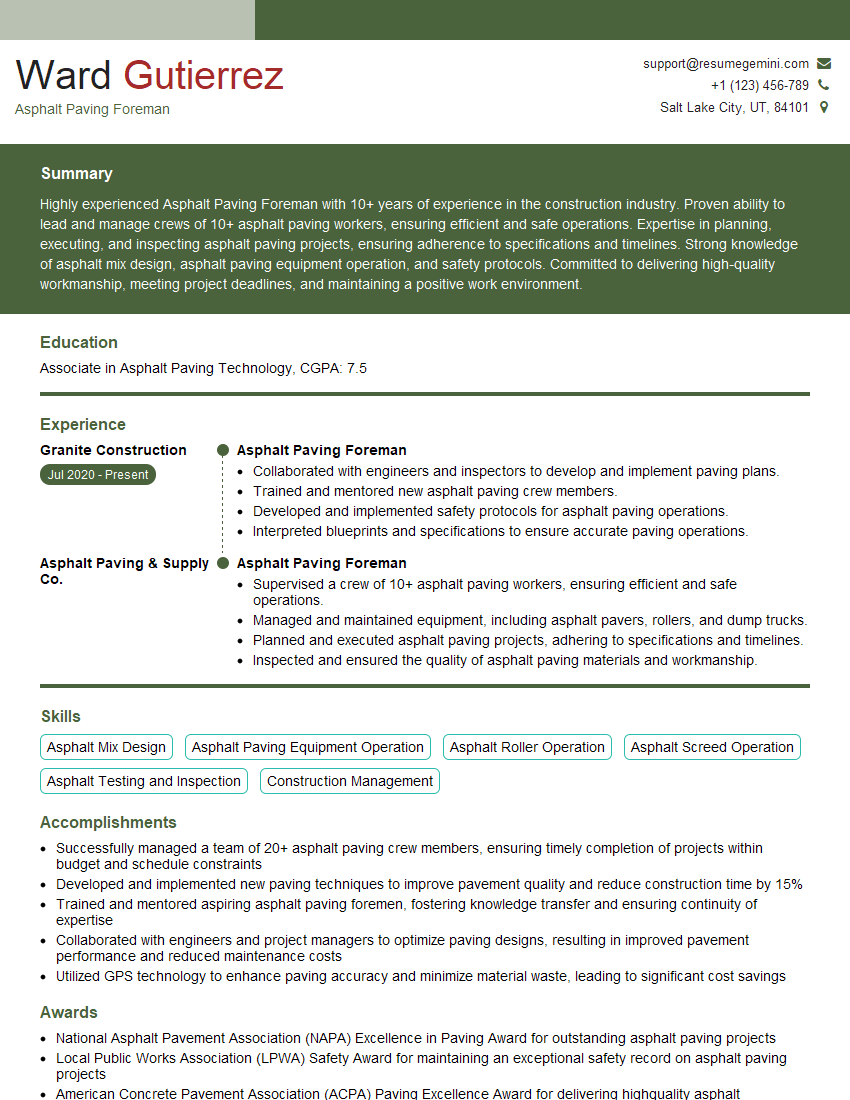
Mastering asphalt repair techniques opens doors to a rewarding career with excellent growth potential. Demand for skilled professionals in this field is consistently high, offering opportunities for advancement and specialization. To maximize your job prospects, creating a strong, ATS-friendly resume is crucial. ResumeGemini is a trusted resource to help you build a professional resume that highlights your skills and experience effectively. Examples of resumes tailored specifically to the asphalt repair industry are available to guide you. Invest time in crafting a compelling resume to showcase your expertise and secure your dream job.



Explore more articles
Users Rating of Our Blogs
Share Your Experience
We value your feedback! Please rate our content and share your thoughts (optional).
What Readers Say About Our Blog
Very informative content, great job.
good