Interviews are more than just a Q&A session—they’re a chance to prove your worth. This blog dives into essential Automated Filling and Packaging Systems Operation interview questions and expert tips to help you align your answers with what hiring managers are looking for. Start preparing to shine!
Questions Asked in Automated Filling and Packaging Systems Operation Interview
Q 1. Describe your experience with PLC programming in a packaging environment.
My experience with PLC programming in packaging spans over eight years, encompassing various applications from simple conveyor control to complex high-speed filling lines. I’m proficient in several PLC platforms, including Allen-Bradley (RSLogix 5000) and Siemens TIA Portal. In a packaging environment, PLCs act as the central nervous system, coordinating all machine functions. For example, I’ve programmed PLCs to manage the sequencing of filling heads, check for product jams, control the speed of conveyors based on upstream/downstream line pressures and even integrate vision systems for quality control. A recent project involved implementing a complex recipe management system on a PLC to allow for quick changeovers between different product sizes and packaging formats. This involved creating structured data tables within the PLC and developing the HMI (Human Machine Interface) screens to facilitate operator interactions.
A specific example involved optimizing a filling line’s efficiency. By implementing a sophisticated PLC program incorporating sensor feedback and advanced algorithms, we reduced downtime due to jams by 40% and increased production output by 15%. This involved carefully monitoring fill levels, detecting blockages, and initiating corrective actions, all managed by the PLC program.
Q 2. Explain your troubleshooting experience with automated filling machines.
Troubleshooting automated filling machines requires a systematic approach, combining electrical and mechanical knowledge with PLC programming skills. My experience has taught me to employ a structured diagnostic process, starting with the simplest checks and progressing to more complex investigations. I typically begin by reviewing the machine’s error logs and HMI displays to identify the immediate problem. Then, I’ll visually inspect the machine for any obvious mechanical issues, such as leaks, broken parts, or misalignments. Simultaneously, I’ll use the PLC’s diagnostic tools to examine the status of input and output signals, and I’ll use the PLC to check sensor signals and actuator status.
For example, I once solved a problem on a volumetric filler where the fill level was consistently inconsistent. My initial investigation revealed that the fill level sensors were not consistently triggered by the product level. Upon closer inspection, I found that the vibration from the filling process was causing the sensors to malfunction. We solved the problem by using a vibration-dampening solution and recalibrating the sensors. The key was a combination of carefully analyzing sensor data, understanding the machine’s mechanics, and utilizing my PLC programming skills to implement solutions and then retest until I found the root cause of the problem.
Q 3. How familiar are you with different types of packaging materials (e.g., cartons, pouches, bottles)?
My familiarity with packaging materials is extensive, encompassing a wide range of options frequently used in automated systems. This includes rigid containers like cartons and bottles, and flexible packaging like pouches, bags, and films. I understand the material properties crucial for successful automation, such as their flexibility, strength, sealing characteristics, and susceptibility to damage. I have experience working with various materials including cardboard, corrugated fiberboard, PET, HDPE, aluminum foil, and various films like polyethylene (PE) and polypropylene (PP). This knowledge extends to understanding the implications for machine design and the type of filling and sealing mechanisms required for each material type.
For instance, working with flexible pouches demands careful consideration of film handling, sealing parameters, and the potential for product leakage. Conversely, rigid containers require accurate placement and handling mechanisms to prevent damage or breakage.
Q 4. What are your experiences with different types of filling systems (e.g., volumetric, gravimetric, net weight)?
I have extensive experience with various filling systems, including volumetric, gravimetric, and net weight fillers. Volumetric fillers are efficient for liquids and free-flowing solids with consistent densities. They measure volume dispensed based on the displacement of pistons or other mechanisms. Gravimetric fillers, on the other hand, accurately measure the weight of the product being dispensed, making them ideal for products with varying densities. Finally, net weight fillers focus solely on the weight of the product itself, excluding the weight of the packaging. Each system has its strengths and weaknesses depending on the product and packaging being used.
I’ve worked on lines utilizing all three types. A recent project involved transitioning a line from a volumetric to a gravimetric filler for a product with inconsistent density variations, resulting in a significant improvement in fill accuracy and reduced waste.
Q 5. Describe your experience with robotic integration in automated packaging lines.
I’ve been involved in several projects integrating robots into automated packaging lines. This includes the use of robots for palletizing, depalletizing, case packing, and pick-and-place operations. My experience encompasses both the programming and integration aspects of robotic systems. I understand various robot controllers, programming languages (such as RAPID for ABB robots and KRL for Kuka robots) and integration techniques involving PLC communication and safety protocols.
In one project, we integrated a robotic arm to handle fragile containers, significantly improving the line’s efficiency and reducing product damage. The robot’s precise movements and gentle handling capabilities were crucial in this application.
Q 6. How do you ensure the accuracy and consistency of automated filling systems?
Ensuring the accuracy and consistency of automated filling systems involves a multi-faceted approach. Regular calibration of filling mechanisms (weight/volume sensors) is critical, as is continuous monitoring of fill levels and weights through statistical process control (SPC). Regular maintenance and preventive maintenance schedules are also necessary. I use SPC charts to visualize and monitor fill data, identifying any trends or outliers indicative of potential issues. This data informs adjustments to the filling system, ensuring it remains within acceptable tolerance levels.
For instance, daily checks and calibrations are done on the filling heads, ensuring that the dispensing volumes are correct. Any deviations detected are immediately investigated and corrected to maintain accuracy and consistency.
Q 7. Explain your experience with SCADA systems in a packaging context.
My experience with SCADA systems in a packaging context involves their use for real-time monitoring, data acquisition, and supervisory control of the entire packaging line. I’m familiar with various SCADA platforms and their functionalities. SCADA systems provide a centralized overview of the line’s performance, allowing for efficient monitoring and troubleshooting. They display key performance indicators (KPIs) such as production rate, fill accuracy, and downtime. I use SCADA to track historical data, analyze trends, and identify areas for improvement in line efficiency.
In a recent project, we implemented a SCADA system to monitor several packaging lines across different production sites, providing a consolidated view of overall performance and enabling proactive maintenance management. This resulted in a significant reduction in unplanned downtime and improved overall line efficiency.
Q 8. How do you address production downtime caused by equipment malfunctions?
Addressing production downtime due to equipment malfunctions requires a systematic approach combining immediate action with preventative measures. My first step is always safety – ensuring the machine is powered down and secured before any intervention. Then, I follow a troubleshooting process:
- Identify the problem: This involves reviewing error messages, checking sensors, and visually inspecting the malfunctioning component. For instance, a jam in a filling mechanism might manifest as an error code and a halt in production. A thorough examination would identify whether the jam is due to a product defect, a mechanical issue (like a worn-down auger), or a sensor failure.
- Isolate the cause: Once identified, we need to determine the root cause. Is it a simple fix (e.g., clearing a jam), or is it a more complex issue requiring parts replacement or expert assistance?
- Implement the solution: Depending on the complexity, this may involve clearing a jam, replacing a faulty sensor, or even calling in a specialist for more extensive repairs. Simple problems are tackled immediately; others might require a documented repair request and potentially involve temporarily switching to a backup system if available.
- Preventative measures: After resolving the immediate issue, I analyze the root cause to prevent future occurrences. This might involve implementing regular maintenance schedules (lubrication, cleaning), upgrading parts prone to failure, or retraining operators on proper procedures.
For example, repeated jams in a certain area of a conveyor belt could indicate a design flaw requiring engineering intervention. By meticulously documenting each incident, we can identify patterns and proactively address potential issues.
Q 9. What safety protocols are essential in operating automated filling and packaging systems?
Safety is paramount in automated filling and packaging systems. Our protocols encompass several key areas:
- Lockout/Tagout (LOTO): Before any maintenance or repair, the machine must be completely de-energized using LOTO procedures. This prevents accidental startup during servicing, safeguarding personnel from serious injury.
- Personal Protective Equipment (PPE): Appropriate PPE, including safety glasses, gloves, and hearing protection, is mandatory at all times. Specific PPE might vary based on the task, for instance, using specialized gloves when handling chemicals.
- Emergency Shut-Offs: Easily accessible emergency stop buttons are crucial, allowing operators to immediately halt operation in case of an unexpected event.
- Regular Safety Inspections: Scheduled inspections ensure equipment is functioning correctly and safety mechanisms (e.g., light curtains, pressure sensors) are operating as intended. Any deficiencies are immediately addressed.
- Training and Education: Comprehensive training for all operators on safe operating procedures, emergency protocols, and hazard identification is fundamental. Regular refresher courses reinforce these critical safety measures.
- Machine Guarding: All moving parts should be adequately guarded to prevent accidental contact. This includes using light curtains, safety interlocks, and other physical barriers.
Think of it like driving a car; following traffic rules and wearing a seatbelt is essential, and similarly, adhering to safety protocols is the cornerstone of safe operation in our environment.
Q 10. Describe your experience with GMP (Good Manufacturing Practices) in a packaging environment.
My experience with GMP in packaging is extensive. I’ve been involved in various aspects, from implementing and maintaining GMP documentation to conducting audits and training personnel. I understand the critical role GMP plays in ensuring product safety and quality. This includes:
- Documentation: Maintaining meticulously detailed records of all processes, including cleaning logs, calibration records, and batch production records. These documents provide traceability and facilitate auditing.
- Cleaning and Sanitation: Implementing stringent cleaning and sanitation procedures to prevent cross-contamination and maintain hygiene standards. This involves using appropriate cleaning agents and adhering to validated cleaning procedures. I’ve been involved in selecting and qualifying cleaning agents for different materials and scenarios.
- Personnel Training: Training personnel on GMP principles, proper hygiene practices, and the importance of documentation is essential for ensuring compliance. I’ve designed and conducted numerous training sessions on these topics.
- Facility Maintenance: Ensuring the facility is maintained to GMP standards, including proper ventilation, pest control, and temperature control. This also involves regular inspections and prompt remedial action where needed.
- Change Control: Implementing a structured change control process to manage and document any modifications to equipment, processes, or materials. This ensures all changes are validated and meet GMP requirements.
In practice, we’ve used a combination of SOPs (Standard Operating Procedures) and checklists to ensure consistency and adherence to GMP principles. For instance, a detailed cleaning procedure would include specific steps, chemicals used, contact times, and verification methods to prove effective cleaning.
Q 11. How do you maintain and troubleshoot packaging machinery?
Maintaining and troubleshooting packaging machinery requires a blend of preventative maintenance and reactive problem-solving. Preventative maintenance includes:
- Regular Inspections: Daily checks of key components, such as belts, sensors, and motors, to identify and address minor issues before they escalate.
- Lubrication: Regular lubrication of moving parts to reduce friction and wear, prolonging the life of the equipment.
- Cleaning: Thorough cleaning of the equipment to prevent build-up of product residue and ensure proper functionality.
Troubleshooting involves diagnosing and resolving malfunctions. This typically includes:
- Error Code Analysis: Understanding error codes displayed by the machine to pinpoint the source of the problem.
- Sensor Checks: Testing sensors to ensure they’re functioning correctly and providing accurate readings.
- Component Testing: Testing individual components, such as motors, belts, and switches, to identify faulty parts.
- Mechanical Adjustments: Making necessary adjustments to restore proper mechanical operation.
For example, if a filling machine consistently underfills containers, I would check the filling mechanism, sensors measuring the fill level, and the calibration settings. A systematic approach, combined with knowledge of the machine’s mechanics and electronics, is essential for effective troubleshooting.
Q 12. Explain your experience with different types of packaging seals and their applications.
I have experience with a variety of packaging seals, each suited for different product types and requirements:
- Heat Seals: Commonly used for flexible packaging materials like pouches and films. These seals are formed by applying heat and pressure to melt and fuse the packaging layers. This is an efficient and cost-effective method for many products.
- Induction Seals: Used for creating tamper-evident seals on containers, often incorporating a foil liner that melts when exposed to electromagnetic induction. This provides excellent protection against contamination and tampering.
- Pressure-Sensitive Seals: These seals utilize adhesive to bond the packaging material, ideal for simple closure applications like labels or box seals.
- Crimp Seals: Mechanical seals created by crimping or pressing the packaging material, providing a secure closure and often utilized with metal cans or tubes. They’re known for their strength and durability.
- Ultrasonic Seals: Employ high-frequency vibrations to create seals in materials like plastic films, producing a strong, clean seal without the need for heat or adhesives.
The choice of seal depends on factors like the product’s characteristics (e.g., moisture sensitivity, need for tamper evidence), packaging material, and desired level of protection. For example, a heat-seal is appropriate for dry goods packed in a flexible pouch, while an induction seal is preferable for liquids or pharmaceuticals requiring tamper evidence.
Q 13. How familiar are you with validation protocols for automated packaging equipment?
I’m very familiar with validation protocols for automated packaging equipment. Validation ensures the equipment consistently performs as intended and meets regulatory requirements. The process typically involves:
- Design Qualification (DQ): Verifying that the equipment design meets the required specifications and is suitable for its intended purpose.
- Installation Qualification (IQ): Confirming that the equipment is installed correctly and that all components are functioning as expected.
- Operational Qualification (OQ): Demonstrating that the equipment operates within its specified parameters across a defined range of operating conditions.
- Performance Qualification (PQ): Showing that the equipment consistently produces a quality product that meets pre-defined specifications under normal operating conditions. This involves running trials and collecting data to verify consistent performance.
Documentation is crucial throughout the validation process, including detailed test plans, procedures, and reports. These documents serve as proof that the equipment has been thoroughly validated and is suitable for use in production. For example, during PQ, we’d measure fill levels, seal integrity, and other critical parameters over numerous runs to prove consistent results.
Q 14. How do you ensure product traceability throughout the automated packaging process?
Product traceability throughout the automated packaging process is achieved through several methods:
- Batch Numbers/Codes: Assigning unique batch numbers or codes to each batch of product. These numbers are printed on the packaging and recorded in the production system, allowing for complete tracking of the product’s origin.
- Serial Numbers: In certain applications, individual product units might receive unique serial numbers, enabling pinpoint tracking from raw materials to the end consumer.
- Data Logging Systems: Integrating data logging systems into the equipment to record crucial information, such as timestamps, production rates, and sensor readings. This detailed information facilitates tracing the production history of specific batches or units.
- Barcode/RFID Systems: Utilizing barcode or RFID systems to track products as they move through the packaging line. These technologies allow for real-time tracking and identification of products, simplifying traceability and reducing errors.
- Database Integration: Linking all data collection points (e.g., raw materials, production line, shipping) to a central database for seamless traceability across the entire supply chain.
By combining these methods, we establish a complete audit trail that allows us to quickly trace the history of any product, aiding in recall management, quality control, and regulatory compliance. For example, if a quality issue is identified, we can immediately pinpoint the affected batch and trace it back to its origin, identifying the root cause and taking appropriate corrective actions.
Q 15. Describe your experience with data acquisition and analysis in automated packaging systems.
Data acquisition and analysis are crucial for optimizing automated packaging systems. It involves collecting data from various points in the line – from filling machines to sealers and conveyors – using sensors, PLCs (Programmable Logic Controllers), and SCADA (Supervisory Control and Data Acquisition) systems. This data provides real-time insights into production metrics such as speed, fill levels, seal integrity, and downtime.
My experience includes using this data to identify bottlenecks. For instance, at a previous role, we used data from weight sensors on a filling machine to detect inconsistent fill weights. By analyzing the data, we discovered a correlation between fill weight variations and the machine’s vibration levels. This led to preventative maintenance that significantly reduced product waste and improved overall quality.
We also used statistical process control (SPC) techniques to analyze data trends, predict potential failures, and proactively schedule maintenance, minimizing unexpected downtime. Analyzing historical data allows us to refine processes and even predict future performance. For example, historical data on packaging material usage allowed us to optimize inventory management and reduce waste.
Career Expert Tips:
- Ace those interviews! Prepare effectively by reviewing the Top 50 Most Common Interview Questions on ResumeGemini.
- Navigate your job search with confidence! Explore a wide range of Career Tips on ResumeGemini. Learn about common challenges and recommendations to overcome them.
- Craft the perfect resume! Master the Art of Resume Writing with ResumeGemini’s guide. Showcase your unique qualifications and achievements effectively.
- Don’t miss out on holiday savings! Build your dream resume with ResumeGemini’s ATS optimized templates.
Q 16. How do you optimize the efficiency and throughput of automated packaging lines?
Optimizing automated packaging lines for efficiency and throughput involves a multi-faceted approach. It’s not just about speed, but about maximizing output while maintaining quality and minimizing waste.
- Line Balancing: Analyzing each stage of the packaging process to ensure consistent workflow and avoid bottlenecks. For example, if the filling machine is much faster than the sealing machine, you’ll have a buildup of filled containers waiting to be sealed, decreasing overall throughput.
- Preventive Maintenance: Regularly scheduled maintenance prevents unexpected downtime and keeps equipment running at peak efficiency. This includes cleaning, lubrication, and part replacements as per manufacturer recommendations.
- Process Optimization: Analyzing the entire line to identify areas for improvement, such as reducing changeover times, optimizing packaging material usage, and improving operator efficiency.
- Automation Improvements: Implementing advanced automation features, such as robotic palletizing or automated quality inspection systems, can significantly boost throughput and reduce labor costs.
- Data-Driven Decisions: Utilizing data from sensors and PLCs to monitor line performance, identify issues in real-time, and make informed decisions to improve efficiency. For example, identifying slowdowns in conveyor speed based on data insights allows quick adjustments.
Q 17. What experience do you have with changeovers on automated packaging equipment?
Changeovers, the process of switching between different product formats or packaging types, are critical in flexible manufacturing environments. My experience covers various changeover types, from simple adjustments to complex reconfigurations involving tooling and software changes.
To minimize changeover time, I employ techniques like:
- Standardized Procedures: Creating detailed, documented procedures that streamline every step of the changeover process. This ensures consistency and reduces errors.
- Quick-Change Tooling: Utilizing tooling that can be rapidly swapped, reducing downtime.
- Pre-Setting Parameters: Setting up packaging machine parameters before the actual changeover begins to reduce time spent on manual adjustments.
- SMED (Single-Minute Exchange of Die): Applying SMED principles to separate internal and external changeover tasks, allowing some to be performed while the machine is still running.
In one instance, we reduced changeover time by 40% by implementing SMED and investing in quick-change tooling. This directly translated into increased production and reduced production costs.
Q 18. How do you handle quality control issues on a high-speed packaging line?
Quality control on a high-speed packaging line requires a multi-layered approach that combines automated inspection with human oversight. The goal is to catch defects early, minimize waste, and ensure consistent product quality.
My approach involves:
- In-line Inspection: Utilizing various sensors, including vision systems, weight sensors, and metal detectors, to automatically detect defects like incorrect fill levels, damaged packaging, or foreign objects.
- Statistical Process Control (SPC): Monitoring key parameters to identify trends and prevent defects before they become widespread issues.
- Random Sampling: Regularly inspecting a random sample of products to ensure consistency and identify subtle defects that might be missed by automated systems.
- Root Cause Analysis: When defects occur, conducting a thorough root cause analysis to identify the underlying problem and prevent recurrence. For example, consistent seal failures could point to a problem with the sealing machine’s temperature control or the packaging material.
- Data Analysis: Analyzing quality control data to identify areas for improvement and proactively adjust the process.
Q 19. Describe your experience with different types of sensors used in automated filling and packaging systems.
Automated filling and packaging systems rely heavily on various sensors to ensure accurate and reliable operation. My experience encompasses a broad range of sensor types, including:
- Weight Sensors: Used in filling machines to accurately measure the weight of product in each package, ensuring consistent fill levels.
- Level Sensors: Monitor the level of product in hoppers and storage tanks, signaling when refilling is needed.
- Vision Systems: Used for inspecting package integrity, identifying defects such as damaged labels or missing components, and verifying correct product placement.
- Proximity Sensors: Detect the presence of objects or packages on the conveyor belt, triggering actions such as activating filling mechanisms or diverting defective products.
- Photoelectric Sensors: Detect the presence or absence of objects or packages, often used for counting or triggering actions based on the presence of a container.
- Temperature Sensors: Monitor the temperature of various components, ensuring optimal operating conditions and preventing malfunctions due to overheating or excessive cooling.
Understanding the capabilities and limitations of each sensor type is essential for designing and troubleshooting effective automated packaging systems.
Q 20. How familiar are you with preventive maintenance schedules for packaging equipment?
Preventive maintenance is critical for ensuring the reliability and efficiency of automated packaging equipment. I’m highly familiar with developing and implementing preventive maintenance schedules based on manufacturers’ recommendations, historical data, and industry best practices.
These schedules typically include tasks such as:
- Regular Cleaning: Removing dust, debris, and product buildup from machinery to prevent jams and malfunctions.
- Lubrication: Applying lubricants to moving parts to reduce friction and wear.
- Component Inspection: Regularly checking the condition of critical components for wear and tear.
- Calibration: Ensuring the accuracy of measuring devices and sensors.
- Part Replacement: Replacing worn-out or damaged components before they cause failures.
A well-structured preventive maintenance program reduces downtime, extends equipment lifespan, and improves overall system reliability. I usually leverage CMMS (Computerized Maintenance Management System) software to track maintenance activities, schedule tasks, and analyze maintenance data to optimize the maintenance strategy.
Q 21. What are some common causes of jams or blockages in automated packaging systems?
Jams and blockages are common issues in automated packaging systems, often leading to downtime and reduced productivity. The causes vary widely but generally fall into these categories:
- Product-Related Issues: Clumping, sticking, or bridging of product in hoppers or feeders can cause jams. This is particularly common with powders, granules, or sticky materials.
- Packaging Material Issues: Wrinkles, tears, or misaligned packaging material can cause jams in the sealing or forming mechanisms. Poor-quality materials are a frequent culprit.
- Mechanical Issues: Worn-out or damaged components, such as conveyor belts, rollers, or filling nozzles, can lead to jams or blockages.
- Sensor Failures: Faulty sensors might fail to detect jams or blockages, allowing the issue to persist and worsen.
- Improper Operation: Incorrect setup, improper handling of materials, or lack of operator training can lead to jams.
Troubleshooting involves systematically examining each component of the system, inspecting the product and packaging material for defects, and verifying the functionality of sensors and controls. The process often requires using diagnostic tools and understanding the system’s design to pinpoint the cause of the jam and resolve it efficiently.
Q 22. Explain your experience with different types of conveyors used in automated packaging lines.
Conveyors are the backbone of any automated packaging line, responsible for smoothly moving products from one stage to the next. My experience encompasses a wide range, including:
- Roller Conveyors: These are the workhorses, simple and reliable for moving cases or individual items. I’ve worked with gravity-fed systems and motorized roller conveyors, adjusting speeds and configurations to optimize flow based on product size and fragility.
- Belt Conveyors: Ideal for high-speed, high-volume applications, these offer precise control over speed and are often used with accumulation tables to buffer product flow and prevent bottlenecks. I’ve extensively used these in lines processing delicate items, where the gentle belt surface prevents damage.
- Chain Conveyors: These are strong and durable, perfect for heavy products or those requiring precise positioning. I’ve utilized them in lines handling palletized goods and large containers, ensuring smooth transitions and consistent spacing.
- Spiral Conveyors: Space-saving solutions for multi-level operations, transferring products vertically. I’ve integrated them into complex layouts, optimizing vertical space in existing facilities.
Selecting the right conveyor depends heavily on the product characteristics, production rate, and available space. For example, a fragile glass bottle line would necessitate belt conveyors with cushioned surfaces, while heavy sacks of flour would call for a robust chain conveyor system.
Q 23. How do you handle discrepancies between production targets and actual output?
Discrepancies between targets and output require a systematic approach. My first step is to identify the root cause, using a combination of data analysis and on-the-floor observation. This involves examining:
- Machine downtime: Analyzing downtime logs to identify recurring issues, such as sensor failures or jams.
- Line efficiency: Identifying bottlenecks through time studies and observing the flow of products and materials.
- Quality control issues: Checking for rejects and defects that contribute to lower output.
- Operator performance: Assessing if there are skill gaps or process inefficiencies in the team.
Once the cause is identified, corrective actions are implemented. This might include:
- Preventive maintenance: Scheduling regular maintenance to prevent breakdowns and optimize machine performance.
- Process optimization: Redesigning the workflow, adjusting conveyor speeds, or re-evaluating product flow.
- Operator training: Providing additional training to enhance skills and efficiency.
- Equipment upgrades: Considering upgrading outdated equipment to increase capacity or improve reliability.
The entire process is documented, and regular monitoring ensures that the implemented changes have the desired effect. For instance, if a specific sensor consistently malfunctions, leading to frequent stops, it would be replaced with a more reliable model, and the root cause of its failure would be investigated to prevent recurrence. Regular reporting and KPI tracking help maintain optimal production.
Q 24. Describe your experience with different types of packaging codes (e.g., barcodes, QR codes).
Packaging codes are essential for traceability and inventory management. My experience includes:
- Barcodes (e.g., EAN, UPC): These are widely used for identifying products and managing inventory. I’ve worked with systems integrating barcode scanners for tracking products throughout the packaging line, ensuring accurate counting and sorting.
- QR Codes: These offer more data capacity than barcodes, enabling storage of additional product information (e.g., origin, expiration date, lot number). I’ve implemented QR code integration for improved product traceability and consumer engagement.
- Data Matrix Codes: These 2D codes are highly resilient to damage and offer high data density, making them suitable for high-precision tracking. I’ve worked with them in applications requiring durable markings on packaging.
Integrating these codes requires careful consideration of the printer technology, the code’s format and data content, and the scanner’s compatibility. For example, a high-speed packaging line requires printers that can rapidly generate high-quality codes, and robust scanners that can read them accurately even in harsh environments.
Q 25. Explain your understanding of OEE (Overall Equipment Effectiveness) and how to improve it.
OEE (Overall Equipment Effectiveness) measures the effectiveness of equipment in achieving its production goals. It’s calculated as: OEE = Availability x Performance x Quality
Availability: The percentage of time the equipment is available for production. This is affected by planned and unplanned downtime.
Performance: The ratio of actual production speed to ideal production speed. This considers factors like speed reduction or idle time.
Quality: The percentage of good products produced compared to the total produced. This accounts for rejects and rework.
Improving OEE involves systematically addressing each component:
- Increase Availability: Implementing a robust preventative maintenance program, improving parts management, and reducing changeover times.
- Increase Performance: Optimizing machine settings, reducing idle time, and improving operator training to maximize production speed.
- Increase Quality: Implementing tighter quality control procedures, improving product design to reduce defects, and utilizing advanced sensors for early defect detection.
For example, if we identify a low performance score, we might analyze machine speeds and adjust them based on production data, reduce unnecessary stops, and train operators on optimal run speeds. Regular OEE monitoring allows us to track improvements and identify new areas for optimization.
Q 26. What is your experience with HMI (Human Machine Interface) systems?
HMIs (Human Machine Interfaces) are the touchpoints between operators and automated systems. My experience ranges from simple touchscreens to sophisticated graphical interfaces. I’m proficient in:
- Troubleshooting using HMI data: HMIs provide real-time data on machine performance, allowing me to diagnose issues and take corrective action quickly. For example, a sudden drop in production speed can be identified through HMI data, which might point towards a sensor fault or a jammed conveyor.
- Programming and configuring HMIs: I’ve configured HMIs to display relevant production data, generate reports, and provide intuitive operator controls. This involves utilizing HMI software and understanding the underlying PLC (Programmable Logic Controller) systems.
- Integrating HMIs with SCADA systems: I’ve worked with HMIs that integrate with SCADA (Supervisory Control and Data Acquisition) systems, providing a centralized view of the entire production process. This allows for broader, higher-level process monitoring and control.
An effective HMI design is crucial for operator efficiency and safety. Intuitive layouts, clear visualizations, and user-friendly controls reduce errors and enhance productivity. I always strive to create interfaces that are both visually appealing and functionally efficient.
Q 27. Describe your experience with Lean Manufacturing principles in a packaging context.
Lean Manufacturing principles focus on eliminating waste and maximizing value in production. In packaging, this translates to:
- Value Stream Mapping: Identifying all steps in the packaging process, determining which add value and which are wasteful (e.g., unnecessary transport, excessive inventory). This allows for targeted process improvements.
- 5S Methodology (Sort, Set in Order, Shine, Standardize, Sustain): Implementing a clean, organized, and standardized workspace reduces errors and improves efficiency. I’ve applied this method to improve the workflow in packaging areas, reducing search times and improving operator safety.
- Kaizen Events: Conducting short, focused improvement events to quickly resolve bottlenecks and enhance processes. I’ve participated in several Kaizen events, where teams collaboratively identified and addressed efficiency challenges.
- Kanban Systems: Implementing a visual system to manage inventory and workflow. This prevents overproduction and ensures that materials are available when needed. I’ve used Kanban to optimize material flow within automated packaging lines.
Lean manufacturing is crucial for reducing costs, improving quality, and enhancing overall efficiency. By applying these principles, we can create a streamlined and optimized packaging process, reducing waste and maximizing output.
Q 28. How do you ensure the integrity of the packaging throughout the automated process?
Ensuring packaging integrity throughout the automated process is paramount. This is achieved through a multi-pronged approach:
- Regular checks and inspections: Implementing quality control checkpoints at various stages of the process to identify and address any issues promptly. This might involve visual inspections, weight checks, or seal integrity tests.
- Sensor integration: Utilizing sensors to monitor key parameters, such as fill levels, seal strength, and package integrity. These sensors provide real-time feedback, allowing for immediate corrective action if issues arise.
- Robust packaging design: Designing packaging that can withstand the rigors of the automated process. This includes using durable materials and considering the forces involved during conveyance and handling.
- Preventive maintenance: Regular maintenance of equipment ensures optimal operation, reducing the risk of damage to the packaging. This includes cleaning and lubricating moving parts and regularly checking the calibration of filling and sealing equipment.
- Data analysis and reporting: Tracking key metrics, such as reject rates and packaging integrity failures. This data provides valuable insights into areas for improvement and helps identify trends that might indicate underlying issues.
For example, if a high number of packages are being rejected due to insufficient seals, this could indicate a problem with the sealing equipment, requiring maintenance or calibration. By closely monitoring the packaging integrity throughout the process, we can minimize waste and ensure that the final product meets the required quality standards.
Key Topics to Learn for Automated Filling and Packaging Systems Operation Interview
- System Overview and Components: Understanding the entire process flow, from raw materials to finished goods, including key machinery like fillers, sealers, labelers, and conveyors.
- Process Control and Monitoring: Familiarize yourself with PLC programming (if applicable), sensor technologies (e.g., photoelectric, proximity), and data acquisition systems used for real-time monitoring and process optimization. Practical application: Troubleshooting sensor malfunctions or analyzing production data to identify bottlenecks.
- Safety Procedures and Regulations: Deep understanding of OSHA and industry-specific safety protocols related to machinery operation, lockout/tagout procedures, and personal protective equipment (PPE).
- Quality Control and Assurance: Knowledge of quality control methods used to ensure product integrity, including weight checks, seal integrity checks, and visual inspections. Practical application: Identifying and resolving quality issues related to filling inaccuracies or packaging defects.
- Troubleshooting and Maintenance: Ability to diagnose and resolve common equipment malfunctions, perform preventative maintenance, and understand basic troubleshooting techniques for mechanical and electrical components.
- Production Efficiency and Optimization: Understanding key performance indicators (KPIs) like Overall Equipment Effectiveness (OEE) and methods for improving production efficiency, such as line balancing and waste reduction techniques.
- Good Manufacturing Practices (GMP): Familiarity with GMP principles and their application in maintaining hygiene and sanitation standards within the automated filling and packaging environment.
- Packaging Materials and Selection: Understanding different types of packaging materials (e.g., plastic, cardboard, film), their properties, and how to select the appropriate material for specific products.
Next Steps
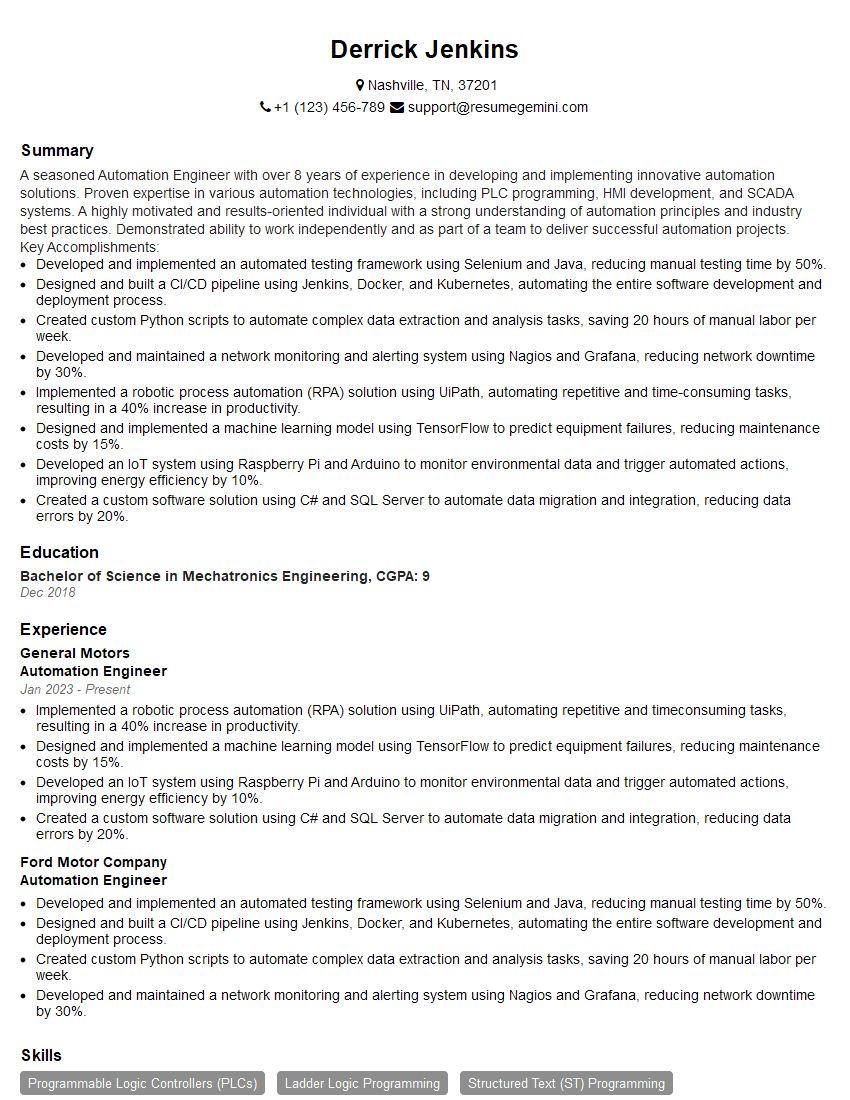
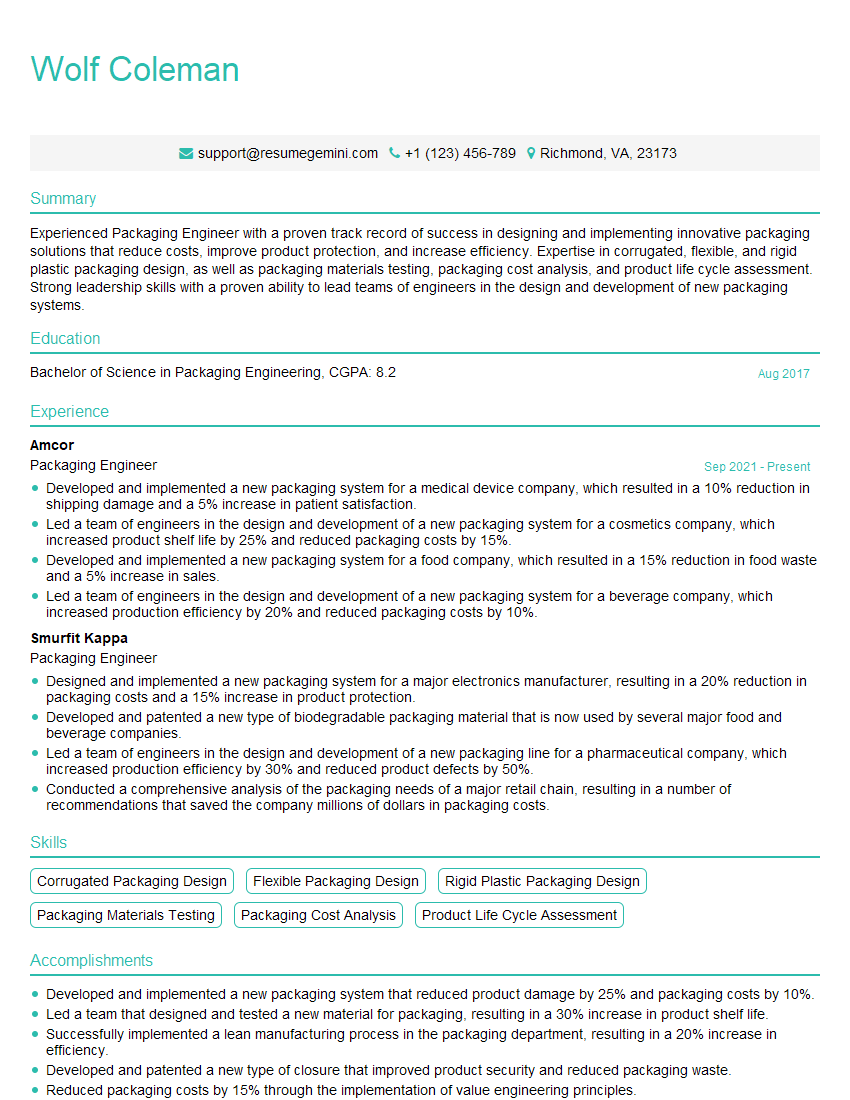
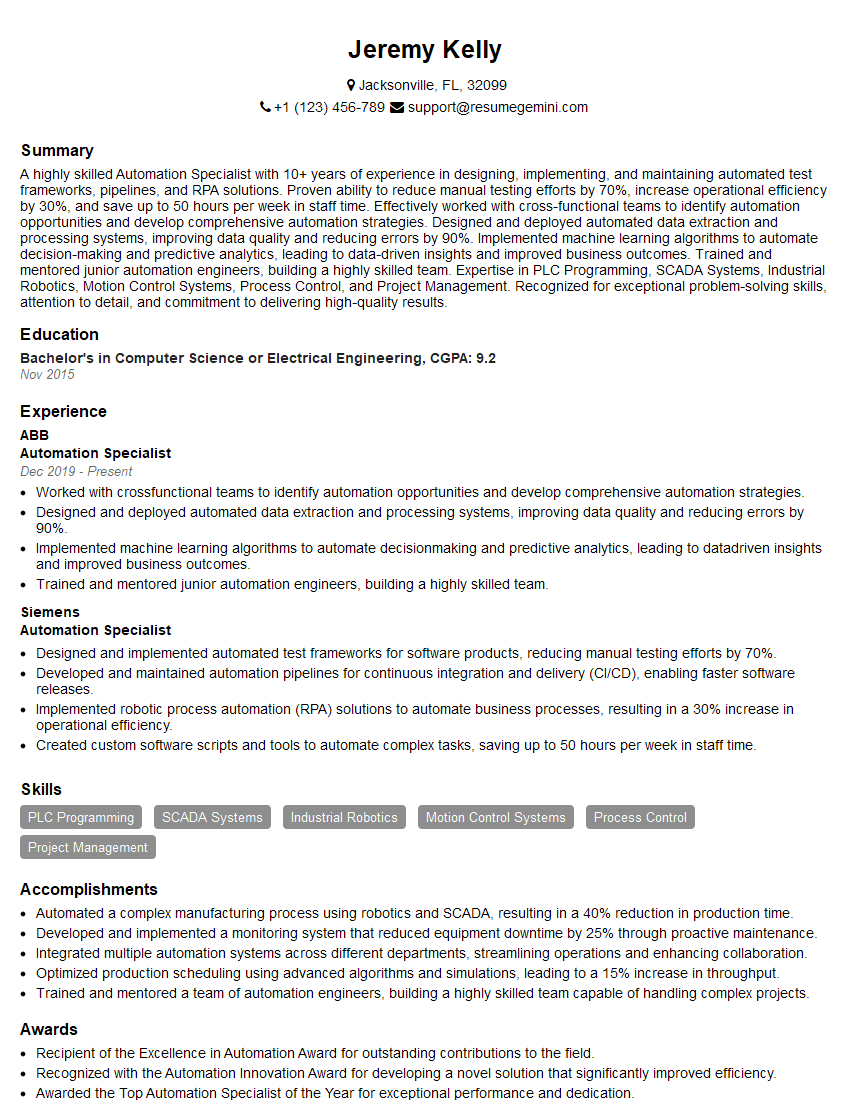
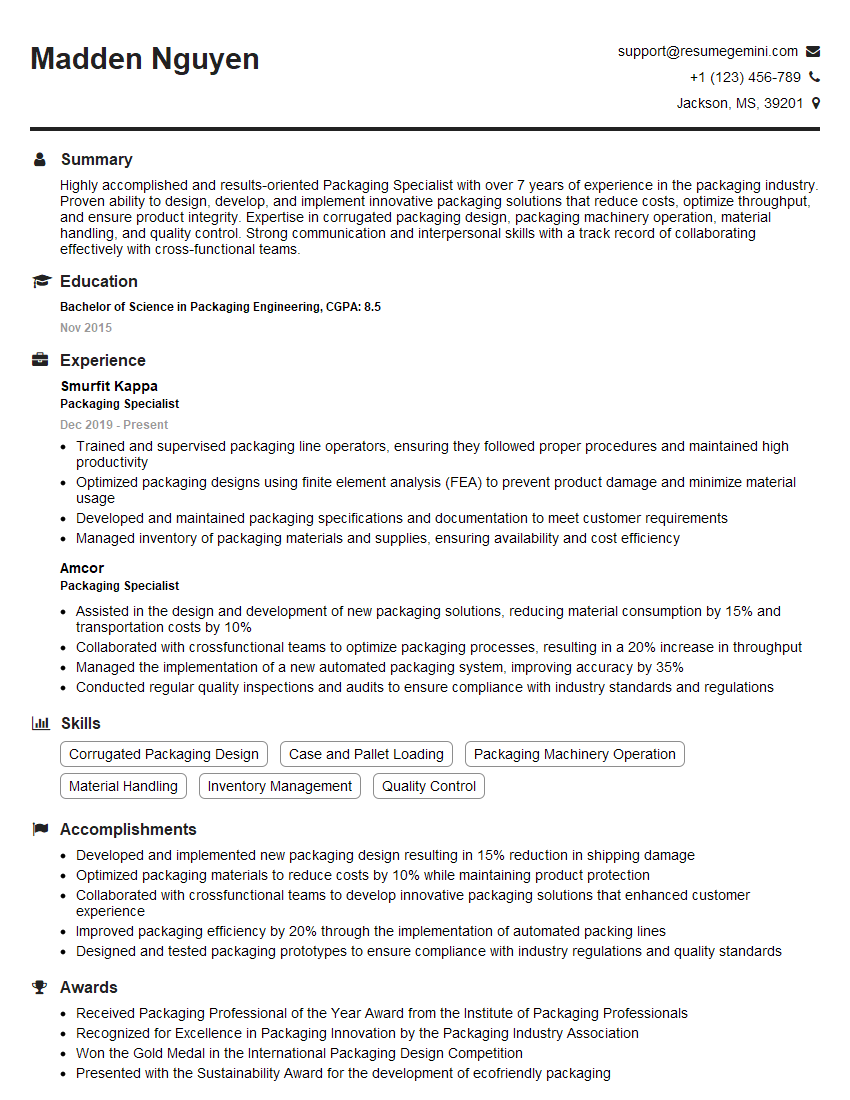
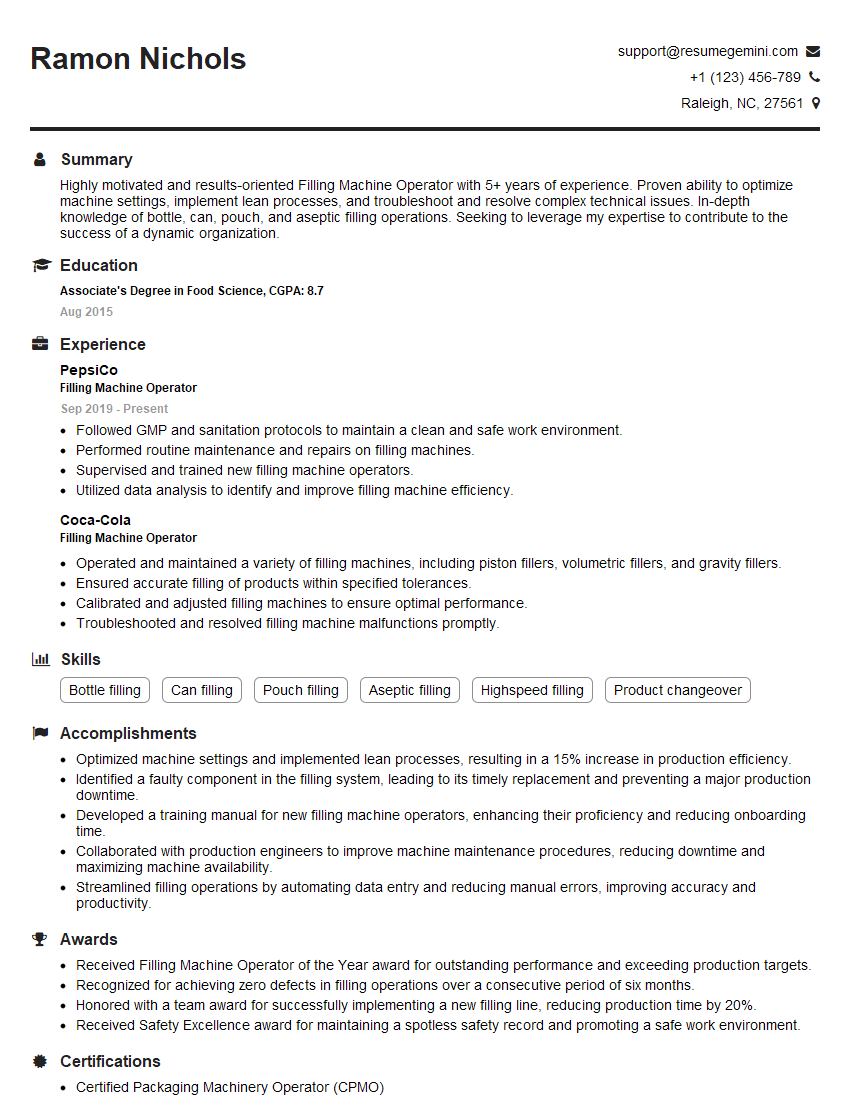
Mastering Automated Filling and Packaging Systems Operation opens doors to rewarding careers with excellent growth potential in manufacturing, logistics, and food processing industries. A strong understanding of these systems demonstrates valuable technical skills and problem-solving abilities highly sought after by employers. To significantly enhance your job prospects, focus on creating an ATS-friendly resume that effectively showcases your qualifications. ResumeGemini is a trusted resource to help you build a professional and impactful resume. ResumeGemini provides examples of resumes tailored to Automated Filling and Packaging Systems Operation to guide you in crafting a winning application.


Explore more articles
Users Rating of Our Blogs
Share Your Experience
We value your feedback! Please rate our content and share your thoughts (optional).
What Readers Say About Our Blog
Very informative content, great job.
good