The right preparation can turn an interview into an opportunity to showcase your expertise. This guide to Shellfish Growing interview questions is your ultimate resource, providing key insights and tips to help you ace your responses and stand out as a top candidate.
Questions Asked in Shellfish Growing Interview
Q 1. Describe the different methods used for shellfish cultivation.
Shellfish cultivation employs various methods, broadly categorized as bottom culture, off-bottom culture, and upwelling systems. Bottom culture, the simplest method, involves placing shellfish directly on the seabed, allowing them to naturally filter feed and grow. This is commonly used for oysters and clams. Off-bottom culture, on the other hand, keeps shellfish off the seabed, minimizing predation and disease risk. This can involve suspended culture using rafts or longlines, or using trays or baskets placed on the seabed or slightly above. Upwelling systems, more technologically advanced, actively circulate water to provide consistent nutrient supply and enhance growth rates, crucial in areas with naturally low productivity.
- Example: Oysters might be grown on the seabed (bottom culture) in areas with suitable substrate, while mussels are often cultured using longlines suspended in the water column (off-bottom culture).
Q 2. Explain the life cycle of oysters.
The oyster life cycle begins with spawning, where adult oysters release eggs and sperm into the water column. Fertilization occurs externally, resulting in free-swimming larvae that feed on phytoplankton. After a period of larval development (several weeks), the larvae settle on a suitable substrate, typically a hard surface like another oyster shell or a specially prepared substrate. This stage marks the transition to a juvenile oyster, also known as a spat. The spat undergoes further growth and development, gradually increasing in size over several years. Mature oysters then reach reproductive age, initiating the cycle again. Understanding this lifecycle is key for optimizing hatchery production and selecting appropriate culture methods.
Q 3. What are the common diseases affecting shellfish and how are they managed?
Shellfish are susceptible to various diseases, with bacterial, viral, and parasitic infections being common. Dermo (Perkinsus marinus) and MSX (Haplosporidium nelsoni) are significant diseases affecting oysters, causing mortality and impacting growth. Viral diseases, such as herpes virus in oysters, can also result in significant losses. Management strategies include careful site selection to avoid areas with known disease prevalence, maintaining good water quality, implementing biosecurity measures to prevent disease introduction, and selective breeding programs for disease-resistant strains. In some cases, disease outbreaks necessitate culling affected populations to prevent further spread. Regular health monitoring through laboratory analysis of shellfish tissues is essential for early disease detection.
Q 4. How do you monitor water quality in a shellfish growing operation?
Water quality monitoring is crucial for shellfish health and safety. Regular monitoring programs typically include parameters such as temperature, salinity, dissolved oxygen, pH, nutrient levels (nitrate, phosphate), chlorophyll-a (indicating phytoplankton abundance), and the presence of harmful algal blooms (HABs). Sampling is often done at various depths and locations within the growing area, both in the water column and the sediment. Automated monitoring systems with sensors and data loggers are increasingly used for continuous data collection. Results are compared against regulatory standards and used to inform management decisions, such as harvesting restrictions or relocating shellfish beds.
- Example: A sudden drop in dissolved oxygen levels might necessitate immediate harvesting to prevent oyster mortality.
Q 5. What are the best practices for harvesting shellfish?
Best practices for shellfish harvesting emphasize food safety and minimizing environmental impact. Harvesting methods vary depending on the species and culture method, but generally involve careful extraction to avoid damage to the shellfish or surrounding environment. Appropriate tools and techniques are used, and harvested shellfish are handled gently to maintain their quality. Harvesting is often regulated to ensure sustainable yields and prevent overfishing. Post-harvest handling involves cleaning, sorting, and potentially depuration (purification) to remove contaminants before reaching the market. Accurate record-keeping of harvesting locations and dates is crucial for traceability and compliance with regulations.
Q 6. What are the environmental regulations impacting shellfish farming?
Shellfish farming is subject to numerous environmental regulations designed to protect water quality, biodiversity, and the wider ecosystem. These regulations can include limitations on stocking densities to prevent overgrazing, restrictions on the use of chemicals and antibiotics, requirements for environmental impact assessments before establishing new farms, and regulations related to waste disposal. Specific regulations vary by location and are often based on national or regional standards related to food safety, water quality, and environmental protection. Compliance with these regulations is crucial for obtaining and maintaining licenses to operate a shellfish farm.
Q 7. Discuss different strategies for controlling biofouling in shellfish aquaculture.
Biofouling, the accumulation of unwanted organisms on shellfish culture equipment, can significantly reduce growth rates and increase production costs. Several strategies are used to control biofouling. These include: selecting appropriate culture materials that are less prone to fouling (e.g., using specialized ropes or nets), regular cleaning of equipment, using antifouling paints (though their use is increasingly restricted due to environmental concerns), and introducing organisms that compete with biofouling species. Employing a combination of strategies tailored to the specific environmental conditions and shellfish species is often the most effective approach to biofouling management. For example, regular scrubbing of longlines or periodic replacement of netting can minimize the impact of fouling.
Q 8. Explain the importance of larval rearing in shellfish production.
Larval rearing is the cornerstone of successful shellfish production, particularly for species with a complex life cycle. It involves carefully controlling the environment – temperature, salinity, food availability – to nurture microscopic larvae into juvenile shellfish ready for grow-out. Think of it as an intensive nursery for baby shellfish. Without effective larval rearing, large-scale shellfish farming becomes incredibly difficult, if not impossible.
The importance stems from several factors: it allows for:
- Increased production: Producing millions of larvae gives farmers a large pool of juveniles to select from, ensuring high survival rates and efficient use of resources.
- Disease control: Controlled environments minimize exposure to diseases common in wild populations. This results in healthier, more robust juveniles.
- Genetic selection: Larval rearing facilities allow for selective breeding programs. We can carefully select parent shellfish with desirable traits, ensuring the next generation inherits those characteristics, such as faster growth, disease resistance, or superior meat quality.
- Stock enhancement: Larvae can be released into the wild to boost depleted natural populations, contributing to conservation efforts.
For example, in oyster farming, carefully managed larval rearing is crucial because oyster larvae are microscopic and highly susceptible to environmental changes. We have to carefully monitor water quality and feed them specifically formulated microalgae.
Q 9. Describe various methods for improving shellfish growth rates.
Improving shellfish growth rates involves optimizing several factors. It’s a holistic approach, much like tending a garden. You need the right conditions and a bit of know-how.
- Optimal water quality: Shellfish need clean, well-oxygenated water. This includes managing nutrient levels (avoiding excessive nitrogen and phosphorus) and monitoring for pollution.
- Appropriate feeding: Providing sufficient and appropriate food is critical. This often involves supplementing natural food sources, especially for filter feeders, with cultured microalgae or other feeds.
- Site selection: The location itself heavily influences growth. Choosing a site with ideal water flow, temperature, and salinity is key. Areas with good currents bring in fresh food and remove waste products.
- Genetic selection: As mentioned before, breeding programs focused on selecting fast-growing individuals can have a significant impact.
- Disease management: Preventing and treating diseases minimizes losses and ensures that more energy is dedicated to growth rather than fighting illness.
- Stocking density: Overcrowding can lead to competition for resources and slower growth. Careful management of the number of shellfish per unit area is essential.
- Predator control: Protecting shellfish from predators (like starfish or crabs) can drastically improve survival rates and subsequent growth.
For instance, in mussel farming, we’ve seen improved growth rates by using longlines in areas with strong currents, ensuring constant exposure to fresh phytoplankton and reducing the build-up of waste.
Q 10. What are the key factors to consider when selecting a shellfish farming site?
Selecting a suitable site for a shellfish farm is paramount to success. It’s like finding the perfect plot of land for a vineyard – the right conditions are crucial for optimal yield. We consider several key aspects:
- Water quality: Clean water is fundamental. We analyse parameters like salinity, temperature, dissolved oxygen, and nutrient levels (nitrogen, phosphorus). Contamination by pollutants or excessive nutrients can hinder growth and compromise the safety of the product.
- Hydrodynamics: Water flow is crucial for bringing in food and removing waste. Areas with moderate currents are ideal; stagnant water can lead to poor growth and the accumulation of harmful substances.
- Substrate: The bottom type influences the suitability for different species. Mussels attach to ropes or other structures, while oysters may require a hard substrate for settlement.
- Depth: The optimal depth varies according to species and the type of farming. Some species prefer shallower areas, while others thrive in deeper waters.
- Legal and regulatory considerations: We need to ensure the chosen site complies with all relevant permits and regulations regarding shellfish farming.
- Proximity to processing facilities: The distance from processing plants affects transportation costs and the quality of the final product.
For example, selecting a sheltered bay with moderate currents and clean water might be perfect for oyster farming, while a more exposed coastal area with suitable substrate could be suitable for mussels grown on longlines.
Q 11. How do you ensure the food safety and quality of your shellfish product?
Ensuring food safety and quality is our top priority. It’s not just about producing shellfish; it’s about producing safe and delicious shellfish. Our approach is multi-faceted:
- Site selection and monitoring: We carefully choose sites with low levels of contamination and regularly monitor water quality to ensure it remains safe.
- Harvesting and handling: We use safe and sanitary harvesting and handling practices, minimizing damage to the shellfish and preventing contamination.
- Depuration (if necessary): This process involves purifying shellfish by holding them in clean, running water to remove any potential contaminants. This is common practice before marketing.
- Testing: Regular testing for bacterial contamination (e.g., E. coli, Vibrio spp.) and other harmful substances is crucial. This ensures the product meets the stringent standards set by regulatory agencies.
- Traceability: A complete traceability system allows us to trace the shellfish from harvest to the consumer, facilitating rapid identification and response in the event of a contamination incident.
- Good Agricultural Practices (GAP): Adherence to GAP guidelines ensures consistent high-quality production and helps prevent contamination.
We follow HACCP (Hazard Analysis and Critical Control Points) principles to identify and manage potential hazards throughout the production process, much like a chef carefully monitors every step in preparing a meal to guarantee food safety.
Q 12. What is your experience with shellfish grading and sorting?
Shellfish grading and sorting are vital for ensuring uniform product quality and meeting market demands. It’s like sorting apples for sale – different sizes and qualities command different prices. My experience involves utilizing various techniques:
- Size grading: This involves sorting shellfish by size using sieves or other mechanical devices. This is crucial for meeting customer specifications and market preferences.
- Quality grading: This assesses aspects like shell condition, meat weight, and the presence of defects. This often involves visual inspection and sometimes X-ray technology.
- Manual sorting: In some instances, manual sorting is necessary to remove damaged or undersized shellfish. This ensures the final product is of consistent high quality.
For example, when grading oysters, we typically use size graders to separate them into market-ready sizes. We might then manually remove any oysters with broken shells or other defects. Accurate grading optimizes market value and enhances customer satisfaction.
Q 13. Describe your experience with different shellfish species.
My experience spans various shellfish species, each with unique characteristics and challenges. This variety is what keeps the work interesting!
- Oysters: I have extensive experience with various oyster species, including Pacific oysters (Crassostrea gigas) and Eastern oysters (Crassostrea virginica), encompassing aspects like larval rearing, grow-out techniques, and disease management.
- Mussels: I’m well-versed in mussel farming, from deploying and maintaining longlines to harvesting and processing. Understanding currents and substrate is paramount.
- Clams: My experience with clams includes various species, focusing on techniques for bottom culture and optimizing growth conditions.
- Scallops: I have some experience in scallop farming, though it’s a more complex endeavor than the others, generally requiring more sophisticated techniques.
Each species presents unique challenges. For example, oyster farming requires attention to diseases like MSX and Dermo, while mussel farming needs careful management of biofouling (organisms attaching to the lines).
Q 14. What are the challenges in managing a sustainable shellfish farm?
Managing a sustainable shellfish farm presents several significant challenges, all interconnected and demanding a holistic approach. It’s about balancing economic viability with environmental responsibility.
- Environmental impacts: Shellfish farming, even with best practices, can have ecological consequences. This includes potential impacts on water quality, habitat alteration, and interactions with other species. Careful monitoring and mitigation strategies are vital.
- Disease outbreaks: Shellfish are susceptible to various diseases. Preventing and managing outbreaks requires robust biosecurity measures and careful monitoring.
- Climate change: Changing climate patterns, including ocean acidification and rising sea temperatures, pose significant risks to shellfish populations. Adapting farming practices and selecting more resilient species is crucial.
- Economic viability: Balancing production costs, market prices, and sustainable practices is a constant challenge. Innovation in farming methods and effective marketing are crucial to ensure the farm’s longevity.
- Regulatory compliance: Meeting increasingly stringent environmental and food safety regulations requires ongoing investment in monitoring and management practices.
- Social license to operate: Gaining and maintaining the acceptance of local communities and stakeholders is critical for the long-term sustainability of shellfish farming operations.
For instance, we’re constantly exploring new techniques to minimize the environmental impact of our operations, such as employing sustainable aquaculture practices, reducing our carbon footprint, and engaging with local communities to build trust and foster transparency.
Q 15. How do you handle shellfish mortality events?
Shellfish mortality events, sadly, are a common challenge in shellfish farming. Effective handling requires a multi-pronged approach, starting with rapid assessment. We need to quickly determine the extent of the mortality, the species affected, and any potential contributing factors. This might involve visual inspections, water quality testing (measuring parameters like salinity, temperature, dissolved oxygen, and pH), and potentially collecting samples for disease diagnostics.
Once we understand the scale and cause, we implement mitigation strategies. These can range from improving water quality (e.g., increasing water flow, adding aeration) to treating the shellfish with approved medication if a disease is identified. In some cases, we might need to harvest surviving shellfish to prevent further losses. Thorough documentation of the event, including the cause, extent of mortality, and actions taken, is crucial for future management decisions and potential insurance claims.
For example, during a particularly hot summer, we experienced high mortality in our oyster beds due to low dissolved oxygen. We immediately increased aeration in the affected areas and implemented a more proactive monitoring system for water quality parameters during periods of extreme heat.
Career Expert Tips:
- Ace those interviews! Prepare effectively by reviewing the Top 50 Most Common Interview Questions on ResumeGemini.
- Navigate your job search with confidence! Explore a wide range of Career Tips on ResumeGemini. Learn about common challenges and recommendations to overcome them.
- Craft the perfect resume! Master the Art of Resume Writing with ResumeGemini’s guide. Showcase your unique qualifications and achievements effectively.
- Don’t miss out on holiday savings! Build your dream resume with ResumeGemini’s ATS optimized templates.
Q 16. What are the economic factors that influence shellfish production?
The economic landscape of shellfish production is complex and influenced by several factors. Market demand plays a significant role; strong demand for specific species (like oysters or mussels) directly influences prices and profitability. Production costs are equally important; these include seed costs, labor, feed (if applicable), energy (for water circulation and aeration), and equipment maintenance. Fuel costs, especially for transportation and water pumping, can greatly impact the bottom line. Regulations and permits are also crucial; obtaining and maintaining licenses, adhering to environmental regulations, and complying with food safety standards all contribute to the overall cost.
Furthermore, climate change is emerging as a major economic factor. Increased ocean temperatures and acidification can cause shellfish mortality and negatively impact growth rates, impacting yield and therefore revenue. Finally, global competition and import/export regulations can significantly impact market prices and farm profitability. Careful financial planning and diversification strategies are key for sustainable success in this industry.
Q 17. Describe your experience with shellfish processing techniques.
My experience in shellfish processing spans various techniques, from simple hand-shucking to more advanced automated systems. Hand-shucking, while labor-intensive, allows for careful selection of high-quality products. I’ve also worked with mechanized shucking machines, which greatly increase efficiency but require careful calibration to minimize damage to the shellfish meat. Beyond shucking, processing includes cleaning, sorting (by size and quality), packaging, and often, freezing or other preservation techniques to extend shelf life.
We use various quality control checks at each stage, adhering to strict sanitary standards to ensure food safety. For instance, we regularly monitor water temperature and sanitation in processing facilities to prevent bacterial contamination. Packaging techniques range from simple bulk packaging for wholesale to attractive retail packaging for individual consumers. My experience also involves understanding and adhering to food safety regulations and labeling requirements for different markets.
Q 18. Explain your understanding of shellfish genetics and breeding programs.
Understanding shellfish genetics is crucial for developing disease-resistant and high-yielding strains. Breeding programs focus on selecting and breeding individuals with desirable traits, such as fast growth rates, high meat yield, tolerance to environmental stress, and resistance to diseases. This often involves techniques like selective breeding, where individuals with desirable traits are selectively paired for reproduction. More advanced methods include marker-assisted selection, where genetic markers are used to identify individuals with specific genes associated with desired traits. This increases efficiency by minimizing time and resources.
For example, we’ve worked on a project focused on breeding oysters that are more resistant to a specific parasite that has been problematic in our region. Through careful selection and breeding, we’ve seen a significant improvement in the survival rate of the offspring. This involves meticulous record-keeping of the genetic lineage and performance data of each individual and generation.
Q 19. What is your experience with using aquaculture technology (e.g., sensors, automation)?
I’ve had significant experience with various aquaculture technologies, particularly in monitoring and controlling environmental parameters. We utilize sensors to continuously monitor water temperature, salinity, dissolved oxygen, and pH levels. This data is relayed to a central system, allowing us to remotely track conditions and make necessary adjustments. For example, if dissolved oxygen drops below a critical threshold, we can automatically activate aeration systems to prevent shellfish mortality.
Furthermore, we use automated systems for tasks like feeding and water circulation, improving efficiency and reducing labor costs. While initial investment in these technologies can be substantial, the long-term benefits in terms of improved monitoring, increased yields, and reduced labor costs make them a worthwhile investment for efficient and sustainable aquaculture operations.
Q 20. How do you maintain accurate records and reporting for shellfish farming operations?
Accurate record-keeping is fundamental to successful shellfish farming. We maintain detailed records of all aspects of the operation, from seed acquisition and planting to harvesting, processing, and sales. This includes data on water quality parameters, growth rates, mortality rates, disease outbreaks, and treatments administered. We utilize software specifically designed for aquaculture management, allowing for data entry, analysis, and reporting. This data assists in making informed management decisions based on historical trends and allows for detailed analyses.
We also maintain thorough traceability systems to track the origin and movement of shellfish throughout the entire production chain. This is essential for meeting food safety regulations and responding effectively in the event of a product recall. Regular audits of our record-keeping system ensure compliance with industry standards and regulations.
Q 21. What are the key considerations for managing shellfish waste?
Managing shellfish waste responsibly is crucial for environmental sustainability. Shellfish waste, including discarded shells and processing byproducts, can have a significant environmental impact if not managed properly. We employ a multi-faceted approach. First, we minimize waste generation through efficient processing techniques and careful selection of shellfish during harvesting. Then, we explore various disposal or recycling options. Shell fragments can be used in land reclamation, as a component in construction materials (like road base), or even as a soil amendment in agriculture.
Composting of organic waste from processing can create a valuable soil amendment. In some cases, we work with local organizations to utilize shellfish waste for other purposes, such as creating art or jewelry. The specific approach to waste management is tailored to local regulations and available resources. Proper disposal and the exploration of waste reduction methods are an ongoing focus for minimizing our environmental impact and ensuring our sustainable operation.
Q 22. Describe your experience with different shellfish farming systems (e.g., bottom culture, suspended culture).
My experience spans a wide range of shellfish farming systems, focusing primarily on bottom culture and suspended culture. Bottom culture, the simplest method, involves placing shellfish directly on the seabed. This is suitable for species like oysters and clams that can naturally attach to the substrate. The success of bottom culture depends heavily on selecting suitable seabed conditions—sufficient water flow to avoid sedimentation and prevent oxygen depletion, and appropriate substrate type for species-specific attachment. For example, oysters thrive in areas with a firm, stable bottom, while clams prefer sandier substrates.
Suspended culture, conversely, involves growing shellfish off the bottom, usually on ropes, longlines, or rafts. This is advantageous for species that need better water flow for feeding and respiration, or when bottom conditions are unsuitable. Mussels are a prime example, readily attaching to ropes and benefiting from the enhanced water circulation. This system requires more initial investment in infrastructure (e.g., rafts, buoys), but it can yield higher densities and better control over environmental factors like exposure to predators or sunlight.
I’ve also worked with some limited experience in other systems like off-bottom culture using trays or baskets, particularly effective in managing oyster growth and reducing predation. Each system requires careful consideration of factors such as species, water quality, environmental conditions, and market demands. The choice often involves a complex trade-off between costs, production efficiency, and environmental impact.
Q 23. How do you comply with traceability requirements for shellfish?
Traceability in shellfish farming is paramount for ensuring food safety and consumer confidence. My compliance strategy rests on a robust system of record-keeping and identification. Each batch of shellfish is meticulously tracked from the initial seeding stage through growth and harvest. We maintain detailed records of the growing location, stocking density, dates, and any treatments or interventions. This information is electronically documented and easily retrievable for auditing.
We use unique identifiers, like tags or coded containers, to follow individual batches. This data is crucial for rapid response in case of biotoxin contamination or other quality issues, allowing for immediate identification and recall of the affected products. Furthermore, I collaborate closely with regulatory agencies to ensure full compliance with all relevant food safety regulations and reporting requirements. Regular audits and inspections are welcomed to maintain transparency and demonstrate our commitment to best practices.
Q 24. What are your strategies for marketing and selling shellfish products?
My marketing strategy focuses on building strong relationships with both wholesale buyers and consumers. For wholesale, I target restaurants, seafood distributors, and retailers. This involves direct sales, participation in seafood trade shows, and building long-term partnerships based on consistent quality and reliable supply. Direct relationships with chefs are especially important in building brand recognition.
For direct consumer sales, we utilize a combination of farmers’ markets, online ordering, and potentially a farm-to-table restaurant. Here, the emphasis is on promoting our farming practices—emphasizing sustainability, quality, and the unique aspects of our location and growing methods. Storytelling becomes a key component, allowing consumers to connect with the origin and journey of the shellfish they are consuming. We also leverage social media to showcase the beauty of shellfish farming and to engage with potential customers directly.
Q 25. What is your experience with managing shellfish farm labor and personnel?
Managing shellfish farm labor involves fostering a skilled and motivated workforce. I prioritize safety training, both in water safety and in the safe handling of equipment and shellfish. Regular training sessions are conducted to cover topics like shellfish handling, harvesting techniques, and quality control measures. This also helps ensure compliance with food safety regulations. Fair wages, benefits, and opportunities for career advancement are essential to retain a stable team.
Teamwork and communication are critical in a shellfish farming operation, as tasks often require coordinated effort. I encourage open communication among team members and foster a positive and supportive working environment. Seasonal fluctuations in labor demand are addressed through strategic hiring and training plans, and cross-training employees helps ensure flexibility and adaptability within the team.
Q 26. Describe a time you had to troubleshoot a problem in a shellfish farming operation.
One time, we experienced unusually high mortality rates in our oyster crop. Initial investigations ruled out obvious causes like disease or pollution. After careful analysis of water quality data and examining the oysters themselves, we discovered that a recent period of unusually heavy rainfall had led to excessive freshwater runoff, causing a drastic drop in salinity for a prolonged period. Oysters are highly sensitive to salinity changes.
Our troubleshooting involved several steps. First, we carefully monitored salinity levels and water flow patterns using continuous monitoring equipment. Second, we implemented a temporary system to increase water exchange in the affected areas, diluting the freshwater influx. Third, we adjusted our harvesting schedule to minimize further losses. The situation highlighted the importance of continuous monitoring of environmental parameters and proactive adaptive management strategies in shellfish farming.
Q 27. How do you adapt your shellfish farming practices to changing environmental conditions?
Adapting to changing environmental conditions is crucial for successful shellfish farming. This requires a multi-pronged approach, encompassing both proactive and reactive measures. Proactive measures include diligent monitoring of key environmental parameters—water temperature, salinity, dissolved oxygen, and the presence of harmful algal blooms. This data guides our decision-making and helps us anticipate potential challenges.
Reactive adaptation often involves adjusting farming practices. For example, in periods of high water temperature, we may reduce stocking densities to alleviate stress on the shellfish or adjust the depth of our suspended culture to mitigate heat exposure. During algal bloom events, we may implement harvesting strategies to prevent contamination or move our operation to a more favorable location if possible. Understanding species-specific tolerances and employing adaptive management are essential for building resilience to climate variability.
Q 28. What are your professional development goals related to shellfish aquaculture?
My professional development goals center around staying at the forefront of sustainable shellfish aquaculture. I aim to enhance my knowledge of innovative farming techniques, such as integrated multi-trophic aquaculture (IMTA), which involves cultivating multiple species together to improve resource utilization and ecosystem health. I am also keen to deepen my understanding of climate change impacts on shellfish aquaculture and to develop strategies to mitigate those risks.
Further, I plan to expand my skills in data analytics and predictive modeling, allowing for more precise management decisions based on real-time environmental data. Finally, I’m committed to actively participating in research and knowledge exchange within the aquaculture community, sharing best practices and contributing to the advancement of the field. This includes attending relevant conferences, workshops, and collaborating with research institutions.
Key Topics to Learn for Shellfish Growing Interview
- Shellfish Biology and Life Cycles: Understanding the biological processes, growth stages, and environmental factors influencing various shellfish species (e.g., oysters, clams, mussels).
- Water Quality and Environmental Monitoring: Practical application of water quality parameters (salinity, temperature, pH, dissolved oxygen) and their impact on shellfish health and growth. Experience with monitoring techniques and data analysis is crucial.
- Sustainable Aquaculture Practices: Knowledge of sustainable growing techniques, including site selection, seed selection, feeding strategies, and disease management. Understanding of best practices for minimizing environmental impact.
- Harvesting and Post-Harvest Handling: Practical understanding of efficient and safe harvesting methods, proper cleaning, sorting, and storage techniques to maintain shellfish quality and meet market demands.
- Shellfish Diseases and Health Management: Knowledge of common shellfish diseases, their diagnosis, prevention, and treatment strategies. Experience with biosecurity protocols is valuable.
- Regulations and Compliance: Understanding of relevant regulations and permits related to shellfish growing, including food safety regulations and environmental protection laws.
- Business and Financial Management in Shellfish Farming: Understanding of cost analysis, budgeting, marketing, and sales strategies within the shellfish industry. This includes knowledge of market trends and pricing.
- Data Analysis and Technology in Shellfish Farming: Familiarity with data logging, sensor technology, and software used for monitoring and optimizing shellfish growth. Ability to interpret data and make informed decisions.
Next Steps
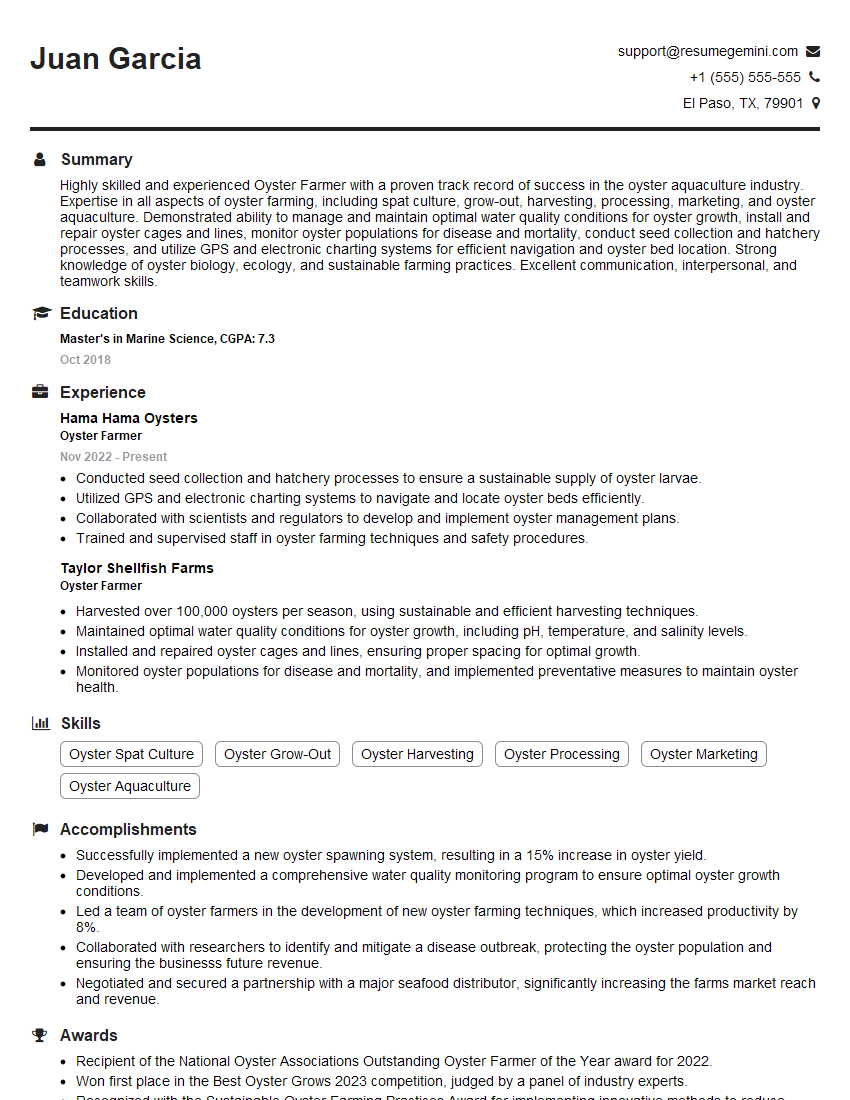
Mastering the intricacies of shellfish growing opens doors to a rewarding career in a growing industry. Demand for skilled professionals in sustainable aquaculture is high, offering excellent opportunities for advancement. To maximize your job prospects, it’s vital to create an ATS-friendly resume that effectively showcases your skills and experience. ResumeGemini is a trusted resource to help you build a professional and impactful resume. We provide examples of resumes tailored to the Shellfish Growing industry to guide you in crafting a compelling application.

Explore more articles
Users Rating of Our Blogs
Share Your Experience
We value your feedback! Please rate our content and share your thoughts (optional).
What Readers Say About Our Blog
Very informative content, great job.
good