Are you ready to stand out in your next interview? Understanding and preparing for Backcountry Travel and Camping interview questions is a game-changer. In this blog, we’ve compiled key questions and expert advice to help you showcase your skills with confidence and precision. Let’s get started on your journey to acing the interview.
Questions Asked in Backcountry Travel and Camping Interview
Q 1. Describe your experience with Leave No Trace principles.
Leave No Trace (LNT) principles are fundamental to responsible backcountry travel. They’re a set of seven guidelines designed to minimize our impact on the environment and ensure its preservation for future generations. My experience with LNT is deeply ingrained in my practice; it’s not just a checklist but a mindset.
- Plan Ahead and Prepare: I always thoroughly research my route, check weather forecasts, and pack accordingly. This includes having a comprehensive first-aid kit and appropriate gear for all conditions. For example, I wouldn’t attempt a high-altitude trek without proper acclimatization or adequate cold-weather gear.
- Travel and Camp on Durable Surfaces: I stick to established trails and campsites whenever possible. If I must venture off-trail, I choose areas that can withstand foot traffic, avoiding sensitive vegetation or fragile ecosystems. Think of it like choosing a sturdy path instead of trampling through a delicate flower garden.
- Dispose of Waste Properly: Pack out everything I pack in – this includes all trash, food scraps, and human waste. I always use a portable toilet or bury waste properly if a toilet is unavailable, ensuring at least 6-8 inches of soil coverage and at least 200 feet from water sources.
- Leave What You Find: I don’t disturb natural or cultural artifacts; I leave rocks, plants, and other natural objects as they are. This includes not picking wildflowers or disturbing animal habitats.
- Minimize Campfire Impacts: I use existing fire rings if available, or avoid campfires altogether in favor of a lightweight stove. If a campfire is necessary, I keep it small, use only downed wood, and ensure complete extinguishment with water and stirring of ashes.
- Respect Wildlife: I observe wildlife from a distance, never feeding or approaching them. I store food properly to avoid attracting animals to my campsite. A bear canister or hanging food is crucial in bear country.
- Be Considerate of Other Visitors: I yield to other hikers on trails, keep noise levels low, and respect the solitude of other users. This includes avoiding loud music or conversations that could disturb others’ peace and quiet.
Q 2. Explain your process for selecting a campsite.
Selecting a campsite is a critical safety and environmental decision. My process involves several steps:
- Location, Location, Location: I prioritize established campsites whenever possible to minimize environmental impact. If dispersed camping is necessary, I look for relatively flat ground that’s well-drained, away from water sources (at least 200 feet), and sheltered from wind or potential hazards like avalanche paths.
- Safety Assessment: I carefully examine the area for potential dangers: dead trees, unstable terrain, signs of animal activity, proximity to cliffs or water hazards. I avoid camping under dead trees or in avalanche chutes.
- Environmental Considerations: I ensure I am minimizing my impact. I select a spot that doesn’t require clearing vegetation or disturbing the natural landscape. I avoid sensitive ecosystems or areas prone to erosion.
- Resource Availability: I look for a location with access to water if needed, but always filter or purify any water collected. I also consider the sun’s position for shade and morning sunlight.
- Leave No Trace: The chosen campsite should be one where I can easily adhere to LNT principles, especially with regards to waste disposal and campfire impact.
For example, during a recent trip to the Rockies, I chose a campsite that was slightly elevated and well-drained, avoiding a low-lying area prone to flooding. I ensured I was well away from the stream and used an existing fire ring.
Q 3. What are the key elements of a safe and effective backcountry travel plan?
A safe and effective backcountry travel plan is paramount. It should encompass these key elements:
- Trip Planning & Itinerary: This includes detailed route planning, considering elevation gain, distances, and potential hazards. Share your itinerary with someone reliable who is not going on the trip, including your planned return date.
- Weather Forecasting: Checking and regularly monitoring weather forecasts is crucial. Mountain weather can change rapidly. Be prepared for unexpected conditions.
- Gear Selection: Pack appropriate clothing, food, shelter, navigation tools, first aid kit, and emergency communication devices (satellite messenger, personal locator beacon). Gear should be appropriate for the conditions anticipated, including backcountry-specific gear where applicable.
- Navigation Skills: Proficiency with map and compass or GPS is essential for staying on course, especially in challenging terrain or poor visibility.
- Physical Fitness & Acclimatization: Assess your fitness level and plan accordingly. Acclimatization is critical for higher-altitude treks. It’s better to underestimate your abilities than overestimate.
- Risk Assessment & Mitigation: Identifying potential hazards (weather, terrain, wildlife) and planning for contingencies is vital. This includes having backup plans and emergency procedures.
- Emergency Procedures: Establish clear communication protocols with your team. Knowing how to use emergency signaling devices is essential.
Q 4. How do you assess and mitigate risks in backcountry settings?
Risk assessment in the backcountry is an ongoing process, not a one-time event. My approach involves:
- Identifying Hazards: This includes weather (storms, extreme temperatures), terrain (steep slopes, river crossings, snow conditions), wildlife encounters, and human factors (navigation errors, injuries, equipment failure). I’ll often use a risk assessment matrix to catalog and weigh these.
- Evaluating Likelihood & Severity: For each hazard, I assess the likelihood of it occurring and the severity of its potential consequences. A high likelihood and high severity hazard needs more mitigation than a low likelihood, low severity hazard.
- Developing Mitigation Strategies: I implement strategies to reduce the likelihood or severity of each hazard. This could include altering the route to avoid a dangerous section, carrying extra gear to handle unexpected conditions, or practicing self-arrest techniques.
- Monitoring & Adaptation: I continuously monitor the situation throughout the trip and adjust my plans as needed. If conditions change unexpectedly, I’m prepared to modify my route or even turn back.
For example, encountering unexpected snow in spring would lead me to reassess my route, check avalanche forecasts, and consider carrying ice axe and crampons.
Q 5. What are the signs and symptoms of hypothermia and how would you treat it?
Hypothermia is a dangerously low body temperature that can be fatal. Signs and symptoms range from mild to severe:
- Mild: Shivering, numbness in extremities, drowsiness, confusion, slight slurred speech
- Moderate: Intense shivering, impaired coordination, difficulty speaking, confusion, memory loss
- Severe: Uncontrolled shivering, absent or weak pulse, slow and shallow breathing, unconsciousness
Treatment depends on the severity. For mild cases, getting into a warm, dry place, changing into dry clothing, drinking warm (not hot) fluids, and consuming high-energy foods is often sufficient. For moderate to severe cases, immediate evacuation is crucial. This often requires using an emergency locator beacon (EPIRB) or satellite messenger. In these cases, passive rewarming (wrapping the person in blankets and insulating them from the cold) is paramount before getting the individual to a medical professional. Never rub the person or use hot water immersion.
Q 6. How do you navigate using a map and compass?
Navigating with a map and compass is a fundamental backcountry skill. It’s based on understanding orientation, map reading, and basic geometry.
- Orientation: I first orient my map to the terrain using prominent landmarks. I hold the map so that the map’s north aligns with the magnetic north as indicated by my compass. This gives me the correct perspective of my location relative to the surrounding landscape.
- Locate Myself: Using landmarks (trails, rivers, mountains), I pinpoint my current position on the map. This often requires taking multiple compass bearings to fix my location.
- Plan My Route: I plan my route on the map, noting key waypoints and potential hazards. This includes considering the terrain and potential route alternatives.
- Follow My Route: Using the compass, I follow my planned route, regularly checking my position on the map to ensure I’m on course. I use pacing or GPS as supplementary navigation tools to help refine my accuracy.
- Adjust as Needed: Throughout the journey, I will re-orient my map regularly and make any necessary adjustments based on the terrain, visibility, or changes in the weather. The compass and map are vital tools to know exactly where I am and where I am headed.
For example, if I’m navigating through dense forest, I might take compass bearings to prominent peaks and valleys to verify my position frequently.
Q 7. Describe your experience with wilderness first aid and emergency response.
I hold a Wilderness First Responder (WFR) certification, providing me with advanced skills in wilderness first aid and emergency response. My training covers a wide range of medical conditions and trauma situations likely encountered in backcountry settings. It’s not just about treating injuries, it’s about risk management and decision-making in challenging environments.
- Assessment & Treatment: I’m proficient in assessing injuries and illnesses, prioritizing treatment based on severity and available resources. This includes managing hypothermia, altitude sickness, fractures, soft-tissue injuries, and other common wilderness emergencies.
- Evacuation Planning: I know how to plan and execute evacuations, whether it’s a self-rescue or requiring assistance from external sources. This often includes signaling for help (using a whistle, mirror, or emergency locator beacon), building a shelter, and managing patient comfort during the rescue process.
- Prevention & Education: My training emphasizes prevention strategies, including proper gear selection, risk mitigation, and teaching safe backcountry practices to others.
During a recent trip, I used my WFR skills to treat a hiker who suffered a severely sprained ankle. I stabilized the injury, provided pain relief, and helped them safely evacuate to seek more advanced medical care. My WFR training equipped me to handle the situation effectively.
Q 8. How do you purify water in the backcountry?
Purifying water in the backcountry is crucial for survival. Contaminated water can cause serious illness. My approach involves a multi-layered strategy, prioritizing methods that are reliable and accessible.
Boiling: This is the most reliable method. Bring water to a rolling boil for at least one minute to kill most harmful bacteria and viruses. At higher altitudes, you may need to boil for longer.
Water Purification Tablets: These are lightweight and convenient. Follow the manufacturer’s instructions carefully regarding dosage and contact time. Some tablets require longer purification times than others. I always carry a few extra tablets as a backup.
Water Filter: Filters remove sediment, protozoa, and some bacteria. However, they don’t always eliminate viruses. I prefer filters with a high micron rating (lower number means finer filtration). Regular maintenance and cleaning are essential. I always inspect the filter before and after each use to check for damage.
Water Purifier (UV or pump): These devices use ultraviolet light or a pump to kill bacteria and viruses. They are more expensive but incredibly efficient and reliable, offering peace of mind in remote areas.
I always choose a purification method based on the water source’s clarity, the expected duration of the trip, and my group’s needs. I teach my clients to always have a backup purification method.
Q 9. What are your strategies for preventing wildlife encounters and managing conflicts?
Wildlife encounters are an inherent part of backcountry travel, but responsible planning can minimize risks. My strategies focus on prevention and conflict resolution.
Prevention: This involves proper food storage (using bear canisters or hanging food properly), maintaining a clean campsite, and traveling in groups whenever possible. I stress the importance of being aware of your surroundings, making noise to avoid surprising animals, and keeping a safe distance from wildlife. We should never approach or feed animals. Never attempt to capture or interact with wildlife.
Conflict Resolution: If a conflict occurs, remaining calm is crucial. Slowly back away; never run, as this can trigger a chase response. Make yourself appear larger by raising your arms. If carrying bear spray, be ready to deploy it according to the manufacturer’s instructions (but only as a last resort). Reporting any incident to park rangers afterwards is important for safety data.
I always brief my clients on the local wildlife, their behavior, and the appropriate response procedures. We practice safe storage and handling of food and other attractants before our trip starts.
Q 10. How do you handle unexpected weather changes during a backcountry trip?
Unexpected weather changes can quickly turn a pleasant trip into a dangerous one. My approach centers on preparedness and adaptability.
Monitoring Forecasts: Before and during the trip, I meticulously check weather forecasts and adapt the itinerary accordingly. I use multiple weather sources for a more comprehensive picture.
Layering Clothing: Packing multiple layers allows me to adjust to changing temperatures and conditions. This ensures I’m never caught underprepared.
Emergency Shelter: I always carry a lightweight emergency bivy sack or tarp for unexpected overnight stays in adverse weather conditions. Even experienced backcountry travelers should always have one.
Extra Food and Water: Delays caused by bad weather necessitate extra provisions. I always pack more than anticipated.
Adaptability: The ability to adjust plans is paramount. Knowing when to turn back or find alternative shelter is a crucial skill.
For instance, on one trip, an unexpected blizzard forced us to seek shelter earlier than planned. Our preparedness allowed us to safely weather the storm without incident.
Q 11. What is your experience with various types of shelters and their suitability in different conditions?
Shelter selection significantly impacts backcountry comfort and safety. My experience encompasses various shelter types, each with specific advantages and disadvantages.
Tent: Offers the most protection from elements (rain, wind, snow). Weight and setup time vary greatly depending on the type. Three-season tents are suitable for most conditions; four-season tents are heavier and more robust for extreme weather.
Tarp: Lightweight and versatile, ideal for minimalist backpacking or emergency situations. Requires more skill in setup and offers less protection than a tent.
Hammock: Offers comfortable sleeping suspended between trees but requires appropriate trees and offers limited protection from rain and ground moisture. I always verify that the trees are sound and the hammock is suitable for the conditions.
Bivy Sack: A lightweight, waterproof bag offering minimal protection from elements, primarily suited for emergency situations or minimalist trips. It’s a great backup option for unexpected weather changes.
The best shelter depends on factors like weather, terrain, and personal preference. For example, a tarp is sufficient for mild conditions, but a four-season tent is necessary for snowy or windy environments.
Q 12. How do you manage food safety in the backcountry?
Food safety in the backcountry is paramount to avoid illness. My approach includes several key strategies:
Proper Food Storage: This is critical for preventing wildlife encounters and keeping food fresh. I always use bear canisters or hang food properly from trees.
Perishable Food Handling: I minimize perishable items. If I do carry them, I keep them cold using coolers, ice, or frozen water bottles. I also make sure to store food correctly when there are temperature fluctuations.
Food Preparation: Cleanliness is crucial. I use clean utensils and hands during meal preparation. Leftovers are stored securely, and spoiled or questionable food is discarded properly. I never leave food unattended.
Water Source: Use purified water for all food and drink preparation.
By consistently following these guidelines, I drastically reduce risks associated with foodborne illnesses during backcountry travel.
Q 13. Describe your experience with various cooking methods in a backcountry setting.
Cooking methods in the backcountry require efficiency and adaptability. My experience covers several techniques:
Stove Cooking: This is the most common method using lightweight backpacking stoves fueled by propane, isobutane, or alcohol. I prefer stoves with wind shields for better efficiency in challenging conditions. I always have extra fuel and carry a lighter or matches.
Campfire Cooking (where permitted): Offers a rustic experience but requires careful fire preparation and adherence to fire regulations (which are always subject to change). I prioritize leaving no trace.
No-Cook Meals: These are increasingly popular. Options include energy bars, dehydrated meals, and trail mix for convenience and weight savings. This is essential for reducing weight when backpacking. I always check expiration dates.
Cooking choices depend on factors like weight restrictions, weather, the need for rapid meal preparation and location regulations.
Q 14. What are your strategies for packing efficiently for a backcountry trip?
Efficient packing is essential for a comfortable and safe backcountry trip. My strategies prioritize minimizing weight and maximizing functionality:
Lightweight Gear: I use lightweight but durable gear. The weight savings is significant when hiking long distances.
Modular Packing: I organize gear into smaller, easily accessible bags to quickly locate items.
Prioritization: I carefully consider what is essential and what is expendable. The ‘one-in, one-out’ rule can be useful. Eliminating non-essential items greatly reduces the overall load.
Layering: Packing clothing in layers helps to adapt to temperature changes efficiently.
Packing Cubes: These help compress clothing and organize gear.
Before every trip, I create a packing list based on anticipated conditions and the duration of the trip. Careful planning ensures I’m fully equipped without carrying unnecessary weight.
Q 15. Explain your experience with different types of navigation tools (GPS, altimeter, etc.)
Navigation in the backcountry relies on a combination of tools, each with its strengths and weaknesses. I’m proficient with GPS devices, altimeters, maps, and compasses, understanding their limitations and how to use them synergistically. GPS units provide precise location data, but are susceptible to battery failure and signal loss in canyons or under heavy tree cover. An altimeter provides crucial elevation information, vital for route planning and avoiding hazards. Maps, when used in conjunction with a compass, offer redundancy and situational awareness, even when electronic devices fail. For example, during a recent trip in the San Juan Mountains, my GPS lost signal in a deep canyon. My map and compass allowed me to confidently navigate to my planned campsite. I also use a barometric altimeter watch to constantly monitor elevation changes, which is crucial for safe navigation across varied terrain and for avoiding sudden drops or cliffs.
I regularly practice using these tools in varied weather conditions to maintain proficiency. My approach involves pre-planning the route on a map, inputting key waypoints into the GPS, and cross-checking my progress regularly with the compass and map. This redundancy reduces the chances of navigation errors, which are especially critical in the backcountry.
Career Expert Tips:
- Ace those interviews! Prepare effectively by reviewing the Top 50 Most Common Interview Questions on ResumeGemini.
- Navigate your job search with confidence! Explore a wide range of Career Tips on ResumeGemini. Learn about common challenges and recommendations to overcome them.
- Craft the perfect resume! Master the Art of Resume Writing with ResumeGemini’s guide. Showcase your unique qualifications and achievements effectively.
- Don’t miss out on holiday savings! Build your dream resume with ResumeGemini’s ATS optimized templates.
Q 16. How do you determine the appropriate gear for different backcountry environments?
Gear selection for backcountry travel depends heavily on the environment, anticipated weather, and trip duration. I use a layered clothing system, prioritizing lightweight, breathable fabrics for base layers and insulating layers for warmth. For example, a trip to the desert Southwest demands lightweight, moisture-wicking clothing to cope with heat, while a winter trip to the Rockies calls for heavier insulating layers, waterproof outerwear, and warm sleeping gear.
Footwear is crucial; sturdy, waterproof boots with good ankle support are essential for challenging terrain. My pack selection considers capacity and weight distribution. I always carry a comprehensive first-aid kit, a multi-tool, extra food and water, a headlamp, and appropriate safety equipment like an emergency shelter and a communication device (satellite messenger or personal locator beacon). I carefully weigh the pros and cons of each item, balancing the necessity of the item with its weight and bulk. Prioritizing essential items ensures I’m not overpacking. I will always carry extra layers to accommodate changing weather conditions. For example, I might take a lightweight down jacket for unexpected cold snaps in otherwise mild conditions.
Q 17. Describe your approach to risk assessment and decision-making in challenging situations.
My approach to risk assessment involves a systematic process. First, I identify potential hazards – weather, terrain, wildlife, and personal limitations. Then, I evaluate the likelihood and severity of each hazard. This involves considering factors such as weather forecasts, trail conditions, and my own physical fitness and experience. Next, I develop strategies to mitigate these risks. This might involve selecting an alternate route, adjusting the timeline, or carrying specific safety equipment. Finally, I continuously monitor the situation, adapting my plans as needed. This is an iterative process, and I never hesitate to turn back or adjust my plans if the risks become unacceptably high.
Decision-making in challenging situations hinges on experience, sound judgment, and a willingness to adapt. I follow a structured decision-making process. This involves gathering information, analyzing the situation, identifying options, evaluating consequences, selecting the best option, and then acting decisively. I use a framework like the ‘Stop, Think, Act’ method and involve the team when necessary.
For example, encountering unexpectedly heavy snowfall could lead to altering the route to avoid higher elevations, using snowshoes, or even delaying the trip. Continuous communication and open discussion amongst the team are vital in these instances.
Q 18. What are your skills in fire starting and maintenance?
I am proficient in multiple fire-starting methods, including using a ferro rod, lighter, and matches. I understand the importance of fire safety and always clear a sufficient area around the fire pit. I understand how to build different types of fires – e.g., teepee, lean-to – depending on the available fuel and conditions. I also know how to maintain a fire safely, ensuring adequate airflow and preventing it from spreading. I always carry a fire starter and practice with it frequently. In a survival situation, understanding how to create friction fire is a valuable skill I possess.
I emphasize responsible fire management in the backcountry. Only starting fires in designated areas or when absolutely necessary for survival, and always ensuring the fire is completely extinguished before leaving. It’s also crucial to know local fire regulations and to be well prepared to handle unexpected situations.
Q 19. How do you maintain effective communication within a group in a remote area?
Effective communication in remote areas is paramount. Before heading out, we establish clear communication protocols, including regular check-in times and emergency contact information. We use reliable communication devices, like satellite messengers or two-way radios, supplementing these with pre-arranged rendezvous points. Open and honest communication among group members is crucial. Everyone should feel comfortable expressing concerns or suggesting changes to the plan. We practice active listening and ensure everyone understands the plan, potential hazards, and contingency plans. We use hand signals where noise might be disruptive or dangerous.
In a real-world scenario, I’ve found that pre-trip briefings that cover both the technical and social aspects of the trip significantly improve group communication. I emphasize teamwork and mutual support which fosters a safe and productive group dynamic.
Q 20. Describe your experience with rope systems and knot tying.
I have extensive experience with rope systems and knot tying, essential for setting up camp, establishing safety lines, and dealing with emergencies. I’m proficient in various knots, including bowlines, clove hitches, figure-eights, and prusik knots, understanding their applications and limitations. I know how to inspect ropes for damage and wear, and understand how to use appropriate techniques for load-bearing applications. For example, I routinely use rope systems for setting up tarps for shelter and securing loads on my pack.
Safety is paramount. I understand the implications of incorrect knot-tying and always double-check my work. I am adept at building and understanding anchoring systems in various terrain. My expertise extends to rappelling and other rope techniques, though those would only be used under proper circumstances and with adequate training.
Q 21. How do you identify and address potential hazards related to terrain and weather conditions?
Identifying and addressing potential hazards related to terrain and weather starts with pre-trip planning. I carefully study maps and weather forecasts, looking for potential hazards such as steep slopes, avalanche terrain, water crossings, and predicted storms. On the trail, I constantly monitor the terrain and weather conditions, watching for signs of changing conditions, such as cloud cover, wind changes, or shifts in temperature. For example, the sight of recent avalanche debris would alert me to potential risks and encourage me to seek alternative routes.
I use my experience and judgment to assess the risks and take appropriate action. This might involve changing the route, seeking shelter, or delaying the trip. I always prioritize safety over pushing ahead in challenging conditions. I have a deep understanding of avalanche safety and weather patterns, equipping me to assess and react effectively to hazardous situations.
Q 22. What are your strategies for managing fatigue and stress during a long backcountry trip?
Managing fatigue and stress in the backcountry is crucial for a safe and enjoyable trip. It’s a multifaceted approach combining physical preparation, mental strategies, and smart trip planning.
Physical Preparation: Before the trip, I focus on building endurance through consistent training that mimics the demands of the trip. This includes hiking with weight, practicing specific skills like climbing or kayaking, and ensuring I’m well-rested beforehand. During the trip, pacing myself is key. I avoid pushing myself too hard, especially in the beginning. I take regular breaks, even short ones, to avoid burnout. Proper nutrition and hydration are paramount; I plan meals high in energy and electrolytes, and I drink water consistently, even before I feel thirsty.
Mental Strategies: Mindfulness techniques, like focusing on my breath or appreciating the surrounding nature, help manage stress. I break down the trip into smaller, manageable goals, creating a sense of accomplishment along the way. Positive self-talk and a flexible attitude are essential; unexpected challenges are part of the backcountry experience.
Smart Trip Planning: Realistic goals are crucial. Overambitious plans lead to exhaustion and increased stress. I meticulously plan daily distances and activities, leaving buffer time for unforeseen delays. I also factor in rest days if the trip is long enough. Prioritizing quality sleep in a comfortable camp setup contributes significantly to stress reduction.
For example, on a recent multi-day trek, I incorporated a midday yoga session to combat stiffness and alleviate mental fatigue, significantly improving my overall experience.
Q 23. How do you adapt your plans in case of unforeseen circumstances or emergencies?
Adaptability is paramount in backcountry travel. Unforeseen circumstances, from weather changes to equipment malfunctions, are inevitable. My approach involves preparedness, constant monitoring, and decisive action.
Pre-Trip Planning: Thorough research of the area, including weather forecasts and potential hazards, is crucial. I pack extra supplies, including food, water purification, first-aid, and extra layers of clothing. I also share detailed plans with someone not on the trip, including our route and expected return time.
Constant Monitoring: Throughout the trip, I constantly assess weather conditions, trail conditions, and the group’s physical and mental state. I am vigilant for potential problems and adjust plans accordingly.
Decisive Action: If an emergency arises, I follow a structured decision-making process: assess the situation, prioritize safety, communicate clearly with the group, implement appropriate solutions (e.g., finding shelter during a storm, altering the route to avoid a hazard), and if necessary, initiate an emergency plan, such as activating a personal locator beacon (PLB).
For instance, on a kayaking trip, unexpected strong winds forced us to adjust our route, opting for a shorter, more sheltered section. This quick decision prevented a potentially dangerous situation.
Q 24. Describe your knowledge of local flora and fauna and their potential impact on your trip.
Understanding local flora and fauna is essential for safety and trip success. This involves both identification and understanding their potential impact.
Identification: Before the trip, I thoroughly research the region’s plants and animals using field guides, online resources, and consultations with local experts. This knowledge allows me to identify poisonous plants (like poison ivy or oak) and potentially dangerous animals (like bears, mountain lions, or venomous snakes). I learn to recognize edible plants and potential sources of fresh water.
Impact Assessment: Understanding the impact of flora and fauna on the trip is key. Poisonous plants can cause serious reactions. Animal encounters can range from minor inconveniences to life-threatening situations. I learn about appropriate responses to different encounters, such as bear safety protocols (carrying bear spray, making noise, storing food properly), snake avoidance, and identifying safe water sources.
For example, on a trip in the Appalachian mountains, I learned to identify stinging nettles and avoid them while foraging for wild berries, which I could safely identify and consume.
Q 25. Explain your strategies for preventing and addressing injuries in the backcountry.
Injury prevention and management are critical aspects of backcountry travel. My strategy combines preparedness, risk mitigation, and swift response.
Prevention: This starts with physical fitness and training, ensuring I’m adequately prepared for the challenges of the trip. Proper gear, including sturdy footwear, appropriate clothing, and trekking poles, minimizes risk. I practice safe techniques for activities like climbing or kayaking. I maintain awareness of my surroundings to prevent slips, falls, or other accidents.
Mitigation: I use layered clothing to adapt to varying temperatures. I prioritize proper hydration and nutrition to prevent muscle cramps and fatigue. I carry a comprehensive first-aid kit tailored to the trip and have the skills to use its contents effectively. I always carry a map and compass, and know how to use them.
Response: In case of injury, I prioritize stabilization and evacuation if necessary. I utilize first aid skills to address the injury, providing pain relief and preventing further harm. I communicate the situation to others in the group and make contact with emergency services if needed using a satellite communication device, a PLB, or a cell phone (if service is available).
For instance, I’ve treated minor blisters on a multi-day hike with proper first aid, preventing them from becoming more serious issues.
Q 26. How do you ensure the safety and well-being of your group?
Ensuring group safety and well-being relies heavily on teamwork, communication, and shared responsibility.
Pre-Trip Briefing: Before embarking, I hold a thorough briefing, covering potential hazards, trip plans, emergency procedures, and the responsibilities of each member. This includes establishing clear communication protocols and assigning roles (e.g., first-aid responder, navigation leader).
Continuous Monitoring: During the trip, I continuously monitor the group’s physical and mental condition. I pay attention to signs of fatigue, dehydration, or distress. I encourage open communication so everyone feels comfortable expressing concerns.
Shared Decision-Making: Decisions are made collaboratively whenever possible, incorporating input from all members. This ensures everyone feels invested in the trip’s success and safety. I make sure everyone understands the plan and participates in its execution.
Emergency Preparedness: The entire group is trained on how to use emergency equipment, such as a satellite messenger or a first-aid kit. We practice emergency procedures to build familiarity and confidence.
For instance, on a climbing trip, we practiced rope techniques and belaying together, enhancing both safety and trust amongst the group.
Q 27. What is your experience with different types of backcountry travel (hiking, climbing, kayaking, etc.)?
My backcountry travel experience encompasses a wide range of activities.
Hiking: Extensive experience with various terrains, including mountain trails, forests, and deserts. This includes multi-day backpacking trips with heavy loads.
Climbing: Experience in rock climbing, mountaineering, and ice climbing, ranging from beginner routes to more technical ascents. I’m proficient in using climbing gear, including ropes, harnesses, and protection devices.
Kayaking/Canoeing: Extensive experience in both flatwater and whitewater paddling, including multi-day trips. I’m comfortable navigating rivers and lakes, and I understand various paddling techniques.
Skiing/Snowshoeing: Proficient in backcountry skiing and snowshoeing, familiar with avalanche safety techniques, including snowpack analysis and rescue procedures.
Each activity has unique challenges and requires different skill sets, but they all share a common thread: careful planning, risk assessment, and respect for the environment.
Q 28. Describe your experience with building snow shelters or other improvised shelters.
Building improvised shelters is a crucial survival skill in the backcountry. My experience includes constructing various types of shelters, depending on available materials and environmental conditions.
Snow Shelters: I’m proficient in building quinzhees and snow caves, understanding snowpack characteristics, and ensuring structural stability. This includes assessing snow density and choosing appropriate locations.
Lean-tos: I can construct a basic lean-to using natural materials like branches and leaves, providing protection from wind and rain. This involves selecting sturdy support branches and layering materials for insulation.
Other Improvised Shelters: I’m adept at using tarps, debris huts, and natural features (e.g., rock overhangs) to create temporary shelters. These methods adapt to different environmental settings and available resources.
The knowledge of constructing these shelters isn’t solely about survival; it’s also about enhancing comfort and safety during unexpected delays or emergencies. For example, while traversing a high-altitude pass, a sudden blizzard prompted me and my partner to build a snow cave, offering vital protection from the extreme weather.
Key Topics to Learn for Backcountry Travel and Camping Interview
- Navigation & Map Reading: Understanding map symbols, compass use, GPS operation, and route planning techniques in various terrain types. Practical application: Describe how you would plan a route considering factors like elevation, water sources, and potential hazards.
- Leave No Trace Principles: Deep understanding of minimizing environmental impact, proper waste disposal, and responsible campsite selection. Practical application: Explain how you would handle waste management in a remote location with limited access to facilities.
- Wilderness First Aid & Safety: Knowledge of common backcountry injuries and illnesses, search and rescue procedures, and effective communication in emergency situations. Practical application: Describe your approach to assessing and treating a hypothermic patient in a remote setting.
- Shelter & Campcraft: Experience setting up various types of tents, building shelters, managing campfires responsibly, and understanding different cooking methods. Practical application: Discuss the advantages and disadvantages of different tent types for various weather conditions.
- Backcountry Cooking & Nutrition: Planning meals for extended trips, understanding food storage techniques to prevent spoilage and attract wildlife, and selecting nutritionally appropriate food options for high-output activities. Practical application: Detail your strategy for packing food for a multi-day trip, considering weight, perishability, and nutritional needs.
- Risk Assessment & Mitigation: Identifying potential hazards (weather, wildlife, terrain), developing contingency plans, and making informed decisions to minimize risks. Practical application: Describe a situation where you had to assess and mitigate a risk during a backcountry trip.
- Gear Selection & Maintenance: Understanding appropriate gear for different conditions, proper maintenance and repair of equipment, and packing strategies for optimal weight distribution. Practical application: Explain your criteria for selecting a backpack and other essential gear for a specific backcountry adventure.
Next Steps
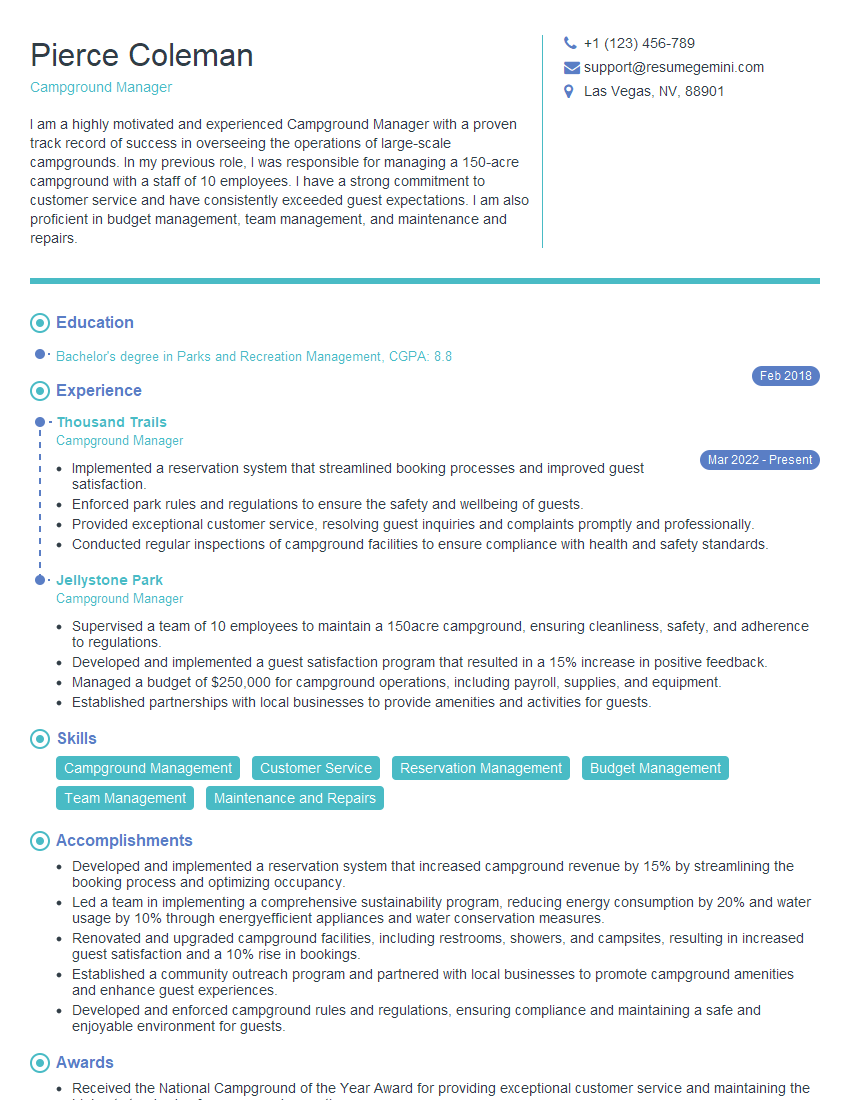
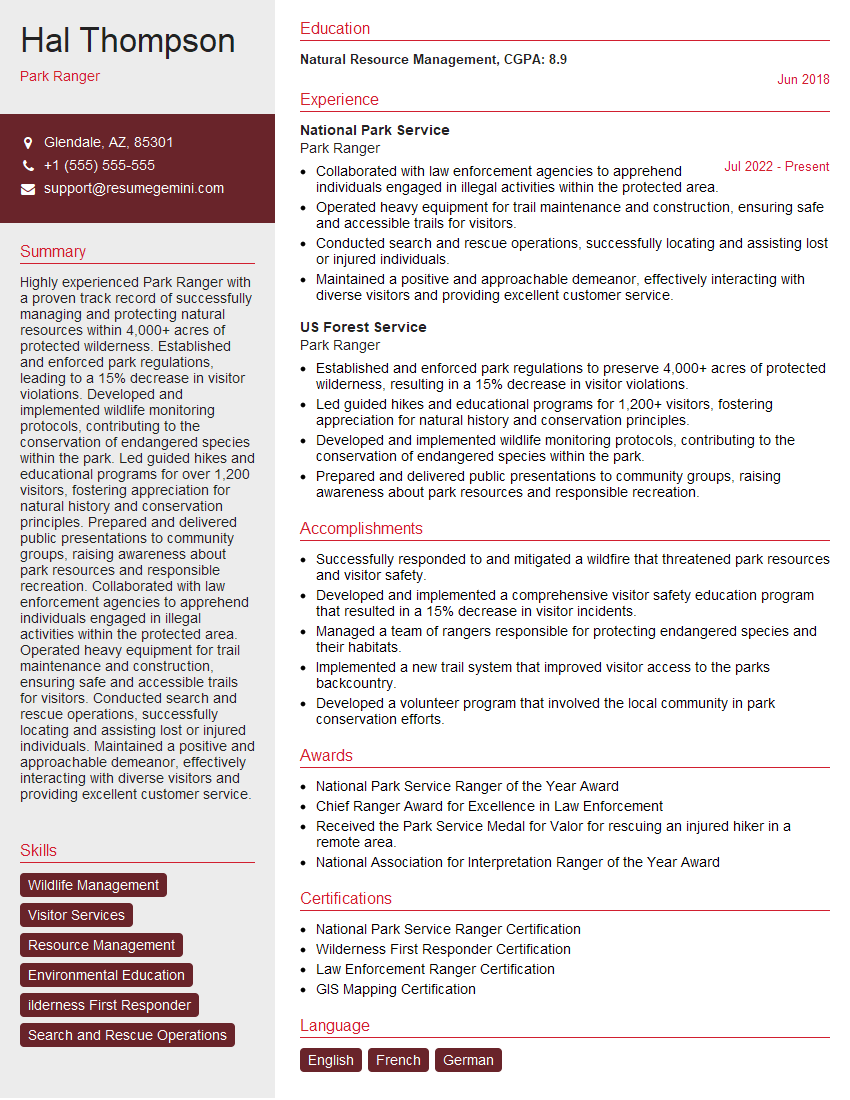
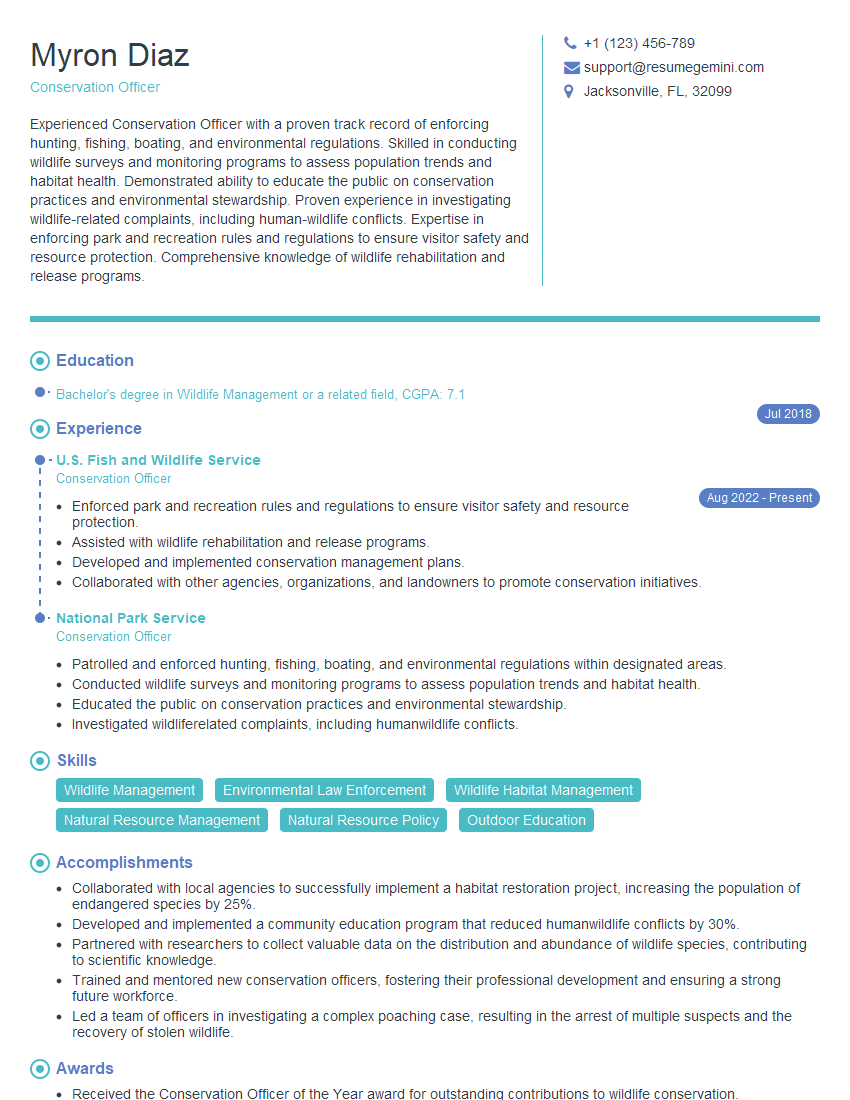
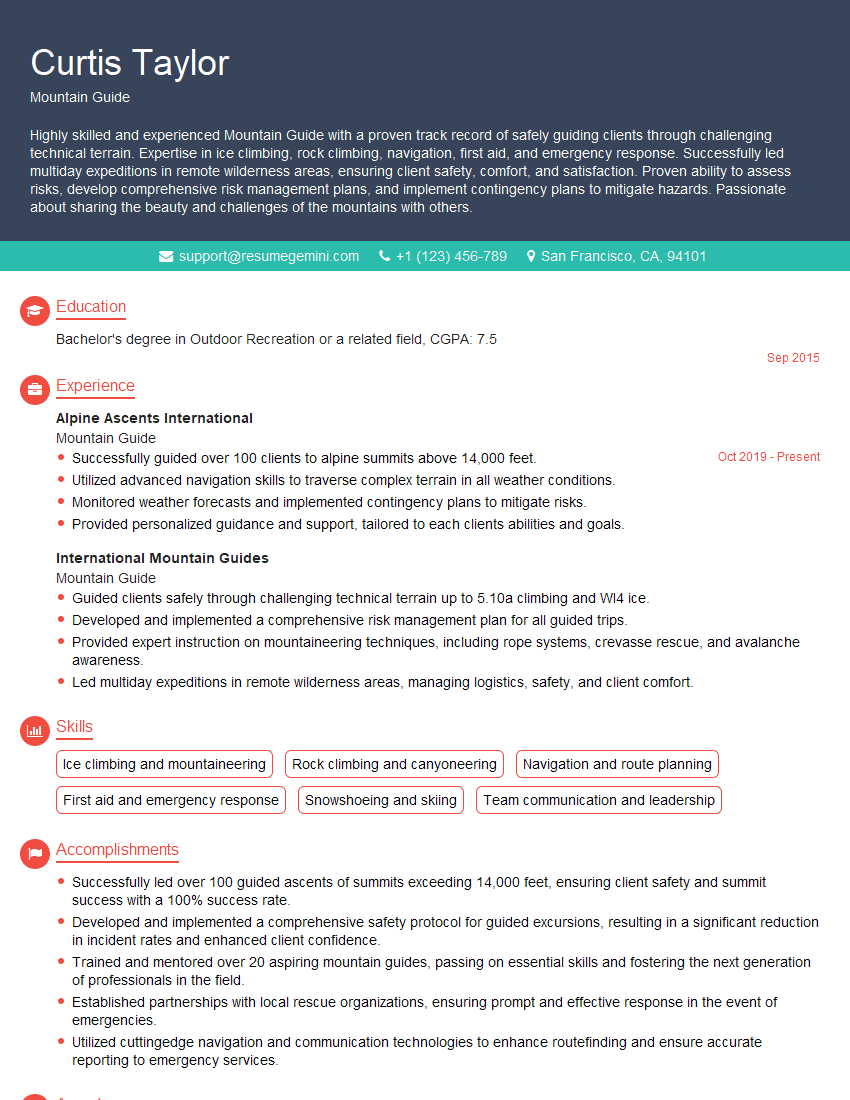
Mastering backcountry travel and camping skills significantly enhances your marketability in outdoor-related roles, showcasing your resilience, problem-solving capabilities, and commitment to safety. To increase your chances of landing your dream job, crafting an ATS-friendly resume is crucial. ResumeGemini is a trusted resource to help you build a professional and impactful resume that highlights your skills and experience effectively. Examples of resumes tailored to Backcountry Travel and Camping are available to guide you through the process.
Explore more articles
Users Rating of Our Blogs
Share Your Experience
We value your feedback! Please rate our content and share your thoughts (optional).
What Readers Say About Our Blog
Very informative content, great job.
good