Preparation is the key to success in any interview. In this post, we’ll explore crucial Wood Fence Installation interview questions and equip you with strategies to craft impactful answers. Whether you’re a beginner or a pro, these tips will elevate your preparation.
Questions Asked in Wood Fence Installation Interview
Q 1. What types of wood are best suited for fence construction in various climates?
Choosing the right wood for your fence depends heavily on your climate. Different woods possess varying levels of resistance to rot, insects, and extreme weather conditions. Think of it like choosing the right clothes for different seasons – you wouldn’t wear a swimsuit in a blizzard!
- Hot, Humid Climates: Cedar and Redwood are excellent choices due to their natural resistance to decay and insects. They’re naturally durable and can withstand high humidity without significant deterioration. Pressure-treated Southern Yellow Pine is also a cost-effective option but requires more frequent maintenance in humid areas.
- Cold, Dry Climates: While many woods perform well, you might consider the added protection of pressure-treated lumber to mitigate the effects of freeze-thaw cycles which can damage untreated wood. Redwood and Cedar still hold up well, offering both durability and aesthetic appeal.
- Coastal Areas: The salinity of the air and water presents a unique challenge. Cedar and Redwood are again superior choices due to their natural resistance to saltwater damage. Pressure-treated lumber with a high-quality sealant can also be a suitable option, though it requires more diligent maintenance.
Ultimately, the best wood choice involves balancing cost, aesthetics, and the specific demands of your local climate. Consulting with a local lumber yard is always a good idea to get their expert recommendation based on your location.
Q 2. Explain the process of setting fence posts, including proper depth and spacing.
Setting fence posts correctly is crucial for a sturdy and long-lasting fence. It’s like building a house – a weak foundation leads to a weak structure. The process involves several key steps:
- Digging the Holes: Use a post hole digger to create holes at least three times the diameter of your post and at a depth of at least one-third to one-half the post’s length, depending on soil type and local frost line. This provides excellent stability. In loose soil, you might need to go even deeper.
- Setting the Posts: Place the posts in the holes, ensuring they are plumb (perfectly vertical) using a level. Temporarily brace them to maintain their position.
- Adding Gravel (Optional): Adding a layer of gravel at the bottom of the hole improves drainage and helps prevent settling.
- Backfilling and Compacting: Backfill the holes with compacted gravel or a quick-setting concrete mix. This ensures the post remains firmly in place and prevents it from shifting. Don’t just throw dirt in the hole; pack it down firmly to provide solid support.
- Spacing: Post spacing depends on the fence style and local regulations, but typically ranges from 6 to 8 feet apart for most fence types. Consistent spacing is essential for a neat, even fence line.
Remember to always check local building codes for specific requirements regarding post depth and spacing.
Q 3. Describe different types of fence post anchors and their applications.
Several types of fence post anchors are available, each suited for different situations:
- Concrete: This is the most common and generally strongest method. We use a quick-setting concrete mix to encase the post firmly in the ground for maximum stability. Ideal for most situations.
- Metal Post Anchors: These are metal sleeves or brackets that are driven into the ground and then the post is inserted. They are faster to install than concrete but might not be as strong, especially in heavy soils or windy areas.
- Drive-in Post Anchors: These are designed to be driven directly into the ground with a post driver. They’re easy to install, particularly in softer soils, but may not provide the same level of stability as concrete.
The choice of anchor depends on factors like soil type, fence height, and wind exposure. For instance, in rocky soil, metal anchors may be more practical than digging a hole for concrete. In areas with high winds, concrete is usually the preferred method for its superior stability.
Q 4. How do you ensure proper alignment and leveling of fence rails and panels?
Achieving proper alignment and leveling is critical for a professional-looking fence. Imagine a fence that’s crooked – it’s an eyesore! Here’s how we ensure everything’s straight:
- String Line: We use a string line as a guide along the fence line before installing any rails or panels. This establishes a perfect reference point for maintaining alignment.
- Leveling: A level is constantly used to ensure that rails and panels are perfectly horizontal. Adjustments are made as needed using shims (thin pieces of wood) placed between the posts and rails or panels.
- Post Placement: Accurate post placement is vital. Any error in post placement will be amplified throughout the fence line. This is why it’s crucial to carefully use levels and string lines during initial post installation.
- Measuring and Marking: Precise measuring and marking are done before attaching rails or panels. This helps ensure consistent spacing and alignment.
By carefully following these steps, we can ensure a fence that is both aesthetically pleasing and structurally sound.
Q 5. What are the common methods for attaching fence panels to posts?
Several methods exist for attaching fence panels to posts, each with its advantages and disadvantages:
- Nails or Screws: This is a common method, especially for simpler fence designs. We use galvanized nails or screws to attach the rails to the posts. The strength of this method is heavily dependent on the type and size of fasteners and the quality of wood.
- Metal Brackets: These offer a stronger and more visually appealing attachment. They come in various styles and are designed to create a robust connection between the panel and the post. This allows for easier panel replacement if needed.
- Post Caps: While not a direct attachment method, post caps create a clean finish and prevent water from entering the top of the posts, extending their lifespan.
The best method depends on factors such as fence style, panel design, and personal preference. For instance, for heavier panels or privacy fences, metal brackets might be preferred for their added strength and stability.
Q 6. How do you calculate the amount of materials needed for a fence project?
Accurately calculating materials is crucial to avoid costly delays and waste. It’s like baking a cake – you need the right ingredients in the right proportions. Here’s a simplified approach:
- Measure the Fence Line: Carefully measure the total length of the fence line.
- Determine Post Spacing: Decide on the spacing between posts (typically 6-8 feet).
- Calculate Number of Posts: Divide the total fence length by the post spacing to determine the number of posts needed (add extra for corners and gate posts).
- Calculate Rail Length: Measure the length of each rail needed and multiply by the number of rails per section.
- Calculate Panel Quantity: Determine the number of panels required based on the fence length and panel dimensions.
- Add Waste Factor: Always add a 10-15% waste factor to account for cuts, mistakes, and imperfections in the lumber.
You’ll need to consider additional materials like concrete, fasteners, and any decorative elements. Always check local building codes and consult with a lumber yard for accurate material estimation based on your specific project needs.
Q 7. Describe your experience with different fence styles (e.g., picket, privacy, split rail).
I have extensive experience with various fence styles, each presenting unique installation challenges and aesthetic considerations:
- Picket Fences: These classic fences are known for their charm. The installation requires precise spacing and alignment of the pickets to create a uniform look. We use specialized jigs or templates to ensure accuracy.
- Privacy Fences: These fences provide maximum privacy and often use solid panels. Installation focuses on ensuring straightness and plumb posts to support the weight and create a secure barrier.
- Split Rail Fences: These fences have a rustic appeal and are commonly used in rural areas. Installation involves proper post setting and securing the rails with galvanized fasteners. Alignment is less critical than other styles but the overall look should still be consistent.
My experience encompasses all aspects of these styles, from initial design consultation to final installation and finishing touches. Each style has its own nuances, requiring attention to detail and experience for a professional result.
Q 8. Explain your experience with gate installation and different gate types.
Gate installation is a crucial part of any fence project, requiring precision and attention to detail. I’ve installed a wide variety of gates, from simple swing gates to more complex sliding and cantilever gates. Swing gates are the most common, typically using hinges attached to posts. Sliding gates require a track system, while cantilever gates utilize a counterweight system for smoother operation.
- Swing Gates: These are straightforward to install, focusing on proper hinge placement, gate alignment, and latch installation. I always ensure the gate swings freely and latches securely.
- Sliding Gates: These require more planning and precision, as they involve laying a track system and ensuring the gate rolls smoothly. Proper leveling of the track is critical for optimal functionality.
- Cantilever Gates: These are more complex and require specialized hardware. The counterweight system must be properly balanced to avoid issues with gate operation and safety.
My experience includes working with various materials like wood, metal, and composite, and I tailor the installation process to the specific gate type and client’s needs. For example, I recently installed a custom-designed cedar swing gate with an ornate latch for a client who wanted a visually appealing, yet functional entry point.
Q 9. What safety measures do you follow during fence installation?
Safety is paramount in fence installation. I prioritize safety at every stage of the process, adhering to strict guidelines to protect myself and others.
- Personal Protective Equipment (PPE): I always wear safety glasses, gloves, steel-toed boots, and hearing protection, especially when operating power tools.
- Proper Tool Use: I ensure all tools are in good working order and used according to manufacturer’s instructions. This includes regular maintenance and inspection.
- Site Safety: I clear the work area of any obstacles and ensure the area is properly secured. This includes warning signs and keeping the public at a safe distance.
- Lifting Techniques: I use proper lifting techniques to avoid injury when handling heavy materials like fence posts. I utilize mechanical aids whenever possible to reduce strain.
- Emergency Procedures: I’m familiar with emergency procedures and have a plan in place for dealing with accidents or injuries.
A recent project involved working near a busy road. I implemented extra safety measures, such as flagging and traffic control, to ensure the safety of both myself and the public during the installation process.
Q 10. How do you handle challenging terrain during fence installation?
Challenging terrain requires careful planning and specialized techniques. I adapt my approach based on the specific conditions, using different methods to ensure stability and longevity.
- Grading and Leveling: Uneven ground often requires grading and leveling before post installation. This involves removing excess soil or adding fill to create a level base.
- Post Setting: In rocky or hilly terrain, I might use specialized augers or hand-digging techniques to set posts securely. Sometimes, post anchors are needed for extra stability.
- Step Construction: On slopes, I might use a stepped construction method, creating level sections for each fence panel. This ensures alignment and structural integrity.
- Retaining Walls: For significant slopes, I might recommend incorporating retaining walls to stabilize the ground and provide a suitable base for the fence.
For instance, during a recent job on a steep hillside, I employed a stepped construction method, creating a series of level platforms for the fence panels. This ensured the stability of the fence, despite the challenging terrain.
Q 11. What tools and equipment are essential for efficient wood fence installation?
Efficient wood fence installation relies on the right tools. My arsenal includes a range of essential equipment, carefully selected for their effectiveness and safety.
- Post Hole Digger: This is vital for quickly and efficiently digging holes for fence posts. I use both manual and power-driven augers, selecting the appropriate one based on the soil conditions and the scale of the project.
- Measuring Tape and Level: Accurate measurements and levels are crucial for ensuring a straight and level fence line.
- Shovel and Post Tamper: These are essential for backfilling post holes and compacting the soil around posts to ensure stability.
- Chainsaw: Used to cut fence posts and rails to the required length. Safety is paramount here, with proper blade maintenance and safety gear always used.
- Drill and Driver: These are necessary for driving screws and fastening fence components.
- Safety Gear: This includes safety glasses, gloves, hearing protection, and steel-toed boots.
Having the correct tools on hand significantly accelerates the process and enhances the overall quality of the work.
Q 12. Describe your experience with using power tools (e.g., post hole digger, chain saw).
My experience with power tools is extensive. I’m proficient in using a post hole digger, chainsaw, and other power tools, always prioritizing safety and efficiency.
- Post Hole Digger: I’m skilled in operating both gas-powered and electric post hole diggers, adapting my choice to the job site conditions and the size of the project. I know how to handle different soil types effectively.
- Chainsaw: I’m experienced in using chainsaws for accurate and safe cutting of wood. Regular maintenance and proper blade sharpening are essential, ensuring clean cuts and minimizing kickback risks.
- Other Power Tools: I’m also proficient in using other power tools like drills, circular saws, and grinders, always following safety regulations and utilizing appropriate safety gear.
For example, in a recent project, using the gas-powered post hole digger was crucial in managing a large number of posts on hard ground where manual digging would have been impractical.
Q 13. How do you address issues with uneven ground during fence installation?
Uneven ground requires careful consideration. I address this by implementing strategies to ensure the fence’s stability and appearance.
- Grading and Leveling: Before post installation, I carefully grade and level the ground to create a consistent base. This might involve removing excess soil or adding fill to achieve a level surface.
- Varying Post Depths: In some cases, I adjust the depth of the fence posts to compensate for uneven ground, ensuring they are firmly embedded. This requires careful measurement and assessment of the terrain.
- Step Construction: On significant slopes, I utilize a stepped construction method, creating level platforms for each fence section to maintain structural integrity.
- Shimming: For minor variations in ground level, I use shims to level the fence panels between posts, ensuring a uniform appearance.
One instance involved a project where the ground sloped significantly. I carefully graded and leveled the ground where possible and utilized stepped construction for sections where leveling wasn’t feasible, resulting in a stable and aesthetically pleasing fence.
Q 14. Explain your process for repairing damaged fence sections.
Repairing damaged fence sections requires a systematic approach, focusing on restoring structural integrity and visual appeal. The repair method depends on the extent of the damage.
- Minor Repairs: Minor damage, such as loose boards or broken pickets, can be repaired by tightening screws, replacing damaged boards, or using wood filler and paint to restore the finish.
- Major Repairs: For more significant damage, such as rotted posts or broken rails, more extensive repairs are needed. This might involve replacing damaged posts and rails, potentially requiring the removal and reconstruction of a section of fencing.
- Post Replacement: Replacing a rotted post requires carefully digging out the old post, setting a new one, and reattaching the fence panels. The new post should be pressure-treated for longevity.
Recently, I repaired a section of fence damaged by a storm. This involved replacing several rotted fence posts, carefully ensuring proper alignment and stability before reattaching the existing fence panels. The completed repair seamlessly integrated with the rest of the fence.
Q 15. How do you handle customer communication and address concerns during a project?
Open and proactive communication is paramount. From the initial consultation, I establish clear expectations by carefully listening to the client’s vision, outlining the project scope, timeline, and potential costs. I provide regular updates throughout the process, using photos or videos to show progress. If concerns arise, I address them immediately, offering transparent explanations and collaborative solutions. For example, if a weather delay impacts the schedule, I’ll promptly inform the client and adjust the timeline accordingly, rather than leaving them in the dark. I believe in fostering a relationship built on trust and mutual respect, ensuring a positive experience from start to finish.
Career Expert Tips:
- Ace those interviews! Prepare effectively by reviewing the Top 50 Most Common Interview Questions on ResumeGemini.
- Navigate your job search with confidence! Explore a wide range of Career Tips on ResumeGemini. Learn about common challenges and recommendations to overcome them.
- Craft the perfect resume! Master the Art of Resume Writing with ResumeGemini’s guide. Showcase your unique qualifications and achievements effectively.
- Don’t miss out on holiday savings! Build your dream resume with ResumeGemini’s ATS optimized templates.
Q 16. What is your experience with reading and interpreting blueprints or site plans?
I’m proficient in reading and interpreting blueprints and site plans. This involves understanding the property boundaries, existing structures, and the desired fence location. Key elements I focus on include: the fence’s dimensions (length, height), materials specified (e.g., type of wood, post size), gate placement, and any special features (e.g., curves, angles). I can accurately translate these plans into a practical installation strategy. For instance, if a blueprint shows a change in terrain, I can plan accordingly, ensuring proper post depth and stability on uneven ground. Accurate interpretation ensures the fence is built precisely to specification.
Q 17. How do you ensure the longevity and durability of a wood fence?
The longevity of a wood fence depends greatly on material selection, proper installation, and regular maintenance. I utilize pressure-treated lumber, known for its resistance to rot and insect infestation. Careful attention is given to ensuring proper post depth—typically a third of the post’s height—to maximize stability. Concrete is used to set posts, offering superior strength to simply tamping them in. Furthermore, using galvanized or stainless steel fasteners resists rust and decay. Finally, a quality stain or sealant acts as a protective barrier against the elements, prolonging the life of the wood. Think of it like protecting your skin from the sun; proper preparation and protection significantly extends the lifespan.
Q 18. What are common wood fence maintenance procedures?
Regular maintenance is key to preserving a wood fence. This includes:
- Annual Inspection: Check for damaged boards, loose posts, or signs of rot or insect infestation.
- Cleaning: Remove dirt, debris, and cobwebs using a pressure washer (low pressure) or a garden hose.
- Re-staining/Sealing: Apply a fresh coat of stain or sealant every 2-3 years to protect the wood from UV damage and moisture.
- Tightening: Periodically tighten any loose screws or bolts.
- Repairing: Promptly repair any damaged sections to prevent further deterioration. Replacing a single rotted board is much simpler and cheaper than replacing an entire section.
These simple steps significantly extend the lifespan and aesthetic appeal of your fence.
Q 19. Describe your experience with working in a team environment.
I thrive in team environments. On fence installations, teamwork is essential for efficiency and safety. My experience includes working with crews of varying sizes and skill levels. I actively participate in planning and delegation, ensuring tasks are distributed effectively. I’m adept at communication, keeping the team informed and addressing any questions or concerns promptly. One memorable project involved a particularly complex fence design. By working closely with my team, leveraging each member’s strengths, we not only completed the project ahead of schedule but also maintained the high quality standard we aim for. Collaboration fosters a sense of shared accomplishment and strengthens the final product.
Q 20. How do you manage your time effectively on a fence installation project?
Effective time management is critical for project success. Before starting a project, I develop a detailed schedule, breaking down the work into manageable tasks. This includes allocating time for material procurement, site preparation, installation, and cleanup. I monitor progress regularly, adapting the schedule as needed. Unexpected issues, like weather delays or material shortages, are addressed proactively, minimizing disruptions. Utilizing checklists and prioritizing tasks ensures efficiency and minimizes wasted time. For example, having all the necessary materials delivered to the site beforehand prevents delays during construction.
Q 21. Describe a time you had to solve a problem creatively during fence installation.
On a recent project, we encountered unexpected underground utilities—a gas line—that weren’t marked on the site plan. Instead of halting work and waiting for the utility company, which would have caused significant delays, I creatively collaborated with my team to devise a solution. We carefully adjusted the fence line, minimizing the impact on the client’s design while ensuring the safety of the gas line. This involved precise measurements, careful excavation, and some creative post placement adjustments. Open communication with the client kept them informed, and we successfully completed the project without compromising quality or safety. The key was a willingness to problem-solve creatively and adapt to unforeseen circumstances.
Q 22. How do you ensure the fence meets local building codes and regulations?
Ensuring a fence project adheres to local building codes is paramount. Before starting any project, I meticulously research and obtain all necessary permits. This involves contacting the local building department to understand specific requirements related to fence height, setbacks from property lines, materials allowed, and any unique regulations for the area. For example, some areas might have restrictions on fence styles near historical districts or require specific types of posts for increased durability in high-wind zones. I then create detailed plans that clearly reflect compliance, and I keep copies of these permits on-site throughout the project. During construction, I meticulously ensure all aspects of the build – from post depth to the distance from property lines – meet the outlined specifications. Finally, I often conduct a self-inspection before the final walkthrough with the client and any required inspections by the building authority, to identify and rectify any potential issues before they become problems. This proactive approach ensures a smooth and legally compliant project.
Q 23. What is your experience with different types of fence finishes (e.g., staining, sealing)?
I have extensive experience with various fence finishes. Proper finishing is crucial for extending the life of a wood fence and enhancing its aesthetic appeal. Staining offers color and protection against UV rays and moisture, while sealing provides a water-resistant barrier. My experience ranges from traditional oil-based stains, which offer deep penetration and rich color but require more drying time, to newer water-based stains which are low-VOC and easier to clean up. I’m also skilled in applying sealants, including those with added UV protection and mildew inhibitors. Choosing the right finish depends on the type of wood, the climate, and the client’s aesthetic preferences. For instance, a cedar fence in a humid climate would benefit from a high-quality sealant to prevent rot, while a redwood fence might only need a semi-transparent stain to enhance its natural beauty. I always discuss the options with clients, explaining the pros and cons of each to ensure the best choice for their needs and budget.
Q 24. How do you handle unexpected issues or delays during a project?
Unexpected issues are inevitable in any construction project. My approach is proactive and transparent. I regularly inspect the site for potential problems – from hidden underground utilities to unexpectedly rocky soil – and immediately address any arising issues. For example, if we encounter unstable ground during post-hole digging, I’ll adjust the plan to use longer posts or concrete footings for added support, rather than proceeding with a potentially unstable foundation. For material delays, I maintain strong relationships with suppliers and proactively communicate with clients about potential schedule impacts. I might suggest alternative materials if necessary, while ensuring the quality and visual appeal remain consistent. Open and honest communication is key to managing expectations and maintaining a positive client relationship. I believe in problem-solving collaboratively, keeping the client informed every step of the way.
Q 25. What is your experience with working in different weather conditions?
Working in diverse weather conditions is a standard part of fence installation. I adjust my work schedule and techniques based on the weather. Extreme heat necessitates more frequent breaks and hydration, while cold weather requires careful consideration of materials; for example, some stains and sealants don’t apply well in freezing temperatures. I always prioritize worker safety. Rain delays are managed by rescheduling work or using appropriate protective measures. For example, covering partially completed sections of the fence to protect them from rain damage. Windy conditions require extra caution during post setting and bracing. I have the experience and know-how to ensure efficient and safe work, regardless of weather challenges.
Q 26. What are your strengths and weaknesses related to wood fence installation?
My strengths lie in my meticulous attention to detail, problem-solving abilities, and effective communication skills. I pride myself on building fences that are not only structurally sound and visually appealing but also meet or exceed client expectations. My experience allows me to efficiently address unforeseen challenges. A recent project involved working on uneven terrain; my ability to adapt the design and employ specialized techniques ensured a beautiful and secure fence. My weakness, perhaps, is my perfectionism, which sometimes requires extra effort to manage timelines. However, I am actively working on improving my time management skills by utilizing project management tools and streamlining my processes.
Q 27. Where do you see yourself in five years regarding your career in fence installation?
In five years, I envision myself as a leading figure in my field, potentially supervising a team of skilled installers. I’d like to expand my knowledge to include designing and building more complex fence styles, possibly incorporating sustainable materials and modern techniques. I aim to build a strong reputation for quality workmanship and client satisfaction. I’m also considering obtaining relevant certifications to further enhance my professional qualifications and expand my business opportunities. Continual learning and staying abreast of industry innovations are key to my long-term goals.
Q 28. Why are you interested in this wood fence installation position?
I’m interested in this position because I’m passionate about my craft and dedicated to delivering high-quality results. Your company’s reputation for excellence and its commitment to client satisfaction align perfectly with my values. I’m eager to contribute my expertise to your team and learn from experienced professionals. The opportunity to work on a variety of projects and further develop my skills within a collaborative environment is incredibly appealing. I’m confident that my skills and experience will make me a valuable asset to your team.
Key Topics to Learn for Wood Fence Installation Interview
- Site Assessment and Planning: Understanding property lines, soil conditions, and client requirements for design and layout. Practical application: Accurately measuring and sketching a site to create a detailed installation plan.
- Post Hole Digging and Setting: Proper techniques for digging holes to the correct depth and width, using post hole diggers and augers. Practical application: Ensuring posts are plumb and set securely in concrete for longevity and stability.
- Material Selection and Handling: Knowledge of different wood types, their properties (rot resistance, strength), and proper handling to prevent damage. Practical application: Choosing the right materials for the job based on budget, client preference, and site conditions.
- Fence Construction Techniques: Understanding different fence styles (e.g., privacy, picket, split rail), proper techniques for attaching rails and boards to posts, and ensuring alignment and even spacing. Practical application: Building a structurally sound and aesthetically pleasing fence according to specifications.
- Safety Procedures and Regulations: Following safety protocols when using power tools, working at heights, and handling materials. Understanding relevant building codes and permits. Practical application: Maintaining a safe work environment and adhering to all legal requirements.
- Problem-Solving and Troubleshooting: Identifying and resolving common issues during installation, such as uneven terrain, damaged materials, or unexpected obstacles. Practical application: Adapting to unforeseen challenges and finding efficient solutions.
- Tools and Equipment Knowledge: Familiarity with common tools used in fence installation (e.g., post hole diggers, levels, measuring tapes, saws, drills) and their proper usage and maintenance. Practical application: Efficient and safe use of tools to complete the job effectively.
Next Steps
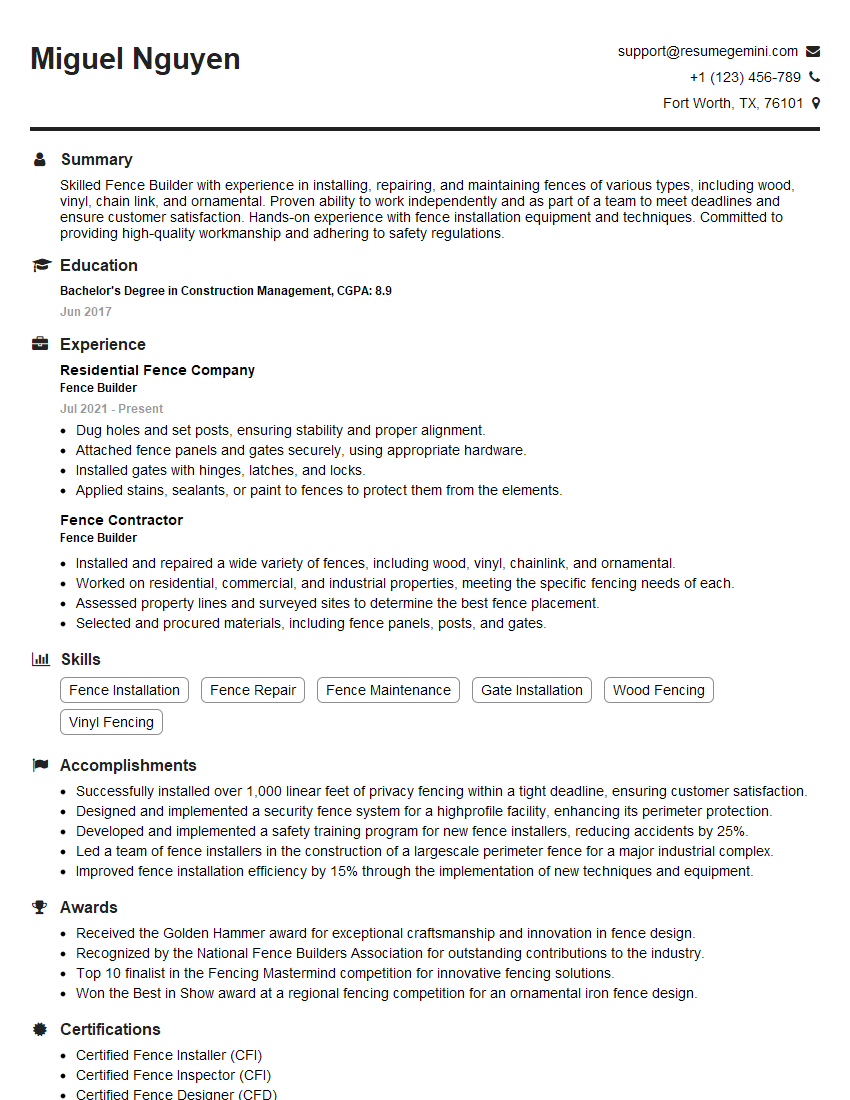
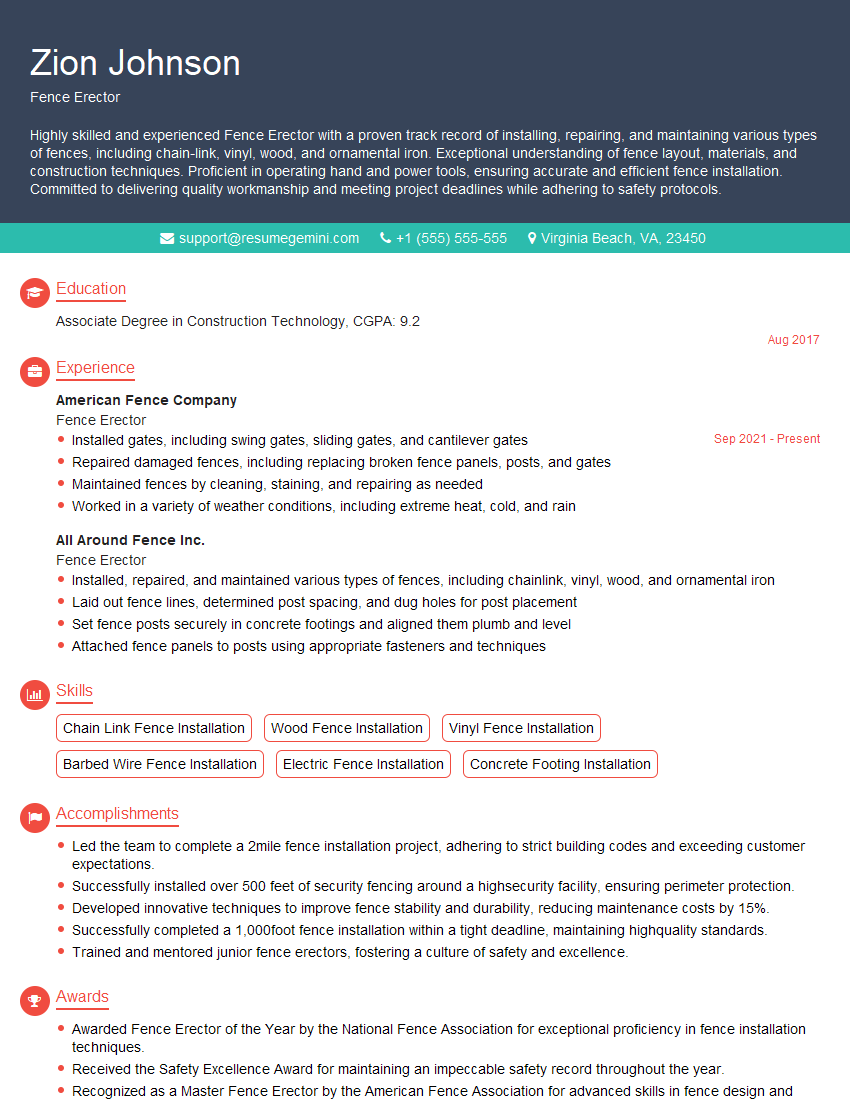
Mastering wood fence installation opens doors to a rewarding career with opportunities for advancement and specialization. A strong resume is crucial for showcasing your skills and experience to potential employers. Creating an ATS-friendly resume significantly increases your chances of getting noticed by recruiters. We highly recommend using ResumeGemini to build a professional and impactful resume. ResumeGemini provides you with the tools and resources to craft a compelling narrative highlighting your abilities, and examples of resumes tailored to Wood Fence Installation are available to guide you. Invest time in crafting a strong resume – it’s your first impression on a potential employer.
Explore more articles
Users Rating of Our Blogs
Share Your Experience
We value your feedback! Please rate our content and share your thoughts (optional).
What Readers Say About Our Blog
Very informative content, great job.
good