Interviews are opportunities to demonstrate your expertise, and this guide is here to help you shine. Explore the essential Barn and Facility Maintenance interview questions that employers frequently ask, paired with strategies for crafting responses that set you apart from the competition.
Questions Asked in Barn and Facility Maintenance Interview
Q 1. Describe your experience with preventative maintenance in barn facilities.
Preventative maintenance is crucial for extending the lifespan of a barn and preventing costly repairs. My approach focuses on regular inspections and proactive repairs. This involves creating a detailed maintenance schedule, tailored to the specific barn and its usage. For example, I’d schedule monthly checks of roof integrity, quarterly checks of the gutter system, and annual inspections of the foundation.
- Roof Inspections: Checking for loose shingles, damaged flashing, and signs of deterioration. Early detection prevents leaks and costly repairs.
- Structural Checks: Inspecting for cracks in walls, foundation settling, and damage to support beams. Addressing these early minimizes structural instability.
- Electrical System Checks: Testing circuits, checking for frayed wires, and ensuring proper grounding. This prevents fire hazards and ensures operational safety.
- Plumbing System Checks: Inspecting pipes for leaks, checking water pressure, and ensuring proper drainage. Preventing leaks prevents water damage and mold growth.
I use a computerized maintenance management system (CMMS) to track all inspections and repairs, ensuring nothing is overlooked. This system allows for scheduling, record-keeping, and generating reports for analysis.
Q 2. What are the common causes of roof leaks in barns, and how would you address them?
Roof leaks in barns are often caused by several factors, and diagnosing the root cause is essential for effective repair.
- Damaged Shingles/Roofing Materials: Age, weather damage (wind, hail), and improper installation can lead to leaks. Replacing damaged shingles or sections is a common solution.
- Clogged Gutters and Downspouts: Water overflow can cause damage around the roof edges and walls. Regular cleaning prevents this issue.
- Flashing Issues: Flashing (metal sheeting used around chimneys, vents, and other penetrations) deteriorates over time. Improper installation or damage can lead to significant leaks. Replacing or repairing flashing is vital.
- Poor Ventilation: Inadequate ventilation can lead to condensation buildup, which contributes to rot and leaks. Adding vents can address this.
- Foundation Settlement: A settling foundation can put stress on the roof structure, causing cracks and leaks. This requires a more substantial and structural solution.
My approach involves a thorough roof inspection, identifying the source of the leak (often using a water test during rainfall or simulated conditions). Then, I implement the appropriate repair—from simple shingle replacement to complex structural repairs, if necessary. Preventing future leaks often involves preventative maintenance, such as regular gutter cleaning and inspecting the flashing.
Q 3. Explain your experience with repairing or replacing barn doors.
I have extensive experience repairing and replacing barn doors of various types, from simple sliding doors to complex automated systems. The process begins with assessing the damage and determining the best course of action.
- Repairing Existing Doors: This may involve fixing broken hinges, replacing damaged wood or metal components, lubricating tracks, and addressing rot or insect damage.
- Replacing Doors: Sometimes, complete replacement is necessary. This includes measuring the existing opening, selecting appropriate materials (wood, metal, composite), and installing the new door. Proper alignment and securing are crucial.
- Automated Systems: I have expertise in maintaining and repairing automated door systems, including troubleshooting electrical components, sensors, and drive mechanisms. Safety is paramount here.
A recent example involved repairing a large sliding barn door where the track had become misaligned, causing binding. After carefully realigning the track and lubricating it, the door functioned smoothly again. In another instance, I replaced rotten wood on a set of double barn doors, restoring their structural integrity and weather resistance. Safety is a priority; any work at height requires proper safety equipment and precautions.
Q 4. How do you handle electrical repairs in a barn setting, ensuring safety compliance?
Electrical repairs in barns demand meticulous attention to safety. I always prioritize safety by following these steps:
- De-energizing the Circuit: Before any work begins, I always switch off the power at the breaker box and verify the circuit is dead using a non-contact voltage tester.
- Lockout/Tagout Procedures: To prevent accidental re-energizing, I implement lockout/tagout procedures, physically locking out the breaker.
- Proper Grounding: Ensuring all electrical components are properly grounded to prevent shocks and electrical hazards.
- Using Appropriate Tools and Equipment: Utilizing tools rated for the voltage and amperage of the system. This includes using insulated tools and personal protective equipment (PPE), such as safety glasses and rubber gloves.
- Code Compliance: Adhering to all relevant electrical codes and regulations.
A common issue is replacing outdated wiring or faulty outlets. I’ve also had experience troubleshooting issues with lighting systems and installing new circuits for added equipment. I always thoroughly document all work completed for future reference.
Q 5. Describe your experience with maintaining HVAC systems in agricultural facilities.
Maintaining HVAC systems in agricultural facilities requires specialized knowledge due to the unique environmental conditions. These systems often face challenges from dust, humidity, and temperature extremes.
- Regular Filter Changes: Frequent filter changes are critical to prevent airflow restriction and maintain efficiency. The frequency depends on the environment and system usage.
- Coil Cleaning: Regular cleaning of evaporator and condenser coils removes dust and debris, improving heat transfer and efficiency.
- Refrigerant Level Checks: Monitoring refrigerant levels and addressing leaks promptly are crucial for proper cooling. Leaks can reduce cooling capacity and environmental implications.
- Belt and Motor Inspections: Checking belt tension and motor performance ensures proper operation of fans and compressors.
- System Inspections and Servicing: Annual professional inspections and service are essential to detect potential issues and prevent major breakdowns.
In one instance, I resolved a significant cooling issue in a poultry barn by replacing a faulty compressor. This improved temperature regulation, ensuring the well-being of the birds. Understanding the specific needs of different agricultural settings, such as temperature and humidity requirements for various crops or livestock, is vital for effective HVAC maintenance.
Q 6. What are your methods for identifying and resolving plumbing issues in barns?
Identifying and resolving plumbing issues in barns involves a systematic approach. I start by assessing the situation, understanding the symptoms, and then determining the root cause.
- Leak Detection: Identifying leaks often involves visual inspection, listening for unusual sounds, and sometimes using specialized leak detection tools.
- Pipe Inspection: Checking for corrosion, cracks, or blockages in pipes. This may involve accessing pipes in walls or under floors.
- Water Pressure Checks: Ensuring adequate water pressure throughout the system.
- Drainage System Assessment: Checking for blockages in drains, gutters, and downspouts.
- Fixture Repair/Replacement: Addressing issues with leaking faucets, toilets, or other fixtures.
For instance, I once resolved a slow drainage issue in a barn by using a drain snake to clear a significant blockage. In another case, I identified a leak in a water line buried underground using specialized leak detection equipment. Addressing plumbing problems promptly prevents further damage, water waste, and potential health hazards.
Q 7. Explain your knowledge of different types of barn construction materials and their maintenance.
Knowledge of barn construction materials is fundamental to effective maintenance. Different materials have unique characteristics and maintenance requirements.
- Wood: Wood is a common material but susceptible to rot, insect infestation, and weathering. Regular inspections, treating with preservatives, and promptly addressing any damage are essential.
- Metal (Steel, Aluminum): Metal is durable but can rust or corrode. Regular cleaning, painting (for steel), and addressing any rust spots are crucial.
- Concrete: Concrete foundations and floors are durable but can crack due to settling or freeze-thaw cycles. Regular inspections, repairing cracks, and sealing can extend their life.
- Masonry (Brick, Stone): Masonry is durable but requires occasional cleaning and repair of damaged sections. Waterproofing can protect against damage.
Understanding the strengths and weaknesses of each material allows me to plan appropriate maintenance strategies. For example, I’d recommend pressure washing a metal barn periodically to remove dirt and debris, protecting it from corrosion. For a wooden barn, regular inspections for signs of insect infestation and rot, and appropriate treatment, would be key.
Q 8. How do you prioritize maintenance tasks in a busy barn or facility?
Prioritizing maintenance tasks in a barn or facility requires a systematic approach. I use a combination of methods, starting with a comprehensive assessment. This involves a visual inspection of the entire facility, identifying areas needing immediate attention, those requiring scheduled maintenance, and those that can be deferred.
I then categorize tasks based on urgency and impact. Critical tasks, such as repairing a broken roof section during a storm or addressing a major electrical fault, are prioritized immediately. Urgent tasks, like fixing a leaky water pipe to prevent water damage, are addressed soon, ideally within a day or two. Scheduled maintenance, such as annual inspections of fire safety systems or quarterly cleaning of gutters, are planned in advance. Finally, Deferred tasks are those that can be postponed without causing significant problems – repainting a fence post might fall into this category. This tiered system ensures that resources are allocated effectively to the most critical needs first. I utilize a computerized maintenance management system (CMMS) to schedule, track, and record all tasks. This system allows for proactive maintenance scheduling, reducing downtime and unexpected repairs.
For example, in one barn I managed, a broken ventilation fan during a heatwave became a critical task. This was addressed immediately to prevent livestock stress and potential health issues. Conversely, painting the exterior walls was deferred until the milder weather of spring.
Q 9. Describe your experience with handling hazardous materials in a barn setting.
Handling hazardous materials in a barn setting demands meticulous attention to safety. My experience includes managing the safe storage, handling, and disposal of pesticides, herbicides, fertilizers, and fuel. I follow strict protocols, including proper labeling, secure storage in designated areas away from livestock and food, and use of personal protective equipment (PPE) such as gloves, eye protection, and respirators. Safety data sheets (SDS) are consulted for each material to understand specific handling instructions and emergency procedures.
A crucial aspect is spill containment. I ensure that spill kits with appropriate absorbents are readily available in case of accidental leaks or spills. Proper disposal methods are followed, adhering to all local and state environmental regulations. Regular training on safe handling practices is essential for all staff. I’ve created and implemented detailed training programs covering all aspects of hazardous material management, including emergency response protocols.
For instance, when handling pesticides, I always ensure the wind direction is considered to prevent drift, and I maintain a thorough record of the type, quantity, and application date of each pesticide used, compliant with relevant regulations.
Q 10. How familiar are you with OSHA safety regulations relevant to barn maintenance?
I am very familiar with OSHA safety regulations relevant to barn maintenance, particularly those pertaining to agricultural operations. This includes understanding and implementing regulations covering lockout/tagout procedures for equipment maintenance, fall protection, personal protective equipment (PPE) use, hazard communication, confined space entry, and electrical safety. I regularly review updates to OSHA standards to ensure compliance. I conduct regular safety inspections of the barn and equipment, documenting findings and addressing any hazards promptly.
My training includes OSHA 10-hour and 30-hour safety courses, and I am well-versed in interpreting OSHA standards and applying them to the unique challenges of a barn environment. I frequently conduct safety training sessions for barn staff, reinforcing the importance of following safety guidelines and procedures. For example, I make sure all employees understand the proper use of ladders and the importance of using appropriate fall protection equipment when working at heights.
Q 11. What are your methods for preventing pest infestations in a barn?
Preventing pest infestations requires a multi-pronged approach combining preventative measures and targeted treatments when necessary. My methods include maintaining a clean and organized barn, minimizing clutter that can provide shelter for pests. Regular cleaning and disinfection are essential, especially in areas where feed and bedding are stored. I implement a robust rodent control program involving trapping and exclusion techniques rather than relying solely on pesticides.
Regular inspections are crucial to identify early signs of infestation. Sealing cracks and holes in walls and floors prevents entry points. Proper storage of feed in sealed containers prevents attracting insects and rodents. If necessary, I use only approved pesticides, adhering to label instructions and safety guidelines. Monitoring the effectiveness of control measures is also essential, as well as documentation of all treatment procedures.
In one barn, we implemented a thorough cleaning schedule, sealed gaps in the foundation, and used strategically placed traps to eliminate a persistent rodent problem. This was far more effective and environmentally friendly than relying on pesticides.
Q 12. Describe your experience with the maintenance of agricultural equipment.
My experience encompasses the maintenance of a wide range of agricultural equipment, including tractors, harvesters, balers, and other machinery. This involves routine inspections, preventative maintenance checks, and timely repairs. I’m proficient in performing tasks such as lubricating moving parts, changing fluids (oil, coolant, hydraulic fluid), checking belts and hoses for wear, and replacing worn components.
I am familiar with the operation and maintenance manuals for various equipment types and understand the importance of scheduled servicing to prevent breakdowns and ensure optimal performance. I also have experience with troubleshooting mechanical issues, identifying the root cause of malfunctions, and performing repairs or arranging for repairs by qualified technicians. Safe operation and maintenance practices are always prioritized. I regularly inspect equipment for safety hazards, ensuring all guards and safety devices are in place and functional.
For example, I’ve routinely performed preventative maintenance on a tractor, including oil changes, filter replacements, and inspecting the tire pressure. This ensures the machine is operating at peak efficiency and reduces the risk of costly repairs.
Q 13. How do you handle emergency repairs in a barn?
Handling emergency repairs in a barn requires quick thinking and decisive action. My approach begins with assessing the situation to determine the severity of the problem and the potential risk to livestock or property. Immediate actions may include addressing immediate safety concerns, such as shutting off power or isolating a hazardous spill.
I then prioritize repairs based on their urgency and impact. For simple repairs that I can handle, I utilize my skills and available resources to fix the problem as quickly as possible. More complex repairs or those requiring specialized expertise will necessitate contacting qualified technicians or contractors. Maintaining good relationships with local contractors and having a list of emergency contacts ensures a prompt response. Thorough documentation of emergency repairs, including the date, time, issue, actions taken, and expenses incurred, is essential.
For example, a sudden power outage during a cold snap would require immediate action to ensure the heating system remains operational and to prevent livestock from experiencing hypothermia. In such a case, I’d immediately contact an electrician while taking interim measures to protect the animals from the cold.
Q 14. What is your experience with working with different types of barn ventilation systems?
I have experience with various barn ventilation systems, including natural ventilation (using vents and ridge openings), mechanical ventilation (using fans), and combinations thereof. Understanding the principles behind each system is vital for effective maintenance and ensuring optimal air quality within the barn.
My experience includes cleaning and maintaining fans, checking for proper functioning of motors and belts, inspecting ductwork for damage or blockages, and ensuring appropriate airflow. I’m familiar with different types of controllers and sensors used to regulate ventilation, including temperature and humidity sensors. Troubleshooting ventilation issues can involve identifying the source of malfunction, whether it’s a faulty fan motor, a clogged duct, or a problem with the control system. Regular inspections and preventative maintenance are crucial to prevent more significant issues and to maintain animal health and comfort.
For example, in one barn, I identified a problem with the fan control system that was resulting in inadequate ventilation during hot weather. By addressing this issue, we significantly improved animal comfort and reduced the risk of heat stress.
Q 15. Describe your experience with maintaining animal housing structures.
Maintaining animal housing structures requires a multifaceted approach encompassing structural integrity, environmental control, and animal welfare. My experience spans over 10 years, working with various barn types – from traditional pole barns to modern, climate-controlled facilities. This includes regular inspections for structural damage like rot, cracks, or pest infestations; ensuring proper ventilation to maintain optimal temperature and humidity; and verifying the integrity of fencing and gates to prevent escapes. For example, I oversaw the complete renovation of a dilapidated dairy barn, replacing rotting support beams, repairing the roof, and installing a new ventilation system. This project involved careful planning, adherence to building codes, and close collaboration with contractors to ensure minimal disruption to the animals’ daily routines.
In another instance, I detected early signs of foundation settling in a poultry barn, preventing a costly collapse by recommending timely repairs and implementing a preventative maintenance schedule. This proactive approach minimized downtime and prevented animal welfare issues.
Career Expert Tips:
- Ace those interviews! Prepare effectively by reviewing the Top 50 Most Common Interview Questions on ResumeGemini.
- Navigate your job search with confidence! Explore a wide range of Career Tips on ResumeGemini. Learn about common challenges and recommendations to overcome them.
- Craft the perfect resume! Master the Art of Resume Writing with ResumeGemini’s guide. Showcase your unique qualifications and achievements effectively.
- Don’t miss out on holiday savings! Build your dream resume with ResumeGemini’s ATS optimized templates.
Q 16. How do you ensure the cleanliness and sanitation of barn facilities?
Cleanliness and sanitation are paramount in barn facilities to prevent disease outbreaks and maintain animal health. My approach is built on a rigorous cleaning schedule, encompassing daily, weekly, and monthly tasks tailored to the specific animal type and barn structure. Daily tasks include removing manure, cleaning feed troughs and watering systems, and disinfecting high-traffic areas. Weekly tasks involve a more thorough cleaning, including washing down walls and floors with appropriate disinfectants. Monthly deep cleaning includes sanitizing all equipment and performing a comprehensive pest control check.
We use a combination of mechanical cleaning methods (e.g., pressure washers, scrapers) and chemical disinfectants chosen for their effectiveness and safety for animals and personnel. Proper disposal of waste is crucial; I ensure compliance with all relevant environmental regulations. For example, I implemented a color-coded cleaning system in a swine facility, assigning different colors to cleaning equipment and disinfectant solutions to prevent cross-contamination. This simple yet effective system significantly reduced the risk of disease transmission.
Q 17. What is your experience with managing budgets for barn maintenance?
Budget management for barn maintenance requires careful planning and prioritization. I’ve successfully managed budgets ranging from $10,000 to $100,000 annually, balancing preventative maintenance with emergency repairs. This involves creating detailed budget proposals, tracking expenses meticulously, and negotiating favorable contracts with vendors. I leverage cost-effective strategies like bulk purchasing of supplies, preventative maintenance to avoid costly repairs, and utilizing in-house labor wherever possible. For instance, I successfully reduced maintenance costs by 15% in one facility by implementing a preventative maintenance program that focused on early detection and repair of minor issues, rather than waiting for major problems to develop.
I also actively seek out grants and funding opportunities relevant to barn upgrades and improvements to offset costs, ensuring the facility remains functional and meets animal welfare standards without exceeding the allocated budget.
Q 18. Describe your troubleshooting experience with barn lighting systems.
Troubleshooting barn lighting systems requires a practical understanding of electrical systems and safety procedures. My experience includes diagnosing and resolving issues ranging from blown fuses and faulty wiring to malfunctioning light fixtures and sensor problems. I start by visually inspecting the system, checking for loose connections, damaged wires, or tripped breakers. If the problem persists, I utilize a multimeter to test voltage and current, tracing the circuit to identify the fault. Safety is always paramount; I always follow proper lockout/tagout procedures before working on any electrical system.
For example, I recently resolved a widespread lighting outage in a large dairy barn by identifying a faulty transformer. By systematically checking each component of the system and utilizing my knowledge of electrical circuits, I quickly pinpointed the problem, replacing the faulty transformer and restoring power safely and efficiently. I also document all troubleshooting steps and repairs, ensuring future problems can be addressed more quickly and efficiently.
Q 19. How do you manage a team of barn maintenance personnel?
Managing a team of barn maintenance personnel demands effective communication, delegation, and training. I foster a collaborative and positive work environment by clearly defining roles and responsibilities, providing regular feedback, and recognizing achievements. I utilize regular team meetings to discuss ongoing projects, address challenges, and share best practices. I also incorporate regular training sessions to update their skills and knowledge on new technologies and safety procedures. For example, I implemented a mentorship program within my team, pairing experienced personnel with newer employees to facilitate knowledge transfer and skill development.
I focus on open communication to ensure all team members feel valued and heard, fostering a sense of shared responsibility towards maintaining a safe and efficient barn operation. This collaborative approach encourages problem-solving, enhances team morale, and ultimately improves the quality of barn maintenance.
Q 20. How do you document and track maintenance activities?
Accurate documentation and tracking of maintenance activities are critical for ensuring accountability, optimizing resource allocation, and preventing future problems. I use a combination of physical logs and digital systems to document all maintenance tasks. Physical logs provide a record of daily inspections, repairs, and preventive maintenance, while digital systems allow for more comprehensive tracking, data analysis, and reporting. This includes detailed descriptions of the work performed, materials used, time spent, and any relevant observations. For example, I use a customized spreadsheet to track all maintenance requests, assigning them to personnel and monitoring their progress.
This system allows me to generate reports on maintenance costs, identify recurring problems, and schedule preventive maintenance tasks effectively. A well-maintained documentation system ensures transparency and facilitates better decision-making regarding future budget allocations and resource management.
Q 21. What software or tools do you use to manage maintenance tasks?
To manage maintenance tasks effectively, I leverage a variety of software and tools, tailored to specific needs. These include Computerized Maintenance Management Systems (CMMS) like UpKeep or Fiix, which allow for streamlined scheduling, task assignment, inventory management, and reporting. These systems enable me to track preventive maintenance schedules, manage work orders, and monitor equipment performance. In addition, I use project management tools such as Asana or Trello for organizing and tracking larger projects like barn renovations or major repairs.
For inventory management, I often use spreadsheets or dedicated inventory management software to track the stock of supplies and equipment, ensuring we have the necessary materials available when needed. The choice of software depends on the size and complexity of the operation, budget, and specific needs of the facility. But ultimately, my goal is to leverage technology to streamline processes, improve efficiency, and enhance the overall effectiveness of barn maintenance operations.
Q 22. Describe your experience with concrete repair in a barn environment.
Concrete repair in barns is crucial for maintaining structural integrity and preventing further damage. My experience encompasses everything from minor crack repairs to substantial floor replacements. I’ve worked with various concrete repair techniques, selecting the most appropriate method based on the severity of the damage and the specific location within the barn.
For example, I once repaired a significant crack in a dairy barn’s milking parlor floor. After assessing the crack’s depth and extent, I cleaned it thoroughly, applied a bonding agent, and then filled it with a high-strength, epoxy-based concrete repair mortar. This ensured a durable and seamless repair that could withstand the heavy traffic and potential moisture exposure.
In another instance, I oversaw the complete replacement of a section of a horse stable’s concrete floor that had deteriorated due to years of exposure to urine and moisture. This involved removing the damaged concrete, preparing the base, and pouring a new, reinforced concrete slab. Proper grading and drainage solutions were also implemented to prevent future deterioration.
My approach always prioritizes using high-quality materials suitable for the specific barn environment, adhering to safety protocols, and ensuring the repair is both structurally sound and aesthetically pleasing.
Q 23. How familiar are you with various types of fencing and their maintenance?
I’m very familiar with various types of fencing, each suited for different purposes and livestock. This includes everything from traditional wood post and rail fencing, which requires regular staining and post replacement, to more durable options like high-tensile wire fencing and electric fencing.
Wood Fencing: Needs regular maintenance, including staining or painting to prevent rot and insect damage. Posts may need replacing every few years, depending on the wood type and climate.
Wire Fencing: High-tensile wire offers longevity but requires proper tensioning to prevent sagging. Regular checks for broken wires and damaged posts are critical.
Electric Fencing: Needs regular inspection of the energizer, wiring, and fence integrity. It’s important to ensure proper grounding to maintain effective shock. Vegetation growth needs regular clearing to maintain optimal conductivity.
My experience includes assessing existing fence conditions, recommending appropriate repairs or replacements, and overseeing installation projects. I understand the importance of considering animal safety and escape prevention, as well as compliance with local regulations regarding fence heights and materials.
Q 24. What experience do you have with maintaining water systems for livestock?
Maintaining water systems for livestock is paramount for their health and well-being. My experience includes working with various systems, from simple gravity-fed troughs to more complex automated systems with pumps, tanks, and timers. I’m proficient in identifying and resolving issues such as leaks, low water pressure, and malfunctioning pumps.
I understand the importance of regular cleaning and disinfection of water troughs to prevent the growth of harmful bacteria and algae. This involves using appropriate cleaning agents and ensuring thorough rinsing to remove all residues. I also ensure water sources are adequately protected from contamination by animals and other elements.
In one case, I diagnosed a problem with a malfunctioning automatic waterer in a large cattle operation. Through systematic troubleshooting, I identified a faulty pressure switch and replaced it, restoring the system to full functionality. I’m familiar with different pump types, pressure regulators, and various water filtration systems to maintain clean, healthy water for livestock.
Q 25. How would you handle a situation where a piece of essential equipment malfunctions?
When essential equipment malfunctions, my approach is systematic and focused on minimizing downtime and ensuring animal safety. First, I’d assess the situation to determine the severity of the malfunction and any immediate safety risks. Then, I would follow these steps:
- Safety First: Secure the area to prevent accidents.
- Diagnosis: Identify the problem using my knowledge and available diagnostic tools. This might involve checking electrical connections, examining mechanical components, or reviewing maintenance logs.
- Temporary Fix (if possible): Implement a temporary solution to restore partial functionality while awaiting a permanent repair. For example, I might use a backup generator for a power failure or manually operate a system until repairs are complete.
- Contacting Experts: If I cannot resolve the issue myself, I would contact qualified technicians or suppliers for parts and repairs.
- Documentation: Meticulously document the malfunction, the repair process, and any preventive measures taken to prevent recurrence.
My goal is always to minimize disruption and maintain the farm’s operational efficiency.
Q 26. What are your strategies for preventing equipment breakdowns?
Preventing equipment breakdowns is far more efficient than reacting to them. My strategies involve a proactive approach encompassing regular maintenance, careful operation, and thorough record-keeping:
- Preventive Maintenance Schedule: Develop and adhere to a rigorous schedule for inspecting and servicing all equipment. This might include lubricating moving parts, tightening bolts, cleaning filters, and replacing worn components.
- Operator Training: Ensure that all operators are properly trained in the safe and correct operation of all equipment.
- Environmental Protection: Protect equipment from the elements (rain, snow, sun) using appropriate covers or storage solutions.
- Regular Inspections: Conduct regular visual inspections for signs of wear, tear, or potential problems.
- Record Keeping: Maintain detailed logs of all maintenance activities, including dates, tasks performed, and any issues identified.
Thinking of it like a car, regular oil changes and tire rotations prevent major breakdowns down the road. This approach minimizes downtime, extends equipment lifespan, and saves money in the long run.
Q 27. Describe your experience with maintaining security systems in barn facilities.
Maintaining security systems in barn facilities is crucial for protecting livestock, equipment, and stored materials. My experience includes working with various security systems, from simple alarm systems to more sophisticated CCTV (Closed-Circuit Television) setups and access control systems.
I’m familiar with installing, configuring, and troubleshooting these systems. This includes testing sensors, cameras, and recording devices, ensuring proper functionality and coverage. I also work with integrating security systems with existing barn management systems for centralized monitoring and alerts.
A recent project involved upgrading a barn’s security system with a new CCTV system. This included installing strategically placed cameras with night vision capabilities and a digital video recorder (DVR) for recording footage. This significantly enhanced the barn’s security and provided valuable evidence in case of any incidents.
Regular testing and maintenance of the system, including checking for any wiring issues or sensor malfunctions, is critical to maintain optimal security and prevent vulnerabilities.
Q 28. How do you ensure the safety of both workers and animals during maintenance activities?
Ensuring the safety of both workers and animals during maintenance activities is paramount. My approach involves a multi-layered strategy:
- Risk Assessment: Conducting thorough risk assessments before starting any maintenance task, identifying potential hazards to both workers and animals.
- Personal Protective Equipment (PPE): Providing and enforcing the use of appropriate PPE, such as safety glasses, gloves, hard hats, and high-visibility clothing.
- Animal Handling Procedures: Following safe animal handling procedures to minimize stress and prevent injuries to both animals and workers.
- Lockout/Tagout Procedures: Implementing lockout/tagout procedures when working with machinery to prevent accidental starts.
- Emergency Response Plan: Having a clear emergency response plan in place and ensuring all workers are trained in emergency procedures.
- Clear Communication: Maintaining clear communication between workers to coordinate tasks and avoid accidents.
Safety is not just a checklist; it’s a mindset. It involves proactive planning and a commitment to always putting safety first.
Key Topics to Learn for Barn and Facility Maintenance Interview
- Structural Integrity: Understanding barn construction, common materials (wood, metal, concrete), and recognizing signs of wear and tear, structural weakness, and potential hazards.
- Preventative Maintenance: Developing and implementing routine inspection and maintenance schedules for various barn systems (roofing, siding, foundation, electrical, plumbing).
- Repair and Restoration Techniques: Practical knowledge of carpentry, plumbing, electrical work, and painting relevant to barn repair and restoration projects. Understanding the use of appropriate tools and materials.
- Safety Procedures and Regulations: Familiarity with OSHA guidelines and best practices for safe handling of tools, materials, and equipment in a barn environment. Understanding emergency procedures.
- Equipment Operation and Maintenance: Knowledge of operating and maintaining various equipment used in barn and facility maintenance, such as tractors, mowers, power washers, and other specialized tools. Troubleshooting common malfunctions.
- Environmental Considerations: Understanding waste management, pest control, and environmental impact related to barn maintenance practices. Implementing sustainable solutions.
- Budgeting and Cost Management: Ability to estimate material costs, labor costs, and develop a budget for maintenance projects. Prioritizing repairs and maintenance based on urgency and cost-effectiveness.
- Record Keeping and Documentation: Maintaining accurate records of repairs, maintenance schedules, and expenses. Producing clear and concise reports.
- Problem-Solving and Troubleshooting: Demonstrating the ability to identify, analyze, and resolve maintenance issues efficiently and effectively. This includes identifying root causes of problems.
- Communication and Teamwork: Effectively communicating with supervisors, colleagues, and clients. Working collaboratively as part of a maintenance team.
Next Steps
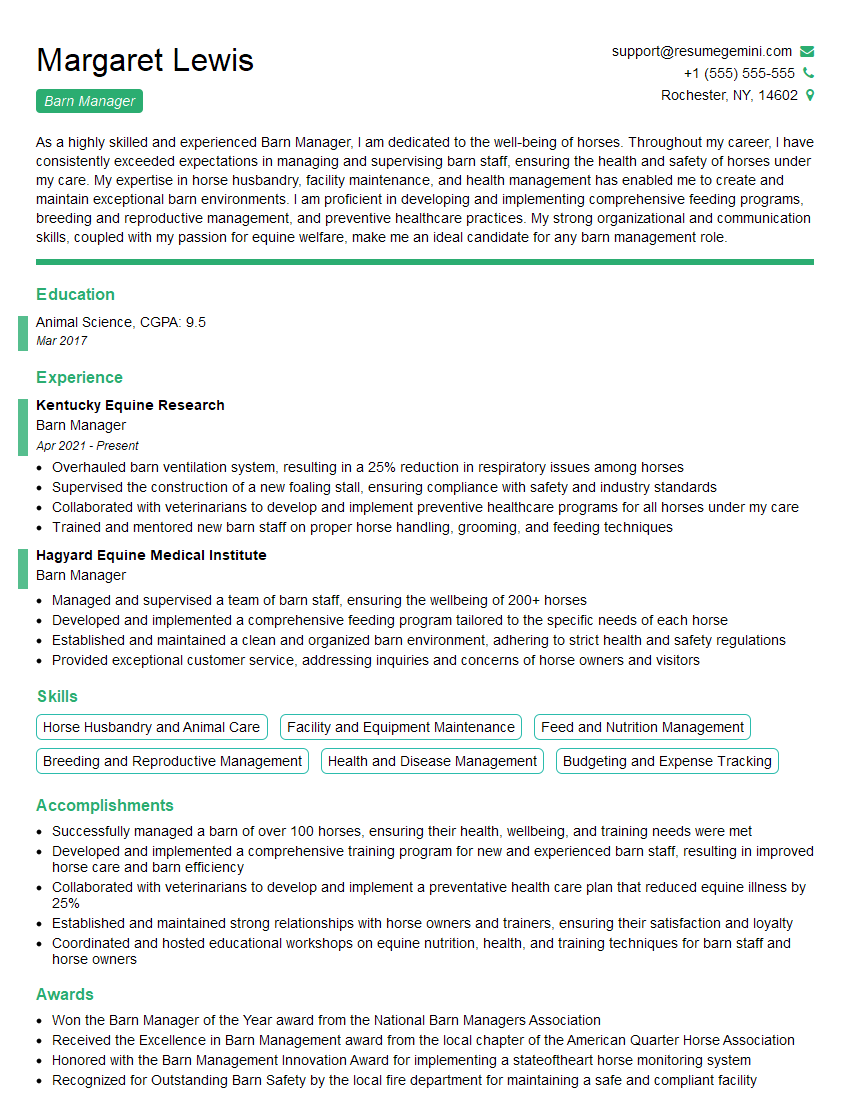
Mastering Barn and Facility Maintenance opens doors to a rewarding career with excellent growth potential. Advancement opportunities often include supervisory roles, project management, and specialized maintenance expertise. To maximize your job prospects, create an ATS-friendly resume that highlights your skills and experience. We strongly recommend using ResumeGemini to build a professional and impactful resume. ResumeGemini offers a user-friendly platform and provides examples of resumes tailored to Barn and Facility Maintenance to guide you. This will significantly enhance your chances of landing your dream job.
Explore more articles
Users Rating of Our Blogs
Share Your Experience
We value your feedback! Please rate our content and share your thoughts (optional).
What Readers Say About Our Blog
Very informative content, great job.
good