The thought of an interview can be nerve-wracking, but the right preparation can make all the difference. Explore this comprehensive guide to Stitch Length and Width Control interview questions and gain the confidence you need to showcase your abilities and secure the role.
Questions Asked in Stitch Length and Width Control Interview
Q 1. Explain the relationship between stitch length and fabric strength.
The relationship between stitch length and fabric strength is directly proportional, to a point. Shorter stitches generally create stronger seams because more thread interlocks are formed within a given distance. Imagine trying to tie two ropes together – many small knots (short stitches) create a much more secure bond than a few large knots (long stitches). However, excessively short stitches can weaken the thread itself due to increased tension and potential breakage. The optimal stitch length balances strength and thread durability, varying based on the fabric type and weight.
For example, a heavy canvas bag might benefit from a longer stitch length (e.g., 8-10 stitches per inch) than a delicate silk scarf (e.g., 12-16 stitches per inch) because the canvas has more inherent strength. The longer stitch in the canvas still provides sufficient holding power without compromising the thread.
Q 2. How does stitch width affect the appearance and durability of a seam?
Stitch width significantly impacts seam appearance and durability. In straight stitching, width isn’t a major factor, as it typically remains constant. However, with zigzag stitches, width dramatically alters the look and performance. A narrow zigzag stitch (small width) provides a decorative finish but offers less durability compared to a wider zigzag stitch, which interlocks the thread more extensively, creating a stronger and more resilient seam, especially on stretchy fabrics. Think of it like stapling papers – a wide staple is much more secure than a narrow one.
A wider zigzag stitch is often used to prevent seams from unraveling on stretchy fabrics like knits. The wider width adds more ‘give’ and elasticity to the seam, preventing it from breaking under stress.
Q 3. What factors influence the optimal stitch length for different fabrics?
Several factors influence the optimal stitch length for different fabrics:
- Fabric Weight: Heavier fabrics (like denim) generally require longer stitches to avoid excessive tension and breakage, while lighter fabrics (like silk) require shorter stitches for a secure and neat seam.
- Fabric Type: Stretchy fabrics (like jersey) often benefit from slightly longer stitches to accommodate movement. More tightly woven fabrics may tolerate shorter stitches.
- Seam Stress: Areas of the garment subjected to more stress (like stress points on seams) need shorter stitches for greater durability. Conversely, areas with less stress might tolerate longer stitches.
- Desired Aesthetic: The intended look of the garment can impact stitch length. A visible stitch might dictate a slightly longer stitch for better visibility.
It’s often a matter of experimenting and finding the balance between stitch length and seam strength for the given fabric.
Q 4. Describe the adjustment mechanisms for stitch length and width on various sewing machines.
Stitch length and width adjustment mechanisms vary across sewing machine models, but common methods include:
- Dial or Slider Controls: Most machines have a dial or slider that allows for direct adjustment of stitch length and width. The settings are usually marked with numerical values or indicators (e.g., stitches per inch).
- Digital Displays: Modern computerized machines often display the selected stitch length and width numerically on a digital screen, allowing for precise adjustments.
- Stitch Selection Knob/Buttons: Some machines allow the selection of pre-programmed stitch types (e.g., straight stitch, zigzag stitch), each with its own predefined length and width.
Understanding your specific machine’s manual is crucial for efficient and safe adjustment.
Q 5. How do you troubleshoot inconsistencies in stitch length or width during production?
Troubleshooting inconsistent stitch length or width involves a systematic approach:
- Check the Bobbin: Ensure the bobbin is correctly wound and properly inserted. An improperly wound or inserted bobbin is a common cause of stitch inconsistencies.
- Inspect the Needle: A bent, dull, or incorrectly sized needle will lead to skipped stitches or uneven stitch length. Replace the needle if necessary.
- Thread Tension: Verify that the upper and lower thread tensions are correctly balanced. Too much or too little tension can cause uneven stitches.
- Timing Belt: In some machines, a worn or loose timing belt can affect the stitch formation. This usually requires professional servicing.
- Stitch Length/Width Settings: Double-check the selected stitch length and width settings to ensure they are correct and haven’t been accidentally altered.
- Machine Maintenance: Regular cleaning and lubrication are essential for optimal machine function. Accumulated lint and dust can hinder proper operation.
Addressing these points sequentially helps isolate the problem. If the issue persists, consulting a sewing machine technician is advised.
Q 6. What are the consequences of incorrect stitch length or width settings?
Incorrect stitch length or width settings can lead to several undesirable consequences:
- Weak Seams: Incorrect stitch length (too long) results in weak seams prone to tearing, especially under stress.
- Broken Threads: Excessively short stitches put undue stress on the thread, leading to frequent breakage.
- Uneven Appearance: Inconsistent stitch length or width creates an aesthetically unpleasing finish, detracting from the garment’s quality.
- Fabric Damage: Improper tension or excessively short stitches can cause puckering or damage to the fabric.
- Reduced Durability: Incorrect settings lead to lower seam durability and shorter garment lifespan.
Always prioritize accurate settings according to the fabric and its intended use.
Q 7. Explain the difference between a straight stitch and a zigzag stitch in terms of length and width control.
The key difference between straight stitch and zigzag stitch lies in how length and width are controlled and their impact:
- Straight Stitch: Length is the primary controllable parameter. Width remains relatively constant, determined by the machine’s design. Control is primarily focused on adjusting the length (stitches per inch) to achieve the desired seam strength and aesthetic.
- Zigzag Stitch: Both length and width are adjustable. Length determines the distance between each zigzag cycle, while width determines the amplitude or distance between the leftmost and rightmost points of each zigzag. This allows for precise control over the seam’s appearance and durability, particularly for stretchy fabrics where the wider zigzag provides better flexibility and prevents seam breakage.
A straight stitch is a simple and strong stitch for basic seams, while the zigzag provides versatility for finishing, decorative purposes, and added strength on stretch fabrics.
Q 8. How do you determine the appropriate stitch length and width for different sewing operations (e.g., topstitching, seams, buttonholes)?
Choosing the right stitch length and width is crucial for achieving strong, durable, and aesthetically pleasing seams. It’s like choosing the right brushstrokes for a painting – the wrong size can ruin the entire piece!
- Topstitching: For topstitching, a longer stitch length (2.5-3.5 mm) is generally preferred for a decorative and less dense look. Shorter stitch lengths can create a bulky seam that might pucker.
- Seams: Standard seams benefit from a medium stitch length (2-2.5 mm) for durability and strength. This offers a good balance between strength and preventing bulk.
- Buttonholes: Buttonholes require a very short stitch length (1-1.5 mm) for precision and strength. A longer stitch here would make the buttonhole weak and prone to tearing.
- Gathering: Gathering uses a very long stitch length (4-5 mm or even longer) to create loose stitches that can be easily manipulated.
The width is less critical for most seams, but a narrow width (usually the machine’s default) is typically used. However, decorative stitching may use a wider width.
Q 9. What are the common causes of skipped stitches and how can you correct them?
Skipped stitches are a common sewing frustration, but usually stem from easily fixable issues. Think of it as a hiccup in your sewing machine’s rhythm.
- Bent or Damaged Needle: A bent or dull needle cannot properly penetrate the fabric, leading to skipped stitches. Always inspect your needle for damage before sewing.
- Incorrect Thread Tension: Too loose or too tight tension can cause skipped stitches. The thread needs to be appropriately controlled for smooth feeding.
- Thread Issues: A tangled, knotted, or damaged thread can also cause skipped stitches. Always use high-quality thread that’s properly wound on your spool.
- Improper Fabric Handling: Feeding the fabric unevenly or too quickly can cause skipping. A smooth, consistent feeding pace is essential.
- Bobbin Problems: A poorly wound bobbin, incorrect bobbin placement, or a tangled bobbin thread can cause skipping. Ensure your bobbin is correctly seated and the thread is smooth.
Corrections: Replace the needle, adjust the thread tension, check the thread for damage, improve fabric handling, and carefully check the bobbin. If the problem persists, consult your sewing machine’s manual or a sewing professional.
Q 10. How do you calibrate a sewing machine to ensure consistent stitch length and width?
Calibrating your sewing machine for consistent stitch length and width involves understanding your machine’s settings and performing test runs. It’s like tuning a musical instrument for a perfect sound.
- Consult Your Manual: Your machine’s manual will provide specific instructions on calibration.
- Test Stitches: Sew several test stitches on scrap fabric, adjusting the length and width controls until the desired dimensions are achieved. Use a ruler to measure.
- Consistent Pressure: Maintain consistent pressure on the foot pedal to prevent variations in stitch length caused by inconsistent power.
- Clean the Machine: Lint, dust, and debris can interfere with stitch quality. Regularly clean your machine.
- Check Tension: Ensure the upper and lower thread tensions are balanced.
Once you’ve achieved your target stitch dimensions, mark your machine settings so you can easily replicate them in the future. Regularly checking your settings ensures consistency in your work.
Q 11. What are the industry standards for stitch length and width in various garment types?
Industry standards for stitch length and width aren’t strictly codified, but there are general guidelines based on fabric type and garment style. It’s more about achieving functional strength and aesthetic appeal.
- Lightweight Fabrics: Shorter stitch lengths (2-2.5 mm) are often preferred for durability.
- Heavyweight Fabrics: Longer stitch lengths (2.5-3.5 mm) can help to prevent needle breakage.
- Woven Fabrics: Stitch length varies depending on fabric weight and weave.
- Knit Fabrics: Slightly longer stitch lengths (2.5-3 mm) often work well to prevent puckering.
- Seam strength is paramount: A slightly longer stitch length than strictly needed is often preferred in professional settings to build seam durability.
Specific applications, like denim, might have their own preferred stitch types and lengths for robustness and aesthetics. It’s essential to consult industry best practices for specific garment types.
Q 12. Describe your experience with different types of sewing machine needles and their impact on stitch quality.
Choosing the right needle is as important as choosing the right thread. The needle’s point and shaft directly impact stitch quality. The wrong needle is like trying to paint with a blunt brush!
- Universal Needles: These are versatile and work well for most fabrics. They offer a good balance of strength and precision.
- Ballpoint Needles: Specifically designed for knit fabrics, they prevent snagging and skipped stitches. The rounded point glides between the loops of the knit.
- Sharp Needles: Ideal for woven fabrics, their sharp point pierces the fabric cleanly, resulting in even stitch formation. The sharpness is crucial for clean stitch penetration.
- Jeans Needles: Designed for heavy-duty fabrics like denim, they are reinforced and sturdy, preventing breakage. The robust design handles the tough fabrics without difficulty.
- Stretch Needles: Similar to ballpoint needles, but designed for specific stretch fabrics, providing even better stitch quality.
Using the incorrect needle type can lead to broken needles, skipped stitches, damaged fabric, or poor-quality seams. Always match the needle to the fabric for optimal results.
Q 13. How do thread tension and stitch length interact?
Thread tension and stitch length are interdependent; they work together to create a balanced stitch. Imagine them as two dancers – one needs to coordinate with the other to create a perfect choreography.
Interaction: A shorter stitch length generally requires slightly looser tension to prevent thread breakage. Longer stitches may need slightly tighter tension to prevent loose and uneven seams. If the tension is too tight with a short stitch, the thread can break, while too loose a tension with a long stitch results in an inconsistent, loose seam.
Troubleshooting: If stitches are too loose, try slightly tightening the tension. If stitches are too tight and breaking, loosen the tension and possibly use a slightly longer stitch length. Experimentation is key to finding the optimal balance. Always make test stitches to refine the setting.
Q 14. Explain the importance of stitch length and width in preventing seam puckering.
Seam puckering is a common sewing problem, often caused by an imbalance between stitch length and fabric type. It’s like trying to tie a knot with an overly taut rope.
- Stitch Length: Too short a stitch length, especially with stretchy fabrics, can cause the fabric to bunch and pucker. The short stitches restrict the fabric’s flexibility.
- Fabric Type: Stretchy fabrics are more prone to puckering. Shorter stitches restrict the fabric’s natural expansion, leading to bunching.
- Thread Tension: Uneven thread tension can contribute to puckering by causing inconsistent pulls on the fabric.
- Needle Size: The needle’s size should match the fabric type and weight. An overly large needle or a dull needle can distort the fabric.
Prevention: Choosing an appropriate stitch length for the fabric type, using correct thread tension, selecting the right needle size and using appropriate techniques such as easing and grading seams can effectively minimize or eliminate seam puckering.
Q 15. What are the quality control checks you perform to ensure consistent stitch length and width?
Maintaining consistent stitch length and width is crucial for high-quality sewing. My quality control process involves several steps. First, I visually inspect a sample of the sewn fabric, using a magnifying glass if necessary, to check for any inconsistencies in stitch length or width. Are the stitches evenly spaced? Are there any skipped stitches or broken threads? I then use a calibrated ruler to measure the stitch length and width at multiple points on the sample. This ensures that the measurements aren’t skewed by a single, unusual stitch. Finally, I compare these measurements to pre-defined specifications for the project. If there are deviations beyond an acceptable tolerance (which depends on the fabric and project requirements), I investigate the cause and make necessary adjustments to the machine settings or the sewing process itself.
- Visual Inspection: This initial check quickly identifies obvious problems.
- Measurement: Precise measurement with a ruler confirms the observations from the visual inspection.
- Comparison to Specifications: This ensures that the stitches meet the required quality standards.
Career Expert Tips:
- Ace those interviews! Prepare effectively by reviewing the Top 50 Most Common Interview Questions on ResumeGemini.
- Navigate your job search with confidence! Explore a wide range of Career Tips on ResumeGemini. Learn about common challenges and recommendations to overcome them.
- Craft the perfect resume! Master the Art of Resume Writing with ResumeGemini’s guide. Showcase your unique qualifications and achievements effectively.
- Don’t miss out on holiday savings! Build your dream resume with ResumeGemini’s ATS optimized templates.
Q 16. How do you handle variations in fabric weight when setting stitch length and width?
Fabric weight significantly impacts stitch length and width. Heavier fabrics generally require longer stitches and potentially a wider stitch width to prevent the fabric from breaking or puckering. Lighter fabrics, conversely, might need shorter stitches for a more refined, durable seam. I adjust settings based on this, using a systematic approach. I start by consulting fabric weight charts or the manufacturer’s recommendations. Then I make small incremental adjustments to the stitch length and width, carefully observing the resulting stitch quality on test pieces of the fabric. It’s an iterative process; I keep fine-tuning until the stitches are even, strong, and appropriate for the fabric’s weight and the project’s needs. For example, when sewing a heavy denim jacket, I might opt for a stitch length of 3.5mm – 4mm and a medium width, while a delicate silk scarf might need only 2mm stitch length and a narrow width.
Q 17. Describe your experience with using digital sewing machines and their impact on stitch control.
Digital sewing machines have revolutionized stitch control. My experience with them is overwhelmingly positive. The precision and repeatability they offer are unmatched by older mechanical machines. Digital machines often allow for precise digital input of stitch length and width, eliminating the guesswork associated with mechanical adjustments. Many have built-in sensors that monitor stitch quality in real-time and can even automatically compensate for variations in fabric thickness. Features like programmable stitch patterns and memory functions greatly enhance efficiency and consistency. For instance, I can save my preferred settings for different fabrics or stitch types, ensuring consistent quality across multiple projects. The ability to easily adjust parameters using a digital interface minimizes downtime and human error significantly. This precision translates into higher quality products and reduced waste.
Q 18. What are some common problems encountered with stitch length and width control and how you solve them?
Common problems include inconsistent stitch length (uneven spacing), skipped stitches, broken threads, and tension issues. Troubleshooting is systematic. For inconsistent stitch length, I first check the machine’s feed dogs to ensure they’re clean and properly functioning. Then, I examine the needle – a bent or damaged needle can cause irregular stitches. Next, I verify the machine’s tension is correct for the thread and fabric. Skipped stitches are often due to a dull needle, incorrect tension, or a damaged bobbin. Broken threads might stem from incorrect tension, a low-quality thread, or a faulty needle. Tension issues manifest in uneven stitches or puckering. I solve these by systematically checking each component – needle, thread, tension, bobbin, and feed dogs – until I isolate and fix the root cause. Sometimes, a simple adjustment like tightening a screw or replacing a part resolves the issue. In more complex cases, I might need to consult a sewing machine technician.
Q 19. How do you maintain sewing machines to ensure consistent stitch quality?
Regular maintenance is key to consistent stitch quality. I follow a rigorous schedule involving daily and weekly cleaning, along with periodic servicing by a qualified technician. Daily maintenance includes removing lint and thread scraps from the bobbin case, feed dogs, and needle area. Weekly maintenance involves oiling the machine according to the manufacturer’s recommendations and checking the tension. I use the correct type of oil to avoid damaging machine parts. Periodic professional servicing ensures thorough cleaning, lubrication, and adjustment of all internal components. This is vital for preventing major breakdowns and maintaining the accuracy of the machine’s stitch mechanisms. A well-maintained machine minimizes downtime and ensures consistent, high-quality stitching over its lifespan. It’s similar to regular car maintenance – proactive care extends the life and performance of the machine.
Q 20. What is the effect of speed on stitch length and width consistency?
Speed significantly affects stitch consistency. Increasing sewing speed can lead to inconsistencies in stitch length and width. At higher speeds, the machine’s mechanisms are under more stress. This can result in uneven stitches, skipped stitches, and even broken needles. Consistent stitch quality is generally achieved at moderate speeds, where the machine can accurately execute each stitch. In cases where high speed is necessary for productivity, I ensure the machine is properly maintained and that the correct tension and needle are used. I also avoid pushing the machine beyond its optimal operating range to prevent damage or inconsistent stitches. Think of it like writing – you can write quickly, but you’re more likely to make mistakes than when writing at a slower, more deliberate pace.
Q 21. What are the safety considerations related to adjusting stitch length and width on industrial sewing machines?
Safety is paramount when adjusting industrial sewing machines. Before making any adjustments, always ensure the machine is unplugged and turned off. Never reach into moving parts. When adjusting stitch length or width, use the appropriate tools and follow the machine’s operating manual carefully. Never force adjustments – if something is stuck, seek assistance from a qualified technician. Loose clothing should be avoided as it could get caught in the moving parts of the machine. Proper training and adherence to safety protocols are crucial to prevent accidents and injuries. Industrial sewing machines are powerful tools; taking proper safety precautions protects both the operator and the equipment.
Q 22. Explain your experience with different types of sewing machine feeds.
My experience encompasses a wide range of sewing machine feed systems, crucial for consistent stitch length and width. I’ve worked extensively with:
- Feed Dogs: The standard system, using mechanical teeth to move the fabric. Understanding their interaction with different fabric weights is key to preventing skipped stitches or puckering. For instance, delicate fabrics require a lower feed dog setting to prevent damage.
- Walking Foot: Essential for even feeding of multiple layers or thick materials, preventing slippage and ensuring consistent stitch length. I’ve used this extensively for quilting and upholstery projects where precise stitching across layers is paramount.
- Conveyor Belt Systems: These offer superior feeding for extremely large or complex projects. My experience includes working with industrial machines using these systems, particularly effective for consistent stitch density across long seams.
- Electronic Feed Systems: These systems offer programmable feed control, adjusting to various fabric types and thicknesses on the fly. This level of precision is vital for high-end apparel manufacturing, ensuring consistent seam quality.
Understanding the strengths and weaknesses of each system allows me to select the optimal feed method for the fabric and the project, directly impacting stitch quality.
Q 23. How do you document and report on stitch length and width quality control data?
I utilize a combination of methods for documenting and reporting stitch length and width quality control data. This ensures traceability and allows for efficient problem-solving.
- Data Logging Software: Real-time data from production machines is captured, recording stitch length, width, and speed. This provides a detailed picture of production performance.
- Spreadsheets: I consolidate data from software, manually inspect samples, and record measurements to identify trends and anomalies. Statistical process control (SPC) charts are frequently used to track key metrics.
- Visual Inspection Reports: These reports include photographs of faulty stitching, highlighting defects such as uneven stitches, skipped stitches, or inconsistent width. These reports are invaluable for identifying visual inconsistencies.
- Formal Reports: Consolidated data are presented in concise, easy-to-understand reports, including charts, graphs, and summaries. These documents are shared with management and the production team for review and corrective action.
This layered approach guarantees comprehensive data capture, effective analysis, and clear communication of quality control findings.
Q 24. Describe your problem-solving skills in relation to addressing stitch length and width problems on the production line.
My problem-solving approach to stitch length and width issues on the production line is systematic and data-driven. I follow these steps:
- Identify the Problem: Precisely determine the nature of the defect, Is it consistent across all machines? Is it material specific? Does it correlate with machine speed?
- Gather Data: Collect data from the affected machines, including stitch measurements, machine settings, and material specifications.
- Analyze Data: Identify patterns and trends in the collected data. Are there specific machines or operators consistently producing defective stitches?
- Implement Solutions: Based on the analysis, implement appropriate solutions. This might include adjusting machine settings (tension, stitch length/width, feed dog pressure), replacing needles, or retraining operators.
- Verify Solutions: After implementing solutions, monitor production to ensure the problem is resolved and quality is maintained.
For instance, once I diagnosed an issue where inconsistent stitch length was linked to fluctuating thread tension due to a faulty bobbin case, I replaced the part and verified the fix through rigorous monitoring, preventing significant production losses.
Q 25. What are your preferred methods for training others on proper stitch length and width adjustment?
My training approach is hands-on, practical, and tailored to individual learning styles. I utilize:
- Demonstration and Observation: I begin by demonstrating proper stitch length and width adjustments on different types of sewing machines. Trainees observe, ask questions, and receive personalized guidance.
- Hands-on Practice: Guided practice sessions allow trainees to adjust settings on machines using various fabrics and project types. This ensures they build practical skills.
- Troubleshooting Simulations: I present trainees with simulated stitch defects and guide them through the diagnostic and corrective processes. This reinforces problem-solving skills.
- Feedback and Evaluation: Regular feedback and assessments monitor progress and provide opportunities for further improvement.
This multi-faceted approach ensures trainees gain a complete understanding of stitch adjustment, both theoretically and practically, leading to improved stitch quality and overall productivity.
Q 26. How do you stay updated on the latest advancements in stitch length and width control technologies?
I stay updated through various methods, ensuring my knowledge remains current and relevant:
- Industry Publications: I regularly read trade journals and industry publications focused on sewing technology and manufacturing processes.
- Professional Conferences and Workshops: Attending conferences and workshops keeps me abreast of the latest technologies and best practices.
- Online Resources and Webinars: Online resources provide access to the latest research, technological advancements, and expert insights.
- Manufacturer Training and Support: Direct interaction with equipment manufacturers gives me access to advanced training materials and expert advice.
This holistic approach ensures I’m equipped to address the evolving challenges in stitch length and width control and leverage the latest technology for optimal quality and efficiency.
Q 27. Explain your experience working with different types of fabrics and their stitch length and width requirements.
My experience spans various fabric types, each demanding a unique approach to stitch length and width optimization:
- Lightweight Fabrics (Silk, Chiffon): These require shorter stitch lengths and narrower widths to prevent puckering and damage. Over-tensioning should be avoided.
- Medium-Weight Fabrics (Cotton, Linen): These generally accommodate a wider range of stitch lengths and widths, but consistent tension is essential for even stitching.
- Heavyweight Fabrics (Denim, Canvas): These often require longer stitch lengths and wider widths for strength and durability, along with adjusted feed dog pressure.
- Knit Fabrics: These require consideration of stretch and recovery; specialized needles and stitch types are crucial, as well as appropriate stitch length and width to prevent distortion.
Understanding these variations and adjusting machine parameters accordingly is vital for producing high-quality garments, regardless of the fabric type.
Q 28. Describe a time you had to troubleshoot a complex stitch length or width issue. What was your solution?
During a high-volume production run of denim jackets, we encountered inconsistent stitch width on the collar seams. Initial troubleshooting focused on machine settings, but the issue persisted. The problem was not consistently reproducible, making diagnosis difficult.
After meticulously documenting the occurrences, I noticed a correlation between the problem and specific batches of denim. Further investigation revealed subtle variations in the weave density across different denim rolls. This affected the fabric’s feed rate and resulted in uneven stitch widths.
My solution involved a two-pronged approach: first, I implemented stricter quality control measures for incoming denim rolls to identify and reject inconsistent batches. Second, I adjusted the machine’s feed settings slightly for each identified denim batch, thereby compensating for the weave density variations. This meticulous approach resolved the inconsistent stitch width issue, maintaining consistent quality and preventing further production delays.
Key Topics to Learn for Stitch Length and Width Control Interview
- Understanding Stitch Formation: Explore the mechanics of stitch formation, including the interaction between needle, feed dogs, and fabric. Consider different stitch types and their impact on length and width.
- Machine Settings and Their Influence: Analyze the role of stitch length and width dials, and how they relate to specific machine models and fabric types. Understand the implications of adjusting these settings.
- Fabric Considerations: Discuss how fabric weight, type (knit vs. woven), and weave structure affect optimal stitch length and width. Explore the relationship between fabric properties and stitch quality.
- Troubleshooting Stitch Problems: Develop strategies for identifying and resolving common stitch issues, such as skipped stitches, uneven stitch length, and broken stitches. Learn to diagnose the root cause based on observed symptoms.
- Advanced Techniques and Applications: Investigate specialized stitching techniques that require precise control over stitch length and width, such as decorative stitching, topstitching, or quilting. Understand how to adapt settings for different applications.
- Quality Control and Standards: Learn about industry standards and best practices for stitch length and width consistency. Understand how to assess and maintain stitch quality throughout a production process.
Next Steps
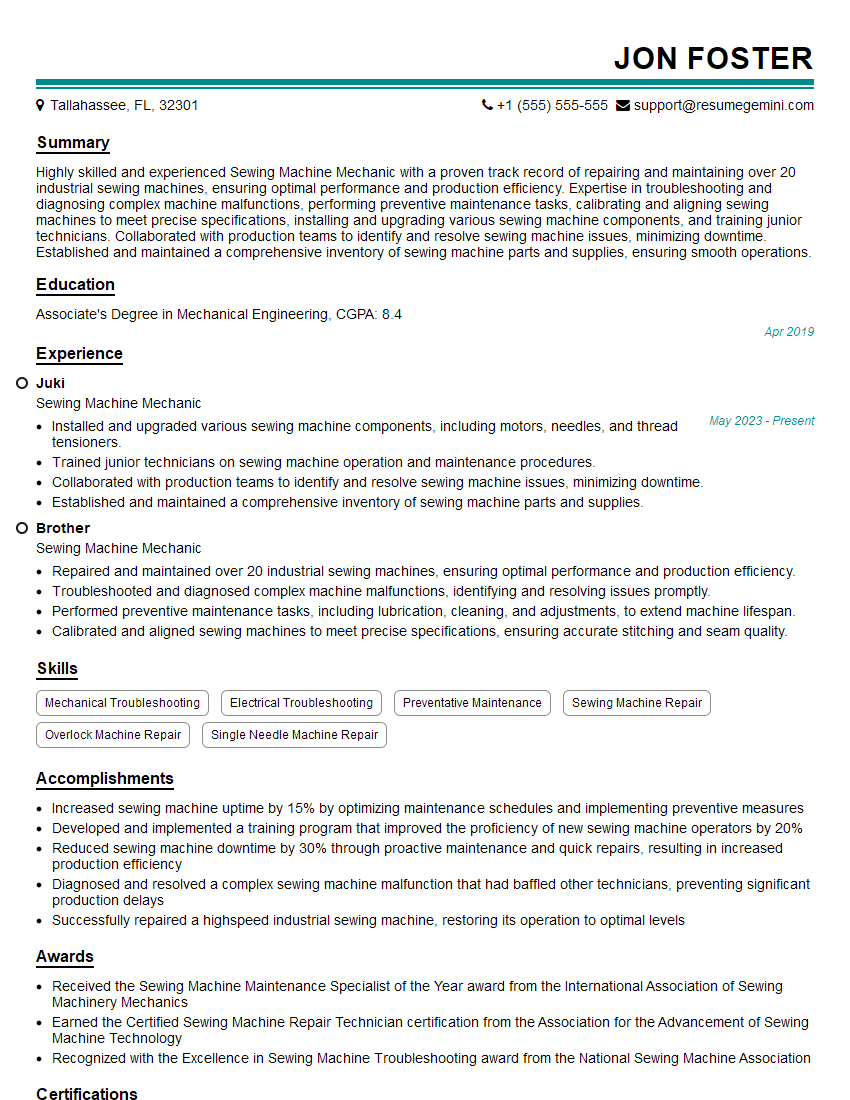
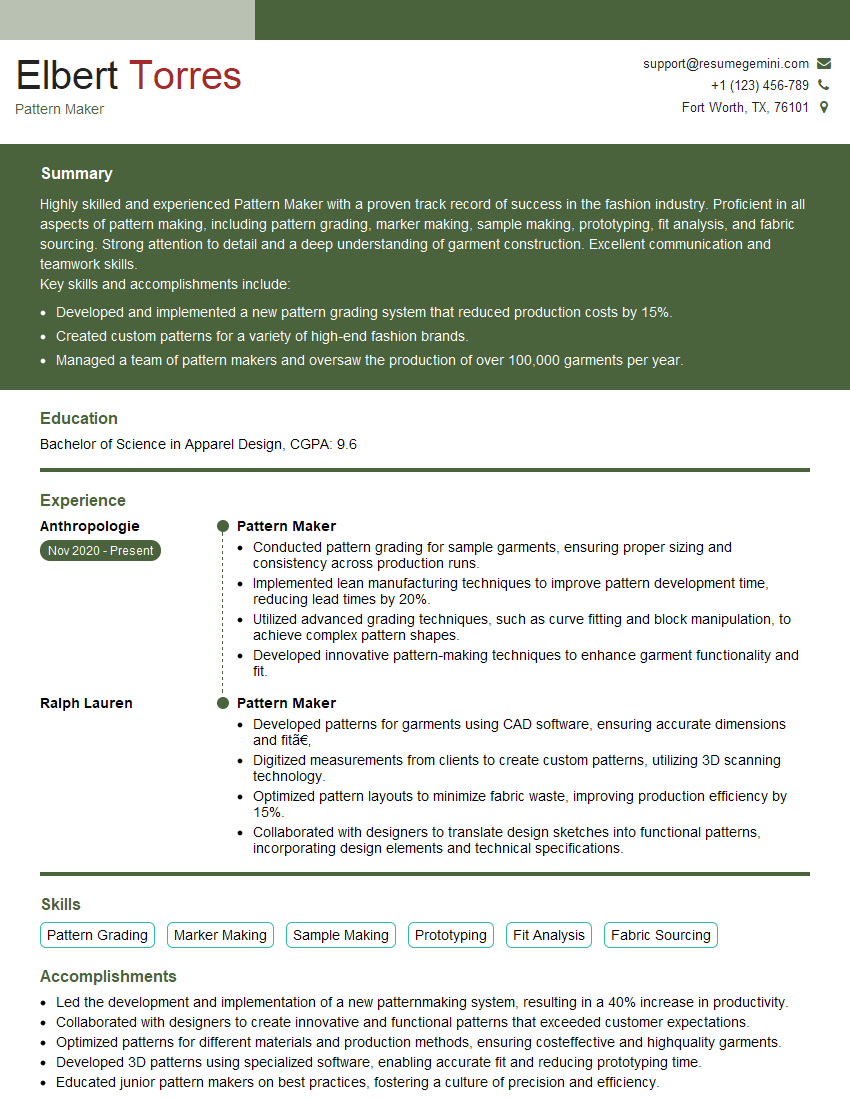
Mastering Stitch Length and Width Control is crucial for career advancement in many textile and apparel industries, opening doors to specialized roles and higher earning potential. A well-crafted resume is your key to unlocking these opportunities. Building an ATS-friendly resume ensures your qualifications are effectively communicated to potential employers. ResumeGemini is a trusted resource to help you create a professional and impactful resume, highlighting your skills in Stitch Length and Width Control. Examples of resumes tailored to this specialization are available to guide you through the process.

Explore more articles
Users Rating of Our Blogs
Share Your Experience
We value your feedback! Please rate our content and share your thoughts (optional).
What Readers Say About Our Blog
Very informative content, great job.
good