Interviews are opportunities to demonstrate your expertise, and this guide is here to help you shine. Explore the essential Basting Techniques interview questions that employers frequently ask, paired with strategies for crafting responses that set you apart from the competition.
Questions Asked in Basting Techniques Interview
Q 1. What are the different types of basting stitches?
Basting stitches are temporary stitches used to hold fabric pieces together before final sewing. There are several types, each with its own purpose. The most common include:
- Running Basting: Long, even stitches created by running the needle up and down in a straight line. It’s the most basic and frequently used basting stitch.
- Diagonal Basting: Similar to running basting, but the stitches are made diagonally across the fabric, often used for joining curved edges.
- Even Basting: This type involves making small, evenly spaced stitches, ideal for delicate fabrics that require a gentler approach.
- Combination Basting: A combination of running and even basting, potentially including backstitching at the start and end for extra security.
- Machine Basting: Uses a sewing machine with a long stitch length; this is fast but less precise than hand basting for delicate work.
The choice of basting stitch depends on the fabric type, the project’s complexity, and the desired level of accuracy.
Q 2. Explain the purpose of basting in garment construction.
Basting serves as a crucial intermediary step in garment construction. Think of it as the ‘scaffolding’ of your project. Its main purposes include:
- Precise Placement: It allows for accurate positioning of fabric pieces before permanent stitching, ensuring a clean and professional finish. Imagine trying to sew a collar directly onto a neckline without basting – a nightmare!
- Ease of Handling: It temporarily holds fabric together, making it easier to manipulate and sew intricate details. This is particularly important when working with multiple layers or complex shapes.
- Preventing Shifting: It prevents fabric layers from shifting during the final sewing process, leading to consistent seams and a more polished garment.
- Testing Fit: Before committing to permanent stitches, basting allows you to check the fit and make adjustments if needed. It’s much easier to undo basting than to unpick permanent stitches.
- Uniform Seams: It ensures a consistent distance between seams, promoting a well-proportioned and well-fitting garment.
Q 3. When is hand basting preferred over machine basting?
Hand basting is generally preferred over machine basting when:
- High Precision is Required: Hand basting offers more control and accuracy, particularly when working with curved seams, delicate fabrics (like silk or lace), or intricate details (like pleats or gathers).
- Fabric is Delicate: Machine basting can sometimes damage sensitive fabrics. Hand basting’s gentler approach reduces this risk.
- Small Areas Need Basting: For small areas or when only minimal holding is needed, hand basting is more efficient and less cumbersome to set up.
- Specific Stitch Placement: Hand basting allows for greater flexibility in stitch placement, which is crucial for precise pattern matching or adjusting small details.
For large, flat pieces where speed is a priority, machine basting is a great option. But for tailored garments or complex designs, hand basting is the preferred method by most experienced seamstresses.
Q 4. Describe the process of basting a collar to a garment.
Basting a collar to a garment is a common and illustrative example of basting’s importance. Here’s a step-by-step guide:
- Prepare the Collar: Ensure the collar is correctly pressed and finished.
- Position the Collar: Place the collar on the neckline of the garment, aligning the notches and raw edges precisely according to the pattern instructions.
- Pinning: Secure the collar to the neckline with pins, making sure the alignment remains perfect. Avoid placing pins directly where you will be basting.
- Basting: Using running or even basting stitches, stitch around the perimeter of the collar, securing it to the garment. The stitch length should be relatively long (1/2 inch or larger) for ease of removal later.
- Check the Fit: Examine the fit carefully, making any necessary adjustments before removing the pins. If the fit is off, gently loosen the basting and readjust the collar.
- Final Stitching: Once the fit is perfect, use your sewing machine to sew the collar permanently in place. Remove basting stitches carefully.
This process ensures that the collar is perfectly aligned and sits smoothly against the garment, resulting in a professional-looking finish. The basting acts as a safety net allowing for any needed corrections before final stitching.
Q 5. How do you adjust basting stitch length for different fabrics?
The basting stitch length needs to be adjusted based on the fabric’s weight and texture. Generally:
- Lightweight Fabrics (silk, chiffon): Use longer basting stitches (about 1/2 inch) to prevent puckering and damage. A longer stitch means fewer holes in the fabric.
- Medium-Weight Fabrics (cotton, linen): A moderate stitch length (about 1/4 to 1/2 inch) works well. This provides enough hold without being overly intrusive.
- Heavyweight Fabrics (denim, canvas): Shorter basting stitches (about 1/8 to 1/4 inch) might be necessary for better control and to prevent the fabric layers from shifting. The heavier the fabric, the more security you need.
Remember, the goal is to hold the fabric securely without leaving permanent marks or altering the fabric’s drape.
Q 6. What types of needles are best suited for basting?
For hand basting, a sharp needle with a larger eye is best. This makes it easier to thread and reduces the stress on the fabric when pushing the needle through. Sharply pointed needles will glide through the fabric without damaging it. A size 9 or 11 needle generally works well for most basting projects, but adjust based on fabric weight.
Avoid using needles that are too fine or dull, as these can snag the fabric. A needle with a slightly rounded point is also a good choice for delicate fabrics to minimize the risk of snagging.
Q 7. How do you remove basting stitches without damaging the fabric?
Removing basting stitches without damaging the fabric requires a gentle approach and the right tools:
- Sharp Scissors: Use small, sharp scissors to carefully snip the basting stitches close to the fabric. This minimizes the risk of pulling the fabric.
- Seam Ripper: A seam ripper can be used to carefully remove stitches, particularly in tight areas or when the stitches are densely packed. The hooked end gently lifts the basting threads.
- Gentle Pulling: Once the stitches are snipped, gently pull the loose thread ends to remove the basting. Avoid yanking or pulling too hard, which could damage the fabric.
- Check for Residual Threads: After removal, carefully examine the fabric for any remaining basting threads and gently remove them with tweezers or needle nose pliers.
Always take your time, working slowly and methodically. Practice on scraps of the same fabric before working on your project to ensure you have the right technique down.
Q 8. Explain the importance of proper tension when basting.
Proper tension in basting is crucial for achieving accurate and even stitching in your final garment. Imagine trying to sew with a thread that’s too loose – your seams will pucker and be uneven. Conversely, if the thread is too tight, you’ll distort the fabric. The ideal basting tension allows the fabric to lie smoothly and naturally, preventing any unwanted pulling or stretching during the process. This creates a stable foundation for your final seams, ensuring a professional finish.
Think of it like this: basting is like a guideline for your final stitching. If the guideline is wonky, the final result will be too. The correct tension prevents the ‘guideline’ from affecting the accuracy of the final product. A good rule of thumb is to hold the basting threads gently without pulling them taught.
Q 9. What are some common mistakes to avoid when basting?
Several common mistakes can hinder the effectiveness of basting. One major error is using stitches that are too long or too short. Long basting stitches are prone to shifting and being easily removed, while excessively short ones can make it difficult to remove them cleanly without damaging the fabric. Another frequent error is applying too much tension, causing puckering or distortion. Conversely, insufficient tension can result in loose, uneven basting that doesn’t hold the fabric together properly. Finally, forgetting to remove the basting stitches before final stitching is a very common mistake that can lead to visible imperfections on the finished garment.
- Too Long/Short Stitches: Aim for consistent, easily removable stitches.
- Uneven Tension: Maintain a gentle, consistent tension throughout.
- Forgetting to Remove: Always check for and remove basting stitches before finishing.
Q 10. How do you basting curved seams effectively?
Basting curved seams requires a bit more finesse. The key is to ease the fabric gradually as you sew to prevent stretching or bunching. Short, even basting stitches are especially important here. Start by pinning the curve sections carefully, maintaining the correct fabric flow. Then, use small, even basting stitches, following the curve closely. Avoid pulling the fabric taut; let the fabric guide your stitching. If you have a particularly challenging curve, consider using a slightly longer stitch length at the beginning to allow for adjustment later as you work through the curve.
Example: When basting a curved neckline, I carefully pin the neckline and then begin basting from the center, working outwards in both directions. This ensures the curve lies smoothly.
Q 11. How does basting contribute to accurate garment assembly?
Basting acts as a critical intermediary step between pattern cutting and final stitching. It allows you to check the fit and alignment of the garment pieces before committing to permanent seams. This prevents costly mistakes and allows for adjustments. Properly basted pieces allow for accurate seam placement, eliminating the chances of having to rip out seams and re-sew. By testing the alignment and fit, basting ensures the finished garment is constructed according to the design specifications and fits as intended. It’s like a ‘dry run’ that allows for error correction before the final ‘performance’.
Q 12. Describe the differences between basting and tacking.
While both basting and tacking are temporary stitches used in garment construction, they differ in their stitch length and purpose. Basting uses longer stitches, typically 1/2 inch to 1 inch in length, and is primarily used to hold fabric pieces together before final stitching. Its purpose is to ensure accurate alignment and prevent shifting. Tacking uses smaller, more closely spaced stitches, often less than 1/4 inch. It’s primarily used for marking specific points or details, such as the position of buttonholes or pleats, rather than holding large sections of fabric together. Tacking is less likely to leave marks on the fabric.
Q 13. How do you adapt basting techniques for different fabric weights?
Adjusting basting techniques for different fabric weights is vital for successful results. Lighter fabrics, like silk or chiffon, require finer, shorter stitches and a lighter touch to avoid damaging or distorting the fabric. Heavier fabrics, such as denim or canvas, require longer stitches to hold the fabric together but the same careful tension is still necessary. For extremely heavy fabrics, using a slightly heavier thread can be helpful but be cautious not to compromise the ease of removal.
Example: When basting a delicate silk blouse, I would use a thin thread and very short stitches. However, when working with a heavy denim jacket, I’d use a longer stitch length and possibly a stronger thread.
Q 14. What are the benefits of using different colored thread for basting?
Using contrasting colored thread for basting offers a significant advantage: increased visibility. It makes the basting stitches easy to spot and remove, reducing the risk of accidentally leaving them in the final garment. This is particularly helpful for beginners or when working with fabrics that have similar tones to your sewing thread. This simple trick is a professional time saver, it saves time and avoids costly mistakes of having to unpick and re-sew.
Q 15. How do you ensure basting stitches are easily removable?
The key to easily removable basting stitches lies in using the right technique and thread. Think of basting as a temporary guide, easily undone once its job is complete. We want stitches that are long and loose, allowing for easy removal without damaging the fabric.
- Thread Choice: Opt for a contrasting color, making the stitches easier to see and remove. A lightweight, easily broken thread like a cotton or silk basting thread is ideal. Avoid heavy-duty threads.
- Stitch Length: Long, loose stitches (about 1-1.5 inches) are crucial. They’re easier to grasp and pull out without snagging the fabric.
- Stitch Type: A simple running stitch is best. Avoid intricate stitches that might be harder to remove.
- Tension: Keep the tension light. Tight basting stitches are difficult to remove and can leave unwanted marks.
For example, when basting a lining to a jacket, I’d use a light-colored thread on a dark lining for visibility and ease of removal after the final stitching is done. The loose stitches will easily pull out without leaving any traces.
Career Expert Tips:
- Ace those interviews! Prepare effectively by reviewing the Top 50 Most Common Interview Questions on ResumeGemini.
- Navigate your job search with confidence! Explore a wide range of Career Tips on ResumeGemini. Learn about common challenges and recommendations to overcome them.
- Craft the perfect resume! Master the Art of Resume Writing with ResumeGemini’s guide. Showcase your unique qualifications and achievements effectively.
- Don’t miss out on holiday savings! Build your dream resume with ResumeGemini’s ATS optimized templates.
Q 16. How do you deal with basting stitches that become difficult to remove?
Sometimes, basting stitches become stubbornly stuck, especially if the fabric is delicate or the stitches are too tight. In such cases, don’t force it! Gentle techniques are key to prevent fabric damage.
- Small Scissors: Use small, sharp embroidery scissors to carefully snip the stitches. This is often easier than pulling them out.
- Seam Ripper: A seam ripper can be used carefully to lift the stitches, but use it gently to avoid tearing the fabric.
- Fabric Steamer: If the fabric is prone to wrinkling, try lightly steaming the area before attempting to remove the stitches. The steam may loosen the stitches.
- Patience: Take your time and be patient. Rushing can lead to damage. Work slowly and methodically.
I recall once working with a silk fabric; the basting stitches had become slightly embedded. I carefully used embroidery scissors, snipping each stitch close to the fabric. Gentle steaming helped slightly loosen the stubborn knots before I removed the remaining ends.
Q 17. Describe the proper way to prepare fabric before basting.
Preparing the fabric before basting is like preparing a canvas before painting; it ensures a smooth and successful outcome. Proper preparation minimizes wrinkles and ensures the basting sits correctly.
- Pressing: Always press the fabric to remove wrinkles and ensure it lies flat. This is crucial for accurate pattern placement and prevents distortions in the final garment.
- Notching: If working with curved seams, carefully notch the curves to allow the fabric to lie flat and prevent puckering during basting and final stitching.
- Clipping: Similar to notching, clipping helps ease sharp curves and create a more accurate seamline.
- Pinning: Carefully pin the fabric pieces together, ensuring they align perfectly along the seam allowance and pattern markings. Pinning keeps the fabric in place for accurate basting.
Imagine trying to paint on a crumpled canvas—it’s difficult! Similarly, basting on wrinkled fabric will result in an uneven finish. Pressing your fabric first will set you up for success.
Q 18. How do you handle basting in areas with intricate detail?
Basting intricate areas requires a delicate approach and the use of shorter basting stitches, but the overall goal is still to create a temporary and removable guide. The best approach adapts to the level of detail involved.
- Shorter Stitches: Use much shorter basting stitches (about ½ inch long) in areas with intricate details or curves to maintain accuracy without being overly obtrusive.
- Strategic Placement: Place your stitches strategically, only where absolutely necessary to hold the pieces in place. Avoid over-basting to prevent damage to fine fabrics or delicate embroideries.
- Hand Basting: Often, hand basting is preferred for delicate fabrics and intricate detailing. The precision and control of hand stitching ensure less chance of fabric distortion.
- Specialized Needles: Using very fine needles also helps in working with these details.
For example, when basting a delicate lace applique, I’d use extremely fine hand basting stitches, spaced generously, only along the edges to secure it temporarily to the main fabric.
Q 19. What are the implications of inconsistent basting on the final garment?
Inconsistent basting has significant consequences on the final garment, leading to several issues that are difficult to rectify later.
- Uneven Seams: Inconsistent basting leads to uneven seams, resulting in a poorly finished garment. The final stitches follow the basting, so uneven basting leads to uneven stitching.
- Puckering: If the basting stitches are too tight or unevenly spaced, they can cause puckering or bunching of the fabric, especially in curved areas.
- Distorted Shapes: The final garment’s shape can be distorted if the basting isn’t properly aligned to the pattern markings.
- Difficult to Remove: Inconsistent or too tight basting can make the removal process more difficult and increase the risk of fabric damage.
Think of it like building a house—a shaky foundation (inconsistent basting) will result in a wobbly structure (uneven garment).
Q 20. How do you ensure the basting doesn’t show through the final garment?
To prevent basting from showing, choose a thread that blends well with the fabric. The technique and stitch length are also crucial.
- Matching Thread Color: Select a thread that is as close as possible to the fabric color. This minimizes visibility.
- Small Stitches: Although long stitches are easier to remove, the length can make them more visible. If you’re working with a fabric that shows basting easily, shorter stitches are better, even if they take longer to remove.
- Careful Placement: Place the basting within the seam allowance to hide them once the final stitching is complete. This keeps stitches safely out of view.
- Pressing: A good pressing can flatten the stitches and make them less noticeable.
For a light-colored garment, I’d choose a very pale thread or even use a thin thread that’s almost invisible.
Q 21. Explain how basting aids in pattern matching.
Basting plays a crucial role in precise pattern matching, especially in fabrics with designs or prints that need to align perfectly across seams.
- Accurate Alignment: Basting ensures that patterned fabrics are aligned perfectly before the final stitching, resulting in a professional finish.
- Placing Markings: Before basting, match the pattern markings on your fabric pieces to ensure they line up and then use basting to hold them in place.
- Matching Prints: Basting holds the fabric steady while you match the pattern precisely across seams, making the pattern matching process smoother and easier.
- Preventing Mismatches: Careful basting prevents mismatched patterns, a common mistake that can ruin the look of a garment.
Imagine sewing a plaid shirt without basting. Getting the stripes to line up perfectly across the shoulders would be nearly impossible! Basting provides the accuracy to match your pattern flawlessly.
Q 22. How do you use basting to temporarily hold pleats or gathers?
Basting is a crucial temporary stitching technique used to hold fabric pieces together before final stitching. For pleats and gathers, basting allows you to manipulate and shape the fabric easily before committing to permanent stitches. Think of it as a dress rehearsal for your garment!
To hold pleats, I would baste along the pleat’s fold line, ensuring the stitches are loose enough to allow for adjustments later. For gathers, I use a running stitch along the raw edge, creating even gathers by pulling the thread gently. The key is to distribute the gathers evenly, adjusting the thread tension as I go. I always check that the pleats or gathers are correctly aligned and evenly spaced before moving on to the final stitching. This prevents wasted effort and ensures a flawless result.
- Example: When making a pleated skirt, I baste each pleat individually, carefully aligning the edges and ensuring the pleats are evenly spaced along the waistline.
- Example: When creating a gathered neckline, I pull the basting thread gradually to create even gathers, smoothing them out as I go to avoid bunching or uneven distribution. I continue to adjust the tension and spacing of the gathers, working gradually.
Q 23. What are some alternatives to traditional basting techniques?
While traditional hand basting is invaluable, several alternatives offer speed and convenience. These methods, however, shouldn’t completely replace the skill of hand basting, which often provides a better feel for fabric.
- Wonder Clips/Clamps: These are excellent for holding layers together, especially on delicate fabrics where hand basting might damage the material. They’re quick and leave no visible stitches.
- Temporary Adhesive Spray: A great option for quick projects or for holding very large pieces. However, it’s crucial to choose an adhesive that is easily removed and won’t stain the fabric.
- Machine Basting: Using a long stitch length (usually around 4-5mm or higher) on your sewing machine can also serve as temporary basting. Remember to use a contrasting thread to easily see the basting stitches.
The best alternative depends on the fabric, project complexity and personal preference. I often find myself combining methods, for example, using clips to hold large sections and hand-basting more intricate details.
Q 24. Describe your experience with basting various types of fabrics (e.g., silk, denim, leather).
My experience spans a wide range of fabrics, and each requires a slightly different approach to basting. The goal is always to select a thread and stitch length that will securely hold the fabric without causing damage.
- Silk: I use a fine needle and a thin, lightweight thread like silk thread itself, and employ very fine, loose basting stitches to avoid creating visible holes or pulling the delicate silk.
- Denim: Because denim is sturdy, I can use a stronger thread and slightly longer basting stitches. The added strength ensures the stitches can hold the heavier weight of the fabric during manipulation.
- Leather: Basting leather presents a unique challenge. Due to its thickness and strength, I might use a heavier-duty needle and a strong thread. Alternatively, in some cases, I may choose to use a combination of clips and an extremely durable thread only where needed to mark sections. In many leather projects, basting is less critical than in softer fabrics, as other marking methods are preferred to avoid unnecessary holes.
Adaptability is key. Understanding the properties of the fabric informs the choice of needle, thread, and stitch length for effective and damage-free basting.
Q 25. Explain your process for checking and adjusting basting before final stitching.
Checking and adjusting basting before final stitching is crucial to ensure accuracy and a professional finish. After completing my basting, I take a moment to thoroughly examine the garment for any issues.
- Visual Inspection: I carefully examine the basting, looking for any unevenness, puckering, or misaligned seams. I pay particular attention to areas with pleats or gathers.
- Trial Fitting (if applicable): If the project involves a garment, a trial fitting at this stage helps to identify any fit issues related to the basting before final stitching.
- Adjustment: If any adjustments are needed, I carefully remove the basting stitches in the affected area and re-baste. I then re-check the work to ensure the correction is satisfactory.
- Smoothing: Before proceeding with the final stitching, I take the time to smooth out any wrinkles or puckers in the fabric ensuring the fabric lies flat and even to prevent them from being sewn into the permanent stitches.
This process ensures the final stitches are accurately placed, producing a professional-looking garment or project.
Q 26. How do you maintain consistent stitch length and tension throughout basting?
Maintaining consistent stitch length and tension is essential for even basting and accurate results. Inconsistent stitching can lead to uneven gathers or puckers.
- Practice: Consistent basting comes with practice. Regular practice helps to develop the muscle memory needed to maintain even tension and stitch length.
- Thread Tension: Keep tension light yet firm; a good rule of thumb is to let the thread move through your fingers without being pulled or overly taut. Too loose and it may not hold, too tight and it damages the fabric.
- Stitch Length: Try to maintain a similar stitch length throughout. I use a consistent rhythm and count the stitches to ensure even spacing. If using machine basting a consistent stitch length is automatically guaranteed.
- Proper Needle Selection: Selecting the right needle size for the fabric also assists in maintaining consistent stitch length and reduces the chances of the thread breaking.
By paying close attention to these elements, I ensure the basting is consistent, reliable and helps to create a well-finished project.
Q 27. How do you handle adjustments to a garment after the initial basting?
Adjustments after initial basting are common. The key is to carefully remove the basting in the area requiring adjustment, make the necessary changes, and then re-baste.
For example, if a seam needs to be lengthened or shortened, I would carefully remove the basting stitches along that seam. Once I have made the adjustment to the fabric, I would re-baste the area, ensuring the stitches are consistent with the rest of the basting. It’s important to preserve the existing basting as much as possible to ensure the project’s overall consistency. After the adjustments, a thorough check is imperative to ensure the alteration is accurate and the basting remains even.
Q 28. Describe a time when you had to troubleshoot a problem with basting.
Once, I was working on a silk blouse with intricate pleats. After completing the initial basting, I discovered that the pleats were unevenly spaced in one section. Simply removing and re-basting in that one area would have been visibly inconsistent and obvious. My solution involved carefully removing the basting stitches in the uneven area and the several surrounding pleats, allowing me to redistribute the pleats more evenly across the entire area. This took more time and care, but it ensured a uniform look.
This situation taught me the importance of thorough initial planning and the value of patience in dealing with challenging basting situations. If in doubt, work slowly and methodically to ensure the final result is impeccable.
Key Topics to Learn for Basting Techniques Interview
- Types of Basting: Understanding the differences between running, tacking, and basting stitches and their appropriate applications.
- Fabric Considerations: Knowing how to adjust basting techniques based on fabric weight, drape, and texture (e.g., delicate silks vs. heavy wools).
- Stitch Length and Tension: Mastering the control of stitch length and tension to achieve secure yet easily removable basting.
- Basting for Specific Garments: Practical application of basting for various garment sections (e.g., collars, sleeves, linings).
- Removing Basting: Techniques for efficiently and neatly removing basting stitches without damaging the garment.
- Troubleshooting Common Basting Issues: Identifying and resolving problems like uneven basting, skipped stitches, or broken threads.
- Hand vs. Machine Basting: Comparing and contrasting hand and machine basting methods and their suitability for different projects.
- Importance of Proper Preparation: Understanding the role of pre-basting steps like pattern marking and fabric preparation.
- Basting in Relation to Other Sewing Techniques: How basting integrates with other sewing processes, such as fitting, piecing, and finishing.
Next Steps
Mastering basting techniques is crucial for a successful career in sewing and garment construction. A strong understanding of these foundational skills demonstrates attention to detail and a commitment to quality craftsmanship, highly valued by employers. To increase your chances of landing your dream role, it’s essential to present your skills effectively. Creating an ATS-friendly resume is vital in getting your application noticed. ResumeGemini is a trusted resource that can help you build a professional and impactful resume tailored to the specific requirements of your target roles. Examples of resumes tailored to Basting Techniques are provided to help guide you.

Textile Engineer Resume Sample

Costume Designer Resume Sample

Fashion Designer Resume Sample

Draper Resume Sample

Seamstress Resume Sample
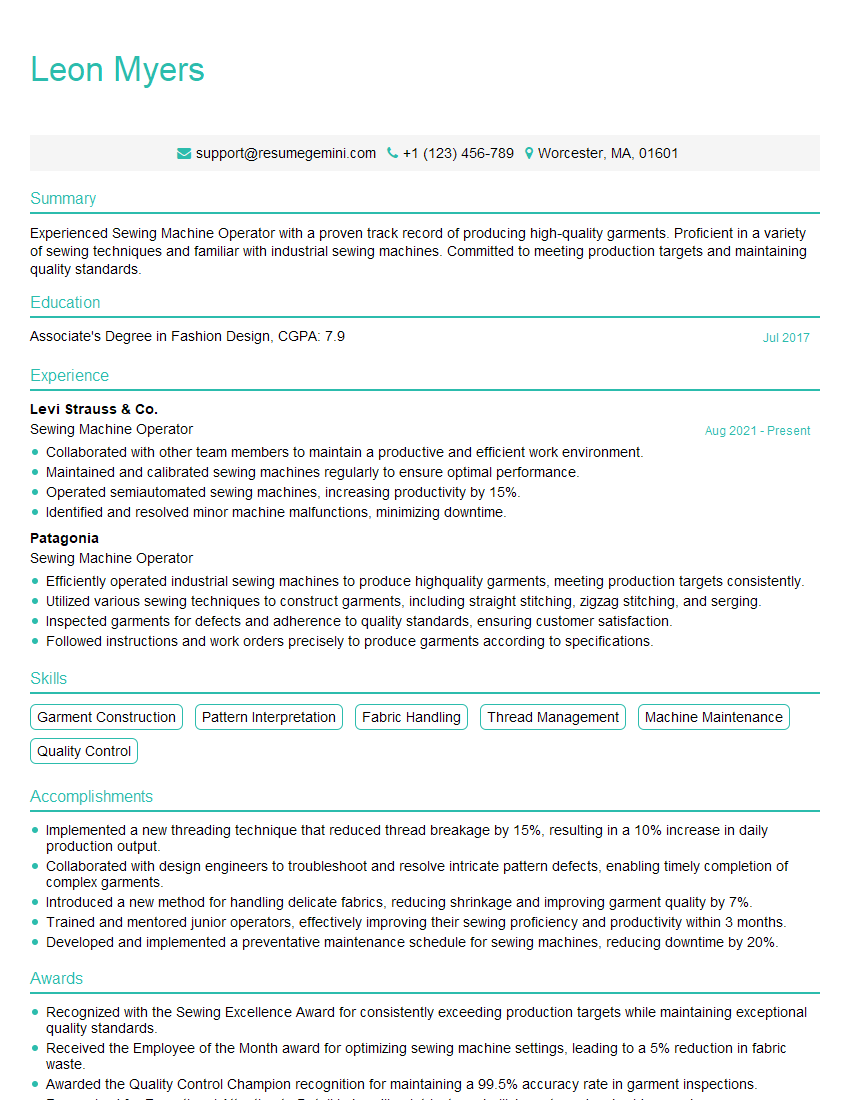
Sewing Machine Operator Resume Sample
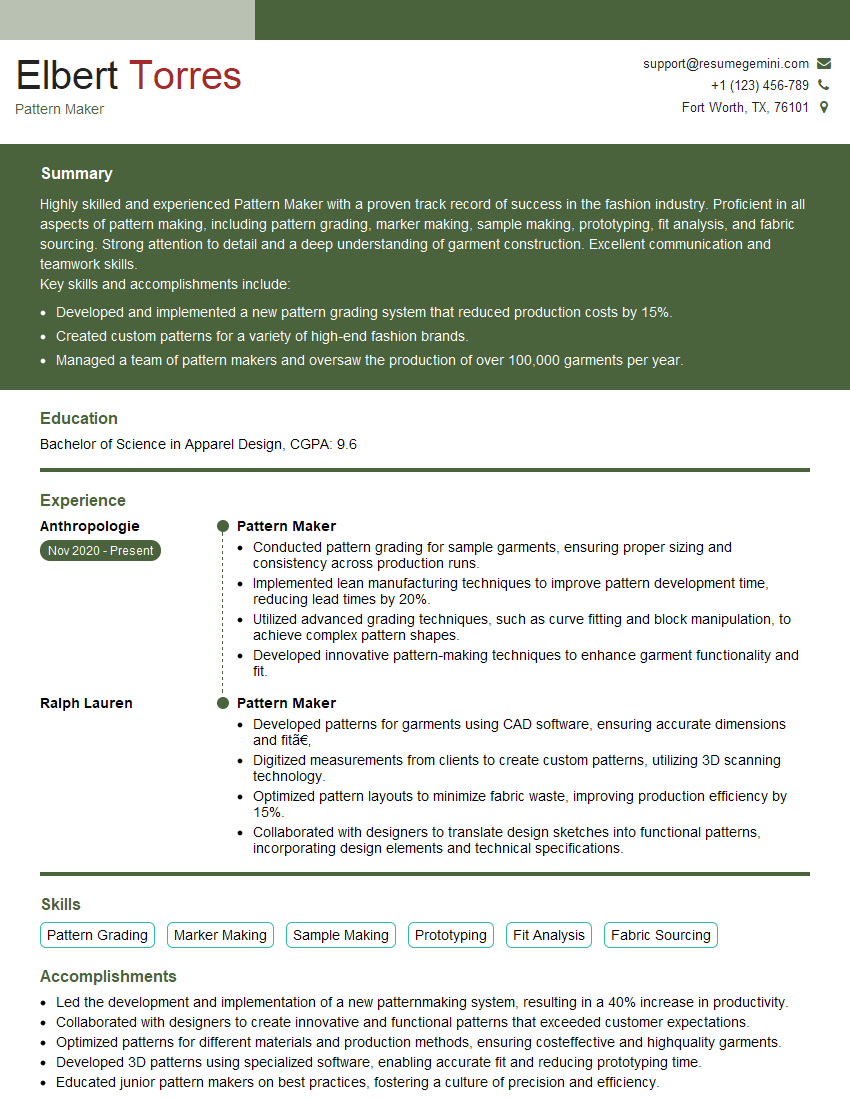
Pattern Maker Resume Sample
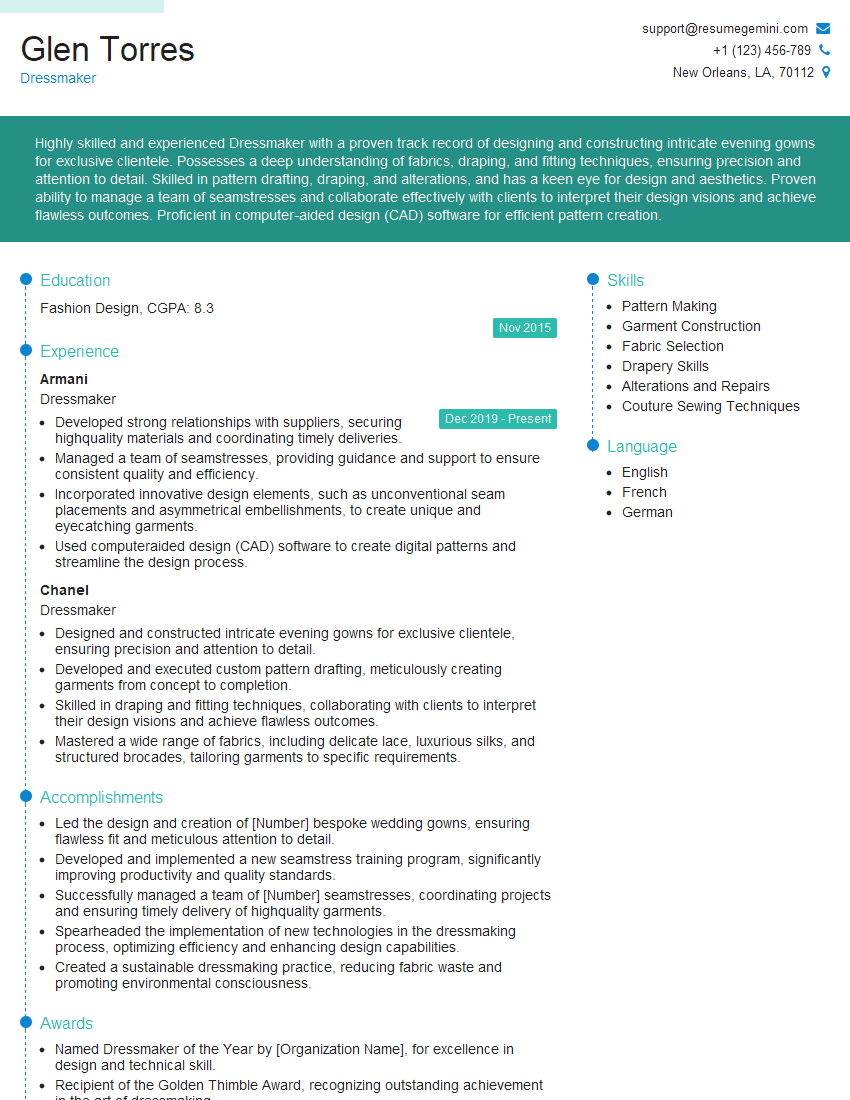
Dressmaker Resume Sample
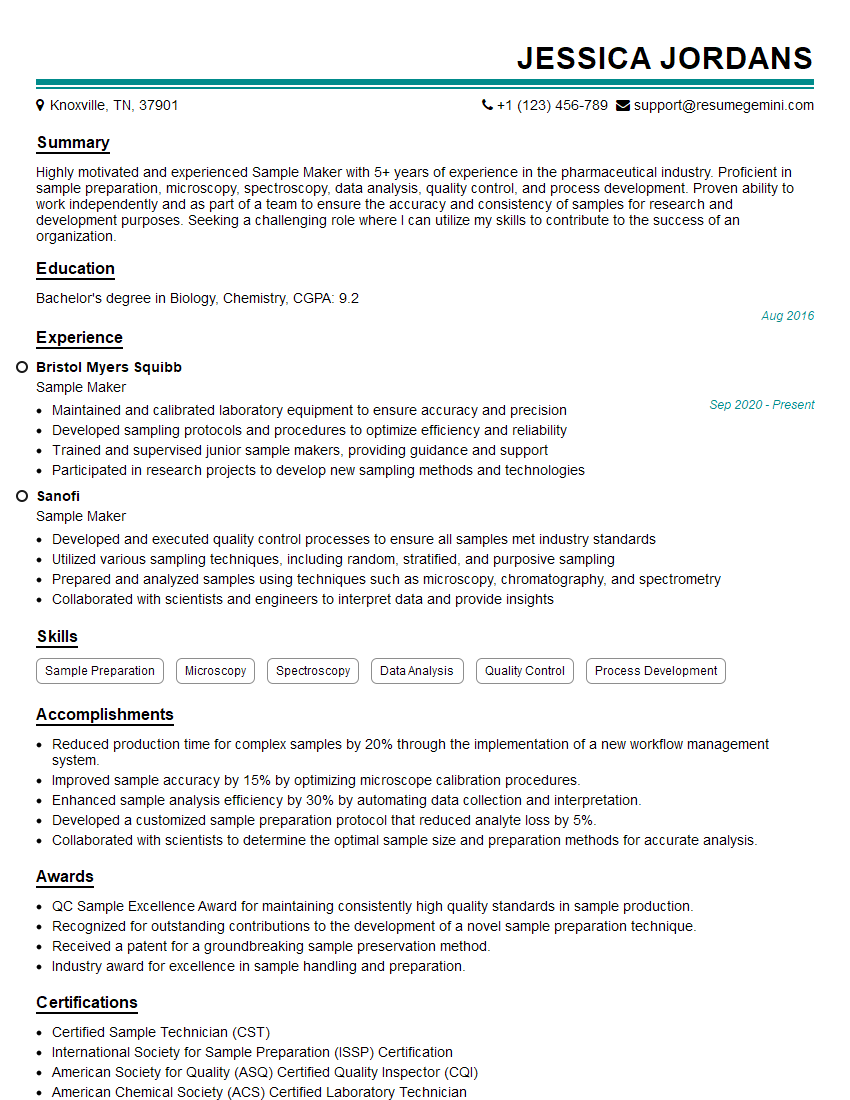
Sample Maker Resume Sample

Tailor Resume Sample

Upholsterer Resume Sample
Explore more articles
Users Rating of Our Blogs
Share Your Experience
We value your feedback! Please rate our content and share your thoughts (optional).
What Readers Say About Our Blog
Very informative content, great job.
good