Interviews are more than just a Q&A session—they’re a chance to prove your worth. This blog dives into essential Lighting Design and Operation interview questions and expert tips to help you align your answers with what hiring managers are looking for. Start preparing to shine!
Questions Asked in Lighting Design and Operation Interview
Q 1. Explain the difference between luminous flux and illuminance.
Luminous flux and illuminance are both crucial concepts in lighting, but they represent different aspects of light. Think of it like this: luminous flux is the total amount of light emitted by a source, like the total number of photons a bulb produces. Illuminance, on the other hand, is the amount of light falling on a surface. It’s like measuring how many of those photons hit a specific area.
Luminous flux is measured in lumens (lm). A higher lumen rating means a brighter light source. Imagine comparing two light bulbs – one with 800 lumens and another with 1600 lumens. The 1600-lumen bulb produces twice the total amount of light.
Illuminance is measured in lux (lx) or foot-candles (fc). It describes the light intensity on a surface. For instance, a desk might have an illuminance of 500 lux, meaning 500 lumens are falling on each square meter of the desk’s surface. This depends on both the light source’s luminous flux and its distance from the surface.
In short: Luminous flux is the light source’s output, while illuminance is the light’s effect on a surface.
Q 2. Describe the principles of good lighting design for an office space.
Good office lighting design focuses on creating a productive and comfortable environment. Key principles include:
- Adequate Illuminance: Sufficient light levels (typically 300-500 lux for general tasks) are essential to avoid eye strain and fatigue. This often requires a combination of ambient, task, and accent lighting.
- Uniformity: Avoid harsh shadows and overly bright or dark areas. Consistent light distribution prevents discomfort and improves visual comfort.
- Color Rendering Index (CRI): Choose light sources with a high CRI (above 80) to accurately render colors. Poor CRI can make objects look dull or unnatural, impacting productivity and well-being.
- Color Temperature: Neutral color temperatures (3000-4000K) are generally preferred for offices, creating a balanced and energizing atmosphere. Avoid overly cool or warm temperatures.
- Glare Control: Minimize direct glare from light sources and reflections from screens by using appropriate shielding and diffusers.
- Energy Efficiency: Employ energy-efficient lighting technologies like LEDs with appropriate dimming controls to reduce energy consumption and operating costs.
- Flexibility and Control: Incorporate adjustable lighting systems to allow users to personalize their workspace lighting based on individual preferences and task demands.
For example, a well-designed office might use a combination of recessed LED troffers for general illumination, desk lamps for task lighting, and accent lighting to highlight artwork or architectural features.
Q 3. What are the key considerations for designing lighting for a retail environment?
Retail lighting design is crucial for attracting customers, showcasing products, and creating a desired atmosphere. Key considerations include:
- Highlighting Merchandise: Strategic lighting emphasizes key products, creating visual focal points to draw customers’ attention. Accent lighting with adjustable color temperatures and intensities is highly effective here.
- Creating Ambiance: The lighting should complement the brand’s image and create the desired mood (e.g., warm and inviting for a clothing boutique, bright and energetic for a sports store).
- Color Rendering: Accurate color rendition is vital to showcase products realistically. High CRI lighting ensures that colors appear vibrant and true to life.
- Energy Efficiency: LEDs are increasingly popular due to their efficiency and long lifespan, contributing to reduced operating costs.
- Vertical Illumination: Shining light down the aisles helps guide customers and highlight products on shelves.
- Layered Lighting: A combination of ambient, accent, and task lighting provides versatility and allows for flexibility in highlighting different areas.
- Zoning: Different lighting schemes can be used to define various areas within the store, such as entryways, display areas, and checkout counters.
For instance, a jewelry store might use spotlights to highlight individual pieces, while a grocery store might use a combination of fluorescent lighting for general illumination and LED strips to highlight promotional displays.
Q 4. How do you calculate the required lighting levels for a specific application?
Calculating required lighting levels involves several steps. The most common approach uses the illuminance (lux) required for a given task and the area to be illuminated.
- Determine the required illuminance: Consult relevant lighting standards or guidelines (e.g., IES) to find the recommended illuminance level for the specific application. These standards often categorize tasks based on visual acuity demands (e.g., fine detail work requires higher illuminance).
- Calculate the area to be illuminated: Measure the dimensions of the space you need to light.
- Calculate the total luminous flux needed: Multiply the required illuminance (in lux) by the area (in square meters). This gives the total lumens required.
- Select luminaires (light fixtures): Choose fixtures that provide the necessary lumens and have suitable light distribution characteristics. Consider the luminaire’s luminous efficacy (lumens per watt) for energy efficiency.
- Adjust for factors affecting illuminance: Account for factors like light loss due to reflections, absorption by surfaces, and depreciation of light sources over time (typically using a light loss factor, LLF, of 0.7 to 0.8).
- Verify the design: Conduct a lighting simulation or on-site measurement to confirm that the chosen lighting scheme meets the design criteria.
Example: An office area of 20 square meters needs 500 lux. The total lumens required are 500 lx * 20 m² = 10000 lm. If the LLF is 0.75, the total lumens needed from the lighting fixtures should be approximately 13333 lm (10000 lm / 0.75).
Q 5. What are the different types of lighting control systems and their applications?
Lighting control systems offer significant advantages in terms of energy savings, comfort, and atmosphere control. Several types exist:
- Manual Switches: The simplest form, offering on/off control only. Suitable for smaller spaces with limited requirements.
- Dimmers: Allow adjustment of light intensity, providing flexibility and improving energy efficiency. Can be used with incandescent, fluorescent, and LED lamps.
- Timers: Automatically turn lights on and off at scheduled times, useful for optimizing energy use in unoccupied spaces.
- Occupancy Sensors: Detect the presence of people and automatically turn lights on or off, maximizing energy savings and convenience. Common in hallways, restrooms, and storage areas.
- Daylight Harvesting Systems: Adjust lighting levels based on available daylight, reducing reliance on artificial lighting during the day. Often integrated with occupancy sensors.
- Building Management Systems (BMS): Centralized systems controlling lighting throughout a building, often integrated with other building systems (HVAC, security). Enable sophisticated control strategies and energy management.
- Wireless Control Systems: Offer flexibility and ease of installation, using technologies like Bluetooth or Wi-Fi to control individual luminaires or groups of lights. Allow remote control and scheduling options.
The choice of system depends on factors like budget, building size, complexity of the lighting design, and desired level of control.
Q 6. Explain the concept of color temperature and its impact on lighting design.
Color temperature is a crucial aspect of lighting design, describing the appearance of light. It’s measured in Kelvin (K). Lower Kelvin values indicate warmer light (more yellow or red), while higher values indicate cooler light (more blue or white).
- Warm White (2700-3000K): Creates a cozy, inviting atmosphere. Ideal for residential spaces, restaurants, and retail environments aiming for a relaxed mood.
- Neutral White (3500-4100K): A balanced color temperature, suitable for offices, classrooms, and hospitals where visual clarity is needed without being harsh.
- Cool White (4100-5000K): Provides a bright, crisp light. Often used in industrial settings or areas requiring high visibility.
The impact on lighting design is significant. For example, a warm color temperature in a retail space can make customers feel more comfortable and encourage them to linger, while a cool color temperature in an office might increase alertness and productivity. Choosing the incorrect color temperature can dramatically affect the mood and functionality of a space.
Q 7. Describe your experience with different lighting technologies (LED, fluorescent, incandescent).
I have extensive experience with various lighting technologies, each with its own strengths and weaknesses:
- Incandescent: While offering warm, pleasant light, they’re highly inefficient and have short lifespans. Their use is now largely limited to specialized applications due to energy regulations.
- Fluorescent: Fluorescent lamps were widely used for their energy efficiency compared to incandescents. However, they can be bulky, have lower CRI, and contain mercury, requiring careful disposal. They are gradually being replaced by LEDs.
- LED (Light Emitting Diode): LEDs are currently the dominant lighting technology due to their high energy efficiency, long lifespan, versatility (available in various color temperatures, wattages, and form factors), and superior CRI. They’re suitable for a wide range of applications, from residential settings to large-scale commercial projects. I’ve extensively used LEDs in projects involving both new construction and retrofits, incorporating advanced control systems to optimize energy consumption and enhance user experience. I’ve even worked on projects implementing dynamic lighting schemes with LEDs, changing color temperatures based on time of day or occupancy.
My experience spans designing and implementing lighting schemes across various technologies, allowing me to select the most appropriate technology based on project needs, budget constraints, and energy efficiency requirements.
Q 8. How do you select appropriate fixtures for a given space and purpose?
Selecting the right lighting fixtures is crucial for creating the desired ambiance and functionality in a space. It’s not just about picking a pretty light; it’s about understanding the space’s purpose and the lighting’s role in enhancing it. I approach this by considering several key factors:
- Space Function: A retail store needs bright, even illumination to showcase products, whereas a restaurant might use warmer, more intimate lighting to create a cozy atmosphere. For instance, a museum would utilize highly controlled accent lighting to highlight artwork, contrasted with ambient lighting for wayfinding.
- Ambient Lighting: This provides overall illumination and sets the mood. Think of recessed lights or chandeliers. The choice depends on the ceiling height and style of the space.
- Task Lighting: This provides focused light for specific activities, such as reading lamps or desk lamps. In a kitchen, under-cabinet lighting is crucial for task performance.
- Accent Lighting: This highlights architectural features or artwork, creating visual interest. Track lighting or spotlights are often used for this purpose. Consider how you’ll highlight a striking fireplace or a unique piece of sculpture.
- Fixture Type & Aesthetics: The fixture’s style should complement the overall design. A modern space might suit sleek, minimalist fixtures, while a traditional setting might call for ornate chandeliers. Material, size, and color temperature also factor in.
- Light Output & Distribution: Lumens (light output) and the beam angle (light spread) are key considerations. A wide beam angle is suitable for general illumination, while a narrow beam is ideal for accent lighting. We need to calculate the needed lumens based on the space size and desired illuminance levels.
- Energy Efficiency: LEDs are generally preferred for their efficiency and longevity. I always explore options with high efficacy (lumens per watt) to minimize energy consumption.
For example, in a recent project designing a modern office space, we opted for a combination of recessed LED panels for ambient lighting, task lights at each workstation, and accent lighting to highlight the exposed brick walls. This layered approach provided both functionality and visual appeal.
Q 9. What are the factors to consider when designing for energy efficiency in lighting?
Designing energy-efficient lighting involves a holistic approach that considers several aspects:
- High-Efficacy Lighting Sources: Switching to LEDs is paramount. They consume significantly less energy than traditional incandescent or fluorescent bulbs for the same light output. I always compare the lumens per watt of different options to maximize efficiency.
- Lighting Controls: Implementing dimming systems, occupancy sensors, daylight harvesting (discussed in the next answer), and timers significantly reduces energy consumption by ensuring lights are only on when and where needed. Motion sensors in hallways are a good example of this.
- Efficient Fixture Design: Choosing fixtures with high reflectivity and minimal light leakage optimizes light distribution and reduces energy waste. Properly shielded fixtures prevent light spill into unwanted areas.
- Daylight Optimization: Maximizing the use of natural light reduces the reliance on artificial lighting. Strategic window placement and light shelves can dramatically cut energy costs.
- Light Level Requirements: Over-lighting is common and wasteful. Accurate lighting calculations help determine the appropriate illuminance levels for different areas based on codes and task requirements. This avoids unnecessary energy consumption. Using IES (Illuminating Engineering Society) data is crucial for accurate calculations.
- Energy Audits: Conducting regular energy audits helps identify areas for improvement and track energy savings. It often leads to significant cost reductions over time.
For instance, in a recent school renovation, implementing occupancy sensors in classrooms and hallways, coupled with LED lighting, resulted in a 40% reduction in lighting energy consumption.
Q 10. How do you ensure lighting design complies with relevant building codes and regulations?
Compliance with building codes and regulations is non-negotiable. It involves a multi-step process:
- Familiarization with Codes: I thoroughly research and understand the relevant codes, such as the International Building Code (IBC), the International Energy Conservation Code (IECC), and any local regulations. This knowledge underpins the entire design process.
- Illuminance Level Calculations: Accurate illuminance calculations (the amount of light falling on a surface) are crucial and must meet code requirements for different spaces (e.g., hallways, offices, classrooms). Software like DIALux or AGi32 helps in these computations.
- Emergency Lighting Design: Designing and specifying emergency lighting systems that meet code requirements for egress pathways and safety is vital. We need to ensure proper placement, battery backup time, and testing procedures.
- Fixture Selection & Compliance: All fixtures must meet safety and energy efficiency standards, usually indicated by certifications like UL or ETL. I verify this information through product datasheets and manufacturer certifications.
- Documentation & Submittal: Preparing detailed lighting plans and specifications for review and approval by building authorities is critical. This ensures everything conforms to the codes. These documents usually include lighting calculations, fixture schedules, and emergency lighting plans.
- Inspections: Collaborating with inspectors throughout the construction process ensures the lighting system meets all standards. This collaborative approach helps address and resolve issues promptly.
Failure to comply with building codes can result in delays, fines, and even legal issues. A proactive approach throughout the design and construction phases is essential.
Q 11. Explain your understanding of daylight harvesting.
Daylight harvesting leverages natural light to reduce the reliance on electric lighting. It’s a smart way to save energy and improve occupant comfort.
Effective daylight harvesting involves several strategies:
- Strategic Window Placement: Optimizing window placement and size to maximize natural light penetration is fundamental. Consider the sun’s path and orientation of the building to avoid glare and overheating.
- Light Shelves: These horizontal surfaces above windows reflect daylight deeper into the space, improving light distribution and reducing the need for artificial light.
- Light Tubes/Sun Tunnels: These systems transfer daylight from the roof to the interior of a building, effectively bringing natural light to areas that lack direct sunlight.
- Automated Lighting Controls: Integrating daylight sensors with lighting systems allows for automatic dimming or switching off of artificial lights when sufficient daylight is available. This automated control is vital for maximizing efficiency.
- Building Materials: Using light-colored, reflective interior finishes helps distribute daylight more effectively. Dark colors absorb light and require more artificial illumination.
Imagine a modern office building where daylight sensors automatically dim electric lights as the sun rises, and they brighten as the light fades in the evening. This dynamic system ensures optimal lighting conditions throughout the day while saving energy.
Q 12. Describe your experience with lighting simulation software.
I’m proficient in several lighting simulation software packages, including DIALux evo, AGi32, and Relux. These tools are invaluable for visualizing lighting designs, performing energy calculations, and optimizing performance before construction begins.
My experience with these software packages includes:
- Creating 3D models of spaces: Accurately modeling the building geometry and the position of lighting fixtures.
- Specifying lighting fixtures: Inputting detailed information about fixture types, light output, and distribution patterns. We use the IES files provided by manufacturers for this.
- Simulating daylight: Evaluating the impact of natural light and optimizing daylight harvesting strategies.
- Calculating illuminance levels: Ensuring the design meets code requirements and provides adequate lighting for various tasks. The software automatically performs these calculations based on the modeled scene.
- Generating photorealistic renderings: Creating visuals that effectively communicate the lighting design to clients and stakeholders. This helps in visualizing the lighting ambience effectively.
- Energy analysis: Determining energy consumption and identifying areas for optimization. This feature lets us optimize the design for lower energy bills.
For example, in a recent museum project, using AGi32 allowed us to fine-tune the accent lighting on the exhibits, ensuring optimal highlighting while minimizing glare and light spill. The simulation helped us avoid costly mistakes during construction.
Q 13. What are some common lighting design challenges and how have you overcome them?
Lighting design presents unique challenges, but effective problem-solving is key. Some common issues and my solutions include:
- Glare Control: Excessive glare from improperly positioned or shielded fixtures can be a major problem. My solution involves using baffles, louvers, or other glare-reducing devices, and carefully placing fixtures to minimize direct light into the eyes. Careful selection of appropriate light sources with lower UGR values also helps.
- Uniformity Issues: Uneven lighting distribution can create dark spots or overly bright areas. I address this using proper fixture spacing and layout, strategic placement of fixtures, and potentially using light shelves or reflective surfaces to distribute light more evenly. Light simulations help me optimize this.
- Budget Constraints: Balancing design aesthetics with budget limitations is always a challenge. My strategy involves exploring cost-effective lighting solutions without compromising on quality or functionality. This could involve selecting high-efficiency fixtures or utilizing less expensive, yet still suitable, materials.
- Complex Geometries: Designing lighting for spaces with unusual shapes or multiple levels requires careful planning. I use lighting simulation software to visualize the light distribution and optimize fixture placement for even illumination and minimize shadowing.
- Client Expectations: Meeting client expectations while adhering to technical requirements can be tricky. Clear communication, presentation of multiple options, and demonstrating the rationale behind design choices are key to navigating this.
For example, in a project with a high-ceilinged atrium, we used carefully calculated placement of high-output LED fixtures and strategically positioned reflectors to achieve even illumination across the vast space, resolving initial concerns about dark areas.
Q 14. How do you collaborate with architects and other designers on lighting projects?
Collaboration is essential in lighting design. My approach to working with architects and other designers focuses on open communication and a shared vision.
My collaboration process typically includes:
- Early Involvement: Participating in early design meetings to ensure lighting considerations are integrated from the outset. This helps avoid conflicts later on.
- Design Charrettes: Collaboratively brainstorming and developing lighting concepts with architects and interior designers. This shared creative process ensures alignment.
- Regular Communication: Maintaining open communication channels to discuss design changes, address technical challenges, and ensure everyone is on the same page. Regular meetings and digital collaboration tools help.
- Model Sharing: Sharing design models (CAD, BIM) with architects and others to facilitate integrated design and minimize conflicts. This helps to ensure alignment with other design elements.
- Presentation of Options: Presenting different lighting options and their impact on the design, budget, and energy efficiency. I ensure that all options are discussed and considered.
- Constructive Feedback: Actively seeking feedback from architects and other designers and incorporating it to refine the lighting design. A collaborative and constructive feedback process ensures alignment and improvement.
In one project, our close collaboration with the architect resulted in a lighting design that seamlessly integrated with the building’s architectural features, creating a stunning and functional space. The architect’s understanding of the building’s structure was essential for optimizing lighting placement.
Q 15. Explain your process for creating lighting design specifications.
Creating lighting design specifications is a meticulous process that involves understanding the client’s needs, analyzing the space, and selecting the appropriate lighting fixtures and controls. It’s like creating a recipe for perfect illumination.
My process typically involves these steps:
- Initial Consultation: Understanding the project goals (ambience, functionality, energy efficiency), budget, and timeline. This stage involves asking clarifying questions, such as the desired light levels, color temperatures, and the types of activities taking place within the space.
- Space Analysis: Conducting a thorough site survey to assess the architectural features, existing infrastructure (power supply, ceiling heights, etc.), and ambient light conditions. Photography and detailed measurements are critical.
- Lighting Calculations: Performing illuminance calculations to determine the required number and type of luminaires to achieve the desired light levels. This often involves using software like DIALux or Relux.
- Fixture Selection: Choosing appropriate luminaires based on factors like efficacy (lumens per watt), color rendering index (CRI), light distribution, and aesthetics. I consider the client’s preferences and budgetary constraints.
- Control System Design: Specifying lighting control systems, such as dimmers, occupancy sensors, daylight harvesting, or integrated building management systems (BMS). The choice depends on the project’s needs and budget.
- Specification Writing: Creating detailed specifications for all lighting components, including fixture types, quantities, mounting details, electrical requirements, and control systems. These specifications ensure consistent implementation by contractors.
- Documentation and Review: Compiling all documents (drawings, calculations, specifications) and conducting thorough reviews to identify and correct any potential errors or inconsistencies before the project begins.
For example, in designing a retail space, I might specify high-CRI fixtures to accurately showcase merchandise colors, incorporate dimming controls to adjust lighting intensity based on time of day, and use occupancy sensors to save energy.
Career Expert Tips:
- Ace those interviews! Prepare effectively by reviewing the Top 50 Most Common Interview Questions on ResumeGemini.
- Navigate your job search with confidence! Explore a wide range of Career Tips on ResumeGemini. Learn about common challenges and recommendations to overcome them.
- Craft the perfect resume! Master the Art of Resume Writing with ResumeGemini’s guide. Showcase your unique qualifications and achievements effectively.
- Don’t miss out on holiday savings! Build your dream resume with ResumeGemini’s ATS optimized templates.
Q 16. What are the different types of lighting calculations you are familiar with?
I’m proficient in various lighting calculations, each serving a different purpose. Think of them as different tools in my toolbox, each ideal for a specific task.
- Illuminance Calculations: Determining the amount of light falling on a surface (measured in lux or footcandles). This is crucial for ensuring adequate light levels for various tasks and activities. I use point-by-point method, zonal cavity method, and software-based calculations.
- Luminance Calculations: Determining the brightness of a light source or surface (measured in candelas per square meter or footlamberts). This is essential for assessing glare and visual comfort.
- Light Loss Factor (LLF) Calculations: Accounting for the reduction in light output over time due to factors like lamp depreciation, luminaire dirt depreciation, and room surface reflectance. This ensures the initial design light levels are maintained throughout the lifespan of the system.
- Energy Calculations: Determining the energy consumption of the lighting system, helping to design energy-efficient solutions and meet sustainability goals. This often includes life-cycle cost analysis.
- Daylight Modeling: Simulating daylight penetration into a space to optimize natural light utilization and reduce reliance on artificial lighting.
For instance, in a hospital operating room, precise illuminance calculations are paramount to ensure the surgical field is adequately lit, while in a museum, luminance calculations are crucial to protect sensitive artwork from excessive light exposure.
Q 17. How do you address glare issues in lighting design?
Glare is a significant design challenge, but thankfully there are several effective strategies to mitigate it. It’s like reducing noise pollution – you need to address the source and potentially the pathway.
- Fixture Selection: Choosing luminaires with appropriate shielding angles and glare control features, such as louvers, baffles, or diffusers. Direct glare is often best addressed at the source.
- Light Distribution: Employing indirect, semi-direct, or diffused lighting schemes that minimize direct light into the eye. Indirect lighting is like bouncing light off the ceiling, creating a softer illumination.
- Limiting Luminance: Ensuring that the luminance of light sources is within acceptable limits, considering the viewing angle and task requirements. This is often specified using criteria from relevant lighting standards.
- Positioning of Fixtures: Carefully positioning luminaires to avoid direct line-of-sight from the eye to the light source, especially in areas with high visual tasks. This might include recessed or wall-mounted fixtures.
- Surface Reflectance: Utilizing appropriate wall and ceiling finishes with moderate reflectance to reduce direct reflections and prevent veiling reflections (which obscure details).
For example, in an office environment, I would avoid using high-brightness downlights directly overhead and instead opt for indirect or diffused lighting to improve visual comfort and productivity.
Q 18. Describe your experience with different types of lighting controls (dimmer, occupancy sensors, etc.).
Lighting controls are essential for optimizing energy efficiency, enhancing user experience, and achieving dynamic lighting effects. They’re the ‘brains’ of the lighting system.
- Dimmers: Allowing continuous adjustment of light intensity, offering flexibility in creating different moods and ambience. I often specify dimmable LED drivers for energy savings.
- Occupancy Sensors: Automatically turning lights on and off based on occupancy, saving energy in spaces that are not in use. These are particularly effective in hallways, restrooms, and conference rooms.
- Daylight Harvesting: Using sensors to adjust artificial lighting levels based on the availability of daylight, maximizing natural light and minimizing energy consumption. This is like having an intelligent assistant managing the balance.
- Time Clocks/Timers: Scheduling lights to turn on and off at specific times, optimizing energy usage and enhancing security. These are useful for exterior lighting or areas used during specific hours.
- Integrated Building Management Systems (BMS): Integrating lighting controls into a centralized building management system for monitoring and managing lighting across the entire facility. This is especially crucial in large buildings.
In a recent project, I integrated daylight harvesting with occupancy sensors in a large office building, resulting in a 40% reduction in energy consumption compared to a conventional lighting system.
Q 19. How do you manage lighting projects within budget and timeline constraints?
Managing lighting projects within budget and timeline constraints requires careful planning, efficient execution, and proactive communication. It’s like orchestrating a symphony – everything needs to work in harmony.
- Value Engineering: Evaluating various lighting options to find the most cost-effective solutions without compromising quality or performance. This often involves exploring different fixture types, control strategies, and installation methods.
- Detailed Budgeting: Creating a comprehensive budget that accounts for all project costs, including fixtures, controls, installation labor, and design fees. Regular monitoring against the budget is essential.
- Project Scheduling: Developing a realistic project schedule that aligns with the client’s timeline and considers potential delays. This includes identifying critical path activities and allocating appropriate time for each task.
- Effective Communication: Maintaining open and transparent communication with the client, contractors, and other stakeholders throughout the project lifecycle. This keeps everyone informed and helps prevent misunderstandings.
- Change Management: Establishing a clear process for managing changes to the project scope, budget, or schedule. This ensures that any changes are properly documented and approved.
For example, in a previous project with a tight budget, I substituted less expensive, but equally effective, LED fixtures while retaining high-quality control systems, allowing me to meet both the budget and performance goals.
Q 20. Describe your experience with lighting maintenance and troubleshooting.
My experience with lighting maintenance and troubleshooting encompasses a broad range of tasks, from routine inspections to complex repairs. It’s like being a detective, tracking down the cause of any lighting issues.
- Preventive Maintenance: Developing and implementing a preventive maintenance program that includes regular inspections, cleaning, and testing of lighting systems to prevent failures and extend the lifespan of components. This is proactive problem solving.
- Troubleshooting: Diagnosing and resolving lighting malfunctions, including issues with ballasts, lamps, wiring, and control systems. This often involves using specialized tools and diagnostic techniques.
- Lamp Replacement: Replacing burned-out or failing lamps, ensuring that the correct type and wattage of lamp is used. This needs to be done efficiently and safely.
- Ballast Replacement: Replacing faulty ballasts, considering compatibility with the existing lamps and fixtures. Incorrect ballast replacement can have cascading effects.
- Control System Repair: Troubleshooting and repairing issues with lighting control systems, including sensors, dimmers, and control panels. This often involves working with specialized control system software.
I once successfully identified and resolved a persistent flickering issue in a large commercial building by tracing the problem to a faulty connection within the building’s BMS, preventing a costly system-wide failure.
Q 21. Explain your knowledge of lighting standards (e.g., IES, ANSI).
A thorough understanding of lighting standards is crucial for ensuring safety, energy efficiency, and performance. These standards are like the rule book for ensuring quality and consistency in lighting design.
- IES (Illuminating Engineering Society): I am well-versed in IES standards, including the IES Recommended Practice for Lighting Calculations and the IES Lighting Handbook. These provide guidelines for various aspects of lighting design, such as illuminance levels, glare limits, and energy efficiency.
- ANSI (American National Standards Institute): Familiar with ANSI standards related to lighting, including those pertaining to luminaire safety and performance. ANSI standards ensure safety and interoperability of lighting components.
- ASHRAE (American Society of Heating, Refrigerating and Air-Conditioning Engineers): I understand ASHRAE standards related to building energy efficiency, incorporating lighting design strategies to meet energy performance goals.
- LEED (Leadership in Energy and Environmental Design): Experienced in designing lighting systems that meet LEED requirements, considering energy efficiency, daylighting, and the use of sustainable materials.
For example, I always refer to the IES recommended practice when calculating illuminance levels for various spaces, ensuring adequate lighting while adhering to energy efficiency guidelines. Adherence to standards helps ensure a consistently safe and high-quality outcome for my clients.
Q 22. What are the key considerations for designing lighting for accessibility?
Designing lighting for accessibility means creating environments that are comfortable and usable for everyone, regardless of their visual abilities or disabilities. This goes beyond simply providing enough light; it’s about carefully considering luminance, contrast, glare, and color rendering.
- Sufficient Illuminance: Ensuring adequate light levels, particularly in areas where visual tasks are performed, is crucial. This is achieved through proper fixture placement, wattage, and lamp selection. For example, hallways and stairwells need higher illuminance levels than lounges. We would use photometric calculations to ensure that we meet the standards and requirements of the project.
- Glare Control: Direct or reflected glare can be incredibly disruptive and even painful for some individuals, especially those with photophobia or light sensitivity. This is addressed through the use of appropriate shielding on light fixtures, proper light placement, and incorporating indirect or diffused lighting methods. For instance, using louvers on recessed downlights in an office environment minimizes glare.
- Contrast and Color Rendering: High contrast between objects and their backgrounds is essential for those with low vision. Adequate color rendering (CRI) ensures that colors appear natural and accurate, which is vital for wayfinding and safety. Choosing lamps with high CRI is very important in this scenario. For example, choosing paint colours with high contrast or using tactile paving (also known as detectable warning surfaces) in walkways could be really helpful.
- Uniformity of Illumination: Avoid harsh shadows and uneven lighting which can cause issues in navigation and orientation. Uniform lighting minimizes tripping hazards and provides a safe and comfortable environment for everyone.
I always prioritize meeting or exceeding the guidelines set by organizations like the Illuminating Engineering Society (IES) and the Americans with Disabilities Act (ADA) when designing accessible lighting.
Q 23. Explain your understanding of light pollution and how to mitigate it.
Light pollution is the excessive or inappropriate use of artificial light. It has detrimental effects on the environment, human health, and astronomical observations. The key culprits are poorly shielded fixtures, excessive light levels, and inappropriate lighting choices.
- Minimizing Upward Light: A significant source of light pollution is light shining upwards into the sky. Using fully shielded fixtures that direct light downwards reduces this drastically. This also lowers overall energy consumption.
- Using Low-intensity Lighting: Implementing lighting design that uses only the necessary level of illumination reduces both energy consumption and overall light pollution. It is important to use only the level of lighting actually needed for the environment.
- Choosing Appropriate Color Temperature: Warm-colored light (lower color temperatures) tends to reduce light pollution’s impact on nocturnal animals and the night sky compared to cool-colored light. The right colour temperature will also make a difference in human comfort.
- Implementing Light Timing Controls: Using timers, motion sensors, and light-level sensors to optimize lighting schedules and adjust lighting based on occupancy further reduces energy usage and consequently, light pollution.
For example, a recent project involved designing exterior lighting for a museum. We employed full-cutoff fixtures with amber-toned LEDs to minimize light trespass into the surrounding neighborhood and preserve the night sky view.
Q 24. How do you incorporate sustainable practices in your lighting designs?
Sustainability is paramount in modern lighting design. It involves minimizing environmental impact throughout the lighting system’s lifecycle – from manufacturing to disposal.
- Energy-Efficient Lamps: Using LED lamps is critical because of their high luminous efficacy (lumens per watt) and long lifespan. They consume significantly less energy than traditional incandescent or fluorescent lamps, greatly reducing operational costs and environmental burden.
- Smart Lighting Controls: Implementing occupancy sensors, daylight harvesting (adjusting artificial light levels based on available daylight), and dimming systems helps reduce energy consumption significantly. These systems not only save energy but also extend the life of the lamps.
- Choosing Sustainable Materials: Opting for fixtures made from recycled or recyclable materials lowers the environmental footprint. Additionally, ensuring lamps and fixtures are easily repairable rather than disposable is also a vital consideration.
- Heat Management: Effective heat management within the lighting system increases the lifespan and performance of the LEDs. This approach reduces replacement frequency, leading to reduced material waste and lower energy consumption.
For instance, I designed a retail space that integrated daylight harvesting through strategically placed sensors and automated blinds. This reduced the building’s energy consumption for lighting by over 40%.
Q 25. Describe your familiarity with different types of lamps and their characteristics.
My familiarity with lamps extends across various technologies, each with its own unique characteristics:
- Incandescent: These are simple, inexpensive, and provide warm light, but they are highly inefficient and short-lived. Their use is now largely phased out due to their inefficiency.
- Fluorescent: More efficient than incandescent, but contain mercury and require proper disposal. They also produce cooler light and have a shorter lifespan than LEDs.
- High-Intensity Discharge (HID): These include metal halide and high-pressure sodium lamps. They offer high efficacy but have slow start-up times, limited dimming capabilities, and contain mercury in some cases.
- Light-Emitting Diodes (LEDs): The most efficient and versatile option available today. LEDs offer a long lifespan, excellent color rendering, and dimming capabilities, making them ideal for a wide range of applications. They are also available in various color temperatures and wattages.
I always select lamp types based on the specific needs of the project, considering factors like efficacy, lifespan, color rendering, and cost.
Q 26. What is your experience with photometric data and its application in design?
Photometric data is essential in lighting design. It provides precise measurements of light output from a luminaire, including intensity, distribution, and color. This data, typically presented in IES files or other formats, allows for accurate predictions of illuminance levels and glare on a design surface.
I use photometric data in several ways:
- Illuminance Calculations: I use photometric data within design software to calculate illuminance levels at various points in a space, ensuring they meet the project’s requirements and relevant lighting standards.
- Glare Analysis: Photometric data is crucial in evaluating glare from luminaires, allowing for the selection of suitable fixtures and their placement to minimize discomfort.
- Energy Calculations: By analyzing photometric data, I can determine the energy consumption of different lighting schemes and optimize designs for energy efficiency.
- Light Visualization: Photometric data is used to create detailed visualizations of lighting scenes, allowing clients and stakeholders to review and make informed decisions.
For instance, in a recent museum project, photometric data helped me optimize the lighting to highlight specific artifacts without causing glare or unwanted reflections. This provided a visually appealing and informative exhibition.
Q 27. Describe your experience using design software such as Dialux or Relux.
I am proficient in using Dialux evo and Relux, industry-standard lighting design software packages. These tools are invaluable for creating accurate lighting simulations and optimizing designs.
My experience includes using these programs to:
- Model Spaces: I use these software packages to create accurate 3D models of spaces, incorporating various architectural details which are essential to accurate light simulations.
- Specify Luminaires: I import photometric data of different luminaires into these programs to perform detailed analysis and evaluations.
- Simulate Lighting Schemes: I simulate various lighting schemes to analyze illuminance levels, glare, and uniformity. This allows me to compare different options and select the optimal solution based on quantitative data.
- Generate Reports: These programs provide detailed reports outlining illuminance levels, energy consumption, and other relevant metrics, which are crucial for both client review and project documentation.
For example, in a recent office renovation, I used Dialux to simulate different lighting scenarios, eventually selecting a design that maximized daylight harvesting and minimized energy consumption while maintaining excellent illuminance levels.
Q 28. How do you stay current with the latest advancements in lighting technology?
Staying current in the rapidly evolving field of lighting technology is crucial. I employ several strategies to maintain my expertise:
- Industry Publications and Websites: I regularly read lighting industry publications and websites such as the Illuminating Engineering Society (IES) website, and Lighting Research Center (LRC) for insights into new technologies and best practices.
- Conferences and Webinars: Attending conferences and online webinars allows me to learn about the latest trends, research, and product developments directly from leading experts and manufacturers.
- Professional Organizations: Being a member of relevant professional organizations, such as the IES, keeps me up-to-date on industry standards, best practices and networking opportunities.
- Manufacturer Training and Literature: I actively seek out training opportunities offered by lighting manufacturers to stay informed about their newest products and technologies.
This continuous learning ensures I incorporate the most efficient and sustainable solutions into my designs, benefiting both my clients and the environment.
Key Topics to Learn for Lighting Design and Operation Interview
- Illumination Principles: Understand concepts like lumens, lux, candela, color temperature, and color rendering index (CRI). Be prepared to discuss how these factors influence design choices.
- Lighting Design Software: Familiarity with industry-standard software (e.g., DIALux evo, Relux, AGi32) is crucial. Practice creating lighting simulations and demonstrating your proficiency in software workflows.
- Lighting Control Systems: Explore different control systems (e.g., DMX, DALI, wireless protocols) and their applications in various settings (e.g., theatrical, architectural, industrial).
- Energy Efficiency and Sustainability: Discuss energy-saving lighting technologies (LEDs, occupancy sensors), lighting strategies for LEED certification, and the environmental impact of lighting choices.
- Lighting Calculations and Design: Be able to explain the process of calculating lighting levels, selecting appropriate luminaires, and addressing glare and light pollution.
- Safety and Regulations: Demonstrate knowledge of relevant safety standards and regulations pertaining to lighting installation and operation (e.g., NEC, IES).
- Troubleshooting and Maintenance: Discuss practical problem-solving skills related to identifying and resolving common lighting issues, performing routine maintenance, and troubleshooting malfunctions.
- Project Management and Collaboration: Highlight your experience collaborating with architects, engineers, and contractors, managing projects efficiently, and adhering to deadlines.
Next Steps
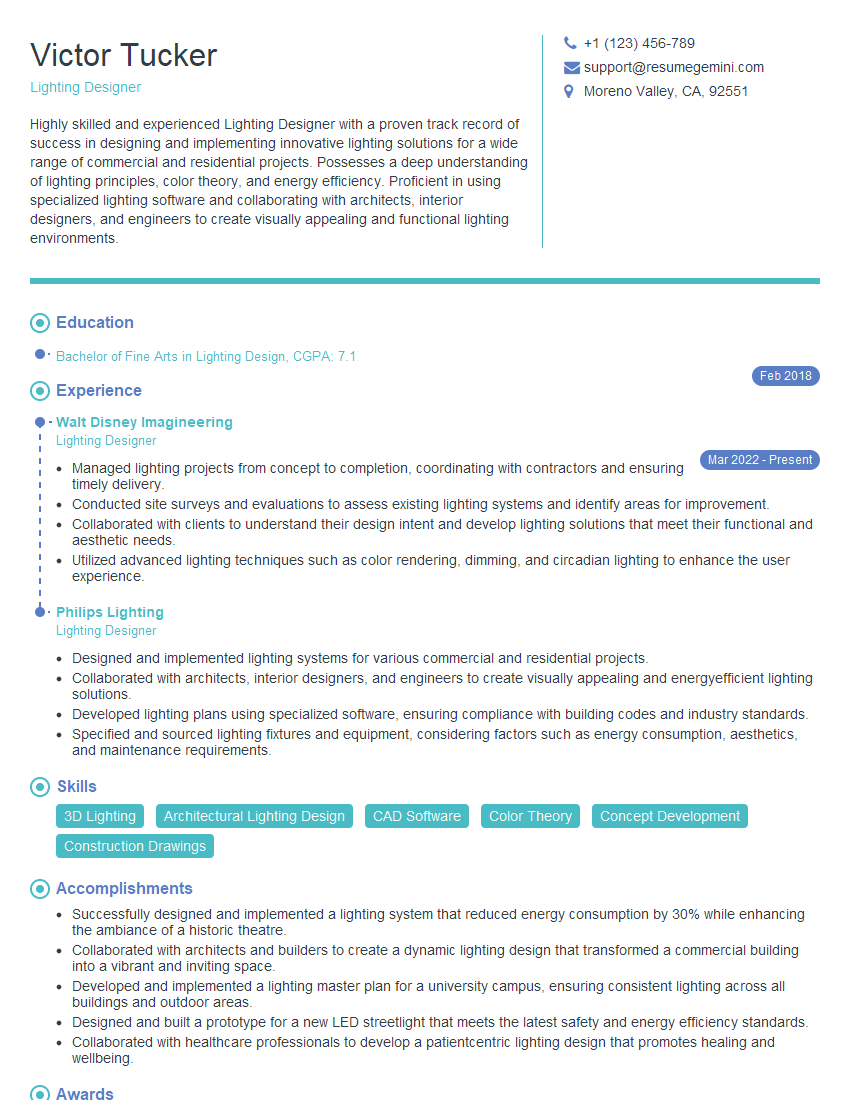
Mastering Lighting Design and Operation opens doors to exciting career opportunities in diverse fields, offering excellent potential for growth and advancement. A strong, ATS-friendly resume is your key to unlocking these opportunities. To make sure your qualifications shine, consider using ResumeGemini to craft a professional and impactful resume that highlights your skills and experience effectively. ResumeGemini provides examples of resumes tailored to the Lighting Design and Operation field to guide you in creating a compelling application.
Explore more articles
Users Rating of Our Blogs
Share Your Experience
We value your feedback! Please rate our content and share your thoughts (optional).
What Readers Say About Our Blog
Very informative content, great job.
good