Preparation is the key to success in any interview. In this post, we’ll explore crucial Dangerous Goods Packing interview questions and equip you with strategies to craft impactful answers. Whether you’re a beginner or a pro, these tips will elevate your preparation.
Questions Asked in Dangerous Goods Packing Interview
Q 1. What are the key differences between Class 1 and Class 9 dangerous goods?
Class 1 and Class 9 dangerous goods represent vastly different hazard categories. Class 1 encompasses explosives, substances or articles which have a mass explosion hazard or a projection hazard, a fire hazard, or a minor blast hazard. This class is further subdivided into six divisions based on the type and degree of hazard. Think of fireworks, ammunition, or blasting caps – all falling under Class 1 due to their explosive potential. On the other hand, Class 9 encompasses miscellaneous dangerous goods which do not fall into other classes. These substances or articles present other hazards during transport, such as environmental pollution. Examples include lithium batteries, asbestos, or dry ice. The key difference lies in the primary hazard: explosive potential for Class 1 versus a range of other miscellaneous dangers for Class 9.
- Class 1: Explosive hazards, ranging from mass explosions to minor blasts.
- Class 9: Miscellaneous hazards, not fitting into other classes, often related to environmental damage or other less defined risks.
Q 2. Explain the significance of the UN number in dangerous goods transportation.
The UN number is a four-digit code assigned by the United Nations to identify a specific dangerous good. Think of it as a universal language for dangerous goods. It’s crucial because it allows for quick and unambiguous identification of the substance globally, ensuring consistent handling and safety procedures regardless of language or location. Every dangerous good, from gasoline to corrosive acids, has its own unique UN number. This number is essential for shipping documents, labeling, and emergency response. Without it, coordinating safe transport across international borders would be incredibly difficult and risky.
For example, UN 1202 is the UN number for gasoline. This number immediately communicates to handlers worldwide the specific hazards associated with gasoline, enabling them to apply the appropriate safety measures.
Q 3. Describe the process of selecting appropriate packaging for different hazard classes.
Selecting appropriate packaging for dangerous goods depends heavily on the hazard class and the properties of the substance. The process involves several steps:
- Identify the hazard class and packing group: This determines the level of severity of the hazard (e.g., Class 1.1, Packing Group II).
- Consult regulations: Refer to the relevant regulations, such as the IATA Dangerous Goods Regulations (DGR) for air transport or the IMDG Code for sea transport. These regulations specify the packaging requirements for each hazard class and packing group.
- Choose the appropriate packaging type: This could range from simple fiberboard boxes for less hazardous substances to specialized, multi-walled steel drums for highly hazardous materials. The regulations detail the specifications for the materials and construction of the packaging.
- Consider secondary and tertiary packaging: Often, multiple layers of packaging are needed, particularly for fragile or extremely hazardous materials. This provides additional protection and containment in the event of damage.
- Perform packaging tests: Some regulations mandate testing to ensure the packaging meets the required strength and leakproofness standards.
For example, a small quantity of non-flammable solid (e.g., Class 9, Packing Group III) might be safely packaged in a sturdy cardboard box, whereas a highly corrosive liquid (e.g., Class 8, Packing Group I) would require specialized containers with robust secondary packaging to prevent leakage and protect against corrosion.
Q 4. What are the requirements for marking and labeling dangerous goods packages?
Marking and labeling dangerous goods packages is critical for safety. Labels clearly communicate the hazards associated with the contents, while markings provide additional information like UN numbers and handling instructions. Requirements vary slightly depending on the mode of transport (air, sea, road), but generally include:
- Labels: Standardized hazard labels (e.g., flammable, corrosive, toxic) are affixed to the package, prominently displaying the hazard class and any subsidiary risks.
- UN Number: The UN number must be clearly marked on the package.
- Proper Shipping Name: The official name of the dangerous good as defined in the relevant regulations.
- Additional information: This may include the net and gross weights, handling instructions, and emergency contact information.
Incorrect or missing markings and labels can lead to serious accidents and significant penalties.
Q 5. How do you determine the correct quantity limitations for dangerous goods shipments?
Quantity limitations are crucial for mitigating risk during transport. They’re determined by several factors:
- Hazard Class and Packing Group: More hazardous materials will have stricter quantity limits.
- Mode of Transport: Air transport usually has stricter quantity limits than road or rail.
- Packaging Type: The packaging’s strength and containment properties influence the allowable quantity.
- Regulations: The specific regulations (e.g., IATA DGR, IMDG Code) define the quantity limitations for each scenario.
To determine the correct quantity, you need to consult the relevant regulations and cross-reference them with the specific dangerous good, its packaging, and the mode of transport. Exceeding these limits is a serious violation and can lead to significant consequences.
Q 6. Explain the role of the shipping papers in dangerous goods transportation.
Shipping papers, often referred to as dangerous goods declarations, are crucial documents accompanying dangerous goods shipments. They act as a detailed inventory and provide all necessary information to handlers throughout the transportation process. This includes the UN number, proper shipping name, hazard class, quantity, packaging details, emergency contact information, and the shipper and consignee details. They are essential for:
- Clear Communication: Providing critical information to all parties involved in transport.
- Safety Compliance: Ensuring adherence to regulations and minimizing risks.
- Emergency Response: Providing vital data to emergency responders in case of an incident.
- Liability Tracking: Assisting in determining liability in case of accidents.
Accurate and complete shipping papers are mandatory for legal and safe transport of dangerous goods.
Q 7. What are the emergency response procedures for a dangerous goods incident?
Emergency response procedures for a dangerous goods incident are paramount. They must be swift and effective to minimize harm and environmental impact. The first steps include:
- Ensure Safety: Secure the area and evacuate personnel to a safe distance.
- Alert Emergency Services: Contact local emergency services immediately and provide them with all available information, including the UN number, the nature of the dangerous good, and the extent of the incident.
- Contain the Spill or Leakage: If possible, take steps to contain the spill or leakage to prevent further spread.
- Follow Emergency Response Guidelines: Consult the Safety Data Sheet (SDS) for the specific dangerous good and follow the recommended emergency response procedures.
- Coordinate with Authorities: Cooperate fully with emergency responders and regulatory authorities.
Having readily available emergency contact information and detailed SDSs is critical for a successful and efficient emergency response. Regular training and drills are also essential to ensure personnel are prepared to handle such situations.
Q 8. Describe the different types of packaging used for dangerous goods.
Dangerous goods packaging varies greatly depending on the hazard class and the mode of transport (air, sea, road). The goal is always to contain the substance, prevent leaks, and protect against damage during transit. Here are some common types:
- Inner Packaging: This is the primary container holding the dangerous goods. Examples include bottles, cans, drums, and bags. The material must be compatible with the substance to prevent reactions or leaks.
- Outer Packaging: This provides additional protection for the inner packaging and contains any potential leakage. It might be a cardboard box, a wooden crate, or a metal drum.
- Overpacks: Used for multiple inner packages, offering extra security and containment. They are frequently used when shipping smaller packages that are individually dangerous goods.
- Special Packaging: Certain dangerous goods, such as radioactive materials or lithium batteries, require specialized packaging designed to meet specific regulatory requirements, often including absorbent materials and cushioning.
For example, a shipment of corrosive liquids might use glass bottles as inner packaging, placed inside a plastic bucket as outer packaging, then further secured within a UN-certified cardboard box as an overpack, before final transit in a larger container.
Q 9. What are the requirements for training personnel who handle dangerous goods?
Training for dangerous goods handlers is crucial and its requirements vary depending on the regulations (IATA, IMDG, DOT) and the level of involvement. It typically includes:
- Initial Training: Covers basic principles of dangerous goods handling, hazard identification, classification, packing, marking, labeling, and documentation.
- Refresher Training: Periodic training is necessary to keep personnel updated on regulatory changes, best practices, and emergency response procedures. Frequency depends on regulations and company policies.
- Specialized Training: Personnel involved in specific tasks, such as loading/unloading or emergency response, might need advanced training.
- Practical Training/Assessment: Hands-on training is vital, allowing personnel to practice proper packaging techniques and emergency response procedures. This often includes practical assessments and testing to demonstrate competence.
Failure to provide adequate training can lead to accidents, fines, and legal consequences.
Q 10. How do you ensure compliance with IATA, IMDG, or DOT regulations?
Ensuring compliance with IATA (air), IMDG (sea), and DOT (road) regulations requires a multi-pronged approach:
- Stay Updated: Regularly check for regulatory updates and amendments. These regulations are subject to change.
- Proper Documentation: Accurate Shipper’s Declarations are crucial, detailing the contents of each package, including UN numbers and quantities. All labels and markings must comply with regulations.
- Training and Competence: Ensure all personnel handling dangerous goods are adequately trained and demonstrate understanding.
- Regular Audits and Inspections: Conduct internal audits to identify areas for improvement and ensure consistency. External audits may be required by regulatory bodies.
- Use of Approved Packaging and Materials: Use only packaging and materials that meet the standards set by the relevant regulations.
- Emergency Response Planning: Develop and maintain clear emergency response plans to address potential incidents.
Imagine a scenario where a company ships lithium batteries by air without following IATA regulations. The consequences could range from fines and delays to potential aircraft accidents.
Q 11. Explain the concept of segregation in dangerous goods transportation.
Segregation in dangerous goods transportation is the separation of incompatible substances to prevent dangerous reactions or incidents. The goal is to minimize the risks of fire, explosion, or toxic gas release. Regulations specify incompatibility groups, providing lists of substances that should not be shipped together.
For example, oxidizers (like hydrogen peroxide) must be segregated from flammable materials, as oxidizers can fuel a fire. Similarly, acids should be kept separate from bases, to avoid neutralization reactions which could generate heat or harmful fumes.
Segregation is often achieved through physical separation within a package or container, by allocating different areas, or by completely separate shipments. The level of segregation required depends on the specific substances involved and the regulations being followed.
Q 12. What are the consequences of non-compliance with dangerous goods regulations?
Non-compliance with dangerous goods regulations has serious repercussions:
- Fines and Penalties: Significant fines can be levied by regulatory agencies for violations.
- Legal Action: Severe violations can lead to criminal charges and legal action, with potential imprisonment.
- Shipment Delays and Seizures: Shipments may be delayed or seized by authorities, causing disruption to supply chains and business operations.
- Damage to Property and Environment: Accidents caused by improper handling can result in property damage, environmental contamination, and injury or death.
- Reputational Damage: Non-compliance can severely damage a company’s reputation and credibility.
- Insurance Issues: Insurance companies might refuse to cover losses arising from incidents caused by non-compliance.
A company failing to declare dangerous goods accurately could face all of these consequences.
Q 13. How do you handle damaged or leaking dangerous goods packages?
Damaged or leaking dangerous goods packages require immediate and careful handling. Safety is paramount.
- Isolate the Area: Secure the area to prevent unauthorized access and further damage.
- Assess the Situation: Determine the nature and extent of the damage and the type of dangerous goods involved.
- Use appropriate PPE: Personal Protective Equipment (PPE) like gloves, goggles, and respirators is crucial to protect yourself from exposure.
- Containment: Contain the spillage using absorbent materials, preventing further spread.
- Notify Authorities: Report the incident to the relevant authorities (e.g., emergency services, transportation authorities, environmental agencies).
- Proper Disposal: Dispose of the damaged packaging and spilled goods according to relevant regulations.
Imagine a drum of corrosive liquid springing a leak. Immediate action is crucial to prevent environmental contamination and injury. Following this procedure ensures safety and compliance.
Q 14. What are the different types of dangerous goods placards and their meanings?
Dangerous goods placards are diamond-shaped labels placed on packages and transport vehicles to warn of hazards. They use symbols and numbers indicating the class of dangerous goods. Examples include:
- Class 1 (Explosives): Indicates materials that can detonate, deflagrate, or explode, represented by a placard with an explosion symbol.
- Class 2 (Gases): Indicates flammable gases, non-flammable gases, or toxic gases. Placards will specify the nature of the gas.
- Class 3 (Flammable Liquids): Indicates liquids that readily catch fire, often shown with a flame symbol.
- Class 4 (Flammable Solids): Indicates flammable solids, spontaneously combustible materials, or dangerous when wet materials.
- Class 5 (Oxidizers and Organic Peroxides): Indicates substances that can cause or enhance combustion.
- Class 6 (Toxic and Infectious Substances): Indicates poisonous or infectious materials, often depicted with skull and crossbones symbols.
- Class 7 (Radioactive Materials): Indicates radioactive materials, shown by a trefoild symbol.
- Class 8 (Corrosive Substances): Indicates substances that can cause corrosion or damage to skin and eyes.
- Class 9 (Miscellaneous Dangerous Goods): Indicates materials not fitting into other classes.
The presence and type of placard immediately communicate the hazards associated with a package to handlers and responders.
Q 15. Describe your experience with dangerous goods documentation.
Dangerous goods documentation is the cornerstone of safe transportation. It ensures that everyone involved – from the shipper to the carrier to the receiver – understands the inherent hazards and knows how to handle the goods correctly. This includes a multitude of documents, each with specific requirements depending on the mode of transport and the nature of the goods.
My experience encompasses creating and verifying Shipping Declarations (including the completion of UN numbers, proper shipping names, hazard classes, packing groups, and quantity), preparing Emergency Response Information, and ensuring compliance with all relevant regulations like the IATA DGR (International Air Transport Association Dangerous Goods Regulations), IMDG Code (International Maritime Dangerous Goods Code), and 49 CFR (US Department of Transportation regulations). I’ve worked with various documentation formats, from paper-based manifests to electronic data interchange (EDI) systems, adapting my approach based on client needs and regulatory requirements.
For instance, I once had to rectify a shipment of lithium-ion batteries where the documentation omitted crucial safety markings. By identifying and correcting the error before shipment, we prevented a potential hazard during transit and averted significant delays and penalties.
Career Expert Tips:
- Ace those interviews! Prepare effectively by reviewing the Top 50 Most Common Interview Questions on ResumeGemini.
- Navigate your job search with confidence! Explore a wide range of Career Tips on ResumeGemini. Learn about common challenges and recommendations to overcome them.
- Craft the perfect resume! Master the Art of Resume Writing with ResumeGemini’s guide. Showcase your unique qualifications and achievements effectively.
- Don’t miss out on holiday savings! Build your dream resume with ResumeGemini’s ATS optimized templates.
Q 16. How do you stay updated on changes in dangerous goods regulations?
Staying current with dangerous goods regulations is paramount, as they are constantly evolving to reflect advances in materials science, transportation technology, and incident analysis. My approach is multifaceted:
- Subscription to Regulatory Updates: I subscribe to newsletters and alerts from organizations like the IATA, IMO (International Maritime Organization), and relevant national transportation agencies. This ensures I receive timely notifications about amendments and new regulations.
- Industry Publications and Conferences: I regularly read industry journals and attend conferences and workshops to learn about best practices and new interpretations of existing regulations. Networking with other professionals provides valuable insights into emerging trends and challenges.
- Training and Certification: I actively pursue continuous professional development by participating in regular training courses and maintaining up-to-date certifications relevant to dangerous goods handling and transportation. This demonstrates my commitment to professional excellence and ensures my knowledge base remains comprehensive.
Think of it like learning a language – the rules change, new words are added, and proper usage evolves. Continual learning is the only way to remain fluent in the language of dangerous goods compliance.
Q 17. What is your experience with different modes of transport for dangerous goods?
I have extensive experience with dangerous goods transportation across various modes, including air, sea, and road. Each mode has its specific regulations and challenges:
- Air Freight: This requires strict adherence to IATA DGR, including proper packaging, labeling, and documentation. I’ve managed shipments of various hazardous materials, from lithium batteries to flammable liquids, ensuring their safe transit through airports and airlines.
- Sea Freight: Compliance with the IMDG Code is essential for maritime transport. This involves understanding different container types, securing hazardous materials within containers, and preparing detailed shipping documentation for maritime carriers. I’ve handled the shipment of chemicals and other hazardous substances in bulk and packaged form, ensuring they meet international maritime standards.
- Road Transport: Experience includes ensuring compliance with national and international road transport regulations, using proper placards, and working with road haulage operators to ensure safe delivery. This encompasses experience with both domestic and international shipments, understanding varied regulations between jurisdictions.
For example, I once successfully navigated the complex regulations surrounding the shipment of a temperature-sensitive pharmaceutical product requiring specialized packaging and handling procedures throughout a multimodal journey (road-air-road).
Q 18. Explain your understanding of the different hazard classes.
The different hazard classes categorize dangerous goods based on their inherent hazards. This classification system enables appropriate handling, packaging, and transportation procedures. Misclassifying goods can lead to catastrophic consequences. Here are some key classes:
- Class 1: Explosives: Substances or articles that can explode by themselves or cause a fire.
- Class 2: Gases: Compressed, liquefied, or dissolved gases that present flammability, toxicity, or other hazards.
- Class 3: Flammable Liquids: Liquids that can easily ignite and burn.
- Class 4: Flammable Solids; Substances liable to spontaneous combustion; substances which, in contact with water, emit flammable gases: Solids that can ignite easily, self-ignite, or react violently with water.
- Class 5: Oxidizing substances and organic peroxides: Materials that enhance combustion or are themselves highly reactive.
- Class 6: Toxic and infectious substances: Poisonous substances that can cause death or injury and infectious substances that can cause disease.
- Class 7: Radioactive materials: Materials that emit ionizing radiation.
- Class 8: Corrosive substances: Materials that can chemically attack and destroy other materials.
- Class 9: Miscellaneous dangerous goods: Substances or articles that present a danger during transport but do not fit into other classes.
Each class has sub-divisions to further refine the categorization and allow for specific safety measures.
Q 19. How do you ensure the integrity of packaging during transportation?
Maintaining packaging integrity during transportation is critical to preventing leaks, spills, and other accidents. My approach involves several key steps:
- Selecting Appropriate Packaging: The packaging must be robust enough to withstand the stresses of transport, including vibration, shock, and temperature fluctuations. This includes choosing the right materials, design, and construction based on the hazard class and packing group of the goods. Specific UN-approved packaging is often required.
- Proper Packaging Procedures: Goods must be packed securely to prevent shifting or damage during transit. This involves using appropriate cushioning materials, securing closures, and applying proper labeling.
- Regular Inspections: Before, during (where possible), and after transport, regular inspections of packaging are critical to identify any damage or signs of leakage. Any defects need to be addressed immediately.
- Using Suitable Containment Systems: For specific hazardous materials, containment systems like absorbent materials or secondary packaging may be necessary to manage potential leaks or spills.
For example, I once worked on a shipment of corrosive chemicals where we implemented a triple-packaging system with absorbent materials to mitigate the risk of leakage. This ensured the safety of the transport crew and prevented environmental damage.
Q 20. What is your experience with using a dangerous goods software or database?
I have extensive experience using dangerous goods software and databases. These tools are essential for generating accurate shipping documentation, ensuring compliance with regulations, and managing complex shipments. The software helps automate many tasks, reducing errors and improving efficiency.
My experience includes using systems that manage UN numbers, create compliant shipping labels and documentation, check for regulatory updates, and provide access to comprehensive databases of hazardous materials information. I’m proficient in using these systems to identify appropriate packaging, generate required documentation, and ensure compliance across various modes of transport.
For example, I used a specific Dangerous Goods software to streamline the process of shipping a variety of hazardous materials internationally. The software automatically cross-referenced UN numbers with packaging specifications, reducing the manual effort and minimizing the risk of errors.
Q 21. Describe your experience with audits related to dangerous goods handling.
I have significant experience participating in and managing audits related to dangerous goods handling. Audits are crucial to ensure ongoing compliance with regulations and identify areas for improvement. These audits can be internal or external (conducted by regulatory bodies or clients).
My role involves preparing for audits by reviewing all documentation, training staff on procedures, and ensuring our practices align with the latest regulations. During the audit, I collaborate with auditors to provide evidence of compliance and address any discrepancies that arise. After the audit, I help implement corrective actions identified to improve our dangerous goods handling practices.
For example, during a recent external audit, we were able to demonstrate full compliance with all relevant regulations. However, the audit highlighted an opportunity to enhance our internal training program. As a result, we implemented a more interactive and frequent training program, resulting in improved employee competence and reduced risk.
Q 22. What are your problem-solving skills in a situation where a dangerous goods shipment is delayed?
A delayed dangerous goods shipment is a serious matter, demanding immediate action. My problem-solving approach involves a systematic process. First, I’d identify the cause of the delay – is it a logistical issue, a documentation problem, or a regulatory snag? Then, I’d prioritize communication. I’d contact the carrier, shipper, and any relevant authorities to assess the situation and explore solutions. This may involve rerouting the shipment, securing alternative transport, or addressing any documentation discrepancies. For example, if the delay is due to incorrect labeling, I would immediately initiate a correction process, ensuring all labels and documentation comply with the relevant regulations (like IATA DGR or IMDG Code). If the delay is due to unforeseen circumstances like a natural disaster, I would work closely with all parties involved to create a contingency plan, possibly involving temporary storage in a compliant facility until transportation resumes. My focus is always on maintaining safety and compliance throughout the process.
Q 23. How do you handle discrepancies in dangerous goods documentation?
Discrepancies in dangerous goods documentation are unacceptable and can lead to serious consequences. My approach begins with careful verification against the original shipping papers and the Dangerous Goods Declaration (DGD). I’d cross-reference the UN number, proper shipping name, class, packing group, and quantity against the physical goods. Any discrepancies must be documented meticulously. If the discrepancy is minor (e.g., a typographical error on a label), I’d initiate a correction process, following established procedures and notifying all relevant parties. However, if it involves a significant issue – for example, a mismatched UN number or incorrect quantity of dangerous goods – I’d immediately halt the shipment and investigate thoroughly. This might involve contacting the shipper for clarification, possibly requiring a complete repackaging and re-declaration of the shipment. The goal is to ensure complete accuracy before the shipment proceeds, preventing potential hazards. I’ve had instances where a slight discrepancy in the weight led to the entire shipment being held pending a full investigation and verification. The learning here was the importance of double and triple-checking all information before the shipment is dispatched.
Q 24. Explain the importance of proper packaging in preventing accidents.
Proper packaging is paramount in preventing accidents involving dangerous goods. It’s the first line of defense against leaks, spills, and explosions. The packaging must be robust enough to withstand the stresses of transport – impacts, vibrations, and temperature fluctuations. The choice of packaging materials and design is crucial and depends on the specific hazards of the goods. For instance, corrosive materials require packaging that is resistant to corrosion, while flammable liquids need packaging that prevents leaks and ignition. Packaging must also be clearly marked with appropriate labels and markings, such as UN numbers, hazard symbols, and handling instructions. A poorly packaged shipment, even with correct documentation, could lead to serious accidents. I recall an incident where inadequate packaging led to the breakage of a container filled with corrosive substances. This resulted in substantial environmental damage and created a dangerous situation for workers involved in the cleanup.
Q 25. What is your understanding of the role of the shipper and carrier in dangerous goods transportation?
The shipper and carrier share responsibility for the safe transportation of dangerous goods. The shipper is primarily responsible for properly classifying the goods, preparing the necessary documentation (including the DGD), and ensuring the goods are packed correctly according to the relevant regulations. They must provide the carrier with accurate and complete information. The carrier is responsible for transporting the goods safely and in compliance with regulations. They must ensure the shipment is handled correctly, inspected regularly, and that any emergencies are handled appropriately. They must also have the necessary training and equipment to deal with dangerous goods. A strong collaborative relationship between shipper and carrier is crucial. A clear understanding of each party’s responsibilities avoids miscommunication and ensures safety. For instance, if the shipper fails to provide accurate documentation, the carrier can’t ensure the safe handling of the goods, leading to potential incidents.
Q 26. How do you identify and mitigate risks associated with dangerous goods handling?
Identifying and mitigating risks associated with dangerous goods handling involves a multi-faceted approach. It starts with a thorough risk assessment – considering the properties of the goods, the transport mode, and the environmental conditions. This assessment helps pinpoint potential hazards, like spills, leaks, or fires. Then, we implement control measures, such as selecting appropriate packaging, using specialized handling equipment, and providing adequate training to personnel. We also establish emergency procedures to address potential incidents. Regular inspections of equipment and storage facilities are vital, as is the continuous monitoring of safety protocols. For example, if we’re handling flammable materials, we’d ensure there are no ignition sources, adequate ventilation, and fire suppression equipment on hand. Proactive risk management minimizes the chances of accidents and safeguards both personnel and the environment. I remember one case where by anticipating potential temperature fluctuations during transportation, we successfully avoided a possible chemical reaction, thereby preventing a dangerous situation.
Q 27. Describe your experience with investigating accidents related to dangerous goods.
I have extensive experience investigating accidents related to dangerous goods. My approach is methodical and thorough, involving a detailed examination of the scene, reviewing documentation, interviewing witnesses, and analyzing evidence. I follow a structured investigation process adhering to regulatory requirements, focusing on identifying the root cause of the accident to prevent similar incidents from occurring in the future. This involves analyzing the packaging, considering the handling procedures, checking the transport conditions, and examining any failures in safety protocols. A critical part of my process is understanding what went wrong and recommending corrective actions. In one investigation, we discovered that inadequate training of personnel was a significant contributing factor to an incident involving a chemical spill. This led us to implement a revised training program that included more hands-on practice and emergency response simulations.
Q 28. What are your strengths in managing compliance with dangerous goods regulations?
My strengths in managing compliance with dangerous goods regulations are rooted in a deep understanding of the relevant regulations (IATA DGR, IMDG Code, etc.), coupled with practical experience in applying those regulations. I stay abreast of any updates or changes in the regulations through continuous professional development. I’m skilled in developing and implementing compliant procedures, training personnel, and maintaining accurate records. I’m also proficient in auditing processes to ensure continued compliance. I approach compliance not merely as a checklist, but as an integral part of ensuring safety. For instance, I would ensure that all employees involved in handling dangerous goods are thoroughly trained and certified, and that our procedures regularly go through a review and revision process to adapt to any changes in regulations or best practices. This proactive approach to compliance allows us to proactively identify and correct any potential non-compliance issues.
Key Topics to Learn for Your Dangerous Goods Packing Interview
Landing your dream job in Dangerous Goods Packing requires a thorough understanding of both theory and practice. Prepare yourself by focusing on these key areas:
- Regulations and Compliance: Understand the intricacies of national and international regulations (e.g., IATA, IMDG, 49 CFR) governing the packing, handling, and transportation of dangerous goods. Be prepared to discuss specific regulations and their practical implications.
- Packaging Selection and Criteria: Master the principles of selecting appropriate packaging based on the class and division of the dangerous goods, including understanding UN numbers, packing instructions, and special provisions.
- Packing Procedures and Techniques: Demonstrate a strong understanding of proper packing procedures, including the correct placement of absorbent materials, cushioning, and securing of dangerous goods within the packaging.
- Hazard Identification and Classification: Showcase your knowledge of identifying and classifying dangerous goods according to their inherent hazards (explosives, flammable liquids, etc.).
- Labeling and Marking Requirements: Understand the proper application of labels and markings on packages containing dangerous goods, ensuring compliance with relevant regulations.
- Emergency Response Procedures: Be prepared to discuss procedures for handling incidents involving dangerous goods during transportation or storage, including spill response and emergency contact information.
- Documentation and Record Keeping: Demonstrate your understanding of the importance of accurate and complete documentation throughout the entire dangerous goods handling process.
- Practical Problem Solving: Prepare examples where you’ve solved real-world challenges related to dangerous goods packing, demonstrating your analytical and problem-solving skills.
Next Steps: Unlock Your Career Potential
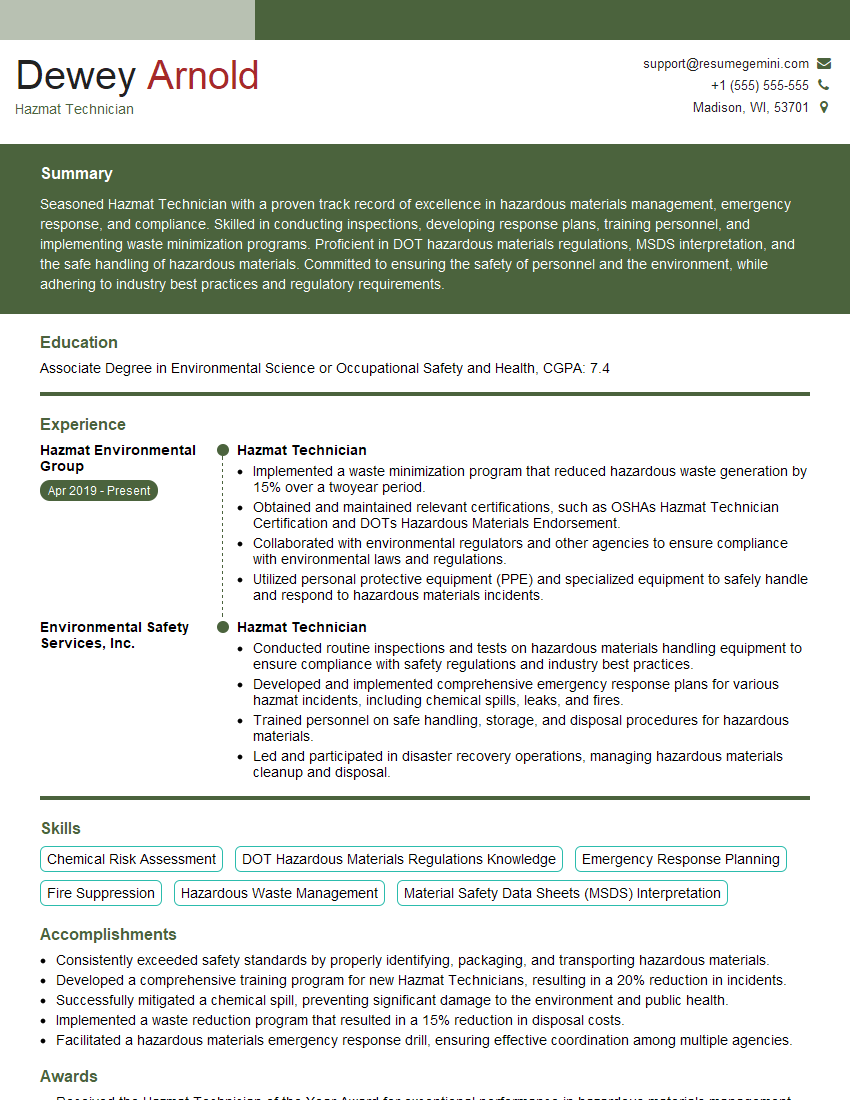
Mastering Dangerous Goods Packing opens doors to exciting and rewarding career opportunities. To maximize your chances of success, invest time in crafting a compelling and ATS-friendly resume that highlights your skills and experience. ResumeGemini is a trusted resource to help you build a professional resume that stands out from the competition. We provide examples of resumes tailored to the Dangerous Goods Packing industry to help you get started. Take control of your career journey – start building your winning resume today!
Explore more articles
Users Rating of Our Blogs
Share Your Experience
We value your feedback! Please rate our content and share your thoughts (optional).
What Readers Say About Our Blog
Very informative content, great job.
good